Best Time to Visit Braga
Month-by-month weather, crowds and prices, plus a full calendar of festivals and events worth planning a trip around.
Best monthsMay, Sep, Oct
CheapestJan, Feb, Nov
AvoidJul, Aug
BusiestJul, Aug
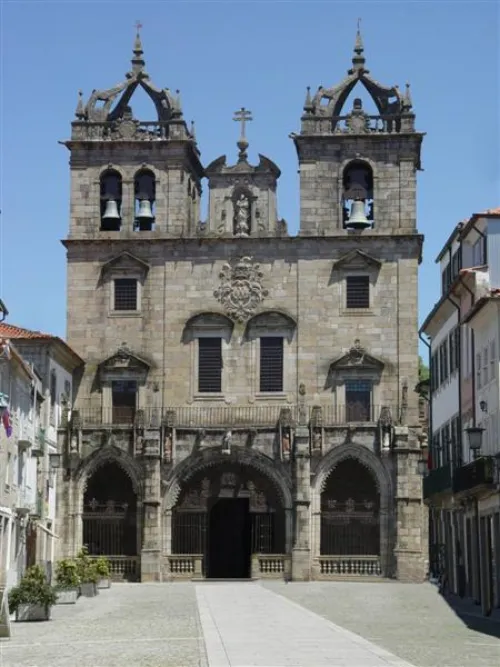
When is the best time to visit Braga?
Come in May, September or early October: 21-25°C, manageable crowds, and the city at its most alive. May adds the Braga Romana festival. July and August bring 27-28°C heat, the highest hotel rates and August restaurant shutdowns. January, February and November are cheapest but wet.
Start our tool and find your best time to visit Braga
Your perfect month
Free · ~30 seconds
or tap a month directly
What matters to you?
And this?
Best overall: May, Sep. May and September are the real sweet spot: 21-25°C, dry-leaning skies, and crowds you can work around. May 20-24 hands you the free Braga Romana festival on top, while September brings the Douro wine harvest within day-trip reach.
Best value: Jan, Feb, Nov. January, February and November bring hotel rates near 45-70 euros, an empty Bom Jesus staircase, and mild 12-16°C days. The trade is rain: November averages 15 wet days, so pack a waterproof layer over an umbrella on the hills.
Avoid: Jul, Aug. Mid-July to late August stacks 27-28°C heat, peak prices near 90-130 euros, and the August Ferragosto pattern that shutters many family-run restaurants for one to two weeks. The old town's narrow streets give little shade past midday.
- January: Great time, 13°C. This is the one month you have the Bom Jesus staircase almost to yourself. The Romans of Portugal are home, café life around Praça da República is slow and unhurried, and you hear Portuguese far more than English. Grey, wet skies are the honest trade, and a fair one for the prices.
- February: Great time, 14°C. February is honest, off-stage Braga, with no show put on for tourists and no seasonal markup. The Carnival ponte around 16-18 February is the one weekend you see locals visibly let loose, but the rest of the month belongs to the city itself.
- March: Great time, 16°C. March is the last genuinely calm month before spring crowds arrive. Braga wakes up with terrace tables and fresh produce at the municipal market, yet you can still wander Rua do Souto and Largo do Paço without a crush, right up until Holy Week tips the balance.
- April: Good time, 18°C. Holy Week is the most intense and spectacular week of Braga's year, all purple-hooded Farricocos and torchlit processions, and it is no secret. The fortnight after Easter is the opposite: warm, blooming and gloriously calm, when the Bom Jesus gardens are at their wildflower best and you can have the staircase nearly to yourself again.
- May: Great time, 22°C. May is the one stretch where good weather, real value and a world-class festival line up at once. Braga Romana turns the whole old town into living Roman history for 72 hours, and outside the festival the city feels balanced rather than mobbed. This is as close to a perfect time as Braga offers.
- June: Good time, 24°C. June is the tipping point from comfortable to full summer, and São João is the joyous centre of it. The week of fireworks, music and street parties is genuinely one of northern Portugal's great festivals, and the long warm evenings make the whole month feel celebratory rather than oppressive.
- July: Good time, 27°C. July is for people who do not mind heat and peak prices. The middle of the day is a write-off in the shadeless old town, and the famous afternoon siesta from 14:00 to 16:00 is real, with many cafés shut. But the long golden evenings and dry warm nights are a different, very pleasant Braga, and that part earns its keep.
- August: Good time, 28°C. August is the family peak rather than the tourist peak, and it has a strange double character: busy with European holidaymakers, yet thinned of locals who have gone to the beach. The Assumption closures can leave you hunting for a spontaneous dinner, so the city feels both crowded and oddly hollow at once.
- September: Great time, 25°C. September is the connoisseur's choice: warm, golden and intimate once the families have gone home. The first ten days in particular feel like a secret, with summer weather and almost no queues. Sunset on the Bom Jesus staircase in September light is one of the quietly perfect experiences Braga offers.
- October: Great time, 21°C. October is autumn Braga at its most photogenic: chestnut trees turning gold, the Bom Jesus terraces in warm light, and squares that empty out by mid-month. The rain returns in earnest, but it tends to clear by late morning, leaving washed, golden afternoons that are among the year's prettiest.
- November: Great time, 16°C. November is the locals' secret: fewest tourists, no summer heat, and mild days for a city this far north. The trade is genuine rain, but St. Martin's magustos give the month real warmth, with the smell of roasting chestnuts in the cafés and squares. A waterproof jacket beats an umbrella on the hilly terrain.
- December: Good time, 14°C. December trades summer for festive: it rains, the days are short, but Braga é Natal gives the centre real Christmas magic, all lights, ice rink and the tallest tree in the country. The crowds are families and locals, not tour groups, so it feels celebratory rather than touristy, until the 20-24 December school-holiday crush.
Braga weather by month
HighLowRainfall
Jan13°
Feb14°
Mar16°
Apr18°
May22°
Jun24°
Jul27°
Aug28°
Sep25°
Oct21°
Nov16°
Dec14°
| Month | Temp | Rain | Sun | Crowds | Prices | Highlight |
|---|---|---|---|---|---|---|
| Jan | 13° / 4° | 197mm · 13 rainy days | 6.3 h/day | ●○○○○ | ●○○○○ | |
| Feb | 14° / 5° | 154mm · 12 rainy days | 7.5 h/day | ●○○○○ | ●○○○○ | Braga Carnival |
| Mar | 16° / 6° | 141mm · 12 rainy days | 8.7 h/day | ●●○○○ | ●●○○○ | Holy Week in Braga |
| Apr | 18° / 9° | 156mm · 13 rainy days | 10.1 h/day | ●●●●○ | ●●●○○ | Holy Week in Braga |
| May | 22° / 11° | 99mm · 10 rainy days | 11.7 h/day | ●●●○○ | ●●○○○ | Braga Romana (Bracara Augusta Festival) |
| Jun | 24° / 14° | 69mm · 8 rainy days | 12.8 h/day | ●●●●○ | ●●●○○ | São João Festival |
| Jul | 27° / 16° | 21mm · 4 rainy days | 13.4 h/day | ●●●●● | ●●●●○ | Nómadas Festival |
| Aug | 28° / 16° | 25mm · 4 rainy days | 12.1 h/day | ●●●●● | ●●●●○ | |
| Sep | 25° / 14° | 88mm · 8 rainy days | 10.6 h/day | ●●●○○ | ●●○○○ | |
| Oct | 21° / 12° | 229mm · 13 rainy days | 8.0 h/day | ●●○○○ | ●●○○○ | |
| Nov | 16° / 8° | 228mm · 15 rainy days | 6.5 h/day | ●○○○○ | ●○○○○ | St. Martin's Day |
| Dec | 14° / 6° | 209mm · 14 rainy days | 6.0 h/day | ●●○○○ | ●●○○○ | Braga é Natal Christmas Market |
How we score this: weather = long-run climate normals (Open-Meteo), crowds & prices = relative season read, events checked yearly against official dates.
Best time to visit Braga: weather, prices & crowds
Best months for good weather
Jun, Jul, Sep
Late June through September is the dry stretch: rain drops to 21-25mm in July and August against a sodden 197mm in January, with reliable 24-28°C days and long warm evenings on Praça da República.
Quietest months to avoid the crowds
Jan, Feb, Nov
From November to February the international crowd disappears: the Bom Jesus staircase is yours alone, the Cathedral has no queue, and you hear far more Portuguese than English on Rua do Souto.
Cheapest time to visit Braga
Jan, Feb, Nov
January, February and November are the cheapest months at roughly 45-70 euros a night, well below the 90-130 euros hotels charge during Holy Week and peak summer.
Best time for festivals and events
Mar, Apr
Holy Week (Semana Santa) in late March and early April is one of Portugal's most spectacular: 100,000-plus visitors, the purple-hooded Farricoco penitents, and eight days of processions through the old town.
How many days do you need in Braga?
Two days is the sweet spot for Braga. The historic centre is compact enough to cover on foot in a single afternoon, but the hilltop sanctuaries of Bom Jesus and Sameiro deserve a second day at a proper pace. A third day opens up the Vinho Verde and Douro wine country on a day trip.
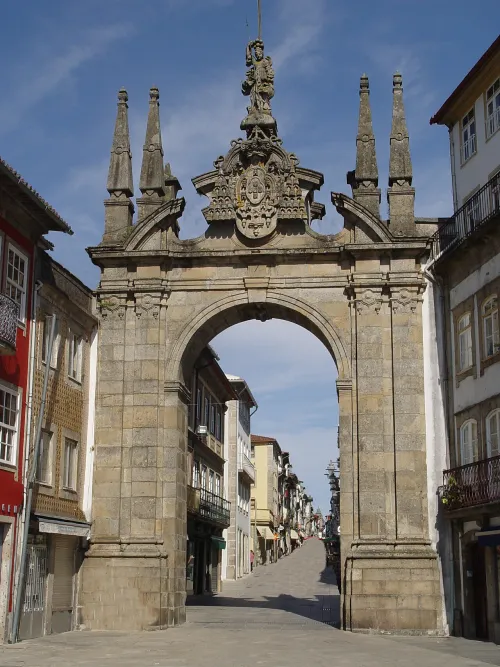
One day
The Compact Historic Core
Start at Braga Cathedral, Portugal's oldest, and follow Rua do Souto through the Arco da Porta Nova into the pedestrian old town. The self-guided Braga walking tour strings together 8 stops across just 1.5 km in about 1.4 hours: the Cathedral, the elegant Largo do Paço, the azulejo-clad Chapel of the Coimbras, the formal Santa Bárbara Garden and the rococo Palácio do Raio, finishing at the Palácio dos Biscainhos. Leave the afternoon for coffee under the arcades of Praça da República and an early dinner in the old town.
Two daysRecommended
Add Bom Jesus and the Hills
Spend the morning climbing the baroque staircase to Bom Jesus do Monte, best before 10 am when light is soft and queues are short. Continue by road or funicular to the Sameiro sanctuary for views over the Minho valley. Afternoon back in the city: the Dom Diogo de Sousa archaeology museum (3 euros) reveals Roman Bracara Augusta, and the Biscainhos palace gardens are worth a second visit in the golden late-afternoon light.
Three days
Wine Country and a Slower Pace
A third day is made for a day trip into the Vinho Verde country to the south, or further into the Douro valley during September and October harvest season. Returning in the afternoon, explore the Municipal Market and the side streets off Rua do Souto that most visitors skip. May, September and October offer the best conditions: warm, dry and unhurried.
Four days or more
Festivals, Guimarães and Deeper Minho
Four or more days allows you to base in Braga for the surrounding region. Guimarães, the birthplace of Portugal, is 22 km away by train. The Peneda-Gerês national park is within reach for hiking. If you are here in May, the Braga Romana festival (five days in late May) fills four days on its own. In June, the full São João festival week warrants four or more nights with accommodation booked well ahead.
Best time to visit Braga by traveller type
Same city, different trip. Here's the month that fits how you're travelling.
🧭
Best time to visit Braga for the first time
MaySepOct
May 20-24 for Braga Romana plus warm weather and workable crowds, or mid-September to early October for golden light, quiet squares and the best photography conditions of the year.
❤️
Best time to visit Braga for couples
AprSep
April after Easter for spring wildflowers and wisteria in the Bom Jesus gardens, or September for sunset strolls up the Bom Jesus staircase and wine tastings in the nearby Vinho Verde country.
💶
Best time to visit Braga on a budget
NovJanFeb
November for the lowest rates of the year near 45-70 euros and the St. Martin's chestnut tradition, or January and February for cheap, quiet, mild days if you can take the rain.
🍝
Best time to visit Braga for food and wine
SepMay
September for the Vinho Verde harvest and day tours into the Douro valley, or May for spring produce, fresh fish and the food stalls of the Braga Romana festival.
Worst time to visit Braga
Mid-July to late August is the period most worth skipping. Temperatures settle at 27 to 28°C with afternoons regularly above 30°C, and the narrow streets of the old town offer almost no shade past midday. Hotels hit their year peak of 90 to 130 euros, and around the Assumption holiday on 15 August many family-run restaurants close for one to two weeks, making spontaneous dining a scramble.
Still worth it for Peak summer still works if you plan around the heat: start sightseeing before 10 am, take a long midday break, and head out again after 6 pm. The long dry evenings and the Nómadas electronic-music festival in early July are genuine draws.
Go instead in May, September, October, when Braga is at its best.
Best time for a tour of Braga
Braga rewards the walker who reads the calendar carefully, because this is a compact 1.5 km loop best taken slowly, and the granite squares hold the weather. May, June, September and early October are the sweet spot: highs of 21 to 25 °C, long evenings, and rain easing to eight to ten wet days a month, so the stretch from Braga Cathedral down to Praça da República feels unhurried rather than sweaty or sodden. July and August push highs to 27 °C with barely four rainy days, gorgeous in theory, but the open paving around Largo do Paço and the Santa Bárbara Garden offers little shade by early afternoon, and crowds peak. Winter is the honest tradeoff: November and December bring 14 to 15 wet days and highs near 14 °C, while January lows of 4.5 °C and short daylight leave you finishing in the dark. March and April warm pleasantly but stay damp at twelve to thirteen rainy days, so pack for a shower.
The good news is that with AI Tourguide the climate sets your hour, not a fixed departure board. Everything runs in your browser, no app, no download, no login, so on a hot August day you can set off at first light and walk the loop while Braga Cathedral still sits in cool shadow, or on a quiet January morning step out the moment the rain lifts. A voice-first guide leads the whole way, greeting you, telling the story of the Arco da Porta Nova, asking what you want to linger over and remembering your answers as it adapts the route. You keep full control of pace and breaks. When the forecast finally cooperates, start your Braga tour and go exactly when it suits you.


 +4
+4All 8 stops are already on the map.
You just press start.
You just press start.
 AI Tourguide
You just read the route.
Now walk it with a guide in your ear.
Press start wherever you are, even hundreds of kilometres from Braga, and the guide begins telling its stories right away. In the city, pick any of the 8 stops to start from: it leads you there, then talks with you the whole route, asking, listening, remembering, and shaping the tour around your answers.
8stops1.5km1.4hours11languages
▶Start the tour freeFree to start · Runs in your browser · No app, no download
Braga events and festivals calendar
Annual highlights worth timing a trip around, listed month by month.
February
More in February →March
⛪ ReligiousHoly Week in Braga Semana Santa de Braga
Mar 29 – Apr 5 ~
the eight days leading up to Easter (late March into early April)
One of Portugal's most spectacular Holy Week celebrations, drawing more than 100,000 visitors for eight days of elaborate processions through the old town, including the Ecce Homo, the purple-hooded Farricoco penitents, and the solemn Procissao do Senhor Morto.
May
🎨 Art and cultureBraga Romana (Bracara Augusta Festival) Braga Romana
May 20–24
five days in late May
A 72-hour living-history festival with 414 initiatives, six stages and thirteen themed zones across the historic centre, themed Bracara Augusta.
June
🎉 FestivalSão João Festival Festas de São João de Braga
Jun 17–24
mid-to-late June, climaxing on São João's day, 24 June
Braga's largest street party of the year, climaxing on the municipal holiday of 24 June with fireworks from Monte Picoto, more than 60 cavaquinho groups playing 20 hours of music, the 21 June races (a 12km run and 5km walk), and city-wide street parties.
🍷 Food and wineVinho Verde Fest
Jul 1–5
early summer, around the start of July
A wine-bar takeover of Praça Municipal with tastings of the crisp, lightly sparkling regional Vinho Verde, the signature wine of the green Minho country around Braga.
July
🎵 MusicNómadas Festival
Jul 3–5
the first weekend of July
A three-day electronic-music festival spanning house, melodic techno and Afro sounds at the 7,500-capacity Pedreira do Monte Castro quarry, with headliners such as Adriatique and Mochakk.
November
🌸 Seasonal natureSt. Martin's Day Dia de São Martinho
Nov 11
11 November
The magustos tradition of gathering around roasted chestnuts and the year's newly made água-pé wine, with Braga's café culture spiking for the day.
December
🎄 Christmas marketBraga é Natal Christmas Market Braga é Natal
Dec 1–24
1 to 24 December
A city-wide Christmas takeover centred on Avenida Central, with a market of handcrafted goods and regional sweets, Portugal's tallest Christmas tree, an ice rink, carousels, a nativity scene and more than 200 shows of music, dance, theatre and circus.
Insider tips for visiting Braga
The rules buried in forums, in one place.
- Holy Week books out 4 to 6 weeks ahead. Hotels fill by early March and rates jump to 90-130 euros, so reserve by late February. The processions are free to watch from the streets, but the best spots are taken by 8 am, so arrive early or pick a quieter night than Palm Sunday.
- Braga Romana (20-24 May) is free outdoor entry across six stages and thirteen themed zones. Hit Saturday and Sunday (23-24 May) for the full energy, or come Wednesday to Friday if you dislike crowds. Pick the zones you care about in advance, because the 72-hour programme spreads right across the historic centre.
- During São João week (17-24 June), Monday to Wednesday are noticeably quieter than the Thursday-to-Sunday peak. The 21 June race clogs the central streets from 8:30 to 11:00 am, so avoid mid-Braga that morning. Watch the Monte Picoto fireworks from Largo Mayer or Avenida Central on the nights of 23-24 June.
- Braga Cathedral (Sé) closes for lunch 12:30 to 14:00 Monday to Saturday, and shuts to tourists on Sunday mornings for services. Visit 10:00 to 12:00 or 14:30 to 17:30 instead. The Treasure Museum is 3 euros, or 4 euros combined with the choir and chapels.
- July is the tourist peak, August the family peak. The Nómadas electronic-music festival (3-5 July) makes accommodation scarce in the first week of July. Mid-August (roughly 10-20 August) is calmer for day visits because Portuguese families are away, though some neighbourhood restaurants are closed.
- The Dom Diogo de Sousa archaeology museum is free for Portuguese citizens on the first Sunday of the month, 10:00 to 14:00 (3 euros otherwise). A queue forms by 9:30 am, so go in the 10:00 to 12:00 window if you want in before the lunch crowd.
- The first ten days of September are a genuinely quiet window. Portuguese schools reopen and German schools have not yet broken up, so you get warm 24-25°C days and emptier sights before the mid-September arrivals.
- From December to February the rain is real (197mm in January, 13 to 15 wet days a month) but it comes as showers of two to four hours, not all-day deluges, and temperatures stay mild at 8 to 13°C. On the hilly approach to Bom Jesus a waterproof jacket beats an umbrella.
Public holidays in Braga
On these dates many shops and offices close, transport thins out, and sights can be mobbed or shut. Plan around them.
| Date | Holiday | What closes |
|---|---|---|
| Jan 1 | New Year's Day | Shops closed and public transport reduced. Most restaurants need a booking and the city is slow to wake. |
| Apr 3 | Good Friday | Part of Holy Week: major closures, solemn processions and the largest crowds of the spring across the old town. |
| Apr 5 | Easter Sunday | Religious services fill the morning and the Holy Week crowds peak. Book accommodation and dining well ahead. |
| Apr 25 | Freedom Day (Dia da Liberdade) | National holiday marking the 1974 revolution: shops closed and some sights shut, with civic events around the city. |
| May 1 | Labour Day | National holiday: most attractions stay open and May Day gatherings take place, but many shops close. |
| Jun 10 | Portugal Day (Dia de Camões) | National holiday: shops closed and some sights may shut around midday for official ceremonies. |
| Jun 24 | São João (municipal holiday) | Braga's own holiday and the climax of São João: street parties, fireworks from Monte Picoto, and shops and offices on irregular hours. |
| Aug 15 | Assumption of Our Lady (Assunção) | National holiday in the heart of the summer lull: many family-run restaurants close for one to two weeks, though transport runs steadily. |
| Oct 5 | Republic Day | National holiday: most sights stay open but shops and offices close. A calm, low-crowd day in the off-season. |
| Nov 1 | All Saints' Day | National holiday: shops mostly closed and cemetery visits peak as families tend graves. A quiet, reflective day. |
| Dec 1 | Restoration of Independence | National holiday that opens the Christmas season: most sights open and the Braga é Natal market and lights switch on along Avenida Central. |
| Dec 8 | Immaculate Conception | National holiday: sights stay open and the Christmas markets are busy with local families. |
| Dec 25 | Christmas Day | Almost everything closes: shops, museums and most restaurants. Hotel dining is limited and the streets are quiet. |
Braga month by month
January in Braga
High13°C / 55°F
Low4°C
Rain197mm / 13 rainy days
Sun6.3 h/day
Daylight10 h/day
Humidity83%
Crowds●○○○○Prices●○○○○
January is Braga at its emptiest and wettest: highs near 13°C, 197mm of rain across about 13 days, and short 9.6-hour days. The rain comes in showers rather than all-day soaks, and temperatures rarely dip below 5°C, so a waterproof jacket and a free morning are usually enough. The Bom Jesus staircase and the Cathedral are close to queue-free, and hotel rates sit at their lowest of the year.
The vibe This is the one month you have the Bom Jesus staircase almost to yourself. The Romans of Portugal are home, café life around Praça da República is slow and unhurried, and you hear Portuguese far more than English. Grey, wet skies are the honest trade, and a fair one for the prices.
Don't miss The Cathedral Treasure Museum (3 euros) and the Biscainhos palace feel almost private on a quiet weekday morning. Mild 12-13°C days still allow a wrapped-up climb up the baroque Bom Jesus staircase without summer's crowds.
Crowd drivers No school holidays once the New Year passes, no festivals, and the lowest international visitor pressure of the entire year.
In season Caldo verde and roast kid (cabrito) are deep winter comfort here, and a glass of warm vinho quente turns a rainy afternoon around.
Heads up New Year's Day (1 January) closes shops and museums and runs transport on a reduced timetable.
Year's cheapest month, roughly 50-70 euros a night for hotels.
February in Braga
High14°C / 57°F
Low5°C
Rain154mm / 12 rainy days
Sun7.5 h/day
Daylight11 h/day
Humidity79%
Crowds●○○○○Prices●○○○○
February stays quiet and damp, with highs near 14°C, 154mm of rain over about 12 days, and sunshine creeping up to 7.5 hours. Carnival peaks around 17 February with street parties and costumes, though Braga's celebrations are modest next to the big cities. Museums and the Cathedral stay uncrowded and prices remain at their winter floor, making this the best value month for travellers who do not mind rain.
The vibe February is honest, off-stage Braga, with no show put on for tourists and no seasonal markup. The Carnival ponte around 16-18 February is the one weekend you see locals visibly let loose, but the rest of the month belongs to the city itself.
Don't miss Early azalea and camellia colour begins to show in the Bom Jesus and Santa Bárbara gardens by late February. The Dom Diogo de Sousa archaeology museum is empty enough to linger over the Roman finds of Bracara Augusta.
Crowd drivers Carnival weekend draws a few extra visitors and a local bridge holiday, but nothing close to peak season.
In season Carnival means malasadas and filhós, fried dough dusted with sugar and cinnamon, sold from stalls and bakeries through the month.
Still low season near 50-70 euros; a Carnival bridge (ponte) around 16 February can lift weekend rates.
Events this month
🎭 CarnivalBraga Carnival Carnaval de Braga
Feb 13–17 ~
the days before Lent, peaking on Shrove Tuesday
Street parties, costumes and local traditions over the long Carnival weekend, peaking on Shrove Tuesday. The bridge days around Carnival give locals an extended holiday ponte.
Braga's Carnival is modest compared with the big Portuguese cities, but it is the one weekend you see locals truly cut loose, and it falls in the cheapest, quietest part of the year.
March in Braga
High16°C / 61°F
Low6°C
Rain141mm / 12 rainy days
Sun8.7 h/day
Daylight12 h/day
Humidity77%
Crowds●●○○○Prices●●○○○
March brings Braga back to life: highs reaching 16°C, café terraces reopening, and gardens turning green. Rain is still frequent at 141mm over about 12 days, and Holy Week can bring sudden downpours. Crowds stay moderate until the very end of the month, when Easter preparations and the start of the Semana Santa processions begin to fill the old town and push hotel prices up sharply.
The vibe March is the last genuinely calm month before spring crowds arrive. Braga wakes up with terrace tables and fresh produce at the municipal market, yet you can still wander Rua do Souto and Largo do Paço without a crush, right up until Holy Week tips the balance.
Don't miss Azaleas and wisteria start to bloom in the terraced Bom Jesus gardens from late March. As Holy Week opens, the first processions wind through the historic centre under the videomapping-ready Cathedral facade.
Crowd drivers A late-March Easter and its run-up draw the first real surge of the year, with German and UK Easter holidays beginning to overlap.
In season Spring produce returns to the Municipal Market, and bacalhau dishes for Lent are everywhere in the run-up to Easter.
Prices begin rising as Easter nears, roughly 55-85 euros; Holy Week books two weeks ahead.
Events this month
⛪ ReligiousHoly Week in Braga Semana Santa de Braga
Mar 29 – Apr 5 ~
the eight days leading up to Easter (late March into early April)
One of Portugal's most spectacular Holy Week celebrations, drawing more than 100,000 visitors for eight days of elaborate processions through the old town, including the Ecce Homo, the purple-hooded Farricoco penitents, and the solemn Procissao do Senhor Morto.
This is Braga at its most dramatic and devout, a centuries-old spectacle you cannot see anywhere else in Portugal at this scale, but you must book accommodation two weeks ahead.
April in Braga
High18°C / 65°F
Low9°C
Rain156mm / 13 rainy days
Sun10.1 h/day
Daylight13 h/day
Humidity77%
Crowds●●●●○Prices●●●○○
April is beautiful and, during Holy Week, heavily visited. Highs reach a pleasant 18°C with up to 13 rainy days possible, so spring showers are part of the deal. Semana Santa (running into the first week) pulls more than 100,000 visitors for eight days of processions, so book accommodation weeks ahead. Once Easter passes, late April turns mild, green and far quieter, ideal for couples and unhurried walking.
The vibe Holy Week is the most intense and spectacular week of Braga's year, all purple-hooded Farricocos and torchlit processions, and it is no secret. The fortnight after Easter is the opposite: warm, blooming and gloriously calm, when the Bom Jesus gardens are at their wildflower best and you can have the staircase nearly to yourself again.
Don't miss Wisteria and azaleas fill the Bom Jesus terraces from late March into April. The Ecce Homo and Senhor Morto processions of Holy Week, with the purple Farricoco penitents, are free to watch from the streets of the old town.
Crowd drivers Semana Santa pilgrims, UK Easter holidays (late March into mid-April), German Easter breaks, and the Freedom Day holiday on 25 April all stack onto the first half of the month.
In season Easter brings folar de Páscoa, the sweet egg-topped bread, alongside roast lamb and cabrito on family tables and in trattorias.
Heads up Good Friday (3 April) and Easter Sunday (5 April) close many shops and bring major crowds; Freedom Day (25 April) shuts shops and some sights.
Holy Week pushes hotels to 90-130 euros; rates ease after Easter for a calmer, cheaper late April.
Events this month
⛪ ReligiousHoly Week in Braga Semana Santa de Braga
Mar 29 – Apr 5 ~
the eight days leading up to Easter (late March into early April)
One of Portugal's most spectacular Holy Week celebrations, drawing more than 100,000 visitors for eight days of elaborate processions through the old town, including the Ecce Homo, the purple-hooded Farricoco penitents, and the solemn Procissao do Senhor Morto.
This is Braga at its most dramatic and devout, a centuries-old spectacle you cannot see anywhere else in Portugal at this scale, but you must book accommodation two weeks ahead.
May in Braga
High22°C / 71°F
Low11°C
Rain99mm / 10 rainy days
Sun11.7 h/day
Daylight14 h/day
Humidity74%
Crowds●●●○○Prices●●○○○
May is the month many name as Braga's sweet spot: highs of 21-22°C, rain easing to 99mm over about 10 days, and nearly 12 hours of sun. Crowds are moderate. From 20 to 24 May the Braga Romana festival transforms the historic centre with 414 free initiatives, six stages and videomapping on the Cathedral, drawing 2,000 participants. The weather is genuinely warm without summer's heat, making this ideal for first-time visitors.
The vibe May is the one stretch where good weather, real value and a world-class festival line up at once. Braga Romana turns the whole old town into living Roman history for 72 hours, and outside the festival the city feels balanced rather than mobbed. This is as close to a perfect time as Braga offers.
Don't miss Braga Romana fills six stages and thirteen themed zones with reenactments, a triumphal procession of 1,200, and videomapping on the Cathedral. The terraced Bom Jesus gardens are in full colour for warm-afternoon picnics above the city.
Crowd drivers Braga Romana (20-24 May) and UK/German half-term breaks (around 25-29 May) bring the busiest stretch of late spring, peaking on the festival's Saturday and Sunday.
In season Spring asparagus and fresh river fish are at their best, and the Braga Romana food stalls serve Roman-themed dishes and regional Vinho Verde.
Good value at roughly 70-90 euros; Braga Romana weekend (20-24 May) lifts rates for those few nights.
Events this month
🎨 Art and cultureBraga Romana (Bracara Augusta Festival) Braga Romana
May 20–24
five days in late May
A 72-hour living-history festival with 414 initiatives, six stages and thirteen themed zones across the historic centre, themed Bracara Augusta. It opens with 2,000 participants, stages a triumphal procession of 1,200, and projects videomapping onto the Cathedral facade.
Nothing else turns the entire old town into ancient Rome quite like this, and almost all of it is free, making it the single best reason to time a Braga trip for May.
🍷 Food and wineVinho Verde Fest
Jul 1–5
early summer, around the start of July
A wine-bar takeover of Praça Municipal with tastings of the crisp, lightly sparkling regional Vinho Verde, the signature wine of the green Minho country around Braga.
It is the easiest way to taste the local wine culture in one place, and it sits at the shoulder of the summer crowds rather than the peak.
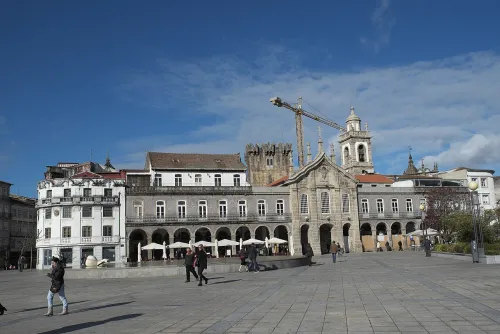
June in Braga
High24°C / 75°F
Low14°C
Rain69mm / 8 rainy days
Sun12.8 h/day
Daylight15 h/day
Humidity76%
Crowds●●●●○Prices●●●○○
June opens the Braga summer warm at 24°C, drier at 69mm of rain, and long on daylight at over 15 hours. The whole month builds toward the Festas de São João (17-24 June), the city's biggest street party, climaxing on the municipal holiday of 24 June. Fireworks light up Monte Picoto, 60-plus cavaquinho groups play for 20 hours, and races fill the centre on 21 June. Hotels book early for the festival week.
The vibe June is the tipping point from comfortable to full summer, and São João is the joyous centre of it. The week of fireworks, music and street parties is genuinely one of northern Portugal's great festivals, and the long warm evenings make the whole month feel celebratory rather than oppressive.
Don't miss São João brings fireworks from Monte Picoto best seen from Largo Mayer or Avenida Central, 20 hours of cavaquinho music, and the 21 June races (a 12km run and 5km walk). The long daylight makes late-evening strolls on Praça da República a pleasure.
Crowd drivers São João week (17-24 June), the start of UK and German summer breaks, and the Portugal Day holiday on 10 June together fill the city, especially the festival's final nights.
In season São João means grilled sardines, caldo verde and bread, plus the traditional broa de milho cornbread eaten through the festival nights.
Heads up Portugal Day (10 June) and the São João municipal holiday (24 June) put shops and offices on irregular hours.
Rates climb to around 85-100 euros; São João week (17-24 June) books up three weeks ahead.
Events this month
🎉 FestivalSão João Festival Festas de São João de Braga
Jun 17–24
mid-to-late June, climaxing on São João's day, 24 June
Braga's largest street party of the year, climaxing on the municipal holiday of 24 June with fireworks from Monte Picoto, more than 60 cavaquinho groups playing 20 hours of music, the 21 June races (a 12km run and 5km walk), and city-wide street parties.
This is one of northern Portugal's great festivals and the most joyous time to be in the city, though hotels book up three weeks ahead for the final nights.
🍷 Food and wineVinho Verde Fest
Jul 1–5
early summer, around the start of July
A wine-bar takeover of Praça Municipal with tastings of the crisp, lightly sparkling regional Vinho Verde, the signature wine of the green Minho country around Braga.
It is the easiest way to taste the local wine culture in one place, and it sits at the shoulder of the summer crowds rather than the peak.

July in Braga
High27°C / 81°F
Low16°C
Rain21mm / 4 rainy days
Sun13.4 h/day
Daylight15 h/day
Humidity70%
Crowds●●●●●Prices●●●●○
July is Braga at full summer intensity: highs of 27°C, almost no rain at 21mm, and 13.4 hours of sun a day. European school holidays flood the city and the historic centre fills from mid-morning. The heat is real, with afternoons topping 30°C and limited shade in the old town, so the best walking hours are 8 to 11 am and 6 to 8 pm. The Nómadas electronic-music festival (3-5 July) makes early-July accommodation scarce.
The vibe July is for people who do not mind heat and peak prices. The middle of the day is a write-off in the shadeless old town, and the famous afternoon siesta from 14:00 to 16:00 is real, with many cafés shut. But the long golden evenings and dry warm nights are a different, very pleasant Braga, and that part earns its keep.
Don't miss The Nómadas Festival fills the 7,500-capacity Pedreira do Monte Castro quarry with house and melodic techno over three nights. Early-morning climbs of the Bom Jesus staircase before the 10:00 crowd are the coolest, softest-lit way to see it.
Crowd drivers German Sommerferien across most states, full-swing UK summer holidays, and the Nómadas Festival (3-5 July) make this the busiest month after May.
In season This is gelato and chilled Vinho Verde season; carry water (1.50-2 euros a bottle) and take a long lunch out of the midday sun.
Peak summer pricing near 90-130 euros; Nómadas Festival week (3-5 July) makes early-July rooms scarce.
Events this month
🎵 MusicNómadas Festival
Jul 3–5
the first weekend of July
A three-day electronic-music festival spanning house, melodic techno and Afro sounds at the 7,500-capacity Pedreira do Monte Castro quarry, with headliners such as Adriatique and Mochakk.
It is the city's biggest summer music draw and worth timing for if you love electronic music, but expect early-July accommodation to be scarce and pricey.
🍷 Food and wineVinho Verde Fest
Jul 1–5
early summer, around the start of July
A wine-bar takeover of Praça Municipal with tastings of the crisp, lightly sparkling regional Vinho Verde, the signature wine of the green Minho country around Braga.
It is the easiest way to taste the local wine culture in one place, and it sits at the shoulder of the summer crowds rather than the peak.
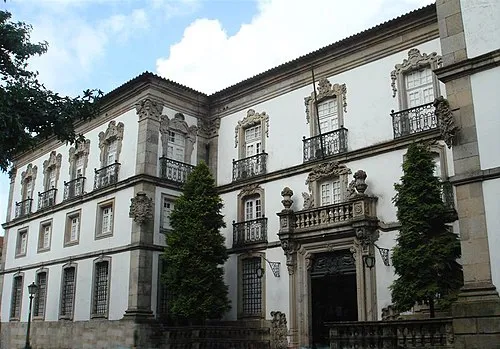
August in Braga
High28°C / 82°F
Low16°C
Rain25mm / 4 rainy days
Sun12.1 h/day
Daylight14 h/day
Humidity69%
Crowds●●●●●Prices●●●●○
August holds the summer at 27-28°C with barely any rain (25mm) and warm nights near 16°C. European families fill the city through the month, and the heat sits steady in the high 20s. Many family-run restaurants close for one to two weeks around the Assumption holiday (15 August), so book dining ahead. Mid-month (around 10-20 August) is calmer for daytime sightseeing as Portuguese families head to the coast.
The vibe August is the family peak rather than the tourist peak, and it has a strange double character: busy with European holidaymakers, yet thinned of locals who have gone to the beach. The Assumption closures can leave you hunting for a spontaneous dinner, so the city feels both crowded and oddly hollow at once.
Don't miss Dry, hot evenings are made for the Bom Jesus gardens at dusk and rooftop drinks near Praça da República. With locals away mid-month, daytime sights like the Cathedral and Biscainhos palace are quieter than in July.
Crowd drivers Continued European summer shutdowns, families on holiday, and the Assumption holiday on 15 August keep numbers high all month.
In season Grilled sardines and chilled Vinho Verde stay the summer staples, but check that your chosen restaurant is not on its August break.
Heads up Around Assumption (15 August) many family-run restaurants close for one to two weeks in the local Ferragosto pattern; transport runs normally.
Sustained peak rates near 90-130 euros; book early, as August fills with European family holidays.

September in Braga
High25°C / 77°F
Low14°C
Rain88mm / 8 rainy days
Sun10.6 h/day
Daylight12 h/day
Humidity74%
Crowds●●●○○Prices●●○○○
September is one of Braga's best months: highs easing to 24-25°C, rain still low at 88mm, and warm clear days with golden light. The heat drops to comfortable levels and the summer crush clears. Portuguese schools return 1-10 September and German schools follow mid-month, so the first ten days are a genuinely quiet, warm window. The Douro wine harvest begins within day-trip reach, drawing the first harvest tourism of the season.
The vibe September is the connoisseur's choice: warm, golden and intimate once the families have gone home. The first ten days in particular feel like a secret, with summer weather and almost no queues. Sunset on the Bom Jesus staircase in September light is one of the quietly perfect experiences Braga offers.
Don't miss The Vinho Verde and Douro grape harvest begins, with day tours from Braga into the wine country. Warm clear afternoons and golden light make this the best photography month at the Bom Jesus staircase and Sameiro sanctuary.
Crowd drivers Portuguese schools reopen 1-10 September and German schools return mid-month, so crowds thin steadily through the month after a brief early-September lull.
In season Harvest season brings fresh-pressed wine and the first chestnuts, with regional Vinho Verde at its most celebrated in the surrounding villages.
Excellent value as rates drop back to 55-85 euros once the school holidays end.

October in Braga
High21°C / 70°F
Low12°C
Rain229mm / 13 rainy days
Sun8.0 h/day
Daylight11 h/day
Humidity78%
Crowds●●○○○Prices●●○○○
October is a quiet, atmospheric shoulder month: highs near 21°C, golden autumn foliage, and soft light perfect for walking. The catch is rain, which jumps to 229mm over about 13 days as the wet season returns, often as morning mist clearing by 10 am. Crowds are thin apart from a minor UK half-term influx (26-30 October), so this is a comfortable, low-cost time for unhurried sightseeing and chestnut-season day trips.
The vibe October is autumn Braga at its most photogenic: chestnut trees turning gold, the Bom Jesus terraces in warm light, and squares that empty out by mid-month. The rain returns in earnest, but it tends to clear by late morning, leaving washed, golden afternoons that are among the year's prettiest.
Don't miss Chestnut trees turn golden and grape harvest day tours continue into early October. The Republic Day holiday (5 October) sees most sights open, a calm day for the Cathedral, Biscainhos palace and Bom Jesus.
Crowd drivers Only a minor UK half-term bump (26-30 October) lifts numbers; the rest of the month is genuinely quiet shoulder season.
In season Chestnut season opens toward month's end, leading into the St. Martin's magustos, and new wine (água-pé) appears in the villages.
Heads up Republic Day (5 October) closes shops and offices, though most sights stay open.
Quiet shoulder season near 50-80 euros; a minor UK half-term bump around 26-30 October.

November in Braga
High16°C / 60°F
Low8°C
Rain228mm / 15 rainy days
Sun6.5 h/day
Daylight10 h/day
Humidity84%
Crowds●○○○○Prices●○○○○
November is Braga's quietest, cheapest and wettest stretch: highs near 16°C, 228mm of rain over about 15 days, and short 9.9-hour days. Occasional warm spells still make for pleasant afternoons, and the rain comes in showers rather than relentless downpours. St. Martin's Day (11 November) brings the magustos, gatherings around roasted chestnuts and new água-pé wine, a warm, local end to the harvest season.
The vibe November is the locals' secret: fewest tourists, no summer heat, and mild days for a city this far north. The trade is genuine rain, but St. Martin's magustos give the month real warmth, with the smell of roasting chestnuts in the cafés and squares. A waterproof jacket beats an umbrella on the hilly terrain.
Don't miss St. Martin's Day (11 November) fills the cafés and squares with magustos: roasted chestnuts and freshly made água-pé wine, a deeply local tradition. The empty Bom Jesus staircase and Cathedral are yours to explore at your own pace.
Crowd drivers Post-autumn lull with no school holidays or major festivals; the lowest visitor pressure of the year apart from deep winter.
In season Magustos make this chestnut and new-wine season, and hearty caldo verde and roast cabrito return to the menus.
Lowest season of the year, roughly 45-70 euros a night.
Events this month
🌸 Seasonal natureSt. Martin's Day Dia de São Martinho
Nov 11
11 November
The magustos tradition of gathering around roasted chestnuts and the year's newly made água-pé wine, with Braga's café culture spiking for the day.
It is a warm, deeply local way to mark the end of the harvest, and it falls in the cheapest, quietest month of the year.
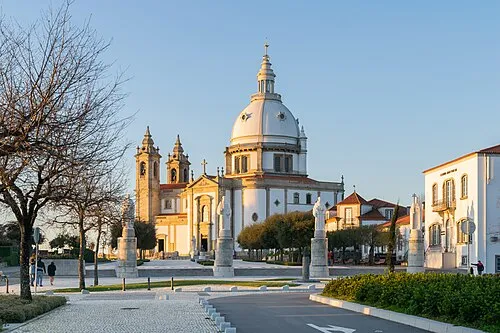
December in Braga
High14°C / 57°F
Low6°C
Rain209mm / 14 rainy days
Sun6.0 h/day
Daylight9 h/day
Humidity84%
Crowds●●○○○Prices●●○○○
December is wet but festive: highs near 14°C, 209mm of rain over about 14 days, and the year's shortest 9.2-hour days, though temperatures stay mild at 6-14°C. From 1 to 24 December the Braga é Natal market takes over Avenida Central, with Portugal's tallest Christmas tree, an ice rink, carousels and more than 200 shows. Crowds are local rather than international, building through Advent toward a chaotic 20-24 December.
The vibe December trades summer for festive: it rains, the days are short, but Braga é Natal gives the centre real Christmas magic, all lights, ice rink and the tallest tree in the country. The crowds are families and locals, not tour groups, so it feels celebratory rather than touristy, until the 20-24 December school-holiday crush.
Don't miss Braga é Natal (1-24 December) on Avenida Central offers Portugal's tallest Christmas tree, an ice rink, carousels and over 200 music, dance and theatre shows. Hours vary, so visit 1-15 December for the full market before the school-holiday rush.
Crowd drivers Braga é Natal market and Advent shopping build local crowds through the month, peaking in the chaotic last week before Christmas (20-24 December).
In season Christmas means bacalhau cozido, rabanadas (Portuguese French toast) and bolo rei, sold from market stalls and bakeries through Advent.
Heads up Restoration of Independence (1 December) and Immaculate Conception (8 December) close shops but keep sights open; Christmas Day (25 December) closes almost everything.
Moderate at 65-100 euros; the Christmas market draws local crowds and lifts weekend rates.
Events this month
🎄 Christmas marketBraga é Natal Christmas Market Braga é Natal
Dec 1–24
1 to 24 December
A city-wide Christmas takeover centred on Avenida Central, with a market of handcrafted goods and regional sweets, Portugal's tallest Christmas tree, an ice rink, carousels, a nativity scene and more than 200 shows of music, dance, theatre and circus.
It transforms the centre into the most festive city in northern Portugal, and the crowds are local families rather than tour groups, so it feels authentic.
Frequently asked questions
What is the best time to visit Braga?
May, September and early October are the best times. May gives you 21-22°C, moderate crowds and the free Braga Romana festival (20-24 May). September brings warm 24-25°C days, golden light and far fewer tourists, with the Douro wine harvest within day-trip reach. Both avoid the July-August heat and peak prices.
What is the cheapest time to visit Braga?
November, January and February are the cheapest, with hotels around 45-70 euros a night, roughly half the 90-130 euros charged during Holy Week and peak summer. The trade is rain: November averages 15 wet days and January 197mm. Temperatures stay mild at 8-16°C, and the major sights are close to queue-free.
What is the worst time to visit Braga?
Mid-July to late August is the time most worth avoiding. Temperatures sit at 27-28°C with afternoons over 30°C and little shade in the old town, hotels hit 90-130 euros, and around Assumption (15 August) many family-run restaurants close for one to two weeks. The 20-24 December market crush is the other peak to dodge.
When is São João in Braga and is it worth timing a trip around?
The Festas de São João run 17-24 June and climax on the municipal holiday of 24 June. Expect fireworks from Monte Picoto, 60-plus cavaquinho groups, the 21 June races and city-wide street parties. It is one of northern Portugal's great festivals and absolutely worth timing for, but book your hotel three weeks ahead.
Is Braga worth visiting in winter?
Yes, if you do not mind rain. December to February is mild for the latitude at 8-14°C, the Bom Jesus staircase and Cathedral are empty, and hotels are at their cheapest. December adds the Braga é Natal market with Portugal's tallest Christmas tree and an ice rink. Pack a waterproof jacket rather than an umbrella for the hills.
What is the weather like in Braga in summer?
July and August are warm and dry, with highs of 27-28°C, afternoons sometimes over 30°C, and barely any rain (21-25mm). The old town has limited shade, so the best walking hours are 8-11 am and 6-8 pm, with a real siesta lull from 14:00 to 16:00. Carry water and a hat.
When should I visit Braga to avoid crowds?
November through February has the fewest tourists of all, with empty sights and the lowest prices. For warm weather with light crowds, target the first ten days of September, when Portuguese schools have reopened and German schools have not yet broken up, giving you 24-25°C days and short queues at the Bom Jesus staircase.
How many days do you need in Braga?
Two to three days is ideal. One day covers the historic centre, the Cathedral, Rua do Souto and Praça da República. A second handles Bom Jesus do Monte and the Sameiro sanctuary on the hill. A third lets you slow down or take a Vinho Verde or Douro wine day trip, best in September during harvest.
When is Holy Week in Braga in 2026?
Holy Week (Semana Santa) runs 29 March to 5 April 2026, the eight days up to Easter. It draws more than 100,000 visitors for processions through the old town, including the purple-hooded Farricoco penitents. The street processions are free to watch, but hotels fill by early March and rates rise to 90-130 euros, so book by late February.

Any month, any day: your guide is already there
Whatever date you pick, a private human guide gets pricier and harder to book on weekends, holidays and in peak season. Our live AI guide, the one that walks with you and answers anything you ask out loud, works the opposite way.
One flat price, every day
No holiday, weekend, night or peak-season surcharge. A private guide in Braga runs well over 100 euro for a half day, and more on holidays. Ours stays the same.
Available the moment you want it
Start at midnight or at dawn, on Christmas, in the snow, in the August heat. No sold-out high season, no booking weeks ahead.
Your pace, no meter running
Pause for a long lunch, restart after dark, repeat a stop. The tour simply waits for you.
Free to try, a fraction of the cost
Test it for free, then a transparent flat price that undercuts any private guide, in every season.
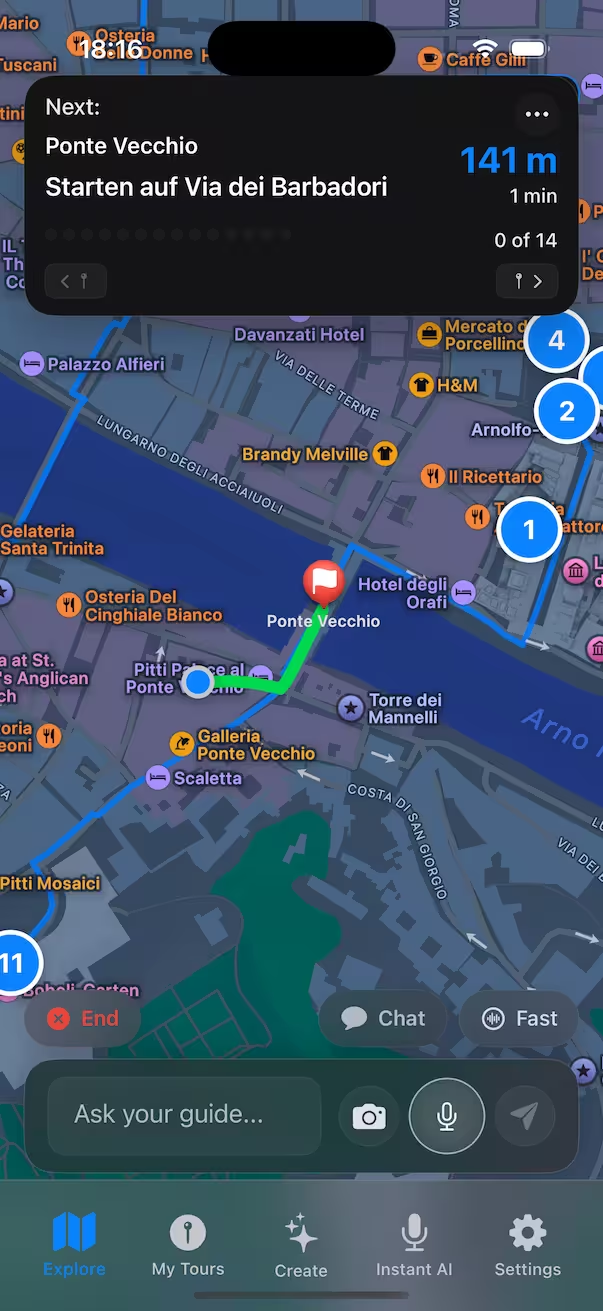
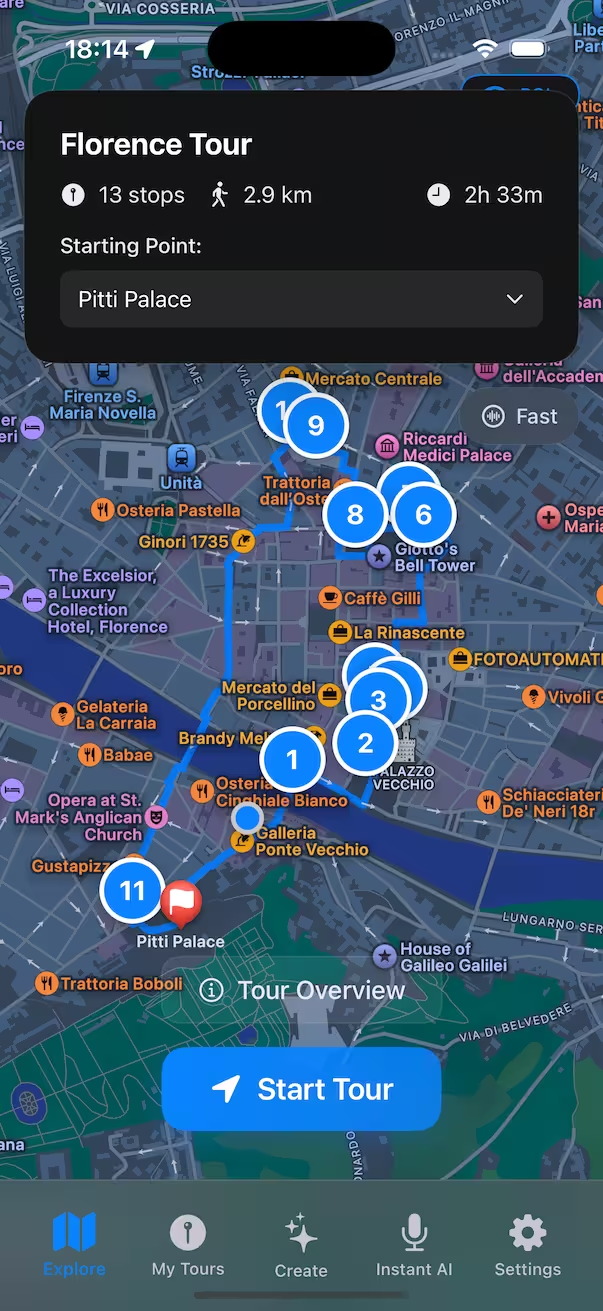
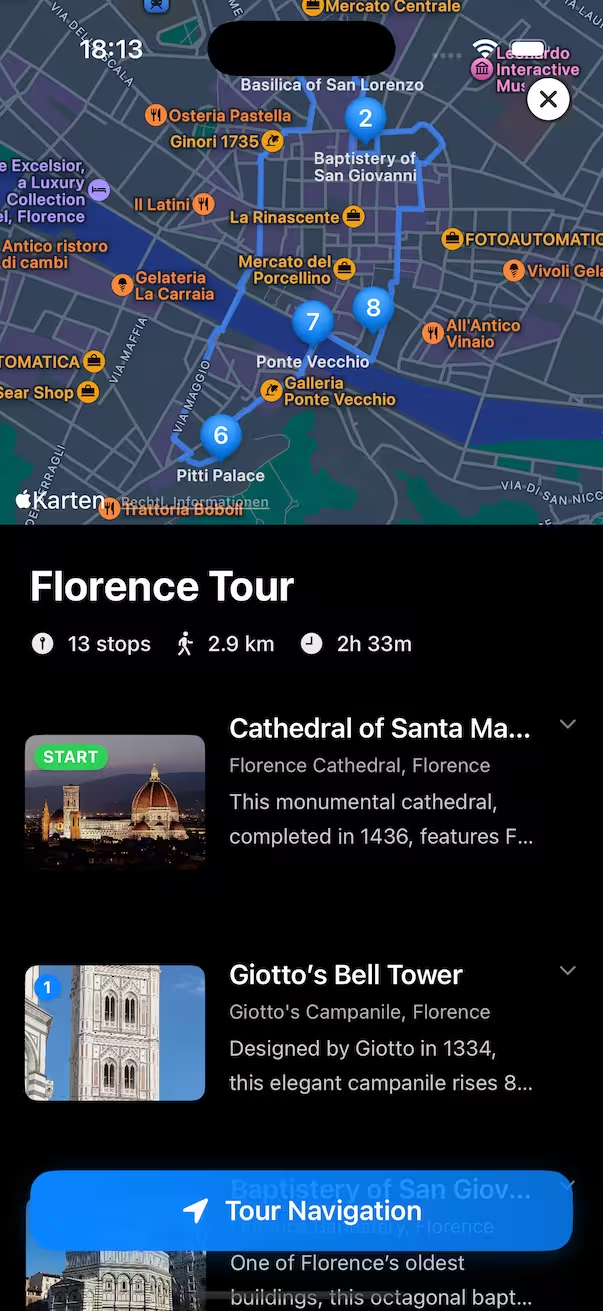
The classic Braga tour: 8 stops, 1.5 km, about 1 h on foot
Your live AI guide and the self-guided Braga route, together in your browser.