Best Time to Visit A Coruña
Month-by-month weather, crowds and prices, plus a full calendar of festivals and events worth planning a trip around.
Best monthsMay, Jun, Sep
CheapestJan, Nov
AvoidNov, Dec, Jan
BusiestAug
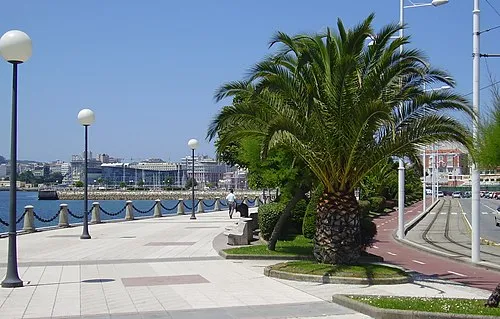
When is the best time to visit A Coruña?
Come in late May, June or September: 18-23°C, the Atlantic at its warmest of the year, every sight open, and hotels at 60-70% of August rates. August is the loudest, priciest month with the María Pita fiestas. November through January means wind, rain and short days.
Start our tool and find your best time to visit A Coruña
Your perfect month
Free · ~30 seconds
or tap a month directly
What matters to you?
And this?
Best overall: May, Jun, Sep. Late May, June and September are the sweet spot: comfortable 18-23°C, the sea warm enough to swim by September, every attraction open, hotels well below August rates, and the San Xoán bonfire night of 23 June as a possible trip anchor.
Best value: Nov, Jan, Feb. November, January and February bring the cheapest rooms of the year (from around 45€), flights under 40€ from Madrid, and the Paseo Marítimo, Plaza María Pita and Ciudad Vieja all to yourself. The trade is Atlantic rain and wind.
Avoid: Nov, Dec, Jan. November to January if you came for the coast: persistent rain, frequent 50 km/h gusts, short days and a sea too cold to swim. Fine for storm-watching at the Tower of Hercules, poor for everything else outdoors.
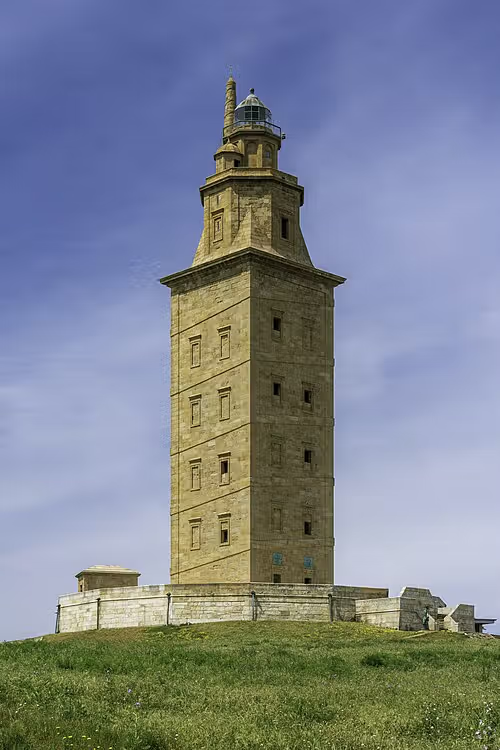
- January: Great time, 13°C. Forget any myth of a winter-sun escape: this is wet, windswept Galicia, and that is its own reward. The Old Town is yours alone, café life is slow and genuinely local, and the storm swells crashing at the Tower of Hercules headland make dramatic photography. Honest, raw, and cheap.
- February: Great time, 13°C. This is the most honest, unperformed month: a real city in winter mode, with Carnival put on entirely for locals. The Martedì-Gras-style finale is the one afternoon you see Coruñeses let loose, and you will be one of the very few outsiders watching.
- March: Great time, 15°C. The last genuinely quiet month before spring fills the coast. You get reawakening terrace life and the greenest landscape of the year without paying for it or queuing for it. That window shuts fast once April arrives.
- April: Great time, 17°C. Easter aside, April still feels like a local secret rather than a tourist month. The processions are atmospheric and the city stays lively rather than emptying, but Good Friday is a near-total shutdown, so plan that one day around what is open.
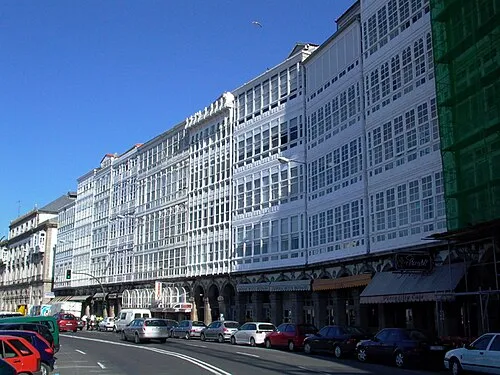
- May: Great time, 19°C. This is the sweet spot most people are actually after but few know to pick. The galleried arcades of Calle Real at dusk, sardines at a Pescadería tasca, the lighthouse headland at golden hour, all without August's noise or prices. Quietly perfect.
- June: Good time, 20°C. The long northern evenings make June feel magical, and San Xoán is the emotional peak of the A Coruña year: hundreds of beach bonfires, fireworks at midnight, the whole city out until dawn. Book that one night early and it is unforgettable; leave it late and you will not find a bed.
- July: Good time, 23°C. Summer A Coruña without August's full intensity. The first three weeks are the family sweet spot, with swimmable sea and reliable sun. The medieval fair turns the whole Old Town into a living scene best seen in the evening, when the heat is gone and the lanes glow.
- August: Tough month, 23°C. If you want a real, loud, all-in local fiesta rather than a curated tourist event, this is it: nightly free concerts on Plaza María Pita, beachfront stages of music, and crowds that fill every hotel. Just know it is peak price and peak noise, and that some neighbourhood tascas close while their owners take their own holiday.
- September: Great time, 22°C. The smart traveller's month: August's warmth and swimmable sea without August's noise, crowds or prices. The city exhales after the fiestas, the beaches calm down, and you get the headland walks and Old Town largely to yourself.
- October: Great time, 20°C. The shoulder tipping into autumn: still mild and walkable on the clear days, genuinely cheap, and quiet. Bring a proper rain layer and you get the headland, the Old Town and the markets without a queue, plus a real Galician sports event in the surf championship.
- November: Great time, 16°C. This is the month to skip if you came for the coast, and the month to choose if you want raw, cheap, real Galicia. Storm swells at the Tower of Hercules are genuinely impressive, the Old Town is atmospheric in the rain, and you will share it with almost no one.
- December: Great time, 14°C. Forget beaches and walks: December is about the lights. A Coruña's Christmas display is one of Galicia's finest and the Plaza María Pita market stays calm where bigger cities turn into a crush. Cosy, atmospheric, and quiet outside the holiday days themselves.
A Coruña weather by month
HighLowRainfall
Jan13°
Feb13°
Mar15°
Apr17°
May19°
Jun20°
Jul23°
Aug23°
Sep22°
Oct20°
Nov16°
Dec14°
| Month | Temp | Rain | Sun | Crowds | Prices | Highlight |
|---|---|---|---|---|---|---|
| Jan | 13° / 7° | 172mm · 17 rainy days | 5.7 h/day | ●○○○○ | ●○○○○ | |
| Feb | 13° / 7° | 133mm · 14 rainy days | 7.1 h/day | ●○○○○ | ●○○○○ | Entroido (Carnival) |
| Mar | 15° / 8° | 121mm · 14 rainy days | 8.6 h/day | ●●○○○ | ●○○○○ | |
| Apr | 17° / 9° | 93mm · 14 rainy days | 10.1 h/day | ●●○○○ | ●●○○○ | Holy Week |
| May | 19° / 12° | 72mm · 11 rainy days | 11.2 h/day | ●●○○○ | ●●○○○ | |
| Jun | 20° / 14° | 81mm · 12 rainy days | 11.8 h/day | ●●●○○ | ●●●○○ | San Xoán Bonfires |
| Jul | 23° / 16° | 28mm · 7 rainy days | 12.4 h/day | ●●●●○ | ●●●●○ | Medieval Fair (Feira das Marabillas) |
| Aug | 23° / 16° | 46mm · 8 rainy days | 11.3 h/day | ●●●●● | ●●●●● | Santa Margarita Pilgrimage |
| Sep | 22° / 15° | 61mm · 11 rainy days | 10.0 h/day | ●●●○○ | ●●●○○ | |
| Oct | 20° / 13° | 150mm · 15 rainy days | 8.0 h/day | ●●○○○ | ●●○○○ | Spain Surf Open Championship |
| Nov | 16° / 10° | 174mm · 17 rainy days | 6.1 h/day | ●○○○○ | ●○○○○ | |
| Dec | 14° / 9° | 167mm · 15 rainy days | 5.6 h/day | ●○○○○ | ●●○○○ | Christmas Market |
How we score this: weather = long-run climate normals (Open-Meteo), crowds & prices = relative season read, events checked yearly against official dates.
Best time to visit A Coruña: weather, prices & crowds
Best months for good weather
Jun, Jul, Aug
June to August is the driest, sunniest window: highs of 20-23°C, only 7-8 rainy days in July, and the Atlantic breeze keeps even the warmest afternoon walk on the Paseo Marítimo comfortable.
Quietest months to avoid the crowds
May, Sep, Oct
Late May, September and October give you the Torre de Hércules and the Ciudad Vieja without August's fiesta noise, with the sea still 16-17°C for a swim in September.
Cheapest time to visit A Coruña
Nov, Jan, Feb
November, January and February are the cheapest: budget rooms from around 45€ a night, mid-range near 55€, and flights from Madrid often under 40€.
Best time for festivals and events
Jun, Aug
San Xoán on the night of 23 June lights hundreds of bonfires on Riazor and Orzán beaches with fireworks at midnight, and all of August brings the free Festival Noroeste and the month-long Fiestas de María Pita.
How many days do you need in A Coruña?
A Coruña is a compact peninsula city, and two days is the realistic sweet spot. One day covers the Old Town, the squares and the lighthouse headland on foot; the second lets you slow down for the beaches, a museum and a long seafront walk without rushing. Add a third only if you want a day trip to Santiago de Compostela, 30 km away.

One day
The Old Town and the lighthouse
Start on Plaza María Pita, then wander the Ciudad Vieja and the galleried glass balconies of Calle Real before lunch in a Pescadería tasca. Walk the Paseo Marítimo out to the Torre de Hércules, the Roman lighthouse on its headland, and time it for golden hour, roughly 19:00 to 21:00 in summer, when the Atlantic light is best. The whole core is flat, walkable and easy to cover on foot in a single unhurried day.
Two daysRecommended
Beaches, science and sea views
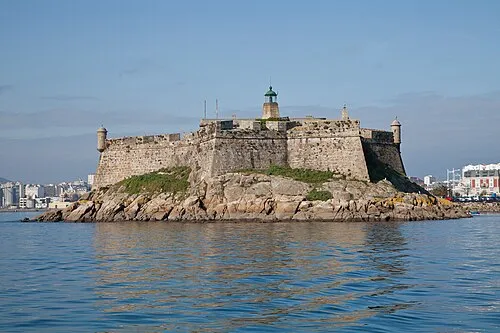
Spend the morning on Riazor and Orzán beaches, side by side right in the city, then escape any rain at the Aquarium Finisterrae or the interactive Domus science museum. In the afternoon, climb to the Monte de San Pedro gardens for the widest view over the bay, or cross to the Castillo de San Antón. End back at the Mercado de San Agustín, busiest Tuesday to Thursday from 09:00 to 11:00, for the freshest percebes and nécoras.
Three days
A day beyond the city
With a third day, take the easy 30 km trip to Santiago de Compostela and its cathedral, then return to A Coruña for the evening. Alternatively, walk a stretch of the clifftop Camiño dos Faros north of the Tower of Hercules, which stays crowd-free even in summer. Back in town, a relaxed evening on Calle Real or the Marina rounds it off.
Four days or more
Settle into the rhythm
Four days or more turns a sightseeing trip into living like a local. Linger over long seafood lunches, surf or watch the waves at Orzán, and revisit the Torre de Hércules on a free Monday when entry costs nothing. There is room now for more day trips along the Rías Altas coast, or simply slower mornings at the markets and squares the city is built around.
Best time to visit A Coruña by traveller type
Same city, different trip. Here's the month that fits how you're travelling.
🧭
Best time to visit A Coruña for the first time
MaySep
May or September: mild 18-22°C air, the sea 15-17°C, the Paseo Marítimo and Torre de Hércules crowd-free, every museum open, and mid-range hotels around 70-85€. May is greener, September has the warmer water.
❤️
Best time to visit A Coruña for couples
MayJunSep
Late May, early June or September: the galleried glass balconies of Calle Real at dusk, sardines at a Pescadería tasca, and the lighthouse headland at golden hour, all without the August crush.
💶
Best time to visit A Coruña on a budget
NovJan
November or January: rooms from 45€, the year's cheapest flights, all the headland walks and squares free, and the Torre de Hércules free every Monday.
🍝
Best time to visit A Coruña for food and wine
AugFeb
Late July to mid-August for the Romería de Santa Margarita picnic culture and peak Atlantic seafood, or February's Entroido when Galician kitchens serve their finest pulpo a feira and caldo gallego.
Worst time to visit A Coruña
November and January are the months most worth skipping, with December close behind. These are the wettest and windiest weeks of the year, around 17 rainy days, gusts over 50 km/h sweeping the Paseo Marítimo, a sea too cold to swim, and daylight gone by 17:45. The coast that A Coruña sells, beaches, clifftop walks, the lighthouse headland, loses most of its appeal in that weather.
Still worth it for If you came for cheap rooms, an empty Old Town and dramatic storm swells crashing at the Tower of Hercules, this is your window: prices fall to rock bottom and the Ciudad Vieja stays atmospheric. It simply rewards storm-watchers far more than beach-goers.
Go instead in May, June, September, when A Coruña is at its best.
A Coruña events and festivals calendar
Annual highlights worth timing a trip around, listed month by month.
February
🎭 CarnivalEntroido (Carnival) Entroido da Coruña
Feb 6–21 ~
main week mid-February, around Shrove Tuesday
A week-long carnival of costumed comparsas, floats and circus acts on Plaza María Pita, with a Grand Parade on the Saturday afternoon and the mock Entierro de la Sardina (Burial of the Sardine) closing it the following week.
April
⛪ ReligiousHoly Week Semana Santa
Apr 2–5 ~
late March or early April, tied to Easter
Religious processions move through the centre on Maundy Thursday and the solemn Good Friday, with families gathering for Easter Sunday.
June
🎉 FestivalSan Xoán Bonfires Festa de San Xoán
Jun 23–24
night of 23-24 June
Hundreds of bonfires are lit across Riazor and Orzán beaches on midsummer night, with fireworks at 23:50 and the burning of the falla at midnight.
July
🎨 Art and cultureMedieval Fair (Feira das Marabillas) Feira das Marabillas
Jul 22–26
late July
A long-running medieval market that fills the Ciudad Vieja with period stalls, jousting, theatre, children's activities and craft sellers crowding Praza das Bárbaras.
🇮 HolidayGalicia National Day Día Nacional de Galicia
Jul 25
25 July
The regional public holiday brings official ceremonies in nearby Santiago de Compostela (30 km away) plus concerts and cultural events across Galicia, including A Coruña.
August
🎉 FestivalFiestas de María Pita Festas de María Pita
Aug 1–31
all of August, Semana Grande around 8-16 August
The city's defining month-long festival honours its 16th-century heroine with nightly free concerts on Plaza María Pita, a Book Fair, Crafts Fair, Naval and Floral Battles, the Teresa Herrera football trophy and the Romería de Santa Margarita.
⛪ ReligiousSanta Margarita Pilgrimage Romería de Santa Margarita
Aug 2 ~
first Sunday of August
A traditional Galician pilgrimage-picnic to Santa Margarita Park with a procession, music, grilled sardines and local food, where families carry their own hampers to the park.
🎵 MusicFestival Noroeste Estrella Galicia
Aug 5–10
early August
A long-established free festival of 30-plus concerts across 6 open-air stages (Riazor beach, Plaza María Pita, Castillo de San Antón and more), with a line-up that mixes international names and Spanish acts.
🎨 Art and cultureInternational Folk Festival Festival Internacional de Folclore Cidade da Coruña
Aug 12–16
mid-August, within the María Pita fiestas
Across 5 days, four or five international folk-dance groups plus Spanish ensembles perform in city venues, organised by the EIDOS Chorus and Dance Association, a CIOFF member since 1987.
October
⛪ ReligiousFeast of the Virgin of the Rosary Día da Virxe do Rosario
Oct 7
7 October
The patron-saint day and a local public holiday across A Coruña province, marked with mass and procession while shops and many offices close.
🏃 SportSpain Surf Open Championship Campeonato de España de Surf Open
Oct 17–18 ~
third or fourth weekend of October
The national surfing championship takes over Orzán beach with live music, gastronomy stalls, night surfing and a skate ramp, giving the weekend a fair atmosphere.
December
More in December →Insider tips for visiting A Coruña
The rules buried in forums, in one place.
- The Torre de Hércules is free every Monday, but capacity is only 20 people per 30-minute slot. Book a day ahead at coruna.gal or arrive before the 10:00 opening. On cruise-ship days (often Tuesday and Thursday in summer) the afternoon queue is longest, so go in the morning.
- For San Xoán on 23 June, book your hotel 4-6 weeks ahead. The whole city sells out for this one night. The beaches at Orzán and Riazor fill from 18:00, and walking the 15 minutes from the Old Town beats the parking chaos entirely.
- Hit the Mercado de San Agustín Tuesday to Thursday, 09:00-11:00, for the freshest percebes (barnacles), zamburiñas and nécoras. Saturday is busiest and stocks thin by 11:00, and the market is closed all day Sunday.
- The Festival Noroeste (5-10 August) is free, but the Riazor beach stage fills fast: arrive 30-45 minutes before headliners since nothing is reserved. The smaller Plaza María Pita stage is calmer with better sound. Book accommodation 2 months ahead for this week.
- Walk the Paseo Marítimo at golden hour, roughly 19:00-21:00 in summer, heading west to east toward the sunset: the Torre de Hércules silhouette over the Atlantic is the shot. The Camiño dos Faros clifftop path north of the tower stays crowd-free.
- Many neighbourhood tascas in the Pescadería barrio close for two weeks in August while owners take their own holiday, ironic given the fiestas. Stick to Calle Real, the Ciudad Vieja and the Marina for reliably open options during Semana Grande.
- The Museo de Bellas Artes (3€) is the one closure tourists miss: shut every Monday, with free entry on cultural days like International Museum Day (18 May). The Torre de Hércules is also closed on 24, 25 and 31 December and 6 January.
- Orzán and Riazor beaches fill with day-trippers from Santiago de Compostela on July and August weekends. Arrive before 11:00 or come midweek for calm beach time. The waves make Orzán a genuine year-round surf beach, with a school on site.
Public holidays in A Coruña
On these dates many shops and offices close, transport thins out, and sights can be mobbed or shut. Plan around them.
| Date | Holiday | What closes |
|---|---|---|
| Jan 1 | New Year's Day | Everything closed; the Torre de Hércules shuts for the afternoon. Restaurants and shops do not reopen until 2 January. |
| Jan 6 | Epiphany (Reyes Magos) | National holiday: shops and offices closed, the Tower of Hercules closed all day, and the Three Kings parade fills the centre the evening before. |
| Feb 17 | Carnival Tuesday (Entroido) | Local A Coruña holiday: shops mostly closed. The Grand Carnival Parade runs the Saturday before (14 February); the Entierro de la Sardina caps the week on 18 February. |
| Mar 19 | St Joseph's Day (San Xosé) | Galicia regional holiday: most shops and offices closed, but tourist sites stay open. A quiet weekday in the city. |
| Apr 2 | Maundy Thursday (Semana Santa) | Galicia regional holiday: religious processions in the centre, restaurants book up, and some museums begin Easter closures. Good Friday (3 April) is the one day of genuine shutdown. |
| Apr 3 | Good Friday | National holiday: almost everything closed, a sombre atmosphere with processions. Saturday already reopens and Easter Sunday is festive, so plan restaurant bookings ahead. |
| May 1 | Labour Day | National holiday: shops and offices closed, but most tourist sights stay open. Public transport runs a reduced timetable. |
| Jun 24 | St John's Day (San Xoán) | Galicia regional holiday: the bonfire night is the eve of 23 June, when Riazor and Orzán beaches party until dawn with fireworks at midnight. The 24th itself is a quiet recovery day. |
| Jul 25 | National Day of Galicia | Galicia regional holiday: official ceremonies in Santiago de Compostela 30 km away, plus concerts across the region. Tourist sites stay open; the city is busy with the medieval-fair week. |
| Aug 15 | Assumption of Mary | National holiday landing at the peak of the Fiestas de María Pita: everything festive, hotels full, and many neighbourhood restaurants closed for their own summer break. |
| Oct 7 | Feast of the Virgin of the Rosary | Local A Coruña province holiday and patron-saint day: mass and procession, shops closed, services reduced. Plan museum visits around it. |
| Oct 12 | Spain National Day | National holiday: shops and offices closed, tourist sites open. Often bridges into a long weekend (puente) with extra domestic visitors. |
| Nov 1 | All Saints' Day | National holiday: cemetery visits dominate the day, some restaurants close, and the city is quiet and reflective at the start of its wettest month. |
| Dec 6 | Constitution Day | National holiday: shops and offices closed. With Immaculate Conception two days later it often forms a long December bridge (puente). |
| Dec 8 | Immaculate Conception | National holiday: everything closed. The Christmas market at Plaza María Pita and the city lighting display are in full swing by now. |
| Dec 25 | Christmas Day | National holiday: everything closed and the Torre de Hércules shut (also on 24 and 31 December). The Christmas market reopens once the holiday passes. |
A Coruña month by month
January in A Coruña
High13°C / 55°F
Low7°C
Rain172mm / 17 rainy days
Sun5.7 h/day
Daylight9 h/day
Humidity82%
Crowds●○○○○Prices●○○○○
January is A Coruña at its emptiest: almost no tourists, locals going about ordinary life, and the year's lowest prices. Highs sit near 13°C, but the real story is the weather feel, with 17 rainy days, the sea at a non-swimmable 13-14°C, and frequent Atlantic gusts that make 13°C feel like single digits. Wrap up and the galleried glass balconies of Calle Real become your windbreak, exactly what they were built for.
The vibe Forget any myth of a winter-sun escape: this is wet, windswept Galicia, and that is its own reward. The Old Town is yours alone, café life is slow and genuinely local, and the storm swells crashing at the Tower of Hercules headland make dramatic photography. Honest, raw, and cheap.
Don't miss Storm-watching at the Torre de Hércules headland is the winter spectacle: rough Atlantic swells from a safe shore path. Inside, the Aquarium Finisterrae and the Domus science museum stay open daily for the wet days.
Crowd drivers No cruise ships and no school holidays once Epiphany passes on 6 January. The lowest visitor pressure of the whole year.
In season Peak season for caldo gallego, the warming kale-and-bean broth, and for hearty pulpo a feira at the Mercado de San Agustín tascas.
Heads up New Year's Day (1 Jan) and Epiphany (6 Jan) close shops and most restaurants; the Torre de Hércules is shut on 1 and 6 January.
Cheapest window of the year, tied with November: budget rooms from around 45€, flights from Madrid often under 40€.
February in A Coruña
High13°C / 56°F
Low7°C
Rain133mm / 14 rainy days
Sun7.1 h/day
Daylight10 h/day
Humidity79%
Crowds●○○○○Prices●○○○○
February stays quiet and cheap, with foreign visitors almost absent. Highs nudge 13°C and sunshine improves to around 7 hours a day, but expect 14 rainy days and persistent wind off the Atlantic. The week of Entroido (Carnival) brings Galicians, not tourists, into the streets, peaking with the Grand Parade on Saturday 14 February and the Burial of the Sardine on 18 February.
The vibe This is the most honest, unperformed month: a real city in winter mode, with Carnival put on entirely for locals. The Martedì-Gras-style finale is the one afternoon you see Coruñeses let loose, and you will be one of the very few outsiders watching.
Don't miss The Entroido comparsas and floats fill Plaza María Pita, and the green Galician landscape is just beginning after the winter rains. Indoor culture, the Museo de Bellas Artes (3€) aside, runs uncrowded.
Crowd drivers Carnival week draws Galicians from across the region, but nothing like summer pressure. Cruise ships have not yet started calling.
In season Entroido is when Galician kitchens serve their finest pulpo a feira, caldo gallego and empanadas for the festival crowd.
Heads up Carnival Tuesday (17 Feb) is a local holiday with most shops shut; the Museo de Bellas Artes is closed every Monday year-round.
Still the low season; among the best hotel value of the year, with a slight uplift only for Carnival week.
Events this month
🎭 CarnivalEntroido (Carnival) Entroido da Coruña
Feb 6–21 ~
main week mid-February, around Shrove Tuesday
A week-long carnival of costumed comparsas, floats and circus acts on Plaza María Pita, with a Grand Parade on the Saturday afternoon and the mock Entierro de la Sardina (Burial of the Sardine) closing it the following week.
Galicia's best carnival with an irreverent local spirit and effectively zero foreign tourists, so you see the city celebrating purely for itself.
March in A Coruña
High15°C / 58°F
Low8°C
Rain121mm / 14 rainy days
Sun8.6 h/day
Daylight12 h/day
Humidity78%
Crowds●●○○○Prices●○○○○
March wakes A Coruña up. Highs climb toward 15°C, rain eases to 14 days, and the famous Galician green season begins: Santa Margarita Park and Monte de San Pedro turn intensely lush after the winter wet. Spanish domestic travel starts as Easter approaches, but crowds stay modest. Wind is still frequent, so layering matters even when the sun is out.
The vibe The last genuinely quiet month before spring fills the coast. You get reawakening terrace life and the greenest landscape of the year without paying for it or queuing for it. That window shuts fast once April arrives.
Don't miss The clifftop Camiño dos Faros north of the Tower of Hercules is at its greenest, and the Paseo Marítimo walk is comfortable on the milder days. Storm swells can still put on a show.
Crowd drivers St Joseph's Day (19 Mar) is a regional holiday, and Spanish domestic families begin booking ahead for the Easter period.
In season Late winter percebes (goose barnacles) are still excellent at the Mercado de San Agustín, best bought Tuesday to Thursday morning.
Hotel rates still 30-40% below summer; shoulder pricing, with a possible bump if Easter falls late in the month.

April in A Coruña
High17°C / 62°F
Low9°C
Rain93mm / 14 rainy days
Sun10.1 h/day
Daylight13 h/day
Humidity79%
Crowds●●○○○Prices●●○○○
April brings the first reliably pleasant stretch: highs near 17°C, lengthening days, and the landscape at peak green. Semana Santa (Maundy Thursday 2 April, Good Friday 3 April) draws domestic families and the season's first Camino de Santiago pilgrims. Rain is still around 14 days, but it comes as Atlantic showers, often heavy yet short, rather than all-day soaking.
The vibe Easter aside, April still feels like a local secret rather than a tourist month. The processions are atmospheric and the city stays lively rather than emptying, but Good Friday is a near-total shutdown, so plan that one day around what is open.
Don't miss The green season peaks: Santa Margarita Park and the Monte de San Pedro gardens are in full bloom, and the headland walks are at their lushest before summer dries them.
Crowd drivers Semana Santa and the Spanish school Easter holidays bring domestic families, and the first wave of Camino pilgrims passes through.
In season Easter brings traditional Galician sweets like filloas (thin crepes), and restaurants fill for Easter Sunday lunch, so book ahead.
Heads up Good Friday (3 Apr) closes almost everything with a sombre atmosphere; some museums also close on Maundy Thursday.
Hotels up around 20% versus January and February, with a sharp Easter spike around 2-3 April; the first Camino pilgrims arrive.
Events this month
⛪ ReligiousHoly Week Semana Santa
Apr 2–5 ~
late March or early April, tied to Easter
Religious processions move through the centre on Maundy Thursday and the solemn Good Friday, with families gathering for Easter Sunday. Unlike inland Spain the city does not empty: locals stay and celebrate.
Worth timing for the processions, but book restaurants for Easter Sunday well ahead, and expect Good Friday to be the one near-total shutdown.

May in A Coruña
High19°C / 66°F
Low12°C
Rain72mm / 11 rainy days
Sun11.2 h/day
Daylight15 h/day
Humidity79%
Crowds●●○○○Prices●●○○○
May is one of the two best months to visit. Highs reach a comfortable 19°C, sunshine jumps to over 11 hours a day, and rain drops to 11 days, the driest stretch beginning. The sea is still cool at 14-16°C, brave only, but everything else aligns: full museum hours, crowd-free attractions, and the Camino traffic only just building. Cruise ships start calling, so the Tower of Hercules can queue on port days.
The vibe This is the sweet spot most people are actually after but few know to pick. The galleried arcades of Calle Real at dusk, sardines at a Pescadería tasca, the lighthouse headland at golden hour, all without August's noise or prices. Quietly perfect.
Don't miss International Museum Day (18 May) means free entry at the Museo de Bellas Artes, and the long evenings make the Paseo Marítimo golden-hour walk (19:00-21:00) the photo highlight of a trip.
Crowd drivers Cruise ships begin regular calls and pleasant weather brings weekend breakers, but the city stays comfortably uncrowded midweek.
In season Peak Atlantic seafood season builds: zamburiñas (small scallops) and nécoras (velvet crabs) are excellent at the San Agustín market.
Mid-range rooms around 70-80€ a night; still strong value before the June cruise and festival surge.
June in A Coruña
High20°C / 69°F
Low14°C
Rain81mm / 12 rainy days
Sun11.8 h/day
Daylight15 h/day
Humidity81%
Crowds●●●○○Prices●●●○○
June is warm, long-day, and increasingly busy. Highs hit 20-21°C with over 15 hours of daylight (sunset near 21:45), and the dry summer window opens. The sea warms to a brave 14-16°C. Crowds build with the start of cruise-ship peak and UK and Irish half-term, all leading to the city's midsummer high point: the San Xoán bonfires on the night of 23 June.
The vibe The long northern evenings make June feel magical, and San Xoán is the emotional peak of the A Coruña year: hundreds of beach bonfires, fireworks at midnight, the whole city out until dawn. Book that one night early and it is unforgettable; leave it late and you will not find a bed.
Don't miss The night of 23 June lights bonfires on Riazor and Orzán beaches with fireworks at 23:50 and the burning of the falla at midnight, a Festival of International Tourist Interest.
Crowd drivers Cruise-ship peak begins, UK and Irish half-term arrives, and the 23-24 June San Xoán weekend sells the city out.
In season Grilled sardines (sardiñada) are the taste of San Xoán night, cooked on the beaches alongside the bonfires.
Reasonable for most of the month, but 23-24 June hotels double or sell out 3-plus weeks ahead for San Xoán.
Events this month
🎉 FestivalSan Xoán Bonfires Festa de San Xoán
Jun 23–24
night of 23-24 June
Hundreds of bonfires are lit across Riazor and Orzán beaches on midsummer night, with fireworks at 23:50 and the burning of the falla at midnight. It is declared a Festival of International Tourist Interest.
One of Spain's great midsummer spectacles and a uniquely Atlantic beach-bonfire atmosphere, but book your hotel 4-6 weeks ahead because the city sells out for the night.

July in A Coruña
High23°C / 73°F
Low16°C
Rain28mm / 7 rainy days
Sun12.4 h/day
Daylight15 h/day
Humidity79%
Crowds●●●●○Prices●●●●○
July is the busiest pre-August month and the driest of the year, with just 7 rainy days and 28 mm of rain. Highs sit near 23°C, kept tolerable by the constant Atlantic breeze, so no need to hide from the midday sun. The sea reaches a swimmable 17-18°C. The Feira das Marabillas medieval fair (22-26 July) and Galicia Day (25 July) fill the Ciudad Vieja, while UK, French and German summer holidays begin.
The vibe Summer A Coruña without August's full intensity. The first three weeks are the family sweet spot, with swimmable sea and reliable sun. The medieval fair turns the whole Old Town into a living scene best seen in the evening, when the heat is gone and the lanes glow.
Don't miss The Feira das Marabillas (22-26 July) fills the Ciudad Vieja with jousting, period stalls and theatre, and Orzán and Riazor beaches are finally warm enough for a real swim.
Crowd drivers The Feira das Marabillas and Galicia Day pull regional crowds, cruise ships call frequently, and northern-European summer holidays begin.
In season Peak Atlantic seafood: this is prime season for percebes, nécoras and the mariscadas (seafood platters) A Coruña is known for.
Heads up Galicia National Day (25 July) is a regional holiday; weekend day-trippers from Santiago fill Orzán and Riazor by midday, so go before 11:00.
Old Town accommodation tightens during the medieval-fair week (22-26 July); mid-range around 110€ a night.
Events this month
🎨 Art and cultureMedieval Fair (Feira das Marabillas) Feira das Marabillas
Jul 22–26
late July
A long-running medieval market that fills the Ciudad Vieja with period stalls, jousting, theatre, children's activities and craft sellers crowding Praza das Bárbaras.
It turns the whole historic quarter into a living medieval scene, and the evenings are when the atmosphere peaks.
🇮 HolidayGalicia National Day Día Nacional de Galicia
Jul 25
25 July
The regional public holiday brings official ceremonies in nearby Santiago de Compostela (30 km away) plus concerts and cultural events across Galicia, including A Coruña.
It lands inside the busy July peak and combines well with the medieval-fair week, though expect the Torre de Hércules and centre to be crowded.
August in A Coruña
High23°C / 74°F
Low16°C
Rain46mm / 8 rainy days
Sun11.3 h/day
Daylight14 h/day
Humidity79%
Crowds●●●●●Prices●●●●●
August is the loudest, fullest and most expensive month, and the best for events. Highs peak around 23°C with the warmest sea of the year (18.5-19°C in late August), still cooled by the breeze rather than oppressive. The month-long Fiestas de María Pita, the free Festival Noroeste (5-10 Aug) and the International Folk Festival run alongside the national Spanish summer peak. Book everything weeks ahead.
The vibe If you want a real, loud, all-in local fiesta rather than a curated tourist event, this is it: nightly free concerts on Plaza María Pita, beachfront stages of music, and crowds that fill every hotel. Just know it is peak price and peak noise, and that some neighbourhood tascas close while their owners take their own holiday.
Don't miss Festival Noroeste (5-10 Aug) puts 30-plus free concerts on 6 open-air stages including Riazor beach, and the Romería de Santa Margarita picnic-pilgrimage opens the month on the first Sunday.
Crowd drivers Fiestas de María Pita run all month, the free Festival Noroeste and Folk Festival draw thousands, and it is the Spanish national summer peak.
In season Grilled sardines at the Romería de Santa Margarita and the freshest Atlantic seafood season; the picnic culture is at its peak.
Heads up Assumption (15 Aug) is a national holiday at the fiesta peak; many Pescadería-barrio tascas close for two weeks, so stick to Calle Real and the Marina.
Busiest and priciest month: hotels 130-180€-plus a night, with Noroeste week (5-10 Aug) needing booking 2-plus months ahead.
Events this month
🎉 FestivalFiestas de María Pita Festas de María Pita
Aug 1–31
all of August, Semana Grande around 8-16 August
The city's defining month-long festival honours its 16th-century heroine with nightly free concerts on Plaza María Pita, a Book Fair, Crafts Fair, Naval and Floral Battles, the Teresa Herrera football trophy and the Romería de Santa Margarita.
A real local fiesta rather than a tourist construct, with every hotel filling, so book early or come for the energy and accept the crowds.
🎵 MusicFestival Noroeste Estrella Galicia
Aug 5–10
early August
A long-established free festival of 30-plus concerts across 6 open-air stages (Riazor beach, Plaza María Pita, Castillo de San Antón and more), with a line-up that mixes international names and Spanish acts.
A free festival of genuine international quality right on the beach, rare for a city this size, and the single headline reason to choose August.
⛪ ReligiousSanta Margarita Pilgrimage Romería de Santa Margarita
Aug 2 ~
first Sunday of August
A traditional Galician pilgrimage-picnic to Santa Margarita Park with a procession, music, grilled sardines and local food, where families carry their own hampers to the park.
The most authentically local August event and the one foreign tourists almost never know about.
🎨 Art and cultureInternational Folk Festival Festival Internacional de Folclore Cidade da Coruña
Aug 12–16
mid-August, within the María Pita fiestas
Across 5 days, four or five international folk-dance groups plus Spanish ensembles perform in city venues, organised by the EIDOS Chorus and Dance Association, a CIOFF member since 1987.
A rare chance to see authentic folk traditions from several continents in one city, folded into the August programme.
September in A Coruña
High22°C / 72°F
Low15°C
Rain61mm / 11 rainy days
Sun10.0 h/day
Daylight12 h/day
Humidity80%
Crowds●●●○○Prices●●●○○
September is the best post-summer month and a top-three pick overall. Highs hold near 22°C, the sea stays warm at 16-17°C for a final swim, and crowds drop sharply once the Spanish holidays end around the 15th. Rain edges back up to 11 days as autumn approaches, but the showery Atlantic pattern means it rarely soaks the whole day. Some cruise calls continue, with surfers active again at Orzán.
The vibe The smart traveller's month: August's warmth and swimmable sea without August's noise, crowds or prices. The city exhales after the fiestas, the beaches calm down, and you get the headland walks and Old Town largely to yourself.
Don't miss The last warm-sea window for swimming at Orzán and Riazor, and the surfers are back. Golden-hour light on the Paseo Marítimo is at its softest before the autumn rains.
Crowd drivers Crowds fall away after 15 September as Spanish school and summer holidays end; a few cruise ships still call.
In season Percebes (goose barnacle) season is hitting its September-to-November peak, the best window of the year for them.
Hotels fall 30-40% versus August by late September; excellent value as crowds drop sharply after the 15th.

October in A Coruña
High20°C / 68°F
Low13°C
Rain150mm / 15 rainy days
Sun8.0 h/day
Daylight11 h/day
Humidity81%
Crowds●●○○○Prices●●○○○
October swings A Coruña back toward its wet season. Highs ease to 20°C, but rain jumps to 15 days and 150 mm as Atlantic systems return, and the sea cools through 16-14°C, leaving the swimming window mostly closed. Days shorten and the wind picks up. It stays a good-value, crowd-free month, with the Spain Surf Open bringing spectator life to Orzán mid-month.
The vibe The shoulder tipping into autumn: still mild and walkable on the clear days, genuinely cheap, and quiet. Bring a proper rain layer and you get the headland, the Old Town and the markets without a queue, plus a real Galician sports event in the surf championship.
Don't miss The Spain Surf Open Championship at Orzán (third or fourth weekend) brings live music, night surfing and a fair atmosphere to the beach, with good autumn waves.
Crowd drivers The Feast of the Virgin of the Rosary (7 Oct) and Spain National Day (12 Oct) are holidays, but tourist crowds are gone.
In season Percebes season is at its height, and the autumn seafood at the Mercado de San Agustín is superb, best Tuesday to Thursday morning.
Heads up The Feast of the Virgin of the Rosary (7 Oct) is a local holiday with shops shut and reduced services, so plan museum visits around it.
Among the three cheapest months; mid-range rooms around 65-75€ a night as autumn rains begin.
Events this month
🏃 SportSpain Surf Open Championship Campeonato de España de Surf Open
Oct 17–18 ~
third or fourth weekend of October
The national surfing championship takes over Orzán beach with live music, gastronomy stalls, night surfing and a skate ramp, giving the weekend a fair atmosphere.
Orzán at its liveliest after summer, good autumn waves, no tourist crowds, and free for spectators.
⛪ ReligiousFeast of the Virgin of the Rosary Día da Virxe do Rosario
Oct 7
7 October
The patron-saint day and a local public holiday across A Coruña province, marked with mass and procession while shops and many offices close.
Worth planning around rather than seeking out: services reduce, so do museum visits on another day that week.
November in A Coruña
High16°C / 60°F
Low10°C
Rain174mm / 17 rainy days
Sun6.1 h/day
Daylight10 h/day
Humidity82%
Crowds●○○○○Prices●○○○○
November is the wettest, quietest month: 17 rainy days, 174 mm, frequent strong wind off the Atlantic, and daylight gone by 17:45. Highs drop to around 16°C but feel colder in the gusts. There are no tourist crowds, just locals and rock-bottom prices. Beach and clifftop appeal is largely gone, though the Christmas market and lights begin to appear at Plaza María Pita late in the month.
The vibe This is the month to skip if you came for the coast, and the month to choose if you want raw, cheap, real Galicia. Storm swells at the Tower of Hercules are genuinely impressive, the Old Town is atmospheric in the rain, and you will share it with almost no one.
Don't miss Storm-watching at the Torre de Hércules headland, and the start of the Plaza María Pita Christmas market and city lighting display late in the month.
Crowd drivers None to speak of: cruise season is over, no school holidays, and the wettest weather of the year keeps visitors away.
In season Percebes season runs through November, and warming caldo gallego and pulpo a feira come into their own as the weather turns.
Heads up All Saints' Day (1 Nov) brings cemetery visits and some restaurant closures; the Museo de Bellas Artes is shut every Monday.
Cheapest month of the year, tied with January: budget rooms around 45€, mid-range near 55€.

December in A Coruña
High14°C / 58°F
Low9°C
Rain167mm / 15 rainy days
Sun5.6 h/day
Daylight9 h/day
Humidity82%
Crowds●○○○○Prices●●○○○
December is dark, wet and quiet, with highs near 14°C, 15 rainy days, and the year's shortest days (sunset around 17:45, only 9 hours of daylight). Some domestic holiday travel arrives around 24-31 December. The draw is the Christmas market at Plaza María Pita and a city-wide lighting display that ranks among Galicia's best, plus genuinely uncrowded squares compared with Madrid or Barcelona.
The vibe Forget beaches and walks: December is about the lights. A Coruña's Christmas display is one of Galicia's finest and the Plaza María Pita market stays calm where bigger cities turn into a crush. Cosy, atmospheric, and quiet outside the holiday days themselves.
Don't miss The Christmas market at Plaza María Pita (50-plus stalls, ice rink, gastronomic area) and the city lighting display are the month's centrepiece, uncrowded versus the big Spanish cities.
Crowd drivers Light domestic holiday travel around 24-31 December; otherwise the off-season lull continues.
In season Christmas brings Galician seafood feasts and sweets like mantecados and turrón at the market stalls.
Heads up Immaculate Conception (8 Dec) and Christmas Day (25 Dec) close almost everything; the Torre de Hércules is shut on 24, 25 and 31 December.
Low for most of the month, with a slight uplift over the Christmas market period and the 24-31 December holiday travel.
Events this month
🎄 Christmas marketChristmas Market Mercadiño de Nadal
Dec 1 – Jan 5 ~
late November to early January
Plaza María Pita becomes a Christmas village of 50-plus wooden stalls selling crafts, sweets and gifts, with an ice rink, a gastronomic area and a city-wide lighting display.
A Coruña's Christmas lights are among Galicia's best, and the market stays uncrowded compared with Madrid or Barcelona.
Frequently asked questions
What is the best time of year to visit A Coruña?
Late May, June and September are the best months. You get comfortable 18-23°C highs, the Atlantic warm enough to swim in summer, every attraction open, and hotels at 60-70% of August rates. June adds the spectacular San Xoán bonfire night on 23 June, while September keeps the warm sea minus the crowds.
What is the cheapest month to visit A Coruña?
November and January are the cheapest, tied at the bottom. Budget rooms start around 45€ a night, mid-range near 55€, and flights from Madrid often dip under 40€. The trade-off is the wettest, windiest weather of the year, with around 17 rainy days and daylight gone by 17:45.
When is the worst time to visit A Coruña?
November to January if you want the coast. These months bring persistent Atlantic rain (around 17 wet days), frequent 50 km/h gusts, short days and a sea too cold to swim. The city stays atmospheric and very cheap, and storm-watching at the Tower of Hercules is dramatic, but beach and clifftop appeal is largely gone.
Can you swim in the sea at A Coruña?
Yes, from late June to September. The Atlantic at Orzán and Riazor beaches reaches its swimmable window then, warming from 17°C in July to a peak of 18.5-19°C in late August, easing back to 16-17°C in September. The water never exceeds 20°C, so it is always a fresh, bracing swim, and surfers wear wetsuits year-round.
Is A Coruña hot in summer?
No, A Coruña never gets punishing heat. July and August highs average just 22-24°C, and the constant Atlantic breeze keeps even the warmest afternoon comfortable. There is no need to avoid midday or hide indoors, unlike inland or southern Spain. Pack a layer though, because the same breeze can turn cool quickly when clouds roll in.
When is San Xoán in A Coruña and is it worth timing a trip around?
San Xoán falls on the night of 23-24 June every year. Hundreds of bonfires are lit across Riazor and Orzán beaches with fireworks at 23:50 and the burning of the falla at midnight, a Festival of International Tourist Interest. It is one of Spain's great midsummer spectacles and absolutely worth timing, but book your hotel 4-6 weeks ahead because the city sells out.
What is there to do in A Coruña in August?
August is the festival peak. The month-long Fiestas de María Pita fill Plaza María Pita with free nightly concerts, the free Festival Noroeste (5-10 Aug) puts 30-plus acts on 6 beach and city stages, and the International Folk Festival and Romería de Santa Margarita run alongside. The sea is at its warmest too, but it is the busiest and priciest month, so book 2-plus months ahead.
Does it rain a lot in A Coruña?
Yes, A Coruña gets around 1,045 mm a year, with October to January the wettest at 15-17 rainy days a month. The summer window of June to August is much drier, with July seeing just 7 rainy days. Galician rain is typically a heavy but short Atlantic shower rather than an all-day soak, so a compact rain jacket and patience usually beat an umbrella.
How many days do you need in A Coruña?
Two to three days is right for the city itself: one day for the Torre de Hércules, the Ciudad Vieja and the Paseo Marítimo, a second for the beaches, the Aquarium Finisterrae and the Mercado de San Agustín. Add a third if you want a day trip to Santiago de Compostela, 75 km away, or extra beach time in summer.
When can you walk to A Coruña on the Camino?
Camino de Santiago pilgrim traffic builds from April through summer, with the first wave arriving around the Easter period in April. A Coruña sits near the routes to Santiago de Compostela 75 km south, so spring and early summer (April to June) bring the most pilgrims passing through, alongside the season's warming weather.

Any month, any day: your guide is already there
Whatever date you pick, a private human guide gets pricier and harder to book on weekends, holidays and in peak season. Our live AI guide, the one that walks with you and answers anything you ask out loud, works the opposite way.
One flat price, every day
No holiday, weekend, night or peak-season surcharge. A private guide in A Coruña runs well over 100 euro for a half day, and more on holidays. Ours stays the same.
Available the moment you want it
Start at midnight or at dawn, on Christmas, in the snow, in the August heat. No sold-out high season, no booking weeks ahead.
Your pace, no meter running
Pause for a long lunch, restart after dark, repeat a stop. The tour simply waits for you.
Free to try, a fraction of the cost
Test it for free, then a transparent flat price that undercuts any private guide, in every season.
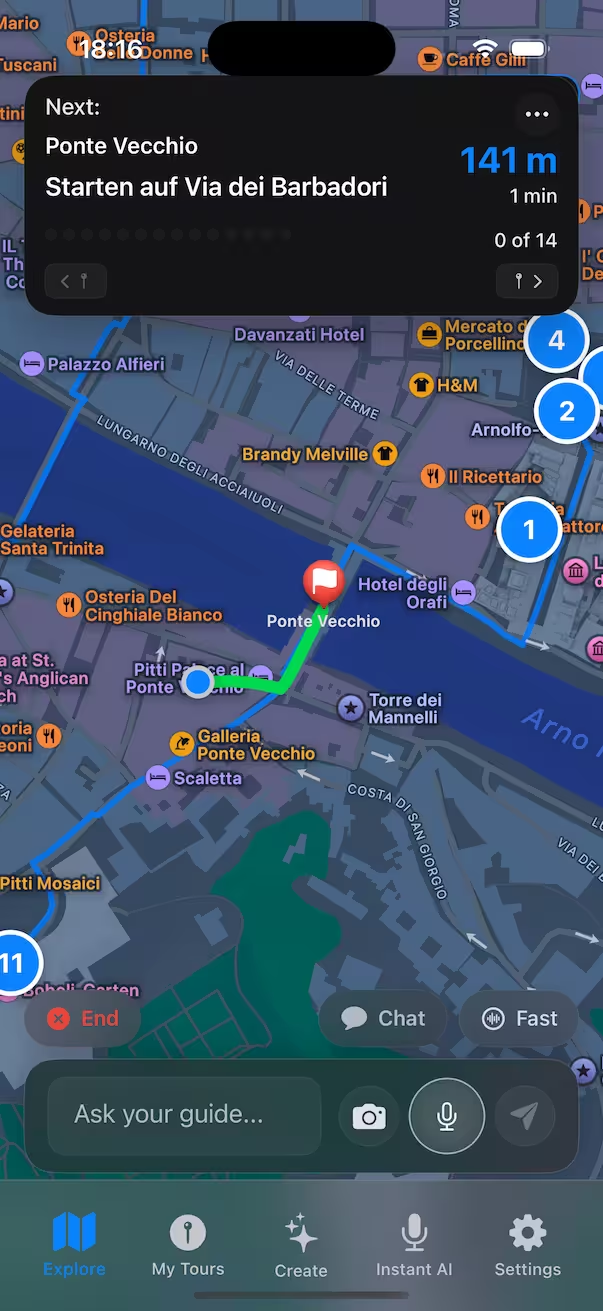
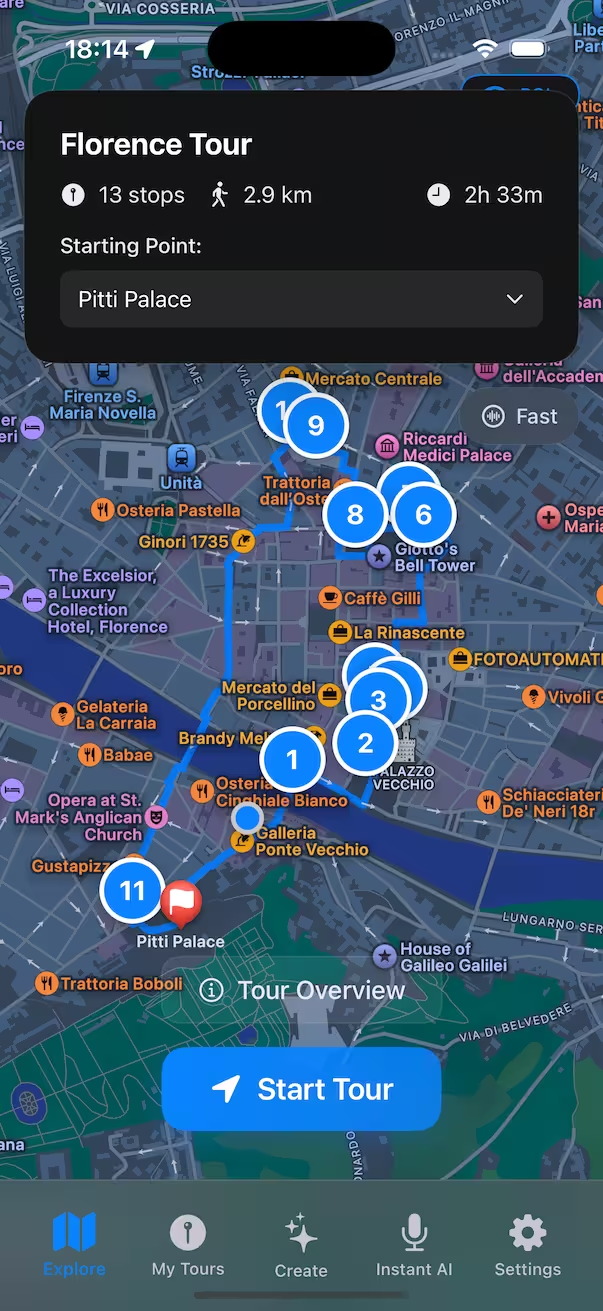
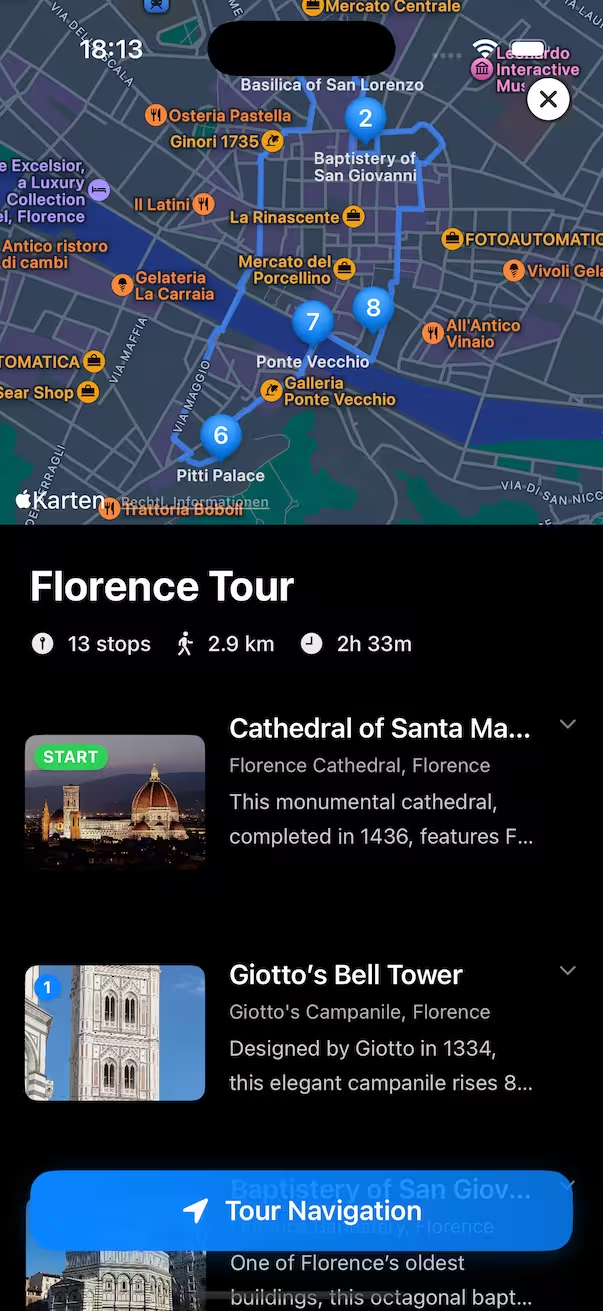
Your live AI guide and the self-guided A Coruña route, together in your browser.
