Best Time to Visit Coimbra
Month-by-month weather, crowds and prices, plus a full calendar of festivals and events worth planning a trip around.
Best monthsApr, Oct
CheapestJan, Feb, Nov
AvoidAug
BusiestMay
When is the best time to visit Coimbra?
Come in late April or October: 20-23°C, the botanical garden in bloom or autumn gold on the Mondego, full opening hours and easy library bookings. May is the priciest week because of Queima das Fitas. January and February are cheapest. Skip mid-August, when 29°C bakes the steep cobbles and the students are gone.
Start our tool and find your best time to visit Coimbra
Your perfect month
Free · ~30 seconds
or tap a month directly
What matters to you?
And this?
Best overall: Apr, Oct. Late April after Easter and October are the real sweet spot: mild 19-23°C, the Botanical Garden in bloom or the riverside planes turning gold, every sight open at full hours, fair hotel value, and the city humming with student energy rather than tour buses.
Best value: Jan, Feb, Nov. January, February and November bring the year's lowest rates, around 40-46% below the May peak, zero queues at the Joanina Library, and a city kept alive by students rather than emptied by the off-season. You trade some grey skies and a damp day or two for it.
Avoid: Aug. August: 29°C afternoons on the steep, shadeless Alta cobbles, 30,000 students gone on summer break so the city feels hollowed out, some restaurants closed, and you still pay near-peak hotel rates. The worst value of the year.
- January: Great time, 14°C. This is the real student city stripped of tourists. Cafés are full of locals, the fado houses run for the people who actually live here, and the only thing you trade for it is a grey sky and the odd umbrella day. The best-value month, no contest.
- February: Great time, 15°C. Honest, unperformed Coimbra. No tourist show, no seasonal markup, just a working university town in winter mode. If you want the Alta to yourself and a fado serenade with locals in the audience, this is your month.
- March: Great time, 17°C. The last properly quiet month before spring fills up. The Botanical Garden is waking, terrace tables reappear, and you can still book any library slot the day before. That window closes fast once Easter lands, so use it.
- April: Great time, 20°C. Coimbra at its most photogenic, and still not a secret. After Easter passes you get the bloom, the mild weather and the full city without the Queima crowds. This is the answer most first-timers are actually looking for.
- May: Good time, 23°C. Two completely different months in one. Early May is a quiet, blooming dream; the last ten days are the loudest, most spectacular week of Coimbra's year. If you want Queima, come for it on purpose and book early. If you do not, come before May 20.
- June: Great time, 25°C. The tipping point, when Coimbra shifts from student city to tourist season. The days are hot but the long evenings on the riverbank redeem them, and the São João bonfires reflecting in the Mondego are a genuinely local kind of magic.
- July: Great time, 29°C. Sunny and reliable, but the heat on the steep Alta is the catch. The morning and late-evening hours are glorious; the 12:00 to 15:00 climb up to the Joanina Library in full sun is the part nobody enjoys. Plan around it and July works well.
- August: Great time, 29°C. The one month to think twice about. Hot, exposed cobbles, students gone, restaurants shuttered here and there, and a city running on tourist energy alone. It is the worst value of the year despite the sunshine.
- September: Great time, 26°C. The city coming alive again. As the students return the Alta gets its pulse back, the heat drops to ideal walking weather, and the golden Mondego evenings make this one of the most romantic months to be here.
- October: Great time, 23°C. Everything April offers plus genuine student festivity and autumn color. The Latada parade and river baptism are pure authentic Coimbra, the fado festival fills the old center, and you get it all 20-30% cheaper than summer. Hard to beat.
- November: Great time, 17°C. Grey and damp, but cheap, calm and entirely yours. The late-October gold lingers into early November on the riverbank, and the Santa Cruz café is one of the loveliest places in Portugal to wait out a shower.
- December: Great time, 15°C. A quiet, characterful Christmas city. The lit university hill and the wooden-hut market are modest next to northern Europe, but that is the charm: a calm, affordable December with the old town softly lit and barely a tour group in sight.
Coimbra weather by month
HighLowRainfall
Jan14°
Feb15°
Mar17°
Apr20°
May23°
Jun25°
Jul29°
Aug29°
Sep26°
Oct23°
Nov17°
Dec15°
| Month | Temp | Rain | Sun | Crowds | Prices | Highlight |
|---|---|---|---|---|---|---|
| Jan | 14° / 6° | 119mm · 11 rainy days | 6.7 h/day | ●○○○○ | ●○○○○ | |
| Feb | 15° / 7° | 94mm · 9 rainy days | 7.9 h/day | ●○○○○ | ●○○○○ | Coimbra Carnival |
| Mar | 17° / 8° | 97mm · 11 rainy days | 9.1 h/day | ●●○○○ | ●●○○○ | |
| Apr | 20° / 10° | 114mm · 13 rainy days | 10.3 h/day | ●●○○○ | ●●○○○ | Easter and Holy Week |
| May | 23° / 12° | 65mm · 9 rainy days | 11.6 h/day | ●●●●○ | ●●●●○ | Queima das Fitas |
| Jun | 25° / 14° | 43mm · 8 rainy days | 12.6 h/day | ●●●○○ | ●●●○○ | Saint John's Eve on the Mondego |
| Jul | 29° / 16° | 8mm · 2 rainy days | 12.9 h/day | ●●●○○ | ●●●○○ | Festival of Queen Saint Isabel |
| Aug | 29° / 16° | 7mm · 1 rainy days | 12.1 h/day | ●●○○○ | ●●●○○ | |
| Sep | 26° / 15° | 52mm · 7 rainy days | 10.7 h/day | ●●●○○ | ●●●○○ | |
| Oct | 23° / 13° | 126mm · 11 rainy days | 8.5 h/day | ●●●○○ | ●●○○○ | Festa das Latas |
| Nov | 17° / 10° | 137mm · 14 rainy days | 7.0 h/day | ●●○○○ | ●●○○○ | Coimbra Christmas Market |
| Dec | 15° / 8° | 112mm · 11 rainy days | 6.8 h/day | ●●○○○ | ●●○○○ | Coimbra Christmas Market |
How we score this: weather = long-run climate normals (Open-Meteo), crowds & prices = relative season read, events checked yearly against official dates.
Best time to visit Coimbra: weather, prices & crowds
Best months for good weather
May, Jun, Sep
Late May, June and September give you Coimbra's kindest light: 23-26°C, long dry evenings on the Mondego riverbank, and the Alta's cobbles walkable without the July-August furnace heat.
Quietest months to avoid the crowds
Jan, Feb, Nov
From November to February the tourist flow drops to almost nothing. You walk straight into the Joanina Library, the Old Cathedral cloister is silent, and the Alta belongs to the 30,000 students rather than tour groups.
Cheapest time to visit Coimbra
Jan, Feb
January and February are the cheapest months by far, with hotel rates running around 46% below the May peak, roughly $75 a night, and not a queue in sight at any sight.
Best time for festivals and events
May, Oct
Queima das Fitas in late May is Coimbra's great spectacle, a nine-night graduation festival with a free academic parade through the city; October's Festa das Latas student welcome is the quieter, more authentic twin.
How many days do you need in Coimbra?
Two full days is the sweet spot for Coimbra. The city stacks up a single steep hillside, so the core sights sit close together, but the climb is real and a second day lets you breathe: the upper city in the morning, the riverside and the Botanical Garden in the afternoon, and a fado show in the evening.
One day
The hilltop in a day
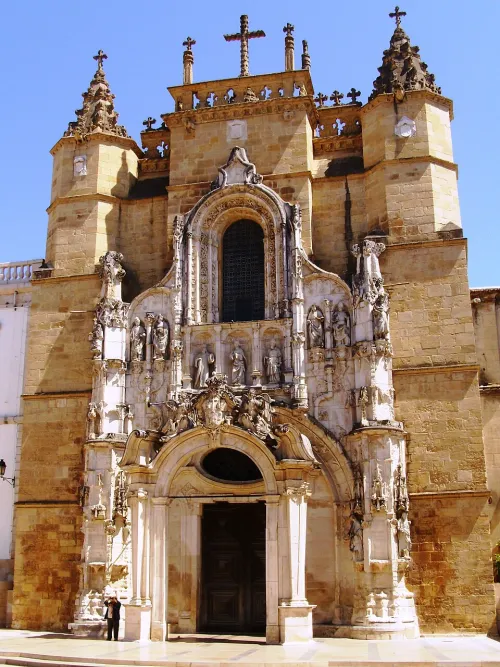
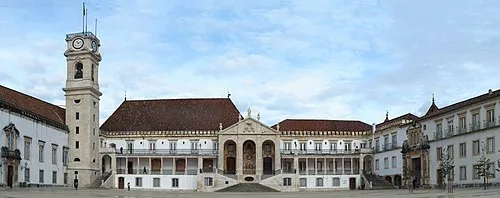
Start at the Monastery of Santa Cruz on Praça 8 de Maio, then pass through the Moorish Arco de Almedina into the lanes of the upper city. Work uphill past the Old Cathedral of Coimbra and the Machado de Castro Museum to the University of Coimbra, where the gilded Joanina Library is the crown jewel. Take the self-guided Coimbra walking tour to link all 6 stops across 2.2 km in roughly 1.4 hours, then end with an early evening at Fado ao Centro on Rua de Quebra Costas.
Two daysRecommended
Gardens, river and fado
Use the second day for what the first misses: the 13.5-hectare Botanical Garden off Calçada Martins de Freitas, the riverside Parque Verde do Mondego, and a longer walk along both banks. In season, the Penedo da Saudade ridge garden above the Alta offers wide Mondego valley views at dusk. Book the Fado ao Centro show at 18:00 and pre-reserve your Joanina Library slot for the morning.
Three days
Day trips and deeper dives
A third day opens up the region: the Roman ruins at Conímbriga, 16 km south, are among the best-preserved in Iberia and need about half a day. Alternatively, the Buçaco forest and palace-hotel 30 km north make a scenic half-day loop. Back in the city, the Santa Clara-a-Nova convent across the Mondego and the Portugal dos Pequenitos heritage park repay a slow afternoon.
Four days or more
Centro region at your own pace
With four days you can settle into Coimbra like a student rather than a sightseer. Add Figueira da Foz on the coast 45 km west for a beach break, visit the Serra da Lousã villages for hill walking, or drive into the Dão wine country for tastings. The university town rhythm, tascas open late, fado most evenings, markets on Saturday, rewards slower travel.
Best time to visit Coimbra by traveller type
Same city, different trip. Here's the month that fits how you're travelling.
🧭
Best time to visit Coimbra for the first time
AprOct
Late April or October: mild 17-23°C, the Botanical Garden in flower, the Joanina Library easy to book, full opening hours everywhere, and none of the Queima das Fitas crowd pressure.
❤️
Best time to visit Coimbra for couples
SepOct
Late September or early October, when students return and the city wakes up, temperatures settle to a perfect 20-24°C, and golden evening light makes the Mondego walks genuinely romantic.
💶
Best time to visit Coimbra on a budget
JanFebNov
January, February or November for hotel rates 40-46% below peak, no queues at all, the first-Sunday free slot at Machado de Castro, and a mild Atlantic winter of 6-13°C rather than a northern freeze.
🍝
Best time to visit Coimbra for food and wine
MayOct
Early May before Queima or October, when the student tascas are fully back in business serving chanfana goat stew and caldeirada, and the broader Centro region runs its autumn Dão wine and olive-oil harvests.
Worst time to visit Coimbra
August is the worst month to visit Coimbra for most travellers. Daytime highs hit 29°C on the steep, shadeless cobbles of the Alta, making the climb from the Arco de Almedina to the Joanina Library genuinely punishing between midday and late afternoon. The 30,000 university students are entirely absent on summer break, so the city that defines itself on student energy feels hollowed out: some tascas and fado houses close outright, others cut hours, and the Alta feels like a stage set without its cast. Despite all of this, hotel rates stay near their annual peak at around 130 to 140 dollars a night.
Still worth it for August still works if you are combining Coimbra with a coastal base at Figueira da Foz, arriving early morning and retreating to the river or the beach by noon. Families with children who want Portugal dos Pequenitos and the Parque Verde riverside playgrounds will find those perfectly enjoyable before 10:30.
Go instead in April, October, when Coimbra is at its best.
Best time for a tour of Coimbra
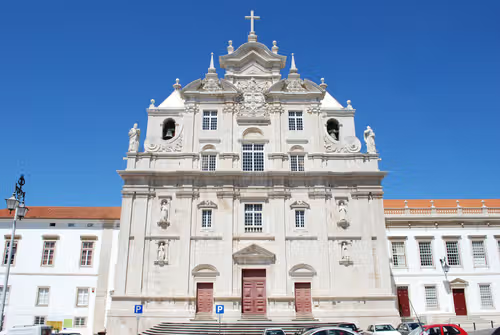
Coimbra is a city of steep stone lanes climbing from the Mondego up to the university, so the month you pick decides whether the walk feels like a pleasure or a slog. April through early June is the sweet spot, with highs of 19 to 25 °C and long evenings that light up the baroque facade of the University of Coimbra and the worn steps below the Old Cathedral. July and August push highs to 28 and 29 °C with almost no rain, but the climb past the New Cathedral and through the tight Arco de Almedina gateway offers little shade at midday, so the heat bites on the open courtyards. October and November turn wet, with 11 to 14 rainy days soaking the cobbles, and January sits around 13.7 °C with nine hours of daylight and dark skies by late afternoon. The shoulder weeks reward you twice over: May and the summer mornings are warm but the crowds at the Joanina Library and Santa Cruz thin out compared to the packed midday peak.
The beauty of walking Coimbra with AI Tourguide is that the climate sets your hour, not a fixed departure board. On a hot August day you simply start your Coimbra tour in the cool of early morning, before the sun bakes the stone steps up to the university, and on a still January afternoon you set off when the low light gilds the Mondego and the lanes are empty. A voice-first guide leads the whole way, telling you the story of the Joanina Library and the medieval gate as you climb, asking what draws you, listening, and adapting the rest of the route to your pace. It runs entirely in your browser, no app and no download, so you keep full control of every break and detour while a real conversation carries you through the old town.

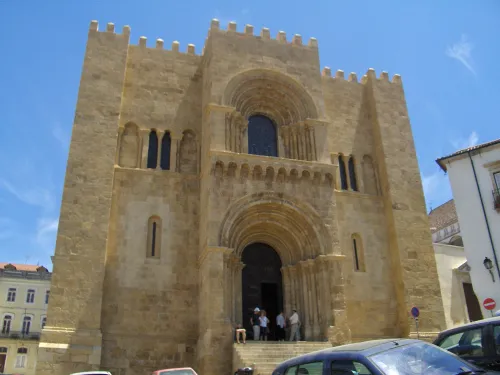 +2
+2All 6 stops are already on the map.
You just press start.
You just press start.
 AI Tourguide
You just read the route.
Now walk it with a guide in your ear.
Press start wherever you are, even hundreds of kilometres from Coimbra, and the guide begins telling its stories right away. In the city, pick any of the 6 stops to start from: it leads you there, then talks with you the whole route, asking, listening, remembering, and shaping the tour around your answers.
6stops2.2km1.4hours11languages
▶Start the tour freeFree to start · Runs in your browser · No app, no download
Coimbra events and festivals calendar
Annual highlights worth timing a trip around, listed month by month.
February
More in February →April
⛪ ReligiousEaster and Holy Week Páscoa / Semana Santa
Apr 3–5 ~
Good Friday to Easter Sunday, late March or April
Holy Week processions through the historic center, religious services at the Old and New Cathedrals, and traditional Easter food such as folar bread and amêndoas.
May
🎉 FestivalQueima das Fitas
May 22–30
end of May, nine nights
The 'burning of the ribbons', a nine-night university graduation festival dating to the 1800s.
June
🇮 HolidayPortugal Day Dia de Portugal
Jun 10
10 June
The national holiday marking the death of the poet Camões in 1580, with ceremonies and a patriotic mood across the city.
🌸 Seasonal natureSaint John's Eve on the Mondego São João
Jun 23–24
Midsummer Eve and Day, 23-24 June
Midsummer bonfires along both banks of the Mondego, lantern floats on the river, sardine grills in Praça do Comércio and street music.
July
⛪ ReligiousFestival of Queen Saint Isabel Festas da Cidade e da Rainha Santa Isabel
Jul 4–12
early July, even years only
The city's patron-saint festival, held every two years in even years.
🎨 Art and cultureCoimbra Medieval Fair Feira Medieval de Coimbra
Jul 17–19
a weekend in mid-to-late July
Portugal's oldest historical medieval fair, running since 1992, a three-day market spread across Largo da Sé Velha, Quebra Costas and Arco de Almedina.
October
🎉 FestivalFesta das Latas Festa das Latas (Latada)
Oct 12–18 ~
second or third week of October
A week-long student welcome ritual.
🎵 MusicInternational Fado Festival Festival Internacional de Fado
Oct 15–18 ~
mid-October
A multi-day festival of Coimbra fado, a distinct tradition from Lisbon's, performed exclusively by male students in academic dress and melancholic in style.
November
🎄 Christmas marketCoimbra Christmas Market Mercado de Natal de Coimbra
Nov 28 – Dec 31 ~
late November through December
A wooden-hut market along Vale das Flores selling handicrafts, seasonal food and decorations, with the historic center lit up around the Old Cathedral and the university.
Insider tips for visiting Coimbra
The rules buried in forums, in one place.
- Book the Joanina Library timed slot online at visit.uc.pt one to two weeks ahead in July and August and during Queima das Fitas week; the morning slots around 09:40 to 10:30 are quietest. You get only 10 to 15 minutes inside the noble floor, no photos, silence required.
- Fado ao Centro on Rua de Quebra Costas runs a 50-minute show daily at 18:00 for €15 including a glass of port, but the room seats just 30 to 40 people. Book by phone or online two to three days ahead in summer or you will find it full on the day.
- For Queima das Fitas in late May, book your hotel six to eight weeks before May 22 or pay 40 to 50% above normal rates; hostel beds sell out too. If you arrive without a reservation, sleep in Condeixa-a-Nova (20 minutes by bus) or Lousã (35 minutes) and day-trip in.
- Avoid the steep Couraça de Lisboa and Rua Quebra Costas between roughly 12:00 and 15:00 on August weekdays. They are exposed with almost no shade, and the uphill climb in the heat is where tourists most regret their timing. Walk the flat, shaded Mondego riverside instead.
- Machado de Castro Museum (€7) is free on the first Sunday of the month, but only from 10:00 to 13:00, and it closes every Monday all year. Arrive before 09:45 for the free window or you pay full price after 13:00.
- In even years (2026 included) July 4 is a local public holiday for the Feast of Santa Isabel: Machado de Castro, many offices and some restaurants close while the processions take over the evening. Plan museum visits for July 2 to 3 or from July 6 onward.
- The Santa Cruz café, inside the free-to-enter Monastery of Santa Cruz, is one of the most beautiful cafés in Portugal and the perfect rain refuge from October onward. Carry a compact umbrella in autumn; Coimbra's rain is showery Atlantic fronts, rarely an all-day soak.
- From mid-June to late September the Alta loses about 70% of its foot traffic as roughly 30,000 students leave. Queues vanish at bakeries and cafés, but some fado houses and student-run venues cut their hours or close entirely for August.
Public holidays in Coimbra
On these dates many shops and offices close, transport thins out, and sights can be mobbed or shut. Plan around them.
| Date | Holiday | What closes |
|---|---|---|
| Jan 1 | New Year's Day | All shops closed, restaurants on limited service, a very quiet city. A good day for a slow riverside walk rather than museum visits. |
| Apr 5 | Easter Sunday | Major churches are busy and the Machado de Castro Museum is closed. Holy Week processions fill the historic center and domestic Portuguese travel peaks, so restaurants book out. |
| Apr 25 | Freedom Day | National holiday marking the 1974 Carnation Revolution. Most shops close, commemorative events run in the center, and it creates a long weekend that adds to April travel pressure. |
| May 1 | Labour Day | The Machado de Castro Museum and most shops are closed. Falls right before the Queima das Fitas surge, so the city is already filling up. |
| Jun 10 | Portugal Day | National holiday: shops close and a long-weekend travel surge pushes into Coimbra. Book accommodation ahead for the second week of June. |
| Jul 4 | Feast of Saint Elizabeth (Santa Isabel) | A local public holiday in Coimbra in even years only, confirmed for 2026. Machado de Castro and many businesses close, the university area goes quiet, and the Rainha Santa processions dominate the day. Plan museums around it. |
| Aug 15 | Assumption | Most shops and some restaurants close, though tourist sites stay open. Falls in the sleepiest stretch of the student summer break. |
| Oct 5 | Republic Day | Shops close and it creates an early-October long weekend, adding a domestic crowd to the autumn shoulder season. |
| Nov 1 | All Saints' Day | Shops close, cemeteries are packed and the streets are otherwise quiet. A good, atmospheric day to explore the Old Cathedral. |
| Dec 1 | Independence Day | National holiday with shops closed and the pre-Christmas atmosphere building as the Mercado de Natal opens for the season. |
| Dec 8 | Immaculate Conception | Shops and many businesses close, the weekend the Christmas market and the historic-center illuminations hit their peak. |
| Dec 25 | Christmas Day | Everything closes except emergency services. The Mercado de Natal and the lit university hill are the only real reasons to be out. |
Coimbra month by month
January in Coimbra
High14°C / 57°F
Low6°C
Rain119mm / 11 rainy days
Sun6.7 h/day
Daylight10 h/day
Humidity81%
Crowds●○○○○Prices●○○○○
January is Coimbra at its quietest and cheapest. Highs sit around 14°C with damp, often grey skies and 11 rainy days, but the cold is mild by northern standards and snow is unheard of. The university is in full session, so the Alta hums with 30,000 students while tourists are simply absent. You walk straight into the Joanina Library and the cathedrals with no queue at all.
The vibe This is the real student city stripped of tourists. Cafés are full of locals, the fado houses run for the people who actually live here, and the only thing you trade for it is a grey sky and the odd umbrella day. The best-value month, no contest.
Don't miss The Joanina Library and Machado de Castro feel almost private. The first Sunday brings free museum entry from 10:00 to 13:00 with no crowd to fight, and the Santa Cruz café is a warm refuge on a wet afternoon.
Crowd drivers Post-holiday lull with zero tourist traffic; the students are present but students are not tourists, so every sight is empty.
In season Hearty winter chanfana, the goat stew from nearby Miranda do Corvo, is at its best in the student tascas.
Heads up New Year's Day closes shops and most restaurants; Machado de Castro is shut every Monday all year.
Cheapest month of the year, hotel rates around 46% below the May peak, roughly $75 a night.
February in Coimbra
High15°C / 60°F
Low7°C
Rain94mm / 9 rainy days
Sun7.9 h/day
Daylight11 h/day
Humidity78%
Crowds●○○○○Prices●○○○○
February is deep low season and the best-value month alongside January. Highs nudge 15°C, the rain eases slightly to about 9 days, and the days lengthen noticeably. The university is active and the city feels lived-in rather than touristy. Carnaval takes over the days before Lent, a modest, relaxed affair compared with the big Portuguese carnivals. Everything is open, nothing is crowded.
The vibe Honest, unperformed Coimbra. No tourist show, no seasonal markup, just a working university town in winter mode. If you want the Alta to yourself and a fado serenade with locals in the audience, this is your month.
Don't miss Walk-in entry to the Joanina Library with no advance slot needed, and Carnaval street festivities around Shrove Tuesday for a low-key local celebration.
Crowd drivers Deep off-season with no tourist driver; Carnaval brings a small domestic bump but nothing like the spring crowds.
In season Carnaval is filhós and malasadas season, the fried doughnut treats sold from market stalls.
Heads up Standard Monday museum closures; no major shutdowns this month.
Joint cheapest month with January; rates stay around 40-46% below the May peak.
Events this month
🎭 CarnivalCoimbra Carnival Carnaval de Coimbra
Feb 13–17 ~
late February or early March, around Shrove Tuesday
Street parade and festivities in the days before Lent. Modest compared with Torres Vedras or Ovar, more a relaxed community celebration than a grand spectacle.
Worth catching if you are already here in February for the low-season rates, but it is not a reason to plan a trip around.
March in Coimbra
High17°C / 63°F
Low8°C
Rain97mm / 11 rainy days
Sun9.1 h/day
Daylight12 h/day
Humidity76%
Crowds●●○○○Prices●●○○○
March brings Coimbra back to life. Highs climb toward 17°C, the Botanical Garden starts to bloom with camelias and magnolias, and the first weekend visitors appear. Rain is still frequent at around 11 days but comes in showery Atlantic bursts rather than all-day soaks. Crowds stay light, so this is a genuinely calm month to see the city with everything in flower and full opening hours.
The vibe The last properly quiet month before spring fills up. The Botanical Garden is waking, terrace tables reappear, and you can still book any library slot the day before. That window closes fast once Easter lands, so use it.
Don't miss The 13.5-hectare Botanical Garden peaks with camelias, magnolias and ornamental beds from March into April, the best photographic conditions of the year.
Crowd drivers First weekend visitors of the year and the Botanical Garden's early bloom; an early Easter can pull the crowds forward.
In season Spring greens and the first of the year's bica das donzelas pastries appear in the market.
Prices still 30-35% below summer; easy walk-in entry to the Joanina Library.
April in Coimbra
High20°C / 67°F
Low10°C
Rain114mm / 13 rainy days
Sun10.3 h/day
Daylight13 h/day
Humidity76%
Crowds●●○○○Prices●●○○○
April is one of the two best months to visit. Highs reach a comfortable 19-20°C, the Botanical Garden and the Penedo da Saudade slopes are in full bloom, and the light is at its most flattering. Easter and the Freedom Day long weekend bring a domestic surge and up to 13 rainy days, but outside those bursts crowds stay moderate, the Joanina Library is easy to book, and every sight runs full hours.
The vibe Coimbra at its most photogenic, and still not a secret. After Easter passes you get the bloom, the mild weather and the full city without the Queima crowds. This is the answer most first-timers are actually looking for.
Don't miss The Penedo da Saudade ridge garden flowers in April with sweeping Mondego valley views, and the Botanical Garden is at its peak. Both are at their loveliest before the heat arrives.
Crowd drivers Easter and Semana Santa domestic travel, Spanish school spring break, and the April 25 Freedom Day long weekend stack up across the month.
In season Easter folar bread and amêndoas sugared almonds fill the bakeries through Holy Week.
Heads up Easter Sunday closes Machado de Castro; Freedom Day on April 25 shuts most shops and some museums.
Easter week spikes small central guesthouses; average hotel $95-110 a night.
Events this month
⛪ ReligiousEaster and Holy Week Páscoa / Semana Santa
Apr 3–5 ~
Good Friday to Easter Sunday, late March or April
Holy Week processions through the historic center, religious services at the Old and New Cathedrals, and traditional Easter food such as folar bread and amêndoas. Domestic Portuguese travel peaks.
An atmospheric, devout time in the old city, though restaurants book out fully and small guesthouses in the center spike in price.
May in Coimbra
High23°C / 74°F
Low12°C
Rain65mm / 9 rainy days
Sun11.6 h/day
Daylight14 h/day
Humidity72%
Crowds●●●●○Prices●●●●○
May is Coimbra's biggest and priciest month, driven entirely by Queima das Fitas from May 22 to 30. Highs hit a warm 23°C, rain drops to around 9 days, and the city is in full bloom. The first three weeks are calm and lovely; then the nine-night graduation festival fills every hotel and the streets with the free Cortejo parade. Book months ahead or visit the festival-free early May, when the crowd level is barely a 2.
The vibe Two completely different months in one. Early May is a quiet, blooming dream; the last ten days are the loudest, most spectacular week of Coimbra's year. If you want Queima, come for it on purpose and book early. If you do not, come before May 20.
Don't miss The free Cortejo academic parade on May 28 fills the streets from the Porta Férrea down to the Baixa; watch from Rua Larga at the top or Praça da República midway. Nightly concerts run at Praça da Canção.
Crowd drivers Queima das Fitas (May 22-30), the nationwide university graduation festival, sells out central accommodation and drives the year's peak prices.
In season Festival food stalls and late-night sardine grills take over Praça da Canção during Queima week.
Heads up Labour Day on May 1 closes Machado de Castro and most shops; the Joanina Library may shut for the Cortejo day, so check the university site.
Highest rates of the year, up 40%-plus to around $165 a night during Queima das Fitas; central beds sell out, book 4-8 weeks ahead.
Events this month
🎉 FestivalQueima das Fitas
May 22–30
end of May, nine nights
The 'burning of the ribbons', a nine-night university graduation festival dating to the 1800s. A grand academic parade, the Cortejo, winds through the city, with open-air concerts by major national acts at Praça da Canção, fado serenades, and student traditions throughout.
The most iconic Coimbra event and the free Cortejo parade is genuinely spectacular, but book your hotel by March or pay a 40% premium, and skip it if you hate crowds.
June in Coimbra
High25°C / 77°F
Low14°C
Rain43mm / 8 rainy days
Sun12.6 h/day
Daylight15 h/day
Humidity73%
Crowds●●●○○Prices●●●○○
June opens the Coimbra summer warm and nearly dry, with 25°C highs, only 43mm of rain, and 15 hours of daylight. The students leave through the month and tourists take their place. A string of holidays, Corpus Christi, Portugal Day on June 10, and São João bonfires on the Mondego around June 23, stretches several weekends into long ones. It is a lively, sunny month before July's heat and full tourist peak arrive.
The vibe The tipping point, when Coimbra shifts from student city to tourist season. The days are hot but the long evenings on the riverbank redeem them, and the São João bonfires reflecting in the Mondego are a genuinely local kind of magic.
Don't miss São João on June 23-24 lights bonfires along both banks of the Mondego with lantern floats and sardine grills in Praça do Comércio. Long daylight makes evening riverside walks last well past 21:00.
Crowd drivers Summer travel begins, Corpus Christi and the June 10 Portugal Day long weekend, and the São João celebrations all draw extra visitors.
In season Grilled sardines and street-stall caldo verde are the São João staples on Midsummer Eve.
Heads up Portugal Day on June 10 closes shops and triggers a long-weekend travel surge into the city.
Post-festival dip then a steady rise; average $120-135 a night.
Events this month
🌸 Seasonal natureSaint John's Eve on the Mondego São João
Jun 23–24
Midsummer Eve and Day, 23-24 June
Midsummer bonfires along both banks of the Mondego, lantern floats on the river, sardine grills in Praça do Comércio and street music. Less famous than Porto's São João but with a distinctly Coimbra character.
The Mondego backdrop makes the bonfires atmospheric, it is free and spontaneous, and you can jump three flames for luck like a local.
🇮 HolidayPortugal Day Dia de Portugal
Jun 10
10 June
The national holiday marking the death of the poet Camões in 1580, with ceremonies and a patriotic mood across the city. It sits inside the late-May to mid-June Santos Populares festivity season.
It creates a long-weekend travel surge, so book accommodation ahead if you are visiting the second week of June.

July in Coimbra
High29°C / 83°F
Low16°C
Rain8mm / 2 rainy days
Sun12.9 h/day
Daylight15 h/day
Humidity70%
Crowds●●●○○Prices●●●○○
July is hot, dry and bright: 28 to 29°C highs, almost no rain at 8mm, and nearly 13 hours of sun a day. With the students gone the Alta is empty of locals but busy with European holidaymakers. The Feira Medieval, held over a weekend in mid-to-late July, and, in even years, the Santa Isabel festival around July 4 give the month real events. The steep cobbles are punishing midday, so walk early or after 18:30.
The vibe Sunny and reliable, but the heat on the steep Alta is the catch. The morning and late-evening hours are glorious; the 12:00 to 15:00 climb up to the Joanina Library in full sun is the part nobody enjoys. Plan around it and July works well.
Don't miss The Feira Medieval (July 17-19) turns the streets around the old cathedral into a costumed medieval market. In 2026 the biennial Santa Isabel processions carry the one-ton statue of Queen Isabel through the historic center.
Crowd drivers Peak European summer holidays and the Feira Medieval crowd; in even years the Santa Isabel festival adds a major draw around July 4.
In season Medieval-fair gastronomy and roast-meat stalls fill the Sé Velha streets during the Feira Medieval weekend.
Heads up July 4 is a local holiday in 2026: Machado de Castro, many offices and some restaurants close for the Santa Isabel processions. Plan museums for July 2-3 or July 6 onward.
European summer peak; average $130-150 a night.
Events this month
🎨 Art and cultureCoimbra Medieval Fair Feira Medieval de Coimbra
Jul 17–19
a weekend in mid-to-late July
Portugal's oldest historical medieval fair, running since 1992, a three-day market spread across Largo da Sé Velha, Quebra Costas and Arco de Almedina. Period stalls, craft recreations, medieval food, costumed performers and a ticketed Medieval Supper that opens the Friday evening.
The setting of cobblestones, the old cathedral facade and stone archways is made for it. Free, family-friendly and genuinely atmospheric.
⛪ ReligiousFestival of Queen Saint Isabel Festas da Cidade e da Rainha Santa Isabel
Jul 4–12
early July, even years only
The city's patron-saint festival, held every two years in even years. Two solemn processions carry the one-ton statue of Queen Isabel through the historic center along her 14th-century route between Graça Church and the Santa Clara-a-Nova convent, with concerts, gastronomy fairs and handicraft markets around it.
A rare biennial spectacle held only in even years, and one of the most atmospheric events on the Coimbra calendar. Note that July 4 is a local public holiday on those years, so many sights close for the processions.
August in Coimbra
High29°C / 84°F
Low16°C
Rain7mm / 1 rainy days
Sun12.1 h/day
Daylight14 h/day
Humidity69%
Crowds●●○○○Prices●●●○○
August is the hottest month at 29°C highs and just 1 rainy day, but it is the strangest time to visit. The university's 30,000 students are entirely gone, so the Alta feels emptied even though tourists are present. The heat on the shadeless steep cobbles deters walkers, some restaurants close, and the city has a hollow, low-energy feel. You pay near-peak hotel rates for a half-asleep city.
The vibe The one month to think twice about. Hot, exposed cobbles, students gone, restaurants shuttered here and there, and a city running on tourist energy alone. It is the worst value of the year despite the sunshine.
Don't miss The shaded, flat Mondego riverside and Parque Verde are the smart August choice over the baking Alta. Early mornings before 10:30 are the only comfortable time for the upper city.
Crowd drivers Peak European tourist season and Spanish families, plus the Assumption holiday, but the city still feels empty without its students.
In season Some student tascas close for the break; the surviving riverside cafés serve cold caldeirada and beer.
Heads up Assumption on August 15 closes most shops and some restaurants; a number of student-run venues stay shut all month.
Despite the tourist season, the city feels sleepy; average $130-140 a night.

September in Coimbra
High26°C / 80°F
Low15°C
Rain52mm / 7 rainy days
Sun10.7 h/day
Daylight12 h/day
Humidity73%
Crowds●●●○○Prices●●●○○
September is one of the best-balanced months. Highs settle to a perfect 26°C early on, easing as the month goes, with rain returning gently at around 7 days. The students come back late in the month and the city reawakens, shedding August's hollow feel. Evening light over the Mondego turns golden, prices begin to slide from summer, and walking conditions are at their most comfortable.
The vibe The city coming alive again. As the students return the Alta gets its pulse back, the heat drops to ideal walking weather, and the golden Mondego evenings make this one of the most romantic months to be here.
Don't miss Late-September evenings on the Mondego riverbank, with warm 20-24°C air and golden light, are the city at its most romantic. The Choupal forest and riverside planes begin their slow autumn turn.
Crowd drivers Late-September student return and the post-summer shoulder, with Latada preparations beginning toward month's end.
In season The returning student tascas reopen with the full local menu of chanfana and papas de sarrabulho.
Prices start easing from the August highs; average $110-130 a night.

October in Coimbra
High23°C / 73°F
Low13°C
Rain126mm / 11 rainy days
Sun8.5 h/day
Daylight11 h/day
Humidity75%
Crowds●●●○○Prices●●○○○
October ties with late April as the best month to visit. Highs hold a mild 23°C, the riverside planes and the Choupal forest turn gold, and the city is full of student energy. Rain picks up to around 11 days as the autumn season begins, but it stays showery. The Festa das Latas student welcome and the International Fado Festival both fall this month, giving October real events at shoulder-season prices.
The vibe Everything April offers plus genuine student festivity and autumn color. The Latada parade and river baptism are pure authentic Coimbra, the fado festival fills the old center, and you get it all 20-30% cheaper than summer. Hard to beat.
Don't miss Festa das Latas brings the can-dragging freshman parade and Mondego river baptism, and the International Fado Festival fills historic-center venues. Evening walks under the gold plane trees in late October are scenic and uncrowded.
Crowd drivers The Festa das Latas student welcome week and the mid-October Fado Festival draw a domestic crowd; the October 5 Republic Day long weekend adds to it.
In season The wider Centro region runs its Dão valley wine and olive-oil harvests in October, a 30-minute drive from the city.
Heads up Republic Day on October 5 closes shops and creates an early-month long weekend.
Best-value shoulder month with real events; 20-30% below summer, average $95-105 a night.
Events this month
🎉 FestivalFesta das Latas Festa das Latas (Latada)
Oct 12–18 ~
second or third week of October
A week-long student welcome ritual. Freshmen parade in faculty colors dragging tin cans tied to their ankles, ending at the Mondego for a baptism by their mentors. Seven nights of concerts at Praça da Canção, opened by a fado serenade at Largo da Sé Nova.
Completely authentic and not staged for tourists. The can-dragging parade and river baptism are festive and unique to Coimbra.
🎵 MusicInternational Fado Festival Festival Internacional de Fado
Oct 15–18 ~
mid-October
A multi-day festival of Coimbra fado, a distinct tradition from Lisbon's, performed exclusively by male students in academic dress and melancholic in style. Venues are scattered across the historic center, some free, some ticketed.
Coimbra fado is UNESCO-listed separately from Lisbon fado, and October's student season is its authentic context.

November in Coimbra
High17°C / 63°F
Low10°C
Rain137mm / 14 rainy days
Sun7.0 h/day
Daylight10 h/day
Humidity83%
Crowds●●○○○Prices●●○○○
November is the wettest month, with around 137mm over 14 rainy days and daylight dropping under 10 hours. Highs fall back to 17°C and the tourist flow thins sharply. The rain comes in Atlantic fronts rather than relentless drizzle, so a compact umbrella and the beautiful Santa Cruz café see you through. With crowds gone and rates back to low-season levels, it is a quiet, easy month to have the city to yourself.
The vibe Grey and damp, but cheap, calm and entirely yours. The late-October gold lingers into early November on the riverbank, and the Santa Cruz café is one of the loveliest places in Portugal to wait out a shower.
Don't miss The Choupal forest and Parque Verde hold their autumn gold into early November. All Saints' Day is a quiet, atmospheric time to explore the Old Cathedral.
Crowd drivers Crowds thin sharply; only the All Saints' holiday on November 1 brings a brief domestic day-trip bump.
In season Roast chestnuts appear on street corners and the Dão new wines arrive from the nearby valley.
Heads up All Saints' Day on November 1 closes shops; the Christmas market typically opens in the final days of the month.
Low season resumes; rates similar to early April with easy access everywhere.
Events this month
🎄 Christmas marketCoimbra Christmas Market Mercado de Natal de Coimbra
Nov 28 – Dec 31 ~
late November through December
A wooden-hut market along Vale das Flores selling handicrafts, seasonal food and decorations, with the historic center lit up around the Old Cathedral and the university.
Low-key next to northern European markets, but ideal for a quiet, characterful December visit without summer crowds.

December in Coimbra
High15°C / 59°F
Low8°C
Rain112mm / 11 rainy days
Sun6.8 h/day
Daylight9 h/day
Humidity83%
Crowds●●○○○Prices●●○○○
December is mild for the season at 15°C highs, with short 9.5-hour days but enough light for comfortable 10:00 to 17:00 sightseeing when it is clear. The Mercado de Natal and the festive illuminations around the Old Cathedral and the university give the historic center a low-key holiday glow. Rain is frequent at 11 days but showery. Prices stay at low-season levels, so you get the atmosphere without the crowds.
The vibe A quiet, characterful Christmas city. The lit university hill and the wooden-hut market are modest next to northern Europe, but that is the charm: a calm, affordable December with the old town softly lit and barely a tour group in sight.
Don't miss The Mercado de Natal along Vale das Flores runs through December 31, with the historic center lit around the Old Cathedral and the university hill.
Crowd drivers The Christmas market and December holiday illuminations draw a domestic crowd, with the Independence Day and Immaculate Conception holidays adding long weekends.
In season Christmas means bolo-rei king cake and bacalhau-based holiday dishes in the tascas.
Heads up Independence Day on December 1, Immaculate Conception on December 8 and Christmas Day all close shops; on December 25 only emergency services run.
Low-season rates with a holiday atmosphere and no summer crowds.
Events this month
🎄 Christmas marketCoimbra Christmas Market Mercado de Natal de Coimbra
Nov 28 – Dec 31 ~
late November through December
A wooden-hut market along Vale das Flores selling handicrafts, seasonal food and decorations, with the historic center lit up around the Old Cathedral and the university.
Low-key next to northern European markets, but ideal for a quiet, characterful December visit without summer crowds.
Frequently asked questions
What is the best time to visit Coimbra?
Late April and October are the two best months. You get mild 19-23°C weather, the Botanical Garden in bloom in spring or golden autumn light on the Mondego, full opening hours, easy Joanina Library bookings, and real student energy in the city. Both avoid the Queima das Fitas crowd surge of late May.
What is the cheapest time to visit Coimbra?
January and February are the cheapest months by a clear margin, with hotel rates running around 46% below the May peak, roughly $75 a night. Every sight is open with no queues, the first Sunday brings free entry to Machado de Castro, and the city stays lively thanks to its students. The trade is grey, damp weather around 14-15°C.
When is Queima das Fitas in Coimbra?
Queima das Fitas runs May 22 to 30 in 2026, a nine-night university graduation festival with a free academic parade, the Cortejo, on May 28 and nightly concerts at Praça da Canção. Book your hotel four to eight weeks ahead or pay 40% more, and expect central accommodation to sell out entirely.
What is the worst time to visit Coimbra?
Mid-August is the weakest time. The 29°C heat bakes the steep, shadeless Alta cobbles, the 30,000 students are away on summer break so the city feels hollowed out, some restaurants close, and you still pay near-peak hotel rates. Late May without a Queima das Fitas booking is the other time to avoid.
How many days do you need in Coimbra?
Two full days is the sweet spot. One day covers the UNESCO university, the Joanina Library, the two cathedrals and the Alta, the second handles the Botanical Garden, Santa Cruz Monastery, the Mondego riverside and a fado show. Add a third day if you want a Conímbriga Roman-ruins day trip or the Buçaco forest.
What is the weather like in Coimbra in summer?
July and August are hot and dry, with highs of 28-29°C, barely any rain, and nearly 13 hours of sun a day. The steep Alta cobbles get punishing midday, so the best walking windows are before 10:30 and after 18:30. The shaded, flat Mondego riverside is the comfortable midday alternative.
Do I need to book the Joanina Library in advance?
Yes, in peak periods. The Joanina Library uses timed entry slots (€12 with the Paço das Escolas) and they sell out up to two weeks ahead in May and from July through August. Book online at visit.uc.pt, choose a quiet morning slot around 09:40, and expect just 10 to 15 minutes inside the noble floor.
Is Coimbra worth visiting in winter?
Very much, if you want value and calm. Winters are mild for Europe at 6-13°C, the rain is showery rather than constant, and the university keeps the city animated. You get the lowest rates of the year, no queues anywhere, and the Santa Cruz café as a beautiful refuge on a wet afternoon. Expect short, sometimes grey days.
When does Coimbra have its student festivals?
Two big ones. Queima das Fitas is the graduation festival in late May (May 22-30 in 2026), the loudest and most spectacular. Festa das Latas, the freshman welcome with its can-dragging parade and Mondego river baptism, falls in the second or third week of October. October is the calmer, more authentic of the two to experience.
Does Coimbra have a beach?
Not in the city itself, since Coimbra sits 40km inland on the Mondego River. The nearest beach is Figueira da Foz, about 45 minutes away by train. Sea swimming is irrelevant to a Coimbra trip, so the city's best months are driven by walking comfort and student-season events, not water temperature.

Any month, any day: your guide is already there
Whatever date you pick, a private human guide gets pricier and harder to book on weekends, holidays and in peak season. Our live AI guide, the one that walks with you and answers anything you ask out loud, works the opposite way.
One flat price, every day
No holiday, weekend, night or peak-season surcharge. A private guide in Coimbra runs well over 100 euro for a half day, and more on holidays. Ours stays the same.
Available the moment you want it
Start at midnight or at dawn, on Christmas, in the snow, in the August heat. No sold-out high season, no booking weeks ahead.
Your pace, no meter running
Pause for a long lunch, restart after dark, repeat a stop. The tour simply waits for you.
Free to try, a fraction of the cost
Test it for free, then a transparent flat price that undercuts any private guide, in every season.
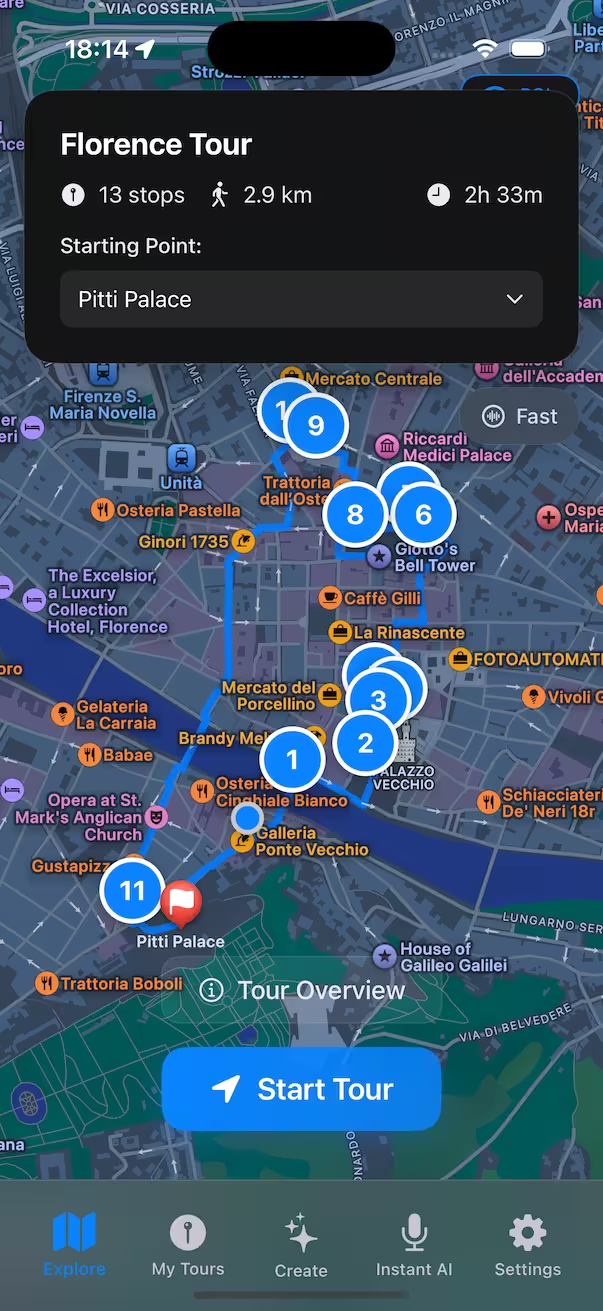
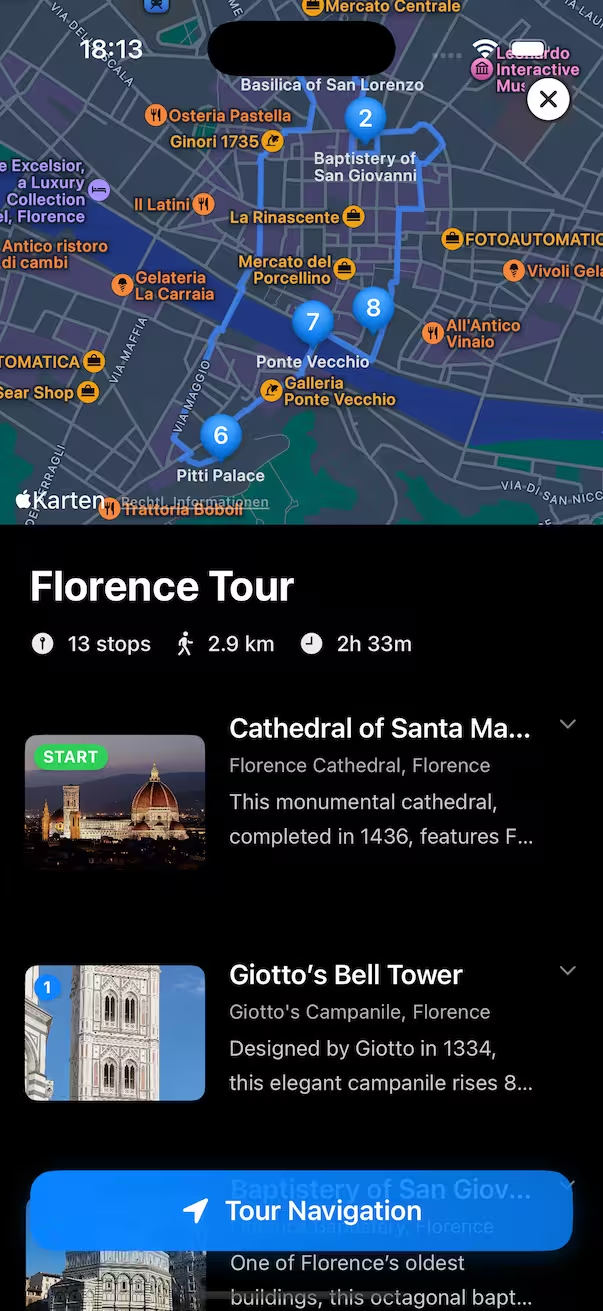
The classic Coimbra tour: 6 stops, 2.2 km, about 1 h on foot
Your live AI guide and the self-guided Coimbra route, together in your browser.