Best Time to Visit Zaragoza
Month-by-month weather, crowds and prices, plus a full calendar of festivals and events worth planning a trip around.
Best monthsApr, May, Oct
CheapestJan, Feb, Nov
AvoidJul, Aug
BusiestOct
When is the best time to visit Zaragoza?
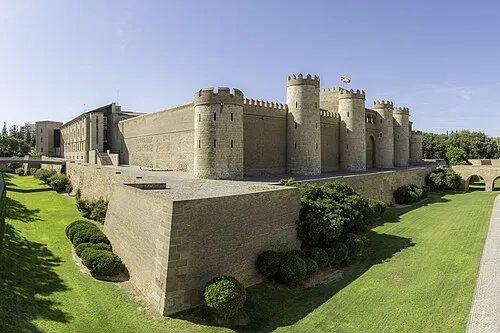
Come mid-April to late May or in early October (1-9 Oct): comfortable 18-26°C walking weather, every museum open and almost no foreign crowds. The one date to plan hard around is Fiestas del Pilar (10-18 October), when over a million visitors arrive and central 3-star hotels jump to 150-300 € a night. January and February are dead-quiet and cheapest (45-75 €), the trade being cold and the icy Cierzo wind. Skip July and August unless you tolerate 38-42°C heat.
Start our tool and find your best time to visit Zaragoza
Your perfect month
Free · ~30 seconds
or tap a month directly
What matters to you?
And this?
Best overall: Apr, May, Oct. Mid-April to late May and the first nine days of October are the real sweet spot: 18-26°C, every sight open, spring blossom or autumn colour in Parque Grande, and hotel rates a fraction of Pilar week. April adds the San Jorge book fair on the 23rd; early October gives you the festive build-up to Pilar without the crowd crush.
Best value: Jan, Feb, Nov. January, February and November bring 3-star central rooms at 45-80 €, no queues anywhere, and the first Sunday of every month free at all the municipal museums. The catch is cold days and the Cierzo wind, so dress for wind chill and use the museums as warm refuges.
Avoid: Jul, Aug. July and August are the year's worst value for comfort: 38-42°C midday heat on an exposed inland plateau, with no beach to escape to and many El Tubo tapas bars shut for two to three weeks while owners holiday. Sightseeing is only bearable before 09:30 or after 19:00.
- January: Great time, 12°C. This is the month you have the Aljafería Palace and the Caesaraugusta Roman museums almost to yourself, no queues anywhere. The honest price is cold and the biting Cierzo, but the low winter sun lights the Basílica del Pilar façade beautifully across Plaza del Pilar. Slow, local and genuinely affordable.
- February: Great time, 14°C. February is unperformed, honest Zaragoza, no festival markup and no crowds. Museums are empty, hotel prices sit at the floor, and you can wander the Roman walls and El Tubo without a soul in the way. The reward for braving the cold is the city entirely to yourself.
- March: Great time, 17°C. March is the last genuinely quiet month before the spring season fills the city. The parks green up, the Galacho de Juslibol wetlands hit peak bird migration, and you still get every sight without a queue. Then Semana Santa arrives at month's end and the drums start to roll.
- April: Great time, 21°C. April is when Zaragoza shows off. The thunderous Good Friday drumming in the narrow lanes by La Seo is genuinely overwhelming, and three weeks later the San Jorge book fair gives the city a joyful, bookish street party. Spring colour, comfortable weather and a packed cultural calendar.
- May: Great time, 26°C. May is the quietly perfect month nobody markets. No big crowd-event, no oppressive heat, no holiday markup, just a green city in its best walking weather. Bring a windproof layer for the Cierzo and you have Zaragoza close to its best for noticeably less than autumn or Pilar week.
- June: Good time, 31°C. June is the tipping point into full summer, and the long evenings are the payoff. Light until well past 21:00 means late dinners on El Tubo terraces and walks along the Ebro once the day cools. It is getting hot, so shift sightseeing to the early morning or evening, but the energy is great.
- July: Tough month, 34°C. July is hot, dry and quiet on the tourist front, since Spaniards have decamped to the beach. The trick is to flip your day: see the open-air sights, Plaza del Pilar, the walk to the Aljafería, in the cool of early morning or late evening, and spend the brutal midday hours in the shaded lanes of El Tubo or inside the air-conditioned museums.
- August: Tough month, 33°C. August is not the month to discover Zaragoza's food culture, since a chunk of the old town is shuttered for the summer break. If you do come, it is for empty sights and very early or very late walks. The international and tourist-facing places on Alfonso I and Don Jaime I stay open when the family-run ones do not.
- September: Great time, 28°C. September feels like Zaragoza exhaling: warm but no longer punishing, the El Tubo bars open again, and the build-up to Pilar just beginning. It is the start of the autumn shoulder, with good weather and reasonable prices outside the Vive Latino weekend.
- October: Tough month, 23°C. October is two cities in one. The early days (1-9) are golden-autumn Zaragoza, romantic at dusk on Plaza del Pilar with the lit Basílica and almost no crowds. Then Pilar week explodes into a million-strong, all-night festival of flower offerings, fireworks and giants, glorious if you came for it, overwhelming if you did not.
- November: Great time, 16°C. November is Zaragoza decompressing after Pilar: cheap, calm and almost touristless, with the bonus of autumn colour in the parks. Dress for the Cierzo wind chill, and the reward is the city's sights without queues and at near-rock-bottom prices, right up until the Christmas lights switch on at month's end.
- December: Great time, 12°C. December trades autumn's calm for festive bustle: market stalls, an ice rink, mulled wine and the Basílica lit up over Plaza del Pilar. It is genuinely atmospheric, and prices stay reasonable outside the Christmas-week spike, but pack a warm windproof coat, since the Cierzo can make a 10°C day feel painful.
Zaragoza weather by month
HighLowRainfall
Jan12°
Feb14°
Mar17°
Apr21°
May26°
Jun31°
Jul34°
Aug33°
Sep28°
Oct23°
Nov16°
Dec12°
| Month | Temp | Rain | Sun | Crowds | Prices | Highlight |
|---|---|---|---|---|---|---|
| Jan | 12° / 4° | 32mm · 6 rainy days | 7.5 h/day | ●○○○○ | ●○○○○ | San Valero Festival |
| Feb | 14° / 5° | 25mm · 5 rainy days | 8.6 h/day | ●○○○○ | ●○○○○ | San Valero Festival |
| Mar | 17° / 7° | 38mm · 6 rainy days | 9.7 h/day | ●●○○○ | ●○○○○ | Cincomarzada |
| Apr | 21° / 9° | 49mm · 8 rainy days | 10.6 h/day | ●●○○○ | ●●○○○ | Holy Week |
| May | 26° / 13° | 31mm · 5 rainy days | 12.6 h/day | ●●○○○ | ●●○○○ | |
| Jun | 31° / 17° | 33mm · 6 rainy days | 12.9 h/day | ●●●○○ | ●●○○○ | EXPOFIMER Trade Fair |
| Jul | 34° / 20° | 17mm · 3 rainy days | 13.5 h/day | ●●●○○ | ●●●○○ | |
| Aug | 33° / 20° | 11mm · 2 rainy days | 12.7 h/day | ●●●○○ | ●●●○○ | |
| Sep | 28° / 17° | 23mm · 4 rainy days | 10.9 h/day | ●●●○○ | ●●●○○ | Vive Latino España |
| Oct | 23° / 13° | 34mm · 6 rainy days | 9.0 h/day | ●●●●● | ●●●●● | Fiestas del Pilar |
| Nov | 16° / 8° | 60mm · 9 rainy days | 7.6 h/day | ●●○○○ | ●●○○○ | CITY360 Trade Fair |
| Dec | 12° / 5° | 27mm · 5 rainy days | 6.9 h/day | ●●○○○ | ●●○○○ | Christmas Market |
How we score this: weather = long-run climate normals (Open-Meteo), crowds & prices = relative season read, events checked yearly against official dates.
Best time to visit Zaragoza: weather, prices & crowds
Best months for good weather
Apr, May, Oct
April, May and October give Zaragoza its best walking weather: 18-26°C, long bright days and the city's near-permanent blue skies, since this is one of Spain's driest cities at only about 328 mm of rain a year. Pack a windproof layer for the Cierzo, which can make a sunny day feel sharp.
Quietest months to avoid the crowds
Jan, Feb, Nov
January, February and November see almost no foreign visitors. You walk straight into the Aljafería Palace and the four Caesaraugusta Roman museums with no queue, and Plaza del Pilar is yours at dusk. The catch is winter cold and the biting Cierzo wind funnelled down the Ebro valley.
Cheapest time to visit Zaragoza
Jan, Feb, Nov
January, February and November are the cheapest months: central 3-star hotels run 45-80 € a night, less than a third of what they cost during Fiestas del Pilar. The Bono Caesaraugusta museum pass (4 museums for 7 €) stretches the budget further any time of year.
Best time for festivals and events
Oct, Mar, Apr
Two unmissable spectacles bookend the calendar. Fiestas del Pilar (10-18 October) brings the Ofrenda de Flores on the 12th, when tens of thousands of pilgrims in traditional Aragonese dress build a flower pyramid around the Virgen in Plaza del Pilar. And Semana Santa (late March into early April) delivers Aragón's thunderous drumming processions, over 4,000 drums in the narrow lanes by La Seo on Good Friday night.
How many days do you need in Zaragoza?
Two days cover Zaragoza's essentials comfortably, and the compact, walkable centre means you see a great deal without long transit time. A third day buys the Goya Museum, the Galacho de Juslibol wetlands, or an AVE day trip to Madrid or Barcelona. One focused day is enough if you are stopping over between cities.
One day
The historic core on foot
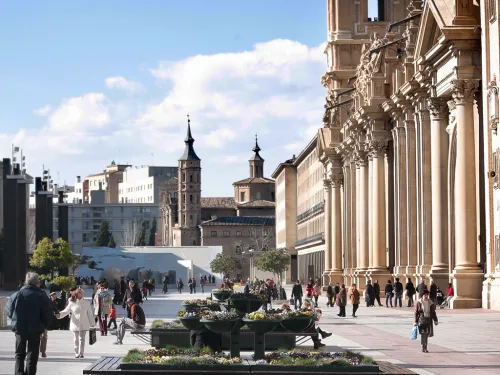
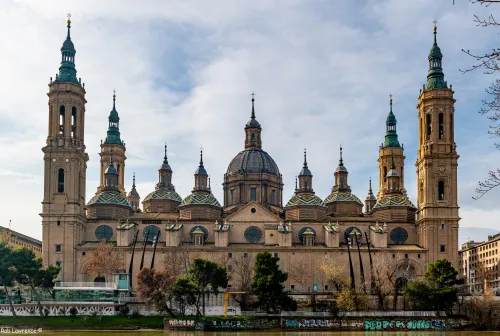
Start at the enormous Plaza del Pilar, then step inside the Basílica del Pilar to see Goya's ceiling frescoes and the two unexploded Civil War bombs near the Holy Chapel. Cross to La Seo Cathedral and the Renaissance Palacio de la Lonja, walk out to the Puente de Piedra for the classic riverside shot, and end the afternoon in the narrow tapas lanes of El Tubo. Take the self-guided Zaragoza walking tour, 8 stops across 5.0 km in about 2.2 hours, to stitch the whole circuit together with full context at each stop.
Two daysRecommended
Add the Aljafería and the Roman city
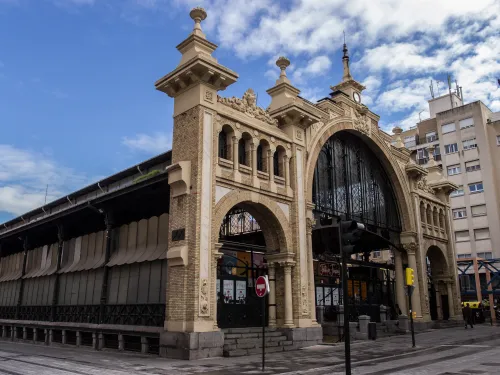
Morning of day two: the Aljafería Palace, the northernmost Islamic palace in Europe and a UNESCO Mudejar showpiece, is quietest on weekday mornings between 10:00 and 12:00 and deserves at least 90 minutes. After lunch at the Mercado Central, work through the four underground Caesaraugusta Roman museums, the Forum, Theatre, Baths and River Port, covered by the Bono Caesaraugusta pass for 7 €. Finish with an early evening tapas crawl through Calle Estébanes and Calle Mártires.
Three days
Goya, wetlands, and day-trip options
The Goya Museum on Calle Espoz y Mina holds the best collection of his early work in the city, and the Pablo Gargallo Museum near Plaza de San Felipe is a sculptural gem rarely crowded outside free-Sunday mornings. For a change of pace, the free Galacho de Juslibol wetland reserve on the Ebro meanders is a half-day walk best done in spring or autumn when bird migration is at its peak. An evening table in El Tubo reserved this far ahead is an easy reward.
Four days or more
Day trips on the AVE and deeper Aragón
Zaragoza sits exactly 1h20 from Madrid and 1h30 from Barcelona on the AVE high-speed line, making both realistic day trips. Closer to home, Calatayud is 50 minutes by train and holds Mudéjar towers and a striking ruined castle. Tarazona, an hour by bus, is an undervisited cathedral city with a Moorish quarter. Any of these work as a fourth-day excursion, leaving the evenings free for Zaragoza's food and wine scene.
Best time to visit Zaragoza by traveller type
Same city, different trip. Here's the month that fits how you're travelling.
🧭
Best time to visit Zaragoza for the first time
AprMayOct
April, May or early October: comfortable walking weather, no extreme heat, and every essential open, from the Aljafería Palace to the four underground Caesaraugusta Roman museums. If you want October, come 1-9 Oct and dodge the Fiestas del Pilar crush (10-18 Oct) unless that festival is exactly what you came for.
❤️
Best time to visit Zaragoza for couples
OctMay
Early October (1-9 Oct) for warm evenings, Pilar decorations going up and the Ebro at scenic autumn colour: Plaza del Pilar at dusk, with the lit Basílica and sunset behind La Seo, is genuinely romantic. Mid-May is the other pick, when Parque Grande is in full spring bloom before the heat turns oppressive.
💶
Best time to visit Zaragoza on a budget
JanFebNov
January, February or November for the lowest hotel rates (45-75 €), plus the first Sunday of each month free at every municipal museum. The Bono Caesaraugusta pass covers 4 museums for 7 €, and 29 January (San Valero) is a free festival day with all municipal museums free.
🍝
Best time to visit Zaragoza for food and wine
OctMay
Early October (1-9, before the Pilar crowds) or May-June, when El Tubo is liveliest with locals in residence. Hunt down ternasco (Aragonese lamb), migas, borrajas and the cured jamón de Teruel, washed down with robust Cariñena reds by the glass for 1.50-2.50 €. The Mercado Central (closed Sundays) is best before 11:00.
Worst time to visit Zaragoza
July and August are the hardest months for comfort. Midday temperatures on Zaragoza's exposed inland plateau regularly hit 38-42°C, with spikes possible near 42°C, and there is no beach or coast nearby to escape to. Many El Tubo tapas bars and traditional old-town restaurants close for two to three weeks in August while owners holiday, particularly in the second and third weeks, which hollows out the food scene that makes the city special. Outdoor sightseeing is only bearable before 09:30 or after 19:00.
Still worth it for If you do visit in summer, the museums are pleasantly empty and the Bono Caesaraugusta pass (four Roman museums for 7 €) keeps costs low. Early risers who shift their entire day to a 07:30 start and a long lunch break indoors can still cover the main sights.
Go instead in April, May, October, when Zaragoza is at its best.
Best time for a tour of Zaragoza
The 5-kilometre loop from Aljafería Palace to El Tubo rewards walkers most generously in spring and early autumn. May is the sweet spot: highs sit around 26 °C, only five days of rain break up the month, and crowds are thin, so you can cross the vast stone expanse of Plaza del Pilar without weaving through tour groups. April is a close second, slightly cooler at 21 °C and with the surrounding gardens coming into colour, though expect eight or so rainy days and carry a light jacket for the afternoon. March and November are quieter still, almost near-empty by local standards, and the milder air makes the stretch along the Ebro to Puente de Piedra genuinely pleasant. What you want to avoid is July and August: the city bakes at 33 to 34 °C, the wide-open Plaza del Pilar radiates heat off its stone flags with zero shade, and even the shaded porticoes of La Seo Cathedral offer only brief relief between exposed sections. October looks tempting on temperature alone (a comfortable 23 °C), but the Fiestas del Pilar pull the city packed with visitors and accommodation prices spike sharply. January and February are peaceful but raw, lows dipping to 4 °C and daylight gone before 6 pm.
The real advantage of AI Tourguide is that none of these timing considerations are out of your hands. You step off when the day suits you: a quiet May morning when Basilica del Pilar catches the low sun before the square fills, or a shaded late-afternoon slot in August when the temperature finally drops below 30 °C. The AI guide runs entirely in your browser, no download or login required, and it leads the walk from the first step, telling you stories, asking what you notice, listening, and shaping the rest of the route around what interests you most. There are no fixed departures, no group to keep pace with, and no operator schedule standing between you and the perfect hour. Whenever the weather says go, you can start your Zaragoza tour and let Zaragoza meet you on your own terms.

 +4
+4All 8 stops are already on the map.
You just press start.
You just press start.
 AI Tourguide
You just read the route.
Now walk it with a guide in your ear.
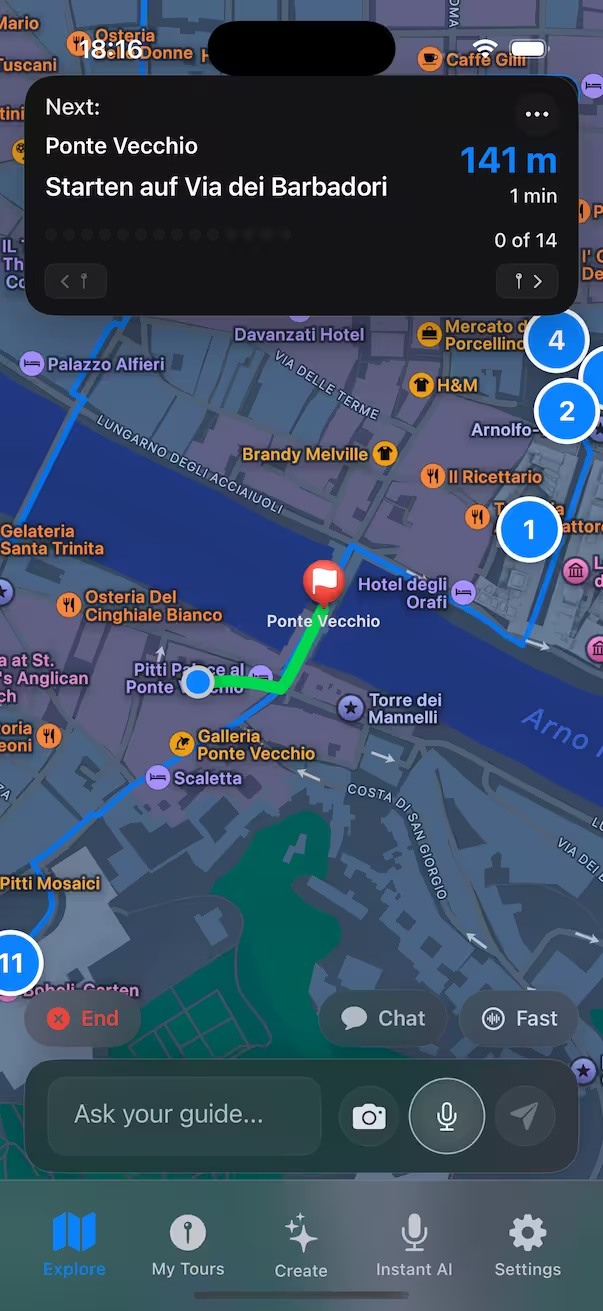
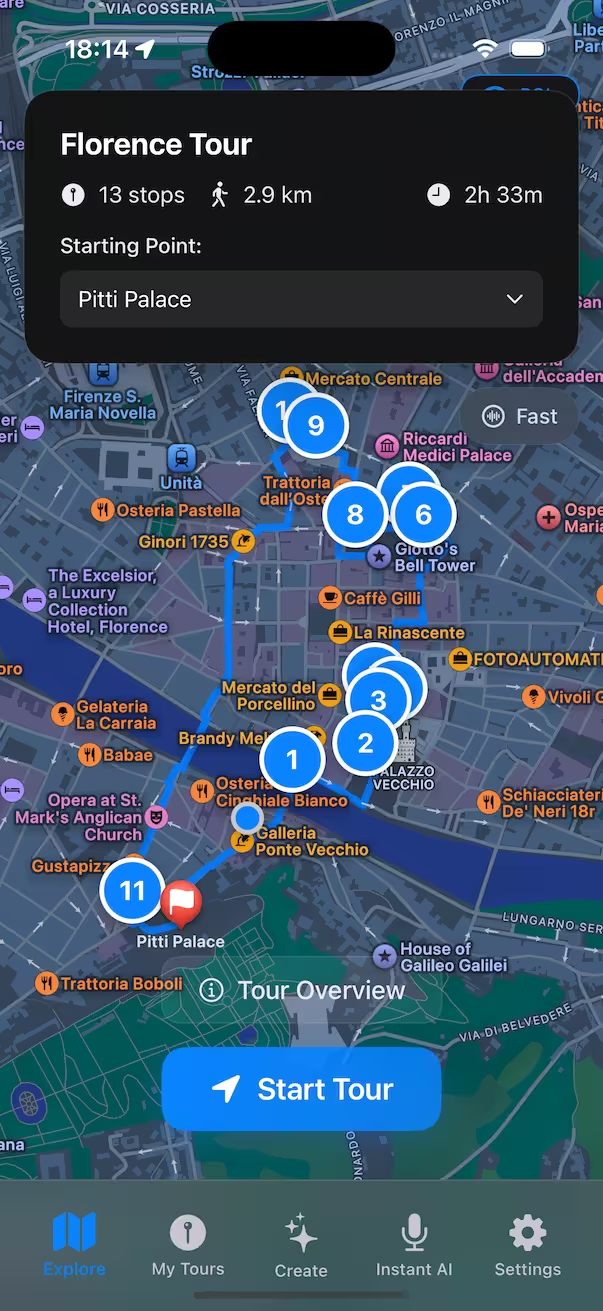
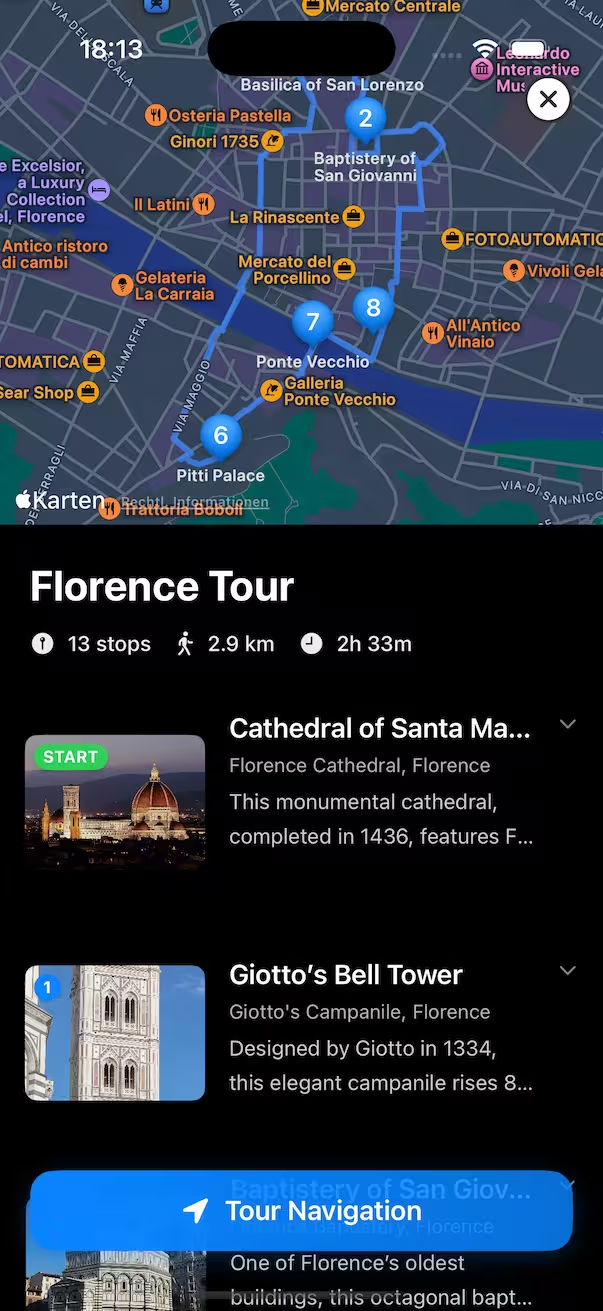
Press start wherever you are, even hundreds of kilometres from Zaragoza, and the guide begins telling its stories right away. In the city, pick any of the 8 stops to start from: it leads you there, then talks with you the whole route, asking, listening, remembering, and shaping the tour around your answers.
8stops5.0km2.2hours11languages
▶Start the tour freeFree to start · Runs in your browser · No app, no download
Zaragoza events and festivals calendar
Annual highlights worth timing a trip around, listed month by month.
January
🎉 FestivalSan Valero Festival Fiestas de San Valero
Jan 28 – Feb 1
five days around 29 January, the patron-saint day
A five-day celebration of Zaragoza's patron saint, with the Ronda del Gallo (a folkloric jota tour through the centre), concerts, theatre and traditional Aragonese activities.
March
🇮 HolidayCincomarzada
Mar 5
5 March, a Zaragoza-only public holiday
A local holiday commemorating the 1838 liberal victory over Carlist forces.
⛪ ReligiousHoly Week Semana Santa de Zaragoza
Mar 27 – Apr 5 ~
late March into early April, around Holy Thursday and Good Friday (dates move each year with Easter)
A major Holy Week defined by over 4,000 percussionists, drums and bass drums, in the Holy Thursday and Good Friday processions, a ritual imported from Lower Aragón (Calanda, Híjar).
April
🎨 Art and cultureSan Jorge / Book Day Día de San Jorge y del Libro
Apr 23
23 April, the regional holiday
Aragón's patron-saint day coinciding with International Book Day.
June
🏢 Trade fairEXPOFIMER Trade Fair EXPOFIMER
Jun 10–11
two days in mid-June
A small professional trade fair at the Feria de Zaragoza grounds, with only minor impact on hotel demand on its two dates.
September
🎵 MusicVive Latino España
Sep 4–5
first weekend of September
The Latin music festival's Spanish edition at the Explanada del Recinto Expo, drawing tens of thousands over two days with a lineup of Spanish and Latin American artists.
October
🎉 FestivalFiestas del Pilar
Oct 10–18
nine days around 12 October, the feast of Our Lady of the Pillar
Zaragoza's defining festival and one of Spain's largest, with over a million visitors across nine days.
November
🏢 Trade fairCITY360 Trade Fair CITY360
Nov 18–19
two days in mid-November
An urban-sector professional trade fair at the Feria de Zaragoza grounds, with only minor impact on hotel demand.
Insider tips for visiting Zaragoza
The rules buried in forums, in one place.
- For Fiestas del Pilar (10-18 October), book central 3-star accommodation by late June at the latest. By September the central rooms are gone or priced above 250 € a night. Staying in the Delicias or Universidad neighbourhoods (a 15-minute walk in) cuts rates 30-40%, and Huesca or Alcañiz (both about an hour by bus) work as budget bases.
- Essentially every museum of note in Zaragoza is closed on Monday: the four Caesaraugusta Roman museums, the Goya Museum, the Museum of Zaragoza, the Pablo Gargallo Museum, La Seo and the Palacio de la Lonja. Use Mondays for El Tubo, the Plaza del Pilar exterior, the Roman walls, or a day trip to Calatayud (50 minutes by train). The Aljafería Palace is the exception, open Monday to Saturday.
- The first Sunday of each month is free at all five municipal Caesaraugusta museums and the Pablo Gargallo Museum, which also makes it the busiest Sunday. Arrive at the 10:00 opening; by 11:30 the queues form, and the Foro Romano is packed by 10:15 on 12 October when free entry coincides with the national holiday.
- The Aljafería Palace, Zaragoza's UNESCO Mudéjar showpiece, deserves at least 90 minutes and is quietest on weekday mornings, Tuesday to Thursday between 10:00 and 12:00. Note that it houses the Cortes de Aragón regional parliament, so occasional parliamentary events can restrict access to the upper floors; check ahead.
- El Tubo's narrow tapas streets (Calle Estébanes, Calle Mártires) work best 13:00-15:00 for a standing-bar lunch crawl or 20:00-22:30 for evening tapas. Avoid 18:00-20:00, when many bars are between services. A midday pintxo costs 1.20-2 € with a glass of house wine.
- Inside the Basílica del Pilar (free, daily 06:15-20:30), bring binoculars or a phone zoom for Goya's frescoes in the Regina Martyrum dome, which are high overhead. The two unexploded Civil War bombs displayed near the Holy Chapel are best seen at opening, 06:15-09:00, before pilgrims fill the chapel.
- On Cierzo days from October to April, the cold northwesterly wind turns Plaza del Pilar into a wind tunnel and makes a 12°C day feel like 4°C. Look for "Cierzo" in Spanish forecasts (tourist weather apps often miss it), cover the open square quickly, and treat the museums as your wind refuge.
- Zaragoza sits on the Madrid-Barcelona AVE line, 1h20 from Madrid and 1h30 from Barcelona, so it doubles as a day trip from either or as a touring hub. Many Spanish visitors arrive Saturday morning and leave Sunday evening, so midweek is noticeably quieter for sightseeing and hotel rates run below both capitals.
Public holidays in Zaragoza
On these dates many shops and offices close, transport thins out, and sights can be mobbed or shut. Plan around them.
| Date | Holiday | What closes |
|---|---|---|
| Jan 1 | New Year's Day | Almost everything closed: shops, offices, most restaurants. The Basílica del Pilar stays open for mass. A very quiet day in the city. |
| Jan 6 | Epiphany (Three Kings) | Shops closed. The Three Kings parade fills the streets the evening before, on 5 January, the big family event of the Christmas stretch. |
| Jan 29 | San Valero (patron saint) | Zaragoza-only public holiday for the city's patron saint: municipal museums free and city-centre festivities, including the folkloric Ronda del Gallo jota tour. A genuine local day with no tourist crowds. |
| Mar 5 | Cincomarzada | Zaragoza-only public holiday marking the 1838 liberal victory. Municipal museums are closed and families picnic on the banks of the Ebro and in Parque Grande, so plan museum visits for another day. |
| Apr 2 | Maundy Thursday | Regional holiday: many businesses close and the Semana Santa processions begin. The first of the big drumming days in the old town. |
| Apr 3 | Good Friday | National holiday: most commerce closed. The major drumming processions, over 4,000 drums, fill the narrow streets between La Seo and the Ebro from about 20:00. Earplugs help if you are noise-sensitive. |
| Apr 23 | Aragón Day / San Jorge | Regional holiday combined with International Book Day. Paseo Independencia fills with 115-plus bookstalls and authors signing, a carnation given with each purchase. A joyful, very local street fair; no overnight price impact. |
| May 1 | Labour Day | Shops and some museums closed. Otherwise a calm spring day with the city in pleasant weather. |
| Aug 15 | Assumption of Mary | Religious holiday: the Basílica del Pilar is very busy, and many El Tubo restaurants are still on their summer break. Heat is at its peak. |
| Oct 12 | Our Lady of the Pillar / Spain's National Day | The peak day of Fiestas del Pilar and the Ofrenda de Flores: extremely crowded, hotels at their dearest, and the four Río municipal museums free. Plan around dense crowds in and around Plaza del Pilar. |
| Nov 2 | All Saints' Day (observed) | Shops closed (moved from Sunday 1 November). A quiet day in one of the year's cheapest, calmest months. |
| Dec 7 | Constitution Day (observed) | Shops closed (moved from Sunday 6 December). The Christmas market at Plaza del Pilar is in full swing, so the centre stays lively despite the holiday. |
| Dec 8 | Immaculate Conception | Religious holiday: many shops closed. With Constitution Day the day before, this forms a festive long-weekend bridge in early December. |
| Dec 25 | Christmas Day | Almost everything closed. The Basílica del Pilar opens for mass; the Christmas market is paused for the day. A still day in the city. |
Zaragoza month by month
January in Zaragoza
High12°C / 53°F
Low4°C
Rain32mm / 6 rainy days
Sun7.5 h/day
Daylight10 h/day
Humidity73%
Crowds●○○○○Prices●○○○○
January is Zaragoza at its quietest and cheapest. Daytime highs sit around 9-11°C with overnight lows near 2-4°C and frost on 20-plus nights a year, made to feel far colder by the Cierzo wind funnelled down the Ebro valley. There are very few foreign visitors. The one local burst of life is San Valero (28 January to 1 February), the patron-saint festival, with its folkloric jota tour and free municipal museums on the 29th.
The vibe This is the month you have the Aljafería Palace and the Caesaraugusta Roman museums almost to yourself, no queues anywhere. The honest price is cold and the biting Cierzo, but the low winter sun lights the Basílica del Pilar façade beautifully across Plaza del Pilar. Slow, local and genuinely affordable.
Don't miss Use the warm museums as Cierzo refuges: the Bono Caesaraugusta pass covers four Roman museums for 7 €, and on 29 January (San Valero) the municipal museums are free. The low-sun months light the Basílica façade best in late afternoon, so time your Plaza del Pilar walk for golden hour.
Crowd drivers The deep post-Christmas lull, with almost no foreign tourism. San Valero (29 January) brings a brief, purely domestic uptick around the patron-saint day.
In season Cold-weather Aragonese cooking is at its best: ternasco (roast lamb) and migas warm the El Tubo bars, paired with robust Cariñena reds by the glass for 1.50-2.50 €.
Heads up New Year's Day (1 January) and Epiphany (6 January) close shops and most restaurants; the Three Kings parade fills the streets the evening of the 5th. The Caesaraugusta museums, Goya Museum and La Seo are all closed Mondays year-round.
Joint cheapest month: central 3-star hotels 45-70 € a night, less than a third of Pilar-week rates.
Events this month
🎉 FestivalSan Valero Festival Fiestas de San Valero
Jan 28 – Feb 1
five days around 29 January, the patron-saint day
A five-day celebration of Zaragoza's patron saint, with the Ronda del Gallo (a folkloric jota tour through the centre), concerts, theatre and traditional Aragonese activities. The central day, 29 January, is a city public holiday.
A charming, entirely local festival with essentially zero tourist crowds and a real window into Aragonese folk culture, including the jota dance. Municipal museums are free on the patron-saint day.
February in Zaragoza
High14°C / 57°F
Low5°C
Rain25mm / 5 rainy days
Sun8.6 h/day
Daylight11 h/day
Humidity68%
Crowds●○○○○Prices●○○○○
February is the quietest month of the year. Highs creep toward 12-14°C but it stays cold, and the Cierzo can still bite. Zaragoza has no city-wide Carnival shutdown, just small-scale events, so demand stays low across every market. Almond and cherry blossom begin in the Ebro valley hills from mid-February, the first hint of the spring to come.
The vibe February is unperformed, honest Zaragoza, no festival markup and no crowds. Museums are empty, hotel prices sit at the floor, and you can wander the Roman walls and El Tubo without a soul in the way. The reward for braving the cold is the city entirely to yourself.
Don't miss A perfect month for the indoor heavyweights: the Aljafería Palace (open Monday to Saturday, unlike the municipal museums), the Goya Museum and the four Caesaraugusta Roman museums, all quiet. Catch the early almond and cherry blossom in the Ebro valley hills from mid-month.
Crowd drivers The year's lowest demand from every market. Occasional small Carnival events bring no real crowd, and there are no school holidays driving travel.
In season Still hearty-stew season: borrajas (the local thistle vegetable) and migas appear on traditional menus, and the Mercado Central (closed Sundays) is calm and well-stocked before 11:00.
Prices at their annual floor alongside January: central 3-star hotels 45-75 € a night.
March in Zaragoza
High17°C / 63°F
Low7°C
Rain38mm / 6 rainy days
Sun9.7 h/day
Daylight12 h/day
Humidity60%
Crowds●●○○○Prices●○○○○
March brings the start of spring, with highs climbing to 16-18°C and the Río Ebro at higher flow and colour. Crowds stay light for most of the month. Cincomarzada (5 March) is a local holiday of riverside family picnics, and from the 27th the early days of Semana Santa draw domestic pilgrims as Holy Week begins. Some of the best walking weather of the year arrives.
The vibe March is the last genuinely quiet month before the spring season fills the city. The parks green up, the Galacho de Juslibol wetlands hit peak bird migration, and you still get every sight without a queue. Then Semana Santa arrives at month's end and the drums start to roll.
Don't miss Spring is the best walking weather of the year. Bird migration peaks in March and April at the free Galacho de Juslibol wetland reserve, an easy half-day on the Ebro meanders. Note that municipal museums close on Cincomarzada (5 March).
Crowd drivers Mostly calm, with a local-holiday blip on Cincomarzada (5 March). The last days bring the first Semana Santa pilgrims and visitors as Holy Week opens on the 27th.
In season Borrajas are still in season, and El Tubo comes back to life as the weather warms. The Mercado Central is the place for spring produce before 11:00.
Heads up Cincomarzada (5 March) closes the municipal museums, so plan indoor sights for another day. Maundy Thursday falls on 2 April, but the processions and many closures begin building in the final days of March.
Still low (50-80 €), though the last days edge up to 80-110 € as Semana Santa visitors arrive.
Events this month
🇮 HolidayCincomarzada
Mar 5
5 March, a Zaragoza-only public holiday
A local holiday commemorating the 1838 liberal victory over Carlist forces. Families picnic on the banks of the Ebro and gather for impromptu festivities in Parque Grande.
Low-key but authentically local. Note that the municipal museums are closed this day, so plan your indoor sights for another date.
⛪ ReligiousHoly Week Semana Santa de Zaragoza
Mar 27 – Apr 5 ~
late March into early April, around Holy Thursday and Good Friday (dates move each year with Easter)
A major Holy Week defined by over 4,000 percussionists, drums and bass drums, in the Holy Thursday and Good Friday processions, a ritual imported from Lower Aragón (Calanda, Híjar). The drumming is visceral and unlike most Spanish cities.
One of the most dramatic Semana Santa experiences in Aragón. Be in the old town on Good Friday evening, around 20:00-22:00 on the lanes between La Seo and the Ebro, for the overwhelming wall of drums. Book hotels 8-10 weeks ahead.
April in Zaragoza
High21°C / 69°F
Low9°C
Rain49mm / 8 rainy days
Sun10.6 h/day
Daylight13 h/day
Humidity57%
Crowds●●○○○Prices●●○○○
April is one of Zaragoza's two best months: warm, pleasant 18-22°C, spring blossom in Parque Grande and Parque del Agua, and the city at its most walkable. Semana Santa runs into the first days (Good Friday 3 April), when over 4,000 drums fill the old town. The San Jorge book fair on the 23rd turns Paseo Independencia into a day-long literary street market. Carry a light rain layer for the occasional spring shower.
The vibe April is when Zaragoza shows off. The thunderous Good Friday drumming in the narrow lanes by La Seo is genuinely overwhelming, and three weeks later the San Jorge book fair gives the city a joyful, bookish street party. Spring colour, comfortable weather and a packed cultural calendar.
Don't miss Be on the lanes between La Seo and the Ebro around 20:00-22:00 on Good Friday for the wall of drums (earplugs help). On 23 April, browse 115-plus bookstalls and 300-plus signing authors on Paseo Independencia, with a free carnation and 10% off every book. Wildflowers peak at the Galacho de Juslibol wetlands.
Crowd drivers Semana Santa processions (Holy Thursday 2 April, Good Friday 3 April) crowd the old town and lift hotels 20-30%. The San Jorge fair on the 23rd fills the centre by day but has no overnight price impact.
In season El Tubo is lively again with locals back in residence. Aragonese lamb and Cariñena reds are easy to find at aperitivo hour, 13:00-15:00 or after 20:00.
Heads up Good Friday (3 April) closes most commerce. San Jorge / Aragón Day (23 April) is a regional holiday with the book fair, though many sights stay open. Most museums remain closed on Mondays.
Generally good value (60-95 €), with the Holy Week stretch (2-5 April) spiking 20-30% to 100-130 €.
Events this month
⛪ ReligiousHoly Week Semana Santa de Zaragoza
Mar 27 – Apr 5 ~
late March into early April, around Holy Thursday and Good Friday (dates move each year with Easter)
A major Holy Week defined by over 4,000 percussionists, drums and bass drums, in the Holy Thursday and Good Friday processions, a ritual imported from Lower Aragón (Calanda, Híjar). The drumming is visceral and unlike most Spanish cities.
One of the most dramatic Semana Santa experiences in Aragón. Be in the old town on Good Friday evening, around 20:00-22:00 on the lanes between La Seo and the Ebro, for the overwhelming wall of drums. Book hotels 8-10 weeks ahead.
🎨 Art and cultureSan Jorge / Book Day Día de San Jorge y del Libro
Apr 23
23 April, the regional holiday
Aragón's patron-saint day coinciding with International Book Day. Paseo Independencia and Plaza Salamero fill with 115-plus bookstalls, 300-plus authors sign from 9:30 to 21:30, a carnation comes with each purchase, and books are 10% off.
A joyful, very local spring street fair with almost no international tourists, blending literary culture with Aragonese identity as the broad boulevard becomes a day-long book market. No overnight price impact.
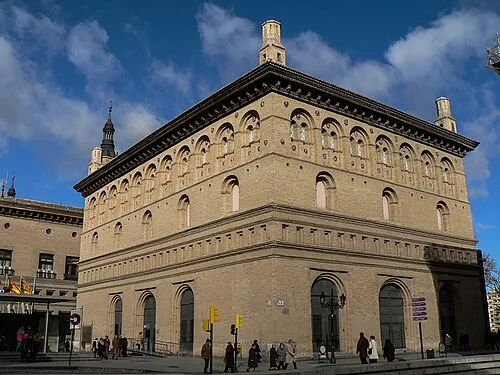
May in Zaragoza
High26°C / 78°F
Low13°C
Rain31mm / 5 rainy days
Sun12.6 h/day
Daylight14 h/day
Humidity51%
Crowds●●○○○Prices●●○○○
May is the other sweet spot: comfortable 20-26°C, long daylight and Parque Grande in full spring bloom. It is one of the slightly wetter months, but rain comes as brief showers, not all-day soakings, and umbrellas are rarely needed. Spanish domestic short-break traffic picks up and the first international visitors arrive, but crowds stay manageable and the value is excellent.
The vibe May is the quietly perfect month nobody markets. No big crowd-event, no oppressive heat, no holiday markup, just a green city in its best walking weather. Bring a windproof layer for the Cierzo and you have Zaragoza close to its best for noticeably less than autumn or Pilar week.
Don't miss Parque Grande and Parque del Agua are in full bloom, ideal for long walks under nearly 15 hours of daylight. International Museum Day (18 May) opens the municipal museums free. The Aljafería inner courtyard is at its loveliest before summer heat, quietest on weekday mornings.
Crowd drivers Spanish domestic weekend traffic and the first international arrivals lift crowds gently. Labour Day (1 May) closes shops but adds little tourist pressure; International Museum Day on the 18th brings free municipal-museum entry.
In season Prime El Tubo season with locals in residence: ternasco, migas and borrajas across the tapas bars, washed down with Cariñena reds by the glass. The Mercado Central is essential for produce before 11:00.
Heads up Labour Day (1 May) closes shops and some museums. Smaller shops and some restaurants keep the daily 14:00-17:00 siesta closure; museums remain shut on Mondays.
A genuine value window (65-100 €), below both the Holy Week spike and the summer climb.
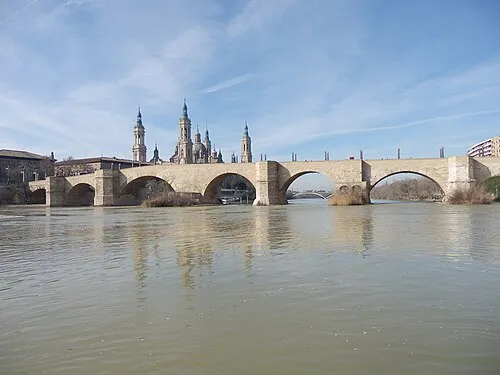
June in Zaragoza
High31°C / 87°F
Low17°C
Rain33mm / 6 rainy days
Sun12.9 h/day
Daylight15 h/day
Humidity48%
Crowds●●●○○Prices●●○○○
June opens the Zaragoza summer, with highs reaching 30-35°C and the longest days of the year at over 15 hours of light. The heat is arriving but not yet at its July-August extreme, and the school-holiday build comes in the second half. The minor EXPOFIMER trade fair (10-11 June) barely touches hotels. Vive Latino buzz starts as tickets sell, the lead-in to early September.
The vibe June is the tipping point into full summer, and the long evenings are the payoff. Light until well past 21:00 means late dinners on El Tubo terraces and walks along the Ebro once the day cools. It is getting hot, so shift sightseeing to the early morning or evening, but the energy is great.
Don't miss Do outdoor sights early: the Aljafería, the Roman walls and Plaza del Pilar are best before the sun turns brutal by 10:00. Evening is for El Tubo and the riverside. The melocotón de Calanda, the region's PDO peach, starts to appear at the Mercado Central toward month-end.
Crowd drivers The summer season begins and the second half sees school holidays build. EXPOFIMER (10-11 June) is a minor trade fair with no mass hotel spike.
In season Peak El Tubo before the August lull, and the first local peaches and stone fruit arrive. Cariñena reds and a midday pintxo crawl are the cheap, social way to eat.
Prices climb gently (65-105 €); the EXPOFIMER fair (10-11 June) has minimal impact.
Events this month
🏢 Trade fairEXPOFIMER Trade Fair EXPOFIMER
Jun 10–11
two days in mid-June
A small professional trade fair at the Feria de Zaragoza grounds, with only minor impact on hotel demand on its two dates.
Worth noting for budget timing: a slight but minor lift in hotel pressure on its two dates. Zaragoza's fair calendar is thin compared to larger trade-fair cities, so there is no summer trade-fair spike to plan around.

July in Zaragoza
High34°C / 93°F
Low20°C
Rain17mm / 3 rainy days
Sun13.5 h/day
Daylight15 h/day
Humidity46%
Crowds●●●○○Prices●●●○○
Use the heat to your advantage: museums are empty all day, and the Bono Caesaraugusta pass covers four Roman museums for 7 €. Plan outdoor sights, the Aljafería, the Roman walls and Plaza del Pilar, for the cool early hours before 09:30, then retreat to the air-conditioned museums or the shaded lanes of El Tubo for the brutal midday stretch.
The vibe July is hot, dry and quiet on the tourist front, since Spaniards have decamped to the beach. The trick is to flip your day: see the open-air sights, Plaza del Pilar, the walk to the Aljafería, in the cool of early morning or late evening, and spend the brutal midday hours in the shaded lanes of El Tubo or inside the air-conditioned museums.
Don't miss Use the heat to your advantage: empty museums all day, and the Bono Caesaraugusta pass covers four Roman museums for 7 €. When the midday sun is too much for a tour and a pre-booked human guide is pricey, our live in-browser AI guide is the always-available, flat-rate alternative, telling you the story of each sight as you walk it in the cooler early hours, at 5 € an hour or 20 € all in.
Crowd drivers The domestic beach migration thins city crowds even as the national tourist season peaks. Zaragoza is not a summer beach destination, so visitor pressure stays moderate.
In season The melocotón de Calanda PDO peach is in season July to September, superb fresh from the Mercado Central. Some El Tubo bars are already starting their summer break, so check before targeting a specific one.
Summer pricing (70-115 €), though Zaragoza draws fewer summer tourists than coastal Spain.

August in Zaragoza
High33°C / 92°F
Low20°C
Rain11mm / 2 rainy days
Sun12.7 h/day
Daylight14 h/day
Humidity48%
Crowds●●●○○Prices●●●○○
August is the hottest month and the toughest for comfort, with the same 38-42°C heat as July and little relief. Many El Tubo tapas bars and traditional restaurants close for two to three weeks while owners holiday, especially mid-month, thinning the local dining scene. The national tourist season peaks but Zaragoza, with no beach, draws fewer than coastal Spain. The 15 August Assumption holiday fills the Basílica.
The vibe August is not the month to discover Zaragoza's food culture, since a chunk of the old town is shuttered for the summer break. If you do come, it is for empty sights and very early or very late walks. The international and tourist-facing places on Alfonso I and Don Jaime I stay open when the family-run ones do not.
Don't miss Sightseeing is for 07:30-09:30 and after 19:00 only; the plateau sun is brutal by 10:00. The shaded narrow lanes of El Tubo offer some relief but trap heat past 21:00. Indoor museums are your daytime sanctuary.
Crowd drivers Peak national tourist season, but Zaragoza pulls fewer than the coast. The Assumption (15 August) is a busy religious day at the Basílica del Pilar.
In season Expect reduced choice: many traditional El Tubo and old-town restaurants close for two to three weeks, particularly the second and third weeks. Check before heading to a specific place. The melocotón de Calanda peach is still in season.
Heads up Assumption of Mary (15 August) is a national holiday; the Basílica is very busy. The bigger practical issue is the wave of two-to-three-week restaurant closures across the old town from mid-month.
Summer rates hold (70-110 €), but with many local restaurants closed the value is poor for comfort.
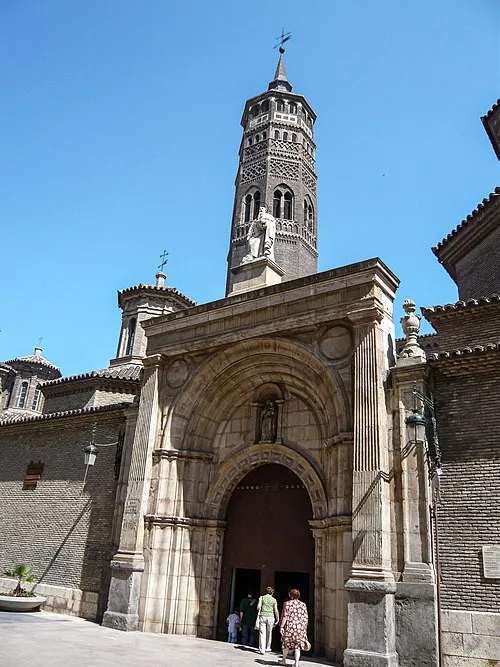
September in Zaragoza
High28°C / 82°F
Low17°C
Rain23mm / 4 rainy days
Sun10.9 h/day
Daylight12 h/day
Humidity56%
Crowds●●●○○Prices●●●○○
September is when the heat eases to a comfortable 25-30°C and sightseeing conditions turn ideal, with the summer crush fading. The Vive Latino España festival (4-5 September) at the Expo site draws tens of thousands and spikes hotels for its two nights. Otherwise it is a relaxed, post-summer month with the city back to its normal rhythm and the restaurants reopening after the August break.
The vibe September feels like Zaragoza exhaling: warm but no longer punishing, the El Tubo bars open again, and the build-up to Pilar just beginning. It is the start of the autumn shoulder, with good weather and reasonable prices outside the Vive Latino weekend.
Don't miss Ideal sightseeing weather for the Aljafería, the Caesaraugusta museums and a walk along the Ebro. Autumn bird migration ramps up at the Galacho de Juslibol wetlands. Vive Latino brings a big Latin-music weekend with a lineup of Spanish and Latin American names.
Crowd drivers Vive Latino (4-5 September) packs the Expo site and spikes hotels on those two nights; book ahead if your trip overlaps. Otherwise the post-summer mood keeps general pressure moderate.
In season El Tubo is back to full life after the August closures, locals in residence and the new-season produce flowing. The melocotón de Calanda peach finishes its run early in the month.
Pleasant shoulder pricing (75-115 €), but the Vive Latino weekend (4-5 Sept) spikes central rooms to 130-180 €.
Events this month
🎵 MusicVive Latino España
Sep 4–5
first weekend of September
The Latin music festival's Spanish edition at the Explanada del Recinto Expo, drawing tens of thousands over two days with a lineup of Spanish and Latin American artists. Check the official site for the current lineup and ticket prices, which typically run around 75 € for a single day.
A great reason to visit in early September, with cooling post-summer weather. It causes a sharp hotel spike on its two nights (central rooms 130-180 €), so book well ahead if your trip overlaps.

October in Zaragoza
High23°C / 74°F
Low13°C
Rain34mm / 6 rainy days
Sun9.0 h/day
Daylight11 h/day
Humidity63%
Crowds●●●●●Prices●●●●●
October is the busiest month of the year, dominated by Fiestas del Pilar (10-18 October), when over a million visitors pack the city and hotels sell out at three to four times normal rates. Outside that window the month is superb: comfortable 18-23°C highs, autumn colour appearing in Parque Grande from late October, and the festive build-up in the first nine days without the crowd crush. After the 18th, prices fall sharply again.
The vibe October is two cities in one. The early days (1-9) are golden-autumn Zaragoza, romantic at dusk on Plaza del Pilar with the lit Basílica and almost no crowds. Then Pilar week explodes into a million-strong, all-night festival of flower offerings, fireworks and giants, glorious if you came for it, overwhelming if you did not.
Don't miss If you come for Pilar, the Ofrenda de Flores on the 12th, tens of thousands of pilgrims in Aragonese dress building a flower pyramid around the Virgen, is a once-in-a-lifetime sight, alongside the Rosario de Cristal and nightly fireworks. For a quieter trip, come 1-9 October for autumn weather and the festive build-up. On the 12th the four Río museums are free but packed by 10:15.
Crowd drivers Fiestas del Pilar (10-18 October) is the single biggest crowd-driver of the year, peaking on the 12th with the Ofrenda de Flores and the national holiday. The first nine days and the period after the 18th are calm by contrast.
In season During Pilar the streets fill with food stalls and the bars run all night. Outside the festival, early October is prime El Tubo season with locals in residence, ternasco and Cariñena reds the order of the day.
Heads up 12 October (Our Lady of the Pillar / National Day) is the festival's peak: extremely crowded, with the four Río municipal museums free. Book central hotels for Pilar by late June at the latest, or stay in Delicias, Universidad or out in Huesca.
Split month: Fiestas del Pilar (10-18 Oct) hits 150-300 € a night, but the rest of October drops to a calm 70-90 €.
Events this month
🎉 FestivalFiestas del Pilar
Oct 10–18
nine days around 12 October, the feast of Our Lady of the Pillar
Zaragoza's defining festival and one of Spain's largest, with over a million visitors across nine days. Highlights are the Pregón opening on the 10th, the Ofrenda de Flores on the 12th (tens of thousands of pilgrims in Aragonese dress building a flower pyramid around the Virgen), the Ofrenda de Frutos and the Rosario de Cristal procession, plus free concerts, giants and big-heads, jota performances and nightly fireworks.
The dominant annual event, and witnessing the Ofrenda de Flores is a once-in-a-lifetime spectacle. But hotels sell out at three to four times normal rates, so book three to four months ahead or stay outside the city. Avoid it if you dislike dense crowds and noise, since the whole city is transformed for all nine days.
November in Zaragoza
High16°C / 61°F
Low8°C
Rain60mm / 9 rainy days
Sun7.6 h/day
Daylight10 h/day
Humidity73%
Crowds●●○○○Prices●●○○○
November is a post-Pilar lull and one of the cheapest, quietest months. Highs cool to around 12-15°C, some rain arrives, and the Cierzo can make it feel much colder than the thermometer suggests. Autumn colour peaks in Parque Grande from late October into mid-November. The minor CITY360 fair (18-19 November) barely registers, and the Christmas market opens on Plaza del Pilar from the 29th to end the month on a festive note.
The vibe November is Zaragoza decompressing after Pilar: cheap, calm and almost touristless, with the bonus of autumn colour in the parks. Dress for the Cierzo wind chill, and the reward is the city's sights without queues and at near-rock-bottom prices, right up until the Christmas lights switch on at month's end.
Don't miss Autumn foliage lingers in Parque Grande, and the empty Aljafería and Caesaraugusta museums are at their most peaceful, with the first-Sunday free entry an easy budget win. From 29 November the Plaza del Pilar Christmas market brings 40 stalls, an ice rink and the Town Hall lit by 69,000 LEDs.
Crowd drivers A genuine post-Pilar lull keeps visitor numbers low. CITY360 (18-19 November) is a minor trade fair, and the Christmas market opening on the 29th brings the first uptick toward December.
In season Cooler weather suits the hearty Aragonese kitchen again: ternasco, migas and Cariñena reds in the El Tubo bars, with no booking pressure. The Mercado Central is calm and well-stocked.
Heads up All Saints' Day (observed 2 November) and Constitution Day in early December bracket the month with shop closures; museums stay shut on Mondays as ever.
One of the cheapest months (50-80 €), rising slightly only as the Christmas market opens from the 29th.
Events this month
🏢 Trade fairCITY360 Trade Fair CITY360
Nov 18–19
two days in mid-November
An urban-sector professional trade fair at the Feria de Zaragoza grounds, with only minor impact on hotel demand.
No significant tourist impact, but a minor note for budget timing: a slight lift in hotel pressure on 18-19 November, otherwise one of the year's cheapest stretches.
🎄 Christmas marketChristmas Market Muestra Navideña Plaza del Pilar
Nov 29 – Jan 6
late November to 6 January
Aragón's largest Christmas market on Plaza del Pilar, with around 40 stalls of food, crafts and local products, an ice rink, a monumental nativity scene and a pneumatic sledding track, with the Town Hall lit by 69,000 LEDs. Open until 22:00 on weekdays, midnight on weekends and holidays.
It makes late November and December considerably more festive, with the lit Basílica del Pilar as a cold but atmospheric backdrop. A reason to brave the winter chill in an otherwise low-priced month.
December in Zaragoza
High12°C / 54°F
Low5°C
Rain27mm / 5 rainy days
Sun6.9 h/day
Daylight9 h/day
Humidity78%
Crowds●●○○○Prices●●○○○
December is festive Zaragoza, cold and Cierzo-prone but atmospheric. Highs hover around 9-11°C with frost on many nights, and the Christmas market runs at Plaza del Pilar through 6 January, the largest in Aragón, against the backdrop of the lit Basílica. Two early-month holidays, Constitution Day (7th) and the Immaculate Conception (8th), form a festive bridge, and the Three Kings build-up carries the season into the new year.
The vibe December trades autumn's calm for festive bustle: market stalls, an ice rink, mulled wine and the Basílica lit up over Plaza del Pilar. It is genuinely atmospheric, and prices stay reasonable outside the Christmas-week spike, but pack a warm windproof coat, since the Cierzo can make a 10°C day feel painful.
Don't miss The Plaza del Pilar Christmas market runs around 40 stalls, an ice rink, a monumental nativity scene and a pneumatic sledding track, open until 22:00 on weekdays and midnight at weekends. The low December sun lights the Basílica façade beautifully, best in late afternoon.
Crowd drivers The Christmas market (from 29 November) and the early-month holiday bridge (7-8 December) draw domestic visitors and lift the centre, with the Christmas-week stretch (24-26 December) the busiest and priciest.
In season Market mulled wine and roasted chestnuts on the square, with the warming Aragonese classics, ternasco and migas, in the El Tubo bars. The Mercado Central is busy with festive produce; arrive before 11:00.
Heads up Constitution Day (observed 7 December) and the Immaculate Conception (8 December) close many shops in a festive bridge. Christmas Day (25 December) closes nearly everything, with the market paused for the day.
Moderate (55-90 €), with the Christmas window (24-26 Dec) spiking to 90-130 €.
Events this month
🎄 Christmas marketChristmas Market Muestra Navideña Plaza del Pilar
Nov 29 – Jan 6
late November to 6 January
Aragón's largest Christmas market on Plaza del Pilar, with around 40 stalls of food, crafts and local products, an ice rink, a monumental nativity scene and a pneumatic sledding track, with the Town Hall lit by 69,000 LEDs. Open until 22:00 on weekdays, midnight on weekends and holidays.
It makes late November and December considerably more festive, with the lit Basílica del Pilar as a cold but atmospheric backdrop. A reason to brave the winter chill in an otherwise low-priced month.
Frequently asked questions
What is the best time to visit Zaragoza?
Mid-April to late May and the first nine days of October (1-9 Oct) are the best overall. You get comfortable 18-26°C walking weather, every sight open, spring blossom or early autumn colour in the parks, and hotel rates a fraction of Fiestas del Pilar. April adds the San Jorge book fair on the 23rd; early October gives you the festive build-up to Pilar without the million-strong crowds.
What is the cheapest time to visit Zaragoza?
January, February and November are the cheapest, with central 3-star hotels around 45-80 € a night, less than a third of Fiestas del Pilar rates. The first Sunday of every month is free at all the municipal museums, and the Bono Caesaraugusta pass covers four Roman museums for 7 €. The trade is winter cold and the biting Cierzo wind.
What is the worst time to visit Zaragoza?
July and August for comfort: 38-42°C midday heat on an exposed inland plateau, with no beach to escape to and many El Tubo restaurants shut for two to three weeks in August. The other date to avoid (unless it is your reason to come) is Fiestas del Pilar, 10-18 October, when over a million visitors arrive and central hotels hit 150-300 € a night, booked out months ahead.
When is Fiestas del Pilar in Zaragoza?
Fiestas del Pilar runs 10-18 October 2026, built around 12 October, the feast of Our Lady of the Pillar and Spain's National Day. The Ofrenda de Flores flower offering on the 12th is the spectacular centrepiece, with tens of thousands of pilgrims in Aragonese dress. Book central hotels by late June, or stay in the Delicias or Universidad districts, or out in Huesca, to find reasonable rates.
How hot does Zaragoza get in summer?
Very hot. July and August midday highs regularly reach 38-42°C on the exposed Ebro-valley plateau, which is ringed by mountains that block sea air, and the sun is brutal by 10:00. There is almost no rain. Sightseeing is only comfortable before 09:30 or after 19:00; spend the midday hours in the shaded lanes of El Tubo or inside the air-conditioned museums.
What is the Cierzo wind and when does it blow?
The Cierzo is Zaragoza's defining weather feature, a cold, dry northwesterly funnelled down the Ebro valley, strongest from October to April but possible any month. It arrives with blue skies, not rain, but regularly exceeds 50-70 km/h and can make a 12°C day feel like 4°C. Pack a windproof layer even in spring and autumn, and look for "Cierzo" in Spanish forecasts, since tourist weather apps often miss it.
Which days are Zaragoza's museums closed?
Almost every major museum closes on Monday: the four Caesaraugusta Roman museums, the Goya Museum, the Museum of Zaragoza, the Pablo Gargallo Museum, La Seo and the Palacio de la Lonja. The Aljafería Palace is the exception, open Monday to Saturday. The first Sunday of each month is free at the municipal museums but also the busiest, so arrive at the 10:00 opening.
How many days do you need in Zaragoza?
Two days cover the essentials: the Basílica del Pilar and Plaza del Pilar, La Seo cathedral, the UNESCO Aljafería Palace, the four underground Caesaraugusta Roman museums and a tapas crawl through El Tubo. Add a third day for the Goya Museum, the Galacho de Juslibol wetlands or a day trip on the AVE. Zaragoza's compact, walkable centre means you see a lot on foot in a short stay.

Any month, any day: your guide is already there
Whatever date you pick, a private human guide gets pricier and harder to book on weekends, holidays and in peak season. Our live AI guide, the one that walks with you and answers anything you ask out loud, works the opposite way.
One flat price, every day
No holiday, weekend, night or peak-season surcharge. A private guide in Zaragoza runs well over 100 euro for a half day, and more on holidays. Ours stays the same.
Available the moment you want it
Start at midnight or at dawn, on Christmas, in the snow, in the August heat. No sold-out high season, no booking weeks ahead.
Your pace, no meter running
Pause for a long lunch, restart after dark, repeat a stop. The tour simply waits for you.
Free to try, a fraction of the cost
Test it for free, then a transparent flat price that undercuts any private guide, in every season.
The classic Zaragoza tour: 8 stops, 5.0 km, about 2 h on foot
Your live AI guide and the self-guided Zaragoza route, together in your browser.