Best Time to Visit Lucca
Month-by-month weather, crowds and prices, plus a full calendar of festivals and events worth planning a trip around.
Best monthsApr, May, Sep
CheapestJan, Feb, Nov
AvoidAug, Oct
BusiestJul, Aug
When is the best time to visit Lucca?
Come in late April, May or the second half of September: walkable 18-26°C days, the city walls in bloom or autumn gold, and hotel rates around 100-155 €/night. Avoid 28 October to 1 November at all costs unless you have a Lucca Comics and Games badge, when 500,000 visitors make the walled centre impassable and rooms hit 391-707 €. January and early November (right after Comics) are the cheapest and emptiest, with rooms from 55-90 €.
Start our tool and find your best time to visit Lucca
Your perfect month
Free · ~30 seconds
or tap a month directly
What matters to you?
And this?
Best overall: Apr, May, Sep. Late April to May and the second half of September are the sweet spots: 18-26°C walking weather, the Palazzo Pfanner garden in bloom (April-October) or autumn gold on the walls, every sight accessible, and rates 100-155 €/night. May adds the scenic half-marathon weekend; mid-to-late September brings the Luminara, autumn light and the start of olive-oil harvest in the surrounding hills.
Best value: Jan, Feb, Nov. January, February and post-Comics November bring 3-star centre rooms at 55-90 €/night, no queues anywhere, and an unhurried local rhythm. The catch is short daylight (sunset by 5 pm) and that November is the wettest month (184 mm), with all-day grey rain off the Apuane Alps. Plan museum days for Tuesday to Saturday, since Palazzo Mansi and Villa Guinigi close both Sunday and Monday.
Avoid: Oct, Aug. 28 October to 1 November is the year's worst value for non-attendees: Lucca Comics and Games packs 500,000 people inside the walls, rooms hit 391-707 €, and the centre is impassable without a badge. August is the runner-up to skip: 34-36°C heat that empties the streets between 11 am and 4 pm, and a wave of local restaurants shut for Ferragosto.
- January: Good time, 11°C. This is the month you walk into Piazza dell'Anfiteatro with the arch entrances clear and climb Torre Guinigi without a soul ahead of you. Cold and short on daylight, but cheap, calm and entirely local. The free core, the walls, San Frediano and Via Fillungo, is fully enjoyable even in winter light.
- February: Great time, 13°C. February is honest, unperformed Lucca: no crowds, no markup, no show. While Viareggio goes wild for its float Carnival, Lucca stays calm, which is exactly the appeal if you want the walled city to yourself for the price of a budget room.
- March: Great time, 15°C. March is the last calm month before the April bloom and the festivals arrive. The cafés put tables back outside, the walls turn green again, and you can still cycle or photograph Piazza dell'Anfiteatro without a fight for space. Use that window, because it closes fast.
- April: Great time, 18°C. April is the first-timer's month: everything accessible, the weather kind, the gardens in bloom and the city unhurried, exactly how Lucca's medieval core deserves to be seen. The only busy days are Easter Sunday and Monday, when the locals descend, and they pass quickly.
- May: Good time, 22°C. May is the month savvy travellers target: warm but not hot, green and blooming, and still cheaper than summer. The walls are perfect for cycling, the gardens are open, and the city has energy without the July crush. A genuinely hard month to beat.
- June: Good time, 27°C. June is the tipping point into summer, and the long light evenings are the reward. Midday is getting hot on the stone streets, so the day shifts late: aperitivo on the piazzas, concerts against the walls, and the golden hour stretching past 8:30 pm. Still short of the July and August crush.
- July: Good time, 30°C. July is hot, busy and event-packed. The walls are exposed and only patchily shaded, so the day runs early and late: cycle before 9 am, retreat through midday, then come out for concerts and dinners as the heat eases. With the right timing it is one of the most atmospheric months, just not a midday one.
- August: Good time, 30°C. August is full-on Italian summer: hot, busy at the edges of the day and dead in the middle. If you are here for the Puccini Festival it works well, but for a general visit the heat and the Ferragosto closures make it the weakest non-Comics month. The walls are only really pleasant at dawn or dusk.
- September: Good time, 26°C. September is Lucca exhaling: warm but bearable, the light turning golden, the summer crush gone once schools reopen. The Luminara on 13 September is one of Tuscany's most romantic night events, a candlelit city and a slow medieval procession. The best couples' month, with autumn light and easy restaurant tables.
- October: Tough month, 21°C. Two completely different cities in one month. Early-to-mid October is the year's best-kept value secret, with autumn gold on the walls and emptying streets. The last days are the polar opposite: the largest pop-culture festival on earth, electric if you have a badge, a no-go if you do not. Plan firmly for one or the other.
- November: Great time, 16°C. November is Lucca's deep exhale after Comics: empty streets, the lowest prices of the year, and a slow local rhythm. The trade is grey, persistent rain, so pack for it. The consolation is the new olive oil on every table and, late in the month, the Christmas market lighting up the historic centre.
- December: Good time, 12°C. December trades January's emptiness for a gentle festive glow. The French Provençal chalets in Piazza Napoleone, the lights on Via Fillungo and the small ice rink give the walled city real charm without Florence's crush. Short days, but a genuinely magical atmosphere, and prices stay reasonable outside the holiday peak.
Lucca weather by month
HighLowRainfall
Jan11°
Feb13°
Mar15°
Apr18°
May22°
Jun27°
Jul30°
Aug30°
Sep26°
Oct21°
Nov16°
Dec12°
| Month | Temp | Rain | Sun | Crowds | Prices | Highlight |
|---|---|---|---|---|---|---|
| Jan | 11° / 3° | 112mm · 12 rainy days | 6.4 h/day | ●○○○○ | ●○○○○ | |
| Feb | 13° / 4° | 110mm · 11 rainy days | 7.4 h/day | ●○○○○ | ●○○○○ | Carnival |
| Mar | 15° / 5° | 81mm · 9 rainy days | 9.3 h/day | ●●○○○ | ●●○○○ | Carnival |
| Apr | 18° / 8° | 89mm · 10 rainy days | 10.8 h/day | ●●○○○ | ●●○○○ | Easter in Lucca |
| May | 22° / 12° | 95mm · 13 rainy days | 11.8 h/day | ●●●○○ | ●●●○○ | Lucca Half Marathon |
| Jun | 27° / 17° | 65mm · 9 rainy days | 13.4 h/day | ●●●○○ | ●●●○○ | Lucca Summer Festival |
| Jul | 30° / 19° | 37mm · 6 rainy days | 13.9 h/day | ●●●●○ | ●●●●○ | Lucca Summer Festival |
| Aug | 30° / 19° | 58mm · 7 rainy days | 12.5 h/day | ●●●●○ | ●●●●○ | Puccini Festival |
| Sep | 26° / 16° | 123mm · 10 rainy days | 10.7 h/day | ●●●○○ | ●●●○○ | Puccini Festival |
| Oct | 21° / 12° | 151mm · 11 rainy days | 8.4 h/day | ●●●●● | ●●●●● | Lucca Comics and Games |
| Nov | 16° / 8° | 184mm · 15 rainy days | 6.6 h/day | ●○○○○ | ●○○○○ | Lucca Comics and Games |
| Dec | 12° / 4° | 130mm · 13 rainy days | 5.9 h/day | ●●○○○ | ●●○○○ | Lucca Magic Christmas Market |
How we score this: weather = long-run climate normals (Open-Meteo), crowds & prices = relative season read, events checked yearly against official dates.
Best time to visit Lucca: weather, prices & crowds
Best months for good weather
Apr, May, Sep
Late April through May and the back half of September give Lucca its most walkable weather: 18-26°C, dry enough to cycle the 4.2 km wall circuit at any hour, and none of July and August's 34-36°C midday shutdown when the stone streets channel the heat.
Quietest months to avoid the crowds
Jan, Feb, Nov
January, February and the weeks after Comics in November are the emptiest. You walk into Piazza dell'Anfiteatro with the arch entrances clear, climb Torre Guinigi with no queue, and have Palazzo Mansi and Villa Guinigi almost to yourself.
Cheapest time to visit Lucca
Jan, Feb, Nov
January and early November (post-Comics) are the cheapest: 3-star centre rooms run 55-90 €/night, well below the 140-200 € of July and August and a fraction of Comics week. A full day of sights costs under 30 € in admissions.
Best time for festivals and events
Sep
The Luminara di Santa Croce on the night of 13 September lights the entire historic centre with thousands of candles as a medieval procession carries the Volto Santo crucifix from San Frediano to the Cathedral of San Martino. It is one of Tuscany's most striking night events. Position yourself on Via Fillungo near Piazza San Michele by 7:30 pm before the streets grid-lock.
How many days do you need in Lucca?
One full day is enough to cover Lucca's compact historic core without rushing, but two days let you settle into its unhurried rhythm and go deeper. This is a flat, densely packed walled town where everything sits within easy walking distance of everything else, so you never feel like you are racing against the clock.
One day
Walls, towers and the oval piazza
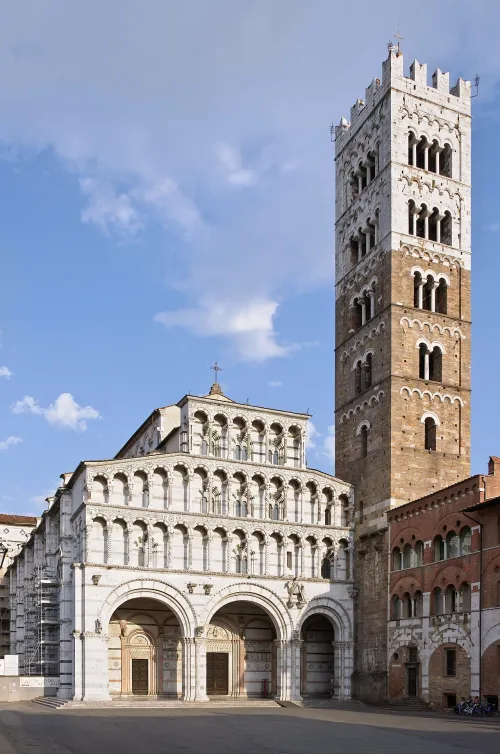
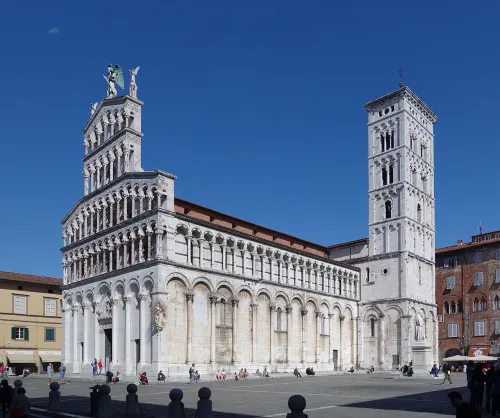
Start at the Lucca Cathedral (Duomo di San Martino) to see the Volto Santo and Ilaria del Carretto's tomb before the first tour groups arrive, then work your way through Piazza San Michele beneath the tiered marble facade of San Michele in Foro. A self-guided Lucca walking tour threads all 9 key stops across a gentle 3.3 km in about 1.9 hours, including the oval Piazza dell'Anfiteatro and the tree-topped Torre Guinigi. Arrive at the tower before 10:15 am to beat the queue, then close the day with a stroll along Via Fillungo as the evening passeggiata gets going.
Two daysRecommended
Bike the walls and dig into the heritage
Use the second day to cycle the full 4.2 km Renaissance wall circuit before the midday heat or crowds build; rent a bike at Porta Elisa or Porta San Pietro from around 3 euros per hour. Spend the afternoon at Puccini's Birthplace on Piazza Cittadella (5 euros), the golden-mosaic Basilica di San Frediano, and the Baroque garden at Palazzo Pfanner, which you can see for free from the wall promenade directly above. Plan museum days for Tuesday to Saturday, as Palazzo Mansi and Villa Guinigi both close Sunday and Monday.
Three days
Day trips and deeper culture
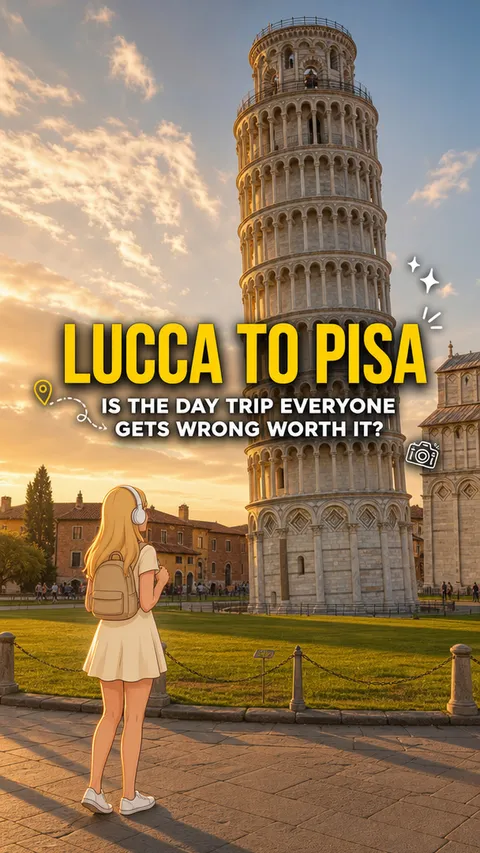
A third day opens up the surroundings without exhausting the city itself. Head to Torre del Lago, 15 km away, for a Puccini Festival opera performance in the open-air lakeside theatre in summer. Alternatively, take the 30-minute train to Pisa for the Campo dei Miracoli, or go 25 minutes to the beach at Viareggio. Back in Lucca, the Domus Romana is only open Friday to Sunday, so slot it in if you have not yet: entry is free and most visitors miss it entirely by arriving on a weekday.
Four days or more
Lucca as a Tuscan base
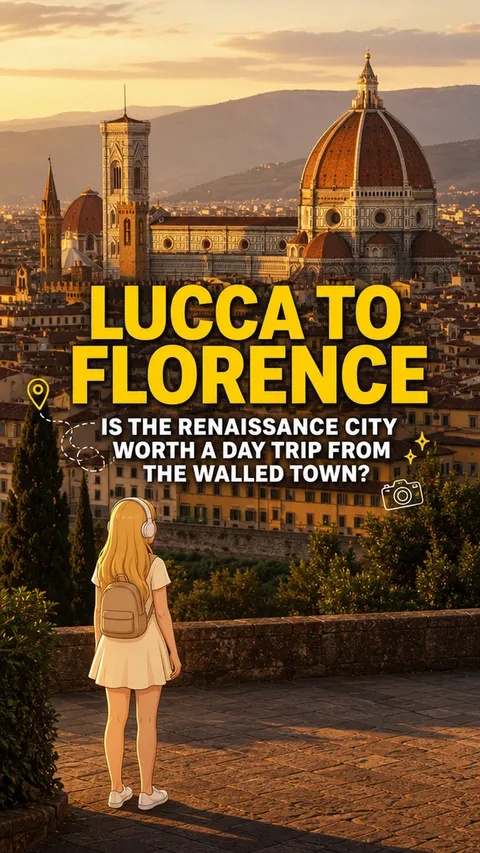
Four or more days work best if you use Lucca as a base for the broader Lucchesia countryside, including the Garfagnana valley to the north and the Apuane Alps hiking trails. The DOP olive oil mills in the surrounding hills accept visits, especially in November during the harvest. Florence is an hour by train, Cinque Terre around two hours, making Lucca a genuinely practical hub for a wider Tuscan itinerary without the prices or crowds of Florence itself.
Day trips from Lucca
Out in the morning, back in time for dinner. Every route here fits in one full day.
Best time to visit Lucca by traveller type
Same city, different trip. Here's the month that fits how you're travelling.
🧭
Best time to visit Lucca for the first time
AprMay
April or May: the walls are in bloom, Palazzo Pfanner's garden is open, the weather is 18-24°C and walkable all day, and you can take the whole core unhurried, the walls, cathedral, Torre Guinigi and Piazza dell'Anfiteatro, without August heat or Comics chaos. Rates around 100-140 €/night.
❤️
Best time to visit Lucca for couples
SepOct
Late September or early October (before the 28th). Autumn light on the medieval streetscape is golden, restaurant tables are easy, and the Luminara on 13 September is one of Italy's most romantic street events: a candlelit city and a medieval procession. Rates around 110-155 €/night.
💶
Best time to visit Lucca on a budget
JanFeb
January or early February: rooms 55-80 €/night, no queues, every sight open (just mind the Sun/Mon museum closures), and the free highlights, the walls, Piazza dell'Anfiteatro, San Frediano, Via Fillungo and San Michele, are fully enjoyable in winter light. A full day runs under 30 € in admissions.
🍝
Best time to visit Lucca for food and wine
Nov
November, in the weeks of the 2nd to 20th after Comics clears out. Fresh-pressed DOP Lucca olive oil reaches the shops and the Saturday Foro Boario market, and trattorias serve autumn Tuscan menus of porcini, chestnut and wild boar with almost no tourist pressure. Rates 60-90 €/night, and the Wednesday MercoledìBio organic market is at peak autumn produce.
Worst time to visit Lucca
The single date to lock in your calendar is Lucca Comics and Games, 28 October to 1 November. It is the world's largest pop-culture festival, with 500,000 visitors inside the walls making the centre impassable without a badge, rooms hitting 391 to 707 euros per night, and 97 percent of city-centre beds sold out by the previous December. August is the secondary month to skip for non-festival visitors: 34 to 36 degrees Celsius at midday empties the narrow stone streets between 11 am and 4 pm, and 50 to 70 percent of local restaurants close for Ferragosto, making the latter half of August particularly difficult for finding an open trattoria.
Still worth it for August suits visitors here specifically for the Puccini Festival at Torre del Lago or for a beach base in Viareggio with Lucca as a cooler morning excursion. Comics week itself is extraordinary if you have a badge and have booked accommodation in Pisa or Viareggio months ahead.
Go instead in April, May, September, when Lucca is at its best.
Best time for a tour of Lucca
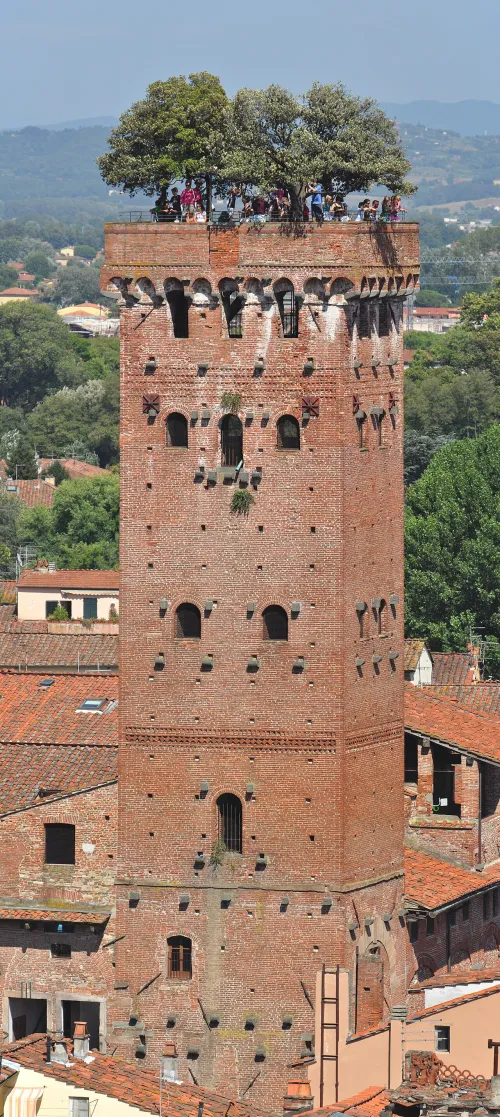
April and early October look tempting on paper, but they play out very differently on the ground. April brings 18 to 20 °C highs, manageable rain (around 10 days across the month), and crowds that are noticeable without being oppressive: the circuit around the Lucca City Walls stays pleasant, the Piazza dell'Anfiteatro's elliptical lanes are easy to photograph, and the climb up Torre Guinigi to its rooftop garden of holm oaks is genuinely enjoyable rather than a queue-and-sweat ordeal. May edges warmer, to around 22 °C, still with comfortable evenings. September pulls it back into that same sweet range, 24 to 26 °C, drying out nicely after summer, and the low-angle light in the late afternoon is flattering on the striped marble façade of the Duomo di San Martino. By contrast, July and August push to 30 °C with walls and paving stones radiating heat back at you: the 3.3 km route has almost no tree cover until the Wall promenade, and that section gets uncomfortably exposed by 10 am. October keeps temperatures reasonable at around 21 °C, but the crowds are shoulder-to-shoulder: Lucca Comics and Games draws tens of thousands and the old centre is genuinely heaving. January is near-empty and eerily quiet, but 11 °C highs and 12 rain days mean you are likely to be cold and wet before you reach Via Fillungo.
The practical upside of starting your Lucca tour with AI Tourguide is that no tour operator decides your departure time: if April showers are forecast, you wait for the dry window after lunch and set off then. The guide runs entirely in your browser, no download needed, and the moment you step into the Piazza dell'Anfiteatro it greets you and begins telling the story of the Roman amphitheatre buried beneath those medieval house fronts. It asks you questions, listens to what interests you, and shapes the rest of the walk around your answers, so a cool April morning with thin crowds and sharp Tuscan light becomes exactly the walk it should be, at the pace you choose.

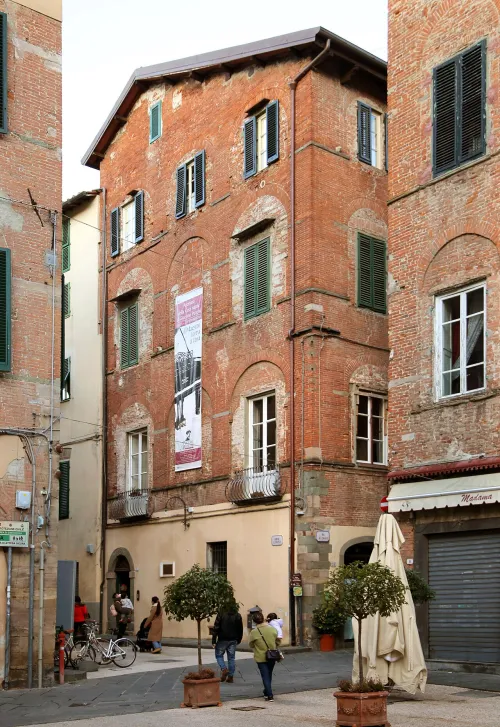
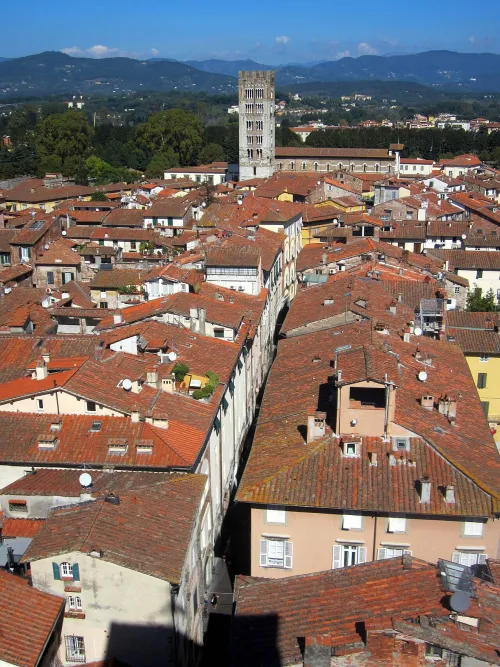 +5
+5All 9 stops are already on the map.
You just press start.
You just press start.
 AI Tourguide
You just read the route.
Now walk it with a guide in your ear.
Press start wherever you are, even hundreds of kilometres from Lucca, and the guide begins telling its stories right away. In the city, pick any of the 9 stops to start from: it leads you there, then talks with you the whole route, asking, listening, remembering, and shaping the tour around your answers.
9stops3.3km1.9hours11languages
▶Start the tour freeFree to start · Runs in your browser · No app, no download
Lucca events and festivals calendar
Annual highlights worth timing a trip around, listed month by month.
February
🎭 CarnivalCarnival Carnevale
Feb 14 – Mar 3 ~
mid-February to Shrove Tuesday, dates move each year with the Easter calendar
Neighbourhood street events and costume parades in the days before Ash Wednesday.
April
⛪ ReligiousEaster in Lucca Pasqua
Apr 5–6 ~
Easter Sunday and Monday, moveable
Special liturgies at Lucca Cathedral and San Frediano.
May
🏃 SportLucca Half Marathon
May 2–3
first weekend of May, race on the Sunday
A half-marathon (21.097 km) with a course running partly on and around the Renaissance city walls, starting 9 am at Baluardo San Donato; about 3,000 runners, plus the La Lucchesina companion run on 2 May.
June
🎵 MusicLucca Summer Festival
Jun 24 – Jul 29
late June through late July
Open-air rock, jazz, classical and pop concerts in Piazza Napoleone and against the historic walls, running late June through late July.
July
🎉 FestivalFesta di San Paolino and Palio della Balestra Giorni di San Paolino
Jul 8–15
8-15 July, main crossbow palio on 12 July at 9:30 pm
Lucca's patron-saint festival with a medieval historical pageant, flag-wavers and period costume, a torchlit procession, and a crossbow palio under 1443 rules contested between three city districts at Piazza San Martino.
🎵 MusicPuccini Festival Festival Puccini
Jul 17 – Sep 5
mid-July to early September at Torre del Lago
Open-air opera at the lakeside Gran Teatro Giacomo Puccini in Torre del Lago, 15 km from Lucca.
September
🎉 FestivalSeptember Lucensis Settembre Lucchese
Sep 1–30
all of September, main events around 13-14 September
A month-long programme of fairs, markets and traditional entertainments with the Luminara and Santa Croce as its centrepiece, an end-of-summer fair at Borgo Giannotti, and the Gazzarra artillery spectacle at the San Martino bastion on 14 September.
⛪ ReligiousLuminara di Santa Croce
Sep 13–14
evening of 13 September and 14 September
The entire historic centre is lit by thousands of candles while a solemn medieval procession in period costume carries the Volto Santo, the cathedral's miraculous wooden crucifix, from San Frediano to San Martino.
October
🎨 Art and cultureLucca Comics and Games
Oct 28 – Nov 1
28 October to 1 November
The world's largest pop-culture festival, covering manga, cosplay, board games, video games and comics.
November
🎄 Christmas marketLucca Magic Christmas Market Lucca Magico Natale
Nov 22 – Jan 6 ~
from the third or fourth week of November to Epiphany
A French Christmas Village of wooden chalets in Piazza Napoleone, an artisan market in Piazza San Frediano from 6 December, festive lights along Via Fillungo, an ice rink and nativity scenes.
Insider tips for visiting Lucca
The rules buried in forums, in one place.
- Book Lucca Comics accommodation eight to ten months ahead. By December the year before, 97% of city-centre beds were gone for the 28 October to 1 November window. If you are coming for Comics, base in Pisa (30 minutes by train, 55-102 €/night during the event) or Viareggio (46-139 €/night).
- Lucca's two national museums close on the same days. Villa Guinigi and Palazzo Mansi are both shut Sunday and Monday, and only open at noon (12:00-19:30, Tuesday to Saturday). Plan your museum day for Tuesday to Saturday afternoon, or you will find both locked.
- Torre Guinigi (8 €, 94 steps, no lift) is Lucca's most popular ticketed sight and has no online ticket. The queue forms by 10:30 am on summer days and Sundays, so arrive before 10:15 am.
- The Domus Romana is open Friday to Sunday only (10:30-13:00 and 15:00-17:00, last entry 16:30). Many visitors miss it entirely by coming on a weekday, so slot it into a Friday or Saturday.
- For the Luminara di Santa Croce on 13 September, be on Via Fillungo by 7:30 pm. The candlelit procession enters from San Frediano around 8 pm and ends at the Cathedral; the best spot is near the Piazza San Michele intersection, and the streets grid-lock after 8.
- For Lucca Summer Festival, check the venue before booking. Big headline acts use the city-wall Mura Storiche stage with a standing pit, while Piazza Napoleone has a seated-plus-standing layout. Concerts end around 22:30-23:30, so pre-book a taxi or plan the 25-minute walk to the train station.
- Rent bikes at the wall gates, not inside the centre. Stands at Porta Elisa and Porta San Pietro start around 3 €/hour; the 4.2 km wall circuit takes 25-35 minutes. In summer ride it before 9 am to beat the midday heat and the thickest foot traffic.
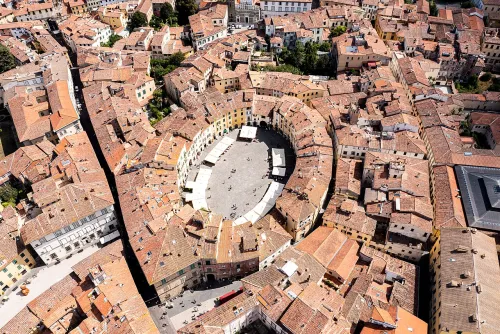
- Piazza dell'Anfiteatro, the elliptical Roman-amphitheatre square and the most photographed spot in town, fills with tour groups by 11 am. For empty arch entrances, shoot it between 8 and 9:30 am on a weekday morning.
- If you want the formal Baroque Palazzo Pfanner garden but not the 6 € ticket, you can see it for free from the wall promenade directly above. The Cathedral of San Martino also opens late on Sundays, at 11:30 am rather than 9:30, with the Volto Santo crucifix in the north aisle.
Public holidays in Lucca
On these dates many shops and offices close, transport thins out, and sights can be mobbed or shut. Plan around them.
| Date | Holiday | What closes |
|---|---|---|
| Jan 1 | New Year's Day (Capodanno) | Almost everything closed; the cathedral opens for Mass only and restaurants are limited. A very quiet day in the deep low season. |
| Jan 6 | Epiphany (Epifania) | National holiday and the end of the Christmas-market season; the festive lights come down and many shops close. |
| Apr 5 | Easter Sunday (Pasqua) | Moveable in 2026. Cathedral and churches open for liturgies; most shops and restaurants closed; a heavy influx of Italian day-trippers to the walls and Piazza dell'Anfiteatro. The cathedral is queue-free at 9 am, packed by 11. |
| Apr 6 | Easter Monday (Pasquetta) | National holiday: Italians flood the walls and parks, Torre Guinigi and the wall promenade get very busy, and many local restaurants are closed. |
| Apr 25 | Liberation Day (Festa della Liberazione) | National holiday that often anchors a long bridge weekend, bringing a moderate visitor spike. Most museums open, but verify the Sun/Mon closures of Palazzo Mansi and Villa Guinigi. |
| May 1 | Labour Day (Festa dei Lavoratori) | National holiday overlapping the half-marathon weekend in 2026: bars and cafes stay open, many shops close, and hotel occupancy is up around the 1-3 May weekend. |
| Jun 2 | Republic Day (Festa della Repubblica) | National holiday with a flag ceremony at the city monuments; most sights stay open. |
| Aug 15 | Ferragosto | The most disruptive holiday for visitors: 50-70% of local restaurants and many shops close for up to two weeks either side. Tourist-facing places stay open, but any genuine local trattoria is likely shut, so stock up on food before 13 August. |
| Nov 1 | All Saints' Day (Ognissanti) | National holiday that coincides with the final day of Lucca Comics 2026. Churches open, most shops outside the Comics perimeter closed, and the city at its absolute busiest. |
| Dec 8 | Immaculate Conception (Immacolata Concezione) | National holiday with the Christmas market in full swing; it anchors a long weekend and brings a moderate visitor spike. |
| Dec 25 | Christmas Day (Natale) | Everything closed; the cathedral opens for Mass and the streets are quiet. |
| Dec 26 | St. Stephen's Day (Santo Stefano) | National holiday; post-Christmas shopping resumes only late in the day. |
Lucca month by month
January in Lucca
High11°C / 51°F
Low3°C
Rain112mm / 12 rainy days
Sun6.4 h/day
Daylight9 h/day
Humidity81%
Crowds●○○○○Prices●○○○○
January is Lucca at its quietest and cheapest. Highs sit near 11°C with short days (sunset by 5 pm) and the chance of cold Padano-type fog, but heavy snow is unknown here. The post-Christmas lull empties the place out: Palazzo Mansi and Villa Guinigi are at their emptiest, there are no queues anywhere, and the city keeps a genuine unhurried local rhythm. A full day of sights costs under 30 €.
The vibe This is the month you walk into Piazza dell'Anfiteatro with the arch entrances clear and climb Torre Guinigi without a soul ahead of you. Cold and short on daylight, but cheap, calm and entirely local. The free core, the walls, San Frediano and Via Fillungo, is fully enjoyable even in winter light.
Don't miss The indoor heavyweights are queue-free: Palazzo Mansi and Villa Guinigi (both Tuesday-Saturday, noon-19:30) and the Puccini Birthplace Museum (5 €). Wrap up and cycle the empty 4.2 km wall circuit, then warm up over a Tuscan dinner with no booking trouble.
Crowd drivers Deep low season, with Italian school in session and no festival pull. The lowest visitor pressure of the year, aside from a quiet New Year's Day.
In season Deep winter is the season for hearty Lucchesia cooking: zuppa di farro, ribollita and wild-boar ragù, eaten in family trattorias with the previous autumn's fresh DOP Lucca olive oil still on the table.
Heads up 1 January closes almost everything (cathedral open for Mass only); 6 January (Epiphany) ends the Christmas market and shuts many shops. Palazzo Pfanner's garden is closed for winter (typically November-March).
Cheapest month of the year: 3-star centre rooms 55-80 €/night, well below the 140-200 € of high summer.
February in Lucca
High13°C / 55°F
Low4°C
Rain110mm / 11 rainy days
Sun7.4 h/day
Daylight10 h/day
Humidity79%
Crowds●○○○○Prices●○○○○
February is the continued low season, with highs creeping toward 13°C and still-short days. Lucca's own Carnival (falling mid-February into early March in 2026) adds one busier weekend of neighbourhood parades, but the famous floats are in Viareggio, 20 km away. The rest of the month stays quiet, empty and cheap, with museums uncrowded and prices at the floor.
The vibe February is honest, unperformed Lucca: no crowds, no markup, no show. While Viareggio goes wild for its float Carnival, Lucca stays calm, which is exactly the appeal if you want the walled city to yourself for the price of a budget room.
Don't miss A perfect month for the indoor sights without queues, then a day-trip to Viareggio for one of Italy's biggest Carnival float parades. The Cathedral of San Martino and the Volto Santo are easy to see, but note the cathedral opens late at 11:30 am on Sundays.
Crowd drivers The Carnival weekend brings a single busy stretch in the centre but no major spike. International tourism is near its annual low.
In season Still winter-stew weather: buccellato sweet bread from the bakeries along Via Fillungo and chestnut-flour necci pair well with the season's hearty trattoria menus.
Heads up Palazzo Mansi and Villa Guinigi remain closed Sunday and Monday; the Domus Romana is open Friday to Sunday only. Palazzo Pfanner's garden stays shut for winter.
Prices at their annual floor, alongside January: 55-80 €/night, rising to 90-120 € only on the Carnival weekend.
Events this month
🎭 CarnivalCarnival Carnevale
Feb 14 – Mar 3 ~
mid-February to Shrove Tuesday, dates move each year with the Easter calendar
Neighbourhood street events and costume parades in the days before Ash Wednesday. Lucca's own Carnival is small; the famous floats are 20 km away in Viareggio, which runs the same period and draws big crowds.
On non-parade days Lucca itself stays quiet. If you visit during Carnival, day-trip to Viareggio for one of Italy's biggest float processions.
March in Lucca
High15°C / 59°F
Low5°C
Rain81mm / 9 rainy days
Sun9.3 h/day
Daylight12 h/day
Humidity73%
Crowds●●○○○Prices●●○○○
March opens the shoulder season. Highs climb toward 15°C, the Botanical Garden shows its first spring bulbs, and the weather turns cool but pleasant with showers rarely lasting all day. Crowds stay moderate until the run-up to Easter (5 April in 2026), which brings Italian day-trippers to the walls and cathedral the week either side. It is the last genuinely quiet stretch before spring fills the city.
The vibe March is the last calm month before the April bloom and the festivals arrive. The cafés put tables back outside, the walls turn green again, and you can still cycle or photograph Piazza dell'Anfiteatro without a fight for space. Use that window, because it closes fast.
Don't miss Cycle the 4.2 km wall circuit at its most photogenic green, catch early-spring bulbs in the Botanical Garden, and take in the national museums while they are still empty. The wall promenade is mild and walkable all day this time of year.
Crowd drivers Mostly quiet, with a brief Easter-week build at the very end of the month if Easter falls early. Italian school is in session and there is no festival pull.
In season Early spring vegetables reach the Saturday Foro Boario market and the Wednesday MercoledìBio organic market; trattorias move toward lighter dishes after the winter stews.
Prices recover gently to 75-110 €/night, with Easter week (if it falls late) pushing toward 100-140 €.
April in Lucca
High18°C / 65°F
Low8°C
Rain89mm / 10 rainy days
Sun10.8 h/day
Daylight14 h/day
Humidity73%
Crowds●●○○○Prices●●○○○
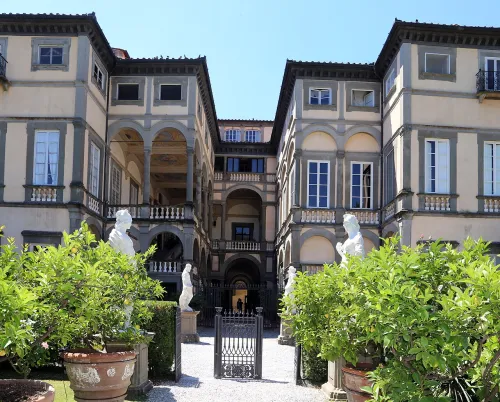
April is Lucca at its spring best. Highs near 18°C and 18-24°C afternoons make the whole core walkable all day, the Palazzo Pfanner garden reopens with wisteria and citrus, and the walls are at their most photogenic green. Easter (5 April) and Pasquetta (6 April) bring a brief flood of Italian day-trippers to the walls and Piazza dell'Anfiteatro, then the post-Easter quiet resumes. One of the two best months to come.
The vibe April is the first-timer's month: everything accessible, the weather kind, the gardens in bloom and the city unhurried, exactly how Lucca's medieval core deserves to be seen. The only busy days are Easter Sunday and Monday, when the locals descend, and they pass quickly.
Don't miss Walk the walls in full leaf, see Palazzo Pfanner's reopened Baroque garden (6 €, or free from the wall promenade above), and climb Torre Guinigi before the 10:30 am queue forms. Cathedral liturgies on Easter draw crowds, so visit at 9 am or skip those two days.
Crowd drivers The Easter long weekend (3-6 April) spikes briefly, joined by the 25 April Liberation Day bridge weekend. Otherwise April stays a comfortable shoulder month.
In season Spring produce arrives at the markets; many trattorias serve seasonal artichoke and broad-bean dishes alongside the local DOP Lucca olive oil.
Heads up Most shops and many restaurants close on Easter Sunday (5 April) and Pasquetta (6 April); Palazzo Pfanner's garden reopens for the season (daily 10:00-18:00, April-October).
Rooms run 80-120 €/night, jumping to 120-160 € over the Easter long weekend (3-6 April), then easing again.
Events this month
⛪ ReligiousEaster in Lucca Pasqua
Apr 5–6 ~
Easter Sunday and Monday, moveable
Special liturgies at Lucca Cathedral and San Frediano. Pasquetta (Easter Monday) is a national holiday when Italian family day-trippers flood the walls and Piazza dell'Anfiteatro.
Roads and walls are crowded on both days. The cathedral is queue-free at 9 am but packed by 11, so go early.
May in Lucca
High22°C / 71°F
Low12°C
Rain95mm / 13 rainy days
Sun11.8 h/day
Daylight15 h/day
Humidity75%
Crowds●●●○○Prices●●●○○
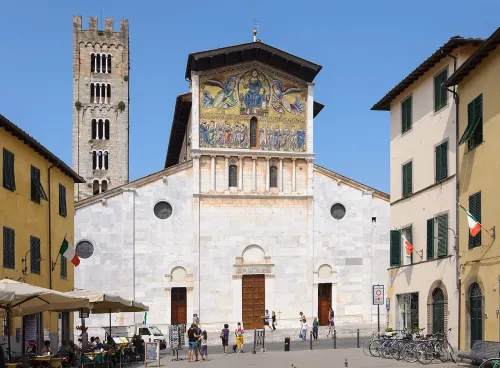
May is the value sweet spot. Highs near 22 degrees Celsius and 18 to 24 degree afternoons make for ideal cycling and all-day walking, with no midday heat shutdown yet. Italian school is still in session for most of the month, so local-family crowds stay light, though the late-April and 1 May bridge holidays lift day-tripper numbers. The Lucca Half Marathon on 3 May briefly closes the wall-top road but makes a lively, scenic spectacle. Cycle the walls early, watch the race from Baluardo San Donato, and enjoy the Palazzo Pfanner garden in full wisteria bloom.
The vibe May is the month savvy travellers target: warm but not hot, green and blooming, and still cheaper than summer. The walls are perfect for cycling, the gardens are open, and the city has energy without the July crush. A genuinely hard month to beat.
Don't miss Cycle the walls early, watch the half-marathon from Baluardo San Donato, and enjoy the Palazzo Pfanner garden in full wisteria bloom. This is also when our live AI guide earns its keep: a flat-priced, always-available walking companion that tells you the story of each piazza, tower and church as you pass it, at your own pace, for far less than a private guide.
Crowd drivers Italian bridge holidays around 25 April and 1 May raise day-trip numbers, and the half-marathon weekend (2-3 May) fills hotels, but school is in session so the crowds stay manageable.
In season Peak spring at the markets: asparagus, fava beans and the first cherries from the Lucchesia hills appear at the Saturday Foro Boario and Wednesday organic markets.
Shoulder-prime value at 100-140 €/night, lifting to 130-160 € over the half-marathon weekend (2-3 May).
Events this month
🏃 SportLucca Half Marathon
May 2–3
first weekend of May, race on the Sunday
A half-marathon (21.097 km) with a course running partly on and around the Renaissance city walls, starting 9 am at Baluardo San Donato; about 3,000 runners, plus the La Lucchesina companion run on 2 May.
Spectating near Baluardo San Donato is scenic and free, but expect a brief wall-top closure to cyclists on the Sunday morning and a hotel-occupancy spike across the 1-3 May weekend.
June in Lucca
High27°C / 80°F
Low17°C
Rain65mm / 9 rainy days
Sun13.4 h/day
Daylight15 h/day
Humidity73%
Crowds●●●○○Prices●●●○○
June opens the summer season. Highs near 27°C and the longest days of the year (sunset after 8:30 pm) make for long golden evenings, and it is one of the driest months. The Lucca Summer Festival begins (first concert 24 June), filling Piazza Napoleone with 10,000-20,000 people on show nights, and the Italian school year ends late in the month. Heat is building but the evenings stay walkable.
The vibe June is the tipping point into summer, and the long light evenings are the reward. Midday is getting hot on the stone streets, so the day shifts late: aperitivo on the piazzas, concerts against the walls, and the golden hour stretching past 8:30 pm. Still short of the July and August crush.
Don't miss Catch a Summer Festival concert against the floodlit walls, cycle the circuit before 9 am to beat the heat, and use the long evenings for late dinners in Piazza dell'Anfiteatro. The Botanical Garden is lush before the autumn colour arrives.
Crowd drivers The Summer Festival's opening concerts pull big crowds and spike rates on show nights, and the Italian school year ends late June, releasing the first wave of domestic families.
In season First summer fruit, tordelli lucchesi (the local meat-stuffed pasta) and gelato along Via Fillungo as the evening passeggiata gets going.
Summer pricing opens at 110-150 €/night, with 140-180 € on Summer Festival concert evenings.
Events this month
🎵 MusicLucca Summer Festival
Jun 24 – Jul 29
late June through late July
Open-air rock, jazz, classical and pop concerts in Piazza Napoleone and against the historic walls, running late June through late July. Past lineups have included major international artists across pop, rock and jazz, with standing and seated areas against the floodlit ramparts.
Concert nights bring 10,000-20,000 people into the piazza and spike hotel rates to 140-230 € on headline nights. The walled backdrop makes it one of Europe's most atmospheric concert settings, so book show tickets and a room together.
July in Lucca
High30°C / 85°F
Low19°C
Rain37mm / 6 rainy days
Sun13.9 h/day
Daylight15 h/day
Humidity70%
Crowds●●●●○Prices●●●●○
July is peak season and genuinely hot, with highs near 30°C and 34-36°C at midday on the paved, narrow streets. The Lucca Summer Festival is in full swing through 29 July, the San Paolino patron-saint festival (12 July, with its evening crossbow palio) brings real local colour, and the Puccini Festival opens at nearby Torre del Lago. It is the driest month, but walking between 11 am and 4 pm is uncomfortable, so plan around the cool hours.
The vibe July is hot, busy and event-packed. The walls are exposed and only patchily shaded, so the day runs early and late: cycle before 9 am, retreat through midday, then come out for concerts and dinners as the heat eases. With the right timing it is one of the most atmospheric months, just not a midday one.
Don't miss Time a Summer Festival headline night and a Puccini Festival opera at Torre del Lago (15 km), then see San Paolino's free evening crossbow palio at Piazza San Martino. Cycle the walls at first light and keep midday for shaded museums and the Puccini Birthplace Museum (5 €).
Crowd drivers The Summer Festival headline nights, San Paolino on 12 July, the start of the Puccini Festival and Italian summer families together make July one of the busiest months.
In season Cool granita and gelato carry the heat; markets overflow with tomatoes, peaches and figs, and trattorias lean on lighter chilled dishes.
Peak pricing at 140-200 €/night, rising to 180-230 € on Summer Festival headline nights.
Events this month
🎵 MusicLucca Summer Festival
Jun 24 – Jul 29
late June through late July
Open-air rock, jazz, classical and pop concerts in Piazza Napoleone and against the historic walls, running late June through late July. Past lineups have included major international artists across pop, rock and jazz, with standing and seated areas against the floodlit ramparts.
Concert nights bring 10,000-20,000 people into the piazza and spike hotel rates to 140-230 € on headline nights. The walled backdrop makes it one of Europe's most atmospheric concert settings, so book show tickets and a room together.
🎉 FestivalFesta di San Paolino and Palio della Balestra Giorni di San Paolino
Jul 8–15
8-15 July, main crossbow palio on 12 July at 9:30 pm
Lucca's patron-saint festival with a medieval historical pageant, flag-wavers and period costume, a torchlit procession, and a crossbow palio under 1443 rules contested between three city districts at Piazza San Martino.
Pure local tradition with no tourist crowds, not yet known abroad. The evening crossbow tournament is atmospheric and free, and it overlaps the first weeks of the Summer Festival.
🎵 MusicPuccini Festival Festival Puccini
Jul 17 – Sep 5
mid-July to early September at Torre del Lago
Open-air opera at the lakeside Gran Teatro Giacomo Puccini in Torre del Lago, 15 km from Lucca. The summer season typically runs mid-July to early September, with productions of Puccini's core works including Tosca, La Bohème, Madama Butterfly and Turandot, plus occasional gala evenings with international soloists.
Puccini was born in Lucca, so the festival is tied to his birthplace. The dusk lakeside performances are genuinely special, and you can pair them with the Puccini Birthplace Museum in town (5 €, Via del Poggio). Reach it by car or by train to Viareggio then transfer.
August in Lucca
High30°C / 86°F
Low19°C
Rain58mm / 7 rainy days
Sun12.5 h/day
Daylight14 h/day
Humidity69%
Crowds●●●●○Prices●●●●○
August is hot and, for non-festival visitors, the secondary month to skip. Highs near 30°C and 34-36°C midday heat empty the streets between 11 am and 4 pm. Ferragosto (15 August) sees half the local restaurants and many shops close for one to three weeks, and heavy Italian domestic tourism keeps the city busy in the cooler 7-9 am and 6-8 pm hours only. The Puccini Festival continues at Torre del Lago, including the Plácido Domingo gala (30 August).
The vibe August is full-on Italian summer: hot, busy at the edges of the day and dead in the middle. If you are here for the Puccini Festival it works well, but for a general visit the heat and the Ferragosto closures make it the weakest non-Comics month. The walls are only really pleasant at dawn or dusk.
Don't miss Pair a Lucca base with a dusk Puccini Festival opera at Torre del Lago, and walk or cycle the walls only at 7-9 am or after 6 pm. The Botanical Garden and shaded cathedral interior are the comfortable midday options. The nearest beach, Viareggio, is 25 minutes by train for a sea escape.
Crowd drivers Ferragosto (15 August) and heavy Italian domestic holidays drive the crowds, concentrated in the cool morning and evening hours, while the Puccini Festival continues nearby.
In season Ask your host which trattorias are open: many family-run places inside the walls close roughly 10-20 August. Stock up on food before 13 August, as Ferragosto shutters a lot of the centre.
Heads up Ferragosto (15 August) closes 50-70% of local restaurants and many shops for up to two weeks either side; tourist-facing places stay open but local trattorias are unpredictable.
High pricing holds at 140-200 €/night, with 170-220 € over Ferragosto week.
Events this month
🎵 MusicPuccini Festival Festival Puccini
Jul 17 – Sep 5
mid-July to early September at Torre del Lago
Open-air opera at the lakeside Gran Teatro Giacomo Puccini in Torre del Lago, 15 km from Lucca. The summer season typically runs mid-July to early September, with productions of Puccini's core works including Tosca, La Bohème, Madama Butterfly and Turandot, plus occasional gala evenings with international soloists.
Puccini was born in Lucca, so the festival is tied to his birthplace. The dusk lakeside performances are genuinely special, and you can pair them with the Puccini Birthplace Museum in town (5 €, Via del Poggio). Reach it by car or by train to Viareggio then transfer.
September in Lucca
High26°C / 78°F
Low16°C
Rain123mm / 10 rainy days
Sun10.7 h/day
Daylight12 h/day
Humidity73%
Crowds●●●○○Prices●●●○○
September is the most comfortable walking month and the other top time to visit. Highs near 26°C ease off through the month and Italian school resumes mid-September, thinning the crowds. The Luminara di Santa Croce (night of 13 September) lights the whole centre with candles for a medieval procession, the Palio della Balestra follows on 14 September, and the Puccini Festival closes on 5 September. After mid-month the shoulder-season value returns.
The vibe September is Lucca exhaling: warm but bearable, the light turning golden, the summer crush gone once schools reopen. The Luminara on 13 September is one of Tuscany's most romantic night events, a candlelit city and a slow medieval procession. The best couples' month, with autumn light and easy restaurant tables.
Don't miss Claim a Via Fillungo spot near Piazza San Michele by 7:30 pm for the Luminara, watch the 14 September crossbow palio at Piazzale Arrigoni, and enjoy the Settembre Lucchese fairs. Autumn light makes the walls and Piazza dell'Anfiteatro especially photogenic now.
Crowd drivers The Luminara and Santa Croce weekend (13-14 September) fills the centre, and the month-long Settembre Lucchese keeps the calendar busy, but after mid-September school is back and pressure eases.
In season The olive harvest is approaching in the surrounding hills, and early-autumn menus bring porcini and the first chestnuts to the trattorias; grapes and figs fill the markets.
Shoulder value returns after mid-month at 110-155 €/night, peaking 150-190 € over the 13-14 September Luminara weekend.
Events this month
⛪ ReligiousLuminara di Santa Croce
Sep 13–14
evening of 13 September and 14 September
The entire historic centre is lit by thousands of candles while a solemn medieval procession in period costume carries the Volto Santo, the cathedral's miraculous wooden crucifix, from San Frediano to San Martino. The Palio della Balestra crossbow competition follows on 14 September at Piazzale Arrigoni.
One of Tuscany's most visually striking night events and exceptional for photography. Streets fill from 8 pm, so arrive by 7 to claim a spot on Via Fillungo near Piazza San Michele.
🎉 FestivalSeptember Lucensis Settembre Lucchese
Sep 1–30
all of September, main events around 13-14 September
A month-long programme of fairs, markets and traditional entertainments with the Luminara and Santa Croce as its centrepiece, an end-of-summer fair at Borgo Giannotti, and the Gazzarra artillery spectacle at the San Martino bastion on 14 September.
Quieter crowds than summer but a full cultural calendar, making it good-value shoulder season with plenty going on.
🎵 MusicPuccini Festival Festival Puccini
Jul 17 – Sep 5
mid-July to early September at Torre del Lago
Open-air opera at the lakeside Gran Teatro Giacomo Puccini in Torre del Lago, 15 km from Lucca. The summer season typically runs mid-July to early September, with productions of Puccini's core works including Tosca, La Bohème, Madama Butterfly and Turandot, plus occasional gala evenings with international soloists.
Puccini was born in Lucca, so the festival is tied to his birthplace. The dusk lakeside performances are genuinely special, and you can pair them with the Puccini Birthplace Museum in town (5 €, Via del Poggio). Reach it by car or by train to Viareggio then transfer.
October in Lucca
High21°C / 70°F
Low12°C
Rain151mm / 11 rainy days
Sun8.4 h/day
Daylight11 h/day
Humidity80%
Crowds●●●●●Prices●●●●●
October is split in two. Through the 27th it is a lovely autumn shoulder: highs near 21°C, the holm oaks and limes atop the walls turning gold from late month, the Botanical Garden at its most colourful, and day-trippers from Pisa and Florence tapering. Then Lucca Comics and Games (28 October-1 November) arrives: 500,000 visitors, an impassable walled centre, and the highest prices of the year. October is also the start of the rainy season (151 mm).
The vibe Two completely different cities in one month. Early-to-mid October is the year's best-kept value secret, with autumn gold on the walls and emptying streets. The last days are the polar opposite: the largest pop-culture festival on earth, electric if you have a badge, a no-go if you do not. Plan firmly for one or the other.
Don't miss Before Comics, catch peak wall foliage in the second and third weeks and the Botanical Garden's autumn colour. For Comics itself, book eight to ten months ahead and base in Pisa (30 minutes by train) or Viareggio, since 97% of city beds sell out by the previous December.
Crowd drivers The first 27 days taper toward the autumn low, then Comics and Games (28 Oct-1 Nov) detonates into the single biggest crowd-driver of the year, with the All Saints' holiday on 1 November closing the festival.
In season The DOP Lucca olive harvest begins late October in the surrounding hills; autumn Tuscan menus of porcini, chestnut and wild boar take over the trattorias.
A two-tier month: 90-130 €/night through 27 October, then Comics week (28 Oct-1 Nov) explodes to 391-707 €/night in town.
Events this month
🎨 Art and cultureLucca Comics and Games
Oct 28 – Nov 1
28 October to 1 November
The world's largest pop-culture festival, covering manga, cosplay, board games, video games and comics. More than 500,000 visitors turn the entire walled city into a cosplay arena every year for five days from 28 October to 1 November.
It is the dominant event of Lucca's year. Hotel prices run four to eight times normal (391-707 €/night in town), 97% of city beds were sold out by December the year before, and the centre is impassable without a badge. An extraordinary spectacle if you attend, but avoid this window entirely for a quiet visit, and base in Pisa or Viareggio if you do come.
November in Lucca
High16°C / 60°F
Low8°C
Rain184mm / 15 rainy days
Sun6.6 h/day
Daylight10 h/day
Humidity83%
Crowds●○○○○Prices●○○○○
November is the emptiest non-Christmas period, with the city crashing back to quiet the moment Comics ends. Highs near 16°C but it is the wettest month (184 mm), and the rain off the Apuane Alps tends to be all-day and grey. Fresh-pressed DOP Lucca olive oil reaches the shops and markets, museums are quiet, and from around the third week the Lucca Magico Natale Christmas market brings the first festive light into Piazza Napoleone.
The vibe November is Lucca's deep exhale after Comics: empty streets, the lowest prices of the year, and a slow local rhythm. The trade is grey, persistent rain, so pack for it. The consolation is the new olive oil on every table and, late in the month, the Christmas market lighting up the historic centre.
Don't miss This is the foodie window: new DOP Lucca olive oil at the Saturday Foro Boario and Wednesday organic markets, and autumn trattoria menus with no tourist pressure. Quiet museums (mind the Sun/Mon closures), and the Christmas market arriving in Piazza Napoleone late in the month.
Crowd drivers An immediate post-Comics crash leaves the centre at its quietest. The Christmas market opening around the third week brings the first uptick on weekends toward month-end.
In season Fresh-pressed olive oil is the season's star, drizzled over fettunta toast; chestnut, porcini and wild-boar dishes are at their peak, and the MercoledìBio organic market is at its richest autumn range.
Heads up 1 November (All Saints' Day) coincides with the last day of Comics, so most shops outside the festival perimeter close. Palazzo Pfanner's garden shuts for the winter from around now.
An immediate post-Comics crash to 60-90 €/night, the year's best value, rising to 80-110 € once the Christmas market opens late in the month.
Events this month
🎨 Art and cultureLucca Comics and Games
Oct 28 – Nov 1
28 October to 1 November
The world's largest pop-culture festival, covering manga, cosplay, board games, video games and comics. More than 500,000 visitors turn the entire walled city into a cosplay arena every year for five days from 28 October to 1 November.
It is the dominant event of Lucca's year. Hotel prices run four to eight times normal (391-707 €/night in town), 97% of city beds were sold out by December the year before, and the centre is impassable without a badge. An extraordinary spectacle if you attend, but avoid this window entirely for a quiet visit, and base in Pisa or Viareggio if you do come.
🎄 Christmas marketLucca Magic Christmas Market Lucca Magico Natale
Nov 22 – Jan 6 ~
from the third or fourth week of November to Epiphany
A French Christmas Village of wooden chalets in Piazza Napoleone, an artisan market in Piazza San Frediano from 6 December, festive lights along Via Fillungo, an ice rink and nativity scenes. Open daily 9:30-20:00 (Mondays from 15:00).
Lucca's intimate scale, without the mass-tourist crush of Florence, makes the market genuinely atmospheric, and the French Provençal village aesthetic is unusual for Tuscany.
December in Lucca
High12°C / 54°F
Low4°C
Rain130mm / 13 rainy days
Sun5.9 h/day
Daylight9 h/day
Humidity85%
Crowds●●○○○Prices●●○○○
December is Christmas-market Lucca, intimate and atmospheric on a scale Florence cannot match. Highs near 12°C and short days (sunset by 5 pm), with the Lucca Magico Natale market running in Piazza Napoleone, the French Christmas Village of wooden chalets, festive lights along Via Fillungo and an ice rink. Italian weekend day-trippers fill the centre, but the city stays magical rather than mobbed.
The vibe December trades January's emptiness for a gentle festive glow. The French Provençal chalets in Piazza Napoleone, the lights on Via Fillungo and the small ice rink give the walled city real charm without Florence's crush. Short days, but a genuinely magical atmosphere, and prices stay reasonable outside the holiday peak.
Don't miss Wander the French Christmas Village in Piazza Napoleone and the artisan market in Piazza San Frediano (from 6 December), skate the ice rink, and follow the festive lights along Via Fillungo. The market runs daily 9:30-20:00 (Mondays from 15:00).
Crowd drivers The Christmas market and festive lights draw Italian weekend day-trippers, with the 8 December Immaculate Conception holiday and the 24-26 and 31 December dates as the busiest, priciest stretches.
In season Buccellato sweet bread, roasted chestnuts and mulled wine at the market stalls; trattorias serve the season's wild boar and the year's fresh DOP Lucca olive oil.
Heads up Christmas Day (25 December) closes nearly everything (cathedral open for Mass); St. Stephen's Day (26 December) is a national holiday with shopping resuming only late. Palazzo Pfanner's garden stays closed for winter.
Festive but modest at 80-120 €/night, lifting to 110-150 € over 24-26 December and 31 December.
Events this month
🎄 Christmas marketLucca Magic Christmas Market Lucca Magico Natale
Nov 22 – Jan 6 ~
from the third or fourth week of November to Epiphany
A French Christmas Village of wooden chalets in Piazza Napoleone, an artisan market in Piazza San Frediano from 6 December, festive lights along Via Fillungo, an ice rink and nativity scenes. Open daily 9:30-20:00 (Mondays from 15:00).
Lucca's intimate scale, without the mass-tourist crush of Florence, makes the market genuinely atmospheric, and the French Provençal village aesthetic is unusual for Tuscany.
Frequently asked questions
What is the best time to visit Lucca?
Late April to May and the second half of September are the best overall. You get walkable 18-26°C days, the city walls in bloom or autumn gold, every sight accessible, and hotel rates around 100-155 €/night. May adds the scenic half-marathon weekend, while mid-to-late September brings the Luminara di Santa Croce, golden autumn light and the start of olive-oil harvest in the surrounding hills.
What is the cheapest time to visit Lucca?
January, February and early November (right after Comics) are the cheapest, with 3-star centre rooms at 55-90 €/night, well below the 140-200 € of July and August. A full day of sights costs under 30 € in admissions. The trade is short daylight (sunset by 5 pm) and, in November, the wettest, greyest weather of the year.
When should you avoid Lucca?
Avoid 28 October to 1 November unless you have a Lucca Comics and Games badge. It is the world's largest pop-culture festival, with 500,000 visitors making the walled centre impassable, rooms at 391-707 € (four to eight times normal), and 97% of city beds sold out months ahead. August is the secondary one to skip for non-festival visitors: 34-36°C midday heat and half the local trattorias closed for Ferragosto.
How hot does Lucca get in summer?
July and August are genuinely hot, with highs near 30°C and 34-36°C at midday. The historic centre is paved stone and the narrow streets channel the heat, so walking between 11 am and 4 pm is uncomfortable. The exposed wall promenade is best done 7-9 am or after 6 pm. Air conditioning is limited in smaller B&Bs inside the walls, so check before booking.
What is the Luminara di Santa Croce and when is it?
The Luminara di Santa Croce is held on the evening of 13 September, with the Palio della Balestra crossbow competition on 14 September. Thousands of candles light the entire historic centre as a medieval procession carries the Volto Santo crucifix from San Frediano to the Cathedral of San Martino. It is one of Tuscany's most striking night events; arrive on Via Fillungo near Piazza San Michele by 7:30 pm before the streets grid-lock.
When can you cycle and walk the Lucca walls comfortably?
April, May, late September and early October are ideal, with 18-24°C and no midday heat. The 4.2 km Renaissance wall circuit takes 25-35 minutes to cycle; rent bikes at the gates (Porta Elisa, Porta San Pietro) from about 3 €/hour. In July and August, ride before 9 am, as the promenade is exposed and only patchily shaded. November is walkable but the wettest month.
Which days are Lucca's museums closed?
Plan museum days for Tuesday to Saturday. Palazzo Mansi and Villa Guinigi, the two national museums, are both closed Sunday and Monday and only open at noon (12:00-19:30). The Domus Romana opens Friday to Sunday only (last entry 16:30). The Cathedral of San Martino opens late on Sundays, at 11:30 am rather than 9:30. Torre Guinigi has no online ticket, so arrive before 10:15 am to beat the queue.
Is Lucca worth visiting in winter?
Yes, if you want it cheap, quiet and local. January and February bring rooms at 55-80 €/night, no queues, and the free core, the walls, Piazza dell'Anfiteatro, San Frediano and Via Fillungo, fully enjoyable in winter light. December adds the intimate Lucca Magico Natale Christmas market with its French chalet village in Piazza Napoleone. Expect short days (sunset by 5 pm) and the chance of cold fog or all-day rain.

Any month, any day: your guide is already there
Whatever date you pick, a private human guide gets pricier and harder to book on weekends, holidays and in peak season. Our live AI guide, the one that walks with you and answers anything you ask out loud, works the opposite way.
One flat price, every day
No holiday, weekend, night or peak-season surcharge. A private guide in Lucca runs well over 100 euro for a half day, and more on holidays. Ours stays the same.
Available the moment you want it
Start at midnight or at dawn, on Christmas, in the snow, in the August heat. No sold-out high season, no booking weeks ahead.
Your pace, no meter running
Pause for a long lunch, restart after dark, repeat a stop. The tour simply waits for you.
Free to try, a fraction of the cost
Test it for free, then a transparent flat price that undercuts any private guide, in every season.
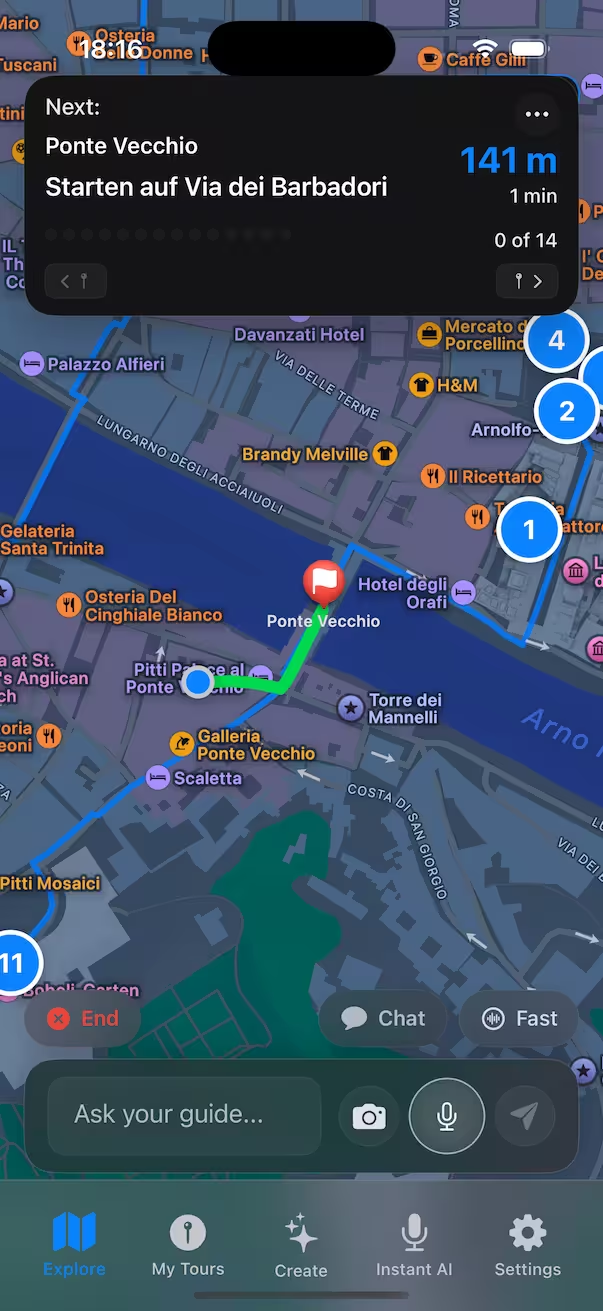
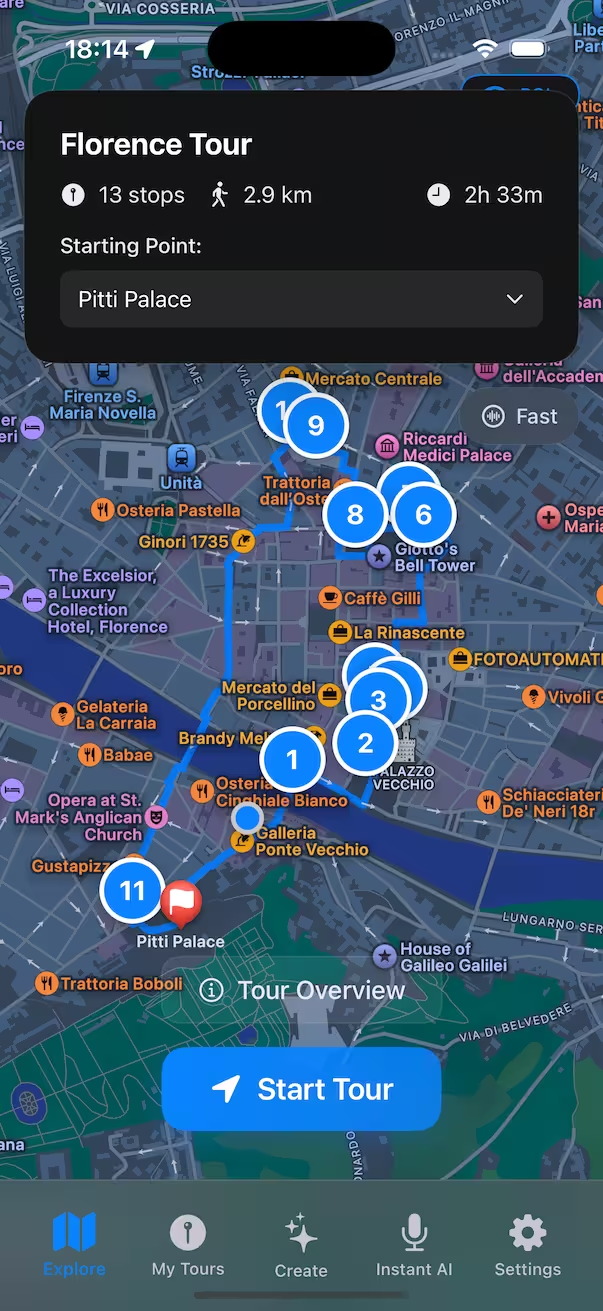
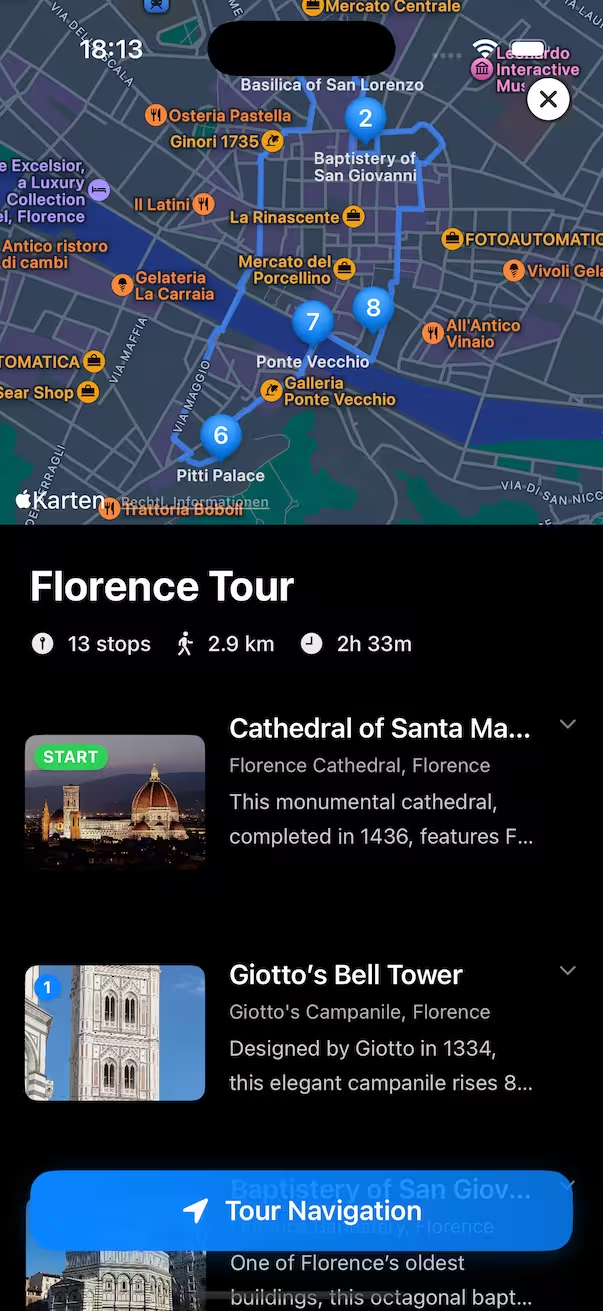
The classic Lucca tour: 9 stops, 3.3 km, about 2 h on foot
Your live AI guide and the self-guided Lucca route, together in your browser.