Best Time to Visit Pisa
Month-by-month weather, crowds and prices, plus a full calendar of festivals and events worth planning a trip around.
Best monthsApr, May, Sep
CheapestJan, Nov
AvoidJul
BusiestJul
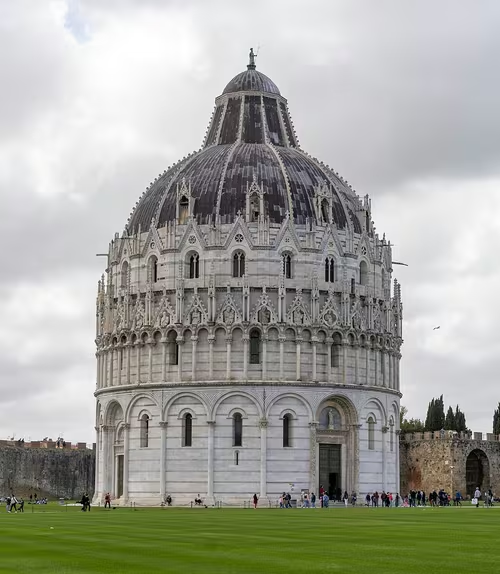
When is the best time to visit Pisa?
Come late April to mid-May or in September: 18-25°C, low rainfall, the Piazza dei Miracoli walkable at any hour, and 3-star hotels 20-35% below the July peak with Tower slots still bookable 2-3 weeks ahead. Avoid mid-July through early August, when 33-37°C bakes the shadeless marble field and Tower tickets sell out 4-6 weeks out. January and November are the cheapest and emptiest, from 55-70€ a night, the trade being grey, wet, short days.
Start our tool and find your best time to visit Pisa
Your perfect month
Free · ~30 seconds
or tap a month directly
What matters to you?
And this?
Best overall: Apr, May, Sep. Late April through mid-May and September are the real sweet spot: 18-25°C, low rainfall, Tower slots available 2-3 weeks ahead, the Lungarni manageable at any hour, and prices 20-35% below peak. September edges ahead for photographers thanks to richer afternoon light on the marble, while spring brings wisteria in the Orto Botanico.
Best value: Jan, Nov. January and November bring 3-star hotels from 55-105€, no queues anywhere, same-day Tower tickets and a free first-Sunday at San Matteo. The catch is short, grey, wet days, November being the wettest month, but you trade weather for a near-private Piazza dei Miracoli and the cheapest base for day trips to Florence.
Avoid: Jul. Mid-July through early August is the year's worst value: 33-37°C bakes the shadeless Piazza field, the day-tripper crush from Florence and Livorno cruise ships peaks, Tower timed slots sell out 4-6 weeks ahead, and many independent restaurants shut for the Ferragosto break around 10-18 August.
- January: Good time, 11°C. This is the one month you can stand almost alone under the Leaning Tower. No cruise coaches, no queues, same-day Tower tickets, and a near-private Piazza. Bring a warm layer for the damp, but the trade is real solitude and the lowest prices of the year.
- February: Great time, 13°C. February is honest, unhurried Pisa. While Viareggio goes wild for Carnival, Pisa stays calm and cheap, which is exactly its charm if you want the Piazza without crowds or markup. Bakeries fill with Carnival pastries, and you can linger in the Camposanto with barely another soul.
- March: Great time, 15°C. March is the quiet window everyone overlooks. The weather turns kind, the Piazza is still walkable at any hour, and on 25 March you can watch the Cathedral fill for the noon sunbeam ceremony with almost no tourists. Use it before April's crowds arrive.
- April: Great time, 18°C. April is when Pisa looks its photogenic best: spring light, blossom in the Botanical Garden, and the Piazza dei Miracoli still walkable outside the day-trip hours. Avoid Easter weekend if you want quiet, but the weeks either side are the first-timer's ideal window, mild, affordable and uncrowded.
- May: Good time, 22°C. May is the couples' and first-timer's month: warm enough for Lungarni walks after dinner, the Piazza near-deserted and romantic after 6pm, and the best golden-hour photography on the marble facades. Busier than April but the weather and light more than earn it.
- June: Good time, 27°C. June is Pisa at its most alive. The first two weeks are a families' dream, long days, sea already warm, and no July crush. Then the Giugno Pisano festivals take over, and the Luminara on 16 June is one of the most atmospheric evenings in all of Italy. Book early and embrace the crowds, they are part of the spectacle.
- July: Tough month, 30°C. July is hot, crowded and best handled around the heat. Walk the Piazza before 9:30am or after 5:30pm, when the open grass field is bearable and the cruise coaches have gone. The Jazz festival and Estate Pisana fill the evenings, and the coast 10km away is the real July move. When the heat or pre-booked guide prices climb, our live in-browser AI guide is the flat-priced, always-available alternative to an expensive private guide, telling you the story of each monument as you walk the marble in the cooler early hours, at your own pace.
- August: Good time, 30°C. August is hot and a little hollowed-out around Ferragosto, with shuttered trattorie and a city in holiday mode. Plan around the heat and the closures: walk early or late, eat where the kitchens stay open, and consider basing on the coast. The evening culture programme at the Giardino Scotto keeps the nights alive.
- September: Good time, 26°C. September feels like Pisa exhaling: still warm, still swimmable on the coast, but with the brutal July heat broken and the marble glowing in softer light. It is the most expensive month because everyone in the know comes now, so book ahead, but the quality of the experience justifies it.
- October: Good time, 21°C. October is autumn Pisa at ease: cooler, quieter and well-priced, with golden light still on the marble through the first half of the month. Rain comes in 1-2 day spells rather than constant drizzle, so plan indoor sights around it. The couple's month, romantic and unhurried, with foliage at San Rossore.
- November: Great time, 16°C. November is introverted Pisa: grey, wet and almost touristless, but cheap and calm. The trade-off is real, you will get rained on, but the reward is the marble monuments nearly to yourself and the moody Camposanto interior at its finest. Pair it with a truffle-hunting day trip to San Miniato.
- December: Good time, 12°C. December trades autumn's emptiness for a gentle festive bustle: Christmas lights, nativity scenes and mulled wine in the piazzas, without the crush of a big-name market city. It stays cheaper than Florence and the Piazza dei Miracoli is still walkable at any hour. Cosy, low-key and easy on the budget.
Pisa weather by month
HighLowRainfall
Jan11°
Feb13°
Mar15°
Apr18°
May22°
Jun27°
Jul30°
Aug30°
Sep26°
Oct21°
Nov16°
Dec12°
| Month | Temp | Rain | Sun | Crowds | Prices | Highlight |
|---|---|---|---|---|---|---|
| Jan | 11° / 3° | 105mm · 12 rainy days | 6.4 h/day | ●○○○○ | ●○○○○ | |
| Feb | 13° / 4° | 104mm · 11 rainy days | 7.6 h/day | ●○○○○ | ●○○○○ | Pisa Carnival |
| Mar | 15° / 5° | 76mm · 8 rainy days | 9.5 h/day | ●●○○○ | ●●○○○ | Pisa Carnival |
| Apr | 18° / 8° | 82mm · 10 rainy days | 10.9 h/day | ●●●○○ | ●●●○○ | Easter Week |
| May | 22° / 13° | 92mm · 12 rainy days | 11.9 h/day | ●●●○○ | ●●●○○ | |
| Jun | 27° / 17° | 63mm · 9 rainy days | 13.3 h/day | ●●●●● | ●●●●○ | Regatta of the Ancient Maritime Republics |
| Jul | 30° / 20° | 37mm · 6 rainy days | 13.8 h/day | ●●●●● | ●●●●○ | Pisa Jazz Festival |
| Aug | 30° / 20° | 58mm · 7 rainy days | 12.5 h/day | ●●●●○ | ●●●○○ | Pisa Summer Season |
| Sep | 26° / 16° | 108mm · 10 rainy days | 10.8 h/day | ●●●●○ | ●●●●○ | |
| Oct | 21° / 13° | 135mm · 12 rainy days | 8.5 h/day | ●●●○○ | ●●●○○ | |
| Nov | 16° / 8° | 175mm · 14 rainy days | 6.7 h/day | ●○○○○ | ●●○○○ | All Saints' Day |
| Dec | 12° / 5° | 117mm · 13 rainy days | 6.1 h/day | ●●○○○ | ●●○○○ |
How we score this: weather = long-run climate normals (Open-Meteo), crowds & prices = relative season read, events checked yearly against official dates.
Best time to visit Pisa: weather, prices & crowds
Best months for good weather
May, Jun, Sep
May and September give Pisa its kindest balance: 21-26°C, the golden afternoon light hitting the white Carrara marble at its best, and almost no rain. June is gorgeous too but the heat starts to bite by late month, when the Piazza's open grass field offers zero shade after 11am.
Quietest months to avoid the crowds
Jan, Nov
January and November empty the city out. On a weekday morning you can stand almost alone in the Piazza dei Miracoli, the cruise coaches from Livorno gone, and walk into the Museo Nazionale di San Matteo with no queue. November light inside the Camposanto is especially atmospheric.
Cheapest time to visit Pisa
Jan, Nov
January and November are Pisa's cheapest: 3-star centre hotels from 55-105€ a night, roughly 35-45% below the September and July highs. Tower timed tickets are available same-day, and the Pisa-Florence train is just 8-12€ standard class if you base yourself here for less.
Best time for festivals and events
Mar, Jun
Two unrepeatable evenings: 25 March, when Capodanno Pisano fills the Cathedral for the noon sunbeam ceremony with almost no tourists, and 16 June, when the Luminara di San Ranieri drapes over 100,000 wax lamps along the Lungarni and the city goes electric-light-free before midnight fireworks over the Arno.
How many days do you need in Pisa?
Most visitors spend half a day in Pisa and leave, but the city rewards an overnight stay. Two days lets you walk the Piazza dei Miracoli at dawn and again at dusk, explore the medieval lanes beyond the tourist square, and take a day trip to the Tyrrhenian coast or up to Florence. The compact, walkable centre means you cover a lot quickly, but slowing down reveals a real city behind the famous lean.

One day
The Piazza at dawn, the city by evening
Arrive early and be on the Piazza dei Miracoli by 7:30am, when the marble glows and the coach crowds are still absent. Climb the Tower, walk the Baptistery of Pisa, Cathedral, and Camposanto Monumentale, then take the self-guided Pisa walking tour (7 stops, 3.9 km, about 1.8 hours) through the historic centre to the Piazza dei Cavalieri, Keith Haring's Tuttomondo mural, and the Gothic riverside chapel of Santa Maria della Spina. End the evening on the Lungarni as the light fades over the Arno.
Two daysRecommended
Coast or countryside on day two
Spend your first day on the Piazza dei Miracoli and the historic centre. On day two, take the line 10 bus (25 minutes, 1.50€) to Marina di Pisa for a morning on the Tyrrhenian coast, or cycle into the Parco Naturale di San Rossore for the umbrella pines and wildlife just 3km from the centre. Return for aperitivo in the covered-market square of Piazza delle Vettovaglie and dinner in the streets behind it, where the independent trattorias are.
Three days
Florence from a cheaper base
With three days, Pisa becomes a budget base for Tuscany. Add a day trip to Florence on the regional train (8-12€, about 50-80 minutes depending on service), visiting the Uffizi or just walking the city without paying Florence prices to sleep there. Back in Pisa, the Museo Nazionale di San Matteo on the Lungarno holds one of Italy's finest medieval sculpture collections and is rarely crowded outside summer.
Four days or more
Truffle fairs, Lucca, and the Cinque Terre
Four or more days opens up the wider region. Lucca is 25 minutes by train and entirely worth a full day for its intact Renaissance walls and tower houses. In November, the San Miniato white-truffle fair (30km, last three weekends) is the standout foodie excursion from an emptied city. The Cinque Terre is reachable in under two hours by train via La Spezia, and the coastal Versilia beaches are 40-50 minutes north.
Day trips from Pisa
Out in the morning, back in time for dinner. Every route here fits in one full day.

Best time to visit Pisa by traveller type
Same city, different trip. Here's the month that fits how you're travelling.
🧭
Best time to visit Pisa for the first time
AprMay
April and May: comfortable 18-22°C walking weather, flowers in the Botanical Garden, Capodanno Pisano already passed so no event crowding, Tower slots free 2-3 weeks ahead, and prices 20-30% below summer. Spring light on the white marble is exceptional.
❤️
Best time to visit Pisa for couples
MayOct
May and late September into early October: evenings warm enough for Lungarni walks, no festival-weekend chaos, the best golden-hour photography on the marble facades, and the Piazza dei Miracoli near-deserted and romantic after 6pm. For a once-in-a-lifetime evening, 16 June's Luminara is unforgettable.
💶
Best time to visit Pisa on a budget
JanNov
January and November: 3-star hotels from 55€, same-day Tower tickets, zero queues, a free first-Sunday at the Museo Nazionale di San Matteo, and the Cathedral free with any other Opapisa ticket. The San Miniato truffle fair (late November) is free to enter, and the Pisa-Florence train is 8-12€.
🍝
Best time to visit Pisa for food and wine
OctNov
October and November: white-truffle season at the San Miniato sagra (30km, last three November weekends), and the Piazza delle Vettovaglie covered market at its richest with porcini, chestnut flour and new-pressing olive oil. Cecina (chickpea flatbread) and torta coi becchi are year-round street staples.
Worst time to visit Pisa
Mid-July through early August is when Pisa is at its worst for visitors. Afternoon heat of 33-37°C beats down on the Piazza dei Miracoli, which offers zero shade on its open grass field, making the stretch between 11am and 4pm genuinely uncomfortable. The day-tripper crush from Florence and Livorno cruise ships peaks in July, Tower timed slots sell out 4-6 weeks in advance, and many of the city's independent restaurants close for the Ferragosto holiday break around 10-18 August.
Still worth it for If July or August is the only option, walk the Piazza before 9:30am or after 5:30pm when the coaches have gone, and use the evening monument openings until 22:30. The Pisa Jazz Festival and Estate Pisana fill the evenings with outdoor concerts at the Giardino Scotto, and the coast at Marina di Pisa is at its warmest.
Go instead in April, May, September, when Pisa is at its best.
Best time for a tour of Pisa
Pisa's 3.9-kilometre route is compact, but the Leaning Tower of Pisa sits fully exposed on the open grass of the Campo dei Miracoli with no overhead cover, which turns the summer into a test of endurance. June and July push highs to 27 to 30 °C under a ferocious Tuscan sun, and by mid-morning the square is shoulder to shoulder with visitors. August barely relents at 30 °C, and although the crowds thin slightly, the heat is punishing by noon. The sweet spot is April and May: temperatures of 18 to 22 °C keep the walk genuinely pleasant, rain is manageable at around 10 to 12 days per month spread in short showers, and the Pisa Cathedral and Camposanto Monumentale can be explored without fighting for pavement. September and October are arguably even better, cooling to 21 to 26 °C as the summer crush fades. Winter is a different proposition: January and February bring highs of only 11 to 13 °C, 11 to 12 rain days, and short days that leave Santa Maria della Spina and the riverside stretch feeling raw and grey. Quiet, but demanding.
The practical upside of walking Pisa with AI Tourguide is that the timing is entirely yours. On a scorching August morning you can set off at 7 am before the Campo dei Miracoli fills, linger in the shade of the Camposanto's portico while the guide tells you the story of the frescoes, and call a break the moment the heat becomes too much. No tour operator departs at 10 am and expects you to keep up. Start your Pisa tour whenever the clock and the thermometer agree, and let the conversation carry you through the route at your own pace, whether that is a cool March morning with the square near-empty or a golden October afternoon when the light on the Cathedral's marble is at its best.
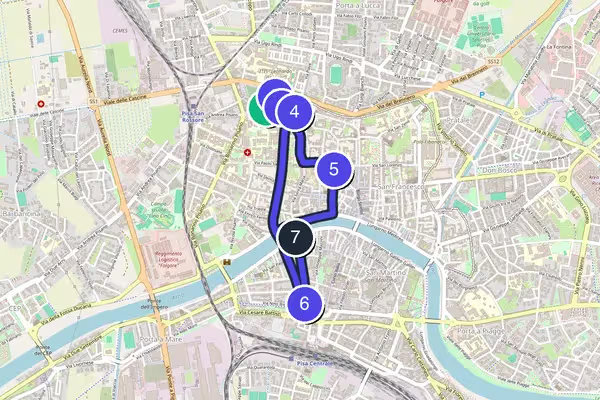

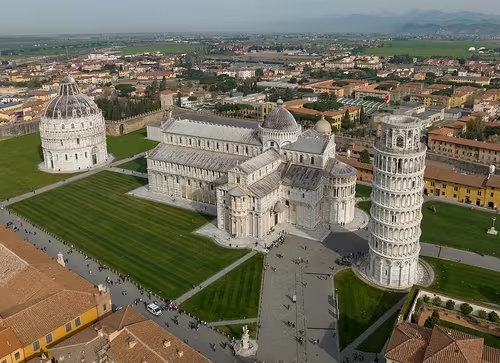
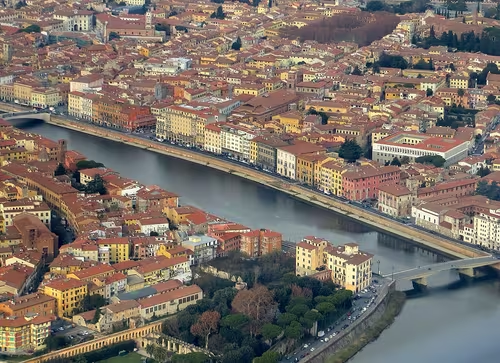
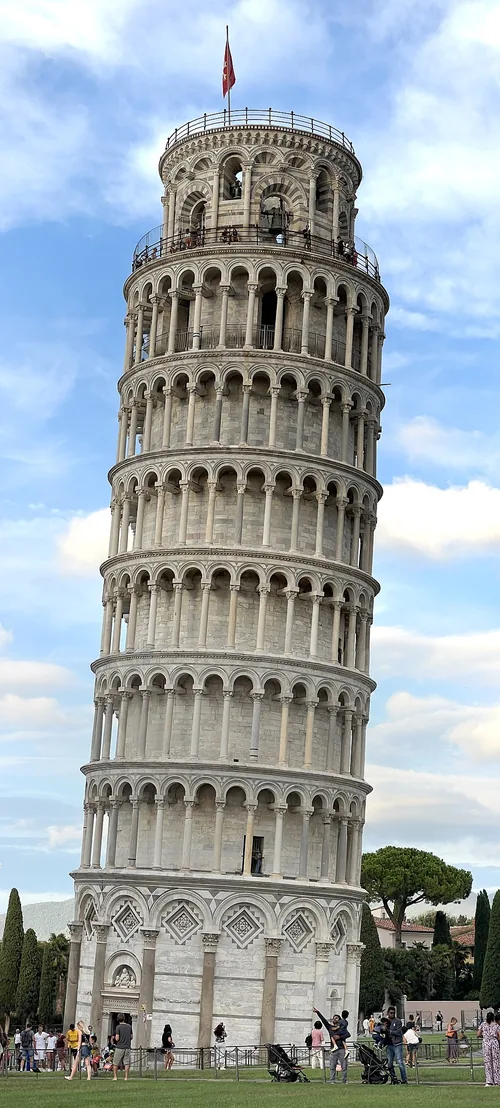 +3
+3All 7 stops are already on the map.
You just press start.
You just press start.
 AI Tourguide
You just read the route.
Now walk it with a guide in your ear.
Press start wherever you are, even hundreds of kilometres from Pisa, and the guide begins telling its stories right away. In the city, pick any of the 7 stops to start from: it leads you there, then talks with you the whole route, asking, listening, remembering, and shaping the tour around your answers.
7stops3.9km1.8hours11languages
▶Start the tour freeFree to start · Runs in your browser · No app, no download
Pisa events and festivals calendar
Annual highlights worth timing a trip around, listed month by month.
February
🎭 CarnivalPisa Carnival Carnevale Pisano
Feb 14 – Mar 3 ~
the weekends around Shrove Tuesday in February
A modest local Carnival with mask parades and children's events, much smaller than the famous Viareggio Carnival 30km away.
March
🎉 FestivalPisan New Year Capodanno Pisano
Mar 14–25
around 25 March, the main ceremony
Pisa used the Annunciation, 25 March, as New Year's Day until 1749.
April
⛪ ReligiousEaster Week Settimana Santa
Apr 2–6 ~
Palm Sunday to Easter Monday in early April
Holy Week processions from churches in the historic centre and special Cathedral masses, with the Piazza dei Miracoli crowded with Italian domestic tourists for the long weekend.
June
🏃 SportRegatta of the Ancient Maritime Republics Regata delle Antiche Repubbliche Marinare
Jun 2 ~
early June; Pisa hosts roughly once every four years
A historical costume procession along the Lungarni followed by a 2,000m rowing race on the Arno between the four ancient maritime republics, Amalfi, Genova, Pisa and Venezia, with male and female races and a live RAI broadcast.
🎵 MusicPisa Jazz Festival Pisa Jazz
Jun 15 – Jul 15 ~
mid-June to mid-July, outdoor venues
Outdoor jazz concerts at the Giardino Scotto amphitheatre and other piazzas, mixing international artists with local talent across summer evenings.
🌸 Seasonal natureLuminara of San Ranieri Luminara di San Ranieri
Jun 16
the evening of 16 June
Over 100,000 small wax lamps are arranged on every facade, bridge and tower along the Lungarni and lit at dusk; the city goes entirely electric-light-free for the evening, ending with fireworks over the Arno at midnight.
🏃 SportPalio Remiero of San Ranieri Palio di San Ranieri
Jun 17
the afternoon of 17 June, the patron saint's day
A rowing regatta on the Arno between the city's four historic districts.
🎉 FestivalGioco del Ponte
Jun 27 ~
the last Saturday of June
A Renaissance costume parade of hundreds along the Lungarni, followed by a battle on the Ponte di Mezzo where two teams of 20, representing the north and south banks of the Arno, push a 7-tonne iron cart along a rail to shove the other side off the bridge.
July
🎵 MusicPisa Summer Season Estate Pisana
Jul 1 – Aug 31 ~
July and August
A broad summer culture programme: open-air cinema, theatre in the botanical garden, pop and rock concerts, and classical music in the piazzas, with the Giardino Scotto amphitheatre at its centre.
November
🇮 HolidayAll Saints' Day Ognissanti
Nov 1
1 November
A national public holiday with most shops closed.
🍷 Food and wineSan Miniato White Truffle Fair Sagra del Tartufo Bianco di San Miniato
Nov 7–22 ~
the last three weekends of November
A white-truffle festival in San Miniato, 30km from Pisa: market stalls, truffle hunts, starred-restaurant dinners and an outdoor market.
Insider tips for visiting Pisa
The rules buried in forums, in one place.
- The Piazza dei Miracoli is mobbed from 10am to 5pm daily, April through October, as the coaches and cruise buses from Livorno arrive between 9:30 and 10:30 and leave by 5pm. Be there at 7:30-8:30am or after 6pm and the scrum turns near-solitary, the site itself never closes.
- Book the Leaning Tower exactly 90 days out. Opapisa.it releases tickets on a 90-day rolling window, and for June-August that slot is the only guaranteed way in. Same-day July slots are usually gone online by 8am. The 8:00 and 8:30 entries have the best light and shortest queues; groups of 30 enter every 30 minutes.
- Children under 8 cannot climb the Tower, the rule is enforced at the gate. Families should book the Piazza bundle (Baptistery plus Camposanto plus Opera del Duomo museum) for full value without the climb, and let older kids do the 251 steps.
- The Museo delle Navi Antiche is the most-missed museum in the city because of its split hours: Tuesday to Friday 8:30-14:00 only, Saturday and Sunday 14:00-19:30, closed Monday. Arrive at 13:45 on a weekday and you will be turned away. Plan it as a morning on a weekday, afternoon on a weekend.
- For the Luminara on 16 June, position by 8:30pm. The Lungarni are wall-to-wall by 9:30pm. The best view is from Ponte Solferino, less crowded than Ponte di Mezzo, looking north to the illuminated Lungarno Mediceo facades. Riverboats run for the evening but are standing-room only by 9pm.
- The Cathedral is free with an Opapisa ticket to any other monument, or 3€ standalone, but it closes to sightseers during mass (Monday to Saturday 7:45, 12:00, 17:30; Sunday 7:30, 10:00, 12:00, 18:00). The midday gap between 1pm and 2pm is often mass-free and uncrowded.
- The first Sunday of the month makes the Museo Nazionale di San Matteo free, and a queue forms by 9am. The Tower is never free on any day. If you want San Matteo without the rush, arrive at the 9am opening on any Tuesday through Saturday instead.
- From 10-18 August a large share of Pisa's independent restaurants close for the owners' Ferragosto holiday. The streets around Piazza delle Vettovaglie, the covered market square, hold the highest concentration of places that stay open year-round. Check ahead; the tourist-trap spots near the Tower stay open but are not where you want to eat.
Public holidays in Pisa
On these dates many shops and offices close, transport thins out, and sights can be mobbed or shut. Plan around them.
| Date | Holiday | What closes |
|---|---|---|
| Jan 1 | New Year's Day | Everything closed; a quiet arrival or departure day only. Pisa is at its emptiest, with the Piazza dei Miracoli near-deserted on the cold morning. |
| Jan 6 | Epiphany | Public holiday: shops closed, families out on the last day of the Christmas break. Monuments stay open on winter hours. |
| Apr 5 | Easter Sunday | Cathedral special mass and the Piazza dei Miracoli at its most crowded of spring with Italian domestic tourists. Timed Tower slots sell out weeks ahead; the Cathedral closes to sightseers during the morning service. |
| Apr 6 | Easter Monday (Pasquetta) | National holiday: many restaurants closed and Italian domestic tourism surges. Book accommodation 6 or more weeks ahead for the Easter long weekend. |
| Apr 25 | Liberation Day | National holiday: museums mostly open and state-run ones often free or reduced, so crowds rise. Shops mostly closed. |
| May 1 | Labour Day | National holiday: most shops and some museums closed. Quieter than expected, as day-trippers tend to avoid it. |
| Jun 2 | Republic Day | National holiday coinciding with the Regata delle Antiche Repubbliche Marinare, hosted in Pisa in 2026. Civic ceremony and the rowing race combine to make the city unusually busy along the Lungarni. |
| Jun 17 | San Ranieri (Pisa's patron saint) | Pisa-specific civic holiday: banks and many local offices close. The Palio Remiero rowing race runs on the Arno, the afternoon after the Luminara. |
| Aug 15 | Ferragosto | National holiday: most local restaurants and many shops close the week of 11-17 August, though monuments stay open. The Piazza dei Miracoli is actually quieter than a normal August weekday because Italian families leave the city. |
| Nov 1 | All Saints' Day (Ognissanti) | National holiday: shops closed, and the Camposanto monumental cemetery is open and unusually busy with flowers and local families for remembrance. Plan your visit before or after the crowds. |
| Dec 8 | Immaculate Conception | National holiday: the Christmas lights are usually switched on this date, with modest crowds in the piazzas. |
| Dec 25 | Christmas Day | Everything closed; the Cathedral Christmas mass draws worshippers and Piazza dei Miracoli monuments close briefly in the morning for the service. |
| Dec 26 | St. Stephen's Day (Santo Stefano) | National holiday: shops closed. A quiet day between Christmas and New Year, far cheaper than nearby Florence. |
Pisa month by month
January in Pisa
High11°C / 52°F
Low3°C
Rain105mm / 12 rainy days
Sun6.4 h/day
Daylight9 h/day
Humidity81%
Crowds●○○○○Prices●○○○○
January is Pisa at its quietest and cheapest. Daytime highs sit near 11°C but it is damp and occasionally rainy, and the days are short, light only from about 7:50am to 4:40pm. The post-Christmas lull and the absence of students empty the city, and on a weekday the Piazza dei Miracoli is nearly deserted. Cool and grey, but the closest you will come to having the marble monuments to yourself.
The vibe This is the one month you can stand almost alone under the Leaning Tower. No cruise coaches, no queues, same-day Tower tickets, and a near-private Piazza. Bring a warm layer for the damp, but the trade is real solitude and the lowest prices of the year.
Don't miss The near-empty Piazza dei Miracoli on a weekday morning is the headline. Inside, the Camposanto and Baptistery are quiet, and the first Sunday of the month makes the Museo Nazionale di San Matteo free. Use Pisa as a cheap base for the 8-12€ train to Florence.
Crowd drivers Deep off-season: the post-Christmas lull, university students still away, and cool, sometimes wet weather keep day-trippers and cruise passengers from Livorno away. The lowest visitor pressure of the year.
In season Winter is the season for warming Pisan plates: cecina (chickpea flatbread) hot from the oven and bordatino bean soup, eaten without queueing in the Piazza delle Vettovaglie market area.
Heads up New Year's Day (1 January) and Epiphany (6 January) close shops; the Piazza dei Miracoli monuments stay open on winter hours but the Cathedral closes to sightseers during morning mass.
Cheapest month of the year: 3-star centre hotels 55-85€ a night, roughly 35-45% below the July and September highs.
February in Pisa
High13°C / 55°F
Low4°C
Rain104mm / 11 rainy days
Sun7.6 h/day
Daylight10 h/day
Humidity79%
Crowds●○○○○Prices●○○○○
February is one of Pisa's quietest stretches. Highs creep toward 13°C but it stays cool and occasionally rainy. The local Carnevale Pisano adds a small, low-key weekend spike around Shrove Tuesday, far smaller than Viareggio's famous floats 30km away. Otherwise museums stay uncrowded and prices sit at their floor. A practical, affordable month for the indoor sights and the empty marble field.
The vibe February is honest, unhurried Pisa. While Viareggio goes wild for Carnival, Pisa stays calm and cheap, which is exactly its charm if you want the Piazza without crowds or markup. Bakeries fill with Carnival pastries, and you can linger in the Camposanto with barely another soul.
Don't miss A perfect month for the indoor heavyweights: the Camposanto frescoes, the Baptistery acoustics demonstration, and the Museo Nazionale di San Matteo, all near-empty. The local Carnevale brings mask parades and traditional pastries on the Carnival weekends.
Crowd drivers The quietest stretch alongside January, with the big Carnival energy happening in Viareggio rather than here. Cool, sometimes wet weather keeps international tourism at its annual low.
In season Carnival season fills bakeries with berlingozzo and schiacciata di Carnevale; pair them with a cecina and a glass of local wine in the covered-market square.
Prices at their annual floor alongside January: 3-star centre hotels 55-90€, with a small weekend bump during Carnival.
Events this month
🎭 CarnivalPisa Carnival Carnevale Pisano
Feb 14 – Mar 3 ~
the weekends around Shrove Tuesday in February
A modest local Carnival with mask parades and children's events, much smaller than the famous Viareggio Carnival 30km away. Bakeries fill with traditional Pisan pastries, berlingozzo and schiacciata di Carnevale, through the season.
Low-key but cheerful weekend activity in the quietest stretch of the year. If you want the spectacular floats, take the 30-minute train to Viareggio instead.
March in Pisa
High15°C / 60°F
Low5°C
Rain76mm / 8 rainy days
Sun9.5 h/day
Daylight12 h/day
Humidity73%
Crowds●●○○○Prices●●○○○
March brings the first real spring, with highs near 15°C, the rainfall easing to the lowest of the off-season, and 9-plus hours of daily sun. Crowds stay moderate. Capodanno Pisano (the procession runs from 14 March, the main ceremony on the 25th) draws domestic visitors for a long weekend and is one of Italy's most unusual civic moments. Wisteria starts in the Orto Botanico late in the month. The last genuinely calm stretch before the day-tripper season.
The vibe March is the quiet window everyone overlooks. The weather turns kind, the Piazza is still walkable at any hour, and on 25 March you can watch the Cathedral fill for the noon sunbeam ceremony with almost no tourists. Use it before April's crowds arrive.
Don't miss Capodanno Pisano on 25 March is the highlight: a costumed procession to the Cathedral and the noon sunbeam ceremony, with tourist crowds absent. The world's oldest botanical garden still in its original site, the Orto Botanico founded in 1543, opens its spring blossom from late March.
Crowd drivers Capodanno Pisano (25 March) pulls domestic visitors for a long weekend and university students return mid-month, but nothing like a mass crowd. Easter demand starts to build as the month ends.
In season The Capodanno Pisano restaurants serve traditional Pisan-style menus for the festival, and spring vegetables start to brighten the Piazza delle Vettovaglie market stalls.
Prices edge up mid-month as students return and Easter approaches: 3-star centre hotels 80-110€, with a small bump around Capodanno Pisano.
Events this month
🎉 FestivalPisan New Year Capodanno Pisano
Mar 14–25
around 25 March, the main ceremony
Pisa used the Annunciation, 25 March, as New Year's Day until 1749. The modern celebration runs a historical procession from Palazzo Gambacorti to the Cathedral, the noon sunbeam ceremony when light strikes the high altar, medieval reenactments, and 20-plus restaurants serving Pisan-style menus.
One of Italy's most unusual civic moments and completely off most tourists' radar. The best chance to see the Cathedral in ceremonial use with no tourist crowds, in a quiet, affordable month.
April in Pisa
High18°C / 65°F
Low8°C
Rain82mm / 10 rainy days
Sun10.9 h/day
Daylight13 h/day
Humidity73%
Crowds●●●○○Prices●●●○○
April is one of Pisa's best months. Highs near 18°C, comfortable 18-22°C walking weather, and exceptional spring light on the white Carrara marble. Wisteria blooms in the Orto Botanico, the oldest botanical garden still in its original location. Easter week (2-6 April) brings a sharp domestic-tourist spike, then the day-tripper season builds steadily but stays manageable. Showers come as short afternoon bursts rather than half-day washouts.
The vibe April is when Pisa looks its photogenic best: spring light, blossom in the Botanical Garden, and the Piazza dei Miracoli still walkable outside the day-trip hours. Avoid Easter weekend if you want quiet, but the weeks either side are the first-timer's ideal window, mild, affordable and uncrowded.
Don't miss Wisteria peaks in the Orto Botanico and the spring light on the marble facades is at its best in late afternoon. Tower slots are still bookable 2-3 weeks ahead outside Easter, and the Lungarni walks reopen in mild evenings.
Crowd drivers Easter week (2-6 April) and Italian school spring holidays spike occupancy 30-40%, and the day-tripper season from Florence and Livorno cruise ships begins. Liberation Day (25 April) adds a busy long weekend.
In season Spring brings artichokes and early vegetables to the Piazza delle Vettovaglie market; the year-round cecina and torta coi becchi (sweet chard tart) are at their freshest in the covered-market trattorie.
Heads up Easter Sunday (5 April) and Easter Monday (6 April) close many shops and some restaurants, and the Cathedral closes to sightseers during Easter morning mass. Liberation Day (25 April) closes shops but keeps state museums open, often free.
Easter week (2-6 April) spikes occupancy 30-40%; 3-star centre hotels run 100-145€, easing after the holiday.
Events this month
⛪ ReligiousEaster Week Settimana Santa
Apr 2–6 ~
Palm Sunday to Easter Monday in early April
Holy Week processions from churches in the historic centre and special Cathedral masses, with the Piazza dei Miracoli crowded with Italian domestic tourists for the long weekend.
Hotels spike 30-40% Easter week, so book 6 or more weeks ahead. Visiting the Tower on Easter Sunday means long waits even with timed tickets, and the Cathedral closes to sightseers during morning mass.

May in Pisa
High22°C / 71°F
Low13°C
Rain92mm / 12 rainy days
Sun11.9 h/day
Daylight15 h/day
Humidity75%
Crowds●●●○○Prices●●●○○
May is a sweet spot: highs near 22°C, comfortable walking temperatures, and the marble at its golden-hour best. It is the peak shoulder, with European school holidays (UK half-term late May) and cruise passengers from Livorno 35km away pushing the day crowds up, but the Lungarni stay manageable at any hour. Roses peak in the Giardino Scotto. Short showers clear quickly. Book Tower slots 2-3 weeks ahead.
The vibe May is the couples' and first-timer's month: warm enough for Lungarni walks after dinner, the Piazza near-deserted and romantic after 6pm, and the best golden-hour photography on the marble facades. Busier than April but the weather and light more than earn it.
Don't miss Golden-hour light on the white marble is exceptional, best from the lawn south of the Tower. Roses peak in the Giardino Scotto, and warm evenings make the Lungarni at dusk a full experience. The Piazza after 6pm is romantic and near-empty once the coaches leave by 5pm.
Crowd drivers European school holidays, including UK half-term in late May, and Livorno cruise passengers drive the day-tripper crowds. Comfortable temperatures pull in walkers, so Tower slots sell out 2-3 weeks ahead.
In season Late-spring produce floods the Piazza delle Vettovaglie market; this is prime season for an aperitivo on the Lungarni followed by trattoria classics like baccalà alla pisana.
Peak shoulder pricing: 3-star centre hotels 110-150€, still below the July and September highs. Tower slots sell out 2-3 weeks ahead.

June in Pisa
High27°C / 81°F
Low17°C
Rain63mm / 9 rainy days
Sun13.3 h/day
Daylight15 h/day
Humidity73%
Crowds●●●●●Prices●●●●○
June is festival month and the start of summer heat, with highs near 27°C and the year's longest days (light from about 5:30am to 8:50pm). The Giugno Pisano calendar dominates: the Regata delle Antiche Repubbliche Marinare falls on 2 June when Pisa hosts its turn, the Luminara di San Ranieri on 16 June, the Palio Remiero on 17 June, and the Gioco del Ponte on the last Saturday of June. Accommodation runs 30-50% above average on those weekends, and Italian school holidays begin mid-month.
The vibe June is Pisa at its most alive. The first two weeks are a families' dream, long days, sea already warm, and no July crush. Then the Giugno Pisano festivals take over, and the Luminara on 16 June is one of the most atmospheric evenings in all of Italy. Book early and embrace the crowds, they are part of the spectacle.
Don't miss The Luminara on 16 June drapes over 100,000 wax lamps along the Lungarni before midnight fireworks. The Regata, Palio Remiero and Gioco del Ponte fill the calendar, and the Tyrrhenian sea at Marina di Pisa is already swimmable at around 22°C, line 10 bus from Pisa Centrale.
Crowd drivers The Giugno Pisano festivals (2, 16, 17 and 27 June) pack the Lungarni and book out hotels weeks ahead. Italian school summer holidays start mid-month, and the summer heat draws beach-goers to the coast.
In season Festival weekends bring riverside food stalls along the Lungarni; otherwise this is gelato-and-aperitivo season, with the covered market at Piazza delle Vettovaglie best in the cooler morning hours.
Heads up San Ranieri (17 June) is a Pisa-specific civic holiday, so banks and many local offices close. Republic Day (2 June) is a national holiday coinciding with the Regata, and Lungarni roads close from 4pm on Gioco del Ponte day (27 June).
Giugno Pisano festival weekends run 30-50% above average (180-220€); baseline 3-star centre hotels 140-180€.
Events this month
🏃 SportRegatta of the Ancient Maritime Republics Regata delle Antiche Repubbliche Marinare
Jun 2 ~
early June; Pisa hosts roughly once every four years
A historical costume procession along the Lungarni followed by a 2,000m rowing race on the Arno between the four ancient maritime republics, Amalfi, Genova, Pisa and Venezia, with male and female races and a live RAI broadcast. The race rotates among the four cities, with Pisa hosting roughly once every four years.
Pisa hosts only once every four years or so, making any Pisa edition a rare occasion. The riverbank packs out and accommodation books up weeks ahead for this single early-June day, which falls on the Republic Day national holiday.
🌸 Seasonal natureLuminara of San Ranieri Luminara di San Ranieri
Jun 16
the evening of 16 June
Over 100,000 small wax lamps are arranged on every facade, bridge and tower along the Lungarni and lit at dusk; the city goes entirely electric-light-free for the evening, ending with fireworks over the Arno at midnight. One of Tuscany's most atmospheric events.
The single most spectacular evening in Pisa's calendar and one of the top atmospheric nights in all of Italy. Book riverside hotels 6-8 weeks ahead and position by 8:30pm; if you hate crowds, avoid the Lungarni this one night, where the best spots run 10-deep.
🏃 SportPalio Remiero of San Ranieri Palio di San Ranieri
Jun 17
the afternoon of 17 June, the patron saint's day
A rowing regatta on the Arno between the city's four historic districts. The winning crew's representative climbs a 10-metre pole planted in the river to grab the blue banner, preceded by a medieval procession.
It pairs naturally with the Luminara the night before, so visit 16-17 June for the full Giugno Pisano experience. The 17th is a Pisa-specific civic holiday, so banks and many local offices close.
🎉 FestivalGioco del Ponte
Jun 27 ~
the last Saturday of June
A Renaissance costume parade of hundreds along the Lungarni, followed by a battle on the Ponte di Mezzo where two teams of 20, representing the north and south banks of the Arno, push a 7-tonne iron cart along a rail to shove the other side off the bridge.
A colourful spectacle that closes the Giugno Pisano festival. Avoid driving into the centre from 4pm as the Lungarni roads close, and expect hotel rates 25-35% above normal this weekend.
🎵 MusicPisa Jazz Festival Pisa Jazz
Jun 15 – Jul 15 ~
mid-June to mid-July, outdoor venues
Outdoor jazz concerts at the Giardino Scotto amphitheatre and other piazzas, mixing international artists with local talent across summer evenings.
A pleasant evening option during the hot summer, when daytime sightseeing in the shadeless Piazza is best avoided. The Giardino Scotto amphitheatre is one of the city's best outdoor stages.

July in Pisa
High30°C / 86°F
Low20°C
Rain37mm / 6 rainy days
Sun13.8 h/day
Daylight15 h/day
Humidity71%
Crowds●●●●●Prices●●●●○
July is peak summer and the busiest month: highs near 30°C with afternoon spikes of 33-35°C, occasionally 37°C on heat-wave days, and it is the driest month (around 37mm). All European school holidays overlap, day-trippers from Florence (about 80 minutes by train) hit their maximum, and the shadeless Piazza dei Miracoli is genuinely punishing between 11am and 4pm. Monuments open until 22:30 from mid-June, so cool evenings are the answer.
The vibe July is hot, crowded and best handled around the heat. Walk the Piazza before 9:30am or after 5:30pm, when the open grass field is bearable and the cruise coaches have gone. The Jazz festival and Estate Pisana fill the evenings, and the coast 10km away is the real July move. When the heat or pre-booked guide prices climb, our live in-browser AI guide is the flat-priced, always-available alternative to an expensive private guide, telling you the story of each monument as you walk the marble in the cooler early hours, at your own pace.
Don't miss Monuments open until 22:30, so climb the Tower or wander the Piazza in the cool of the evening. The Pisa Jazz Festival and Estate Pisana run outdoor concerts at the Giardino Scotto, and the Tyrrhenian sea at Marina di Pisa peaks for swimming at 24-25°C, a 25-minute bus from Pisa Centrale for 1.50€.
Crowd drivers All European school holidays overlap, day-trippers from Florence peak, and Livorno cruise passengers continue. The hottest month draws the maximum coach traffic, so Tower slots must be booked 4-6 weeks ahead.
In season Beat the heat with gelato and cecina; dinner is best taken late and outdoors. The Piazza delle Vettovaglie restaurants hold the most reliable year-round kitchens before the August closures begin.
Peak-summer pricing: 3-star centre hotels 135-175€. Leaning Tower timed slots must be booked 4-6 weeks ahead.
Events this month
🎵 MusicPisa Jazz Festival Pisa Jazz
Jun 15 – Jul 15 ~
mid-June to mid-July, outdoor venues
Outdoor jazz concerts at the Giardino Scotto amphitheatre and other piazzas, mixing international artists with local talent across summer evenings.
A pleasant evening option during the hot summer, when daytime sightseeing in the shadeless Piazza is best avoided. The Giardino Scotto amphitheatre is one of the city's best outdoor stages.
🎵 MusicPisa Summer Season Estate Pisana
Jul 1 – Aug 31 ~
July and August
A broad summer culture programme: open-air cinema, theatre in the botanical garden, pop and rock concerts, and classical music in the piazzas, with the Giardino Scotto amphitheatre at its centre.
The evening antidote to July and August heat, when walking the Piazza dei Miracoli between 11am and 4pm is genuinely punishing. Check the calendar on arrival, as the Giardino Scotto programme is very popular.
August in Pisa
High30°C / 87°F
Low20°C
Rain58mm / 7 rainy days
Sun12.5 h/day
Daylight14 h/day
Humidity69%
Crowds●●●●○Prices●●●○○
August keeps the peak heat, with highs near 30°C and afternoon spikes into the mid-30s. Italian Ferragosto (15 August) empties local businesses, many independent restaurants close for the week of 11-17 August, but fills hotels on the holiday weekend. Cruise-linked day visitors continue. Curiously, the Piazza dei Miracoli is often quieter than a normal August weekday on Ferragosto itself, because Italian families leave the city for the coast.
The vibe August is hot and a little hollowed-out around Ferragosto, with shuttered trattorie and a city in holiday mode. Plan around the heat and the closures: walk early or late, eat where the kitchens stay open, and consider basing on the coast. The evening culture programme at the Giardino Scotto keeps the nights alive.
Don't miss Estate Pisana evening concerts continue at the Giardino Scotto. The coast at Marina di Pisa and Tirrenia is at its warmest, sea around 24-25°C, line 10 bus, and the Piazza is unexpectedly walkable on Ferragosto morning before the heat builds.
Crowd drivers Still peak heat and continued cruise-linked day visitors. Ferragosto (15 August) empties local businesses but fills hotels on the holiday weekend, while Italian families leaving the city actually thin the Piazza mid-month.
In season From 10-18 August a large share of independent restaurants close for the owners' holiday. Head for the Piazza delle Vettovaglie area for the highest concentration of year-round kitchens; the Tower-side tourist spots stay open but are not worth it.
Heads up Ferragosto (15 August) is a national holiday: most local restaurants and many shops close the week of 11-17 August, though the monuments stay open on summer hours.
Still peak heat but prices ease slightly: 3-star centre hotels 120-155€, with a weekend bump around Ferragosto (15 August).
Events this month
🎵 MusicPisa Summer Season Estate Pisana
Jul 1 – Aug 31 ~
July and August
A broad summer culture programme: open-air cinema, theatre in the botanical garden, pop and rock concerts, and classical music in the piazzas, with the Giardino Scotto amphitheatre at its centre.
The evening antidote to July and August heat, when walking the Piazza dei Miracoli between 11am and 4pm is genuinely punishing. Check the calendar on arrival, as the Giardino Scotto programme is very popular.
September in Pisa
High26°C / 79°F
Low16°C
Rain108mm / 10 rainy days
Sun10.8 h/day
Daylight12 h/day
Humidity73%
Crowds●●●●○Prices●●●●○
September is one of Pisa's best months and, on price, its priciest. Highs near 26°C, late-summer warmth with still almost no rain early on, and the golden afternoon light at its richest on the marble. Families with children are still on holiday early in the month, monuments return to reduced hours, and the start of the University of Pisa term late in the month inflates demand. The weather and light make it the photographer's and couple's pick.
The vibe September feels like Pisa exhaling: still warm, still swimmable on the coast, but with the brutal July heat broken and the marble glowing in softer light. It is the most expensive month because everyone in the know comes now, so book ahead, but the quality of the experience justifies it.
Don't miss The richest golden-hour light of the year on the white marble facades, best from the lawn after 6pm once the coaches leave. The Tyrrhenian sea is still swimmable at around 24°C, and warm evenings make the Lungarni a pleasure. Tower slots ease compared with July but still need a week or two ahead.
Crowd drivers Return travel after the summer break, late-summer warmth, and families still on holiday early in the month. The University of Pisa term starting late September inflates accommodation demand to the year's highest.
In season Early-autumn produce returns to the Piazza delle Vettovaglie market as the heat-driven closures end and the trattorie reopen for the new season; porcini and the first chestnut flour appear.
The single most expensive month: 3-star centre hotels 145-190€, driven by return travel, late-summer warmth and the start of university term.

October in Pisa
High21°C / 71°F
Low13°C
Rain135mm / 12 rainy days
Sun8.5 h/day
Daylight11 h/day
Humidity79%
Crowds●●●○○Prices●●●○○
October is a calmer shoulder month, wetter than September, with highs near 21°C and rainfall climbing (around 135mm). Crowds drop sharply after the first week. The foliage turns in the Parco Naturale di San Rossore, 3km from the centre, with the most vivid colour from late October to mid-November. The San Miniato white-truffle fair begins late in the month nearby. A good-value, atmospheric window before the wet of November.
The vibe October is autumn Pisa at ease: cooler, quieter and well-priced, with golden light still on the marble through the first half of the month. Rain comes in 1-2 day spells rather than constant drizzle, so plan indoor sights around it. The couple's month, romantic and unhurried, with foliage at San Rossore.
Don't miss Autumn foliage peaks from late October in the Parco Naturale di San Rossore, easily reached by bicycle. The golden-hour light still works on the marble in the first half of the month, and the San Miniato white-truffle fair (30km) opens its first weekends.
Crowd drivers The shoulder season proper: crowds drop sharply after the first week as the cruise and day-trip traffic eases. The San Miniato truffle fair late in the month draws foodies on weekends.
In season Truffle season opens at the San Miniato sagra and the Piazza delle Vettovaglie market fills with porcini, chestnut flour and new-pressing olive oil, the richest the covered market gets all year.
Shoulder pricing returns: 3-star centre hotels 100-140€, dropping sharply after the first week.

November in Pisa
High16°C / 60°F
Low8°C
Rain175mm / 14 rainy days
Sun6.7 h/day
Daylight10 h/day
Humidity82%
Crowds●○○○○Prices●●○○○
November is the second quietest month, with highs near 16°C and the rain at its annual peak (around 175mm, often as sustained 1-2 day downpours). The Tower is often misty, but the Piazza dei Miracoli is uncrowded with very few queues, and the light inside the Camposanto is at its atmospheric best. The San Miniato white-truffle fair runs its last weekends 30km away, the best autumn day trip from a near-empty city.
The vibe November is introverted Pisa: grey, wet and almost touristless, but cheap and calm. The trade-off is real, you will get rained on, but the reward is the marble monuments nearly to yourself and the moody Camposanto interior at its finest. Pair it with a truffle-hunting day trip to San Miniato.
Don't miss The Camposanto interior is at its atmospheric best in low November light, and the empty Piazza dei Miracoli is near-private on weekdays. The San Miniato white-truffle fair (late November weekends) is free to enter and the standout foodie day trip of the autumn.
Crowd drivers The wettest month and the second quietest, with the day-tripper and cruise traffic gone. The San Miniato truffle fair on its final weekends is the main draw, and All Saints' Day fills the Camposanto on 1 November.
In season White truffle is the headline at the San Miniato sagra, and the Piazza delle Vettovaglie market peaks with chestnut flour, porcini and local olive oil, the foodie high point of the year.
Heads up All Saints' Day (1 November) is a national holiday: shops closed and the Camposanto open but busy with local families. Plan your cemetery visit before or after the day.
Second quietest month: 3-star centre hotels 70-105€, the year's best value alongside January.
Events this month
🇮 HolidayAll Saints' Day Ognissanti
Nov 1
1 November
A national public holiday with most shops closed. The Camposanto monumental cemetery is open and locally significant for remembrance, busy with flowers and families.
The Camposanto is unusually busy on 1 November, so plan your visit before or after the day if you want the atmospheric interior to yourself, as it is at its best in low-season light.
🍷 Food and wineSan Miniato White Truffle Fair Sagra del Tartufo Bianco di San Miniato
Nov 7–22 ~
the last three weekends of November
A white-truffle festival in San Miniato, 30km from Pisa: market stalls, truffle hunts, starred-restaurant dinners and an outdoor market. One of Tuscany's most famous food events.
The best autumn day trip from Pisa, easily combined with a quiet November visit to the near-empty Piazza dei Miracoli. Entry to the market is free; the special dinners are ticketed.

December in Pisa
High12°C / 54°F
Low5°C
Rain117mm / 13 rainy days
Sun6.1 h/day
Daylight9 h/day
Humidity85%
Crowds●●○○○Prices●●○○○
December is quiet and festive, with highs near 12°C, the shortest days of the year (about 9 hours of light), and damp, cool weather. Modest Christmas markets and nativity scenes fill the piazzas, with the lights usually switched on around 8 December. Crowds stay modest and prices stay well below Florence 80km away, rising only in Christmas week. A calm, affordable choice for a low-season city break with a festive edge.
The vibe December trades autumn's emptiness for a gentle festive bustle: Christmas lights, nativity scenes and mulled wine in the piazzas, without the crush of a big-name market city. It stays cheaper than Florence and the Piazza dei Miracoli is still walkable at any hour. Cosy, low-key and easy on the budget.
Don't miss Christmas markets and presepi (nativity scenes) fill the piazzas, with the festive lights on from around 8 December. The marble monuments are uncrowded, and Pisa makes a cheap, calm base for a December day trip to Florence on the 8-12€ train.
Crowd drivers Modest Christmas markets and nativity scenes draw local visitors, and the Immaculate Conception holiday (8 December) brings the light switch-on. Tourism stays low until a short Christmas-week and New Year bump.
In season Winter warmers return: cecina, bordatino soup and roasted chestnuts at the markets, with festive panforte and ricciarelli appearing in the bakeries before Christmas.
Heads up Immaculate Conception (8 December), Christmas Day (25 December) and St. Stephen's Day (26 December) close shops; the Cathedral closes to sightseers for Christmas morning mass, so buy monument tickets the day before.
Cheaper than nearby Florence: 3-star centre hotels 80-115€, rising to 120-160€ in Christmas week.
Frequently asked questions
What is the best time to visit Pisa?
Late April through mid-May and September are the best overall. You get 18-25°C, low rainfall, the Piazza dei Miracoli walkable at any hour, Tower slots bookable 2-3 weeks ahead, and prices 20-35% below the peak. September edges ahead for photographers thanks to richer afternoon light on the white marble, while spring brings wisteria in the Orto Botanico and exceptional light on the facades.
What is the cheapest time to visit Pisa?
January and November are the cheapest, with 3-star centre hotels from 55-105€ a night, roughly 35-45% below the July and September highs. Tower timed tickets are available same-day, queues vanish, and the first Sunday of the month makes the Museo Nazionale di San Matteo free. The trade is short, grey, often wet days, with November the wettest month of the year.
What is the worst time to visit Pisa?
Mid-July through early August, unless you are set on summer. Afternoon heat of 33-37°C bakes the shadeless Piazza dei Miracoli grass field, the day-tripper crush from Florence and Livorno cruise ships peaks, Tower timed slots sell out 4-6 weeks ahead, and many independent restaurants close for the Ferragosto break around 10-18 August. If you do come, walk the Piazza before 9:30am or after 5:30pm.
How far ahead do I need to book the Leaning Tower?
Opapisa.it releases Tower tickets on a 90-day rolling window. For June to August, booking 90 days out is the only way to guarantee your preferred time, as same-day July slots are usually gone online by 8am. In spring and autumn 2-3 weeks ahead is enough, and in January and November you can often book same-day. The 8:00 and 8:30 entries have the best light and shortest queues.
When can you swim near Pisa?
The Tyrrhenian coast at Marina di Pisa and Tirrenia (10km from the city, line 10 bus from Pisa Centrale, about 25 minutes for 1.50€) is comfortable from mid-June at around 22°C through September, peaking at 24-25°C in August. October sea temperatures drop to about 20°C, still swimmable for the hardy but the beach season is over for Italians.
Is Pisa worth more than a half-day trip from Florence?
Yes. The common advice to see the Tower and leave for Florence misses the city. Stay even one night and you discover the medieval Borgo Stretto lanes, the Piazza delle Vettovaglie covered market, and the Lungarni at dusk, a full city experience. Staying over costs 30-50% less than Florence, and being in the Piazza dei Miracoli at 7:30am or after 6pm, with the coaches gone, is a different place entirely.
What is the Luminara di San Ranieri and when is it?
The Luminara is Pisa's most spectacular evening, held on 16 June. Over 100,000 small wax lamps are lit along every facade, bridge and tower on the Lungarni, the city goes entirely electric-light-free, and fireworks close the night over the Arno at midnight. It is one of the most atmospheric evenings in all of Italy. Book riverside hotels 6-8 weeks ahead and position by 8:30pm, ideally on the less-crowded Ponte Solferino.
How many days do you need in Pisa?
One full day and a night covers the essentials well: the Piazza dei Miracoli with the Tower, Baptistery, Cathedral and Camposanto, plus the Borgo Stretto lanes, the Piazza delle Vettovaglie market and a Lungarni walk at dusk. Add a second day for the Tyrrhenian coast in summer, the San Rossore park for autumn foliage, or a day trip to Florence on the 8-12€ train. The compact, walkable centre means you see a lot on foot quickly.

Any month, any day: your guide is already there
Whatever date you pick, a private human guide gets pricier and harder to book on weekends, holidays and in peak season. Our live AI guide, the one that walks with you and answers anything you ask out loud, works the opposite way.
One flat price, every day
No holiday, weekend, night or peak-season surcharge. A private guide in Pisa runs well over 100 euro for a half day, and more on holidays. Ours stays the same.
Available the moment you want it
Start at midnight or at dawn, on Christmas, in the snow, in the August heat. No sold-out high season, no booking weeks ahead.
Your pace, no meter running
Pause for a long lunch, restart after dark, repeat a stop. The tour simply waits for you.
Free to try, a fraction of the cost
Test it for free, then a transparent flat price that undercuts any private guide, in every season.
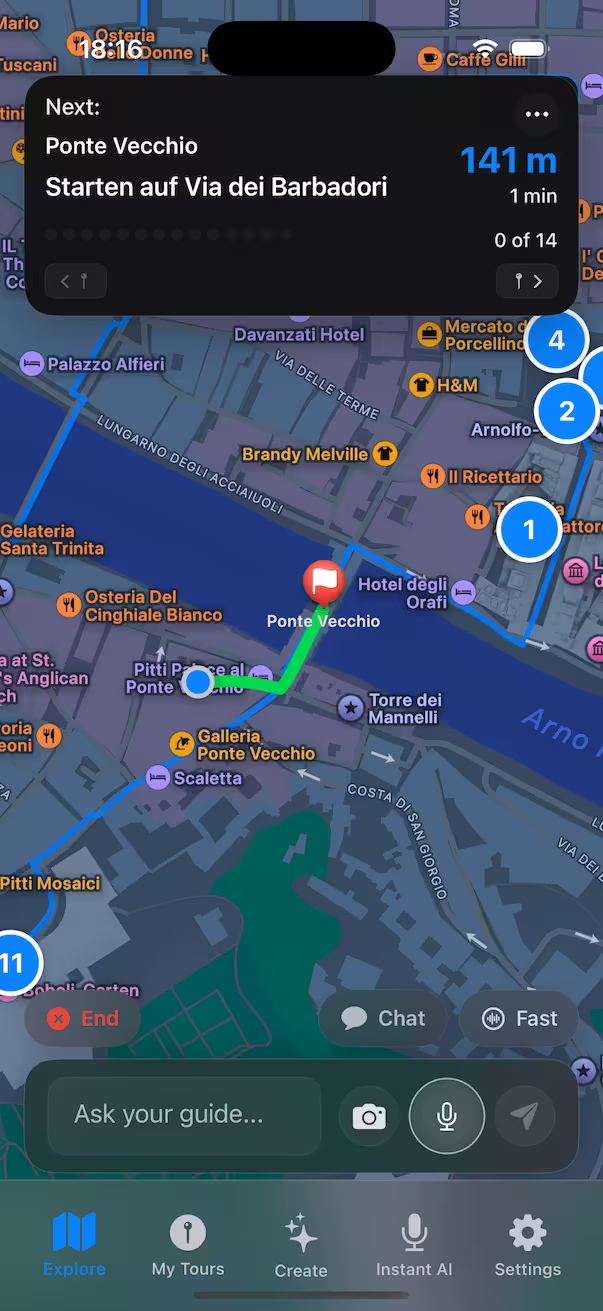
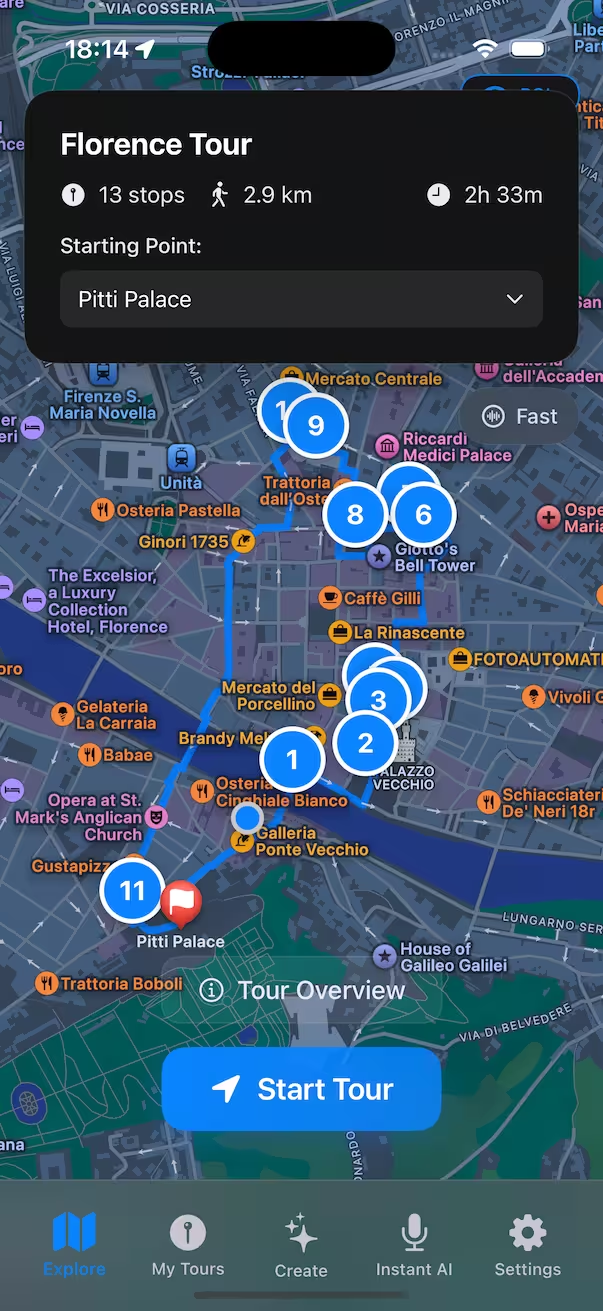
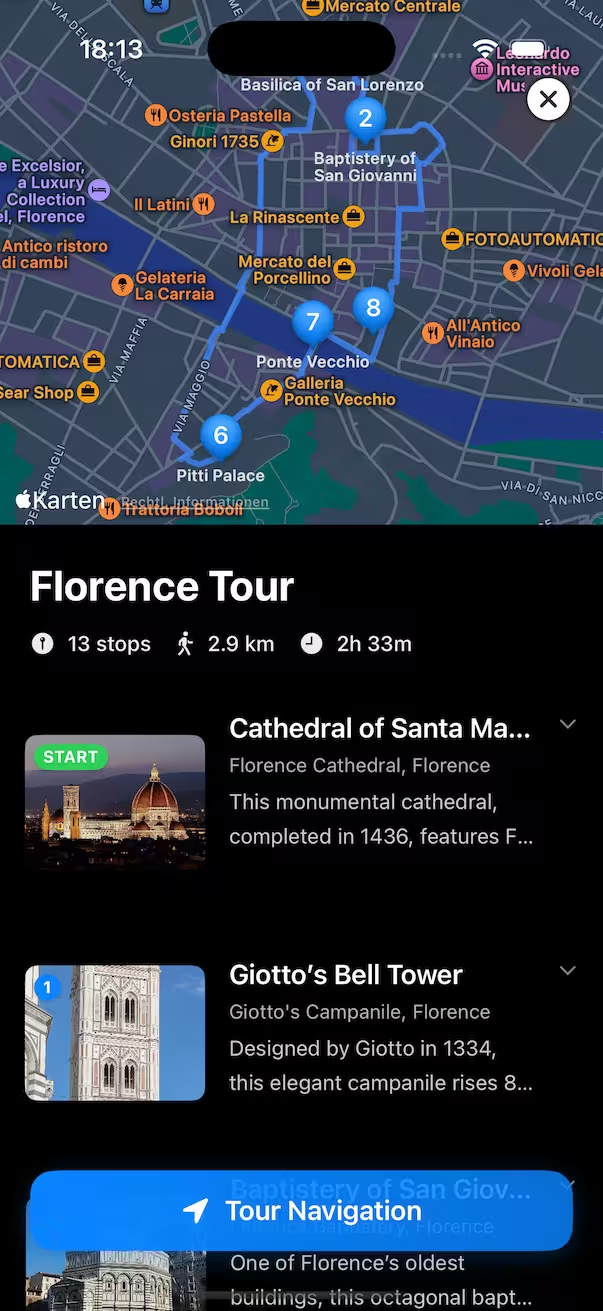
The classic Pisa tour: 7 stops, 3.9 km, about 2 h on foot
Your live AI guide and the self-guided Pisa route, together in your browser.