
Lucca Day Trip from Pisa: The 30-Minute Train Done Right
The regional train slides you from Pisa Centrale to Lucca in about 30 minutes for €3.70, drops you outside the Renaissance walls, and leaves you in a town built for walking. Here is the honest day plan, plus a free, self-guided walking tour for the hours inside the walls.
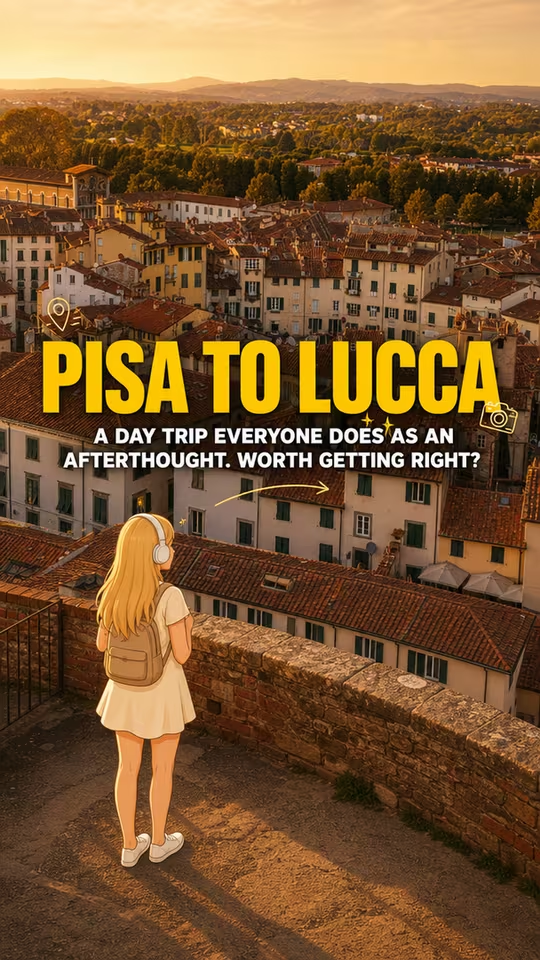
The Quick Answer: Pisa to Lucca
The simplest way from Pisa to Lucca is the Trenitalia regional train, and it is one of the easiest day trips you can do anywhere in Tuscany. Regional services run from Pisa Centrale to Lucca in about 30 minutes (the fastest come in at 27, the slowest at 35), leave at least hourly through the day with two an hour at peak times, and cost a fixed €3.70 one way with no need to book ahead. Lucca's station sits just outside the southern walls, so five minutes after stepping off the train you are through Porta San Pietro and inside the old town. As a day trip from a Pisa base it is almost absurdly easy, and the people who love Lucca most are the ones who arrived expecting a quick detour and ended up staying until the last train.
| Question | Answer |
|---|---|
| Fastest journey time | ~27 to 30 minutes by direct regional train. The slowest services run 35 |
| Frequency | At least hourly, with two an hour at peak times. Around 20+ a day total |
| Price from | €3.70 one way, fixed on the regional train. Same price whenever you buy |
| Operators / how | Trenitalia Regionale (the workhorse). A few Regionale Veloce are slightly quicker |
| Stations | Pisa Centrale (or Pisa San Rossore) to Lucca, just outside the walls |
| Worth it as a day trip? | Yes. 30 minutes on the train, flat walkable centre, walls and towers for free |
Is the Pisa to Lucca Day Trip Worth It?
The honest verdict first: yes, Lucca is the best day trip you can do from Pisa, and the one most Pisa-based travellers underestimate. Both are true. The two cities are only about 20 km apart as the crow flies, yet they could not feel more different, and the train that connects them is cheap, direct, and frequent.
The best of Lucca, stop by stop


The "absolutely go" case is overwhelming. Pisa is concentrated, crowded, and built around one square; Lucca is a quiet, lived-in medieval town inside a ring of intact Renaissance walls, with a hundred churches, a tower with trees on its roof, and a Roman amphitheatre still visible in the curve of the buildings. After a morning at Piazza dei Miracoli, Lucca is the exhale.
A 30-minute train, a flat walkable centre, and walls you can cycle. Lucca is the easy one.
The "give it more time" case is not an argument against going, only against treating it as a checkbox. Lucca fills gently through the day, then turns golden after the day-tripper crush thins out. The passeggiata along the walls at sunset is the version overnight guests get to keep.
If you want the long dinner, the evening wall walk, and the town after the last train, stay the night.
Our call: if you are based in Pisa and you have a free day, go, and go for the whole day. Lucca's centre is small and flat, but the walls alone reward an hour, the Anfiteatro and San Michele reward a slow coffee, and the tower climb earns its view. You can do the highlights in four hours, but you will wish you had six.
Good fit if you...
- Are based in Pisa and want a completely different Tuscan town for a day
- Need a break from the crowds around Piazza dei Miracoli
- Love walking or cycling flat, car-free historic centres
- Enjoy medieval towers, Romanesque churches, and a climbable wall
- Want an affordable day (most of Lucca's best is free or a few euros)
Skip it (stay overnight, or save it) if you...
- Only have 3 to 4 hours total, do Pisa's square and tower properly instead
- Are trying to bolt Pisa and Lucca onto a Florence base in one long day
- Hate the idea of a relaxed walking day and want a museum-heavy itinerary
- Want a beach day? Viareggio is the better side trip from Pisa
How to Get from Pisa to Lucca by Train
You can reach Lucca from Pisa three realistic ways, and the obvious answer is also the right one: take the train. It is direct, cheap, frequent, and lands you a five-minute walk from the walls.

| Mode | Time | Price | Verdict |
|---|---|---|---|
| Regional train (Trenitalia Regionale) | ~27 to 35 min | €3.70 fixed one way | WINNER. Direct, hourly, no booking. Five-minute walk to the walls |
| Bus (Autolinee Toscane) | ~43 min | €8 to 11 | Slower, infrequent (5 a day), and drops you at Piazzale Verdi outside the walls |
| Car (Via Sarzana / SS12) | ~26 min drive | fuel + parking | Skip. Lucca's centre is a ZTL, and the walls make parking a chore |
| FlixBus | ~30 min | €6 to 11 | Only 5 a week, inflexible for a day trip. Train is better |
The reason the train wins is the door-to-door simplicity. You walk onto a Regionale at Pisa Centrale, sit back for the short run through the plain, and step off at Lucca where the station is directly across the road from Porta San Pietro, the southern gate in the walls. No transfer, no parking, no navigation. The one thing to get right: take a Regionale (fixed price, turn up and go) and remember to validate the paper ticket in the green machine on the platform before boarding.
A useful Pisa trick: if you spent the morning at the Leaning Tower, do not walk all the way back to Pisa Centrale. Pisa San Rossore station is a 5-minute walk from Piazza dei Miracoli, the Pisa to Lucca regional line passes through it anyway, and you can board the same train there. It saves you the 20-minute haul back through town with your bags.

The Train in Detail
The workhorse is Trenitalia's Regionale service on the Pisa to Lucca single track. Trains leave from Pisa Centrale (and most also call at Pisa San Rossore, the closer stop to the Leaning Tower), and the run to Lucca is about 30 minutes on most departures. Total daily services land somewhere around 20-plus, which in practice means you rarely wait longer than 30 minutes, and at peak hours there are two an hour. A handful are labelled Regionale Veloce and shave a few minutes off, but they cost the same.
A few things make this painless. The Regionale fare is fixed at €3.70 one way, identical whether you buy it a month ahead or five minutes before, so there is no advance-booking game to play. Just validate your ticket before boarding if it is a paper regional ticket (the green machines on the platform, easy to miss), or carry it on the Trenitalia app, which needs no validation. Conductors do check, and an unvalidated paper ticket is a fine.
Pisa Centrale or Pisa San Rossore, which to board?
| If you are... | Use | Why |
|---|---|---|
| Coming from Pisa Centrale / hotel near the station | Pisa Centrale | Main station, all trains start here, easy to get a seat |
| At the Leaning Tower / Piazza dei Miracoli | Pisa San Rossore | 5-minute walk vs 22-minute walk back to Centrale, same train |
| Heading back from Lucca in the evening | Either | Trains run Lucca to Pisa Centrale first, then San Rossore, both work |
Booking Strategy
There is genuinely little to overthink on this route, which is part of why it is such a good day trip, but a couple of moves save money and stress.
Don't bother booking ahead. The Regionale fare is fixed at €3.70, so a ticket bought on the morning costs the same as one bought weeks out, and it ties you to no particular departure. Buy it at the machine, the Trenitalia app, or a tobacco shop, and go.
Skip the bus. Autolinee Toscane runs a Pisa to Lucca coach five times a day for €8 to 11, but it takes 43 minutes, runs infrequently, and arrives at Piazzale Verdi just outside the walls, no closer to the centre than the train. There is no scenario where it beats the regional rail.
Don't drive into Lucca. The historic centre inside the walls is a ZTL (camera-enforced restricted traffic zone) with fines, and parking on the streets inside is residents-only. If you do drive for a wider Tuscany trip, use the signed lots along Viale Carlo del Prete or Piazzale Verdi outside the walls, then walk in through a gate.
Booking checklist
- Pick your Pisa station: Pisa Centrale (main station) or Pisa San Rossore (5 min from the Leaning Tower).
- Buy a Regionale ticket to Lucca (€3.70), at the machine, app, or a tobacco shop.
- Validate a paper regional ticket in the green platform machine before boarding.
- Ride ~30 minutes to Lucca, the last stop on the line.
- Walk out of the station, straight across the road through Porta San Pietro, and you are inside the walls.
Lucca in One Day
Here is the part most day-trip guides bury, and it is the whole point: you do not need to plan a route. You step off the train at Lucca, walk five minutes through Porta San Pietro, open our free self-guided Lucca tour, and start it from wherever you are standing. The voice guide takes the planning off your hands and walks the old town with you, stop by stop, so the climb up from the station becomes the first beat of the day rather than a logistics problem. No map-squinting, no wondering which way the Duomo is. The centre is small, flat, and ringed by walls, so you cannot get lost, and the tour just walks you cleanly around the loop.

The time math
Catch a morning train from Pisa, around 9:00 to 10:00 a.m., and you are stepping through Porta San Pietro before the lunch crush. Trains back from Lucca to Pisa run late, typically until about 10 p.m., so plan around an early-evening return and you get roughly six to eight genuinely useful hours inside the walls, more than enough for the cathedral, the Anfiteatro, a tower climb, lunch, and a stretch on the walls themselves.
What you'll see
Here is what a day-tripper should not miss, with the practical reality attached:
- Lucca City Walls (Le Mura) (free, walkable 24/7): the fully intact 4 km Renaissance ring, planted with plane trees and turned into an elevated promenade. Walk a stretch, or rent a bike near the station for the full loop.
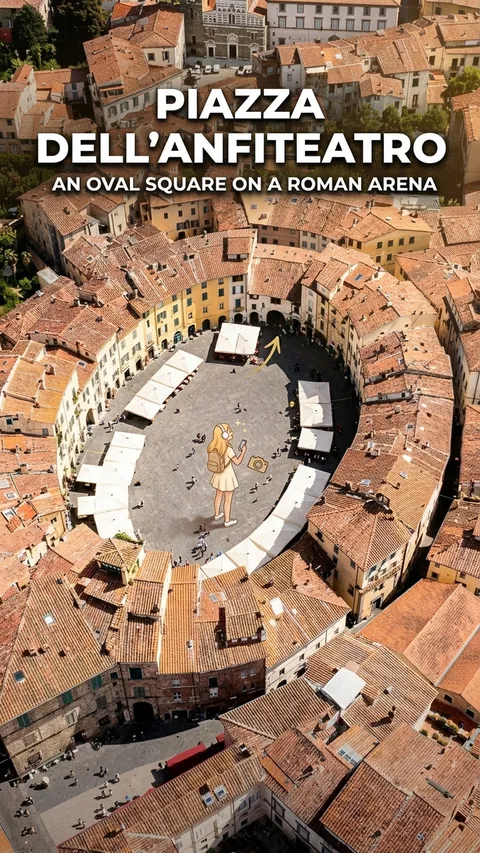
- Piazza dell'Anfiteatro (free, open 24/7): the elliptical square of ochre houses built directly on the foundations of a 2nd-century Roman amphitheatre. Lucca's signature postcard view.
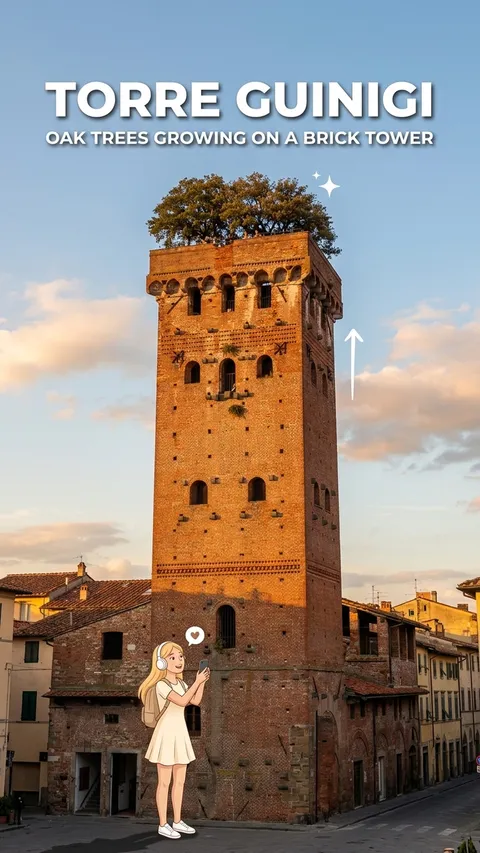
- Torre Guinigi (€8; daily 10:00 a.m. to 6:30 p.m., last entry 6:00 p.m.): the 14th-century brick tower crowned with seven holm oaks growing from its roof. 230 steps, the best view in Lucca from the top.
- Lucca Cathedral (Duomo di San Martino) (€5; Mon-Sat 9:30 a.m. to 6:00 p.m., Sun 11:30 a.m. to 5:00 p.m.): Romanesque cathedral with the Volto Santo crucifix and Jacopo della Quercia's tomb of Ilaria del Carretto.
- San Michele in Foro (free; 7:30 a.m. to 12:00 p.m., 3:00 p.m. to 6:00 p.m.): the white marble Pisan-Romanesque facade on the old Roman forum, topped by a bronze archangel.
The route the tour walks with you
Instead of a generic "see the Duomo, then the tower" list, you walk one efficient loop and the tour walks it with you. Because it can be launched from any of its stops, you never backtrack to find an official start, you just begin where you stand. This is the nine-stop order, starting at the cathedral just inside the southern walls and finishing at the tower with trees on its roof:
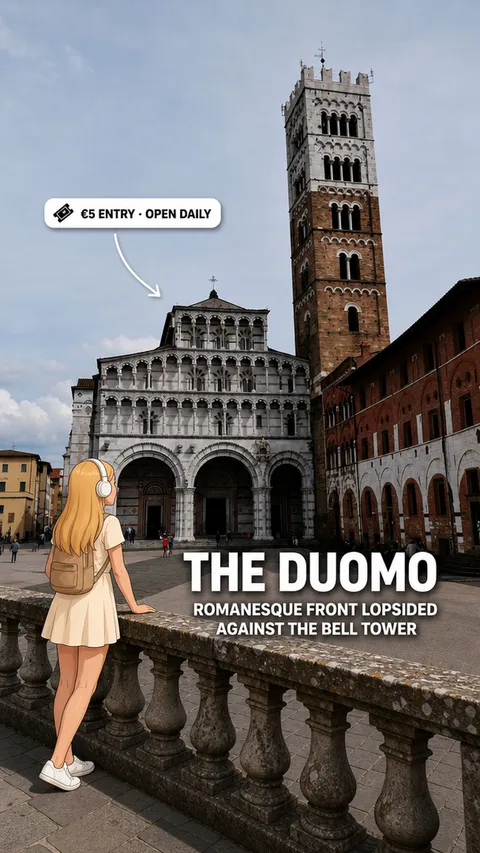
- 1Lucca Cathedral (Duomo di San Martino) €5 · your start
Just inside the walls, five minutes from the station. The facade is the first oddity: three tiers of mismatched columns squeezed lopsidedly against the bell tower because the tower got there first. Inside sits the Volto Santo, a dark wooden crucifix medieval pilgrims walked across Europe to see, and the marble tomb of Ilaria del Carretto, carved by Jacopo della Quercia, with a small dog at her feet. Open Mon-Sat 9:30 a.m. to 6:00 p.m., Sun 11:30 a.m. to 5:00 p.m.
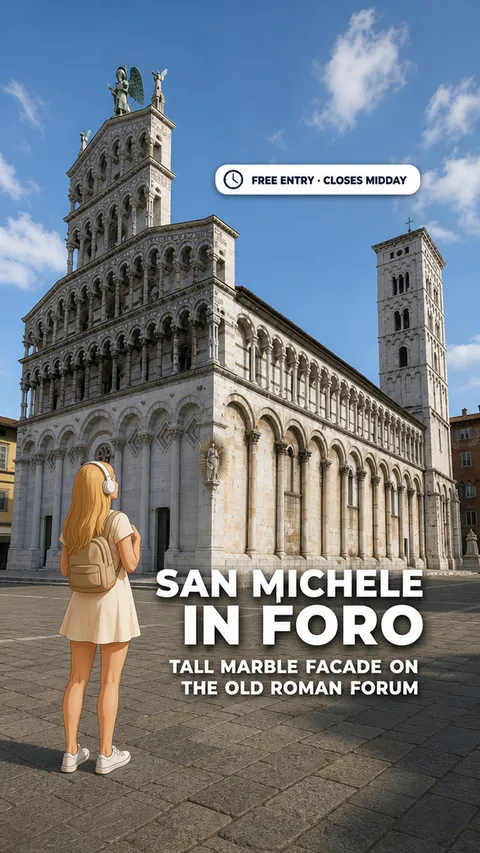
- 2Piazza San Michele & San Michele in Foro Free
The old Roman forum, still the square everyone drifts back to. The church facade is far taller than the building behind it, built that way to impress, then never finished to match. Stand and look (free, open all day), then grab an espresso standing at the bar inside one of the side cafes for about €1.20 instead of paying table service on the square.
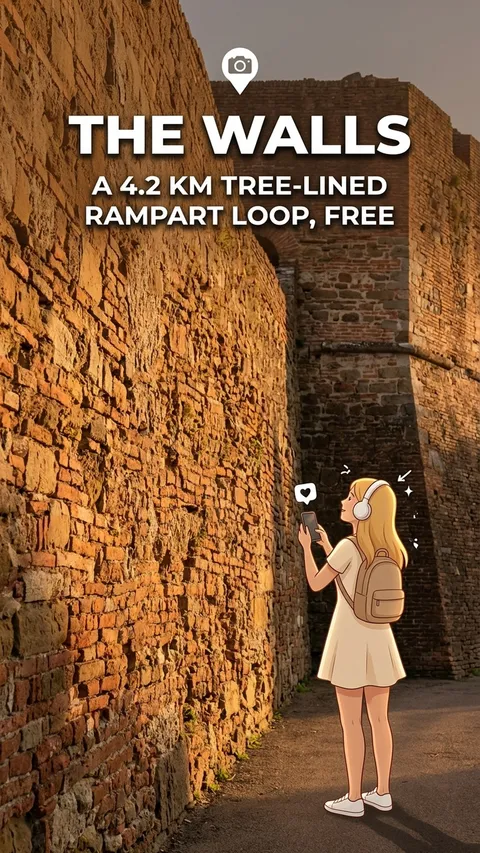
- 3Lucca City Walls Free · walk or cycle
The 4 km Renaissance ring, never actually attacked, survives intact and is now an elevated promenade under plane trees. Climb up on the western stretch near here for a first taste: flat, green, wide enough that locals jog and cycle it daily. Path open daily 10:00 a.m. to 6:00 p.m. as a managed park, walls walkable around the clock.
- 4Puccini's Birthplace (Casa Natale di Giacomo Puccini) €5
Lucca made Puccini, and this is the apartment where he was born in 1858. His statue sits in the small square outside, slouched in a chair with a cigarette. Inside, the Steinway piano he composed Turandot on, plus original costumes and letters. Open daily 9:30 a.m. to 7:00 p.m., longer than most things in Lucca, which makes it a flexible stop.
- 5Via Fillungo Free
The medieval spine of Lucca, 700 m long and only 10 m wide, running the length of the centre. You don't visit Via Fillungo so much as use it: it links San Michele to the tower and the Anfiteatro, and you'll be on and off it all loop. Look up for old guild signs and Liberty-style shopfronts, and stop at Caffè di Simo, a historic bar Puccini frequented.
- 6Palazzo Pfanner €6 · garden €4
Tucked against the inside of the northern walls, this baroque palace is best known for its garden: a formal Italian layout of box hedges, a central octagonal fountain, and weathered 18th-century statues of the gods and the four seasons. Open daily 10:00 a.m. to 6:00 p.m. Get the garden ticket if you are short on time.
- 7Basilica di San Frediano Free
You will see the gold before you see the church. The upper facade carries a huge 13th-century mosaic of Christ's Ascension that catches afternoon sun and blazes across the piazza, unusual for a Tuscan church. Inside, the preserved body of Santa Zita, Lucca's patron saint, in a glass case. Free, open Mon-Fri 9:00 a.m. to 6:00 p.m., Sun 9:00 a.m. to 6:00 p.m.
- 8Piazza dell'Anfiteatro Free
The reveal the whole loop builds toward. You enter through a low tunnel and step out into a perfect ellipse of ochre and cream houses curving all the way around you, raised in the Middle Ages directly on the foundations of a Roman amphitheatre. Nothing to buy a ticket for, ringed with cafes (charge for the location, so soak the view with one drink rather than a full meal).
- 9Torre Guinigi €8 · 230 steps
The last stop and the one you climb. A cluster of holm oaks grows from a roof garden on top of this 14th-century brick tower, planted by the Guinigi family centuries ago and still alive today. Open daily 10:00 a.m. to 6:30 p.m., access from Via Sant'Andrea 45. The view from the top is the best in Lucca: the oval of the Anfiteatro below, the green ring of walls, the Apuan Alps beyond.
It runs in your browser, no app and no download. A voice guide walks the loop with you and leads a real conversation as you go: it greets you, tells the story between stops, asks what you actually want to see, and adapts. It is not a recording and not an audioguide. The map and step-by-step navigation get you from each stop to the next.
That whole loop is our free, self-guided Lucca walking tour, and because it can be launched from any of its stops, you do not backtrack to find a start, you just begin where you are. You open it the moment you step through Porta San Pietro and enter the loop at the cathedral. It runs in your browser, with no app and no download. A voice guide walks the route with you and leads a real conversation as you go: it greets you, tells the story between stops, asks what you actually want to see, and adapts to your answers. It is not a recording and not an audioguide. The map and step-by-step navigation get you from the Duomo to the Anfiteatro to Torre Guinigi without staring at Google Maps. See the full route on the Lucca walking tour page, and you get 100 free credits to try it.
Insider Tips for the Lucca Day Trip
The single biggest rookie move on this route is overthinking the logistics. There is no booking puzzle and no transfer drama: a 30-minute regional train and a walk through a gate, and you are inside the walls. After that, the mistakes are about timing, footwear, and lunch.
Do
- Take a morning regional train; the fare is fixed at €3.70, so no need to pre-book
- Validate a paper regional ticket in the green platform machine before boarding
- Board at Pisa San Rossore if you spent the morning at the Leaning Tower
- Climb Torre Guinigi late afternoon for warm light and the passeggiata on the way down
- Order buccellato, the Luccan sweet bread with raisins and aniseed, at a bakery for the train back
- Cover shoulders and knees for church entry, both Duomo and San Frediano enforce it
Don't
- Don't drive into Lucca; the centre is a ZTL with camera fines. Park at Viale Carlo del Prete
- Don't take the bus: slower, infrequent, and no closer to the centre than the train
- Don't eat blind on Piazza dell'Anfiteatro; cafe quality varies wildly, so take one drink for the view and lunch off the square
- Don't skip the walls to "do more churches"; the wall walk is Lucca's defining experience
- Don't rely on the very last train back, aim for an earlier evening departure
Lucca is flat and the streets are stone-paved: smooth in the main squares but uneven cobbles in the side lanes. Flat comfortable shoes are plenty; the only real climb is the 230 steps inside Torre Guinigi. Public restrooms are scarce in the centre, so use the paid toilets near the train station at Piazzale Verdi or the facilities inside a paid sight like Palazzo Pfanner or Puccini's house when you enter.
Luggage
Lucca's train station has no formal left-luggage desk, but most day-trippers from Pisa travel light enough that a small backpack is fine. If you are doing Pisa to Lucca on a checkout day with bags, the Tourist Center Lucca near the station and several bike-rental shops along Via Castruccio will sometimes hold luggage for a small fee if you rent a bike from them; otherwise, use a left-luggage service in Pisa Centrale before you leave.
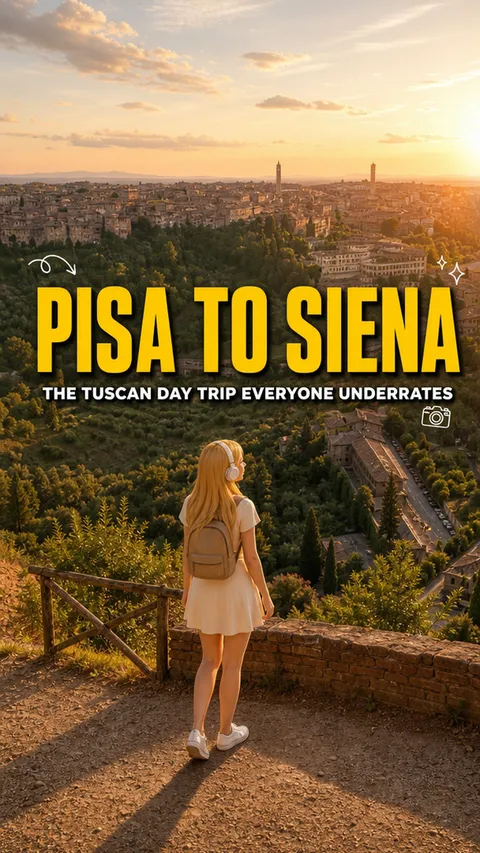
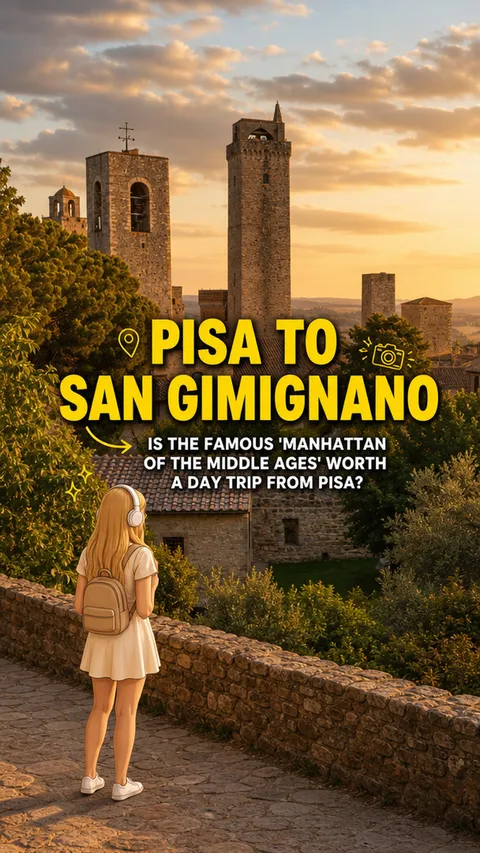
More day trips from Pisa
Out in the morning, back in time for dinner. Every route here fits in one full day.

What the Pisa to Lucca Journey Feels Like
This is the part no timetable can give you. Lucca is the kind of place people come back from genuinely moved, and the texture of the day is half the point: the flat run through the Pisan plain, the first sight of the walls as the train pulls in, the cool stone lanes opening unexpectedly into the ellipse of the Anfiteatro.
The walls are the moment most people do not expect. You climb a short ramp, and suddenly you are on a wide green avenue under plane trees, with the red rooftops and church towers of Lucca on one side and the Apuan Alps on the other. Locals jog past, cyclists weave by, church bells drift up from below. It is one of the most relaxing urban walks in Italy, and it is the answer to the question of why Lucca feels different from everywhere else.
And then the town itself: a knot of identical-looking stone lanes where the pleasure is the reveal, turning off a plain street straight into the elliptical Anfiteatro, or catching San Michele's marble facade glowing at the end of a shadowed alley. The tower with trees on its roof is the postcard, but the walls at sunset are the thing people remember.
Pisa to Lucca: Your Questions Answered
Can you do Lucca as a day trip from Pisa?
Yes, easily. The direct regional train is about 30 minutes each way, runs at least hourly, and drops you outside the walls. With a morning train you get the cathedral, the Anfiteatro, a tower climb, lunch, and a walk on the walls comfortably in a day. Many visitors wish they had stayed the night, but the day-trip itself is one of the easiest in Tuscany.
How long is the train from Pisa to Lucca?
About 27 to 35 minutes on a direct regional train. Most services come in around 30 minutes. The line is a flat single track through the Pisan plain, a straightforward run.
How much does the train cost?
The Trenitalia Regionale fare is fixed at €3.70 one way, the same whenever you buy it. There is no advance discount on regional services. A few Regionale Veloce trains run slightly faster for the same fare.
Is the train direct, and which Pisa station?
Many regional trains are direct, no changes needed. They leave from Pisa Centrale, and most also stop at Pisa San Rossore, the closer station to Piazza dei Miracoli and the Leaning Tower (a 5-minute walk from the square).
Do I need to book the train in advance?
No. The Regionale fare is fixed, so just turn up and go, and validate a paper ticket in the green platform machine before boarding. There is no reservation, no seat selection, and no benefit to buying early. Buy at the machine, the Trenitalia app, or any tobacco shop.
What should I not miss in one day?
Lucca's walls (free, walk or cycle a stretch), Piazza dell'Anfiteatro (the Roman oval), the climb up Torre Guinigi (the tower with oak trees on its roof), Lucca Cathedral for the Volto Santo and Ilaria del Carretto's tomb, and San Michele in Foro's marble facade. They sit within a 15-minute walk of each other inside the walls.
Should I drive from Pisa to Lucca?
Only if Lucca is one stop on a wider Tuscany road trip. For a straight day trip, the train wins easily: Lucca's historic centre inside the walls is a ZTL with camera-enforced fines, and you would have to park outside at Viale Carlo del Prete or Piazzale Verdi and walk in through a gate anyway.
Can I combine Pisa and Lucca in one day?
Yes, easily, and it is the most common pattern. Do Pisa's Piazza dei Miracoli in the morning (book the Leaning Tower climb ahead on opapisa.it), then take the 30-minute train from Pisa San Rossore to Lucca for the afternoon. You get the best of both with no rush.
When is the best time to visit?
Spring (April to June) and fall (September to October) for mild weather and thinner crowds. Summer is hot and the mosquitoes are out around the walls at dusk, so bring repellent. Late October brings Lucca Comics & Games, the world's largest comic fair, which transforms the town completely.
Plan Your Lucca Day Trip
The train is the whole logistics puzzle, and you have it sorted. Now make the hours inside the walls count with our free, self-guided Lucca walking tour: open it the moment you step through Porta San Pietro and start the nine-stop loop right at the cathedral. It runs in your browser with 100 free credits, no app and no download. See the full route on the Lucca walking tour page.
