Best Time to Visit Luxembourg City
Month-by-month weather, crowds and prices, plus a full calendar of festivals and events worth planning a trip around.
Best monthsMay, Jun, Oct
CheapestJan, Feb, Nov
AvoidAug
BusiestAug, Dec

When is the best time to visit Luxembourg City?
Come in May, June or early October: mild 17-22°C days, long light, the Chemin de la Corniche in full green or gold, and none of the late-summer funfair crush. The Schueberfouer (21 August to 9 September) is the year's price peak, when 3-star city-centre hotels hit 180-270 € a night. January and February are cheapest at 80-120 €, the trade being short grey days and a stack of restaurants closed for their winter break.
Start our tool and find your best time to visit Luxembourg City
Your perfect month
Free · ~30 seconds
or tap a month directly
What matters to you?
And this?
Best overall: May, Jun. May and June are the real sweet spot: 17-22°C, the longest daylight of the year, the Chemin de la Corniche in full spring green, and every UNESCO fortress sight open before the funfair price spike. May carries the tail of the Octave for cultural depth, and June peaks at National Day eve (22 June) with the Pont Adolphe fireworks. Hotel rates of 130-220 € sit well below August.
Best value: Oct, Jan, Feb. Early October gives you autumn foliage in the Pétrusse valley and Kirchberg parks, 120-170 € hotels and almost no crowds. For the rock-bottom price, January and February drop to 80-120 €, 35-40% under August, with the Dräi Eechelen Museum free year-round, the free Pfaffenthal lift and free Notre-Dame. The winter catch is short grey days and a run of restaurants closed for a week or two.
Avoid: Aug. Late August into early September around the Schueberfouer (21 August to 9 September) is the year's worst value: over two million funfair visitors across 20 days, hotels at their 180-270 € annual peak, school holidays still running and the Glacis neighbourhood wall-to-wall every evening. Glorious if you came for the funfair, harder work if sightseeing is the goal.
- January: Tough month, 5°C. This is the one month you have the casemates, Notre-Dame and the City History Museum almost to yourself. The Alzette valley can ice up and the Grund cobblestones turn slippery, so wear grip. Cold, slow and genuinely affordable, the real Luxembourg winter.
- February: Good time, 7°C. February is honest, unperformed Luxembourg, no seasonal markup and no crowds. The deep Pétrusse and Alzette gorges are bare and bracing, the museums uncrowded, and prices sit on the floor. It is a city you can have to yourself for very little.
- March: Good time, 10°C. March is the last genuinely cheap, quiet month before spring fills the city. Gardens are still mostly bare and daylight is short, but the terraces start to reopen and the grey is lifting. Use the window before the April Octave and Easter bring the first real crowds.
- April: Good time, 14°C. April is when the city shakes off winter and the gorges go green. The Octave gives it a distinctly Luxembourgish atmosphere you cannot get any other time, with pilgrim buses and a fairground market in the heart of the old town. Busier and pricier than March, but the spring energy earns it.
- May: Good time, 17°C. May is the quietly excellent month for a first visit. No deep summer heat, no funfair markup, just long light and a green city at ease. Avoid the marathon weekend if easy transport matters; otherwise the city breathes and the prices stay below the summer maximum.
- June: Good time, 22°C. June is the tipping point into full summer, and the long golden-hour evenings are the payoff. National Day eve is the best one-night spectacle of the year, with the Adolphe Bridge fireworks among Europe's finest. It is getting busy, but the school-holiday crush has not hit, so the city still breathes outside the National Day weekend.
- July: Good time, 23°C. July is warm, lively and outdoor-focused, but the gorges keep it comfortable: the deep Pétrusse and Alzette valleys stay shaded even at peak heat. The Blues'n'Jazz Rallye is the month's heartbeat, turning Pfaffenthal, Clausen and the Grund into one open-air stage until midnight. Carry a compact umbrella for the afternoon storms.
- August: Tough month, 23°C. August is not quiet-romantic Luxembourg, it is full-throttle funfair Luxembourg. The Schueberfouer is glorious if you came for the rides, the Gromperekichelcher and the closing fireworks, and hard work if sightseeing is the goal, with the Glacis wall-to-wall every evening. When the funfair prices and crowds peak, our live in-browser AI guide is the flat-priced, always-available alternative to an expensive pre-booked human guide, walking you through the old town and the casemates and telling the story at every stop as you go, at 5 € an hour or 20 € all-in with 100 free credits to start.
- September: Good time, 20°C. September from the 10th is the foodie and shoulder-season favourite: warm enough for the Corniche walks, quiet enough to book any restaurant, and surrounded by harvest. The Moselle valley wine towns are 30 minutes out, and traditional Luxembourg cooking is at its seasonal best. Skip the first nine days if you are not there for the funfair.
- October: Good time, 14°C. October is the couples' month: gold and amber foliage in the gorges, candlelit dining in the Grund without summer heat or crowds, and hotels back to a sensible 120-170 €. Cool, romantic and calm. Carry an umbrella, but the autumn light over the Corniche is the year's most photogenic.
- November: Good time, 9°C. November is Luxembourg at its most introverted: grey, damp and almost touristless, but cheap and calm. The Alzette valley feels moody and atmospheric under low cloud, and the consolation is that the Christmas market arrives to brighten the final week and a half. Bring warm, waterproof layers.
- December: Tough month, 6°C. December trades January's emptiness for full festive bustle: lights, an ice rink, a Ferris wheel and mulled wine in the medieval quarter. It is compact and genuinely charming, but it is the busiest and most expensive stretch outside August. Go the first two weekends for the full programme with fewer crowds than the 20th to 24th.
Luxembourg City weather by month
HighLowRainfall
Jan5°
Feb7°
Mar10°
Apr14°
May17°
Jun22°
Jul23°
Aug23°
Sep20°
Oct14°
Nov9°
Dec6°
| Month | Temp | Rain | Sun | Crowds | Prices | Highlight |
|---|---|---|---|---|---|---|
| Jan | 5° / 0° | 90mm · 15 rainy days | 3.0 h/day | ●○○○○ | ●○○○○ | |
| Feb | 7° / 0° | 70mm · 12 rainy days | 5.3 h/day | ●○○○○ | ●○○○○ | Carnival |
| Mar | 10° / 2° | 66mm · 12 rainy days | 7.4 h/day | ●●○○○ | ●●○○○ | Carnival |
| Apr | 14° / 4° | 50mm · 10 rainy days | 10.0 h/day | ●●●○○ | ●●●○○ | Printemps Musical |
| May | 17° / 8° | 69mm · 12 rainy days | 11.0 h/day | ●●●○○ | ●●●○○ | Printemps Musical |
| Jun | 22° / 13° | 64mm · 10 rainy days | 11.8 h/day | ●●●●○ | ●●●●○ | Summer in the City |
| Jul | 23° / 14° | 65mm · 10 rainy days | 11.8 h/day | ●●●●○ | ●●●●○ | Summer in the City |
| Aug | 23° / 14° | 67mm · 11 rainy days | 10.7 h/day | ●●●●● | ●●●●● | Summer in the City |
| Sep | 20° / 11° | 61mm · 8 rainy days | 9.3 h/day | ●●●●○ | ●●●●○ | Summer in the City |
| Oct | 14° / 8° | 82mm · 12 rainy days | 5.9 h/day | ●●●○○ | ●●●○○ | |
| Nov | 9° / 4° | 84mm · 14 rainy days | 3.8 h/day | ●●○○○ | ●●●○○ | Winterlights & Christmas Markets |
| Dec | 6° / 2° | 84mm · 15 rainy days | 2.7 h/day | ●●●●○ | ●●●●○ | Winterlights & Christmas Markets |
How we score this: weather = long-run climate normals (Open-Meteo), crowds & prices = relative season read, events checked yearly against official dates.
Best time to visit Luxembourg City: weather, prices & crowds
Best months for good weather
May, Jun, Sep
May, June and September give Luxembourg its most reliable comfort: 17-22°C highs, long golden-hour evenings (light until 9:45 pm at the solstice), and summer rain that comes as 30 to 60 minute afternoon thunderstorms rather than all-day grey. The deep Pétrusse and Alzette gorges stay shaded and walkable even in peak heat.
Quietest months to avoid the crowds
Jan, Feb, Oct
January and February are the emptiest months by far, with leisure tourism near zero and the EU institutions on winter break. October is the warm-weather equivalent: you walk the Bock casemates and the City History Museum without a queue and have the foliage-lined Corniche almost to yourself.
Cheapest time to visit Luxembourg City
Jan, Feb, Nov
January and February are the cheapest months: 3-star city-centre hotels run 80-120 € a night, roughly 35-40% below the August peak of 180-270 €. November holds at 120-165 € until Winterlights opens around the 20th. A weekend check-in saves another 20-25% any month, as Luxembourg's market is business-driven Monday to Thursday.
Best time for festivals and events
Apr, May, Jun
Late April into early May brings the Octave (Oktav), a 16-day Catholic pilgrimage held since 1666 that fills Notre-Dame Cathedral and sets up the Maërtchen fairground market on Place Guillaume II, a deeply Luxembourgish atmosphere you cannot get any other time. Then 22 June delivers National Day eve, with the Fakelzuch torch procession and world-class fireworks launched from the Pont Adolphe at 11 pm.
How many days do you need in Luxembourg City?
Two days suit Luxembourg City well. The historic core is compact but dramatic, draped across cliffs and deep river gorges, so you spend as much time climbing and descending as walking flat. One focused day covers the old-town highlights; a second lets you drop into the lower quarters and cross the plateau to Kirchberg.

One day
Old town and the ramparts
Start at Place d'Armes for coffee, then work through Notre-Dame Cathedral, Place Clairefontaine, the Grand Ducal Palace and the Gëlle Fra Monument. The self-guided Luxembourg City walking tour strings all 14 stops across 5.2 km in roughly 3.2 hours, ending at the Dräi Eechelen Museum on the Kirchberg plateau. Cap the day at the Pétrusse Casemates carved into the sandstone cliff and the sweeping view from the Chemin de la Corniche.
Two daysRecommended
The lower city and Kirchberg
Take the free Pfaffenthal panoramic lift down to the Grund and spend the morning around Neumünster Abbey and the Alzette riverbanks. Cross back up to browse contemporary art at Casino Luxembourg on Rue Notre-Dame, then visit MUDAM and Fort Thüngen on the Kirchberg plateau. End with an evening in the candlelit restaurants of the Grund.
Three days
Museums, gardens and the Moselle
Use the third day to fill gaps: the Luxembourg City History Museum on Rue du Saint-Esprit free Thursday evening, Villa Vauban and its Édouard André gardens, and the Bock Casemates on the cliff above the Alzette. Alternatively, head 30 minutes south to the Moselle wine towns of Remich or Grevenmacher for a half-day on the river.
Four days or more
Beyond the city
With four days you can combine the city with the Luxembourg American Cemetery at Hamm, a 20-minute bus ride east, and the Vianden Castle an hour north. Late October visitors can walk the full Pétrusse valley trail when the foliage peaks. The Schueberfouer funfair from late August adds a fourth-day magnet of its own: four hectares of rides on the Glacis, open daily until 1 am.
Best time to visit Luxembourg City by traveller type
Same city, different trip. Here's the month that fits how you're travelling.
🧭
Best time to visit Luxembourg City for the first time
MayJun
May or June: long daylight, warm but not hot 17-22°C, all twelve UNESCO-listed fortress sights open, the Octave finished by early May, and the chance to catch National Day fireworks on 22 June. Prices stay below the August maximum and the city is at its spring-green best.
❤️
Best time to visit Luxembourg City for couples
OctJun
Early October for golden foliage in the Pétrusse valley and Kirchberg parks, candlelit dining in the Grund, and hotels at 120-170 € instead of 180-270 €. For a memorable one-night peak, 22 June puts the National Day fireworks over the Pont Adolphe, best watched from the Chemin de la Corniche viewpoint.
💶
Best time to visit Luxembourg City on a budget
JanFeb
January or February: hotels at 80-120 €, 35-40% below the August peak. Stack the free culture, the Dräi Eechelen Museum is free year-round, MUDAM is free Wednesday 6 to 9 pm, the City Museum free Thursday 6 to 9 pm and Villa Vauban free Friday 6 to 9 pm, alongside the free Pfaffenthal lift, free Notre-Dame and free Corniche. Note that some restaurants close for a couple of weeks in January.
🍝
Best time to visit Luxembourg City for food and wine
SepOct
September, once the Schueberfouer ends on the 9th, is wine-harvest season: the Moselle valley around Remich and Grevenmacher is 30 minutes out, with the Crémant & Kultur festival in Remich on 20 September. Traditional dishes like Judd mat Gaardebounen and Gromperekichelcher are at their seasonal best, and with fewer tourists than August, restaurant tables are easy to book.
Worst time to visit Luxembourg City
Late August into early September, around the Schueberfouer funfair (roughly 21 August to 9 September), is the worst time for sightseers. Over two million funfair visitors descend on the Glacis across 20 days, hotels hit their annual ceiling of 180 to 270 per night, and Schueberfouer weekends run 40 to 60 percent above normal summer rates. The Glacis neighbourhood is wall-to-wall every evening, and school holidays across Belgium, France and Germany keep the rest of the city busy.
Still worth it for If the funfair is the goal, August is the only time for it: 200-plus attractions on four hectares, traditional Gromperekichelcher potato fritters, and closing-night fireworks from the Grand Duchess Charlotte Bridge. Families who book two to three months ahead and love rides will find it unforgettable.
Go instead in May, June, October, when Luxembourg City is at its best.
Best time for a tour of Luxembourg City
The 5.2-kilometre loop through Luxembourg City rewards walkers most generously in May and September. May brings highs of 17 °C, long evenings, and only around 12 rain days, making the descent into the Pétrusse Casemates comfortable and the views from the Adolphe Bridge genuinely pleasant rather than something to rush through. September is even better on the weather front: highs near 20 °C, just 8 rain days, and crowds thinning noticeably after the August peak, so Place d'Armes regains a bit of breathing room. April is also solid at 14 °C, dry enough at 10 rain days, and the city feels alive without being heaving. August is the one month to plan around carefully: temperatures sit around 23 °C, which sounds inviting until you factor in that this is the busiest period of the year and the old town, particularly around the Grand Ducal Palace, fills up shoulder to shoulder with visitors. January and February are genuinely bleak for a long walk: highs barely clear 5 to 7 °C, darkness falls early, and you will see up to 15 rain days in January alone, with the Casemates damp and the plateau above them windswept.
The practical upside of starting your Luxembourg City tour with AI Tourguide is that no operator's departure slot locks you in. If September is your month and the morning mist is still lifting off the Pétrusse valley, you can set off from Place d'Armes at nine and take the descent at your own pace, stopping for as long as you like in the casemate tunnels while the guide tells you the story of the Spanish garrison that carved them out. The AI guide leads and talks the whole way, in your language, and genuinely listens when you want to go deeper on a particular stop, so the walk shapes itself around your curiosity rather than a timetable. It runs directly in your browser, nothing to download or book in advance.


 +10
+10All 14 stops are already on the map.
You just press start.
You just press start.
 AI Tourguide
You just read the route.
Now walk it with a guide in your ear.
Press start wherever you are, even hundreds of kilometres from Luxembourg City, and the guide begins telling its stories right away. In the city, pick any of the 14 stops to start from: it leads you there, then talks with you the whole route, asking, listening, remembering, and shaping the tour around your answers.
14stops5.2km3.2hours11languages
▶Start the tour freeFree to start · Runs in your browser · No app, no download
Luxembourg City events and festivals calendar
Annual highlights worth timing a trip around, listed month by month.
February
🎭 CarnivalCarnival Carnaval
Feb 15–17 ~
the Sunday to Tuesday before Ash Wednesday, in late February
Parades and street parties in the old town, smaller in scale than the Rhineland carnivals but lively in the Grund and Clausen neighbourhoods, closing with the Buergbrennen bonfire on the first Sunday of Lent.
March
🌸 Seasonal natureBuergbrennen Bonfire Buergbrennen
Mar 1 ~
the first Sunday of Lent, around the start of March
A traditional bonfire festival marking the end of winter, with large fires lit on hilltops across Luxembourg, including the city outskirts, at dusk.
🎵 MusicPrintemps Musical
Mar 1 – May 31 ~
a spring series running March to May
A chamber-music series at the Philharmonie Luxembourg, mixing free lunchtime concerts with ticketed evening performances across the spring in I.
April
⛪ ReligiousOctave Pilgrimage Oktav
Apr 25 – May 10 ~
16 days from the third Saturday after Easter, late April into early May
A 16-day Catholic pilgrimage held since 1666 honouring Our Lady of Luxembourg at Notre-Dame Cathedral, drawing around 90,000 pilgrims, with the Maërtchen fairground market on Place Guillaume II.
May
🏃 SportING Night Marathon Luxembourg ING Night Marathon Lëtzebuerg
May 16
the third Saturday of May, run in the evening
An evening marathon, half-marathon and team relay through illuminated streets, with live music at every kilometre and routes crossing Kirchberg, the Ville-Haute and the Grund.
June
🎵 MusicSummer in the City Summer an der Stad
Jun 15 – Sep 15 ~
mid-June to mid-September
Free bandstand concerts on Place d'Armes, brass bands, jazz and classical, plus outdoor theatre and cultural events across the city parks all summer long.
🇮 HolidayNational Day Fête Nationale
Jun 22–23
22 June eve plus 23 June
Luxembourg's national celebration.
🎵 MusicCity Sounds Festival City Sounds
Jun 22–23
the National Day weekend, 22-23 June
Free open-air concerts at the Glacis on the National Day weekend, with international headline acts on the main stage, run as part of the official celebrations.
July
🎨 Art and cultureGrand Ducal Palace Summer Tours Visites Palais Grand-Ducal
Jul 15 – Sep 9
mid-July to early September, closed Wednesdays
The only period the royal palace opens to the public, with guided 75-minute tours of the state rooms in Luxembourgish, French, English and German.
🎵 MusicBlues'n'Jazz Rallye
Jul 18
a Saturday in mid-July
A one-day open-air jazz and blues festival that turns the lower-city districts of Pfaffenthal, Clausen, Grund and Rham into a maze of free pop-up stages with dozens of acts.
August
🎉 FestivalSchueberfouer
Aug 21 – Sep 9
from the last Friday before St. Bartholomew's Day, late August into early September
The 686th edition of Luxembourg's largest funfair: four hectares on the Place du Glacis with over 200 attractions, 25 big rides, traditional Gromperekichelcher and brasseries, open daily 11 am to 1 am.
September
🍷 Food and wineCrémant & Kultur Festival Crémant & Kultur
Sep 20 ~
a Sunday in late September, in Remich
A Moselle wine festival in Remich, 30 minutes from the city, celebrating Luxembourg's sparkling Crémant with tastings, music and food along the riverfront.
November
🎄 Christmas marketWinterlights & Christmas Markets Winterlights
Nov 20 – Jan 3
mid-to-late November to early January
Christmas markets centred on Place d'Armes and Place Guillaume II, with the Cirque du Luxembourg, a Ferris wheel, a miniature train, ice skating, concerts and a Winterkids programme.
Insider tips for visiting Luxembourg City
The rules buried in forums, in one place.
- Skip the Schueberfouer weekends if you are not there for the funfair. From 21 August to 9 September, 3-star city-centre hotels spike 40-60% above normal summer rates and the Glacis neighbourhood is wall-to-wall every evening. If sightseeing is the goal, pick July or early September from the 10th instead, when prices drop about 25%.
- For National Day eve (22 June) fireworks, arrive by 9:30 pm. The 11 pm fireworks launch from the Pont Adolphe itself, so the Chemin de la Corniche viewing platform between Place du Saint-Esprit and the Corniche is the spot, and it fills up by 10:15 pm. Go early and stand high.
- Grand Ducal Palace tours (adults 18 €, children 9 €) only run mid-July to early September, closed Wednesdays, and sell out the moment they open, usually announced late June or early July. English-language sessions go first; same-day walk-up tickets are rarely available in July.
- Stack a no-cost culture circuit across three evenings: MUDAM free Wednesday 6 to 9 pm, the Lëtzebuerg City Museum free Thursday 6 to 9 pm, Villa Vauban free Friday 6 to 9 pm, plus the Dräi Eechelen Museum free every day. A well-timed visit hits all four without paying a single museum entry.
- The Chemin de la Corniche, called Europe's most beautiful balcony, is best photographed 45 minutes before sunset from the viewpoint between Place du Saint-Esprit and the Corniche. The golden light catches the Grund rooftops and the Alzette valley; midday light is flat and harsh.
- Avoid driving in the centre during National Day (22-23 June) and the Schueberfouer opening and closing days. Roads close for the parades and the funfair gridlocks every route near the Glacis. Use public transport (free nationwide) or arrive on foot via the free Pfaffenthal lift, which runs to 1 am.
- Time your stay to straddle the weekend. Luxembourg's hotel market is heavily business-driven, so rates drop 20-25% on Friday and Saturday versus Monday to Thursday. Check in Friday and check out Monday for the best value in any month.
- The Pétrusse Casemates close at 3 pm on Wednesdays, unusually early against the 5 pm close on other days. Do not turn up at 2:30 pm expecting a full visit, and book ahead in summer.
- During the Octave (late April to early May), Sunday mornings are intensely crowded at Notre-Dame Cathedral as pilgrim buses arrive from across the Greater Region. Visit on a weekday morning instead; the Maërtchen market on Place Guillaume II runs daily and is enjoyable without the Sunday crush.
- The Pfaffenthal panoramic lift is free and runs daily from 5:45 am to 1 am, the best free viewpoint in the city. Take it up to the Ville-Haute to skip the steep staircase climb out of the Grund at night, an ideal end to a Blues'n'Jazz Rallye evening.
Public holidays in Luxembourg City
On these dates many shops and offices close, transport thins out, and sights can be mobbed or shut. Plan around them.
| Date | Holiday | What closes |
|---|---|---|
| Jan 1 | New Year's Day | Everything closed: shops, offices, most restaurants. The Luxembourg American Cemetery is shut (one of only two days a year). Some bistros stay closed for a week or two into January. |
| Apr 5 | Easter Sunday | Major shops and most museums closed. Notre-Dame Cathedral is packed for mass, falling within the Octave pilgrimage period. |
| Apr 6 | Easter Monday | Public holiday: most attractions closed or on reduced hours. The Octave is in full swing at the cathedral. |
| May 1 | Labour Day | Everything closed. This falls in the Octave pilgrimage period, so the cathedral and the Maërtchen market on Place Guillaume II are lively despite the shop closures. |
| May 14 | Ascension Day | Public holiday: most museums closed. A popular bridge day, with a long weekend if combined with Friday 15 May, so the centre briefly fills with regional visitors. |
| May 25 | Whit Monday | Public holiday: most sites closed. A calm long weekend before the summer season builds toward National Day. |
| Jun 23 | National Day | Public holiday: military parade on Avenue de la Liberté at noon, Te Deum at Notre-Dame, government offices and most shops shut. Museums run reduced hours or close. Transport is increased for the parade; expect widespread road closures around the centre. |
| Aug 15 | Assumption Day | Public holiday: shops closed. The Schueberfouer funfair on the Glacis is open and packed, so the city centre stays busy despite the holiday. |
| Nov 1 | All Saints' Day | Public holiday: shops and many restaurants closed. The Luxembourg American Cemetery holds major commemorative services. A still, observed day across the city. |
| Dec 25 | Christmas Day | Everything closed and the commercial market stalls shut, though the Winterlights lights stay up. The American Cemetery is closed. A quiet day in the city. |
| Dec 26 | St Stephen's Day | Public holiday: shops shut, though most tourism sites open on reduced hours. Holiday tourism stays high and hotel rates sit near their winter peak. |
Luxembourg City month by month
January in Luxembourg City
High5°C / 40°F
Low0°C
Rain90mm / 15 rainy days
Sun3.0 h/day
Daylight9 h/day
Humidity89%
Crowds●○○○○Prices●○○○○
January is Luxembourg City at its quietest and cheapest. Daytime highs sit near 5°C, dipping to frost and the odd snow dusting, with short 8.7-hour days and the city's greyest skies. The post-Christmas lull and the EU institutions on winter break empty the place out, and leisure tourism is near zero. The catch is that a stack of restaurants and bistros close for a week or two early in the month, so it pays to check ahead.
The vibe This is the one month you have the casemates, Notre-Dame and the City History Museum almost to yourself. The Alzette valley can ice up and the Grund cobblestones turn slippery, so wear grip. Cold, slow and genuinely affordable, the real Luxembourg winter.
Don't miss Lean into the free culture: the Dräi Eechelen Museum is free year-round, MUDAM is free Wednesday 6 to 9 pm, and the Pfaffenthal panoramic lift runs free until 1 am for the best winter viewpoint. Notre-Dame and the Chemin de la Corniche cost nothing.
Crowd drivers The post-Christmas lull with the EU institutions on winter break and minimal leisure tourism. The lowest visitor pressure of the year.
Heads up New Year's Day (1 January) closes everything, including the Luxembourg American Cemetery. Several bistros stay shut for one to two weeks into the month for their winter break.
The cheapest month, with 3-star city-centre hotels at 80-120 € a night, 35-40% below the August peak.
February in Luxembourg City
High7°C / 44°F
Low0°C
Rain70mm / 12 rainy days
Sun5.3 h/day
Daylight10 h/day
Humidity83%
Crowds●○○○○Prices●○○○○
February ties January as the quietest, cheapest month. Highs creep toward 7°C but it stays damp and grey. Luxembourg's Carnival is lively in the Grund and Clausen but small against the Rhineland, so it is no major crowd driver, just colour on a late-winter weekend. Daylight stretches past 10 hours and the worst of the deep-winter closures are easing.
The vibe February is honest, unperformed Luxembourg, no seasonal markup and no crowds. The deep Pétrusse and Alzette gorges are bare and bracing, the museums uncrowded, and prices sit on the floor. It is a city you can have to yourself for very little.
Don't miss Carnival parades roll through the old town, with the Buergbrennen bonfire on hilltops around the first Sunday of Lent making a fine dusk photo. The free evening museum circuit (MUDAM Wednesday, City Museum Thursday, Villa Vauban Friday) is ideal in cold weather.
Crowd drivers Pre-spring off-season with leisure tourism near zero. Carnival adds a small late-February weekend bump but is not a dominant draw.
Tied with January for cheapest, at 80-125 €, with the occasional small Carnival-weekend bump.
Events this month
🎭 CarnivalCarnival Carnaval
Feb 15–17 ~
the Sunday to Tuesday before Ash Wednesday, in late February
Parades and street parties in the old town, smaller in scale than the Rhineland carnivals but lively in the Grund and Clausen neighbourhoods, closing with the Buergbrennen bonfire on the first Sunday of Lent.
A genuine local experience that adds colour to a cheap, quiet late-February visit, without the crowd pressure of a major carnival city.
March in Luxembourg City
High10°C / 50°F
Low2°C
Rain66mm / 12 rainy days
Sun7.4 h/day
Daylight12 h/day
Humidity78%
Crowds●●○○○Prices●●○○○
March brings the first signs of spring, with highs climbing toward 10°C and daylight back near 12 hours. Business travel resumes as the EU and finance sectors come back to life, lifting midweek rates, though crowds stay moderate. The Philharmonie's Printemps Musical chamber series runs through spring, and late in the month cherry blossom and magnolia begin in the Villa Vauban gardens.
The vibe March is the last genuinely cheap, quiet month before spring fills the city. Gardens are still mostly bare and daylight is short, but the terraces start to reopen and the grey is lifting. Use the window before the April Octave and Easter bring the first real crowds.
Don't miss The Philharmonie's Printemps Musical runs free lunchtime and ticketed evening concerts on the Kirchberg plateau. Late March brings the first cherry blossom and magnolia to the Édouard André municipal park beside Villa Vauban.
Crowd drivers Business travel resumes with the EU and finance sectors active, lifting midweek rates. Early spring visitors arrive but there is no mass crowd yet.
Prices recover gently to 100-150 € as business travel resumes; school holidays have not started.
Events this month
🌸 Seasonal natureBuergbrennen Bonfire Buergbrennen
Mar 1 ~
the first Sunday of Lent, around the start of March
A traditional bonfire festival marking the end of winter, with large fires lit on hilltops across Luxembourg, including the city outskirts, at dusk.
A uniquely Luxembourgish ritual and a fine dusk photo opportunity, a reason to brave the cold, quiet shoulder season.
🎵 MusicPrintemps Musical
Mar 1 – May 31 ~
a spring series running March to May
A chamber-music series at the Philharmonie Luxembourg, mixing free lunchtime concerts with ticketed evening performances across the spring in I. M. Pei-adjacent Kirchberg architecture.
A strong reason to visit in the quiet, well-priced shoulder season, when the Philharmonie's programme runs but the city stays uncrowded.
April in Luxembourg City
High14°C / 56°F
Low4°C
Rain50mm / 10 rainy days
Sun10.0 h/day
Daylight14 h/day
Humidity72%
Crowds●●●○○Prices●●●○○
April is Luxembourg coming fully alive, with highs near 14°C, the driest month on the calendar (around 50mm), and the Alzette valley in the Grund and Pfaffenthal turning lush green. The Octave pilgrimage opens from 25 April, filling Notre-Dame and setting the Maërtchen market on Place Guillaume II. Easter (5-6 April) brings closures and a hotel spike, and cherry blossom peaks in the Villa Vauban gardens.
The vibe April is when the city shakes off winter and the gorges go green. The Octave gives it a distinctly Luxembourgish atmosphere you cannot get any other time, with pilgrim buses and a fairground market in the heart of the old town. Busier and pricier than March, but the spring energy earns it.
Don't miss The Octave puts processions in Notre-Dame and the daily Maërtchen fairground market on Place Guillaume II; visit the cathedral on a weekday to dodge the Sunday crush. Cherry blossom and magnolia peak in the Villa Vauban gardens through to mid-April.
Crowd drivers The Octave pilgrimage (from 25 April) fills centre hotels midweek with pilgrims, and the Easter weekend adds a sharp 20-30% spike on top.
Heads up Easter Sunday (5 April) and Easter Monday (6 April) close major shops and most museums, with Notre-Dame packed for mass.
Rates rise to 120-175 €, with Easter weekend running 20-30% above base and Octave weeks busy midweek.
Events this month
⛪ ReligiousOctave Pilgrimage Oktav
Apr 25 – May 10 ~
16 days from the third Saturday after Easter, late April into early May
A 16-day Catholic pilgrimage held since 1666 honouring Our Lady of Luxembourg at Notre-Dame Cathedral, drawing around 90,000 pilgrims, with the Maërtchen fairground market on Place Guillaume II.
A deeply Luxembourgish experience available at no other time. The cathedral is packed on Sunday mornings, so visit on a weekday; the Maërtchen market adds a carnival mood to the old town daily.
🎵 MusicPrintemps Musical
Mar 1 – May 31 ~
a spring series running March to May
A chamber-music series at the Philharmonie Luxembourg, mixing free lunchtime concerts with ticketed evening performances across the spring in I. M. Pei-adjacent Kirchberg architecture.
A strong reason to visit in the quiet, well-priced shoulder season, when the Philharmonie's programme runs but the city stays uncrowded.

May in Luxembourg City
High17°C / 63°F
Low8°C
Rain69mm / 12 rainy days
Sun11.0 h/day
Daylight15 h/day
Humidity73%
Crowds●●●○○Prices●●●○○
May is one of Luxembourg's sweet spots: highs near 17°C, daylight past 15 hours, and the city in full leaf. The Octave tail finishes by the 10th, then the ING Night Marathon (16 May) lights up the streets for one evening and spikes hotels for its weekend. With the funfair still months off, you get mild weather, every fortress sight open and the Corniche at its spring-green best.
The vibe May is the quietly excellent month for a first visit. No deep summer heat, no funfair markup, just long light and a green city at ease. Avoid the marathon weekend if easy transport matters; otherwise the city breathes and the prices stay below the summer maximum.
Don't miss The ING Night Marathon runs an evening route through Kirchberg, the Ville-Haute and the Grund with live music at every kilometre, spectacular to watch even if you are not running. The Chemin de la Corniche is at its lushest, best photographed 45 minutes before sunset.
Crowd drivers The Octave tail in the first days plus spring tourism keep things busy, and the ING Night Marathon on 16 May sells out the centre for its single weekend.
Heads up Labour Day (1 May) closes everything, Ascension (14 May) shuts most museums, and Whit Monday (25 May) closes most sites; all three are public holidays.
Rates hold at 130-180 €; the ING Night Marathon weekend (16 May) sells out the centre at a 25-35% premium.
Events this month
🏃 SportING Night Marathon Luxembourg ING Night Marathon Lëtzebuerg
May 16
the third Saturday of May, run in the evening
An evening marathon, half-marathon and team relay through illuminated streets, with live music at every kilometre and routes crossing Kirchberg, the Ville-Haute and the Grund. Around 10,000 runners take part.
A spectacular spectator event if you stay near the route, but central hotels sell out early and rates jump 25-35%, so book three to four months ahead or expect difficult transport on race day.
🎵 MusicPrintemps Musical
Mar 1 – May 31 ~
a spring series running March to May
A chamber-music series at the Philharmonie Luxembourg, mixing free lunchtime concerts with ticketed evening performances across the spring in I. M. Pei-adjacent Kirchberg architecture.
A strong reason to visit in the quiet, well-priced shoulder season, when the Philharmonie's programme runs but the city stays uncrowded.

June in Luxembourg City
High22°C / 72°F
Low13°C
Rain64mm / 10 rainy days
Sun11.8 h/day
Daylight16 h/day
Humidity70%
Crowds●●●●○Prices●●●●○
June opens the Luxembourg summer, with highs near 22°C, the longest days of the year (light until 9:45 pm at the solstice) and the lowest rainfall after April. National Day (22-23 June) is the single biggest domestic spike of the year, built around the Fakelzuch torch procession and world-class fireworks from the Pont Adolphe at 11 pm. The free City Sounds concerts and the Summer in the City programme run alongside.
The vibe June is the tipping point into full summer, and the long golden-hour evenings are the payoff. National Day eve is the best one-night spectacle of the year, with the Adolphe Bridge fireworks among Europe's finest. It is getting busy, but the school-holiday crush has not hit, so the city still breathes outside the National Day weekend.
Don't miss For the National Day eve fireworks, take your spot on the Chemin de la Corniche by 10:15 pm, as the 11 pm display launches from the Pont Adolphe itself. Free City Sounds concerts run at the Glacis, and Summer in the City brings free bandstand concerts to Place d'Armes around 8 pm.
Crowd drivers National Day (22-23 June) is the biggest domestic spike of the year, with city-centre hotels selling out weeks ahead. Summer tourism is building and the Wiltz Festival opens regionally.
Heads up National Day on 23 June is a public holiday: government offices and most shops shut, museums run reduced hours or close, and roads close around the centre for the parade.
Prices climb to 150-220 €, with National Day eve (22 June) the highest single-night rate of the first half-year.
Events this month
🇮 HolidayNational Day Fête Nationale
Jun 22–23
22 June eve plus 23 June
Luxembourg's national celebration. On 22 June the Fakelzuch torch procession leads to roughly 20 minutes of fireworks from the Pont Adolphe at 11 pm, with free City Sounds open-air concerts at the Glacis. On 23 June a military parade runs on Avenue de la Liberté at noon, followed by the Te Deum at Notre-Dame and the Spillfest family day.
The best one-night spectacle in Luxembourg, with the Adolphe Bridge fireworks among the finest in Europe. Hotels sell out weeks ahead, so book six to eight weeks early and watch from the Chemin de la Corniche.
🎵 MusicCity Sounds Festival City Sounds
Jun 22–23
the National Day weekend, 22-23 June
Free open-air concerts at the Glacis on the National Day weekend, with international headline acts on the main stage, run as part of the official celebrations.
A free, big-name music add-on that turns National Day into a full summer weekend, with no ticket needed.
🎵 MusicSummer in the City Summer an der Stad
Jun 15 – Sep 15 ~
mid-June to mid-September
Free bandstand concerts on Place d'Armes, brass bands, jazz and classical, plus outdoor theatre and cultural events across the city parks all summer long.
Free daily entertainment that needs no planning: just turn up at Place d'Armes around 8 pm on a summer evening.

July in Luxembourg City
High23°C / 74°F
Low14°C
Rain65mm / 10 rainy days
Sun11.8 h/day
Daylight16 h/day
Humidity68%
Crowds●●●●○Prices●●●●○
July is high summer and the busiest pure-tourism month, with school holidays across the Benelux, Germany and France in full flow. Highs reach 23°C and can push past 32°C in a heat-wave year, with rain arriving as short afternoon thunderstorms after clear mornings. The Grand Ducal Palace summer tours open mid-month (the only window all year), and the Blues'n'Jazz Rallye (18 July) fills the lower city on its Saturday.
The vibe July is warm, lively and outdoor-focused, but the gorges keep it comfortable: the deep Pétrusse and Alzette valleys stay shaded even at peak heat. The Blues'n'Jazz Rallye is the month's heartbeat, turning Pfaffenthal, Clausen and the Grund into one open-air stage until midnight. Carry a compact umbrella for the afternoon storms.
Don't miss The Grand Ducal Palace opens for guided 75-minute tours from mid-July (adults 18 €, children 9 €), the only chance each year, so book the moment they open. The Blues'n'Jazz Rallye turns the Grund into a free pop-up-stage maze from 6 pm; end the night on the free Pfaffenthal lift up to the Ville-Haute.
Crowd drivers Peak school holidays across the Benelux, Germany and France make this the busiest pure-tourism month. The Blues'n'Jazz Rallye (18 July) packs the lower city and lifts hotel demand.
Busy summer pricing at 160-230 €; the Blues'n'Jazz Rallye weekend (18 July) lifts central hotels further.
Events this month
🎵 MusicBlues'n'Jazz Rallye
Jul 18
a Saturday in mid-July
A one-day open-air jazz and blues festival that turns the lower-city districts of Pfaffenthal, Clausen, Grund and Rham into a maze of free pop-up stages with dozens of acts.
A true local institution and the best way to experience the Grund valley in summer: free, atmospheric, and heaving with terraces until midnight. Arrive from 6 pm.
🎨 Art and cultureGrand Ducal Palace Summer Tours Visites Palais Grand-Ducal
Jul 15 – Sep 9
mid-July to early September, closed Wednesdays
The only period the royal palace opens to the public, with guided 75-minute tours of the state rooms in Luxembourgish, French, English and German. Adults 18 €, children 9 €.
The single chance each year to see the palace interior. Capacity is small and English sessions go first, so book the moment tours open, usually announced late June or early July.
🎵 MusicSummer in the City Summer an der Stad
Jun 15 – Sep 15 ~
mid-June to mid-September
Free bandstand concerts on Place d'Armes, brass bands, jazz and classical, plus outdoor theatre and cultural events across the city parks all summer long.
Free daily entertainment that needs no planning: just turn up at Place d'Armes around 8 pm on a summer evening.

August in Luxembourg City
High23°C / 73°F
Low14°C
Rain67mm / 11 rainy days
Sun10.7 h/day
Daylight14 h/day
Humidity71%
Crowds●●●●●Prices●●●●●
August is Luxembourg's peak and priciest month. Highs near 23 degrees stay pleasant, but the real story is the Schueberfouer funfair from 21 August, drawing over two million visitors across its 20 days to the Place du Glacis. School holidays continue and the Grand Ducal Palace tours still run, while Assumption on 15 August closes the shops but leaves the funfair packed. Hotels hit their annual ceiling and near-full occupancy from the 21st on. The deep Pétrusse and Bock casemates stay shaded and far less crowded for anyone wanting a quieter sightseeing hour alongside the funfair.
The vibe August is not quiet-romantic Luxembourg, it is full-throttle funfair Luxembourg. The Schueberfouer is glorious if you came for the rides, the Gromperekichelcher and the closing fireworks, and hard work if sightseeing is the goal, with the Glacis wall-to-wall every evening. When the funfair prices and crowds peak, our live in-browser AI guide is the flat-priced, always-available alternative to an expensive pre-booked human guide, walking you through the old town and the casemates and telling the story at every stop as you go, at 5 € an hour or 20 € all-in with 100 free credits to start.
Don't miss If the funfair is your thing, the Schueberfouer fills four hectares on the Glacis with 200-plus attractions, open daily 11 am to 1 am, closing with discounted rides and fireworks from the Grand Duchess Charlotte Bridge. For calm, the deep Pétrusse and Bock casemates stay shaded and far less crowded.
Crowd drivers The Schueberfouer (from 21 August) is the dominant spike of the year, over two million visitors across 20 days, on top of continuing school holidays and running Palace tours. Near-full hotel occupancy from the 21st.
Heads up Assumption (15 August) is a public holiday: shops shut, though the Schueberfouer stays open and packed.
The year's priciest, 180-270 €: Schueberfouer weekends from 21 August run 40-60% above normal summer rates.
Events this month
🎉 FestivalSchueberfouer
Aug 21 – Sep 9
from the last Friday before St. Bartholomew's Day, late August into early September
The 686th edition of Luxembourg's largest funfair: four hectares on the Place du Glacis with over 200 attractions, 25 big rides, traditional Gromperekichelcher and brasseries, open daily 11 am to 1 am. The final evening brings discounted rides and closing fireworks from the Grand Duchess Charlotte Bridge.
The dominant city event of the year, drawing over two million visitors across 20 days. Hotel prices hit their annual peak, so either book well in advance or stay outside the city and commute in.
🎨 Art and cultureGrand Ducal Palace Summer Tours Visites Palais Grand-Ducal
Jul 15 – Sep 9
mid-July to early September, closed Wednesdays
The only period the royal palace opens to the public, with guided 75-minute tours of the state rooms in Luxembourgish, French, English and German. Adults 18 €, children 9 €.
The single chance each year to see the palace interior. Capacity is small and English sessions go first, so book the moment tours open, usually announced late June or early July.
🎵 MusicSummer in the City Summer an der Stad
Jun 15 – Sep 15 ~
mid-June to mid-September
Free bandstand concerts on Place d'Armes, brass bands, jazz and classical, plus outdoor theatre and cultural events across the city parks all summer long.
Free daily entertainment that needs no planning: just turn up at Place d'Armes around 8 pm on a summer evening.

September in Luxembourg City
High20°C / 67°F
Low11°C
Rain61mm / 8 rainy days
Sun9.3 h/day
Daylight13 h/day
Humidity75%
Crowds●●●●○Prices●●●●○
September is a tale of two halves. The Schueberfouer runs to its closing fireworks on the 9th, keeping the first week at peak prices and crowds. From the 10th, the city exhales: prices fall about 25%, the tourist crush eases, and early-autumn weather holds with highs near 20°C and the driest rain-day count of the year. The Crémant & Kultur wine festival in Remich (20 September) opens harvest season on the nearby Moselle.
The vibe September from the 10th is the foodie and shoulder-season favourite: warm enough for the Corniche walks, quiet enough to book any restaurant, and surrounded by harvest. The Moselle valley wine towns are 30 minutes out, and traditional Luxembourg cooking is at its seasonal best. Skip the first nine days if you are not there for the funfair.
Don't miss Once the funfair closes on the 9th, the Moselle wine region around Remich and Grevenmacher is a 30-minute trip, with the Crémant & Kultur festival in Remich on 20 September. The Grand Ducal Palace tours run into early September, and the Chemin de la Corniche is glorious in the softer light.
Crowd drivers The Schueberfouer tail keeps the first 9 days at peak crowds, then a sharp post-fair shoulder drop. Early autumn tourism and the Crémant festival add gentle demand from mid-month.
Peak prices for the first 9 days (Schueberfouer tail), then a drop of about 25% to 140-200 € from 10 September.
Events this month
🎉 FestivalSchueberfouer
Aug 21 – Sep 9
from the last Friday before St. Bartholomew's Day, late August into early September
The 686th edition of Luxembourg's largest funfair: four hectares on the Place du Glacis with over 200 attractions, 25 big rides, traditional Gromperekichelcher and brasseries, open daily 11 am to 1 am. The final evening brings discounted rides and closing fireworks from the Grand Duchess Charlotte Bridge.
The dominant city event of the year, drawing over two million visitors across 20 days. Hotel prices hit their annual peak, so either book well in advance or stay outside the city and commute in.
🍷 Food and wineCrémant & Kultur Festival Crémant & Kultur
Sep 20 ~
a Sunday in late September, in Remich
A Moselle wine festival in Remich, 30 minutes from the city, celebrating Luxembourg's sparkling Crémant with tastings, music and food along the riverfront.
The foodie's reason to visit in September after the Schueberfouer ends: harvest season on the Moselle, easy restaurant bookings, and traditional Luxembourg cuisine at its best.
🎨 Art and cultureGrand Ducal Palace Summer Tours Visites Palais Grand-Ducal
Jul 15 – Sep 9
mid-July to early September, closed Wednesdays
The only period the royal palace opens to the public, with guided 75-minute tours of the state rooms in Luxembourgish, French, English and German. Adults 18 €, children 9 €.
The single chance each year to see the palace interior. Capacity is small and English sessions go first, so book the moment tours open, usually announced late June or early July.
🎵 MusicSummer in the City Summer an der Stad
Jun 15 – Sep 15 ~
mid-June to mid-September
Free bandstand concerts on Place d'Armes, brass bands, jazz and classical, plus outdoor theatre and cultural events across the city parks all summer long.
Free daily entertainment that needs no planning: just turn up at Place d'Armes around 8 pm on a summer evening.

October in Luxembourg City
High14°C / 58°F
Low8°C
Rain82mm / 12 rainy days
Sun5.9 h/day
Daylight11 h/day
Humidity84%
Crowds●●●○○Prices●●●○○
October is golden-autumn Luxembourg and the best-value warm-weather month. Highs near 14°C make for pleasant walking weather, and the foliage peaks in the last two weeks across the Pétrusse valley and the Kirchberg plateau parks. It is one of the wettest months (around 82mm), but with no major fairs the city stays relatively uncrowded and well-priced, a quiet, atmospheric autumn after the summer rush.
The vibe October is the couples' month: gold and amber foliage in the gorges, candlelit dining in the Grund without summer heat or crowds, and hotels back to a sensible 120-170 €. Cool, romantic and calm. Carry an umbrella, but the autumn light over the Corniche is the year's most photogenic.
Don't miss Autumn colour peaks in the last two weeks of October in the Pétrusse valley and the Kirchberg parks. The City History Museum and MUDAM are uncrowded now, and the Chemin de la Corniche at golden hour catches the Grund rooftops at their most spectacular.
Crowd drivers Autumn foliage tourism and a busy EU and finance sector keep things ticking, but with no major fairs October stays a relatively uncrowded, good-value shoulder month.
Good-value shoulder pricing at 120-170 €, with no major fairs to inflate rates.

November in Luxembourg City
High9°C / 48°F
Low4°C
Rain84mm / 14 rainy days
Sun3.8 h/day
Daylight9 h/day
Humidity90%
Crowds●●○○○Prices●●●○○
November is the quietest, greyest stretch, with highs near 9°C, the city's highest humidity and the wettest rain-day count alongside December. Business travel is light and leisure tourism thin for most of the month. Then, from around the 20th, Winterlights opens and brings the first burst of festive light and crowds to Place d'Armes and Place Guillaume II as the month closes.
The vibe November is Luxembourg at its most introverted: grey, damp and almost touristless, but cheap and calm. The Alzette valley feels moody and atmospheric under low cloud, and the consolation is that the Christmas market arrives to brighten the final week and a half. Bring warm, waterproof layers.
Don't miss Most of the month is for the indoor heavyweights, the free Dräi Eechelen Museum and the Wednesday-evening MUDAM. From around 20 November the Winterlights market opens on Place d'Armes and Place Guillaume II with the Ferris wheel, ice skating and the Cirque du Luxembourg.
Crowd drivers Light business travel and thin leisure tourism keep most of the month quiet. The Winterlights opening around 20 November draws the first crowds, though hotels are not yet at holiday peak.
Heads up All Saints' Day (1 November) is a public holiday: shops and many restaurants close, with major commemorative services at the Luxembourg American Cemetery.
Holds at 120-165 € until Winterlights opens around 20 November, when the opening weekend lifts demand.
Events this month
🎄 Christmas marketWinterlights & Christmas Markets Winterlights
Nov 20 – Jan 3
mid-to-late November to early January
Christmas markets centred on Place d'Armes and Place Guillaume II, with the Cirque du Luxembourg, a Ferris wheel, a miniature train, ice skating, concerts and a Winterkids programme.
A compact, walkable medieval-quarter Christmas market. December weekends are most crowded, so the first two weekends of December are the sweet spot: full programme, fewer crowds than the 20th to the 24th.

December in Luxembourg City
High6°C / 43°F
Low2°C
Rain84mm / 15 rainy days
Sun2.7 h/day
Daylight8 h/day
Humidity91%
Crowds●●●●○Prices●●●●○
December is Christmas-market Luxembourg and the second-busiest month after August. Highs near 6°C, the shortest days of the year (just over 8 hours of light), and the Winterlights markets in full swing on Place d'Armes and Place Guillaume II through to 3 January. EU end-of-year summits and holiday tourism keep hotels at 160-240 €, near peak from the 20th. Festive and atmospheric, but crowded and pricey, especially the pre-Christmas weekends.
The vibe December trades January's emptiness for full festive bustle: lights, an ice rink, a Ferris wheel and mulled wine in the medieval quarter. It is compact and genuinely charming, but it is the busiest and most expensive stretch outside August. Go the first two weekends for the full programme with fewer crowds than the 20th to 24th.
Don't miss The compact Winterlights market spreads across Place d'Armes and Place Guillaume II with a Ferris wheel, ice skating, a miniature train and the Cirque du Luxembourg. Go Tuesday or Wednesday afternoon for the calmest visit; the first two weekends of December are the sweet spot.
Crowd drivers The Winterlights markets (to 3 January) are the main draw, with pre-Christmas weekends busiest. EU end-of-year summits and holiday tourism keep the city full through the period.
Heads up Christmas Day (25 December) closes nearly everything and the commercial stalls shut, though the lights stay up; St Stephen's Day (26 December) keeps shops shut with most tourism sites on reduced hours.
Holiday-peak pricing at 160-240 €; the 20th to 3 January is near-peak, softening slightly the last week.
Events this month
🎄 Christmas marketWinterlights & Christmas Markets Winterlights
Nov 20 – Jan 3
mid-to-late November to early January
Christmas markets centred on Place d'Armes and Place Guillaume II, with the Cirque du Luxembourg, a Ferris wheel, a miniature train, ice skating, concerts and a Winterkids programme.
A compact, walkable medieval-quarter Christmas market. December weekends are most crowded, so the first two weekends of December are the sweet spot: full programme, fewer crowds than the 20th to the 24th.
Frequently asked questions
What is the best time to visit Luxembourg City?
May, June and early October are the best overall. You get mild 17-22°C days, long daylight, every UNESCO fortress sight open, and hotel rates below the summer peak. May carries the Octave's cultural depth, June peaks at the National Day fireworks on 22 June, and early October brings golden foliage in the Pétrusse valley with quiet streets and good-value 120-170 € hotels.
What is the cheapest time to visit Luxembourg City?
January and February are the cheapest, with 3-star city-centre hotels around 80-120 € a night, roughly 35-40% below the August peak of 180-270 €. The trade is short, grey days and a run of restaurants closed for a week or two in early January. Any month, a Friday check-in saves a further 20-25%, since Luxembourg's hotel market is business-driven Monday to Thursday.
What is the worst time to visit Luxembourg City?
Late August into early September, during the Schueberfouer funfair (21 August to 9 September), unless the funfair is why you came. Over two million visitors pour into the Glacis across 20 days, hotels hit their 180-270 € annual peak and prices on funfair weekends run 40-60% above normal summer rates. If sightseeing is the goal, choose July or September from the 10th, when rates drop about 25%.
When is Luxembourg National Day and how do I see the fireworks?
National Day is 23 June, but the spectacle is the eve, 22 June, with the Fakelzuch torch procession and roughly 20 minutes of fireworks launched from the Pont Adolphe at 11 pm. Stand on the Chemin de la Corniche between Place du Saint-Esprit and the Corniche, and arrive by 10:15 pm as the platform fills fast. Book hotels six to eight weeks ahead, as the centre sells out.
What is the weather like in Luxembourg City?
Warm-temperate and rarely extreme. July and August highs reach 23-27°C, pushing past 32°C only in occasional heat-wave years, and the deep Pétrusse and Alzette gorges stay shaded even then. Rain falls year-round with no dry season, heaviest in October and November, and arrives in summer as short afternoon thunderstorms after clear mornings. Winter sits at 0-7°C with frost, the odd snow dusting and grey, humid skies.
When is the best time to see autumn colour in Luxembourg City?
The last two weeks of October. The Pétrusse valley and the Kirchberg plateau parks turn gold and amber, and with no major fairs the city stays uncrowded and well-priced at 120-170 € a night. It is a strong reason to visit in shoulder season, with the Chemin de la Corniche at its most photogenic in the low autumn light 45 minutes before sunset.
How can I visit Luxembourg City on a budget?
Come in January or February for 80-120 € hotels and stack the free culture. The Dräi Eechelen Museum is free year-round, MUDAM is free Wednesday 6 to 9 pm, the Lëtzebuerg City Museum free Thursday 6 to 9 pm and Villa Vauban free Friday 6 to 9 pm. The Pfaffenthal panoramic lift, Notre-Dame Cathedral and the Chemin de la Corniche are all free, and nationwide public transport costs nothing.
How many days do you need in Luxembourg City?
Two days cover the essentials: the Ville-Haute and Place d'Armes, the Bock and Pétrusse Casemates, Notre-Dame, the Chemin de la Corniche, and the Grund reached by the free Pfaffenthal lift. Add a half-day for MUDAM and the Philharmonie on the Kirchberg plateau, or a day trip to the Moselle wine valley, 30 minutes out, in September harvest season. The compact centre means a lot on foot in a short stay.

Any month, any day: your guide is already there
Whatever date you pick, a private human guide gets pricier and harder to book on weekends, holidays and in peak season. Our live AI guide, the one that walks with you and answers anything you ask out loud, works the opposite way.
One flat price, every day
No holiday, weekend, night or peak-season surcharge. A private guide in Luxembourg City runs well over 100 euro for a half day, and more on holidays. Ours stays the same.
Available the moment you want it
Start at midnight or at dawn, on Christmas, in the snow, in the August heat. No sold-out high season, no booking weeks ahead.
Your pace, no meter running
Pause for a long lunch, restart after dark, repeat a stop. The tour simply waits for you.
Free to try, a fraction of the cost
Test it for free, then a transparent flat price that undercuts any private guide, in every season.
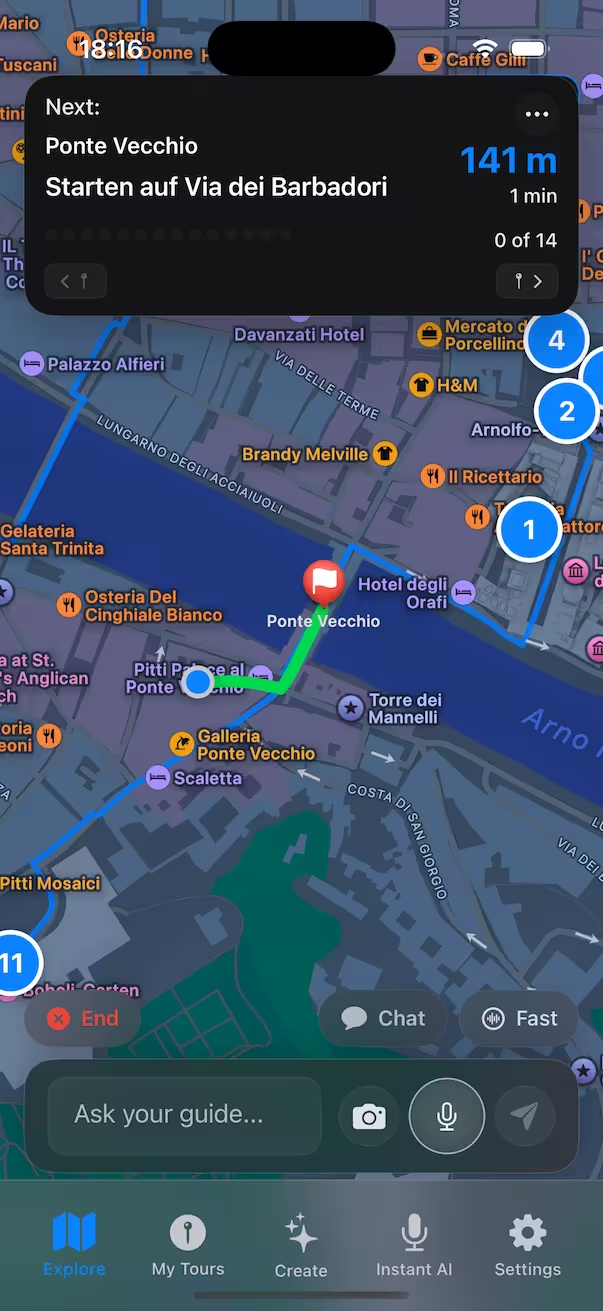
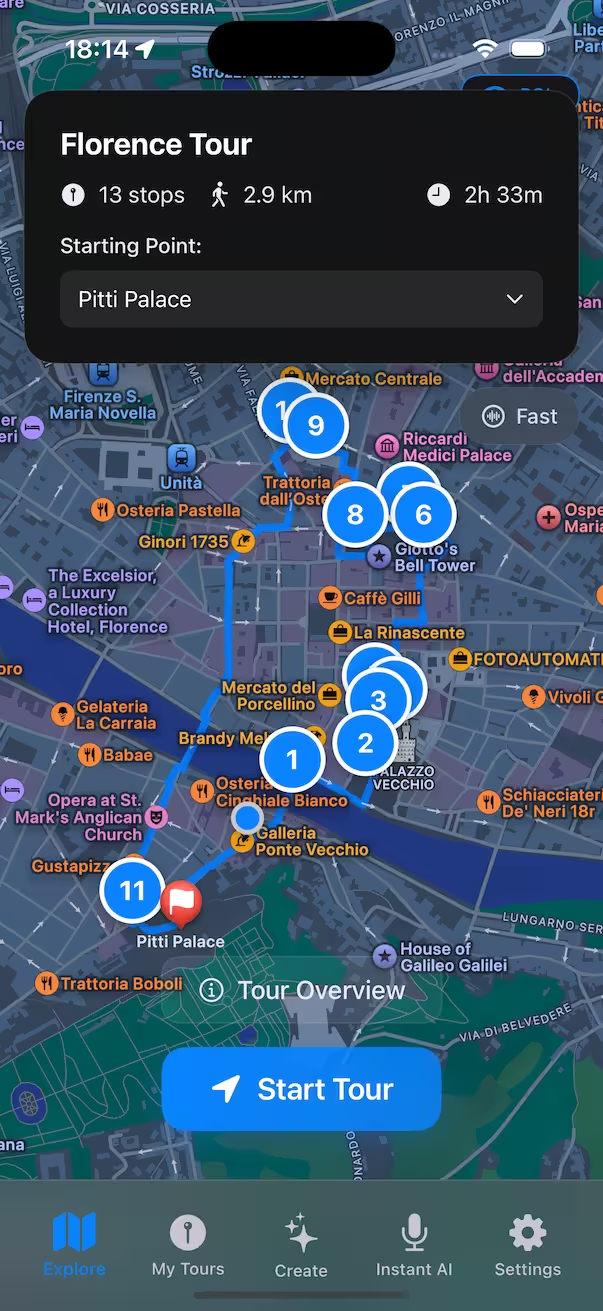
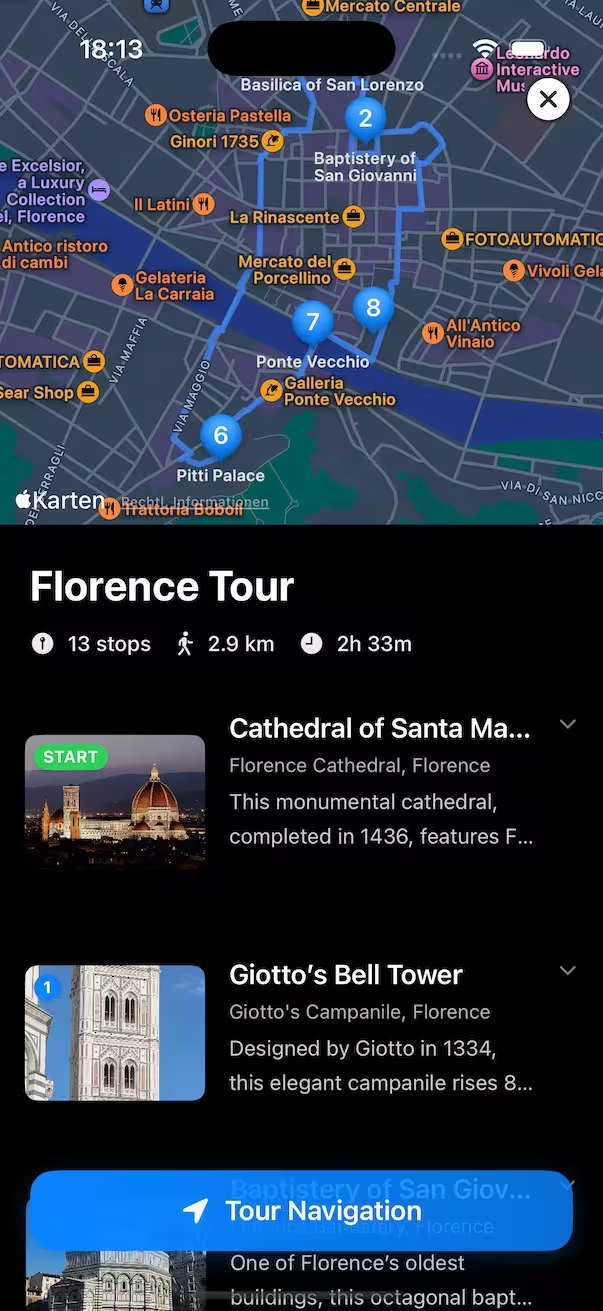
The classic Luxembourg City tour: 14 stops, 5.2 km, about 3 h on foot
Your live AI guide and the self-guided Luxembourg City route, together in your browser.