Best Time to Visit Trier
Month-by-month weather, crowds and prices, plus a full calendar of festivals and events worth planning a trip around.
Best monthsMay, Sep, Jun
CheapestJan, Feb, Nov
AvoidJul
BusiestJul, Aug
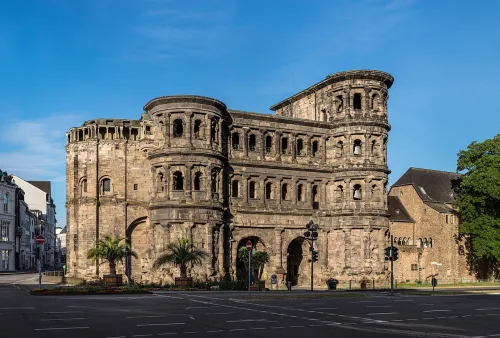
When is the best time to visit Trier?
Come in late May, June or September: mild 18-24°C days, every Roman monument open full hours, and none of July's heat and price peak. The Roman amphitheater concerts and German summer holidays make July the busiest and dearest month, with central hotels at 130-185 € a night. January, February and early November are cheapest and quietest at 65-95 €, the trade being short, cold 2-8°C days. Steer clear of the Heilig-Rock-Tage pilgrimage (17-26 April 2026), when 200,000-plus pilgrims fill every bed within 25 km.
Start our tool and find your best time to visit Trier
Your perfect month
Free · ~30 seconds
or tap a month directly
What matters to you?
And this?
Best overall: May, Sep. Late May (after Whitsun) and September are the real sweet spot: 18-24°C, every Roman site open full hours, the richest year of the UNESCO 40th-anniversary programming, and hotel rates 20-30% below July. May brings vineyard blossom and long days; September stacks the Museum Night and Open Monument Day into mild harvest weather with shoulder-season prices.
Best value: Jan, Feb, Nov. January, February and early November bring hotel rates around 65-95 € a night, half the July peak, no queues anywhere, and free entry to almost every Roman monument. The catch is short, cold 2-8°C days that go dark by 16:30, so build the day around indoor sites like the Rheinisches Landesmuseum and the heated Karl-Marx-Haus.
Avoid: Apr, Jul. The Heilig-Rock-Tage pilgrimage week (17-26 April 2026) is the year's worst value: 200,000-plus pilgrims, hotels sold out within 25 km, and rates spiking. July runs a close second, with the year's highest prices, German summer holidays, and 30-35°C heat in the sheltered Moselle valley. The Altstadtfest weekend (26-28 June) books out every central hotel too.
- January: Good time, 6°C. This is the bare, honest Trier locals keep to themselves: empty Roman sites, no coach groups, and the Altstadt at its slowest. If you can take the cold and the short light, you have the Porta Nigra and the Konstantinbasilika almost to yourself for next to nothing.
- February: Good time, 8°C. Trier in February is unperformed and cheap, with the Roman monuments standing empty in the cold. Apart from the single carnival Monday, the Altstadt stays calm and businesslike, which is exactly the appeal if you want the city without crowds or markup.
- March: Good time, 11°C. March is the last genuinely quiet month before spring fills the city. The cycling paths along the Moselle reopen, the cafés put a few tables back outside, and you still get the Roman sites without a fight. That window closes fast once the April pilgrimage and festivals arrive, so use it.
- April: Good time, 15°C. April is Trier at its most crowded and pricey, bookended by Easter and the rare Holy Robe pilgrimage. If you are not here for the pilgrimage, it is a month to plan carefully or skip: the late-April blossom is lovely, but the beds vanish and the rates jump.
- May: Good time, 18°C. May is the city in full leaf and full swing: every Roman monument open, long days for photography, and the vineyards bright green. It carries the year's highest hotel prices, so for the same weather and fewer euros, the very end of the month after Whitsun is the smarter window.
- June: Good time, 23°C. June is the tipping point into full summer, and the long evenings are the payoff. The gladiators at the amphitheater and a concert under the floodlit Porta Nigra are the month's highlights. It is getting busy, but the worst heat and the highest July prices have not arrived, so it still breathes, except over the Altstadtfest weekend.
- July: Tough month, 25°C. July is hot, busy and concert-focused, with the Porta Nigra at its most crowded. The Roman sites offer little shade, so midday is best avoided: walk before 10:00 or after 17:00, and use the cool Kaiserthermen tunnels as a refuge. When the heat and the cost of a private guide climb, our live AI guide is the always-available, flat-priced alternative, telling you the story of every monument you pass as you walk in the cooler early hours.
- August: Good time, 24°C. August is hot, full-throttle Trier early on, then gradually exhales as German families head home. The trick is the same as July: do the Roman monuments at 09:00-11:00, retreat to the cool Kaiserthermen tunnels at midday, and save the riverbank parks for the afternoon. The late-August Viezfest is the local, low-key counterpoint to the summer rush.
- September: Great time, 21°C. September feels like Trier exhaling: warm enough for long days outdoors, alive with harvest atmosphere and cultural nights, but without August's heat or crowds. This is the month to come if you want everything open, the weather still kind, and the Moselle valley at its first golden turn.
- October: Great time, 16°C. October is the couples' month: golden light on the vineyard slopes, harvest wine in the valley towns, and quiet Roman sites without summer heat or crowds. The Underworlds Festival adds access to Roman cellars and crypts you cannot see the rest of the year. Cool, romantic and easy on the wallet.
- November: Good time, 10°C. November is Trier at its most introverted early on: grey, cold and nearly touristless, but cheap and calm, with the Underworlds Festival as the standout draw. Then the Christmas market arrives in the last week and a half and floods the medieval squares with light, marking the hinge from off-season to festive.
- December: Tough month, 7°C. December trades the autumn calm for festive bustle: lights, Glühwein and crowds in squares framed by the cathedral and the medieval Hauptmarkt. It is genuinely atmospheric, especially the calmer Domfreihof side, but busy at weekends. Go on a weekday late afternoon, and expect the city to fall still over the holidays themselves.
Trier weather by month
HighLowRainfall
Jan6°
Feb8°
Mar11°
Apr15°
May18°
Jun23°
Jul25°
Aug24°
Sep21°
Oct16°
Nov10°
Dec7°
| Month | Temp | Rain | Sun | Crowds | Prices | Highlight |
|---|---|---|---|---|---|---|
| Jan | 6° / 1° | 98mm · 16 rainy days | 3.2 h/day | ●○○○○ | ●○○○○ | |
| Feb | 8° / 2° | 78mm · 13 rainy days | 5.4 h/day | ●○○○○ | ●○○○○ | UNESCO World Heritage 40th Anniversary |
| Mar | 11° / 3° | 77mm · 13 rainy days | 7.6 h/day | ●●○○○ | ●●○○○ | UNESCO World Heritage 40th Anniversary |
| Apr | 15° / 5° | 51mm · 11 rainy days | 10.1 h/day | ●●●○○ | ●●●○○ | UNESCO World Heritage 40th Anniversary |
| May | 18° / 9° | 79mm · 12 rainy days | 11.1 h/day | ●●●●○ | ●●●●○ | UNESCO World Heritage 40th Anniversary |
| Jun | 23° / 14° | 82mm · 11 rainy days | 11.8 h/day | ●●●●○ | ●●●●○ | UNESCO World Heritage 40th Anniversary |
| Jul | 25° / 15° | 74mm · 12 rainy days | 11.9 h/day | ●●●●● | ●●●●● | UNESCO World Heritage 40th Anniversary |
| Aug | 24° / 15° | 76mm · 12 rainy days | 10.7 h/day | ●●●●● | ●●●●○ | UNESCO World Heritage 40th Anniversary |
| Sep | 21° / 12° | 65mm · 9 rainy days | 9.2 h/day | ●●●○○ | ●●●○○ | UNESCO World Heritage 40th Anniversary |
| Oct | 16° / 9° | 81mm · 12 rainy days | 5.9 h/day | ●●○○○ | ●●○○○ | UNESCO World Heritage 40th Anniversary |
| Nov | 10° / 5° | 94mm · 16 rainy days | 4.0 h/day | ●●○○○ | ●●○○○ | UNESCO World Heritage 40th Anniversary |
| Dec | 7° / 3° | 97mm · 17 rainy days | 2.7 h/day | ●●●○○ | ●●●○○ | Trier Christmas Market |
How we score this: weather = long-run climate normals (Open-Meteo), crowds & prices = relative season read, events checked yearly against official dates.
Best time to visit Trier: weather, prices & crowds
Best months for good weather
May, Jun, Sep
Late May, June and September give Trier its most comfortable days: 18-24°C, long daylight (around 16.5 hours at the June solstice) for photographing the Porta Nigra, and none of the punishing 30-35°C the Moselle basin traps in July and August.
Quietest months to avoid the crowds
Jan, Feb, Nov
January, February and the first three weeks of November empty right out. You walk into an uncrowded Porta Nigra at 9 am, have the Konstantinbasilika throne hall almost to yourself, and skip the Luxembourg and Benelux coach groups entirely.
Cheapest time to visit Trier
Jan, Feb, Nov
January, February and early November are the cheapest: 3-star central hotels run 65-95 € a night, roughly half the July peak of 130-185 €. Nearly every Roman UNESCO monument (Porta Nigra exterior, Römerbrücke, Kaiserthermen, Amphitheater) is free year-round, so a winter trip costs very little.
Best time for festivals and events
Oct, Sep
Late September into mid-October is harvest season on the Moselle, when the terraced Riesling slopes between Trier and Cochem turn gold and red. Combine a vineyard cycling day (the valley is 30-60 minutes from the centre) with cellar-door tastings of the new vintage. The foliage peaks around mid-October.
How many days do you need in Trier?
Two days suit Trier well. Germany's oldest city carries an unusual density of Roman monuments within a compact Altstadt, and while one day covers the headline sights, a second lets you take in the full Roman circuit and the riverside without forced marching. Add a third day if you want a Moselle wine-town excursion to Bernkastel-Kues or Cochem.
One day
The Roman core in a single circuit
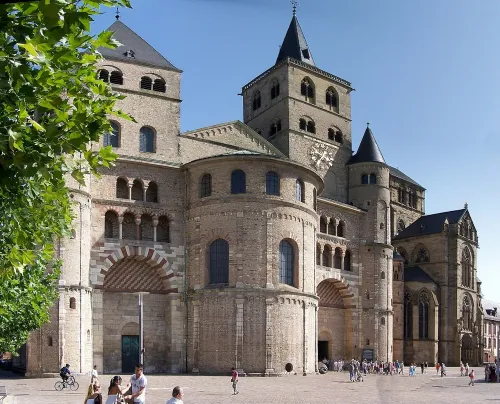
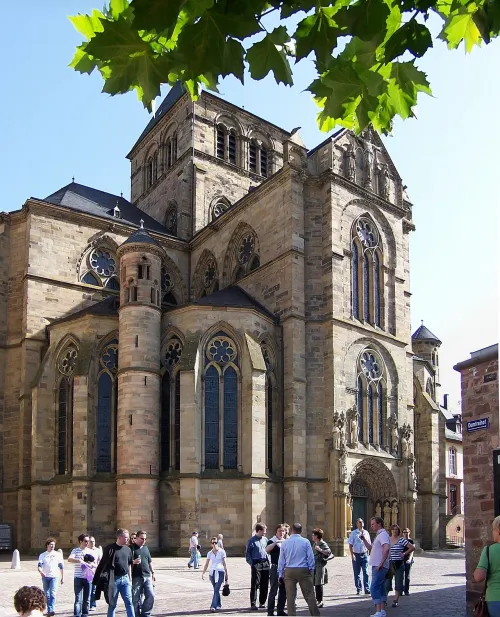
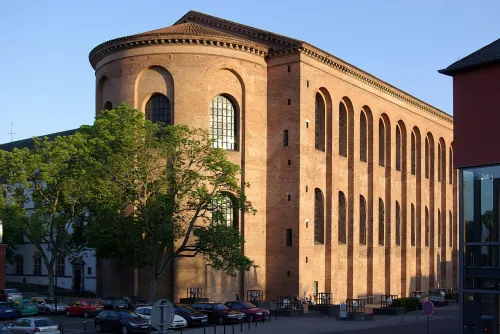
Start at the Porta Nigra, Trier's great blackened gate and the best-preserved Roman city gate north of the Alps, then walk south to the Trierer Dom and the Gothic Liebfrauenkirche. Cross to the vast Konstantinbasilika throne hall and the Kurfürstliches Palais gardens before finishing on the Hauptmarkt. The self-guided Trier walking tour links all 10 stops across 6.1 km in about 2.8 hours, so the central monuments fall into one logical line.
Two daysRecommended
Outlying Roman sites and the Moselle bank
Reserve the second day for the sites that sit beyond the immediate centre. The Amphitheater is 1.3 km uphill from the Dom, about 20 minutes on foot, and the ruined Kaiserthermen imperial baths are on the way back. The ancient Römerbrücke with its original 2nd-century piers crosses the Moselle at the western edge of the Altstadt, and Karl-Marx-Haus rounds out the history loop. Evening: a riverside table in Trier-Zurlauben for Moselle Riesling and grilled fish.
Three days
Moselle harvest country and the Igeler Säule
Use day three for the Moselle valley. The Igeler Säule, Germany's best-preserved Roman funerary column, stands 6 km south-east on the B49 and is reachable by regional bus: free to visit and overlooked by almost everyone who stays in the centre. From there, a cycling day along the terraced Riesling slopes toward Bernkastel-Kues covers some of the finest scenery in the valley, with cellar-door tastings at harvest time.
Four days or more
Deep Moselle and the regional circuit
A fourth day opens up the wider Moselle arc: Cochem with its clifftop Reichsburg castle is 50 km upriver and reachable by train or bike path, while Luxembourg City is just 50 km south-west and connects directly by train in 50 minutes. Culture-focused visitors can extend into the Rheinisches Landesmuseum's Roman mosaic and gold-coin collections, the Stadtmuseum Simeonstift and a Trier Underworlds cellar tour, all within the city.
Best time to visit Trier by traveller type
Same city, different trip. Here's the month that fits how you're travelling.
🧭
Best time to visit Trier for the first time
MayJun
Late May or early June (skip the Altstadtfest weekend for pricing): all Roman sites open full hours, comfortable 18-24°C, long daylight for photography, and the UNESCO anniversary programme at its fullest. Early June, after the Whitsun weekend, balances good weather against rates that have not yet hit the July peak.
❤️
Best time to visit Trier for couples
SepOct
September into October for golden Moselle harvest light, vineyard-road cycling on the slate slopes, regional Riesling at new-vintage prices, and quiet museums. Hotel rates run 25-35% below the July peak, and the Museum Night (5 September) plus Open Monument Day (13 September) add atmosphere without crowds.
💶
Best time to visit Trier on a budget
JanFebNov
January to March or early November (before the Christmas market): hotels 65-95 € a night versus 130-185 € in July, and nearly every Roman UNESCO monument free. Only Karl-Marx-Haus (7 €), the Rheinisches Landesmuseum (10 €) and the Stadtmuseum Simeonstift (5.50 €) charge. The Altstadt is quiet, cold and fully open, with no winter closures.
🍝
Best time to visit Trier for food and wine
OctJul
October for Moselle harvest season, when cellar doors open for tastings and restaurants turn to game (Rehrücken, Wildschwein) and the new Riesling vintage. For an in-city event, the Olewiger Weinfest (31 July to 2 August) is the most authentic, with neighbourhood winemakers pouring their own bottles at 3-5 € a glass, and the Viezfest (22 August) introduces the regional cider tradition.
Worst time to visit Trier
July is the hardest month for a comfortable, affordable visit. The sheltered Moselle basin traps heat and regularly hits 30 to 35°C, making midday walks among the Roman sites genuinely uncomfortable, while German school holidays and the amphitheater open-air concert series (mid to late July) push hotel rates to 130 to 185 euros a night, the year's peak. The Heilig-Rock-Tage pilgrimage, held only every five to seven years, compounds the problem: when it falls in late April, 200,000-plus pilgrims fill every bed within 25 km for ten days, and non-pilgrims find nothing within easy reach. The Altstadtfest weekend at the end of June books out every central hotel too.
Still worth it for July still works if the amphitheater concerts are your reason for coming: Katie Melua and similar acts in a 2,000-year-old Roman venue are genuinely unforgettable. Walk before 10:00 and after 17:00, use the cool Kaiserthermen tunnels as a midday refuge, and book accommodation in Konz or Schweich, ten minutes by train, at 30 to 40% less than city-centre rates.
Go instead in May, September, June, when Trier is at its best.
Best time for a tour of Trier
The sweet spot for walking Trier is May, June, and September. May brings highs around 18 °C with eleven rain days and thinner crowds, which matters enormously on a route that takes you across open plazas and through stone-walled interiors: the Porta Nigra is a different experience when you can stand in front of it without pressing against tour groups. June lifts temperatures to 23 °C with equally manageable rainfall and long evenings that stretch the usable walking day well past dinner. July and August push to nearly 25 °C and draw heavy visitor numbers, especially at the Kaiserthermen and Amphitheater, where the sun-baked ruins offer almost no shade during midday hours. September drops back to a comfortable 20 °C, rain days fall to just nine for the month, and the vineyard colour on the hills above the Römerbrücke begins to turn, making it arguably the most visually rewarding time on the whole 6-kilometre loop. Winter is a different proposition: January sits at barely 5 to 6 °C with sixteen rain days, and by late afternoon the light is gone, so the route feels half as long as it is in the wrong sense.
The advantage of AI Tourguide here is that you set your own clock. On a warm August morning, you can start your Trier tour at seven when the Hauptmarkt is near-empty and the stone of the Porta Nigra still holds the cool of the night, and pace yourself to finish before the heat builds. On a May afternoon you can linger at the Trierer Dom as long as the guide's story keeps you there, then extend into the evening without any operator's departure time pulling you away. The guide runs entirely in your browser, no download required, and leads the walk with real conversation: it tells you something concrete at each stop, asks you questions, and remembers your answers to shape what comes next.

 +6
+6All 10 stops are already on the map.
You just press start.
You just press start.
 AI Tourguide
You just read the route.
Now walk it with a guide in your ear.
Press start wherever you are, even hundreds of kilometres from Trier, and the guide begins telling its stories right away. In the city, pick any of the 10 stops to start from: it leads you there, then talks with you the whole route, asking, listening, remembering, and shaping the tour around your answers.
10stops6.1km2.8hours11languages
▶Start the tour freeFree to start · Runs in your browser · No app, no download
Trier events and festivals calendar
Annual highlights worth timing a trip around, listed month by month.
February
🎨 Art and cultureUNESCO World Heritage 40th Anniversary 40 Jahre UNESCO-Welterbe Trier
Feb 27 – Nov 29
year-long programme, anchor exhibition late February to late November
Trier marks 40 years as a UNESCO World Heritage Site (designated 1986) with a year-long programme of exhibitions, guided tours and lectures across its museums.
April
⛪ ReligiousHoly Robe Days Heilig-Rock-Tage
Apr 17–26 ~
ten days in late April, held only every several years
The seamless robe of Jesus is displayed in Trier Cathedral for ten days, drawing hundreds of thousands of pilgrims from across Europe with a special religious programme at the Dom.
May
🎵 MusicInternational Organ Days Internationale Orgeltage Trier
May 12 – Jun 16 ~
Tuesday evenings, mid-May to mid-June
Weekly Tuesday-evening recitals on the cathedral organs, with performers from across Europe.
June
🌸 Seasonal natureRoman Life: Gladiators Römer-Leben: Gladiatoren
Jun 6–7 ~
a weekend in early June
The Gladiator School Trier stages mock battles and educational demonstrations at the 2,000-year-old amphitheater, with shows at 12:00, 14:00 and 16:00.
🎵 MusicPorta³ Music Festival Porta³
Jun 18–20 ~
a weekend in mid-to-late June
An open-air music festival staged at or beside the Porta Nigra, with a rotating annual line-up of European and German acts.
🎉 FestivalOld Town Festival Trierer Altstadtfest
Jun 26–28 ~
the last weekend of June
Trier's biggest street party: around 100,000 visitors over three days on the festival mile between the Porta Nigra and the Viehmarktplatz, with five main stages of jazz, swing, rock and pop, plus over 100 food and wine stalls.
July
🌸 Seasonal natureRoman Life: Cavalry Römer-Leben: Kavallerie
Jul 4–5 ~
a weekend in early July
Roman cavalry demonstrations at the Kaiserthermen archaeological park, part of the 40 Years UNESCO anniversary series.
🎉 FestivalZurlauben Riverside Festival Zurlaubener Heimatfest
Jul 10–12 ~
the second weekend of July
The historic Zurlauben fishermen's quarter on the Moselle bank hosts a local folk festival of wine, food and live music in a direct riverside setting.
🎵 MusicAmphitheater Open-Air Concerts Amphitheater Open Air Trier
Jul 16–26
an eleven-day run in mid-to-late July
Major pop and rock concerts in the 2,000-year-old Roman amphitheater (around 4,500 seats), with a rotating line-up of international and German acts each summer.
🍷 Food and wineOlewig Wine Festival Olewiger Weinfest
Jul 31 – Aug 2 ~
the last weekend of July into the first of August
An authentic street wine festival in Trier-Olewig, the city's own wine suburb 2 km south-east of the centre, where local Riesling and Spätburgunder are poured directly by the winemakers in a village-square atmosphere.
August
🌸 Seasonal natureRoman Life: Food & Drink Römer-Leben: Essen & Trinken
Aug 1–2 ~
the first weekend of August
A Roman culinary-culture demonstration at the Imperial Baths, part of the 40 Years UNESCO anniversary series.
🍷 Food and wineViez Cider Festival Viezfest Trier
Aug 22 ~
a single day in late August
Trier's cider festival on the cathedral forecourt, where local producers pour Viez, the Moselle valley's regional fermented apple drink.
September
🌙 Museum nightTrier Museum Night Trierer Museumsnacht
Sep 5
the first Saturday of September
All the major museums open until midnight or later: the Stadtmuseum Simeonstift, the Rheinisches Landesmuseum, Karl-Marx-Haus, the Dom Treasury and the Museum am Dom, with shuttle buses between venues and special evening programmes on a single wristband (around 12 €).
🎨 Art and cultureOpen Monument Day Tag des offenen Denkmals
Sep 13 ~
the second Sunday of September
Sites normally closed or fee-charging open free of charge.
October
🎨 Art and cultureTrier Underworlds Festival Trierer Unterwelten Festival
Oct 29 – Nov 21 ~
late October to late November, Long Night on 14 November
A multi-week culture festival in Trier's underground spaces: Roman cellars, crypts and the Simeonstift cloister host themed tours, theatre, music and installations, culminating in a Long Night on 14 November.
November
🎄 Christmas marketTrier Christmas Market Trierer Weihnachtsmarkt
Nov 20 – Dec 22
late November to 22 December, closed on Totensonntag (22 November)
Around 95 wooden stalls on the Hauptmarkt and Domfreihof, framed by the medieval square and the cathedral, with an animated Weihnachtskrippe nativity.
Insider tips for visiting Trier
The rules buried in forums, in one place.
- Avoid the Porta Nigra interior between 11:00 and 14:00 on weekends from May to September: coach tours from Luxembourg, Belgium and the Netherlands arrive in exactly that window. Come at 09:00 for an empty monument and warmer light on the sandstone. The exterior gate is free and never crowded, walkable around the clock.
- The Konstantinbasilika, the largest surviving single-room Roman building, has a hard midday closure from 12:00 to 14:00, and it is shut Mondays. Visitors turn up at 12:05 to find locked doors. Plan arrival for 10:00-11:45 or after 14:00, Tuesday to Saturday.
- Karl-Marx-Haus closes for 30 minutes at lunch (13:00-13:30) every day, so do not arrive at 13:00. Visit Tuesday to Friday morning: the ground-floor exhibition of original documents gets crowded with school groups and political-tourism visitors on weekend afternoons, and the rooms are small.
- Amphitheater open-air concert tickets (16-26 July 2026, around 4,500 seats) sell out four to eight weeks ahead and drive the city's main summer price spike. For a cheaper bed on a concert night, book a guesthouse in Trier-Olewig village (15-minute walk, though concert noise travels) or in Konz or Schweich, ten minutes by train and often 30-40% cheaper.
- At the Trier Christmas Market (20 November to 22 December), head to the Domfreihof on the cathedral side first: it is the calmer, more atmospheric half, while most visitors funnel onto the Hauptmarkt and miss it. Weekday late afternoons (16:00-19:00) are quietest; the Saturday of the second Advent weekend is the single busiest day.
- The Museum Night wristband (5 September, around 12 €) covers 8-10 venues until past midnight, the cheapest way to combine the Rheinisches Landesmuseum (normally 10 €), the Stadtmuseum Simeonstift (5.50 €) and Karl-Marx-Haus (7 €) in one evening. The full walk between them is under a kilometre.
- In July and August the Moselle basin regularly hits 30-35°C and traps heat more than nearby cities, so walking the Roman sites between 11:00 and 15:00 is genuinely uncomfortable. Walk before 10:00 and after 17:00, and duck into the underground tunnels of the Kaiserthermen, which run 5-8°C cooler, when the midday sun bites.
- The Igeler Säule, Germany's best-preserved Roman funerary column, sits 6 km south-east on the B49 and is missed by nearly everyone who stays in the centre. It is free to view and reachable by regional bus, and the UNESCO anniversary adds dedicated guided tours on 20 March and 7 June. Pair it with a Moselle cycling excursion.
Public holidays in Trier
On these dates many shops and offices close, transport thins out, and sights can be mobbed or shut. Plan around them.
| Date | Holiday | What closes |
|---|---|---|
| Jan 1 | New Year's Day | Almost everything is shut: shops, offices and most restaurants. The Porta Nigra exterior is visible but there is no interior entry. A quiet, slow day across the Altstadt. |
| Apr 3 | Good Friday | Public holiday in Rhineland-Palatinate: most shops shut, museums generally open, some restaurants open. A still, observed atmosphere, especially around the Dom. |
| Apr 5 | Easter Sunday | Public holiday with extra cathedral services. The Roman sites are very busy with domestic visitors, and most shops are shut. Expect queues at the Porta Nigra. |
| Apr 6 | Easter Monday | Public holiday and a heavy domestic visitor day. Plan for queues at the Porta Nigra and the cathedral; shops are closed but outdoor Roman sites stay open. |
| May 1 | Labour Day | Public holiday: many shops shut, outdoor sites open, moderate crowds. A relaxed day for walking the Roman monuments and the riverbank. |
| May 14 | Ascension Day | Public holiday (39 days after Easter) and a popular bridge day, so the city sees a long-weekend spike of domestic day-trippers. Shops closed. |
| May 25 | Whit Monday | Public holiday and the second busy late-spring long weekend. Shops closed; Roman sites and the Dom open and busier than a normal Monday. |
| Jun 3 | Corpus Christi | Public holiday in Rhineland-Palatinate, with a procession through the Altstadt and some road closures near the Dom. Most shops are shut. |
| Oct 3 | German Unity Day | National public holiday: museums generally open, shops shut, moderate crowds. A good day for indoor sites as the autumn weather cools. |
| Nov 1 | All Saints' Day | Public holiday in Rhineland-Palatinate: churches and cemeteries are busy, and most shops are shut. A quiet, reflective day in the city. |
| Dec 25 | Christmas Day | Everything is shut; only hotel restaurants serve their guests. The Christmas market has already closed (22 December). A still day across the Altstadt. |
| Dec 26 | Boxing Day | Public holiday: most shops shut, with cathedral services. The week after Christmas is noticeably quieter than the market weeks, and hotel rates ease. |
Trier month by month
January in Trier
High6°C / 42°F
Low1°C
Rain98mm / 16 rainy days
Sun3.2 h/day
Daylight9 h/day
Humidity89%
Crowds●○○○○Prices●○○○○
January is Trier's quietest and cheapest month, with cold 2-8°C days that go dark by 16:30 and only domestic day-trippers about. Nearly every Roman UNESCO monument is free and fully open, with no winter closures, so the cost of a visit is genuinely low. The UNESCO 40th-anniversary programme builds, and the Simeonstift anniversary LEGO exhibition opens on 25 January for younger families.
The vibe This is the bare, honest Trier locals keep to themselves: empty Roman sites, no coach groups, and the Altstadt at its slowest. If you can take the cold and the short light, you have the Porta Nigra and the Konstantinbasilika almost to yourself for next to nothing.
Don't miss A perfect month for the indoor heavyweights: the Rheinisches Landesmuseum with its Roman mosaics and gold coins, and the heated Karl-Marx-Haus. Walk into the Porta Nigra at 9 am with no queue, and catch the new LEGO show at the Stadtmuseum Simeonstift from 25 January.
Crowd drivers Deep off-season with no major events; only domestic day-trippers. The opening of the anniversary LEGO exhibition on 25 January adds a small family draw.
In season Cold-weather Moselle wine-tavern season: hearty regional cooking and warming Riesling indoors, with the cathedral-square Glühwein stands long gone after the market closed in December.
Heads up New Year's Day (1 January) shuts almost everything, with no Porta Nigra interior entry. Year-round, the Rheinisches Landesmuseum, the Stadtmuseum Simeonstift and the Konstantinbasilika are closed Mondays.
The annual price floor: 3-star central hotels run 65-90 € a night, roughly half the July peak.
February in Trier
High8°C / 46°F
Low2°C
Rain78mm / 13 rainy days
Sun5.4 h/day
Daylight10 h/day
Humidity82%
Crowds●○○○○Prices●○○○○
February stays deep in the off-season, cold and quiet, with the best hotel value of the year. The main event is the moveable Rosenmontag carnival, which brings one very busy Monday (typically late February or early March) before the city falls quiet again. The UNESCO anniversary adds a light installation in the Konstantinbasilika, and the big Roman Times XXL exhibition opens on 27 February.
The vibe Trier in February is unperformed and cheap, with the Roman monuments standing empty in the cold. Apart from the single carnival Monday, the Altstadt stays calm and businesslike, which is exactly the appeal if you want the city without crowds or markup.
Don't miss Catch the UNESCO light installation in the 1,700-year-old Konstantinbasilika, and the Roman Times XXL anniversary exhibition opening on 27 February. The Dom and its Treasury make a fine cold-day pairing, and the museums stay uncrowded throughout.
Crowd drivers Off-season continues with international visitors near zero. Rosenmontag (moveable, often late February) packs the centre for one day, then the quiet returns.
In season Carnival-week Krapfen and Berliner doughnuts appear in the bakeries around Rosenmontag; otherwise it is hearty Moselle tavern fare and Riesling indoors.
Heads up The Rheinisches Landesmuseum, the Stadtmuseum Simeonstift and the Konstantinbasilika are closed Mondays year-round. The Konstantinbasilika also shuts daily from 12:00 to 14:00, so do not arrive at noon.
Still at the annual floor alongside January: 65-95 € a night for a 3-star central hotel.
March in Trier
High11°C / 52°F
Low3°C
Rain77mm / 13 rainy days
Sun7.6 h/day
Daylight12 h/day
Humidity77%
Crowds●●○○○Prices●●○○○
March brings the first signs of spring, with the Moselle valley cycling season starting and the terraced Riesling slopes greening up. It is quieter mid-month, with the Rheinland-Pfalz spring school holidays (often late March) adding some demand. Days lengthen and the worst of the winter grey lifts, though it stays cool and changeable.
The vibe March is the last genuinely quiet month before spring fills the city. The cycling paths along the Moselle reopen, the cafés put a few tables back outside, and you still get the Roman sites without a fight. That window closes fast once the April pilgrimage and festivals arrive, so use it.
Don't miss The first vineyard cycling days along the Moselle, with spring-green Riesling terraces on the slate slopes. The UNESCO anniversary adds a dedicated Igel Column guided tour on 20 March, a Roman highlight most visitors miss.
Crowd drivers The Rheinland-Pfalz spring school holidays (often late March) bring some domestic families, but the city stays well short of peak. The Moselle cycling season is just beginning.
In season The new-season Moselle Riesling starts appearing on wine-tavern lists, and the riverside restaurants begin to reopen their terraces on the milder days.
Heads up Mondays still close the Rheinisches Landesmuseum, the Stadtmuseum Simeonstift and the Konstantinbasilika. Karl-Marx-Haus shuts for 30 minutes at lunch (13:00-13:30) every day.
Prices recover gently to 75-110 €; the spring school holidays can lift the late-month rate.
April in Trier
High15°C / 59°F
Low5°C
Rain51mm / 11 rainy days
Sun10.1 h/day
Daylight14 h/day
Humidity71%
Crowds●●●○○Prices●●●○○
April is busy and uneven. The moveable Easter weekend (3-6 April 2026) drives a hotel spike, and the Heilig-Rock-Tage pilgrimage (17-26 April) brings 200,000-plus pilgrims who fill every bed within 25 km. Between the two, vineyard and park blossom arrives in late April, and the State Art Exhibition opens. The Palastgarten and Moselle-bank parks come alive with chestnut and lime blossom.
The vibe April is Trier at its most crowded and pricey, bookended by Easter and the rare Holy Robe pilgrimage. If you are not here for the pilgrimage, it is a month to plan carefully or skip: the late-April blossom is lovely, but the beds vanish and the rates jump.
Don't miss Late-April vineyard blossom on the Olewig slopes and chestnut and lime blossom in the Palastgarten. If you come during the Holy Robe Days, the seamless robe of Jesus is on rare display in the Dom, a relic shown only every five to seven years.
Crowd drivers The Easter weekend (3-6 April) and the Heilig-Rock-Tage pilgrimage (17-26 April) are the dominant drivers, the latter selling out hotels within 25 km. The State Art Exhibition opens late in the month.
In season Spring asparagus (Spargel) reaches Trier's menus, served with new potatoes and regional ham, while the wine taverns pour the fresh Moselle Riesling vintage.
Heads up Good Friday (3 April) and Easter Monday (6 April) shut most shops, though museums generally open. The Konstantinbasilika keeps its 12:00-14:00 daily closure and is shut Mondays.
Rates climb to 90-140 €, up around 30% over the Easter weekend, and 100-150 € during the pilgrimage week.
Events this month
⛪ ReligiousHoly Robe Days Heilig-Rock-Tage
Apr 17–26 ~
ten days in late April, held only every several years
The seamless robe of Jesus is displayed in Trier Cathedral for ten days, drawing hundreds of thousands of pilgrims from across Europe with a special religious programme at the Dom. The relic is shown only rarely, every five to seven years.
Genuinely historic if you come for the pilgrimage, but it floods the city: book hotels months ahead for this week, or avoid it entirely. Beds sell out within 25 km, so non-pilgrims may prefer to day-trip from Luxembourg City, 30 minutes by train.
🎨 Art and cultureUNESCO World Heritage 40th Anniversary 40 Jahre UNESCO-Welterbe Trier
Feb 27 – Nov 29
year-long programme, anchor exhibition late February to late November
Trier marks 40 years as a UNESCO World Heritage Site (designated 1986) with a year-long programme of exhibitions, guided tours and lectures across its museums. The Roman Times XXL anniversary exhibition runs 27 February to 29 November at multiple sites, with anchor events on UNESCO Day (7 June) and the designation day (28 November).
A once-in-a-generation anniversary: richer programming across every museum than any normal year, making the anniversary period an unusually rewarding time to come for the Roman heritage.

May in Trier
High18°C / 65°F
Low9°C
Rain79mm / 12 rainy days
Sun11.1 h/day
Daylight15 h/day
Humidity72%
Crowds●●●●○Prices●●●●○
May is one of Trier's two sweet spots and historically its peak month for pricing. Comfortable 18-24°C, full daylight and the Moselle cycling season at its height. May Day, Ascension and Whitsun long weekends (all moveable) drive domestic spikes, and German, Dutch and Belgian spring holidays fill the Roman sites. The International Organ Days begin in the Dom on 12 May.
The vibe May is the city in full leaf and full swing: every Roman monument open, long days for photography, and the vineyards bright green. It carries the year's highest hotel prices, so for the same weather and fewer euros, the very end of the month after Whitsun is the smarter window.
Don't miss Vineyard cycling on the bright-green Riesling terraces, long-evening walks along the Moselle, and Tuesday-evening organ recitals in the cathedral from 12 May. The full UNESCO anniversary programme is running across every museum.
Crowd drivers May Day, Ascension (14 May) and Whitsun (24-25 May) long weekends, plus German, Dutch and Belgian spring holidays and the peak Moselle cycling season, push this to the year's price high.
In season Peak Moselle asparagus season pairs with the region's crisp Riesling, and the riverside terraces are fully open for long, light dinners until past 21:00.
The year's highest rates begin: 120-175 € a night, with weekend rates of 140-190 € around the long-weekend holidays.
Events this month
🎵 MusicInternational Organ Days Internationale Orgeltage Trier
May 12 – Jun 16 ~
Tuesday evenings, mid-May to mid-June
Weekly Tuesday-evening recitals on the cathedral organs, with performers from across Europe. The Dom has one of the most acoustically significant organ spaces in the Rhineland, and tickets are low-cost.
World-class acoustics with no tourist crowds, and seats are usually still available in the week of each recital. A quiet, atmospheric evening inside the UNESCO cathedral.
🎨 Art and cultureUNESCO World Heritage 40th Anniversary 40 Jahre UNESCO-Welterbe Trier
Feb 27 – Nov 29
year-long programme, anchor exhibition late February to late November
Trier marks 40 years as a UNESCO World Heritage Site (designated 1986) with a year-long programme of exhibitions, guided tours and lectures across its museums. The Roman Times XXL anniversary exhibition runs 27 February to 29 November at multiple sites, with anchor events on UNESCO Day (7 June) and the designation day (28 November).
A once-in-a-generation anniversary: richer programming across every museum than any normal year, making the anniversary period an unusually rewarding time to come for the Roman heritage.
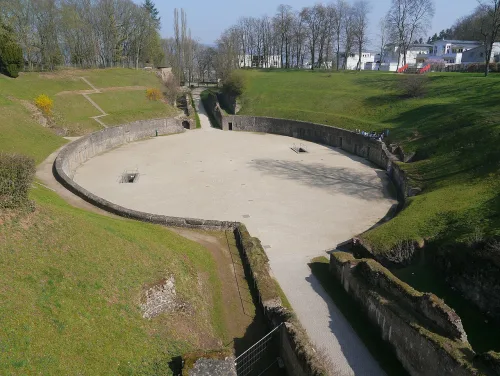
June in Trier
High23°C / 74°F
Low14°C
Rain82mm / 11 rainy days
Sun11.8 h/day
Daylight16 h/day
Humidity69%
Crowds●●●●○Prices●●●●○
June opens the Trier summer, with the longest days of the year (around 16.5 hours of light) and German school holidays beginning mid-month in some states. It is a packed events month: the Römer-Leben gladiator weekend (6-7 June), the Porta³ festival at the Porta Nigra (18-20 June) and the Altstadtfest (26-28 June), which fills every central hotel. Warm but not yet at July's heat.
The vibe June is the tipping point into full summer, and the long evenings are the payoff. The gladiators at the amphitheater and a concert under the floodlit Porta Nigra are the month's highlights. It is getting busy, but the worst heat and the highest July prices have not arrived, so it still breathes, except over the Altstadtfest weekend.
Don't miss The free Römer-Leben gladiator demonstrations at the amphitheater (6-7 June, shows at 12:00, 14:00 and 16:00), Meute and Christian Steiffen at the intimate Porta³ festival against the Roman gate, and the 100-stall Altstadtfest street party along the festival mile.
Crowd drivers German school holidays begin mid-month in some states, and the Altstadtfest (26-28 June) brings around 100,000 visitors over its final weekend, filling central hotels. The Römer-Leben gladiators and the Porta³ festival add to demand.
In season Early stone fruit and the first long-evening riverside grilling and aperitivo season, with 100-plus food and wine stalls during the Altstadtfest at month's end.
Heads up Corpus Christi (3 June) is a public holiday in Rhineland-Palatinate, with a procession through the Altstadt and some road closures near the Dom; most shops are shut.
Busy summer pricing at 110-160 €, climbing to 150-200 € over the Altstadtfest weekend (26-28 June).
Events this month
🌸 Seasonal natureRoman Life: Gladiators Römer-Leben: Gladiatoren
Jun 6–7 ~
a weekend in early June
The Gladiator School Trier stages mock battles and educational demonstrations at the 2,000-year-old amphitheater, with shows at 12:00, 14:00 and 16:00. Entry is free with the amphitheater ticket.
The best experiential Roman history the city offers, and explicitly family-designed with no gore. The amphitheater plus live gladiators is the Trier-in-a-nutshell moment, so families and history fans should plan the trip around this weekend.
🎵 MusicPorta³ Music Festival Porta³
Jun 18–20 ~
a weekend in mid-to-late June
An open-air music festival staged at or beside the Porta Nigra, with a rotating annual line-up of European and German acts. The intimate setting plays out against the floodlit UNESCO Roman gate.
A smaller, hipper alternative to the big amphitheater shows. The Porta Nigra as a stage backdrop is one of the most dramatic settings in German live music.
🎉 FestivalOld Town Festival Trierer Altstadtfest
Jun 26–28 ~
the last weekend of June
Trier's biggest street party: around 100,000 visitors over three days on the festival mile between the Porta Nigra and the Viehmarktplatz, with five main stages of jazz, swing, rock and pop, plus over 100 food and wine stalls.
Wonderful for atmosphere, but hotels within walking distance book out months in advance and rates jump. Avoid this weekend if you need quiet or a budget bed.
🎨 Art and cultureUNESCO World Heritage 40th Anniversary 40 Jahre UNESCO-Welterbe Trier
Feb 27 – Nov 29
year-long programme, anchor exhibition late February to late November
Trier marks 40 years as a UNESCO World Heritage Site (designated 1986) with a year-long programme of exhibitions, guided tours and lectures across its museums. The Roman Times XXL anniversary exhibition runs 27 February to 29 November at multiple sites, with anchor events on UNESCO Day (7 June) and the designation day (28 November).
A once-in-a-generation anniversary: richer programming across every museum than any normal year, making the anniversary period an unusually rewarding time to come for the Roman heritage.

July in Trier
High25°C / 76°F
Low15°C
Rain74mm / 12 rainy days
Sun11.9 h/day
Daylight16 h/day
Humidity67%
Crowds●●●●●Prices●●●●●
July is hot, busy and concert-focused, with the Porta Nigra at its most crowded. The Roman sites offer little shade, so midday is best avoided: walk before 10:00 or after 17:00, and use the cool Kaiserthermen tunnels as a refuge. The amphitheater concert series draws visitors from across Germany and the Benelux, and prices reflect it.
The vibe July is hot, busy and concert-focused, with the Porta Nigra at its most crowded. The Roman sites offer little shade, so midday is best avoided: walk before 10:00 or after 17:00, and use the cool Kaiserthermen tunnels as a refuge. When the heat and the cost of a private guide climb, our live AI guide is the always-available, flat-priced alternative, telling you the story of every monument you pass as you walk in the cooler early hours.
Don't miss Major pop and rock acts in the 2,000-year-old amphitheater, including Katie Melua (18 July) and Feine Sahne Fischfilet (23 July). The Zurlaubener Heimatfest brings Moselle riverside folk life, and the Roman cavalry weekend (4-5 July) plays out at the Kaiserthermen.
Crowd drivers German summer school holidays (most states) plus the Dutch and Belgian peak bring the maximum visitor flow at the Porta Nigra. The amphitheater concert series (16-26 July) is the main price spike, with rooms up sharply on concert nights.
In season The Olewiger Weinfest opens on 31 July in the wine suburb, with neighbourhood winemakers pouring their own Riesling at 3-5 € a glass, far more authentic than the central tourist stands.
Heads up Many central Trier restaurants take a two-week summer break, often the first half of August, so check individual places ahead. The amphitheater interior, like the Porta Nigra, closes at 18:00.
The year's most expensive month: 130-185 € a night, rising to 170-220 € on amphitheater concert weekends.
Events this month
🌸 Seasonal natureRoman Life: Cavalry Römer-Leben: Kavallerie
Jul 4–5 ~
a weekend in early July
Roman cavalry demonstrations at the Kaiserthermen archaeological park, part of the 40 Years UNESCO anniversary series. Free with site entry.
A follow-on for repeat visitors or anyone who misses the June gladiator weekend, set among the towering brick walls of the Imperial Baths.
🎉 FestivalZurlauben Riverside Festival Zurlaubener Heimatfest
Jul 10–12 ~
the second weekend of July
The historic Zurlauben fishermen's quarter on the Moselle bank hosts a local folk festival of wine, food and live music in a direct riverside setting.
The best way to feel Moselle river life and the quieter local side of Trier, well off the main tourist trail.
🎵 MusicAmphitheater Open-Air Concerts Amphitheater Open Air Trier
Jul 16–26
an eleven-day run in mid-to-late July
Major pop and rock concerts in the 2,000-year-old Roman amphitheater (around 4,500 seats), with a rotating line-up of international and German acts each summer. The venue's ancient stone walls and open sky make it one of the most atmospheric concert settings in Germany.
An unforgettable venue for live music, and the city's main summer price spike. Tickets sell out weeks ahead, so buy on release, and expect concert noise in the Olewig neighbourhood if you stay nearby.
🍷 Food and wineOlewig Wine Festival Olewiger Weinfest
Jul 31 – Aug 2 ~
the last weekend of July into the first of August
An authentic street wine festival in Trier-Olewig, the city's own wine suburb 2 km south-east of the centre, where local Riesling and Spätburgunder are poured directly by the winemakers in a village-square atmosphere. Free entry.
The most authentic Trier wine experience: neighbourhood producers, not commercial stands, at 3-5 € a glass versus 6-9 € downtown. Olewig is a 25-minute walk or a ten-minute bus on line 6, and it pairs neatly with an amphitheater concert the same week.
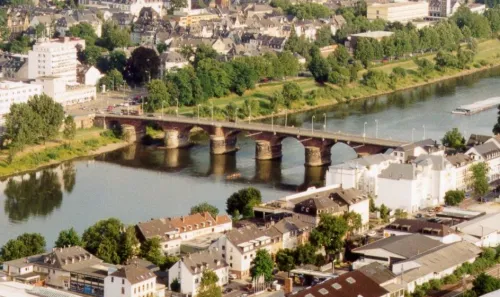
August in Trier
High24°C / 75°F
Low15°C
Rain76mm / 12 rainy days
Sun10.7 h/day
Daylight14 h/day
Humidity71%
Crowds●●●●●Prices●●●●○
August stays busy as school holidays run into early September, though crowds thin slightly after mid-month. The heat can be punishing, with 30-35°C in the valley basin and little shade at the Roman sites. The Olewiger Weinfest wraps on 2 August, the Römer-Leben food weekend runs the same dates, and the local Viezfest cider festival lands on 22 August on the cathedral forecourt.
The vibe August is hot, full-throttle Trier early on, then gradually exhales as German families head home. The trick is the same as July: do the Roman monuments at 09:00-11:00, retreat to the cool Kaiserthermen tunnels at midday, and save the riverbank parks for the afternoon. The late-August Viezfest is the local, low-key counterpoint to the summer rush.
Don't miss The tail of the Olewiger Weinfest and the Römer-Leben food-and-drink demonstration at the Imperial Baths over the first weekend, then the genuinely local Viezfest on 22 August, where producers pour the Moselle's regional cider in front of the Dom.
Crowd drivers School holidays continue into early August at maximum tourist volume, then ease after mid-month as the German holidays end. The Olewiger Weinfest and the Römer-Leben food weekend draw crowds over the first weekend.
In season Viez, the Moselle valley's fermented apple cider, takes centre stage at the 22 August festival, a budget-friendly and crowd-light introduction to the region's non-wine drink culture.
Heads up Several central restaurants are still on their two-week summer break in early August, so check ahead. The Konstantinbasilika keeps its 12:00-14:00 daily closure and is shut Mondays.
Still high at 115-170 €, easing slightly after mid-month as the German school holidays end.
Events this month
🌸 Seasonal natureRoman Life: Food & Drink Römer-Leben: Essen & Trinken
Aug 1–2 ~
the first weekend of August
A Roman culinary-culture demonstration at the Imperial Baths, part of the 40 Years UNESCO anniversary series. Free with site entry.
Niche but fascinating, and it falls on the same weekend as the Olewiger Weinfest, so you can pair Roman food history with the Moselle wine suburb in one day.
🍷 Food and wineViez Cider Festival Viezfest Trier
Aug 22 ~
a single day in late August
Trier's cider festival on the cathedral forecourt, where local producers pour Viez, the Moselle valley's regional fermented apple drink. A firmly local tradition rarely on the tourist radar.
Budget-friendly, crowd-light and the single best introduction to the Moselle's non-wine drink culture, in front of the UNESCO cathedral.
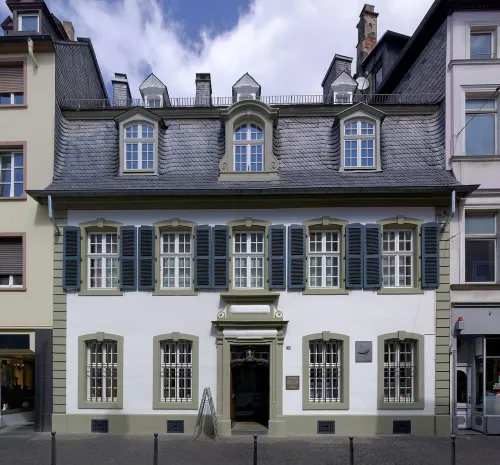
September in Trier
High21°C / 69°F
Low12°C
Rain65mm / 9 rainy days
Sun9.2 h/day
Daylight13 h/day
Humidity75%
Crowds●●●○○Prices●●●○○
September is the other sweet spot, often the best month of all. Pleasant 18-22°C, the start of the Moselle harvest, and far fewer school-holiday families. The Museum Night (5 September) and Open Monument Day (13 September) make a strong cultural double feature, and the vineyard slopes begin their turn to gold. Mild, atmospheric and good value.
The vibe September feels like Trier exhaling: warm enough for long days outdoors, alive with harvest atmosphere and cultural nights, but without August's heat or crowds. This is the month to come if you want everything open, the weather still kind, and the Moselle valley at its first golden turn.
Don't miss The Museum Night on 5 September opens 8-10 venues until past midnight on one 12 € wristband, and Open Monument Day on 13 September unlocks the Roman Bridge with guided tours and crypt access at the Dom, free of charge. Harvest tastings open at the Moselle cellar doors.
Crowd drivers School holidays are over, so general pressure is moderate. The Museum Night (5 September) and Open Monument Day (13 September) draw culture-minded visitors, and the harvest brings wine tourists to the valley.
In season Harvest season on the Moselle: cellar doors open for tastings of the new vintage, and restaurants begin the autumn game season with Rehrücken and Wildschwein.
Shoulder pricing returns at 90-130 €, roughly 20-30% below the July peak.
Events this month
🌙 Museum nightTrier Museum Night Trierer Museumsnacht
Sep 5
the first Saturday of September
All the major museums open until midnight or later: the Stadtmuseum Simeonstift, the Rheinisches Landesmuseum, Karl-Marx-Haus, the Dom Treasury and the Museum am Dom, with shuttle buses between venues and special evening programmes on a single wristband (around 12 €).
The best-value cultural evening of the year: one ticket covers 8-10 venues, and the full walk between them is under a kilometre.
🎨 Art and cultureOpen Monument Day Tag des offenen Denkmals
Sep 13 ~
the second Sunday of September
Sites normally closed or fee-charging open free of charge. In Trier this typically includes the Roman Bridge (Römerbrücke) with guided tours, crypt access at the Dom and restricted areas of the Kaiserthermen.
A genuine insider day with access to areas locked the rest of the year, at zero cost, and crowds stay moderate.
🎨 Art and cultureUNESCO World Heritage 40th Anniversary 40 Jahre UNESCO-Welterbe Trier
Feb 27 – Nov 29
year-long programme, anchor exhibition late February to late November
Trier marks 40 years as a UNESCO World Heritage Site (designated 1986) with a year-long programme of exhibitions, guided tours and lectures across its museums. The Roman Times XXL anniversary exhibition runs 27 February to 29 November at multiple sites, with anchor events on UNESCO Day (7 June) and the designation day (28 November).
A once-in-a-generation anniversary: richer programming across every museum than any normal year, making the anniversary period an unusually rewarding time to come for the Roman heritage.
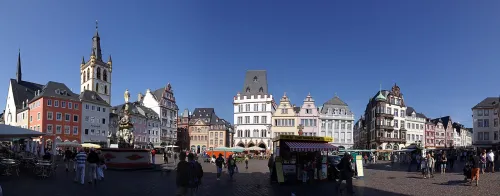
October in Trier
High16°C / 60°F
Low9°C
Rain81mm / 12 rainy days
Sun5.9 h/day
Daylight11 h/day
Humidity84%
Crowds●●○○○Prices●●○○○
October is golden-autumn Trier, with the Moselle valley foliage peaking mid-month between Trier and Cochem. The city itself is quiet apart from the Trier Underworlds Festival, which opens its subterranean Roman spaces late in the month. The Rheinland-Pfalz autumn school break (late October into early November) brings a brief spike. Cool, atmospheric and well-priced.
The vibe October is the couples' month: golden light on the vineyard slopes, harvest wine in the valley towns, and quiet Roman sites without summer heat or crowds. The Underworlds Festival adds access to Roman cellars and crypts you cannot see the rest of the year. Cool, romantic and easy on the wallet.
Don't miss Moselle valley foliage at its mid-October peak, combined with harvest wine festivals in the river towns of Bernkastel-Kues and Cochem, an easy day trip. The Underworlds Festival opens Roman cellars, crypts and the Simeonstift cloister for themed tours.
Crowd drivers Mostly a quiet, low-pressure month, with the Rheinland-Pfalz autumn school break (late October to early November) and the Trier Underworlds Festival adding a brief late-month lift.
In season Peak harvest dining: the new Riesling vintage is being bottled, and restaurants run autumn game menus with venison and wild boar alongside Moselle whites.
Prices fall to 80-115 €, with a brief lift to 95-130 € over the Underworlds Festival and the autumn school break.
Events this month
🎨 Art and cultureTrier Underworlds Festival Trierer Unterwelten Festival
Oct 29 – Nov 21 ~
late October to late November, Long Night on 14 November
A multi-week culture festival in Trier's underground spaces: Roman cellars, crypts and the Simeonstift cloister host themed tours, theatre, music and installations, culminating in a Long Night on 14 November.
Access to subterranean Roman infrastructure that is closed at other times, with real shoulder-season value: a quiet city and a fascinating programme.
November in Trier
High10°C / 50°F
Low5°C
Rain94mm / 16 rainy days
Sun4.0 h/day
Daylight9 h/day
Humidity89%
Crowds●●○○○Prices●●○○○
November is split in two. The first three weeks are very quiet, cold and among the cheapest of the year, with the Underworlds Festival still running underground and its Long Night on 14 November. Then, from around 20 November, the Christmas market opens on the Hauptmarkt and Domfreihof and rates recover sharply. Days are short and go dark by 16:30.
The vibe November is Trier at its most introverted early on: grey, cold and nearly touristless, but cheap and calm, with the Underworlds Festival as the standout draw. Then the Christmas market arrives in the last week and a half and floods the medieval squares with light, marking the hinge from off-season to festive.
Don't miss The Trier Underworlds Festival's Long Night on 14 November takes you into Roman cellars and crypts after dark. From around 20 November the Christmas market opens, with its roughly 95 stalls and animated nativity framed by the cathedral and the medieval Hauptmarkt.
Crowd drivers The first three weeks are deep off-season; the Underworlds Festival and its 14 November Long Night are the main draw. From around 20 November, the opening of the Christmas market lifts demand sharply toward month-end.
In season Game season continues in the restaurants through early November, then Glühwein, roasted chestnuts and regional festive treats arrive on the squares as the Christmas market opens.
Heads up All Saints' Day (1 November) is a public holiday in Rhineland-Palatinate, with churches busy and most shops shut. The Christmas market is closed on Totensonntag (22 November).
The first three weeks sit at the year's floor (70-100 €), then rates recover to 100-150 € once the Christmas market opens around 20 November.
Events this month
🎨 Art and cultureTrier Underworlds Festival Trierer Unterwelten Festival
Oct 29 – Nov 21 ~
late October to late November, Long Night on 14 November
A multi-week culture festival in Trier's underground spaces: Roman cellars, crypts and the Simeonstift cloister host themed tours, theatre, music and installations, culminating in a Long Night on 14 November.
Access to subterranean Roman infrastructure that is closed at other times, with real shoulder-season value: a quiet city and a fascinating programme.
🎄 Christmas marketTrier Christmas Market Trierer Weihnachtsmarkt
Nov 20 – Dec 22
late November to 22 December, closed on Totensonntag (22 November)
Around 95 wooden stalls on the Hauptmarkt and Domfreihof, framed by the medieval square and the cathedral, with an animated Weihnachtskrippe nativity. Consistently ranked among Germany's most visually distinctive Christmas markets.
One of Germany's most visually distinctive Christmas markets thanks to its Roman and medieval setting. Visit the calmer Domfreihof first; weekday late afternoons are quietest, and the second Saturday of Advent is the busiest single day.
December in Trier
High7°C / 44°F
Low3°C
Rain97mm / 17 rainy days
Sun2.7 h/day
Daylight8 h/day
Humidity91%
Crowds●●●○○Prices●●●○○
December is Christmas-market Trier, with the market running on the Hauptmarkt and Domfreihof through 22 December and the medieval and Roman setting making it one of Germany's most distinctive. German families and Belgian and Dutch day-trippers fill the squares. Christmas Eve shuts almost everything, and the week after Christmas is noticeably quieter, with the shortest days of the year (about 8 hours of light).
The vibe December trades the autumn calm for festive bustle: lights, Glühwein and crowds in squares framed by the cathedral and the medieval Hauptmarkt. It is genuinely atmospheric, especially the calmer Domfreihof side, but busy at weekends. Go on a weekday late afternoon, and expect the city to fall still over the holidays themselves.
Don't miss The Christmas market on the Hauptmarkt and Domfreihof, ranked 11th in Europe in 2024, with its animated Weihnachtskrippe and cathedral backdrop. Visit the quieter Domfreihof first, and time a weekday late afternoon (16:00-19:00) to dodge the weekend crush.
Crowd drivers The Christmas market (to 22 December) is the main draw, packing the Hauptmarkt with German families and Benelux day-trippers. The busiest single day is the Saturday of the second Advent weekend; the week after Christmas falls quiet.
In season Glühwein, roasted chestnuts and regional festive baking fill the market stalls, with hearty Moselle wine-tavern cooking and Riesling indoors once the market closes on 22 December.
Heads up Christmas Day (25 December) shuts nearly everything, leaving only hotel restaurants for guests, and Boxing Day (26 December) keeps most shops closed. The Christmas market ends on 22 December.
Christmas-market weeks run 105-155 €, easing to 80-115 € in the quieter stretch from 23 to 31 December.
Events this month
🎄 Christmas marketTrier Christmas Market Trierer Weihnachtsmarkt
Nov 20 – Dec 22
late November to 22 December, closed on Totensonntag (22 November)
Around 95 wooden stalls on the Hauptmarkt and Domfreihof, framed by the medieval square and the cathedral, with an animated Weihnachtskrippe nativity. Consistently ranked among Germany's most visually distinctive Christmas markets.
One of Germany's most visually distinctive Christmas markets thanks to its Roman and medieval setting. Visit the calmer Domfreihof first; weekday late afternoons are quietest, and the second Saturday of Advent is the busiest single day.
Frequently asked questions
What is the best time to visit Trier?
Late May, June and September are the best overall. You get mild 18-24°C days, every Roman monument open full hours, the richest year of the UNESCO 40th-anniversary programming, and hotel rates 20-30% below July. Late May (after Whitsun) brings vineyard blossom and long days, while September stacks the Museum Night and Open Monument Day into mild harvest weather at shoulder-season prices.
What is the cheapest time to visit Trier?
January, February and the first three weeks of November are cheapest, with 3-star central hotels around 65-95 € a night, roughly half the July peak of 130-185 €. The trade is short, cold 2-8°C days that go dark by 16:30. Nearly every Roman UNESCO monument is free year-round, so a winter trip costs very little overall.
What is the worst time to visit Trier?
The Heilig-Rock-Tage pilgrimage week (17-26 April 2026), when 200,000-plus pilgrims fill every bed within 25 km, unless the pilgrimage is your reason for coming. July runs a close second for the year's highest prices, German school holidays and 30-35°C heat in the sheltered Moselle valley. The Altstadtfest weekend (26-28 June) also books out every central hotel.
How hot does Trier get in summer?
Trier sits in a sheltered Moselle valley basin that traps heat, so July and August regularly reach 30-35°C, hotter than nearby German cities. Walking the Roman sites between 11:00 and 15:00 is genuinely uncomfortable in those months. Walk before 10:00 and after 17:00, and use the underground tunnels of the Kaiserthermen, which stay 5-8°C cooler, as a midday refuge.
When is the Trier Christmas Market?
The Trier Christmas Market runs from around 20 November to 22 December 2026 on the Hauptmarkt and Domfreihof, closed on Totensonntag (22 November). Its roughly 95 stalls are framed by the medieval square and cathedral, and it was ranked 11th in Europe in 2024. Visit the calmer Domfreihof side first, and come on a weekday late afternoon (16:00-19:00) to avoid the weekend crowds.
When is the best time for Moselle wine in Trier?
Late September into mid-October is the harvest window, when the terraced Riesling slopes turn gold and the valley cellar doors open for tastings of the new vintage. For an in-city event, the Olewiger Weinfest (31 July to 2 August) is the most authentic, with neighbourhood winemakers pouring their own bottles at 3-5 € a glass, and the Viezfest (22 August) showcases the region's traditional cider.
Is Trier good for families, and when should we go?
Yes, and early June or early July are ideal, built around the free Römer-Leben Roman weekends: gladiator mock-battles at the amphitheater (6-7 June) and cavalry at the Kaiserthermen (4-5 July), both educational with no gore. The Mobile Play Town Römische Stadt runs 20 July to 7 August. Avoid the August afternoon heat: do the Roman sites at 09:00-11:00 and keep afternoons for the riverbank parks. Book at least two months ahead for the German summer holidays.
How many days do you need in Trier?
Two days cover the essentials, as the Altstadt is genuine walking scale with all the UNESCO sites within a 1.5 km radius: the Porta Nigra, the Konstantinbasilika throne hall, the Kaiserthermen, the Dom, the Roman Bridge and Karl-Marx-Haus. The one trap is the amphitheater, which looks close on the map but is 1.3 km uphill from the Dom, about 20 minutes each way. Add a day for a Moselle wine-town excursion to Bernkastel-Kues or Cochem.

Any month, any day: your guide is already there
Whatever date you pick, a private human guide gets pricier and harder to book on weekends, holidays and in peak season. Our live AI guide, the one that walks with you and answers anything you ask out loud, works the opposite way.
One flat price, every day
No holiday, weekend, night or peak-season surcharge. A private guide in Trier runs well over 100 euro for a half day, and more on holidays. Ours stays the same.
Available the moment you want it
Start at midnight or at dawn, on Christmas, in the snow, in the August heat. No sold-out high season, no booking weeks ahead.
Your pace, no meter running
Pause for a long lunch, restart after dark, repeat a stop. The tour simply waits for you.
Free to try, a fraction of the cost
Test it for free, then a transparent flat price that undercuts any private guide, in every season.
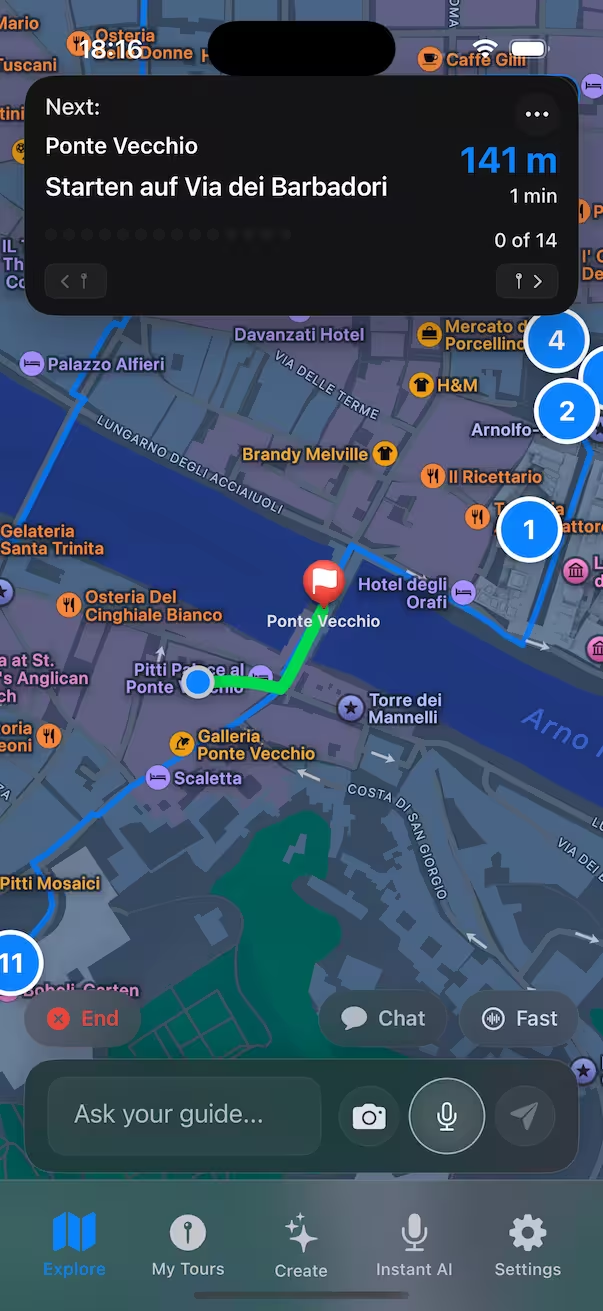
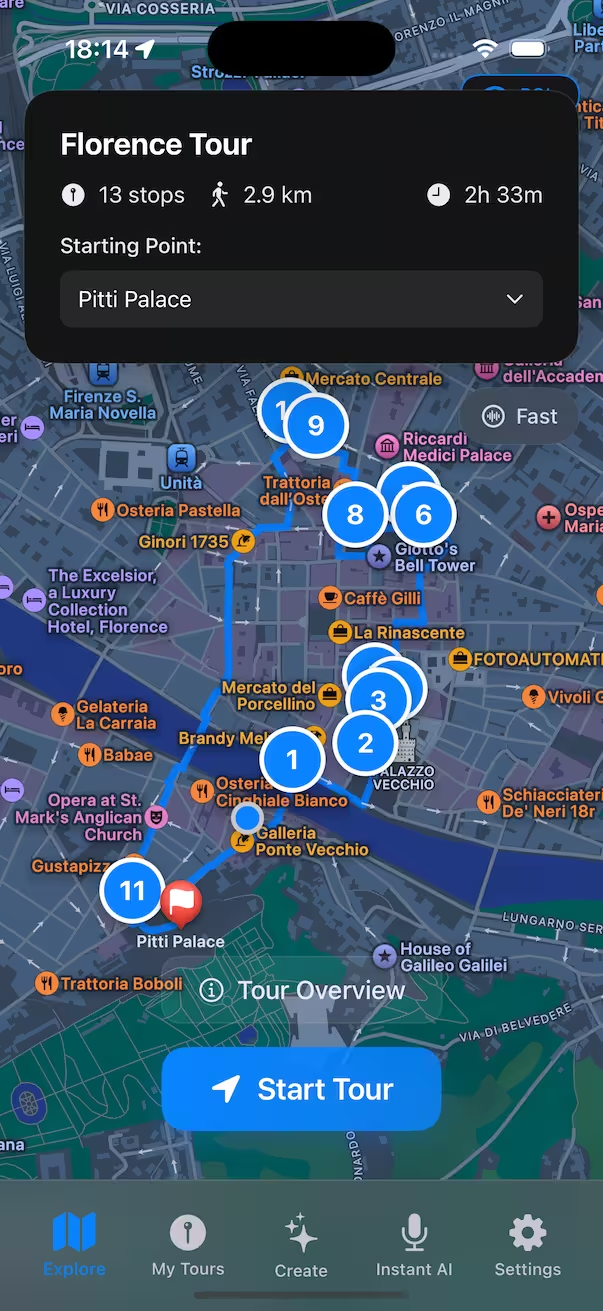
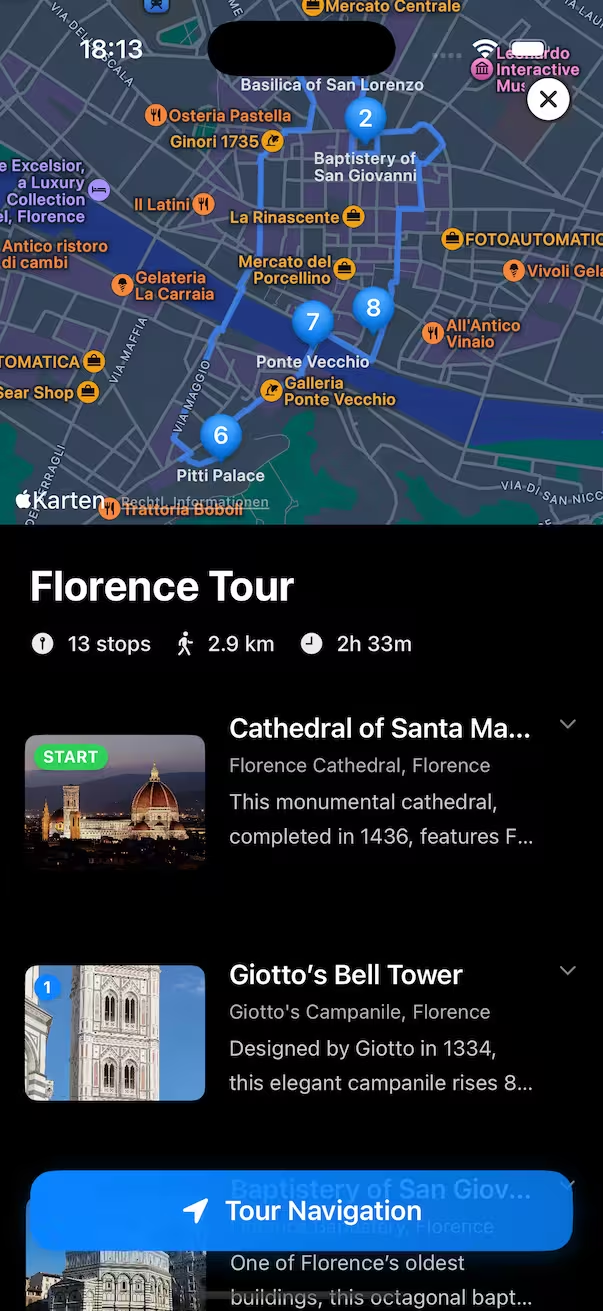
The classic Trier tour: 10 stops, 6.1 km, about 3 h on foot
Your live AI guide and the self-guided Trier route, together in your browser.