Best Time to Visit Osaka
Month-by-month weather, crowds and prices, plus a full calendar of festivals and events worth planning a trip around.
Best monthsOct, Nov, Mar, Apr
CheapestJan, Feb, Jun
AvoidJul, Aug
BusiestApr

When is the best time to visit Osaka?
October and November are Osaka's sweet spot: dry, comfortable 15-23°C, koyo foliage from mid-November, and moderate crowds. Late March to early April brings spectacular but pricey, packed cherry blossom. January and June are cheapest. Skip July and August, when 33-36°C heat and humidity make midday brutal.
Start our tool and find your best time to visit Osaka
Your perfect month
Free · ~30 seconds
or tap a month directly
What matters to you?
And this?
Best overall: Oct, Nov. October and November are the real answer: dry and comfortable at 15-23°C, every sight open, koyo foliage peaking at Minoo Park from mid-November, and crowds far softer than spring. The best balance of weather, price and atmosphere all year.
Best value: Jan, Jun. January (after the 10th) and June bring the lowest room rates of the year, near-empty attractions, and a city running at local pace. The trade is cold, grey winter days in January and rainy-season showers in June, both more manageable than they sound.
Avoid: Jul, Aug. July and August: 33-36°C afternoons, humidity pushing the feels-like temperature toward 42-45°C, and the Obon travel wave (13-16 August) spiking hotels 30-50% while some local restaurants shut for several days. The worst value and the hardest weather of the year.
- January: Good time, 9°C. This is the one month you have Osaka almost to yourself. The first few days are the exception: Sumiyoshi Taisha pulls in two million people for hatsumode, so the city feels packed until the 4th, then it empties out completely. Grey skies are the price, and for the lowest prices of the year it is a fair one.
- February: Good time, 10°C. February rewards anyone who does not mind the cold. The 1,270 plum trees at Osaka Castle's Umebayashi come into bloom with almost no crowd, the quietest blossom moment of the entire year, a genuine secret while everyone waits two months for the cherry.
- March: Good time, 14°C. The first half of March is the last genuinely quiet, affordable window before the cherry-blossom machine roars to life. By the last week, the riverbanks fill and prices spike. If you want hanami without the worst crush, come for the early buds in the final March days rather than the first-week-of-April peak.
- April: Tough month, 18°C. April is gorgeous and no longer a secret to anyone. The Sakuranomiya riverbank is shoulder to shoulder at the first-week peak, and once Golden Week starts the whole city is at maximum load. The blossom earns it back, but go in clear-eyed: this is the priciest, most crowded stretch of the year.
- May: Great time, 23°C. The second half of May is Osaka at its most underrated: the spring blossom is gone, but the warmth, the easy crowds and the post-holiday prices make it arguably the best-value good-weather window of the year. Universal Studios Japan waits drop right down on weekdays this week.
- June: Good time, 26°C. June is the smart traveller's secret. Yes it rains, but rarely all day, and the trade is empty attractions and bargain hotels. The hydrangeas come into bloom, the city smells of wet stone and street food, and the covered Dotonbori arcades keep you dry through any evening shower.
- July: Tough month, 30°C. July is for festival-lovers who can handle the heat. The daytime is draining and the air is thick, but Tenjin Matsuri on 24-25 July, with its river procession and 5,000 fireworks, is one of the great nights in Japan and worth timing a whole trip around. Hire shade and hydration, not optimism, for the afternoons.
- August: Tough month, 32°C. August is survival-mode Osaka, not romantic-empty Osaka. The heat is physically draining, not photogenic, and Obon fills the city with returning families and pushes prices up. If you must come, do your sights before 9 am, retreat to the aquarium, Universal Studios or the arcades by midday, and save Dotonbori for the cooler evening.
- September: Good time, 28°C. September is a month of two halves: clammy late-summer heat at the start, genuine relief by the end. The rare Silver Week makes the third week unexpectedly busy and pricey, but the Kishiwada Danjiri Matsuri that lands right in it is one of the most thrilling, adrenaline-charged festivals in all of Japan.
- October: Great time, 22°C. October is the quiet champion of the Osaka calendar. It lacks the headline drama of cherry blossom, but it gives you the same beautiful weather with far smaller crowds and lower prices, the choice of seasoned repeat visitors over first-timers chasing the spring hype.
- November: Good time, 17°C. November is the cool, golden counterpart to the cherry blossom: less famous abroad, just as beautiful, and considerably calmer. Weekday mornings at Minoo Park give you flaming maple canyons almost to yourself, the autumn equivalent of a private hanami.
- December: Great time, 11°C. December is winter Osaka at its most romantic and least crowded. With Christmas a normal working day, the couples-friendly Hikari Renaissance lights on Nakanoshima and the four-kilometre Midosuji illumination carry all the festive atmosphere without any of the holiday stress, a quiet, glowing alternative to Europe's packed Christmas cities.
Osaka weather by month
HighLowRainfall
Jan9°
Feb10°
Mar14°
Apr18°
May23°
Jun26°
Jul30°
Aug32°
Sep28°
Oct22°
Nov17°
Dec11°
| Month | Temp | Rain | Sun | Crowds | Prices | Highlight |
|---|---|---|---|---|---|---|
| Jan | 9° / 1° | 61mm · 6 rainy days | 7.7 h/day | ●●○○○ | ●●○○○ | Hatsumode at Sumiyoshi Taisha |
| Feb | 10° / 1° | 56mm · 6 rainy days | 7.9 h/day | ●●○○○ | ●●○○○ | |
| Mar | 14° / 4° | 116mm · 11 rainy days | 8.7 h/day | ●●●●○ | ●●●●● | Cherry Blossom at Kema Sakuranomiya Park |
| Apr | 18° / 9° | 149mm · 10 rainy days | 8.8 h/day | ●●●●● | ●●●●● | Cherry Blossom at Kema Sakuranomiya Park |
| May | 23° / 14° | 158mm · 10 rainy days | 9.6 h/day | ●●●○○ | ●●●○○ | Golden Week |
| Jun | 26° / 19° | 196mm · 14 rainy days | 8.8 h/day | ●●○○○ | ●●○○○ | Aizen Matsuri |
| Jul | 30° / 24° | 241mm · 16 rainy days | 9.5 h/day | ●●●○○ | ●●●○○ | Aizen Matsuri |
| Aug | 32° / 25° | 183mm · 14 rainy days | 10.3 h/day | ●●●●○ | ●●●○○ | Sumiyoshi Matsuri |
| Sep | 28° / 21° | 217mm · 14 rainy days | 8.5 h/day | ●●●○○ | ●●●○○ | Kishiwada Danjiri Matsuri |
| Oct | 22° / 14° | 177mm · 10 rainy days | 8.2 h/day | ●●●○○ | ●●●○○ | Tenshiba Oktoberfest |
| Nov | 17° / 8° | 83mm · 8 rainy days | 7.8 h/day | ●●●●○ | ●●●●○ | Autumn Foliage at Minoo Park |
| Dec | 11° / 3° | 68mm · 7 rainy days | 7.6 h/day | ●●○○○ | ●●○○○ | Midosuji Illumination |
How we score this: weather = long-run climate normals (Open-Meteo), crowds & prices = relative season read, events checked yearly against official dates.
Best time to visit Osaka: weather, prices & crowds
Best months for good weather
Oct, Nov
October and November give you Osaka's most reliable weather: dry 15-23°C, barely any rain after the September typhoon season, and crisp light that holds long enough to walk Osaka Castle Park and the Dotonbori canal in comfort.
Quietest months to avoid the crowds
Jan, Jun
After the New Year rush ends around 10 January, the city empties out to its quietest stretch, and June's rainy season keeps tourist numbers down, so Osaka Castle has almost no queue on a weekday morning.
Cheapest time to visit Osaka
Jan, Jun
January is the cheapest month, with hotel rates around 32% below the annual average and budget capsules from 3,000 yen. June runs 20-30% under baseline, the last bargain window before the summer heat arrives.
Best time for festivals and events
Mar, Apr
From late March the 4,700 cherry trees along the four-kilometre Okawa riverbank at Kema Sakuranomiya light up at night for hanami, the one window when Osaka turns genuinely magical, full bloom forecast around 31 March.
How many days do you need in Osaka?
Osaka rewards two to three days. The main sights spread across several districts, but the Metro keeps everything within 20 minutes, and the city doubles as a perfect launch pad for day trips to Kyoto and Nara, each under 30 minutes by train. Three days lets you cover the historic core, the street-food quarters and a Kansai day trip without feeling rushed.
One day
Castle, canals and neon in one sweep
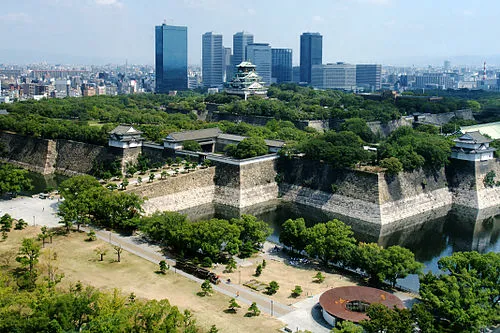
Start at Osaka Castle for the morning, when the keep is near queue-free and the park is at its best. Head south through Shitenoji Temple, one of Japan's oldest, then into Dotonbori by afternoon. A self-guided Osaka walking tour links all 9 stops across 10.3 km in about 3.6 hours, taking in Shinsaibashi, Hozenji Yokocho and Kuromon Ichiba Market on one continuous route.
Two days
Retro districts and local markets
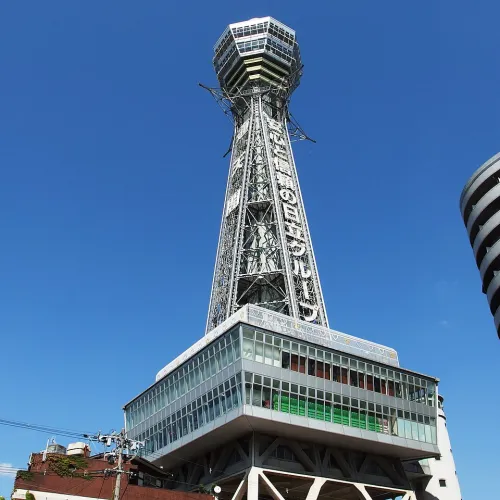
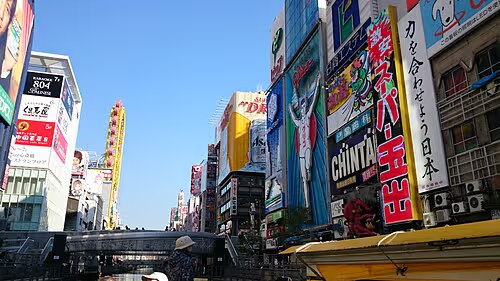
Day two goes deeper into old Osaka. Spend the morning at Kuromon Ichiba Market before the tour groups arrive from 11 am, then walk south to the retro Shinsekai neighbourhood under Tsutenkaku Tower. Afternoon options include the Kaiyukan aquarium on Osaka Bay or a stroll along the Okawa riverbank at Sumiyoshi Taisha. End the evening back at Dotonbori, when the Glico sign reflects perfectly off the canal.
Three daysRecommended
A day out of the city
Three days is the sweet spot because Osaka sits at the geographic heart of Kansai. Kyoto's temples are 15 minutes by shinkansen or 75 minutes by Hankyu, Nara's free-roaming deer a 35-minute ride from Namba, and the castle town of Kobe under 30 minutes by Hanshin line. Pick one, treat it as a half-day and return to Osaka for dinner: the city's eating scene at night is the destination in itself.
Four days or more
Universal Studios, Minoo and the slow pace
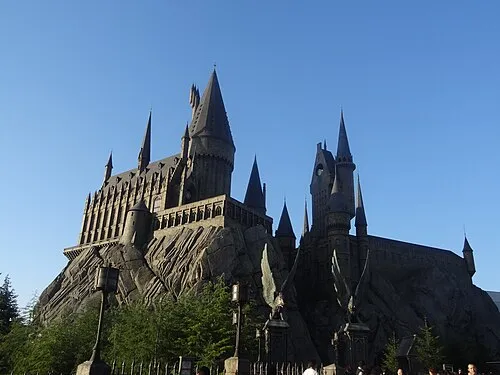
A fourth day earns you Universal Studios Japan, whose Harry Potter World queues drop sharply on a Tuesday to Thursday outside school holidays. A fifth gives you Minoo Park, a four-kilometre maple-lined trail north of the city that peaks with flaming autumn colour in November. Beyond five days, Osaka becomes a base for further Kansai exploration: Himeji Castle, Wakayama and the pilgrimage trail to Yoshino are each under two hours.
Best time to visit Osaka by traveller type
Same city, different trip. Here's the month that fits how you're travelling.
🧭
Best time to visit Osaka for the first time
OctNov
October or November is the safe best-overall pick: dry 15-23°C you can walk all day, every sight open, no holiday crowds, and the Minoo foliage as a free bonus from mid-November.
❤️
Best time to visit Osaka for couples
MarNov
Mid-March for cherry blossom along the Sakuranomiya riverbank before the weekend peak hits, or November for golden foliage in Minoo and quiet lantern-lit evenings in the tiny Hozenji Yokocho alley.
💶
Best time to visit Osaka on a budget
JanJun
January after the 10th for the year's lowest hotel rates and empty attractions, or June, when the rainy season scares off other travellers and the indoor sights stay quiet.
🍝
Best time to visit Osaka for food and wine
NovMar
November for fugu pufferfish season and matsutake mushrooms at Kuromon Ichiba market, or March for spring bamboo shoots and sakura-themed wagashi sweets.
Worst time to visit Osaka
July and August are the hardest months in Osaka. Afternoon highs reach 33 to 36°C with humidity around 80 percent, pushing the feels-like figure toward 42 to 45°C, which makes outdoor sightseeing at midday genuinely taxing. The Obon period (13 to 16 August) drives hotels 30 to 50 percent higher than baseline, many small family-run restaurants and izakayas close for three to five days, and every train route fills with returning Japanese families. Booking anything last-minute in this window is near-impossible.
Still worth it for Summer works for festival lovers who can work around the heat: Tenjin Matsuri on 24 to 25 July, with its river procession and 5,000-rocket fireworks, is one of the great nights in Japan. Shift your outdoor sightseeing before 9 am or after 5 pm and retreat to the Kaiyukan aquarium or the air-conditioned Shinsaibashi arcades in between.
Go instead in October, November, March, April, when Osaka is at its best.
Best time for a tour of Osaka
October is the sweet spot for walking Osaka's 10-kilometre loop. Highs settle around 22 °C, crowds thin out after the autumn-foliage seekers have gone, and the light in Osaka Castle Park turns golden in the afternoons without the punishing glare of summer. May is a close second: temperatures reach 23 °C and the city breathes more freely than it does in April, when the streets around Osaka Castle are shoulder to shoulder with cherry-blossom crowds and every path through the park is a slow shuffle. The months to think twice about are July and August: the mercury hits 31 to 32 °C, the humidity is relentless, and the rain comes on 14 to 16 days each month. Walking the open plaza at Shitenoji Temple or the neon-lit stretch of Dotonbori in that heat means stopping every block for water and shade you often cannot find. June is nearly as punishing, with 14 rain days and sticky overnight lows near 19 °C. January and February are dry and quiet, but highs barely clear 9 °C and a long outdoor walk past Kuromon Ichiba Market or up to the castle tower feels raw without good layers.
The practical advantage of AI Tourguide for a city with such sharp seasonal contrasts is that you pick your hour, not a tour operator's departure time. On a July day, start your Osaka tour at 7 am, when the stone path leading up to Osaka Castle is still cool and the crowds have not gathered, then take a long midday break and resume at dusk when Dotonbori's neon reflections come alive in the canal. In October you might simply stroll when the mood takes you, letting the guide tell you the story behind Hozenji Yokocho's moss-covered lanterns at whatever pace feels right. The guide runs entirely in your browser, speaks to you, asks questions, listens, and adjusts what it shares based on what you say. No schedule, no fixed group, no waiting for a bus: the weather and you decide the walk.


 +5
+5All 9 stops are already on the map.
You just press start.
You just press start.
 AI Tourguide
You just read the route.
Now walk it with a guide in your ear.
Press start wherever you are, even hundreds of kilometres from Osaka, and the guide begins telling its stories right away. In the city, pick any of the 9 stops to start from: it leads you there, then talks with you the whole route, asking, listening, remembering, and shaping the tour around your answers.
9stops10.3km3.6hours11languages
▶Start the tour freeFree to start · Runs in your browser · No app, no download
Osaka events and festivals calendar
Annual highlights worth timing a trip around, listed month by month.
January
⛪ ReligiousHatsumode at Sumiyoshi Taisha 初詣 (住吉大社)
Jan 1–3
1-3 January every year, the first shrine visit of the New Year.
Hatsumode is the year's first shrine visit, and Sumiyoshi Taisha, one of Japan's oldest shrines with its distinctive arched Sorihashi bridge, welcomes over two million worshippers across the first three days of January for prayers, food stalls and omikuji fortunes.
March
🌸 Seasonal natureCherry Blossom at Kema Sakuranomiya Park 花見 (毛馬桜之宮公園)
Mar 31 – Apr 7 ~
Late March to early April; full bloom forecast around 31 March, blossom shifts up to a week year to year.
Some 4,700 cherry trees line a four-kilometre stretch of the Okawa riverbank at Kema Sakuranomiya, Osaka's finest hanami spot, with strings of lanterns lighting the blossoms into the evening until around 9 pm.
April
🇮 HolidayGolden Week ゴールデンウィーク
Apr 29 – May 6
Late April to early May; a cluster of four national holidays plus weekends, the busiest domestic travel period of the year.
A cluster of four consecutive national holidays (Showa Day, Constitution Memorial Day, Greenery Day, Children's Day) bridged by weekends into a long break that triggers a mass domestic travel wave across Japan.
May
🍷 Food and wineNakanoshima Food Festival なにわ食いしんぼ横丁
May 3–5
Early May during Golden Week, on Nakanoshima island.
An outdoor food festival on Nakanoshima island during Golden Week, gathering specialities from across Osaka, from takoyaki and okonomiyaki to regional street food.
June
⛪ ReligiousAizen Matsuri 愛染まつり
Jun 30 – Jul 2
30 June to 2 July every year, the first of Osaka's three great summer festivals.
Held at Shomanin temple, Aizen Matsuri is Japan's oldest summer festival, over 1,400 years old, centred on the Hoekago procession of ten Aizen maidens carried through the streets in elaborately decorated palanquins.
July
🎉 FestivalTenjin Matsuri 天神祭
Jul 24–25
24-25 July every year, one of Japan's three greatest festivals.
One of Japan's three biggest matsuri, around 1,000 years old, Tenjin Matsuri features a 3,000-strong land procession, a flotilla of 100 boats carrying 10,000 people on the Okawa river, and a finale of 5,000 fireworks rockets from 19:30 to 20:50 on the 25th.
⛪ ReligiousSumiyoshi Matsuri 住吉祭
Jul 30 – Aug 1
Late July to 1 August every year, closing Osaka's summer festival season.
The last of Osaka's three great summer festivals, Sumiyoshi Matsuri climaxes on 1 August with a mikoshi procession carrying the portable shrine five kilometres from Sumiyoshi Taisha to the Shukuin Tongu shrine, an oharai purification ritual for the whole city.
August
🎉 FestivalNaniwa Yodogawa Fireworks なにわ淀川花火大会
Aug 1 ~
First Saturday of August every year, dates shift one week in either direction.
One of Osaka's biggest fireworks displays, sending thousands of rockets over the Yodo river for an audience of around 500,000, with reserved grandstand seats from 3,000 to 8,000 yen.
🇮 HolidayObon お盆
Aug 13–16
13-16 August (travel wave 8-16 August); a Buddhist festival of the dead, not an official holiday but observed nationwide.
Obon is the Buddhist festival of the ancestors, when Japanese people return to their home regions.
September
🍷 Food and wineTenshiba Oktoberfest テンシバオクトーバーフェスト
Sep 12 – Oct 5 ~
Mid-September to early October every year in Tennoji Park.
A Munich-style Oktoberfest in Tennoji Park, with official Oktoberfest breweries, bratwurst and Japanese craft beer.
🎉 FestivalKishiwada Danjiri Matsuri 岸和田だんじり祭
Sep 19–21 ~
The Saturday and Sunday before Respect for the Aged Day (third Monday of September), typically mid-to-late September.
Japan's most adrenaline-charged float festival: 34 heavy wooden danjiri floats are hauled at speed through the narrow streets of Kishiwada while men dance on the rooftops.
🇮 HolidaySilver Week シルバーウィーク
Sep 19–23 ~
Mid-to-late September, but only occurs roughly once every five to eleven years when Respect for the Aged Day, a Citizens' Holiday and the Autumn Equinox align to create a five-day break.
A rare five-day holiday created when Respect for the Aged Day (21 September), a Citizens' Holiday (22 September) and the Autumn Equinox (23 September) align with the weekend.
November
💡 LightsMidosuji Illumination 御堂筋イルミネーション
Nov 3 – Jan 31
Early November to late January, lit roughly 17:00-23:00.
A record-length boulevard of LED-lit trees running four kilometres down Midosuji avenue from Ooebashi to Hanshin Mae, part of the wider Hikari no Kyoen festival of lights.
🌸 Seasonal natureAutumn Foliage at Minoo Park 紅葉 (箕面公園)
Nov 15–30 ~
Mid-November to early December, peaking roughly 15-25 November; temperature-dependent, shifts up to ten days.
Minoo Park offers a four-kilometre maple-lined hiking trail to the 33-metre Minoo waterfall, framed by blazing autumn colour.
December
💡 LightsOsaka Hikari Renaissance (Nakanoshima) 大阪・光の饗宴 (中之島)
Dec 14–25
Mid-to-late December every year on Nakanoshima island.
Nakanoshima island becomes a carpet of light, with the City Hall and historic bank buildings projection-lit, a gourmet market and a digital treasure hunt across the riverside district.
Insider tips for visiting Osaka
The rules buried in forums, in one place.
- Osaka Castle Museum closes every Monday (or the Tuesday after if Monday is a holiday). Turn up at the 9 am opening on a weekday and the ticket window has no queue. On a Saturday during the April cherry blossom it can be a 45-60 minute wait.
- Never go to Kuromon Ichiba market on a Sunday: around 90% of stalls take the day off. The best day for fresh seafood without the crowd is Tuesday or Wednesday from 9-11 am. By 11 am on Friday and Saturday the tour groups arrive from Dotonbori and Universal Studios.
- Skip Universal Studios Japan on any weekend during school holidays. Harry Potter World hits 120-180 minute waits on an August Saturday. The best days are Tuesday to Thursday in the week after Golden Week (May) or the second week of October. Use the official USJ app for live wait times.
- Photograph the Dotonbori canal on a weekday morning, not a weekend night. From Friday to Sunday between 7 and 10 pm the bridges are so packed you can barely lift a camera. Monday to Thursday from around 6:15 am, the blue hour gives you perfect light and an empty bridge over the Glico sign reflection.
- Culture Day on 3 November means free museum entry across the city. The National Museum of Art Osaka, the Osaka Museum of History and the Osaka Science Museum regularly waive admission. Check each museum's official page in advance, then build a culture day around it for zero entry cost.
- September is typhoon season in the Kansai region, with roughly one to two storms grazing the area each year. Kansai International Airport sits on a low man-made island and was flooded in 2018, so build a buffer day into a September trip and rebook flights one to two days ahead of a forecast storm.
- During the rainy season in June, around 60% of the rain falls after 6 pm. Plan your sightseeing for the morning and spend the evening in Dotonbori and Shinsaibashi, where the long covered shopping arcades keep you dry without an umbrella.
- On 25 July from around 5 pm, the Okawa river bridges are closed or jammed for Tenjin Matsuri. Claim a viewing spot on the Temmabashi pier promenade by 5 pm for the boat procession and the 5,000-rocket fireworks finale that runs roughly 19:30 to 20:50.
Public holidays in Osaka
On these dates many shops and offices close, transport thins out, and sights can be mobbed or shut. Plan around them.
| Date | Holiday | What closes |
|---|---|---|
| Jan 1 | New Year's Day (Ganjitsu) | Public transport runs reduced; many small shops and restaurants close from 1-3 January. Sumiyoshi Taisha draws around 2 million worshippers over three days for hatsumode, causing massive congestion around the shrine. |
| Jan 12 | Coming-of-Age Day | National holiday. You will see young people in traditional kimono on the streets, but few practical restrictions for visitors. Most attractions operate normally. |
| Mar 20 | Spring Equinox | National holiday. Government offices and banks close, but temples, shrines and parks stay open, and many families visit graves and shrines. |
| Apr 29 | Showa Day (start of Golden Week) | First day of Golden Week, the busiest domestic travel period of the year. Osaka Castle Park is especially crowded from 6 pm. Hotels run 35-60% above normal and need booking three to six months ahead. |
| May 3 | Constitution Memorial Day | Mid Golden Week. All museums and sights are open (Monday closures shift to another day during the holiday). Crowds and prices at their annual peak. |
| May 4 | Greenery Day | Golden Week holiday. Tennoji Park and the city zoo are packed. Expect long lines everywhere outdoors and full restaurants. |
| May 5 | Children's Day | Final big day of Golden Week. Universal Studios Japan hits its highest wait times of spring (60-90 minutes for headline rides). Book everything well ahead. |
| May 6 | Substitute Holiday | Constitution Memorial Day is observed on Wednesday 6 May in 2026, closing out Golden Week. Crowds begin to ease from this point onward. |
| Jul 20 | Marine Day | National holiday. Little specific effect in central Osaka, though it triggers weekend beach trips down to Shirahama on the Kuroshio line. |
| Aug 11 | Mountain Day | Public holiday with almost no tourist impact in the city itself. Falls within the wider Obon travel wave, so trains and hotels are busy regardless. |
| Aug 13 | Obon (begins) | Not an official holiday but effectively a national break, 13-16 August. Family-run restaurants and small izakayas may close for three to five days. Hotels run 30-50% higher. Osaka Castle stays open as normal. |
| Sep 21 | Respect for the Aged Day (start of Silver Week) | Third Monday of September, opening the rare five-day Silver Week. Domestic travel surges and hotels run 15-25% higher; book from July. |
| Sep 22 | Citizens' Holiday | Automatically a holiday because it sits between two holidays. Banks and offices close; sights stay open and busy with domestic tourists. |
| Sep 23 | Autumn Equinox (end of Silver Week) | Closes Silver Week. Temples and parks see heavy domestic crowds. Prices normalise from 24 September onward. |
| Oct 12 | Sports Day | Public holiday. Possible sporting events around the city, but otherwise minimal impact on a sightseeing visit. |
| Nov 3 | Culture Day | Many Osaka museums offer free admission, including national museums. The ideal day to pack in a culture itinerary at no entry cost. Confirm on each museum's official page. |
| Nov 23 | Labour Thanksgiving Day | Public holiday with little tourist impact. Falls near the koyo foliage peak, so weekend trips to Minoo Park are at their busiest. |
Osaka month by month
January in Osaka
High9°C / 48°F
Low1°C
Rain61mm / 6 rainy days
Sun7.7 h/day
Daylight10 h/day
Humidity73%
Crowds●●○○○Prices●●○○○
January is Osaka at its quietest and cheapest. Highs sit around 9°C and lows near freezing, but it rarely snows and the air is dry and crisp, so a good jacket carries you through. Once the New Year rush ends around 10 January, the city drops into its deepest lull, with few domestic travellers and barely any international ones. Osaka Castle and the museums are close to queue-free on weekday mornings.
The vibe This is the one month you have Osaka almost to yourself. The first few days are the exception: Sumiyoshi Taisha pulls in two million people for hatsumode, so the city feels packed until the 4th, then it empties out completely. Grey skies are the price, and for the lowest prices of the year it is a fair one.
Don't miss Visit Sumiyoshi Taisha for hatsumode on the evening of 2 January or the morning of the 3rd to catch the New Year ritual without the worst of the two-million crowd. Osaka Castle and the painting collections feel almost private on a quiet weekday.
Crowd drivers The New Year hatsumode rush at Sumiyoshi Taisha runs 1-3 January, then crowds collapse to the year's lowest from around the 10th, with no school holidays driving traffic.
In season Fugu pufferfish is in full season, served as paper-thin sashimi or in a hot-pot at the specialist restaurants around Dotonbori, the classic Osaka winter splurge.
Heads up Many small shops and restaurants close 1-3 January and public transport runs a reduced schedule; Osaka department stores mostly reopen by 2 January and Dotonbori restaurants are nearly all open.
Cheapest month: hotel rates around 32% below the annual average, budget capsules from 3,000 yen.
Events this month
⛪ ReligiousHatsumode at Sumiyoshi Taisha 初詣 (住吉大社)
Jan 1–3
1-3 January every year, the first shrine visit of the New Year.
Hatsumode is the year's first shrine visit, and Sumiyoshi Taisha, one of Japan's oldest shrines with its distinctive arched Sorihashi bridge, welcomes over two million worshippers across the first three days of January for prayers, food stalls and omikuji fortunes.
Standing in a two-million-strong New Year crowd is a once-a-year spectacle, but if you want the ritual without the crush, come on the evening of 2 January or the morning of the 3rd.
💡 LightsMidosuji Illumination 御堂筋イルミネーション
Nov 3 – Jan 31
Early November to late January, lit roughly 17:00-23:00.
A record-length boulevard of LED-lit trees running four kilometres down Midosuji avenue from Ooebashi to Hanshin Mae, part of the wider Hikari no Kyoen festival of lights.
Combine it with the Nakanoshima Hikari Renaissance (14-25 December) for a one-two punch of winter illumination across the city centre, all free to walk.
February in Osaka
High10°C / 49°F
Low1°C
Rain56mm / 6 rainy days
Sun7.9 h/day
Daylight11 h/day
Humidity72%
Crowds●●○○○Prices●●○○○
February is the second-quietest month and stays cold, with highs near 10°C and lows around 1°C, though it is dry and bright. There are no Japanese school holidays and few Western tourists. The plum blossom begins to draw weekend day-trippers toward the end of the month, but it never triggers an overnight boom, so hotels stay cheap and the big sights stay calm.
The vibe February rewards anyone who does not mind the cold. The 1,270 plum trees at Osaka Castle's Umebayashi come into bloom with almost no crowd, the quietest blossom moment of the entire year, a genuine secret while everyone waits two months for the cherry.
Don't miss The Osaka Castle plum grove (around 100 varieties) peaks from mid-February into early March. Go on a weekday morning and you may have the whole orchard, with the castle keep behind it, almost to yourself.
Crowd drivers Plum-blossom weekends bring some local day-trippers from mid-February, but no school holidays and almost no international arrivals keep numbers low.
In season Still peak fugu season, and oysters from the Seto Inland Sea are at their best, grilled at street stalls in the Kuromon Ichiba market.
Hotels still 20-25% below peak; on weekdays almost no queue at Osaka Castle.
March in Osaka
High14°C / 57°F
Low4°C
Rain116mm / 11 rainy days
Sun8.7 h/day
Daylight12 h/day
Humidity72%
Crowds●●●●○Prices●●●●●
March transforms Osaka. Highs climb from the low teens to 14°C and the cherry blossom anticipation takes over from the final week, with first buds forecast around 24 March and full bloom near the 31st. Domestic, Korean and Taiwanese visitors flood in, pushing room rates to the year's highest. Early in the month it is still calm and cool, but the last week tips straight into peak season.
The vibe The first half of March is the last genuinely quiet, affordable window before the cherry-blossom machine roars to life. By the last week, the riverbanks fill and prices spike. If you want hanami without the worst crush, come for the early buds in the final March days rather than the first-week-of-April peak.
Don't miss The first cherry blossoms open along the Okawa river at Kema Sakuranomiya from around 31 March, 4,700 trees over four kilometres, lit by lanterns until 9 pm. Arrive 6-8 am on a weekday and the trees glow without the crowds.
Crowd drivers Hanami expectation from the last week of March pulls in Japanese, Korean and Taiwanese travellers all at once, the start of the year's biggest crowd surge.
In season Spring bamboo shoots (takenoko) arrive at Kuromon Ichiba, and sakura-themed wagashi sweets appear in every confectionery window.
Most expensive month as hanami demand builds: average rates the year's highest; book by February.
Events this month
🌸 Seasonal natureCherry Blossom at Kema Sakuranomiya Park 花見 (毛馬桜之宮公園)
Mar 31 – Apr 7 ~
Late March to early April; full bloom forecast around 31 March, blossom shifts up to a week year to year.
Some 4,700 cherry trees line a four-kilometre stretch of the Okawa riverbank at Kema Sakuranomiya, Osaka's finest hanami spot, with strings of lanterns lighting the blossoms into the evening until around 9 pm.
This is the one week Osaka turns genuinely magical, and a weekday picnic under the trees at 6-8 am gives you the glowing blossoms with none of the weekend crowds.
💡 LightsMidosuji Illumination 御堂筋イルミネーション
Nov 3 – Jan 31
Early November to late January, lit roughly 17:00-23:00.
A record-length boulevard of LED-lit trees running four kilometres down Midosuji avenue from Ooebashi to Hanshin Mae, part of the wider Hikari no Kyoen festival of lights.
Combine it with the Nakanoshima Hikari Renaissance (14-25 December) for a one-two punch of winter illumination across the city centre, all free to walk.
April in Osaka
High18°C / 65°F
Low9°C
Rain149mm / 10 rainy days
Sun8.8 h/day
Daylight13 h/day
Humidity72%
Crowds●●●●●Prices●●●●●
April is Osaka's busiest and most expensive month, a double blow of cherry-blossom peak in the first week and Golden Week (29 April to 6 May) at the end. Highs reach a lovely 18°C, though April brings 149mm of rain over 10 days, so pack a layer. This is the most beautiful the city gets, and the hardest to move through. Booking accommodation months ahead is essential.
The vibe April is gorgeous and no longer a secret to anyone. The Sakuranomiya riverbank is shoulder to shoulder at the first-week peak, and once Golden Week starts the whole city is at maximum load. The blossom earns it back, but go in clear-eyed: this is the priciest, most crowded stretch of the year.
Don't miss Kema Sakuranomiya is at full bloom roughly 31 March to 7 April with evening lantern lighting. During Golden Week, the Nakanoshima food festival (3-5 May) lets you turn the crowds into a feast of Osaka specialities on the riverbank.
Crowd drivers Cherry-blossom peak in the first week stacks straight into Golden Week (29 April to 6 May), the year's heaviest domestic travel period, for the busiest fortnight of all.
In season Hanami picnic season: convenience stores and Kuromon Ichiba stock bento boxes and sakura sweets specifically for eating under the trees.
Heads up During Golden Week, Monday museum closures shift to a different day, but everything is intensely crowded; some popular restaurants need same-week reservations.
Golden Week from 29 April: hotels 35-60% higher, capsules jump from 12,000 to 19,400 yen; book three to six months ahead.
Events this month
🌸 Seasonal natureCherry Blossom at Kema Sakuranomiya Park 花見 (毛馬桜之宮公園)
Mar 31 – Apr 7 ~
Late March to early April; full bloom forecast around 31 March, blossom shifts up to a week year to year.
Some 4,700 cherry trees line a four-kilometre stretch of the Okawa riverbank at Kema Sakuranomiya, Osaka's finest hanami spot, with strings of lanterns lighting the blossoms into the evening until around 9 pm.
This is the one week Osaka turns genuinely magical, and a weekday picnic under the trees at 6-8 am gives you the glowing blossoms with none of the weekend crowds.
🇮 HolidayGolden Week ゴールデンウィーク
Apr 29 – May 6
Late April to early May; a cluster of four national holidays plus weekends, the busiest domestic travel period of the year.
A cluster of four consecutive national holidays (Showa Day, Constitution Memorial Day, Greenery Day, Children's Day) bridged by weekends into a long break that triggers a mass domestic travel wave across Japan.
It is the busiest, priciest national period: hotels need booking three to six months ahead, though the midweek days of 30 April and 1 May are noticeably less packed than the rest.
🍷 Food and wineNakanoshima Food Festival なにわ食いしんぼ横丁
May 3–5
Early May during Golden Week, on Nakanoshima island.
An outdoor food festival on Nakanoshima island during Golden Week, gathering specialities from across Osaka, from takoyaki and okonomiyaki to regional street food.
A productive way to put the Golden Week crowds to good use, turning the busiest week of the year into a feast of Osaka's signature dishes.
May in Osaka
High23°C / 74°F
Low14°C
Rain158mm / 10 rainy days
Sun9.6 h/day
Daylight14 h/day
Humidity73%
Crowds●●●○○Prices●●●○○
May is the forgotten month, and one of the best. Once Golden Week ends on 6 May, crowds fall away sharply while the weather turns ideal, with highs of 20-26°C and long, dry-ish days perfect for walking. Japanese children are back in school, so the city runs at local pace. The first half is peak Golden Week chaos, but everything after the 6th is calm, comfortable and noticeably cheaper.
The vibe The second half of May is Osaka at its most underrated: the spring blossom is gone, but the warmth, the easy crowds and the post-holiday prices make it arguably the best-value good-weather window of the year. Universal Studios Japan waits drop right down on weekdays this week.
Don't miss The week after Golden Week is the single best time of the warm season to ride Universal Studios Japan, with Harry Potter World waits a fraction of the August figures on a Tuesday to Thursday. Osaka Castle Park's fresh greenery is at its lushest.
Crowd drivers Golden Week chaos through 6 May, then a sharp drop once Japanese schools resume and the domestic travel wave recedes.
In season Early-summer hamo (pike conger eel) starts appearing on Kansai menus, a Kyoto-Osaka delicacy traditionally eaten as the heat builds.
Post-Golden-Week (after 6 May) hotels drop 20-25% from the peak; the underrated value month.
Events this month
🇮 HolidayGolden Week ゴールデンウィーク
Apr 29 – May 6
Late April to early May; a cluster of four national holidays plus weekends, the busiest domestic travel period of the year.
A cluster of four consecutive national holidays (Showa Day, Constitution Memorial Day, Greenery Day, Children's Day) bridged by weekends into a long break that triggers a mass domestic travel wave across Japan.
It is the busiest, priciest national period: hotels need booking three to six months ahead, though the midweek days of 30 April and 1 May are noticeably less packed than the rest.
🍷 Food and wineNakanoshima Food Festival なにわ食いしんぼ横丁
May 3–5
Early May during Golden Week, on Nakanoshima island.
An outdoor food festival on Nakanoshima island during Golden Week, gathering specialities from across Osaka, from takoyaki and okonomiyaki to regional street food.
A productive way to put the Golden Week crowds to good use, turning the busiest week of the year into a feast of Osaka's signature dishes.

June in Osaka
High26°C / 80°F
Low19°C
Rain196mm / 14 rainy days
Sun8.8 h/day
Daylight14 h/day
Humidity77%
Crowds●●○○○Prices●●○○○
June is the rainy season (tsuyu), and that scares enough travellers off to make it one of the cheapest, quietest months. It is the wettest of the year at 196mm over 14 days, but the showers fall mostly in the evening and at night rather than as all-day downpours. Highs of 26°C and rising humidity make it warm and sticky, yet entirely walkable with a light rain layer and a morning-first plan.
The vibe June is the smart traveller's secret. Yes it rains, but rarely all day, and the trade is empty attractions and bargain hotels. The hydrangeas come into bloom, the city smells of wet stone and street food, and the covered Dotonbori arcades keep you dry through any evening shower.
Don't miss Aizen Matsuri (30 June to 2 July) at Shomanin temple opens Osaka's summer festival season, Japan's oldest summer festival at over 1,400 years, with the Hoekago procession of maidens carried in decorated palanquins.
Crowd drivers The rainy season deters tourists with no offsetting school holiday, so this is the last genuinely low-crowd, low-price window before the summer heat and festivals arrive.
In season Hamo eel reaches its peak in June, lightly blanched and served with plum sauce, the classic Kansai way to eat through the humid run-up to summer.
Heads up No major closures, but plan sightseeing for the morning: around 60% of June's rain falls after 6 pm.
Rainy season keeps hotels 20-30% below baseline, the last cheap window before summer heat.
Events this month
⛪ ReligiousAizen Matsuri 愛染まつり
Jun 30 – Jul 2
30 June to 2 July every year, the first of Osaka's three great summer festivals.
Held at Shomanin temple, Aizen Matsuri is Japan's oldest summer festival, over 1,400 years old, centred on the Hoekago procession of ten Aizen maidens carried through the streets in elaborately decorated palanquins.
It is the opening act of Osaka's summer festival season and sets the tone for the matsuri-packed weeks to come, a more intimate, local affair than the giant Tenjin Matsuri.

July in Osaka
High30°C / 86°F
Low24°C
Rain241mm / 16 rainy days
Sun9.5 h/day
Daylight14 h/day
Humidity80%
Crowds●●●○○Prices●●●○○
July is hot, humid and increasingly busy. Highs hit 30°C and climb past 33°C, with humidity around 80% making it feel far hotter. The rainy season lifts mid-month and Japanese school holidays begin, so numbers rise. Midday outdoor sightseeing becomes hard going, best done before 9 am or after 5 pm. The reward is festival season at full tilt, headlined by one of Japan's three greatest matsuri.
The vibe July is for festival-lovers who can handle the heat. The daytime is draining and the air is thick, but Tenjin Matsuri on 24-25 July, with its river procession and 5,000 fireworks, is one of the great nights in Japan and worth timing a whole trip around. Hire shade and hydration, not optimism, for the afternoons.
Don't miss Tenjin Matsuri (24-25 July) is the headline: 3,000 people in the land procession, 100 boats on the Okawa, and 5,000 fireworks from 19:30 to 20:50. Claim a spot at the Temmabashi pier by 5 pm on the 25th. When the heat peaks, retreat to the Kaiyukan aquarium or the air-conditioned Shinsaibashi arcades.
Crowd drivers Tenjin Matsuri (24-25 July) draws 1.3 million people, and Japanese school holidays start from mid-July, lifting domestic family travel.
In season Festival street food (yakisoba, takoyaki, kakigori shaved ice) is everywhere around the summer matsuri, and kakigori becomes a daily survival ritual against the heat.
Moderate prices overall, but hotels around the 24-25 July Tenjin Matsuri weekend sell out; book early.
Events this month
🎉 FestivalTenjin Matsuri 天神祭
Jul 24–25
24-25 July every year, one of Japan's three greatest festivals.
One of Japan's three biggest matsuri, around 1,000 years old, Tenjin Matsuri features a 3,000-strong land procession, a flotilla of 100 boats carrying 10,000 people on the Okawa river, and a finale of 5,000 fireworks rockets from 19:30 to 20:50 on the 25th.
The river procession and fireworks together make one of the great nights in Japan, worth timing a whole trip around, but with 1.3 million people you must claim a viewing spot well ahead.
⛪ ReligiousAizen Matsuri 愛染まつり
Jun 30 – Jul 2
30 June to 2 July every year, the first of Osaka's three great summer festivals.
Held at Shomanin temple, Aizen Matsuri is Japan's oldest summer festival, over 1,400 years old, centred on the Hoekago procession of ten Aizen maidens carried through the streets in elaborately decorated palanquins.
It is the opening act of Osaka's summer festival season and sets the tone for the matsuri-packed weeks to come, a more intimate, local affair than the giant Tenjin Matsuri.
⛪ ReligiousSumiyoshi Matsuri 住吉祭
Jul 30 – Aug 1
Late July to 1 August every year, closing Osaka's summer festival season.
The last of Osaka's three great summer festivals, Sumiyoshi Matsuri climaxes on 1 August with a mikoshi procession carrying the portable shrine five kilometres from Sumiyoshi Taisha to the Shukuin Tongu shrine, an oharai purification ritual for the whole city.
It has a far more authentically local feel than the tourist-heavy Tenjin Matsuri; arrive by 7 am for the best view of the procession.
🎉 FestivalNaniwa Yodogawa Fireworks なにわ淀川花火大会
Aug 1 ~
First Saturday of August every year, dates shift one week in either direction.
One of Osaka's biggest fireworks displays, sending thousands of rockets over the Yodo river for an audience of around 500,000, with reserved grandstand seats from 3,000 to 8,000 yen.
A classic Japanese summer hanabi night on a huge scale; secure the riverside access points early or book a reserved seat online well ahead.

August in Osaka
High32°C / 89°F
Low25°C
Rain183mm / 14 rainy days
Sun10.3 h/day
Daylight13 h/day
Humidity76%
Crowds●●●●○Prices●●●○○
August is the hottest month and the year's hardest weather, with highs of 32°C and occasional spikes to 38-40°C in heat waves. Humidity around 76% can push the feels-like figure toward 42-45°C. The Obon travel wave (13-16 August) brings the most intense domestic tourism of the year as families return to Kansai. Sightseeing is an early-morning or after-dark affair; midday belongs indoors.
The vibe August is survival-mode Osaka, not romantic-empty Osaka. The heat is physically draining, not photogenic, and Obon fills the city with returning families and pushes prices up. If you must come, do your sights before 9 am, retreat to the aquarium, Universal Studios or the arcades by midday, and save Dotonbori for the cooler evening.
Don't miss The Naniwa Yodogawa fireworks (first Saturday of August, around 1 August in 2026) launch thousands of rockets over the Yodo river for 500,000 spectators. The Kaiyukan aquarium and the covered Tenjinbashisuji shopping street, Japan's longest, are the heat-beating refuges.
Crowd drivers The Obon wave (8-16 August) is the year's most intense domestic tourism, as families travel back to and through the Kansai region.
In season Kakigori shaved ice and cold hiyashi-chuka noodles are the seasonal staples; cold, light eating is the rule against the humidity.
Heads up Around Obon (13-16 August), many small family-run restaurants and izakayas close for three to five days, though Osaka Castle and the big attractions stay open.
Obon peak (8-16 August) pushes hotels 30-50% higher; many family restaurants shut for three to five days.
Events this month
🎉 FestivalNaniwa Yodogawa Fireworks なにわ淀川花火大会
Aug 1 ~
First Saturday of August every year, dates shift one week in either direction.
One of Osaka's biggest fireworks displays, sending thousands of rockets over the Yodo river for an audience of around 500,000, with reserved grandstand seats from 3,000 to 8,000 yen.
A classic Japanese summer hanabi night on a huge scale; secure the riverside access points early or book a reserved seat online well ahead.
⛪ ReligiousSumiyoshi Matsuri 住吉祭
Jul 30 – Aug 1
Late July to 1 August every year, closing Osaka's summer festival season.
The last of Osaka's three great summer festivals, Sumiyoshi Matsuri climaxes on 1 August with a mikoshi procession carrying the portable shrine five kilometres from Sumiyoshi Taisha to the Shukuin Tongu shrine, an oharai purification ritual for the whole city.
It has a far more authentically local feel than the tourist-heavy Tenjin Matsuri; arrive by 7 am for the best view of the procession.
🇮 HolidayObon お盆
Aug 13–16
13-16 August (travel wave 8-16 August); a Buddhist festival of the dead, not an official holiday but observed nationwide.
Obon is the Buddhist festival of the ancestors, when Japanese people return to their home regions. Osaka's visitor numbers rise with family tourism, and many smaller restaurants and shops close for three to five days while hotels jump 30-50%.
If your dates are flexible, avoid the 13-16 August window: prices peak, trains are packed and some of the best small restaurants are shut.
September in Osaka
High28°C / 83°F
Low21°C
Rain217mm / 14 rainy days
Sun8.5 h/day
Daylight12 h/day
Humidity77%
Crowds●●●○○Prices●●●○○
September starts hot and sticky at 28°C but cools steadily through the month, and it is typhoon season, with one to two storms typically grazing Kansai. The rare Silver Week, a five-day national holiday that occurs roughly once every five to eleven years when the autumn equinox aligns with adjacent holidays, can surge domestic travel dramatically when it falls in late September. The early weeks still feel like summer; by the end the air finally turns comfortable. Build a buffer day into any September trip in case a typhoon disrupts flights.
The vibe September is a month of two halves: clammy late-summer heat at the start, genuine relief by the end. The rare Silver Week makes the third week unexpectedly busy and pricey, but the Kishiwada Danjiri Matsuri that lands right in it is one of the most thrilling, adrenaline-charged festivals in all of Japan.
Don't miss Kishiwada Danjiri Matsuri (around 19-21 September) sends 34 heavy wooden floats hurtling through narrow streets with men dancing on the roofs, Japan's most heart-stopping float procession, 30 minutes from Namba on the Nankai line. The Tenshiba Oktoberfest also runs in Tennoji Park from 12 September.
Crowd drivers Silver Week (19-23 September), a rare five-day holiday, surges domestic travel, and the Kishiwada Danjiri float festival pulls in 500,000 spectators over two days.
In season Tenshiba Oktoberfest (from 12 September) brings German beer and bratwurst alongside Japanese craft brews to Tennoji Park as the evenings cool.
Heads up A direct typhoon can flood Kansai International Airport (as in 2018) and cancel flights; keep a flexible buffer day in September.
Silver Week (19-23 September) runs hotels 15-25% higher; prices normalise from 24 September.
Events this month
🎉 FestivalKishiwada Danjiri Matsuri 岸和田だんじり祭
Sep 19–21 ~
The Saturday and Sunday before Respect for the Aged Day (third Monday of September), typically mid-to-late September.
Japan's most adrenaline-charged float festival: 34 heavy wooden danjiri floats are hauled at speed through the narrow streets of Kishiwada while men dance on the rooftops. Streets are fully closed and the risk is real, drawing 500,000 spectators over two days.
It is one of the most thrilling spectacles in all of Japan, just 30 minutes from Namba on the Nankai line, and it conveniently coincides with Silver Week.
🇮 HolidaySilver Week シルバーウィーク
Sep 19–23 ~
Mid-to-late September, but only occurs roughly once every five to eleven years when Respect for the Aged Day, a Citizens' Holiday and the Autumn Equinox align to create a five-day break.
A rare five-day holiday created when Respect for the Aged Day (21 September), a Citizens' Holiday (22 September) and the Autumn Equinox (23 September) align with the weekend. Domestic travel surges across the country.
Expect hotels 15-25% higher and heavy domestic crowds; book from July, or aim for the days right after 23 September when prices normalise.
🍷 Food and wineTenshiba Oktoberfest テンシバオクトーバーフェスト
Sep 12 – Oct 5 ~
Mid-September to early October every year in Tennoji Park.
A Munich-style Oktoberfest in Tennoji Park, with official Oktoberfest breweries, bratwurst and Japanese craft beer. Entry is free, drinks are paid, and it runs through the cooling early-autumn evenings.
An easy, festive way to spend a cooling autumn evening right beside the city sights, reached directly by the Osaka Metro to Tennoji.

October in Osaka
High22°C / 72°F
Low14°C
Rain177mm / 10 rainy days
Sun8.2 h/day
Daylight11 h/day
Humidity76%
Crowds●●●○○Prices●●●○○
October is the best all-rounder, dry and comfortable at 15-24°C with hardly any rain once the typhoon risk fades. Foreign autumn travellers start arriving, but there are no domestic holiday spikes, so crowds stay softer than spring while the weather is just as good. This is the value-and-comfort sweet spot: every sight open, koyo just beginning, and easy walking weather all day long.
The vibe October is the quiet champion of the Osaka calendar. It lacks the headline drama of cherry blossom, but it gives you the same beautiful weather with far smaller crowds and lower prices, the choice of seasoned repeat visitors over first-timers chasing the spring hype.
Don't miss Early foliage previews begin and the Tenshiba Oktoberfest in Tennoji Park runs to 5 October. With no heat to fight, this is the prime month to walk Osaka Castle Park, Sumiyoshi Taisha and the Dotonbori canal in a single relaxed day.
Crowd drivers Rising international autumn tourism, but no Japanese school or public holidays driving major spikes, so crowds stay moderate and manageable.
In season Matsutake mushrooms and the start of the fugu season appear at Kuromon Ichiba; autumn is when Kansai eating turns rich again.
Best balance of the year: comfortable and affordable, no holiday spikes, weekends still book up.
Events this month
🍷 Food and wineTenshiba Oktoberfest テンシバオクトーバーフェスト
Sep 12 – Oct 5 ~
Mid-September to early October every year in Tennoji Park.
A Munich-style Oktoberfest in Tennoji Park, with official Oktoberfest breweries, bratwurst and Japanese craft beer. Entry is free, drinks are paid, and it runs through the cooling early-autumn evenings.
An easy, festive way to spend a cooling autumn evening right beside the city sights, reached directly by the Osaka Metro to Tennoji.
💡 LightsMidosuji Illumination 御堂筋イルミネーション
Nov 3 – Jan 31
Early November to late January, lit roughly 17:00-23:00.
A record-length boulevard of LED-lit trees running four kilometres down Midosuji avenue from Ooebashi to Hanshin Mae, part of the wider Hikari no Kyoen festival of lights.
Combine it with the Nakanoshima Hikari Renaissance (14-25 December) for a one-two punch of winter illumination across the city centre, all free to walk.

November in Osaka
High17°C / 63°F
Low8°C
Rain83mm / 8 rainy days
Sun7.8 h/day
Daylight10 h/day
Humidity77%
Crowds●●●●○Prices●●●●○
November is the second-best month and the foliage peak. Highs sit at a crisp 17°C, it is the driest stretch of the year at 83mm, and the koyo autumn colour ignites from mid-month at Minoo Park, Shitennoji and the Osaka Castle moats. International and regional autumn travellers fill the city, so weekends book up fast, but prices stay well under spring. Comfortable, colourful and far less frantic than April.
The vibe November is the cool, golden counterpart to the cherry blossom: less famous abroad, just as beautiful, and considerably calmer. Weekday mornings at Minoo Park give you flaming maple canyons almost to yourself, the autumn equivalent of a private hanami.
Don't miss Minoo Park's four-kilometre maple trail to the 33-metre waterfall peaks roughly 15-25 November. Take the Hankyu Minoo line from Osaka-Umeda and start by 8:30 am to reach the waterfall before the 11 am crush. The Osaka Castle moats colour from late November into December.
Crowd drivers The koyo foliage peak from mid-November draws international visitors plus a Korean and Taiwanese autumn stream; weekends at the foliage spots get packed.
In season Fugu season is in full swing (peaks November) and matsutake mushrooms are still at the markets, the richest moment of the Osaka food year.
Hotels 10-20% above October but still well below cherry-blossom rates; weekends book up fast.
Events this month
🌸 Seasonal natureAutumn Foliage at Minoo Park 紅葉 (箕面公園)
Nov 15–30 ~
Mid-November to early December, peaking roughly 15-25 November; temperature-dependent, shifts up to ten days.
Minoo Park offers a four-kilometre maple-lined hiking trail to the 33-metre Minoo waterfall, framed by blazing autumn colour. It is the finest koyo experience in the Osaka area, with night illumination during the peak.
It is the autumn equal of the cherry blossom, with far smaller crowds; start by 8:30 am on a weekday from Hankyu Osaka-Umeda to reach the waterfall before the 11 am crush.
💡 LightsMidosuji Illumination 御堂筋イルミネーション
Nov 3 – Jan 31
Early November to late January, lit roughly 17:00-23:00.
A record-length boulevard of LED-lit trees running four kilometres down Midosuji avenue from Ooebashi to Hanshin Mae, part of the wider Hikari no Kyoen festival of lights.
Combine it with the Nakanoshima Hikari Renaissance (14-25 December) for a one-two punch of winter illumination across the city centre, all free to walk.
December in Osaka
High11°C / 52°F
Low3°C
Rain68mm / 7 rainy days
Sun7.6 h/day
Daylight10 h/day
Humidity75%
Crowds●●○○○Prices●●○○○
December is cold, dry and quiet, with highs of 11°C and lows near 3°C. Christmas is not a Japanese public holiday, so the city stays calm and affordable for most of the month, while the illuminations turn the centre into a sea of light from early December. The exception is the New Year run-up, when prices and crowds climb sharply from around the 27th and Dotonbori fills for the countdown.
The vibe December is winter Osaka at its most romantic and least crowded. With Christmas a normal working day, the couples-friendly Hikari Renaissance lights on Nakanoshima and the four-kilometre Midosuji illumination carry all the festive atmosphere without any of the holiday stress, a quiet, glowing alternative to Europe's packed Christmas cities.
Don't miss The Osaka Hikari Renaissance lights Nakanoshima island 14-25 December, and the record-length Midosuji illumination runs four kilometres of LED trees from 3 November to 31 January. On New Year's Eve, Dotonbori hosts a spontaneous street countdown party.
Crowd drivers Calm for most of the month with Christmas a normal workday, then a sharp New Year spike from 27 December as domestic travellers and the Dotonbori countdown crowd arrive.
In season Peak fugu season continues, and warming oden and kasu-jiru (sake-lees soup) appear at street stalls and izakayas across the cold city.
Cheap except the Christmas weekend; New Year prices climb 27-31 December as Dotonbori fills for Hogmanay-style street crowds.
Events this month
💡 LightsOsaka Hikari Renaissance (Nakanoshima) 大阪・光の饗宴 (中之島)
Dec 14–25
Mid-to-late December every year on Nakanoshima island.
Nakanoshima island becomes a carpet of light, with the City Hall and historic bank buildings projection-lit, a gourmet market and a digital treasure hunt across the riverside district.
It is the ideal pre-Christmas date for couples, full festive atmosphere with none of the Japanese-holiday stress, since Christmas is a normal working day.
💡 LightsMidosuji Illumination 御堂筋イルミネーション
Nov 3 – Jan 31
Early November to late January, lit roughly 17:00-23:00.
A record-length boulevard of LED-lit trees running four kilometres down Midosuji avenue from Ooebashi to Hanshin Mae, part of the wider Hikari no Kyoen festival of lights.
Combine it with the Nakanoshima Hikari Renaissance (14-25 December) for a one-two punch of winter illumination across the city centre, all free to walk.
Frequently asked questions
What is the best time to visit Osaka?
October and November are the best overall. You get dry, comfortable weather of 15-23°C, almost no rain once the September typhoon season ends, every sight open, and the koyo autumn foliage peaking at Minoo Park from mid-November. Crowds are far softer than during the spring cherry blossom, and prices stay well below the April peak.
When is the cherry blossom in Osaka?
Osaka's cherry blossom typically peaks from late March into the first week of April, with full bloom forecast around 31 March in 2026. The finest spot is Kema Sakuranomiya Park, where 4,700 trees line four kilometres of riverbank and lanterns light the blossoms until about 9 pm. Come 6-8 am on a weekday to beat the crowds, and book accommodation by February.
What are the cheapest months to visit Osaka?
January is the cheapest month, with hotel rates around 32% below the annual average and budget capsules from 3,000 yen, plus near-empty attractions once the New Year rush ends around 10 January. June is the next-cheapest, running 20-30% under baseline because the rainy season deters other travellers, although the showers mostly fall in the evening.
When should I avoid visiting Osaka?
Avoid July and August if you dislike heat. Afternoons reach 33-36°C with humidity around 80%, pushing the feels-like temperature toward 42-45°C, and outdoor sightseeing is only comfortable before 9 am or after 5 pm. The Obon wave (13-16 August) and Golden Week (29 April to 6 May) bring the year's highest prices and heaviest domestic crowds.
Is Osaka good to visit in winter?
Yes, winter is quiet, cheap and atmospheric. December and January bring cold but dry days of 9-11°C, with snow rare. Christmas is not a Japanese holiday, so the city stays calm while the Midosuji illumination and Nakanoshima Hikari Renaissance light the centre. Attractions are near queue-free after the New Year rush, and fugu pufferfish season is at its best.
What is Osaka like in summer?
Summer is hot, humid and festival-packed. July and August highs reach 30-36°C, occasionally spiking to 38-40°C, with humidity that makes it feel even hotter. June is the rainy season, wettest of the year at 196mm, though showers fall mostly after dark. The reward is the great summer matsuri, above all Tenjin Matsuri on 24-25 July with its river procession and 5,000 fireworks.
Is it worth visiting Osaka during Golden Week?
Golden Week (29 April to 6 May in 2026) is spectacular but the most crowded and expensive stretch of the year. Hotels run 35-60% above normal and need booking three to six months ahead, and every sight is at maximum load. If you do come, the midweek days of 30 April and 1 May are noticeably calmer, and the Nakanoshima food festival (3-5 May) turns the crowds into a feast.
When can I see autumn foliage in Osaka?
Osaka's koyo autumn colour peaks from mid to late November, roughly 15-25 November, shifting up to ten days with the temperature. The best spot is Minoo Park, a four-kilometre maple trail to a 33-metre waterfall, reached on the Hankyu Minoo line. The Osaka Castle moats and Shitennoji gardens also colour from late November into early December. Start by 8:30 am on a weekday to beat the crowds.
How many days do I need in Osaka?
Two to three days cover Osaka's essentials: Osaka Castle, the Dotonbori and Shinsaibashi entertainment districts, Kuromon Ichiba market, Sumiyoshi Taisha and a day at Universal Studios Japan. Add a fourth or fifth day to use Osaka as a base for Kyoto, Nara or Kobe, each under an hour away by train, which is how most visitors get the most out of the Kansai region.

Any month, any day: your guide is already there
Whatever date you pick, a private human guide gets pricier and harder to book on weekends, holidays and in peak season. Our live AI guide, the one that walks with you and answers anything you ask out loud, works the opposite way.
One flat price, every day
No holiday, weekend, night or peak-season surcharge. A private guide in Osaka runs well over 100 euro for a half day, and more on holidays. Ours stays the same.
Available the moment you want it
Start at midnight or at dawn, on Christmas, in the snow, in the August heat. No sold-out high season, no booking weeks ahead.
Your pace, no meter running
Pause for a long lunch, restart after dark, repeat a stop. The tour simply waits for you.
Free to try, a fraction of the cost
Test it for free, then a transparent flat price that undercuts any private guide, in every season.
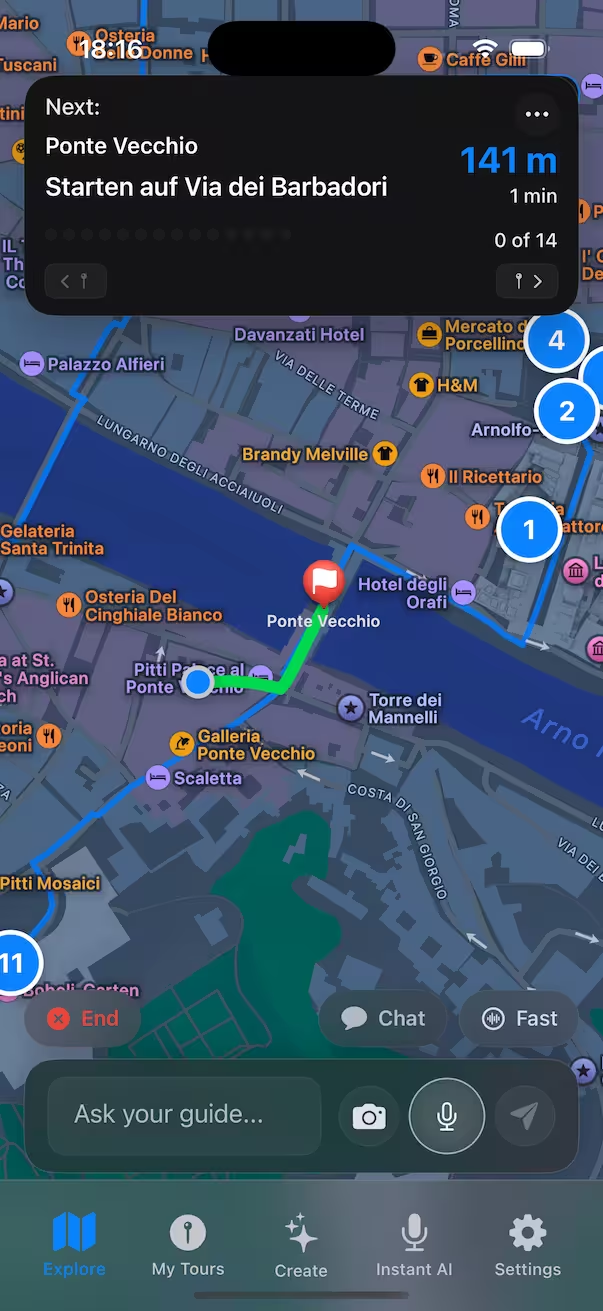
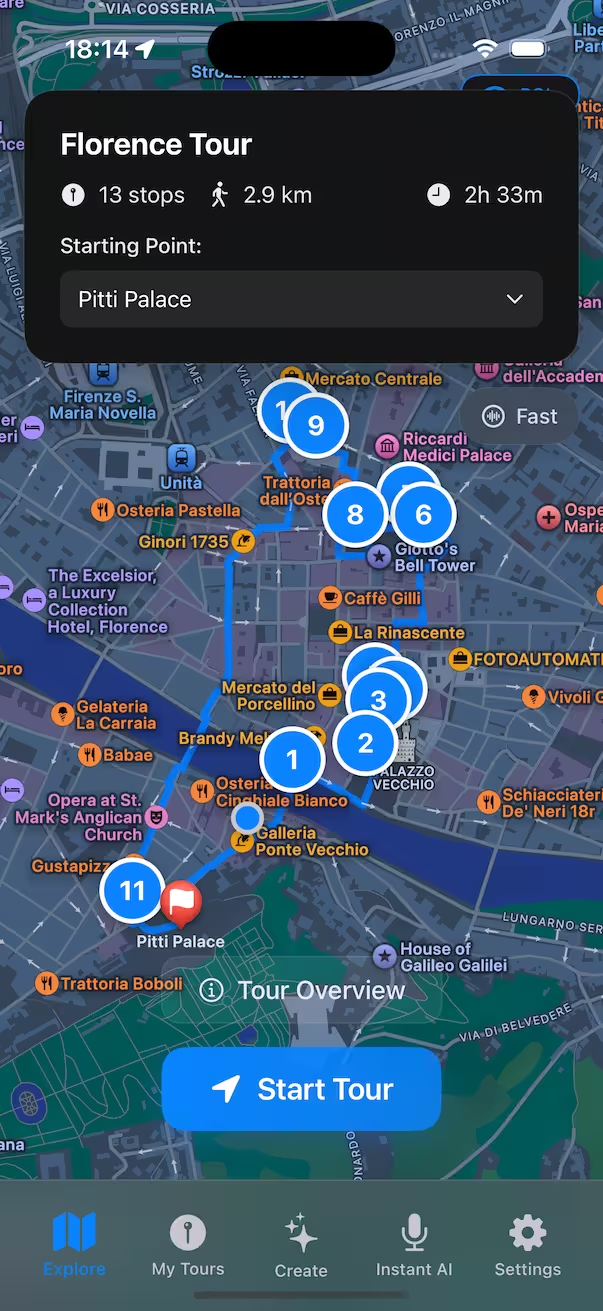
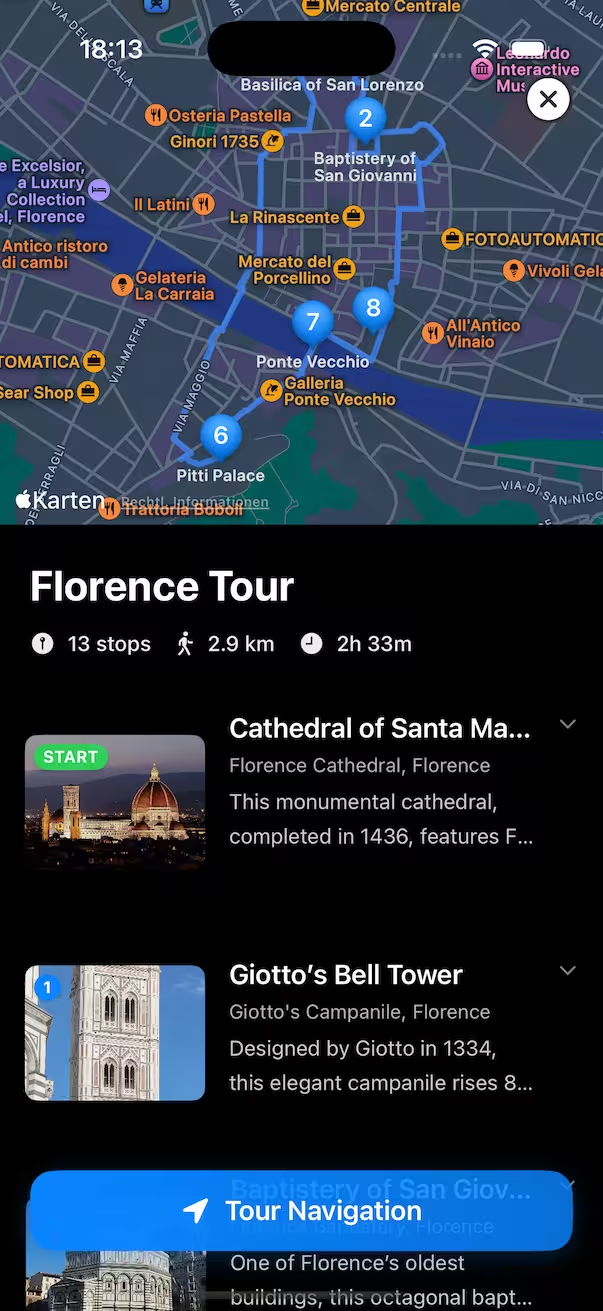
The classic Osaka tour: 9 stops, 10.3 km, about 4 h on foot
Your live AI guide and the self-guided Osaka route, together in your browser.