Best Time to Visit Reykjavik
Month-by-month weather, crowds and prices, plus a full calendar of festivals and events worth planning a trip around.
Best monthsMay, Sep
CheapestJan, Feb, Nov
AvoidJul
BusiestJun, Jul, Aug

When is the best time to visit Reykjavik?
Reykjavik is really two cities depending on light. Come June for the midnight sun and 21 hours of daylight, or come October to March for the northern lights, which need darkness you simply do not have in summer. May and September are the value sweet spot: long usable light, hotels 25-40% below the July peak, and far fewer cruise crowds. Skip the last two weeks of July, the worst price-to-experience ratio of the year. One huge exception for 2026: the total solar eclipse on 12 August, the first over Reykjavik since 1433, which has booked out the city more than a year ahead.
Start our tool and find your best time to visit Reykjavik
Your perfect month
Free · ~30 seconds
or tap a month directly
What matters to you?
And this?
Best overall: May, Jun, Aug. Late May to mid-June and the back half of August are the honest answer. Late May and June bring the biennial Reykjavik Arts Festival (2026 only), National Day on 17 June, the start of the midnight sun, and prices not yet at the July ceiling. Late August pairs Culture Night on 22 August, the Jazz Festival, sunsets back to around 21:00, and the first returning aurora, all at 12-16°C.
Best value: May, Sep, Oct. May, September and October give you the most for your money. September runs 25-30% cheaper than August with whale-watching still going and the first aurora chances from mid-month; October drops 30-40% below summer with strengthening dark-sky odds. May has surging daylight and shoulder rates before the cruise peak lands.
Avoid: Jul. The last two weeks of July: hotels at their 32.000 ISK-plus peak, two to four cruise ships a day, the longest queues of the year, and no aurora darkness whatsoever to offset the cost. Nothing signature happens to justify the premium over June. Pure peak price for peak crowds.
- January: Tough month, 2°C. This is the month Reykjavik belongs to Icelanders again. The pools steam, the cafes are warm and unhurried, and you trade daylight for empty streets and aurora odds. It is a stark, beautiful, slightly punishing trip that rewards anyone who comes prepared for wind and dark rather than expecting a city break in the conventional sense.
- February: Tough month, 2°C. February is the connoisseur's winter month: nearly January-cheap and January-empty, but with a couple more usable hours of light each day and a genuine festival to anchor a trip. If you want aurora and a real city to walk in without summer prices, this is the smart pick.
- March: Tough month, 3°C. March feels like the city stretching after winter. You get the best of both worlds for a short stretch, usable daylight and viable aurora, without the cruise crowds or the summer markup. It is an underrated month for a first trip if you want a bit of everything.
- April: Tough month, 6°C. April is shoulder season at its most flexible: long enough days to roam, shoulder prices, and a fading-but-real shot at aurora early on. It lacks a marquee summer event, which is exactly why it stays affordable and uncrowded between the holidays.
- May: Good time, 9°C. May is the locals' quiet recommendation: long bright evenings, a city fully open and busy with festivals, but prices and crowds still short of summer peak. The catch is wind and the odd cold snap, but the light and the value more than make up for it.
- June: Good time, 12°C. June is Reykjavik wide awake and luminous. There is a slightly giddy, sleep-deprived energy to a city where you can hike at midnight in daylight. Cruise season and prices are rising and the centre is busy by the third week, but the endless light and the run of festivals make it one of the most rewarding months before the July ceiling hits.
- July: Tough month, 14°C. July is peak Iceland and it knows it. The light is glorious and the weather is as kind as it gets, but the centre is dense, the day-tour buses are full, and you are paying top prices for the privilege. If your dates are fixed for July, the move is to start early: a private guide costs summer-maximum rates, but our live in-browser AI guide is a flat 5 euro an hour (or 20 euro all-in, with 100 free credits to start), with no app to download. It walks you stop to stop like a human guide, tells the story at each place and answers whatever you ask, and you pick where to begin and tap on to the next, so you can be out before 10 am and ahead of the queues.
- August: Tough month, 13°C. August is festival-packed Reykjavik, and the 12 August 2026 total solar eclipse is a once-in-several-lifetimes headline. The light is softening back toward proper evenings, the city is at its most alive, and by the last week you can chase aurora again. The flip side is crowds and prices at or above July, and around the eclipse the city is busier than it has ever been recorded.
- September: Good time, 10°C. September is the savvy traveller's month: enough daylight for full days, aurora back on the table for the first time since spring, cruise crowds thinning, autumn colour coming in, and prices dropping a quarter from August. It is dramatic and intimate at once, the couples' and value-hunters' favourite.
- October: Tough month, 7°C. October is the quiet, dramatic, good-value heart of aurora season. The cruise ships are gone, the prices have dropped, and the nights are long enough to hunt the lights without the deep-winter cold or the near-total darkness of December. The price is the rain, the wettest stretch of the year, but the trade is more than fair.
- November: Tough month, 4°C. November is for travellers who want the bones of Reykjavik winter, the dark, the aurora, the steaming pools, without crowds or peak prices. Airwaves gives it a jolt of music for one week; the rest of the month is one of the most peaceful and affordable times to be here, if you can handle the short days.
- December: Tough month, 2°C. December is Reykjavik at its most magical and most extreme. The dark is almost total, the markets and lights soften it, and aurora can appear over a city already strung with Christmas lights. Early December is a steal; the Christmas-to-New-Year window is expensive and busy but delivers a fireworks night unlike anywhere else in Europe.
Reykjavik weather by month
HighLowRainfall
Jan2°
Feb2°
Mar3°
Apr6°
May9°
Jun12°
Jul14°
Aug13°
Sep10°
Oct7°
Nov4°
Dec2°
| Month | Temp | Rain | Sun | Crowds | Prices | Highlight |
|---|---|---|---|---|---|---|
| Jan | 2° / -3° | 145mm · 18 rainy days | 1.6 h/day | ●○○○○ | ●○○○○ | Dark Music Days |
| Feb | 2° / -2° | 146mm · 16 rainy days | 3.5 h/day | ●○○○○ | ●○○○○ | Dark Music Days |
| Mar | 3° / -2° | 136mm · 18 rainy days | 6.0 h/day | ●●○○○ | ●●○○○ | Food & Fun Festival |
| Apr | 6° / 1° | 135mm · 18 rainy days | 7.5 h/day | ●●○○○ | ●●○○○ | Easter |
| May | 9° / 4° | 118mm · 18 rainy days | 9.7 h/day | ●●○○○ | ●●●○○ | DesignMarch |
| Jun | 12° / 7° | 96mm · 17 rainy days | 9.2 h/day | ●●●●○ | ●●●●○ | Reykjavik Arts Festival |
| Jul | 14° / 9° | 85mm · 16 rainy days | 9.9 h/day | ●●●●● | ●●●●● | |
| Aug | 13° / 8° | 96mm · 14 rainy days | 9.0 h/day | ●●●●● | ●●●●● | Commerce Day |
| Sep | 10° / 6° | 146mm · 18 rainy days | 6.2 h/day | ●●●○○ | ●●●○○ | Rettir Sheep Roundup |
| Oct | 7° / 3° | 153mm · 18 rainy days | 4.5 h/day | ●●○○○ | ●●○○○ | Reykjavik International Film Festival |
| Nov | 4° / 0° | 121mm · 16 rainy days | 2.2 h/day | ●○○○○ | ●○○○○ | Imagine Peace Tower Illumination |
| Dec | 2° / -3° | 131mm · 17 rainy days | 0.8 h/day | ●●○○○ | ●●○○○ | Imagine Peace Tower Illumination |
How we score this: weather = long-run climate normals (Open-Meteo), crowds & prices = relative season read, events checked yearly against official dates.
Best time to visit Reykjavik: weather, prices & crowds
Best months for good weather
Jun, Jul, Aug
June through August is as warm and bright as Reykjavik gets: highs of 12-14°C, the fewest rain days, and 16-21 hours of daylight. Do not expect a beach summer though. A genuinely warm day is 18°C with no wind, and the Atlantic gusts make it feel 5-10°C colder than the thermometer, so layers stay essential even in July.
Quietest months to avoid the crowds
Jan, Feb, Nov
January, February and November are the city at its emptiest. Cruise season is over, the school-holiday waves are gone, and you get the Hallgrimskirkja and the National Museum almost to yourself. The trade is real: 5-6 hours of daylight in January and relentless wind, but it is also prime aurora season.
Cheapest time to visit Reykjavik
Jan, Feb, Nov
January and February are the cheapest months outright: central hotel doubles from 18.000-22.000 ISK a night against 32.000-plus in July, and flights at their yearly low, often under 200 euro return from European hubs. November is nearly as cheap once you dodge the Iceland Airwaves week (4-8 Nov).
Best time for festivals and events
Aug
12 August 2026 brings a total solar eclipse over Reykjavik, the first since 1433 and the next not for roughly 600 years. The city centre gets about a minute of totality; Gardur and Sandgerdi on the Reykjanes peninsula get 1m 40s, and the Snaefellsnes peninsula the longest at 2m 13s. Iceland and northern Spain are the only landmasses in the path.
How many days do you need in Reykjavik?
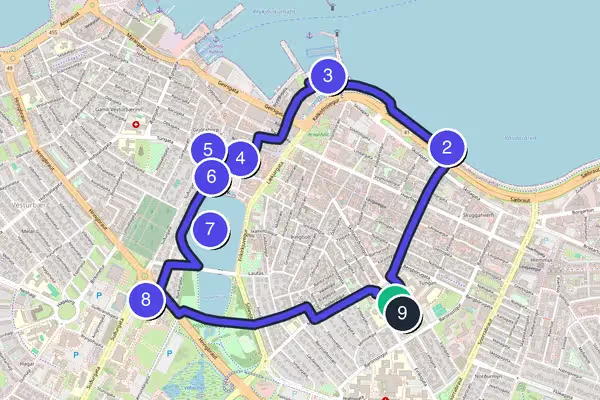
Two days cover Reykjavik itself comfortably, and most visitors add more time for day trips into the surrounding country rather than the city. The centre is compact and walkable: the self-guided Reykjavik walking tour threads 9 stops across 4.5 km in around 2.3 hours, linking the key landmarks without the need for transport.
One day
The essential core in a single loop
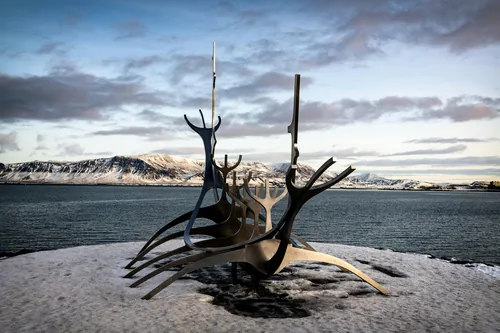
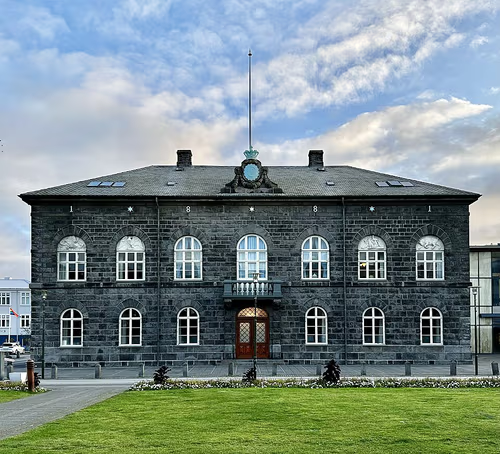
Start at Hallgrímskirkja and take the lift up the 74.5-metre tower for the full panorama of the pastel city and the sea. Walk down Skólavörðustígur to the waterfront, where the steel Sun Voyager sculpture sits against the harbour, then continue east to the glass-faceted Harpa Concert Hall. Loop back through Austurvöllur square past the Alþingi parliament building to Tjörnin pond and Reykjavik City Hall, which houses a 76-square-metre topographic map of Iceland. Allow an extra 30 minutes if you want the Einar Jónsson sculpture garden, which is free and open year-round.
Two daysRecommended
Deeper indoors and the first day trip
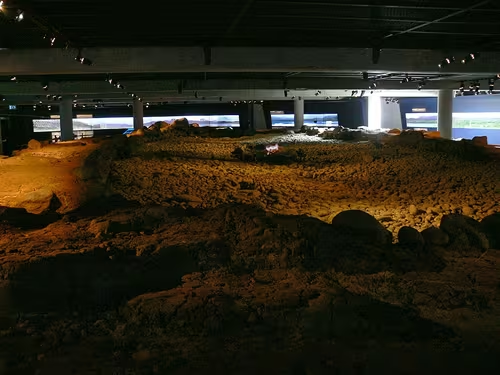
Use the morning for the National Museum of Iceland on Suðurgata, which traces Icelandic history from the Viking age through the 12th-century Valþjófsstaður church door, then walk a few minutes to the Settlement Exhibition built around a real Viking longhouse discovered in 2001. In the afternoon, make for the Blue Lagoon (50 minutes out on Reykjanes, book ahead online) or the closer Sky Lagoon in the city, bookable one to two weeks ahead at around 7.990 to 11.990 ISK.
Three days
Golden Circle and geothermal ritual
Day three is best spent on the Golden Circle: Þingvellir National Park, the geysers at Geysir and Gullfoss waterfall form a full circuit of roughly 300 km and a long day. Return via Laugardalur to soak in Laugardalslaug, the city's largest geothermal pool, open from 06:30 on weekdays at around 1.200 ISK. Locals pack it at 07:00 to 08:30 and 17:00 to 19:00, so mid-morning is the quietest for visitors.
Four days or more
South Coast, puffins, and what the season adds
A fourth day opens the South Coast: black sand beaches at Reynisfjara, the waterfalls Seljalandsfoss and Skógafoss, and glacier views at Jökulsárlón or Skaftafell. From June through August, puffin boats from the Old Harbour to Lundey Island run at peak frequency and whale-watching success exceeds 95 percent. If you are here in October, add the Imagine Peace Tower on Viðey Island, lit nightly from 9 October, reached by the Elding ferry from Skarfabakki for around 1.500 ISK return.
Best time to visit Reykjavik by traveller type
Same city, different trip. Here's the month that fits how you're travelling.
🧭
Best time to visit Reykjavik for the first time
JunAug
June or late August, eclipse week aside. June hands you 21 hours of daylight to fit everything in, the Arts Festival (2026 only) and National Day; late August adds Pride, Culture Night and the first aurora. Both months: book the Blue Lagoon and a central hotel two to three months ahead.
❤️
Best time to visit Reykjavik for couples
AugOct
Late August or early October. Late August gives Culture Night fireworks over the harbour, golden light until 21:00 and easy 12-16°C walking. Early October is more intimate and dramatic: first aurora, gold-orange birch in Ellidaardalur, hotels 30-40% cheaper, and the RIFF film festival in town.
💶
Best time to visit Reykjavik on a budget
JanFeb
January or February. Flights drop under 200 euro return from London or Amsterdam and central hotel doubles run 18.000-22.000 ISK. The Winter Lights Festival (5-8 Feb) is entirely free, including Museum Night and Pool Night, municipal pools cost about 1.200 ISK, and it is full aurora season. The only price is psychological: 4-5 hours of daylight and wind.
🍝
Best time to visit Reykjavik for food and wine
FebSep
Late February or September. Late February is Food & Fun (25 Feb-1 Mar), the one week visiting chefs build all-Icelandic prix-fixe menus at the top restaurants, and Thorrablot season (23 Jan-19 Feb) puts fermented shark, sviou and brennivin on tables at Cafe Loki and Mulakaffi. September brings the freshest haddock and cod and autumn lamb after the Rettir roundup.
Worst time to visit Reykjavik
The last two weeks of July are the stretch most worth skipping for a normal visit. Every European school is on summer break, two to four cruise ships dock in the harbour daily, and central hotels hit their annual ceiling near 32.000 ISK a night. The Hallgrímskirkja tower queue stretches 15 to 30 minutes and there is zero aurora darkness to show for the premium. Unlike June, no signature event justifies the cost over the shoulder months. The other window to watch is the Christmas-to-New-Year period from 23 December to 2 January, when hotel rates spike 50 to 80 percent and the city fills for the spectacular New Year's fireworks.
Still worth it for Peak July still suits families with children who need the warmest weather and the longest, most forgiving daylight, and anyone for whom the midnight sun is the main draw. The Christmas window delivers one of Europe's most atmospheric amateur fireworks nights.
Go instead in May, September, when Reykjavik is at its best.
Best time for a tour of Reykjavik
Reykjavik's 4.5-kilometre loop is walkable year-round, but the experience shifts dramatically by season. July and August are the warmest months, topping out at 13 to 14 °C, yet those are also when the city is shoulder-to-shoulder with visitors: the path along the shore to Sun Voyager is a slow shuffle in summer, and the steps of Hallgrímskirkja are rarely free of tripods. If you want warmth and long Arctic daylight without the press of crowds, late May is the sweet spot: highs creep up to 9 °C, rain days are roughly the same as any other month (Iceland is consistently damp, expect 14 to 18 wet days in every month), but you have elbow room at Harpa Concert Hall and nearly the whole pond at Tjörnin to yourself. January through February are the quietest months of all: near-empty streets, highs barely above freezing, and fewer than three hours of usable daylight. That is a trade-off worth naming honestly. March and April bring slightly longer light and temperatures edging toward 3 to 6 °C, which many walkers find more manageable than the deep-winter core.
The practical upside of AI Tourguide here is that no departure slot forces you into the crowd. On a packed July day you can start your Reykjavik tour at 7 am, when the waterfront is quiet and the low northern sun is already above the horizon, and the guide will hold a real conversation with you the entire way, asking what you noticed at the Settlement Exhibition and adjusting what it tells you next. On a grey November morning when you have the route to yourself, that same voice-led, browser-based walk runs at whatever pace suits the weather and your mood, no tour operator schedule required.
 +6
+6All 9 stops are already on the map.
You just press start.
You just press start.
 AI Tourguide
You just read the route.
Now walk it with a guide in your ear.
Press start wherever you are, even hundreds of kilometres from Reykjavik, and the guide begins telling its stories right away. In the city, pick any of the 9 stops to start from: it leads you there, then talks with you the whole route, asking, listening, remembering, and shaping the tour around your answers.
9stops4.5km2.3hours11languages
▶Start the tour freeFree to start · Runs in your browser · No app, no download
Reykjavik events and festivals calendar
Annual highlights worth timing a trip around, listed month by month.
January
🍷 Food and wineThorrablot Midwinter Feast
Jan 23 – Feb 19
The Norse month of Thorri, opening on Bondadagur (the fourth Friday of January).
A Viking midwinter feast tradition: Thorramatur platters of hakarl (fermented shark), sviou (sheep's head) and brennivin served at restaurants like Cafe Loki, Mulakaffi and Matur og Drykkur.
🎵 MusicDark Music Days Myrkir músíkdagar
Jan 28 – Feb 1 ~
Late January into early February, in the depth of the polar dark.
Iceland's festival of contemporary and experimental music, held annually since 1982 at venues across Reykjavik.
February
🎨 Art and cultureWinter Lights Festival Vetrarhátíð
Feb 5–8 ~
Early February, usually the first full weekend.
A four-day city-wide festival of light art with 150-plus free events, including Museum Night (around 40 museums free 18:00-23:00), Pool Night (geothermal pools free 17:00-21:00) and a Light Trail from Hallgrimskirkja to Austurvollur.
🍷 Food and wineFood & Fun Festival Food & Fun
Feb 25 – Mar 1 ~
Late February into early March.
Around 18 Reykjavik restaurants pair with visiting international chefs on exclusive three-course menus built from only Icelandic ingredients.
March
🎬 FilmStockfish Film Festival Stockfish
Mar 19–29 ~
Always March.
Iceland's only film-industry festival and market, held at Bio Paradis, the country's sole arthouse cinema, showcasing Nordic and international features and shorts.
April
🇮 HolidayEaster Páskar
Apr 2–6 ~
Maundy Thursday through Easter Monday, always in late March or April.
Four consecutive public holidays.
May
🎨 Art and cultureDesignMarch
May 6–10 ~
Always early May.
Iceland's biggest design festival: 100-plus exhibitions and around 150 events across Reykjavik linking Icelandic designers with international audiences, many of them free.
🎨 Art and cultureReykjavik Arts Festival Listahátíð í Reykjavík
May 30 – Jun 14
Late May to mid-June, biennial (even years only).
Iceland's largest cultural event since 1970, spanning visual art, music, theatre and dance.
June
🇮 HolidayFishermen's Day Sjómannadagurinn
Jun 7 ~
The first Sunday of June.
A celebration of Iceland's seafaring heritage since 1938, with a parade from Harpa at 12:30 to the Grandagardur festival area, sea-rescue demos and family entertainment.
🎨 Art and cultureHafnarfjordur Viking Festival Fornleifadagar á Víkingaslóð
Jun 12–17 ~
Always mid-June, near the summer solstice.
A Viking living-history event in Hafnarfjordur (15 minutes from Reykjavik): a medieval market, Viking battles and period food.
🇮 HolidayIceland National Day Þjóðhátíðardagurinn
Jun 17
Always 17 June.
Marks the founding of the Republic of Iceland in 1944 and the birthday of independence leader Jon Sigurosson.
August
🇮 HolidayCommerce Day Verslunarmannahelgi
Aug 3 ~
The first Monday of August, capping a three-day long weekend.
An Icelandic bank-holiday weekend, one of the busiest for domestic travel, with major outdoor festivals in the Westman Islands and Westfjords.
🏳️🌈 PrideReykjavik Pride Hinsegin dagar
Aug 4–9 ~
The first or second week of August, with the parade on the Saturday (8 Aug, 14:00).
A six-day LGBTQ+ festival culminating in a parade that draws around 130.000 people, roughly 40% of Iceland's entire population, running Hallgrimskirkja to Skolavorourstigur to Bankastraeti to Laekjargata.
🎵 MusicInnipukinn Festival Innipúkinn
Aug 7–9 ~
The first weekend of August.
A three-day indoor indie, rock and pop festival at Gamla Bio and Rontgen, with off-venue street events across downtown.
🌸 Seasonal natureTotal Solar Eclipse Sólmyrkvinn
Aug 12
A one-time event; totality begins around 17:48 local time. The next visible from Reykjavik is roughly 600 years away.
The first total solar eclipse over Reykjavik since 1433.
🏃 SportReykjavik Marathon Íslandsbanki Reykjavíkurmaraþon
Aug 22 ~
The third Saturday of August, the same day as Culture Night.
A marathon, half-marathon, 10km and family fun run starting and finishing in central Reykjavik, with several streets closed from 08:40.
🎨 Art and cultureCulture Night Menningarnótt
Aug 22 ~
The Saturday closest to 18 August, usually the third Saturday of the month.
The night Reykjavik's galleries, museums, studios, shops and outdoor stages all open free at once, followed by fireworks over the harbour.
🎵 MusicReykjavik Jazz Festival Reykjavíkurjazzhátíð
Aug 26–30 ~
Always late August.
A five-day festival at indoor venues and outdoor stages with Icelandic and international jazz acts, some free.
September
🌸 Seasonal natureRettir Sheep Roundup Réttir
Sep 12–20 ~
September, dates varying by region (typically 12-20 Sep in SW Iceland), published in the local press about ten days ahead.
Around 400.000 sheep herded down from the Highland summer pasture by farmers on horseback and foot, then sorted in circular rettir pens in a raucous country party.
🎬 FilmReykjavik International Film Festival RIFF
Sep 24 – Oct 4 ~
The last week of September into the first days of October.
Eleven days of international independent film at Haskolabio and the Nordic House.
October
🎨 Art and cultureImagine Peace Tower Illumination Friðarsúlan
Oct 9 – Dec 8
Lit nightly from 9 October (Lennon's birthday) to 8 December (the anniversary of his death), plus the winter solstice and spring equinox.
Yoko Ono's column of light on Vioey Island, lit nightly at 20:00 and beaming skyward, visible from the Reykjavik waterfront.
November
🎵 MusicIceland Airwaves
Nov 4–8 ~
The first week of November (official program 5-7 Nov).
The world's most northerly music showcase since 1999: three official nights across Reykjavik's churches, museums and venues, plus free daytime off-venue shows in cafes and bookshops from noon.
🎨 Art and cultureIceland Noir
Nov 11–14 ~
The second or third week of November.
A crime and literary fiction festival founded by Ragnar Jonasson and Yrsa Sigurdardottir, in intimate downtown venues with access to the Kjarval members' club.
🎄 Christmas marketChristmas Markets Jólamarkaðir
Nov 29 – Dec 23 ~
From the first Sunday of Advent through 23 December.
Several city-centre markets: the main one at Ingolfstorg with an ice rink (skating around 1.690 ISK), Hjartatorg on select weekends, and the Heiomork woods on Advent weekends.
December
🇮 HolidayNew Year's Eve Fireworks Nýárið
Dec 31
31 December into 1 January, fireworks from around 23:30.
One of Europe's most spectacular amateur fireworks displays, with around 200.000 people lining the waterfront and hilltops as Icelanders burn through roughly a billion ISK of personal fireworks in one evening.
Insider tips for visiting Reykjavik
The rules buried in forums, in one place.
- Grotta Lighthouse, the best free aurora spot near the city at the tip of Seltjarnarnes, is closed 1 May to 15 July for nesting Arctic terns and eider ducks. That closure overlaps exactly with the tourist surge. If Grotta aurora shots are on your list, you can only go August through April anyway, which is also the only time it is dark enough.
- For the Hallgrimskirkja tower in summer (June-August), arrive before 10:30 to skip the 15-30 minute queue. The lift is tiny and slow, and by midday the line spills outside. The tower closes one hour before the church and is shut during Sunday services (organ recitals at 12:00). The best exterior shot is from the bottom of Skolavorourstigur looking up at sunset, which in June is after midnight and in late August around 21:00.
- The total solar eclipse of 12 August 2026 has booked out central Reykjavik more than a year ahead. Totality in the city centre is only about a minute. Drive 45 minutes to Garour or Sandgerdi on Reykjanes for 1m 40s, or 2.5 hours to Snaefellsnes for the full 2m 13s. The strategy nearly every local will tell you: leave the city for the day.
- On 22 August, Culture Night and the Reykjavik Marathon fall on the same day, paralysing the centre from roughly 08:00 to 22:00. Marathon streets close from early morning, then different streets close for the evening festivities and harbour fireworks. Plan to move on foot only, no car works downtown, and book a hotel within 500m of the centre two to three months out.
- Iceland Airwaves (4-8 Nov) runs free off-venue shows from noon to 18:00 in cafes, bookshops and record stores across town, and they are often better than the official evening sets. You do not need the 180-220 euro wristband to catch them. This is how locals do the festival without paying for the pass.
- The Blue Lagoon (50 minutes out on Reykjanes) is online pre-book only, with no walk-ins in peak season. Book two to three months ahead for June-August; budget 5-6 hours including transport. Comfort entry is about 9.990 ISK, Premium about 14.990 ISK. The in-city Sky Lagoon is the flexible alternative, bookable just 1-2 weeks ahead at roughly 7.990-11.990 ISK.
- The geothermal outdoor pools are a daily local ritual, not a tourist attraction, and water sits at 28-42°C year-round whatever the air does. Shower naked before entering (enforced) and mind the etiquette. Locals pack them 07:00-08:30 and 17:00-19:00, so mid-morning is quietest for visitors. Laugardalslaug, the biggest, opens 06:30-22:00 weekdays at about 1.200 ISK. Soaking in a 40°C hot pot while it snows is best October-April.
- The Rettir sheep roundup near the city (Mosfellsdalur and Kjos, 30-45 min out) usually falls the second or third weekend of September, but the exact date is only published in the Icelandic press about ten days ahead. Spectators are welcome, turning up unannounced is fine, and it is one of the most authentic days you can have near Reykjavik. Bring warm clothes.
- Rain here is showery and hourly rather than an all-day soak, and the famous horizontal rain in winter and spring makes umbrellas useless. A proper waterproof jacket is non-negotiable in every single month. Check vedur.is for both the weather and the 1-5 aurora forecast, and the Videy ferry to the Imagine Peace Tower is tide- and weather-dependent, so confirm it the morning of.
Public holidays in Reykjavik
On these dates many shops and offices close, transport thins out, and sights can be mobbed or shut. Plan around them.
| Date | Holiday | What closes |
|---|---|---|
| Jan 1 | New Year's Day | Everything is closed and the city is sleeping off the fireworks; the 200.000-strong New Year's crowd disperses through the morning. Flights out on 2 January are very busy. Plan a quiet arrival day around hotel breakfast and a soak in whichever geothermal pool is open. |
| Jan 6 | Epiphany | Threttandinn, the thirteenth and final day of Icelandic Christmas, with traditional bonfires, elf processions and a last round of fireworks. A public holiday, so most shops close, but the bonfires make for a genuinely atmospheric evening. |
| Apr 3 | Good Friday | A full public holiday: virtually all retail is shut and the state liquor stores (Vinbudin) are closed, so stock up the day before. Some restaurants stay open but plan meals ahead. The four-day Easter weekend pushes central hotel rates up 15-20%. |
| Apr 5 | Easter Sunday | Public holiday with most attractions on reduced hours, though central restaurants generally open. Banks and offices are closed and many Icelanders are travelling domestically, so day-tour transport books up. Hotels carry the Easter-week surcharge. |
| Apr 6 | Easter Monday | Bank-holiday closures across government and banks, but tourist sites resume normal hours and the Easter crush starts to ease. A reasonable museum day as the long weekend winds down. |
| Apr 23 | First Day of Summer | Sumardagurinn fyrsti, a public holiday marking the old Norse first day of summer with parades and street fairs, even though real summer warmth is weeks off. Offices close but most tourist attractions stay open. A locals-heavy, festive day. |
| May 1 | Labour Day | Public holiday with union parades downtown and most shops closed. Museums and tourist sites generally keep normal hours, so it affects retail and logistics more than sightseeing. |
| May 14 | Ascension Day | Public holiday that many Icelanders bridge into a four-day weekend, so domestic travel picks up and some businesses close. Museums largely stay open. Expect a small bump in demand rather than peak crowds. |
| May 25 | Whit Monday | Public holiday with banks and government closed. Another bridge weekend lifting domestic travel; tourist sites mostly keep normal hours, so it is a quiet rather than disruptive day for visitors. |
| Jun 17 | National Day | The biggest celebration of the year and a full public holiday: streets close for parades, almost every non-tourist business shuts, and the centre fills with street fairs at Hljomskalagardur and Klambratun. The Austurvollur ceremony is at 11:10 and the parade from Hallgrimskirkja at 13:00. The most atmospheric free day of the Icelandic summer, so embrace the street life rather than fighting it for logistics. |
| Aug 3 | Commerce Day | Frtidagur verslunarmanna, a Monday bank holiday capping Iceland's busiest domestic travel weekend (1-3 Aug). Reykjavik empties of Icelanders heading to festivals in the Westman Islands and Westfjords while tourists fill it. Hotels spike and the weekend overlaps with Pride prep, so book early. |
| Dec 25 | Christmas Day | Everything is closed and the city is very quiet; the main Icelandic Christmas celebration is actually Christmas Eve, 24 December, when shops shut by 14:00 and restaurants by 18:00 for the family dinner. Plan all meals well ahead. The upside is dark, still streets and prime aurora skies if the weather cooperates. |
| Dec 26 | Boxing Day | Annar i jolum, a public holiday with most shops closed though some restaurants reopen. A calm day between Christmas and New Year, deep in the holiday price spike that runs 23 December to 2 January. |
| Dec 31 | New Year's Eve | A partial holiday from 14:00, then one of Europe's most spectacular amateur fireworks displays as around 200.000 people line the waterfront and hilltops and Icelanders burn through roughly a billion ISK of personal fireworks. Public transport thins out from the afternoon, so plan to be on foot. Hotels run 50-80% above normal across the 23 Dec-2 Jan window; book a year ahead for the best rooms. |
Reykjavik month by month
January in Reykjavik
High2°C / 35°F
Low-3°C
Rain145mm / 18 rainy days
Sun1.6 h/day
Daylight6 h/day
Humidity79%
Crowds●○○○○Prices●○○○○
January is Reykjavik at its quietest, darkest and cheapest. Daytime hovers at 1-2°C but January winds average 34 km/h, so wind chill of -10 to -15°C is routine and the cold bites far harder than the thermometer suggests. With only about 5.6 hours of daylight, the sun barely clears the horizon and any afternoon walk after 15:30 happens in the dark. That darkness is the whole point: this is prime aurora season near the peak of the solar cycle, and the post-Christmas lull means you have the city to yourself.
The vibe This is the month Reykjavik belongs to Icelanders again. The pools steam, the cafes are warm and unhurried, and you trade daylight for empty streets and aurora odds. It is a stark, beautiful, slightly punishing trip that rewards anyone who comes prepared for wind and dark rather than expecting a city break in the conventional sense.
Don't miss Aurora hunting is the headline: 5-7 nights now gives you a 70-80% chance of some display given the solar maximum, best chased from Grotta Lighthouse or the Oskjuhlid hill by Perlan, away from city glare. Soak in a 40°C hot pot at Laugardalslaug while it snows. Dark Music Days fills small venues with experimental concerts in the polar dark.
Crowd drivers No cruise ships, no school holidays once New Year passes, and near-zero daylight keeping casual visitors away. Dark Music Days (late Jan to early Feb) draws a niche crowd but does not move the needle. The lowest visitor pressure of the year.
In season Hearty winter food is the play: lamb soup, and from 23 January the Thorrablot season opens with Thorramatur platters of fermented shark and sviou at Cafe Loki and Mulakaffi, washed down with brennivin.
Heads up 1 January everything is closed and 6 January (Epiphany) shuts most shops. Grotta Lighthouse is open for aurora now (it only closes 1 May-15 July). Kolaportio flea market runs weekends only.
The cheapest month of the year: central hotel doubles from 18.000-22.000 ISK a night against 32.000-plus in July, with flights at their annual low.
Events this month
🎵 MusicDark Music Days Myrkir músíkdagar
Jan 28 – Feb 1 ~
Late January into early February, in the depth of the polar dark.
Iceland's festival of contemporary and experimental music, held annually since 1982 at venues across Reykjavik.
Niche but atmospheric, and it lands in the cheapest, darkest weeks of the year, so it pairs naturally with aurora hunting and rock-bottom prices.
🍷 Food and wineThorrablot Midwinter Feast
Jan 23 – Feb 19
The Norse month of Thorri, opening on Bondadagur (the fourth Friday of January).
A Viking midwinter feast tradition: Thorramatur platters of hakarl (fermented shark), sviou (sheep's head) and brennivin served at restaurants like Cafe Loki, Mulakaffi and Matur og Drykkur.
Authentic Icelandic food culture you cannot access outside this window.
February in Reykjavik
High2°C / 36°F
Low-2°C
Rain146mm / 16 rainy days
Sun3.5 h/day
Daylight9 h/day
Humidity79%
Crowds●○○○○Prices●○○○○
February stays cold, dark and cheap, with highs near 2°C and the same biting wind, but daylight has already climbed back to about 8.6 hours, a huge gain on January. Crowds remain low and prices are at the floor, while the aurora window is still wide open. The Winter Lights Festival (5-8 Feb) lights up the whole city for four days, and it is one of the best free weekends in the country.
The vibe February is the connoisseur's winter month: nearly January-cheap and January-empty, but with a couple more usable hours of light each day and a genuine festival to anchor a trip. If you want aurora and a real city to walk in without summer prices, this is the smart pick.
Don't miss The Winter Lights Festival runs 150-plus free events: Museum Night on 6 Feb with around 40 museums free 18:00-23:00, Pool Night on 7 Feb with geothermal pools free 17:00-21:00, and a Light Trail from Hallgrimskirkja to Austurvollur. Aurora odds stay strong with longer dark nights than January.
Crowd drivers Cruise season has not started and there is no school-holiday block. The Winter Lights Festival (5-8 Feb) creates a four-day local spike, but the base visitor count stays low. Thorrablot feasts continue through the month.
In season Peak Thorrablot: this is the only window to try the full Viking midwinter feast of hakarl, sviou and ram, served at Cafe Loki, Mulakaffi and Matur og Drykkur. Food & Fun chef menus arrive at the very end of the month.
Heads up No major statutory closures. Grotta Lighthouse open for aurora; Kolaportio flea market weekends only; Reykjavik Art Museum free Thursday evenings until 22:00.
Consistently the cheapest month for flights to Iceland; hotel doubles 18.000-23.000 ISK a night, with Museum Night and Pool Night entirely free during the Winter Lights Festival.
Events this month
🎨 Art and cultureWinter Lights Festival Vetrarhátíð
Feb 5–8 ~
Early February, usually the first full weekend.
A four-day city-wide festival of light art with 150-plus free events, including Museum Night (around 40 museums free 18:00-23:00), Pool Night (geothermal pools free 17:00-21:00) and a Light Trail from Hallgrimskirkja to Austurvollur.
One of the best free weekends in Iceland, and it falls in off-peak prices and full aurora season.
🍷 Food and wineThorrablot Midwinter Feast
Jan 23 – Feb 19
The Norse month of Thorri, opening on Bondadagur (the fourth Friday of January).
A Viking midwinter feast tradition: Thorramatur platters of hakarl (fermented shark), sviou (sheep's head) and brennivin served at restaurants like Cafe Loki, Mulakaffi and Matur og Drykkur.
Authentic Icelandic food culture you cannot access outside this window.
🎵 MusicDark Music Days Myrkir músíkdagar
Jan 28 – Feb 1 ~
Late January into early February, in the depth of the polar dark.
Iceland's festival of contemporary and experimental music, held annually since 1982 at venues across Reykjavik.
Niche but atmospheric, and it lands in the cheapest, darkest weeks of the year, so it pairs naturally with aurora hunting and rock-bottom prices.
March in Reykjavik
High3°C / 37°F
Low-2°C
Rain136mm / 18 rainy days
Sun6.0 h/day
Daylight12 h/day
Humidity77%
Crowds●●○○○Prices●●○○○
March is the great swing month for light. Daylight rockets from about 8.6 hours to 11.8 across the month, the equinox levelling day and night, and yet it is still dark enough for aurora, especially in the first half. Highs touch 3°C. Crowds and prices stay moderate, making the back half of March a clever window: enough light to sightsee properly and still a real chance at the northern lights before they fade for the summer.
The vibe March feels like the city stretching after winter. You get the best of both worlds for a short stretch, usable daylight and viable aurora, without the cruise crowds or the summer markup. It is an underrated month for a first trip if you want a bit of everything.
Don't miss Equinox aurora is still very much in play in early March, paired with enough daylight for full days out. The Stockfish Film Festival fills Bio Paradis, the city's only arthouse cinema. With roughly 12 hours of light, March is the most balanced month for both aurora and daytime photography.
Crowd drivers Shoulder season is just beginning. The Stockfish Film Festival (19-29 Mar) and St. Patrick's pub scene add a little life, and spring-equinox aurora hunters trickle in, but pressure stays light.
In season Catch the tail of Food & Fun if you can, when visiting chefs build three-course all-Icelandic menus at about 18 top restaurants. Otherwise hearty winter cooking still rules the menus.
Shoulder rates, 25-35% cheaper than peak. Food & Fun prix-fixe menus run late Feb into early March at participating restaurants.
Events this month
🎬 FilmStockfish Film Festival Stockfish
Mar 19–29 ~
Always March.
Iceland's only film-industry festival and market, held at Bio Paradis, the country's sole arthouse cinema, showcasing Nordic and international features and shorts.
Excellent off-peak timing, with a real festival buzz in an uncrowded city and shoulder-season prices.
🍷 Food and wineFood & Fun Festival Food & Fun
Feb 25 – Mar 1 ~
Late February into early March.
Around 18 Reykjavik restaurants pair with visiting international chefs on exclusive three-course menus built from only Icelandic ingredients.
The best week to eat at the city's top restaurants at structured prix-fixe pricing, in an uncrowded off-peak city. Book early.
April in Reykjavik
High6°C / 43°F
Low1°C
Rain135mm / 18 rainy days
Sun7.5 h/day
Daylight15 h/day
Humidity79%
Crowds●●○○○Prices●●○○○
April is the last of the aurora season and the first real taste of spring. Daylight surges to about 15 hours by month's end and highs reach 6°C, though the wind keeps it feeling raw. The northern lights are still possible in the dark of early April but fade as the nights shorten; by late April the sky stays too bright. The Easter long weekend (2-6 Apr) and First Day of Summer (23 Apr) are the busy spots in an otherwise calm month.
The vibe April is shoulder season at its most flexible: long enough days to roam, shoulder prices, and a fading-but-real shot at aurora early on. It lacks a marquee summer event, which is exactly why it stays affordable and uncrowded between the holidays.
Don't miss Early April still offers aurora before the light takes over, with 15-plus daylight hours for full days of sightseeing. First Day of Summer (23 Apr) brings parades and street fairs. This is a strong, quiet window for the Golden Circle and South Coast day trips before the summer rush.
Crowd drivers The Easter long weekend (2-6 Apr) spikes central hotels and sends Icelanders travelling domestically. First Day of Summer (23 Apr) is locals-heavy with parades. Otherwise crowds stay modest.
In season Over Easter, central restaurants generally stay open while retail and the Vinbudin liquor stores close, so book dinner ahead. Spring brings the first lighter seafood plates back onto menus.
Heads up 2-6 April (Easter): Good Friday and Easter Sunday shut almost all retail and the liquor stores; many attractions run reduced hours. 23 April (First Day of Summer) closes offices but keeps tourist sites open.
Shoulder spring fares overall, but Easter week (2-6 Apr) carries a 15-20% hotel surcharge. Book around the long weekend if you can.
Events this month
🇮 HolidayEaster Páskar
Apr 2–6 ~
Maundy Thursday through Easter Monday, always in late March or April.
Four consecutive public holidays. Most shops, banks and the Vinbudin liquor stores close, supermarkets cut hours, and many Icelanders travel domestically.
Awkward for normal city logistics, with banks and most retail shut, though some restaurants stay open and central hotels carry a 15-20% surcharge.
May in Reykjavik
High9°C / 48°F
Low4°C
Rain118mm / 18 rainy days
Sun9.7 h/day
Daylight18 h/day
Humidity77%
Crowds●●○○○Prices●●●○○
May is the value sweet spot. Daylight stretches to 18.5 hours, highs reach a comfortable 8-9°C, and the city shakes fully awake without the July crush or July prices. The aurora is gone (too bright now), but in exchange you get near-endless usable light, real cultural depth in DesignMarch (6-10 May) and the start of the biennial Reykjavik Arts Festival from 30 May, and shoulder hotel rates. For a first trip in good light without peak crowds, May is hard to beat.
The vibe May is the locals' quiet recommendation: long bright evenings, a city fully open and busy with festivals, but prices and crowds still short of summer peak. The catch is wind and the odd cold snap, but the light and the value more than make up for it.
Don't miss DesignMarch (6-10 May) runs 100-plus exhibitions across the city, many events free. The Reykjavik Arts Festival opens 30 May (biennial, even years only) with a Bjork exhibition at the National Gallery. Arctic terns arrive from early May, and puffin boats from the Old Harbour begin. Note: Grotta Lighthouse closes 1 May for nesting birds.
Crowd drivers DesignMarch (6-10 May) fills boutique hotels and the Reykjavik Arts Festival opens 30 May. Surging daylight pulls in early-summer visitors, but the cruise peak has not yet landed, so pressure stays moderate.
In season Spring lamb and the first fresh seafood of the season hit menus, and the long evenings make for proper late dinners with light still in the sky past 22:00.
Heads up 1 May (Labour Day) closes most shops; Ascension (14 May), Whitsun (24-25 May) are public holidays. Grotta Lighthouse closes 1 May to 15 July, so it is off-limits for the rest of spring and early summer.
Shoulder rates climbing as daylight surges. DesignMarch and Arts Festival weeks spike boutique-hotel demand; the Blue Lagoon needs 2-4 weeks advance booking now.
Events this month
🎨 Art and cultureDesignMarch
May 6–10 ~
Always early May.
Iceland's biggest design festival: 100-plus exhibitions and around 150 events across Reykjavik linking Icelandic designers with international audiences, many of them free.
Shoulder-season timing with genuine cultural substance, before hotels reach their peak prices.
🎨 Art and cultureReykjavik Arts Festival Listahátíð í Reykjavík
May 30 – Jun 14
Late May to mid-June, biennial (even years only).
Iceland's largest cultural event since 1970, spanning visual art, music, theatre and dance. It runs biennially in even years, bringing major international artists and Icelandic institutions together across venues including the National Gallery and Harpa Concert Hall.
It only happens in even years, so check whether your visit year is on the biennial calendar. The late-May-to-mid-June dates come with a midnight-sun backdrop.
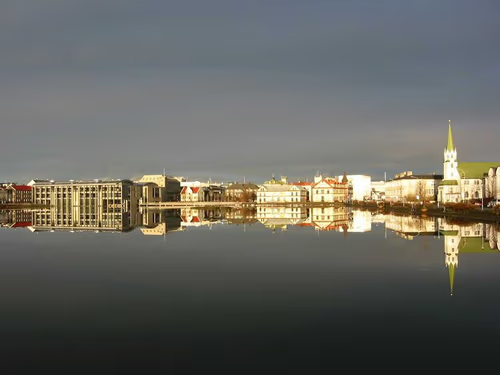
June in Reykjavik
High12°C / 53°F
Low7°C
Rain96mm / 17 rainy days
Sun9.2 h/day
Daylight21 h/day
Humidity80%
Crowds●●●●○Prices●●●●○
June is the midnight sun month and the start of high season. Daylight peaks at nearly 21 hours, the sun sets after midnight from 16-29 June, and the sky never truly darkens, just dips into a long twilight. Highs reach 12°C. The trade-off is sleep: bring an eye mask, because the light kills aurora visibility entirely and disrupts rest without blackout curtains. The payoff is round-the-clock sightseeing, the biennial Arts Festival (until 14 June), and National Day on 17 June.
The vibe June is Reykjavik wide awake and luminous. There is a slightly giddy, sleep-deprived energy to a city where you can hike at midnight in daylight. Cruise season and prices are rising and the centre is busy by the third week, but the endless light and the run of festivals make it one of the most rewarding months before the July ceiling hits.
Don't miss The midnight sun (sun setting after midnight 16-29 June) enables round-the-clock sightseeing and Golden Circle drives at 23:00 in golden light. National Day (17 June) is the most atmospheric free event of the summer, with the Fjallkona reciting poetry and streets closed for parades. Puffin tours to Lundey Island peak; whale-watching success runs 95%-plus.
Crowd drivers Midnight sun, cruise season hitting its peak, National Day (17 June), and the close of the Reykjavik Arts Festival on 14 June all pull crowds. Early European school holidays begin to add to the pressure late in the month.
In season Fishermen's Day (7 June) brings a harbour festival in Grandagardur with seafood stalls and family entertainment. Peak season for the freshest langoustine and cod, with light enough to eat outdoors near midnight.
Heads up 17 June (National Day) is a full public holiday: streets close for parades and almost all non-tourist businesses shut. Grotta Lighthouse remains closed for nesting birds until 15 July.
Rates climb steeply: city-centre hotels frequently 28.000-35.000 ISK a night. Book two to three months ahead, and earlier for National Day week.
Events this month
🎨 Art and cultureReykjavik Arts Festival Listahátíð í Reykjavík
May 30 – Jun 14
Late May to mid-June, biennial (even years only).
Iceland's largest cultural event since 1970, spanning visual art, music, theatre and dance. It runs biennially in even years, bringing major international artists and Icelandic institutions together across venues including the National Gallery and Harpa Concert Hall.
It only happens in even years, so check whether your visit year is on the biennial calendar. The late-May-to-mid-June dates come with a midnight-sun backdrop.
🇮 HolidayFishermen's Day Sjómannadagurinn
Jun 7 ~
The first Sunday of June.
A celebration of Iceland's seafaring heritage since 1938, with a parade from Harpa at 12:30 to the Grandagardur festival area, sea-rescue demos and family entertainment.
A lively, free family day in the harbour district.
🇮 HolidayIceland National Day Þjóðhátíðardagurinn
Jun 17
Always 17 June.
Marks the founding of the Republic of Iceland in 1944 and the birthday of independence leader Jon Sigurosson. A ceremony at Austurvollur at 11:10, a parade from Hallgrimskirkja down Skolavorourstigur at 13:00, the Fjallkona reciting poetry, and street fairs at Hljomskalagardur and Klambratun.
The most atmospheric free Icelandic cultural event of the summer, with the streets closed to traffic. Plan to be a participant, not a logistics-driven sightseer.
🎨 Art and cultureHafnarfjordur Viking Festival Fornleifadagar á Víkingaslóð
Jun 12–17 ~
Always mid-June, near the summer solstice.
A Viking living-history event in Hafnarfjordur (15 minutes from Reykjavik): a medieval market, Viking battles and period food.
An easy day trip during peak daylight, with the longest light of the year.
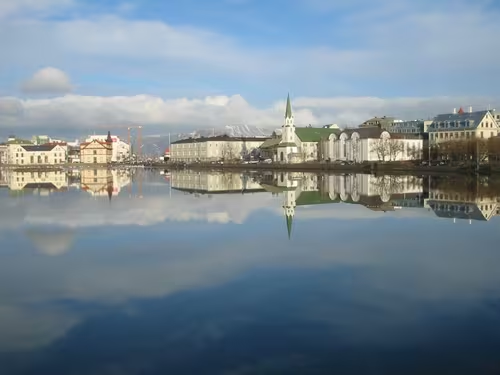
July in Reykjavik
High14°C / 56°F
Low9°C
Rain85mm / 16 rainy days
Sun9.9 h/day
Daylight20 h/day
Humidity82%
Crowds●●●●●Prices●●●●●
July is peak season and it knows it. The light is glorious and the weather is as kind as Reykjavik gets, but the centre is dense with cruise visitors, the day-tour buses are full, and you are paying top prices for the privilege. If your dates fall in July, start early: be out of the hotel before 10:00 to reach Hallgrímskirkja ahead of the queue, and book the Blue Lagoon at least two to three months in advance since there are no walk-ins. The Golden Circle and South Coast work well as late-evening drives in the long golden light.
The vibe July is peak Iceland and it knows it. The light is glorious and the weather is as kind as it gets, but the centre is dense, the day-tour buses are full, and you are paying top prices for the privilege. If your dates are fixed for July, the move is to start early: a private guide costs summer-maximum rates, but our live in-browser AI guide is a flat 5 euro an hour (or 20 euro all-in, with 100 free credits to start), with no app to download. It walks you stop to stop like a human guide, tells the story at each place and answers whatever you ask, and you pick where to begin and tap on to the next, so you can be out before 10 am and ahead of the queues.
Don't miss Long days mean midnight Golden Circle and South Coast trips in soft light, with puffin boats to Lundey Island and 95%-plus whale-watching success from the Old Harbour. Grotta Lighthouse reopens on 16 July after the bird-nesting closure. Nautholsvik geothermal beach is at its warmest. Book whale-watching at least 48 hours ahead.
Crowd drivers Every major European school system on summer break at once, the densest cruise-ship schedule of the year (2-4 ships daily), and peak flight capacity. No aurora darkness to thin the casual crowd. The single busiest month, fully booked.
In season Peak terrace season, short as it is: langoustine, Arctic char and lamb at their best, and the long light makes for late, unhurried harbour-side dinners.
Heads up No major statutory closures, but the Blue Lagoon sells out: no walk-ins, book months ahead. Grotta Lighthouse is closed until 15 July, then reopens. Arbaer Open Air Museum runs daily 13:00 English tours.
The year's highest rates: hotels around 32.000 ISK a night, some doubling winter prices. The Blue Lagoon needs booking two to three months ahead and there are no walk-ins.
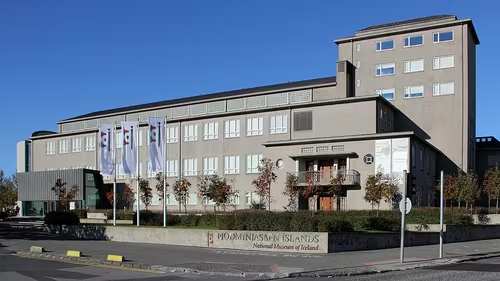
August in Reykjavik
High13°C / 56°F
Low8°C
Rain96mm / 14 rainy days
Sun9.0 h/day
Daylight16 h/day
Humidity82%
Crowds●●●●●Prices●●●●●
August is the most event-dense month of the Reykjavik year, and one year makes it truly extraordinary. School holidays continue and highs hold near 13°C, but the calendar is the story: Pride (4-9 Aug) draws a 130.000 parade, roughly 40% of Iceland's entire population, and on 12 August 2026 a total solar eclipse passes directly over the city, the first since 1433. Culture Night and the marathon share 22 August, the Jazz Festival closes the month, and crucially, astronomical darkness returns from late August, so the aurora can be seen again.
The vibe August is festival-packed Reykjavik, and the 12 August 2026 total solar eclipse is a once-in-several-lifetimes headline. The light is softening back toward proper evenings, the city is at its most alive, and by the last week you can chase aurora again. The flip side is crowds and prices at or above July, and around the eclipse the city is busier than it has ever been recorded.
Don't miss The 12 August total solar eclipse gives about a minute of totality in the centre, longer on Reykjanes (1m 40s at Garour) and Snaefellsnes (2m 13s); plan to leave the city for it. Culture Night (22 Aug) is the year's best free cultural night, galleries and stages open citywide with harbour fireworks. Pride's parade and the Jazz Festival (26-30 Aug) round it out. Aurora returns from mid-to-late August.
Crowd drivers Continuing school holidays, Pride (4-9 Aug) and its 130.000-strong parade, the 12 August total solar eclipse (the most booked week in Icelandic tourism history), Commerce Day weekend (1-3 Aug), and Culture Night plus the marathon on 22 August. The eclipse week is the single busiest week ever recorded.
In season Late-summer harvest on the plates: Arctic char, lamb and the first autumn produce. Culture Night and the marathon turn 22 August into a city-wide street-food day.
Heads up 3 August (Commerce Day) is a public holiday capping the busiest domestic weekend. On 22 August, marathon and Culture Night street closures paralyse the centre 08:00-22:00, so move on foot only. Book eclipse-week and Pride-week accommodation many months ahead.
Rates match or exceed July. Pride week and eclipse week are the two costliest weeks of the year; hotels sell out 6-plus months ahead for the 12 August eclipse.
Events this month
🇮 HolidayCommerce Day Verslunarmannahelgi
Aug 3 ~
The first Monday of August, capping a three-day long weekend.
An Icelandic bank-holiday weekend, one of the busiest for domestic travel, with major outdoor festivals in the Westman Islands and Westfjords. Reykjavik empties of Icelanders as international tourists fill it.
Hotels spike and the weekend overlaps with Pride prep, so book early.
🏳️🌈 PrideReykjavik Pride Hinsegin dagar
Aug 4–9 ~
The first or second week of August, with the parade on the Saturday (8 Aug, 14:00).
A six-day LGBTQ+ festival culminating in a parade that draws around 130.000 people, roughly 40% of Iceland's entire population, running Hallgrimskirkja to Skolavorourstigur to Bankastraeti to Laekjargata.
The largest single event in Iceland by attendance. Hotels sell out six months ahead and double in price, so book very early or avoid if crowds worry you.
🎵 MusicInnipukinn Festival Innipúkinn
Aug 7–9 ~
The first weekend of August.
A three-day indoor indie, rock and pop festival at Gamla Bio and Rontgen, with off-venue street events across downtown.
It coincides with Pride week, so downtown is double-packed; buy wristbands in advance.
🌸 Seasonal natureTotal Solar Eclipse Sólmyrkvinn
Aug 12
A one-time event; totality begins around 17:48 local time. The next visible from Reykjavik is roughly 600 years away.
The first total solar eclipse over Reykjavik since 1433. About a minute of totality in the city centre, longer on Snaefellsnes (2m 13s) and at Garour and Sandgerdi on Reykjanes (1m 40s). Iceland and northern Spain are the only landmasses in the path of totality.
A once-in-several-lifetimes event. The 12 August week is the single most booked week in Iceland's tourism history, with eclipse cruises long sold out. Book accommodation 12-plus months ahead, or stay outside Reykjavik, and plan to leave the city for longer totality.
🏃 SportReykjavik Marathon Íslandsbanki Reykjavíkurmaraþon
Aug 22 ~
The third Saturday of August, the same day as Culture Night.
A marathon, half-marathon, 10km and family fun run starting and finishing in central Reykjavik, with several streets closed from 08:40.
Streets are blocked all morning and, sharing the day with Culture Night, it makes for the most event-dense single day of the year. Hotel rates spike, so book weeks ahead and plan to move on foot.
🎨 Art and cultureCulture Night Menningarnótt
Aug 22 ~
The Saturday closest to 18 August, usually the third Saturday of the month.
The night Reykjavik's galleries, museums, studios, shops and outdoor stages all open free at once, followed by fireworks over the harbour. 100.000-plus attendees are typical.
The best single free cultural night in the Icelandic calendar. It shares the day with the marathon, so plan movement carefully; downtown streets are impassable by late evening.
🎵 MusicReykjavik Jazz Festival Reykjavíkurjazzhátíð
Aug 26–30 ~
Always late August.
A five-day festival at indoor venues and outdoor stages with Icelandic and international jazz acts, some free.
A late-August shoulder transition that pairs well with Culture Night a few days earlier.
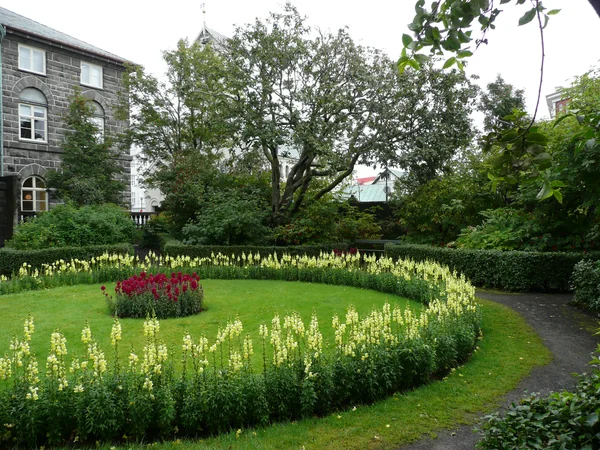
September in Reykjavik
High10°C / 51°F
Low6°C
Rain146mm / 18 rainy days
Sun6.2 h/day
Daylight13 h/day
Humidity84%
Crowds●●●○○Prices●●●○○
September is the autumn shoulder and one of the best-value windows of the year. Daylight settles to a usable 13 hours, highs hold around 10°C, and the cruise season winds down after mid-month. Crucially, the aurora returns: the first real chances come back from around mid-September as the nights lengthen. Add the Rettir sheep roundup, golden birch in the city's valleys, and RIFF film festival, and September quietly does almost everything well.
The vibe September is the savvy traveller's month: enough daylight for full days, aurora back on the table for the first time since spring, cruise crowds thinning, autumn colour coming in, and prices dropping a quarter from August. It is dramatic and intimate at once, the couples' and value-hunters' favourite.
Don't miss First aurora chances return from mid-September. The Rettir sheep roundup near the city (Mosfellsdalur and Kjos, typically the second or third weekend) is a raucous, authentic country party 30-45 minutes out. Autumn gold lights up Ellidaardalur and Oskjuhlid. RIFF (24 Sep-4 Oct) brings independent film to Haskolabio. Whale-watching still runs.
Crowd drivers Cruise season winds down after mid-month and the school-holiday crowds are gone, so pressure drops sharply. The Rettir roundup and the start of RIFF (24 Sep) bring some life, but September is firmly shoulder season.
In season Autumn lamb after the Rettir roundup is the dish of the month, alongside the freshest haddock and cod of the fishing season and new-batch skyr at farmers' markets.
25-30% cheaper than August, the prime shoulder-deal window. Whale-watching tours are still running and prices ease across the board.
Events this month
🌸 Seasonal natureRettir Sheep Roundup Réttir
Sep 12–20 ~
September, dates varying by region (typically 12-20 Sep in SW Iceland), published in the local press about ten days ahead.
Around 400.000 sheep herded down from the Highland summer pasture by farmers on horseback and foot, then sorted in circular rettir pens in a raucous country party. Closest to Reykjavik: the Mosfellsdalur and Kjos districts.
An extraordinary, authentic Icelandic experience barely 30-45 minutes from the city, at shoulder prices. Spectators are welcome to just turn up.
🎬 FilmReykjavik International Film Festival RIFF
Sep 24 – Oct 4 ~
The last week of September into the first days of October.
Eleven days of international independent film at Haskolabio and the Nordic House.
Autumn shoulder season, with lower prices and a genuine film-fan crowd.
October in Reykjavik
High7°C / 44°F
Low3°C
Rain153mm / 18 rainy days
Sun4.5 h/day
Daylight10 h/day
Humidity84%
Crowds●●○○○Prices●●○○○
October is when winter and the aurora properly take hold while prices stay friendly. Daylight drops to about 9.7 hours, highs cool to 7°C, and this is the wettest month of the year by precipitation, so a waterproof is essential. But the dark hours are growing fast, solar activity stays elevated near the solar-cycle maximum, and crowds fall away sharply. For aurora on a budget with the city still functioning normally, October is excellent.
The vibe October is the quiet, dramatic, good-value heart of aurora season. The cruise ships are gone, the prices have dropped, and the nights are long enough to hunt the lights without the deep-winter cold or the near-total darkness of December. The price is the rain, the wettest stretch of the year, but the trade is more than fair.
Don't miss Aurora odds strengthen with the growing dark hours and the solar maximum. The Imagine Peace Tower on Vioey Island is lit nightly from 9 October (Lennon's birthday), beaming skyward and visible from the waterfront; take the Elding ferry from Skarfabakki. Autumn foliage lingers early in the month in Ellidaardalur.
Crowd drivers RIFF wraps in early October, then crowds drop sharply with the cruise season over. The strengthening aurora season draws northern-lights hunters, but visitor pressure stays low overall.
In season Cosy season settles in: lamb soup, slow-cooked stews and warming plates in the harbour-district restaurants, the natural pairing for a cold aurora-hunting night.
Good value, 30-40% below summer rates, with strong aurora odds and growing dark hours making this one of the smartest-value months.
Events this month
🎬 FilmReykjavik International Film Festival RIFF
Sep 24 – Oct 4 ~
The last week of September into the first days of October.
Eleven days of international independent film at Haskolabio and the Nordic House.
Autumn shoulder season, with lower prices and a genuine film-fan crowd.
🎨 Art and cultureImagine Peace Tower Illumination Friðarsúlan
Oct 9 – Dec 8
Lit nightly from 9 October (Lennon's birthday) to 8 December (the anniversary of his death), plus the winter solstice and spring equinox.
Yoko Ono's column of light on Vioey Island, lit nightly at 20:00 and beaming skyward, visible from the Reykjavik waterfront. Lit until midnight 10-31 Oct, then until 03:00 or dawn from 1 Nov.
It overlaps prime aurora season, so combine it with a night of lights-hunting; a ferry to Vioey is needed (around 1.500 ISK return).
November in Reykjavik
High4°C / 39°F
Low0°C
Rain121mm / 16 rainy days
Sun2.2 h/day
Daylight6 h/day
Humidity82%
Crowds●○○○○Prices●○○○○
November is deep off-season with a couple of standout festivals. Daylight shrinks to about 6.5 hours, highs slip to 4°C, and the dark is closing in fast, which means prime aurora again. Outside the Iceland Airwaves week (4-8 Nov) and Iceland Noir (11-14 Nov), the city is quiet and cheap, with some of the lowest flight and hotel prices of the year. It is a moody, atmospheric month for anyone who wants the lights without December's holiday spike.
The vibe November is for travellers who want the bones of Reykjavik winter, the dark, the aurora, the steaming pools, without crowds or peak prices. Airwaves gives it a jolt of music for one week; the rest of the month is one of the most peaceful and affordable times to be here, if you can handle the short days.
Don't miss Iceland Airwaves runs across churches, museums and music venues, with free off-venue shows from noon to 18:00 that you do not need a wristband for. Iceland Noir gathers crime and literary fiction fans in intimate downtown venues. Aurora odds are strong, and the Imagine Peace Tower is lit until 3:00 or dawn through early December.
Crowd drivers Iceland Airwaves (4-8 Nov) and Iceland Noir (11-14 Nov) spike bars, hostels and central hotels during their weeks. Outside them, November is deep off-season with very low visitor pressure.
In season Comfort food and craft beer carry the dark month, and Airwaves week turns the cafes and bars into off-venue stages where a coffee buys you a free concert.
Among the cheapest months: flights often below 200 euro return from European hubs, and the off-Airwaves weeks are the year's best autumn value. Airwaves and Iceland Noir weeks spike bar and hostel prices.
Events this month
🎵 MusicIceland Airwaves
Nov 4–8 ~
The first week of November (official program 5-7 Nov).
The world's most northerly music showcase since 1999: three official nights across Reykjavik's churches, museums and venues, plus free daytime off-venue shows in cafes and bookshops from noon.
The festival that made Reykjavik's November worth visiting. The off-venue shows are completely free, but bars and hostels spike in price, so book ahead.
🎨 Art and cultureIceland Noir
Nov 11–14 ~
The second or third week of November.
A crime and literary fiction festival founded by Ragnar Jonasson and Yrsa Sigurdardottir, in intimate downtown venues with access to the Kjarval members' club.
An atmospheric dark-season setting that pairs with the quieter, cheaper post-Airwaves November.
🎨 Art and cultureImagine Peace Tower Illumination Friðarsúlan
Oct 9 – Dec 8
Lit nightly from 9 October (Lennon's birthday) to 8 December (the anniversary of his death), plus the winter solstice and spring equinox.
Yoko Ono's column of light on Vioey Island, lit nightly at 20:00 and beaming skyward, visible from the Reykjavik waterfront. Lit until midnight 10-31 Oct, then until 03:00 or dawn from 1 Nov.
It overlaps prime aurora season, so combine it with a night of lights-hunting; a ferry to Vioey is needed (around 1.500 ISK return).
December in Reykjavik
High2°C / 35°F
Low-3°C
Rain131mm / 17 rainy days
Sun0.8 h/day
Daylight4 h/day
Humidity80%
Crowds●●○○○Prices●●○○○
December is the darkest month and the heart of the festive season. At the solstice the sun rises around 11:10 and sets around 15:34, just 4.4 hours of true daylight, with the sun barely clearing the horizon. That deep dark makes it prime aurora time. Christmas markets glow from late November, early December is genuinely good value, and the month builds to one of Europe's most spectacular New Year's fireworks displays. The trade is obvious: you sightsee in near-permanent twilight.
The vibe December is Reykjavik at its most magical and most extreme. The dark is almost total, the markets and lights soften it, and aurora can appear over a city already strung with Christmas lights. Early December is a steal; the Christmas-to-New-Year window is expensive and busy but delivers a fireworks night unlike anywhere else in Europe.
Don't miss Aurora is at its prime in the 4.4-hour-daylight dark, if the weather clears. Christmas markets fill Ingolfstorg (with an ice rink, skating about 1.690 ISK) and the Heiomork woods on Advent weekends. New Year's Eve brings around 200.000 people to the waterfront for an amateur fireworks display Icelanders spend roughly a billion ISK on in one night.
Crowd drivers Christmas markets from late November build the mood, then 23 December to 2 January spikes hard around Christmas and the New Year's fireworks, which draw 200.000 people. Early December (1-20) stays quiet and cheap.
In season Christmas food is everywhere: smoked lamb (hangikjot), laufabrauo leaf-bread and the traditional fermented skate on 23 December (Thorlaksmessa). Mulled drinks warm the markets.
Heads up 24 December: shops close by 14:00 and restaurants by 18:00 for the main Christmas celebration. 25-26 December nearly everything is closed. 31 December is a partial holiday from 14:00 with thinned public transport; plan to be on foot for the fireworks.
Early December (1-20) is excellent value; then 23 Dec-2 Jan spikes 50-80% for hotels around Christmas and the New Year's fireworks. Book that holiday window a year ahead.
Events this month
🎄 Christmas marketChristmas Markets Jólamarkaðir
Nov 29 – Dec 23 ~
From the first Sunday of Advent through 23 December.
Several city-centre markets: the main one at Ingolfstorg with an ice rink (skating around 1.690 ISK), Hjartatorg on select weekends, and the Heiomork woods on Advent weekends.
Charming and compact, and early-December prices are off-season, so it combines well with aurora and the Imagine Peace Tower window.
🇮 HolidayNew Year's Eve Fireworks Nýárið
Dec 31
31 December into 1 January, fireworks from around 23:30.
One of Europe's most spectacular amateur fireworks displays, with around 200.000 people lining the waterfront and hilltops as Icelanders burn through roughly a billion ISK of personal fireworks in one evening.
An incredible experience, but hotel prices spike 50-80% from 23 December to 2 January, so book a year ahead for the best rooms.
🎨 Art and cultureImagine Peace Tower Illumination Friðarsúlan
Oct 9 – Dec 8
Lit nightly from 9 October (Lennon's birthday) to 8 December (the anniversary of his death), plus the winter solstice and spring equinox.
Yoko Ono's column of light on Vioey Island, lit nightly at 20:00 and beaming skyward, visible from the Reykjavik waterfront. Lit until midnight 10-31 Oct, then until 03:00 or dawn from 1 Nov.
It overlaps prime aurora season, so combine it with a night of lights-hunting; a ferry to Vioey is needed (around 1.500 ISK return).
Frequently asked questions
When can you see the northern lights in Reykjavik?
The aurora needs astronomical darkness, high activity and clear skies all at once. Reykjavik has enough darkness roughly from mid-August through mid-April; outside that the sky is simply too bright. The best months are October, November, December, January, February and March, when the nights are longest. 2026 is a solar-maximum year, so displays should be more frequent and vivid than average. Staying 5-7 nights between October and March gives you about a 70-80% chance of seeing some activity. Leave the city for the dark: Grotta Lighthouse (closed 1 May-15 July) or the Oskjuhlid hill by Perlan are the closest good spots, and check the 1-5 aurora forecast on vedur.is.
What is the cheapest time to visit Reykjavik?
January and February are the cheapest outright: central hotel doubles run 18.000-22.000 ISK a night against 32.000-plus in July, and flights hit their yearly low, often under 200 euro return from European hubs. November is nearly as cheap once you avoid the Iceland Airwaves week (4-8 Nov). Early December (1-20) is also strong value before the holiday spike. The catch with all of them is daylight: 4-6 hours in midwinter, plus relentless wind, so you are trading light and comfort for price and aurora odds.
Is the midnight sun worth visiting for?
Yes, if endless daylight appeals more than the northern lights. The sun sets after midnight only from 16-29 June, but the sky stays bright from late May through late July, with just 2-3 hours of twilight around midnight even in late June, when daylight runs to nearly 21 hours. It enables round-the-clock sightseeing, midnight hikes and Golden Circle drives in golden light. The downsides: it kills aurora visibility entirely, and sleeping is hard without blackout curtains, so pack an eye mask. June pairs it with the biennial Arts Festival and National Day.
How bad is the weather, really?
The cold is mild by Nordic standards thanks to the Gulf Stream, but the wind is relentless. Winter sits around 0 to -3°C in the city, with January wind chill routinely -10 to -15°C and winds averaging 34 km/h. Summer rarely tops 15-20°C, and a warm day is 18°C with no wind, so shorts are a liability and layers are essential even in July. Reykjavik is wet year-round with no dry season; October is the wettest month, and the famous horizontal, wind-driven rain makes umbrellas useless in winter and spring. A proper waterproof jacket is non-negotiable in every single month. The rule: the wind decides the day, not the thermometer.
When is Reykjavik most crowded and expensive?
July is the single busiest month: every European school is on break, two to four cruise ships dock daily, hotels hit around 32.000 ISK a night, and there is no aurora darkness to justify the premium, which makes the last two weeks the worst value of the year. August is just as pricey and event-packed. In 2026 the eclipse week around 12 August is the single most booked week in Icelandic tourism history, with hotels gone six-plus months ahead. The other spike is 23 December to 2 January, when holiday rates jump 50-80% around Christmas and the 200.000-strong New Year's fireworks.
What is the best month to visit Reykjavik overall?
It depends on what you are chasing, but late May to mid-June and the back half of August are the strongest all-rounders. Late May and June bring the biennial Reykjavik Arts Festival (2026 only), National Day on 17 June, the start of the midnight sun, and prices not yet at the July ceiling. Late August pairs Culture Night, the Jazz Festival, sunsets back to around 21:00 and the first returning aurora, all at a walkable 12-16°C. If you specifically want the northern lights, swing to September or October for the best balance of darkness, value and a still-functioning city. For pure value with long light, May and September are the sweet spot.
How early do I need to book the Blue Lagoon and a hotel for the 2026 eclipse?
The Blue Lagoon is online pre-book only with no walk-ins in peak season; book two to three months ahead for June-August. The in-city Sky Lagoon is the flexible alternative, bookable just 1-2 weeks ahead. For the 12 August 2026 total solar eclipse, central Reykjavik hotels have been booked out more than a year in advance, so reserve 12-plus months ahead or stay outside the city. Better still, plan to leave town that day: totality is only about a minute in the centre but 1m 40s at Garour on Reykjanes (45 minutes out) and 2m 13s on Snaefellsnes.

Any month, any day: your guide is already there
Whatever date you pick, a private human guide gets pricier and harder to book on weekends, holidays and in peak season. Our live AI guide, the one that walks with you and answers anything you ask out loud, works the opposite way.
One flat price, every day
No holiday, weekend, night or peak-season surcharge. A private guide in Reykjavik runs well over 100 euro for a half day, and more on holidays. Ours stays the same.
Available the moment you want it
Start at midnight or at dawn, on Christmas, in the snow, in the August heat. No sold-out high season, no booking weeks ahead.
Your pace, no meter running
Pause for a long lunch, restart after dark, repeat a stop. The tour simply waits for you.
Free to try, a fraction of the cost
Test it for free, then a transparent flat price that undercuts any private guide, in every season.
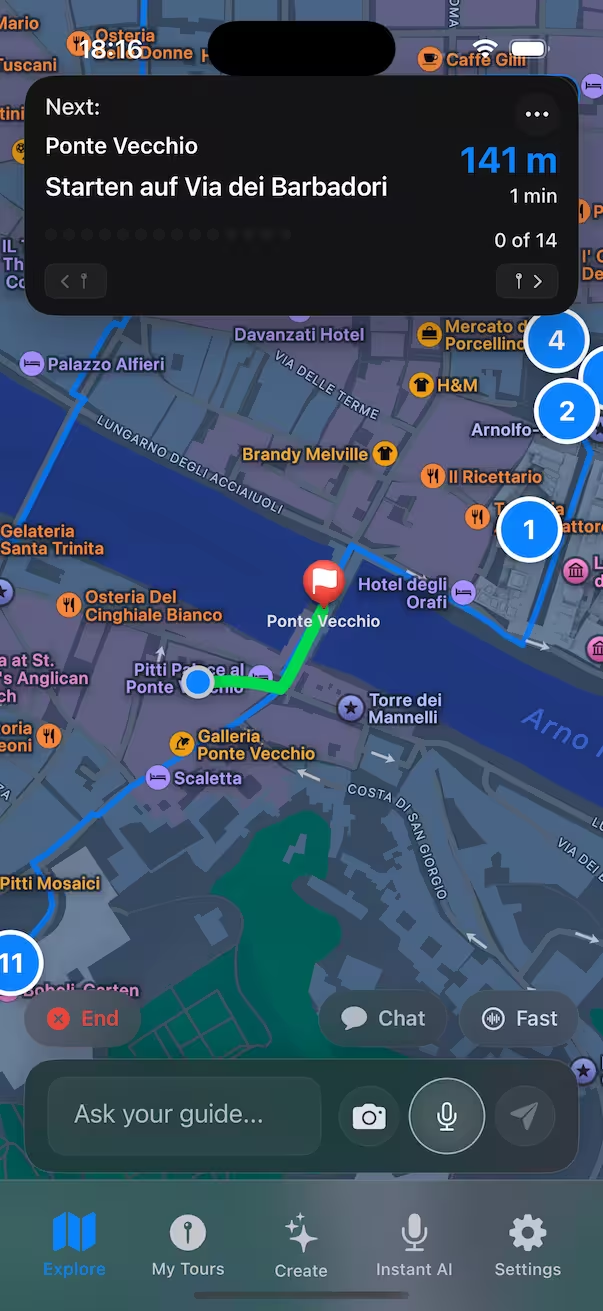
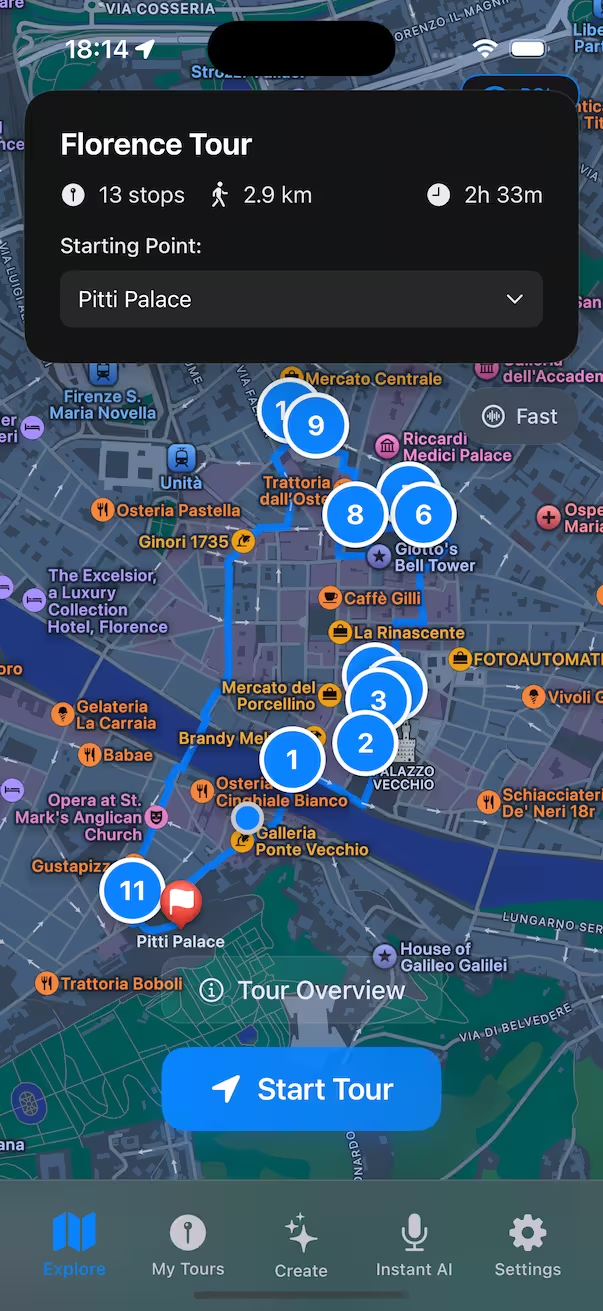
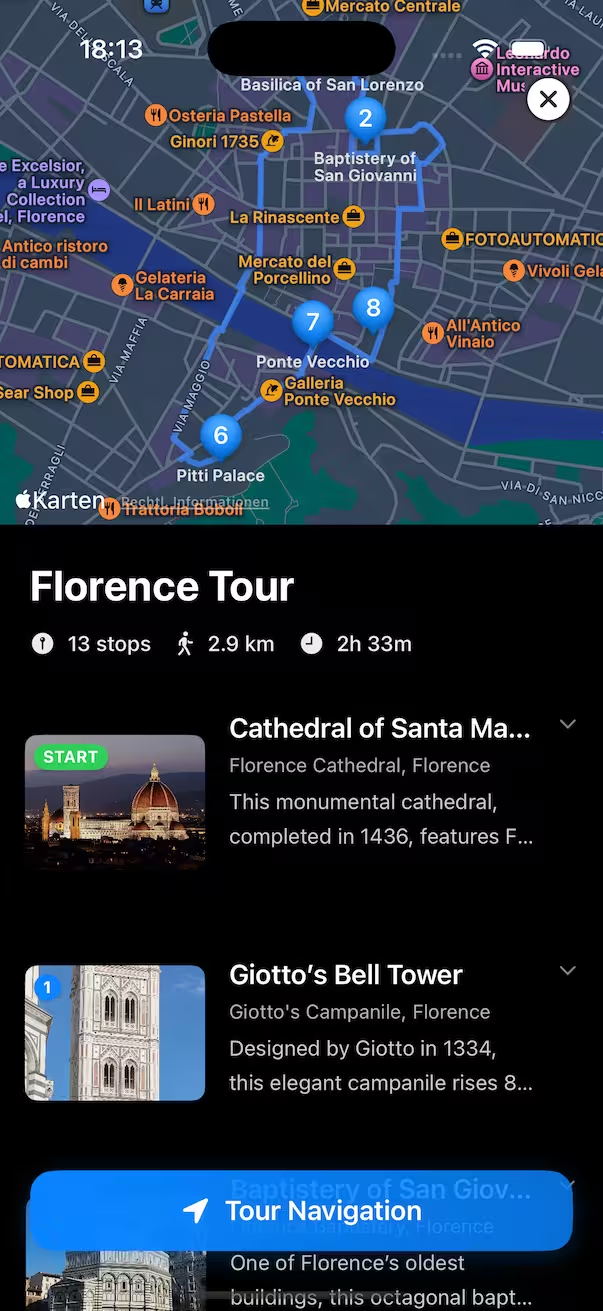
The classic Reykjavik tour: 9 stops, 4.5 km, about 2 h on foot
Your live AI guide and the self-guided Reykjavik route, together in your browser.