Best Time to Visit Rio de Janeiro
Month-by-month weather, crowds and prices, plus a full calendar of festivals and events worth planning a trip around.
Best monthsApr, May, Sep
CheapestMay, Jun, Aug
AvoidFeb
BusiestJan, Feb, Dec

When is the best time to visit Rio de Janeiro?
Come in April, May or September: 25-28°C, the sea still swimmable, far thinner crowds than summer, and hotel rates running 30-40% below the Carnival and New Year peak. Skip February unless Carnival is the whole point. Prices triple and the city is at its most chaotic.
Start our tool and find your best time to visit Rio de Janeiro
Your perfect month
Free · ~30 seconds
or tap a month directly
What matters to you?
And this?
Best overall: Apr, May, Sep. April, May and September are the real sweet spot: 25-28°C, the sea still warm enough to swim, clear skies for Christ the Redeemer and Sugarloaf, and hotel rates 30-40% below the summer peak. September only stumbles on the Rock in Rio weekends (4-13 September), when the Olympic-quarter hotels spike.
Best value: Aug, May, Jun. August is the lowest-price month of the year, with three-star rooms from BRL 220 and hostel beds from BRL 55. The trade is winter sea temperatures of 21-23°C, but the hiking weather is the best Rio gets and the Tijuca trails are at their safest.
Avoid: Feb, Dec. February means Carnival prices up 200-400%, peak crowds, and the year's highest pickpocketing risk. Late December brings the New Year crush, with Copacabana beachfront rooms above BRL 2,000 and the sand closed for days. Come for either only if the event is the reason for the trip.
- January: Tough month, 31°C. This is Rio at its loudest and most alive, not its calmest. The beaches are a wall of bodies, the energy is electric, and the city runs on summer adrenaline. If you want postcard Rio with the volume turned up, this is it. If you want space and quiet, this is the opposite of it.
- February: Tough month, 30°C. Carnival is a bucket-list experience and, for everyone not there for it, the single worst week to visit. Prices triple, the city is wall-to-wall, and pickpocketing peaks. You either commit to the party fully or you stay away. There is no quiet middle ground in February.
- March: Good time, 29°C. March is Rio exhaling after Carnival. The city feels like itself again, locals back in their routine, beaches breathable, and you get summer warmth and a swimmable sea without summer prices or summer crowds. It is genuinely underrated.
- April: Good time, 27°C. April is Rio at its most relaxed and rewarding. Warm, swimmable, uncrowded and cheap, with clear-enough skies for the big viewpoints. This is when private guides charge their Easter-peak rates and sell out, while our live AI guide stays a flat €5 an hour on any day, holiday or not. Start before dawn at Christ the Redeemer ahead of the cruise-ship crowds and ask it anything as you walk, the way you would a guide beside you.
- May: Great time, 25°C. May is the local's secret: Rio without the crowds, without the markup, and bathed in the year's most beautiful late-afternoon light. The romantic golden hour over the Mirante do Leblon is at its best now. The water is cooler, but that is a small price for having the city this calm.
- June: Great time, 25°C. June is winter in name only: mild, dry and clear, with the kind of crisp blue sky that makes the cable-car and Corcovado views unforgettable. The Festas Juninas give the month a warm, family, small-town feel that most visitors never expect to find in Rio.
- July: Great time, 25°C. July feels like Rio's best-kept winter: warm-enough days, clear skies, manageable crowds and the city in a relaxed family rhythm. It is busier than the deep off-season because Brazilians are travelling, but it never approaches the summer madness, and the viewpoints have never been clearer.
- August: Great time, 25°C. August is Rio stripped back to basics: cheap, calm and unhurried, with clear winter skies and beaches you can actually breathe on. The water is cool and the Carioca beach scene is quieter, but for a value-minded, crowd-averse traveller it is the best month of the year.
- September: Great time, 27°C. September is Rio waking back up into summer warmth without the summer crowds, as long as you dodge the Rock in Rio weekends. Spring light, warming water and an easy pace make it one of the genuinely best times to come for a first visit.
- October: Good time, 27°C. October is the city blooming back into summer, with lilac jacarandas lining the avenues and the sea warm enough to live in again. It has the romance of summer with none of the crush. One of the most underrated months on the calendar.
- November: Good time, 27°C. November is Rio leaning into summer, warm and lively, with the long Pride-and-holiday weekend giving the back half real energy. It is the smart pre-summer window: summer warmth and atmosphere, shoulder-season prices, before December sends both through the roof.
- December: Tough month, 29°C. December is Rio at its most euphoric and most expensive. Reveillon on Copacabana is a once-in-a-lifetime night, millions in white on a single beach, and worth every bit of the planning. Just go in clear-eyed: prices peak, the city is packed, and you book six months out or you miss the bed.
Rio de Janeiro weather by month
HighLowRainfall
Jan31°
Feb30°
Mar29°
Apr27°
May25°
Jun25°
Jul25°
Aug25°
Sep27°
Oct27°
Nov27°
Dec29°
| Month | Temp | Rain | Sun | Crowds | Prices | Highlight |
|---|---|---|---|---|---|---|
| Jan | 31° / 24° | 149mm · 14 rainy days | 10.8 h/day | ●●●●● | ●●●●● | Copacabana New Year's Eve |
| Feb | 30° / 24° | 148mm · 15 rainy days | 10.2 h/day | ●●●●● | ●●●●● | Rio Carnival |
| Mar | 29° / 23° | 143mm · 14 rainy days | 10.5 h/day | ●●●○○ | ●●●○○ | |
| Apr | 27° / 22° | 98mm · 14 rainy days | 9.9 h/day | ●●○○○ | ●●○○○ | Good Friday |
| May | 25° / 20° | 65mm · 10 rainy days | 9.2 h/day | ●●○○○ | ●●○○○ | |
| Jun | 25° / 19° | 46mm · 9 rainy days | 8.9 h/day | ●●○○○ | ●●○○○ | Rio Marathon |
| Jul | 25° / 18° | 46mm · 7 rainy days | 8.9 h/day | ●●●○○ | ●●●○○ | June Festivals |
| Aug | 25° / 18° | 61mm · 10 rainy days | 8.8 h/day | ●○○○○ | ●○○○○ | Humpback Whale Watching |
| Sep | 27° / 19° | 73mm · 9 rainy days | 9.5 h/day | ●●○○○ | ●●○○○ | Rock in Rio |
| Oct | 27° / 21° | 82mm · 14 rainy days | 9.3 h/day | ●●○○○ | ●●○○○ | |
| Nov | 27° / 21° | 150mm · 16 rainy days | 9.6 h/day | ●●●○○ | ●●●○○ | Rio LGBT+ Pride Parade |
| Dec | 29° / 23° | 133mm · 16 rainy days | 10.6 h/day | ●●●●● | ●●●●● | Copacabana New Year's Eve |
How we score this: weather = long-run climate normals (Open-Meteo), crowds & prices = relative season read, events checked yearly against official dates.
Best time to visit Rio de Janeiro: weather, prices & crowds
Best months for good weather
May, Jun, Jul, Aug
June to August is Rio's driest, clearest window: 24-25°C days, around 45-60mm of rain, and the best odds of an unclouded view from Christ the Redeemer and Sugarloaf. The sea cools to 21-23°C, brisk for Cariocas but fine for Europeans.
Quietest months to avoid the crowds
May, Aug
May and August are the quietest months of the year. No Brazilian school holidays, no headline festivals, beaches at Ipanema noticeably thinner, and the queue for the Bondinho cable car at Sugarloaf short even at sunset.
Cheapest time to visit Rio de Janeiro
Aug, May, Jun
August is the cheapest month, with solid three-star hotels from BRL 220 and hostel beds from BRL 55 a night. May and June run a close second, the only catch being Marathon weekend (4-7 June), when Zona Sul hotels fill up.
Best time for festivals and events
Dec, Feb
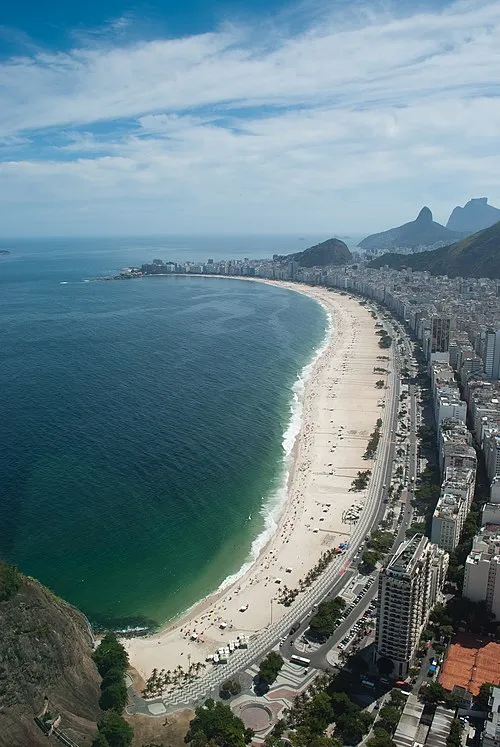
Reveillon on Copacabana on New Year's Eve is a once-in-a-lifetime night: 2.6 million people on a single beach for the world's largest fireworks display, a twelve-minute show fired from offshore barges. Carnival in February is the other peak-experience moment, if you can handle the crowds and the prices.
How many days do you need in Rio de Janeiro?
Rio de Janeiro rewards at least four days, because the icons are spread across the city and each deserves proper time. Christ the Redeemer, Sugarloaf, the beaches, and the historic center are each a world of their own, and squeezing them into two or three days means missing the unhurried afternoons that make Rio feel like Rio.

One day
The historic center and Lapa in a single sweep
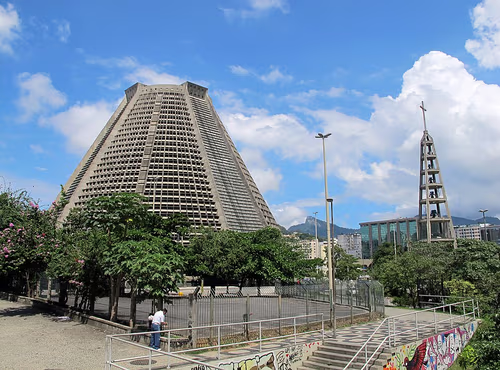
Start at the Theatro Municipal on Praça Floriano, Rio's Beaux-Arts showpiece modeled on the Paris Opera, then walk south through the narrow streets of Centro to the Escadaria Selarón, the mosaic staircase that Chilean artist Jorge Selarón built from 2,000 tiles sourced from 60 countries. The Arcos da Lapa aqueduct and the angular Metropolitan Cathedral are a short walk away, and the belle-époque Confeitaria Colombo on Rua Gonçalves Dias is worth a stop for coffee and a quindim. This is the route of the self-guided Rio de Janeiro walking tour, 6 stops across 4.8 km in roughly 2 hours, with the Museum of Tomorrow on the Porto Maravilha waterfront as a final act.
Two days
Corcovado and Sugarloaf, the two unmissable viewpoints
Day two belongs to the big lookouts. Go to Christ the Redeemer before 9 am on a weekday to beat the cruise-ship waves that arrive from around 9:30 am, taking the official van up via Estrada das Paineiras for a shorter queue. Book the Sugarloaf Bondinho cable car for the late afternoon but arrive 90 minutes before sunset to walk straight on. June to August gives the clearest, haze-free views from both.
Three days
Copacabana, Ipanema, and the neighborhood pace
A third day slows down on the coast: Ipanema is genuinely peaceful before 10 am, owned by joggers and locals, then fills to its best beach energy between 10 am and 2 pm. The Mirante do Leblon at the western end of Leblon beach catches the year's most beautiful late-afternoon light in April and May. In the evening, Lapa's samba bars around the Arcos open from around 10 pm and run until early morning.
Four days or moreRecommended
Tijuca rainforest, whales, and the neighborhoods beyond the postcard
With four or more days, Rio opens up properly. Hike into the Tijuca National Park, the world's largest urban rainforest, with trails to Pico da Tijuca that are safest and most rewarding from June to August. The Santa Teresa neighborhood above Lapa rewards a slow afternoon among colonial houses and small galleries. Between June and August, humpback whale-watching boat tours leave from Barra da Tijuca from around BRL 250 and show first-time visitors a side of Rio almost no one expects.
Best time to visit Rio de Janeiro by traveller type
Same city, different trip. Here's the month that fits how you're travelling.
🧭
Best time to visit Rio de Janeiro for the first time
AprMaySep
April, May or September (away from the Rock in Rio weekends of 4-13 September): comfortable 25-28°C, every highlight easy to reach, hotels 30-40% cheaper than summer, no Carnival chaos, and the clear skies you need for Christ the Redeemer and Sugarloaf.
❤️
Best time to visit Rio de Janeiro for couples
MayOct
May for the golden late-afternoon light over the Mirante do Leblon and thinner beaches, or October when the sea hits 24°C and the lilac jacaranda trees bloom across the city.
💶
Best time to visit Rio de Janeiro on a budget
Aug
August for the lowest rates of the year, free Tijuca hikes, beach days that cost nothing, and Museu do Amanhã at BRL 40 for a rainy afternoon.
🍝
Best time to visit Rio de Janeiro for food and wine
AprMayOctNov
April and May for peak seafood (frutos do mar) season at the markets, or October and November when the beach barracas reopen after winter and Lasai and the top tables take bookings more easily.
Worst time to visit Rio de Janeiro
February is the month to avoid unless Carnival itself is the reason you are coming. During Carnival week, hotel rates run 200 to 400% above normal, the city is at maximum density, and pickpocketing at the street blocos peaks for the entire year. The New Year window, roughly 28 December to 1 January, is the second pinch point: Copacabana beachfront hotels push above BRL 2,000 a night and the sand is sealed off for days for the fireworks build-up.
Still worth it for If Carnival or the Copacabana Reveillon fireworks are the actual point of the trip, both are genuine once-in-a-lifetime experiences and worth the planning and cost. Just book Sambadrome tickets and hotels at least six months ahead, and accept that these are not budget visits.
Go instead in April, May, September, when Rio de Janeiro is at its best.
Best time for a tour of Rio de Janeiro
Rio is a tropical city you sweat through on foot, so the calendar matters more than the postcards suggest. The southern winter, roughly June to August, is the easiest walking window: highs ease to around 25 °C, lows drop into the high teens, and rain thins out to seven to ten wet days a month, the driest stretch of the year. That is when the climb of the Escadaria Selarón and the open plaza around the Metropolitan Cathedral feel manageable rather than punishing. The peak summer months from December to March are the opposite: highs near 30 to 31 °C with humidity to match, fourteen to sixteen rainy days, and the heaviest crowds of the year, when the long open walk past the Arcos da Lapa and out to the waterfront Museum of Tomorrow leaves you with no shade and little relief by midday. April, May and September split the difference, warm and far quieter, fine if you start early.
The real advantage is that you set the clock. With AI Tourguide there is no fixed departure and no guide waiting on a schedule, so the climate decides your hour rather than an operator's roster. On a humid February morning you can be standing in front of the Theatro Municipal by seven, before the sun turns the route into an oven, then duck into the cool of Confeitaria Colombo for coffee when the heat builds. It all runs in your browser, no app and no download, with a voice-first guide that greets you, tells the story of each landmark, asks what you want to linger on and adapts as you go. When a still winter morning lines up, just start your Rio de Janeiro tour and walk the loop at your own pace.

 +3
+3All 6 stops are already on the map.
You just press start.
You just press start.
 AI Tourguide
You just read the route.
Now walk it with a guide in your ear.
Press start wherever you are, even hundreds of kilometres from Rio de Janeiro, and the guide begins telling its stories right away. In the city, pick any of the 6 stops to start from: it leads you there, then talks with you the whole route, asking, listening, remembering, and shaping the tour around your answers.
6stops4.8km1.9hours11languages
▶Start the tour freeFree to start · Runs in your browser · No app, no download
Rio de Janeiro events and festivals calendar
Annual highlights worth timing a trip around, listed month by month.
January
⛪ ReligiousSaint Sebastian's Day Dia de São Sebastião
Jan 20
20 January every year; Rio's city holiday for its patron saint.
Rio's city holiday for its patron saint, with masses at the Metropolitan Cathedral and the Igreja São Francisco de Paula, and local festivities.
February
More in February →April
⛪ ReligiousGood Friday Sexta-feira Santa
Apr 3 ~
The Friday before Easter Sunday. Dates move each year with Easter, typically falling in March or April.
A national holiday that sees Cariocas head for the beach en masse.
June
🌸 Seasonal natureHumpback Whale Watching Rota das Baleias
Jun 1 – Aug 31
June to August, peaking July and August; possible June to November.
Humpback whales migrate along Rio's coast, with boat tours running from Barra da Tijuca from around BRL 250.
🏃 SportRio Marathon Maratona do Rio
Jun 4–7
Early June over four days, covering 5K, 10K, half marathon, and full marathon distances, with the full marathon on the Sunday.
Latin America's largest marathon, with over 70,000 registrations.
🎉 FestivalJune Festivals Festas Juninas
Jun 6 – Jul 15
Through June into mid-July, peaking around São João on 24 June.
Northeastern Brazilian harvest festivals of forró music, quadrilha square dancing and country food (canjica, pamonha), staged across the city, including an Urca edition on Praia Vermelha.
September
🎵 MusicRock in Rio Rock in Rio Brasil
Sep 4–13
Early-to-mid September over seven show days, held every other year in odd-numbered years.
The world's largest music festival, at the Cidade do Rock in the Parque Olímpico in Barra, with a stadium-scale international lineup and tickets from around BRL 600 a day.
🇮 HolidayIndependence Day Parade Desfile de 7 de Setembro
Sep 7
7 September every year; military parade in Centro.
Brazil's national day, marked by a military parade on Avenida Presidente Vargas in Centro, with local crowds and most museums closed.
November
🇮 HolidayBlack Consciousness Day Dia da Consciência Negra
Nov 20
20 November every year; a national holiday since 2023.
A national holiday honouring Afro-Brazilian history and culture, marked by samba and cultural events citywide, with some museums closed.
🏳️🌈 PrideRio LGBT+ Pride Parade Parada do Orgulho LGBTI+ do Rio
Nov 22 ~
Typically a Sunday in November, on Copacabana beach. The exact date shifts by year.
One of the world's largest Pride parades, running along Av.
December
🎉 FestivalCopacabana New Year's Eve Réveillon de Copacabana
Dec 31 – Jan 1
New Year's Eve into New Year's Day, on Copacabana beach. Build-up seals the sand from around 28 December.
The world's largest New Year's fireworks display, fired from 19 offshore barges over Copacabana beach: a twelve-minute show and a 1,200-drone spectacle.
Insider tips for visiting Rio de Janeiro
The rules buried in forums, in one place.
- Visit Christ the Redeemer Tuesday to Thursday before 9 am. The 8-9 am slot is the calmest hour of the entire week, before the cruise-ship waves of 3,000 to 5,000 passengers arrive from about 9:30 am. Check the cruise calendar on cruisemapper.com, and take the official van up via Estrada das Paineiras instead of the Trem do Corcovado: it is faster, with a shorter line, often at the same price.
- For Sugarloaf at sunset, book the slot but start 90 minutes early. The sunset window is the most popular booking of the day. Arrive 90 minutes before and you still walk straight on, later and you queue 45 minutes or more for the Bondinho cable car. Weekdays are cheaper and quieter than weekends, and June to August gives the clearest, haze-free views.
- Ipanema beach changes character at 2 pm. Before 10 am it belongs to locals and joggers and is genuinely peaceful, 10 am to 2 pm is the main beach window, and the afternoons fill with footvolley and beach-ball crowds, especially at weekends. Posto 9 is the LGBTQ+ gathering point, Posto 11 the family corner.
- At the Carnival Sambadrome, the sector matters. Sectors 5 and 9 (arquibancada) are the cheapest seats with a good view and great atmosphere, sectors 2 to 4 (camarotes) cost BRL 1,000-plus but include drinks and comfort, and sectors 11 to 13 (frisada) put you right at the samba. Buy tickets on ingressos.com, never on the street, where fakes are common.
- Rain-day escape: the Museu de Arte do Rio (MAR, BRL 30, closed Mondays) and the Museu do Amanhã (BRL 40) sit 15 minutes apart in the new Porto Maravilha district, both air-conditioned. They are the ideal indoor pairing for a wet January to March afternoon, when the afternoon thunderstorms roll in.
- For Copacabana Reveillon, the quadrant decides your night. The southern stretch (Posto 2-4, towards Forte de Copacabana) has the best fireworks sightlines, but arrive as early as 5 pm to claim a spot. The northern end (Leme) is a little calmer and less crammed.
- On Rio Marathon Sunday (June), there is no transport in Zona Sul early. The entire coastal route from Copacabana to Leblon closes from 4 am. If you arrive or move on that Sunday, route any airport transfer via Barra da Tijuca, not through the Ipanema tunnel.
- Tijuca hikes such as Arpoador to Pico da Tijuca are only safe June to August. From January to March there is a real landslide risk on the trails after heavy downpours, and sections close. Check parquenacionaldatijuca.rio for closures before you set out.
- Carnival street blocos are the year's pickpocketing peak. Carry a waterproof pouch and keep no phone visible. For lower-risk fun, choose Simpatia é Quase Amor in Ipanema (calmer) over Cordão da Bola Preta in Centro, the biggest and most chaotic of them all.
Public holidays in Rio de Janeiro
On these dates many shops and offices close, transport thins out, and sights can be mobbed or shut. Plan around them.
| Date | Holiday | What closes |
|---|---|---|
| Jan 1 | New Year's Day (Confraternização Universal) | All museums closed. Copacabana is still packed with Reveillon crowds on the morning of the 1st and traffic is chaotic. Plan a slow, beach-only first day. |
| Jan 20 | Saint Sebastian's Day (founder of Rio) | Rio city holiday: many offices and some museums close, with masses at the Metropolitan Cathedral. Little impact on tourists beyond a few closures. |
| Feb 17 | Carnival Tuesday (Terça-feira de Carnaval) | Government offices, banks and many restaurants shut for at least five days around Carnival. The Sambadrome runs by night, the street blocos by day. Book everything months ahead. |
| Apr 3 | Good Friday (Sexta-feira Santa) | National holiday: museums closed, restaurants open. Cariocas head for the beach, so Copacabana and Ipanema are fuller than a normal weekday and sightseeing tours pause. |
| Apr 21 | Tiradentes Day | National holiday: most museums closed. A historic public holiday that can extend into a long weekend, lifting domestic demand. |
| May 1 | Labour Day (Dia do Trabalho) | National holiday: offices closed and some museums shut. Beaches and the cable car stay open and busy. |
| Jun 4 | Corpus Christi | National holiday creating a long weekend (4-7 June) that overlaps the Rio Marathon. Centro hotels are doubly tight, and the city-centre churches are busier than usual. |
| Sep 7 | Brazilian Independence Day | National holiday with a military parade on Avenida Presidente Vargas in Centro. Most museums close and the centre is cordoned off through the morning. |
| Oct 12 | Our Lady of Aparecida | National holiday and a popular long weekend for Brazilians. Beaches fill up and domestic travel spikes. |
| Nov 15 | Proclamation of the Republic | National holiday: museums and offices closed. Falls just ahead of the Pride weekend, so late November stacks up. |
| Nov 20 | Black Consciousness Day (Dia da Consciência Negra) | A national holiday since 2023, with Afro-Brazilian cultural events and samba citywide. Some museums close, and it forms a long weekend (20-22 November) with the Pride parade. |
| Dec 25 | Christmas Day (Natal) | Everything closes and the beaches fill with families. The Reveillon build-up on Copacabana is already underway, with the sand sealed off from around 28 December. |
Rio de Janeiro month by month
January in Rio de Janeiro
High31°C / 88°F
Low24°C
Rain149mm / 14 rainy days
Sun10.8 h/day
Daylight13 h/day
Humidity78%
Crowds●●●●●Prices●●●●●
January is high summer and full throttle: highs near 31°C, tropical humidity, and the wettest month of the year at around 149mm. The rain comes as intense afternoon thunderstorms, often a brilliant morning followed by a 30-to-90-minute storm, then sun again. Brazilian school holidays plus Argentine and Chilean breaks pack the beaches, and the pre-Carnival blocos start up from mid-month. Crowds and prices are at their annual peak.
The vibe This is Rio at its loudest and most alive, not its calmest. The beaches are a wall of bodies, the energy is electric, and the city runs on summer adrenaline. If you want postcard Rio with the volume turned up, this is it. If you want space and quiet, this is the opposite of it.
Don't miss Pre-Carnival street blocos kick off from 17 January, weekly until Carnival proper, an authentic and cheaper taste of the party without full Carnival prices. The Atlantic rainforest of Tijuca is at its greenest after the summer rains.
Crowd drivers Brazilian summer school holidays running into February, Argentine and Chilean school breaks, post-Reveillon momentum, and pre-Carnival blocos building from mid-January.
In season Peak açaí and tropical-fruit season, with fresh açaí bowls and coconut water at every beach kiosk on Av. Atlântica.
Heads up 1 January closes all museums and Copacabana is still full of Reveillon crowds that morning. After heavy rain, Tijuca trails can close for landslide risk.
Peak summer: mid-range Copacabana and Ipanema hotels run BRL 380-550 a night, beachfront rooms up to 60% above winter.
Events this month
🎭 CarnivalPre-Carnival Street Blocos Pré-Carnaval
Jan 17 – Feb 13 ~
From mid-January, weekly until Carnival proper. The exact start date shifts each year with the Carnival calendar.
More than 600 registered street parties build towards Carnival, among them Cordão da Bola Preta (up to two million people) and Simpatia é Quase Amor in Ipanema.
The best introduction to Rio's carnival without full Carnival prices: the January blocos are authentic, cheaper and less crammed.
February in Rio de Janeiro
High30°C / 87°F
Low24°C
Rain148mm / 15 rainy days
Sun10.2 h/day
Daylight13 h/day
Humidity79%
Crowds●●●●●Prices●●●●●
February belongs to Carnival, the week before Lent. The Sambadrome parades on Av. Marquês de Sapucaí, over 600 street blocos, and the single biggest visitor influx of the year push the city to absolute capacity. Weather is hot and humid at around 30°C with frequent storms, much like January. Outside Carnival week the city is still busy, but prices and the crush spike hardest around the parade nights. The Champions parade falls on the last day.
The vibe Carnival is a bucket-list experience and, for everyone not there for it, the single worst week to visit. Prices triple, the city is wall-to-wall, and pickpocketing peaks. You either commit to the party fully or you stay away. There is no quiet middle ground in February.
Don't miss The Sambadrome on Av. Marquês de Sapucaí is the one place on earth to see 90-plus samba schools compete. For something free and citywide, the street blocos like Cordão da Bola Preta draw up to two million people.
Crowd drivers Carnival (13-21 February): the Sambadrome parades, 600-plus street blocos, and the single biggest visitor influx of the year.
In season Carnival street food everywhere: espetinho skewers, tapioca crepes and ice-cold chopp beer from the blocos' roaming carts.
Heads up Government offices, banks and many restaurants close for at least five days over Carnival. The Sambadrome operates at night, the blocos by day.
Carnival week sees hotels jump 200-400% above normal; Sambadrome (Special Group) tickets start around BRL 600.
Events this month
🎭 CarnivalRio Carnival Carnaval do Rio
Feb 13–21 ~
The week before Lent, 47 days before Easter. Dates move each year with Easter: typically mid-to-late February, with the Special Group parades over three nights in the middle of the week and the Champions parade on the following Saturday.
The world's most famous carnival: 90-plus samba schools competing in the Sambadrome on Av. Marquês de Sapucaí, plus over 600 street blocos citywide. Sambadrome tickets start around BRL 150, while the blocos are free.
A bucket-list trip for carnival fans, but for everyone else it means prices up 200-400%, peak crowds and high theft risk, so book Sambadrome tickets months ahead or skip the week entirely.
🎭 CarnivalPre-Carnival Street Blocos Pré-Carnaval
Jan 17 – Feb 13 ~
From mid-January, weekly until Carnival proper. The exact start date shifts each year with the Carnival calendar.
More than 600 registered street parties build towards Carnival, among them Cordão da Bola Preta (up to two million people) and Simpatia é Quase Amor in Ipanema.
The best introduction to Rio's carnival without full Carnival prices: the January blocos are authentic, cheaper and less crammed.
March in Rio de Janeiro
High29°C / 85°F
Low23°C
Rain143mm / 14 rainy days
Sun10.5 h/day
Daylight12 h/day
Humidity81%
Crowds●●●○○Prices●●●○○
March is the post-Carnival lull, and one of the smartest times to come. Highs ease to around 29°C, the worst of the crush is gone, and prices drop 30-40% from the February peak. It is still warm and fairly wet at roughly 143mm, but the afternoon-storm pattern means mornings are usually clear and bright. The school year is back in session, so beaches thin out on weekdays.
The vibe March is Rio exhaling after Carnival. The city feels like itself again, locals back in their routine, beaches breathable, and you get summer warmth and a swimmable sea without summer prices or summer crowds. It is genuinely underrated.
Don't miss The sea is still a warm 27°C, the warmest of the year, so this is prime swimming and beach time without the January density. The Tijuca rainforest stays lush and green from the summer rains.
Crowd drivers Lollapalooza Brasil (20-22 March) in São Paulo pulls some visitors who tack on Rio, but local demand drops as the school year resumes.
In season Mango and passion-fruit season at its peak, sold from the Saturday feiras (street markets) across Zona Sul.
Hotels run 30-40% cheaper than January and February; the best balance of weather and price in the first half of the year.
April in Rio de Janeiro
High27°C / 81°F
Low22°C
Rain98mm / 14 rainy days
Sun9.9 h/day
Daylight12 h/day
Humidity81%
Crowds●●○○○Prices●●○○○
April is one of the best all-round months. Highs settle to a comfortable 27°C, the humidity eases, rain drops to around 98mm, and the sea stays a swimmable 27°C. With the school year in full swing and no major festival, crowds are genuinely low and prices among the best of any month near the high season. Easter (Good Friday in early April) and Tiradentes on 21 April bring short closures and busier beaches, but otherwise it is calm and very easy to get around.
The vibe April is Rio at its most relaxed and rewarding. Warm, swimmable, uncrowded and cheap, with clear-enough skies for the big viewpoints. This is when private guides charge their Easter-peak rates and sell out, while our live AI guide stays a flat €5 an hour on any day, holiday or not. Start before dawn at Christ the Redeemer ahead of the cruise-ship crowds and ask it anything as you walk, the way you would a guide beside you.
Don't miss The autumn rainforest in Tijuca is quiet and light-filled, ideal for a hike. With the sea still at 27°C, this is one of the last reliably warm-water swimming months before winter.
Crowd drivers Easter (Good Friday 3 April, Easter Sunday 5 April) empties Cariocas onto the beaches, and the Tiradentes holiday on 21 April adds a domestic long weekend.
In season Seafood (frutos do mar) season at the markets, with fresh fish and prawns at their best for a moqueca.
Heads up Good Friday (3 April) closes museums and most sightseeing tours; Tiradentes (21 April) shuts many museums too. Both fill the beaches.
The cheapest entry into the good-weather window: three-star hotels from BRL 250, often with 15-20% early-bird discounts.
Events this month
⛪ ReligiousGood Friday Sexta-feira Santa
Apr 3 ~
The Friday before Easter Sunday. Dates move each year with Easter, typically falling in March or April.
A national holiday that sees Cariocas head for the beach en masse. Most museums close and sightseeing tours pause for the day.
Expect beaches fuller than a normal weekday and limited sightseeing, so build a beach or self-guided walking day around it.

May in Rio de Janeiro
High25°C / 78°F
Low20°C
Rain65mm / 10 rainy days
Sun9.2 h/day
Daylight11 h/day
Humidity82%
Crowds●●○○○Prices●●○○○
May is the quietest and one of the cheapest months, and the rainy season is winding down to around 65mm. Highs sit at a pleasant 25°C and the light turns golden in the late afternoon. There are no school holidays and the fewest international visitors of the year, so beaches at Ipanema are noticeably thinner and the Sugarloaf cable car runs short queues. The sea cools to about 22°C, brisk for locals, fine for Europeans.
The vibe May is the local's secret: Rio without the crowds, without the markup, and bathed in the year's most beautiful late-afternoon light. The romantic golden hour over the Mirante do Leblon is at its best now. The water is cooler, but that is a small price for having the city this calm.
Don't miss The drying weather opens the best hiking window of the year in Tijuca. The golden late-afternoon light over Leblon and Arpoador is the most photogenic Rio gets, with the beaches calm enough to enjoy it.
Crowd drivers Essentially none. No school holidays, no headline events, and the lowest foreign visitor numbers of the entire year.
In season Late seafood season, plus the first comfort-food weather for a feijoada, the heavy black-bean and pork stew, traditionally eaten on a Saturday.
The cheapest month for Europeans: no school-summer demand, with rates 30-40% below peak.

June in Rio de Janeiro
High25°C / 77°F
Low19°C
Rain46mm / 9 rainy days
Sun8.9 h/day
Daylight11 h/day
Humidity81%
Crowds●●○○○Prices●●○○○
June opens Rio's winter: dry (around 46mm), mild at 25°C highs, and reliably clear. It is the start of the best window for the big viewpoints, with the lowest haze of the year over Christ the Redeemer and Sugarloaf. The Rio Marathon (4-7 June) closes the Zona Sul coast for a weekend, and the Festas Juninas bring forró, quadrilha dancing and warming country food across the city. Humpback whales begin passing the coast.
The vibe June is winter in name only: mild, dry and clear, with the kind of crisp blue sky that makes the cable-car and Corcovado views unforgettable. The Festas Juninas give the month a warm, family, small-town feel that most visitors never expect to find in Rio.
Don't miss Humpback whale-watching boat tours start from Barra da Tijuca (from BRL 250), a Rio experience first-timers usually miss. The Festas Juninas, including the Urca edition on Praia Vermelha, run free quadrilha dancing and country food.
Crowd drivers The Rio Marathon (4-7 June) books out central hotels and shuts the coastal route; Corpus Christi (4 June) adds a long weekend (4-7 June).
In season Festa Junina food everywhere: canjica (sweet corn pudding), pamonha, quentão mulled spirit, and roasted-corn stalls citywide.
One of the cheapest months, with hostel beds from BRL 80; the exception is Marathon weekend (4-7 June), when Zona Sul hotels fill.
Events this month
🏃 SportRio Marathon Maratona do Rio
Jun 4–7
Early June over four days, covering 5K, 10K, half marathon, and full marathon distances, with the full marathon on the Sunday.
Latin America's largest marathon, with over 70,000 registrations. The course runs the coast past the Aterro do Flamengo, Copacabana, Ipanema and Leblon, starting at 5:30 am.
A spectacular seafront race to run or watch, but street closures across Zona Sul block the coastal route all Sunday morning, so plan transport accordingly.
🎉 FestivalJune Festivals Festas Juninas
Jun 6 – Jul 15
Through June into mid-July, peaking around São João on 24 June.
Northeastern Brazilian harvest festivals of forró music, quadrilha square dancing and country food (canjica, pamonha), staged across the city, including an Urca edition on Praia Vermelha.
Family-friendly, authentic and mostly free, the best June event for travellers who are not festival-goers.
🌸 Seasonal natureHumpback Whale Watching Rota das Baleias
Jun 1 – Aug 31
June to August, peaking July and August; possible June to November.
Humpback whales migrate along Rio's coast, with boat tours running from Barra da Tijuca from around BRL 250. June to August are the most reliable months for sightings.
A unique Rio experience that first-time visitors usually miss, and the perfect reason to come in the cooler winter months.

July in Rio de Janeiro
High25°C / 77°F
Low18°C
Rain46mm / 7 rainy days
Sun8.9 h/day
Daylight11 h/day
Humidity78%
Crowds●●●○○Prices●●●○○
July is Rio's mild winter peak. Highs hold at 25°C, it is the driest month bar August at around 46mm, and the skies are clear. Brazil's roughly two-week winter school break drives a domestic family-travel spike, so the city is busier than May or June, though still well below summer. The sea is a cool 22°C. This is prime time for the big viewpoints and for Tijuca hiking, and the whales are at their easiest to spot.
The vibe July feels like Rio's best-kept winter: warm-enough days, clear skies, manageable crowds and the city in a relaxed family rhythm. It is busier than the deep off-season because Brazilians are travelling, but it never approaches the summer madness, and the viewpoints have never been clearer.
Don't miss Peak humpback whale-watching from Barra da Tijuca, with July and August the safest months for sightings. The clearest, haze-free views of the year from Sugarloaf and Christ the Redeemer, and the best long-hike weather in Tijuca.
Crowd drivers Brazil's two-week winter school holidays drive a domestic family-tourism spike, the busiest the winter months get.
In season Festas Juninas run into mid-July, so the country sweets, quentão and forró carry on at neighbourhood arraiás.
20-25% pricier than May and June with Brazil's winter school break, but still 25-30% below the summer peak.
Events this month
🌸 Seasonal natureHumpback Whale Watching Rota das Baleias
Jun 1 – Aug 31
June to August, peaking July and August; possible June to November.
Humpback whales migrate along Rio's coast, with boat tours running from Barra da Tijuca from around BRL 250. June to August are the most reliable months for sightings.
A unique Rio experience that first-time visitors usually miss, and the perfect reason to come in the cooler winter months.
🎉 FestivalJune Festivals Festas Juninas
Jun 6 – Jul 15
Through June into mid-July, peaking around São João on 24 June.
Northeastern Brazilian harvest festivals of forró music, quadrilha square dancing and country food (canjica, pamonha), staged across the city, including an Urca edition on Praia Vermelha.
Family-friendly, authentic and mostly free, the best June event for travellers who are not festival-goers.
August in Rio de Janeiro
High25°C / 77°F
Low18°C
Rain61mm / 10 rainy days
Sun8.8 h/day
Daylight11 h/day
Humidity78%
Crowds●○○○○Prices●○○○○
August is the quietest and cheapest month of the year. No holidays, no major events, and the school year back in full session mean the lowest crowds and prices Rio sees. Weather is mild and mostly dry at 25°C highs and around 61mm of rain. The sea is at its coolest, near 22°C, brisk for swimming but the hiking and viewpoint conditions are excellent. If value and calm are the priority, this is the month.
The vibe August is Rio stripped back to basics: cheap, calm and unhurried, with clear winter skies and beaches you can actually breathe on. The water is cool and the Carioca beach scene is quieter, but for a value-minded, crowd-averse traveller it is the best month of the year.
Don't miss The last strong month for humpback whale-watching from Barra da Tijuca. Free Tijuca hikes in the year's best trail conditions, and short, cheap cable-car and Corcovado queues thanks to the low crowds.
Crowd drivers None. No school holidays and no headline events make this the lowest-demand month of the year.
In season Prime feijoada weather: settle in for the slow Saturday black-bean stew at a botequim in Lapa or the Saara district.
Cheapest of the year: good three-star hotels from BRL 220, hostel beds from BRL 55 a night.
Events this month
🌸 Seasonal natureHumpback Whale Watching Rota das Baleias
Jun 1 – Aug 31
June to August, peaking July and August; possible June to November.
Humpback whales migrate along Rio's coast, with boat tours running from Barra da Tijuca from around BRL 250. June to August are the most reliable months for sightings.
A unique Rio experience that first-time visitors usually miss, and the perfect reason to come in the cooler winter months.

September in Rio de Janeiro
High27°C / 80°F
Low19°C
Rain73mm / 9 rainy days
Sun9.5 h/day
Daylight12 h/day
Humidity79%
Crowds●●○○○Prices●●○○○
September is spring and one of the best months overall. Highs climb back to 27°C, the sea warms towards 23°C, and rain stays modest at around 73mm. Crowds are low except around Rock in Rio (4-13 September), when the Olympic-quarter hotels spike. Independence Day (7 September) brings a parade in Centro and some closures. Away from the festival weekends, it is warm, clear and easy.
The vibe September is Rio waking back up into summer warmth without the summer crowds, as long as you dodge the Rock in Rio weekends. Spring light, warming water and an easy pace make it one of the genuinely best times to come for a first visit.
Don't miss Rock in Rio at the Cidade do Rock is the world's largest music festival, on every other year, with a stadium-scale lineup. The Independence Day military parade on Avenida Presidente Vargas is a free, local-flavoured spectacle.
Crowd drivers Rock in Rio (4-13 September) fills the Olympic-quarter hotels on its seven show days; Independence Day (7 September) cordons off Centro in the morning.
In season Spring brings the first beach-bar (barraca) reopenings, with fresh grilled prawns and caipirinhas back on Ipanema sand.
Generally cheap, but Rock in Rio weekends (4-13 September) push Olympic-quarter hotels up 50-80%.
Events this month
🎵 MusicRock in Rio Rock in Rio Brasil
Sep 4–13
Early-to-mid September over seven show days, held every other year in odd-numbered years.
The world's largest music festival, at the Cidade do Rock in the Parque Olímpico in Barra, with a stadium-scale international lineup and tickets from around BRL 600 a day.
A stadium-scale global lineup, but the seven festival nights fill the Olympic-quarter hotels, so book tickets and rooms months ahead.
🇮 HolidayIndependence Day Parade Desfile de 7 de Setembro
Sep 7
7 September every year; military parade in Centro.
Brazil's national day, marked by a military parade on Avenida Presidente Vargas in Centro, with local crowds and most museums closed.
Worth catching for the parade and the local atmosphere, but the centre is cordoned off through the morning, so plan around it.

October in Rio de Janeiro
High27°C / 81°F
Low21°C
Rain82mm / 14 rainy days
Sun9.3 h/day
Daylight13 h/day
Humidity80%
Crowds●●○○○Prices●●○○○
October is warm spring and quietly one of the loveliest months. Highs reach 27°C, the sea hits a swimmable 24°C, and the city's jacaranda trees burst into lilac bloom. Rain ticks back up to around 82mm as summer approaches, again mostly as afternoon storms. Crowds stay moderate, with only the Aparecida holiday (12 October) lifting domestic beach demand. A strong all-round choice before the summer prices return.
The vibe October is the city blooming back into summer, with lilac jacarandas lining the avenues and the sea warm enough to live in again. It has the romance of summer with none of the crush. One of the most underrated months on the calendar.
Don't miss Jacaranda trees bloom lilac across the city, at their best around the Botanical Garden and the Aterro do Flamengo. The sea is back to a warm 24°C, reopening proper beach season.
Crowd drivers European autumn school holidays bring moderate foreign demand; Our Lady of Aparecida (12 October) drives a domestic beach long weekend.
In season The top beach barracas finish reopening after winter, so the grilled-seafood-and-caipirinha beach lunch is fully back.
Still good value; moderate European demand over autumn half-term, with no big festival spike.

November in Rio de Janeiro
High27°C / 81°F
Low21°C
Rain150mm / 16 rainy days
Sun9.6 h/day
Daylight13 h/day
Humidity81%
Crowds●●●○○Prices●●●○○
November is late spring tipping into summer: highs at 27°C, rising heat and humidity, and rain climbing to around 150mm. The afternoon-storm season is fully back. Two national holidays (Proclamation of the Republic on 15 November, Black Consciousness Day on 20 November) plus the LGBT+ Pride parade on Copacabana (22 November) make the back half of the month busy. Outside those dates it is a pleasant, mid-priced shoulder month.
The vibe November is Rio leaning into summer, warm and lively, with the long Pride-and-holiday weekend giving the back half real energy. It is the smart pre-summer window: summer warmth and atmosphere, shoulder-season prices, before December sends both through the roof.
Don't miss The LGBT+ Pride parade runs along Av. Atlântica on Copacabana beach, one of the largest in the world. Black Consciousness Day brings samba and Afro-Brazilian culture events citywide.
Crowd drivers The Pride parade on Copacabana (22 November) books out beachfront hotels, stacked onto a long weekend with Black Consciousness Day (20 November) and Proclamation of the Republic (15 November).
In season Early summer fruit returns: fresh açaí, mango and caju (cashew fruit) juice back at the beach kiosks.
Shoulder pricing, but the Pride weekend (22 November) books out Copacabana hotels; late-November holidays stack up.
Events this month
🏳️🌈 PrideRio LGBT+ Pride Parade Parada do Orgulho LGBTI+ do Rio
Nov 22 ~
Typically a Sunday in November, on Copacabana beach. The exact date shifts by year.
One of the world's largest Pride parades, running along Av. Atlântica on Copacabana beach, with a theme centered on recognizing every form of love and existence.
A huge, joyful beachfront celebration that pairs well with an otherwise quiet shoulder month, though Copacabana hotels book out for the weekend.
🇮 HolidayBlack Consciousness Day Dia da Consciência Negra
Nov 20
20 November every year; a national holiday since 2023.
A national holiday honouring Afro-Brazilian history and culture, marked by samba and cultural events citywide, with some museums closed.
It forms a long weekend (20-22 November) with the Pride parade, a strong cultural combination if you book early.

December in Rio de Janeiro
High29°C / 85°F
Low23°C
Rain133mm / 16 rainy days
Sun10.6 h/day
Daylight14 h/day
Humidity80%
Crowds●●●●●Prices●●●●●
December is high summer and the run-up to Reveillon. Highs hit 29°C with tropical humidity and around 133mm of rain in afternoon storms. Christmas, the Reveillon build-up, and Brazilian, Argentine and Uruguayan holidays converge to fill the city. Copacabana beach closes from about 28 December for the fireworks build, and rates peak hard over New Year. It climaxes in the world's largest fireworks display on Copacabana on New Year's Eve.
The vibe December is Rio at its most euphoric and most expensive. Reveillon on Copacabana is a once-in-a-lifetime night, millions in white on a single beach, and worth every bit of the planning. Just go in clear-eyed: prices peak, the city is packed, and you book six months out or you miss the bed.
Don't miss Reveillon on Copacabana on New Year's Eve is the world's record-holding fireworks display: 2.6 million people on the beach, offshore barges, a twelve-minute show and a 1,200-drone spectacle. Book the New Year hotel six months ahead.
Crowd drivers Christmas, the Reveillon build-up, the start of Brazilian summer school holidays, and Argentine and Uruguayan breaks all converge.
In season Brazilian Christmas feasting: panettone everywhere, plus the traditional lentils eaten at midnight on New Year's Eve for luck.
Heads up Copacabana beach is sealed off from about 28 December for the fireworks build and stays closed into 1 January. Christmas Day shuts almost everything.
Reveillon week (28-31 December) sends Copacabana beachfront rooms above BRL 2,000; even budget beds rise about 80%.
Events this month
🎉 FestivalCopacabana New Year's Eve Réveillon de Copacabana
Dec 31 – Jan 1
New Year's Eve into New Year's Day, on Copacabana beach. Build-up seals the sand from around 28 December.
The world's largest New Year's fireworks display, fired from 19 offshore barges over Copacabana beach: a twelve-minute show and a 1,200-drone spectacle. The event regularly draws 2.6 million people to Copacabana and over 5 million citywide.
A genuine once-in-a-lifetime night, but the beach is sealed off 28-31 December for setup, so book your New Year hotel at least six months ahead.
Frequently asked questions
What is the best time of year to visit Rio de Janeiro?
April, May and September are the best overall, with comfortable 25-28°C days, a still-swimmable sea, clear skies for Christ the Redeemer and Sugarloaf, and hotel rates 30-40% below the summer peak. September only stumbles on the Rock in Rio weekends (4-13 September). October is a fine quieter alternative.
What is the cheapest month to visit Rio?
August is the cheapest, with good three-star hotels from around BRL 220 and hostel beds from BRL 55 a night. May and June run a close second, the only catch being the Rio Marathon weekend (4-7 June), when Zona Sul hotels fill up. The trade-off is a cooler winter sea of 21-23°C.
When should I avoid visiting Rio de Janeiro?
Avoid February unless you are coming for Carnival itself (13-21 February in 2026), when hotel rates run 200-400% above normal and pickpocketing peaks. The New Year window (28 December to 1 January) is the other pinch point, with Copacabana beachfront rooms above BRL 2,000 and the sand sealed off for days.
When is Rio Carnival in 2026?
Rio Carnival runs 13-21 February 2026, with the Special Group parades on 15-17 February at the Sambadrome and the Champions parade on 21 February. Pre-Carnival street blocos start from 17 January. Book Sambadrome tickets (from around BRL 150) and hotels months ahead, as prices spike sharply.
Is the sea warm enough to swim year-round in Rio?
Yes, Rio's sea is swimmable all year, from about 21°C in winter to 27°C in March. The warmest window is November to May. From June to August it cools to 21-23°C, brisk for locals but fine for many Europeans. Always respect the yellow and red flags, which signal a real swimming ban.
When is the best weather for Christ the Redeemer and Sugarloaf?
June to August give the clearest, haze-free skies and the lowest cloud, so the viewpoints are at their best then. In the rainy summer months (November to March), fog can mean zero visibility at Christ the Redeemer, so check the forecast early and aim for the calm 8-9 am window before the crowds arrive.
When can I see whales in Rio?
Humpback whales pass Rio's coast from June to August, peaking in July and August. Boat tours run from Barra da Tijuca from around BRL 250. It is a unique experience most first-time visitors miss, and another reason the cooler winter months are an underrated time to come.
When does it rain most in Rio de Janeiro?
January is the wettest month at around 149mm, with November and December close behind. The rain arrives as intense afternoon thunderstorms, often a bright morning, then a 30-to-90-minute storm, then sun again, rather than all-day rain. After heavy downpours, Tijuca trails can close for landslide risk, especially January to March.
When is the best time to visit Rio with kids?
July is ideal: it falls in Brazil's winter school break, so the city tilts towards families, the mild 22-25°C days suit small children far better than the 35°C summer afternoons, and the Festas Juninas lay on child-friendly activities. The sea holds around 22°C. Avoid Carnival in February with young children.
How many days do you need in Rio de Janeiro?
Four to five days covers the essentials without rushing: a day each for Christ the Redeemer and Sugarloaf, one for Copacabana and Ipanema, one for Santa Teresa and Lapa, and a Tijuca hike or a Porto Maravilha museum day. Add a day if you want a whale-watching tour (June to August) or a beach trip out to Barra.

Any month, any day: your guide is already there
Whatever date you pick, a private human guide gets pricier and harder to book on weekends, holidays and in peak season. Our live AI guide, the one that walks with you and answers anything you ask out loud, works the opposite way.
One flat price, every day
No holiday, weekend, night or peak-season surcharge. A private guide in Rio de Janeiro runs well over 100 euro for a half day, and more on holidays. Ours stays the same.
Available the moment you want it
Start at midnight or at dawn, on Christmas, in the snow, in the August heat. No sold-out high season, no booking weeks ahead.
Your pace, no meter running
Pause for a long lunch, restart after dark, repeat a stop. The tour simply waits for you.
Free to try, a fraction of the cost
Test it for free, then a transparent flat price that undercuts any private guide, in every season.
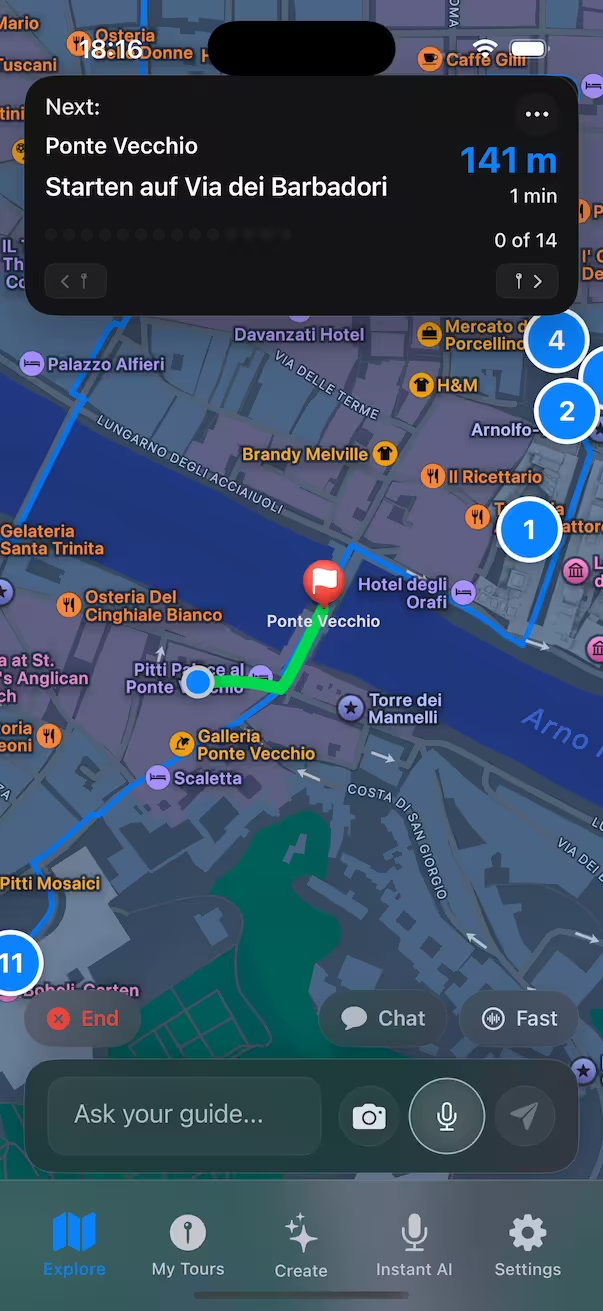
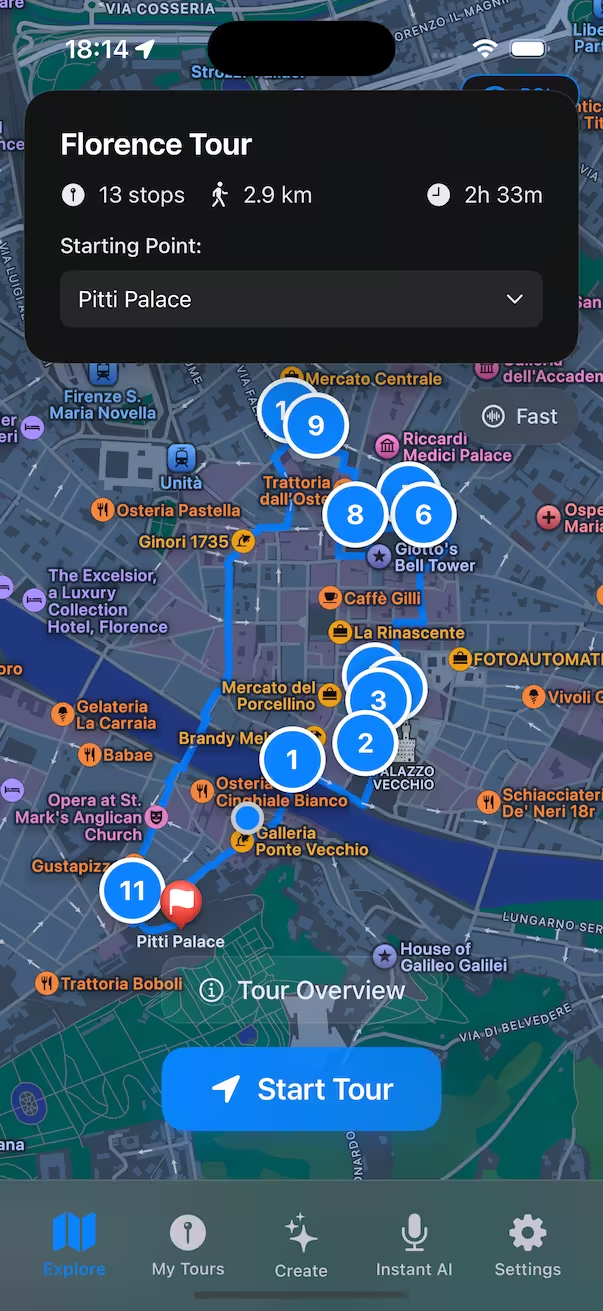
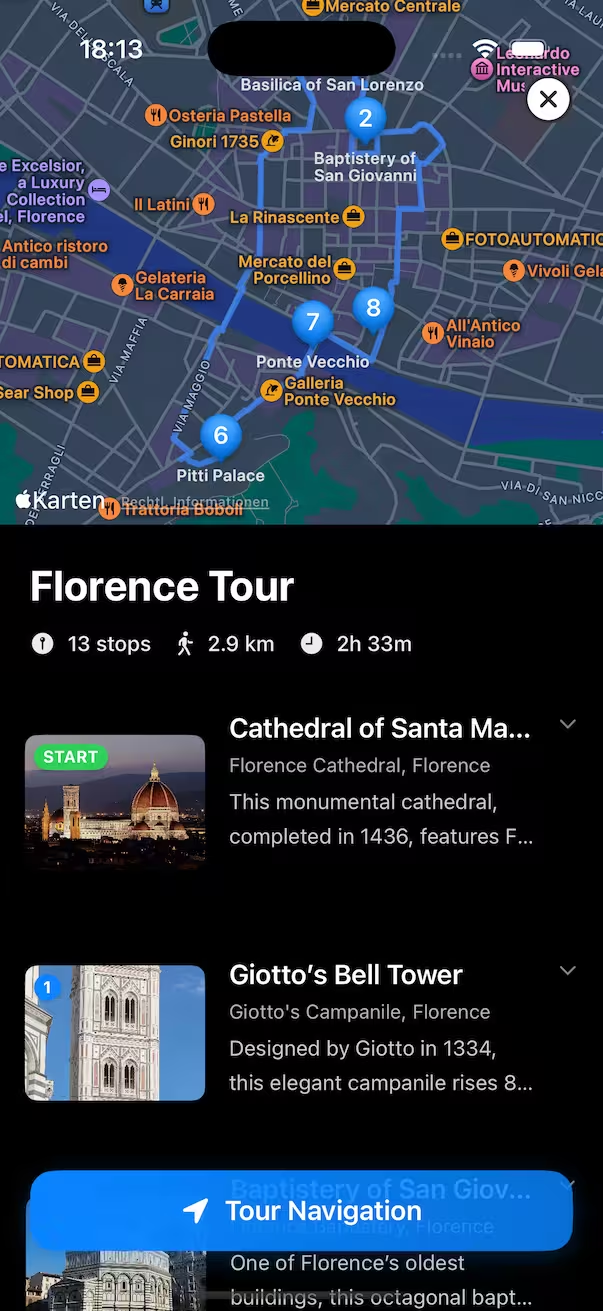
The classic Rio de Janeiro tour: 6 stops, 4.8 km, about 2 h on foot
Your live AI guide and the self-guided Rio de Janeiro route, together in your browser.