Self-Guided Walking Tour in Syracuse

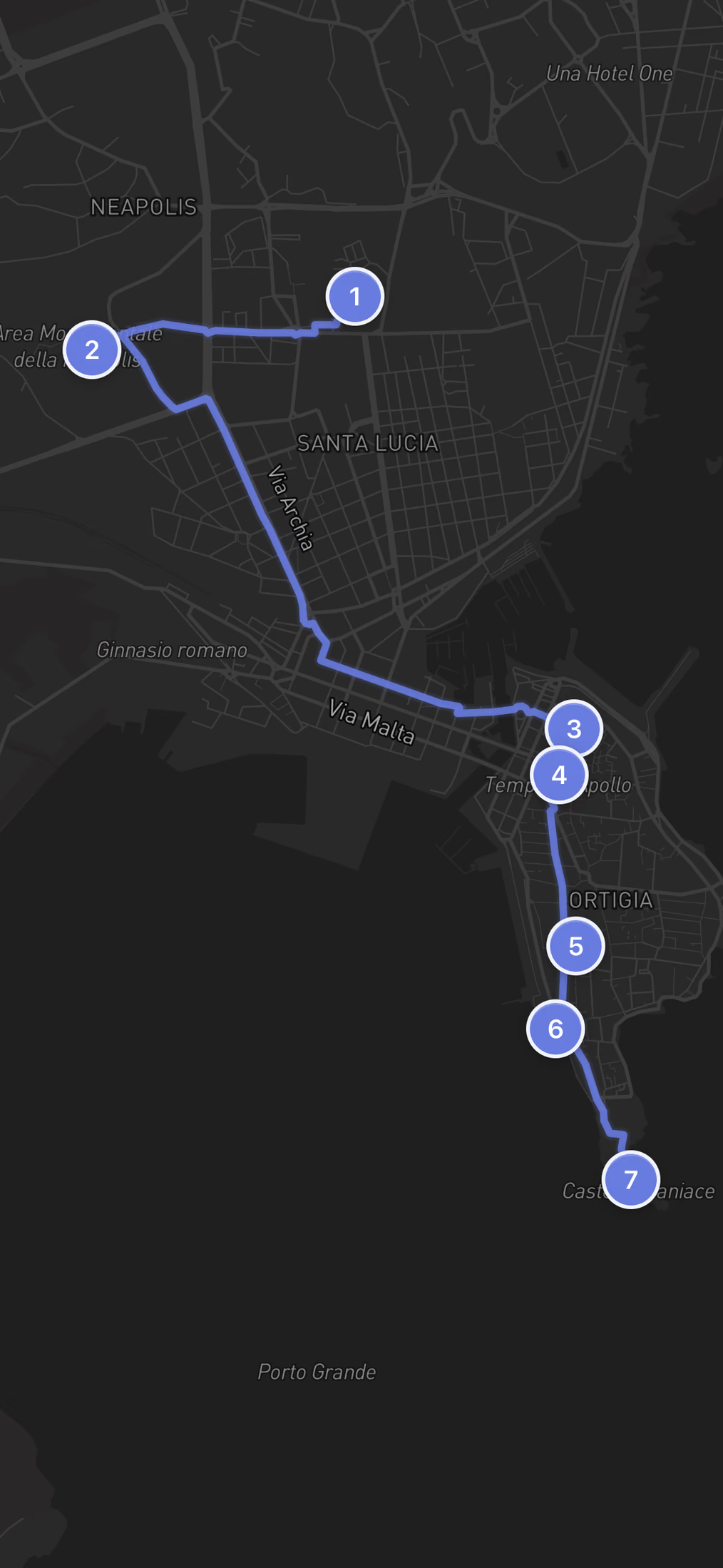
This route links Syracuse's two halves in the right order: the mainland ancient sites first, in the cool of the morning, then across the bridge onto Ortigia for the market, the cathedral square and the sea. Seven stops, roughly 4.6km, mostly flat, no backtracking. The page gives you the map, per-leg walking times, real hours and prices, and shorter versions.

7 Stops4.6 km~2 hours walking5–6 hours with stops
What you get with AI Tourguide
Full GPS navigationInteractive AI guidePersonalized to youWorks in your browser
Try this tour with Alex

Syracuse Walking Tour at a Glance

This route is built for anyone who wants Syracuse in a logical line rather than a scramble between sites. Every interior here is optional: you decide at each stop whether to pay and go in or view it for free and move on. It is fully self-guided, so you set the pace, eat when you are hungry, and finish when the light is good.

StartMuseo archeologico regionale Paolo Orsi
FinishCastello Maniace
Route typeA near-linear north-to-south walk. You start on the mainland at the Paolo Orsi museum, step west to the Neapolis park, then head south-east across the bridge onto Ortigia and work steadily down the island to its southern tip. No loop, no backtracking.
Realistic timeThe walking alone is about an hour spread across roughly 4.6km. Add the two ancient sites and a market lunch and you are looking at a full half-day, five to six hours with stops.
DifficultyEasy and mostly flat over about 4.6km, but the surfaces vary. Ortigia is uneven baroque paving and the Neapolis park has dirt paths and worn rock underfoot, so closed shoes matter more than fitness.
Cost to followThe outdoor route itself is free to walk. Paid interiors are the Paolo Orsi museum (€10) and the Neapolis park (€17); the Maniace Castle and the small Arethusa attraction are €5 each. The temples, cathedral, square and market cost nothing.
Best for:

Travellers who want the ancient sites and the island old town in one coherent day, and who like knowing exactly what is worth paying for and what to simply walk past.

The Route

Free Walking Tour Map of Syracuse

7 stops4.6 kmabout 2 hours
Loading the interactive map…The complete walking route will appear here.
Want the route to guide you while you walk?Open the route with navigation and a personal guide for the history, stories and questions that matter to you.
Open route + AI guide

The 7 stops along this route

  1. Museo archeologico regionale Paolo Orsi in Syracuse, stop 1 on the self-guided walking tour
    1Museo archeologico regionale Paolo Orsi
  2. Neapolis (Parco archeologico della Neapolis) in Syracuse, stop 2 on the self-guided walking tour
    2Neapolis (Parco archeologico della Neapolis)
  3. Ortigia Market in Syracuse, stop 3 on the self-guided walking tour
    3Ortigia Market
  4. Temple of Apollo (Tempio di Apollo) in Syracuse, stop 4 on the self-guided walking tour
    4Temple of Apollo (Tempio di Apollo)
  5. Cathedral of Syracuse (Duomo di Siracusa) in Syracuse, stop 5 on the self-guided walking tour
    5Cathedral of Syracuse (Duomo di Siracusa)
  6. Source of Arethusa (Fonte Aretusa) in Syracuse, stop 6 on the self-guided walking tour
    6Source of Arethusa (Fonte Aretusa)
  7. Castello Maniace in Syracuse, stop 7 on the self-guided walking tour
    7Castello Maniace
  8. That's the complete route.

    If you want more than the map and text, add live navigation and a conversational AI guide while you walk.

    Open route + AI guide
    You made it
Stop 1 of 7
Swipe →

Your Syracuse Walking Tour, Stop by Stop

  1. 1

    Museo archeologico regionale Paolo Orsi

    Museo archeologico regionale Paolo Orsi in Syracuse, stop 1 on the self-guided walking tour

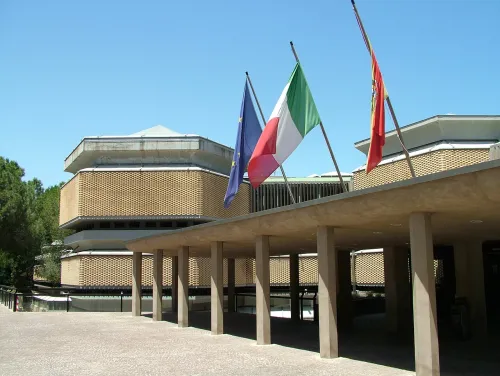
    Start here, and start at 9am when the doors open. This is one of the largest archaeological museums in Europe by floor space, housed in a 1961 building set in a quiet garden, and it makes everything else on this walk make sense. The collection runs across seven sections and tens of thousands of finds, most of them dug out of sites across the Syracuse province. If you only have an hour, focus on the Greek sculpture and the Venus Landolina. Entry is €10. Note the days: closed Mondays, open Tuesday to Saturday 9am to 6pm, and Sunday only 9am to 1pm, so a Sunday visit means moving fast. It is air-conditioned, which is the other reason to do it first. From here it is a short flat walk west to the archaeological park, the same direction the heat will be building.
    Hours
    Mon: Closed | Tue-Sat: 9:00 AM – 6:00 PM | Sun: 9:00 AM – 1:00 PM
    Price
    €10
  2. 2

    Neapolis (Parco archeologico della Neapolis)

    Neapolis (Parco archeologico della Neapolis) in Syracuse, stop 2 on the self-guided walking tour

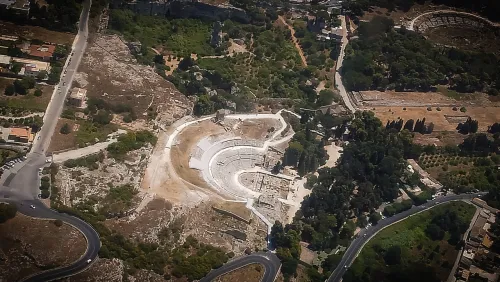
    This is the reason most people come to Syracuse. The Greek Theatre is carved straight into the hillside, big enough that they still stage classical plays here in spring. Walk down into the old quarries and you reach the Ear of Dionysius, a tall limestone cave with acoustics so sharp a whisper carries the length of it. There is a Roman amphitheatre too, usually quieter than the theatre. Entry is €17, open daily 8:30am to 6pm. Go now, in the cool of the morning, because the park is mostly open and shadeless and brutal by midday. Bring water; the kiosks inside charge tourist prices. Budget at least 90 minutes. Afterwards you head east, back toward the water and across onto Ortigia, where the next stop is a working market in full swing.

    Hours
    Daily: 8:30 AM – 6:00 PM
    Price
    €17
  3. 3

    Ortigia Market

    Ortigia Market in Syracuse, stop 3 on the self-guided walking tour

    You hear and smell this before you see it. Vendors shout prices, fishmongers slap tuna onto ice, and the air is all citrus, oregano and salted anchovy. The market runs along Via Emmanuele De Benedictis on Ortigia, Monday to Saturday from 7am to about 1:45pm, closed Sunday. Come before noon or the best stalls start packing up. It is free to walk through, obviously, but this is where you eat: grab a panino stuffed with mortadella, pistachio cream and local cheese from one of the deli stalls, or a paper cone of fried seafood. Try the cotognata, a firm quince paste sold in slabs. Do not photograph people's stalls without buying something. From the southern edge of the market it is a two-minute stroll to the first ancient temple on the island.

  4. 4

    Temple of Apollo (Tempio di Apollo)

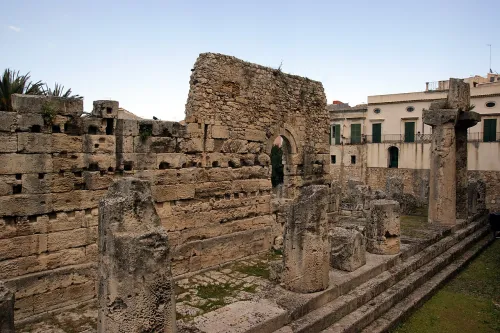
    Temple of Apollo (Tempio di Apollo) in Syracuse, stop 4 on the self-guided walking tour

    Right as you come off the market you hit a sunken rectangle of weathered stone columns sitting below street level in the middle of a busy piazza. This is the oldest Doric temple in the Greek West, and it greets you the moment you properly arrive on Ortigia. You do not go inside; it is a ruin you view from the railing that runs around it on Largo XXV Luglio. That is fine. It is free and open 24/7, so there is no ticket and no queue, and five minutes is honestly enough. The columns are stubby and worn, more impressive for their age than their grandeur. Worth knowing: it looks best in late afternoon when the low sun warms the stone. From here you walk south, deeper into the island, toward the showpiece square and its cathedral.

    Hours
    Open 24/7
    Price
    Free
  5. 5

    Cathedral of Syracuse (Duomo di Siracusa)

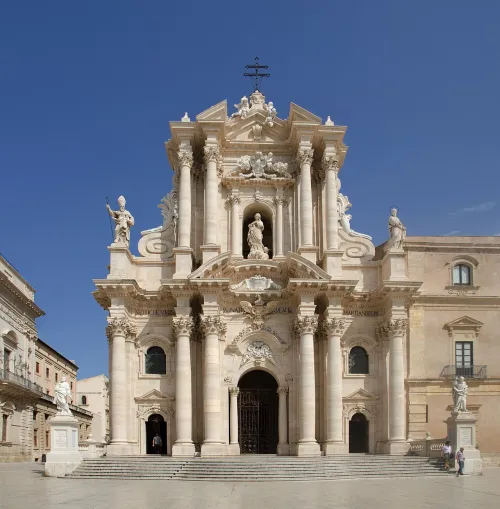
    Cathedral of Syracuse (Duomo di Siracusa) in Syracuse, stop 5 on the self-guided walking tour

    Turn into Piazza del Duomo and you understand why people call it one of the finest squares in Italy: a long curve of pale baroque facades, no cars, glowing almost white at midday. The cathedral itself is the trick of the whole town. Look at the left wall and you can see the original Doric columns of a Greek temple to Athena, built into the structure. They turned a 5th-century-BC temple into a church in the 7th century AD and never tore the columns down. Inside is calm and worth the few minutes. Entry is free. Hours are Monday to Saturday 7:30am to 7pm, Sunday split into 7:30am to 12:30pm and 4 to 8pm, so avoid the Sunday lunchtime gap. Sit at a cafe table on the square for a coffee, then carry on south and downhill toward the sea and the freshwater spring.

    Hours
    Mon-Sat: 7:30 AM – 7:00 PM | Sun: 7:30 AM – 12:30 PM, 4:00 – 8:00 PM
    Price
    Free
  6. 6

    Source of Arethusa (Fonte Aretusa)

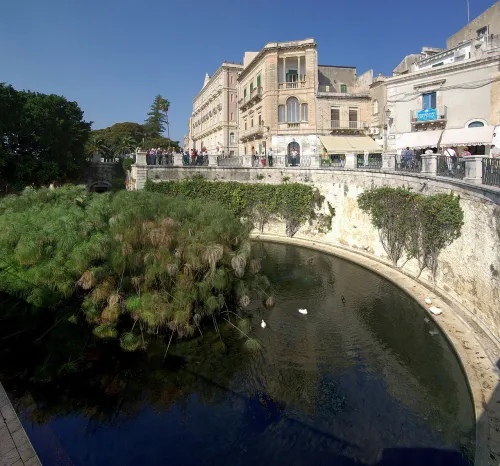
    Source of Arethusa (Fonte Aretusa) in Syracuse, stop 6 on the self-guided walking tour

    A short walk down from the cathedral and the sea opens up on your right. The Arethusa Fountain is a circular pool of fresh water sitting right at the edge of the salt harbour, thick with wild papyrus, ducks paddling in it. The myth says it is a spring connected to a river in Greece, which is the kind of story this place collects. You view it for free from the promenade above, and that is what most people do; it is essentially a duck pond with a great backstory and a lovely setting. There is a small associated attraction with limited odd hours (Wednesday to Friday 10am to 1pm, weekend evenings 6 to 9pm, €5) but the view from the railing costs nothing and is the real draw. Linger on the seafront bench here. Then it is a flat final stretch along the water to the castle at the tip.

    Hours
    Mon: 10:00 AM – 1:00 PM | Tue: Closed | Wed-Fri: 10:00 AM – 1:00 PM | Sat-Sun: 6:00 – 9:00 PM
    Price
    €5
  7. 7

    Castello Maniace

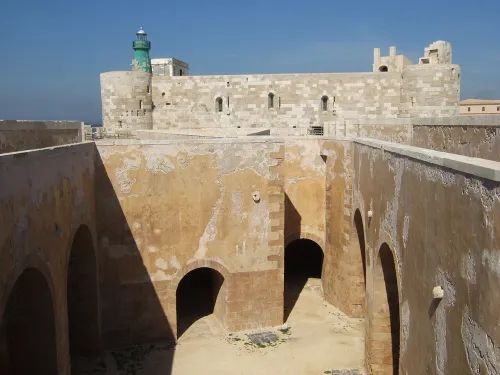
    Castello Maniace in Syracuse, stop 7 on the self-guided walking tour

    The island runs out here, and the castle marks the end of both the land and the walk. This is a Swabian fortress, one of the best-known of Frederick II's castles, sitting square on the southernmost point of Ortigia with water on three sides. Walk through the gate into the great hall and you get the sea breeze you have been wanting all day. Entry is €5. Hours are Tuesday to Saturday 8:30am to 5:45pm, with Monday and Sunday only 8:30am to noon, so a late-afternoon finish only works midweek; check the day before you build your whole route toward it. Even if you skip the interior, the walk out along the seafront to reach it is the best stretch of promenade on the island, and the ramparts give you the open Ionian. A fitting place to stop, sit, and watch the boats.

    Hours
    Mon: 8:30 AM – 12:00 PM | Tue-Sat: 8:30 AM – 5:45 PM | Sun: 8:30 AM – 12:00 PM
    Price
    €5

How Long Does This Walking Tour Really Take?

The walking is only about an hour, but the two front-loaded stops carry the day: give the Paolo Orsi museum at least an hour and the Neapolis park a good 90 minutes. The Ortigia stops are quick, so with a market lunch the whole thing runs five to six hours.

Plan for a full half-day, around five to six hours including a proper lunch. The two front-loaded stops eat the most time: give the Paolo Orsi museum at least an hour and the Neapolis park 90 minutes minimum, more if you take it slowly. The Ortigia stops are quick by comparison. The temple is five minutes, the fountain is ten, the cathedral maybe twenty inside.

The natural break is the Ortigia Market around late morning, which doubles as lunch. Eat there. If you want a sit-down pause instead, take a cafe table on Piazza del Duomo after the cathedral and have a coffee or a granita while you look at the baroque facades. The bench on the seafront beside the Arethusa Fountain is the best free rest stop, shaded in parts and right on the water, a good place to recover before the last walk out to the castle.

Full Route, Shorter Walk or Two-Day Version?

The full walk is seven stops from the Paolo Orsi museum to Maniace Castle. If you have less time, or want to split it, the route breaks cleanly at the bridge onto Ortigia. Here are three ways to run it depending on your day.

Ortigia Only

The island half, skipping the mainland

Stops 3 to 7, about 1.6km, two to three hours

Drop the museum and the Neapolis park (the 870m and 2.1km legs that pull you inland) and start on the island at the market. This is the compact, shade-friendly version: market, temple, cathedral square, fountain and castle, all within short strolls of each other.

Two-Day Split

Ancient sites one morning, the island another

Day one stops 1 to 2; day two stops 3 to 7

Split at the bridge. Do the Paolo Orsi museum and the Neapolis park as one focused ancient-history morning, then give Ortigia its own relaxed day for the market, cathedral, fountain and castle without rushing the interiors.

You can walk it in reverse from Maniace Castle back to the museum, but the given direction is strongly recommended. The Paolo Orsi museum and the exposed Neapolis park are punishing in afternoon heat, so you want them done in the cool morning and Ortigia saved for the slower afternoon by the sea.

Is This Syracuse Walking Tour Right for You?

This is a flat, moderate-length walk that mixes open ancient ruins with tight island streets. It suits some travellers better than others, and it adapts easily if you read the route before you set off.

A good fit if you…

  • History travellers who want the Greek theatre, quarries and one of Europe's largest archaeological museums in a single planned day
  • Walkers comfortable with about 4.6km on flat but uneven ground over several hours
  • Anyone who wants to eat their way through a working market as the natural midday break
  • Visitors who prefer deciding stop by stop what to pay for and what to view for free

Adapt the route if you…

  • You have limited time: run the Ortigia-only version and skip the two inland ancient sites
  • You are travelling in high-summer heat: start at 9am and do both mainland stops before 11am
  • You have mobility limits: the museum and cathedral are the easiest, while the quarry floor and worn steps at Neapolis are the hardest going
  • You are visiting on a Monday or Sunday: check the castle and museum hours first, as several stops close or shorten those days

Tickets & Skip-the-Line in Syracuse

Only a few stops on this route are ticketed, and none of them usually need advance booking. Here is what each costs and when it opens, so you can time your day and avoid a wasted trip to a closed door.

Museo archeologico regionale Paolo OrsiEntry €10. Closed Mondays, open Tuesday to Saturday 9:00 AM to 6:00 PM, and Sunday only 9:00 AM to 1:00 PM. Start here at opening; a Sunday visit means moving fast before the early close. official ticket site ↗
Neapolis (Parco archeologico della Neapolis)Entry €17, open daily 8:30 AM to 6:00 PM. Go in the cool of the morning, as the park is largely open and shadeless by midday. Bring your own water. official ticket site ↗
Cathedral of Syracuse (Duomo di Siracusa)Free to enter. Open Monday to Saturday 7:30 AM to 7:00 PM, and Sunday split into 7:30 AM to 12:30 PM and 4:00 to 8:00 PM, so avoid the Sunday lunchtime gap. official ticket site ↗
Source of Arethusa (Fonte Aretusa)The view from the promenade railing is free and is what most people do. The small associated attraction is €5 with limited hours: Monday and Wednesday to Friday 10:00 AM to 1:00 PM, weekend evenings 6:00 to 9:00 PM, closed Tuesday.
Castello ManiaceEntry €5. Open Tuesday to Saturday 8:30 AM to 5:45 PM, with Monday and Sunday only 8:30 AM to noon, so a late-afternoon finish works only midweek. Check the day before you build your route toward it. official ticket site ↗
Everything elseThe Ortigia Market and the Temple of Apollo are free open spaces with no ticket. The market runs Monday to Saturday 7:00 AM to about 1:45 PM (closed Sunday); the temple is viewable from the railing 24/7.
Optional upgrade
+3
The same 7-stop route,
now with navigation and a guide.
Optional AI experience

You already have the route.
The AI guide brings it to life.

Standing in Piazza del Duomo, or near the Temple of Apollo on Ortigia? Open AI Tourguide in your browser, no app, no download, and a voice guide walks the whole route with you, greeting you, telling the story from the Greek archaeological park to the Arethusa Fountain by the sea, then asking what to skip and what to savour, adapting as you go. A real conversation built into the walk, not a recording. Start with 100 free credits.

Livenavigation13languagesAnyquestionYourinterests
Open this route with the AI guide

Try it in your browser · No app or download required

Tips for Walking in Syracuse

  • Start at 9am when the Paolo Orsi museum opens, and do both mainland ancient sites before 11am. The Neapolis park is open and shadeless and genuinely punishing in afternoon heat from May to September.
  • Ortigia is cobblestone and uneven baroque paving, and the Neapolis park has dirt paths and worn rock steps. Wear proper closed shoes, not flip-flops; the quarry floor is loose underfoot.
  • Public restrooms are scarce. Use the toilets at the Paolo Orsi museum and at the Neapolis park entrance while you have tickets, because on Ortigia your reliable option is buying a coffee at a Piazza del Duomo cafe and using theirs.
  • Eat at the Ortigia Market (Mon-Sat, 7am to about 1:45pm). Get a stuffed panino with mortadella and pistachio from a deli stall, usually around €6 to €8, and a slab of cotognata quince paste. Closed Sundays.
  • Best photo is Piazza del Duomo in late morning when the baroque facades go nearly white, or the Maniace Castle ramparts at the end of the day. For the cathedral's hidden Greek columns, stand to the left of the facade and look along the side wall.

Why Walk This Route?

Syracuse splits into two worlds, and this walk hits both in the right order. You start on the mainland with the ancient stuff: a world-class museum and a Greek archaeological park that you want to see before the sun gets brutal. Then you cross the bridge onto Ortigia, the small island that holds the old town, and the pace shifts from ruins-and-heat to narrow lanes, a baroque cathedral, a market, and the sea on three sides. Doing it the other way around is a mistake. You do not want to climb around an exposed Greek theatre at 2pm in July.

Why walk it instead of wandering? Because the distances between the ancient sites and the island are awkward on foot in the heat, and the logical sequence is not obvious if you just turn up. This route runs roughly 4.6km end to end, mostly flat, and it is built so you never backtrack. You move from the big-ticket ancient sites in the cool morning, through the market while it is still loud and full, then settle into Ortigia for the slower afternoon. By the time you reach the castle at the southern tip, you have walked the whole island.

It is opinionated on purpose. Some stops here you pay for and they are worth it. Some you walk past for free in two minutes and that is exactly right. I will tell you which is which.

Common Questions

Is Siracusa safe to walk around?

Yes, very. Ortigia and the historic centre are calm and easy to walk day and night. Normal city sense applies: watch your bag in the crush of the Ortigia Market and keep phones away from the table edge at busy cafes. The main annoyance is aggressive parking touts near the Neapolis park trying to wave you into paid lots; ignore them and use the official entrance. No notable scam culture beyond that.

What if it rains during my Siracusa tour?

The walk holds up better than most. The Paolo Orsi museum is fully indoor and air-conditioned, easily an hour or more. The cathedral interior is covered and free. The Neapolis park is almost all open-air and miserable in heavy rain, so on a wet day flip the order: do the museum and the cathedral first, shelter in cafes around Piazza del Duomo, and save the park for a clear window. The market stalls are partly covered but thin out fast in rain.

What's the best time of day for this walking tour?

Start at 9am. The two ancient sites at the start are exposed and hot, so you want them done while it is still cool, and the museum opens at 9. That also lands you at the Ortigia Market around late morning while it is still busy and before it packs up at 1:45pm. You then finish on the island in the afternoon, reaching the castle and seafront for the warm low light. Avoid starting after midday in summer; you will be climbing the Greek theatre in full sun.

Take this route with you

Open this exact tour with navigation and your personal AI guide.

Start GPS Navigation + AI Guide
AI Tourguide
Researched and curated by the AI Tourguide teamWe plan and quality-check every route, then research and verify the opening hours, prices, and practical tips for each stop along it.
▶ Open route with AI guideNavigation, stories and your questions