Best Time to Visit Cagliari
Month-by-month weather, crowds and prices, plus a full calendar of festivals and events worth planning a trip around.
Best monthsMay, Sep
CheapestJan, Feb, Nov
AvoidAug
BusiestJul, Aug
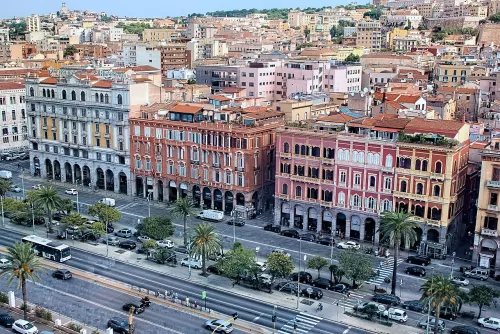
When is the best time to visit Cagliari?
Come in May or September. May brings 23°C, the spectacular Sant'Efisio procession on 1 May, and every monument open before the heat lands. September gives you August's 24°C sea minus 60% of the crowds once Italian schools restart around 13 September. July and August mean 31°C-plus and packed Poetto beach.
Start our tool and find your best time to visit Cagliari
Your perfect month
Free · ~30 seconds
or tap a month directly
What matters to you?
And this?
Best overall: May, Sep. May and September are the real answer: spring festivals or warm empty beaches, every sight open, crowds you can work around. May owns the cultural calendar, September owns the value, and both keep the heat civil.
Best value: Sep, Nov, Jan. Late September gives you beach-grade sea at off-season rates, while November, January and February bring the year's lowest hotel prices, around 86 dollars a night, and a Citadel of Museums you can have nearly to yourself.
Avoid: Aug. August: 31°C afternoons that make hilltop Castello genuinely exhausting, Poetto at capacity from 09:00, peak prices above 200 dollars a night, and many old-town trattorias shut for two weeks around Ferragosto.
- January: Great time, 14°C. This is the one month the city is purely its own. No cruise groups on the Bastione, no tour buses, just Sardinian voices in the cafes of the Marina and a slow winter rhythm. The trade is grey spells and a cold sea, and for the price and the silence it is a fair one.
- February: Great time, 14°C. February is honest, unperformed Cagliari, with one electric exception. The Carnevale floats rolling again after two decades is the kind of authentic Sardinian street festival you cannot fake, and the locals know exactly how rare it is. The rest of the month is quiet winter and all the better for it.
- March: Great time, 16°C. March is the last genuinely quiet month before spring fills the city. Almond and rock-rose blossom on the hillsides, you can still get a Saturday table in the Marina without booking, and the cruise crowds have barely begun. That window closes fast, so use it.
- April: Great time, 19°C. April is one of the most romantic months in Cagliari and still mostly under the radar. Wildflowers cover Sella del Diavolo, the Castello terraces catch golden sunset light, and the city feels alive without the summer crush. The Easter days are busy, but book around them and you have spring almost to yourself.
- May: Great time, 23°C. May is genuinely the best of both worlds, and Sant'Efisio is the once-a-year reason to time a trip precisely. The streets fill with launeddas music and decorated ox-carts, the air is perfect, and everything is open. This is also when private guides charge their festival-peak rates and book out, while our in-browser AI guide stays a flat 5 euro an hour any day of the calendar. It walks the old town with you like a local friend, telling the story at every stop and answering whatever you ask as you go.
- June: Good time, 28°C. June is the tipping point, when Cagliari shifts from spring-comfortable into full summer mode. By the third week the afternoons are hot and Poetto is busy at weekends, but the long evenings redeem it: a swim at 19:00, then aperitivo on the Bastione as the light goes gold. The crush of July is not here yet.
- July: Tough month, 31°C. July is for people who genuinely don't mind heat and crowds for the payoff of a hot, buzzing beach city. Midday in Castello is a write-off, and a 2 to 4 day Scirocco spell can push it past 40°C with Saharan dust. But early-morning sightseeing works, and our in-browser AI guide is built for exactly that: start at dawn before the groups, stay a flat 5 euro an hour while private guides charge summer-maximum rates, and ask it anything as it tells the story of each stop on your own schedule.
- August: Tough month, 31°C. August is the month to avoid unless you specifically want the full Italian beach-holiday buzz. Castello afternoons at 31°C-plus are genuinely exhausting, you pay top prices for a city half-emptied of locals, and the Ferragosto closures leave you scrambling for a spontaneous dinner. The warm sea and the Arena concerts are real fun, but go in clear-eyed.
- September: Great time, 28°C. September is the insider's answer, and the value is almost unfair. In the third week the tourist volume drops 60-70% as Italian families head home, hotel rates fall within days, and Poetto goes from packed to peaceful with the water still at 24°C. This is also when our in-browser AI guide shines: a flat 5 euro an hour, no booking weeks ahead, walking the old town with you and telling its stories at your own unhurried pace.
- October: Great time, 24°C. October is romantic and underrated, with warm sea, empty beaches and the best autumn light of the year on the salt pans. The catch is the cruise ships: on port days the Bastione and Via Roma fill with groups from 10:00 to 15:00. Time your old-town wandering for the morning or after 16:00 and you have it nearly to yourself.
- November: Great time, 18°C. November is bare, honest Cagliari, the year stripped back to its locals. The beaches are empty, the cafes of the Marina are warm and unhurried, and you can have the museums to yourself. The rain is the price, but it passes in short bursts and clears the light beautifully. For the silence and the prices it is a fair trade.
- December: Great time, 15°C. December is Cagliari without performance, a real city in its winter rhythm. There is no big-market spectacle, just lit-up old-town lanes, locals doing their Christmas shopping in the Marina, and an unhurried calm. The cool 15°C days are fine for long walks, and the quiet is the whole appeal.
Cagliari weather by month
HighLowRainfall
Jan14°
Feb14°
Mar16°
Apr19°
May23°
Jun28°
Jul31°
Aug31°
Sep28°
Oct24°
Nov18°
Dec15°
| Month | Temp | Rain | Sun | Crowds | Prices | Highlight |
|---|---|---|---|---|---|---|
| Jan | 14° / 8° | 42mm · 8 rainy days | 8.0 h/day | ●○○○○ | ●○○○○ | |
| Feb | 14° / 8° | 36mm · 7 rainy days | 9.2 h/day | ●○○○○ | ●○○○○ | Cagliari Carnival |
| Mar | 16° / 9° | 51mm · 8 rainy days | 10.0 h/day | ●●○○○ | ●●○○○ | Holy Week Processions |
| Apr | 19° / 11° | 37mm · 8 rainy days | 11.3 h/day | ●●○○○ | ●●○○○ | Holy Week Processions |
| May | 23° / 14° | 49mm · 6 rainy days | 11.9 h/day | ●●●○○ | ●●●○○ | Feast of Sant'Efisio |
| Jun | 28° / 19° | 10mm · 3 rainy days | 13.5 h/day | ●●●●○ | ●●●●○ | Sardegna Pride |
| Jul | 31° / 22° | 1mm · 0 rainy days | 13.5 h/day | ●●●●● | ●●●●● | MusiCA Arena Fiera Concerts |
| Aug | 31° / 22° | 11mm · 2 rainy days | 12.7 h/day | ●●●●● | ●●●●● | MusiCA Arena Fiera Concerts |
| Sep | 28° / 20° | 27mm · 4 rainy days | 11.1 h/day | ●●●○○ | ●●●○○ | Sagra dell'Uva, Quartu Sant'Elena |
| Oct | 24° / 16° | 46mm · 6 rainy days | 9.5 h/day | ●●○○○ | ●●○○○ | Flamingo Season at Molentargius |
| Nov | 18° / 13° | 76mm · 11 rainy days | 7.9 h/day | ●○○○○ | ●○○○○ | Jazz in Sardegna Festival |
| Dec | 15° / 9° | 47mm · 7 rainy days | 7.9 h/day | ●○○○○ | ●○○○○ | Cagliari Essay Film Festival |
How we score this: weather = long-run climate normals (Open-Meteo), crowds & prices = relative season read, events checked yearly against official dates.
Best time to visit Cagliari: weather, prices & crowds
Best months for good weather
May, Jun, Sep
May and September deliver Cagliari's most reliable warmth: 23-28°C days, barely any rain, and a sea that is swimmable in September at 24°C without the August furnace overhead.
Quietest months to avoid the crowds
Jan, Feb, Nov
From November to February the foreign crowd all but vanishes. You hear Sardinian on the streets of the Marina, Poetto beach is yours alone, and the Citadel of Museums has no queue at all.
Cheapest time to visit Cagliari
Nov, Jan, Feb
November, January and February are the cheapest months, with hotel rates around 86 dollars a night, roughly half the August peak, and walk-in tables at any trattoria in Villanova.
Best time for festivals and events
May
Sant'Efisio on 1-4 May is Sardinia's single greatest folk spectacle: over 3,000 people in traditional costume escort the saint's statue from Cagliari toward Nora, with launeddas pipes and decorated ox-carts.
How many days do you need in Cagliari?
Two days is the right measure for Cagliari. The historic core is compact enough to cover on foot in a single focused morning, but the city rewards a second day for the long beach at Poetto and the slower pleasures of a Sardinian passeggiata. A third day adds the flamingos at Molentargius and a day-trip to Quartu Sant'Elena.
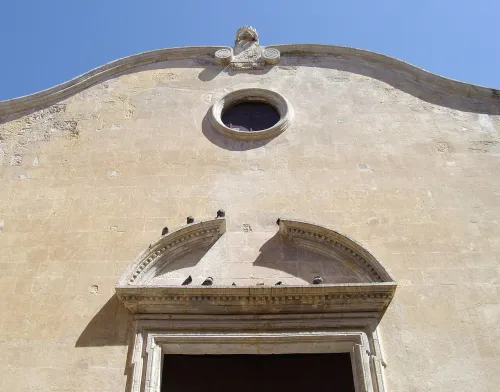
One day
Castello to waterfront in a single sweep
Start on palm-lined Via Roma at the port, then climb into the walled Castello district for the Cathedral and the panoramic Bastione di Saint Remy terrace. Work in the Roman Amphitheatre and the National Archaeological Museum at the Cittadella, then weave down through the atmospheric Jewish Ghetto. The self-guided Cagliari walking tour covers all 8 stops across 4.1 km in about 2.1 hours, a comfortable half-day on foot.
Two daysRecommended
Beach day and the Marina at dusk
Spend the morning at Poetto, Cagliari's 8-kilometre city beach, arriving before 09:00 in summer for a free spot. In the afternoon, walk 15 minutes to Molentargius park to catch the flamingo colony over the salt pans at golden hour. Return to the Marina quarter for fregola with clams and a chilled Vermentino at a seafront table.
Three days
Day-trips and the quieter quarters
Head to Quartu Sant'Elena for the Sagra dell'Uva grape harvest festival in September, or simply explore its street market. Back in the city, spend the late afternoon in the Villanova and Stampace quarters, away from the main tourist circuit, for a more local read of the city. The early evening is ideal for the free public lift on Viale Regina Elena up to Castello for sunset views over the gulf.
Four days or more
Southern Sardinia beyond the city
With four days you can reach the Nora archaeological site on the southern coast, a Roman and Phoenician town where columns still stand in the sea, or the Barumini Nuragic complex inland, a UNESCO-listed Bronze Age fortress. Base yourself in Cagliari and use it as a hub: the city's practical transport links and range of accommodation make day-trips straightforward.
Best time to visit Cagliari by traveller type
Same city, different trip. Here's the month that fits how you're travelling.
🧭
Best time to visit Cagliari for the first time
MaySep
May or September: every monument open, comfortable 23-28°C, golden light over the salt pans, and the city alive without August chaos. The classic do-everything window.
❤️
Best time to visit Cagliari for couples
AprOct
April or October: wildflowers on Sella del Diavolo, empty Poetto, flamingos at Molentargius, and quiet sunset terraces in Castello with the most dramatic light of the year.
💶
Best time to visit Cagliari on a budget
NovJanFeb
November, January or February for the lowest hotel rates of the year, zero museum queues, and Jazz in Sardegna tickets at Teatro Massimo in late November.
🍝
Best time to visit Cagliari for food and wine
MaySep
May for sea urchin at the tail of its season and the liveliest Marina trattorias, or September for the Sagra dell'Uva grape harvest in neighbouring Quartu Sant'Elena.
Worst time to visit Cagliari
August is the month to skip unless the beach-holiday buzz is the whole point. Afternoon heat in the stone-paved Castello district tops 31°C and becomes genuinely exhausting after 11:00, with Scirocco spells pushing past 40°C for days. Poetto beach is at capacity from 09:00, hotels charge over 200 dollars a night and are booked weeks ahead, and many family-run trattorias in the Marina and Villanova quarters close for one to two weeks around Ferragosto on 15 August.
Still worth it for August works for travellers who specifically want the full Italian summer beach experience: the sea peaks at 26°C, the MusiCA open-air concerts at the Arena della Fiera run through the month, and the city has an undeniable buzz. Go in clear-eyed and book everything, including dinner, well in advance.
Go instead in May, September, when Cagliari is at its best.
Best time for a tour of Cagliari
Cagliari is a city you climb, not just walk, and the month decides how brutal that climb feels. The whole loop tilts uphill from Via Roma into the Castello district, a stacked old town of pale limestone alleys with almost no shade, so July and August (highs of 31 °C and lows that never drop below 22 °C overnight) turn the ascent to the Bastione di Saint Remy and the Cagliari Cathedral into a sweat. The open terraces of the Bastione and the Roman Amphitheatre bake by late morning. The sweet spot is April through May and September into October, when highs sit around 19 to 27 °C, rain falls only six to eight days a month, and the stone holds warmth without scorching. January and February are mild for a walk by Mediterranean standards (around 14 °C and quiet, just one or two crowd-free days at a time) but November brings the wettest stretch at eleven rain days, so pack for it.
Because this is a self-guided walk that runs entirely in your browser, the climate sets your hour, not a tour operator's clock. There are no fixed departure times to chase, so on a hot August day you can start your Cagliari tour at first light, take the steep alleys up to Castello while the limestone is still cool and the Bastione terrace is empty, then duck into the National Archaeological Museum or the Cripta di Santa Restituta when the sun gets high. A voice-first AI guide leads the whole way, telling the story of the Jewish Ghetto and the cathedral, asking what you want to linger over, and adapting the route to your pace as you go.

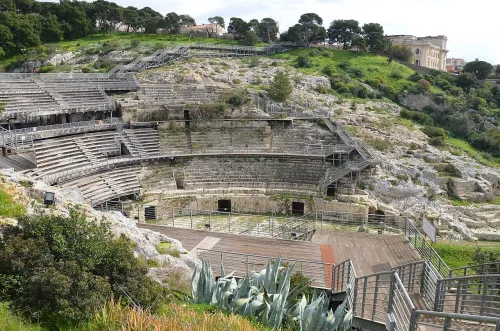
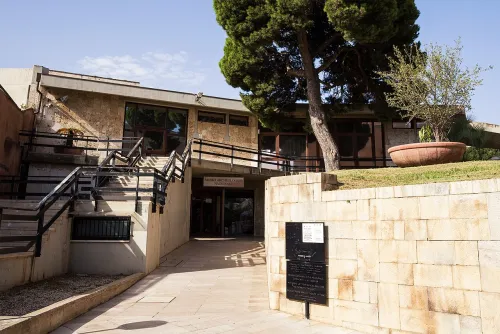 +4
+4All 8 stops are already on the map.
You just press start.
You just press start.
 AI Tourguide
You just read the route.
Now walk it with a guide in your ear.
Press start wherever you are, even hundreds of kilometres from Cagliari, and the guide begins telling its stories right away. In the city, pick any of the 8 stops to start from: it leads you there, then talks with you the whole route, asking, listening, remembering, and shaping the tour around your answers.
8stops4.1km2.1hours11languages
▶Start the tour freeFree to start · Runs in your browser · No app, no download
Cagliari events and festivals calendar
Annual highlights worth timing a trip around, listed month by month.
February
🎭 CarnivalCagliari Carnival Carnevale Cagliaritano
Feb 6–22 ~
early to late February, before Lent
Cagliari's carnival, with parades from Via De Candia and Piazza del Carmine in mid-February and a grand finale on Martedi Grasso featuring the Pentolaccia and the burning of Cancioffali.
March
🌸 Seasonal natureFlamingo Season at Molentargius Fenicotteri al Parco di Molentargius
Mar 1 – Nov 30 ~
spring nesting (March to May) and autumn migration (September to November)
Over 10,000 greater flamingos live year-round at the Molentargius-Saline park, with peak numbers in spring nesting (March to May) and autumn migration (September to November).
⛪ ReligiousHoly Week Processions Settimana Santa / Sa Pasca Manna
Mar 29 – Apr 5 ~
the week before Easter (dates shift each year with Easter)
A Spanish-influenced tradition dating to the 16th century: the Procession of the Mysteries from Piazza San Giacomo, the Dead Christ procession from the Cathedral on Good Friday, and S'Incontru on Easter Sunday, when the Risen Christ meets the Madonna, all carried with 18th-century mystery statues.
April
🎨 Art and cultureMonumenti Aperti (Open Monuments) Monumenti Aperti
Apr 18–19
a weekend in mid-April
Guided visits to normally closed heritage sites across the city, led by student volunteers, held on a weekend in mid-April.
May
⛪ ReligiousFeast of Sant'Efisio Festa di Sant'Efisio
May 1–4
1 to 4 May every year
Sardinia's greatest procession, in its 370th edition: the saint's statue travels from Cagliari toward Nora and back, escorted by over 3,000 people in traditional costume, launeddas pipers and decorated ox-carts (tracas).
June
🏳️🌈 PrideSardegna Pride
Jun 25–27 ~
late June, parade on the final day
A three-day Pride Park with cultural events and social gatherings, capped by the main parade through central Cagliari on 27 June.
🎬 FilmFilming Italy Sardegna Festival Filming Italy Sardegna
Jun 25–28 ~
late June
A cinema festival in its 9th edition, held at Cagliari and the Forte Village, with Italian and international film premieres and red-carpet screenings, directed by Tiziana Rocca.
July
🎵 MusicMusiCA Arena Fiera Concerts MusiCA - Estate in Arena
Jul 1 – Aug 27 ~
July and August, several dates each month
An open-air concert season at the Arena della Fiera running through July and August, with a rotating lineup of major Italian and international acts.
August
🇮 HolidayFerragosto
Aug 15
15 August every year
The national mid-August holiday and the biggest beach day of the year.
September
🍷 Food and wineSagra dell'Uva, Quartu Sant'Elena Sagra dell'Uva / Festa di Sant'Elena
Sep 9–21 ~
mid-September
A grape-harvest festival in Quartu Sant'Elena, adjacent to Cagliari, part of the Sant'Elena Imperatrice celebrations, with wine tastings, traditional parades and folk music.
November
🎵 MusicJazz in Sardegna Festival Jazz in Sardegna - Festival Internazionale
Nov 20–30 ~
late November
An international jazz festival with the European Jazz Expo at Teatro Massimo in Cagliari, one of the longest-running jazz festivals in Italy.
December
🎬 FilmCagliari Essay Film Festival
Dec 1–31 ~
December (finals screenings)
A short and essay film festival whose finalists are screened in Cagliari cinemas, with streaming via Zalab View.
Insider tips for visiting Cagliari
The rules buried in forums, in one place.
- The Citadel of Museums has staggered closing days: the National Archaeological Museum and National Art Gallery both shut on Tuesday, while the Ethnographic Museum closes on Monday. Decide which one you want before you go, and visit Wednesday to Sunday to catch all three.
- For Sant'Efisio on 1 May, reach the Stampace quarter by 10:00. The procession only departs at 12:00, but Via Azuni and Largo Carlo Felice are already lined with crowds from 09:30. The side streets off Corso Vittorio Emanuele give you a clear view without the crush.
- October is the heaviest cruise month, with a record 34 calls including a quadruple call of around 12,000 passengers on 28 October. On port days the Bastione di Saint Remy and Via Roma fill with groups from 10:00 to 15:00, so head to Poetto or Castello and come back after 16:00.
- In July and August, Poetto beach fills by 09:00 on weekends. Arrive before 08:30 for a free spot, or come Monday to Thursday when the 8-kilometre beach stays calm and parking is easy. Saturday from 10:00 means a 30-minute parking queue.
- Climbing into the Castello district in 35°C heat is brutal. Use the free public lift on Viale Regina Elena, open 24/7, which saves the steep 10-minute uphill walk. Most visitors never realise it exists.
- Italy's national museums, including the National Archaeological Museum, give free entry on the first Sunday of each month. In low season (November to March) the queue is manageable, but in summer it forms by 08:00, so just pay the regular 5 to 8 euro admission on a weekday instead.
- Book any restaurant for 13-17 August at least two weeks ahead. Many family-run trattorias in the Marina and Villanova districts close for 10 to 14 days around Ferragosto, leaving the beachside kiosks at Poetto and the tourist spots on Via Roma as your fallback.
- Flamingos at Molentargius park are most active 30 to 60 minutes before sunset, around 19:30 to 20:30 in summer. The park is a 15-minute walk from Poetto, entry is free, and a post-beach visit catches the birds in golden light over the salt pans.
Public holidays in Cagliari
On these dates many shops and offices close, transport thins out, and sights can be mobbed or shut. Plan around them.
| Date | Holiday | What closes |
|---|---|---|
| Jan 1 | New Year's Day | Everything closes: shops, museums, most restaurants, and there is no public transport. The Cathedral opens for Mass. A quiet, slow start to the year. |
| Jan 6 | Epiphany | National holiday: shops closed, a family day with light tourist traffic. Plan museum visits around what stays open. |
| Apr 5 | Easter Sunday | The Cathedral is packed for the S'Incontru procession, when the Risen Christ meets the Madonna. The city is lively and restaurants are fully booked, so reserve ahead. |
| Apr 6 | Easter Monday (Pasquetta) | Picnic day: Poetto and the city parks fill with locals. Many restaurants close or serve outdoors only, so a beachside kiosk lunch is the easy plan. |
| Apr 25 | Liberation Day | National holiday with minor commemorations. Museums stay open, and as it falls on a Saturday in 2026 the extra impact is limited. |
| May 1 | Labour Day and Sant'Efisio | The Sant'Efisio procession dominates the city from 12:00, with the Stampace streets closed. National holiday: shops shut, but the festival is the reason to be here. |
| Jun 2 | Republic Day | National holiday with a military ceremony at Piazza del Carmine and minor closures. Early-summer shoulder crowds, nothing overwhelming. |
| Aug 15 | Ferragosto | National holiday and the peak beach day: Poetto is at maximum from morning. Many city-centre restaurants close for one to two weeks, hotels are fully booked, and the higher Q3 tourist tax applies. |
| Nov 1 | All Saints' Day | Cemeteries are busy with families, some restaurants close, and tourism is quiet. A calm, reflective day in the city. |
| Dec 8 | Immaculate Conception | Shops and banks close. As it falls on a Tuesday in 2026 it creates a mid-week bridge day (ponte) and a little domestic travel into the city. |
| Dec 25 | Christmas Day | Everything closes. The Cathedral holds midnight Mass, and the end-of-season cruise call arrives on 27 December. A very quiet city otherwise. |
| Dec 26 | St Stephen's Day | Shops closed and the city stays quiet. A good day for a long coastal walk or a slow lunch where restaurants are open. |
Cagliari month by month
January in Cagliari
High14°C / 57°F
Low8°C
Rain42mm / 8 rainy days
Sun8.0 h/day
Daylight10 h/day
Humidity78%
Crowds●○○○○Prices●○○○○
January is Cagliari at its quietest and cheapest, with mild 14°C afternoons and roughly 8 rainy days. Foreign visitors are almost nonexistent and the beaches belong to a handful of dog-walkers. The light is low and golden, the Marina trattorias serve locals only, and the Citadel of Museums has no queue. The sea sits at 13-14°C, so swimming is for wetsuits, but the walking weather is genuinely pleasant.
The vibe This is the one month the city is purely its own. No cruise groups on the Bastione, no tour buses, just Sardinian voices in the cafes of the Marina and a slow winter rhythm. The trade is grey spells and a cold sea, and for the price and the silence it is a fair one.
Don't miss The National Archaeological Museum and its Nuragic bronze figurines feel almost private on a quiet weekday. Flamingos winter at Molentargius park, a free 15-minute walk from Poetto, best seen at sunrise or sunset over the salt pans.
Crowd drivers No cruise ships call in January and no school holidays once Epiphany passes on 6 January. The lowest visitor pressure of the entire year.
In season Sea urchin (ricci di mare) season is in full swing from January, the local winter delicacy served raw on bread or stirred through spaghetti at the Marina seafood spots.
Heads up 1 January and 6 January are national holidays with shops, museums and most restaurants shut. The National museums also close on Tuesday (Archaeological and Art Gallery) and Monday (Ethnographic).
Cheapest month of the year, with hotel beds from around 45 euro and the lowest rates Cagliari sees.
Events this month
🌸 Seasonal natureFlamingo Season at Molentargius Fenicotteri al Parco di Molentargius
Mar 1 – Nov 30 ~
spring nesting (March to May) and autumn migration (September to November)
Over 10,000 greater flamingos live year-round at the Molentargius-Saline park, with peak numbers in spring nesting (March to May) and autumn migration (September to November). The park is a 15-minute walk from Poetto with free entry.
Europe's largest urban flamingo colony, free to visit, and at its most spectacular at sunrise or sunset over the salt pans.
February in Cagliari
High14°C / 58°F
Low8°C
Rain36mm / 7 rainy days
Sun9.2 h/day
Daylight11 h/day
Humidity76%
Crowds●○○○○Prices●○○○○
February stays mild at 14-15°C and is the driest of the winter months at 36mm of rain. It is low season, but the Carnevale Cagliaritano brings a short local spike in mid-month, with allegorical floats returning to the streets after a 20-year gap, parades from Via De Candia and a grand finale with the burning of Cancioffali. Outside the festival days the city is calm and the museums uncrowded.
The vibe February is honest, unperformed Cagliari, with one electric exception. The Carnevale floats rolling again after two decades is the kind of authentic Sardinian street festival you cannot fake, and the locals know exactly how rare it is. The rest of the month is quiet winter and all the better for it.
Don't miss Wildflowers begin on the coastal scrub around Sella del Diavolo, with rock roses and the first wild orchids from February into April. The Carnevale parades give you Sardinian costume and street theatre that most tourists never witness.
Crowd drivers The Carnevale weekend around 15-17 February draws Sardinians into the city, but nothing close to peak season. No cruise ships yet.
In season Sea urchin is at its peak (the season runs January to April), and the first artichokes reach the Marina market stalls. Fritters and sweets like zippulas appear for Carnevale.
Still the cheapest stretch of the year; Carnevale weekend fills local B&Bs but overall rates stay low.
Events this month
🎭 CarnivalCagliari Carnival Carnevale Cagliaritano
Feb 6–22 ~
early to late February, before Lent
Cagliari's carnival, with parades from Via De Candia and Piazza del Carmine in mid-February and a grand finale on Martedi Grasso featuring the Pentolaccia and the burning of Cancioffali. After a 20-year absence, allegorical floats have returned to the streets, making any edition that features them a notably rare spectacle.
When the allegorical floats run, it is a rare spectacle, with authentic Sardinian street festival atmosphere far from any tourist show.
🌸 Seasonal natureFlamingo Season at Molentargius Fenicotteri al Parco di Molentargius
Mar 1 – Nov 30 ~
spring nesting (March to May) and autumn migration (September to November)
Over 10,000 greater flamingos live year-round at the Molentargius-Saline park, with peak numbers in spring nesting (March to May) and autumn migration (September to November). The park is a 15-minute walk from Poetto with free entry.
Europe's largest urban flamingo colony, free to visit, and at its most spectacular at sunrise or sunset over the salt pans.
March in Cagliari
High16°C / 61°F
Low9°C
Rain51mm / 8 rainy days
Sun10.0 h/day
Daylight12 h/day
Humidity74%
Crowds●●○○○Prices●●○○○
March brings Cagliari back to life, with highs climbing to 16°C, lengthening days, and café terraces reopening. Crowds stay moderate, though travel builds toward the end of the month as Easter approaches. The cruise season opens with its first calls, and the Holy Week processions begin in the final days, a Spanish-influenced tradition of 18th-century mystery statues carried through the old town.
The vibe March is the last genuinely quiet month before spring fills the city. Almond and rock-rose blossom on the hillsides, you can still get a Saturday table in the Marina without booking, and the cruise crowds have barely begun. That window closes fast, so use it.
Don't miss Flamingos at Molentargius swell into their spring nesting numbers from March, the start of the best months for the colony. Wildflowers carpet Sella del Diavolo and the coastal scrub, free and unticketed walks above the sea.
Crowd drivers The cruise season opens with its first calls, and an early-April Easter pulls Italian domestic travel into the last week of March.
In season Artichokes and wild fennel are at their best, and sea urchin is in its final weeks. Sardinian spring lamb appears on menus ahead of Easter.
Rates run 60-70% below the August peak; the best value-for-money window of the year.
Events this month
⛪ ReligiousHoly Week Processions Settimana Santa / Sa Pasca Manna
Mar 29 – Apr 5 ~
the week before Easter (dates shift each year with Easter)
A Spanish-influenced tradition dating to the 16th century: the Procession of the Mysteries from Piazza San Giacomo, the Dead Christ procession from the Cathedral on Good Friday, and S'Incontru on Easter Sunday, when the Risen Christ meets the Madonna, all carried with 18th-century mystery statues.
One of Sardinia's most solemn and atmospheric Easter rituals, staged through the old town with centuries-old statues.
🌸 Seasonal natureFlamingo Season at Molentargius Fenicotteri al Parco di Molentargius
Mar 1 – Nov 30 ~
spring nesting (March to May) and autumn migration (September to November)
Over 10,000 greater flamingos live year-round at the Molentargius-Saline park, with peak numbers in spring nesting (March to May) and autumn migration (September to November). The park is a 15-minute walk from Poetto with free entry.
Europe's largest urban flamingo colony, free to visit, and at its most spectacular at sunrise or sunset over the salt pans.
April in Cagliari
High19°C / 66°F
Low11°C
Rain37mm / 8 rainy days
Sun11.3 h/day
Daylight13 h/day
Humidity71%
Crowds●●○○○Prices●●○○○
April is warm and increasingly green, with 19°C highs and only 37mm of rain. The Easter weekend brings Italian domestic visitors, and the S'Incontru procession packs the Cathedral on Easter Sunday. Monumenti Aperti on a mid-April weekend throws open normally closed heritage sites across the city, led by student volunteers. Outside the Easter spike, crowds and prices stay reasonable, and the wildflowers peak.
The vibe April is one of the most romantic months in Cagliari and still mostly under the radar. Wildflowers cover Sella del Diavolo, the Castello terraces catch golden sunset light, and the city feels alive without the summer crush. The Easter days are busy, but book around them and you have spring almost to yourself.
Don't miss Monumenti Aperti (18-19 April) is a free chance to enter private palaces, crypts and archives normally shut to the public, in its 30th edition. Wildflowers and flamingo nesting numbers are both at their spring peak.
Crowd drivers The Easter weekend (4-6 April) brings Italian families, the Liberation Day Saturday on 25 April adds a long weekend, and the cruise season is now running weekly.
In season Sardinian spring lamb and the first fava beans with pecorino define the Easter table. The last of the sea urchin lingers into early April.
Easter weekend spikes hotels around 25%, then rates drop back to roughly 100 dollars a night.
Events this month
⛪ ReligiousHoly Week Processions Settimana Santa / Sa Pasca Manna
Mar 29 – Apr 5 ~
the week before Easter (dates shift each year with Easter)
A Spanish-influenced tradition dating to the 16th century: the Procession of the Mysteries from Piazza San Giacomo, the Dead Christ procession from the Cathedral on Good Friday, and S'Incontru on Easter Sunday, when the Risen Christ meets the Madonna, all carried with 18th-century mystery statues.
One of Sardinia's most solemn and atmospheric Easter rituals, staged through the old town with centuries-old statues.
🎨 Art and cultureMonumenti Aperti (Open Monuments) Monumenti Aperti
Apr 18–19
a weekend in mid-April
Guided visits to normally closed heritage sites across the city, led by student volunteers, held on a weekend in mid-April. Private palaces, crypts and archives open their doors for free.
A rare, free chance to step inside buildings that stay shut to the public the rest of the year, in a landmark anniversary edition.
🌸 Seasonal natureFlamingo Season at Molentargius Fenicotteri al Parco di Molentargius
Mar 1 – Nov 30 ~
spring nesting (March to May) and autumn migration (September to November)
Over 10,000 greater flamingos live year-round at the Molentargius-Saline park, with peak numbers in spring nesting (March to May) and autumn migration (September to November). The park is a 15-minute walk from Poetto with free entry.
Europe's largest urban flamingo colony, free to visit, and at its most spectacular at sunrise or sunset over the salt pans.
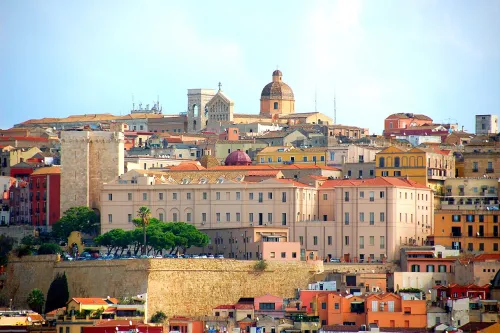
May in Cagliari
High23°C / 73°F
Low14°C
Rain49mm / 6 rainy days
Sun11.9 h/day
Daylight14 h/day
Humidity69%
Crowds●●●○○Prices●●●○○
May is genuinely the best of both worlds, and Sant'Efisio is the once-a-year reason to time a trip precisely. The streets fill with launeddas music and decorated ox-carts, the air is perfect, and everything is open. This is also when accommodation books out furthest in advance and the city is at its most vibrant without the summer heat.
The vibe May is genuinely the best of both worlds, and Sant'Efisio is the once-a-year reason to time a trip precisely. The streets fill with launeddas music and decorated ox-carts, the air is perfect, and everything is open. This is also when private guides charge their festival-peak rates and book out, while our in-browser AI guide stays a flat 5 euro an hour any day of the calendar. It walks the old town with you like a local friend, telling the story at every stop and answering whatever you ask as you go.
Don't miss Sant'Efisio is unmissable: traditional costumes from every Sardinian village, launeddas pipers, and the statue carried on confraternity shoulders in 2026. Flamingo nesting at Molentargius is at its height, best at sunrise or sunset.
Crowd drivers Sant'Efisio (1-4 May) fills the city, the cruise season is in full weekly swing, and the Labour Day holiday on 1 May coincides with the procession.
In season Sea urchin catches the tail of its season in early May, alongside fresh bottarga, malloreddus gnocchi and porceddu (suckling pig) in the Marina trattorias before tourist menus take over.
Sant'Efisio weekend hotels sell out 6-8 weeks ahead; rates climb but stay below the summer maximum.
Events this month
⛪ ReligiousFeast of Sant'Efisio Festa di Sant'Efisio
May 1–4
1 to 4 May every year
Sardinia's greatest procession, in its 370th edition: the saint's statue travels from Cagliari toward Nora and back, escorted by over 3,000 people in traditional costume, launeddas pipers and decorated ox-carts (tracas). It departs the Stampace church at 12:00 on 1 May.
The single most spectacular cultural event in Sardinia, an unmissable display of authentic folk costume from across the island.
🌸 Seasonal natureFlamingo Season at Molentargius Fenicotteri al Parco di Molentargius
Mar 1 – Nov 30 ~
spring nesting (March to May) and autumn migration (September to November)
Over 10,000 greater flamingos live year-round at the Molentargius-Saline park, with peak numbers in spring nesting (March to May) and autumn migration (September to November). The park is a 15-minute walk from Poetto with free entry.
Europe's largest urban flamingo colony, free to visit, and at its most spectacular at sunrise or sunset over the salt pans.
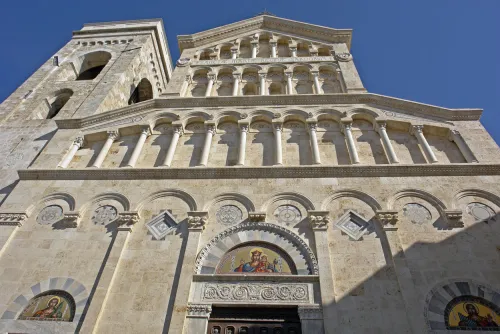
June in Cagliari
High28°C / 82°F
Low19°C
Rain10mm / 3 rainy days
Sun13.5 h/day
Daylight15 h/day
Humidity64%
Crowds●●●●○Prices●●●●○
June opens the Sardinian summer warm at 28°C, nearly dry at 10mm of rain, and long on daylight at almost 15 hours. The sea reaches a swimmable 21°C, drawing Italian pre-summer visitors before the school holidays hit. Sardegna Pride takes over central streets on 25-27 June, overlapping with the Filming Italy Sardegna festival. The cruise season is at full pace and Poetto starts to fill on weekends, though weekdays are still calm.
The vibe June is the tipping point, when Cagliari shifts from spring-comfortable into full summer mode. By the third week the afternoons are hot and Poetto is busy at weekends, but the long evenings redeem it: a swim at 19:00, then aperitivo on the Bastione as the light goes gold. The crush of July is not here yet.
Don't miss The sea is finally warm enough for everyone at 21°C, so Poetto and the smaller coves come into their own. Sardegna Pride brings a three-day Pride Park and a parade through the Marina and Castello on 27 June.
Crowd drivers Sardegna Pride (25-27 June) closes central streets, the cruise season is at peak pace, and Italian pre-summer travel begins ahead of the school holidays.
In season Fregola with clams and seafood antipasti move to the centre of the menu, paired with a chilled Vermentino at a seafront table.
Rates climb to around 150 dollars a night; from July the non-hotel tourist tax rises to 3 euro a night.
Events this month
🏳️🌈 PrideSardegna Pride
Jun 25–27 ~
late June, parade on the final day
A three-day Pride Park with cultural events and social gatherings, capped by the main parade through central Cagliari on 27 June. It is preceded by a 40-day Queeresima cultural programme from 17 May.
The largest LGBTQIA+ event in Sardinia, with central streets closed and a lively crowd through the Marina and Castello.
🎬 FilmFilming Italy Sardegna Festival Filming Italy Sardegna
Jun 25–28 ~
late June
A cinema festival in its 9th edition, held at Cagliari and the Forte Village, with Italian and international film premieres and red-carpet screenings, directed by Tiziana Rocca.
A high-profile film event whose red carpets overlap with the late-June tourist surge, with some free screenings open to the public.
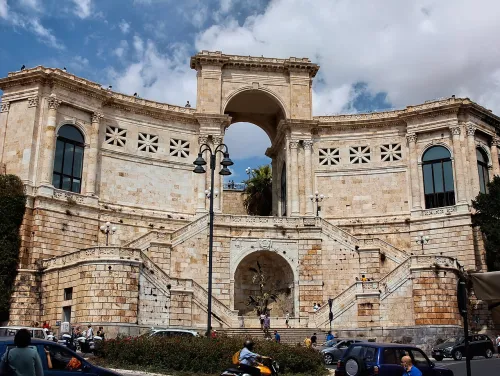
July in Cagliari
High31°C / 88°F
Low22°C
Rain1mm / 0 rainy days
Sun13.5 h/day
Daylight15 h/day
Humidity59%
Crowds●●●●●Prices●●●●●
July is for people who genuinely don't mind heat and crowds for the payoff of a hot, buzzing beach city. Midday in Castello is a write-off, and a two to four day Scirocco spell can push it past 40°C with Saharan dust. Early-morning sightseeing works well, and after 18:00 the city comes back to life. The MusiCA concert season at the Arena della Fiera runs open-air shows through the month.
The vibe July is for people who genuinely don't mind heat and crowds for the payoff of a hot, buzzing beach city. Midday in Castello is a write-off, and a 2 to 4 day Scirocco spell can push it past 40°C with Saharan dust. But early-morning sightseeing works, and our in-browser AI guide is built for exactly that: start at dawn before the groups, stay a flat 5 euro an hour while private guides charge summer-maximum rates, and ask it anything as it tells the story of each stop on your own schedule.
Don't miss MusiCA at the Arena della Fiera runs open-air concerts through the month, with Ben Harper on 1 July among the 2026 lineup. Late-evening swims at Poetto and golden-hour flamingos at Molentargius are the way to beat the heat.
Crowd drivers Italian school holidays in full effect, northern European sun-seekers arriving, and the record cruise season (181 calls) concentrating many calls in July and August.
In season Gelato and granita are survival strategy, not treat. Walk a few streets off Via Roma for an artisan gelateria at half the tourist price.
Heads up Some boutiques in Castello close 13:00 to 17:00 for the summer siesta. The Roman Amphitheatre shuts when hosting concert events, so check before visiting.
Year's highest prices, with hotels averaging around 238 dollars a night and Arena della Fiera concerts every week.
Events this month
🎵 MusicMusiCA Arena Fiera Concerts MusiCA - Estate in Arena
Jul 1 – Aug 27 ~
July and August, several dates each month
An open-air concert season at the Arena della Fiera running through July and August, with a rotating lineup of major Italian and international acts. Past headliners have included Ben Harper, Claudio Baglioni, Massimo Ranieri and Cristiano De André.
Major Italian and international acts in an open-air setting, the standout summer night out, though July and August dates sell out fast.
August in Cagliari
High31°C / 88°F
Low22°C
Rain11mm / 2 rainy days
Sun12.7 h/day
Daylight14 h/day
Humidity62%
Crowds●●●●●Prices●●●●●
August is the busiest and hottest month, with 31°C highs and the Italian holiday exodus pointing straight at the beaches. Ferragosto on 15 August is the peak beach day of the year, with Poetto, the Spiaggia dei Centomila, at capacity from morning. Restaurants book out one to two weeks ahead, and many old-town trattorias close for the holiday. The sea is at its warmest, around 26°C, the one consolation of the heat.
The vibe August is the month to avoid unless you specifically want the full Italian beach-holiday buzz. Castello afternoons at 31°C-plus are genuinely exhausting, you pay top prices for a city half-emptied of locals, and the Ferragosto closures leave you scrambling for a spontaneous dinner. The warm sea and the Arena concerts are real fun, but go in clear-eyed.
Don't miss The sea peaks at around 26°C, the warmest swimming of the year. MusiCA concerts continue with Claudio Baglioni on 5 August and Massimo Ranieri on 13 August at the Arena della Fiera.
Crowd drivers The Italian August exodus to the beaches, Ferragosto on 15 August, and the height of the cruise season all stack together.
In season Stick to the Poetto beach kiosks or the tourist-facing restaurants on Via Roma around Ferragosto, since many family-run Marina and Villanova trattorias close for 10 to 14 days.
Heads up Many city-centre trattorias close for one to two weeks around 15 August. Some Castello boutiques keep the 13:00 to 17:00 summer siesta.
Peak rates around 208 dollars a night; the Ferragosto weekend books out weeks ahead.
Events this month
🎵 MusicMusiCA Arena Fiera Concerts MusiCA - Estate in Arena
Jul 1 – Aug 27 ~
July and August, several dates each month
An open-air concert season at the Arena della Fiera running through July and August, with a rotating lineup of major Italian and international acts. Past headliners have included Ben Harper, Claudio Baglioni, Massimo Ranieri and Cristiano De André.
Major Italian and international acts in an open-air setting, the standout summer night out, though July and August dates sell out fast.
🇮 HolidayFerragosto
Aug 15
15 August every year
The national mid-August holiday and the biggest beach day of the year. Poetto is at maximum capacity, locals head for the coast, and many city-centre restaurants and shops close for one to two weeks around the date.
The peak of the Italian summer, fun if you want the full beach-holiday buzz, but book restaurants and hotels weeks ahead.
September in Cagliari
High28°C / 82°F
Low20°C
Rain27mm / 4 rainy days
Sun11.1 h/day
Daylight12 h/day
Humidity68%
Crowds●●●○○Prices●●●○○
September is the insider's answer, and the value is almost unfair. In the third week the tourist volume drops 60-70% as Italian families head home, hotel rates fall within days, and Poetto goes from packed to peaceful with the water still at 24°C. The Sagra dell'Uva in neighbouring Quartu Sant'Elena adds a day-trip at the ideal moment.
The vibe September is the insider's answer, and the value is almost unfair. In the third week the tourist volume drops 60-70% as Italian families head home, hotel rates fall within days, and Poetto goes from packed to peaceful with the water still at 24°C. This is also when our in-browser AI guide shines: a flat 5 euro an hour, no booking weeks ahead, walking the old town with you and telling its stories at your own unhurried pace.
Don't miss The Sagra dell'Uva in Quartu Sant'Elena (mid-September) is an easy day-trip with Cannonau and Nuragus wine tastings, traditional parades and folk music. Late-September swimming at an empty Poetto in 24°C water is the sweet spot.
Crowd drivers Italian school restart around 13 September empties the beaches within days, and the cruise season continues but eases off the summer peak.
In season Grape-harvest sagre bring new Cannonau and Nuragus wines, and seafood menus pivot to autumn, with fregola and clams at a seafront trattoria with nobody else in line.
Rates drop 30-40% versus August within the first two weeks, back to roughly 120-130 dollars a night.
Events this month
🍷 Food and wineSagra dell'Uva, Quartu Sant'Elena Sagra dell'Uva / Festa di Sant'Elena
Sep 9–21 ~
mid-September
A grape-harvest festival in Quartu Sant'Elena, adjacent to Cagliari, part of the Sant'Elena Imperatrice celebrations, with wine tastings, traditional parades and folk music.
An easy day-trip with harvest-season atmosphere and Sardinian Cannonau and Nuragus wines, right at the start of the golden September shoulder.
🌸 Seasonal natureFlamingo Season at Molentargius Fenicotteri al Parco di Molentargius
Mar 1 – Nov 30 ~
spring nesting (March to May) and autumn migration (September to November)
Over 10,000 greater flamingos live year-round at the Molentargius-Saline park, with peak numbers in spring nesting (March to May) and autumn migration (September to November). The park is a 15-minute walk from Poetto with free entry.
Europe's largest urban flamingo colony, free to visit, and at its most spectacular at sunrise or sunset over the salt pans.
October in Cagliari
High24°C / 74°F
Low16°C
Rain46mm / 6 rainy days
Sun9.5 h/day
Daylight11 h/day
Humidity73%
Crowds●●○○○Prices●●○○○
October is warm and atmospheric, with 23°C highs and a sea still swimmable at 22°C, though the first proper rains return at 46mm. It is the heaviest cruise month, with a record 34 calls including a quadruple call of around 12,000 passengers on 28 October. Flamingo numbers peak at Molentargius with the autumn migration. Outside the cruise port days, the city is calm and the light over the salt pans is dramatic.
The vibe October is romantic and underrated, with warm sea, empty beaches and the best autumn light of the year on the salt pans. The catch is the cruise ships: on port days the Bastione and Via Roma fill with groups from 10:00 to 15:00. Time your old-town wandering for the morning or after 16:00 and you have it nearly to yourself.
Don't miss Flamingos peak at Molentargius with the autumn migration, up to 10,000-plus birds, a free 15-minute walk from Poetto. The sea is still swimmable at 22°C with the beaches nearly empty.
Crowd drivers A record 34 cruise calls fill the city centre on port days, including a quadruple call of around 12,000 passengers on 28 October.
In season Autumn brings new-season olive oil, wild mushrooms and the first chestnuts to the markets, alongside the last warm-weather seafood.
Hotels are quiet midweek, but cruise port days bring day-tripper crowds to the city centre.
Events this month
🌸 Seasonal natureFlamingo Season at Molentargius Fenicotteri al Parco di Molentargius
Mar 1 – Nov 30 ~
spring nesting (March to May) and autumn migration (September to November)
Over 10,000 greater flamingos live year-round at the Molentargius-Saline park, with peak numbers in spring nesting (March to May) and autumn migration (September to November). The park is a 15-minute walk from Poetto with free entry.
Europe's largest urban flamingo colony, free to visit, and at its most spectacular at sunrise or sunset over the salt pans.
November in Cagliari
High18°C / 65°F
Low13°C
Rain76mm / 11 rainy days
Sun7.9 h/day
Daylight10 h/day
Humidity78%
Crowds●○○○○Prices●○○○○
November is the wettest month at 76mm and roughly 11 rainy days, though the rain comes as short Mediterranean downpours rather than all-day drizzle, and an umbrella suffices. The beach season is over and foreign tourists are scarce, so hotel rates fall to their lowest. Late November brings the Jazz in Sardegna festival to Teatro Massimo. It is the quietest, cheapest month, with the Citadel of Museums entirely queue-free.
The vibe November is bare, honest Cagliari, the year stripped back to its locals. The beaches are empty, the cafes of the Marina are warm and unhurried, and you can have the museums to yourself. The rain is the price, but it passes in short bursts and clears the light beautifully. For the silence and the prices it is a fair trade.
Don't miss Jazz in Sardegna at Teatro Massimo (late November) brings top international acts to an intimate historic venue in the cheapest month. Flamingo autumn-migration numbers are still high at Molentargius.
Crowd drivers The cruise season is winding down and the beach season is over, so foreign visitor pressure is near its annual low.
In season Autumn and winter cooking returns: wild boar, malloreddus alla campidanese, and the first sea urchin of the new season toward month's end.
Lowest prices of the year, averaging around 86 dollars a night, 40-50% below August.
Events this month
🎵 MusicJazz in Sardegna Festival Jazz in Sardegna - Festival Internazionale
Nov 20–30 ~
late November
An international jazz festival with the European Jazz Expo at Teatro Massimo in Cagliari, one of the longest-running jazz festivals in Italy.
Top-tier international jazz at an intimate historic venue, landing in the quietest and cheapest month of the year.
🌸 Seasonal natureFlamingo Season at Molentargius Fenicotteri al Parco di Molentargius
Mar 1 – Nov 30 ~
spring nesting (March to May) and autumn migration (September to November)
Over 10,000 greater flamingos live year-round at the Molentargius-Saline park, with peak numbers in spring nesting (March to May) and autumn migration (September to November). The park is a 15-minute walk from Poetto with free entry.
Europe's largest urban flamingo colony, free to visit, and at its most spectacular at sunrise or sunset over the salt pans.
December in Cagliari
High15°C / 60°F
Low9°C
Rain47mm / 7 rainy days
Sun7.9 h/day
Daylight10 h/day
Humidity79%
Crowds●○○○○Prices●○○○○
December is quiet and cool at 15°C, with the beach season long gone and few foreign visitors. There is no large Christmas market, but the old town carries a soft festive atmosphere and the Cathedral holds midnight Mass. Everything closes on 25-26 December. The Immaculate Conception on 8 December (a Tuesday in 2026) makes a mid-week bridge day. It is an off-peak month with low prices and a calm, local feel.
The vibe December is Cagliari without performance, a real city in its winter rhythm. There is no big-market spectacle, just lit-up old-town lanes, locals doing their Christmas shopping in the Marina, and an unhurried calm. The cool 15°C days are fine for long walks, and the quiet is the whole appeal.
Don't miss The Cagliari Essay Film Festival screens short and essay films in city cinemas this month. Flamingos linger at Molentargius, and the low winter light over the salt pans is at its most photogenic.
Crowd drivers The Immaculate Conception on 8 December creates a ponte bridge day and a little domestic travel; otherwise visitor numbers are very low.
In season Sardinian Christmas sweets appear: papassini studded with nuts and raisins, and pabassinas, alongside seafood feasts for the holiday table.
Heads up 8 December, 25 December and 26 December are holidays with shops and most restaurants closed. The National museums keep their Monday and Tuesday closing days.
Off-peak rates throughout; the 8 December bridge creates a small mid-week travel bump.
Events this month
🎬 FilmCagliari Essay Film Festival
Dec 1–31 ~
December (finals screenings)
A short and essay film festival whose finalists are screened in Cagliari cinemas, with streaming via Zalab View. A smaller, cinephile-focused event.
Cultural programming in the city's quietest month, a quiet draw for film lovers.
🌸 Seasonal natureFlamingo Season at Molentargius Fenicotteri al Parco di Molentargius
Mar 1 – Nov 30 ~
spring nesting (March to May) and autumn migration (September to November)
Over 10,000 greater flamingos live year-round at the Molentargius-Saline park, with peak numbers in spring nesting (March to May) and autumn migration (September to November). The park is a 15-minute walk from Poetto with free entry.
Europe's largest urban flamingo colony, free to visit, and at its most spectacular at sunrise or sunset over the salt pans.
Frequently asked questions
What is the best time to visit Cagliari?
May and September are the best months. May brings 23°C, the Sant'Efisio procession on 1-4 May, and every monument open before the summer heat. September gives you August's warm 24°C sea minus 60-70% of the crowds once Italian schools reopen around 13 September, with hotel rates 30-40% below the August peak.
What is the cheapest time to visit Cagliari?
November, January and February are the cheapest months, with hotels averaging around 86 dollars a night, roughly half the August peak, and beds from about 45 euro. The last two weeks of September are also great value: rates fall 30-40% within days of the school restart while the sea stays at 24°C.
What is the worst time to visit Cagliari?
August, especially the two weeks around Ferragosto on 15 August. Hotels charge over 200 dollars a night, Poetto beach is full from 09:00, afternoon heat in Castello tops 31°C, and many city-centre trattorias close for one to two weeks. Only worth it if you specifically want the full Italian beach-holiday buzz.
When can you swim in the sea at Cagliari?
The comfortable swimming window runs June to October. The sea reaches 21°C in June, peaks around 26°C in August, and stays at 24-25°C through September into early October. From January to May it sits at 13-18°C, warm enough only for wetsuit swimmers. Late September is the sweet spot: warm water, near-empty beaches.
When is Sant'Efisio in Cagliari?
Sant'Efisio runs 1-4 May every year, with the main procession departing the Stampace church at 12:00 on 1 May. Over 3,000 people in traditional Sardinian costume escort the saint's statue toward Nora. Book accommodation 6-8 weeks ahead, as the festival weekend sells out and central streets close.
Is Cagliari worth visiting in winter?
Yes, if you want quiet and low prices over beach weather. December to February brings mild 14-15°C days, the year's cheapest hotels, and a Citadel of Museums with no queue. The Carnevale Cagliaritano enlivens February, and 2026 sees allegorical floats return after 20 years. The sea is too cold for swimming, but the walking weather is pleasant.
How many days do you need in Cagliari?
Two to three days covers the city itself: the Castello quarter, the Bastione di Saint Remy, the National Archaeological Museum, the Roman Amphitheatre, and a half-day at Poetto beach. Add a day for Molentargius flamingos and a Quartu Sant'Elena day-trip, or more if you plan to explore the wider southern Sardinian coast.
What is the weather like in Cagliari in September?
September is warm and mostly dry, with 28°C average highs, lows around 20°C, and only about 4 rainy days. The sea holds at 24-25°C from the summer. It is one of the best months to visit: beach-grade warmth, golden light over the salt pans, and the crowds thinning fast after the mid-month school restart.
Which museums are closed on which days in Cagliari?
At the Citadel of Museums, the National Archaeological Museum and National Art Gallery both close on Tuesday, while the Ethnographic Museum closes on Monday. Wednesday to Sunday is safe for all three. National museums offer free entry on the first Sunday of each month, but the queue forms by 08:00 in summer, so a paid weekday visit is faster.

Any month, any day: your guide is already there
Whatever date you pick, a private human guide gets pricier and harder to book on weekends, holidays and in peak season. Our live AI guide, the one that walks with you and answers anything you ask out loud, works the opposite way.
One flat price, every day
No holiday, weekend, night or peak-season surcharge. A private guide in Cagliari runs well over 100 euro for a half day, and more on holidays. Ours stays the same.
Available the moment you want it
Start at midnight or at dawn, on Christmas, in the snow, in the August heat. No sold-out high season, no booking weeks ahead.
Your pace, no meter running
Pause for a long lunch, restart after dark, repeat a stop. The tour simply waits for you.
Free to try, a fraction of the cost
Test it for free, then a transparent flat price that undercuts any private guide, in every season.
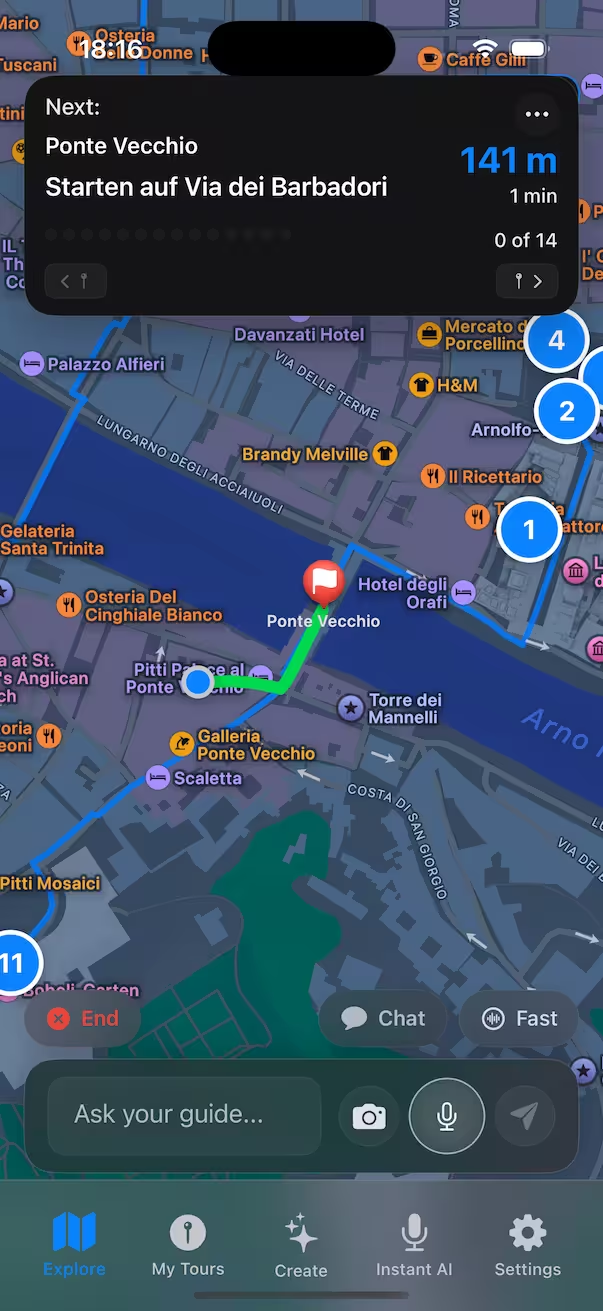
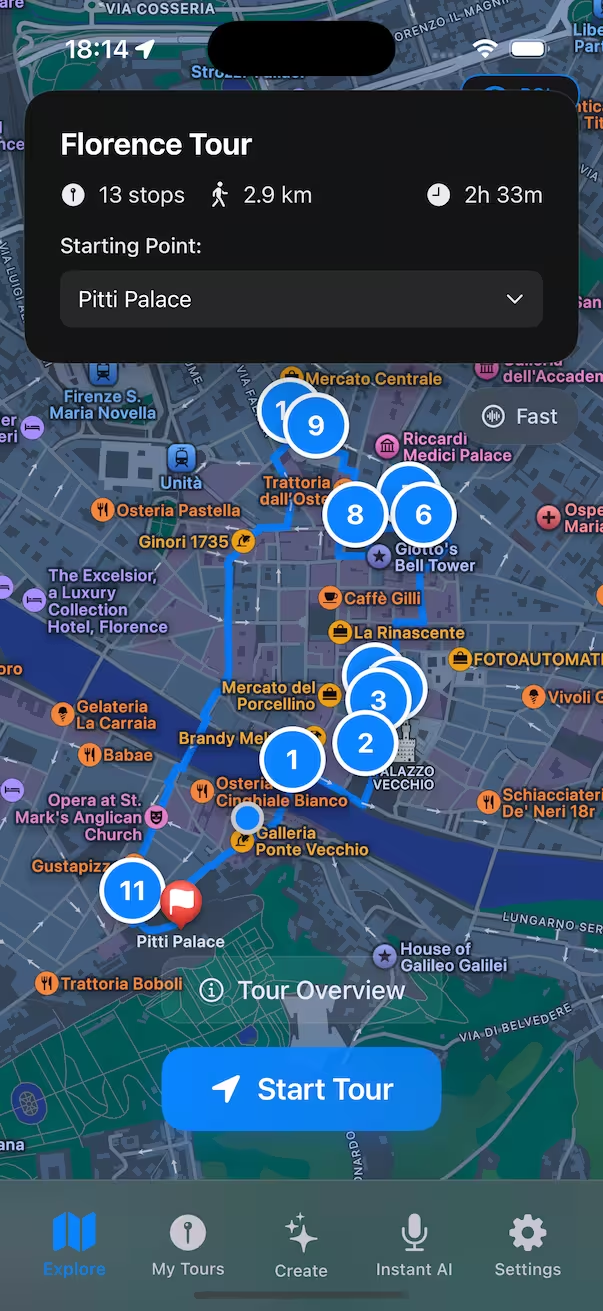
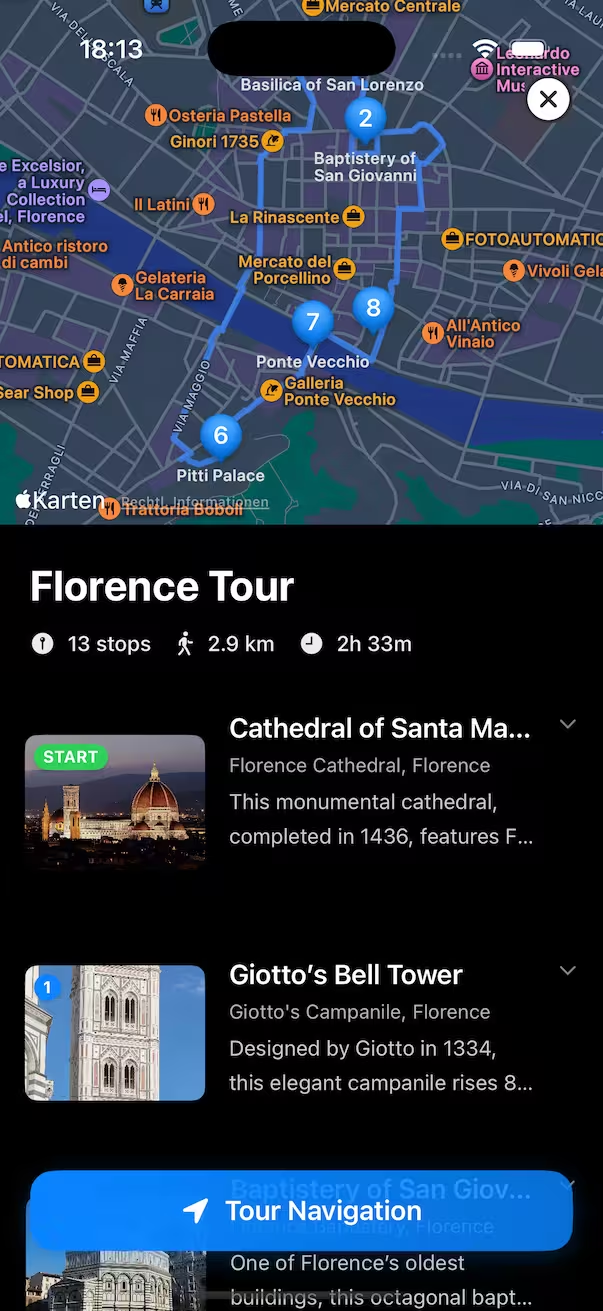
The classic Cagliari tour: 8 stops, 4.1 km, about 2 h on foot
Your live AI guide and the self-guided Cagliari route, together in your browser.