Best Time to Visit Naples
Month-by-month weather, crowds and prices, plus a full calendar of festivals and events worth planning a trip around.
Best monthsMay, Sep, Oct
CheapestJan, Feb, Nov
AvoidJul
BusiestJul, Aug
When is the best time to visit Naples?
Come in May, September or October: warm 22-26°C days, a swimmable sea, and the year's richest festival calendar from Maggio dei Monumenti to the San Gennaro feast. July is the heat-and-crowd peak, with Pompeii punishing at 35°C. January, February and November are cheapest, the trade being short days and the wettest skies.
Start our tool and find your best time to visit Naples
Your perfect month
Free · ~30 seconds
or tap a month directly
What matters to you?
And this?
Best overall: May, Sep. May and September are the real sweet spot: warm enough to swim, the city's two biggest cultural anchors (Maggio dei Monumenti and the San Gennaro feast), shoulder prices, and crowds you can work around. October is the quiet near-twin with the lowest prices outside winter.
Best value: Jan, Feb, Nov. January, February and November bring hotels 40-50% below summer, no queue at Pompeii or the MANN, and the easiest first-Sunday free-museum entry of the year. The price is grey skies and, in November, the wettest month at 204mm over 16 days.
Avoid: Jul. July stacks all three negatives: peak heat with 35°C-plus possible, peak prices at 150-220 euro a night midrange, and peak crowds, with Pompeii brutal at midday and Capri taking 50,000 day-trippers a day. Mid-August softens only because the locals leave.
- January: Good time, 12°C. This is the one month you stand alone in the Cappella Sansevero in front of the Veiled Christ instead of shuffling through a timed-entry crush. The Neapolitans are home, the espresso bars are unhurried, and the city sounds like itself. Grey spells are the price, and a fair one.
- February: Great time, 14°C. February is honest, unperformed Naples in winter mode and better for it. The Carnevale finale on Martedì Grasso is the one stretch when you see Neapolitans visibly let loose, the avant-garde Sottencoppa sound carnival booming off the centro storico walls.
- March: Great time, 15°C. March is the last month you can still walk into a Forcella trattoria on a Saturday without a booking. The light is sharpening, the markets are filling with spring produce, and that window shuts fast, so use it.
- April: Great time, 18°C. April is gorgeous and no longer a secret. The Good Friday Processione dei Misteri through the centro storico is hauntingly dramatic, and on Easter Monday the locals flood the Campania countryside, leaving Naples pleasantly emptied. If you are not into pop culture, dodge the COMICON dates when the Mostra d'Oltremare area is severely congested.
- May: Good time, 22°C. Everyone calls May a shoulder-season secret; it stopped being one years ago. Maggio dei Monumenti crowds fill the centro storico and prices know it, but the trade is real: optimal weather, extraordinary access to closed monuments, and a sea you can swim in by the last week. Come anyway, just book early.
- June: Good time, 27°C. June is the tipping point, when Naples shifts from busy-but-workable into full summer mode around the third week. The coastal sea breeze keeps evenings at a pleasant 24-27°C even as days heat up, so dinner outside on the Lungomare is the redemption. Come in the first fortnight and you beat both the schools and the worst heat.
- July: Tough month, 30°C. July is for people who genuinely don't mind 35°C and summer-maximum prices. Midday is a write-off, and this is when expensive private guides charge their peak rates and book out. Our live AI guide stays a flat 5 euro an hour on any day and lets you start your Pompeii walk at 8 am on your own clock, telling you the story of everything you pass and answering whatever you ask, the way a private guide beside you would.
- August: Good time, 30°C. August is not romantic-empty Naples, it is survival-mode Naples. The locals are out on Procida and Ischia, and what fills their place is a sea of international tourists in Pompeii queues. The heat is draining rather than photogenic, so do your sights before 8 am and retreat indoors by noon.
- September: Good time, 26°C. September is when Naples feels intimate again. The summer crush thins after the 15th, the sea is warmer than in June, and the San Gennaro feast on the 19th, the tension of waiting for the blood to liquefy, is the single most electric local experience in the calendar. This is the month to come if you can only pick one.
- October: Great time, 22°C. October is the calm, golden near-twin of September without the festival surge. The light raking across the bay and over Vesuvius is the best of the year, the centro storico breathes again, and you can pair a 9 am Cappella Sansevero with an 11 am MANN in perfect comfort. The quiet luxury month before winter.
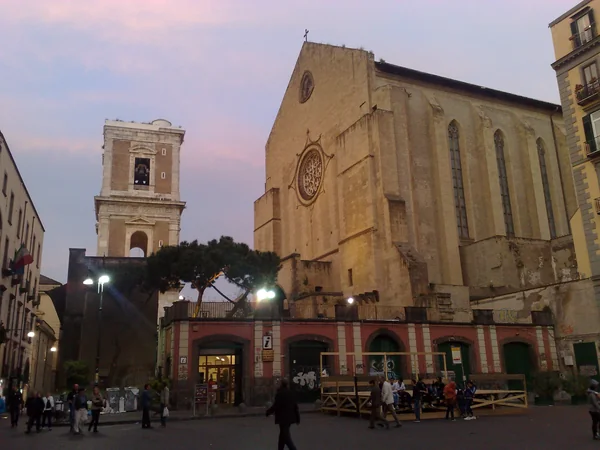
- November: Great time, 18°C. November is honest, rain-washed Naples with the tourists gone. Between the showers the light is sharp and the centro storico is yours, with the San Gregorio Armeno nativity workshops swinging into full production for Christmas. Pack for rain and you get the city at its cheapest and emptiest.
- December: Great time, 14°C. December Naples turns on San Gregorio Armeno, where the presepe craftsmen sell hand-made nativity figures down a lane strung with lights, a singular sight you find nowhere else. The Christmas-week crush is real, but go in early December or between Christmas and New Year and you get the atmosphere without the worst of it.
Naples weather by month
HighLowRainfall
Jan12°
Feb14°
Mar15°
Apr18°
May22°
Jun27°
Jul30°
Aug30°
Sep26°
Oct22°
Nov18°
Dec14°
| Month | Temp | Rain | Sun | Crowds | Prices | Highlight |
|---|---|---|---|---|---|---|
| Jan | 12° / 5° | 108mm · 12 rainy days | 6.9 h/day | ●○○○○ | ●○○○○ | San Carlo Opera Season |
| Feb | 14° / 6° | 109mm · 12 rainy days | 8.2 h/day | ●○○○○ | ●○○○○ | Naples Carnival |
| Mar | 15° / 7° | 93mm · 12 rainy days | 9.5 h/day | ●●○○○ | ●●○○○ | See Naples and Then Eat |
| Apr | 18° / 10° | 71mm · 10 rainy days | 10.9 h/day | ●●●○○ | ●●●○○ | See Naples and Then Eat |
| May | 22° / 14° | 79mm · 11 rainy days | 11.9 h/day | ●●●●○ | ●●●○○ | See Naples and Then Eat |
| Jun | 27° / 18° | 43mm · 6 rainy days | 13.2 h/day | ●●●●○ | ●●●●○ | May of the Monuments |
| Jul | 30° / 21° | 19mm · 4 rainy days | 13.8 h/day | ●●●●● | ●●●●● | Ravello Festival |
| Aug | 30° / 21° | 25mm · 6 rainy days | 12.7 h/day | ●●●●○ | ●●●●○ | Ravello Festival |
| Sep | 26° / 18° | 98mm · 9 rainy days | 10.8 h/day | ●●●●○ | ●●●●○ | Ravello Festival |
| Oct | 22° / 14° | 110mm · 10 rainy days | 8.9 h/day | ●●●○○ | ●●●○○ | San Carlo Opera Season |
| Nov | 18° / 11° | 204mm · 16 rainy days | 7.1 h/day | ●○○○○ | ●○○○○ | San Gregorio Armeno Christmas Fair |
| Dec | 14° / 7° | 104mm · 10 rainy days | 6.8 h/day | ●●○○○ | ●●○○○ | San Gregorio Armeno Christmas Fair |
How we score this: weather = long-run climate normals (Open-Meteo), crowds & prices = relative season read, events checked yearly against official dates.
Best time to visit Naples: weather, prices & crowds
Best months for good weather
May, Jun, Sep
May and September are Naples at its kindest: 22-26°C, long bright evenings on the Lungomare, and a sea warm enough for a Capri swim by late May and right through September at 23-25°C.
Quietest months to avoid the crowds
Jan, Feb, Nov
From November to February the international crowd thins right out: Pompeii and the MANN are nearly empty, and Cappella Sansevero timed slots that vanish weeks ahead in summer are bookable for the next morning.
Cheapest time to visit Naples
Jan, Feb, Nov
January and February are the cheapest months of the year, with midrange hotels from 60-80 euro a night, 40-50% below the July peak, and a Margherita at da Michele still 5 euro as it is all year.
Best time for festivals and events
May, Sep
Maggio dei Monumenti throws open 200-plus free events and monuments that are shut the rest of the year through May, while 19 September brings the San Gennaro blood miracle at the Duomo, the most electric religious ritual in the city.
How many days do you need in Naples?
Naples rewards three full days. The historic centre is dense enough that two days cover the monumental core and the medieval spine of Spaccanapoli, but a third day is the minimum if you plan a Pompeii or Capri excursion from the city. Add a fourth or fifth only if you want to reach Herculaneum, Capodimonte, and Ischia on top of that.
One day
The monumental core in a morning
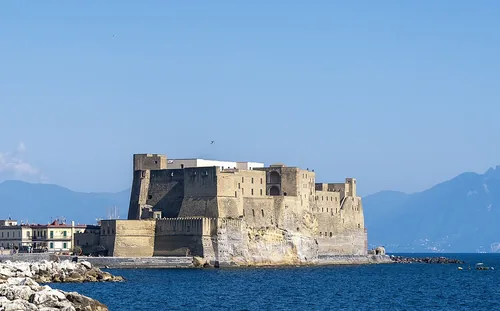
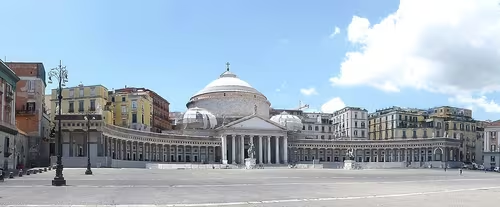
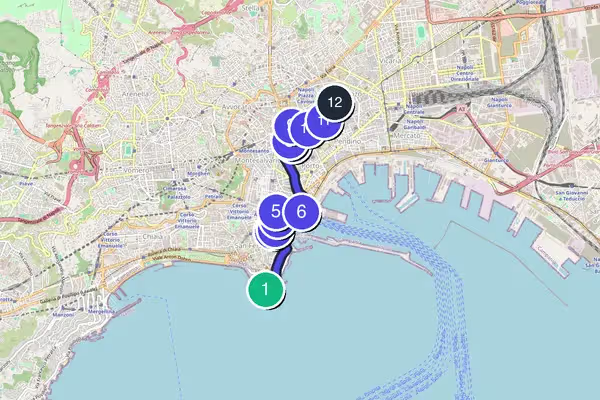
Begin at Castel dell'Ovo on the Lungomare, cross to Piazza del Plebiscito, walk the Royal Palace of Naples facade and the gilded interior of Teatro San Carlo, then cut through the glass-roofed Galleria Umberto I before finishing at Castel Nuovo. A self-guided Naples walking tour threads all 12 stops across 5.5 km in about 2.9 hours, making it the most efficient way to cover the centre before the midday heat builds in summer.
Two days
Spaccanapoli and the centro storico
Devote the second day to the medieval spine of Spaccanapoli. Walk from Santa Chiara and its majolica-tiled cloister to the diamond-stone facade of Chiesa del Gesù Nuovo, linger at the cafe terraces of Piazza Bellini, and allow an hour inside Cappella Sansevero for the Veiled Christ. End on San Gregorio Armeno, the street of presepe craftsmen, and duck into Naples Cathedral to see the vials of San Gennaro's blood. Book Cappella Sansevero in advance: it sells timed-entry slots online 60 days ahead, and in summer they go fast.
Three daysRecommended
Pompeii as a day trip
A third day belongs to Pompeii. Take the Circumvesuviana from Piazza Garibaldi and arrive at Pompeii Scavi by 9 am, using the quieter Piazza Anfiteatro entrance rather than Porta Marina. Book online at pompeiisites.org to skip the gate queue. Plan three to four hours on site, then catch a late afternoon train back to Naples for dinner in the Quartieri Spagnoli. In July and August, leave Pompeii by 11:30 am: the unshaded 44-hectare site is punishing in the midday heat.
Four days or more
Islands, Amalfi, and Capodimonte
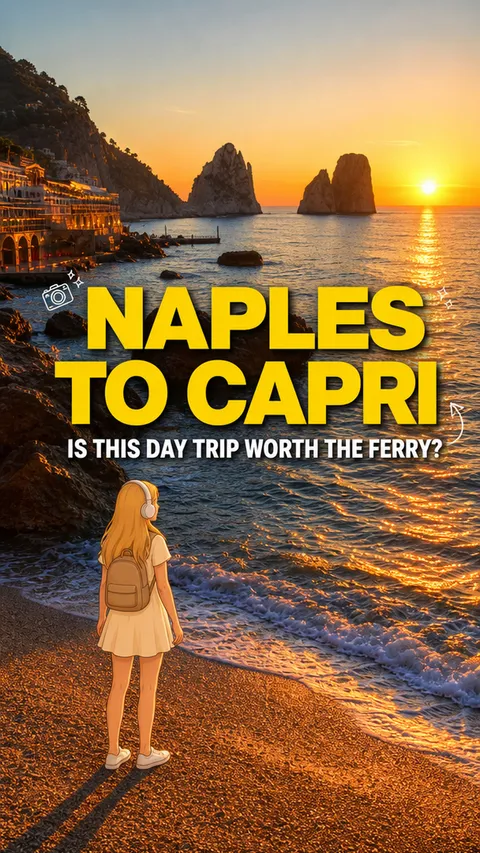
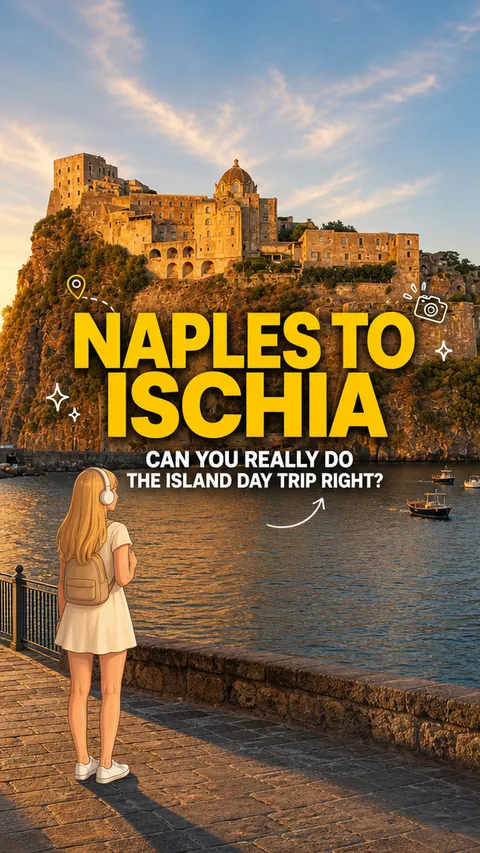
A fourth day opens the Bay of Naples. Take the first hydrofoil from Molo Beverello to Capri or Procida, aiming to arrive before the main ferry wave to get the lanes to yourself. Alternatively, spend the day at the Museo Nazionale di Capodimonte in its hilltop park north of the city, one of the finest Baroque picture galleries in Italy, and pair it with an evening at the Teatro San Carlo booked 6 to 8 weeks ahead for a principal production. A fifth day covers Herculaneum and the Amalfi Coast, a 60-minute drive to Ravello for the Villa Rufolo terrace view.
Day trips from Naples
Out in the morning, back in time for dinner. Every route here fits in one full day.
Best time to visit Naples by traveller type
Same city, different trip. Here's the month that fits how you're travelling.
🧭
Best time to visit Naples for the first time
MayOct
May or October: the full Naples experience without the summer punishment. May adds Maggio dei Monumenti and the first San Gennaro miracle; October is the quiet near-twin with autumn Vesuvius light and a still-swimmable sea around 21°C.
❤️
Best time to visit Naples for couples
AprSep
Late April or late September: wisteria on the Posillipo terraces, warm evenings for a Lungomare passeggiata, and a San Carlo opera evening as the ideal date-night anchor, all at shoulder prices.
💶
Best time to visit Naples on a budget
JanFebNov
January, February or November: the lowest hotel rates of the year, the easiest first-Sunday free entry to the MANN and Capodimonte, and the cheapest Northern European flights.
🍝
Best time to visit Naples for food and wine
MaySep
May and June for peak spring buffalo mozzarella and flowering sfusato lemons, or September for melanzane, peppers and the first porcini. Skip August, when the best family trattorias close for Ferragosto.
Worst time to visit Naples
July stacks all three negatives at once: average highs of 30°C with heat waves possible to 35 to 36°C, midrange hotels running 150 to 220 euro a night, and peak crowds from every major European school system on break simultaneously. Pompeii's unshaded 44-hectare site is genuinely dangerous in the midday heat, Capri takes up to 50,000 day-trippers a day, and the narrow stone canyon of Spaccanapoli radiates heat from noon onward. August eases very slightly after Ferragosto on 15 August only because the Neapolitans leave for the coast, but the tourist replacement crowd keeps museums and archaeological sites just as busy.
Still worth it for July and August work well for beach and island focused visitors who plan to hit Procida, Ischia and Capri early and retreat indoors by midday. The sea is at its warmest, 25 to 26°C, and Ferragosto evening fireworks are a spectacle.
Go instead in May, September, October, when Naples is at its best.
Best time for a tour of Naples
For walking Napoli on foot, the months pull in very different directions. May, late September and October are the sweet spot: highs of 22 to 26°C, thirteen-plus hours of daylight, and the centro storico is comfortable to cover all afternoon. July and August push highs to 30°C with humid, glaring midday hours, and Spaccanapoli and the open square of Piazza del Plebiscito offer almost no shade, so a summer walk really has to start by 8 or 9 am before the heat builds. Winter swings the other way: January days hover near 12°C with lows around 5°C and barely nine and a half hours of daylight, so it gets dark not long after 5 pm and a full circuit has to be planned for the morning. Rain is heaviest in the late autumn, with November the wettest month at sixteen rainy days, while the high-summer weeks stay almost bone dry. April sits in between, mild at 18°C with the days already stretching past thirteen hours.
The good news is you don't have to book a guided walk weeks ahead or chase a fixed departure time. With AI Tourguide you open our Naples tour right in your browser and start whenever the day suits you, walking it at your own pace, so you can beat the midday heat by heading out early or take a quiet morning loop in the cooler months. As you walk, it tells the story behind each stop, from the marble Veiled Christ inside Cappella Sansevero to the world's oldest working opera house at Teatro San Carlo, and it answers your questions along the way, much like a human guide would, only cheaper and with no set timetable to keep. Pause it for a coffee, pick it back up an hour later, and the route is still right there. In the end the best time to visit Napoli is the one you choose, set by your own morning and your own pace, not by a tour schedule.

 +8
+8All 12 stops are already on the map.
You just press start.
You just press start.
 AI Tourguide
You just read the route.
Now walk it with a guide in your ear.
Press start wherever you are, even hundreds of kilometres from Naples, and the guide begins telling its stories right away. In the city, pick any of the 12 stops to start from: it leads you there, then talks with you the whole route, asking, listening, remembering, and shaping the tour around your answers.
12stops5.5km2.9hours11languages
▶Start the tour freeFree to start · Runs in your browser · No app, no download
Naples events and festivals calendar
Annual highlights worth timing a trip around, listed month by month.
January
🎨 Art and cultureSan Carlo Opera Season Stagione Lirica del Teatro di San Carlo
Jan 7 – Nov 30
The opera season runs across most of the year at Teatro di San Carlo, with key dates concentrated in spring and summer.
The season at the world's oldest continuously active opera house (1737, UNESCO heritage), with 13 operas, four ballets and 18 concerts, including La Boheme in spring, a Balanchine program 28 April to 3 May and Coppelia 25-31 July.
🎨 Art and culturePianoforte Festival
Jan 21 – Oct 12
A four-recital series spread across the year at Teatro di San Carlo, typically from January to October.
An international piano series of four major recitals by world-class soloists at the Teatro di San Carlo, the world's oldest opera house.
February
🎭 CarnivalNaples Carnival Carnevale di Napoli
Feb 8–17 ~
The two weeks before Lent, ending on Fat Tuesday. Dates shift each year with the Easter calendar.
A multi-day carnival of allegorical float parades, including the GRIDAS procession through Scampia on 15 February and the avant-garde Sottencoppa sound carnival at Piazza Mercato and Piazza Municipio from 13 to 17 February, plus traditional markets near Santa Chiara.
March
🍷 Food and wineSee Naples and Then Eat Vedi Napoli e Poi Mangia
Mar 26 – May 3 ~
Late March through early May, around 20 events spread across roughly six weeks.
A food-and-culture festival of about 20 events that alternate storytelling, show-cooking and musical performances, including six church concerts, overlapping with the start of Maggio dei Monumenti.
⛪ ReligiousEaster in Naples Pasqua Napoletana
Apr 3–6 ~
Holy Week into Easter Monday, a moveable feast that falls anywhere from late March to late April depending on the year.
The Processione dei Misteri sends hooded penitents and floats through the centro storico on Good Friday, preceded by the Lo Struscio seven-church pilgrimage on Maundy Thursday, with the Festa della Madonna dell'Arco at nearby Sant'Anastasia on Easter Monday.
April
🎨 Art and cultureCOMICON Naples COMICON Napoli
Apr 30 – May 3 ~
Four days spanning the start of May at the Mostra d'Oltremare, typically the last days of April into the first days of May.
Southern Europe's largest pop-culture expo of comics, anime, gaming and cosplay, drawing a record 183,000 visitors in 2025, with a COMICON Off fringe running across the city in the surrounding weeks.
May
🎨 Art and cultureMay of the Monuments Maggio dei Monumenti
May 2 – Jun 2
Across May into early June, running the full month with the closing concert at the end of May.
A month-long festival of 200-plus free events: more than 70 thematic itineraries, 20 exhibitions, music, dance, theatre and extraordinary openings of monuments normally closed, closing with a Stefano Bollani concert at the Rotonda Diaz on 31 May.
⛪ ReligiousSan Gennaro Blood Miracle (May) Miracolo di San Gennaro (maggio)
May 3 ~
The first Saturday of May, every year.
The dried blood of patron saint Januarius is displayed at the Duomo as the faithful await its liquefaction, taken as a good omen for the city, followed by a civic procession.
July
🎵 MusicRavello Festival
Jul 4 – Sep 5
Early July through early September on the Amalfi Coast, running across two months with more than 60 events.
Orchestral and chamber music on the Villa Rufolo terrace above the Tyrrhenian Sea in Ravello, more than 60 events across two months, an hour's drive from Naples.
🎵 MusicAlien Sound Festival
Jul 4–5 ~
Two days in early July at the former NATO base.
A two-day electronic and alternative music festival staged at a repurposed NATO base in Naples, with international headliners across two nights.
🍷 Food and wineNaples Pizza Village Napoli Pizza Village
Jul 7–12 ~
Six days in early-to-mid July on the Pozzuoli seafront, along the Lungomare Sandro Pertini.
Europe's largest pizza festival, with 120 artists on stage and over 100,000 pizzas from top pizzaioli served to 600,000 attendees across six days on the Lungomare Sandro Pertini in Pozzuoli.
September
⛪ ReligiousPiedigrotta Festival Festival di Piedigrotta
Sep 8–18
From 8 September, a ten-day procession through Piazza del Plebiscito.
A procession honouring the Virgin of Piedigrotta in which representatives of Neapolitan art parade for ten days from the Piedigrotta church through Piazza del Plebiscito.
⛪ ReligiousFeast of San Gennaro Festa di San Gennaro
Sep 19
19 September every year, a local Naples public holiday.
The main annual liquefaction ceremony at Naples Cathedral from 9 to 10 am, followed by a grand procession of the silver bust through Via Duomo and Spaccanapoli, with street vendors and festive lights.
November
🎄 Christmas marketSan Gregorio Armeno Christmas Fair Mercatino di Natale / Via San Gregorio Armeno
Dec 8 – Jan 6
Late November to Epiphany, peaking 8 December to 6 January.
The street of nativity-scene craftsmen (presepai) at full production from November to January, the most theatrical Christmas street in Europe, alongside a separate market at Museo Pietrarsa drawing 100,000-plus across a 36,000-square-metre venue, open 10 am to 10 pm.
December
⛪ ReligiousSan Gennaro Blood Miracle (December) Miracolo di San Gennaro (dicembre)
Dec 16
16 December every year.
The third annual liquefaction ceremony at the Duomo, commemorating San Gennaro's intercession during the 1631 Vesuvius eruption.
Insider tips for visiting Naples
The rules buried in forums, in one place.
- Cappella Sansevero sells timed-entry tickets online 60 days ahead, and in July and August they go weeks in advance. It is closed Tuesdays, so arrive Wednesday to Friday at the 9 am opening. Avoid the first Sunday of the month, when the free MANN entry triggers a city-wide museum rush that spills everywhere.
- At Pompeii, arrive at 9 am and use the quieter Piazza Anfiteatro entrance, not Porta Marina, where the queue hits 60-90 minutes by 10 am in peak season. The Lupanar line is 5 minutes at 9:15 am and 30-plus by 11:30. Book online at pompeiisites.org to skip the gate queue entirely, and leave by 11:30 in summer heat.
- Skip the free first Sunday of the month at the MANN and Capodimonte and go the Saturday before instead. Free Sundays pack both museums with queues forming before the 8:30 am opening, while the Saturday before is a near-identical visit with no line at all.
- Around Ferragosto, roughly 10 to 20 August, eat pizza and skip the trattorias. The best traditional restaurants in the Quartieri Spagnoli and Forcella post Chiuso per ferie signs for one to two weeks, while pizzerias and tourist-facing venues stay open. Book any specific spot days ahead.
- For the San Gennaro feast on 19 September, be at the Duomo by 7:30 am. The blood-miracle ceremony starts at 9, interior capacity is limited, and by 8:30 the Via Duomo itself is packed. Go early or watch the afternoon street procession instead. The evening street festival with lights and vendors is crowd-free from 8 pm.
- For Capri in July and August, take the first hydrofoil from Molo Beverello around 7 am. The island absorbs 50,000 day-trippers on peak days, the 9-11 am ferries are standing-room only, and the lanes gridlock by noon. First-boat arrivals get two to three hours of near-solitude on the Faraglioni path.
- Italian transport strikes are announced about 10 days ahead and cluster in autumn (October to November) and January. ATM Napoli (bus, metro, funicular) and the Circumvesuviana train to Pompeii strike independently, so check before any time-sensitive Pompeii day.
- Teatro San Carlo, the world's oldest working opera house, needs booking 6-8 weeks ahead for starred productions, which sell out on the theatre website before resellers list them. The cheaper move is a chamber concert in the Sala Assunta, the same building for 15-30 euro.
Public holidays in Naples
On these dates many shops and offices close, transport thins out, and sights can be mobbed or shut. Plan around them.
| Date | Holiday | What closes |
|---|---|---|
| Jan 1 | New Year's Day (Capodanno) | All shops and most restaurants closed; sights reopen on 2 January. San Gregorio Armeno stays open for the holiday nativity trade, so it is one of the few places to walk. |
| Jan 6 | Epiphany (La Befana) | National holiday and the children's gift-giving day; many businesses close, though museums generally stay open. It marks the end of the Christmas season around San Gregorio Armeno. |
| Apr 5 | Easter Sunday (Pasqua) | Moveable feast. Restaurants are pre-booked days ahead by extended families, so reserve well in advance. Major sights stay open and the Good Friday processions through the centro storico are the dramatic highlight. |
| Apr 6 | Easter Monday (Pasquetta) | National holiday when locals leave for countryside picnics, so Naples turns unusually calm. Some restaurants close, but open-air sites are fine and pleasantly quiet. |
| Apr 25 | Liberation Day (Festa della Liberazione) | National holiday creating a Saturday-to-Monday long weekend in 2026; domestic Italian visitors surge and hotel prices climb 15-20%. |
| May 1 | Labour Day (Festa dei Lavoratori) | National holiday on a Friday in 2026, making a long weekend (30 April to 3 May) that overlaps COMICON. Markets close and most museums stay open. |
| Jun 2 | Republic Day (Festa della Repubblica) | National holiday with parades and celebrations; hotel rates are elevated for the long weekend and most sights stay open. |
| Aug 15 | Ferragosto (Assunzione) | National holiday and the peak of the Italian summer exodus. Many local trattorias, bars and shops close for one to two weeks around the date; tourist-facing venues stay open. Pompeii is open but very hot at 35-36°C and the beaches are packed. |
| Sep 19 | Feast of San Gennaro | A city-wide Naples holiday: schools, banks and most offices close. The Duomo blood-miracle ceremony runs 9-10 am and a Spaccanapoli street festival fills the whole day. |
| Nov 1 | All Saints' Day (Ognissanti) | National holiday; Pompeii switches to winter hours and closes at 5 pm from this date. Cemeteries are crowded and many businesses close. |
| Dec 8 | Immaculate Conception (Immacolata) | National holiday that kicks off the full Christmas swing on San Gregorio Armeno; the centro storico fills with the first big holiday crowd. |
| Dec 25 | Christmas Day (Natale) | Near-total closure, with only tourist hotels and emergency services open. The airport operates, but plan to eat at your hotel. |
| Dec 26 | St. Stephen's Day (Santo Stefano) | National holiday with the same closures as Christmas, making it a good day to walk an unusually empty Spaccanapoli. |
Naples month by month
January in Naples
High12°C / 54°F
Low5°C
Rain108mm / 12 rainy days
Sun6.9 h/day
Daylight10 h/day
Humidity78%
Crowds●○○○○Prices●○○○○
January is Naples stripped back to itself: empty, properly cheap and unhurried. Days sit around 12°C with mostly sunny spells between showers, fewer than 8 rain days, so a jacket and a compact umbrella cover it. Pompeii and the MANN are close to deserted, and the post-Christmas lull means mainly Italian weekend visitors. The Befana on 6 January closes the festive season around San Gregorio Armeno before the city settles into its slow winter rhythm.
The vibe This is the one month you stand alone in the Cappella Sansevero in front of the Veiled Christ instead of shuffling through a timed-entry crush. The Neapolitans are home, the espresso bars are unhurried, and the city sounds like itself. Grey spells are the price, and a fair one.
Don't miss The first Sunday brings free entry to the MANN and Capodimonte with no queue at all in January, the easiest free-museum day of the year. The San Carlo opera season is in full swing, with chamber concerts in the Sala Assunta a cheap way into the world's oldest opera house.
Crowd drivers No cruise ships and no school holidays once Befana passes on 6 January. The lowest international visitor pressure of the entire year.
In season Deep winter is the season for slow-cooked ragù napoletano and the leftover-Christmas sartù di riso; the Porta Nolana fish market is at its quietest and best Tuesday to Saturday mornings.
Heads up 1 and 6 January are national holidays with shops and most restaurants shut; Pompeii is on winter hours, closing at 5 pm with last entry at 3:30.
The cheapest month of the year; midrange hotels from 60-80 euro a night, roughly half the July rate.
Events this month
🎨 Art and culturePianoforte Festival
Jan 21 – Oct 12
A four-recital series spread across the year at Teatro di San Carlo, typically from January to October.
An international piano series of four major recitals by world-class soloists at the Teatro di San Carlo, the world's oldest opera house.
Tickets are far cheaper than a full opera, and the acoustic setting is extraordinary, ideal in the quiet winter and autumn months.
February in Naples
High14°C / 57°F
Low6°C
Rain109mm / 12 rainy days
Sun8.2 h/day
Daylight11 h/day
Humidity78%
Crowds●○○○○Prices●○○○○
February is the quietest tourist month, mild but damp at around 14°C with roughly 12 rain days, the showers usually short bursts rather than all-day soak. Carnevale takes over from 8 to 17 February, turning Piazza Mercato and Piazza Municipio into a free five-day street party with allegorical float parades. Outside that brief domestic spike, museums stay uncrowded and ticket prices sit at their annual floor.
The vibe February is honest, unperformed Naples in winter mode and better for it. The Carnevale finale on Martedì Grasso is the one stretch when you see Neapolitans visibly let loose, the avant-garde Sottencoppa sound carnival booming off the centro storico walls.
Don't miss Carnevale's GRIDAS procession winds through Scampia on 15 February and the Sottencoppa sound carnival runs 13-17 February at Piazza Mercato. The MANN and Capodimonte stay almost private all month outside the free first Sunday.
Crowd drivers Low season throughout, with only the Carnevale week (8-17 February) pulling a brief domestic crowd. Cruise ships have not yet started calling.
In season Carnevale is the season for migliaccio, the Neapolitan semolina-and-ricotta cake, and chiacchiere, the fried Carnival ribbons dusted with sugar, in every pasticceria window.
The lowest average hotel rates of the year; Carnevale week runs 15-20% above the January baseline.
Events this month
🎭 CarnivalNaples Carnival Carnevale di Napoli
Feb 8–17 ~
The two weeks before Lent, ending on Fat Tuesday. Dates shift each year with the Easter calendar.
A multi-day carnival of allegorical float parades, including the GRIDAS procession through Scampia on 15 February and the avant-garde Sottencoppa sound carnival at Piazza Mercato and Piazza Municipio from 13 to 17 February, plus traditional markets near Santa Chiara.
The city's most colourful winter street festival, turning the centro storico into a free five-day party at the deadest, cheapest point of the year.
March in Naples
High15°C / 59°F
Low7°C
Rain93mm / 12 rainy days
Sun9.5 h/day
Daylight12 h/day
Humidity76%
Crowds●●○○○Prices●●○○○
March brings Naples back to life: highs climbing toward 15°C, café terraces reopening, and the centro storico shaking off winter. Crowds stay moderate, lifted mainly by Northern European half-term windows. From 26 March the Vedi Napoli e Poi Mangia food-and-culture festival begins its run, a relaxed entry point into Neapolitan cuisine. It is the last genuinely quiet, affordable month before the spring surge.
The vibe March is the last month you can still walk into a Forcella trattoria on a Saturday without a booking. The light is sharpening, the markets are filling with spring produce, and that window shuts fast, so use it.
Don't miss Vedi Napoli e Poi Mangia opens from 26 March with show-cooking and church concerts. The sea is still cold at 15-16°C, so this is a city-and-Pompeii month, not a beach one, with Pompeii comfortable to walk before the heat arrives.
Crowd drivers Early spring shoulder, with UK and other Northern European February-March school breaks the main driver. Easter falls in early April this year, so it does not spike March.
In season Spring artichokes (carciofi) and the first friarielli, the bitter Neapolitan broccoli rabe paired with sausage, are at their market peak.
Rates rising but still 30-40% below the summer peak; the good-value window is closing.
Events this month
🍷 Food and wineSee Naples and Then Eat Vedi Napoli e Poi Mangia
Mar 26 – May 3 ~
Late March through early May, around 20 events spread across roughly six weeks.
A food-and-culture festival of about 20 events that alternate storytelling, show-cooking and musical performances, including six church concerts, overlapping with the start of Maggio dei Monumenti.
The most relaxed way into Neapolitan cuisine culture, and it dovetails neatly with the city's biggest cultural month.
April in Naples
High18°C / 64°F
Low10°C
Rain71mm / 10 rainy days
Sun10.9 h/day
Daylight13 h/day
Humidity75%
Crowds●●●○○Prices●●●○○
April is lovely and increasingly busy. Highs reach a comfortable 18°C with around 10 rain days, typically morning or evening showers that leave afternoons clear. Easter (5-6 April) and German and Dutch Easter holidays drive a wave of visitors, then COMICON lands 30 April to 3 May and brings 180,000-plus to the Mostra d'Oltremare. Wisteria and bougainvillea bloom on the Posillipo terraces, and outside the holiday peaks prices stay reasonable.
The vibe April is gorgeous and no longer a secret. The Good Friday Processione dei Misteri through the centro storico is hauntingly dramatic, and on Easter Monday the locals flood the Campania countryside, leaving Naples pleasantly emptied. If you are not into pop culture, dodge the COMICON dates when the Mostra d'Oltremare area is severely congested.
Don't miss The Good Friday hooded-penitent procession and the Lo Struscio seven-church pilgrimage on Maundy Thursday (2 April) are the spring's set pieces. Wisteria and bougainvillea drape the Posillipo terraces from April into May.
Crowd drivers Easter (5-6 April) plus German and Dutch Easter holidays, the COMICON expo (30 April to 3 May), and the Liberation Day long weekend (25 April) stack up.
In season Casatiello and the wheat-and-ricotta pastiera napoletana are the Easter tables' two non-negotiables, sold in every bakery the week before Pasqua.
Easter weekend pushes hotels 25-35% higher; the rest of April runs at shoulder prices, with a Liberation Day mini-spike.
Events this month
⛪ ReligiousEaster in Naples Pasqua Napoletana
Apr 3–6 ~
Holy Week into Easter Monday, a moveable feast that falls anywhere from late March to late April depending on the year.
The Processione dei Misteri sends hooded penitents and floats through the centro storico on Good Friday, preceded by the Lo Struscio seven-church pilgrimage on Maundy Thursday, with the Festa della Madonna dell'Arco at nearby Sant'Anastasia on Easter Monday.
The Good Friday procession is hauntingly dramatic, and on Easter Monday the locals leave for countryside picnics, so Naples empties pleasantly.
🎨 Art and cultureCOMICON Naples COMICON Napoli
Apr 30 – May 3 ~
Four days spanning the start of May at the Mostra d'Oltremare, typically the last days of April into the first days of May.
Southern Europe's largest pop-culture expo of comics, anime, gaming and cosplay, drawing a record 183,000 visitors in 2025, with a COMICON Off fringe running across the city in the surrounding weeks.
A must if you are into pop culture, but if you are not, avoid these exact dates when the Mostra d'Oltremare district is severely congested.
🍷 Food and wineSee Naples and Then Eat Vedi Napoli e Poi Mangia
Mar 26 – May 3 ~
Late March through early May, around 20 events spread across roughly six weeks.
A food-and-culture festival of about 20 events that alternate storytelling, show-cooking and musical performances, including six church concerts, overlapping with the start of Maggio dei Monumenti.
The most relaxed way into Neapolitan cuisine culture, and it dovetails neatly with the city's biggest cultural month.

May in Naples
High22°C / 71°F
Low14°C
Rain79mm / 11 rainy days
Sun11.9 h/day
Daylight14 h/day
Humidity76%
Crowds●●●●○Prices●●●○○
May is the month most people name as Naples' sweet spot: 18-24°C, the sea warming to swimmable by month's end, and the city in full bloom. All month, Maggio dei Monumenti opens 200-plus free events and monuments normally shut. The first San Gennaro blood miracle on 3 May draws a domestic surge to the Duomo. Crowds are heavy but short of summer pitch, and the weather is the most reliable of the year.
The vibe Everyone calls May a shoulder-season secret; it stopped being one years ago. Maggio dei Monumenti crowds fill the centro storico and prices know it, but the trade is real: optimal weather, extraordinary access to closed monuments, and a sea you can swim in by the last week. Come anyway, just book early.
Don't miss Maggio dei Monumenti delivers 70-plus thematic itineraries and 20 exhibitions of free access to monuments closed the rest of the year, closing with a Stefano Bollani concert at the Rotonda Diaz on 31 May. The Capri sea is viable from late May at 20-22°C.
Crowd drivers Maggio dei Monumenti runs all month, the 3 May San Gennaro miracle pulls a domestic surge, and late-May German school holidays begin.
In season Spring buffalo mozzarella from the Campania farms is at its richest on the spring milk, and the sfusato lemons are flowering, so limoncello stalls are at their freshest.
Shoulder prices, around 15% below the summer peak; the best value-to-experience ratio of the year.
Events this month
🎨 Art and cultureMay of the Monuments Maggio dei Monumenti
May 2 – Jun 2
Across May into early June, running the full month with the closing concert at the end of May.
A month-long festival of 200-plus free events: more than 70 thematic itineraries, 20 exhibitions, music, dance, theatre and extraordinary openings of monuments normally closed, closing with a Stefano Bollani concert at the Rotonda Diaz on 31 May.
Extraordinary free access to monuments shut the rest of the year plus 200 free events make this the best cultural-value month of the year.
⛪ ReligiousSan Gennaro Blood Miracle (May) Miracolo di San Gennaro (maggio)
May 3 ~
The first Saturday of May, every year.
The dried blood of patron saint Januarius is displayed at the Duomo as the faithful await its liquefaction, taken as a good omen for the city, followed by a civic procession.
One of Europe's most intensely atmospheric religious rituals, and it is free, though you need to be inside the Duomo by 8 am for space.
🍷 Food and wineSee Naples and Then Eat Vedi Napoli e Poi Mangia
Mar 26 – May 3 ~
Late March through early May, around 20 events spread across roughly six weeks.
A food-and-culture festival of about 20 events that alternate storytelling, show-cooking and musical performances, including six church concerts, overlapping with the start of Maggio dei Monumenti.
The most relaxed way into Neapolitan cuisine culture, and it dovetails neatly with the city's biggest cultural month.

June in Naples
High27°C / 80°F
Low18°C
Rain43mm / 6 rainy days
Sun13.2 h/day
Daylight15 h/day
Humidity72%
Crowds●●●●○Prices●●●●○
June opens the Neapolitan summer warm at 27°C, nearly dry at 43mm of rain, and long on daylight, with sunsets near 8:30 pm. Cruise ships now call daily, up to four a day through September, and Italian schools break from mid-month, so the Lungomare packs out at weekends. The sea reaches 20-22°C, fine for warm-weather swimmers, and the first two weeks are the last comfortable window before the heat and price peak.
The vibe June is the tipping point, when Naples shifts from busy-but-workable into full summer mode around the third week. The coastal sea breeze keeps evenings at a pleasant 24-27°C even as days heat up, so dinner outside on the Lungomare is the redemption. Come in the first fortnight and you beat both the schools and the worst heat.
Don't miss The swimming window opens properly, with Posillipo, Capo Miseno and the islands of Procida and Ischia all in reach. The Ravello Festival begins its run on the Villa Rufolo terrace, a 60-minute drive away with a 500-metre sea drop behind the stage.
Crowd drivers Italian school summer break from mid-June, daily cruise-ship calls (up to four a day), and the Republic Day long weekend (2 June).
In season Sfusato lemon season is in full swing, and the first San Marzano tomatoes and zucchini blossoms hit the market stalls for fritto misto.
Summer rates kick in from mid-June; hotel prices climb 30-40% above May once Italian schools break.
Events this month
🎵 MusicRavello Festival
Jul 4 – Sep 5
Early July through early September on the Amalfi Coast, running across two months with more than 60 events.
Orchestral and chamber music on the Villa Rufolo terrace above the Tyrrhenian Sea in Ravello, more than 60 events across two months, an hour's drive from Naples.
The open-air Belvedere stage with a 500-metre sea drop behind it is world-class, and it pairs naturally with an Amalfi Coast day trip.
July in Naples
High30°C / 86°F
Low21°C
Rain19mm / 4 rainy days
Sun13.8 h/day
Daylight15 h/day
Humidity69%
Crowds●●●●●Prices●●●●●
July is Naples at full intensity: 30°C average highs, occasional heat waves to 35 to 36°C, and tourist numbers at their absolute peak. Italian and North European school holidays flood the city, Capri takes up to 50,000 day-trippers a day, and the cruise season peaks. Spaccanapoli is a narrow stone canyon that radiates heat from noon, and walking Pompeii from 11 am to 3 pm is genuinely punishing on an unshaded 44-hectare site. The sea is at its warmest at 25 to 26°C, so the play is an early hydrofoil to Capri or Procida, then museums and shade from noon. Midday is best written off entirely.
The vibe July is for people who genuinely don't mind 35°C and summer-maximum prices. Midday is a write-off, and this is when expensive private guides charge their peak rates and book out. Our live AI guide stays a flat 5 euro an hour on any day and lets you start your Pompeii walk at 8 am on your own clock, telling you the story of everything you pass and answering whatever you ask, the way a private guide beside you would.
Don't miss The sea is at its warmest at 25-26°C, so an early hydrofoil to Capri or Procida is the play. Napoli Pizza Village runs 7-12 July on the Pozzuoli seafront, 20 minutes by Cumana train, drawing 600,000 over six days, and the Ravello Festival continues nightly.
Crowd drivers Every major European school system on break at once, peak cruise season with up to four ships a day, and Capri day-trippers at their 50,000-a-day maximum.
In season Gelato is survival strategy, not treat; eat at sea-warm temperatures and seek out genuine artisan gelaterie a few streets off the main sights for half the price.
The year's highest prices; midrange hotels 150-220 euro a night, and Capri ferries often sold out without advance booking.
Events this month
🍷 Food and wineNaples Pizza Village Napoli Pizza Village
Jul 7–12 ~
Six days in early-to-mid July on the Pozzuoli seafront, along the Lungomare Sandro Pertini.
Europe's largest pizza festival, with 120 artists on stage and over 100,000 pizzas from top pizzaioli served to 600,000 attendees across six days on the Lungomare Sandro Pertini in Pozzuoli.
The event that put Neapolitan pizza back on the world stage, and an easy 20-minute Cumana train day trip from central Naples.
🎵 MusicRavello Festival
Jul 4 – Sep 5
Early July through early September on the Amalfi Coast, running across two months with more than 60 events.
Orchestral and chamber music on the Villa Rufolo terrace above the Tyrrhenian Sea in Ravello, more than 60 events across two months, an hour's drive from Naples.
The open-air Belvedere stage with a 500-metre sea drop behind it is world-class, and it pairs naturally with an Amalfi Coast day trip.
🎵 MusicAlien Sound Festival
Jul 4–5 ~
Two days in early July at the former NATO base.
A two-day electronic and alternative music festival staged at a repurposed NATO base in Naples, with international headliners across two nights.
Two nights of major international acts in a unique industrial venue you would not otherwise get inside.

August in Naples
High30°C / 86°F
Low21°C
Rain25mm / 6 rainy days
Sun12.7 h/day
Daylight14 h/day
Humidity69%
Crowds●●●●○Prices●●●●○
August is Naples' paradox month: still hot at 30°C with heat waves to 36°C, yet emptied of locals. Around Ferragosto on 15 August the Neapolitans clear out for the coast, so many neighbourhood trattorias close for one to two weeks while tourist-facing venues stay open. The tourist replacement crowd keeps Pompeii and the centro storico busy. The coastal breeze still cools evenings to 24-27°C for a late dinner.
The vibe August is not romantic-empty Naples, it is survival-mode Naples. The locals are out on Procida and Ischia, and what fills their place is a sea of international tourists in Pompeii queues. The heat is draining rather than photogenic, so do your sights before 8 am and retreat indoors by noon.
Don't miss This is prime island-and-beach time, with the sea at 25-26°C off Posillipo, Procida and Ischia. The Ferragosto fireworks and seaside festivities are a spectacle, but the city's cultural calendar is at its thinnest.
Crowd drivers Ferragosto (15 August) empties the city of Neapolitans, while North European families dominate the tourist sites all month.
In season Eat pizza and seafood, not trattoria classics: the best family kitchens in the Quartieri Spagnoli and Forcella post Chiuso per ferie signs from roughly 10 to 20 August.
Heads up Many traditional trattorias close 10-20 August for Ferragosto; tourist-facing restaurants stay open, so call any specific spot ahead.
Hotels actually 10-15% cheaper than July as locals leave; tourist-zone prices stay high.
Events this month
🎵 MusicRavello Festival
Jul 4 – Sep 5
Early July through early September on the Amalfi Coast, running across two months with more than 60 events.
Orchestral and chamber music on the Villa Rufolo terrace above the Tyrrhenian Sea in Ravello, more than 60 events across two months, an hour's drive from Naples.
The open-air Belvedere stage with a 500-metre sea drop behind it is world-class, and it pairs naturally with an Amalfi Coast day trip.

September in Naples
High26°C / 80°F
Low18°C
Rain98mm / 9 rainy days
Sun10.8 h/day
Daylight12 h/day
Humidity71%
Crowds●●●●○Prices●●●●○
September is the runner-up to May and arguably the better month: 26°C highs softening through the month, the sea still warm at 23-25°C, and the golden afternoon light over Vesuvius and the bay at its best. Germans, Dutch and French are back from their own summers, and the cruise season runs on, but crowds decline noticeably after mid-month as prices fall. The Piedigrotta and San Gennaro festivals anchor the calendar.
The vibe September is when Naples feels intimate again. The summer crush thins after the 15th, the sea is warmer than in June, and the San Gennaro feast on the 19th, the tension of waiting for the blood to liquefy, is the single most electric local experience in the calendar. This is the month to come if you can only pick one.
Don't miss The Piedigrotta festival parades from 8 September for ten days through Piazza del Plebiscito, and the San Gennaro feast on the 19th fills the Duomo by 7 am. The sea stays swimmable at 23-25°C, and the autumn Vesuvius light is the year's best for photography.
Crowd drivers European visitors back from summer, ongoing cruise season, the San Gennaro feast (19 September) domestic spike, and the Piedigrotta festival from 8 September.
In season Melanzane and peppers are at their peak for parmigiana, harvest sagre fill the Campania hinterland, and the first porcini mushrooms arrive late in the month.
Rates decline from mid-September but still run 20-30% above shoulder; the best sea swimming continues.
Events this month
⛪ ReligiousPiedigrotta Festival Festival di Piedigrotta
Sep 8–18
From 8 September, a ten-day procession through Piazza del Plebiscito.
A procession honouring the Virgin of Piedigrotta in which representatives of Neapolitan art parade for ten days from the Piedigrotta church through Piazza del Plebiscito.
One of the oldest Neapolitan popular festivals, tying the city's folk music and religious identity together.
⛪ ReligiousFeast of San Gennaro Festa di San Gennaro
Sep 19
19 September every year, a local Naples public holiday.
The main annual liquefaction ceremony at Naples Cathedral from 9 to 10 am, followed by a grand procession of the silver bust through Via Duomo and Spaccanapoli, with street vendors and festive lights.
Naples' most important municipal holiday; the cathedral fills by 7 am and the tension of waiting for the blood to liquefy is genuinely electric.
🎵 MusicRavello Festival
Jul 4 – Sep 5
Early July through early September on the Amalfi Coast, running across two months with more than 60 events.
Orchestral and chamber music on the Villa Rufolo terrace above the Tyrrhenian Sea in Ravello, more than 60 events across two months, an hour's drive from Naples.
The open-air Belvedere stage with a 500-metre sea drop behind it is world-class, and it pairs naturally with an Amalfi Coast day trip.

October in Naples
High22°C / 72°F
Low14°C
Rain110mm / 10 rainy days
Sun8.9 h/day
Daylight11 h/day
Humidity77%
Crowds●●●○○Prices●●●○○
October is the quietest shoulder month, with daytime highs of 22°C and the autumn Vesuvius light at its most dramatic. Rain steps up to 110mm over about 10 days, usually short Mediterranean bursts rather than all-day drizzle, so carry a compact umbrella. The summer crowds have gone, prices are the lowest outside winter, and early October sea is still swimmable at around 21°C. From 1 November Pompeii moves to winter hours, so this is the last full-access month.
The vibe October is the calm, golden near-twin of September without the festival surge. The light raking across the bay and over Vesuvius is the best of the year, the centro storico breathes again, and you can pair a 9 am Cappella Sansevero with an 11 am MANN in perfect comfort. The quiet luxury month before winter.
Don't miss Pompeii still runs its full summer hours until 31 October, so it is the last month for a late-afternoon visit. The autumn light over Vesuvius from Posillipo and the Certosa di San Martino terrace is the photographer's window of the year.
Crowd drivers Shoulder season, with Italian autumn school breaks in the last week and Amalfi and Sorrentine Coast visitors basing in Naples the main drivers.
In season Porcini mushrooms, chestnuts and the new-season olive oil arrive, and the Campania hinterland sagre celebrate the grape and chestnut harvest.
Good value, with rates 20-30% below summer; the lowest prices outside deep winter.
Events this month
🎨 Art and culturePianoforte Festival
Jan 21 – Oct 12
A four-recital series spread across the year at Teatro di San Carlo, typically from January to October.
An international piano series of four major recitals by world-class soloists at the Teatro di San Carlo, the world's oldest opera house.
Tickets are far cheaper than a full opera, and the acoustic setting is extraordinary, ideal in the quiet winter and autumn months.

November in Naples
High18°C / 64°F
Low11°C
Rain204mm / 16 rainy days
Sun7.1 h/day
Daylight10 h/day
Humidity81%
Crowds●○○○○Prices●○○○○
November is the low season and the wettest month, at 204mm over about 16 days, though the rain tends to come as intense short bursts rather than all-day drizzle, so a compact umbrella handles it. Highs sit around 18°C and the crowd is mainly Italian cultural tourists. Pompeii switches to winter hours from 1 November, closing at 5 pm. Prices are back at the annual floor and the major sights are nearly queue-free.
The vibe November is honest, rain-washed Naples with the tourists gone. Between the showers the light is sharp and the centro storico is yours, with the San Gregorio Armeno nativity workshops swinging into full production for Christmas. Pack for rain and you get the city at its cheapest and emptiest.
Don't miss From late November the San Gregorio Armeno presepe workshops reach full production, the most theatrical Christmas street in Europe. Pompeii on winter hours and the MANN are near-empty, and the first-Sunday free entry has no queue.
Crowd drivers Low season begins, with mainly Italian cultural tourists; the rain deters beach-oriented visitors entirely.
In season The first San Gregorio Armeno-season struffoli and roccoco appear, and slow-cooked genovese, the Neapolitan onion-and-beef ragù, is the cold-weather dish to seek out.
Heads up Pompeii moves to winter hours from 1 November, closing at 5 pm with last entry at 3:30, which shortens combined half-day trips.
The second-cheapest month; hotels back at the January and February lows.
Events this month
🎄 Christmas marketSan Gregorio Armeno Christmas Fair Mercatino di Natale / Via San Gregorio Armeno
Dec 8 – Jan 6
Late November to Epiphany, peaking 8 December to 6 January.
The street of nativity-scene craftsmen (presepai) at full production from November to January, the most theatrical Christmas street in Europe, alongside a separate market at Museo Pietrarsa drawing 100,000-plus across a 36,000-square-metre venue, open 10 am to 10 pm.
The presepe workshops of San Gregorio Armeno are singular, and the Pietrarsa market is the best large-format Christmas market in southern Italy.

December in Naples
High14°C / 57°F
Low7°C
Rain104mm / 10 rainy days
Sun6.8 h/day
Daylight9 h/day
Humidity80%
Crowds●●○○○Prices●●○○○
December is festive and atmospheric, with the San Gregorio Armeno nativity street in full theatrical swing from the Immacolata on 8 December. Temperatures are cool at around 14°C with rain likely (104mm, 10 days) but not relentless. The Christmas and New Year week spikes prices and crowds, while the rest of the month stays at shoulder rates. The third annual San Gennaro miracle on 16 December is a smaller, more intimate ceremony than September's.
The vibe December Naples turns on San Gregorio Armeno, where the presepe craftsmen sell hand-made nativity figures down a lane strung with lights, a singular sight you find nowhere else. The Christmas-week crush is real, but go in early December or between Christmas and New Year and you get the atmosphere without the worst of it.
Don't miss The San Gregorio Armeno presepe street and the large Pietrarsa Christmas market (10 am to 10 pm, 100,000-plus visitors) are the season's set pieces. The San Gennaro December miracle on the 16th pairs perfectly with a nativity-street visit. The first Sunday brings the free-entry museum bonus.
Crowd drivers The San Gregorio Armeno Christmas market from late November and the Christmas and New Year holiday spike are the main drivers.
In season Christmas is the season for struffoli, the honey-glazed dough balls, and capitone, the fried eel that anchors the Neapolitan Christmas Eve table.
Shoulder prices outside Christmas and New Year; the Christmas week runs 30-40% above the November baseline.
Events this month
🎄 Christmas marketSan Gregorio Armeno Christmas Fair Mercatino di Natale / Via San Gregorio Armeno
Dec 8 – Jan 6
Late November to Epiphany, peaking 8 December to 6 January.
The street of nativity-scene craftsmen (presepai) at full production from November to January, the most theatrical Christmas street in Europe, alongside a separate market at Museo Pietrarsa drawing 100,000-plus across a 36,000-square-metre venue, open 10 am to 10 pm.
The presepe workshops of San Gregorio Armeno are singular, and the Pietrarsa market is the best large-format Christmas market in southern Italy.
⛪ ReligiousSan Gennaro Blood Miracle (December) Miracolo di San Gennaro (dicembre)
Dec 16
16 December every year.
The third annual liquefaction ceremony at the Duomo, commemorating San Gennaro's intercession during the 1631 Vesuvius eruption.
Smaller and more intimate than September's, and it pairs perfectly with a Christmas visit to the San Gregorio Armeno nativity street.
Frequently asked questions
What is the best time to visit Naples?
May, September and October are the best months. May brings Maggio dei Monumenti with 200-plus free events, 18-24°C, and a sea swimmable by month's end. September keeps the sea warm at 23-25°C and adds the San Gennaro feast on the 19th. October is the quietest, cheapest of the three, with golden Vesuvius light and water still swimmable early in the month.
What are the cheapest months to visit Naples?
January, February and November are the cheapest. Midrange hotels run 60-80 euro a night, 40-50% below the July peak, and Pompeii and the MANN are nearly empty. The trade-off is short days and rain: November is the wettest month at 204mm over 16 days, while January and February stay milder around 12-14°C with fewer than 8 rain days in winter.
When should I avoid visiting Naples?
Mid-July to mid-August is the month most worth avoiding, stacking peak heat, peak crowds and peak prices. July highs hit 30°C with heat waves to 35-36°C, hotels run 150-220 euro a night, Pompeii is brutal at midday, and Capri takes 50,000 day-trippers a day. August softens slightly after Ferragosto only because the locals leave.
Is August a good time to visit Naples? Are things closed?
August is Naples at its most extreme. Around Ferragosto on 15 August, many neighbourhood trattorias in the Quartieri Spagnoli and Forcella close for one to two weeks as locals leave for the coast, though pizzerias and tourist-facing venues stay open. The sea is warm at 25-26°C, but Pompeii is punishing at 35-36°C. For the full city experience, pick another month.
When can you swim in Naples?
The sea is comfortably swimmable from June to October. It peaks in July and August at 25-26°C, stays warm through September at 23-25°C, and is still viable in early October around 21°C. June is cooler at 20-22°C, fine for warm-weather swimmers. From November to May the water sits at 14-18°C, wetsuit territory, and most beach facilities close.
Does it rain a lot in Naples?
Naples has a Mediterranean climate. The wettest months are November (204mm, 16 days), October (110mm, 10 days) and February (109mm, 12 days). Summer is very dry, with July at just 19mm over 4 days. Rain tends to come as intense short bursts rather than all-day drizzle, so a compact umbrella from November to March is enough.
What is the best time to visit Pompeii from Naples?
Visit Pompeii from spring to autumn, but in July and August arrive at the 9 am opening and leave by 11:30, since the unshaded 44-hectare site hits 35°C and heat exhaustion is common. Use the quieter Piazza Anfiteatro entrance and book online at pompeiisites.org. From 1 November Pompeii runs winter hours, closing at 5 pm with last entry at 3:30.
How many days do I need in Naples?
Three days cover the essentials: the centro storico with Spaccanapoli and Cappella Sansevero, the MANN archaeological museum, and a Pompeii day trip. Four to five days let you add Capri or Procida, Capodimonte, and an evening at San Carlo. A week opens up the wider Bay of Naples, from Herculaneum to the Amalfi Coast and Ischia.
What is Naples like in December?
December Naples is festive and atmospheric, built around the San Gregorio Armeno nativity street in full swing from 8 December. Temperatures are cool at around 14°C with rain likely (104mm, 10 days) but not relentless. The San Gennaro December miracle falls on the 16th. Crowds and prices spike sharply over Christmas week and New Year, so book those dates well ahead.

Any month, any day: your guide is already there
Whatever date you pick, a private human guide gets pricier and harder to book on weekends, holidays and in peak season. Our live AI guide, the one that walks with you and answers anything you ask out loud, works the opposite way.
One flat price, every day
No holiday, weekend, night or peak-season surcharge. A private guide in Naples runs well over 100 euro for a half day, and more on holidays. Ours stays the same.
Available the moment you want it
Start at midnight or at dawn, on Christmas, in the snow, in the August heat. No sold-out high season, no booking weeks ahead.
Your pace, no meter running
Pause for a long lunch, restart after dark, repeat a stop. The tour simply waits for you.
Free to try, a fraction of the cost
Test it for free, then a transparent flat price that undercuts any private guide, in every season.
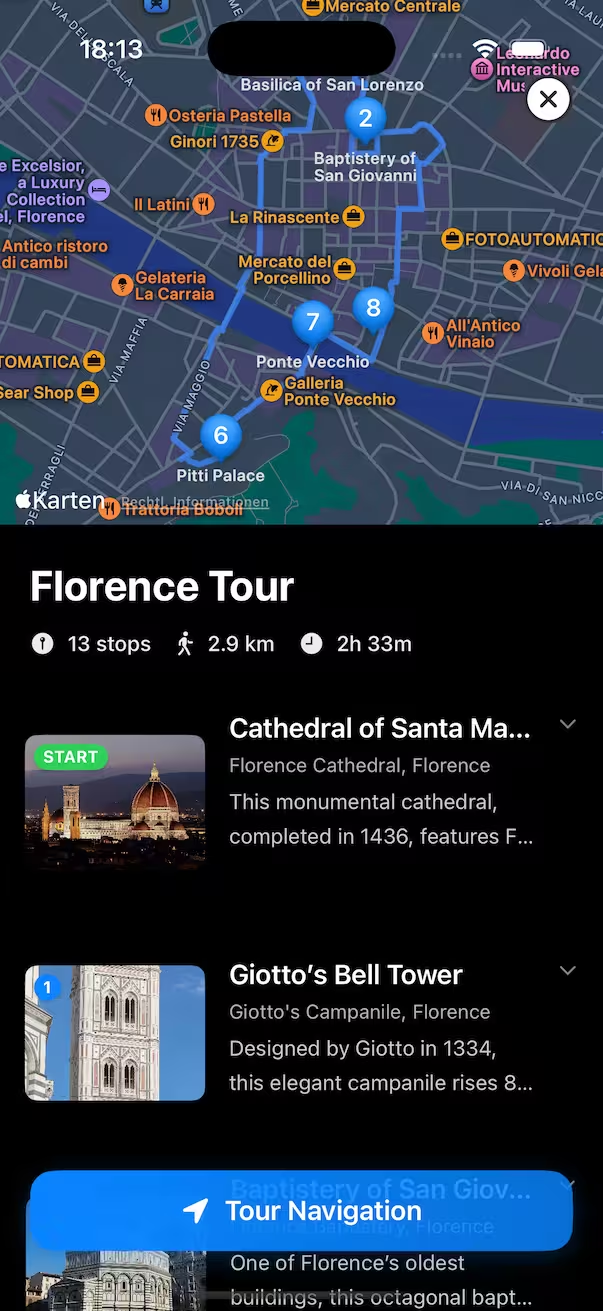
The classic Naples tour: 12 stops, 5.5 km, about 3 h on foot
Your live AI guide and the self-guided Naples route, together in your browser.