Best Time to Visit Positano
Month-by-month weather, crowds and prices, plus a full calendar of festivals and events worth planning a trip around.
Best monthsMay, Sep, Oct
CheapestJan, Feb, Nov
AvoidAug
BusiestJul, Aug
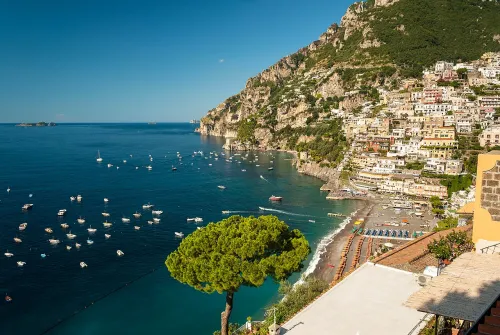
When is the best time to visit Positano?
Come in May, late September or October: pleasant 21-25°C days, the town fully open, and none of the July-August crush. May brings bougainvillea and green hillsides; late September keeps a warm 24°C sea with the crowds gone; October is the cheapest month where everything still works. Skip mid-July to 15 August, when the steps hit 35°C, hotels run 500-950 €/night and the SS163 road is gridlocked. January and February are emptiest and cheapest, the catch being that most of the village is shut.
Start our tool and find your best time to visit Positano
Your perfect month
Free · ~30 seconds
or tap a month directly
What matters to you?
And this?
Best overall: May, Sep. May and late September are the real sweet spots. May delivers bougainvillea in flower, green hillsides, 21-25°C days and a town fully open but not yet packed, the Path of the Gods at its blooming best. Late September keeps a 24-25°C sea for swimming, adds the Premia la Danza dance award and the Festa del Pesce, and the crowds thin dramatically after 20 August, with hotel rates well below the summer maximum.
Best value: Oct, Apr. October is the best value of the open season: hotels 200-380 €/night, 40-55% below August, the church free, MAR Positano just 5 €, and Fornillo Beach free. The sea still holds 22°C for a last swim and hiking is ideal. Mid-April is the other value window before the Easter and May Day surges, lush and green with a cool 17°C sea. Book Monday to Thursday for the cheapest rates.
Avoid: Jul, Aug. Mid-July to 15 August is the year's worst value and hardest going. The SS163 coastal road is at a standstill, SITA buses are over capacity and pass stops without stopping, beach clubs fill before 09:00, the 300-plus steps are a real ordeal in 35°C heat, and hotels hit their annual maximum of 500-950 €/night. Ferragosto on 15 August is the single most crowded day of all.
- January: Good time, 12°C. This is the village stripped back to its 3,800 residents. Quiet, raw and beautiful in the winter light, but with so little open it suits only travellers who want solitude over comfort. Bring layers, a wet-weather plan, and zero expectation of beach-club Positano.
- February: Great time, 13°C. If January is empty, February is emptier. The town turns fully inward, and you will share the steps with cats and the occasional resident. It is the ultimate off-grid Amalfi escape, but only if you are happy with a closed-down village and unpredictable winter weather.
- March: Great time, 14°C. March feels like Positano waking up: shutters coming off windows, terraces being scrubbed down, the first hikers on the trails. The weather is unpredictable and some places are still closed, but you get spring greenery and near-empty paths at low early-season prices.
- April: Great time, 17°C. Mid-to-late April is one of the most underrated windows here: the town is open, the cliffs are green, the bougainvillea is starting, and the crowds and prices have not yet hit summer levels. Time it after the Easter weekend and you get spring Positano at shoulder-season rates.
- May: Good time, 21°C. May is the month to come if you want the iconic Positano without the suffering: warm but not scorching, colourful, alive and fully functional, with crowds present but still bearable. It is the consensus best month for first-timers alongside October, and the spring romance is hard to beat.
- June: Tough month, 26°C. Early June, before schools break up and before San Vito week, is a lovely warm window: long sunny days, a swimmable sea, and crowds that have not quite peaked. After mid-month it tips fast toward the July-August crush, so the first two weeks are the ones to aim for.
- July: Tough month, 29°C. July is Positano at full throttle: dazzling, expensive and crushingly busy. The town is gorgeous but the logistics are punishing, with gridlocked roads, packed buses and steps that radiate heat. Do everything early or late, and base your day around the water and the shade.
- August: Tough month, 29°C. August is Positano at its most extreme: every step packed, every table booked, every road jammed, and prices at their annual ceiling. The Ferragosto fireworks are unforgettable, but you need to plan around them months ahead. If you do not love crowds, this is the month to skip.
- September: Good time, 25°C. September is the connoisseur's Positano: still warm enough to swim and sunbathe, still buzzing, but with the August madness lifting and tables finally available at the best restaurants. Late September especially pairs warm sea, easing crowds and two lovely events. For couples and foodies it is the pick of the year.
- October: Great time, 22°C. October is the romantic, good-value month: golden light on the cliffs, near-empty stairways after the first week, warm enough water for a final swim, and the year's lowest open-season rates. It is the equal of May for first-timers, with the slight catch that the sea cools and a few places begin to shut as the month ends.
- November: Great time, 17°C. November is the door closing on the season. Early in the month a few places still run, but by mid-month Positano returns to its winter quiet, with stormy seas and short days. Beautiful and empty, but only for travellers who accept that almost nothing is open.
- December: Great time, 14°C. December is Positano in repose, with just enough festive warmth to make a winter visit worthwhile. The decorated church, a handful of open restaurants for the Christmas lunch, and the zeppola festival at month-end are the highlights. Expect a near-empty town, short days and a real risk of rain.
Positano weather by month
HighLowRainfall
Jan12°
Feb13°
Mar14°
Apr17°
May21°
Jun26°
Jul29°
Aug29°
Sep25°
Oct22°
Nov17°
Dec14°
| Month | Temp | Rain | Sun | Crowds | Prices | Highlight |
|---|---|---|---|---|---|---|
| Jan | 12° / 7° | 160mm · 14 rainy days | 6.9 h/day | ●○○○○ | ●○○○○ | |
| Feb | 13° / 8° | 126mm · 12 rainy days | 8.2 h/day | ●○○○○ | ●○○○○ | |
| Mar | 14° / 8° | 121mm · 12 rainy days | 9.6 h/day | ●●○○○ | ●●○○○ | |
| Apr | 17° / 11° | 74mm · 11 rainy days | 10.9 h/day | ●●●○○ | ●●●○○ | Easter and Pasquetta |
| May | 21° / 14° | 87mm · 11 rainy days | 11.9 h/day | ●●●●○ | ●●●●○ | |
| Jun | 26° / 19° | 31mm · 5 rainy days | 13.2 h/day | ●●●●● | ●●●●● | Feast of San Vito |
| Jul | 29° / 22° | 19mm · 4 rainy days | 13.8 h/day | ●●●●● | ●●●●● | Feast of Santa Maria delle Grazie (Montepertuso) |
| Aug | 29° / 22° | 28mm · 6 rainy days | 12.7 h/day | ●●●●● | ●●●●● | Ravello Festival |
| Sep | 25° / 19° | 102mm · 8 rainy days | 10.9 h/day | ●●●●○ | ●●●●○ | Ravello Festival |
| Oct | 22° / 16° | 117mm · 10 rainy days | 9.1 h/day | ●●●○○ | ●●●○○ | |
| Nov | 17° / 12° | 242mm · 16 rainy days | 7.2 h/day | ●○○○○ | ●○○○○ | |
| Dec | 14° / 9° | 160mm · 11 rainy days | 6.8 h/day | ●●○○○ | ●●○○○ | Zeppola Festival |
How we score this: weather = long-run climate normals (Open-Meteo), crowds & prices = relative season read, events checked yearly against official dates.
Best time to visit Positano: weather, prices & crowds
Best months for good weather
May, Jun, Sep
Late May into June, then September, give Positano its best balance: 21-26°C, sunny days, a sea warming past 20°C, and the brutal 35°C August heat on the staircases still ahead or already behind. June averages just 5 rain days, the driest stretch of the year.
Quietest months to avoid the crowds
Apr, Oct, Nov
Mid-April and October are the quiet months with services still running. Crowds drop off sharply after the first week of October, and you can walk the Spiaggia Grande steps without a queue. November empties out entirely, but the ferries stop and most beach clubs and restaurants close by mid-month.
Cheapest time to visit Positano
Oct, Jan, Feb
October is the cheapest month where Positano is still fully open: 3-star centre hotels run 200-380 €/night, roughly 40-55% below the August peak of 500-950 €. January and February are cheaper still at 80-140 €, but most of the town, including nearly every 4- and 5-star hotel, is closed. Book midweek for a further 20-30% off.
Best time for festivals and events
Aug, Sep, Jun
The Ferragosto midnight fireworks on 15 August, launched from the sea to light up the pastel houses and the majolica dome of Santa Maria Assunta, are the single most spectacular night of the Positano year. For something gentler, the September dance award on a beach stage at dusk and June's mountain fireworks at Montepertuso are unforgettable in a way the crowds never see.
How many days do you need in Positano?
Positano is a vertical village, not a city, and two days is the sweet spot for most visitors. One full day covers the compact sight-packed core end to end, leaving a second day for slower pleasures: a boat out to Amalfi or Capri, a lunch that lingers, or a hike up toward the Path of the Gods. Come in May, September, or October, when the light is soft and the stone stairways are not wall to wall.
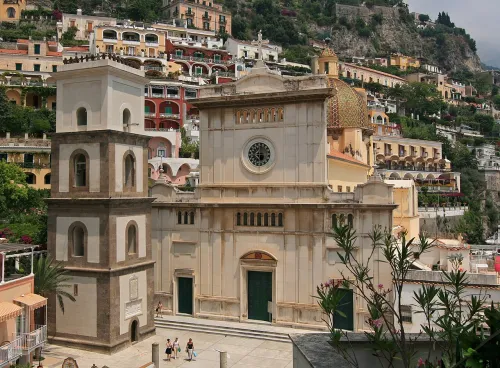
One day
The full village in one go
Start at the Via Cristoforo Colombo viewpoint for the postcard panorama over the whole cliffside cascade before descending into town. The self-guided Positano walking tour threads the 6 key stops across a compact 3 km route in under 1.6 hours, taking you down the stepped streets to Spiaggia Grande, inside the Church of Santa Maria Assunta with its majolica dome, through the underground Roman villa at MAR Positano (5 €, open to 21:00), and out along Via Positanesi d'America to quieter Fornillo Beach. Do all your staircase walking before 09:30 or after 18:00 in summer to avoid the heat trap.
Two daysRecommended
Coast and coast hike
With a second day, catch the ferry from the harbour to Amalfi (35 minutes) or Capri, easy from April to late October. Alternatively, ride the local minibus up to Nocelle and walk the Path of the Gods back toward Agerola, west to east, with the sea panoramas opening ahead of you across 7.8 km of cliff trail. In the evening, a table at La Sponda or Il San Pietro is actually available once the peak-summer crowds have thinned.
Three days
Events, food and hillside villages
A third day opens the hillside villages above Positano: take the minibus to Montepertuso (300 metres up) and walk back down through the terraced lemon groves that scent the trails in spring and early summer. If your timing is right, the Premia la Danza dance award fills the Spiaggia Grande beach stage at dusk in mid-September, and the free Festa del Pesce seafood celebration at Fornillo Beach comes on the last Saturday of September. Book the best restaurants, including spots serving fresh anchovies, local scialatielli and hillside limoncello, well ahead even outside peak summer.
Four days or more
Amalfi Coast deep dive
Four days or more makes Positano a base for the wider Amalfi Coast. Day trips by ferry reach Ravello (for the summer clifftop concert series at Villa Rufolo), Praiano, Salerno and the ruins at Paestum. Hikers can tackle the full Path of the Gods in one direction and return by boat. For couples and foodies, late September pairs a warm 24-25°C sea, the Premia la Danza event and the Festa del Pesce into a four-day itinerary that covers the coast's best in comfortable conditions.
Best time to visit Positano by traveller type
Same city, different trip. Here's the month that fits how you're travelling.
🧭
Best time to visit Positano for the first time
MayOct
May or October. May gives you the postcard Positano: bougainvillea in flower, green cliffs, 21-25°C, beaches open but not overrun, every service running. October repeats it with thinner crowds and the year's lowest open-season rates, though the sea cools and some restaurants start to close mid-month. Either month delivers the iconic cliffside views without the July-August suffering.
❤️
Best time to visit Positano for couples
SepMay
Late September is the romance sweet spot: the sea still warm at 24-25°C, the Premia la Danza dance award on the Spiaggia Grande stage at dusk, golden-hour light on the cliffs, and tables at La Sponda or Il San Pietro actually available. Late May is a close second for spring green and quiet hillside walks.
💶
Best time to visit Positano on a budget
OctApr
October is the best value while Positano is fully open: rooms 40-55% below August, the church free, Fornillo Beach free, MAR Positano just 5 €. Mid-April is the next window before the Easter and May Day spikes. January and February are cheaper still but nearly everything is shut, so they offer poor value despite the low room rates. Book midweek for another 20-30% off.
🍝
Best time to visit Positano for food and wine
SepOct
Late September into early October. The free Festa del Pesce at Fornillo Beach on the last Saturday of September serves local seafood with folk music, and restaurant competition eases so top tables finally open up. This is the time for fresh anchovies, local scialatielli, hillside limoncello and sfogliatella made by chefs no longer cooking at factory-scale summer volume. May is a secondary window for artichokes and the first lemon harvest.
Worst time to visit Positano
Mid-July to 15 August is the hardest month to enjoy Positano. The SS163 coastal road stands still in both directions, SITA buses run legally over capacity and pass stops without stopping, and beach clubs at Spiaggia Grande fill before 09:00. The 300-plus stone steps between the main beach and the upper village radiate heat at 33-36°C midday, which turns any sightseeing into an ordeal. Hotels hit their annual ceiling of 500-950 €/night, every top restaurant is booked months ahead, and 15 August itself is the single most crowded day of the year.
Still worth it for If you are already on the Amalfi Coast in August, plan squarely around the Ferragosto midnight fireworks on 15 August: booked from a boat 500 metres offshore rather than the packed beach, they are genuinely spectacular. Early-morning swimmers also get a warm 24-26°C sea and near-empty water before the crowd arrives.
Go instead in May, September, October, when Positano is at its best.
Best time for a tour of Positano
Positano rewards walkers most in May and October, when temperatures sit in the 17 to 21 °C range and the light turns that particular amber that makes the stacked pastel facades actually glow. The 3 km route climbs and descends constantly: from the Via Cristoforo Colombo viewpoint down through narrow lanes to Spiaggia Grande and out to Fornillo Beach, there is almost no flat ground. In June, July, and August, highs push to 25 to 29 °C, and every staircase from Via Positanesi d'America to the Church of Santa Maria Assunta becomes a slow shuffle behind shoulder-to-shoulder crowds. September eases the heat slightly to around 25 °C and thins the crowds a little, but the village is still packed through the first half of the month. January and February bring coolness down to 7 to 13 °C, rain on as many as 14 days, and a near-empty seafront. March and April are the sweet spot on either side of the season: the almond trees bloom, rain days drop steadily, and the lanes are quiet enough that you can actually stop and read the ceramic house numbers without someone bumping into you.
With AI Tourguide running in your browser, the shape of those months becomes practical rather than theoretical: you set off whenever the morning mist has lifted from the MAR Positano archaeological museum and the sun has not yet baked the steps to Fornillo Beach, with no operator's 9 am minibus to catch. The AI guide leads the walk with you, tells you the story behind the Roman finds underground while you stand looking at them, asks what you notice about the ceramic dome of Santa Maria Assunta, and adapts the conversation to what you actually want to know. On a bright October morning, when the village is calm and the Tyrrhenian light is perfect, that kind of unhurried pace is exactly what Positano asks for. Start your Positano tour and go when the clock says it is right for you.

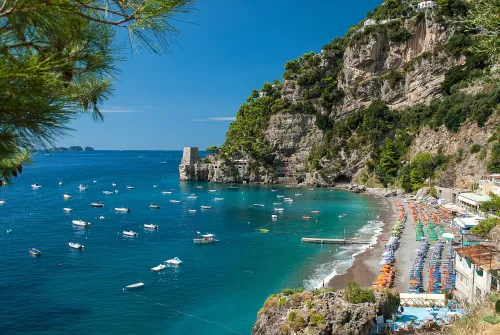 +3
+3All 6 stops are already on the map.
You just press start.
You just press start.
 AI Tourguide
You just read the route.
Now walk it with a guide in your ear.
Press start wherever you are, even hundreds of kilometres from Positano, and the guide begins telling its stories right away. In the city, pick any of the 6 stops to start from: it leads you there, then talks with you the whole route, asking, listening, remembering, and shaping the tour around your answers.
6stops3.0km1.6hours11languages
▶Start the tour freeFree to start · Runs in your browser · No app, no download
Positano events and festivals calendar
Annual highlights worth timing a trip around, listed month by month.
April
⛪ ReligiousEaster and Pasquetta Pasqua e Pasquetta
Apr 5–6 ~
Easter weekend, moveable with the spring equinox
The Italian Easter holidays.
June
⛪ ReligiousFeast of San Vito Festa di San Vito
Jun 9–15
a week culminating on 15 June
A week of religious events for Positano's patron saint, culminating on 15 June with mass from dawn, the blessing of the dogs on the pier at 11:00, a solemn procession at 19:00 and fireworks at 21:00.
⛪ ReligiousFeast of Saints Peter and Paul Festa dei Santi Pietro e Paolo
Jun 29
29 June
Festivities in Positano's San Pietro quarter with band concerts, a liturgical ceremony, vendor stalls and an evening fireworks display.
July
⛪ ReligiousFeast of Santa Maria delle Grazie (Montepertuso) Festa della Madonna delle Grazie
Jul 2
2 July
A festival in the hamlet of Montepertuso, 300 metres above Positano, with fireworks re-enacting the legend of the Virgin Mary defeating the Devil.
🎵 MusicRavello Festival
Jul 4 – Sep 5
early July to early September
A classical, baroque, jazz and opera series on the clifftop Belvedere stage at Villa Rufolo in Ravello, 7 km from Positano, typically running from early July to early September with around 20 events per season.
🎨 Art and culturePositano Theatre Festival Positano Teatro Festival - Premio Annibale Ruccello
Jul 26–28 ~
three nights in late July or early August
A three-night theatrical event touring Positano's terraces, piazzas and cliffside spaces, awarding the Annibale Ruccello Prize to emerging Italian theatre talent.
August
🇮 HolidayFerragosto Fireworks Ferragosto / Festa dell'Assunta
Aug 15
fireworks at midnight on the night of 14-15 August
Midnight fireworks launched from the sea light up the pastel houses and the dome of Santa Maria Assunta, preceded by all-day masses and an evening procession of the Madonna.
September
🎨 Art and culturePositano Premia la Danza Dance Award Positano Premia la Danza
Sep 12 ~
the second Saturday of September
An international dance award running since 1969 and dedicated to Leonide Massine of the Ballets Russes.
🍷 Food and wineFish Festival Festa del Pesce
Sep 26 ~
the last Saturday of September
A seafood celebration at the quieter Fornillo Beach with local fish dishes, folk music and a festive atmosphere.
December
🍷 Food and wineZeppola Festival Sagra della Zeppola
Dec 28–29
28-29 December
A Christmas street festival with games, tournaments and a competition for the Zeppola d'Oro award.
Insider tips for visiting Positano
The rules buried in forums, in one place.
- To watch the 15 August Ferragosto midnight fireworks without being crushed on the shore, book a boat tour (operators like Travelmar sell combined Maiori 23:00 plus Positano midnight packages) back in January or February. The view from 500 metres out on the water beats the packed beachfront, and the whole Tyrrhenian coast fills with boats.
- The central strip of Spiaggia Grande is private beach clubs (sun-bed hire 25-40 € per person per day in peak season). The free public strip is at the far-left end by the harbour. In July and August even the free section fills by 09:00, so arrive before 08:30 to claim a spot.
- Skip Spiaggia Grande for Fornillo Beach, a 15-minute walk west along the cliff path from the harbour. It is far less crowded even in peak summer, the path involves steps but nothing severe, and many locals prefer it. The Festa del Pesce is held here on the last Saturday of September.
- Do all your staircase walking before 09:30 or after 18:00 in summer. The stone steps trap and radiate heat, hitting 33-36°C midday in July and August, and the climb between Spiaggia Grande and the upper village is 300-plus steps. Midday is for the beach or the shade.
- The Church of Santa Maria Assunta closes at 12:30 and reopens at 16:00 (daily 09:30-12:30 and 16:00-20:00). Many visitors arrive at 12:31 to find it shut. Come between 09:30 and 11:30 for the best light through the Byzantine icon, and to beat the staircase heat. It closes for ceremonies, so avoid the Ferragosto and San Vito procession hours.
- MAR Positano, the Roman archaeological museum under the beach, is the town's best-kept midday escape: air-conditioned, open until 21:00, just 5 € admission, and almost never crowded even in August. It holds the remains of a Roman imperial villa. A genuine refuge from the heat that almost no tourist finds.
- Driving to Positano on a July or August weekend is strongly discouraged. The only parking is a small paying car park off Via dei Mulini, and it fills before 08:00 on summer weekends. Take the ferry from Amalfi or Salerno (35 minutes from Amalfi, avoiding the road entirely) or the SITA bus from Sorrento instead.
- Hotel rates spike Friday to Saturday even in shoulder season, because Positano has almost no business travel. A Monday-to-Thursday stay in October can run 20-30% cheaper than the same room on a weekend. Book San Vito week (9-15 June) by April, as the patron feast quietly removes mid-June availability that travel sites rarely flag.
- Walk the Path of the Gods from Agerola to Nocelle, west to east, so the famous sea-view panoramas open ahead of you rather than behind. A local minibus connects Nocelle to Positano's main road. Hike April to June or September to October; in July and August the 7.8 km cliff trail has no shade, so start by 07:00 or do not attempt it midday.
- When summer guided-tour and private-guide prices climb in the peak months, our live in-browser AI guide is the cheap, fully flexible alternative: it walks the village with you, tells the story at each stop and answers your questions as you go, for a flat 5 € an hour or 20 € all-in, with 100 free credits to start, no app and no download. You pick where to begin and tap to the next place at your own pace, ideal in the cooler early hours.
Public holidays in Positano
On these dates many shops and offices close, transport thins out, and sights can be mobbed or shut. Plan around them.
| Date | Holiday | What closes |
|---|---|---|
| Jan 1 | New Year's Day | Everything closed and very few visitors in town. Positano is deep in its winter shutdown, with most hotels, restaurants and boutiques shut. |
| Jan 6 | Epiphany | National holiday with the local La Befana children's tradition. Most businesses are already in off-season closure, so little is open. |
| Apr 5 | Easter Sunday | Masses in Santa Maria Assunta are packed. Many restaurants open for the holiday lunch, but you must book weeks ahead. Easter triggers a strong Italian domestic surge and hotel rates spike. |
| Apr 6 | Easter Monday (Pasquetta) | National holiday and a traditional picnic day. Italian families drive to the coast, so SITA buses and the car park are overwhelmed. |
| Apr 25 | Liberation Day | National public holiday. Falls on a Saturday in 2026, so the disruption is minor in early shoulder season. |
| May 1 | Workers' Day (May Day) | National holiday creating a long weekend (30 April to 3 May) that drives a domestic Italian booking surge to the coast. Book well ahead for late April and early May. |
| Jun 2 | Republic Day | National holiday with a possible long weekend (30 May to 2 June) and moderate domestic travel to the coast. |
| Jun 15 | Feast of San Vito | Not a national holiday, but the town effectively shuts for the patron feast. Shops may close mid-afternoon, and the village runs at capacity for the procession and fireworks. |
| Aug 15 | Ferragosto (Feast of the Assumption) | National holiday and Positano's biggest annual event. Everything open is fully booked, churches are packed all day, and the midnight fireworks draw boats from across the coast. The single most crowded day of the year. |
| Nov 1 | All Saints' Day | National holiday that marks the practical end of the tourist season. Most hotels begin closing this weekend, and ferries stop running. |
| Dec 8 | Immaculate Conception | National holiday with a small domestic visitor uptick. Most large hotels are still closed for winter. |
| Dec 25 | Christmas Day | Limited openings. Some restaurants open for the pranzo di Natale, but a reservation is essential. The Church of Santa Maria Assunta is beautifully decorated. |
| Dec 26 | St. Stephen's Day | National holiday with most services closed. Christmas week brings a few domestic visitors to an otherwise shut town. |
Positano month by month
January in Positano
High12°C / 54°F
Low7°C
Rain160mm / 14 rainy days
Sun6.9 h/day
Daylight10 h/day
Humidity77%
Crowds●○○○○Prices●○○○○
January is Positano at its emptiest. Highs near 12°C, frequent rain (around 160mm over 14 days), and near-deserted streets. Most 4- and 5-star hotels are closed, only a handful of restaurants stay open, and there is no ferry, so the SITA bus on the SS163 is the only way in or out. It is dramatic, cheap and authentic, but you trade away nearly all the town's services.
The vibe This is the village stripped back to its 3,800 residents. Quiet, raw and beautiful in the winter light, but with so little open it suits only travellers who want solitude over comfort. Bring layers, a wet-weather plan, and zero expectation of beach-club Positano.
Don't miss Walk the empty stairways and harbour you would never get to yourself in summer, and visit the air-conditioned MAR Positano (5 €) and the Church of Santa Maria Assunta (daily 09:30-12:30 and 16:00-20:00). Winter storms can close the SS163 and the seas are too cold and rough for swimming.
Crowd drivers Deep off-season with almost no visitors. New Year's Day and Epiphany (6 January) bring a brief local presence, but the town is otherwise shut down.
Heads up Most hotels, restaurants and boutiques are shut. No ferry service in winter, beach clubs closed, and even some always-open bars reduce to morning-only hours.
Annual price floor: the rare open B&B or small hotel runs 80-140 €/night, while almost every 4- and 5-star property is closed for winter.
February in Positano
High13°C / 56°F
Low8°C
Rain126mm / 12 rainy days
Sun8.2 h/day
Daylight11 h/day
Humidity77%
Crowds●○○○○Prices●○○○○
February is the quietest month of all. Highs around 13°C, still wet, and extra closures as locals take their own holidays. There is no ferry, so transport is the infrequent winter SITA bus only. The dramatic scenery is all yours, but services are at their thinnest of the year.
The vibe If January is empty, February is emptier. The town turns fully inward, and you will share the steps with cats and the occasional resident. It is the ultimate off-grid Amalfi escape, but only if you are happy with a closed-down village and unpredictable winter weather.
Don't miss The same handful of open bars, the church and MAR Positano, plus long quiet walks with no crowds anywhere. The sea is too cold for swimming and ferries are not running, so plan around the SITA bus timetable.
Crowd drivers The deepest off-season. Locals take their own holidays, adding closures on top of the winter shutdown, and visitor numbers are at their annual minimum.
Heads up Maximum closures of the year. Hotels, most restaurants, beach clubs and boutiques shut, no ferry, and some bars open mornings only.
Same floor as January: 80-140 €/night for the few open B&Bs and small hotels, with the larger properties still closed.
March in Positano
High14°C / 58°F
Low8°C
Rain121mm / 12 rainy days
Sun9.6 h/day
Daylight12 h/day
Humidity76%
Crowds●●○○○Prices●●○○○
March is the pre-season reopening. Highs near 14-15°C, the hillsides greening, and the lemon groves above the village starting to bloom. Hotels begin reopening from mid-to-late month and the ferry season typically starts late March into April. Crowds are still light, and the town slowly stretches back to life.
The vibe March feels like Positano waking up: shutters coming off windows, terraces being scrubbed down, the first hikers on the trails. The weather is unpredictable and some places are still closed, but you get spring greenery and near-empty paths at low early-season prices.
Don't miss The terraced lemon groves above Positano begin blooming in March, scenting the paths around Montepertuso. Hiking is excellent in cool air, and you can have the Path of the Gods almost to yourself, with the sea still too cold for swimming at around 15-16°C.
Crowd drivers A gentle pre-season build as hotels reopen. If Easter falls late it can spill into March, but in 2026 Easter is 5 April, so March stays quiet.
Heads up Some restaurants and hotels reopen through the month, but several are still shut early on. The ferry usually only restarts toward the very end of March or early April.
Early-season rates of 150-250 €/night as supply is still limited; hotels reopen from the middle of the month onward.
April in Positano
High17°C / 63°F
Low11°C
Rain74mm / 11 rainy days
Sun10.9 h/day
Daylight13 h/day
Humidity76%
Crowds●●●○○Prices●●●○○
April brings Positano properly back to life. Highs near 17°C, lush green hillsides, and the ferries resuming so you can arrive by sea again. Easter (5-6 April) triggers a strong Italian domestic surge and a price spike, but by mid-April the value is excellent. The sea is still cool at about 17°C, fine only for hardy swimmers.
The vibe Mid-to-late April is one of the most underrated windows here: the town is open, the cliffs are green, the bougainvillea is starting, and the crowds and prices have not yet hit summer levels. Time it after the Easter weekend and you get spring Positano at shoulder-season rates.
Don't miss The Path of the Gods is at its blooming best with wildflowers and green hillsides, and the lemon groves are still in flower. Ferries resume so you can reach Amalfi and Capri by sea, and the beaches open, though the 17°C sea is for the brave only.
Crowd drivers Easter weekend (4-6 April) and the run-up to the May Day long weekend drive Italian domestic travel. Liberation Day on 25 April falls on a Saturday in 2026, adding little.
Heads up Most services are back by mid-month. Around Easter, restaurants open for the holiday lunch but need booking weeks ahead, and SITA buses and parking are overwhelmed on Pasquetta (6 April).
200-380 €/night, spiking to 350-600 € over the Easter weekend (4-6 April). Mid-April, once Easter has passed, is genuine shoulder value.
Events this month
⛪ ReligiousEaster and Pasquetta Pasqua e Pasquetta
Apr 5–6 ~
Easter weekend, moveable with the spring equinox
The Italian Easter holidays. Easter Sunday fills Santa Maria Assunta for mass, and Pasquetta (Easter Monday) is the traditional picnic day when families head to the coast.
A strong Italian domestic surge that spikes hotel prices 50-80% over the weekend, with SITA buses and parking overwhelmed. Book three or more months ahead, or come mid-April once it has passed for shoulder-season value.
May in Positano
High21°C / 69°F
Low14°C
Rain87mm / 11 rainy days
Sun11.9 h/day
Daylight14 h/day
Humidity77%
Crowds●●●●○Prices●●●●○
May is one of Positano's two sweet spots. Pleasant 21-25°C days, bougainvillea in full purple-pink flower over the terraces, green hillsides, and a town fully open but not yet at peak madness. The Path of the Gods hiking season peaks, and German and Northern European half-term adds visitors late in the month. The sea warms to about 20°C, swimmable for most.
The vibe May is the month to come if you want the iconic Positano without the suffering: warm but not scorching, colourful, alive and fully functional, with crowds present but still bearable. It is the consensus best month for first-timers alongside October, and the spring romance is hard to beat.
Don't miss The Path of the Gods is at its absolute best, with wildflowers, green slopes and comfortable temperatures, walked Agerola to Nocelle for the finest sea views. Bougainvillea covers the cliffs, the beach clubs are open, and the 20°C sea is warm enough for a proper swim. Artichoke season and the first lemon harvest hit the menus.
Crowd drivers The May Day long weekend opens the month with a domestic surge, and crowds build steadily as German and Northern European half-term arrives late May. It is busy but short of the July-August peak.
In season Spring on the plate: artichokes, spring vegetables and the first lemons of the hillside harvest turning into limoncello, served before the factory-scale summer volumes begin.
280-480 €/night, climbing through the month; the May Day long weekend (30 April to 3 May) drives an early Italian booking surge.
June in Positano
High26°C / 78°F
Low19°C
Rain31mm / 5 rainy days
Sun13.2 h/day
Daylight15 h/day
Humidity73%
Crowds●●●●●Prices●●●●●
June is when high season opens in earnest. Highs near 26°C, the driest month of the year (just 5 rain days), the longest days, and the sea reaching a warm 21-23°C. Italian school holidays begin mid-month, the San Vito patron feast (culminating 15 June) packs the village, and beach clubs are fully open. The main stairways start to gridlock on busy days.
The vibe Early June, before schools break up and before San Vito week, is a lovely warm window: long sunny days, a swimmable sea, and crowds that have not quite peaked. After mid-month it tips fast toward the July-August crush, so the first two weeks are the ones to aim for.
Don't miss The San Vito feast on 15 June brings the blessing of the dogs on the pier at 11:00, a procession at 19:00 and fireworks at 21:00. On 29 June the San Pietro quarter holds its own fireworks against the cliffs. Beach days are excellent with a 21-23°C sea, and the dry sunny weather is ideal for early hikes.
Crowd drivers Italian school holidays start mid-June, and the Festa di San Vito week (9-15 June) fills the village. Republic Day (2 June) adds a domestic long weekend at the start of the month.
In season Fresh anchovies, local scialatielli pasta and hillside limoncello are all in full swing as the season opens, best enjoyed before the peak-summer rush.
400-700 €/night as high season opens; the Festa di San Vito week (9-15 June) further reduces availability, so book by April.
Events this month
⛪ ReligiousFeast of San Vito Festa di San Vito
Jun 9–15
a week culminating on 15 June
A week of religious events for Positano's patron saint, culminating on 15 June with mass from dawn, the blessing of the dogs on the pier at 11:00, a solemn procession at 19:00 and fireworks at 21:00.
A unique local tradition, and the blessing of the dogs is a charming oddity. The village runs at capacity this week, so book the smallest properties two to three months ahead, or avoid it if you want quiet.
⛪ ReligiousFeast of Saints Peter and Paul Festa dei Santi Pietro e Paolo
Jun 29
29 June
Festivities in Positano's San Pietro quarter with band concerts, a liturgical ceremony, vendor stalls and an evening fireworks display.
A local neighbourhood feast, and the fireworks with the cliffside town as backdrop are spectacular. A low-key reason to be in Positano at the end of June.
July in Positano
High29°C / 84°F
Low22°C
Rain19mm / 4 rainy days
Sun13.8 h/day
Daylight15 h/day
Humidity70%
Crowds●●●●●Prices●●●●●
July is absolute peak. Highs near 29°C with 35°C-plus on the steps midday, the sea a warm 24-26°C, and beach clubs at capacity. The SS163 coastal road runs at a standstill, SITA buses are sardine-packed, and the staircases become a heat trap. It is glorious if you can handle crowds and heat, brutal if you cannot.
The vibe July is Positano at full throttle: dazzling, expensive and crushingly busy. The town is gorgeous but the logistics are punishing, with gridlocked roads, packed buses and steps that radiate heat. Do everything early or late, and base your day around the water and the shade.
Don't miss The Montepertuso fireworks on 2 July re-enact the legend of the Virgin defeating the Devil, dramatic mountain displays above the village. Swimming is at its warmest at 24-26°C, but arrive at Spiaggia Grande before 08:30 or walk to the quieter Fornillo Beach. The Ravello Festival on its clifftop stage is an easy evening day trip.
Crowd drivers Italian school holidays plus the full European summer flood the coast. The Madonna delle Grazie fireworks at Montepertuso (2 July) and the late-July theatre festival add local draws on top of peak demand.
In season Peak-season menus run at full volume: fresh seafood, scialatielli and limoncello everywhere, though the best tables are booked solid and kitchens are cooking for the summer rush.
Heads up Almost everything is open, but the heat trap of the staircases effectively closes midday for walking. Do your climbing before 09:30 or after 18:00 and use the cooler hours.
500-900 €/night and some luxury villas above 1,500 €. The busiest single month for sustained demand alongside August.
Events this month
⛪ ReligiousFeast of Santa Maria delle Grazie (Montepertuso) Festa della Madonna delle Grazie
Jul 2
2 July
A festival in the hamlet of Montepertuso, 300 metres above Positano, with fireworks re-enacting the legend of the Virgin Mary defeating the Devil.
The dramatic mountain fireworks are genuinely different from sea-level displays, and the hike up adds to the experience. A reason to climb above the village in early July.
🎨 Art and culturePositano Theatre Festival Positano Teatro Festival - Premio Annibale Ruccello
Jul 26–28 ~
three nights in late July or early August
A three-night theatrical event touring Positano's terraces, piazzas and cliffside spaces, awarding the Annibale Ruccello Prize to emerging Italian theatre talent. Dates fall in late July or early August and follow a consistent late-July pattern across recent editions.
Open-air performances against Positano's cliffs are atmospheric, and the festival adds a cultural layer to a beach trip. Plan around it if you want more than sea and sun in high summer.
🎵 MusicRavello Festival
Jul 4 – Sep 5
early July to early September
A classical, baroque, jazz and opera series on the clifftop Belvedere stage at Villa Rufolo in Ravello, 7 km from Positano, typically running from early July to early September with around 20 events per season. Past programmes have featured leading conductors and soloists including Sir Simon Rattle, Jordi Savall, John Eliot Gardiner and sunrise concerts from the clifftop stage.
An easy day trip, on one of the world's most scenic concert stages, set high above the sea. Tickets go on sale from late April on the festival site, and demand for the marquee names is high.
August in Positano
High29°C / 84°F
Low22°C
Rain28mm / 6 rainy days
Sun12.7 h/day
Daylight14 h/day
Humidity71%
Crowds●●●●●Prices●●●●●
August matches July for crowds and tops it for price. Highs near 29°C, a warm 24-26°C sea, and the Italian domestic peak around Ferragosto. The 15 August Assumption is the single most crowded day of the year: midnight fireworks launched from the sea light the pastel houses and the church dome, and boats fill the coast. Spectacular if you plan for it, miserable if you came for quiet.
The vibe August is Positano at its most extreme: every step packed, every table booked, every road jammed, and prices at their annual ceiling. The Ferragosto fireworks are unforgettable, but you need to plan around them months ahead. If you do not love crowds, this is the month to skip.
Don't miss The Ferragosto midnight fireworks on 14-15 August are the standout night of the year, best watched from a pre-booked boat 500 metres offshore rather than the packed beach. The MAR Positano museum (open to 21:00, 5 €) is the rare cool, quiet refuge midday, and the sea stays a warm 24-26°C for early-morning swims.
Crowd drivers The Italian domestic peak around Ferragosto week (13-16 August) brings the year's maximum demand, and 15 August itself is the single most crowded day. The Theatre Festival and Ravello Festival continue alongside.
In season Kitchens are at maximum summer volume, so book any top table well ahead. Fresh anchovies, scialatielli and limoncello are everywhere, but the best dining experiences come outside this rush.
Heads up Everything that opens is fully booked around Ferragosto. The church closes for the Assumption ceremonies, so avoid the procession hours if you want to see the interior.
Year's most expensive: 500-950 €/night, peaking 13-16 August around Ferragosto. Every open hotel and restaurant is booked months ahead.
Events this month
🇮 HolidayFerragosto Fireworks Ferragosto / Festa dell'Assunta
Aug 15
fireworks at midnight on the night of 14-15 August
Midnight fireworks launched from the sea light up the pastel houses and the dome of Santa Maria Assunta, preceded by all-day masses and an evening procession of the Madonna. The 15-minute display is the most spectacular night of the year, and boat operators run combined Maiori 23:00 plus Positano midnight packages.
The event of the Positano calendar. If you are on the Amalfi Coast in August, plan around it, but expect the single most crowded day of the year, with every hotel and restaurant booked months ahead and the whole coastline filling with boats.
🎵 MusicRavello Festival
Jul 4 – Sep 5
early July to early September
A classical, baroque, jazz and opera series on the clifftop Belvedere stage at Villa Rufolo in Ravello, 7 km from Positano, typically running from early July to early September with around 20 events per season. Past programmes have featured leading conductors and soloists including Sir Simon Rattle, Jordi Savall, John Eliot Gardiner and sunrise concerts from the clifftop stage.
An easy day trip, on one of the world's most scenic concert stages, set high above the sea. Tickets go on sale from late April on the festival site, and demand for the marquee names is high.
September in Positano
High25°C / 78°F
Low19°C
Rain102mm / 8 rainy days
Sun10.9 h/day
Daylight12 h/day
Humidity72%
Crowds●●●●○Prices●●●●○
September is arguably the quality sweet spot. Highs near 25°C, a still-warm 24-25°C sea, and crowds easing markedly after 20 August. The Premia la Danza dance award (12 September) and the Festa del Pesce (26 September) add culture and food, while the weather stays gloriously summery. The catch is that lingering demand keeps prices high until late in the month.
The vibe September is the connoisseur's Positano: still warm enough to swim and sunbathe, still buzzing, but with the August madness lifting and tables finally available at the best restaurants. Late September especially pairs warm sea, easing crowds and two lovely events. For couples and foodies it is the pick of the year.
Don't miss Watch world-class dance on the Spiaggia Grande beach stage at dusk for the Premia la Danza award on 12 September, then catch the free Festa del Pesce seafood celebration at Fornillo Beach on 26 September. The 24-25°C sea is perfect for a late swim, and the Path of the Gods returns to its comfortable hiking season.
Crowd drivers Crowds ease after 20 August but demand lingers, keeping September among the pricier months. The Premia la Danza award (12 September) and Festa del Pesce (26 September) draw visitors to specific weekends.
In season The foodie high point: the Festa del Pesce serves free local seafood with folk music, and as the summer rush fades, top tables like La Sponda and Il San Pietro finally open up for fresh anchovies, scialatielli and sfogliatella.
380-650 €/night; lingering demand makes September one of the most expensive average months, though well below the August ceiling and falling after the 20th.
Events this month
🎨 Art and culturePositano Premia la Danza Dance Award Positano Premia la Danza
Sep 12 ~
the second Saturday of September
An international dance award running since 1969 and dedicated to Leonide Massine of the Ballets Russes. An outdoor stage with about 500 seats is erected on Spiaggia Grande; past recipients include Nureyev, Fonteyn, Roberto Bolle and Natalia Osipova.
World-class dance on a beach stage at dusk is a unique sight, and the September timing pairs it perfectly with warm-sea, low-crowd shoulder conditions. One of the strongest reasons to come in early September.
🍷 Food and wineFish Festival Festa del Pesce
Sep 26 ~
the last Saturday of September
A seafood celebration at the quieter Fornillo Beach with local fish dishes, folk music and a festive atmosphere.
An excellent reason to visit in late September: the summer crowds are gone, the sea is still warm, and it is a free local food event on the calmer beach. The signature foodie occasion of the Positano year.
October in Positano
High22°C / 71°F
Low16°C
Rain117mm / 10 rainy days
Sun9.1 h/day
Daylight11 h/day
Humidity78%
Crowds●●●○○Prices●●●○○
October is the best-value open month. Highs near 21°C, a sea still holding 22°C for a last swim, and a sharp drop in crowds after the first week. Hiking is ideal in the autumn colours, the ferry season winds down by late October, and the 4- and 5-star hotels start to close at month-end. The trade is increasing rain and shorter days.
The vibe October is the romantic, good-value month: golden light on the cliffs, near-empty stairways after the first week, warm enough water for a final swim, and the year's lowest open-season rates. It is the equal of May for first-timers, with the slight catch that the sea cools and a few places begin to shut as the month ends.
Don't miss The Path of the Gods is superb in autumn colours and cool air, walked Agerola to Nocelle for the best views. The 22°C sea allows a last swim, the free Fornillo Beach is quiet, and MAR Positano (5 €) and the church (free) make easy rainy-afternoon stops. Ferries to Amalfi and Capri still run into late October.
Crowd drivers Crowds fall off sharply after the first week and stay low through the month. Demand is light, with only weekend visitors lifting numbers, which is why midweek stays are so much cheaper.
Heads up Services run normally early in the month, but the 4- and 5-star hotels begin closing from late October and the ferry season winds down. October rain tends to come as short afternoon showers rather than all-day storms.
200-380 €/night, the cheapest month where Positano is still fully open, around 40-55% below August. Book midweek for a further 20-30% off.
November in Positano
High17°C / 63°F
Low12°C
Rain242mm / 16 rainy days
Sun7.2 h/day
Daylight10 h/day
Humidity81%
Crowds●○○○○Prices●○○○○
November ends the tourist season. The first weekend marks the close, ferries stop, and most beach clubs, restaurants and boutiques shut by 10-15 November. Highs near 17°C but it is the wettest month (around 242mm over 16 days), with winter storms able to close the SS163 for days. The scenery is dramatic and almost touristless, but the town is largely shut.
The vibe November is the door closing on the season. Early in the month a few places still run, but by mid-month Positano returns to its winter quiet, with stormy seas and short days. Beautiful and empty, but only for travellers who accept that almost nothing is open.
Don't miss Dramatic stormy scenery, empty stairways and the church (daily, 09:30-12:30 and 16:00-20:00) and MAR Positano (5 €) for the few open attractions. No ferry, no beach clubs, and a swimming season firmly over. The wettest month, so pack for serious rain and possible road closures.
Crowd drivers The season ends on the first weekend and tourists vanish. All Saints' Day (1 November) is the practical cut-off when most hotels begin closing and ferries stop.
Heads up Most beach clubs, restaurants and boutiques close by 10-15 November, ferries stop, and the SITA bus on the SS163 becomes the only way in and out. Larger hotels are shutting for winter.
100-200 €/night with very limited supply, mostly small B&Bs. Cheap rooms but few services to spend on, so the value is mixed.
December in Positano
High14°C / 57°F
Low9°C
Rain160mm / 11 rainy days
Sun6.8 h/day
Daylight9 h/day
Humidity78%
Crowds●●○○○Prices●●○○○
December is a quiet, mostly-closed month with a couple of festive moments. Highs near 14°C, frequent rain, and most services still shut. The Church of Santa Maria Assunta is beautifully decorated, Christmas week brings a few domestic visitors, and the Sagra della Zeppola street festival (28-29 December) gives a small local lift. A peaceful, low-key way to see the village in its off-season.
The vibe December is Positano in repose, with just enough festive warmth to make a winter visit worthwhile. The decorated church, a handful of open restaurants for the Christmas lunch, and the zeppola festival at month-end are the highlights. Expect a near-empty town, short days and a real risk of rain.
Don't miss See the Church of Santa Maria Assunta decorated for Christmas, and catch the Sagra della Zeppola on 28-29 December, with games, tournaments and the Zeppola d'Oro award for the best fried-dough pastry. MAR Positano stays a reliable indoor stop, but the sea is cold and rough and the beach clubs are long closed.
Crowd drivers Mostly empty, with a minor uptick over Christmas week and around the Sagra della Zeppola (28-29 December). The Immaculate Conception holiday (8 December) brings a small domestic visitor bump.
In season Zeppole, the fried dough pastries at the heart of the Sagra della Zeppola, are the December treat. A few restaurants open for the pranzo di Natale on 25 December, but a reservation is essential.
Heads up Most large hotels and many restaurants stay closed. Christmas Day sees only limited openings, and the few restaurants serving the holiday lunch need booking ahead.
120-220 €/night with a small premium over Christmas week. Limited supply, as most large hotels remain closed for winter.
Events this month
🍷 Food and wineZeppola Festival Sagra della Zeppola
Dec 28–29
28-29 December
A Christmas street festival with games, tournaments and a competition for the Zeppola d'Oro award. Zeppole are fried dough pastries, the star of the event.
One of the only winter events, giving a reason to visit an otherwise largely closed town over the holidays. Modest in scale, but a warm slice of local life in the dead season.
Frequently asked questions
What is the best time to visit Positano?
May, late September and October are the best overall. May brings bougainvillea in flower, green hillsides, 21-25°C days and a town fully open but not yet packed. Late September keeps a warm 24-25°C sea with the crowds easing after 20 August, plus the Premia la Danza dance award and Festa del Pesce. October is the cheapest month where everything still runs, with a 22°C sea for a last swim and ideal hiking weather.
What is the cheapest time to visit Positano?
January and February are absolute cheapest at 80-140 €/night, but most of the town, including nearly every 4- and 5-star hotel, is closed and there is no ferry, so the value is poor. For low prices with services still open, October is the answer: 200-380 €/night, around 40-55% below the August peak of 500-950 €. Book Monday to Thursday for a further 20-30% off, as weekends cost more even in shoulder season.
What is the worst time to visit Positano?
Mid-July to 15 August, unless you specifically want the Ferragosto fireworks. The SS163 coastal road is gridlocked, SITA buses run over capacity and skip stops, beach clubs fill before 09:00, the 300-plus steps in 35°C heat are a real ordeal, and hotels hit their annual maximum of 500-950 €/night. The 15 August Ferragosto is the single most crowded day of the year, with every hotel and restaurant booked months ahead.
When can you swim in the sea at Positano?
June to October is the swimming window. The sea reaches about 20°C in May (cool but doable), 24-26°C in July and August, holds 24-25°C through September, and drops to around 22°C in October before cooling off. September is the sweet spot, with warm water and far fewer people than the summer peak. April's 17°C is for hardy swimmers only.
What is the weather like in Positano in winter?
Mild but wet and largely shut down. January and December highs sit near 12-14°C, November is the wettest month at around 242mm, and winter storms can close the SS163 coastal road and cancel ferries for days. There is no ferry service from November to late March, most hotels and restaurants are closed, and the sea is too cold and rough for swimming. Beautiful and empty, but with very few services.
Is Positano worth visiting in October?
Yes, October is one of the best months. Crowds drop off sharply after the first week, the sea still holds 22°C for a final swim, hiking on the Path of the Gods is superb in the autumn colours, and it is the cheapest month where the town is still fully open at 200-380 €/night. The trade is increasing rain (mostly short afternoon showers) and the 4- and 5-star hotels starting to close toward month-end.
How do you get to Positano and get around in summer?
Avoid driving in July and August: the only parking is a small lot off Via dei Mulini that fills before 08:00 on weekends. The ferry is the best summer option, taking 35 minutes from Amalfi and avoiding the gridlocked SS163 entirely; ferries run April to late October. Otherwise the SITA bus from Sorrento runs year-round, but in peak summer the buses are over capacity and sometimes pass stops without stopping, so travel before 08:00.
When is Ferragosto and the San Vito feast in Positano?
Ferragosto, the Feast of the Assumption, falls on 15 August, with the famous fireworks launched from the sea at midnight on the night of 14-15 August. It is the single most crowded day of the Positano year. The Feast of San Vito, the town's patron, runs 9-15 June and culminates on 15 June with the blessing of the dogs on the pier at 11:00, a procession at 19:00 and fireworks at 21:00. Book months ahead for both.
How many days do you need in Positano?
Two to three days cover the essentials: Spiaggia Grande and the free Fornillo Beach, the Church of Santa Maria Assunta with its majolica dome, the Roman villa remains at MAR Positano, and a day hiking the Path of the Gods from Agerola to Nocelle. Add a day for boat trips to Amalfi or Capri, easy by ferry from April to late October. The village itself is tiny, so much of the time goes on the beaches, the surrounding trails and day trips along the coast.

Any month, any day: your guide is already there
Whatever date you pick, a private human guide gets pricier and harder to book on weekends, holidays and in peak season. Our live AI guide, the one that walks with you and answers anything you ask out loud, works the opposite way.
One flat price, every day
No holiday, weekend, night or peak-season surcharge. A private guide in Positano runs well over 100 euro for a half day, and more on holidays. Ours stays the same.
Available the moment you want it
Start at midnight or at dawn, on Christmas, in the snow, in the August heat. No sold-out high season, no booking weeks ahead.
Your pace, no meter running
Pause for a long lunch, restart after dark, repeat a stop. The tour simply waits for you.
Free to try, a fraction of the cost
Test it for free, then a transparent flat price that undercuts any private guide, in every season.
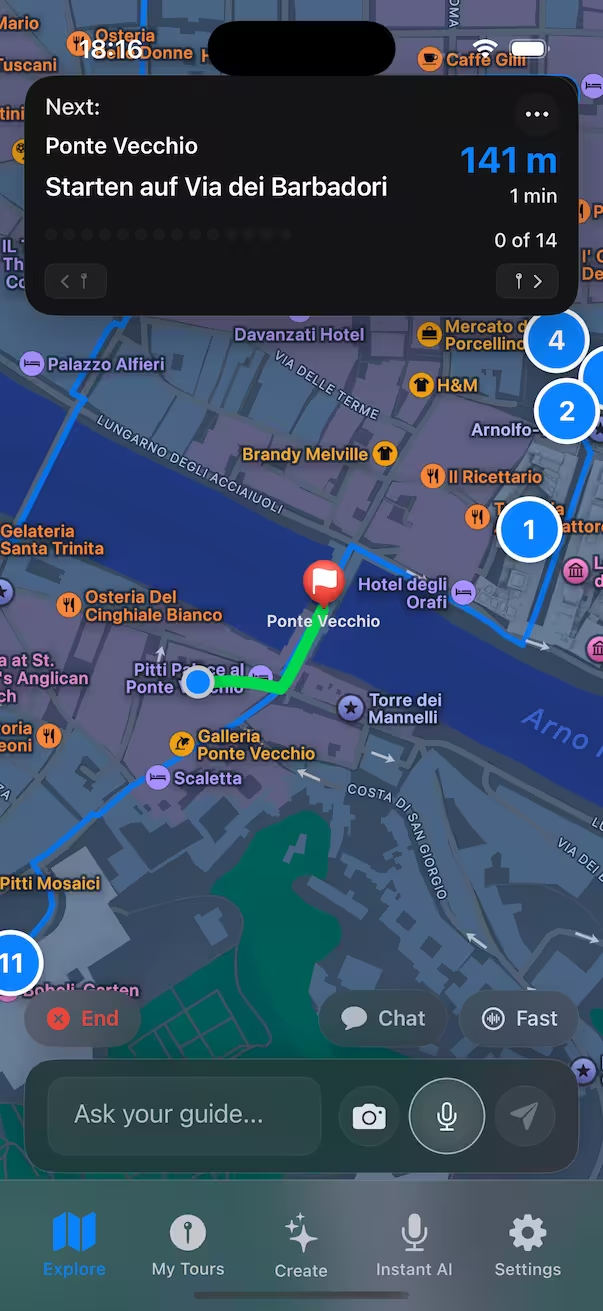
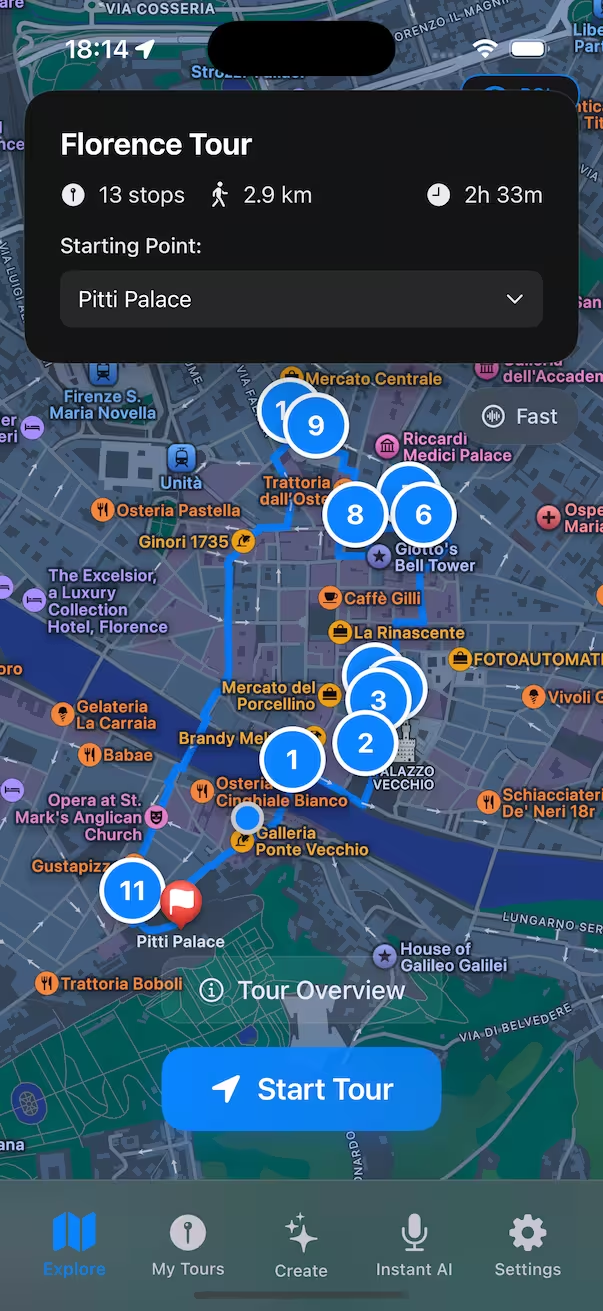
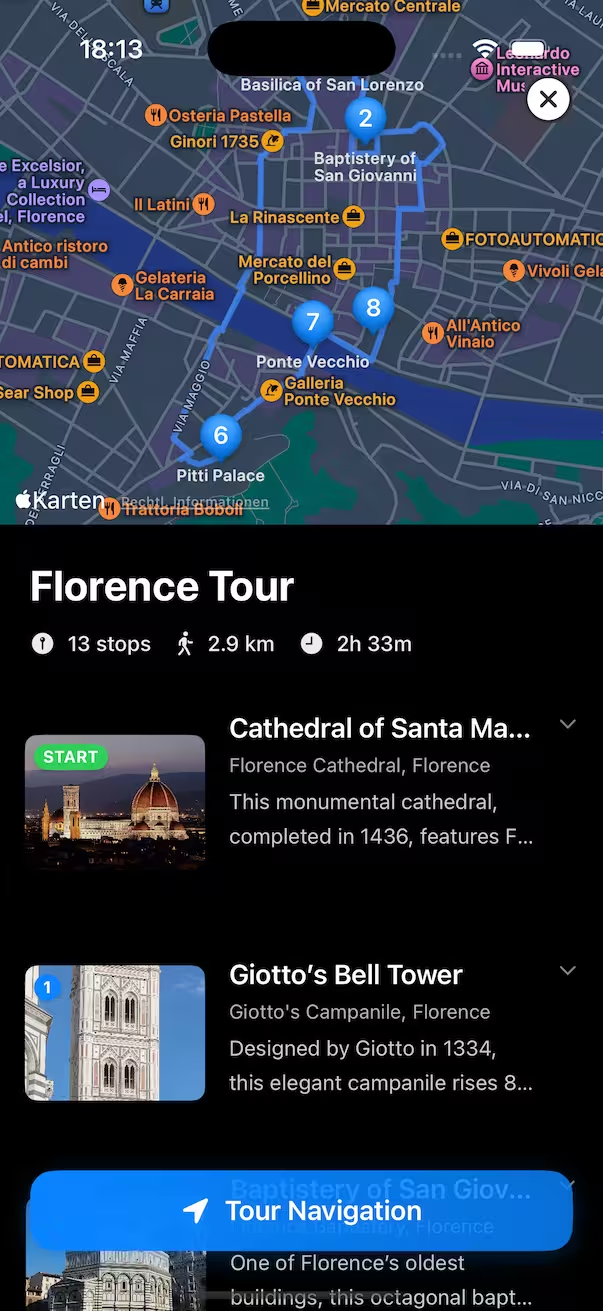
The classic Positano tour: 6 stops, 3.0 km, about 2 h on foot
Your live AI guide and the self-guided Positano route, together in your browser.