Best Time to Visit Amalfi
Month-by-month weather, crowds and prices, plus a full calendar of festivals and events worth planning a trip around.
Best monthsMay, Sep
CheapestJan, Feb, Nov
AvoidAug
BusiestJul, Aug
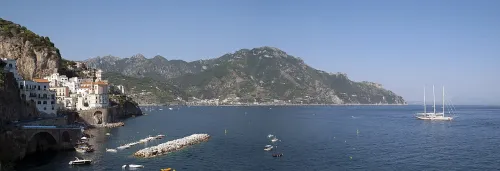
When is the best time to visit Amalfi?
Come in May or September. May brings wisteria, the lemon harvest and 21°C without the summer crush; September gives you a swimmable 24°C sea, the tail of the Ravello Festival and prices well below August. July and August mean 35°C in the Piazza Duomo and daily cruise-ship gridlock.
Start our tool and find your best time to visit Amalfi
Your perfect month
Free · ~30 seconds
or tap a month directly
What matters to you?
And this?
Best overall: May, Sep. May and September are the real answer. May has the wisteria and lemon-blossom bloom, every sight open and a moderate crowd; September keeps the sea at a swimmable 24°C, runs the Ravello Festival to 5 September, and drops prices 15 to 25% below August. Both let you walk the town in comfort instead of surviving it.
Best value: Oct. October is the value pick: hotel rates roughly 40% below the summer peak, a sea still around 22°C, autumn light on green hills washed by September rain, and the Sentiero degli Dei trail at its quietest. Many places start closing from late October, so go in the first three weeks.
Avoid: Aug. August: peak heat at 35°C with no shade in the Piazza Duomo, the SS163 in gridlock, year-high prices and the Ferragosto crush of 15 August. You pay the most for the least pleasant version of the coast.
- January: Great time, 12°C. This is the coast with the tourists stripped out and the locals back in charge. Romantic in a quiet, off-season way rather than a postcard way, and only worth it if you accept that much of Positano is shuttered and you are here for the town, not the beach.
- February: Great time, 14°C. Honest, unperformed Amalfi with no seasonal markup and no crowds at all. The bloom and the big festivals are still weeks off, so this is a month for slow town life and lemon terraces, not beach days.
- March: Great time, 15°C. The last properly quiet month before the bloom and the holiday crowds arrive. Amalfi is waking up without yet being busy, which is exactly the window the regulars guard.
- April: Great time, 18°C. Photographically the most beautiful month, and no longer a secret. The bloom is real and so are the Easter and bridge-holiday crowds, so come for the colour with eyes open: this is no longer the quiet shoulder it once was.
- May: Good time, 22°C. The classic sweet spot, and people know it. The weather and bloom genuinely are at their best, so come anyway, just without the illusion of having the place to yourself. The one real catch is a sea most swimmers will still find a touch cold.
- June: Good time, 27°C. The tipping point from busy-but-workable into full summer. Hot and lively by day, glorious in the long evenings, and the patron-saint feast gives June a genuine local heart the pure beach months lack.
- July: Tough month, 30°C. This is survival-mode Amalfi: the town is not at its best, midday is a write-off, and you pay top prices for the privilege. The long golden evenings and a Ravello concert above the sea are what redeem it, not the crowded daytime piazza.
- August: Tough month, 30°C. Not romantic-empty Amalfi, but Amalfi in full crush. The heat is draining rather than photogenic, the day-tripper chaos peaks, and you pay the year's top prices for it. If you must come, do your sights before 9 am and treat midday as downtime.
- September: Good time, 26°C. The post-peak exhale: warm sea, manageable crowds and a coast that is still buzzing rather than shutting down. Arguably the single best balance of weather, water and breathing room all year.
- October: Great time, 22°C. The romantic off-season pick: golden light, a warm-enough sea, dinner without a reservation scramble and the Sentiero degli Dei at its quietest. The only trade is the rising chance of a rainy day or a brief storm.
- November: Great time, 18°C. Amalfi for people who want the real, lived-in town and do not care about the beach. Atmospheric and authentic if you accept the rain and the shutters; bleak if you came expecting a coast in full swing.
- December: Great time, 14°C. A magical, low-key contrast to the summer crush, with candlelit Atrani lanes and Christmas lights on the Piazza Duomo. Charming for a festive break, as long as you accept short days and a half-shuttered coast.
Amalfi weather by month
HighLowRainfall
Jan12°
Feb14°
Mar15°
Apr18°
May22°
Jun27°
Jul30°
Aug30°
Sep26°
Oct22°
Nov18°
Dec14°
| Month | Temp | Rain | Sun | Crowds | Prices | Highlight |
|---|---|---|---|---|---|---|
| Jan | 12° / 6° | 143mm · 14 rainy days | 6.9 h/day | ●○○○○ | ●○○○○ | |
| Feb | 14° / 7° | 117mm · 12 rainy days | 8.2 h/day | ●○○○○ | ●○○○○ | |
| Mar | 15° / 8° | 117mm · 12 rainy days | 9.5 h/day | ●●○○○ | ●●○○○ | |
| Apr | 18° / 11° | 73mm · 11 rainy days | 10.9 h/day | ●●●○○ | ●●●○○ | Procession of the Dead Christ |
| May | 22° / 14° | 86mm · 11 rainy days | 11.9 h/day | ●●●●○ | ●●●●○ | Amalfi Lemon Harvest (Sfusato) |
| Jun | 27° / 19° | 38mm · 6 rainy days | 13.2 h/day | ●●●●○ | ●●●●○ | Feast of Saint Andrew (Summer) |
| Jul | 30° / 22° | 24mm · 5 rainy days | 13.8 h/day | ●●●●● | ●●●●● | Ravello Festival |
| Aug | 30° / 22° | 29mm · 6 rainy days | 12.7 h/day | ●●●●● | ●●●●● | Ravello Festival |
| Sep | 26° / 19° | 104mm · 9 rainy days | 10.9 h/day | ●●●○○ | ●●●●○ | Ravello Festival |
| Oct | 22° / 15° | 118mm · 10 rainy days | 9.1 h/day | ●●○○○ | ●●○○○ | |
| Nov | 18° / 12° | 227mm · 16 rainy days | 7.2 h/day | ●○○○○ | ●○○○○ | Feast of Saint Andrew (Winter) |
| Dec | 14° / 8° | 143mm · 11 rainy days | 6.8 h/day | ●●○○○ | ●●○○○ | Living Nativity of Atrani |
How we score this: weather = long-run climate normals (Open-Meteo), crowds & prices = relative season read, events checked yearly against official dates.
Best time to visit Amalfi: weather, prices & crowds
Best months for good weather
Jun, Jul, Sep
June and September are the reliable-sun sweet spot: 26°C, dry mornings, and a sea warm enough to swim (22°C in June, 24°C by September) without July and August's punishing 35°C afternoon heat in the old town.
Quietest months to avoid the crowds
Oct, Nov, Mar
From late October the day-trippers and cruise ships are gone. October still gives you a 22°C sea and golden light; by November roughly 40% of Amalfi town has closed for winter, and you have the Duomo steps almost to yourself.
Cheapest time to visit Amalfi
Jan, Feb, Nov
January, February and November are the cheapest: B&Bs from around 70 euros a night against 275-plus at the August peak. The catch is that 40% of Amalfi town and most of Positano shut for the season, and ferries thin to weekend-only.
Best time for festivals and events
Jun, Sep
Time it for the Festa di Sant'Andrea on 27 June, when bearers sprint the patron saint's silver bust up the Duomo's 62 steps and fireworks burst over the harbour, or for early September when the Ravello Festival and the Gusta Minori food week overlap with a still-warm sea.
How many days do you need in Amalfi?
Amalfi town itself is tiny and a single day covers it comfortably, but two days is the honest sweet spot if you want to use it as a base for the coast. The historic core is wedged into the cliff over the harbour, so the actual walking is short; the time goes on ferries, terraces and day trips to Ravello and Positano, not on the town's own sights.
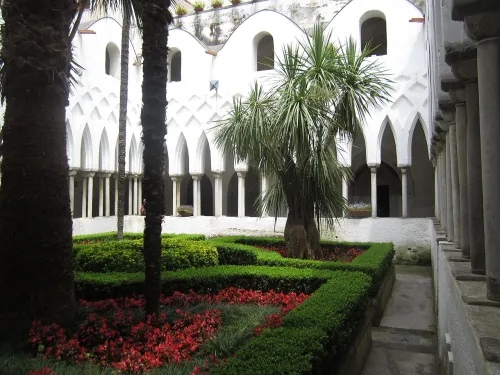
One day
The whole compact core
One day genuinely covers the town. Start at the Porto di Amalfi where the ferries dock, glance into the great stone vaults of the medieval Arsenale della Repubblica, then climb to the cafe-lined Piazza del Duomo and the striped Duomo di Sant'Andrea at the top of its 62-step staircase, with the Chiostro del Paradiso tucked beside it. Our self-guided Amalfi walking tour links these 6 stops over just 1.7 km in about 1.2 hours, finishing up the Valle dei Mulini at the Museo della Carta paper mill. Open the Chiostro del Paradiso right at 9 am to have its Moorish arcades to yourself before the cruise groups arrive around 11 am.
Two daysRecommended
Town plus one neighbour
A second day frees you from the centre and onto the water. Take the SITA bus or a taxi up to Ravello, 7 km away, for Villa Rufolo and its gardens 350 metres above the sea, or catch the lift down to the Grotta dello Smeraldo from the SS163. This is also the day for a boat trip or a swim at the small Lido di Amalfi. Base yourself here, eat in the cooler evening, and let the slow ferry-and-bus rhythm set the pace.
Three days
The full Amalfi, Ravello and Positano triangle
Three days let you fold in Positano without rushing: its stacked pastel houses, the Spiaggia Grande and the boutique-lined lanes are a half-day on their own. Keep a morning for the Sentiero degli Dei, the Path of the Gods, walking the 7.8 km trail before 8 am while it is cool and quiet, then ride the bus from Nocelle back down. Reach everything by ferry rather than the gridlocked SS163 coast road.
Four days or more
Slow coast, hidden valleys
With four or five days you can stop counting sights and start living the coast. Add the Valle delle Ferriere reserve with its rare ferns and spring-fed waterfall, a morning walk that closes at 3 pm, a quiet half-day in nearby Minori or Atrani, a 10-minute walk east, and a long Ravello concert evening if the festival is on. This is the pace the coast was built for, where ferries and buses, not a checklist, decide the day.
Best time to visit Amalfi by traveller type
Same city, different trip. Here's the month that fits how you're travelling.
🧭
Best time to visit Amalfi for the first time
MaySep
May or September: everything open, the sea swimmable in September (24°C), every ferry running, and the Ravello Festival still on. Crowds are real but manageable, unlike the July and August gridlock.
❤️
Best time to visit Amalfi for couples
OctMay
October for golden autumn light, a still-warm 22°C sea and dinner without a reservation scramble, or May for the bloom, the working lemon gardens and the visible Sfusato harvest.
💶
Best time to visit Amalfi on a budget
JanFebNov
January, February or November for B&Bs from around 70 euros. Base yourself in Amalfi town, which stays roughly 60% open, for the Duomo, the Museo della Carta and cheap day trips to Salerno while Positano largely shuts down.
🍝
Best time to visit Amalfi for food and wine
SepMay
Late August into early September for the Gusta Minori food week in Minori (coast cuisine, fresh pasta, limoncello tastings), or April-May for the Sfusato lemon harvest, freshly pressed lemonade and spring-herb cooking in the trattorias.
Worst time to visit Amalfi
August, and the Ferragosto week of 10 to 17 August above all, is the month to skip. Afternoon highs hit 35°C in the shadeless stone funnel of the Piazza del Duomo, the SS163 coast road jams for hours, standard hotel rates pass 300 euros a night, and an evening table without a reservation is close to hopeless. Cruise ships from Naples unload up to 2,000 day-trippers between 10 am and 3 pm on weekdays, and more than half a million people spread across the 13 coastal villages at the peak.
Still worth it for If August is your only window, it still works for warm-sea swimming at around 26°C and long golden evenings, as long as you do your sights before 9 am, treat midday as downtime, and stay put in one town rather than fighting the coast road.
Go instead in May, September, when Amalfi is at its best.
Best time for a tour of Amalfi
Amalfi is a town you take entirely on your feet, and at only 1.7 km the loop is short, but it climbs and the sun is unforgiving, so the month matters more than the distance. April through early June is the sweet spot: highs of 18 to 26 °C, eleven or fewer rainy days, and light that holds late, perfect for the slow steps up to the Duomo di Sant'Andrea and the cool shade of the Cloister of Paradise. July and August push to nearly 30 °C with the Piazza del Duomo turning into a sun-trap and the crowds at their absolute peak, a tough, sticky walk by midday. September and October ease back into the low twenties and thin out the visitors, a quietly lovely time for the Museo della Carta tucked up the valley. Winter is mild but wet: January and November bring fourteen to sixteen rainy days, and at 12 to 14 °C the harbour front feels raw, though the town is gloriously empty.
The beauty of walking Amalfi with AI Tourguide is that the climate, not a timetable, sets your hour. There are no fixed departure times to chase, so on a blazing August day you can set off from the Porto di Amalfi at eight in the morning while the stone is still cool and the Piazza del Duomo is empty, then duck into the cathedral when the heat builds. A voice-first guide leads the whole way, telling you the story of the maritime republic, asking what catches your eye, and adapting as you go, all in your browser with nothing to download. Pick your light, your pace, your breaks, and start your Amalfi tour exactly when the day feels right.

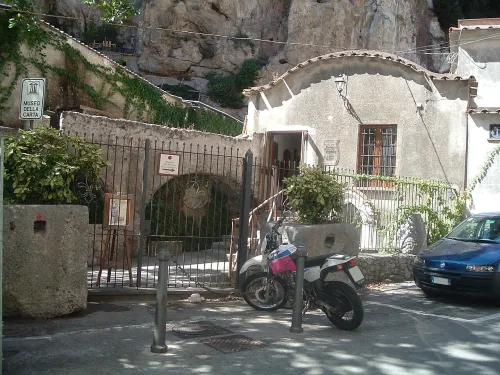 +3
+3All 6 stops are already on the map.
You just press start.
You just press start.
 AI Tourguide
You just read the route.
Now walk it with a guide in your ear.
Press start wherever you are, even hundreds of kilometres from Amalfi, and the guide begins telling its stories right away. In the city, pick any of the 6 stops to start from: it leads you there, then talks with you the whole route, asking, listening, remembering, and shaping the tour around your answers.
6stops1.7km1.2hours11languages
▶Start the tour freeFree to start · Runs in your browser · No app, no download
Amalfi events and festivals calendar
Annual highlights worth timing a trip around, listed month by month.
April
🌸 Seasonal natureAmalfi Lemon Harvest (Sfusato) Raccolta dello Sfusato Amalfitano IGP
Feb 1 – Oct 31 ~
February to October, peaking April to June; harvest on the terraced lemon gardens above the coast.
The harvest of the IGP-protected Sfusato Amalfitano, the long, intensely fragrant local lemon, on the terraced Giardini above the town.
🌸 Seasonal natureSpring Bloom Fioritura primavera
Apr 1 – May 31 ~
April and May, when wisteria, bougainvillea and roses come out across the coast.
Wisteria, bougainvillea and roses flower over the walls and stairways of the coast, while the Valle delle Ferriere runs full with its rare Woodwardia ferns and spring-fed waterfall.
⛪ ReligiousProcession of the Dead Christ Processione del Cristo Morto
Apr 3 ~
Good Friday, the date moving each year with Easter.
A night torchlight procession led by the Addolorata confraternity through Amalfi's dark lanes, with the Piazza Duomo darkened and lit only by candlelight.
June
🏃 SportRegatta of the Ancient Maritime Republics Regata delle Antiche Repubbliche Marinare
Jun 2 ~
Early June, rotating yearly among Amalfi, Genoa, Pisa and Venice, so Amalfi hosts the regatta only once every four years.
A historic rowing race between the four old Italian maritime republics.
⛪ ReligiousFeast of Saint Andrew (Summer) Festa di Sant'Andrea Apostolo
Jun 27
27 June every year, the fixed summer feast of Amalfi's patron saint.
A procession through Amalfi town carries the silver bust of Saint Andrew behind the archbishop, climaxing as the bearers sprint up the cathedral's 62 steps with the saint.
July
🎵 MusicRavello Festival
Jul 4 – Sep 5
Early July to early September each year; concerts in the gardens of Villa Rufolo above Amalfi.
Around 22 concerts of symphonic, baroque, jazz and chamber music in the gardens of Villa Rufolo, 350 metres above the sea in Ravello, 7 km from Amalfi, with conductors of the rank of Sir Simon Rattle, Kent Nagano and Jordi Savall.
August
⛪ ReligiousLuminaria di San Domenico
Aug 1–4
First days of August in Praiano, 6 km west of Amalfi.
A 400-year-old tradition in Praiano: at nightfall thousands of candles and torches light the streets, terraces and squares of the town.
🇮 HolidayFerragosto
Aug 15
15 August, the fixed national holiday and high point of the Italian summer break.
Italy's mid-August national holiday and the climax of the summer season.
🍷 Food and wineGusta Minori
Aug 28 – Sep 6 ~
Late August into the first days of September (moveable; usually the last August week or first September week) in Minori, 4 km east of Amalfi.
A week-long gourmet festival in Minori built around Amalfi Coast cuisine: handmade pasta, seafood, limoncello and concerts, with tastings for a small fee.
November
⛪ ReligiousFeast of Saint Andrew (Winter) Festa invernale di Sant'Andrea
Nov 30
30 November every year, the winter feast of the patron saint.
The winter feast of Amalfi's patron saint, a smaller and more intimate procession than the June edition, with far fewer tourists and a strongly local atmosphere.
December
🎨 Art and cultureLiving Nativity of Atrani Presepe Vivente di Atrani
Dec 26–27 ~
Around Christmas and the New Year, with dates moving each year, in Atrani 500 m east of Amalfi.
A living nativity in Atrani, Italy's smallest comune, where the medieval lanes are lit with hundreds of candles and townspeople stage the scene.
Insider tips for visiting Amalfi
The rules buried in forums, in one place.
- Go midweek in July and August. Cruise ships leaving Naples around 7-8 am unload up to 2,000 day-trippers into Amalfi daily by fast ferry and SITA bus, and the Piazza del Duomo is worst from 10 am to 3 pm. Arrive before 9 am and you have the town almost to yourself.
- Never drive the SS163 coast road in July or August. The two-lane road demands nerves of steel and buses can wait up to three hours on single-stretch standoffs in peak season. The Salerno-Amalfi or Naples-Amalfi ferry is the stress-free alternative: 45 minutes against 1.5 to 3 hours by bus.
- Open the Chiostro del Paradiso the moment it opens at 9 am. The 4-euro ticket gets you the columned arcades and mosaic floors photogenic and group-free until about 11 am, when the cruise tours with guides arrive.
- Do not start the Valle delle Ferriere reserve after 2 pm. Last entry is 2 pm and it closes at 3 pm daily. A morning walk from around 10 am is ideal, though the path can be slippery after rain.
- Walk the Sentiero degli Dei (Path of the Gods) before 8 am from April to October. The 7.8 km one-way trail has almost no shade after 10 am in summer; return by LTP bus from Nocelle to Positano for about 1.50 euros. October is the quietest window: no heat, few groups.
- Check the swell before booking the Grotta dello Smeraldo by boat. The boat service from Amalfi's port can be suspended in rough seas. The lift access from the SS163 (7 euros) always runs, but the ticket desk shuts at 4:30 pm, so the last sensible visit is around 3:45 pm.
- For the Festa di Sant'Andrea on 27 June, watch the fireworks from the water. The display over the harbour is far better from the sea than the quay; Amalfi boat rentals offer fireworks positions from around 8 pm for roughly 20 to 30 euros per person.
- At the Ravello Festival, take an evening concert, not a day trip. Villa Rufolo sits 350 metres above the sea and the sunset and night atmosphere are the real event. The SITA bus Amalfi to Ravello takes about 30 minutes; check the last return (often 22:30) or budget about 15 euros for a taxi.
- The Cimitero Monumentale belvedere, one of the best free viewpoints over Amalfi and the sea, is closed Tuesdays and Thursdays. Plan it for a Monday, Wednesday, Friday, Saturday or Sunday.
- For the lemon experience, come April to June rather than August. Summer heat makes the terraced Giardini gardens less accessible, while April and May show bloom and harvest at once; the Piazza lemonade kiosks press fresh Sfusato lemonade for 2.50 to 3 euros.
Public holidays in Amalfi
On these dates many shops and offices close, transport thins out, and sights can be mobbed or shut. Plan around them.
| Date | Holiday | What closes |
|---|---|---|
| Jan 1 | New Year's Day (Capodanno) | Everything closed and few tourists about, with some New Year's Eve afterglow in Amalfi town. Plan the day around what little is open. |
| Jan 6 | Epiphany (Befana) | Shops closed and children's celebrations in the comuni; a small regional day-trip bump closes the Christmas season. Festive lights stay up in Piazza Duomo through this day. |
| Apr 3 | Good Friday (Venerdi Santo) | Not a national holiday, but the night torchlight Processione del Cristo Morto winds through Amalfi's dark lanes and the Piazza Duomo is closed off in the evening. Secure a spot 30 minutes ahead. |
| Apr 5 | Easter Sunday (Pasqua) | Masses in the Duomo di Sant'Andrea draw visitors from the Naples region and the coast road fills. Hotels are booked out for Holy Week weekend, so reserve far ahead. |
| Apr 6 | Easter Monday (Pasquetta) | National holiday and the peak crowd day of April, with Italian families pouring onto the coast for a day out. Expect packed restaurants and a busy SS163. |
| Apr 25 | Liberation Day (Festa della Liberazione) | National holiday that bridges into a long weekend (24-26 April) and triggers the season's first real crowd spike. Book accommodation ahead. |
| May 1 | Labour Day (Festa dei Lavoratori) | National holiday and the second spring crowd spike; SITA buses run a holiday timetable, so check return times before heading to Ravello or Positano. |
| Jun 2 | Republic Day (Festa della Repubblica) | National holiday; in 2026 the Regata delle Antiche Repubbliche Marinare is hosted in Pisa, so Amalfi keeps only the build-up festivities while its crew travels north. |
| Aug 15 | Ferragosto (Assumption) | The absolute crowd peak. Most Italian workers are on holiday and the coast has been booked solid for days; roads, beaches and restaurants are full and the SS163 jams for hours in the afternoon. |
| Nov 1 | All Saints' Day (Tutti i Santi) | National holiday and the cut-off when many seasonal businesses close for winter. From here a large share of the coast's restaurants and hotels shut down. |
| Nov 30 | Winter Sant'Andrea | Not an official holiday but a local one in feel: many shops close in the afternoon for the patron saint's smaller, intimate winter procession through Amalfi. |
| Dec 8 | Immaculate Conception (Immacolata) | National holiday that officially opens the Christmas season; shops closed. The Piazza Duomo Christmas lights run from this day through 6 January. |
| Dec 25 | Christmas Day (Natale) | Quiet apart from local families; the Duomo is fully lit. The Presepe Vivente living nativity in nearby Atrani, a 10-minute walk east, runs around this period. |
Amalfi month by month
January in Amalfi
High12°C / 54°F
Low6°C
Rain143mm / 14 rainy days
Sun6.9 h/day
Daylight10 h/day
Humidity79%
Crowds●○○○○Prices●○○○○
January is Amalfi at its emptiest and most local, with daytime highs near 12°C and 14 rainy days, so pack a proper rain layer. It is mild enough to walk the town in a jacket, and the Duomo steps are yours alone. The trade is that a good share of restaurants and hotels are shut for winter and ferries run a thin, weekend-leaning schedule.
The vibe This is the coast with the tourists stripped out and the locals back in charge. Romantic in a quiet, off-season way rather than a postcard way, and only worth it if you accept that much of Positano is shuttered and you are here for the town, not the beach.
Don't miss The Christmas lights run in the Piazza Duomo to 6 January, and the Museo della Carta paper mill (open daily 10-19, 7 euros) makes a fine wet-weather morning. The Presepe Vivente in nearby Atrani spills into early January.
Crowd drivers Deepest off-season: almost only locals about, with a small regional day-trip bump around Epiphany on 6 January.
In season Winter is citrus season behind the scenes: the Sfusato lemon harvest is gearing up and limoncello flows in the bars that stay open.
Heads up Around 40% of Amalfi town and most of Positano are closed for winter; ferries thin to mainly weekend Salerno-Amalfi runs.
The cheapest month of the year; hotels from around 70 euros against 275-plus at the August peak.
February in Amalfi
High14°C / 57°F
Low7°C
Rain117mm / 12 rainy days
Sun8.2 h/day
Daylight11 h/day
Humidity78%
Crowds●○○○○Prices●○○○○
February stays firmly off-season, mild and damp at around 14°C with 12 rainy days. It is the quietest authentic-local stretch of the year, with the Sfusato lemon harvest now visibly underway on the terraces. The light improves and crowds are nonexistent, but you are still planning around winter closures and a reduced ferry timetable.
The vibe Honest, unperformed Amalfi with no seasonal markup and no crowds at all. The bloom and the big festivals are still weeks off, so this is a month for slow town life and lemon terraces, not beach days.
Don't miss The Sfusato harvest begins along the coast this month, so the terraced Giardini lemon gardens are at work. Pair the Museo della Carta with the free Duomo cloister, the Chiostro del Paradiso (4 euros for the cloister itself).
Crowd drivers No meaningful crowd driver; northern European Carnival school holidays barely touch the coast.
In season Early-season Sfusato lemons start reaching the bars; this is prime limoncello-tasting time before the crowds.
Heads up Winter closures continue, with a large share of restaurants and hotels still shut and ferries reduced.
Still the year's low: prices sit at the annual floor.
March in Amalfi
High15°C / 59°F
Low8°C
Rain117mm / 12 rainy days
Sun9.5 h/day
Daylight12 h/day
Humidity77%
Crowds●●○○○Prices●●○○○
March is the first stirring of the season: the earliest day-trippers appear, the sights are comfortably visitable and highs climb toward 15°C across 12 rainy days. Green hills and a full spring-fed waterfall make the Valle delle Ferriere especially good now. Crowds are still light, but a chunk of the town's hotels do not reopen until Easter.
The vibe The last properly quiet month before the bloom and the holiday crowds arrive. Amalfi is waking up without yet being busy, which is exactly the window the regulars guard.
Don't miss The Valle delle Ferriere reserve (open 10-15 daily) is at its lushest after winter rain, with the spring-fed waterfall at full strength. Start the walk in the morning, well before the 2 pm last entry.
Crowd drivers First day-trippers of the year; numbers stay modest unless a late-March Easter pulls them forward.
In season The Sfusato harvest builds toward its April-June peak; fresh lemon dishes start showing up on menus.
Heads up Many Amalfi-town hotels remain closed until Easter; the Cimitero Monumentale belvedere is shut Tuesdays and Thursdays year-round.
Hotels in Amalfi town from 90 to 120 euros, though many stay closed until Easter.
April in Amalfi
High18°C / 64°F
Low11°C
Rain73mm / 11 rainy days
Sun10.9 h/day
Daylight13 h/day
Humidity76%
Crowds●●●○○Prices●●●○○
April is when the coast bursts into colour and the first big crowds land together. Highs reach a pleasant 18°C with 11 rainy days, wisteria and bougainvillea drape the stairways, and the lemon harvest peaks on the terraces. Easter (5 April) and its Pasquetta Monday bring the season's first flood of Italian and northern European visitors, with the Liberation Day long weekend (24-26 April) close behind.
The vibe Photographically the most beautiful month, and no longer a secret. The bloom is real and so are the Easter and bridge-holiday crowds, so come for the colour with eyes open: this is no longer the quiet shoulder it once was.
Don't miss Wisteria, bougainvillea and roses are at their peak over the coast's walls and stairs, the most photogenic window of the year, and the Sentiero degli Dei trail is in its best condition. On Good Friday the torchlight Processione del Cristo Morto winds through the dark lanes.
Crowd drivers Easter and Pasquetta (5-6 April), Italian and northern European school holidays, and the Liberation Day bridge weekend (24-26 April) stack up.
In season Peak Sfusato lemon harvest: bars pour fresh-pressed Sfusato lemonade (2.50 to 3 euros) and ricotta-calzone season is on.
Heads up On Good Friday evening the Piazza Duomo is closed off for the procession; the Valle delle Ferriere keeps its strict 3 pm closing.
Rates rise 30 to 40% over March; Holy Week weekend books out, so reserve early.
Events this month
⛪ ReligiousProcession of the Dead Christ Processione del Cristo Morto
Apr 3 ~
Good Friday, the date moving each year with Easter.
A night torchlight procession led by the Addolorata confraternity through Amalfi's dark lanes, with the Piazza Duomo darkened and lit only by candlelight.
A centuries-old, deeply moving tradition; take a good position about 30 minutes before it begins.
🌸 Seasonal natureAmalfi Lemon Harvest (Sfusato) Raccolta dello Sfusato Amalfitano IGP
Feb 1 – Oct 31 ~
February to October, peaking April to June; harvest on the terraced lemon gardens above the coast.
The harvest of the IGP-protected Sfusato Amalfitano, the long, intensely fragrant local lemon, on the terraced Giardini above the town. You can pair it with the Museo della Carta paper-mill museum (7 euros).
In April and May the bars pour fresh-picked lemonade and it is the best window for limoncello tastings, with bloom and harvest visible at once.
🌸 Seasonal natureSpring Bloom Fioritura primavera
Apr 1 – May 31 ~
April and May, when wisteria, bougainvillea and roses come out across the coast.
Wisteria, bougainvillea and roses flower over the walls and stairways of the coast, while the Valle delle Ferriere runs full with its rare Woodwardia ferns and spring-fed waterfall.
April and May are the most photogenic window of the year, and the Sentiero degli Dei trail is in its best condition.
May in Amalfi
High22°C / 71°F
Low14°C
Rain86mm / 11 rainy days
Sun11.9 h/day
Daylight14 h/day
Humidity78%
Crowds●●●●○Prices●●●●○
May is one of the two best months on the coast: highs around 21°C, the bloom still on, the lemon harvest visible and every sight open. The sea is opening up at 18 to 19°C, fine for northern Europeans if still fresco to Italians. Crowds are heavy (4 of 5) as Italian school excursions, German and British travellers and the start of the Naples cruise season all arrive, but it never reaches the July and August crush.
The vibe The classic sweet spot, and people know it. The weather and bloom genuinely are at their best, so come anyway, just without the illusion of having the place to yourself. The one real catch is a sea most swimmers will still find a touch cold.
Don't miss The terraced Giardini lemon gardens are in full working swing with bloom and harvest at once, and the Sentiero degli Dei is at its finest. Walk the trail before 8 am to beat the heat and the groups.
Crowd drivers Italian school-excursion season at its busiest, German and British travellers, the 1 May holiday, and the Naples-port cruise season starting up.
In season Freshly pressed Sfusato lemonade, ricotta calzone and spring-herb cooking from the terrace gardens fill the trattorias.
Heads up Everything is open by now; only the standing weekly quirks apply, like the Cimitero belvedere shut Tuesdays and Thursdays.
Shoulder turning peak: rates 20 to 30% below the summer maximum, the best balance of weather and availability.
Events this month
🌸 Seasonal natureAmalfi Lemon Harvest (Sfusato) Raccolta dello Sfusato Amalfitano IGP
Feb 1 – Oct 31 ~
February to October, peaking April to June; harvest on the terraced lemon gardens above the coast.
The harvest of the IGP-protected Sfusato Amalfitano, the long, intensely fragrant local lemon, on the terraced Giardini above the town. You can pair it with the Museo della Carta paper-mill museum (7 euros).
In April and May the bars pour fresh-picked lemonade and it is the best window for limoncello tastings, with bloom and harvest visible at once.
🌸 Seasonal natureSpring Bloom Fioritura primavera
Apr 1 – May 31 ~
April and May, when wisteria, bougainvillea and roses come out across the coast.
Wisteria, bougainvillea and roses flower over the walls and stairways of the coast, while the Valle delle Ferriere runs full with its rare Woodwardia ferns and spring-fed waterfall.
April and May are the most photogenic window of the year, and the Sentiero degli Dei trail is in its best condition.
June in Amalfi
High27°C / 80°F
Low19°C
Rain38mm / 6 rainy days
Sun13.2 h/day
Daylight15 h/day
Humidity74%
Crowds●●●●○Prices●●●●○
June opens the proper summer warm at 27°C and nearly dry, with 15 hours of daylight and the sea now swimmable at 22°C. Cruise ships call from Naples daily and the day-trip pressure is real, but the heat has not yet turned punishing. The Festa di Sant'Andrea on 27 June is the year's standout local event, with bearers sprinting the saint up the Duomo's 62 steps and fireworks over the harbour.
The vibe The tipping point from busy-but-workable into full summer. Hot and lively by day, glorious in the long evenings, and the patron-saint feast gives June a genuine local heart the pure beach months lack.
Don't miss For the Festa di Sant'Andrea, watch the harbour fireworks from the water (boat positions from around 8 pm, 20 to 30 euros). The Ravello Festival opens in early July, so late-June evenings are the calm before it. The sea is warm enough to swim at the small Lido di Amalfi.
Crowd drivers Daily cruise ships from Naples, the end of British and German school terms, and the Sant'Andrea feast drawing visitors on 27 June.
In season Seafood and the last of the Sfusato harvest carry the menus; fresh-pressed lemonade is everywhere on the piazza.
Heads up No seasonal closures; book Sant'Andrea-weekend accommodation and a harbour-view spot well ahead.
Rates climb as summer begins; the Sant'Andrea weekend (27 June) books out hotels.
Events this month
⛪ ReligiousFeast of Saint Andrew (Summer) Festa di Sant'Andrea Apostolo
Jun 27
27 June every year, the fixed summer feast of Amalfi's patron saint.
A procession through Amalfi town carries the silver bust of Saint Andrew behind the archbishop, climaxing as the bearers sprint up the cathedral's 62 steps with the saint. The evening closes with fireworks over the harbour basin.
This is the standout local event of the year, so claim a viewing spot on the Piazza Duomo early, as it fills from 7 pm.
🏃 SportRegatta of the Ancient Maritime Republics Regata delle Antiche Repubbliche Marinare
Jun 2 ~
Early June, rotating yearly among Amalfi, Genoa, Pisa and Venice, so Amalfi hosts the regatta only once every four years.
A historic rowing race between the four old Italian maritime republics. In the years the regatta is held elsewhere on the rotation, Amalfi's crew travels to the host city while the town holds its own build-up festivities.
Worth knowing the cycle: in the off years you only catch the side programme in Amalfi, with a home edition coming round just once every four years on the rotation.
July in Amalfi
High30°C / 85°F
Low22°C
Rain24mm / 5 rainy days
Sun13.8 h/day
Daylight15 h/day
Humidity71%
Crowds●●●●●Prices●●●●●
July is the coast at full intensity: 30°C highs, relentless sun and tourist numbers at their peak as every European school system breaks at once. Cruise day-trippers and ferry arrivals flood the Piazza del Duomo, which bakes to 35°C with almost no shade between noon and 3 pm, and the SS163 jams daily. The sea is a fine 24°C. Walk early or late and retreat to a cool bar or the free, cool Duomo at midday.
The vibe This is survival-mode Amalfi: the town is not at its best, midday is a write-off, and you pay top prices for the privilege. The long golden evenings and a Ravello concert above the sea are what redeem it, not the crowded daytime piazza.
Don't miss The Ravello Festival runs all month in the gardens of Villa Rufolo; take a sunset concert, not a day trip, and check the last SITA bus back (often 22:30). Swim early before the boats and day-trippers fill the small beaches.
Crowd drivers Every major European school system on summer break at once, the cruise-ship peak from Naples, and daily SS163 gridlock.
In season Granita and fresh Sfusato lemon granita are survival fuel; eat seafood in the cooler evening once the daytime heat breaks.
Heads up Nothing closes for the season, but cruise day-trippers make the Piazza Duomo near-impassable from 10 am to 3 pm on weekdays.
The year's most expensive month: midrange hotels 200 to 350 euros a night, private ferries three times as long.
Events this month
🎵 MusicRavello Festival
Jul 4 – Sep 5
Early July to early September each year; concerts in the gardens of Villa Rufolo above Amalfi.
Around 22 concerts of symphonic, baroque, jazz and chamber music in the gardens of Villa Rufolo, 350 metres above the sea in Ravello, 7 km from Amalfi, with conductors of the rank of Sir Simon Rattle, Kent Nagano and Jordi Savall.
One of Europe's most beautiful concert experiences; buy tickets weeks ahead and take an evening, sunset slot rather than a daytime trip up.
August in Amalfi
High30°C / 86°F
Low22°C
Rain29mm / 6 rainy days
Sun12.7 h/day
Daylight14 h/day
Humidity72%
Crowds●●●●●Prices●●●●●
August is the highest peak of the year, hot at 30°C and jammed, with Ferragosto on 15 August emptying Italy onto the coast. More than half a million people spread across the 13 coastal villages, the Piazza del Duomo hits 35°C with no shade, and the SS163 jams for hours each afternoon. The sea is at its warmest, around 26°C. The narrow Ferragosto week of 10 to 17 August is the single worst stretch to be here.
The vibe Not romantic-empty Amalfi, but Amalfi in full crush. The heat is draining rather than photogenic, the day-tripper chaos peaks, and you pay the year's top prices for it. If you must come, do your sights before 9 am and treat midday as downtime.
Don't miss The Ravello Festival continues to 5 September, and the Luminaria di San Domenico (1-4 August) fills Praiano, 6 km west, with thousands of candles at nightfall. Late August brings the Gusta Minori food week to calmer Minori.
Crowd drivers Ferragosto (15 August) and the Italian summer-holiday peak, layered on top of the cruise-ship and international crowd.
In season Late August opens the Gusta Minori festival in Minori: coast cuisine, fresh pasta, seafood and limoncello tastings, well away from the Amalfi-town crush.
Heads up Things stay open, but around Ferragosto everything is booked solid and the SS163 is gridlocked through the afternoon.
Absolute high season: 300-plus euros for a standard hotel, evening tables hopeless without a reservation.
Events this month
🇮 HolidayFerragosto
Aug 15
15 August, the fixed national holiday and high point of the Italian summer break.
Italy's mid-August national holiday and the climax of the summer season. The coast floods with day-trippers and holidaymakers; on 15 August roads, beaches and restaurants are full and the SS163 jams for hours in the afternoon.
The single most crowded, most expensive day on the coast, so plan to be settled in one town rather than moving along the SS163.
⛪ ReligiousLuminaria di San Domenico
Aug 1–4
First days of August in Praiano, 6 km west of Amalfi.
A 400-year-old tradition in Praiano: at nightfall thousands of candles and torches light the streets, terraces and squares of the town.
An almost mystical, one-of-a-kind sight, but Praiano is packed that week, so arrive early to find a spot.
🎵 MusicRavello Festival
Jul 4 – Sep 5
Early July to early September each year; concerts in the gardens of Villa Rufolo above Amalfi.
Around 22 concerts of symphonic, baroque, jazz and chamber music in the gardens of Villa Rufolo, 350 metres above the sea in Ravello, 7 km from Amalfi, with conductors of the rank of Sir Simon Rattle, Kent Nagano and Jordi Savall.
One of Europe's most beautiful concert experiences; buy tickets weeks ahead and take an evening, sunset slot rather than a daytime trip up.
🍷 Food and wineGusta Minori
Aug 28 – Sep 6 ~
Late August into the first days of September (moveable; usually the last August week or first September week) in Minori, 4 km east of Amalfi.
A week-long gourmet festival in Minori built around Amalfi Coast cuisine: handmade pasta, seafood, limoncello and concerts, with tastings for a small fee.
The coast's best food event of the year, and Minori stays noticeably calmer than Amalfi town while it runs.
September in Amalfi
High26°C / 79°F
Low19°C
Rain104mm / 9 rainy days
Sun10.9 h/day
Daylight12 h/day
Humidity74%
Crowds●●●○○Prices●●●●○
September is the other best month, and many regulars' first choice. From mid-month the German and French school start and Italy's 15 September return pull the crowds out, while the sea stays warm and swimmable at 24 to 25°C. Highs near 26°C make walking comfortable again, the coast is still fully alive, and rain begins to creep back at 9 days. The Ravello Festival runs to 5 September and Gusta Minori lands around the month's start.
The vibe The post-peak exhale: warm sea, manageable crowds and a coast that is still buzzing rather than shutting down. Arguably the single best balance of weather, water and breathing room all year.
Don't miss Catch the closing nights of the Ravello Festival (to 5 September) and the Gusta Minori food week in Minori. The sea is still warm for swimming, and the Sentiero degli Dei is pleasant again as the heat eases.
Crowd drivers Crowds drop from mid-September as German, French and Italian schools go back; early September still carries festival traffic.
In season Gusta Minori around the month's start is the coast's best food event, with limoncello tastings and Amalfi-coast cooking in Minori.
Heads up Everything stays open through September; closures only begin to bite from late October and All Saints' Day.
Prices 15 to 25% below the August peak as the crowds ease from mid-month.
Events this month
🎵 MusicRavello Festival
Jul 4 – Sep 5
Early July to early September each year; concerts in the gardens of Villa Rufolo above Amalfi.
Around 22 concerts of symphonic, baroque, jazz and chamber music in the gardens of Villa Rufolo, 350 metres above the sea in Ravello, 7 km from Amalfi, with conductors of the rank of Sir Simon Rattle, Kent Nagano and Jordi Savall.
One of Europe's most beautiful concert experiences; buy tickets weeks ahead and take an evening, sunset slot rather than a daytime trip up.
🍷 Food and wineGusta Minori
Aug 28 – Sep 6 ~
Late August into the first days of September (moveable; usually the last August week or first September week) in Minori, 4 km east of Amalfi.
A week-long gourmet festival in Minori built around Amalfi Coast cuisine: handmade pasta, seafood, limoncello and concerts, with tastings for a small fee.
The coast's best food event of the year, and Minori stays noticeably calmer than Amalfi town while it runs.
October in Amalfi
High22°C / 72°F
Low15°C
Rain118mm / 10 rainy days
Sun9.1 h/day
Daylight11 h/day
Humidity79%
Crowds●●○○○Prices●●○○○
October is the best-value month: hotel rates roughly 40% below summer, the sea still around 22°C and pleasant for the brave, and autumn light on hills greened by September rain. Crowds are gone and the cruise season ends, though the weather turns less settled with 10 rainy days, sometimes sharp showers, and slippery trail conditions after rain. Go in the first three weeks before the seasonal shutdown begins.
The vibe The romantic off-season pick: golden light, a warm-enough sea, dinner without a reservation scramble and the Sentiero degli Dei at its quietest. The only trade is the rising chance of a rainy day or a brief storm.
Don't miss October is the quietest window for the Sentiero degli Dei: no heat and few groups, though skip the trail right after heavy rain. The autumn hills are green and the light is the best of the year for photography.
Crowd drivers Italian autumn half-term late in the month brings a small local bump; otherwise the cruise season has ended and crowds are gone.
In season Autumn produce and the last warm-weather seafood; a quiet month to taste limoncello without summer queues.
Heads up Many businesses begin closing from late October, and ferries start to thin out; the cruise season ends this month.
Prices 40 to 50% below the summer peak; many operators start closing from late October.
November in Amalfi
High18°C / 64°F
Low12°C
Rain227mm / 16 rainy days
Sun7.2 h/day
Daylight10 h/day
Humidity82%
Crowds●○○○○Prices●○○○○
November is the wettest month by far, 227mm over 16 rainy days, and the coast goes into hibernation: 60 to 70% of restaurants and hotels in Positano close and around 40% of Amalfi town shuts down. It is cheap, quiet and very local, but you are planning around frequent sharp showers, occasional storms and the chance the SS163 closes briefly after a rockfall. The winter Sant'Andrea on 30 November is a small, deeply local highlight.
The vibe Amalfi for people who want the real, lived-in town and do not care about the beach. Atmospheric and authentic if you accept the rain and the shutters; bleak if you came expecting a coast in full swing.
Don't miss The winter Festa di Sant'Andrea (30 November) is the intimate, crowd-free version of the patron-saint feast. The indoor Museo della Carta and the Duomo make reliable wet-weather visits.
Crowd drivers Effectively no tourist crowd; the winter Sant'Andrea on 30 November draws locals more than visitors.
In season Hearty cold-weather coast cooking in the handful of trattorias that stay open through winter.
Heads up From All Saints' Day on 1 November the seasonal shutdown bites hard: most of Positano and much of Amalfi town close, ferries run weekend-only, and SS163 can close briefly after rockfalls.
Low-season bargains: good B&Bs from around 80 euros, with SITA buses on a reduced timetable.
Events this month
⛪ ReligiousFeast of Saint Andrew (Winter) Festa invernale di Sant'Andrea
Nov 30
30 November every year, the winter feast of the patron saint.
The winter feast of Amalfi's patron saint, a smaller and more intimate procession than the June edition, with far fewer tourists and a strongly local atmosphere.
The pick for an authentic, crowd-free version of the patron-saint festival without the summer masses.
December in Amalfi
High14°C / 58°F
Low8°C
Rain143mm / 11 rainy days
Sun6.8 h/day
Daylight9 h/day
Humidity80%
Crowds●●○○○Prices●●○○○
December is quiet and cool at 14°C until the Christmas week wakes the larger towns. The Atrani living nativity and Ravello concerts pull short-trip visitors from around 20 December, and New Year is lively in the bigger coastal towns. Days are short at about 9 hours, the coast road is unlit and winding after dark, and most of the seasonal closures still apply outside the festive block.
The vibe A magical, low-key contrast to the summer crush, with candlelit Atrani lanes and Christmas lights on the Piazza Duomo. Charming for a festive break, as long as you accept short days and a half-shuttered coast.
Don't miss The Presepe Vivente living nativity in Atrani, a 10-minute walk east, runs 26-27 December with the medieval lanes lit by hundreds of candles. Christmas lights fill the Piazza Duomo from 8 December to 6 January.
Crowd drivers A Christmas-trip bump from around 20 December for the Atrani nativity and Ravello concerts, then a New Year crowd in the larger towns.
In season Festive coast baking and limoncello over the holidays in the towns that stay open for the season.
Heads up Most winter closures continue outside the festive block; the Immacolata holiday on 8 December shuts shops and opens the Christmas season.
Rates jump in the Christmas and New Year block (23 December to 1 January) to 120 to 150 euros; the rest of the month is at the annual floor.
Events this month
🎨 Art and cultureLiving Nativity of Atrani Presepe Vivente di Atrani
Dec 26–27 ~
Around Christmas and the New Year, with dates moving each year, in Atrani 500 m east of Amalfi.
A living nativity in Atrani, Italy's smallest comune, where the medieval lanes are lit with hundreds of candles and townspeople stage the scene.
A magical contrast to the summer crush, and Atrani is a 10-minute walk from Amalfi.
Frequently asked questions
When is the best time to visit Amalfi?
May and September are the best months. May brings the wisteria bloom, the lemon harvest and 21°C without the summer crush, though the sea is still a cool 18 to 19°C. September is the all-rounder: a swimmable 24°C sea, the tail of the Ravello Festival, the Gusta Minori food week and prices 15 to 25% below August, with the crowds easing from mid-month.
When should I avoid visiting Amalfi?
August, and the Ferragosto week of 10 to 17 August most of all. Afternoon highs hit 35°C with no shade in the Piazza del Duomo, the SS163 coast road jams for hours, hotels pass 300 euros a night, and evening tables are hopeless without a reservation. July is just as hot and just as crowded, with cruise day-trippers flooding the town between 10 am and 3 pm.
What are the cheapest months to visit Amalfi?
January, February and November are the cheapest, with B&Bs from around 70 to 80 euros against 275-plus at the August peak. The catch is that much of the coast closes for winter: 60 to 70% of Positano and around 40% of Amalfi town shut down, and ferries thin to mainly weekend runs. Base yourself in Amalfi town, which stays roughly 60% open.
Can you swim in Amalfi, and when is the sea warm?
The sea is swimmable from June to October. It reaches about 22°C in June, peaks near 26°C in August, and holds a warm 24 to 25°C through September. October still sits around 22°C, fine for the brave, before dropping below 20°C in November. May is about 18 to 19°C, comfortable for northern Europeans but still fresco to Italians.
Is October a good time to visit Amalfi?
October is the best-value month. Hotel rates run roughly 40% below summer, the sea is still around 22°C, the crowds and cruise ships are gone, and the autumn light on the green hills is the best of the year. The trade is less settled weather, about 10 rainy days with occasional sharp showers. Go in the first three weeks, as many places start closing from late October.
Is Amalfi worth visiting in winter?
Winter Amalfi is quiet, cheap and very local, but heavily shuttered. November is the wettest month at 227mm over 16 days, and 60 to 70% of Positano plus around 40% of Amalfi town close. Highlights are the intimate winter Sant'Andrea feast on 30 November and the candlelit Atrani living nativity around Christmas. Come for the real, lived-in town, not for the beach or full services.
How many days do you need on the Amalfi Coast?
Three days cover Amalfi town, Ravello and Positano: the Duomo di Sant'Andrea and Chiostro del Paradiso, a Ravello day for Villa Rufolo, and Positano for the beach and lanes. Four to five days let you add the Sentiero degli Dei hike, the Grotta dello Smeraldo and the Valle delle Ferriere reserve without rushing the slow, ferry-and-bus-paced coast.
What is the best way to get around Amalfi in summer?
Take the ferry, not the road, in July and August. The two-lane SS163 jams for hours and buses can wait up to three hours on single-stretch standoffs in peak season. The Salerno-Amalfi or Naples-Amalfi ferry takes about 45 minutes against 1.5 to 3 hours by bus. Never rent a car for the coast road in high summer.
When is the Festa di Sant'Andrea in Amalfi?
Amalfi's patron-saint feast falls twice a year, on 27 June and again on 30 November. The June edition is the big one: bearers sprint the saint's silver bust up the Duomo's 62 steps and fireworks burst over the harbour, with the Piazza Duomo filling from 7 pm. The November feast is a smaller, intimate winter procession with far fewer tourists.

Any month, any day: your guide is already there
Whatever date you pick, a private human guide gets pricier and harder to book on weekends, holidays and in peak season. Our live AI guide, the one that walks with you and answers anything you ask out loud, works the opposite way.
One flat price, every day
No holiday, weekend, night or peak-season surcharge. A private guide in Amalfi runs well over 100 euro for a half day, and more on holidays. Ours stays the same.
Available the moment you want it
Start at midnight or at dawn, on Christmas, in the snow, in the August heat. No sold-out high season, no booking weeks ahead.
Your pace, no meter running
Pause for a long lunch, restart after dark, repeat a stop. The tour simply waits for you.
Free to try, a fraction of the cost
Test it for free, then a transparent flat price that undercuts any private guide, in every season.
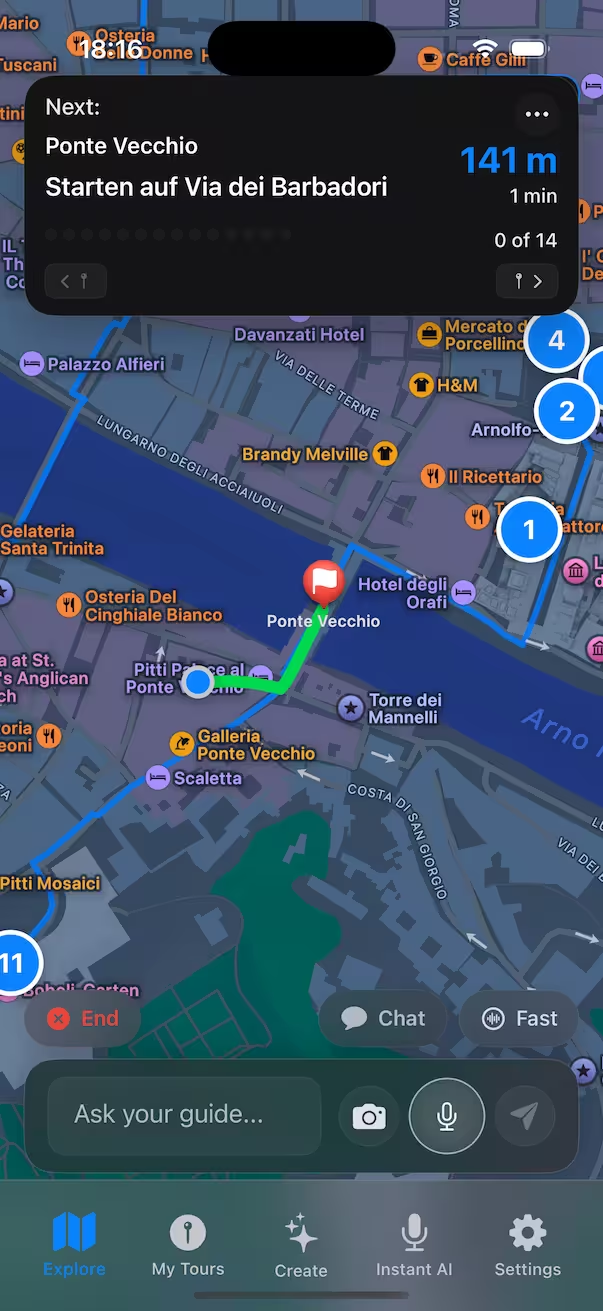
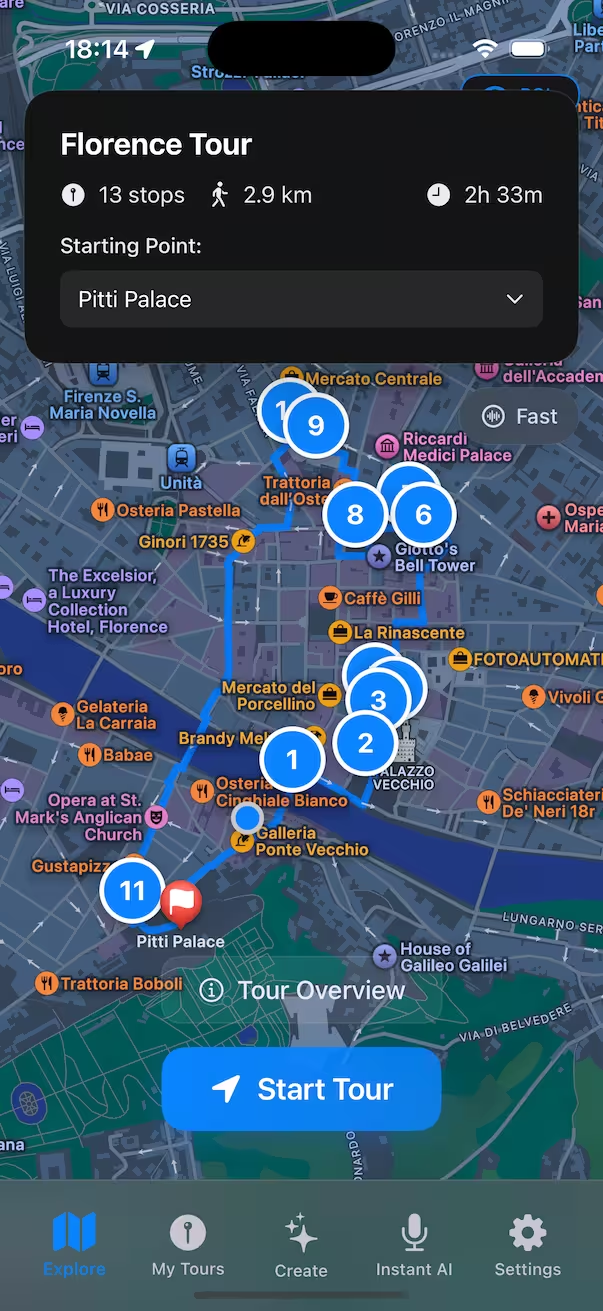
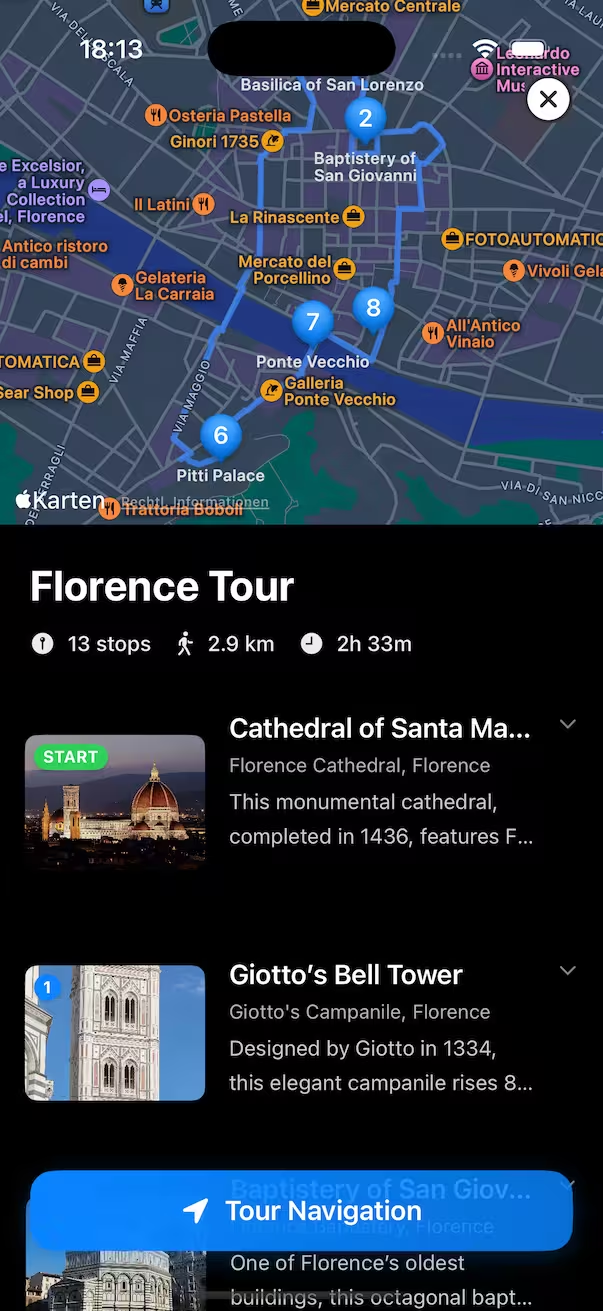
The classic Amalfi tour: 6 stops, 1.7 km, about 1 h on foot
Your live AI guide and the self-guided Amalfi route, together in your browser.