Best Time to Visit Matera
Month-by-month weather, crowds and prices, plus a full calendar of festivals and events worth planning a trip around.
Best monthsApr, May, Oct
CheapestJan, Feb, Dec
AvoidAug
BusiestJul, Aug
When is the best time to visit Matera?
Come in late April, May or October: 18-26°C walking weather, golden light on the amber limestone, open sights, and hotel rates around 80-150 euros instead of summer's 160-280. Skip mid-July through mid-August unless the Madonna della Bruna feast (2 July) is your specific reason: the bare Sassi turn into an outdoor oven at 33-36°C and Ferragosto crams every lane. January and February are cheapest and quietest of all, rooms from 55-80 euros, the trade being cold days and short light.
Start our tool and find your best time to visit Matera
Your perfect month
Free · ~30 seconds
or tap a month directly
What matters to you?
And this?
Best overall: Apr, May, Oct. Late April (after Easter weekend), May and October are the real sweet spot: 18-26°C walking weather, dry days, every rock church and cistern open with no queue, hotel rates 80-150 euros, and Matera's most beautiful light on the amber stone. April adds wildflowers on the Murgia plateau; October adds autumn colour on the gravina rim and the year's thinnest crowds.
Best value: Jan, Feb, Nov. January, February and November give the cheapest rooms of the year (55-95 euros) with every sight open and no queues. The catch is cooler, shorter, sometimes wet days, and December daylight running only sunrise around 07:20 to sunset around 16:30. Avoid the Matera Film Festival week (7-15 November), when rates jump 20-30%.
Avoid: Aug. Mid-July through mid-August is the year's worst value: 33-36°C air temperature with pale-rock surfaces far hotter, Ferragosto (15 August) cramming the Sassi, hotels at 2-3 times off-season rates, and many family trattorias shut for their own 10-14 day August break. Glorious only if you came for the heat-defying Madonna della Bruna on 2 July, miserable otherwise.
- January: Great time, 11°C. This is the Sassi at their stillest. With almost no other visitors, you can walk the lanes of Sasso Caveoso in near silence and have the rock churches to yourself. Under a low winter sun, or the rare dusting of snow, the amber stone looks extraordinary. Cold and slow, but the most affordable, uncrowded month there is.
- February: Great time, 13°C. February is honest, undressed Matera, with no festival markup and no tour groups. The lanes are empty, the cave hotels are atmospheric and cheap, and the light off the limestone is soft and clear. The only thing to plan around is a passing shower, when the polished stone steps turn slippery.
- March: Great time, 15°C. March is the last genuinely quiet month before spring fills the city. The cafes put tables back on the Sassi terraces, the light lengthens, and you can still wander the lanes without a crowd. With the cultural-capital year just launching, there is a real sense of the city waking up.
- April: Great time, 18°C. April is when Matera shows off: warm enough for shirtsleeves by day, the gravina rim in colour, and the limestone glowing at sunrise. After the Easter rush it settles into the single most photogenic window of the year. This is the month first-time photographers should aim for.
- May: Great time, 23°C. May is the quietly perfect month few people market. No punishing heat, no festival crush, no holiday markup, just a warm city at ease with itself. Evenings are made for aperitivo on a terrace looking over the cave houses, and the alleyways stay calm enough to feel like your own.
- June: Good time, 30°C. June is the tipping point into full summer. The long light evenings are the payoff, with the heat lifting after 18:30 for late walks and dinners outdoors. Come in the first half before the school holidays and the worst heat arrive, and you still get a city that breathes.
- July: Tough month, 33°C. July is full-throttle Matera, defined by heat and the Bruna. The only viable outdoor window is before 9 am and after 18:30; in between, the cave interiors, holding a stable 16-18°C, are your refuge. If you came for the Madonna della Bruna it is unforgettable, otherwise the heat and prices are punishing.
- August: Tough month, 33°C. August is Matera at maximum crush and maximum heat. The lanes are packed by mid-morning and the open limestone is brutal by midday, so the rhythm is early starts, long midday breaks in the cave interiors, and life resuming after sunset. Glorious only if you are here for the festivals; otherwise plan around it.
- September: Good time, 27°C. September feels like Matera exhaling: warm enough for terrace evenings, alive with the cultural-capital programme, but without August's crush or prices. From the middle of the month the lanes loosen up and the light turns golden, making it one of the most rewarding times to walk the Sassi.
- October: Great time, 22°C. October is the couples' month: cool, golden and quiet, with the gravina rim in autumn colour and golden hour falling at a workable 17:00 to 18:30. You can walk the ravine trails comfortably and have the cave-hotel alleyways nearly to yourself. The best blend of good weather, low crowds and fair prices all year.
- November: Great time, 17°C. November is Matera at its most introverted: cool, often grey, and almost touristless, but cheap and calm. The cave hotels are atmospheric, the lanes are empty outside the film-festival week, and a passing shower only adds drama to the limestone. Bring grip footwear, as the polished steps turn slippery when wet.
- December: Great time, 13°C. December trades the summer crush for candlelit winter atmosphere. The living nativity threading through the cave churches at night is unforgettable, and the short days mean planning the Sassi walk to catch golden hour on the Civita at dusk. Cold but magical, and far cheaper than summer.
Matera weather by month
HighLowRainfall
Jan11°
Feb13°
Mar15°
Apr18°
May23°
Jun30°
Jul33°
Aug33°
Sep27°
Oct22°
Nov17°
Dec13°
| Month | Temp | Rain | Sun | Crowds | Prices | Highlight |
|---|---|---|---|---|---|---|
| Jan | 11° / 3° | 51mm · 9 rainy days | 7.1 h/day | ●○○○○ | ●○○○○ | Matera Earth Market |
| Feb | 13° / 4° | 51mm · 8 rainy days | 8.3 h/day | ●○○○○ | ●○○○○ | Matera Earth Market |
| Mar | 15° / 5° | 73mm · 10 rainy days | 9.4 h/day | ●●○○○ | ●●○○○ | Mediterranean Capital Opening Ceremony |
| Apr | 18° / 8° | 51mm · 10 rainy days | 10.6 h/day | ●●●○○ | ●●●○○ | Matera Mediterranean Capital of Culture 2026 |
| May | 23° / 12° | 65mm · 11 rainy days | 11.9 h/day | ●●●○○ | ●●●○○ | Matera Mediterranean Capital of Culture 2026 |
| Jun | 30° / 18° | 51mm · 8 rainy days | 13.2 h/day | ●●●●○ | ●●●●○ | Matera Mediterranean Capital of Culture 2026 |
| Jul | 33° / 20° | 17mm · 4 rainy days | 13.8 h/day | ●●●●● | ●●●●● | Matera Mediterranean Capital of Culture 2026 |
| Aug | 33° / 20° | 28mm · 5 rainy days | 12.8 h/day | ●●●●● | ●●●●● | Matera Mediterranean Capital of Culture 2026 |
| Sep | 27° / 17° | 42mm · 7 rainy days | 10.9 h/day | ●●●●○ | ●●●●○ | Matera Mediterranean Capital of Culture 2026 |
| Oct | 22° / 13° | 48mm · 8 rainy days | 9.0 h/day | ●●○○○ | ●●○○○ | Matera Mediterranean Capital of Culture 2026 |
| Nov | 17° / 9° | 83mm · 10 rainy days | 7.0 h/day | ●●○○○ | ●●○○○ | Matera Mediterranean Capital of Culture 2026 |
| Dec | 13° / 5° | 34mm · 6 rainy days | 7.2 h/day | ●●○○○ | ●●○○○ | Living Nativity in the Sassi |
How we score this: weather = long-run climate normals (Open-Meteo), crowds & prices = relative season read, events checked yearly against official dates.
Best time to visit Matera: weather, prices & crowds
Best months for good weather
Apr, May, Oct
April, May and October deliver Matera's most comfortable walking weather: 18-26°C, mostly dry, and none of the radiant heat that bakes the Sassi in summer. The limestone steps are safest when dry, so these low-rainfall months are the practical sweet spot for the steep lanes.
Quietest months to avoid the crowds
Jan, Feb, Nov
January, February and November empty right out. You walk the lanes of Sasso Caveoso with almost nobody around, there is no queue at the rock churches, and cave-hotel alleyways feel like they are yours alone. The trade is cooler, occasionally wet days.
Cheapest time to visit Matera
Jan, Feb, Nov
January and February are the cheapest months of the year: 3-star rooms in or just above the Sassi run 55-80 euros a night, roughly half the summer rate. November is nearly as cheap at 65-95 euros, apart from the Matera Film Festival week (7-15 November).
Best time for festivals and events
Jul, Dec
Two unmatched dates bookend the year. The Festa della Madonna della Bruna on 2 July, a 637-year-old patron-saint feast, ends with the crowd tearing apart a papier-mache triumphal cart and midnight fireworks over the Sassi. In December the Presepe Vivente, a 1.5 km living nativity with 200-plus performers, winds through Sasso Caveoso and its cave churches, the most dramatic way to see the Sassi at night.
How many days do you need in Matera?
Two days is the right call for Matera. One day is enough to fall for the Sassi, but a second night lets you watch the amber stone glow at dusk and again at dawn, and that contrast is the real point of the place. The historic core is compact and steep, so the magic is in the maze, not the mileage.
One day
Into the Sassi
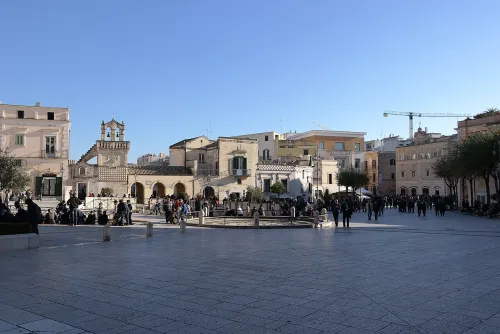
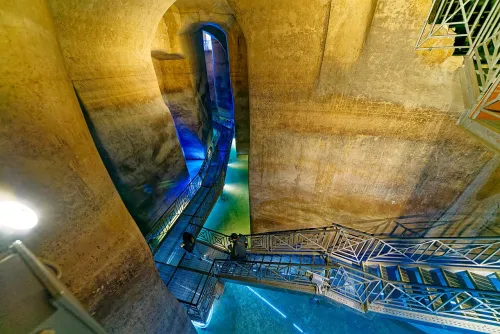
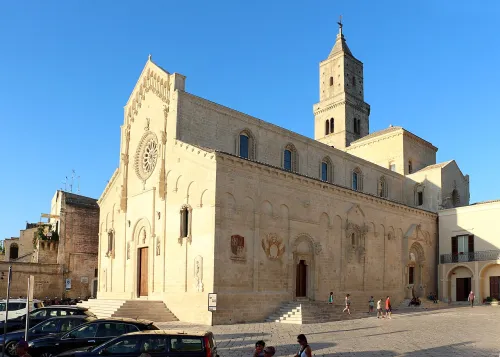
Start at Piazza Vittorio Veneto, drop into the Palombaro Lungo cistern beneath it (3 euros, closes midday), then follow Via Fiorentini down into the cave districts. A self-guided Matera walking tour covers 8 stops across 2.9 km in about 1.8 hours, including the Church of Santa Maria de Idris on the Monterrone spur, Matera Cathedral on the Civita ridge, and Church of San Pietro Barisano before looping back up. Time golden hour at the Belvedere Piazza Giovanni Pascoli for the classic view over the ravine.
Two daysRecommended
Cave churches and the ravine rim
Begin with Casa Noha's 25-minute introductory film (6.50 euros, closed Wednesdays) to understand what you are walking through. Spend the morning at San Giovanni Battista and the MUSMA sculpture museum inside Palazzo Pomarici (5 euros, closes Tuesdays at 15:00). In the afternoon, drive or walk to the Belvedere di Murgia Timone across the gravina for the panorama that takes in the whole Sassi at once, best at golden hour around 17:00 to 18:30 in autumn and spring.
Three days
The Crypt and the plateau
Reserve a morning for the Crypt of Original Sin at Contrada Pietrapenta, 10 km west of the city: a guided-only visit (14 euros per person) to 8th-century frescoes that genuinely impress. There is no public transport, so arrange a taxi and book ahead on +39 0835 570706. Back in Matera, walk the Murgia Materana Park trails on the plateau above the ravine: free, open around the clock, and at their best when wildflowers are out in April and May or when autumn colour arrives in October.
Four days or more
Day trips and wine country
With extra time, head north to Barile and Rionero in Vulture for Aglianico del Vulture harvest tastings at local wineries, an easy 90 km day trip best timed for October when the harvest is fresh. Alternatively, time a Saturday around the monthly Slow Food Earth Market in central Matera for peperoni cruschi, cacioricotta and local produce. The National Archaeological Museum Ridola on Via Ridola (3 euros, closed Monday mornings until 14:00) fills any remaining gap with Bronze Age and Magna Graecia finds from the region.
Best time to visit Matera by traveller type
Same city, different trip. Here's the month that fits how you're travelling.
🧭
Best time to visit Matera for the first time
AprOct
April (after the Easter weekend) or October. April gives 18-24°C, wildflowers on the Murgia, golden morning light on the amber stone, and no heat distortion in photos. October repeats that comfort with slightly cheaper rates and autumn light. Avoid mid-July through August unless the Madonna della Bruna is your reason to come.
❤️
Best time to visit Matera for couples
MayOct
May for warm evenings and aperitivo on the Sassi terraces with the city at its quietly beautiful best, or late October when almost no one else is around, the air is cool enough to walk the ravine trails comfortably, and golden hour falls at a workable 17:00 rather than 20:00. Cave-hotel stays feel most romantic in shoulder season when you have the alleyways to yourselves.
💶
Best time to visit Matera on a budget
JanFebNov
January, February or November (outside the Film Festival week of 7-15 November). 3-star rooms from 55-80 euros, no queues, every sight open. The Sassi lanes, Piazza Vittorio Veneto and the Murgia park viewpoints are free year-round, and the National Archaeological Museum Ridola charges just 3 euros.
🍝
Best time to visit Matera for food and wine
MayOct
May-June or October. Matera's signatures are at their best: peperoni cruschi, cacioricotta cheese and orecchiette with turnip greens, with the monthly Slow Food Earth Market worth timing a Saturday around. October also opens Aglianico del Vulture harvest tastings at wineries near Barile and Rionero, an easy day trip north.
Worst time to visit Matera
Mid-July through mid-August is the worst window for comfort, value and practicality. Air temperatures hit 33 to 36°C and the bare limestone of the Sassi amplifies radiant heat so much that pale-rock surfaces can top 50°C in the afternoon, with the narrow cave lanes acting as heat channels. Ferragosto on 15 August packs every lane to its annual peak, hotels charge two to three times the off-season rate (200 to 280 euros a night over the peak week), and many family-run trattorias in the Sassi close for a 10 to 14 day break around mid-August, leaving fewer options for dinner.
Still worth it for Come in mid-summer only if the Festa della Madonna della Bruna on 2 July is your specific reason: the patron-saint feast, held since 1389, ends with the crowd tearing apart a papier-mache triumphal cart at around 22:00 and fireworks over the Sassi at midnight, and nothing else in the calendar matches it. The late-August Gezziamoci jazz festival, with mostly free outdoor concerts in the Hotel del Campo garden and Sassi venues, is a genuine draw for evening visitors prepared to start the Sassi before 8 am.
Go instead in April, May, October, when Matera is at its best.
Best time for a tour of Matera
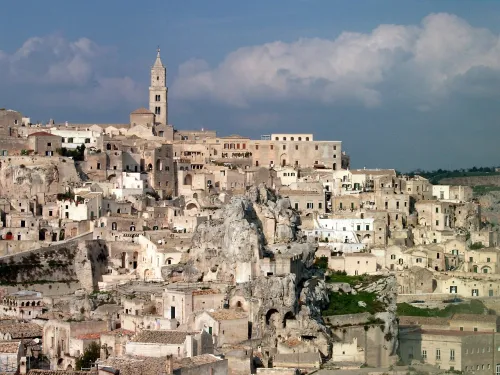
The 2.9-kilometre route through the Sassi di Matera is almost entirely carved from bare pale tufo stone, and that matters enormously when you are choosing your month. From mid-April through May, temperatures sit between 18 and 23 °C, the light is long and golden, and the ravine paths are comfortable all day. October brings almost the same conditions at 22 °C and the crowds thin right out, making it the single best month if you want Matera Cathedral and the Belvedere di Piazza Giovanni Pascoli largely to yourself. June starts to push 29 °C and the visitor numbers climb sharply. July and August are the hardest months to walk: highs reach 33 °C on stone that radiates heat with no canopy overhead, and the sassi lanes are shoulder to shoulder, especially around the Church of Santa Maria de Idris and the Palombaro Lungo entrance. Winter is the other extreme: January averages barely 11 °C with nine rainy days, the light fades before 5 pm, and while the silence in the Sassi is genuinely extraordinary, the wet limestone steps demand real care underfoot. March is unpredictable, with ten rain days and cool mornings that can turn the stone slick. The practical window is therefore April to early June and September to October, with October edging ahead for walkers who want both comfort and space.
With AI Tourguide's Matera tour, you are not locked to a 10 am departure or a guide who sets the pace for fifteen people in the midday heat. On an October morning, when Piazza Vittorio Veneto is still quiet and the tufo glows amber in the low sun, you can set off the moment the light feels right and linger as long as the Palombaro cistern holds you. The guide runs entirely in your browser, no download needed, and leads the route with spoken stories, asks what catches your eye, and shapes the rest of the walk around what you say. Start early, take a long break in the shade when the temperature climbs, and carry on into the afternoon at your own call.

 +4
+4All 8 stops are already on the map.
You just press start.
You just press start.
 AI Tourguide
You just read the route.
Now walk it with a guide in your ear.
Press start wherever you are, even hundreds of kilometres from Matera, and the guide begins telling its stories right away. In the city, pick any of the 8 stops to start from: it leads you there, then talks with you the whole route, asking, listening, remembering, and shaping the tour around your answers.
8stops2.9km1.8hours11languages
▶Start the tour freeFree to start · Runs in your browser · No app, no download
Matera events and festivals calendar
Annual highlights worth timing a trip around, listed month by month.
January
🍷 Food and wineMatera Earth Market
Jan 1 – Dec 31 ~
one Saturday a month, year-round
A Slow Food-affiliated farmers' market in central Matera bringing local Basilicata producers: peperoni cruschi, cacioricotta, orecchiette, olive oil and Aglianico del Vulture wine.
March
🎨 Art and cultureMediterranean Capital Opening Ceremony Cerimonia inaugurale Matera Capitale Mediterranea 2026
Mar 20
evening of 20 March
The inaugural ceremony of Matera's Mediterranean Capital of Culture year, held at the Teatro Duni from 17:00, followed by a drone show over the Sassi and performances on the Monterrone rock formation.
🎨 Art and cultureMatera Mediterranean Capital of Culture 2026 Matera Capitale Mediterranea della Cultura e del Dialogo 2026
Mar 20 – Nov 28
late March to late November
Matera shares the Mediterranean Capital of Culture and Dialogue title with Tetouan in Morocco for the year.
April
⛪ ReligiousEaster in Matera Pasqua a Matera
Apr 5–6 ~
Easter Sunday and Monday, early April
Good Friday and Easter processions wind through the Sassi, including Via Crucis routes between the rock churches, with the Cathedral as the liturgical focus.
July
⛪ ReligiousFeast of the Madonna della Bruna Festa della Madonna della Bruna
Jul 2
2 July every year
Matera's 637-year-old patron-saint feast, held since 1389.
August
🇮 HolidayFerragosto
Aug 15
15 August
Italy's national midsummer holiday, when the whole country is on vacation.
🎵 MusicGezziamoci Jazz Festival Gezziamoci
Aug 27–31 ~
typically the final week of August
Basilicata's main jazz festival, organised by the Onyx Jazz Club.
September
🎨 Art and cultureMateradio (Radio 3 Festival) Materadio
Sep 25–27 ~
late September (verify exact dates)
RAI Radio 3 broadcasts live from Matera for several days, with talks, readings and live concerts in the Sassi, run under the Mediterranean Capital cultural programme.
🎬 FilmMaTIFF Matera International Film Festival MaTiFF Matera International Film Festival
Sep 26 – Oct 3 ~
late September into early October
An international film festival with seven competition categories, including animation and advertising spots, screened in piazzas and venues across the Sassi.
November
🎬 FilmMatera Film Festival (MFF) Matera Film Festival
Nov 7–15
7-15 November
An international competition festival for feature films, documentaries and shorts, held in the Sassi with the Mediterranean as crossroads of cultures as its theme.
December
🌸 Seasonal natureLiving Nativity in the Sassi Presepe Vivente nei Sassi di Matera
Dec 5–27 ~
December weekends through early January
A 1.5 km living-nativity procession through Sasso Caveoso with 200-plus performers, theatrical companies and biblical scenes set inside cave churches, one of Italy's most atmospheric living nativities.
Insider tips for visiting Matera
The rules buried in forums, in one place.
- In summer, arrive in the Sassi before 7:30 am. The lanes of Sasso Caveoso are deserted before 8 am even in July, and by 10 am the tour groups fill the main Via Fiorentini descent. The light is also best in the first two hours after sunrise: warm, raking and without harsh shadows.
- The Madonna della Bruna assault on the cart happens around 22:00 on 2 July. The statue is moved out of the cart at the Cathedral in the afternoon, then the papier-mache cart is hauled to Piazza Vittorio Veneto for the crowd to tear apart. Stand near the piazza from 21:00 to witness it; the fireworks follow at midnight.
- The Crypt of Original Sin is guided-entry only, not self-entry. Visits run as guided tours (14 euros per person) at fixed departure times, at Contrada Pietrapenta 10 km west of the city. There is no public transport, so arrange a taxi or car hire and book ahead on +39 0835 570706.
- Casa Noha, the FAI multimedia experience, is closed on Wednesdays. Its 25-minute immersive video is the ideal introduction before you walk the Sassi, so plan it for a Tuesday, Thursday or the weekend. Entry is 6.50 euros.
- The Palombaro Lungo underground cistern closes midday: hours are 10:00-13:30, then 15:00-18:30, with last entry 30 minutes before closing. Arrive after 13:00 expecting to get in and you will be turned away. Entry is 3 euros.
- Book the Presepe Vivente in the Sassi at least three weeks before your December weekend. The living nativity is Matera's most atmospheric winter experience and the December weekend slots sell out, so do not arrive without a reservation.
- The best panorama of the whole Sassi is from the Belvedere di Murgia Timone across the gravina, reached only on foot or by car. Drive to Parco Murgia Materana, park, and walk 10-15 minutes to the rim. Go at golden hour, around 17:00-18:30 in October and November or 19:30-20:30 in July.
- Watch the recurring weekly closures. Casa Noha shuts on Wednesdays, MUSMA closes Tuesdays after 3 pm, and the National Archaeological Museum Ridola is closed on Monday mornings, opening at 14:00. Plan museum days around them so you do not hit a locked door.
- The Matera Film Festival (7-15 November) is the one November week when early booking matters, with rates up 20-30% from base. Outside those dates, November is the cheapest month for a last-minute booking.
- Wear grip footwear every single day, not only when it rains. Many steep stairways such as the Strada Panoramica dei Sassi and the Via Madonna delle Virtu descent are polished smooth with no handrail, and the limestone turns dangerously slippery when wet. This is a real safety issue, not a generic warning.
Public holidays in Matera
On these dates many shops and offices close, transport thins out, and sights can be mobbed or shut. Plan around them.
| Date | Holiday | What closes |
|---|---|---|
| Jan 1 | New Year's Day (Capodanno) | All shops and offices shut, and many restaurants stay closed. Museums may open in the afternoon, and the Sassi remain freely accessible to walk. |
| Jan 6 | Epiphany (Epifania) | Shops shut and many restaurants close, though tourist sites generally open. The Presepe Vivente living-nativity season usually runs its final weekend around this date. |
| Apr 5 | Easter Sunday (Pasqua) | The Cathedral closes to tourists during the major morning masses, with processions through the Sassi. Hotels are full across the Easter weekend, the first real peak of the year. |
| Apr 6 | Easter Monday (Pasquetta) | National holiday with shops and offices shut. It is the traditional picnic day, so Murgia Materana Park fills with locals out for the day. |
| Apr 25 | Liberation Day (Festa della Liberazione) | Shops shut, though some museums stay open. Patriotic ceremonies take place in Piazza Vittorio Veneto. |
| May 1 | Labour Day (Festa del Lavoro) | General closure: most shops and many restaurants shut for the day. Tourist sites and the Sassi stay accessible. |
| Jun 2 | Republic Day (Festa della Repubblica) | National holiday with government offices closed, though tourist sites generally open. Early summer heat is already building in the Sassi. |
| Aug 15 | Ferragosto | Near-total local commercial closure with the Sassi at their annual peak crowding. Tourist sites stay open on reduced hours, but many historic-centre restaurants close for the whole week, so book accommodation weeks ahead. |
| Nov 1 | All Saints' Day (Ognissanti) | Shops closed and cemetery visits traditional. Some museums close, while the Sassi and outdoor viewpoints stay open. |
| Dec 8 | Immaculate Conception (Immacolata Concezione) | Public holiday with shops closed. The Cathedral holds a major mass, so tourist access is limited to non-service hours. |
| Dec 25 | Christmas Day (Natale) | All commercial activity shut. The Sassi are quiet and especially photogenic under the low winter sun. |
| Dec 26 | St Stephen's Day (Santo Stefano) | Shops and most businesses still closed. The Sassi stay calm and atmospheric for a quiet walk. |
Matera month by month
January in Matera
High11°C / 52°F
Low3°C
Rain51mm / 9 rainy days
Sun7.1 h/day
Daylight10 h/day
Humidity81%
Crowds●○○○○Prices●○○○○
January is Matera in its post-holiday lull, cold and very quiet. Highs reach about 11°C but it can frost overnight, and the city all but empties once the Presepe Vivente living nativity ends around 4 January. Rooms sit at their annual floor of 55-80 euros, and every sight is open with no queues. The trade is short daylight, around 9.6 hours, and the chance of a wet, raw day.
The vibe This is the Sassi at their stillest. With almost no other visitors, you can walk the lanes of Sasso Caveoso in near silence and have the rock churches to yourself. Under a low winter sun, or the rare dusting of snow, the amber stone looks extraordinary. Cold and slow, but the most affordable, uncrowded month there is.
Don't miss Make the most of the cave interiors that hold a stable 16-18°C: Casa Noha's 25-minute introductory video (closed Wednesdays, 6.50 euros), the rock churches, and the Palombaro Lungo cistern (3 euros, closed midday). The Murgia Materana Park viewpoints are free and open around the clock for crisp, clear-air panoramas.
Crowd drivers The post-holiday lull, with the Presepe Vivente winding up around 4 January. Cold and short days keep both Italian and international visitors away, giving the year's lowest crowd pressure alongside February.
In season Winter is the season for hearty Basilicata cooking: orecchiette with turnip greens, cacioricotta and dishes built on the autumn-harvested peperoni cruschi, all without queueing for a table.
Heads up New Year's Day (1 January) and Epiphany (6 January) close shops and many restaurants, though the Sassi stay freely accessible and museums may open in the afternoon.
Joint-cheapest month of the year: 3-star rooms in or just above the Sassi run 55-80 euros a night, roughly half the summer rate.
Events this month
🍷 Food and wineMatera Earth Market
Jan 1 – Dec 31 ~
one Saturday a month, year-round
A Slow Food-affiliated farmers' market in central Matera bringing local Basilicata producers: peperoni cruschi, cacioricotta, orecchiette, olive oil and Aglianico del Vulture wine. Free to enter.
The best window for an edible souvenir. Check the Slow Food calendar for the exact monthly Saturday and time a visit around it.
February in Matera
High13°C / 56°F
Low4°C
Rain51mm / 8 rainy days
Sun8.3 h/day
Daylight11 h/day
Humidity77%
Crowds●○○○○Prices●○○○○
February is Matera's quietest month of all. Highs creep toward 13°C and it stays mild but can turn wet, with rain typically arriving as short Mediterranean showers rather than all-day grey. There are no big events to draw a crowd, accommodation is at its annual floor, and the rock churches and museums stay uncrowded. It is the month to come for the Sassi almost entirely to yourself.
The vibe February is honest, undressed Matera, with no festival markup and no tour groups. The lanes are empty, the cave hotels are atmospheric and cheap, and the light off the limestone is soft and clear. The only thing to plan around is a passing shower, when the polished stone steps turn slippery.
Don't miss A perfect month for the indoor and cave sights: the MUSMA sculpture museum inside Palazzo Pomarici (5 euros, closes Tuesdays at 15:00), the National Archaeological Museum Ridola (3 euros, closed Monday mornings) and the rock churches. With clear winter air, the Belvedere di Murgia Timone across the gravina gives its sharpest view of the whole Sassi.
Crowd drivers The quietest stretch of the calendar, with no major festival and short, cool days keeping both domestic and international visitors away. Crowd pressure is at its annual low alongside January.
In season Still deep-winter cooking: cacioricotta, peperoni cruschi and slow Basilicata stews, eaten in warm cave trattorias with no need to book ahead.
The cheapest month overall, level with January: 3-star rooms 55-80 euros a night, the lowest accommodation of the year.
Events this month
🍷 Food and wineMatera Earth Market
Jan 1 – Dec 31 ~
one Saturday a month, year-round
A Slow Food-affiliated farmers' market in central Matera bringing local Basilicata producers: peperoni cruschi, cacioricotta, orecchiette, olive oil and Aglianico del Vulture wine. Free to enter.
The best window for an edible souvenir. Check the Slow Food calendar for the exact monthly Saturday and time a visit around it.
March in Matera
High15°C / 59°F
Low5°C
Rain73mm / 10 rainy days
Sun9.4 h/day
Daylight12 h/day
Humidity74%
Crowds●●○○○Prices●●○○○
March brings the first real warmth, with highs near 15°C drawing weekenders and the Murgia plateau starting to green after the winter rains. It is one of the wetter months, around 73mm over 10 days, but the showers are brief. The big news for 2026 is the Mediterranean Capital of Culture year opening on 20 March with a drone show over the Sassi, kicking off city-wide events that run all the way to late November.
The vibe March is the last genuinely quiet month before spring fills the city. The cafes put tables back on the Sassi terraces, the light lengthens, and you can still wander the lanes without a crowd. With the cultural-capital year just launching, there is a real sense of the city waking up.
Don't miss Catch the Mediterranean Capital opening on 20 March, with the inaugural ceremony at the Teatro Duni and a drone show over the Sassi. The greening Murgia plateau is at its freshest for ravine walks, and the cave sights stay uncrowded before the Easter rush.
Crowd drivers Early-spring warmth draws domestic weekenders, and the Mediterranean Capital of Culture opening on 20 March brings a first cultural buzz. Italian school holidays have not started, so crowds stay moderate.
In season Spring greens return to the markets, and the monthly Slow Food Earth Market is a good window for peperoni cruschi, cacioricotta and Aglianico del Vulture wine to take home.
Prices recover gently as early-spring weekenders arrive: 75-110 euros a night, still well below the summer peak.
Events this month
🎨 Art and cultureMediterranean Capital Opening Ceremony Cerimonia inaugurale Matera Capitale Mediterranea 2026
Mar 20
evening of 20 March
The inaugural ceremony of Matera's Mediterranean Capital of Culture year, held at the Teatro Duni from 17:00, followed by a drone show over the Sassi and performances on the Monterrone rock formation.
It opens a city-wide cultural year and coincides with International Happiness Day. Late March is shoulder season, so you get the spectacle with good value and comfortable temperatures.
🎨 Art and cultureMatera Mediterranean Capital of Culture 2026 Matera Capitale Mediterranea della Cultura e del Dialogo 2026
Mar 20 – Nov 28
late March to late November
Matera shares the Mediterranean Capital of Culture and Dialogue title with Tetouan in Morocco for the year. The programme spans exhibitions, concerts, residencies, festivals and drone shows, opening at the Teatro Duni in late March and closing on Mediterranean Day in late November.
A one-off designation year that lifts the cultural offering in every season, with events city-wide from late March through late November. Check the programme before booking to catch specific shows.
🍷 Food and wineMatera Earth Market
Jan 1 – Dec 31 ~
one Saturday a month, year-round
A Slow Food-affiliated farmers' market in central Matera bringing local Basilicata producers: peperoni cruschi, cacioricotta, orecchiette, olive oil and Aglianico del Vulture wine. Free to enter.
The best window for an edible souvenir. Check the Slow Food calendar for the exact monthly Saturday and time a visit around it.
April in Matera
High18°C / 65°F
Low8°C
Rain51mm / 10 rainy days
Sun10.6 h/day
Daylight13 h/day
Humidity70%
Crowds●●●○○Prices●●●○○
April is one of Matera's best months. Highs near 18°C, low rainfall, wildflowers across the green Murgia Materana plateau, and golden morning light on the amber stone with no heat distortion. Easter (5-6 April) brings the first peak of the year, with processions through the Sassi and hotels full, but once the holiday weekend passes you get the city at its spring best with comfortable walking weather.
The vibe April is when Matera shows off: warm enough for shirtsleeves by day, the gravina rim in colour, and the limestone glowing at sunrise. After the Easter rush it settles into the single most photogenic window of the year. This is the month first-time photographers should aim for.
Don't miss Walk the Murgia plateau when it is green with wildflowers and the ravine below the Sassi holds colour. The light is best in the first two hours after sunrise, golden on the amber stone. The Crypt of Original Sin, 10 km west and impressive in spring, is a guided-only half-day trip by taxi or car (14 euros, book on +39 0835 570706).
Crowd drivers Easter (5-6 April) draws Italian domestic tourists and books out the Sassi over the holiday weekend. After Easter, crowds ease back to a comfortable shoulder level.
In season Spring produce is at its best; pair orecchiette with turnip greens and cacioricotta with a glass of local Aglianico, and time the monthly Earth Market for a Saturday.
Heads up Easter Sunday (5 April) closes the Cathedral to tourists during morning masses, with processions in the Sassi. Easter Monday (6 April) is a national holiday, the traditional picnic day, when locals fill the Murgia park. Liberation Day (25 April) shuts shops, though some museums open.
Rates climb to 110-160 euros, jumping to 160-220 over Easter weekend (5-6 April), which books out weeks ahead.
Events this month
⛪ ReligiousEaster in Matera Pasqua a Matera
Apr 5–6 ~
Easter Sunday and Monday, early April
Good Friday and Easter processions wind through the Sassi, including Via Crucis routes between the rock churches, with the Cathedral as the liturgical focus.
Easter weekend is the first real peak of the year, so book six to eight weeks ahead. The Cathedral may close to tourists during mass hours, but the spring light on the stone is at its best.
🎨 Art and cultureMatera Mediterranean Capital of Culture 2026 Matera Capitale Mediterranea della Cultura e del Dialogo 2026
Mar 20 – Nov 28
late March to late November
Matera shares the Mediterranean Capital of Culture and Dialogue title with Tetouan in Morocco for the year. The programme spans exhibitions, concerts, residencies, festivals and drone shows, opening at the Teatro Duni in late March and closing on Mediterranean Day in late November.
A one-off designation year that lifts the cultural offering in every season, with events city-wide from late March through late November. Check the programme before booking to catch specific shows.
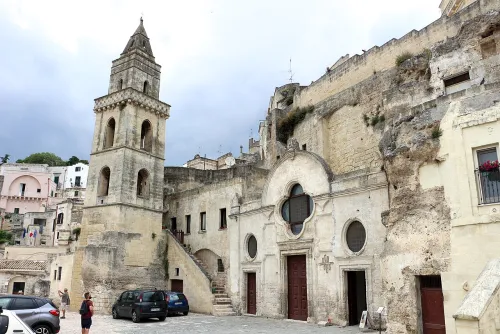
May in Matera
High23°C / 74°F
Low12°C
Rain65mm / 11 rainy days
Sun11.9 h/day
Daylight14 h/day
Humidity65%
Crowds●●●○○Prices●●●○○
May is a sweet spot: warm, dry and uncrowded relative to summer, with highs near 23°C and ideal walking weather. The Murgia plateau still carries spring colour, international visitors begin to increase, and the long days make for relaxed evenings on the Sassi terraces. Brief afternoon thunderstorms are possible on the wetter days, but the limestone is comfortable underfoot most of the month.
The vibe May is the quietly perfect month few people market. No punishing heat, no festival crush, no holiday markup, just a warm city at ease with itself. Evenings are made for aperitivo on a terrace looking over the cave houses, and the alleyways stay calm enough to feel like your own.
Don't miss Long ravine and Murgia walks under mild skies, golden-hour photography from the Belvedere di Murgia Timone, and aperitivo on the Sassi terraces as the stone warms in the evening light. Every rock church and cistern is open with little or no queue.
Crowd drivers Peak shoulder season: warm, dry weather draws more international visitors, but Italian school holidays have not started and no single mass event packs the city, so crowds stay moderate.
In season Matera's signatures peak now: cacioricotta cheese, orecchiette with turnip greens and the prized peperoni cruschi, best chased with an Aglianico del Vulture tasting at a winery near Barile or Rionero, an easy day trip north.
Peak shoulder pricing, 100-150 euros a night, below the summer maximum and warm, dry weather to match.
Events this month
🎨 Art and cultureMatera Mediterranean Capital of Culture 2026 Matera Capitale Mediterranea della Cultura e del Dialogo 2026
Mar 20 – Nov 28
late March to late November
Matera shares the Mediterranean Capital of Culture and Dialogue title with Tetouan in Morocco for the year. The programme spans exhibitions, concerts, residencies, festivals and drone shows, opening at the Teatro Duni in late March and closing on Mediterranean Day in late November.
A one-off designation year that lifts the cultural offering in every season, with events city-wide from late March through late November. Check the programme before booking to catch specific shows.
🍷 Food and wineMatera Earth Market
Jan 1 – Dec 31 ~
one Saturday a month, year-round
A Slow Food-affiliated farmers' market in central Matera bringing local Basilicata producers: peperoni cruschi, cacioricotta, orecchiette, olive oil and Aglianico del Vulture wine. Free to enter.
The best window for an edible souvenir. Check the Slow Food calendar for the exact monthly Saturday and time a visit around it.
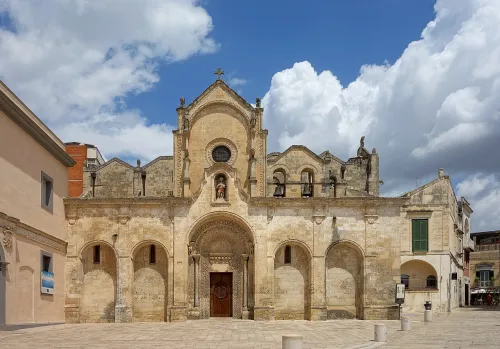
June in Matera
High30°C / 85°F
Low18°C
Rain51mm / 8 rainy days
Sun13.2 h/day
Daylight15 h/day
Humidity56%
Crowds●●●●○Prices●●●●○
June is early summer with the heat building fast, highs near 29°C and the longest days of the year at around 15 hours of light. Italian school holidays start around mid-month, crowds rise significantly, and the pre-Bruna buzz begins toward the end. The first half is still pleasant for walking if you start early or wait for the evening; the second half tips toward the demanding summer pattern.
The vibe June is the tipping point into full summer. The long light evenings are the payoff, with the heat lifting after 18:30 for late walks and dinners outdoors. Come in the first half before the school holidays and the worst heat arrive, and you still get a city that breathes.
Don't miss Walk the Sassi early or in the long evening light, when the heat eases and the blue hour over the cave houses is at its best. The Murgia park trails and Belvedere are still rewarding before the midday sun is harsh; carry water, as shade is scarce in the open Sasso Caveoso lanes.
Crowd drivers Italian school holidays start around 13 June, lifting domestic crowds, and anticipation builds for the Madonna della Bruna on 2 July. The city is noticeably busier than May but short of the July-August peak.
In season Early summer brings lighter Basilicata dishes and aperitivo on the terraces; the Earth Market still runs its monthly Saturday for peperoni cruschi and local cheese.
Heads up Republic Day (2 June) is a national holiday with government offices closed, though tourist sites and the Sassi stay open.
Prices climb to 120-170 euros as summer demand builds and the pre-Bruna buzz starts; still below the July-August maximum.
Events this month
🎨 Art and cultureMatera Mediterranean Capital of Culture 2026 Matera Capitale Mediterranea della Cultura e del Dialogo 2026
Mar 20 – Nov 28
late March to late November
Matera shares the Mediterranean Capital of Culture and Dialogue title with Tetouan in Morocco for the year. The programme spans exhibitions, concerts, residencies, festivals and drone shows, opening at the Teatro Duni in late March and closing on Mediterranean Day in late November.
A one-off designation year that lifts the cultural offering in every season, with events city-wide from late March through late November. Check the programme before booking to catch specific shows.
🍷 Food and wineMatera Earth Market
Jan 1 – Dec 31 ~
one Saturday a month, year-round
A Slow Food-affiliated farmers' market in central Matera bringing local Basilicata producers: peperoni cruschi, cacioricotta, orecchiette, olive oil and Aglianico del Vulture wine. Free to enter.
The best window for an edible souvenir. Check the Slow Food calendar for the exact monthly Saturday and time a visit around it.
July in Matera
High33°C / 92°F
Low20°C
Rain17mm / 4 rainy days
Sun13.8 h/day
Daylight15 h/day
Humidity47%
Crowds●●●●●Prices●●●●●
For the Madonna della Bruna, watch the dawn shepherds' procession and the morning cavalcade of knights, then position near Piazza Vittorio Veneto from 21:00 for the assault on the cart around 22:00 and fireworks at midnight. On any July day, walk the Sassi before 7:30 am while the lanes are deserted, carry at least 1.5 litres of water and wear a hat. The cave interiors of the rock churches and Palombaro Lungo cistern, holding a stable 16 to 18°C, are the natural midday refuge when the open stone reaches punishing temperatures.
The vibe July is full-throttle Matera, defined by heat and the Bruna. The only viable outdoor window is before 9 am and after 18:30; in between, the cave interiors, holding a stable 16-18°C, are your refuge. If you came for the Madonna della Bruna it is unforgettable, otherwise the heat and prices are punishing.
Don't miss For the Madonna della Bruna, watch the dawn shepherds' procession and the morning cavalcade, then position near Piazza Vittorio Veneto from 21:00 for the assault on the cart around 22:00 and fireworks at midnight. On any July day, walk the Sassi before 7:30 am while the lanes are deserted, carry at least 1.5 litres of water and wear a hat. If a pre-booked human guide feels too pricey for the heat, our live in-browser AI guide is the flat-rate alternative that walks you through the Sassi at your own pace, telling the story at each stop and answering your questions, for 5 euros an hour or 20 euros all-in with 100 free credits to start.
Crowd drivers The Madonna della Bruna on 2 July elevates the entire week, drawing Italian and international visitors to the busiest and most expensive days of the year, on top of full Italian summer holidays.
In season Eat in the cool cave trattorias rather than on open terraces at midday, and note that some family-run Sassi restaurants begin their summer break in late July.
The year's priciest stretch: 160-240 euros a night, rising to 220-280 over the Madonna della Bruna week around 2 July.
Events this month
⛪ ReligiousFeast of the Madonna della Bruna Festa della Madonna della Bruna
Jul 2
2 July every year
Matera's 637-year-old patron-saint feast, held since 1389. A 5 am shepherds' procession opens the day, followed by a morning cavalcade of knights, a triumphal papier-mache cart pulled by mules through the Sassi, the ritual assault in which the crowd tears the cart apart once the statue is safe, and midnight fireworks over the Sassi.
The single most important day in Matera's calendar. Book accommodation three to four months ahead, as the week around 2 July is the most expensive of the year and temperatures peak alongside the festival. Come for the authentic event; avoid if you dislike crowds and heat.
🎨 Art and cultureMatera Mediterranean Capital of Culture 2026 Matera Capitale Mediterranea della Cultura e del Dialogo 2026
Mar 20 – Nov 28
late March to late November
Matera shares the Mediterranean Capital of Culture and Dialogue title with Tetouan in Morocco for the year. The programme spans exhibitions, concerts, residencies, festivals and drone shows, opening at the Teatro Duni in late March and closing on Mediterranean Day in late November.
A one-off designation year that lifts the cultural offering in every season, with events city-wide from late March through late November. Check the programme before booking to catch specific shows.
August in Matera
High33°C / 91°F
Low20°C
Rain28mm / 5 rainy days
Sun12.8 h/day
Daylight14 h/day
Humidity53%
Crowds●●●●●Prices●●●●●
August is the single busiest month, driven by Ferragosto on 15 August when all of Italy is on holiday and the Sassi are crammed. Highs near 33°C make the midday heat punishing, and many family-run trattorias in the Sassi close for a 10-14 day break around Ferragosto. The Gezziamoci jazz festival lifts the final week with mostly free outdoor concerts, a welcome cool-evening draw.
The vibe August is Matera at maximum crush and maximum heat. The lanes are packed by mid-morning and the open limestone is brutal by midday, so the rhythm is early starts, long midday breaks in the cave interiors, and life resuming after sunset. Glorious only if you are here for the festivals; otherwise plan around it.
Don't miss Arrive in the Sassi before 8 am to walk the lanes before the heat and masses build, then retreat to the cool rock churches and cisterns at midday. In the evenings, the Gezziamoci jazz festival brings mostly free concerts to the Hotel del Campo garden and Sassi venues; check whether its final nights overlap your dates.
Crowd drivers Ferragosto on 15 August puts the whole country on holiday and packs the Sassi to their annual peak, with accommodation booked out weeks ahead. The late-August Gezziamoci jazz festival adds to the final week.
In season Many Matera-run trattorias and small family restaurants in the Sassi close for 10-14 days around Ferragosto (roughly 12-22 August), so check ahead for the specific place you want; tourist-facing establishments stay open.
Heads up Ferragosto (15 August) brings near-total local commercial closure, with many historic-centre restaurants shut for the week. Tourist sites stay open on reduced hours.
Top-of-the-year pricing: 150-230 euros a night, rising to 200-260 over the Ferragosto week (around 15 August).
Events this month
🇮 HolidayFerragosto
Aug 15
15 August
Italy's national midsummer holiday, when the whole country is on vacation. Shops, offices and many restaurants close, while tourist-facing venues stay open, and the Sassi reach their absolute peak crowding.
An unavoidable crowd spike with accommodation booked out weeks ahead. If you visit in mid-August, arrive before 8 am to walk the Sassi lanes before the heat and masses build.
🎵 MusicGezziamoci Jazz Festival Gezziamoci
Aug 27–31 ~
typically the final week of August
Basilicata's main jazz festival, organised by the Onyx Jazz Club. The closing phase runs four to five nights in Matera, at the Hotel del Campo garden and Sassi venues, mostly free outdoors with some indoor ticketed concerts.
It adds evening programming to an already-hot late August. If you are visiting for Ferragosto, check whether the final jazz nights overlap with your dates and confirm the exact schedule on the Onyx Jazz Club site.
🎨 Art and cultureMatera Mediterranean Capital of Culture 2026 Matera Capitale Mediterranea della Cultura e del Dialogo 2026
Mar 20 – Nov 28
late March to late November
Matera shares the Mediterranean Capital of Culture and Dialogue title with Tetouan in Morocco for the year. The programme spans exhibitions, concerts, residencies, festivals and drone shows, opening at the Teatro Duni in late March and closing on Mediterranean Day in late November.
A one-off designation year that lifts the cultural offering in every season, with events city-wide from late March through late November. Check the programme before booking to catch specific shows.
September in Matera
High27°C / 81°F
Low17°C
Rain42mm / 7 rainy days
Sun10.9 h/day
Daylight12 h/day
Humidity64%
Crowds●●●●○Prices●●●●○
September is still warm at 27-30°C but far more pleasant than the peak, and tourist volumes drop noticeably from mid-month. The Sassi take on golden late-summer light, and the late-September MaTIFF international film festival adds programming in the piazzas. Rain is rare early in the month. This is the start of the long, comfortable autumn shoulder season.
The vibe September feels like Matera exhaling: warm enough for terrace evenings, alive with the cultural-capital programme, but without August's crush or prices. From the middle of the month the lanes loosen up and the light turns golden, making it one of the most rewarding times to walk the Sassi.
Don't miss Golden-hour photography from the Belvedere di Murgia Timone (around 18:00-19:00 this month), comfortable ravine walks, and the MaTIFF film festival screening in piazzas across the Sassi. Materadio adds live talks and concerts under the Mediterranean Capital umbrella; confirm exact dates before booking.
Crowd drivers Crowds fall from mid-September as Italian school holidays end. The MaTIFF film festival and Materadio broadcast festival in late September bring cultural visitors but no mass surge.
In season The grape and autumn-produce season opens, a fine time for an Aglianico del Vulture harvest tasting at a winery near Barile or Rionero, about 90 km north.
Shoulder pricing returns, 110-160 euros a night, as the summer peak unwinds from mid-month.
Events this month
🎬 FilmMaTIFF Matera International Film Festival MaTiFF Matera International Film Festival
Sep 26 – Oct 3 ~
late September into early October
An international film festival with seven competition categories, including animation and advertising spots, screened in piazzas and venues across the Sassi. Competitions are ticketed; some open-air screenings are free.
Late September is already excellent value with comfortable heat, and the festival adds programming while shoulder prices hold around 110-160 euros.
🎨 Art and cultureMateradio (Radio 3 Festival) Materadio
Sep 25–27 ~
late September (verify exact dates)
RAI Radio 3 broadcasts live from Matera for several days, with talks, readings and live concerts in the Sassi, run under the Mediterranean Capital cultural programme.
A low-key but atmospheric event that draws Italian cultural visitors and coincides with comfortable September temperatures. Confirm the exact dates on the official programme before booking.
🎨 Art and cultureMatera Mediterranean Capital of Culture 2026 Matera Capitale Mediterranea della Cultura e del Dialogo 2026
Mar 20 – Nov 28
late March to late November
Matera shares the Mediterranean Capital of Culture and Dialogue title with Tetouan in Morocco for the year. The programme spans exhibitions, concerts, residencies, festivals and drone shows, opening at the Teatro Duni in late March and closing on Mediterranean Day in late November.
A one-off designation year that lifts the cultural offering in every season, with events city-wide from late March through late November. Check the programme before booking to catch specific shows.
October in Matera
High22°C / 72°F
Low13°C
Rain48mm / 8 rainy days
Sun9.0 h/day
Daylight11 h/day
Humidity75%
Crowds●●○○○Prices●●○○○
October is the most underrated month for Matera. Highs near 22°C give comfortable walking temperatures all day, early-month rain is rare, the Murgia plateau takes on autumn colour, and crowds fall sharply after mid-September. There are no queues at the rock churches and hotel rates are back to shoulder levels. The MaTIFF film festival runs into its first days.
The vibe October is the couples' month: cool, golden and quiet, with the gravina rim in autumn colour and golden hour falling at a workable 17:00 to 18:30. You can walk the ravine trails comfortably and have the cave-hotel alleyways nearly to yourself. The best blend of good weather, low crowds and fair prices all year.
Don't miss Walk the Murgia Materana trails when the plateau turns autumn-coloured, and time the Belvedere di Murgia Timone for golden hour around 17:00-18:30. The rock churches and Palombaro Lungo cistern are queue-free, and the comfortable daytime temperatures make a full day in the Sassi genuinely pleasant.
Crowd drivers Crowds are thin after the mid-September drop-off, with only the opening days of MaTIFF and the ongoing cultural-capital programme drawing modest cultural visitors. A low-pressure month.
In season Autumn is prime for Matera's earthy cooking and for Aglianico del Vulture, with harvest tastings at the wineries near Barile and Rionero an easy day trip north.
Shoulder rates fall back to 80-120 euros a night as crowds thin, the underrated value window of the year.
Events this month
🎬 FilmMaTIFF Matera International Film Festival MaTiFF Matera International Film Festival
Sep 26 – Oct 3 ~
late September into early October
An international film festival with seven competition categories, including animation and advertising spots, screened in piazzas and venues across the Sassi. Competitions are ticketed; some open-air screenings are free.
Late September is already excellent value with comfortable heat, and the festival adds programming while shoulder prices hold around 110-160 euros.
🎨 Art and cultureMatera Mediterranean Capital of Culture 2026 Matera Capitale Mediterranea della Cultura e del Dialogo 2026
Mar 20 – Nov 28
late March to late November
Matera shares the Mediterranean Capital of Culture and Dialogue title with Tetouan in Morocco for the year. The programme spans exhibitions, concerts, residencies, festivals and drone shows, opening at the Teatro Duni in late March and closing on Mediterranean Day in late November.
A one-off designation year that lifts the cultural offering in every season, with events city-wide from late March through late November. Check the programme before booking to catch specific shows.
🍷 Food and wineMatera Earth Market
Jan 1 – Dec 31 ~
one Saturday a month, year-round
A Slow Food-affiliated farmers' market in central Matera bringing local Basilicata producers: peperoni cruschi, cacioricotta, orecchiette, olive oil and Aglianico del Vulture wine. Free to enter.
The best window for an edible souvenir. Check the Slow Food calendar for the exact monthly Saturday and time a visit around it.
November in Matera
High17°C / 63°F
Low9°C
Rain83mm / 10 rainy days
Sun7.0 h/day
Daylight10 h/day
Humidity82%
Crowds●●○○○Prices●●○○○
November is quiet and cool, with highs near 17°C and the wettest weather of the year, around 83mm over 10 days, though usually as passing showers. The Matera Film Festival (7-15 November) animates the quietest month with the Sassi as a cinema backdrop and brings a modest visitor spike. The Mediterranean Capital year closes on 28 November with the Mediterranean Day ceremony.
The vibe November is Matera at its most introverted: cool, often grey, and almost touristless, but cheap and calm. The cave hotels are atmospheric, the lanes are empty outside the film-festival week, and a passing shower only adds drama to the limestone. Bring grip footwear, as the polished steps turn slippery when wet.
Don't miss The Matera Film Festival screens international competition films in the Sassi, a unique atmospheric pairing; book early for that week. Otherwise it is an ideal time for the cave interiors and a last look at the cultural-capital programme before it closes with the Mediterranean Day ceremony on 28 November.
Crowd drivers The Matera Film Festival (7-15 November) brings the one real visitor spike of the month. Outside it, cool, damp days keep the city quiet, and the cultural-capital year wraps up on 28 November.
In season Cooler weather brings back hearty Basilicata cooking, and the autumn-harvested peperoni cruschi are everywhere on local menus and at the monthly Earth Market.
Heads up All Saints' Day (1 November) closes shops and some museums, with traditional cemetery visits; the Sassi and outdoor viewpoints stay open.
Near the annual floor, 65-95 euros a night, except the Matera Film Festival week (7-15 November) when rates rise to 80-110.
Events this month
🎬 FilmMatera Film Festival (MFF) Matera Film Festival
Nov 7–15
7-15 November
An international competition festival for feature films, documentaries and shorts, held in the Sassi with the Mediterranean as crossroads of cultures as its theme. Individual screenings are ticketed.
It animates the quietest month, with the Sassi as a unique cinema backdrop and hotel prices still moderate at 80-110 euros. This is the one November week where rates jump 20-30%, so book early if you come for it.
🎨 Art and cultureMatera Mediterranean Capital of Culture 2026 Matera Capitale Mediterranea della Cultura e del Dialogo 2026
Mar 20 – Nov 28
late March to late November
Matera shares the Mediterranean Capital of Culture and Dialogue title with Tetouan in Morocco for the year. The programme spans exhibitions, concerts, residencies, festivals and drone shows, opening at the Teatro Duni in late March and closing on Mediterranean Day in late November.
A one-off designation year that lifts the cultural offering in every season, with events city-wide from late March through late November. Check the programme before booking to catch specific shows.
🍷 Food and wineMatera Earth Market
Jan 1 – Dec 31 ~
one Saturday a month, year-round
A Slow Food-affiliated farmers' market in central Matera bringing local Basilicata producers: peperoni cruschi, cacioricotta, orecchiette, olive oil and Aglianico del Vulture wine. Free to enter.
The best window for an edible souvenir. Check the Slow Food calendar for the exact monthly Saturday and time a visit around it.
December in Matera
High13°C / 55°F
Low5°C
Rain34mm / 6 rainy days
Sun7.2 h/day
Daylight9 h/day
Humidity81%
Crowds●●○○○Prices●●○○○
December is atmospheric and cold, with highs near 13°C, the shortest days of the year (sunrise around 07:20, sunset around 16:30), and frost possible but snow rare. The Presepe Vivente living nativity opens on the first weekend and runs subsequent December weekends, a 1.5 km procession through Sasso Caveoso that is the city's most dramatic winter experience. Visitor numbers stay moderate apart from the Christmas closure on 25-26 December.
The vibe December trades the summer crush for candlelit winter atmosphere. The living nativity threading through the cave churches at night is unforgettable, and the short days mean planning the Sassi walk to catch golden hour on the Civita at dusk. Cold but magical, and far cheaper than summer.
Don't miss Book the Presepe Vivente at least three to four weeks ahead for a December weekend; the living nativity in Sasso Caveoso is Matera's signature winter experience. On other days, plan the Sassi walk for the late golden-hour light on the Civita, and shelter in the warm cave interiors when a shower passes.
Crowd drivers The Presepe Vivente on its December weekends is the main draw and sells out, but overall visitor numbers stay moderate. The Christmas holiday quietens the city further around 25-26 December.
In season Festive Basilicata cooking is at its richest, with cacioricotta, peperoni cruschi and slow stews in warm cave trattorias, no booking trouble outside the Christmas days.
Heads up Immaculate Conception (8 December) closes shops, with a major Cathedral mass limiting tourist access. Christmas Day (25 December) and St Stephen's Day (26 December) shut nearly everything, leaving the Sassi quiet and photogenic.
Moderate rates of 70-100 euros a night, rising to 90-120 on Presepe Vivente weekends, well below the summer peak.
Events this month
🌸 Seasonal natureLiving Nativity in the Sassi Presepe Vivente nei Sassi di Matera
Dec 5–27 ~
December weekends through early January
A 1.5 km living-nativity procession through Sasso Caveoso with 200-plus performers, theatrical companies and biblical scenes set inside cave churches, one of Italy's most atmospheric living nativities. Entry is ticketed and booking is essential.
The most dramatic way to see the Sassi at night. December weekends sell out, so book at least three to four weeks ahead, while hotel rates stay moderate against summer. Confirm the exact dates on the official site, as they are announced in October or November each year.
🍷 Food and wineMatera Earth Market
Jan 1 – Dec 31 ~
one Saturday a month, year-round
A Slow Food-affiliated farmers' market in central Matera bringing local Basilicata producers: peperoni cruschi, cacioricotta, orecchiette, olive oil and Aglianico del Vulture wine. Free to enter.
The best window for an edible souvenir. Check the Slow Food calendar for the exact monthly Saturday and time a visit around it.
Frequently asked questions
What is the best time to visit Matera?
Late April (after Easter), May and October are the best overall. You get comfortable 18-26°C walking weather, mostly dry days, every rock church and cistern open with no queue, hotel rates around 80-150 euros, and Matera's most beautiful light on the amber limestone. April adds wildflowers on the Murgia plateau, while October brings autumn colour on the gravina rim and the thinnest crowds of the year.
What is the cheapest time to visit Matera?
January and February are the cheapest, with 3-star rooms in or just above the Sassi from 55-80 euros a night, roughly half the summer rate. November is nearly as cheap at 65-95 euros, apart from the Matera Film Festival week (7-15 November). The trade for these prices is cooler, shorter and sometimes wet days.
What is the worst time to visit Matera?
Mid-July through mid-August, unless the Madonna della Bruna feast on 2 July is your specific reason to come. Air temperatures hit 33-36°C and the bare limestone of the Sassi radiates far hotter, Ferragosto on 15 August crams every lane, hotels charge 2-3 times the off-season rate, and many family trattorias close for their own August break. The only outdoor windows are before 9 am and after 18:30.
How hot does Matera get in summer?
July and August are punishing. Air temperatures peak at 33-36°C, and because the bare limestone amplifies radiant heat and the narrow lanes act as heat channels, pale-rock surfaces can exceed 50°C in the afternoon. The thick cave walls of hotels, restaurants and rock churches hold a stable 16-18°C, so they are the real relief. Walk the Sassi only before 9 am or after 18:30, and carry at least 1.5 litres of water with a hat.
When is the Festa della Madonna della Bruna in Matera?
It falls on 2 July every year, Matera's 637-year-old patron-saint feast held since 1389. The day opens with a 5 am shepherds' procession and a morning cavalcade of knights, then a triumphal papier-mache cart is pulled through the Sassi and ritually torn apart by the crowd around 22:00 once the statue is safe, with fireworks at midnight. Book accommodation three to four months ahead, as the surrounding week is the most expensive of the year.
Is Matera worth visiting in winter?
Yes, especially in December for the Presepe Vivente, a 1.5 km living nativity with 200-plus performers winding through Sasso Caveoso and its cave churches, the most dramatic way to see the Sassi at night. Winter is cold but rarely severe, with frost possible and snow rare, and the low sun makes the amber stone look extraordinary. Days are short (sunrise around 07:20, sunset around 16:30 in December), and January and February are the cheapest, quietest months of all.
How many days do you need in Matera?
Two full days cover the essentials: a day walking the two Sassi districts with the rock churches, the Palombaro Lungo cistern and Casa Noha's introductory video, and a second for the Cathedral, the MUSMA and Ridola museums, and the Belvedere di Murgia Timone across the gravina for the best panorama. Add a half-day for the guided-only Crypt of Original Sin, 10 km west of the city, if early Christian art interests you.
Do I need special footwear for the Sassi in Matera?
Yes, every day, not only when it rains. Many of the steep stone stairways, such as the Strada Panoramica dei Sassi and the Via Madonna delle Virtu descent, are polished smooth and have no handrail, and the limestone turns dangerously slippery when wet. Smooth-soled sandals cause falls, so solid-grip footwear is essential year-round. This is a genuine safety point, not a generic tip.

Any month, any day: your guide is already there
Whatever date you pick, a private human guide gets pricier and harder to book on weekends, holidays and in peak season. Our live AI guide, the one that walks with you and answers anything you ask out loud, works the opposite way.
One flat price, every day
No holiday, weekend, night or peak-season surcharge. A private guide in Matera runs well over 100 euro for a half day, and more on holidays. Ours stays the same.
Available the moment you want it
Start at midnight or at dawn, on Christmas, in the snow, in the August heat. No sold-out high season, no booking weeks ahead.
Your pace, no meter running
Pause for a long lunch, restart after dark, repeat a stop. The tour simply waits for you.
Free to try, a fraction of the cost
Test it for free, then a transparent flat price that undercuts any private guide, in every season.
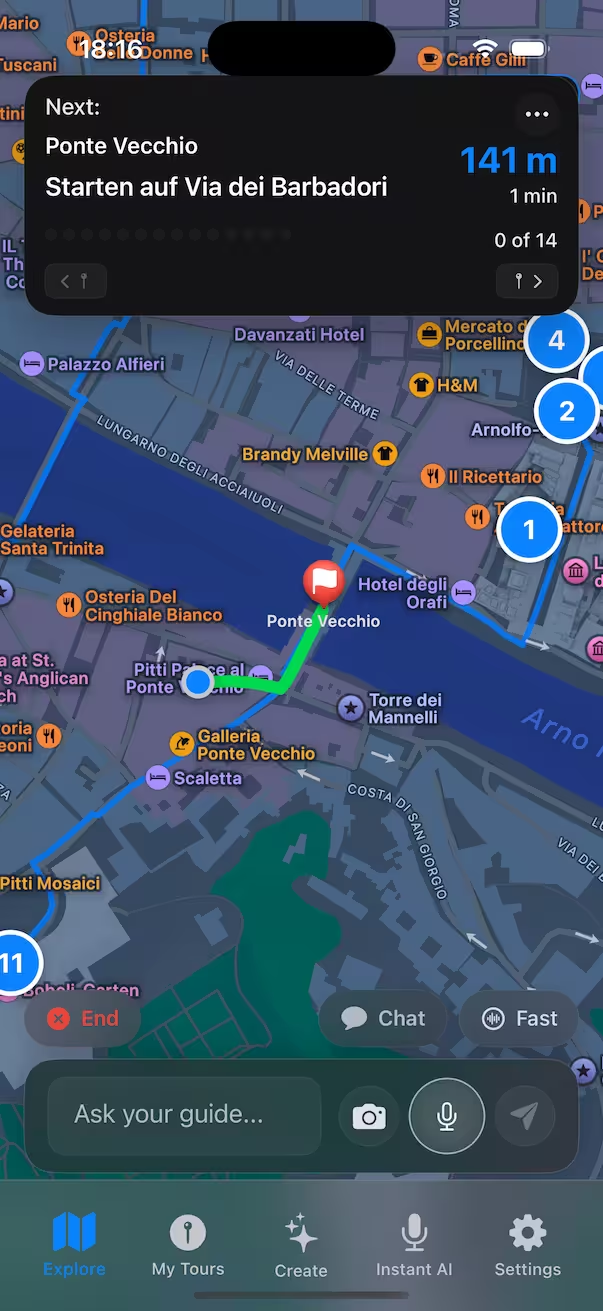
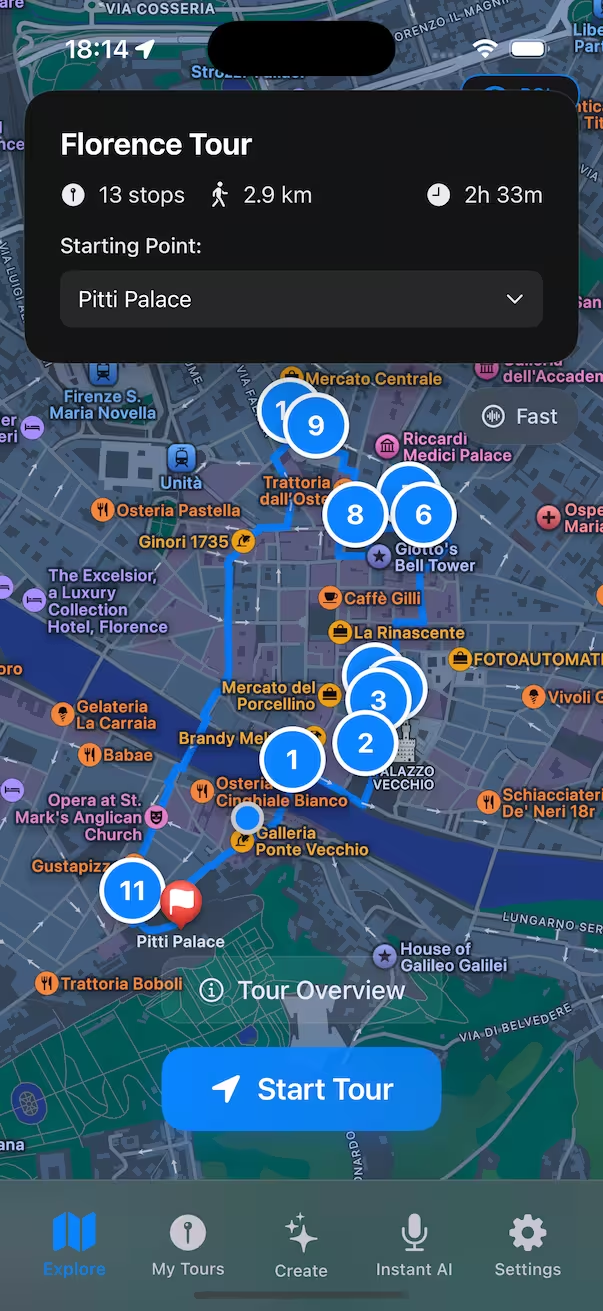
The classic Matera tour: 8 stops, 2.9 km, about 2 h on foot
Your live AI guide and the self-guided Matera route, together in your browser.