Self-Guided Walking Tour in Padua

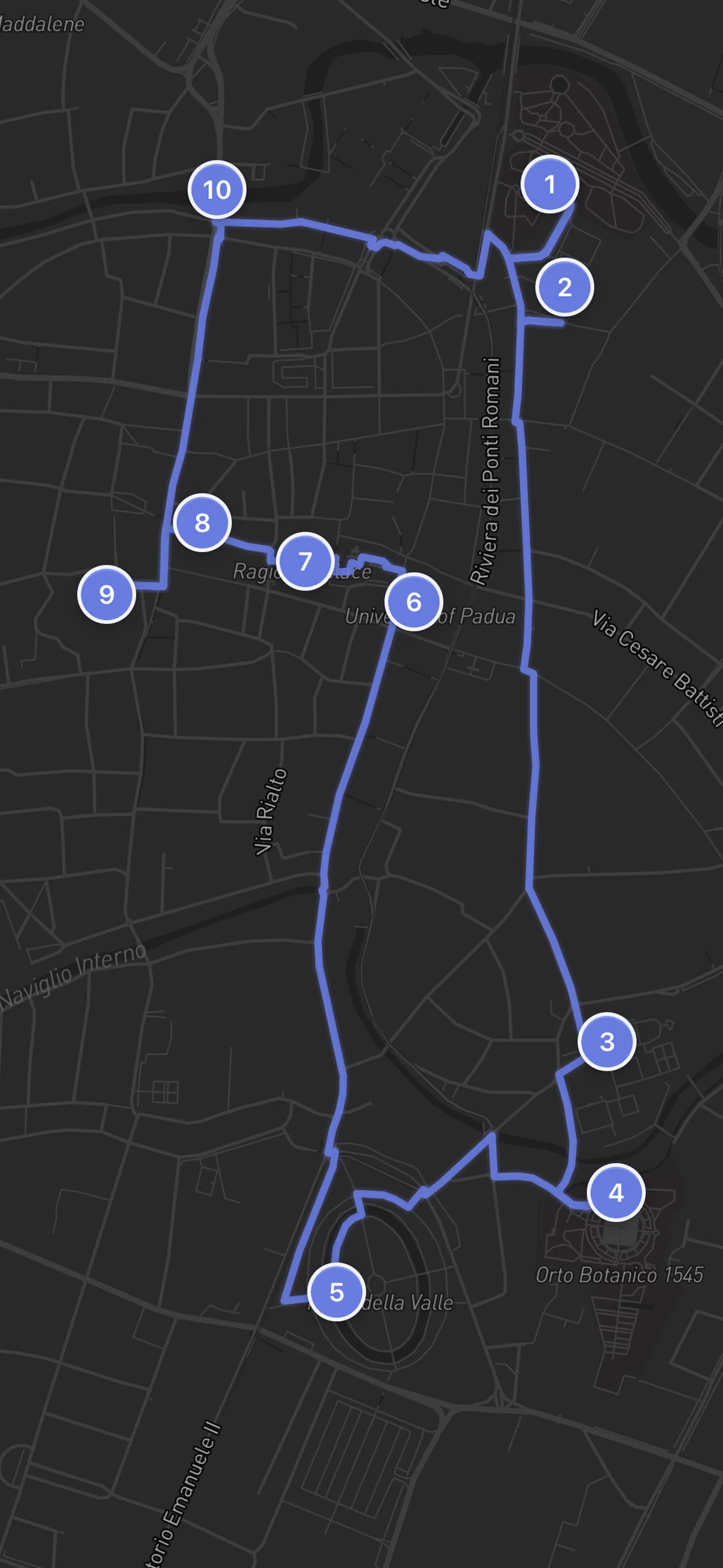
A 5.3 km loop through Padua's old town, from the Scrovegni Chapel in the north down to the Basilica of Saint Anthony and Prato della Valle, then back up through the university and market squares to Ponte Molino. Ten stops. This page gives you the map, per-leg walking times, real prices and opening hours, and shorter versions.

10 Stops5.3 km~3 hours walking4–5 hours with stops
What you get with AI Tourguide
Full GPS navigationInteractive AI guidePersonalized to youWorks in your browser
Try this tour with Alex

Padua Walking Tour at a Glance

This loop is built for someone who wants to walk Padua on their own terms and decide sight by sight what's worth going inside. Ten stops, and every interior is optional. The outdoor route, the churches, the squares, the arcaded streets, costs nothing; the paid frescoes and the university are yours to pick from. Nobody sets your pace, and you skip whatever doesn't grab you.

StartScrovegni Chapel (Cappella degli Scrovegni)
FinishPonte Molino
Route typeA clockwise loop, not a there-and-back. It runs south down the eastern edge, west to Prato della Valle, then back north through the centre to close near where it started, with almost no backtracking.
Realistic timeFour to five hours if you go inside the paid sights, or about two and a half hours sticking to the free churches and squares. The walking alone is roughly 70 minutes across the 5.3 km.
DifficultyEasy and flat the whole way. The ground is cobble and worn stone slabs under the porticoes, slick when wet, so flat comfortable shoes matter more than fitness here.
Cost to followThe route itself is free to walk. Interiors cost extra: the Scrovegni Chapel and the Baptistery are €15 each, Palazzo della Ragione and the botanical garden €10, Palazzo Bo €7. A PadovaCard bundles several.
Best for:

First-time visitors doing Padua as a day trip from Venice who want the UNESCO fresco cycles and the market squares in one flat, walkable arc without a group or a guide.

The Route

Free Walking Tour Map of Padua

10 stops5.3 kmabout 3 hours
Loading the interactive map…The complete walking route will appear here.
Want the route to guide you while you walk?Open the route with navigation and a personal guide for the history, stories and questions that matter to you.
Open route + AI guide

The 10 stops along this route

  1. Scrovegni Chapel (Cappella degli Scrovegni) in Padua, stop 1 on the self-guided walking tour
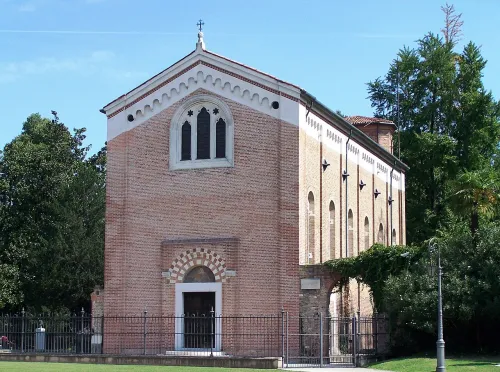
    1Scrovegni Chapel (Cappella degli Scrovegni)
  2. Church of the Eremitani (Chiesa degli Eremitani) in Padua, stop 2 on the self-guided walking tour
    2Church of the Eremitani (Chiesa degli Eremitani)
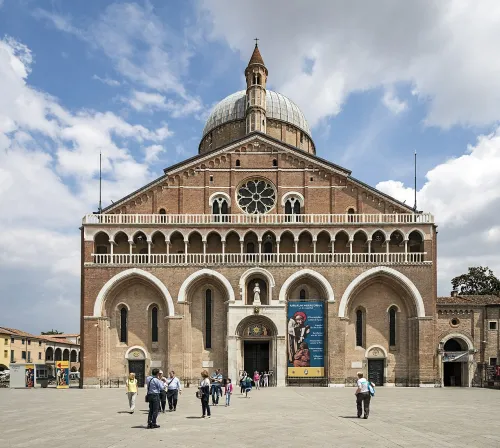
  3. Basilica of Saint Anthony of Padua (Basilica di Sant'Antonio di Padova) in Padua, stop 3 on the self-guided walking tour
    3Basilica of Saint Anthony of Padua (Basilica di Sant'Antonio di Padova)
  4. Padova botanical garden (Orto botanico di Padova) in Padua, stop 4 on the self-guided walking tour
    4Padova botanical garden (Orto botanico di Padova)
  5. Prato della Valle in Padua, stop 5 on the self-guided walking tour
    5Prato della Valle
  6. University of Padua (Palazzo Bo) in Padua, stop 6 on the self-guided walking tour
    6University of Padua (Palazzo Bo)
  7. Palazzo della Ragione in Padua, stop 7 on the self-guided walking tour
    7Palazzo della Ragione
  8. Piazza dei Signori, Padua (Piazza dei Signori) in Padua, stop 8 on the self-guided walking tour
    8Piazza dei Signori, Padua (Piazza dei Signori)
  9. Baptistery of Padua Cathedral in Padua, stop 9 on the self-guided walking tour
    9Baptistery of Padua Cathedral
  10. Ponte Molino in Padua, stop 10 on the self-guided walking tour
    10Ponte Molino
  11. That's the complete route.

    If you want more than the map and text, add live navigation and a conversational AI guide while you walk.

    Open route + AI guide
    You made it
Stop 1 of 10
Swipe →

Your Padua Walking Tour, Stop by Stop

  1. 1

    Scrovegni Chapel (Cappella degli Scrovegni)

    Scrovegni Chapel (Cappella degli Scrovegni) in Padua, stop 1 on the self-guided walking tour

    Start here, and book ahead, because this is the one stop you cannot improvise. From the outside the chapel is a plain brick box in a park, easy to underestimate. Inside, Giotto's 1305 fresco cycle wraps all 700 square metres of wall and that deep blue vault, and it changed Western painting. You get a strict timed slot: a climate-controlled antechamber first, then 15 to 20 minutes inside. That is enough. Tickets are €15 and you must reserve in advance online at cappelladegliscrovegni.it. Hours are 9:00 to 19:00 Monday, 9:00 to 22:00 Tuesday to Sunday, so an evening slot is possible if mornings are full. Go early if you can: low light and a quiet room make the colours read better. The chapel sits inside the Musei Civici complex, so your next stop is 140 metres away across the same garden.
    Hours
    Mon: 9:00 AM – 7:00 PM | Tue-Sun: 9:00 AM – 10:00 PM
    Price
    €15
  2. 2

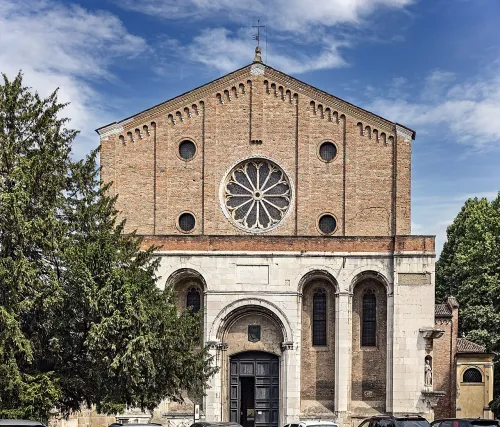
    Church of the Eremitani (Chiesa degli Eremitani)

    Church of the Eremitani (Chiesa degli Eremitani) in Padua, stop 2 on the self-guided walking tour

    Two minutes from the chapel and almost nobody walks over. They should. This big medieval church, begun in 1264, is free and quiet, and it holds the wreckage and the survivors of Andrea Mantegna's early frescoes. An Allied bomb flattened the Ovetari Chapel in 1944, so what you see is partly reassembled fragments, which makes the painting that did survive hit harder. It is on the same UNESCO 14th-century fresco listing as the Scrovegni. Hours are 7:30 to 12:30 and 15:30 to 19:00 on weekdays, with shorter morning and afternoon windows on weekends, so it closes over lunch like most Padua churches. Step inside for the ship's-keel wooden ceiling even if frescoes are not your thing. When you leave, head south down Via Giotto and Via del Santo. It is a straight 12-minute walk toward the dome you will already see ahead.

    Hours
    Mon-Fri: 7:30 AM – 12:30 PM, 3:30 – 7:00 PM | Sat-Sun: 9:00 AM – 12:30 PM, 4:00 – 7:00 PM
    Price
    Free
  3. 3

    Basilica of Saint Anthony of Padua (Basilica di Sant'Antonio di Padova)

    Basilica of Saint Anthony of Padua (Basilica di Sant'Antonio di Padova) in Padua, stop 3 on the self-guided walking tour

    The domes and minaret-like towers tell you where you are long before you arrive. Locals just call it il Santo. This is one of the great pilgrimage churches, over 6.5 million visitors a year come for the tomb of Saint Anthony, and entry is free, daily 6:15 to 19:30. Inside, look for Donatello's bronze reliefs and crucifix on the high altar. In the square out front stands his Gattamelata, the equestrian bronze that restarted the whole tradition of monumental horse statues. Dress code is enforced: shoulders and knees covered, or you get turned away at the door. It can feel more like a moving crowd than a church at midday, so the side chapels are where you find calm. Give it 30 to 40 minutes. From the piazza, walk south about three minutes to the botanical garden entrance.

    Hours
    Daily: 6:15 AM – 7:30 PM
    Price
    Free
  4. 4

    Padova botanical garden (Orto botanico di Padova)

    Padova botanical garden (Orto botanico di Padova) in Padua, stop 4 on the self-guided walking tour

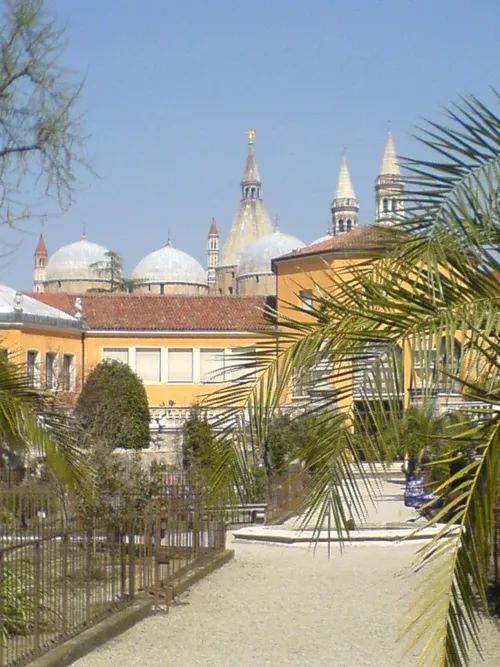
    After the crush inside the basilica, this is the antidote. Founded in 1545, it is the oldest academic botanical garden still on its original site, a UNESCO World Heritage listing since 1997, laid out as a walled circle of geometric beds across 2.2 hectares. The headline plant is a palm from 1585 that Goethe wrote about, now under its own glass house. A modern greenhouse wing covers different climate zones if you want air conditioning on a hot afternoon. Entry is €10, open Tuesday to Sunday 10:00 to 19:00, closed Mondays, so check the day before you commit. It is calm, shaded, and rarely busy, an easy 30 minutes. If gardens bore you, this is the one stop on the loop you can skip without guilt. Otherwise, exit and walk west about five minutes toward the open sky of Prato della Valle.

    Hours
    Mon: Closed | Tue-Sun: 10:00 AM – 7:00 PM
    Price
    €10
  5. 5

    Prato della Valle

    Prato della Valle in Padua, stop 5 on the self-guided walking tour

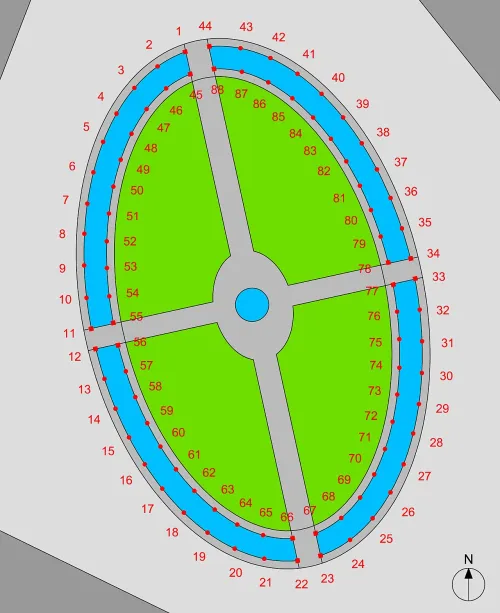
    The street opens and suddenly you are standing at the edge of one of the largest squares in Europe, nearly 90,000 square metres. A central elliptical island, Isola Memmia, sits inside a moat-like canal lined by a double ring of 78 statues of famous Paduans, all facing inward. It is free and open around the clock. Cross one of the four little bridges onto the island and walk the ring; the whole circuit is about 570 metres. Saturday brings a large general market and the third Sunday of the month an antiques market, both worth timing for. This is the natural turning point of the loop, a good place to sit on the grass and eat something. When you are ready, head north up Via Umberto I, a straight 12-minute walk back toward the centre and the university.

    Hours
    Open 24/7
    Price
    Free
  6. 6

    University of Padua (Palazzo Bo)

    University of Padua (Palazzo Bo) in Padua, stop 6 on the self-guided walking tour

    Plain palace front, extraordinary insides. Founded in 1222, this is one of the oldest universities in the world, and Palazzo Bo holds the world's oldest surviving permanent anatomical theatre, a steep wooden funnel from 1594 where students once stood ringed above a dissection table. Galileo taught here, and his lectern is still in the building. You can only see these on a guided tour, tickets €7, generally running 10:00 to 19:00 weekdays and from 9:00 at weekends, but slots fill, so book on the unipd.it site rather than turning up. The tour runs under an hour. If the timing does not line up, the great arcaded courtyard is open to walk through for free and worth a look on its own. From Palazzo Bo, it is a two-minute walk northwest into the market squares.

  7. 7

    Palazzo della Ragione

    Palazzo della Ragione in Padua, stop 7 on the self-guided walking tour

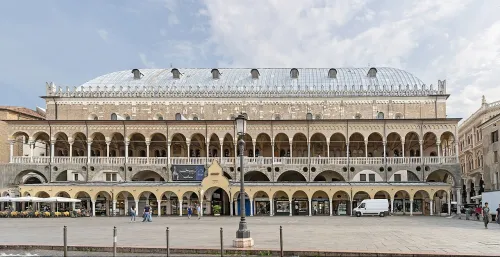
    You hear this stop before you see it: the chatter of Piazza delle Erbe and Piazza della Frutta, the two market squares that wrap around the building. The Palazzo itself is a vast 13th-century law court topped by the Salone, a single hanging hall roughly 80 by 27 metres under a wooden ship's-keel roof, one of the largest unsupported medieval rooms anywhere. Its walls carry a 15th-century astrological fresco cycle, part of the UNESCO listing. The upstairs hall costs €10, open Tuesday to Saturday 9:00 to 19:00, closed Sunday and Monday. The ground floor, Sotto il Salone, is a free covered market of butchers, cheese, and salumi, open Tuesday to Saturday, closed Sunday and Monday: walk through even if you skip upstairs. Buy a panino with porchetta here for a few euros. Then cross about 150 metres west to the next square.

    Hours
    Mon: Closed | Tue-Sat: 9:00 AM – 7:00 PM | Sun: Closed
    Price
    €10
  8. 8

    Piazza dei Signori, Padua (Piazza dei Signori)

    Piazza dei Signori, Padua (Piazza dei Signori) in Padua, stop 8 on the self-guided walking tour

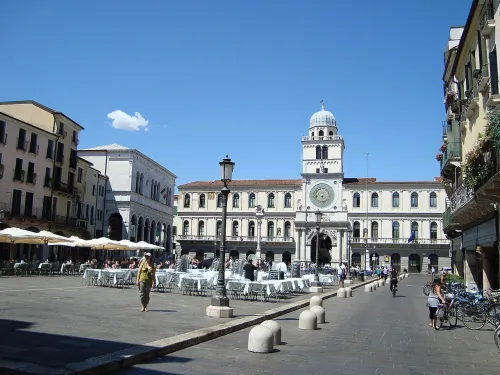
    A different mood from the market chaos you just left. This is the civic square, broader and grander, where Padua once held tournaments and ceremonies. The eye goes straight to the Torre dell'Orologio, the clock tower with one of the oldest astronomical clocks in the world, its face tracking the zodiac and the moon. It is free and always open, so this is a stop to stand in, not tour. The cafes lining the square are pricier than the market stalls a block away; if you want a spritz, you are paying for the view. Late afternoon light hits the tower face well. From here it is a short two-minute walk west toward the cathedral and its baptistery, just behind the square.

    Hours
    Open 24/7
    Price
    Free
  9. 9

    Baptistery of Padua Cathedral

    Baptistery of Padua Cathedral in Padua, stop 9 on the self-guided walking tour

    Small door, overwhelming interior. From the outside this is just a squat brick block next to the plain Duomo, and most visitors walk past it. Step inside and every surface is covered by Giusto de' Menabuoi's 1370s fresco cycle, a domed sky packed with figures that is one of the best-preserved 14th-century interiors in Italy and a key part of Padua's UNESCO listing. It rivals the Scrovegni and gets a fraction of the crowd. Entry is €15, with timed access through kalata.it; hours run roughly 10:30 to 13:00 and 14:00 to 17:30, with a 14:00 start on Mondays, so it closes over lunch. Look up and let your eyes adjust for a minute before you start picking out scenes. Give it 20 minutes. From the Duomo, walk north about five minutes toward the river to close the loop.

  10. 10

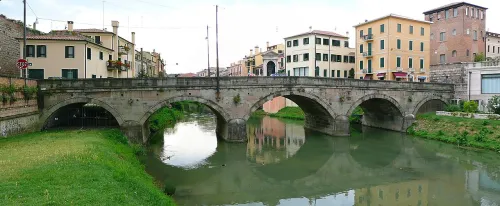
    Ponte Molino

    Ponte Molino in Padua, stop 10 on the self-guided walking tour

    The loop ends at water. This low stone bridge over the Bacchiglione dates to the late Roman republic, which makes it one of the oldest bridges still carrying traffic anywhere, and the stout medieval Porta Molino tower stands guard at its southern end. It marks the historic northern edge of the old town. There is nothing to pay and nothing to queue for, it is open all the time; this is a stop for the view and a breather. Stand on the bridge and look back at the tower and the river running below the old mill houses. From here the Scrovegni Chapel where you started is a five-minute walk east, so if you bought a combined Musei Civici ticket in the morning you can swing back past it. Otherwise this is a quiet place to end the day.

    Hours
    Open 24/7
    Price
    Free

How Long Does This Walking Tour Really Take?

The walking is only about 70 minutes; the sights are what fill the day. Budget four to five hours to go inside the Scrovegni Chapel, the basilica, and the garden, or trim to about two and a half if you keep to the free churches and squares and just look up as you pass.

Budget four to five hours for the full loop if you go inside the paid sights, or about two and a half hours if you stick to the free churches and squares. The walking itself is only about 70 minutes spread across 5.3 km.

The time sinks are the Scrovegni Chapel (a fixed 15 to 20 minute slot plus the antechamber wait), the Basilica of Saint Anthony (30 to 40 minutes), and the botanical garden (30 minutes). Palazzo Bo and the Baptistery each run about 20 to 30 minutes if you go in. The squares need only as long as you want to linger.

Build your break at Prato della Valle, the midpoint: sit on the grass of Isola Memmia, or grab a coffee at one of the bars along the rim. The better food stop is back at Palazzo della Ragione later in the loop, where the Sotto il Salone market sells porchetta panini and cheese to eat standing up, far cheaper than the cafe tables on Piazza dei Signori a block away.

Full Route, Shorter Walk or Two-Day Version?

The full loop is one clean arc, but two stops need timed tickets and the rest are yours to trim. Here are three ways to walk it depending on how much time you have and how much fresco you can absorb in a day.

Short version

Skip the southern legs

Stops 1, 2, then jump to 6 through 10, about 2.5 to 3 hours.

If time is tight, do the Scrovegni Chapel and Eremitani, then head straight into the centre for the university, market squares, and baptistery. You lose the basilica, garden, and Prato della Valle, the two longest legs of the loop, but keep the densest cluster of frescoes and squares.

Two-day split

Break at Prato della Valle

Day one: stops 1 to 5. Day two: stops 6 to 10.

For a slower pace or an art-heavy visit, split the loop at Prato della Valle. Day one covers the northern and eastern half up to the great square; day two picks up at the university and finishes through the squares and cathedral. Half a loop each, plenty of time inside every sight.

You can walk it the other way, from Ponte Molino down to the Scrovegni Chapel, but the given direction is the better plan. It puts the timed-ticket Scrovegni Chapel first thing in the morning when slots are easiest, and saves the market squares and cafe stops for when your feet want a break.

Is This Padua Walking Tour Right for You?

This is a flat, short, well-signposted loop, one of the easiest cities in Italy to do well on your own. Here's who it suits and how to bend it if your day looks different.

A good fit if you…

  • Day-trippers from Venice, 35 minutes by train, who want a full loop that starts a short walk from the station
  • Anyone here for the UNESCO 14th-century fresco cycles, which are the whole reason to come to Padua
  • Walkers who want flat ground and arcaded porticoes that keep most of the route dry in the rain
  • Independent travellers happy to book the two timed-ticket stops themselves and skip a paid guide

Adapt the route if you…

  • You have only half a day: take the short version and drop the basilica, garden, and Prato della Valle
  • You're visiting on a Monday: the botanical garden and Palazzo della Ragione are closed, so lean on the churches and squares
  • Gardens don't interest you: the botanical garden is the one stop you can skip without missing much
  • You want deep art context: pay for a guide once at the Scrovegni Chapel, then walk everything else yourself

Tickets & Skip-the-Line in Padua

Two stops on this loop need timed tickets and the rest are free or pay-at-the-door. Book the Scrovegni Chapel and the Baptistery before you travel; the others you can decide on the day.

Scrovegni Chapel (Cappella degli Scrovegni)€15, timed slot required, reserve in advance online. Open 9:00 to 19:00 Monday and 9:00 to 22:00 Tuesday to Sunday, so an evening slot is possible if mornings are full. Book the first slots for smaller groups.
Basilica of Saint Anthony of Padua (Basilica di Sant'Antonio di Padova)Free, open daily 6:15 to 19:30. No ticket needed, but the dress code is enforced: shoulders and knees covered or you're turned away at the door. official ticket site ↗
Padova botanical garden (Orto botanico di Padova)€10, open Tuesday to Sunday 10:00 to 19:00, closed Mondays. Buy at the entrance; check the day before if you're visiting early in the week. official ticket site ↗
University of Padua (Palazzo Bo)€7, guided tour only, generally 10:00 to 19:00 weekdays and from 9:00 at weekends. Slots fill, so book ahead rather than turning up. The arcaded courtyard is free to walk through if the tour timing doesn't line up.
Palazzo della Ragione€10 for the upstairs Salone, open Tuesday to Saturday 9:00 to 19:00, closed Sunday and Monday. The ground-floor Sotto il Salone market below is free to walk through.
Baptistery of Padua Cathedral€15, timed access. Hours run roughly 10:30 to 13:00 and 14:00 to 17:30, with a 14:00 start on Mondays, so it closes over lunch. Book ahead through the ticketing site. official ticket site ↗
Everything elseThe Church of the Eremitani, Prato della Valle, Piazza dei Signori, and Ponte Molino are all free open spaces with no ticket or booking needed.
Optional upgrade
+6
The same 10-stop route,
now with navigation and a guide.
Optional AI experience

You already have the route.
The AI guide brings it to life.

Standing in front of the Scrovegni Chapel or lost in the market squares around Palazzo della Ragione? Open AI Tourguide in your browser, no app and no download, and a voice guide walks the whole loop with you to the Basilica of Saint Anthony and Prato della Valle, greeting you, telling the story behind each fresco, then asking what you want to see and adapting as you go. A real conversation, not a recording. Start with 100 free credits.

Livenavigation13languagesAnyquestionYourinterests
Open this route with the AI guide

Try it in your browser · No app or download required

Tips for Walking in Padua

  • Arrive by train from Venice (35 min) or Verona; Padova station is a 10-minute walk north of the Scrovegni Chapel, so the loop starts right where you arrive. Book the chapel slot online before you travel, especially for a morning slot.
  • The old town is flat but the ground is cobble and worn stone slabs under the porticoes, slick when wet. Flat comfortable shoes, not heels. The arcades mean you can walk most of the route in rain without getting soaked.
  • Public restrooms are scarce. The cleanest reliable option is inside the Basilica of Saint Anthony complex; otherwise buy a coffee at a bar on Prato della Valle and use theirs.
  • Eat at the Sotto il Salone market under Palazzo della Ragione (Tuesday to Saturday): a porchetta or salumi panino runs a few euros, far better value than sitting down on Piazza dei Signori. Pair it with a spritz, the Veneto's house drink.
  • Best photo is Prato della Valle from one of the four bridges in late afternoon, facing the central island with the statue ring and the green dome of Santa Giustina behind it. Soft side light, no midday glare.

Why Walk This Route?

Padua is built for walking and lousy for almost anything else. The old town is a knot of arcaded streets, market squares, and porticoes you could cross end to end in twenty minutes, which means you spend your day looking up at frescoes instead of waiting for a bus. Most people treat it as a half-day stop on the way to Venice (35 minutes by train) and rush the two famous sights. That is a mistake. The reason Padua got onto the UNESCO list in 2021 is a whole circuit of 14th-century fresco cycles, and this loop strings the best of them together in one continuous arc.

The route runs as a loop from the Scrovegni Chapel in the north, down the eastern edge to the Basilica of Saint Anthony and the botanical garden, across to the giant ellipse of Prato della Valle, then back up through the university, the market squares, and the cathedral baptistery before closing at the river. It is about 5.3 km of flat, mostly arcaded ground, so rain barely touches you.

Why do it this way rather than wander? Two of these stops, the Scrovegni Chapel and the Baptistery, need timed tickets and you have to plan around them. Doing the loop in order puts the chapel first thing in the morning when slots are easiest, and saves the squares and the cafe stops for when your feet need it. Skip the wandering. This sequence works.

Common Questions

Is Padua safe to walk around?

Yes, very. Padua is a calm university city and the whole walking loop is in the safe historic centre. Normal city sense applies around the train station at night and watch for pickpockets in the crowded basilica and on busy market mornings. There are no notable tourist scams; the main annoyance is street vendors near the basilica. Padua is far quieter and lower-pressure than nearby Venice.

What if it rains during my Padua tour?

Padua is one of the better Italian cities for rain because so much of the centre runs under arcaded porticoes, so you can walk most of this route mostly dry. The paid indoor stops also make natural shelters: the Scrovegni Chapel, the Basilica of Saint Anthony, the Baptistery, the upstairs Salone of Palazzo della Ragione, and the botanical garden's greenhouses all keep you under cover. Just mind the slick stone underfoot.

What's the best time of day for this walking tour?

Start by 9:00. Booking the Scrovegni Chapel for the first slots of the day means smaller groups and softer light, and it gets the one fixed-time ticket out of the way early. Doing the loop in the morning also lets you hit the Sotto il Salone market and the Palazzo della Ragione before their lunchtime and Monday closures. Aim to reach Prato della Valle and Piazza dei Signori in the late afternoon, when the low light is best for photos.

Take this route with you

Open this exact tour with navigation and your personal AI guide.

Start GPS Navigation + AI Guide
AI Tourguide
Researched and curated by the AI Tourguide teamWe plan and quality-check every route, then research and verify the opening hours, prices, and practical tips for each stop along it.
▶ Open route with AI guideNavigation, stories and your questions