Best Time to Visit Alicante
Month-by-month weather, crowds and prices, plus a full calendar of festivals and events worth planning a trip around.
Best monthsMay, Sep, Oct
CheapestJan, Nov
AvoidAug
BusiestJul, Aug
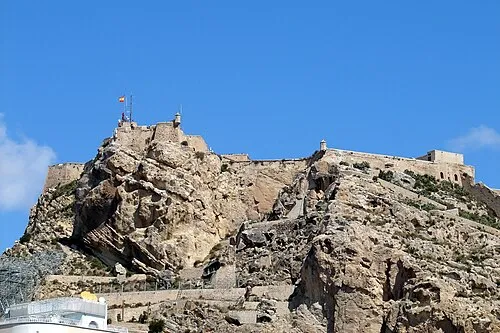
When is the best time to visit Alicante?
Come in May, September or October: 23-27°C, a sea still warm enough to swim, half-empty beaches and hotel rates well below the July peak. Skip August, when highs hit 36°C, the Postiguet fills by 9 am and many local restaurants close for two weeks. January is the cheapest, quietest month.
Start our tool and find your best time to visit Alicante
Your perfect month
Free · ~30 seconds
or tap a month directly
What matters to you?
And this?
Best overall: May, Sep. May and September are the real sweet spot: 23-27°C, a swimmable sea (19-23°C), relaxed restaurants and no need to reserve anything. May throws in Cruces de Mayo, September gives you golden light on the castle and emptier sand the moment the school holidays end.
Best value: Oct. October is the quiet local secret: the sea holds around 21°C and stays swimmable into mid-month, beaches are nearly deserted, and hotels run 40-50% below August while every sight stays open. Tabarca ferry tickets are walk-up easy.
Avoid: Aug. August: 36°C afternoons with no shade on the castle rock, the Postiguet packed by 9 am, hotels at their yearly maximum, and many family-run restaurants shut for a fortnight. The worst value and the least authentic month of the year.
- January: Great time, 16°C. Forget any image of a buzzing beach town. January is Alicante stripped back to a working Spanish provincial city in winter sun, slow, cheap and honest. You will not swim, but you will have the Castillo de Santa Bárbara almost to yourself and pay winter rates for a coast that costs a fortune in August.
- February: Great time, 17°C. February feels like a secret. The light is sharp and clean, the Explanada palms cast long winter shadows, and the only real buzz is the Carnival's Entierro de la Sardina on the 18th, the one night you see locals genuinely let loose. No tourist markup, no queues, just a real city enjoying its mildest winter.
- March: Great time, 18°C. March is the last genuinely quiet month before the festival season takes hold. Cafe terraces are reopening, the markets fill with spring produce, and you can still walk into any restaurant on a Saturday without a booking. That window shuts the moment Semana Santa arrives, so use it.
- April: Great time, 20°C. April is gorgeous spring weather wrapped around two intense religious events. Outside the Holy Week and Santa Faz spikes, it is calm and excellent value; during them, the old town is packed and the pilgrimage shuts roads. Time your visit between the two and you get the best of the season without the crush.
- May: Great time, 23°C. May is the genuine sweet spot, warm enough for the beach, quiet enough to feel like a local secret, and cheap enough that it is the best value-to-weather month of the year. Tables are spontaneous, the castle climb is comfortable, and the city has not yet flipped into its summer crush.
- June: Good time, 27°C. Early June is a dream: warm sea, long evenings, beaches not yet rammed. Then Hogueras week detonates and the city becomes one enormous, sleepless, gunpowder-scented party. If you want the festival, embrace the chaos and book months ahead. If you want calm, come in the first two weeks instead.
- July: Tough month, 30°C. July is for people who want guaranteed heat, a warm sea and a buzzing beach scene and do not mind paying the year's top prices for it. Midday is a write-off under the shadeless sun, so live the city's rhythm: beach and sights early, siesta, then come alive again after 6 pm when the Explanada fills.
- August: Tough month, 30°C. This is not romantic, empty Alicante. It is survival-mode Alicante: 36°C heat with no shade on the castle, the Postiguet full by 9 am, peak prices everywhere, and many of the best local restaurants shuttered for their own summer break. Come only if a guaranteed-hot beach holiday is all you want, and do everything before 10 am.
- September: Good time, 28°C. September gives you August's warm sea without August's chaos. By the second half of the month the 9 am beach scramble is over, restaurants relax, and the light turns golden on the castle in the evenings. This is the connoisseur's Alicante: summer warmth, autumn calm, and the locals back in their own city.
- October: Great time, 24°C. October is the best-kept secret on the calendar. German long-stayers know it; British package tourists mostly do not. You get warm enough sea, empty sand, relaxed restaurants and hotels 40-50% cheaper than August. If you want summer's leftovers without summer's prices or crowds, this is your month.
- November: Great time, 20°C. November is bare-bones, honest Alicante. No crowds, no markup, no beach scene, just a mild Mediterranean city going about its business in low-season calm. If you want the castle, the museums and the old town to yourself at the lowest prices of the year, this is the month, weather permitting.
- December: Great time, 17°C. December is the city's quiet pleasure: a warm-for-winter Christmas market under palm trees, no real cold, and none of the crush of central European festive crowds. The atmosphere is there, the prices are reasonable until Christmas week, and a 17°C December stroll feels like a small luxury.
Alicante weather by month
HighLowRainfall
Jan16°
Feb17°
Mar18°
Apr20°
May23°
Jun27°
Jul30°
Aug30°
Sep28°
Oct24°
Nov20°
Dec17°
| Month | Temp | Rain | Sun | Crowds | Prices | Highlight |
|---|---|---|---|---|---|---|
| Jan | 16° / 8° | 33mm · 3 rainy days | 8.6 h/day | ●○○○○ | ●○○○○ | Three Kings' Parade |
| Feb | 17° / 9° | 13mm · 3 rainy days | 9.3 h/day | ●●○○○ | ●○○○○ | Alicante Carnival |
| Mar | 18° / 11° | 58mm · 7 rainy days | 10.0 h/day | ●●○○○ | ●●○○○ | Holy Week |
| Apr | 20° / 13° | 39mm · 6 rainy days | 10.8 h/day | ●●●○○ | ●●○○○ | Holy Week |
| May | 23° / 16° | 28mm · 4 rainy days | 12.8 h/day | ●●●○○ | ●●○○○ | Crosses of May |
| Jun | 27° / 20° | 17mm · 2 rainy days | 13.4 h/day | ●●●●○ | ●●●●○ | Museum Night |
| Jul | 30° / 23° | 3mm · 1 rainy days | 13.7 h/day | ●●●●● | ●●●●● | San Gabriel Festival |
| Aug | 30° / 24° | 14mm · 3 rainy days | 12.5 h/day | ●●●●● | ●●●●● | Virgen del Remedio Festivities |
| Sep | 28° / 21° | 49mm · 7 rainy days | 10.9 h/day | ●●●○○ | ●●●○○ | Moors and Christians, Villena |
| Oct | 24° / 17° | 36mm · 6 rainy days | 9.6 h/day | ●●○○○ | ●●○○○ | Day of the Valencian Community |
| Nov | 20° / 12° | 35mm · 5 rainy days | 8.6 h/day | ●○○○○ | ●○○○○ | |
| Dec | 17° / 10° | 22mm · 3 rainy days | 8.1 h/day | ●●○○○ | ●●○○○ | Christmas Markets |
How we score this: weather = long-run climate normals (Open-Meteo), crowds & prices = relative season read, events checked yearly against official dates.
Best time to visit Alicante: weather, prices & crowds
Best months for good weather
May, Jun, Sep
May, June and September give Alicante its kindest weather: 23-27°C daytime highs, almost no rain, and evenings long enough to eat outside on the Explanada de España well past sunset.
Quietest months to avoid the crowds
Jan, Nov
January and November empty the beaches out almost completely; outside the British and German retirees who winter here, the Playa del Postiguet and the Castillo de Santa Bárbara are practically yours.
Cheapest time to visit Alicante
Jan, Nov
January and November are the cheapest months: mid-range hotels from around 50 euros a night, roughly 60% below the August peak, and backpacker hostels in the Casco Antiguo from 15 euros.
Best time for festivals and events
Jun
The Hogueras de San Juan (20-24 June) is the city's biggest festival, with monumental papier-mache figures, a daily 2 pm mascleta firecracker barrage at Plaza de los Luceros, and La Cremà burning the lot to the ground on the night of the 24th.
How many days do you need in Alicante?
Two days is the sweet spot for Alicante. The city pairs a compact, walkable old town with a long stretch of city beach, so you want enough time for both the sights and the slow Mediterranean rhythm without feeling rushed. A third or fourth day only pays off if you want to add the ferry to Tabarca or a trip inland.
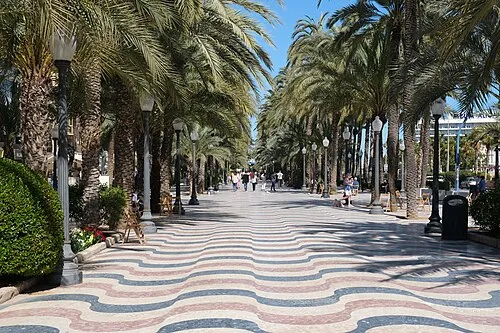
One day
Castle, old town and the seafront
One day gives you the whole shape of the city. Climb or ride the lift up Monte Benacantil to the Castillo de Santa Bárbara for the sweeping view over the bay, then wind down through the colourful lanes of the Barrio de Santa Cruz. Finish along the palm-lined Explanada de España to the marina, with a tapas stop in the Casco Antiguo. It is a tight, walkable loop you can cover comfortably on foot in an afternoon.
Two daysRecommended
Add the beach and the museums
With a second day you slow down and split your time between coast and culture. Spend the morning on the broad Playa del Postiguet, then dig into history at the MARQ archaeology museum or contemporary art at the MACA, both a short walk from the centre. The two days together let a relaxed self-guided walk through Alicante breathe, the castle and Santa Cruz on one day, sand and seafood rice in the port on the next. Aim for May, September or October, when the sea is still warm but the summer crowds have thinned.
Three days
A day trip to Tabarca
A third day is for the sea. Take the ferry out to the tiny island of Tabarca for a long lunch of octopus and rice, a swim in the marine reserve, and a wander round the walled village. Go midweek and outside July and August, when the crossing is reliable and the island caps at around 1,000 day-trippers rather than 3,000-plus. Back on the mainland, the evening is yours for sundowners on the Explanada.
Four days or more
Head inland and along the coast
Four to five days lets you reach beyond the city. Take the train to Villena or Alcoy for their grand Moros y Cristianos festivals, ride the tram up the coast to Villajoyosa with its painted houses and chocolate factories, or head inland to the dramatic mountain village of Guadalest. At this pace Alicante becomes a base rather than a stop, and you can build in slow beach mornings between the excursions.
Best time to visit Alicante by traveller type
Same city, different trip. Here's the month that fits how you're travelling.
🧭
Best time to visit Alicante for the first time
MayOct
May or October: perfect 22-26°C temperatures, beaches you can actually find a spot on, a sea still warm enough for a dip, and every sight from the castle to MARQ open without a queue.
❤️
Best time to visit Alicante for couples
SepOct
September or October for warm evenings, a sea still near 23°C, golden light raking the Castillo de Santa Bárbara, and sundowner drinks along the Explanada without fighting for a table.
💶
Best time to visit Alicante on a budget
JanNov
January or November for the lowest rates of the year, free entry to the Castillo on Monday mornings, and MARQ free on the first Sunday of the month.
🍝
Best time to visit Alicante for food and wine
SepOct
September and October are octopus and rice season on Tabarca, the best months for Denia red prawns (gambas rojas), and the Monastrell grape harvest in the Alicante DOP hinterland.
Worst time to visit Alicante
August is the month to skip. Afternoon highs hit 36°C with no shade on the Castillo rock, and occasional Saharan Kalima winds push it to 38 to 40°C plus dust. The Playa del Postiguet fills by 9 am, hotels sit at their yearly maximum matching or exceeding July, and many family-run restaurants close for two weeks in a Ferragosto-style lull. You pay peak prices for the hottest, most crowded and least authentic version of the city.
Still worth it for It still works if a guaranteed-hot beach holiday is all you want and you do everything before 10 am, treating midday as siesta and beach time. Authentic local festivals like the Virgen del Remedio and San Roque do break through the heat for those who time it right.
Go instead in May, September, October, when Alicante is at its best.
Alicante events and festivals calendar
Annual highlights worth timing a trip around, listed month by month.
January
🎉 FestivalThree Kings' Parade Cabalgata de Reyes Magos
Jan 5
evening of 5 January
A grand evening procession of the Three Kings through the city centre on 5 January, throwing sweets and gifts to the crowd ahead of Epiphany morning.
🎉 FestivalPorrate de San Anton Porrate de Sant Antoni
Jan 16–25
mid to late January
A traditional neighbourhood fair around the San Anton church, with market stalls, music and folk food, honouring the patron saint of animals.
February
More in February →March
⛪ ReligiousHoly Week Semana Santa de Alicante
Mar 29 – Apr 5 ~
the week before Easter
28 processions by 27 brotherhoods through the old town, with the finest on Palm Sunday (11:30) and Good Friday (10:30) and an Aleluyas climax in Plaza del Ayuntamiento on Easter Sunday at noon.
April
⛪ ReligiousSanta Faz Pilgrimage Romeria de la Santa Faz
Apr 16 ~
the Thursday after Easter
Around 300,000 pilgrims walk 8 km from the Concatedral de San Nicolas to the Santa Faz monastery, carrying rosemary and sharing mistela and bread rolls.
🎉 FestivalMoors and Christians, Alcoy Moros y Cristianos de Alcoy
Apr 25–27
late April
Spain's most famous Moors and Christians festival, staged in Alcoy 60 km north, with lavish costumes and reenacted battles, combinable as a day trip.
🎨 Art and cultureCrosses of May Cruces de Mayo
Apr 30 – May 3
around the start of May
The Barrio de Santa Cruz decks its lanes with flower crosses, hosting concerts, games, a communal breakfast and a closing firework.
May
🎵 MusicSpring Festival
May 29–30
late May
A two-day indie and pop festival at the Multiespacio Rabasa, with a lineup of major Spanish acts and tickets from around 27 euros.
June
🎉 FestivalBonfires of Saint John Hogueras de San Juan
Jun 20–24
around the summer solstice, 20-24 June
Alicante's biggest festival: monumental papier-mache figures across the city, a daily 2 pm mascleta at Plaza de los Luceros (18-24 June), parades, and La Cremà burning everything on the night of 24-25 June.
🌙 Museum nightMuseum Night Noche en Blanco
Jun 21
a Friday in late June
Every major museum, including MARQ, MACA, MUBAG and Las Cigarreras, opens free until midnight with special tours, concerts and workshops.
💡 LightsFireworks Competition Concurs de Fogueres
Jun 25–29
late June, just after Hogueras
Nightly midnight fireworks displays over the Playa del Postiguet, staged in the days right after La Cremà.
July
🎉 FestivalSan Gabriel Festival Fiestas de San Gabriel
Jul 22–26
late July
A lively neighbourhood festival in the San Gabriel district, with street parties, music and local food in the heart of high season.
🎉 FestivalMoors and Christians, Villajoyosa Moros y Cristianos de Villajoyosa
Jul 24–31
late July
A spectacular reenactment of the Moorish-Christian battles in the coastal town 32 km north, highlighted by a staged sea invasion on 24 July.
August
⛪ ReligiousVirgen del Remedio Festivities Fiestas Virgen del Remedio
Aug 3–5
early August
City festivities honouring Alicante's patron saint, with processions, fireworks and a mass in the heart of peak summer.
🎉 FestivalSan Roque Festival Fiestas de San Roque
Aug 13–16
mid-August
A traditional festival in the Casco Antiguo around Assumption Day, with street celebrations, music and local devotion.
September
🎉 FestivalMoors and Christians, Villena Moros y Cristianos de Villena
Sep 4–9
early September
One of the province's most important festivals, staged in Villena 40 km inland and easily reached by train.
October
🇮 HolidayDay of the Valencian Community Dia de la Comunitat Valenciana
Oct 9
9 October
The regional holiday of the Valencian Community, marked by official acts and local celebration; offices and many businesses close.
December
More in December →Insider tips for visiting Alicante
The rules buried in forums, in one place.
- Climb the Castillo de Santa Bárbara on foot by 8:30 am in July and August, before the heat and before the lift queue builds. The lift (3.75 euros) opens with the main gate, but after 11 am the rock is in brutal full sun with no shade at the top.
- In peak summer the city beach, Playa del Postiguet, is full by 9 am. Playa de la Albufereta, 2 km north on bus L21, runs 30-40% emptier with a mountain backdrop; at weekends head to the much wider Playa de San Juan, 8 km out.
- For the Tabarca island ferry in July and August, buy tickets online at least three days ahead, they sell out. Far better: go in May, June or September, when the crossing is guaranteed and the island caps at around 1,000 day-trippers instead of 3,000-plus. Midweek beats weekends.
- MARQ archaeology museum is free on the first Sunday of the month, but show up by 9:45 am; the trick is well known in local Facebook groups and a queue forms for special exhibitions. MARQ and MACA both close on Mondays, and MARQ only opens until 2 pm on Sundays.
- At the Hogueras mascleta (18-24 June, 2 pm, Plaza de los Luceros), bring earplugs (it hits 130 dB) and take your spot 30 minutes early. The moment it ends, duck into a side street, the main square stays blocked for about 15 minutes.
- On the Romeria de la Santa Faz (16 April), city buses on the pilgrimage route stop running from 8 am and taxis dry up. Park outside the centre the night before, or take RENFE from the main station, to reach the Santa Faz monastery 8 km out.
- Many local bodegas and tapas bars keep siesta hours: open 1 to 3:30 pm, shut 3:30 to 7, then 7 to 11 pm. If you want to eat around 4:30 pm, you are limited to the tourist restaurants on the Explanada or a supermarket.
- Castillo de Santa Bárbara is free to climb on Monday mornings and has no weekly closing day, but it shuts on 1 and 6 January, 24 June and 25 December. Hours are seasonal: 9 am to 8 pm April-September, 9 am to 6 pm October-March.
Public holidays in Alicante
On these dates many shops and offices close, transport thins out, and sights can be mobbed or shut. Plan around them.
| Date | Holiday | What closes |
|---|---|---|
| Jan 1 | New Year's Day | Everything closed, including the Castillo de Santa Bárbara. A quiet day citywide; tourist-zone bars may open late. |
| Jan 6 | Epiphany (Three Kings) | National holiday: shops and the Castillo closed. The Three Kings' Parade the evening before (5 Jan) showers sweets on a packed city centre. |
| Apr 3 | Good Friday | Holy Week processions fill the old town; most shops closed, churches packed. The best processions run on Palm Sunday and Good Friday morning. |
| Apr 16 | Romeria de la Santa Faz | Local Alicante holiday: 300,000 pilgrims walk 8 km to the Santa Faz monastery. Traffic on the pilgrimage route is closed from 8 am and buses stop running. |
| May 1 | Labour Day | National holiday: most shops and offices closed. Beaches and the Explanada stay busy with locals. |
| Jun 24 | Saint John (Hogueras) | Regional holiday at the climax of the Hogueras festival: the Castillo closes, public transport runs reduced, and the Postiguet beach area is fully cordoned for La Cremà. |
| Aug 15 | Assumption Day | National holiday in peak season. Everything official closes; the Virgen del Remedio city festival (3-5 Aug) and many local restaurants on summer break add to the disrupted rhythm. |
| Oct 9 | Day of the Valencian Community | Regional holiday: government offices and many businesses closed. A local celebration, but no major crowd impact for visitors. |
| Nov 1 | All Saints' Day | National holiday: shops closed in one of the quietest months of the year. A still, reflective day in the city. |
| Dec 25 | Christmas Day | The Castillo closes and many restaurants shut. The Plaza del Ayuntamiento Christmas market keeps the centre festive through to 6 January. |
Alicante month by month
January in Alicante
High16°C / 61°F
Low8°C
Rain33mm / 3 rainy days
Sun8.6 h/day
Daylight10 h/day
Humidity64%
Crowds●○○○○Prices●○○○○
January is Alicante at its emptiest and cheapest. Daytime highs sit around a mild 16°C under reliably bright skies (8.6 hours of sun), but the sea is a cold 14°C and the beaches belong to dog-walkers and the British and German retirees who winter on the Costa Blanca. Evenings need a jacket. This is the quietest the city ever gets, with the castle and museums close to deserted.
The vibe Forget any image of a buzzing beach town. January is Alicante stripped back to a working Spanish provincial city in winter sun, slow, cheap and honest. You will not swim, but you will have the Castillo de Santa Bárbara almost to yourself and pay winter rates for a coast that costs a fortune in August.
Don't miss Climb the Castillo de Santa Bárbara free on a Monday morning with the city laid out clear below, and catch the Three Kings' Parade on the evening of 5 January, when costumed magi throw sweets to families along the centre.
Crowd drivers Deepest off-season; mostly expats and retirees, no school holidays once Epiphany passes on 6 January.
Heads up 1 and 6 January are national holidays: the Castillo and most shops close, transport runs a reduced timetable.
Year's lowest prices; mid-range hotels from ~50 euros, roughly 60% below August.
Events this month
🎉 FestivalThree Kings' Parade Cabalgata de Reyes Magos
Jan 5
evening of 5 January
A grand evening procession of the Three Kings through the city centre on 5 January, throwing sweets and gifts to the crowd ahead of Epiphany morning.
The magical Spanish kick-off to gift-giving, far bigger here than Christmas Eve and a delight for families.
🎉 FestivalPorrate de San Anton Porrate de Sant Antoni
Jan 16–25
mid to late January
A traditional neighbourhood fair around the San Anton church, with market stalls, music and folk food, honouring the patron saint of animals.
The most authentic winter festival in the city and entirely free of tourist crowds.
February in Alicante
High17°C / 62°F
Low9°C
Rain13mm / 3 rainy days
Sun9.3 h/day
Daylight11 h/day
Humidity64%
Crowds●●○○○Prices●○○○○
February is the driest month on the calendar (just 13mm of rain) and noticeably bright, with highs near 17°C and almond blossom already opening in the inland villages. The sea stays a chilly 14°C, so this is sightseeing-and-tapas weather, not beach weather. Carnival takes over the second half of the month with parades and correfocs, but crowds stay low and prices near their yearly floor.
The vibe February feels like a secret. The light is sharp and clean, the Explanada palms cast long winter shadows, and the only real buzz is the Carnival's Entierro de la Sardina on the 18th, the one night you see locals genuinely let loose. No tourist markup, no queues, just a real city enjoying its mildest winter.
Don't miss Catch the Carnival's Entierro de la Sardina on the night of 18 February (20:30), a mock funeral procession that closes the festivities. For nature, the almond and mimosa blossom peaks this month in the Vall de Guadalest, 50 km inland.
Crowd drivers Carnival (12-22 Feb) draws short-break visitors at weekends; otherwise no school holidays and very quiet.
In season Almond blossom season inland signals the start of the year's nut and citrus harvests at the Mercado Central.
Still bargain low season; Carnival weekends nudge hotel rates up slightly.
Events this month
🎭 CarnivalAlicante Carnival Carnaval de Alicante
Feb 12–22 ~
February, before Lent
Ten days of parades, costumes and correfocs (fire-runs), peaking with the Sabado Ramblero and the Entierro de la Sardina on 18 February at 20:30.
A cheap, entirely free fun weekend and the one time you see locals truly cut loose; do not miss the sardine burial.

March in Alicante
High18°C / 65°F
Low11°C
Rain58mm / 7 rainy days
Sun10.0 h/day
Daylight12 h/day
Humidity63%
Crowds●●○○○Prices●●○○○
March wakes the coast up. Highs climb to 18°C and the jacaranda starts greening along Avenida Alfonso X el Sabio, though this is also the wettest stretch of spring with around 7 rainy days and 58mm, usually as short, sharp showers rather than all-day rain. The sea is still too cold to swim at 15°C. Crowds stay light unless an early Semana Santa pulls the first big wave of the year.
The vibe March is the last genuinely quiet month before the festival season takes hold. Cafe terraces are reopening, the markets fill with spring produce, and you can still walk into any restaurant on a Saturday without a booking. That window shuts the moment Semana Santa arrives, so use it.
Don't miss If Holy Week falls late, the old-town processions begin; otherwise this is prime hiking-and-sightseeing month before the heat. Jacaranda greens along Avenida Alfonso X el Sabio ahead of its April-May bloom.
Crowd drivers British half-term and an early Semana Santa (late March in 2026) send the first crowds; otherwise calm.
No real price spike; hostels from 20 euros. Rates jump only if Semana Santa falls late in the month.
Events this month
⛪ ReligiousHoly Week Semana Santa de Alicante
Mar 29 – Apr 5 ~
the week before Easter
28 processions by 27 brotherhoods through the old town, with the finest on Palm Sunday (11:30) and Good Friday (10:30) and an Aleluyas climax in Plaza del Ayuntamiento on Easter Sunday at noon.
One of Spain's most striking Holy Weeks, with the Rambla as its main stage and free to watch from the street.
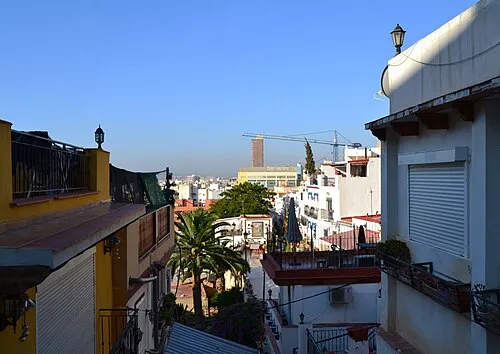
April in Alicante
High20°C / 68°F
Low13°C
Rain39mm / 6 rainy days
Sun10.8 h/day
Daylight13 h/day
Humidity64%
Crowds●●●○○Prices●●○○○
April is warm, green and busy in bursts. Highs reach a comfortable 20°C and the jacaranda blooms purple along Avenida Alfonso X el Sabio, but the sea is still a cool 17°C, swimmable only for the hardy. Two big events stack up: Semana Santa runs 29 March to 5 April with 28 processions, then the Romeria de la Santa Faz on 16 April draws 300,000 pilgrims and closes the city's traffic from 8 am.
The vibe April is gorgeous spring weather wrapped around two intense religious events. Outside the Holy Week and Santa Faz spikes, it is calm and excellent value; during them, the old town is packed and the pilgrimage shuts roads. Time your visit between the two and you get the best of the season without the crush.
Don't miss Walk the Romeria de la Santa Faz on 16 April, 8 km of pilgrims carrying rosemary out to the monastery, one of Spain's biggest pilgrimages. Jacaranda and bougainvillea bloom across the Barrio de Santa Cruz.
Crowd drivers Semana Santa (29 Mar-5 Apr), the 300,000-pilgrim Santa Faz romeria (16 Apr), and British/Dutch spring holidays.
Hotels 30-40% dearer in Holy Week itself; outside it, good value at ~90 euros mid-range.
Events this month
⛪ ReligiousHoly Week Semana Santa de Alicante
Mar 29 – Apr 5 ~
the week before Easter
28 processions by 27 brotherhoods through the old town, with the finest on Palm Sunday (11:30) and Good Friday (10:30) and an Aleluyas climax in Plaza del Ayuntamiento on Easter Sunday at noon.
One of Spain's most striking Holy Weeks, with the Rambla as its main stage and free to watch from the street.
⛪ ReligiousSanta Faz Pilgrimage Romeria de la Santa Faz
Apr 16 ~
the Thursday after Easter
Around 300,000 pilgrims walk 8 km from the Concatedral de San Nicolas to the Santa Faz monastery, carrying rosemary and sharing mistela and bread rolls.
Spain's second-largest pilgrimage and a unique folk spectacle; the city's traffic closes from 8 am for it.
🎉 FestivalMoors and Christians, Alcoy Moros y Cristianos de Alcoy
Apr 25–27
late April
Spain's most famous Moors and Christians festival, staged in Alcoy 60 km north, with lavish costumes and reenacted battles, combinable as a day trip.
The benchmark of the whole Moros y Cristianos tradition, worth the inland trip for the spectacle alone.

May in Alicante
High23°C / 74°F
Low16°C
Rain28mm / 4 rainy days
Sun12.8 h/day
Daylight14 h/day
Humidity63%
Crowds●●●○○Prices●●○○○
May is, for many, the best month of all. Highs hit a near-perfect 23°C, rainfall drops to 28mm, and you get almost 13 hours of sun a day. The sea warms to around 19°C, cool but swimmable for some. The German and British school holidays have not started, so beaches stay relaxed, and the bougainvillea is in full colour through the Barrio de Santa Cruz.
The vibe May is the genuine sweet spot, warm enough for the beach, quiet enough to feel like a local secret, and cheap enough that it is the best value-to-weather month of the year. Tables are spontaneous, the castle climb is comfortable, and the city has not yet flipped into its summer crush.
Don't miss Wander the flower-cross-decked lanes of the Barrio de Santa Cruz during Cruces de Mayo (30 Apr-3 May), the city's most photogenic and least touristy spring festival, then catch the indie-pop Spring Festival on 29-30 May.
Crowd drivers No school holidays yet; only the local Cruces de Mayo and Spring Festival create small, manageable peaks.
Best value-to-weather ratio of the year; mid-range hotels around 100 euros.
Events this month
🎨 Art and cultureCrosses of May Cruces de Mayo
Apr 30 – May 3
around the start of May
The Barrio de Santa Cruz decks its lanes with flower crosses, hosting concerts, games, a communal breakfast and a closing firework.
The most photogenic and least touristy spring festival, set in the prettiest corner of the old town.
🎵 MusicSpring Festival
May 29–30
late May
A two-day indie and pop festival at the Multiespacio Rabasa, with a lineup of major Spanish acts and tickets from around 27 euros.
Alicante's only big pop-music festival, and it sells out about two weeks ahead, so book early.
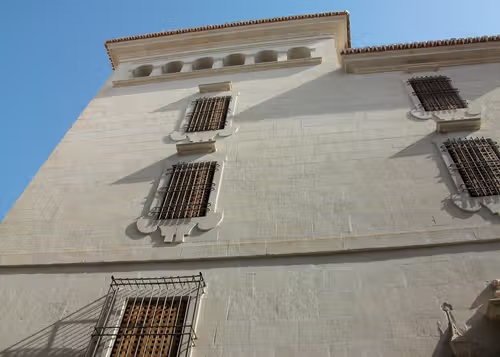
June in Alicante
High27°C / 81°F
Low20°C
Rain17mm / 2 rainy days
Sun13.4 h/day
Daylight15 h/day
Humidity62%
Crowds●●●●○Prices●●●●○
June opens the real Alicante summer. Highs reach 27°C, rain all but vanishes (17mm over two days), and the sea hits a properly swimmable 22°C. Daylight peaks near 15 hours around the solstice. The city's biggest festival, the Hogueras de San Juan, dominates 20-24 June with giant figures, daily mascletas and the fire-and-fireworks climax of La Cremà on the night of the 24th.
The vibe Early June is a dream: warm sea, long evenings, beaches not yet rammed. Then Hogueras week detonates and the city becomes one enormous, sleepless, gunpowder-scented party. If you want the festival, embrace the chaos and book months ahead. If you want calm, come in the first two weeks instead.
Don't miss Stand for the 2 pm mascleta at Plaza de los Luceros (18-24 June) and the La Cremà burning on the night of the 24th, then the midnight fireworks competition over the Postiguet (25-29 June). On 21 June, Noche en Blanco opens every major museum free until midnight.
Crowd drivers Hogueras de San Juan (20-24 Jun) sells out every hotel; British and Dutch school holidays begin.
Rates climb sharply; Hogueras week (20-24 Jun) pushes central hotels to ~250 euros, book 8 weeks ahead.
Events this month
🎉 FestivalBonfires of Saint John Hogueras de San Juan
Jun 20–24
around the summer solstice, 20-24 June
Alicante's biggest festival: monumental papier-mache figures across the city, a daily 2 pm mascleta at Plaza de los Luceros (18-24 June), parades, and La Cremà burning everything on the night of 24-25 June.
The defining event of the city's year; book hotels weeks ahead, and the mascleta's wall of sound is a sensory experience like no other.
🌙 Museum nightMuseum Night Noche en Blanco
Jun 21
a Friday in late June
Every major museum, including MARQ, MACA, MUBAG and Las Cigarreras, opens free until midnight with special tours, concerts and workshops.
The only night of the year you can see all the city's museums free and late, and it falls right before Hogueras.
💡 LightsFireworks Competition Concurs de Fogueres
Jun 25–29
late June, just after Hogueras
Nightly midnight fireworks displays over the Playa del Postiguet, staged in the days right after La Cremà.
The perfect afterglow to Hogueras, with all the spectacle but none of the festival crush.

July in Alicante
High30°C / 86°F
Low23°C
Rain3mm / 1 rainy days
Sun13.7 h/day
Daylight14 h/day
Humidity64%
Crowds●●●●●Prices●●●●●
July is peak season at full volume. Highs hold at 30°C, often pushing 34-36°C in the afternoon, and it is the driest month of the year with under 3mm of rain. The sea is a warm 25°C and the Playa del Postiguet fills from 9 am. School holidays across Britain and Germany overlap, restaurants need booking two weeks ahead, and the Tabarca ferry sells out.
The vibe July is for people who want guaranteed heat, a warm sea and a buzzing beach scene and do not mind paying the year's top prices for it. Midday is a write-off under the shadeless sun, so live the city's rhythm: beach and sights early, siesta, then come alive again after 6 pm when the Explanada fills.
Don't miss This is prime beach and sea-temperature month: swim, take the early ferry to Tabarca, and consider a bus up to Villajoyosa for its spectacular Moors and Christians festival (24-31 July), with a staged sea invasion on the 24th.
Crowd drivers British and German school holidays overlap; the year's densest tourist month and the priciest.
Heads up Sightseeing only works early and late; the Castillo rock is brutal after 11 am with no shade.
Year's highest prices: mid-range averages ~191 euros, budget hotels from ~104 euros.
Events this month
🎉 FestivalMoors and Christians, Villajoyosa Moros y Cristianos de Villajoyosa
Jul 24–31
late July
A spectacular reenactment of the Moorish-Christian battles in the coastal town 32 km north, highlighted by a staged sea invasion on 24 July.
The best coastal Moros y Cristianos, easily reached by bus, with a sea landing you will not see anywhere else.
🎉 FestivalSan Gabriel Festival Fiestas de San Gabriel
Jul 22–26
late July
A lively neighbourhood festival in the San Gabriel district, with street parties, music and local food in the heart of high season.
An authentic, locals-first celebration that cuts through the touristy July beach scene.
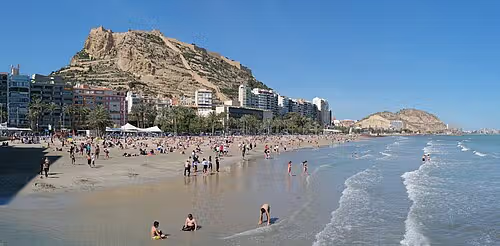
August in Alicante
High30°C / 86°F
Low24°C
Rain14mm / 3 rainy days
Sun12.5 h/day
Daylight14 h/day
Humidity66%
Crowds●●●●●Prices●●●●●
August is the hottest and most crowded month, the one to avoid. Highs sit at 30°C and regularly spike to 36°C, with occasional Saharan Kalima winds pushing it to 38-40°C plus dust. The sea peaks at a bath-warm 26°C. Spanish domestic holidaymakers join the international crowd, and in a Ferragosto-style lull many family-run restaurants and shops shut for two weeks, thinning out the authentic local life.
The vibe This is not romantic, empty Alicante. It is survival-mode Alicante: 36°C heat with no shade on the castle, the Postiguet full by 9 am, peak prices everywhere, and many of the best local restaurants shuttered for their own summer break. Come only if a guaranteed-hot beach holiday is all you want, and do everything before 10 am.
Don't miss Authentic local festivals do break through the heat: the Fiestas Virgen del Remedio honour the city's patron (3-5 Aug), and the Fiestas de San Roque liven the Casco Antiguo (13-16 Aug). Otherwise it is beach-and-shade survival.
Crowd drivers Peak international season plus Spanish domestic holidays; Assumption Day (15 Aug) is a national holiday.
Heads up Many family restaurants close for two weeks, especially in the second half of August; midday sightseeing is off the table.
Prices match or exceed July; the worst value of the year.
Events this month
⛪ ReligiousVirgen del Remedio Festivities Fiestas Virgen del Remedio
Aug 3–5
early August
City festivities honouring Alicante's patron saint, with processions, fireworks and a mass in the heart of peak summer.
An authentic local festival that breaks through the height of the August tourist season.
🎉 FestivalSan Roque Festival Fiestas de San Roque
Aug 13–16
mid-August
A traditional festival in the Casco Antiguo around Assumption Day, with street celebrations, music and local devotion.
Brings the old town to life with genuine local festivity right at the August peak.

September in Alicante
High28°C / 82°F
Low21°C
Rain49mm / 7 rainy days
Sun10.9 h/day
Daylight12 h/day
Humidity68%
Crowds●●●○○Prices●●●○○
September is the best all-round month. The heat eases to a comfortable 27°C, the sea is still a gloriously warm 23-24°C, and once the German and British school holidays end mid-month the beaches empty out. Rain creeps back (49mm), but mostly as brief, intense showers. Locals return from their own holidays, so the city feels lived-in again rather than overrun.
The vibe September gives you August's warm sea without August's chaos. By the second half of the month the 9 am beach scramble is over, restaurants relax, and the light turns golden on the castle in the evenings. This is the connoisseur's Alicante: summer warmth, autumn calm, and the locals back in their own city.
Don't miss Take the easy day trip inland to the Moros y Cristianos in Villena (4-9 Sep), one of the province's great festivals, reachable by train. The sea is still warm enough for relaxed swimming and uncrowded Tabarca crossings.
Crowd drivers School holidays end mid-month and crowds drop fast; only the inland Villena Moros y Cristianos pulls day-trippers.
In season Octopus and rice season starts on Tabarca; Denia red prawns hit their best quality as the autumn harvest begins.
Prices drop 25-30% from August; mid-range around 130 euros.
Events this month
🎉 FestivalMoors and Christians, Villena Moros y Cristianos de Villena
Sep 4–9
early September
One of the province's most important festivals, staged in Villena 40 km inland and easily reached by train.
An ideal excursion in calm September, and one of the grandest Moros y Cristianos in the region.
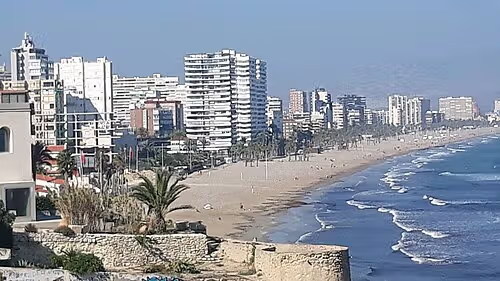
October in Alicante
High24°C / 76°F
Low17°C
Rain36mm / 6 rainy days
Sun9.6 h/day
Daylight11 h/day
Humidity68%
Crowds●●○○○Prices●●○○○
October is the quiet local secret, what residents call the second summer. Highs stay a pleasant 24°C, the sea holds near 21°C and stays swimmable into mid-month, and the beaches are all but deserted. This is also the rainier end of the year, with the odd intense gota fria downpour possible, but mostly it is mild, golden and gloriously calm, with hotels at their cheapest swimmable-sea rates.
The vibe October is the best-kept secret on the calendar. German long-stayers know it; British package tourists mostly do not. You get warm enough sea, empty sand, relaxed restaurants and hotels 40-50% cheaper than August. If you want summer's leftovers without summer's prices or crowds, this is your month.
Don't miss This is the ideal month for a calm Tabarca day trip and unhurried sea swims into mid-October. The Day of the Valencian Community on 9 October brings a low-key local celebration.
Crowd drivers No major events and no school holidays; one of the calmest, best-value months of the year.
In season Peak octopus and autumn-rice season; the Monastrell grape harvest fills the Alicante DOP hinterland.
Best budget month: hotels from ~70 euros, 40-50% below the August peak.
Events this month
🇮 HolidayDay of the Valencian Community Dia de la Comunitat Valenciana
Oct 9
9 October
The regional holiday of the Valencian Community, marked by official acts and local celebration; offices and many businesses close.
A low-key chance to see local civic tradition in the calmest, best-value month of the year.

November in Alicante
High20°C / 68°F
Low12°C
Rain35mm / 5 rainy days
Sun8.6 h/day
Daylight10 h/day
Humidity65%
Crowds●○○○○Prices●○○○○
November is the deep off-season alongside January. Highs ease to a still-mild 20°C, but the sea has cooled past swimming at 19°C and the beaches stand empty. Rain is moderate (35mm). This is the cheapest, quietest stretch of the year, ideal for sightseeing, hiking and tapas without a single queue, as long as you have come for the city rather than the sea.
The vibe November is bare-bones, honest Alicante. No crowds, no markup, no beach scene, just a mild Mediterranean city going about its business in low-season calm. If you want the castle, the museums and the old town to yourself at the lowest prices of the year, this is the month, weather permitting.
Don't miss With the beaches empty, this is pure sightseeing-and-tapas season: the Castillo, MARQ and the Barrio de Santa Cruz without a queue, and inland hikes in comfortable cool air.
Crowd drivers Lowest season alongside January; All Saints' Day (1 Nov) closes shops but draws no tourist crowds.
Cheapest autumn month; backpacker hostels from ~15 euros.

December in Alicante
High17°C / 63°F
Low10°C
Rain22mm / 3 rainy days
Sun8.1 h/day
Daylight10 h/day
Humidity68%
Crowds●●○○○Prices●●○○○
December is mild and atmospheric. Highs hold around 17°C, far gentler than central Europe, and while the sea is a cold 16°C, the Christmas market on Plaza del Ayuntamiento runs from 1 December and gives the centre a festive glow. Crowds stay modest outside the Christmas and New Year peak, when prices spike and the city fills for the holidays.
The vibe December is the city's quiet pleasure: a warm-for-winter Christmas market under palm trees, no real cold, and none of the crush of central European festive crowds. The atmosphere is there, the prices are reasonable until Christmas week, and a 17°C December stroll feels like a small luxury.
Don't miss Stroll the Christmas market on Plaza del Ayuntamiento and the book market on Paseo Federico Soto (10-15 and 17-23 daily), see the life-size nativity, then catch the Three Kings' Parade on 5 January closing the season.
Crowd drivers Quiet until the 24-31 Dec Christmas-and-New-Year peak fills hotels and the centre.
Heads up The Castillo closes on 24, 25 and 31 December; some restaurants shut over the holidays.
Moderate rates except 24-31 Dec, when hotels can run up to 50% dearer for Christmas and New Year.
Events this month
🎄 Christmas marketChristmas Markets Mercados Navidenos
Dec 1 – Jan 6
December to Epiphany
The main market on Plaza del Ayuntamiento plus a book market on Paseo Federico Soto (10-15 and 17-23 daily), with a life-size nativity scene and a Christmas funfair.
Mild 17°C temperatures make Alicante's Christmas market far more pleasant than its central European counterparts.
🎉 FestivalThree Kings' Parade Cabalgata de Reyes Magos
Jan 5
evening of 5 January
A grand evening procession of the Three Kings through the city centre on 5 January, throwing sweets and gifts to the crowd ahead of Epiphany morning.
The magical Spanish kick-off to gift-giving, far bigger here than Christmas Eve and a delight for families.
Frequently asked questions
What is the best time to visit Alicante?
May, September and October are the best months overall. You get 23-27°C, a sea still warm enough to swim (19-23°C), relaxed restaurants and hotel rates well below the July-August peak. May adds the Cruces de Mayo festival; September empties the beaches once school holidays end; October is the cheapest of the three.
What is the cheapest month to visit Alicante?
January and November are the cheapest, with mid-range hotels from around 50 euros a night, roughly 60% below August, and hostels from 15 euros. The trade-off is a cold sea (14-19°C) and no beach weather. For the cheapest month that still has a swimmable sea, choose October, 40-50% below the August peak.
When is it too hot in Alicante?
July and August are the hottest, with highs of 30°C regularly spiking to 34-36°C and occasional Saharan Kalima winds pushing it to 38-40°C. There is no shade on the Castillo rock after 11 am. If you visit in summer, do your sightseeing before 10 am and after 6 pm, and treat midday as beach or siesta time.
When can you swim in the sea in Alicante?
Comfortable swimming runs from June to October, when the sea is at least 20°C. It peaks around 26°C in August and 23-24°C in September, and stays swimmable into mid-October near 21°C. May is borderline at 19°C. From December to April the water is a cold 14-18°C, for the hardy only.
What is the worst time to visit Alicante?
August is the month to avoid. Afternoons hit 36°C, the Playa del Postiguet fills by 9 am, hotels sit at their yearly maximum, and many family-run restaurants close for two weeks in a Ferragosto-style lull. You pay peak prices for the hottest, most crowded and least authentic version of the city.
Is Alicante worth visiting in winter?
Yes, if you come for the city rather than the beach. December highs of 17°C are far milder than central Europe, and the Christmas market on Plaza del Ayuntamiento runs from 1 December. January and February are the quietest and cheapest months, ideal for the Castillo, MARQ and tapas, but the sea is too cold to swim.
When is the Hogueras de San Juan festival in Alicante?
The Hogueras de San Juan runs 20-24 June, the city's biggest festival. Expect monumental papier-mache figures, a daily 2 pm mascleta firecracker barrage at Plaza de los Luceros (18-24 June), and the La Cremà burning on the night of 24-25 June. Hotels in the centre book out up to eight weeks ahead, so plan early.
How many days do you need in Alicante?
Two to three days cover the city itself: the Castillo de Santa Bárbara, the Barrio de Santa Cruz, the Explanada de España, the MARQ museum and the Postiguet beach. Add a day for the ferry to Tabarca island, and another for an inland trip such as Villajoyosa or the Vall de Guadalest, and four to five days is ideal.
When is the best time to visit Tabarca island from Alicante?
May, June and September are the sweet spot for Tabarca: the crossing is reliable and the island caps at around 1,000 day-trippers rather than 3,000-plus in August. Go midweek for the quietest experience. In July and August buy ferry tickets online at least three days ahead, as they sell out.

Any month, any day: your guide is already there
Whatever date you pick, a private human guide gets pricier and harder to book on weekends, holidays and in peak season. Our live AI guide, the one that walks with you and answers anything you ask out loud, works the opposite way.
One flat price, every day
No holiday, weekend, night or peak-season surcharge. A private guide in Alicante runs well over 100 euro for a half day, and more on holidays. Ours stays the same.
Available the moment you want it
Start at midnight or at dawn, on Christmas, in the snow, in the August heat. No sold-out high season, no booking weeks ahead.
Your pace, no meter running
Pause for a long lunch, restart after dark, repeat a stop. The tour simply waits for you.
Free to try, a fraction of the cost
Test it for free, then a transparent flat price that undercuts any private guide, in every season.
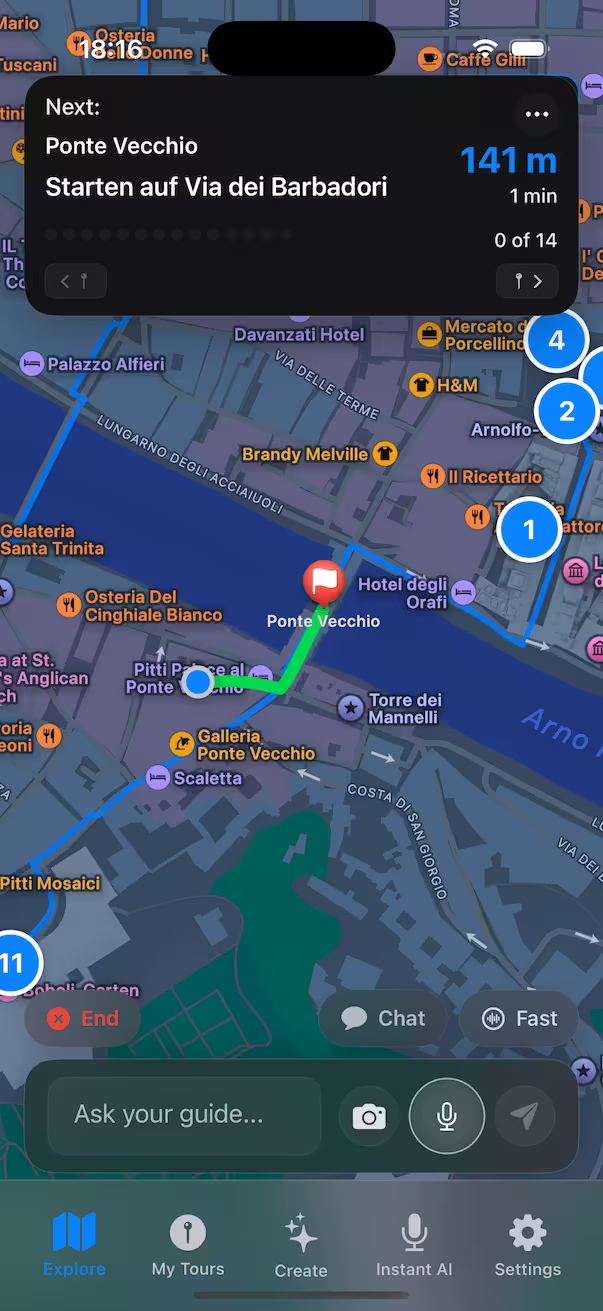
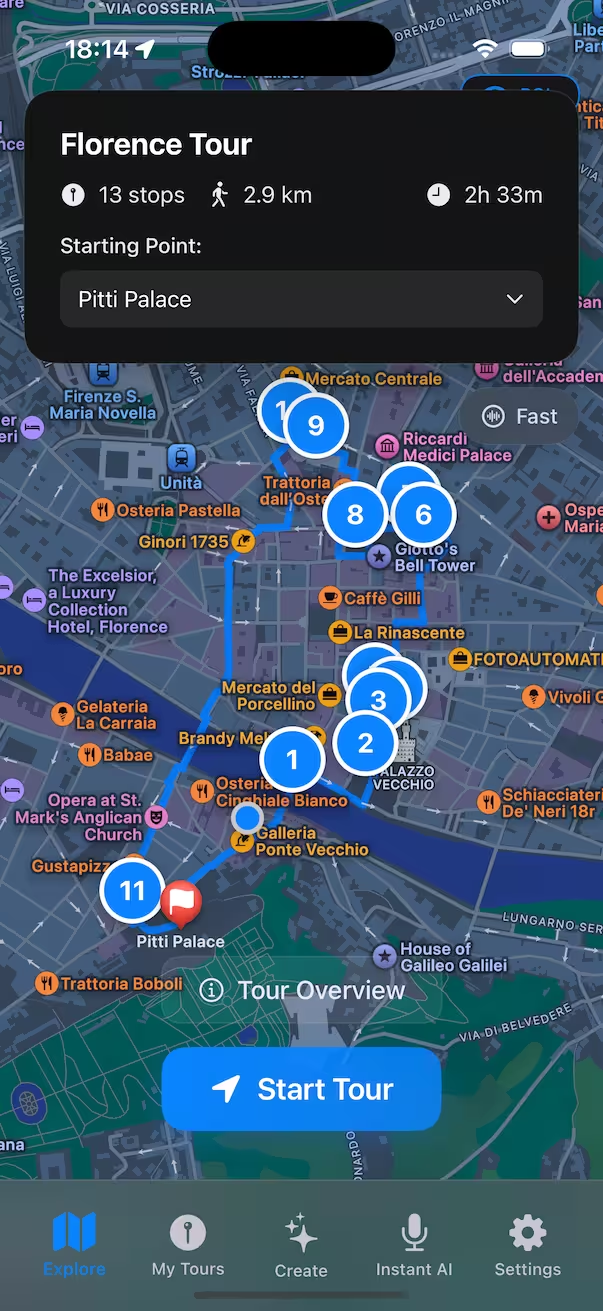
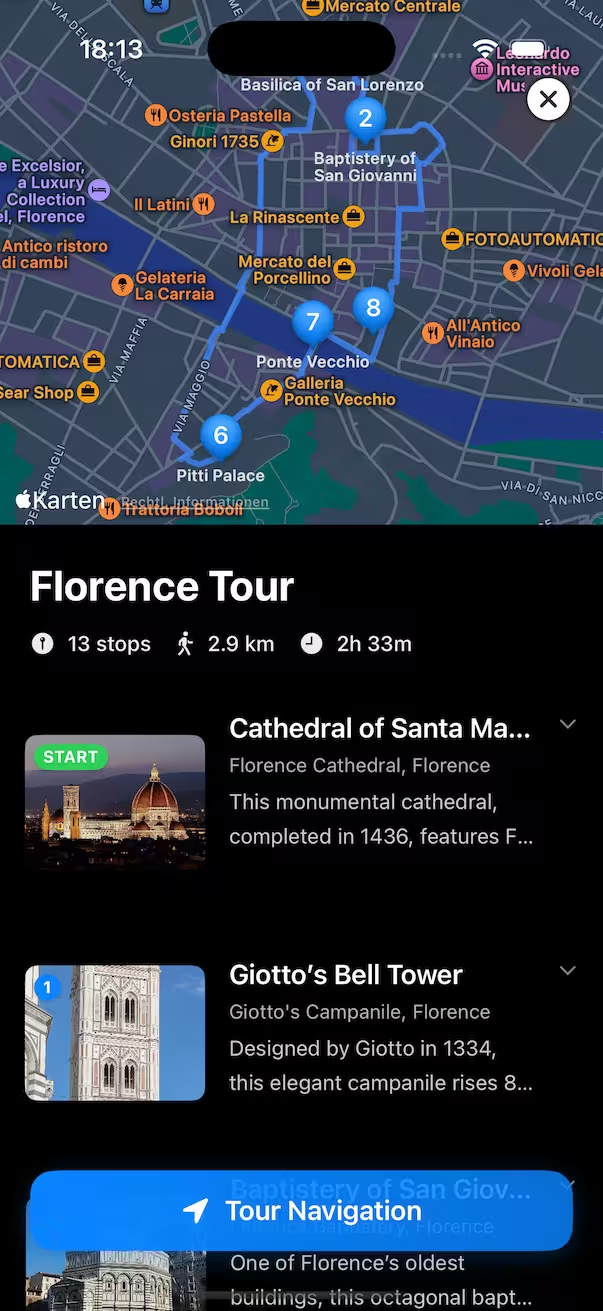
Your live AI guide and the self-guided Alicante route, together in your browser.
