Best Time to Visit Granada
Month-by-month weather, crowds and prices, plus a full calendar of festivals and events worth planning a trip around.
Best monthsApr, May, Oct
CheapestJan, Feb, Nov
AvoidJul, Aug
BusiestApr, May
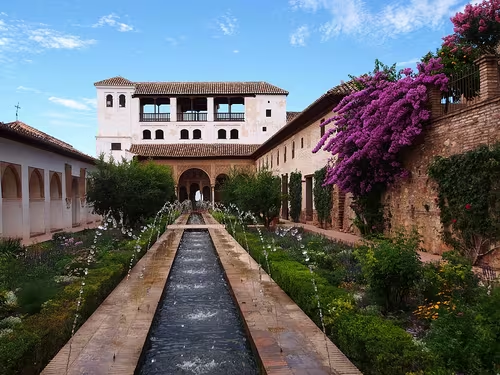
When is the best time to visit Granada?
Come in late April, May or October: 20-25°C, Generalife gardens in bloom or autumn light, and the Nasrid Palaces still bookable. Skip July and August, when afternoons hit 35-40°C with no shade and many local restaurants shut. November is the cheapest, quietest month, doubles from 42 euro.
Start our tool and find your best time to visit Granada
Your perfect month
Free · ~30 seconds
or tap a month directly
What matters to you?
And this?
Best overall: Apr, Oct. Late April and October are Granada's consensus sweet spots: 20-25°C, the Generalife in spring bloom or autumn colour, Semana Santa crowds gone, and Alhambra tickets still bookable four to six weeks out. October adds the night visits to the Nasrid Palaces from the 15th.
Best value: Nov, Jan, Feb. November brings the year's lowest hotel rates (doubles from 42 euro) plus the Jazz Festival's free bar gigs, while January and February pair cheap rooms with almond blossom in the Lecrin Valley and a live Sierra Nevada ski season 45 minutes away.
Avoid: Jul, Aug. July and August: 35-40°C with no sea breeze, no shade on the Alhambra ramparts or San Nicolas viewpoint, August restaurant closures, and Nasrid slots sold out months ahead. The heat genuinely caps sightseeing at a couple of morning hours.
- January: Great time, 12°C. This is the one month you have the Alhambra's Court of the Lions to yourself. The city feels wholly local, university students back, tapas bars warm and busy with granadinos rather than tour groups. The cold dawns are the trade, and a fair one for this much quiet.
- February: Great time, 14°C. February is honest, unperformed Granada. No queues, no markup, just a real Andalusian city in winter. The almond-blossom-against-snow scene in the Lecrin Valley is one of the most photogenic things in the whole region and almost nobody is there to share it.
- March: Great time, 17°C. March is the last properly quiet, properly cheap month before spring fills the city. The first weeks let you walk into the Alhambra and tapas bars without planning. Once Holy Week begins, that window slams shut, so use the early part of the month while it lasts.
- April: Good time, 20°C. Granada's Holy Week is the most striking in Andalusia, with the Alhambra visible behind the processions, but the city is wall to wall during it. Late April is the real prize: gardens in full flush, 20-24°C, and the crowds thinning. Go after Easter, not during, if you want to breathe.
- May: Tough month, 25°C. May is the month everyone names, and the Alhambra numbers prove they all came. The weather genuinely is the best of the year and the festivals are spectacular, but expect a record crush and top prices. Come with eyes open: book early, expect queues, and take the payoff.
- June: Good time, 30°C. June is the tipping point from spring into summer furnace. Early in the month it is still wonderful; by the last week, midday is punishing. The redemption is the Music & Dance Festival, with classical concerts in the Generalife gardens and Nasrid palaces after dark, a world-class experience nowhere else can match.
- July: Tough month, 35°C. July is for people who do not mind 38°C and plan around it. Midday on the Alhambra ramparts or San Nicolas viewpoint, with zero shade, is genuinely draining. But the heat is bone-dry, so 35°C here beats humid coastal Andalusia, and evenings on a shaded terrace are still lovely once the sun drops.
- August: Tough month, 34°C. August is not romantic-empty Granada, it is survival-mode Granada. Locals are gone, many neighbourhood restaurants are shuttered, and the heat is physically wearing. The upside is genuinely low prices and the unchanging free-tapa tradition. If you must come, do your sights before 10:00 and hide indoors by noon.
- September: Good time, 28°C. September is Granada's most romantic month. Warm 20-22°C dusks, lower crowds at the Mirador de San Nicolas than June, and an authentic local festival in the patron-saint celebrations. Evening tapas bar-hopping is peak-pleasant, and the light over the Alhambra turns golden and gentle.
- October: Good time, 24°C. October is the connoisseur's Granada: spring-quality weather, autumn colour in the Alpujarra, and the torchlit Nasrid night visits that spring simply does not offer. It is busy but not frantic, and the early-October light on the Albaicin is the best of the year. Book the Alhambra ahead, but you have more leeway than in May.
- November: Great time, 17°C. November is when Granada belongs to granadinos again. Foreign tourists thin right out, prices fall to their floor, and the Jazz Festival fills the bars with music for free. The weather is cool and sometimes wet, but the Alhambra without a crowd and a 42 euro room are a genuinely great trade.
- December: Great time, 14°C. December Granada is quietly festive rather than frantic. The Christmas market is gentler than the big northern-European ones, the Alhambra glows at night against the cold air, and the city stays affordable outside the Christmas-and-New-Year bump. Short days are the catch, but the lights more than compensate.
Granada weather by month
HighLowRainfall
Jan12°
Feb14°
Mar17°
Apr20°
May25°
Jun30°
Jul35°
Aug34°
Sep28°
Oct24°
Nov17°
Dec14°
| Month | Temp | Rain | Sun | Crowds | Prices | Highlight |
|---|---|---|---|---|---|---|
| Jan | 12° / 3° | 49mm · 8 rainy days | 8.2 h/day | ●○○○○ | ●○○○○ | Day of the Taking of Granada |
| Feb | 14° / 4° | 51mm · 7 rainy days | 9.4 h/day | ●○○○○ | ●○○○○ | Almond Blossom |
| Mar | 17° / 5° | 101mm · 11 rainy days | 9.9 h/day | ●●○○○ | ●●○○○ | Almond Blossom |
| Apr | 20° / 8° | 70mm · 9 rainy days | 11.1 h/day | ●●●●○ | ●●●●○ | Sierra Nevada Ski Season |
| May | 25° / 12° | 37mm · 6 rainy days | 12.8 h/day | ●●●●● | ●●●●● | May Crosses |
| Jun | 30° / 16° | 20mm · 4 rainy days | 13.6 h/day | ●●●●○ | ●●●●○ | Corpus Christi Festival |
| Jul | 35° / 21° | 4mm · 2 rainy days | 13.6 h/day | ●●●○○ | ●●●○○ | International Music and Dance Festival |
| Aug | 34° / 20° | 6mm · 2 rainy days | 12.7 h/day | ●●○○○ | ●●○○○ | Nasrid Palaces Night Visits |
| Sep | 28° / 16° | 24mm · 4 rainy days | 11.4 h/day | ●●●●○ | ●●●○○ | Nasrid Palaces Night Visits |
| Oct | 24° / 12° | 44mm · 6 rainy days | 9.8 h/day | ●●●●○ | ●●●○○ | Nasrid Palaces Night Visits |
| Nov | 17° / 7° | 77mm · 8 rainy days | 8.5 h/day | ●●○○○ | ●○○○○ | Sierra Nevada Ski Season |
| Dec | 14° / 4° | 63mm · 7 rainy days | 8.0 h/day | ●●○○○ | ●●○○○ | Sierra Nevada Ski Season |
How we score this: weather = long-run climate normals (Open-Meteo), crowds & prices = relative season read, events checked yearly against official dates.
Best time to visit Granada: weather, prices & crowds
Best months for good weather
Apr, May, Sep, Oct
Late April, May, September and October give Granada its most comfortable days: 20-25°C, low humidity, and warm dry evenings for tapas on the Paseo de los Tristes without the summer furnace.
Quietest months to avoid the crowds
Jan, Feb, Nov
January, February and November are the quietest months. The Alhambra drops to under 2,000 visitors on the slowest January days, against 254,338 in May, and the walk-up gate is no longer a 5-minute scramble.
Cheapest time to visit Granada
Nov, Jan, Feb
November is the cheapest month of the year, hotel doubles from 42 euro, with January and February close behind at around 30% below spring peak and hostels from 18 euro.
Best time for festivals and events
Oct, Mar
From 15 October the night visits to the Nasrid Palaces begin (Fri-Sat, 20:00-21:30), torchlit and crowd-free, an entirely different Alhambra you cannot see in spring.
How many days do you need in Granada?
Two days is the right amount of time for Granada. The Alhambra alone commands half a day, and the city below it, from the cathedral quarter to the Albaicín hillside, deserves its own unhurried afternoon. A third day lets you add the Sacromonte caves, a day trip to the Sierra Nevada, or a slow morning in the tapas bars without rushing.
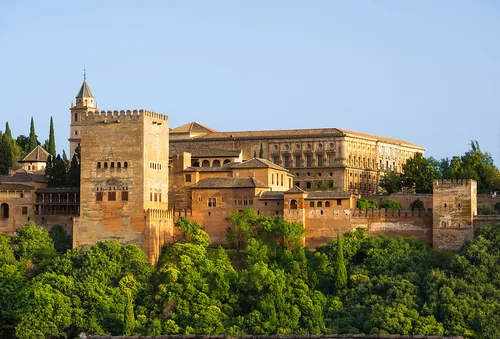
One day
Alhambra first, old town by dusk
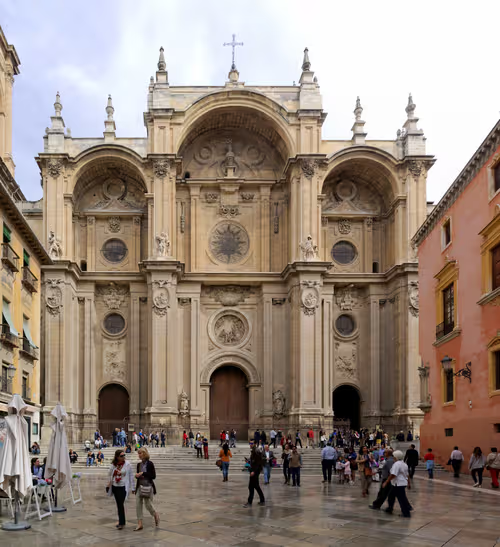
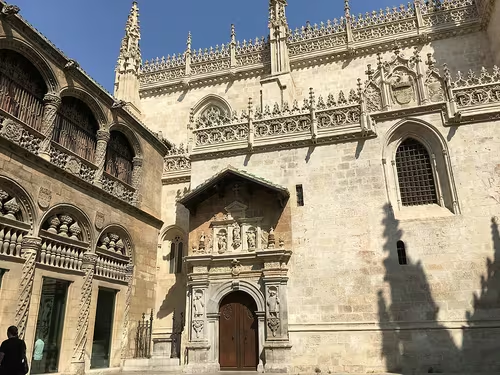
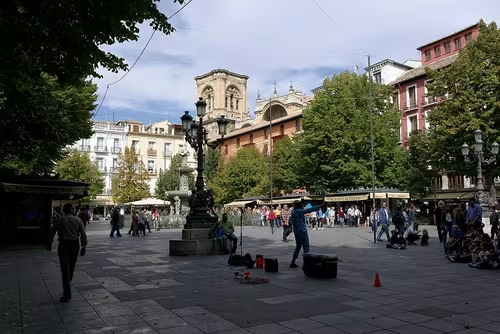
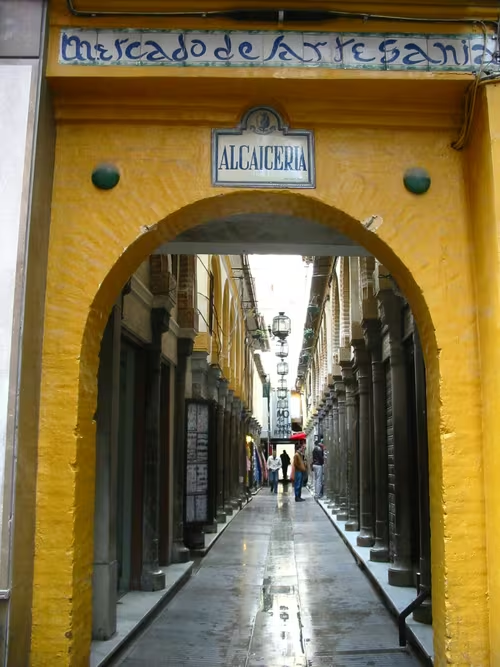
Start at the Generalife Gardens when they open, then move into the Nasrid Palaces before the midday heat and crowds peak. In the afternoon, walk down through the Alcaicería spice lanes to Plaza Bib-Rambla, look inside the Royal Chapel to see the tombs of Ferdinand and Isabella, and end at the Mirador de San Nicolás for the sunset view across the Alhambra. Book the Nasrid Palace timed entry three months ahead.
Two daysRecommended
City centre on foot, caves after dark
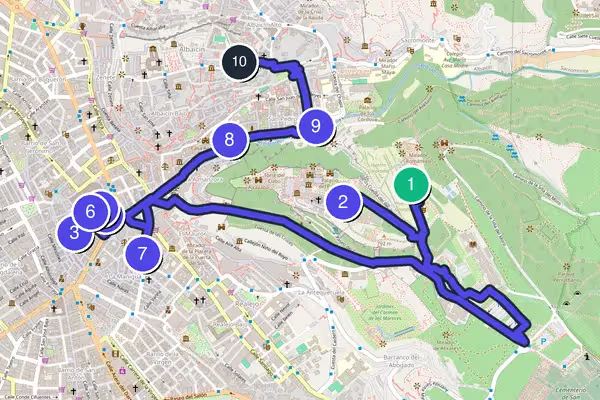
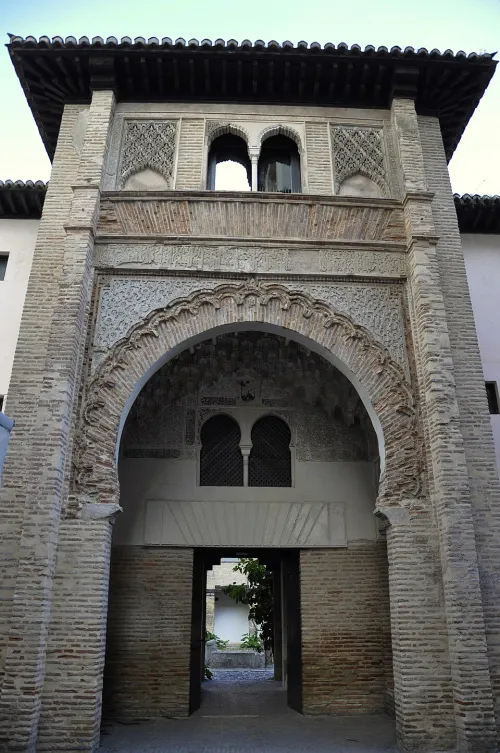
Spend the morning on the self-guided Granada walking tour, 10 stops across 5.9 km in about 2.8 hours, covering the Cathedral, Corral del Carbón, El Bañuelo, and the Paseo de los Tristes along the Darro River. In the afternoon, explore the Albaicín streets above. End the evening with cave flamenco in Sacromonte, booked direct from Cueva la Rocío or Cuevas Los Tarantos at around 21:00.
Three days
Day trip to the Sierra Nevada or Lecrin Valley
With a third day, take the 45-minute bus to Sierra Nevada (around 9 euro round trip) for skiing between November and late April, or drive 30 km south to the Lecrin Valley for almond blossom in late January and February. Alternatively, spend the day in the Alpujarra villages of Pampaneira, Bubión, and Capileira, returning for a long tapas evening on the Paseo de los Tristes.
Four days or more
Festivals, markets, and the slower city
Four days allows you to time a visit around Granada's major events: Holy Week processions in late March or early April, the Cruz de Mayo flower-cross tradition on 3 May, the International Music and Dance Festival in the Generalife from mid-June, or the torchlit Nasrid night visits running Friday and Saturday from 15 October. Staying longer also means mornings at Bodegas Castañeda for proper tapas-bar culture, three rounds for around 6 euro each.
Best time to visit Granada by traveller type
Same city, different trip. Here's the month that fits how you're travelling.
🧭
Best time to visit Granada for the first time
AprOct
Late April for spring bloom in the Generalife and 20-24°C walking weather, or October for comfortable 16-24°C days plus the Nasrid night visits from the 15th. Either way book the Alhambra exactly three months ahead, when tickets open.
❤️
Best time to visit Granada for couples
MarSep
March for almond blossom in the Lecrin Valley against snow-capped peaks, or September for warm 20-22°C dusks, low crowds at the Mirador de San Nicolas, and the Virgen de las Angustias patron-saint atmosphere.
💶
Best time to visit Granada on a budget
NovAug
November for the cheapest rooms of the year and free Jazz Festival club gigs, or late August when the heat keeps tourists away and rates drop to 55-65 euro. Granada's free-tapa-with-every-drink tradition keeps eating cheap all year.
🍝
Best time to visit Granada for food and wine
MayOct
May for the full spring menu (broad beans, artichokes, wild Sierra Nevada asparagus) and Cruz de Mayo food stalls, or October for autumn produce: chestnuts, wild mushrooms, and pomegranate, the city's own symbol, at its peak.
Worst time to visit Granada
July and August are the months to avoid. Granada sits in a landlocked valley at 685 m with no sea breeze, so afternoons routinely reach 35-40°C, and the Alhambra ramparts and the Mirador de San Nicolás offer zero shade after midday. In August a significant number of family-run restaurants close for two weeks for the owners' holidays, and Nasrid Palace slots sell out months ahead. Sightseeing realistically shrinks to before 10:00 and after 19:00.
Still worth it for The dry heat is more bearable than humid coastal Andalusia, and prices drop 15-20% below spring peak. Budget travellers who plan around the heat, stick to the Arab baths and tea houses at midday, and take a day trip to the Costa Tropical (Almuñécar, Salobreña, about 24°C sea temperature) get reasonable value.
Go instead in April, May, October, when Granada is at its best.
Best time for a tour of Granada
Granada is a steep, sun-struck city best walked when the air is mild, and that points squarely at spring and autumn. April through May (highs of 20 to 25 °C) and October (24 °C) give you warm light and long days for the haul up to the Mirador de San Nicolás and the slow climb through the Generalife Gardens, though May is also the most packed month of the year. July and August are brutal: highs of 34 °C with almost no cloud, and the open courtyards of the Alhambra and the Plaza Bib-Rambla offer little shade past mid-morning. Winter is quieter than people expect and genuinely walkable midday, with January highs around 12 °C and crisp blue skies, but mornings drop near 3 °C and dusk comes early, so the narrow Albaicín lanes and Paseo de los Tristes turn cold and dim fast. March is the wettest stretch at eleven rainy days, worth dodging if you want dry cobbles underfoot.
The beauty of doing this on foot is that you set the clock. With AI Tourguide the timing is entirely yours: no fixed departure, no group to keep up with, just a voice-first guide that leads, tells the stories of the Royal Chapel and the Alcaicería, asks what you want to linger on, and adapts as you go, all in your browser with nothing to download. On a scorching August day you can start your Granada tour at first light, take the Alhambra while it is still cool, and break for shade before noon. In winter, set off late morning once the sun has warmed the climb to San Nicolás, and let the climate, not an operator, decide your hour.
 +6
+6All 10 stops are already on the map.
You just press start.
You just press start.
 AI Tourguide
You just read the route.
Now walk it with a guide in your ear.
Press start wherever you are, even hundreds of kilometres from Granada, and the guide begins telling its stories right away. In the city, pick any of the 10 stops to start from: it leads you there, then talks with you the whole route, asking, listening, remembering, and shaping the tour around your answers.
10stops5.9km2.8hours11languages
▶Start the tour freeFree to start · Runs in your browser · No app, no download
Granada events and festivals calendar
Annual highlights worth timing a trip around, listed month by month.
January
🇮 HolidayDay of the Taking of Granada Dia de la Toma de Granada
Jan 2
2 January every year, a Granada-only holiday.
A Granada-only civic holiday marking the Catholic Monarchs' entry into the city on 2 January 1492.
🎨 Art and cultureSacromonte Cave Flamenco Flamenco en Sacromonte
Jan 3 – Dec 26
Year-round, nightly shows around 21:00; regular Saturday shows at La Chumbera.
Zambra flamenco in the cave venues of Sacromonte, Cueva la Rocio, Cuevas Los Tarantos and Maria la Canastera, seating 40 to 80 people per cave, with shows from around 21:00 to 22:30 and tickets of 25-35 euro including a drink.
🌸 Seasonal natureAlmond Blossom Floracion del almendro
Jan 25 – Mar 5 ~
Late January to early March, peaking in the first two weeks of February.
Almond orchards across the Lecrin Valley (30km south) and the Alpujarra slopes burst into white and pink bloom, set against the snow-capped peaks of the Sierra Nevada.
🌸 Seasonal natureSierra Nevada Ski Season Temporada de Esqui Sierra Nevada
Nov 28 – Apr 26 ~
Late November to late April, snow-dependent; spring skiing runs into April.
Spain's southernmost ski resort, 45 minutes from the city and reaching up to 3,300m, with terrain that holds spring snow into late April.
March
⛪ ReligiousHoly Week Semana Santa
Mar 29 – Apr 5 ~
Palm Sunday through Easter Sunday, late March to early April; dates shift each year with Easter.
Thirty-two brotherhoods carry 58 floats with over 2,000 costaleros through the streets across the week.
🎵 MusicSacred Music Festival Festival de Musica Sacra de Granada
Mar 29 – Apr 5 ~
Holy Week, late March to early April.
Sacred music from Gregorian chant to contemporary works performed in historic venues normally closed to regular tours: the Cathedral, the Royal Chapel and the Cartuja Monastery.
🎨 Art and cultureNasrid Palaces Night Visits Visitas Nocturnas a los Palacios Nazaries
Oct 15 – Mar 14
Year-round on a seasonal schedule: Oct 15 to Mar 14 Fri-Sat 20:00-21:30; Mar 15 to Oct 14 Tue-Sat 22:00-23:30.
A separate after-dark ticket (12.73 euro) to walk only the Nasrid Palaces by night, with the torchlit halls and no daytime crowds.
May
🎉 FestivalMay Crosses Dia de la Cruz
May 3
3 May every year.
Flower-adorned crucifixes are placed in streets, courtyards and shop windows across the city, judged in a five-category competition, with music and dancing around the crosses.
⛪ ReligiousCorpus Christi Festival Feria del Corpus Christi
May 30 – Jun 6 ~
Late May to early June; the main religious Thursday falls 60 days after Easter, so dates move each year with the Church calendar.
The city's biggest annual event: 72 casetas (festival tents) at the Almanjayar fairground, the Tarasca parade (3 June), bullfighting, free flamenco, and the satirical Carocas drawings in Plaza Bib-Rambla.
June
🎵 MusicInternational Music and Dance Festival Festival Internacional de Musica y Danza de Granada
Jun 12 – Jul 12
Mid-June to mid-July every year, running for approximately one month.
One of Europe's premier outdoor classical festivals, with 136 shows spanning symphony, opera, ballet, flamenco, jazz and baroque.
September
⛪ ReligiousFestival of the Virgin of Sorrows Fiestas de la Virgen de las Angustias
Sep 15–27
Throughout September; flower offering on 15 September, solemn procession on the last Sunday of the month.
A month-long tribute to the city's patron saint.
November
🎵 MusicInternational Jazz Festival Festival Internacional de Jazz de Granada
Nov 7–21 ~
Roughly the first three weeks of November every year.
Founded in 1980 and one of Europe's oldest jazz festivals, with main concerts at the Teatro Isabel la Catolica and 70-plus shows in bars and clubs across the city.
December
🎄 Christmas marketGranada Christmas Market Mercado Navideno de Granada
Dec 1 – Jan 6
1 December to 6 January, daily 11:00-14:00 and 17:00-21:30.
Around 70 stalls split between Fuente de las Batallas (crafts) and Plaza Bib-Rambla (nativity scenes), with Christmas lights from 30 November, an ice rink, a sledding ramp, and a Ferris wheel from 29 December.
Insider tips for visiting Granada
The rules buried in forums, in one place.
- Book the Nasrid Palaces exactly three months ahead, no later. Official tickets open three months before your entry date at tickets.alhambra-patronato.es, and in April to June the morning slots sell out 8 to 12 weeks in advance. The walk-up quota of around 200 tickets is gone within 5 minutes of the 08:30 opening in spring.
- Always order at the bar, not a table. Granada is one of the last Spanish cities where every drink comes with a free tapa, and the tapa improves with each round. Stand at the bar at Bodegas Castaneda or Bar Poe: three rounds is roughly 6 euro and a full lunch.
- The Museum of the Alhambra, inside the Charles V Palace, is free, needs no ticket, and is almost always empty. It holds the finest Nasrid art anywhere, including the 14th-century Alhambra Vase. It is open whenever the Alhambra is, except Mondays, and closes at 14:30 on Sundays.
- Hit the Mirador de San Nicolas at dawn or after dark, never at 17:00-19:00, when 500-plus people crowd the rail at golden hour. Arrive 07:30-08:30 for the same light with no one there, or stay until the Alhambra floodlights kick in around 20:30 in summer. Watch your pockets in the evening crush.
- The Royal Chapel, tomb of Ferdinand and Isabella, is closed all day on Good Friday and on the mornings of 2 January and 12 October. The Cathedral next door closes Sunday mornings until 15:00 for Mass, so visit early on a weekday instead.
- During Corpus Christi week the historic centre streets are fully blocked for the Tarasca parade and the Corpus procession. The fairground is at Almanjayar, north of the centre, reached by the C3 bus from Gran Via. Allow two extra hours or simply walk.
- Book Sacromonte cave flamenco direct from the venue, never from street touts. Shows at Cueva la Rocio, Cuevas Los Tarantos and Maria la Canastera run year-round at around 21:00, with 40 to 80 seats. In July and August they fill one to two weeks ahead. The Saturday show at La Chumbera is a cheaper option at about 15 euro.
- The Alhambra caps daily entry at roughly 6,500 to 7,000 visitors, and walk-up tickets are exhausted by 08:35 in peak season. If online is sold out, licensed tour operators hold pre-bought allocations worth the 3 to 5 euro premium. Our live AI guide is a flat 5 euro per hour any day, so you can start at dawn and have the Albaicin to yourself.
Public holidays in Granada
On these dates many shops and offices close, transport thins out, and sights can be mobbed or shut. Plan around them.
| Date | Holiday | What closes |
|---|---|---|
| Jan 1 | New Year's Day | The Alhambra is closed, along with the Royal Chapel, most shops and restaurants. A quiet, shut-down day across the city. |
| Jan 2 | Dia de la Toma | Granada-only holiday marking the 1492 surrender of the city. The Royal Chapel closes in the morning (open from 15:00). Military parade and rival gatherings near the City Hall; politically charged in recent years. |
| Jan 6 | Epiphany | Shops closed. The Three Kings parade (Cabalgata de Reyes) fills the streets the evening of 5 January, and the Christmas market wraps up on the 6th. |
| Feb 28 | Day of Andalusia | Regional holiday. Public offices closed and some museums run reduced hours, but tourism is largely unaffected. |
| Apr 3 | Good Friday | The biggest procession day of Semana Santa, with six brotherhoods on the streets. The Royal Chapel is closed all day. Major streets are blocked through the evening; hotels are fully booked. |
| May 1 | Labour Day | The Alhambra stays open, but most shops close. Restaurants generally remain open. |
| Jun 4 | Corpus Christi | Granada's regional public holiday and biggest festival day. The Santisimo Sacramento procession winds through the historic centre, many shops close, and the Almanjayar fairground is busy all week. |
| Aug 15 | Assumption of Mary | A major Spanish summer holiday. Many local restaurants, especially family-run ones, close for around two weeks near this date. Check ahead before relying on a specific place. |
| Oct 12 | Hispanic Day | National holiday. The Royal Chapel opens afternoons only (closed in the morning). Military parades; shops largely closed. |
| Nov 1 | All Saints' Day | A quiet local day of cemetery visits. Some attractions close; the city feels subdued. |
| Dec 8 | Immaculate Conception | Shops closed, religious observances at the Cathedral. The Christmas market and lights are already in full swing. |
| Dec 25 | Christmas Day | The Alhambra and Royal Chapel are closed and nearly everything else shuts. Plan a slow day around the festive lights. |
Granada month by month
January in Granada
High12°C / 54°F
Low3°C
Rain49mm / 8 rainy days
Sun8.2 h/day
Daylight10 h/day
Humidity68%
Crowds●○○○○Prices●○○○○
January is Granada at its emptiest and cheapest. Days are crisp and bright at 12°C with the valley often frosty at dawn (lows near 3°C), and the snow-capped Sierra Nevada looms over the city in full ski season. The Alhambra drops to under 2,000 visitors on its slowest days, so the Nasrid Palaces feel almost private. Skies are mostly clear, though 8 rainy days bring the occasional Atlantic front.
The vibe This is the one month you have the Alhambra's Court of the Lions to yourself. The city feels wholly local, university students back, tapas bars warm and busy with granadinos rather than tour groups. The cold dawns are the trade, and a fair one for this much quiet.
Don't miss Ski Sierra Nevada in the morning, 45 minutes and about 9 euro round trip by bus, then visit the Alhambra in the warm afternoon below. From late January the first almond blossom appears in the Lecrin Valley.
Crowd drivers Post-holiday lull; mostly domestic day-trippers, plus a small bump for the Dia de la Toma on 2 January. Sierra Nevada ski season is the main draw nearby.
In season Winter is the season for hearty olla de San Anton, a Granada bean-and-pork stew traditionally eaten around 17 January, and warming Alpujarra cured ham.
Heads up 1 January (Alhambra and almost everything closed) and the morning of 2 January (Royal Chapel) are the days to plan around.
Cheapest hotel month; doubles from around 45 euro, hotels averaging 52 euro.
Events this month
🇮 HolidayDay of the Taking of Granada Dia de la Toma de Granada
Jan 2
2 January every year, a Granada-only holiday.
A Granada-only civic holiday marking the Catholic Monarchs' entry into the city on 2 January 1492. The royal banner is presented from the City Hall balcony, the Torre de la Vela bell is rung, and a military parade moves through the old town.
It is a uniquely Granada moment, though politically charged in recent years, with counter-demonstrations alongside the official ceremony, so go to observe local history rather than for festivity.
🌸 Seasonal natureSierra Nevada Ski Season Temporada de Esqui Sierra Nevada
Nov 28 – Apr 26 ~
Late November to late April, snow-dependent; spring skiing runs into April.
Spain's southernmost ski resort, 45 minutes from the city and reaching up to 3,300m, with terrain that holds spring snow into late April. A round-trip bus from Granada costs around 9 euro.
Nowhere else lets you ski in the morning and tour a Moorish palace the same afternoon, with the slopes even visible from the Mirador de San Nicolas on clear winter days.
🌸 Seasonal natureAlmond Blossom Floracion del almendro
Jan 25 – Mar 5 ~
Late January to early March, peaking in the first two weeks of February.
Almond orchards across the Lecrin Valley (30km south) and the Alpujarra slopes burst into white and pink bloom, set against the snow-capped peaks of the Sierra Nevada. The peak window is the first two weeks of February.
The blossom-against-snow scene is one of Andalusia's most photogenic sights, free, uncrowded, and a perfect reason to road-trip the valleys in deep winter.
February in Granada
High14°C / 58°F
Low4°C
Rain51mm / 7 rainy days
Sun9.4 h/day
Daylight11 h/day
Humidity66%
Crowds●○○○○Prices●○○○○
February is deep off-season, mild by day at 14°C but cold at night, with ski season at its peak above the city. The big draw is the almond blossom: from late January into early February the Lecrin Valley and Alpujarra slopes fill with white and pink against the snow-capped Sierra Nevada, peaking in the first two weeks. Crowds stay minimal and the Alhambra is genuinely uncrowded.
The vibe February is honest, unperformed Granada. No queues, no markup, just a real Andalusian city in winter. The almond-blossom-against-snow scene in the Lecrin Valley is one of the most photogenic things in the whole region and almost nobody is there to share it.
Don't miss Drive 30km south for the almond-blossom fields of the Lecrin Valley at their peak. Sierra Nevada is in full ski season, visible from the Mirador de San Nicolas on clear days.
Crowd drivers Off-season throughout. Almond blossom and peak ski season pull a few weekend day-trippers from the region, nothing more.
In season Still olla de San Anton and Alpujarra ham season. Arab tea houses on Calle de las Teterias are at their cosiest in the cold.
Around 30% below spring peak; hostels from 18 euro.
Events this month
🌸 Seasonal natureAlmond Blossom Floracion del almendro
Jan 25 – Mar 5 ~
Late January to early March, peaking in the first two weeks of February.
Almond orchards across the Lecrin Valley (30km south) and the Alpujarra slopes burst into white and pink bloom, set against the snow-capped peaks of the Sierra Nevada. The peak window is the first two weeks of February.
The blossom-against-snow scene is one of Andalusia's most photogenic sights, free, uncrowded, and a perfect reason to road-trip the valleys in deep winter.
🌸 Seasonal natureSierra Nevada Ski Season Temporada de Esqui Sierra Nevada
Nov 28 – Apr 26 ~
Late November to late April, snow-dependent; spring skiing runs into April.
Spain's southernmost ski resort, 45 minutes from the city and reaching up to 3,300m, with terrain that holds spring snow into late April. A round-trip bus from Granada costs around 9 euro.
Nowhere else lets you ski in the morning and tour a Moorish palace the same afternoon, with the slopes even visible from the Mirador de San Nicolas on clear winter days.
March in Granada
High17°C / 62°F
Low5°C
Rain101mm / 11 rainy days
Sun9.9 h/day
Daylight12 h/day
Humidity64%
Crowds●●○○○Prices●●○○○
March is the pre-Easter ramp-up. Days warm to 16-17°C, café terraces reopen, and the Generalife gardens start greening up. It is also the wettest month on record (101mm over 11 days), with Atlantic fronts rolling through, though they pass in a day or two rather than settling in. Crowds stay moderate until the final week, when Semana Santa arrives (29 March to 5 April) and rates jump.
The vibe March is the last properly quiet, properly cheap month before spring fills the city. The first weeks let you walk into the Alhambra and tapas bars without planning. Once Holy Week begins, that window slams shut, so use the early part of the month while it lasts.
Don't miss Sierra Nevada offers spring snow into late April while the city warms below. From the final week, the Sacred Music Festival (MUSAG) stages Gregorian-to-contemporary concerts in the Cathedral and Cartuja Monastery.
Crowd drivers Easter crowds arrive in the final week. Semana Santa hotels book out 3-plus months ahead, and the last 10 days of March see rates spike.
In season Spring produce reaches the market: broad beans, artichokes, wild asparagus from the Sierra Nevada foothills.
Rates spike sharply for the last 10 days when Holy Week begins; book 8-plus weeks ahead.
Events this month
⛪ ReligiousHoly Week Semana Santa
Mar 29 – Apr 5 ~
Palm Sunday through Easter Sunday, late March to early April; dates shift each year with Easter.
Thirty-two brotherhoods carry 58 floats with over 2,000 costaleros through the streets across the week. The Cristo de los Gitanos climbs out of Sacromonte on Wednesday night, and the Cristo del Silencio processes on Thursday to drums alone.
Granada's processions are the most striking in Andalusia, with the Alhambra visible on the hillside behind them, but hotels book out three-plus months ahead, so it is not the week for quiet sightseeing.
🎵 MusicSacred Music Festival Festival de Musica Sacra de Granada
Mar 29 – Apr 5 ~
Holy Week, late March to early April.
Sacred music from Gregorian chant to contemporary works performed in historic venues normally closed to regular tours: the Cathedral, the Royal Chapel and the Cartuja Monastery.
It pairs perfectly with Holy Week and offers a rare acoustic experience inside spaces you cannot otherwise hear music in.
🌸 Seasonal natureSierra Nevada Ski Season Temporada de Esqui Sierra Nevada
Nov 28 – Apr 26 ~
Late November to late April, snow-dependent; spring skiing runs into April.
Spain's southernmost ski resort, 45 minutes from the city and reaching up to 3,300m, with terrain that holds spring snow into late April. A round-trip bus from Granada costs around 9 euro.
Nowhere else lets you ski in the morning and tour a Moorish palace the same afternoon, with the slopes even visible from the Mirador de San Nicolas on clear winter days.
April in Granada
High20°C / 68°F
Low8°C
Rain70mm / 9 rainy days
Sun11.1 h/day
Daylight13 h/day
Humidity62%
Crowds●●●●○Prices●●●●○
April is beautiful and heavily booked. Highs reach a perfect 20°C, the Generalife gardens hit peak bloom, and Holy Week (1-5 April) brings 30,000-plus procession participants plus domestic crowds. Alhambra tickets sell out 8 to 12 weeks ahead in this window. Once the processions pass, late April (20-30 April) is one of Granada's two finest moments: warm, lush, and quieter than the Easter peak.
The vibe Granada's Holy Week is the most striking in Andalusia, with the Alhambra visible behind the processions, but the city is wall to wall during it. Late April is the real prize: gardens in full flush, 20-24°C, and the crowds thinning. Go after Easter, not during, if you want to breathe.
Don't miss Watch the Cristo de los Gitanos procession climb out of Sacromonte on Wednesday night, with the Alhambra lit behind it. The Generalife roses and wisteria are at their absolute peak.
Crowd drivers Holy Week processions plus domestic Easter tourists, then peak spring demand for the Alhambra. This is one of the two busiest stretches of the year.
In season Last call for spring artichokes and broad beans, and the first Alpujarra honey of the year reaches the markets.
Heads up The Royal Chapel is closed all day on Good Friday (3 April), and processions block major streets every evening from Tuesday to Sunday.
Near the year's most expensive; doubles 120-160 euro, peaking around Holy Week (1-5 April).
Events this month
⛪ ReligiousHoly Week Semana Santa
Mar 29 – Apr 5 ~
Palm Sunday through Easter Sunday, late March to early April; dates shift each year with Easter.
Thirty-two brotherhoods carry 58 floats with over 2,000 costaleros through the streets across the week. The Cristo de los Gitanos climbs out of Sacromonte on Wednesday night, and the Cristo del Silencio processes on Thursday to drums alone.
Granada's processions are the most striking in Andalusia, with the Alhambra visible on the hillside behind them, but hotels book out three-plus months ahead, so it is not the week for quiet sightseeing.
🌸 Seasonal natureSierra Nevada Ski Season Temporada de Esqui Sierra Nevada
Nov 28 – Apr 26 ~
Late November to late April, snow-dependent; spring skiing runs into April.
Spain's southernmost ski resort, 45 minutes from the city and reaching up to 3,300m, with terrain that holds spring snow into late April. A round-trip bus from Granada costs around 9 euro.
Nowhere else lets you ski in the morning and tour a Moorish palace the same afternoon, with the slopes even visible from the Mirador de San Nicolas on clear winter days.
May in Granada
High25°C / 76°F
Low12°C
Rain37mm / 6 rainy days
Sun12.8 h/day
Daylight14 h/day
Humidity53%
Crowds●●●●●Prices●●●●●
May is Granada's busiest and priciest month. The Alhambra logs its yearly record of 254,338 visitors, so book three months ahead. Weather is glorious at 25°C with low humidity and barely 6 rainy days. The festival calendar is packed: Cruz de Mayo on the 3rd, then the Corpus Christi fair from 30 May. Book everything well in advance, because this is peak season in every sense.
The vibe May is the month everyone names, and the Alhambra numbers prove they all came. The weather genuinely is the best of the year and the festivals are spectacular, but expect a record crush and top prices. Come with eyes open: book early, expect queues, and take the payoff.
Don't miss Cruz de Mayo (3 May) fills streets and courtyards with flower-covered crosses, free and festive. The Generalife gardens are still in full bloom for evening walks at the Mirador de San Nicolas in warm dusk light.
Crowd drivers Busiest Alhambra month of the year, Cruz de Mayo (3 May), and the Corpus Christi fair from 30 May, which pushes hotel rates up 40-60% in the centre.
In season Peak spring menu: broad beans, artichokes, wild Sierra Nevada asparagus, with Cruz de Mayo food stalls adding to the plaza dining.
Heads up Cruz de Mayo (3 May) partially blocks streets for the cross displays, though nothing major shuts.
The most expensive month of the year; mid-range doubles average around 143 euro, surging 40-60% in Corpus week.
Events this month
🎉 FestivalMay Crosses Dia de la Cruz
May 3
3 May every year.
Flower-adorned crucifixes are placed in streets, courtyards and shop windows across the city, judged in a five-category competition, with music and dancing around the crosses. The tradition dates to the 17th century.
An authentic, free and very photogenic local tradition that draws far fewer tourists than Corpus Christi while filling the old town with flowers and music.
⛪ ReligiousCorpus Christi Festival Feria del Corpus Christi
May 30 – Jun 6 ~
Late May to early June; the main religious Thursday falls 60 days after Easter, so dates move each year with the Church calendar.
The city's biggest annual event: 72 casetas (festival tents) at the Almanjayar fairground, the Tarasca parade (3 June), bullfighting, free flamenco, and the satirical Carocas drawings in Plaza Bib-Rambla. The fair opens with a midnight illumination (alumbrao) on 30 May.
Corpus Christi is Granada's defining festival, transforming the whole city for a week, so book hotels four-plus months ahead as rates surge 40-60%.
June in Granada
High30°C / 85°F
Low16°C
Rain20mm / 4 rainy days
Sun13.6 h/day
Daylight15 h/day
Humidity45%
Crowds●●●●○Prices●●●●○
June straddles two seasons. The first week finishes Corpus Christi, then the International Music & Dance Festival runs 12 June to 12 July with 136 shows, some staged inside the Alhambra at night. Heat builds fast: 30°C in early June, pushing toward 35°C by month's end. Once the university semester ends, the student exodus thins the city slightly, but festival demand keeps prices up.
The vibe June is the tipping point from spring into summer furnace. Early in the month it is still wonderful; by the last week, midday is punishing. The redemption is the Music & Dance Festival, with classical concerts in the Generalife gardens and Nasrid palaces after dark, a world-class experience nowhere else can match.
Don't miss The International Music & Dance Festival stages symphony, opera and flamenco inside the Generalife and Alhambra palaces at night, plus 60-plus free FEX concerts citywide. Book popular shows early.
Crowd drivers Corpus Christi week through 6 June and the International Music & Dance Festival from the 12th. The university semester ends, so locals start leaving.
In season Festival nights bring open-air dining; gazpacho and salmorejo move to the front of every menu as the heat sets in.
Slightly softer than May but still high, especially for Music & Dance Festival dates and Corpus week.
Events this month
⛪ ReligiousCorpus Christi Festival Feria del Corpus Christi
May 30 – Jun 6 ~
Late May to early June; the main religious Thursday falls 60 days after Easter, so dates move each year with the Church calendar.
The city's biggest annual event: 72 casetas (festival tents) at the Almanjayar fairground, the Tarasca parade (3 June), bullfighting, free flamenco, and the satirical Carocas drawings in Plaza Bib-Rambla. The fair opens with a midnight illumination (alumbrao) on 30 May.
Corpus Christi is Granada's defining festival, transforming the whole city for a week, so book hotels four-plus months ahead as rates surge 40-60%.
🎵 MusicInternational Music and Dance Festival Festival Internacional de Musica y Danza de Granada
Jun 12 – Jul 12
Mid-June to mid-July every year, running for approximately one month.
One of Europe's premier outdoor classical festivals, with 136 shows spanning symphony, opera, ballet, flamenco, jazz and baroque. Venues include the Generalife Gardens, the Alhambra palaces, the Corral del Carbon and the Albaicin, plus 60-plus free FEX concerts citywide.
Performances inside the Alhambra at night are a world-class experience you can have nowhere else, so buy tickets for popular shows early.
🎨 Art and cultureNasrid Palaces Night Visits Visitas Nocturnas a los Palacios Nazaries
Oct 15 – Mar 14
Year-round on a seasonal schedule: Oct 15 to Mar 14 Fri-Sat 20:00-21:30; Mar 15 to Oct 14 Tue-Sat 22:00-23:30.
A separate after-dark ticket (12.73 euro) to walk only the Nasrid Palaces by night, with the torchlit halls and no daytime crowds. A garden-only night visit costs 8.48 euro. Slots are limited.
The palaces by torchlight are a completely different, near-private experience, and the tickets sell out weeks ahead, so book early.
July in Granada
High35°C / 95°F
Low21°C
Rain4mm / 2 rainy days
Sun13.6 h/day
Daylight14 h/day
Humidity35%
Crowds●●●○○Prices●●●○○
July is intense, dry heat: average highs of 35°C, peaks above 40°C, and almost no rain (4mm). Counterintuitively the city is quieter than May or June, because the heat keeps tourists away, so prices fall 15-20%. The Music & Dance Festival runs to 12 July. Sightseeing realistically means before 10:00 and after 19:00; midday belongs to the Cathedral nave, the Arab baths and the tea houses.
The vibe July is for people who do not mind 38°C and plan around it. Midday on the Alhambra ramparts or San Nicolas viewpoint, with zero shade, is genuinely draining. But the heat is bone-dry, so 35°C here beats humid coastal Andalusia, and evenings on a shaded terrace are still lovely once the sun drops.
Don't miss Catch the closing nights of the Music & Dance Festival in the Generalife. Retreat to the Banos Arabes and the Calle de las Teterias tea houses through the midday furnace; flamenco caves stay cool after 21:00.
Crowd drivers Heat thins the crowds versus late spring. The Music & Dance Festival to 12 July is the main draw, after which the city quietens further.
In season Cold soups rule: gazpacho, salmorejo and ajoblanco (chilled almond-and-garlic soup, a Granada speciality). Granizado de limon on every corner.
Prices drop 15-20% versus May; budget hotels from 55 euro, among the cheapest months.
Events this month
🎵 MusicInternational Music and Dance Festival Festival Internacional de Musica y Danza de Granada
Jun 12 – Jul 12
Mid-June to mid-July every year, running for approximately one month.
One of Europe's premier outdoor classical festivals, with 136 shows spanning symphony, opera, ballet, flamenco, jazz and baroque. Venues include the Generalife Gardens, the Alhambra palaces, the Corral del Carbon and the Albaicin, plus 60-plus free FEX concerts citywide.
Performances inside the Alhambra at night are a world-class experience you can have nowhere else, so buy tickets for popular shows early.
🎨 Art and cultureNasrid Palaces Night Visits Visitas Nocturnas a los Palacios Nazaries
Oct 15 – Mar 14
Year-round on a seasonal schedule: Oct 15 to Mar 14 Fri-Sat 20:00-21:30; Mar 15 to Oct 14 Tue-Sat 22:00-23:30.
A separate after-dark ticket (12.73 euro) to walk only the Nasrid Palaces by night, with the torchlit halls and no daytime crowds. A garden-only night visit costs 8.48 euro. Slots are limited.
The palaces by torchlight are a completely different, near-private experience, and the tickets sell out weeks ahead, so book early.
🎨 Art and cultureSacromonte Cave Flamenco Flamenco en Sacromonte
Jan 3 – Dec 26
Year-round, nightly shows around 21:00; regular Saturday shows at La Chumbera.
Zambra flamenco in the cave venues of Sacromonte, Cueva la Rocio, Cuevas Los Tarantos and Maria la Canastera, seating 40 to 80 people per cave, with shows from around 21:00 to 22:30 and tickets of 25-35 euro including a drink. La Chumbera runs cheaper Saturday shows at about 15 euro.
Cave-venue zambra is Granada's unique flamenco offering, found nowhere else, so book direct from the venue and skip the street touts.
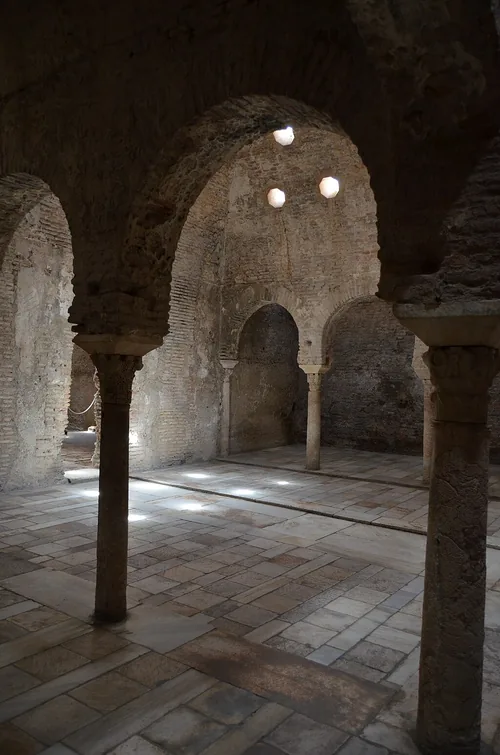
August in Granada
High34°C / 94°F
Low20°C
Rain6mm / 2 rainy days
Sun12.7 h/day
Daylight14 h/day
Humidity37%
Crowds●●○○○Prices●●○○○
August is the hottest month, 34°C average highs with frequent 40°C afternoons, and counterintuitively one of the cheapest. Many granadinos leave on the Spanish August exodus, and a significant number of family-run restaurants close for two weeks. Tourism stays moderate because of the heat. The dry air helps, but the practical sightseeing window is the same narrow dawn-and-dusk slot as July.
The vibe August is not romantic-empty Granada, it is survival-mode Granada. Locals are gone, many neighbourhood restaurants are shuttered, and the heat is physically wearing. The upside is genuinely low prices and the unchanging free-tapa tradition. If you must come, do your sights before 10:00 and hide indoors by noon.
Don't miss Sacromonte flamenco caves stay cool and atmospheric, but book one to two weeks ahead as they fill. Day-trip to the Costa Tropical (Almunecar, Salobrena) where the sea is swimmable at around 24°C.
Crowd drivers Hottest month; the Spanish domestic August exodus empties the city of locals, while heat keeps tourist numbers moderate.
In season Ajoblanco and gazpacho season continues, but check Google Maps before relying on any specific family-run restaurant, since many close for two weeks.
Heads up Around Assumption (15 August) many family-run restaurants close for roughly two weeks; tapas bars are more resilient and stay open.
Among the cheapest months despite being summer; hotels average 65-80 euro.
Events this month
🎨 Art and cultureSacromonte Cave Flamenco Flamenco en Sacromonte
Jan 3 – Dec 26
Year-round, nightly shows around 21:00; regular Saturday shows at La Chumbera.
Zambra flamenco in the cave venues of Sacromonte, Cueva la Rocio, Cuevas Los Tarantos and Maria la Canastera, seating 40 to 80 people per cave, with shows from around 21:00 to 22:30 and tickets of 25-35 euro including a drink. La Chumbera runs cheaper Saturday shows at about 15 euro.
Cave-venue zambra is Granada's unique flamenco offering, found nowhere else, so book direct from the venue and skip the street touts.
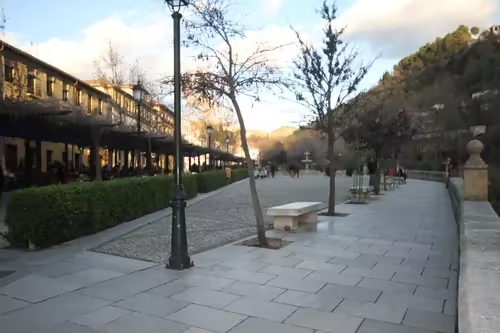
September in Granada
High28°C / 83°F
Low16°C
Rain24mm / 4 rainy days
Sun11.4 h/day
Daylight12 h/day
Humidity49%
Crowds●●●●○Prices●●●○○
September is the welcome cool-down. Heat eases to 25-30°C, the air stays dry, and walking becomes a pleasure again. Crowds return as the weather softens, and the month-long Virgen de las Angustias festival honours the city's patron saint, with thousands carrying flowers to the basilica on 15 September and a solemn procession on the last Sunday. Occasional thunderstorms break the heat late in the month.
The vibe September is Granada's most romantic month. Warm 20-22°C dusks, lower crowds at the Mirador de San Nicolas than June, and an authentic local festival in the patron-saint celebrations. Evening tapas bar-hopping is peak-pleasant, and the light over the Alhambra turns golden and gentle.
Don't miss Watch the flower offering to the Virgen de las Angustias on 15 September and the procession on the last Sunday. The festival week is the only time to buy Torta de la Virgen, a pumpkin-filled pastry.
Crowd drivers Crowds return as the heat breaks. The month-long Virgen de las Angustias festival adds a steady local presence rather than a tourist surge.
In season Torta de la Virgen appears for the patron-saint week only. Early autumn brings the first chestnuts and the start of pomegranate season, Granada's namesake fruit.
Rates rise versus August; mid-range doubles around 95-110 euro.
Events this month
⛪ ReligiousFestival of the Virgin of Sorrows Fiestas de la Virgen de las Angustias
Sep 15–27
Throughout September; flower offering on 15 September, solemn procession on the last Sunday of the month.
A month-long tribute to the city's patron saint. Thousands carry flowers to the Basilica de las Angustias on 15 September, and a solemn procession follows on the last Sunday at around 18:00. An autumn market sells Torta de la Virgen, a pumpkin-filled pastry available only that week.
Authentic local religious culture with low foreign-tourist crowds, plus a seasonal pastry you can taste at no other time of year.
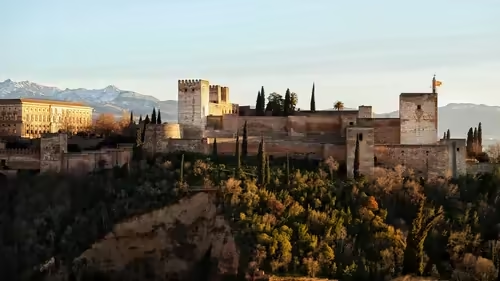
October in Granada
High24°C / 75°F
Low12°C
Rain44mm / 6 rainy days
Sun9.8 h/day
Daylight11 h/day
Humidity54%
Crowds●●●●○Prices●●●○○
October is Granada's other sweet spot, alongside late April. Comfortable 16-24°C days, dry mornings, and the Sierra Nevada slopes turning amber make this prime walking weather. The Alhambra sees an autumn surge (230,336 visitors in October), but it is more manageable than spring. The headline bonus: from 15 October the night visits to the Nasrid Palaces resume on Friday and Saturday evenings.
The vibe October is the connoisseur's Granada: spring-quality weather, autumn colour in the Alpujarra, and the torchlit Nasrid night visits that spring simply does not offer. It is busy but not frantic, and the early-October light on the Albaicin is the best of the year. Book the Alhambra ahead, but you have more leeway than in May.
Don't miss From 15 October the Nasrid Palaces reopen at night (Fri-Sat, 20:00-21:30), torchlit and crowd-free. Autumn foliage peaks in the Poqueira Gorge villages (Pampaneira, Bubion, Capileira) for day-trip walks.
Crowd drivers Excellent shoulder weather drives an autumn Alhambra surge. The night-visit programme restarting on 15 October adds an extra evening draw.
In season Autumn harvest hits the menus: chestnuts, wild Sierra Nevada mushrooms, and pomegranate at its peak. The first acorn-fed Iberico of the season begins.
Heads up On Hispanic Day (12 October) the Royal Chapel opens afternoons only, with the morning closed.
Good value versus spring; mid-range hotels 90-105 euro.
Events this month
🎨 Art and cultureNasrid Palaces Night Visits Visitas Nocturnas a los Palacios Nazaries
Oct 15 – Mar 14
Year-round on a seasonal schedule: Oct 15 to Mar 14 Fri-Sat 20:00-21:30; Mar 15 to Oct 14 Tue-Sat 22:00-23:30.
A separate after-dark ticket (12.73 euro) to walk only the Nasrid Palaces by night, with the torchlit halls and no daytime crowds. A garden-only night visit costs 8.48 euro. Slots are limited.
The palaces by torchlight are a completely different, near-private experience, and the tickets sell out weeks ahead, so book early.

November in Granada
High17°C / 62°F
Low7°C
Rain77mm / 8 rainy days
Sun8.5 h/day
Daylight10 h/day
Humidity65%
Crowds●●○○○Prices●○○○○
November is the cheapest and one of the quietest months, with doubles from 42 euro. Rain picks up (77mm over 8 days) and days cool to 16°C, but the city feels purely local, a university town getting on with itself. The Alhambra drops to 148,687 visitors, 40% below October. The bonus draw is the International Jazz Festival, founded 1980, with 70-plus free bar and club gigs across the city.
The vibe November is when Granada belongs to granadinos again. Foreign tourists thin right out, prices fall to their floor, and the Jazz Festival fills the bars with music for free. The weather is cool and sometimes wet, but the Alhambra without a crowd and a 42 euro room are a genuinely great trade.
Don't miss The International Jazz Festival (founded 1980) stages headline concerts at the Teatro Isabel la Catolica plus 70-plus free gigs in bars and clubs. Big names in a quiet, affordable month.
Crowd drivers Fewest foreign tourists of the autumn and increasing rain. The International Jazz Festival is a small, welcome bonus draw rather than a crowd-maker.
In season Warming winter dishes return: remojon (orange and salt-cod salad), Alpujarra stews, and the first of the season's roasted chestnuts on street corners.
Cheapest hotel month of the year; doubles from 42 euro.
Events this month
🎵 MusicInternational Jazz Festival Festival Internacional de Jazz de Granada
Nov 7–21 ~
Roughly the first three weeks of November every year.
Founded in 1980 and one of Europe's oldest jazz festivals, with main concerts at the Teatro Isabel la Catolica and 70-plus shows in bars and clubs across the city. Past performers include Miles Davis, Oscar Peterson and Art Blakey.
Big-name international jazz in the cheapest, quietest month of the year, with dozens of free club gigs spread across town.
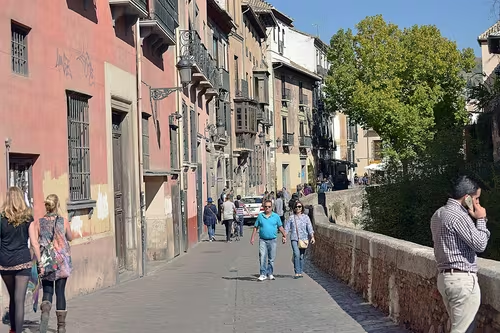
December in Granada
High14°C / 58°F
Low4°C
Rain63mm / 7 rainy days
Sun8.0 h/day
Daylight10 h/day
Humidity68%
Crowds●●○○○Prices●●○○○
December is festive and short on daylight (under 9.5 hours, dark by 18:00) but atmospheric. The Christmas market runs from 1 December at Fuente de las Batallas and Plaza Bib-Rambla, with around 70 stalls, an ice rink and a Ferris wheel from 29 December. Lights go up on 30 November. Days are cool at 14°C with the occasional Atlantic front. Prices stay low except around Christmas and New Year.
The vibe December Granada is quietly festive rather than frantic. The Christmas market is gentler than the big northern-European ones, the Alhambra glows at night against the cold air, and the city stays affordable outside the Christmas-and-New-Year bump. Short days are the catch, but the lights more than compensate.
Don't miss The Christmas market (1 December to 6 January) sells crafts and nativity scenes, with an ice rink and a Ferris wheel from 29 December. The Three Kings parade fills the streets on 5 January.
Crowd drivers Festive atmosphere draws domestic visitors, peaking around Christmas week and New Year's Eve at the Town Hall.
In season Christmas sweets dominate: pestinos (honey-glazed fritters), polvorones and mantecados from nearby Andalusian towns.
Heads up On 25 December the Alhambra and Royal Chapel are closed, along with nearly everything else.
Mostly low, ticking up for Christmas week and New Year's Eve; budget doubles around 55 euro, 80-plus euro at Christmas.
Events this month
🎄 Christmas marketGranada Christmas Market Mercado Navideno de Granada
Dec 1 – Jan 6
1 December to 6 January, daily 11:00-14:00 and 17:00-21:30.
Around 70 stalls split between Fuente de las Batallas (crafts) and Plaza Bib-Rambla (nativity scenes), with Christmas lights from 30 November, an ice rink, a sledding ramp, and a Ferris wheel from 29 December.
A family-friendly, low-key market, quieter than the big northern-European ones, with the Alhambra lit up against the cold night sky.
Frequently asked questions
What is the best time to visit Granada?
Late April and October are Granada's two sweet spots. Late April brings 20-25°C, the Generalife gardens at peak bloom, and the Semana Santa crowds gone. October offers comfortable 16-24°C days, autumn colour in the Alpujarra, and the torchlit Nasrid Palace night visits resuming on 15 October. Book the Alhambra three months ahead either way.
What are the cheapest months to visit Granada?
November is the cheapest month, with hotel doubles from 42 euro and the Jazz Festival's free club gigs as a bonus. January and February follow close behind, around 30% below spring peak with hostels from 18 euro. Late August is surprisingly cheap too (65-80 euro), as the heat keeps tourists away despite it being summer.
When should I avoid visiting Granada?
July and August are the months to skip. Afternoons hit 35-40°C in a landlocked valley with no sea breeze and no shade on the Alhambra ramparts or the Mirador de San Nicolas. In August many family-run restaurants close for two weeks, and Nasrid Palace slots sell out months ahead. Sightseeing shrinks to before 10:00 and after 19:00.
How far ahead do I need to book the Alhambra?
Book three months ahead, the moment tickets open at tickets.alhambra-patronato.es, which is exactly three months before your entry date. In peak April to June, morning Nasrid Palace slots sell out 8 to 12 weeks in advance. The daily cap is around 6,500 to 7,000 visitors, and walk-up tickets are gone within minutes of the 08:30 opening in spring.
What is Granada like in summer?
Hot and dry. July and August average 34-35°C with frequent 40°C peaks and almost no rain, since Granada sits inland at 685m with no sea breeze. The dry air makes it more bearable than humid coastal Andalusia, but midday is for indoor refuges: the Cathedral, the Arab baths, and the tea houses on Calle de las Teterias. Walk before 10:00 and after 19:00.
Does it rain a lot in Granada?
Granada is fairly dry overall. The wettest month is March (101mm over 11 days), with November (77mm) and December to January also damp. Summer is almost rainless, with July at just 4mm. Rain arrives as Atlantic fronts lasting one to three days rather than constant drizzle, and September can bring thunderstorms as the heat breaks.
When is the best time for the Alhambra night visits?
From 15 October to 14 March the Nasrid Palaces open Friday and Saturday evenings, 20:00 to 21:30; from 15 March to 14 October they run Tuesday to Saturday, 22:00 to 23:30. The torchlit palaces with no daytime crowds are a different experience entirely. Tickets cost 12.73 euro, are separate from daytime entry, and sell out weeks ahead, so book early.
What is Granada like in December?
Festive and atmospheric, though short on daylight (under 9.5 hours, dark by 18:00). The Christmas market runs from 1 December at Fuente de las Batallas and Plaza Bib-Rambla, with around 70 stalls and a Ferris wheel from 29 December. Days are cool at 14°C. Prices stay low outside Christmas week and New Year, when they tick up.
Is Granada good for skiing?
Yes. The Sierra Nevada resort, Spain's southernmost, is 45 minutes from the city (around 9 euro round trip by bus) and reaches 3,300m. The 2025/26 season runs from late November to late April, with spring snow holding into April. You can ski in the morning and tour the Alhambra the same afternoon, a combination found nowhere else in Spain.

Any month, any day: your guide is already there
Whatever date you pick, a private human guide gets pricier and harder to book on weekends, holidays and in peak season. Our live AI guide, the one that walks with you and answers anything you ask out loud, works the opposite way.
One flat price, every day
No holiday, weekend, night or peak-season surcharge. A private guide in Granada runs well over 100 euro for a half day, and more on holidays. Ours stays the same.
Available the moment you want it
Start at midnight or at dawn, on Christmas, in the snow, in the August heat. No sold-out high season, no booking weeks ahead.
Your pace, no meter running
Pause for a long lunch, restart after dark, repeat a stop. The tour simply waits for you.
Free to try, a fraction of the cost
Test it for free, then a transparent flat price that undercuts any private guide, in every season.
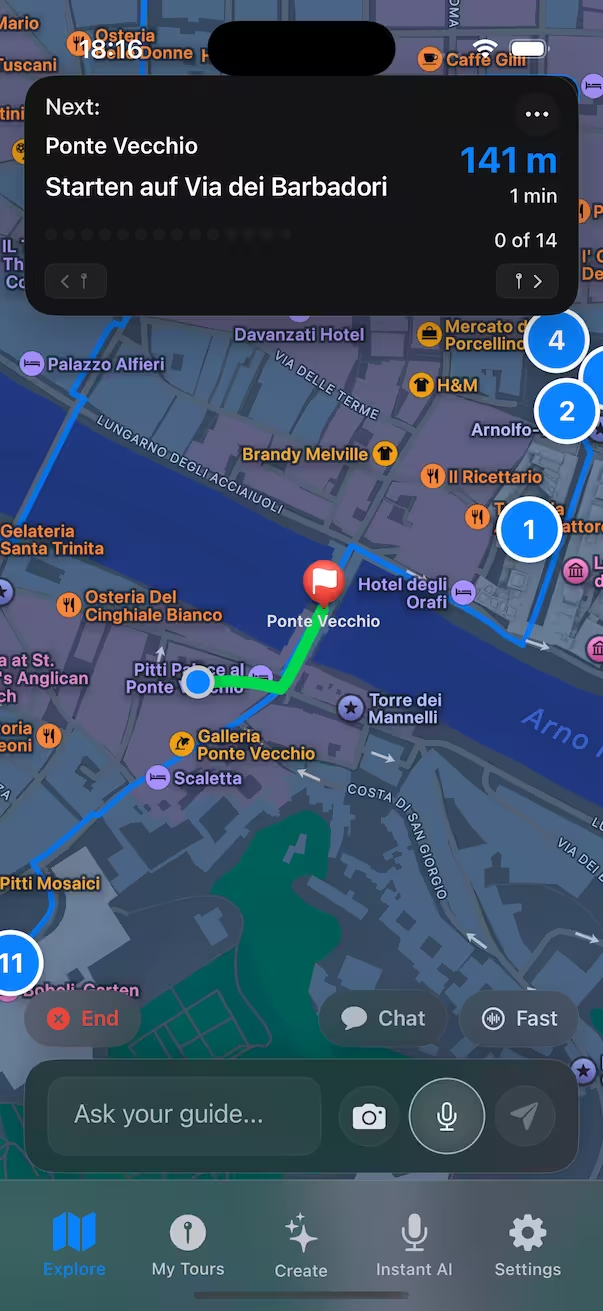
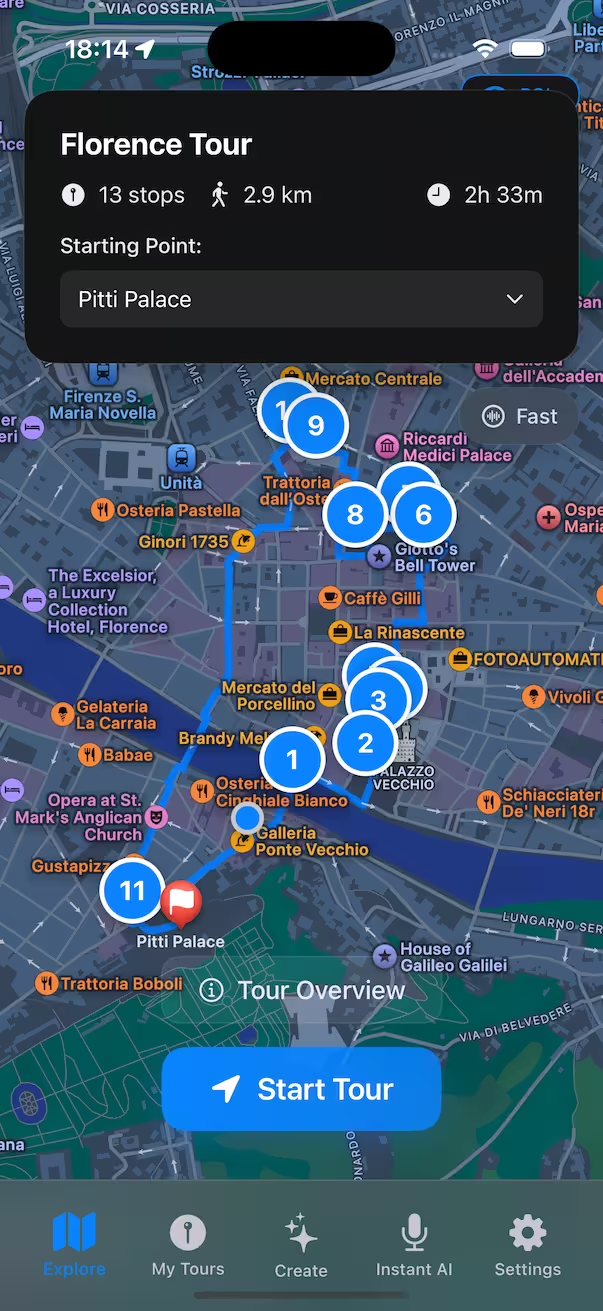
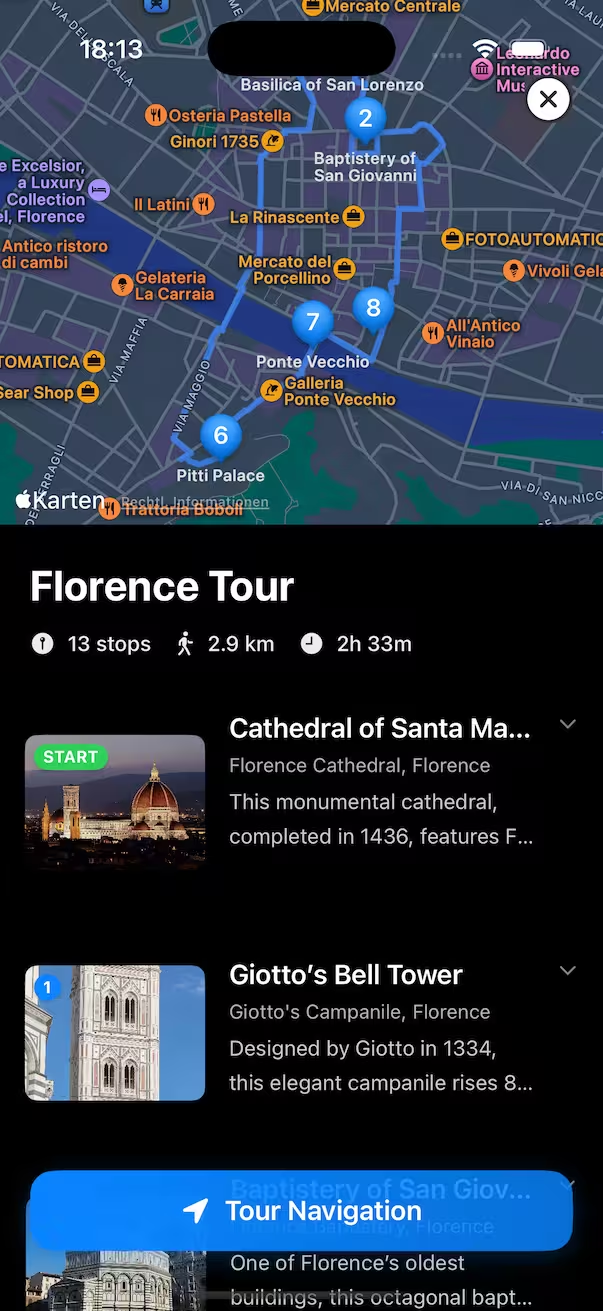
The classic Granada tour: 10 stops, 5.9 km, about 3 h on foot
Your live AI guide and the self-guided Granada route, together in your browser.