Best Time to Visit Malaga
Month-by-month weather, crowds and prices, plus a full calendar of festivals and events worth planning a trip around.
Best monthsApr, May, Oct
CheapestJan, Nov
AvoidAug
BusiestJul, Aug
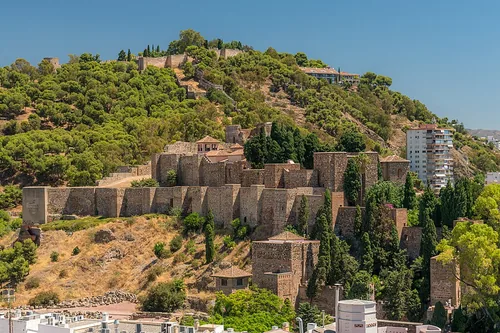
When is the best time to visit Malaga?
Come in late April, May or October: 20-25°C, the sea swimmable in spring or still warm in autumn, and hotel rates 25-40% below summer. July and August bring 33-36°C heat and packed beaches. January and November are the cheapest and emptiest, with mild sun and only a handful of rain days.
Start our tool and find your best time to visit Malaga
Your perfect month
Free · ~30 seconds
or tap a month directly
What matters to you?
And this?
Best overall: May, Oct. May and October are Málaga at its best: 24°C, the sea swimmable, golden Mediterranean light, and crowds you can work around. Late April delivers too, just book ahead because Semana Santa pricing bleeds into it.
Best value: Jan, Nov. January and November bring hotel doubles under 60 euros, no queue at the Alcazaba, the combined Alcazaba and Gibralfaro ticket at 5.50 euros, and a city that sounds Spanish again instead of carrying the summer crowd.
Avoid: Aug. August: 33-36°C heat, peak hotel prices during Feria week (15-22 August), and the busiest beaches in Andalusia. Magnificent if you want the Feria, punishing if you want calm sightseeing.
- January: Great time, 16°C. This is the one month the historic centre belongs to Malagueños again. Tapas bars in the Barrio de la Victoria have room at the counter, Atarazanas Market is calm, and the prices are honest. Grey-sky days happen but they are the exception in a city that stays sunnier than most of Europe in winter.
- February: Great time, 17°C. Outside Carnival week, February is Málaga with the tourist mask off: no queues, no markup, the centre to yourself. The Carnival itself is one of Spain's most exuberant, and the day they ceremonially bury a giant papier-mâché anchovy is pure, unhinged local joy you won't see staged for visitors.
- March: Great time, 19°C. March is the last properly calm month before the spring cruise season and Easter arrive. The terraces reopen, the markets fill with spring produce, and you can still walk into a Calle Granada tapas bar on a Saturday. That window shuts fast once April's ships start docking.
- April: Great time, 20°C. April is gorgeous and no longer a secret. Cruise ships are calling daily, Easter pilgrims pack the processions, and you will queue at the Alcazaba and Picasso Museum. But Semana Santa in Málaga is something you plan a trip around, not just tolerate, and the late-April weather is close to perfect once the holiday clears.
- May: Great time, 24°C. Everyone calls May a shoulder-season secret, and it stopped being one years ago. Cruise season is in full swing and national visitors arrive for Noche en Blanco. The weather genuinely is the best balance of the year though, so come anyway: book ahead, expect company at the headline sights, and take the payoff of warm evenings and a swimmable sea.
- June: Great time, 28°C. June is the tipping point, when Málaga shifts from spring-calm into full beach mode. Early June still feels relaxed, but by the San Juan bonfires on the 23rd the season has truly begun. Those long 9:30pm sunsets are the real gift: the day's heat breaks and the chiringuitos and promenades come alive after dark.
- July: Tough month, 31°C. July is for people who genuinely don't mind heat and crowds and will pay top rates for both. Midday in the centre is a write-off, and every headline sight has a queue. But mornings on a near-empty beach, and the long lit evenings of tapas and espetos along the promenade, are a different city, and that part is worth it.
- August: Tough month, 31°C. August is exhilarating or exhausting depending on what you came for. The Feria is genuinely one of Spain's great parties, all flamenco dresses, free casetas and nightly concerts. But the heat is brutal, the prices are at their ceiling, and relaxed cultural sightseeing is the hardest it gets all year. Come for the Feria, not for the museums.
- September: Good time, 28°C. Late September is one of Málaga's quiet triumphs: the sea is still bath-warm, the heat has eased, and the August crowds have gone home. Mid-September onward you get summer's payoff without summer's pressure, and it's the single best beach-with-fewer-crowds window of the year.
- October: Great time, 24°C. October is Málaga at its most rewarding: warm enough for the beach and the Alcazaba terraces, empty enough to enjoy both. The golden autumn light, the swimmable sea, and the Picasso celebrations with no lines make this the connoisseur's pick over the more famous May.
- November: Great time, 20°C. November is Málaga at rest, and arguably its best value. The tapas bars of the Barrio de la Victoria and Calle Beatas are full of locals again, the museums are empty, and the only crowd is the one that gathers for the Christmas-lights switch-on. Pack a layer for the showers and you have the city to yourself.
- December: Great time, 17°C. December is two cities. The first three weeks are calm, cheap and softly festive, perfect for the Christmas lights without the holiday-week crush. From the 23rd it flips into full festive mode with domestic crowds and spiking prices, but the Calle Larios show is one of Spain's most watched, and worth braving the crowd for once.
Malaga weather by month
HighLowRainfall
Jan16°
Feb17°
Mar19°
Apr20°
May24°
Jun28°
Jul31°
Aug31°
Sep28°
Oct24°
Nov20°
Dec17°
| Month | Temp | Rain | Sun | Crowds | Prices | Highlight |
|---|---|---|---|---|---|---|
| Jan | 16° / 9° | 48mm · 6 rainy days | 8.2 h/day | ●○○○○ | ●○○○○ | Three Kings Parade |
| Feb | 17° / 10° | 31mm · 6 rainy days | 9.4 h/day | ●●○○○ | ●○○○○ | Málaga Carnival |
| Mar | 19° / 11° | 71mm · 9 rainy days | 10.0 h/day | ●●○○○ | ●●○○○ | Málaga Film Festival |
| Apr | 20° / 13° | 44mm · 8 rainy days | 11.2 h/day | ●●●○○ | ●●●○○ | Holy Week |
| May | 24° / 16° | 24mm · 4 rainy days | 12.6 h/day | ●●●○○ | ●●●○○ | White Night |
| Jun | 28° / 20° | 7mm · 2 rainy days | 13.6 h/day | ●●●○○ | ●●●○○ | Saint John's Night |
| Jul | 31° / 23° | 1mm · 0 rainy days | 13.3 h/day | ●●●●● | ●●●●● | |
| Aug | 31° / 23° | 7mm · 1 rainy days | 12.7 h/day | ●●●●● | ●●●●● | Málaga Fair |
| Sep | 28° / 21° | 28mm · 4 rainy days | 11.3 h/day | ●●●●○ | ●●●●○ | Feast of the Virgin of Victory |
| Oct | 24° / 17° | 52mm · 5 rainy days | 9.6 h/day | ●●○○○ | ●●●○○ | Picasso Month |
| Nov | 20° / 13° | 71mm · 6 rainy days | 8.8 h/day | ●○○○○ | ●○○○○ | Calle Larios Christmas Lights |
| Dec | 17° / 11° | 40mm · 5 rainy days | 8.2 h/day | ●●○○○ | ●●○○○ | Calle Larios Christmas Lights |
How we score this: weather = long-run climate normals (Open-Meteo), crowds & prices = relative season read, events checked yearly against official dates.
Best time to visit Malaga: weather, prices & crowds
Best months for good weather
May, Jun, Sep, Oct
May and October give you Málaga's most reliable comfort: 24°C days, low humidity, and the Mediterranean sun without the brutal 36°C afternoons of high summer.
Quietest months to avoid the crowds
Jan, Nov
January and November empty the city of foreign visitors: the Alcazaba has no queue, Atarazanas Market is walkable until it closes at 3pm, and tapas bars in the Barrio de la Victoria are full of locals again.
Cheapest time to visit Malaga
Jan, Nov
January and November are the cheapest months: city-centre hotel doubles drop to 35-60 euros a night, well under half the August rate, and you can book a table anywhere without planning ahead.
Best time for festivals and events
Apr, Aug
Semana Santa in late March or April fills the historic centre with 45 brotherhoods and floats weighing up to 5,000 kilos, while Feria de Málaga in August turns the whole city into eight days of flamenco, casetas and fireworks.
How many days do you need in Malaga?
Málaga rewards three full days. The first covers the ancient core, the second explores the museums and hilltop castles, and a third day lets you reach the beach at Pedregalejo, wander the Barrio de la Victoria at a local pace, and catch a sunset from Gibralfaro without rushing. Two days is enough if you are passing through, but you will leave with a list of things undone.
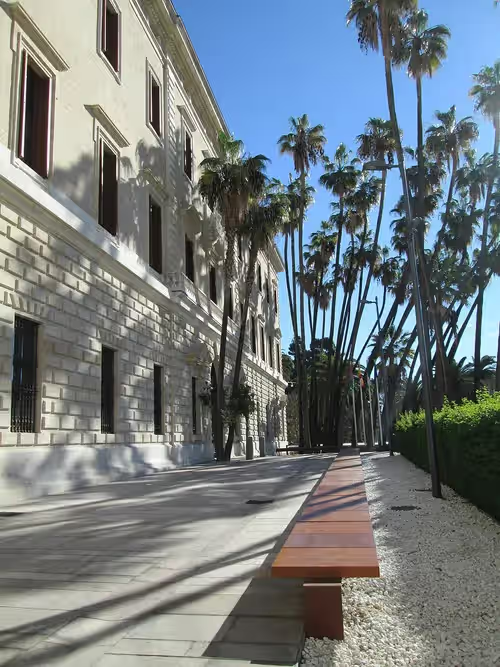
One day
The essential historic centre
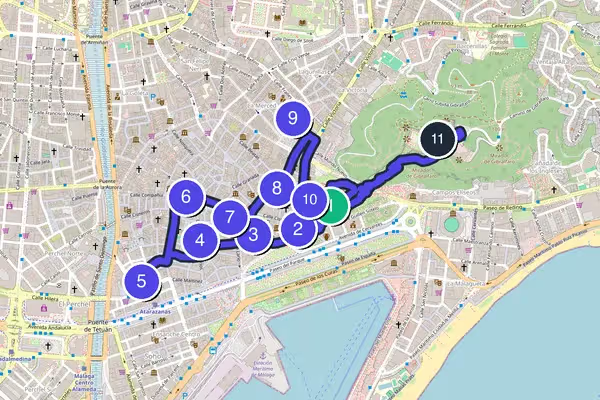
Start at the Alcazaba by 9am before the cruise crowds arrive, then walk down to the Roman Theatre at its base. Cross to the Cathedral, known locally as La Manquita for its unfinished south tower, and follow Calle Larios south to the Atarazanas Market before it closes at 3pm. Take the self-guided Málaga walking tour for this route: 11 stops, 5.7 km, about 3 hours, linking the Alcazaba, Cathedral, Picasso Museum, Birthplace, and Gibralfaro Castle in one coherent loop.
Two days
Museums and the hilltop views
Spend the morning in the Picasso Museum on Palacio de Buenavista, then walk three minutes to the Birthplace on Plaza de la Merced. After lunch, climb to Gibralfaro Castle in the afternoon, when the light over the port turns golden and the cruise ships are back out to sea. End the evening with tapas on Calle Granada or in the Barrio de la Victoria.
Three daysRecommended
Beaches, markets, and local pace
Take the number-11 bus 3 km east to Pedregalejo, where the chiringuitos grill espetos on driftwood fires right on the sand. Return in time for the Centre Pompidou Málaga and the Carmen Thyssen, both in or near the port. An evening at Atarazanas Market for a tapas crawl rounds off the day at the true local pace of the city.
Four days or more
Day trips and deeper Andalusia
With four or more days, take the 35-minute train to Marbella or the 45-minute drive to Ronda for its extraordinary gorge and 18th-century bullfighting ring. Back in the city, the Botanical Garden La Concepción, the Botanical Garden in the Parque, and the Museo de Málaga in the Customs Palace each deserve unhurried time you will not have on a shorter trip.
Best time to visit Malaga by traveller type
Same city, different trip. Here's the month that fits how you're travelling.
🧭
Best time to visit Malaga for the first time
AprMay
Late April or early May: 22-25°C, the sea still too cold for beach-only crowds, every sight open, and hotels 25-30% below peak. Semana Santa may have just ended, so the city is celebrating but not heaving.
❤️
Best time to visit Malaga for couples
Oct
October for the best light and mood of the year: the veranillo warm spell brings 23-25°C days, the sea is still swimmable, and sunset from Gibralfaro at 7:30pm comes with almost nobody around.
💶
Best time to visit Malaga on a budget
JanNov
January or November: hotel doubles from 35-55 euros, free entry at the Museo de Málaga and Roman Theatre year-round, the Picasso Museum free for the last two Sunday hours, and the EMT bus at 1.40 euros a trip.
🍝
Best time to visit Malaga for food and wine
MarOct
March for the Film Festival buzz and spring market produce, or October when Atarazanas Market peaks for fresh anchovies and the chiringuitos in Pedregalejo serve espetos with room to sit by the embers.
Worst time to visit Malaga
August, and especially the second half, is the hardest month for relaxed sightseeing. Afternoon highs settle at 33 to 36°C and touch 38°C in a Saharan heat spell. The Malagueta beach is full by 9am, and Feria de Málaga from 15 to 22 August drives hotel prices to the year's peak while pushing the city into pure festival mode for eight days straight. Museums and sights remain open, but the queues are longest and the streets most crowded of the entire year.
Still worth it for August works well if the Feria is your goal: the daytime fair on Calle Larios and the night fair at the Real del Cortijo de Torres are genuinely spectacular. Budget travellers who book far ahead and structure their days around the early morning and late evening can also enjoy the beach at its warmest.
Go instead in April, May, October, when Malaga is at its best.
Best time for a tour of Malaga
Málaga rewards walkers most generously from late October through May, when daytime highs sit between 16 and 24 °C and the light is long enough to linger. April and May are the sweet spot: warm but not punishing, only 4 to 8 rainy days in either month, and the streets around Larios Street and Constitution Square still have room to breathe. March brings slightly more rain (nine days on average) but the upside is that the Alcazaba and Gibralfaro Castle are practically yours, the terraces thin and the views unobstructed. Summer is a different proposition. July and August push to 30 to 31 °C, and the exposed climb up to Gibralfaro Castle or the wide, shadeless plaza in front of Málaga Cathedral becomes a real slog by 11 am. The old city is shoulder to shoulder with visitors in those months, which adds time to every stop and heat to every pause. September tempers the extremes a little (highs around 27 °C, just four rainy days) but the crowds are still thick. January and November are the quietest months on the route, near-empty at most stops, with highs in the mid-to-upper teens: perfectly walkable in a light jacket, though evenings close in early.
The beauty of doing this route with AI Tourguide is that no fixed departure time is forced on you, so the climate becomes a tool rather than a constraint. On a hot August day, start your Málaga tour at eight in the morning, when the Picasso Museum Málaga and the Roman Theatre sit in cool shadow and Larios Street is almost still, then duck into a bar during the midday peak and pick up where you left off in the late afternoon. In February, set off whenever the sun clears the hills and the guide will talk you through the Alcazaba's layered history at exactly your pace, with no group waiting and no clock running. The AI guide leads the whole walk with stories, asks you questions, listens to what you find interesting, and shapes the rest of the route around you, all running directly in your browser with nothing to download.
+11
All 11 stops are already on the map.
You just press start.
You just press start.
 AI Tourguide
You just read the route.
Now walk it with a guide in your ear.
Press start wherever you are, even hundreds of kilometres from Malaga, and the guide begins telling its stories right away. In the city, pick any of the 11 stops to start from: it leads you there, then talks with you the whole route, asking, listening, remembering, and shaping the tour around your answers.
11stops5.7km3.0hours11languages
▶Start the tour freeFree to start · Runs in your browser · No app, no download
Malaga events and festivals calendar
Annual highlights worth timing a trip around, listed month by month.
January
🎄 Christmas marketThree Kings Parade Cabalgata de Reyes Magos
Jan 5
the evening of 5 January
A float parade through the city centre with sweets thrown to children, one of the most-attended parades of the year, closing the festive season the night before Epiphany.
February
More in February →March
🎬 FilmMálaga Film Festival Festival de Málaga, Cine en Español
Mar 6–15
early-to-mid March
A 10-day celebration of Spanish and Latin American cinema with 200+ films across the city, the Golden Biznaga award, and screenings at the Teatro Cervantes and Muelle Uno.
⛪ ReligiousHoly Week Semana Santa de Málaga
Mar 29 – Apr 5 ~
late March or April, the week before Easter
45 brotherhoods stage 40+ processions through the historic centre, with floats weighing up to 5,000 kilos.
May
🌙 Museum nightWhite Night Noche en Blanco de Málaga
May 16 ~
a Saturday in mid-May
From 8pm to 1am, 200+ activities run across the city and every major museum (Picasso, Pompidou, Carmen Thyssen, Museo de Málaga, CAC) opens free until midnight.
🌙 Museum nightInternational Museum Day Día Internacional de los Museos
May 18
18 May every year
Most Málaga museums, including the Picasso Museum, offer free or reduced entry on 18 May.
June
🌸 Seasonal natureSaint John's Night Noche de San Juan
Jun 23
the night of 23 June
Bonfires light up every beach at midnight, júas rag dolls are burned, people jump the flames, and fireworks go up over La Malagueta.
August
🎉 FestivalMálaga Fair Feria de Málaga / Feria de Agosto
Aug 15–22
8 days around 15 August
Commemorating the city's 1487 reconquest, a daytime street fair in the historic centre (noon-6pm) plus a vast night fair at the Real del Cortijo de Torres with 100+ casetas, concerts, flamenco and horse shows.
September
⛪ ReligiousFeast of the Virgin of Victory Festividad de la Virgen de la Victoria
Sep 8
8 September every year, a local holiday
Málaga's patron-saint day: a solemn Cathedral mass and a procession that carries the 15th-century image back to the Sanctuary of La Victoria.
October
🎨 Art and culturePicasso Month Un octubre para Picasso
Oct 24–26
throughout October, peaking around the 25th
City-wide events marking Picasso's birth on 25 October: the Casa Natal open free all day on the 25th, free concerts on Plaza de la Merced, the Museum free on the 26th, and jazz at the Birthplace.
November
💡 LightsCalle Larios Christmas Lights Iluminación navideña de Calle Larios
Nov 27 – Jan 6
late November to 6 January
Calle Larios is covered with a giant illuminated canopy and 16 stars, with a synchronized light-and-sound show at 6:30pm, 8:30pm and 10pm nightly down Spain's third most expensive shopping street.
December
🎵 MusicVerdiales Festival Fiesta Mayor de Verdiales
Dec 28
28 December every year
Different pandas (troupes) gather at Puerto de la Torre to compete with guitars, violins, lutes and tambourines in flower-adorned costumes, from early afternoon until nightfall.
Insider tips for visiting Malaga
The rules buried in forums, in one place.
- Visit the Alcazaba before 10am or after 5pm. In July and August the midday crowd inside is dense and the hilltop terraces offer no shade. Arrive at 9am opening and you have the Nasrid gardens almost to yourself. The combined Alcazaba and Gibralfaro ticket (5.50 euros) is valid 48 hours, so do one in the morning and the other the next day.
- The Picasso Museum is free for the last two hours every Sunday, but the window shifts with the season (4-6pm Nov-Feb, 5-7pm in spring and autumn, 6-8pm Jul-Aug). Queues form 30-45 minutes before it opens, so arrive early. Pre-booking a paid ticket online bypasses the line entirely on any day.
- For Semana Santa, book 3-4 months ahead and plan your streets. All 45 brotherhoods process through the same core route (Calle Larios, Alameda Principal, Plaza de la Constitución). For free standing room, go one block back from Larios to Calle Nueva or Calle Granada, where sightlines are clear and you can still move. Grandstand silla seats sell out fast and run about 30-40 euros.
- During Feria de Málaga, go to the daytime city-centre fair, not just the night venue. The Real del Cortijo de Torres night fair is 5km out and needs a taxi or bus. The lesser-known daytime Feria in the historic centre (noon-6pm) brings live flamenco and horse parades right onto Calle Larios: free, central and far more atmospheric for photos.
- In the August heat, structure the day in thirds: sightsee 8:30-11:30am, retreat to the beach or an air-conditioned museum from noon to 5pm, then walk and eat tapas from 6:30pm. In Pedregalejo, 3km east, the chiringuitos don't fill until 9pm, so arrive at 7pm for the best table and the same plate of espetos grilled over embers.
- On days when two or more large cruise ships dock (the port publishes the forecast at puertomalaga.com), the Alcazaba and Picasso Museum fill up between 10:30am and 2:30pm. Visiting before 10am or after 3pm on those days cuts queue times from 30+ minutes to near zero.
- See the Cathedral on a weekday, not a Sunday morning, when access is restricted to mass-goers until around 2pm. Several museums close one weekday: the Pompidou is shut Tuesdays, while the Carmen Thyssen, Museo de Málaga, Roman Theatre and Botanical Garden all close Mondays. The Alcazaba and Gibralfaro shut only twice a year, on 25 December and 1 January.
- November and January are the months for tapas and culture without crowds. The side streets of the Barrio de la Victoria, Calle Granada and Calle Beatas are at their most local, and bars that are wall-to-wall in summer have room at the counter mid-week. Atarazanas Market (Monday to Saturday until 3pm) is easy to browse in winter and near-impossible by 11am in August.
Public holidays in Malaga
On these dates many shops and offices close, transport thins out, and sights can be mobbed or shut. Plan around them.
| Date | Holiday | What closes |
|---|---|---|
| Jan 1 | New Year's Day | All shops and museums close, and the Alcazaba and Gibralfaro take one of their two yearly closure days. Restaurants open mainly for the dinner trade. |
| Jan 6 | Epiphany (Three Kings) | Shops closed nationally. The huge Cabalgata de Reyes parade rolls through the centre the evening before (5 January), and the Calle Larios Christmas lights are switched off at midnight on the 6th. |
| Feb 28 | Andalucía Day | Regional holiday: schools, offices and many shops close, creating a local long weekend. The Museo de Málaga offers free entry. |
| Apr 2 | Maundy Thursday | The Spanish Legion marches from the port and the historic centre is near-totally closed to traffic from 8pm for Semana Santa processions. Hotel prices are at their Easter peak. |
| Apr 3 | Good Friday | Public holiday with the biggest and most solemn processions of the year. Most shops close and the centre is blocked for parades through the afternoon and evening. |
| May 1 | Labour Day | National holiday: most shops closed and markets shut. Museums usually stay open. |
| Aug 15 | Assumption and Feria opening | National holiday that opens Feria de Málaga, with inauguration fireworks from the port the night of 14 August. Both the historic centre and the Real fairground are packed; hotel rates are at their yearly maximum. |
| Aug 19 | Mid-Feria Local Holiday | A Málaga-only public holiday at the peak of the Feria. Shops and businesses close and the festival runs at full intensity day and night. |
| Sep 8 | Virgen de la Victoria | Málaga's patron-saint day and a local public holiday: a solemn Cathedral mass and procession, shops closed, and an extended weekend that draws domestic visitors. |
| Nov 1 | All Saints' Day | National holiday: a quiet, sombre day with most shops closed and families visiting cemeteries. One of the emptiest days of the low season. |
| Dec 6 | Constitution Day | Shops closed nationally. It often bridges with Immaculate Conception on 8 December to form a four-day puente, filling hotels for an early-December break. |
| Dec 8 | Immaculate Conception | National holiday that frequently follows Constitution Day to make a long weekend, pulling domestic crowds to the Calle Larios Christmas lights. |
| Dec 25 | Christmas Day | Almost everything closes: museums, most restaurants, and the Alcazaba and Gibralfaro on the second of their two yearly closure days. |
Malaga month by month
January in Malaga
High16°C / 61°F
Low9°C
Rain48mm / 6 rainy days
Sun8.2 h/day
Daylight10 h/day
Humidity71%
Sea16°C
Crowds●○○○○Prices●○○○○
January is Málaga in its quietest, cheapest gear, a post-Christmas lull with almost no foreign tourism. Days average a mild, sunny 16°C with around 8 hours of sunshine and only six rainy days, so a jacket is usually enough by day and you'll want a layer for the evening. The Alcazaba, Picasso Museum and Cathedral are effectively queue-free. The sea sits at a cold 15-16°C, too chilly for all but the hardiest swimmers.
The vibe This is the one month the historic centre belongs to Malagueños again. Tapas bars in the Barrio de la Victoria have room at the counter, Atarazanas Market is calm, and the prices are honest. Grey-sky days happen but they are the exception in a city that stays sunnier than most of Europe in winter.
Don't miss Culture without queues: the Picasso Museum, Centre Pompidou and Carmen Thyssen feel almost private, and the Picasso Museum is free for its last two Sunday hours (4-6pm in winter). Atarazanas Market for a 2-euro tapas crawl is at its most navigable.
Crowd drivers No cruise ships and no school holidays once Epiphany passes on 6 January. The lowest foreign-visitor pressure of the entire year.
In season Peak season for boquerones (fresh anchovies) and a quiet time to settle into a bodega in the La Victoria neighbourhood for sweet Málaga moscatel.
Heads up 1 and 6 January are national holidays: shops and museums shut, and the Alcazaba and Gibralfaro close on 1 January, one of only two days they shut all year.
The cheapest month of the year; city-centre hotel doubles from 35-55 euros a night.
February in Malaga
High17°C / 63°F
Low10°C
Rain31mm / 6 rainy days
Sun9.4 h/day
Daylight11 h/day
Humidity69%
Sea15°C
Crowds●●○○○Prices●○○○○
February stays quiet and inexpensive, mild at 17°C with the year's lowest rainfall behind May. Carnival takes over the first half of the month with parades on Plaza de la Constitución and Calle Larios, and the famous Burial of the Anchovy to close it. Outside Carnival week the city is genuinely empty, the museums uncrowded and ticket prices at their floor. The sea is still cold at around 15°C, so this is a culture-and-tapas month, not a beach one.
The vibe Outside Carnival week, February is Málaga with the tourist mask off: no queues, no markup, the centre to yourself. The Carnival itself is one of Spain's most exuberant, and the day they ceremonially bury a giant papier-mâché anchovy is pure, unhinged local joy you won't see staged for visitors.
Don't miss Carnival's free street events on Plaza de la Constitución and the Boqueroná parade are the draw. Andalucía Day on 28 February brings free entry to the Museo de Málaga. The almond trees and first orange blossom begin to scent the centre.
Crowd drivers Carnival (around 7-15 February) spikes the first two weeks; Andalucía Day on 28 February draws a regional long-weekend crowd. Otherwise minimal pressure.
In season Still prime boquerones en vinagre season, the white anchovies in vinegar that define Málaga's tapas counters.
Heads up Andalucía Day (28 February) closes schools, offices and many shops, though most museums stay open.
Prices stay low outside Carnival week; one of the best-value months of the year.
Events this month
🎭 CarnivalMálaga Carnival Carnaval de Málaga
Feb 7–15 ~
early-to-mid February, the week before Lent
A 9-day carnival centred on Plaza de la Constitución and Calle Larios, with the Boqueroná parade and the ceremonial Burial of the Anchovy (Entierro de la Boquerona) to close it.
One of Spain's most exuberant city carnivals, and the anchovy burial is a piece of pure local theatre you won't see staged for tourists anywhere else.

March in Malaga
High19°C / 66°F
Low11°C
Rain71mm / 9 rainy days
Sun10.0 h/day
Daylight12 h/day
Humidity67%
Sea16°C
Crowds●●○○○Prices●●○○○
March is the transition into spring, with highs climbing to 19°C and orange blossom (azahar) scenting the centre, strongest in the early morning. It is the wettest stretch of spring at nine rain days, but Málaga's rain comes in short, intense bursts, not all-day grey. The Málaga Film Festival fills boutique hotels in the first half. If Semana Santa falls in late March, the historic centre fills with processions; in years it doesn't, the post-festival weeks are some of the best value of the year at around 20°C.
The vibe March is the last properly calm month before the spring cruise season and Easter arrive. The terraces reopen, the markets fill with spring produce, and you can still walk into a Calle Granada tapas bar on a Saturday. That window shuts fast once April's ships start docking.
Don't miss The Málaga Film Festival brings 200+ films and red-carpet energy to the Teatro Cervantes and Muelle Uno. La Concepción Botanical Garden's subtropical collection peaks now with wisteria and seasonal blooms; take bus line 2 from Alameda Principal.
Crowd drivers The Málaga Film Festival (6-15 March) fills boutique hotels, and a late-March Semana Santa brings sharp crowd surges to the historic centre.
In season Spring market produce arrives at Atarazanas, and the Film Festival adds a food-scene buzz to the city-centre bars.
Heads up La Concepción Botanical Garden, the Museo de Málaga, Carmen Thyssen and Roman Theatre all close on Mondays; the Pompidou closes Tuesdays.
Film Festival week pushes boutique-hotel rates up 20-30%; the weeks around it are excellent value.
Events this month
🎬 FilmMálaga Film Festival Festival de Málaga, Cine en Español
Mar 6–15
early-to-mid March
A 10-day celebration of Spanish and Latin American cinema with 200+ films across the city, the Golden Biznaga award, and screenings at the Teatro Cervantes and Muelle Uno.
Spain's leading Spanish-language film festival brings red-carpet energy and a food-scene buzz to the centre in the calm weeks before Easter.
⛪ ReligiousHoly Week Semana Santa de Málaga
Mar 29 – Apr 5 ~
late March or April, the week before Easter
45 brotherhoods stage 40+ processions through the historic centre, with floats weighing up to 5,000 kilos. The arrival of the Spanish Legion on Maundy Thursday from the port is the iconic moment.
Declared an Event of International Tourist Interest, Málaga's Holy Week is among the most spectacular in Spain and a reason to plan a whole trip around it.

April in Malaga
High20°C / 69°F
Low13°C
Rain44mm / 8 rainy days
Sun11.2 h/day
Daylight13 h/day
Humidity67%
Sea16°C
Crowds●●●○○Prices●●●○○
April is warm, fragrant and busy. Highs reach a comfortable 20°C, the orange blossom is at full scent, and the spring cruise season peaks with well over a hundred ships calling between March and June. If Semana Santa falls in April, 45 brotherhoods and 40+ processions take over the centre and the iconic arrival of the Spanish Legion on Maundy Thursday draws huge crowds. Outside Easter week, late April is one of the loveliest times to visit, with the sea still a brisk 16 to 17°C and afternoons calm.
The vibe April is gorgeous and no longer a secret. Cruise ships are calling daily, Easter pilgrims pack the processions, and you will queue at the Alcazaba and Picasso Museum. But Semana Santa in Málaga is something you plan a trip around, not just tolerate, and the late-April weather is close to perfect once the holiday clears.
Don't miss Semana Santa's 40+ processions are the spectacle of the season, with floats weighing up to 5,000 kilos. Jacaranda begins to bloom violet in La Concepción and Parque del Oeste in late April, and the orange-blossom scent peaks across the centre.
Crowd drivers Semana Santa processions, the peak of the spring cruise season (117 ships, 172,000 passengers March to June), and Easter school holidays stack together.
In season Late spring is the start of the best Atarazanas produce months, with mojama (cured tuna) coming into its own.
Heads up During Semana Santa, Calle Larios and the centre are blocked for processions morning and evening, with near-total street closure from 8pm on Maundy Thursday and Good Friday.
Semana Santa is the year's first big spike; Easter-week accommodation books out 3-4 months ahead.
Events this month
⛪ ReligiousHoly Week Semana Santa de Málaga
Mar 29 – Apr 5 ~
late March or April, the week before Easter
45 brotherhoods stage 40+ processions through the historic centre, with floats weighing up to 5,000 kilos. The arrival of the Spanish Legion on Maundy Thursday from the port is the iconic moment.
Declared an Event of International Tourist Interest, Málaga's Holy Week is among the most spectacular in Spain and a reason to plan a whole trip around it.
May in Malaga
High24°C / 75°F
Low16°C
Rain24mm / 4 rainy days
Sun12.6 h/day
Daylight14 h/day
Humidity62%
Sea18°C
Crowds●●●○○Prices●●●○○
May is many travellers' pick for Málaga's sweet spot: 24°C days, the year's lowest rainfall at four rain days, nearly 13 hours of sun, and the sea warming to a swimmable 18-19°C for keen swimmers. Crowds are present but not at summer pitch, and prices sit around a quarter below the July ceiling. La Noche en Blanco in mid-May throws open every major museum free until midnight, and International Museum Day follows two days later. This is the warm, walkable, blossom-filled Málaga the postcards promise.
The vibe Everyone calls May a shoulder-season secret, and it stopped being one years ago. Cruise season is in full swing and national visitors arrive for Noche en Blanco. The weather genuinely is the best balance of the year though, so come anyway: book ahead, expect company at the headline sights, and take the payoff of warm evenings and a swimmable sea.
Don't miss La Noche en Blanco (8pm-1am) opens 200+ activities with the Picasso, Pompidou, Carmen Thyssen, Museo de Málaga and CAC all free until midnight, the best chance to see every museum in one free evening. Jacaranda and wisteria are in full violet bloom in the city parks.
Crowd drivers The spring cruise peak continues, and Noche en Blanco (mid-May) draws national visitors for a single packed Saturday night.
In season Atarazanas produce peaks in late spring; rooftop and terrace aperitivo season gets going as the evenings warm.
Heads up Labour Day (1 May) shuts most shops and markets, though museums usually stay open.
Mid-range hotels 80-100 euros a night, roughly 25% below summer peak.
Events this month
🌙 Museum nightWhite Night Noche en Blanco de Málaga
May 16 ~
a Saturday in mid-May
From 8pm to 1am, 200+ activities run across the city and every major museum (Picasso, Pompidou, Carmen Thyssen, Museo de Málaga, CAC) opens free until midnight.
The best single chance of the year to visit every museum in Málaga in one free evening, with the city in a festival mood.
🌙 Museum nightInternational Museum Day Día Internacional de los Museos
May 18
18 May every year
Most Málaga museums, including the Picasso Museum, offer free or reduced entry on 18 May.
A useful free-entry day if you miss Noche en Blanco two nights earlier, and a far quieter alternative.
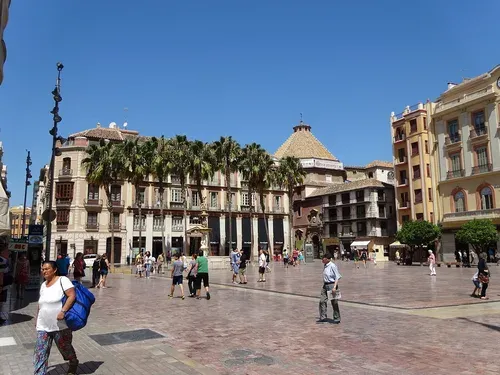
June in Malaga
High28°C / 82°F
Low20°C
Rain7mm / 2 rainy days
Sun13.6 h/day
Daylight15 h/day
Humidity56%
Sea20°C
Crowds●●●○○Prices●●●○○
June opens the beach season. The sea reaches a comfortably swimmable 20-21°C by mid-month, days run warm at 28°C, and rainfall all but vanishes at two rain days. Daylight stretches long, with sunset around 9:30pm giving endless evenings for tapas and beach walks once the heat breaks. The first half is the calmer half: Spanish school holidays only begin mid-June, so beaches and sights are far less pressured than they will be in July. San Juan night on 23 June lights bonfires across every beach to mark the unofficial start of summer.
The vibe June is the tipping point, when Málaga shifts from spring-calm into full beach mode. Early June still feels relaxed, but by the San Juan bonfires on the 23rd the season has truly begun. Those long 9:30pm sunsets are the real gift: the day's heat breaks and the chiringuitos and promenades come alive after dark.
Don't miss Noche de San Juan (23 June) fills La Malagueta and La Misericordia beaches with midnight bonfires, the burning of júas rag dolls and fireworks over the sand, the unofficial start of summer. Long days make late-evening espetos at the Pedregalejo chiringuitos the highlight.
Crowd drivers The beach season opens and Spanish school holidays begin mid-June; San Juan night (23 June) packs the beaches with locals.
In season Espeto (charcoal-grilled sardine) season hits its stride; eat them skewered over embers at a beachfront chiringuito after sunset.
Prices start climbing; the first half of June is noticeably quieter and cheaper than July.
Events this month
🌸 Seasonal natureSaint John's Night Noche de San Juan
Jun 23
the night of 23 June
Bonfires light up every beach at midnight, júas rag dolls are burned, people jump the flames, and fireworks go up over La Malagueta.
The unofficial start of summer, with La Malagueta and La Misericordia beaches packed with locals all night, a genuinely local rite rather than a tourist show.
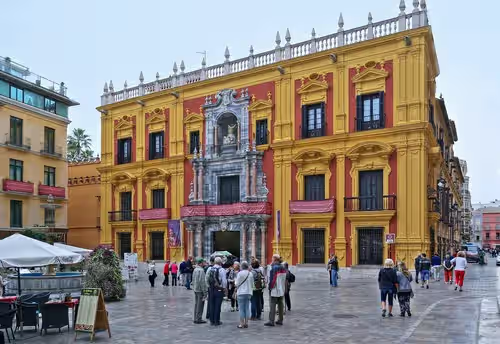
July in Malaga
High31°C / 87°F
Low23°C
Rain1mm / 0 rainy days
Sun13.3 h/day
Daylight14 h/day
Humidity57%
Sea24°C
Crowds●●●●●Prices●●●●●
July is Málaga at full summer intensity: highs of 31°C, afternoons regularly hitting 33-36°C, and a UV index of 11 that makes 1-5pm street sightseeing genuinely punishing on the shadeless Alcazaba and Gibralfaro. The sea is a warm 23-24°C and the beaches are packed from 9am as Spanish, French and German school holidays all coincide. Best walking hours are before 11am and after 6pm. Calle Larios is shaded by large summer awnings, keeping the shopping street walkable at midday.
The vibe July is for people who genuinely don't mind heat and crowds and will pay top rates for both. Midday in the centre is a write-off, and every headline sight has a queue. But mornings on a near-empty beach, and the long lit evenings of tapas and espetos along the promenade, are a different city, and that part is worth it.
Don't miss Beach mornings before the 9am rush, then air-conditioned museums through the worst of the heat. Muelle Uno's port promenade runs cooling water misters on its canopies, making it one of the few comfortable midday walks.
Crowd drivers Spanish, French and German school holidays all coincide, peak cruise calls continue, and the beaches are full from mid-morning.
In season Espetos at a Pedregalejo chiringuito are the signature July meal; arrive at 7pm for a table before the 9pm local rush.
Heads up Some neighbourhood tapas bars outside the centre close for a week in mid-summer, though central restaurants stay open through the season.
Peak rates: mid-range hotels 120-180 euros a night, with Alcazaba queues 40+ minutes without pre-booking.

August in Malaga
High31°C / 87°F
Low23°C
Rain7mm / 1 rainy days
Sun12.7 h/day
Daylight14 h/day
Humidity61%
Sea24°C
Crowds●●●●●Prices●●●●●
August is the busiest and hottest month, with highs of 31°C, frequent 33-36°C afternoons, and the warmest sea of the year at 24-25°C. The Malagueta beach is full by 9am. Feria de Málaga (15-22 August) is the largest summer festival on the Costa del Sol and the single busiest week of the year, with a daytime fair on Calle Larios and a vast night fair at the Real del Cortijo de Torres. Outside Feria hours the centre empties of locals, and 15 and 19 August are public holidays. This is the time to structure the day in thirds and pre-book everything.
The vibe August is exhilarating or exhausting depending on what you came for. The Feria is genuinely one of Spain's great parties, all flamenco dresses, free casetas and nightly concerts. But the heat is brutal, the prices are at their ceiling, and relaxed cultural sightseeing is the hardest it gets all year. Come for the Feria, not for the museums.
Don't miss The daytime Feria in the historic centre (noon-6pm) brings free live flamenco and horse parades to Calle Larios, while the night fair at the Real packs in 100+ casetas, concerts and horse shows. Inauguration fireworks light up the port the night of 14 August.
Crowd drivers Feria de Málaga (15-22 August) plus the height of summer beach season; 15 August (Assumption) and 19 August (mid-Feria) are public holidays.
In season Feria fino sherry, fried fish and free-flowing casetas define the eating; the sea at 24-25°C makes a swim part of every meal.
Heads up Shops and businesses close for the public holidays on 15 and 19 August; some neighbourhood tapas bars outside the centre shut for a week mid-month.
The year's highest rates during Feria week (15-22 August); book 5-6 months ahead.
Events this month
🎉 FestivalMálaga Fair Feria de Málaga / Feria de Agosto
Aug 15–22
8 days around 15 August
Commemorating the city's 1487 reconquest, a daytime street fair in the historic centre (noon-6pm) plus a vast night fair at the Real del Cortijo de Torres with 100+ casetas, concerts, flamenco and horse shows. Inauguration fireworks open it from the port on 14 August.
The largest summer festival on the Costa del Sol, eight days of flamenco dresses, free casetas and nightly concerts, unmissable if you want the party and to be avoided if you want calm.
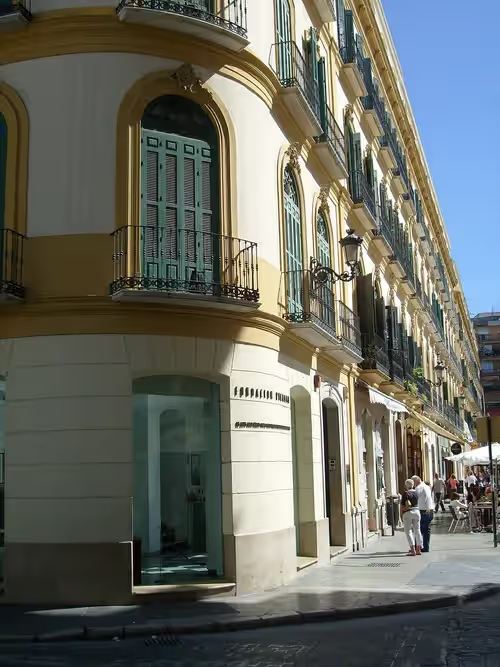
September in Malaga
High28°C / 82°F
Low21°C
Rain28mm / 4 rainy days
Sun11.3 h/day
Daylight12 h/day
Humidity66%
Sea22°C
Crowds●●●●○Prices●●●●○
September is a tale of two halves. The first fortnight runs on as a northern-European beach extension, with 28°C days, a warm 22-23°C sea, and prices still high. After the 15th the rates fall away quickly and the beaches thin out, leaving the warmest swimming of the year with half the August crowd. The patron-saint holiday of Virgen de la Victoria on 8 September closes shops and creates a long weekend. This back half of September is one of the best windows of the year for a beach-and-culture trip.
The vibe Late September is one of Málaga's quiet triumphs: the sea is still bath-warm, the heat has eased, and the August crowds have gone home. Mid-September onward you get summer's payoff without summer's pressure, and it's the single best beach-with-fewer-crowds window of the year.
Don't miss The warmest sea of the year (22-23°C) with far smaller crowds after mid-month. Virgen de la Victoria on 8 September brings a solemn Cathedral mass and procession carrying the 15th-century image back to the Sanctuary of La Victoria.
Crowd drivers Northern-European beach-season extension keeps the first two weeks busy; Virgen de la Victoria (8 September) is a local holiday that draws domestic visitors.
In season Early autumn is prime espeto-and-chiringuito season, with beaches finally roomy enough to settle in at Pedregalejo.
Heads up Virgen de la Victoria (8 September), a Málaga-only holiday, closes local shops and creates an extended weekend.
The first two weeks stay expensive; after 15 September rates drop 20-30% quickly.
Events this month
⛪ ReligiousFeast of the Virgin of Victory Festividad de la Virgen de la Victoria
Sep 8
8 September every year, a local holiday
Málaga's patron-saint day: a solemn Cathedral mass and a procession that carries the 15th-century image back to the Sanctuary of La Victoria. Local shops close.
One of the most devout events on the calendar, and a local public holiday that creates a long September weekend.

October in Malaga
High24°C / 75°F
Low17°C
Rain52mm / 5 rainy days
Sun9.6 h/day
Daylight11 h/day
Humidity70%
Sea20°C
Crowds●●○○○Prices●●●○○
October is the connoisseur's month. Highs hold at a warm 24°C, the veranillo de San Miguel warm spell can bring summer-like days, and the sea stays swimmable at 20-21°C well into the month. The soft golden Mediterranean light makes Gibralfaro Castle photography at dusk the best of the year. Crowds have dropped sharply and rates sit 30-40% below summer. Picasso Month fills the city with events around his 25 October birthday, all in shoulder-season calm with no queues.
The vibe October is Málaga at its most rewarding: warm enough for the beach and the Alcazaba terraces, empty enough to enjoy both. The golden autumn light, the swimmable sea, and the Picasso celebrations with no lines make this the connoisseur's pick over the more famous May.
Don't miss Picasso Month (Un octubre para Picasso) marks his 25 October birth with free events: the Casa Natal open free all day on the 25th, free concerts on Plaza de la Merced, and the Museum free on the 26th. The golden October light makes dusk at Gibralfaro the year's best photography.
Crowd drivers The veranillo warm spell extends the season for some, but foreign numbers fall sharply after the September shift. Picasso Month events draw a cultural rather than a beach crowd.
In season Fresh anchovies and autumn vegetables are at their best at Atarazanas, and boquerones en vinagre hit peak freshness.
Heads up Spain's National Day (12 October) is low-key in Málaga, though some shops may close.
Rates 30-40% below peak summer; October is the sweet spot for culture and weather.
Events this month
🎨 Art and culturePicasso Month Un octubre para Picasso
Oct 24–26
throughout October, peaking around the 25th
City-wide events marking Picasso's birth on 25 October: the Casa Natal open free all day on the 25th, free concerts on Plaza de la Merced, the Museum free on the 26th, and jazz at the Birthplace.
The one month Picasso is celebrated everywhere in his home city, and the shoulder-season timing means you see it all with no queues.

November in Malaga
High20°C / 68°F
Low13°C
Rain71mm / 6 rainy days
Sun8.8 h/day
Daylight10 h/day
Humidity70%
Sea18°C
Crowds●○○○○Prices●○○○○
November is the low season proper: foreign visitor numbers are thin, the city is calm, and prices fall to their floor. Days stay mild at 20°C, but this is one of the rainier months at 71mm, with showers arriving in short, intense bursts rather than all-day drizzle. The sea cools to 18°C, beyond comfortable swimming for most. The Calle Larios Christmas lights are switched on late in the month, drawing the first domestic crowds of the festive season to the synchronized light-and-sound show.
The vibe November is Málaga at rest, and arguably its best value. The tapas bars of the Barrio de la Victoria and Calle Beatas are full of locals again, the museums are empty, and the only crowd is the one that gathers for the Christmas-lights switch-on. Pack a layer for the showers and you have the city to yourself.
Don't miss The Calle Larios Christmas lights debut late in November, with a synchronized light-and-sound show at 6:30pm, 8:30pm and 10pm nightly under a giant illuminated canopy. Museums and the Alcazaba are at their emptiest, ideal for unhurried culture.
Crowd drivers Very low foreign-visitor numbers; the Calle Larios Christmas lights switch-on late in the month brings the first domestic festive crowds.
In season Tapas season at its most local: bars wall-to-wall in summer have space at the counter, and a bodega in La Victoria for moscatel is a fine way out of a shower.
Heads up All Saints' Day (1 November) is a quiet national holiday with most shops closed.
The cheapest month alongside January; hotel doubles under 60 euros mid-week.
Events this month
💡 LightsCalle Larios Christmas Lights Iluminación navideña de Calle Larios
Nov 27 – Jan 6
late November to 6 January
Calle Larios is covered with a giant illuminated canopy and 16 stars, with a synchronized light-and-sound show at 6:30pm, 8:30pm and 10pm nightly down Spain's third most expensive shopping street.
One of the most-watched Christmas shows in Spain, drawing domestic crowds from late November until the Three Kings close the season on 6 January.

December in Malaga
High17°C / 63°F
Low11°C
Rain40mm / 5 rainy days
Sun8.2 h/day
Daylight10 h/day
Humidity74%
Sea16°C
Crowds●●○○○Prices●●○○○
December splits in two. Early December is mild at 17°C, quiet and reasonably priced, often with a four-day puente around 6-8 December that draws a domestic break crowd. From late November the Calle Larios Christmas lights run their nightly show, and the festive centre fills with domestic visitors from around 23 December as prices spike for the holiday week. The Verdiales folk festival on 28 December gathers troupes at Puerto de la Torre for a UNESCO-recognised tradition unique to Málaga province. The sea is a cold 16°C, firmly out of swimming season.
The vibe December is two cities. The first three weeks are calm, cheap and softly festive, perfect for the Christmas lights without the holiday-week crush. From the 23rd it flips into full festive mode with domestic crowds and spiking prices, but the Calle Larios show is one of Spain's most watched, and worth braving the crowd for once.
Don't miss The Calle Larios Christmas lights are the showpiece, with 16 illuminated stars along Spain's third most expensive shopping street. The Verdiales festival on 28 December at Puerto de la Torre is Europe's oldest living folk-music tradition, free and unticketed.
Crowd drivers The 6-8 December puente and the Christmas-and-New-Year week (from around 23 December) bring domestic crowds and the year's festive price spike.
In season Festive sweets and the season's roasted chestnuts on the centre's street corners; moscatel and dry sierra wines pair the cold evenings.
Heads up Christmas Day (25 December) closes almost everything, including the Alcazaba and Gibralfaro. Constitution Day (6 December) and Immaculate Conception (8 December) close shops.
Early December is very reasonable (50-80 euros mid-range); Christmas week (23-31 Dec) spikes.
Events this month
💡 LightsCalle Larios Christmas Lights Iluminación navideña de Calle Larios
Nov 27 – Jan 6
late November to 6 January
Calle Larios is covered with a giant illuminated canopy and 16 stars, with a synchronized light-and-sound show at 6:30pm, 8:30pm and 10pm nightly down Spain's third most expensive shopping street.
One of the most-watched Christmas shows in Spain, drawing domestic crowds from late November until the Three Kings close the season on 6 January.
🎵 MusicVerdiales Festival Fiesta Mayor de Verdiales
Dec 28
28 December every year
Different pandas (troupes) gather at Puerto de la Torre to compete with guitars, violins, lutes and tambourines in flower-adorned costumes, from early afternoon until nightfall.
A UNESCO-recognised folk tradition unique to Málaga province and Europe's oldest living folk-music form, with no ticket and no booking, you just show up.
Frequently asked questions
What is the best time to visit Málaga?
Late April to early June and October are the best windows. They combine warm 20-25°C weather, a sea that is either approaching swimmability in spring or still warm in autumn, manageable crowds, and hotel rates 25-40% below the July and August peak. October adds Picasso Month and the year's best golden light for almost no queues.
What is the cheapest month to visit Málaga?
January and November are the cheapest, with city-centre hotel doubles from 35-60 euros a night, well under half the August rate. January edges it for sunshine and fewer rainy days, while November is mild at 20°C but one of the wetter months. Both are near-empty of foreign tourists, so the Alcazaba and museums have no queue.
What is the worst time to visit Málaga?
The second half of August, unless the Feria is your goal. Afternoons hit 33-36°C, the beaches are full by 9am, and Feria de Málaga (15-22 August) drives hotel rates to their yearly peak. July is the runner-up for heat and overcrowding. If you want the Feria itself, though, August is unmissable.
When can you swim in the sea in Málaga?
The comfortable swimming window runs June to October, roughly five months. The sea reaches a swimmable 20-21°C by mid-June, peaks at 24-25°C in August, and stays warm at 20-21°C through October. The best beach-with-fewer-crowds sweet spot is mid-September to early October, when the water is still warm but the August crowds have gone.
Is Málaga worth visiting in winter?
Yes, if you come for culture and tapas rather than the beach. December to February stay mild at 16-17°C with plenty of sun, and the city is at its most local and affordable. The Calle Larios Christmas lights run from late November, Carnival takes over February, and the Alcazaba, Cathedral and Picasso Museum are queue-free. The sea, at 15-16°C, is too cold for swimming.
When is the Feria de Málaga and is it worth timing a trip around?
Feria de Málaga runs 15-22 August, opening with fireworks from the port on the night of 14 August. It is the biggest summer festival on the Costa del Sol, with a daytime fair on Calle Larios and a vast night fair at the Real del Cortijo de Torres. It is unmissable if you want the party, but expect peak heat, peak prices, and the busiest week of the year.
When is Semana Santa in Málaga?
Semana Santa falls in late March or April, the week before Easter, with 45 brotherhoods staging 40+ processions through the historic centre. Accommodation books out three to four months ahead, and the centre is blocked for parades morning and evening. The Spanish Legion's arrival from the port on Maundy Thursday is the iconic moment. Book grandstand silla seats via the city council early.
What is the best month for families to visit Málaga?
Early June or the second half of September. In early June the sea is a swimmable 20-21°C and the July beach chaos hasn't begun. After 10 September the sea is at its warmest 22-23°C, beaches are half as crowded as August, and the heat eases to 27-29°C, so the Alcazaba and Picasso Museum stay queue-free. Avoid Feria week (15-22 August).
How hot does Málaga get in summer?
July and August afternoons regularly hit 33-36°C in the centre and can touch 38°C in a Saharan heat spell, with a UV index reaching 11. Street sightseeing between 1pm and 5pm is punishing, especially on the shadeless Alcazaba and Gibralfaro. Plan to walk before 11am and after 6pm, and use the beach or air-conditioned museums through the midday heat.

Any month, any day: your guide is already there
Whatever date you pick, a private human guide gets pricier and harder to book on weekends, holidays and in peak season. Our live AI guide, the one that walks with you and answers anything you ask out loud, works the opposite way.
One flat price, every day
No holiday, weekend, night or peak-season surcharge. A private guide in Malaga runs well over 100 euro for a half day, and more on holidays. Ours stays the same.
Available the moment you want it
Start at midnight or at dawn, on Christmas, in the snow, in the August heat. No sold-out high season, no booking weeks ahead.
Your pace, no meter running
Pause for a long lunch, restart after dark, repeat a stop. The tour simply waits for you.
Free to try, a fraction of the cost
Test it for free, then a transparent flat price that undercuts any private guide, in every season.
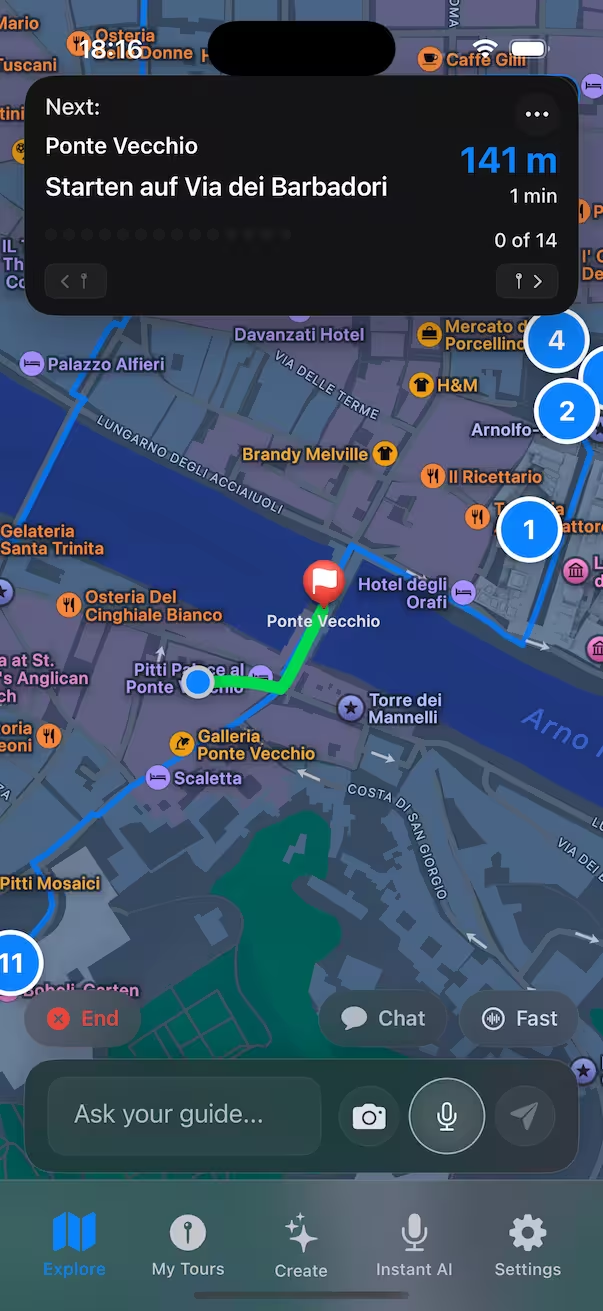
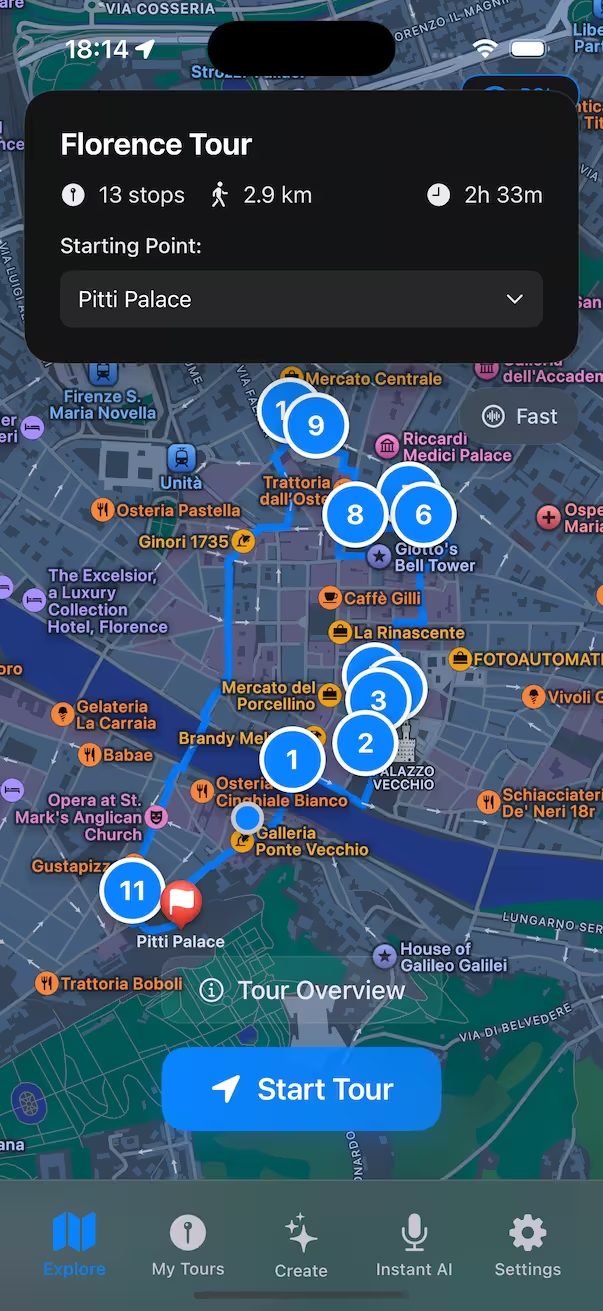
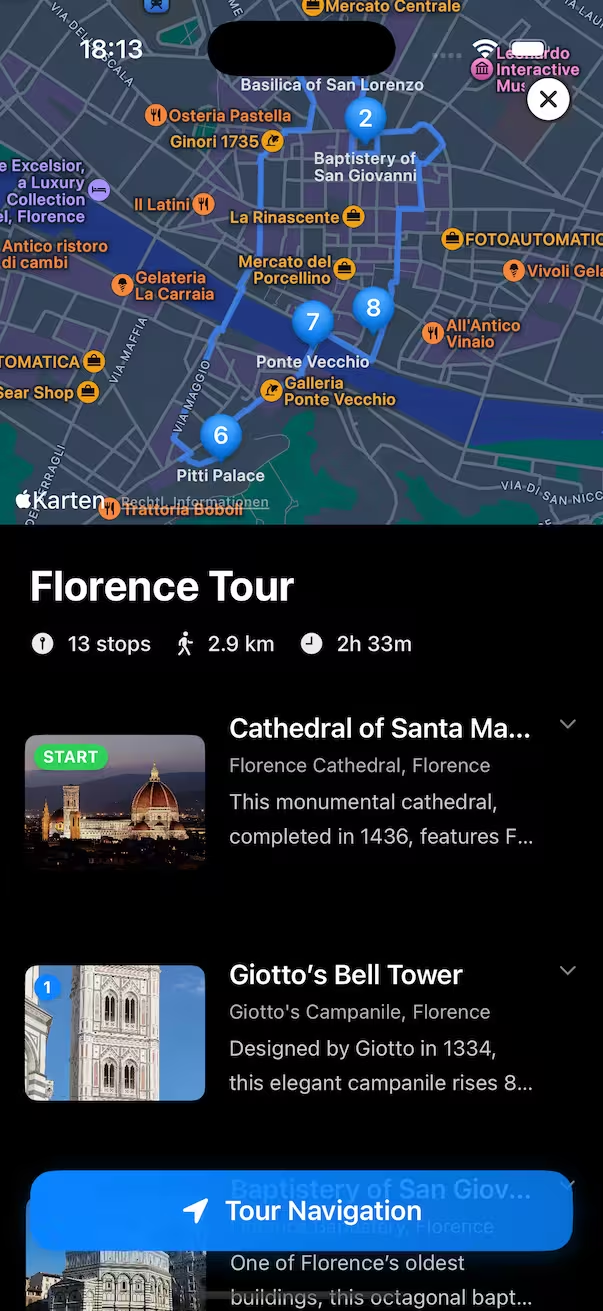
The classic Malaga tour: 11 stops, 5.7 km, about 3 h on foot
Your live AI guide and the self-guided Malaga route, together in your browser.