Best Time to Visit Cádiz
Month-by-month weather, crowds and prices, plus a full calendar of festivals and events worth planning a trip around.
Best monthsMay, Oct
CheapestJan, Mar, Nov
AvoidJul, Aug
BusiestJul, Aug
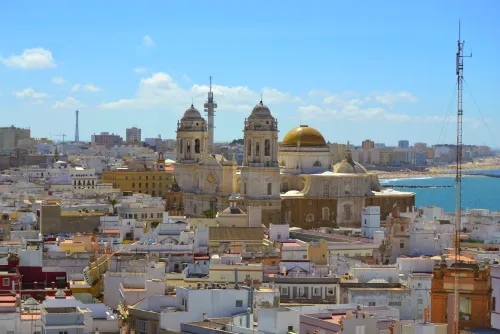
When is the best time to visit Cádiz?
October and May are the sweet spot in Cádiz: 20 to 27°C, the Atlantic still warm enough to swim, festivals like FIT theatre and the Jerez horse fair within reach, and hotels 30 to 40% below summer. July and August bring 30°C-plus heat and packed beaches. January is the cheapest and quietest month of the year.
Start our tool and find your best time to visit Cádiz
Your perfect month
Free · ~30 seconds
or tap a month directly
What matters to you?
And this?
Best overall: Oct, May. October and May are the real answer: 20 to 27°C, a sea still warm enough to swim, every sight on normal hours, and prices 30 to 40% under the summer peak. October adds the FIT theatre festival and the Tosantos market spectacle, May the Jerez horse fair half an hour away.
Best value: Jan, Nov, Mar. January, November and March bring old-town hotels at their lowest, near-empty museums, and EU-free entry to the Museo de Cádiz any day. The trade is shorter days and Atlantic showers, which blow through in an hour rather than soaking the whole day.
Avoid: Jul, Aug. July and August: 30 to 34°C, La Caleta beach full by 11am, old-town hotels at 150 to 250€ and booked out, and the hot Levante wind scouring the promenades with fine sand. Worth it only if a beach holiday is the entire point.
- January: Great time, 16°C. This is the one month you have the old town to yourself. No cruise groups, no carnival crush, just a working Andalusian port in winter. The sea is 14 to 16°C, so only surfers go in, but the trade for grey patches is a genuinely quiet, cheap, unperformed Cádiz.
- February: Good time, 17°C. Carnival is the soul of Cádiz, not a tourist show. The chirigotas sing biting political satire in gaditano dialect, and the whole city turns out in costume. Come for it and you see the real identity of the place, but only if you booked months ago. Outside the carnival dates, February is sleepy and cheap.
- March: Great time, 19°C. March feels like Cádiz exhaling. The carnival is packed away, prices drop, and the old town is calm and unhurried before Easter and spring fill it again. If you want the city quiet but already warming, this is the window, and it closes fast.
- April: Great time, 21°C. Cádiz's Holy Week is more intimate than Seville's or Málaga's. The streets are narrower, so you stand almost within touching distance of centuries-old pasos. Late April, after the processions, is one of the most underrated windows of the year: warm, green, and emptying out.
- May: Great time, 25°C. May is the sweet spot without the crowd tax. The weather is genuinely the best of the year, the beaches are not yet packed, and prices stay reasonable. Pair it with the Jerez horse fair half an hour away and you have close to a perfect Andalusian week.
- June: Good time, 27°C. June is the tipping point into summer, busy and warm but not yet overwhelmed. The sea is finally comfortable, the long 14.6-hour days stretch the evenings to 9:30pm, and the city has real energy without the August saturation. Catch it before the school holidays land.
- July: Tough month, 30°C. July is for people whose entire trip is the beach. Midday sightseeing without shade is genuinely unpleasant rather than just warm, prices are at their maximum, and the beaches are wall to wall. Walk before 11am and after 7pm, and the early and late hours are still magic.
- August: Tough month, 31°C. August is the warm sea and the full crush in one. The water is at its best for swimming, but you share La Caleta with the whole of Andalucía, pay peak rates, and battle the Levante wind that can push apparent temperatures past 38°C and carry stinging sand. Beach-first travellers only.
- September: Good time, 28°C. Early September is still summer; the back half is the secret. Wait until after 15 September and you get a warm sea, soft golden light, falling prices and a city exhaling after August. For many regulars this beats July and August outright.
- October: Great time, 25°C. October is the locals' answer to when to visit. The sea is still swimmable, the light goes amber over La Caleta, the FIT festival fills the evenings, and you pay shoulder-season prices for near-perfect conditions. If you can only come once, come now.
- November: Great time, 20°C. November is one of the most underrated months here. The summer crush is long gone, prices are back to off-season, and afternoons still feel like a soft autumn rather than a winter. It is the quiet, cheap, warm-enough window that most visitors overlook.
- December: Great time, 18°C. December is Cádiz wrapped in low winter sun and Christmas lights, almost entirely local. The sea is cold at 14 to 16°C, so the beach is for walks not swims, but the cheap rooms, empty museums and soft Atlantic light make it a quietly lovely time to wander.
Cádiz weather by month
HighLowRainfall
Jan16°
Feb17°
Mar19°
Apr21°
May25°
Jun27°
Jul30°
Aug31°
Sep28°
Oct25°
Nov20°
Dec18°
| Month | Temp | Rain | Sun | Crowds | Prices | Highlight |
|---|---|---|---|---|---|---|
| Jan | 16° / 8° | 47mm · 6 rainy days | 8.1 h/day | ●○○○○ | ●○○○○ | |
| Feb | 17° / 10° | 36mm · 6 rainy days | 9.3 h/day | ●●●●○ | ●●●○○ | Cádiz Carnival |
| Mar | 19° / 11° | 77mm · 9 rainy days | 9.9 h/day | ●●○○○ | ●●○○○ | Little Carnival |
| Apr | 21° / 13° | 52mm · 7 rainy days | 11.5 h/day | ●●●○○ | ●●●○○ | Holy Week |
| May | 25° / 16° | 29mm · 4 rainy days | 12.6 h/day | ●●●○○ | ●●●○○ | Jerez Horse Fair |
| Jun | 27° / 19° | 9mm · 2 rainy days | 13.5 h/day | ●●●●○ | ●●●●○ | Corpus Christi |
| Jul | 30° / 21° | 0mm · 0 rainy days | 13.3 h/day | ●●●●● | ●●●●● | |
| Aug | 31° / 21° | 1mm · 0 rainy days | 12.8 h/day | ●●●●● | ●●●●● | |
| Sep | 28° / 19° | 23mm · 4 rainy days | 11.3 h/day | ●●●●○ | ●●●●○ | Alcances Documentary Film Festival |
| Oct | 25° / 17° | 63mm · 7 rainy days | 9.6 h/day | ●●●○○ | ●●●○○ | Alcances Documentary Film Festival |
| Nov | 20° / 12° | 75mm · 8 rainy days | 8.7 h/day | ●●○○○ | ●●○○○ | Iberoamerican Theatre Festival |
| Dec | 18° / 10° | 66mm · 7 rainy days | 7.9 h/day | ●○○○○ | ●●○○○ |
How we score this: weather = long-run climate normals (Open-Meteo), crowds & prices = relative season read, events checked yearly against official dates.
Best time to visit Cádiz: weather, prices & crowds
Best months for good weather
May, Jun, Sep, Oct
May, June, September and October give Cádiz its most comfortable spell: 24 to 28°C, barely any rain, and an Atlantic that is swimmable from June through October without the July furnace.
Quietest months to avoid the crowds
Jan, Mar, Nov
January, March and November empty the old town right out. Outside Carnival you can walk into the Cathedral tower at opening, get an EU-free Museo de Cádiz to yourself, and hear gaditano spoken instead of tour-group English.
Cheapest time to visit Cádiz
Jan, Nov, Mar
January is the cheapest month, with old-town hotels from around 50€ a night, and November returns to off-season rates while afternoons still hover near 19 to 20°C.
Best time for festivals and events
Feb
Carnaval de Cádiz in February has no equal in Spain: ten days of satirical chirigotas at the Gran Teatro Falla and costumed street parties in the La Viña barrio, the city's whole identity poured into one fortnight.
How many days do you need in Cádiz?
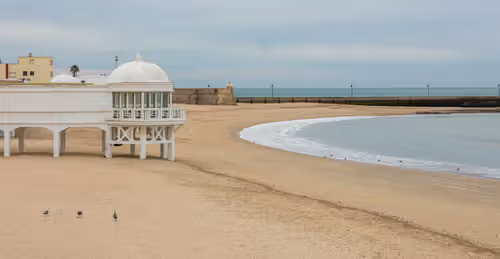
Two days is the natural fit for Cádiz. This ancient Atlantic port sits on a slim peninsula, so the old town is compact and sea-wrapped, and you can cover the essential sights in a single unhurried day. A second day opens up the long city beaches, the market, and the seafront promenades that locals fill at dusk.
One day
The compact old town in a single day
Start at the Cádiz Cathedral when it opens and climb the tower before crowds build at 11:30. Walk the tight lattice of whitewashed streets through El Pópulo and La Viña, stop at the Mercado Central for a mid-morning espresso and fresh seafood, and cross to the Oratorio de San Felipe Neri where the 1812 Constitution was proclaimed. End the afternoon on the ramparts of the Castillo de San Sebastián causeway as the Atlantic light fades.
Two daysRecommended
Add beaches, museums, and tower views
Day two belongs to the things the first day misses. Walk the long Playa de La Victoria in the morning before heat sets in, then visit the Museo de Cádiz (free for EU citizens, 1.50 euros for others) for Phoenician, Roman, and Baroque collections with almost no queue outside summer. In the afternoon, climb Torre Tavira for the camera obscura projection of the city and watch the old town rooftops light up gold before evening tapas in the tabancos of La Viña.
Three days
Day trips into the sherry country
With a third day, base yourself in Cádiz and take the train or bus to Jerez de la Frontera, 50 minutes away, for a bodega tour and the Royal Andalusian School of Equestrian Art. Alternatively, head 30 minutes up the coast to Sanlúcar de Barrameda for manzanilla sherry at its source and grilled prawns on the Bajo de Guía seafront, watching the Guadalquivir estuary roll toward the Doñana wetlands.
Four days or more
The wider province and the White Villages
Four or more days open up the province properly. Drive south along the Atlantic coast to the surf beaches of Conil de la Frontera and Zahara de los Atunes, then cut inland to the White Villages of Vejer de la Frontera or Arcos de la Frontera, both under 90 minutes from Cádiz. In spring, time a visit around the Jerez horse fair or the almadraba bluefin tuna season down the coast at Barbate.
Best time to visit Cádiz by traveller type
Same city, different trip. Here's the month that fits how you're travelling.
🧭
Best time to visit Cádiz for the first time
MayOct
May or October hits the bullseye: ideal 24 to 27°C weather, the sea swimmable, every sight open on normal hours, and none of the Carnival accommodation chaos. October keeps the FIT theatre festival lively into the evenings.
❤️
Best time to visit Cádiz for couples
OctApr
October for warm sea, low crowds and golden Atlantic light over La Caleta at sunset, or late April after Semana Santa for jacaranda starting in Parque Genovés and long evenings without the summer throng.
💶
Best time to visit Cádiz on a budget
JanNov
January or November for hotels from around 50€, zero queues, every museum open, and EU-free entry to the Museo de Cádiz, with the Oratorio de San Felipe Neri and Roman Theatre both at 1.50€ or less.
🍝
Best time to visit Cádiz for food and wine
MayOct
May for the freshest Atlantic seafood at the Mercado Central, ortiguillas de mar and cazón en adobo at their peak, or October to November for the satirical Tosantos market tableaux paired with the FIT festival restaurant buzz.
Worst time to visit Cádiz
July and August are the hardest months to visit Cádiz for anything beyond sunbathing. Temperatures hit 30 to 34°C and the old town's stone streets trap reflected heat between 1pm and 5pm, making midday sightseeing genuinely unpleasant. La Caleta beach fills wall-to-wall by 11am, old-town hotels run 150 to 250 euros a night and are often fully booked weeks ahead, and the hot Levante wind season is at full force, driving fine sand across the promenades and pushing apparent temperatures past 38°C.
Still worth it for July and August make sense if a beach holiday is the entire purpose of the trip. The sea reaches its warmest at around 23°C, the long 14-hour days give evening life until well past 9pm, and the Atlantic Poniente breeze, when it blows, makes the heat briefly tolerable.
Go instead in May, October, when Cádiz is at its best.
Cádiz events and festivals calendar
Annual highlights worth timing a trip around, listed month by month.
February
🇮 HolidayAndalusia Day Día de Andalucía
Feb 28
fixed on 28 February each year
The regional holiday of Andalusia, with flag ceremonies and cultural events.
March
⛪ ReligiousHoly Week Semana Santa de Cádiz
Mar 29 – Apr 5 ~
the week before Easter Sunday, late March to mid-April
52 floats and over 10,000 brotherhood members process through the narrow old town across Holy Week, including El Nazareno on Holy Wednesday and El Silencio on Good Friday, which moves in complete silence.
May
🎉 FestivalJerez Horse Fair Feria del Caballo de Jerez
May 9–16
mid-May, in Jerez 50 minutes away
Spain's most famous horse fair, 50 minutes from Cádiz, with flamenco dress, sherry, casetas and equestrian shows.
June
🍷 Food and wineManzanilla Sherry Fair Feria de la Manzanilla
Jun 2–7
early June, in Sanlúcar de Barrameda 30 minutes away
A local Andalusian fair in nearby Sanlúcar de Barrameda built around manzanilla sherry, flamenco and horse parades, with free entry to most casetas.
⛪ ReligiousCorpus Christi Corpus Christi de Cádiz
Jun 4 ~
early June, 60 days after Easter
A solemn morning procession through the old town with children in first-communion dress, brotherhoods, clergy and live music.
🎨 Art and cultureCádiz en Danza Dance Festival Festival Internacional de Danza Cádiz en Danza
Jun 6–13
early June, annual since 2001
An international contemporary dance festival staged across multiple city venues, mixing free outdoor performances with ticketed indoor shows.
September
🎬 FilmAlcances Documentary Film Festival Festival de Cine Documental Alcances
Sep 25 – Oct 2
late September into early October
Founded in 1969, Spain's oldest documentary film festival, with screenings across city venues including the Castillo de Santa Catalina.
October
🎨 Art and cultureIberoamerican Theatre Festival Festival Iberoamericano de Teatro de Cádiz
Oct 20 – Nov 5
late October into early November, annual since 1986
One of Spain's most important theatre festivals, bringing Iberoamerican companies from Spain, Portugal, Argentina, Chile, Uruguay, Brazil, Mexico and the UK, and turning the whole old town into stages.
🌸 Seasonal natureTosantos Market Festival Tosantos
Oct 31
31 October, the eve of All Saints
A hyper-local Cádiz tradition born in 1876: Mercado Central vendors dress their stalls in satirical political tableaux built from fruit, fish and produce.
November
⛪ ReligiousDay of the Virgin of the Rosary Día de la Virgen del Rosario
Nov 7
around 7 November, the patron-saint celebration
The procession of Cádiz's patron saint through the old town, with some local closures on the day.
Insider tips for visiting Cádiz
The rules buried in forums, in one place.
- La Caleta beach: go before 9am or after 7:30pm in summer. This tiny west-facing city bay has the best sunset in Cádiz, but by 11am in July and August towels cover every grain. Weekends bring day-trippers from Jerez and Seville, so aim for weekdays.
- Climb the Cádiz Cathedral tower at the 10am opening sharp. It is the best panorama in the city and crowds build by 11:30. The Cathedral is closed Mondays, so plan the climb for any other morning.
- The Museo de Cádiz is free for EU citizens every day. Show any EU national ID at the desk, with no special Sunday and no queue. Non-EU pay 1.50€. From 16 June the summer hours shrink to 09:00 to 15:00, and it closes every Monday.
- For Carnival, book a room three to four months ahead or pay triple. The old town has under 200 hotel rooms and the whole province is full by late November. Turn up without a reservation and you sleep in Jerez or El Puerto de Santa María, half an hour out.
- On high-Levante days, skip the exposed promenades. The Castillo de San Sebastián causeway and Paseo Fernando Quiñones face straight into the wind and the fine sand scours skin. Head instead to the sheltered narrow streets of El Pópulo and La Viña.
- Cruise ships dock Tuesday to Saturday with peak arrivals 9 to 11am. When two or more ships are in port, common from April to October, the Cathedral, Torre Tavira and Roman Theatre fill with guided groups by 10:30. Arrive at 9am or visit after 3pm once the ships sail.
- For the Roman Theatre and the Torre Tavira camera obscura, avoid the midday sun. Bright noon light washes out the live projection of the city, so the morning and evening sessions give sharper, more atmospheric images.
- The Oratorio de San Felipe Neri, where the 1812 Constitution was proclaimed, is one of Spain's most historic buildings and almost empty year-round. It closes Sundays and after 16:00 on weekdays, so come on a weekday morning.
Public holidays in Cádiz
On these dates many shops and offices close, transport thins out, and sights can be mobbed or shut. Plan around them.
| Date | Holiday | What closes |
|---|---|---|
| Jan 1 | New Year's Day | Almost everything closes and the city is very quiet. A handful of tourist-facing cafés open late, but plan around shut museums and shops. |
| Jan 6 | Epiphany (Reyes Magos) | Shops and most sights are closed. The real draw is the Cabalgata de Reyes parade through the streets on the evening of 5 January, the most loved children's event of the Spanish winter. |
| Feb 28 | Día de Andalucía | Regional Andalusian holiday: public offices and some shops shut, with flag ceremonies and cultural events. In 2026 it falls inside Carnival week, so you can catch patriotic events and carnival parties the same weekend. |
| Apr 3 | Good Friday (Viernes Santo) | A full closure day with most attractions shut. The El Silencio procession moves through the old town in complete silence, the most powerful moment of Cádiz's Holy Week. |
| Apr 5 | Easter Sunday (Domingo de Resurrección) | The city is packed and many restaurants are booked out. Domestic Spanish visitors fill the old town, so reserve tables and rooms well ahead. |
| May 1 | Labour Day (Día del Trabajo) | Most shops and offices close, and the Friday-to-Sunday long weekend brings a noticeable domestic tourism spike. Beaches and old-town restaurants get busy. |
| Jun 4 | Corpus Christi | Some closures and a solemn morning procession with children in first-communion dress through the old town. A uniquely Andalusian June street spectacle. |
| Aug 15 | Asunción de la Virgen | National holiday at the height of summer: beaches are at full capacity and some traditional old-town restaurants close for a one to two week family break, though tourist-facing places stay open. |
| Oct 12 | Día de la Hispanidad (Spain Day) | National holiday and long weekend with moderate crowds. Most sights stay open but expect busier mornings at the Cathedral and Torre Tavira. |
| Nov 1 | All Saints (Todos los Santos) | Most shops and some sights close. The eve, 31 October, is Tosantos, when Mercado Central vendors dress their stalls in satirical tableaux made of fish, fruit and produce. |
| Dec 8 | Inmaculada Concepción | Shops close for a quiet city day in the run-up to Christmas. A good day for outdoor walks and viewpoints rather than indoor sights. |
| Dec 25 | Christmas Day (Navidad) | Everything closes across a long Christmas weekend. Hotel rates tick up around 24 and 25 December; otherwise late December is very quiet and cheap. |
Cádiz month by month
January in Cádiz
High16°C / 61°F
Low8°C
Rain47mm / 6 rainy days
Sun8.1 h/day
Daylight10 h/day
Humidity76%
Crowds●○○○○Prices●○○○○
January is Cádiz at its most local and most affordable. Days reach a mild 16°C, nights drop near 8°C, and the Atlantic light is sharp and clear between the showers. This is the wettest stretch of the year, but the rain is fast Atlantic fronts that pass in an hour rather than the all-day drizzle of northern Europe. Museums and the Cathedral tower are close to empty, and the city belongs to gaditanos again.
The vibe This is the one month you have the old town to yourself. No cruise groups, no carnival crush, just a working Andalusian port in winter. The sea is 14 to 16°C, so only surfers go in, but the trade for grey patches is a genuinely quiet, cheap, unperformed Cádiz.
Don't miss Atlantic surf is at its best swell from now into February at Playa de La Victoria and nearby Conil and Tarifa. Wild flowers and subtropical plants in Parque Genovés start showing by late month.
Crowd drivers Deep off-season: no cruise calls, no school holidays once Reyes passes on 6 January. The lowest visitor pressure of the year.
In season Peak season for Atlantic seafood: order cazón en adobo and fresh chocos at the Mercado Central where prices stay local.
Heads up 1 and 6 January are holidays with museums and shops shut; the Cabalgata de Reyes parade is the evening of 5 January.
Cheapest month of the year; old-town hotels from around 50€ a night.
February in Cádiz
High17°C / 63°F
Low10°C
Rain36mm / 6 rainy days
Sun9.3 h/day
Daylight11 h/day
Humidity73%
Crowds●●●●○Prices●●●○○
February splits in two. For most of the month Cádiz stays mild at 17°C and very quiet, but Carnaval explodes the middle ten days into Spain's most famous and most satirical street party. Accommodation across the whole province sells out, costumed crowds fill the La Viña barrio every night, and the COAC singing competition packs the Gran Teatro Falla. Día de Andalucía on 28 February falls inside Carnival week, so patriotic ceremonies and carnival parties share the same weekend.
The vibe Carnival is the soul of Cádiz, not a tourist show. The chirigotas sing biting political satire in gaditano dialect, and the whole city turns out in costume. Come for it and you see the real identity of the place, but only if you booked months ago. Outside the carnival dates, February is sleepy and cheap.
Don't miss Wild flowers bloom along the old city walls and Parque Genovés shows its palms and dragon trees well in the early spring light. The Carnaval street performances run free across the old town every evening of the main week.
Crowd drivers Carnaval de Cádiz (12 to 22 February in 2026) is the single biggest crowd event of the year and fills every room in the province by late November.
In season Carnival street food means pestiños and chicharrones, and the bars of La Viña stay packed and frying late into the night.
Heads up Día de Andalucía on 28 February closes public offices and some shops, though Carnival keeps the streets fully alive.
Carnival week hotels run 2 to 3 times normal rates, book 3 to 4 months ahead; outside those dates February is still a low-season bargain.
Events this month
🎭 CarnivalCádiz Carnival Carnaval de Cádiz
Feb 12–22 ~
ten days around Shrove Tuesday, usually mid to late February
Spain's most famous and most satirical carnival: the COAC competition of chirigotas, comparsas and coros at the Gran Teatro Falla, plus mass costumed street parties, loudest in the La Viña barrio.
The one unmissable Cádiz event, the city's whole identity distilled into ten days, but book three to four months ahead or expect zero accommodation.
🇮 HolidayAndalusia Day Día de Andalucía
Feb 28
fixed on 28 February each year
The regional holiday of Andalusia, with flag ceremonies and cultural events. When the date falls inside Carnival week, as it often does, you can catch both patriotic ceremonies and carnival parties the same weekend.
Worth watching for if the date overlaps Carnival, which happens in years when Shrove Tuesday falls in late February.

March in Cádiz
High19°C / 66°F
Low11°C
Rain77mm / 9 rainy days
Sun9.9 h/day
Daylight12 h/day
Humidity70%
Crowds●●○○○Prices●●○○○
March is the post-Carnival hush, and one of the quietest months to visit. Highs climb toward 19°C, the days lengthen past 12 hours, and the city slips back into local rhythm. It is also the second wettest month at around 9 rainy days, but again the Atlantic showers move through fast. The Carnaval Chiquito on 1 March gives one last relaxed, locals-only echo of the February party.
The vibe March feels like Cádiz exhaling. The carnival is packed away, prices drop, and the old town is calm and unhurried before Easter and spring fill it again. If you want the city quiet but already warming, this is the window, and it closes fast.
Don't miss Wild flowers peak on the city walls and Parque Genovés is at its spring best. The Carnaval Chiquito returns the singing groups to the streets for one last, gentler day on 1 March.
Crowd drivers Post-Carnival lull keeps crowds low; the Carnaval Chiquito on 1 March brings a brief one-day mini-spike.
In season Spring brings the first tortillitas de camarones, the lacy shrimp fritters that are a Cádiz signature, to the old-town tabancos.
20 to 30% below shoulder season; Semana Santa pushes April rates up if Easter lands early.
Events this month
🎭 CarnivalLittle Carnival Carnaval de los Jartibles
Mar 1 ~
the first Sunday after the main Carnival
A one-day epilogue to Carnival when the singing groups return to the streets for a final, more relaxed, locals-only encore.
A cheaper, calmer way to catch the carnival spirit without the main-week accommodation scramble.

April in Cádiz
High21°C / 69°F
Low13°C
Rain52mm / 7 rainy days
Sun11.5 h/day
Daylight13 h/day
Humidity69%
Crowds●●●○○Prices●●●○○
April warms to 21°C and brings Semana Santa, when 52 floats and over 10,000 brotherhood members move through the narrow old-town streets across Holy Week. Cruise ships restart and Spanish domestic visitors arrive for the Easter long weekend, so the first half is busier and pricier than March. Once Easter passes, late April settles into a lovely quiet spring with long evenings and jacaranda starting to colour the squares.
The vibe Cádiz's Holy Week is more intimate than Seville's or Málaga's. The streets are narrower, so you stand almost within touching distance of centuries-old pasos. Late April, after the processions, is one of the most underrated windows of the year: warm, green, and emptying out.
Don't miss Semana Santa processions are free to watch, the El Nazareno on Holy Wednesday the most emotional. From late April the jacarandas begin to bloom in Parque Genovés and the old-town squares.
Crowd drivers Semana Santa pilgrims and the Easter long weekend, cruise season restarting, and Spanish school holidays stack through the first half of the month.
In season Late April brings the first proper Atlantic tuna of the almadraba season down the coast at Barbate and Zahara, served as tuna tartare and grilled loin.
Heads up Good Friday (3 April) is a full closure day; many sights shut and restaurants book out across the Easter weekend.
Semana Santa hotel rates run about 30% above March; shoulder pricing otherwise.
Events this month
⛪ ReligiousHoly Week Semana Santa de Cádiz
Mar 29 – Apr 5 ~
the week before Easter Sunday, late March to mid-April
52 floats and over 10,000 brotherhood members process through the narrow old town across Holy Week, including El Nazareno on Holy Wednesday and El Silencio on Good Friday, which moves in complete silence.
More intimate than Seville's or Málaga's: the narrower streets put you almost within touching distance of the centuries-old pasos.

May in Cádiz
High25°C / 76°F
Low16°C
Rain29mm / 4 rainy days
Sun12.6 h/day
Daylight14 h/day
Humidity62%
Crowds●●●○○Prices●●●○○
May is the month locals quietly call the best of the year. Highs sit at a perfect 24 to 25°C, rain almost vanishes to four days, and there are nearly 13 hours of sun. The sea is still cool at 18 to 19°C, so hardy swimmers go in while the beaches stay calm. Hotels run 30 to 40% under summer, and the Feria del Caballo in nearby Jerez fills mid-May with flamenco dress, sherry and horses.
The vibe May is the sweet spot without the crowd tax. The weather is genuinely the best of the year, the beaches are not yet packed, and prices stay reasonable. Pair it with the Jerez horse fair half an hour away and you have close to a perfect Andalusian week.
Don't miss Jacarandas bloom across Parque Genovés and the old-town squares. The Feria del Caballo in Jerez (9 to 16 May, 50 minutes away) is Spain's most famous horse fair and an unmissable side-trip.
Crowd drivers Spanish long weekends around 1 May and the start of cruise season lift crowds, but nothing near the July peak.
In season Atlantic seafood is at its freshest: ortiguillas de mar (fried sea anemones), cazón en adobo and chipirones at the Mercado Central stalls.
Hotels around 80 to 120€ a night, 30 to 40% below summer peak; widely cited as the best-value month.
Events this month
🎉 FestivalJerez Horse Fair Feria del Caballo de Jerez
May 9–16
mid-May, in Jerez 50 minutes away
Spain's most famous horse fair, 50 minutes from Cádiz, with flamenco dress, sherry, casetas and equestrian shows.
An unmissable May side-trip: pair it with Cádiz for close to a perfect Andalusian week.

June in Cádiz
High27°C / 81°F
Low19°C
Rain9mm / 2 rainy days
Sun13.5 h/day
Daylight15 h/day
Humidity62%
Crowds●●●●○Prices●●●●○
June opens the beach season properly. Highs reach 27°C, rain all but disappears at two days, and the sea warms to a swimmable 20 to 21°C. Cruise ships call frequently and the city fills as schools across Europe break up late in the month, but Spanish schools are still in, so the beaches have not yet hit their summer crush. Cádiz en Danza brings contemporary dance to stages across the old town in early June.
The vibe June is the tipping point into summer, busy and warm but not yet overwhelmed. The sea is finally comfortable, the long 14.6-hour days stretch the evenings to 9:30pm, and the city has real energy without the August saturation. Catch it before the school holidays land.
Don't miss Cádiz en Danza (6 to 13 June) animates the shoulder season with dance across multiple city stages. Corpus Christi on 4 June fills the old town with a solemn morning procession, and the Feria de la Manzanilla in nearby Sanlúcar (2 to 7 June) is an easy sherry-and-flamenco day-trip.
Crowd drivers Beach season opening, frequent cruise calls, and European end-of-school holidays beginning in the second half of the month.
In season Early summer is peak season for the bluefin tuna of the almadraba, served raw, grilled and as mojama down the coast and in Cádiz's better tabernas.
Hotels 20 to 30% below July and August; the last chance for value before full peak.
Events this month
🎨 Art and cultureCádiz en Danza Dance Festival Festival Internacional de Danza Cádiz en Danza
Jun 6–13
early June, annual since 2001
An international contemporary dance festival staged across multiple city venues, mixing free outdoor performances with ticketed indoor shows.
A strong reason to choose June over July: it animates the shoulder season before the full summer crowds arrive.
⛪ ReligiousCorpus Christi Corpus Christi de Cádiz
Jun 4 ~
early June, 60 days after Easter
A solemn morning procession through the old town with children in first-communion dress, brotherhoods, clergy and live music.
A uniquely Andalusian street experience that animates an early-June visit before the summer peak.
🍷 Food and wineManzanilla Sherry Fair Feria de la Manzanilla
Jun 2–7
early June, in Sanlúcar de Barrameda 30 minutes away
A local Andalusian fair in nearby Sanlúcar de Barrameda built around manzanilla sherry, flamenco and horse parades, with free entry to most casetas.
An easy June day-trip from Cádiz during the shoulder season, with the region's best sherry at the source.

July in Cádiz
High30°C / 86°F
Low21°C
Rain0mm / 0 rainy days
Sun13.3 h/day
Daylight14 h/day
Humidity62%
Crowds●●●●●Prices●●●●●
July is Cádiz at full peak. Highs hit 30°C, rain effectively stops, and Spanish school holidays flood the city with domestic tourists. La Caleta and Playa de La Victoria fill by late morning, and the old town's stone streets trap reflected heat between 1pm and 5pm. The peninsula's Atlantic breezes soften the worst of it compared with Seville's interior furnace, but the hot Levante wind season is now in full force.
The vibe July is for people whose entire trip is the beach. Midday sightseeing without shade is genuinely unpleasant rather than just warm, prices are at their maximum, and the beaches are wall to wall. Walk before 11am and after 7pm, and the early and late hours are still magic.
Don't miss The long 14-hour days mean evening life until 9:30pm and later, when the old town and the La Caleta seafront finally cool and come alive. Beach and watersports season is at its height.
Crowd drivers Spanish school holidays at full flood, peak domestic tourism, beach crowds at maximum, and constant cruise calls.
In season Summer is gazpacho and salmorejo season, the cold Andalusian soups, alongside ice-cold manzanilla sherry from Sanlúcar in the old-town tabancos.
Heads up Some traditional family tapas bars in the old town close for one to two weeks across high summer, though tourist-facing spots stay open.
Year's highest prices; old-town hotels 150 to 250€ a night, beachfront needs 2 to 3 months' booking.

August in Cádiz
High31°C / 87°F
Low21°C
Rain1mm / 0 rainy days
Sun12.8 h/day
Daylight14 h/day
Humidity62%
Crowds●●●●●Prices●●●●●
August is the hottest and busiest month, with highs of 31°C and the sea at its warmest near 23°C. Local and domestic beaches are packed, cruise ships are in full swing, and the Asunción national holiday on 15 August adds another crowd surge. Some traditional old-town restaurants take their summer family break and close for one to two weeks. There is no mass shutdown like an Italian Ferragosto, but the local fabric thins.
The vibe August is the warm sea and the full crush in one. The water is at its best for swimming, but you share La Caleta with the whole of Andalucía, pay peak rates, and battle the Levante wind that can push apparent temperatures past 38°C and carry stinging sand. Beach-first travellers only.
Don't miss The sea is at its warmest of the year around 23°C, ideal for swimming, and the Poniente westerly, when it blows, makes even August days feel fresh. Evenings on the La Caleta seafront run late and lively.
Crowd drivers Peak domestic tourism, the Asunción holiday on 15 August, and cruise season at full swing.
In season Cold soups and seafood rule: salmorejo, ajoblanco with almonds and grapes, and grilled sardine espetos along the beach.
Heads up Individual family-run tapas bars in the old town may shut for one to two weeks in August; newer tourist-facing places stay open.
Same peak as July; the Asunción holiday on 15 August adds extra pressure.

September in Cádiz
High28°C / 82°F
Low19°C
Rain23mm / 4 rainy days
Sun11.3 h/day
Daylight12 h/day
Humidity68%
Crowds●●●●○Prices●●●●○
September is the gentle comedown from peak. Highs ease to 28°C, the sea stays a warm 22 to 23°C, and once Spanish schools go back in mid-month the crowds visibly thin. The first half is still busy, but from 15 September the beaches calm and prices fall around 20% while the weather stays summer-warm. The Alcances documentary film festival opens late in the month.
The vibe Early September is still summer; the back half is the secret. Wait until after 15 September and you get a warm sea, soft golden light, falling prices and a city exhaling after August. For many regulars this beats July and August outright.
Don't miss The Alcances documentary film festival (25 September to 2 October) screens across city venues including the Castillo de Santa Catalina. The sea is still warm enough for daily swimming with the beaches half-empty.
Crowd drivers Strong cruise season continues, but Spanish schools returning mid-month drop domestic crowds sharply from 15 September.
In season Late summer brings the second almadraba tuna run, plus the first chestnuts and the return of warm stews to the tabancos as evenings cool.
After 15 September crowds drop noticeably and prices fall around 20%.
Events this month
🎬 FilmAlcances Documentary Film Festival Festival de Cine Documental Alcances
Sep 25 – Oct 2
late September into early October
Founded in 1969, Spain's oldest documentary film festival, with screenings across city venues including the Castillo de Santa Catalina.
An authentic, locally rooted cultural event and an excellent shoulder-season reason to visit.

October in Cádiz
High25°C / 77°F
Low17°C
Rain63mm / 7 rainy days
Sun9.6 h/day
Daylight11 h/day
Humidity69%
Crowds●●●○○Prices●●●○○
October is the best all-round month in Cádiz. Highs of 25°C, a sea still warm at 21 to 22°C, much quieter beaches, and the FIT Iberoamerican theatre festival turning the whole old town into stages from around 20 October. Cruise ships still call but crowds taper through the month. Rain ticks up to around seven days, but the showery Atlantic style passes quickly between clear spells.
The vibe October is the locals' answer to when to visit. The sea is still swimmable, the light goes amber over La Caleta, the FIT festival fills the evenings, and you pay shoulder-season prices for near-perfect conditions. If you can only come once, come now.
Don't miss The FIT Iberoamerican theatre festival (around 20 October to 5 November) brings companies from across Spain, Portugal and Latin America. Tosantos on 31 October dresses the Mercado Central stalls in satirical produce tableaux, best photographed before 11:30am.
Crowd drivers Cruise ships stay active and the Spain Day long weekend (12 October) lifts crowds briefly, but the trend through the month is downward.
In season Autumn brings the season's first urta a la roteña, the local sea bream baked with peppers and tomato, a true gaditano dish.
Hotel rates similar to the May and June shoulder, 30 to 40% below peak summer.
Events this month
🎨 Art and cultureIberoamerican Theatre Festival Festival Iberoamericano de Teatro de Cádiz
Oct 20 – Nov 5
late October into early November, annual since 1986
One of Spain's most important theatre festivals, bringing Iberoamerican companies from Spain, Portugal, Argentina, Chile, Uruguay, Brazil, Mexico and the UK, and turning the whole old town into stages.
It animates the best-overall month of October with evening performances all across the historic centre.
🌸 Seasonal natureTosantos Market Festival Tosantos
Oct 31
31 October, the eve of All Saints
A hyper-local Cádiz tradition born in 1876: Mercado Central vendors dress their stalls in satirical political tableaux built from fruit, fish and produce.
Pure gaditano culture, very photogenic, and a perfect pairing with the October FIT theatre season; arrive by 10am before the displays come down.
November in Cádiz
High20°C / 67°F
Low12°C
Rain75mm / 8 rainy days
Sun8.7 h/day
Daylight10 h/day
Humidity75%
Crowds●●○○○Prices●●○○○
November returns Cádiz to the off-season, mild and quiet. Highs hold near 19 to 20°C through the first half, the FIT theatre festival wraps in early November, and the patron-saint celebration of the Virgen del Rosario falls on the 7th. Rain increases to around eight days, the showery Atlantic kind rather than all-day drizzle. Prices drop back to their winter lows while the warmth lingers.
The vibe November is one of the most underrated months here. The summer crush is long gone, prices are back to off-season, and afternoons still feel like a soft autumn rather than a winter. It is the quiet, cheap, warm-enough window that most visitors overlook.
Don't miss The Día de la Patrona for the Virgen del Rosario on 7 November brings an authentic patron-saint procession through the old town. Atlantic surf swell builds again at La Victoria, Conil and Tarifa.
Crowd drivers The FIT festival tail in early November holds a little activity; after mid-month the city goes genuinely quiet.
In season November is the start of the warming-dish season: berza gaditana stew and chickpeas with chocos appear on the tabanco menus.
Heads up All Saints (1 November) closes most shops and some sights; Tosantos is the photogenic eve on 31 October.
Off-season pricing returns; rates back near the January and March lows.
Events this month
⛪ ReligiousDay of the Virgin of the Rosary Día de la Virgen del Rosario
Nov 7
around 7 November, the patron-saint celebration
The procession of Cádiz's patron saint through the old town, with some local closures on the day.
An authentic, low-key religious tradition that gives a November visit a sense of local life.

December in Cádiz
High18°C / 64°F
Low10°C
Rain66mm / 7 rainy days
Sun7.9 h/day
Daylight10 h/day
Humidity79%
Crowds●○○○○Prices●●○○○
December is quiet, cool and inexpensive, with highs near 18°C and the year's shortest days around 9.5 hours. Christmas preparations bring modest Navidad markets and lights, and the Inmaculada on 8 December is a quiet city-wide closure day. Except for the 24 and 25 December lift, hotels stay cheap and the old town belongs to locals again. This is the wet end of the year, but the showers blow through fast.
The vibe December is Cádiz wrapped in low winter sun and Christmas lights, almost entirely local. The sea is cold at 14 to 16°C, so the beach is for walks not swims, but the cheap rooms, empty museums and soft Atlantic light make it a quietly lovely time to wander.
Don't miss Navidad markets and lights animate the squares, and the Cabalgata de Reyes builds toward its 5 January parade. Winter is also the best Atlantic surf season at La Victoria and along the coast.
Crowd drivers Off-season throughout; the only spike is the Christmas and Inmaculada bridge around 6 to 8 December and 24 to 25 December.
In season Christmas means pestiños, the anise-and-honey fritters, and roscos, alongside the warming berza and seafood stews of the gaditano winter table.
Heads up Inmaculada (8 December) and Christmas Day (25 December) close shops and most sights for quiet city days.
Very quiet and cheap, except a small lift around 24 and 25 December.
Frequently asked questions
What is the best time to visit Cádiz?
October and May are the best months. October keeps the sea warm at 21 to 22°C with highs of 25°C, the FIT theatre festival running, and prices 30 to 40% below summer. May brings ideal 24°C weather, calm beaches and the Jerez horse fair half an hour away, also at shoulder-season rates.
What is the cheapest month to visit Cádiz?
January is the cheapest, with old-town hotels from around 50€ a night, no crowds and every museum open. November and March are nearly as cheap. Avoid Carnival week in February, when hotels run two to three times normal rates and the whole province sells out months ahead.
When is Cádiz Carnival in 2026 and is it worth visiting for?
Carnaval de Cádiz runs 12 to 22 February 2026. It is Spain's most famous satirical carnival, with chirigotas competing at the Gran Teatro Falla and costumed street parties in La Viña. It is absolutely worth timing a trip around, but book a room three to four months ahead or you will be staying in Jerez.
What is the worst time to visit Cádiz?
July and August for comfort: highs of 30 to 34°C, La Caleta beach full by 11am, hotels at 150 to 250€ and booked out, and the hot Levante wind carrying fine sand across the promenades. It works only if a beach holiday is the entire purpose of the trip.
When can you swim in the sea in Cádiz?
Comfortable swimming runs from June through October, when the Atlantic sits at 20°C or warmer. August is warmest at around 23°C, October still pleasant at 21 to 22°C with far quieter beaches. May is cool at 18 to 19°C, and from December to February the water drops to 14 to 16°C, surfer territory only.
What is the weather like in Cádiz in winter?
Mild. January and February highs sit at 16 to 17°C with nights near 8 to 10°C. Winter is the wettest stretch, but the rain comes as fast Atlantic fronts that pass in an hour rather than all-day drizzle. December has the shortest days at about 9.5 hours of daylight.
Is Cádiz good to visit with kids, and when?
Yes, best in late June or the first two weeks of September. In June Spanish schools are still in, so the flag beaches stay calm and the sea is a child-friendly 20 to 21°C. September has the warmest sea at 22 to 23°C with crowds falling from 15 September. Skip July and August, when the heat and beach crowds are hard on small children.
How many days do you need in Cádiz?
Two to three days covers the compact old town: the Cathedral and its tower, Torre Tavira, the Roman Theatre, the Museo de Cádiz and La Caleta beach. Add a day or two for side-trips to Jerez for sherry and horses, or Sanlúcar de Barrameda, both around 30 to 50 minutes away.
Does it get too hot in Cádiz in summer?
It can. July and August afternoons reach 30 to 34°C, and the old town's stone streets trap reflected heat from 1pm to 5pm. The peninsula's Atlantic breezes soften it compared with Seville, but the hot Levante wind can push apparent temperatures past 38°C. Walk before 11am and after 7pm in high summer.

Any month, any day: your guide is already there
Whatever date you pick, a private human guide gets pricier and harder to book on weekends, holidays and in peak season. Our live AI guide, the one that walks with you and answers anything you ask out loud, works the opposite way.
One flat price, every day
No holiday, weekend, night or peak-season surcharge. A private guide in Cádiz runs well over 100 euro for a half day, and more on holidays. Ours stays the same.
Available the moment you want it
Start at midnight or at dawn, on Christmas, in the snow, in the August heat. No sold-out high season, no booking weeks ahead.
Your pace, no meter running
Pause for a long lunch, restart after dark, repeat a stop. The tour simply waits for you.
Free to try, a fraction of the cost
Test it for free, then a transparent flat price that undercuts any private guide, in every season.
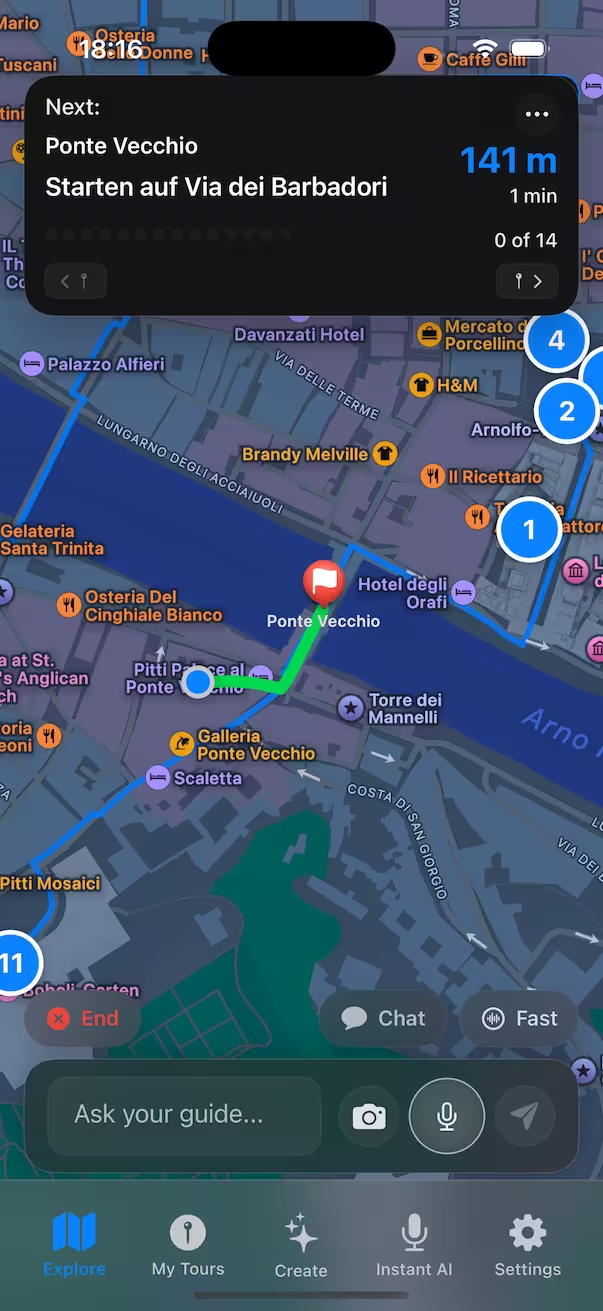
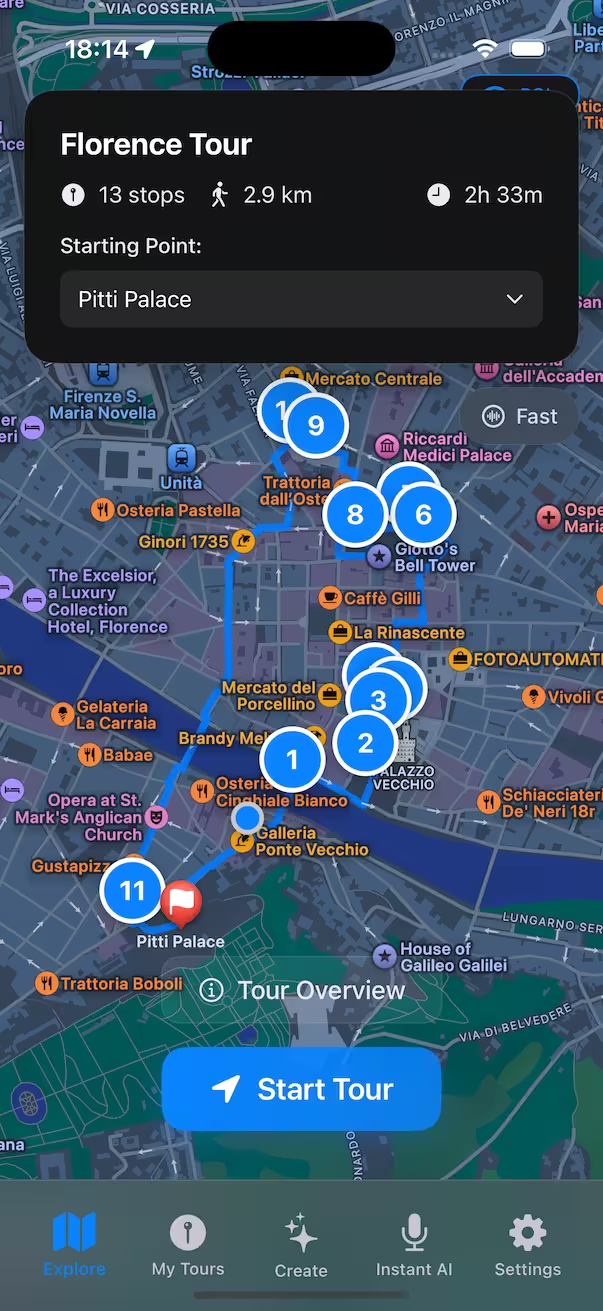
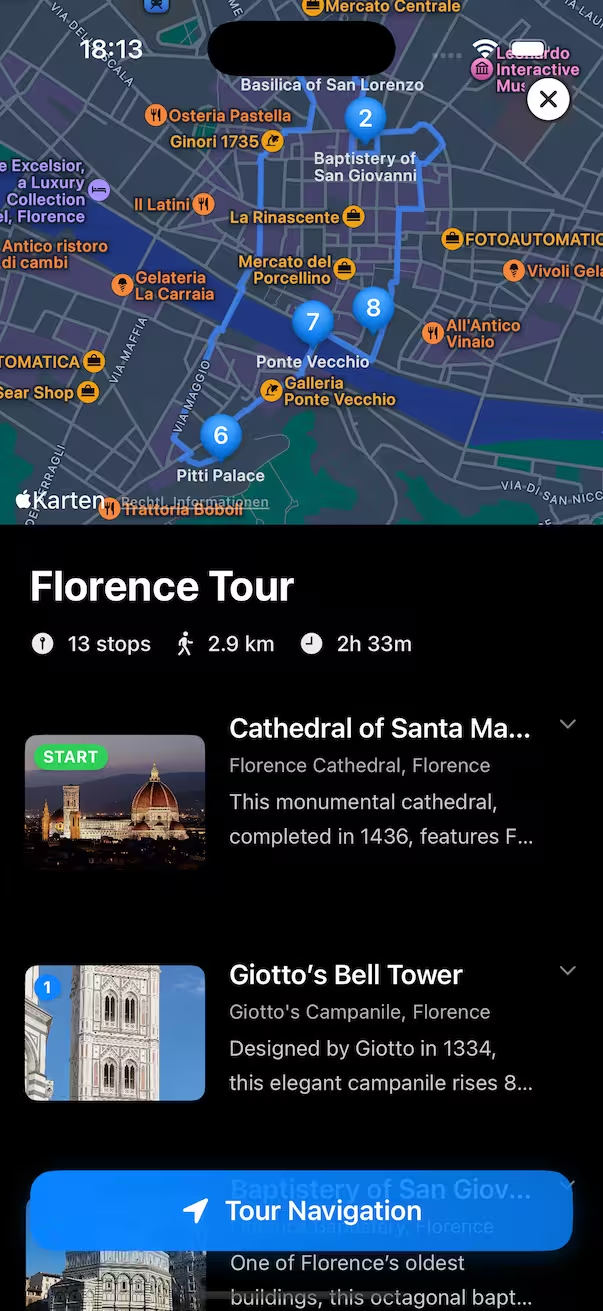
Your live AI guide and the self-guided Cádiz route, together in your browser.
