Best Time to Visit Helsinki
Month-by-month weather, crowds and prices, plus a full calendar of festivals and events worth planning a trip around.
Best monthsJun, Aug
CheapestJan, Feb, Nov
Avoid–
BusiestJul
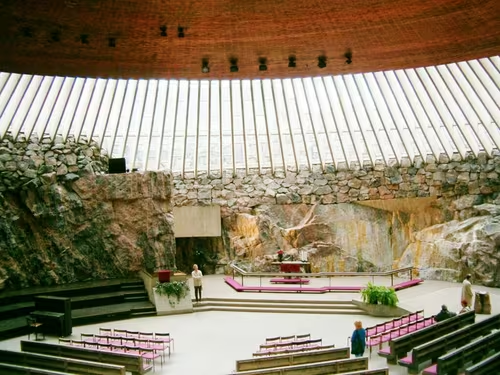
When is the best time to visit Helsinki?
Come in June or August. June gives you up to 19 hours of daylight, the Seurasaari midsummer bonfire and Helsinki Pride, with the city alive but not yet at July pitch. August stacks Flow Festival, the Night of the Arts and the Helsinki Festival into the fullest cultural month of the year. July is the busiest and priciest, January the cheapest and darkest.
Start our tool and find your best time to visit Helsinki
Your perfect month
Free · ~30 seconds
or tap a month directly
What matters to you?
And this?
Best overall: Jun, Aug. June and August are the real answer. June brings the longest days of the year, Pride and the midsummer fires; August packs in Flow Festival, the free Night of the Arts and the Helsinki Festival. Both give you warm, walkable weather and everything open, without July's peak prices and cruise-ship crush.
Best value: Jan, Feb, Nov. January, February and the non-Slush weeks of November bring rooms from around 60 euros, no queues at the museums, and free walks through Kaivopuisto and along the Market Square. The trade is short, dark days and a real chance of grey skies over snow.
Avoid: Nov. Mid-November around Slush (18 to 20 November): central hotels sell out and rates jump about 40 percent for a tech conference, while daylight is under eight hours and snow has usually not arrived. Worst value of the year unless you are there for the event.
- January: Tough month, -1°C. Do not come for sun, and do not expect a snow-globe either: January in Helsinki is as likely to be grey and slushy as crisp and white. What you get instead is the real city in hibernation, cheap and unhurried, and the best saunas of your life with a plunge into a hole in the ice if you dare.
- February: Tough month, 0°C. February is when Helsinki starts to believe in spring again, even if the thermometer disagrees. The light comes back fast, the saunas are still the centre of life, and this is one of the better months for a chance aurora over the city during strong solar activity near the equinox.
- March: Tough month, 2°C. March is the locals' favourite secret: still cheap, still quiet, but with real light back in the sky and the energy lifting. The snow can turn to slush by late month, but a sunny March day on a frozen-bright Senate Square beats any grey January afternoon.
- April: Good time, 8°C. April is the underrated month: dry, brightening fast, and still cheap, with the cruise crush a month away. The build toward Vappu at the very end gives the city a charge of anticipation that the deep-winter months simply cannot match.
- May: Good time, 14°C. May is the most joyful month to be in Helsinki. After the long winter the city pours outdoors at the first warm day, the light feels almost endless, and the Vappu picnic in Kaivopuisto is the closest the reserved Finns come to a collective party. Bring layers, because the warmth is real but not yet settled.
- June: Good time, 18°C. June is Helsinki at its luminous best, when the city feels like it is running on light. The strangest twist is midsummer itself: just as it peaks, the Finns flee to the countryside and the city goes quiet, so the busiest season hides its calmest, cheapest weekend right in the middle.
- July: Tough month, 21°C. July is for people who want warmth and water and do not mind sharing the city. Helsinki never turns oppressively hot, so the heat is not the problem; the prices and the cruise crowds are. Come for the swimming and the long evenings, and use the early morning before the day-trippers land.
- August: Good time, 20°C. August is the best month for anyone who travels for atmosphere over pure sunshine. The festival energy is genuine and the city feels switched fully on, even as the light starts shortening. Expect some grey, wet days mixed with the warm ones, and book around Flow weekend if you want a central bed.
- September: Good time, 15°C. September is the locals' season, when Helsinki settles back into itself after the summer rush. The light turns golden and low, the cafés are easy to get into again, and there is a soft melancholy in the air that suits the city perfectly. The catch is the weather, which can already turn grey and wet for stretches.
- October: Good time, 9°C. October is the underrated gem: cheap, calm, and lit by the kind of low golden autumn light that makes the harbour glow. The first two weeks, with the Ruska colours and the herring market, are the sweet spot before the dark and damp of November set in.
- November: Tough month, 4°C. November is the one month it is fair to call hard work. There is no white winter magic yet, just early darkness and rain, so this is a trip for cosy interiors: saunas, cafés, the great art museums. If you want the city dirt cheap and almost to yourself, and you do not mind the dark, it delivers.
- December: Tough month, 1°C. December is for the Christmas market and the candlelit, dark-season cosiness, not for sightseeing in daylight, of which there is almost none. Whether it feels magical or merely bleak depends entirely on the snow, which is far from guaranteed this early. When it lands, the Cathedral over the market is unforgettable.
Helsinki weather by month
HighLowRainfall
Jan-1°
Feb0°
Mar2°
Apr8°
May14°
Jun18°
Jul21°
Aug20°
Sep15°
Oct9°
Nov4°
Dec1°
| Month | Temp | Rain | Sun | Crowds | Prices | Highlight |
|---|---|---|---|---|---|---|
| Jan | -1° / -5° | 67mm · 14 rainy days | 1.3 h/day | ●○○○○ | ●○○○○ | |
| Feb | 0° / -5° | 59mm · 12 rainy days | 3.4 h/day | ●●○○○ | ●●○○○ | |
| Mar | 2° / -3° | 44mm · 10 rainy days | 6.9 h/day | ●●○○○ | ●●○○○ | |
| Apr | 8° / 0° | 38mm · 9 rainy days | 10.5 h/day | ●●○○○ | ●●○○○ | Vappu (May Day) |
| May | 14° / 6° | 55mm · 10 rainy days | 12.6 h/day | ●●●○○ | ●●●○○ | Vappu (May Day) |
| Jun | 18° / 12° | 62mm · 11 rainy days | 14.3 h/day | ●●●●○ | ●●●●○ | Seurasaari Midsummer Bonfires |
| Jul | 21° / 14° | 76mm · 12 rainy days | 13.6 h/day | ●●●●● | ●●●●● | |
| Aug | 20° / 14° | 90mm · 13 rainy days | 11.1 h/day | ●●●●● | ●●●●○ | Flow Festival |
| Sep | 15° / 10° | 63mm · 11 rainy days | 8.3 h/day | ●●●○○ | ●●●○○ | Helsinki Festival |
| Oct | 9° / 5° | 76mm · 12 rainy days | 4.6 h/day | ●●○○○ | ●●○○○ | Baltic Herring Market |
| Nov | 4° / 1° | 72mm · 14 rainy days | 1.8 h/day | ●●○○○ | ●●○○○ | Slush |
| Dec | 1° / -2° | 65mm · 14 rainy days | 1.3 h/day | ●●●○○ | ●●●○○ | Helsinki Christmas Market |
How we score this: weather = long-run climate normals (Open-Meteo), crowds & prices = relative season read, events checked yearly against official dates.
Best time to visit Helsinki: weather, prices & crowds
Best months for good weather
Jun, Jul, Aug
June to August is the only reliably warm stretch: highs of 18 to 21°C, low humidity, and daylight so long the sky never fully darkens around the 21 June solstice.
Quietest months to avoid the crowds
Jan, Feb, Nov
January, February and most of November empty the city out. The cruise ships have gone, the harbour is quiet, and you can have the Temppeliaukio rock church or the Ateneum almost to yourself.
Cheapest time to visit Helsinki
Jan, Feb, Nov
January is Helsinki's cheapest month, with hotel rooms from around 60 euros a night, 30 to 40 percent under the summer average. February and non-Slush November weeks run nearly as low.
Best time for festivals and events
Jun
Midsummer is the one unrepeatable Helsinki moment: the Seurasaari bonfires are lit at 9 pm on 19 June while it is still broad daylight, and the Finns themselves vanish to the countryside, leaving the city eerily calm.
How many days do you need in Helsinki?
Two days is the right frame for Helsinki. The city center is compact enough to walk without a plan, and one focused day covers the main landmarks, but a second lets you slow down for the design culture, the waterfront sauna scene, and the neighbourhood cafés that make Helsinki feel like more than a postcard.
One day
Senate Square to the sea fortress
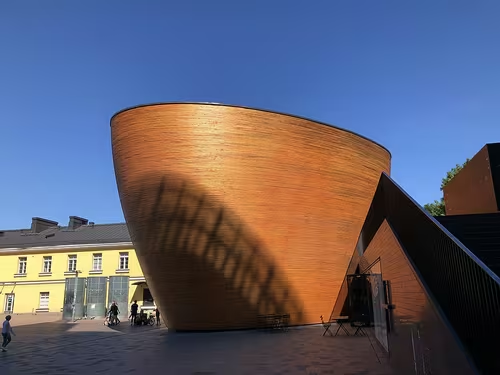
A single day works if you stay ruthlessly central. Start at Temppeliaukio Church, the rock-hewn landmark on Lutherinkatu, then cross to the Kamppi Chapel of Silence before walking the Esplanade to the Market Square. Take the HSL ferry to Suomenlinna sea fortress in the afternoon. The self-guided Helsinki walking tour covers 9 stops across 6.3 km in about 2.7 hours and links all the civic highlights in one clean loop.
Two daysRecommended
Waterfront and the design city
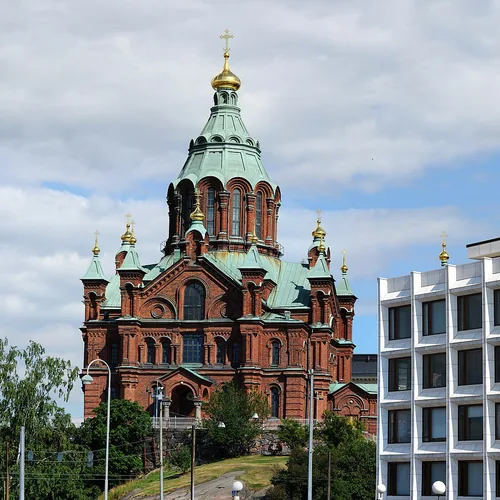
Day one hits the civic core: Senate Square, Helsinki Cathedral, Uspenski Cathedral across the South Harbour, and the market. Day two tilts toward Helsinki's modern confidence: the Ateneum art museum, Helsinki Central Station's stone giants, and the Oodi Central Library's glass-and-timber Book Heaven floor with its view over Parliament House. End the afternoon at Löyly sauna on the Hernesaari shore.
Three days
Islands, neighbourhoods, and a sauna ritual
With three days, add Suomenlinna as its own half-day, arriving on the first morning ferry from Kauppatori before the cruise groups land at 11 am. Use the spare afternoon to wander Kallio or Kruununhaka, Helsinki's older residential quarters with independent cafés and no tour-group traffic. A third evening is the right time for a proper sauna: Löyly or Allas Sea Pool both offer the steam-and-Baltic-plunge sequence that Helsinkians treat as a social ritual.
Four days or more
Day trips, Ruska colours, or festival time
A fourth day earns a day trip: Porvoo, Finland's oldest wooden town, is 50 minutes by bus and gives you coloured riverside merchant houses and artisan bakeries. In summer, extend afternoons at Hietaranta city beach or the free island of Uunisaari. If you visit in late August, the Helsinki Festival, Flow Festival, and the Night of the Arts compress three weeks of cultural density into a single trip, and four days is the minimum to catch more than one event.
Best time to visit Helsinki by traveller type
Same city, different trip. Here's the month that fits how you're travelling.
🧭
Best time to visit Helsinki for the first time
JunAug
June outside the midsummer weekend, or August. You get up to 19 hours of light, every sight open and warm weather without extreme heat, plus a culture programme that runs from Pride into the Helsinki Festival.
❤️
Best time to visit Helsinki for couples
MaySep
May or September: the city wakes up with terrace season and Vappu energy in May, while September brings golden Ruska light and quiet boulevards, with hotels 20 to 25 percent below the July peak.
💶
Best time to visit Helsinki on a budget
JanFebNov
January to March or non-Slush November: rooms from around 60 euros, free entry to Kaivopuisto and the Market Square, and Hakaniemi Market Hall lunches from about 5 euros.
🍝
Best time to visit Helsinki for food and wine
MayOct
October for the Baltic Herring Market (5 to 10 October), the city's oldest market tradition, or May for Vappu treats like tippaleipä and sima and the first summer terraces opening.
Best time for a tour of Helsinki
Helsinki is a compact city built for walking, and the calendar decides whether the 6.3 km loop is a pleasure or an endurance test. The window everyone wants is June through August, when highs of 18 to 21 °C and famously long daylight let you linger on Senate Square, drift through Esplanade Park, and watch the harbour at Market Square without ever feeling rushed; the catch is the crowd, peaking in July and August when the cruise ships dock and the cobbles fill. May and September are the quiet sweet spot, mild at 13 to 15 °C, the parks still green, the queues short. Spring's edges, March and April, stay raw at 2 to 7 °C with lingering ice underfoot. Winter is the honest hard season: January and February hover near or below freezing, dark by mid-afternoon, with fourteen rain or snow days, so the open stretch from Uspenski Cathedral down to the Market Square bites, though Temppeliaukio Church carved into the rock makes a warm refuge mid-route.
The beauty of doing this on foot is that you set the clock, and with AI Tourguide the timing is entirely yours: no fixed departure, no guide tapping a watch, just a voice-first guide that greets you, tells the stories behind each stop, and adapts as you go, all in your browser with nothing to download. On a bright August day you can start your Helsinki tour early, before the cruise crowds reach Senate Square, then pause for coffee when the light is best. In the dim depths of winter you simply set off at noon to catch what daylight there is, walking the loop at your own pace while the conversation carries you between the cold, quiet squares.
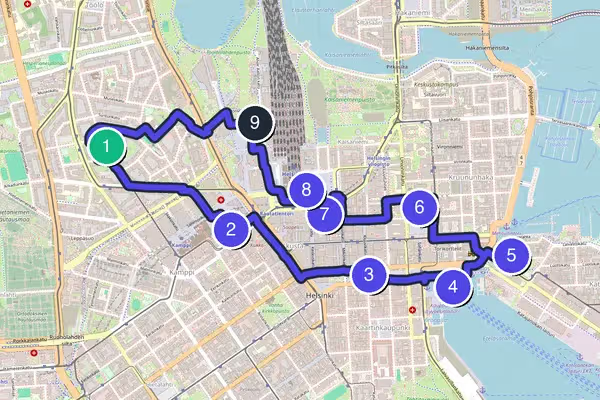
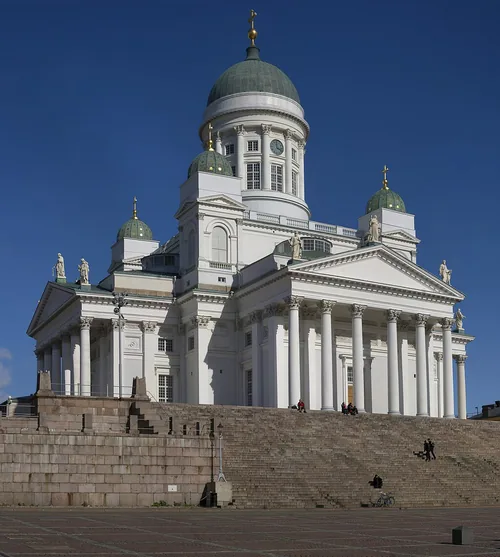 +5
+5All 9 stops are already on the map.
You just press start.
You just press start.
 AI Tourguide
You just read the route.
Now walk it with a guide in your ear.
Press start wherever you are, even hundreds of kilometres from Helsinki, and the guide begins telling its stories right away. In the city, pick any of the 9 stops to start from: it leads you there, then talks with you the whole route, asking, listening, remembering, and shaping the tour around your answers.
9stops6.3km2.7hours11languages
▶Start the tour freeFree to start · Runs in your browser · No app, no download
Helsinki events and festivals calendar
Annual highlights worth timing a trip around, listed month by month.
April
🇮 HolidayVappu (May Day) Vappu
Apr 30 – May 1
30 April evening into 1 May
Finland's wildest public celebration.
June
🌸 Seasonal natureSeurasaari Midsummer Bonfires Seurasaaren juhannusvalkeat
Jun 19 ~
Midsummer Eve, from 6 pm
Helsinki's largest public midsummer celebration on the island of Seurasaari: folk music, traditional dances and the great bonfire lit at 9 pm while it is still broad daylight.
🏳️🌈 PrideHelsinki Pride
Jun 22–28
late June, parade on the final Saturday
Finland's biggest Pride festival, drawing over 100,000 people.
🎵 MusicTuska Open Air Metal Festival Tuska
Jun 26–28
late June
Europe's largest inner-city metal festival, held in the Suvilahti industrial district and reachable directly by metro with no camping.
August
🎵 MusicFlow Festival
Aug 14–16
mid-August weekend
A premium music and arts festival in the Suvilahti district drawing around 90,000 people over three days.
🎨 Art and cultureHelsinki Festival Helsingin juhlaviikot
Aug 18 – Sep 5
mid-August to early September
Finland's largest cultural event: two and a half weeks of concerts, theatre, opera and dance across the city.
🎨 Art and cultureNight of the Arts Taiteiden Yö
Aug 20
one evening in late August
Hundreds of free art, music and culture events across the whole city in a single evening, with museums open and gratis until midnight.
🏃 SportHelsinki Marathon
Aug 22
a Saturday in late August
A city marathon through central Helsinki, starting at Meripuisto with full marathon, half marathon and relay races.
🎨 Art and cultureHelsinki Design Week
Aug 28 – Sep 6
late August into early September
The Nordic region's biggest design festival, with 250-plus events: open studios, exhibitions, fashion and talks across the city.
October
🍷 Food and wineBaltic Herring Market Silakkamarkkinat
Oct 5–10
first full week of October
Helsinki's oldest market tradition, running since 1743, when fishers from across Finland sell salted herring and specialities at the Market Square (Kauppatori).
November
🎨 Art and cultureSlush
Nov 18–20
mid-to-late November
The world's largest startup conference, drawing around 25,000 delegates from 70-plus countries to the Messukeskus and Finlandia Hall.
🎄 Christmas marketHelsinki Christmas Market Tuomaan Markkinat
Nov 27 – Dec 22
late November to just before Christmas
Helsinki's oldest Christmas market on Senate Square in front of the Cathedral, with Finnish crafts, glögi and local treats.
December
🇮 HolidayFinnish Independence Day Itsenäisyyspäivä
Dec 6
6 December
The national day, marked by torchlit processions at the university and Havis Amanda, flags on every building, and the televised presidential reception that the whole country watches.
Insider tips for visiting Helsinki
The rules buried in forums, in one place.
- Use the midsummer paradox. The Juhannus weekend (19 to 22 June) is the one peak-season moment when Helsinki itself empties out. The Finns leave for the countryside, the cruise ships thin, and central hotels drop to shoulder rates. It is the calmest possible time to walk Kruununhaka and Kaivopuisto, with the Seurasaari bonfire on 19 June as the single real event.
- Come early for Vappu on 30 April. Students crown the Havis Amanda statue at the Market Square from about 6 pm, and by 8 pm the area is packed. Arrive by 5.30 pm to claim a spot, then return on 1 May from noon for the mass picnic in Kaivopuisto park.
- Book Flow Festival far ahead. Three-day tickets (250 to 290 euros) routinely sell out months before the August dates, and if you travel for the festival weekend (14 to 16 August) you need a hotel locked in at least three months early, as rates climb 20 to 30 percent.
- Avoid the Slush weekend unless you are there for it. From 18 to 20 November every central hotel is full and prices run about 40 percent higher for the startup conference. Shift your trip a week either side for the same quiet city at the year's lowest rates.
- See Suomenlinna in the morning. The first ferry from the Market Square (around 6 am, about 5 euros round trip on an HSL ticket) lands you at the fortress almost alone. Cruise groups arrive from 11 am and it is crowded by 1 pm; the island museums open 10 am to 6 pm.
- Mind the Temppeliaukio rock church hours. On Sundays it opens to visitors only 12 to 1.15 pm and 2.15 to 5 pm around services. Weekdays it runs 9 am to 4 pm without a break, and 9 to 10 am is the quietest slot. Entry is 8 euros.
- Dodge the museum-Monday trap. The Ateneum, Kiasma, HAM, the Design Museum and the National Museum all close on Mondays, and Amos Rex closes Tuesdays. The National Museum of Finland is fully shut for renovation until spring 2027, so do not build a day around it.
- Helsinki winters are damp, not picture-postcard. At 60° north there is no true polar night, but December days are dark and grey as often as snowy. For guaranteed northern lights, head to Lapland; in Helsinki the aurora is an occasional bonus during strong solar storms in February, March and autumn.
Public holidays in Helsinki
On these dates many shops and offices close, transport thins out, and sights can be mobbed or shut. Plan around them.
| Date | Holiday | What closes |
|---|---|---|
| Jan 1 | New Year's Day | Almost all shops and museums closed; bars and restaurants stay open. Public transport runs a holiday timetable. |
| Jan 6 | Epiphany | Official public holiday: most museums and shops closed, restaurants open. The last quiet day before the deep winter low season settles in. |
| Apr 3 | Good Friday | Shops and most museums closed, churches full. Part of the Easter long weekend that pushes hotel rates up about 15 percent. |
| Apr 5 | Easter Sunday | Closures as on a Sunday; some tourist attractions stay open. A short domestic travel surge fills central hotels. |
| Apr 6 | Easter Monday | Shops closed, though many restaurants and cafés open. End of the Easter long weekend. |
| May 1 | Vappu (May Day) | Almost everything open, with a citywide street festival; Market Square traders out in force and a mass picnic in Kaivopuisto from noon. |
| May 14 | Ascension Day | Public holiday: many shops closed, often turned into a long bridge weekend that lifts hotel demand. |
| May 24 | Whit Sunday | Closures as on a normal Sunday; sights and restaurants in tourist areas stay open. |
| Jun 20 | Midsummer Day | Nearly all Finns leave the city. Many restaurants and bars close for two to three days and public transport runs a holiday schedule. Paradoxically the quietest, best-value stretch of high season for visitors. |
| Oct 31 | All Saints' Day | Official public holiday: shops closed, a quiet reflective day as the autumn low season deepens. |
| Dec 6 | Independence Day | All shops closed, flags on every building. Torchlit processions at the university and Havis Amanda in the evening; the televised presidential reception is the day's centrepiece. |
| Dec 25 | Christmas Day | Everything closed; only hotel restaurants serve. The quietest, darkest day of the year in the city centre. |
| Dec 26 | Boxing Day (St Stephen's Day) | Public holiday: stores stay shut, restaurants reopen slowly. Tourism climbs toward the New Year peak. |
Helsinki month by month
January in Helsinki
High-1°C / 30°F
Low-5°C
Rain67mm / 14 rainy days
Sun1.3 h/day
Daylight7 h/day
Humidity86%
Crowds●○○○○Prices●○○○○
January is Helsinki at its quietest and most honest. Daytime hovers around freezing, just under 0°C, and you get under seven hours of daylight, so the city moves in a low blue light from mid-morning to mid-afternoon. Tourists are scarce once the early-January holidays pass, museums are queue-free, and the cold is dry rather than bitter. This is the month for saunas, candlelit cafés and an empty Senate Square dusted with snow when it falls.
The vibe Do not come for sun, and do not expect a snow-globe either: January in Helsinki is as likely to be grey and slushy as crisp and white. What you get instead is the real city in hibernation, cheap and unhurried, and the best saunas of your life with a plunge into a hole in the ice if you dare.
Don't miss Löyly sauna on the Hernesaari shore is open year round, and a steam followed by a leap into the icy Baltic is the signature January ritual. Weekday late mornings, 11 am to 2 pm, are far quieter than weekend evenings.
Crowd drivers No cruise ships and no school holidays until the Finnish winter break in mid-January. The lowest visitor pressure of the entire year.
In season This is glögi season: the Finnish mulled wine, spiced and served with raisins and almonds, warms every café and market stall through the dark weeks.
Heads up 1 and 6 January are public holidays with most museums and shops shut. The National Museum of Finland is closed entirely for renovation until spring 2027.
Cheapest month of the year; hotel rooms from around 60 euros a night, 30 to 40 percent below summer.
February in Helsinki
High0°C / 32°F
Low-5°C
Rain59mm / 12 rainy days
Sun3.4 h/day
Daylight9 h/day
Humidity86%
Crowds●●○○○Prices●●○○○
February is mild for the latitude, hovering just below freezing, with daylight stretching back to over nine hours by month's end. The Finnish winter break (Hiihtoloma, usually weeks 8 to 9) brings domestic and Nordic families, but international crowds stay thin. Snow is more reliable than in January, and the lengthening light makes the city feel like it is turning a corner. It remains one of the cheapest, calmest times to have the museums and rock church to yourself.
The vibe February is when Helsinki starts to believe in spring again, even if the thermometer disagrees. The light comes back fast, the saunas are still the centre of life, and this is one of the better months for a chance aurora over the city during strong solar activity near the equinox.
Don't miss February and March are Helsinki's best, if still slim, northern-lights window thanks to the equinox effect. The aurora only shows over the city in strong solar storms, so treat it as a bonus and head to Lapland for a guarantee.
Crowd drivers The Finnish and Nordic school ski holidays (Hiihtoloma, around weeks 8 to 9) add some weekend demand; cruise ships have not started calling yet.
In season Laskiaispulla, the cardamom bun filled with whipped cream and almond paste or jam, appears in every bakery around Shrove Tuesday, a seasonal treat worth seeking out.
Heads up Standard Monday closures apply at the Ateneum, Kiasma, HAM and the Design Museum; Amos Rex closes Tuesdays.
Still low season, roughly 20 percent below summer; romantic weekends nudge rates up a little.
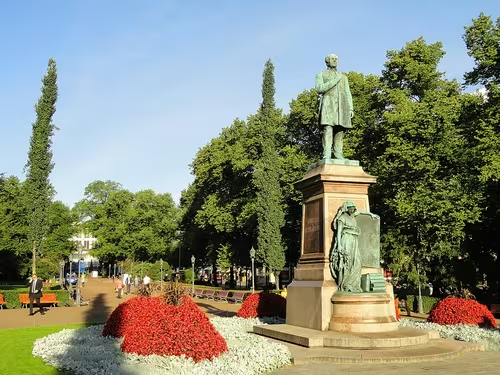
March in Helsinki
High2°C / 36°F
Low-3°C
Rain44mm / 10 rainy days
Sun6.9 h/day
Daylight12 h/day
Humidity82%
Crowds●●○○○Prices●●○○○
March is the great turnaround month: daylight jumps to nearly 12 hours, highs creep above freezing to around 2°C, and the snow that lingers gleams under genuinely strong sun. It is still low season on price, but the mood shifts as terraces and longer days return. Nature travellers come for the equinox aurora season, and the city feels poised between winter and the first hint of spring. Good value with the worst of the dark behind you.
The vibe March is the locals' favourite secret: still cheap, still quiet, but with real light back in the sky and the energy lifting. The snow can turn to slush by late month, but a sunny March day on a frozen-bright Senate Square beats any grey January afternoon.
Don't miss The March equinox window is the second peak for northern lights, alongside autumn. In the city the aurora needs a strong storm to break through, so pair a Helsinki base with a trip further north for the real show.
Crowd drivers The mid-March Finnish school holiday adds a short domestic bump; the equinox northern-lights season draws nature travellers north, with Helsinki as a stopover.
Heads up Museum Mondays still apply across the Ateneum, Kiasma, HAM and Design Museum; the National Museum stays shut for its long renovation.
Still off-season and strong value; rates rise slightly around the mid-March school break and any late Easter.
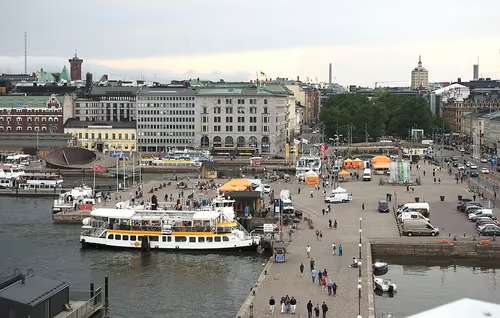
April in Helsinki
High8°C / 46°F
Low0°C
Rain38mm / 9 rainy days
Sun10.5 h/day
Daylight15 h/day
Humidity74%
Crowds●●○○○Prices●●○○○
April is spring arriving in earnest: highs climb to a pleasant 7 to 8°C, daylight reaches almost 15 hours, and it is the driest month of the year at just 38mm of rain. The Easter long weekend (3 to 6 April) sets off a short domestic travel wave, but the cruise season has not begun, so the city stays largely uncrowded. Snow gives way to bare streets and the first café terraces. A genuinely good-value month if you book around Easter.
The vibe April is the underrated month: dry, brightening fast, and still cheap, with the cruise crush a month away. The build toward Vappu at the very end gives the city a charge of anticipation that the deep-winter months simply cannot match.
Don't miss The end of April leads into Vappu, when students crown the Havis Amanda statue at the Market Square on 30 April from about 6 pm. The terraces reopen and the city visibly shakes off winter.
Crowd drivers The Easter holidays (3 to 6 April) drive a short domestic surge; cruise ships have not yet started their April-to-October season.
Heads up Good Friday (3 April) and Easter Monday (6 April) close most shops and many museums; Easter Sunday runs on a Sunday schedule.
Still affordable outside the Easter weekend, when hotels rise about 15 percent.
Events this month
🇮 HolidayVappu (May Day) Vappu
Apr 30 – May 1
30 April evening into 1 May
Finland's wildest public celebration. Students crown the Havis Amanda statue at the Market Square on the evening of 30 April, then over 50,000 people fill Kaivopuisto park for a mass picnic on 1 May, with sparkling wine and tippaleipä fritters everywhere.
It is the one day a year the famously reserved Finns let loose in public, a unique folk festival you cannot see anywhere else.
May in Helsinki
High14°C / 56°F
Low6°C
Rain55mm / 10 rainy days
Sun12.6 h/day
Daylight17 h/day
Humidity71%
Crowds●●●○○Prices●●●○○
May is when Helsinki truly comes alive. Highs reach a comfortable 13 to 14°C, daylight stretches past 17 hours, and the harbourfront terraces fill up. Vappu on 1 May opens with a mass picnic in Kaivopuisto, and the cruise season begins, so the first day-tripper waves appear. Ascension Day on 14 May creates a bridge weekend. The weather is unreliable but often glorious, and prices have not yet hit the summer ceiling. A strong choice for couples.
The vibe May is the most joyful month to be in Helsinki. After the long winter the city pours outdoors at the first warm day, the light feels almost endless, and the Vappu picnic in Kaivopuisto is the closest the reserved Finns come to a collective party. Bring layers, because the warmth is real but not yet settled.
Don't miss The 1 May picnic in Kaivopuisto is unmissable: thousands of Helsinkians spread blankets, drink sparkling wine and eat the spring fritter tippaleipä together. The summer terraces and market halls open in full at the same time.
Crowd drivers Vappu day-trippers and Nordic visitors, the start of the cruise season (April to October), and the Ascension Day bridge weekend (14 May) lift demand from mid-month.
In season Vappu brings its own table: tippaleipä funnel-cake fritters, the fermented lemon drink sima, and the first spring vegetables filling the market halls.
Heads up Vappu (1 May) keeps almost everything open as a street festival, but Ascension Day (14 May) closes many shops.
Rates rise about 20 percent from mid-month; still the cheapest of the warm-weather months before high summer.
Events this month
🇮 HolidayVappu (May Day) Vappu
Apr 30 – May 1
30 April evening into 1 May
Finland's wildest public celebration. Students crown the Havis Amanda statue at the Market Square on the evening of 30 April, then over 50,000 people fill Kaivopuisto park for a mass picnic on 1 May, with sparkling wine and tippaleipä fritters everywhere.
It is the one day a year the famously reserved Finns let loose in public, a unique folk festival you cannot see anywhere else.
June in Helsinki
High18°C / 65°F
Low12°C
Rain62mm / 11 rainy days
Sun14.3 h/day
Daylight19 h/day
Humidity71%
Crowds●●●●○Prices●●●●○
June is peak daylight: the 21 June solstice brings 19 hours and 3 minutes of light, and the sky never fully darkens, with dusk lingering past 11.30 pm. Highs reach a warm 18 to 19°C and the city stays alive late into the bright night. Helsinki Pride (22 to 28 June) and the Seurasaari midsummer bonfires (19 June) anchor the month, while the cruise ships run at full tilt. It is the best month of the year, busy but not yet at July's crush.
The vibe June is Helsinki at its luminous best, when the city feels like it is running on light. The strangest twist is midsummer itself: just as it peaks, the Finns flee to the countryside and the city goes quiet, so the busiest season hides its calmest, cheapest weekend right in the middle.
Don't miss The Seurasaari midsummer bonfires on 19 June, lit at 9 pm while it is still daylight, are the city's one true midsummer celebration. Around the solstice the long blue twilight makes night photography possible right up to 11 pm with no need for a real sunset.
Crowd drivers Finnish summer school holidays from early June, cruise ships at full capacity (up to 285 calls a season), and Helsinki Pride (22 to 28 June) drive the crowds; the midsummer weekend is the exception that empties the city.
In season New potatoes with dill and herring, the classic Finnish midsummer plate, reach the market stalls just as the season peaks.
Heads up Around Midsummer (19 to 22 June) many restaurants and bars close for two to three days as Finns leave the city, and transport runs a holiday schedule. For visitors this is paradoxically the quietest, best-value window of the summer.
High-season rates averaging around 185 euros a night, though the midsummer weekend itself drops to shoulder prices in the city.
Events this month
🌸 Seasonal natureSeurasaari Midsummer Bonfires Seurasaaren juhannusvalkeat
Jun 19 ~
Midsummer Eve, from 6 pm
Helsinki's largest public midsummer celebration on the island of Seurasaari: folk music, traditional dances and the great bonfire lit at 9 pm while it is still broad daylight. Admission is around 27.50 euros for adults, free for under-12s.
It is the only true midsummer event left in the city once the Finns scatter to the countryside, an unrepeatable night by the fire in the midnight light.
🏳️🌈 PrideHelsinki Pride
Jun 22–28
late June, parade on the final Saturday
Finland's biggest Pride festival, drawing over 100,000 people. The parade runs from Senate Square to Töölönlahti on 27 June, with a park festival in Kaivopuisto. Open, family-friendly, and falling in the midsummer week.
It is one of the Nordic region's largest and most welcoming Pride events, set against Helsinki's longest, brightest days.
🎵 MusicTuska Open Air Metal Festival Tuska
Jun 26–28
late June
Europe's largest inner-city metal festival, held in the Suvilahti industrial district and reachable directly by metro with no camping. Day tickets run around 80 euros, three-day passes around 180 euros.
World-class metal in a gritty industrial setting, easy to reach and easy to combine with a city break for fans.

July in Helsinki
High21°C / 69°F
Low14°C
Rain76mm / 12 rainy days
Sun13.6 h/day
Daylight18 h/day
Humidity75%
Crowds●●●●●Prices●●●●●
July is high summer and Helsinki's busiest month. It is the warmest of the year at around 20 to 21°C in the afternoon, the sea finally reaches a swimmable 17°C and above, and the days still run close to 18 hours of light. It is also statistically the wettest month, though the rain comes as short convective showers rather than all-day grey. German, British, Nordic and Baltic visitors fill the centre, queues build at Suomenlinna, and prices peak. Lovely weather, maximum crowds.
The vibe July is for people who want warmth and water and do not mind sharing the city. Helsinki never turns oppressively hot, so the heat is not the problem; the prices and the cruise crowds are. Come for the swimming and the long evenings, and use the early morning before the day-trippers land.
Don't miss This is the heart of the swimming season, July to mid-August, when the Baltic warms to 17 to 20°C. Hietaranta city beach, the free island of Uunisaari with its sauna, and the Seurasaari shoreline are the locals' picks.
Crowd drivers Every major European school system on summer break at once, peak cruise season out of the South Harbour, and the year's densest flight schedule.
In season Market-square stalls and harbour terraces serve grilled muikku, the small fried whitefish, alongside summer berries piling up at the Market Square.
Year's highest prices; mid-range hotels run 160 to 220 euros a night, so book well ahead.
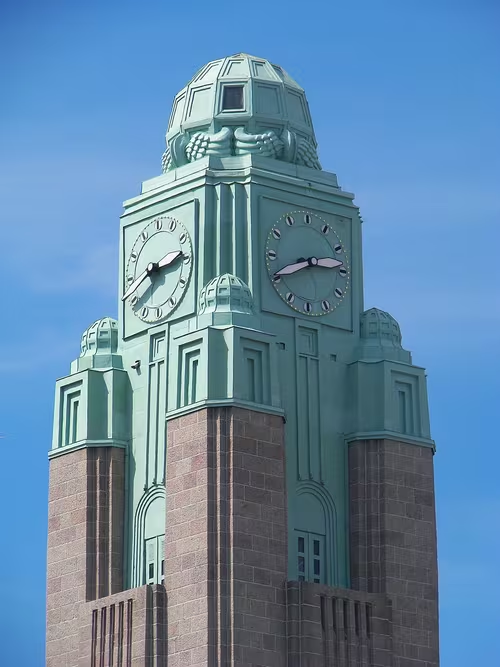
August in Helsinki
High20°C / 68°F
Low14°C
Rain90mm / 13 rainy days
Sun11.1 h/day
Daylight16 h/day
Humidity79%
Crowds●●●●●Prices●●●●○
August holds summer warmth at around 20°C but is the wettest month at 90mm, so a light rain layer is wise. Crucially, it is the fullest cultural month of the year: Flow Festival (14 to 16 August), the free Night of the Arts (20 August), the Helsinki Marathon (22 August), the Helsinki Festival (18 August to 5 September) and Design Week (28 August to 6 September) all overlap. The sea is at its warmest. Demand stays at summer pitch, especially over Flow weekend, but the payoff is unmatched.
The vibe August is the best month for anyone who travels for atmosphere over pure sunshine. The festival energy is genuine and the city feels switched fully on, even as the light starts shortening. Expect some grey, wet days mixed with the warm ones, and book around Flow weekend if you want a central bed.
Don't miss The Night of the Arts on 20 August is the best free night in Helsinki, with hundreds of events and museums open and gratis until midnight. The sea is at its warmest of the year, 17 to 20°C, for a last proper swim.
Crowd drivers Flow Festival (14 to 16 August), the Helsinki Festival, Night of the Arts and the marathon stack demand; cruise season is still in full swing into the autumn.
In season Late August is peak wild-mushroom and lingonberry season, and the new crayfish (rapu) parties bring the quintessential Finnish late-summer feast.
Heads up Streets in the centre close on the morning of 22 August for the Helsinki Marathon, so plan to be on foot near the waterfront route.
Still high-season levels; the Flow Festival weekend (14 to 16 August) adds a 20 to 30 percent hotel premium.
Events this month
🎵 MusicFlow Festival
Aug 14–16
mid-August weekend
A premium music and arts festival in the Suvilahti district drawing around 90,000 people over three days. Three-day passes run roughly 250 to 290 euros and sell out months ahead.
One of northern Europe's highest-quality city festivals and the single best weekend of the year for music lovers, so book early.
🎨 Art and cultureNight of the Arts Taiteiden Yö
Aug 20
one evening in late August
Hundreds of free art, music and culture events across the whole city in a single evening, with museums open and gratis until midnight. Part of the Helsinki Festival.
The best free cultural night of the year in Helsinki, when the entire city becomes an open stage at no cost.
🏃 SportHelsinki Marathon
Aug 22
a Saturday in late August
A city marathon through central Helsinki, starting at Meripuisto with full marathon, half marathon and relay races. Street closures hit the centre through the morning.
Great atmosphere for spectators along the waterfront promenade, though it closes central streets, so plan to walk that morning.
🎨 Art and cultureHelsinki Festival Helsingin juhlaviikot
Aug 18 – Sep 5
mid-August to early September
Finland's largest cultural event: two and a half weeks of concerts, theatre, opera and dance across the city. Some events are free, the headline concerts are ticketed and sell early.
A dense, high-quality cultural programme that makes late August the richest cultural stretch of the Helsinki year.
🎨 Art and cultureHelsinki Design Week
Aug 28 – Sep 6
late August into early September
The Nordic region's biggest design festival, with 250-plus events: open studios, exhibitions, fashion and talks across the city.
The best way to experience Helsinki as a world design capital, with much of the programme free and open to walk into.
September in Helsinki
High15°C / 60°F
Low10°C
Rain63mm / 11 rainy days
Sun8.3 h/day
Daylight13 h/day
Humidity81%
Crowds●●●○○Prices●●●○○
September is the quiet reward at the end of summer. Highs settle to a mild 15°C, daylight is back near 13 hours, and the back-to-school start thins out the family crowds. The Helsinki Festival runs into early September, the cruise ships keep calling into October, and the first autumn colours begin to show. Prices ease off the summer high, the boulevards calm down, and the harbour walks are at their most peaceful. A favourite for couples.
The vibe September is the locals' season, when Helsinki settles back into itself after the summer rush. The light turns golden and low, the cafés are easy to get into again, and there is a soft melancholy in the air that suits the city perfectly. The catch is the weather, which can already turn grey and wet for stretches.
Don't miss September is the start of the autumn northern-lights season, the best alongside spring. In the city it needs a strong storm to appear, but the first Ruska colour in Kaivopuisto and Töölönlahti makes the harbour walks reason enough.
Crowd drivers The school year starting cuts family numbers sharply; the Helsinki Festival's final days and a still-running cruise season keep some demand.
In season Wild-mushroom and game season is in full swing, with chanterelles, ceps and reindeer appearing on autumn menus across the city.
Shoulder season; hotels around 20 percent below the July peak, so genuinely good value.
Events this month
🎨 Art and cultureHelsinki Festival Helsingin juhlaviikot
Aug 18 – Sep 5
mid-August to early September
Finland's largest cultural event: two and a half weeks of concerts, theatre, opera and dance across the city. Some events are free, the headline concerts are ticketed and sell early.
A dense, high-quality cultural programme that makes late August the richest cultural stretch of the Helsinki year.
🎨 Art and cultureHelsinki Design Week
Aug 28 – Sep 6
late August into early September
The Nordic region's biggest design festival, with 250-plus events: open studios, exhibitions, fashion and talks across the city.
The best way to experience Helsinki as a world design capital, with much of the programme free and open to walk into.
October in Helsinki
High9°C / 48°F
Low5°C
Rain76mm / 12 rainy days
Sun4.6 h/day
Daylight10 h/day
Humidity84%
Crowds●●○○○Prices●●○○○
October is the autumn low season and quietly one of the most beautiful months. The Ruska foliage peaks in the first half (around 1 to 15 October), turning the birches and aspens of Kaivopuisto and Töölönlahti gold and copper against the sea. Highs drop to around 9°C and daylight falls back near 10 hours. The Baltic Herring Market (5 to 10 October) brings the city's oldest market tradition to the Market Square. The cruise season ends, prices fall, and the value is excellent.
The vibe October is the underrated gem: cheap, calm, and lit by the kind of low golden autumn light that makes the harbour glow. The first two weeks, with the Ruska colours and the herring market, are the sweet spot before the dark and damp of November set in.
Don't miss The Baltic Herring Market (5 to 10 October), running since 1743, fills the Market Square with fishers selling salted herring and specialities. Pair it with the peak Ruska colours, best photographed in the low afternoon light from Kaivopuisto with its sea view.
Crowd drivers The Ruska foliage and the Baltic Herring Market draw a small wave of domestic visitors; the cruise season winds down and ends by month's close.
In season The Baltic herring (silakka), salted, fried and in every variation, is the taste of the season, sold straight off the boats at the harbour market.
Heads up All Saints' Day (31 October) is a public holiday with shops closed; standard museum Mondays continue.
Second-cheapest block of the year; hotels back around a 99 euro average.
Events this month
🍷 Food and wineBaltic Herring Market Silakkamarkkinat
Oct 5–10
first full week of October
Helsinki's oldest market tradition, running since 1743, when fishers from across Finland sell salted herring and specialities at the Market Square (Kauppatori). Free to wander.
The most authentic local experience of the autumn, free to enter and set against the harbour as the Ruska colours peak.

November in Helsinki
High4°C / 40°F
Low1°C
Rain72mm / 14 rainy days
Sun1.8 h/day
Daylight8 h/day
Humidity88%
Crowds●●○○○Prices●●○○○
November is the darkest, dampest stretch of the year. Daylight drops under eight hours, highs sit around 4°C, and there is rarely snow yet to brighten the grey. It is the genuine low point in mood, with two exceptions: the Slush startup conference (18 to 20 November) spikes hotel prices, and the Senate Square Christmas market opens at the very end of the month. Outside Slush week it is the cheapest, quietest time to visit, suited to saunas and museums over outdoor sightseeing.
The vibe November is the one month it is fair to call hard work. There is no white winter magic yet, just early darkness and rain, so this is a trip for cosy interiors: saunas, cafés, the great art museums. If you want the city dirt cheap and almost to yourself, and you do not mind the dark, it delivers.
Don't miss The Senate Square Christmas market (Tuomaan Markkinat) opens around 27 November in front of the Cathedral, with Finnish crafts, glögi and local treats, the first glimmer of the festive season.
Crowd drivers Slush (18 to 20 November) brings about 25,000 delegates and books out the centre; otherwise November is the year's flat low for visitor numbers.
In season Glögi returns to every café and the new Christmas market, and the season's first gingerbread (piparkakku) fills the bakeries.
Heads up No major holiday closures, but the dark and short hours mean outdoor sights are best tackled at midday; the National Museum remains shut for renovation.
The year's lowest rates outside the Slush weekend (18 to 20 November), when central hotels sell out and prices jump about 40 percent.
Events this month
🎨 Art and cultureSlush
Nov 18–20
mid-to-late November
The world's largest startup conference, drawing around 25,000 delegates from 70-plus countries to the Messukeskus and Finlandia Hall. Passes start from around 395 euros.
Essential for tech travellers, but it spikes central hotel prices about 40 percent, so other visitors should plan around this weekend.
🎄 Christmas marketHelsinki Christmas Market Tuomaan Markkinat
Nov 27 – Dec 22
late November to just before Christmas
Helsinki's oldest Christmas market on Senate Square in front of the Cathedral, with Finnish crafts, glögi and local treats. Open daily roughly 11 am to 7 pm, longer at weekends. Free to enter.
Nordic Christmas atmosphere right beneath the white Cathedral, the warmest reason to brave the December dark.

December in Helsinki
High1°C / 34°F
Low-2°C
Rain65mm / 14 rainy days
Sun1.3 h/day
Daylight6 h/day
Humidity87%
Crowds●●●○○Prices●●●○○
December brings the year's shortest days, bottoming out at just 5 hours 55 minutes of light on the 21st, with highs barely above freezing. There is no true polar night at this latitude, but the midday sun stays low and orange-red. The Senate Square Christmas market (to 22 December) draws Nordic and German visitors, Independence Day (6 December) fills the streets with torchlit processions, and the festive weekends spike prices. Cold, dark and atmospheric, with the market and the lights as the draw.
The vibe December is for the Christmas market and the candlelit, dark-season cosiness, not for sightseeing in daylight, of which there is almost none. Whether it feels magical or merely bleak depends entirely on the snow, which is far from guaranteed this early. When it lands, the Cathedral over the market is unforgettable.
Don't miss Independence Day on 6 December brings solemn torchlit processions and flags on every building. The Christmas market runs daily, roughly 11 am to 7 pm, longer at weekends, right up to 22 December.
Crowd drivers The Senate Square Christmas market (to 22 December) and the Christmas-to-New-Year holiday period drive Nordic and German visitors and push festive-weekend rates up.
In season Joulupöytä Christmas-table fare takes over: glazed ham, casseroles, salmon and the sweet star-shaped joulutorttu pastries at every market stall.
Heads up Independence Day (6 December) closes all shops; Christmas Day (25 December) shuts everything but hotel restaurants, and Boxing Day (26 December) keeps stores closed.
Christmas-market period lifts hotels about 25 percent; Christmas and New Year weekends are the second-highest rates of the year.
Events this month
🎄 Christmas marketHelsinki Christmas Market Tuomaan Markkinat
Nov 27 – Dec 22
late November to just before Christmas
Helsinki's oldest Christmas market on Senate Square in front of the Cathedral, with Finnish crafts, glögi and local treats. Open daily roughly 11 am to 7 pm, longer at weekends. Free to enter.
Nordic Christmas atmosphere right beneath the white Cathedral, the warmest reason to brave the December dark.
🇮 HolidayFinnish Independence Day Itsenäisyyspäivä
Dec 6
6 December
The national day, marked by torchlit processions at the university and Havis Amanda, flags on every building, and the televised presidential reception that the whole country watches.
A solemn, atmospheric day to feel Finnish national pride, though shops close, so plan around it.
Frequently asked questions
What is the best time to visit Helsinki?
June and August are the best months. June brings up to 19 hours of daylight, Helsinki Pride (22 to 28 June) and the Seurasaari midsummer bonfires (19 June). August packs in Flow Festival (14 to 16 August), the free Night of the Arts (20 August) and the Helsinki Festival, the fullest cultural month of the year, with warm, walkable weather around 20°C.
What is the cheapest month to visit Helsinki?
January is the cheapest, with hotel rooms from around 60 euros a night, some 30 to 40 percent below the summer average. February and the non-Slush weeks of November run nearly as low. The trade-off is short, dark days under seven to nine hours of light and a real chance of grey skies rather than crisp snow.
What is the worst time to visit Helsinki?
Mid-November around the Slush conference (18 to 20 November) is the weekend to avoid: central hotels sell out and rates jump about 40 percent, while daylight is under eight hours and snow has usually not arrived. Outside that weekend, November is simply dark and damp, best for saunas and museums rather than sightseeing.
How many days do you need in Helsinki?
Two to three days covers the core: Senate Square and the Cathedral, the Temppeliaukio rock church, the Market Square, a sauna at Löyly, and a half-day on the Suomenlinna sea fortress. Add a fourth day in summer for a beach afternoon at Hietaranta or a day trip, when the long daylight lets you stretch each day late.
Can you see the northern lights in Helsinki?
Only rarely. At 60° north, Helsinki sees the aurora over the city just during strong solar storms. The best windows are September to October and February to March around the equinox. For a reliable display, travel to Lapland (Rovaniemi or Saariselkä); in Helsinki, treat the northern lights as a lucky bonus.
When can you swim in the sea in Helsinki?
The practical swimming season is July to mid-August, when the Baltic warms to 17 to 20°C, with August the warmest. Hietaranta city beach, the free island of Uunisaari with its sauna, and the Seurasaari shoreline are the locals' spots. Outside summer, the Löyly sauna stays open year round for a steam and an icy plunge, even in November.
What is the weather like in Helsinki in summer?
Summer is mild rather than hot. July highs average around 20 to 21°C, August around 20°C, with low humidity and no oppressive heat. July is statistically the wettest month, but rain comes as short showers, not all-day grey. The real summer headline is the light: around the 21 June solstice you get 19 hours of daylight and the sky barely darkens.
Is December a good time to visit Helsinki?
December suits Christmas-market lovers, not daylight seekers. The Senate Square market runs to 22 December beneath the Cathedral, and Independence Day (6 December) brings torchlit processions. But the 21st has just 5 hours 55 minutes of light, highs barely top freezing, and snow is far from guaranteed this early, so expect dark, atmospheric days over crisp white ones.
When do the autumn colours (Ruska) peak in Helsinki?
The Ruska foliage peaks in the first half of October, roughly 1 to 15 October, when birches and aspens in Kaivopuisto, Sibeliuspuisto and Töölönlahti turn gold and copper. Pair it with the Baltic Herring Market (5 to 10 October) at the Market Square. October is also second-cheapest, with hotels back around a 99 euro average and the cruise season ending.

Any month, any day: your guide is already there
Whatever date you pick, a private human guide gets pricier and harder to book on weekends, holidays and in peak season. Our live AI guide, the one that walks with you and answers anything you ask out loud, works the opposite way.
One flat price, every day
No holiday, weekend, night or peak-season surcharge. A private guide in Helsinki runs well over 100 euro for a half day, and more on holidays. Ours stays the same.
Available the moment you want it
Start at midnight or at dawn, on Christmas, in the snow, in the August heat. No sold-out high season, no booking weeks ahead.
Your pace, no meter running
Pause for a long lunch, restart after dark, repeat a stop. The tour simply waits for you.
Free to try, a fraction of the cost
Test it for free, then a transparent flat price that undercuts any private guide, in every season.
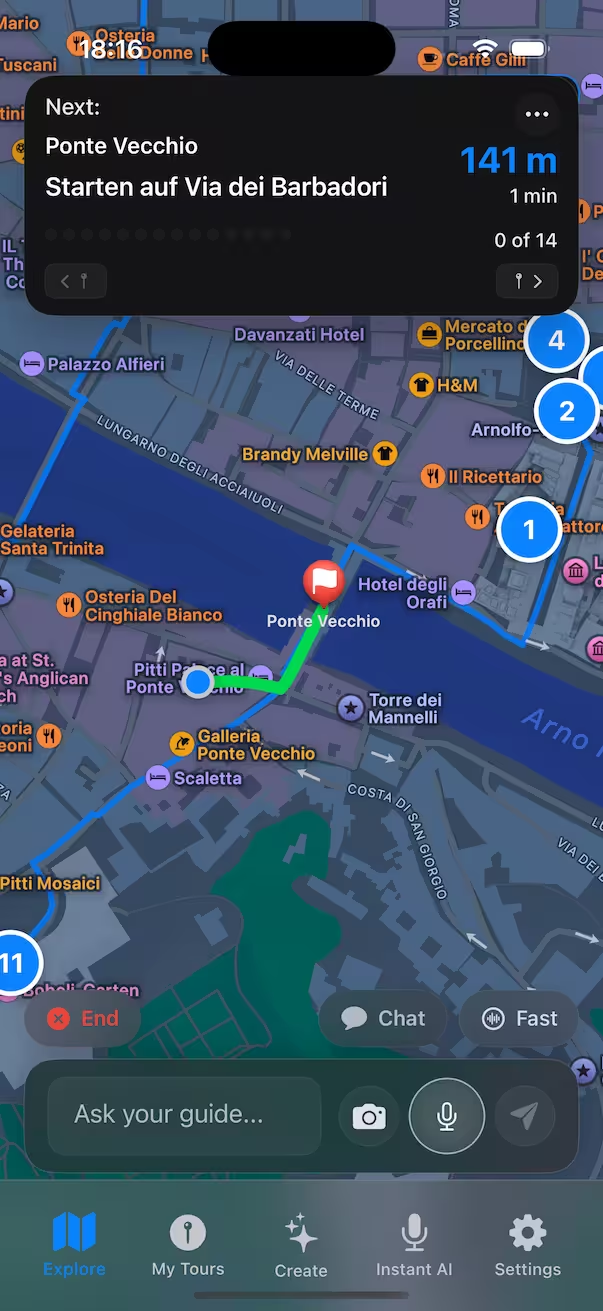
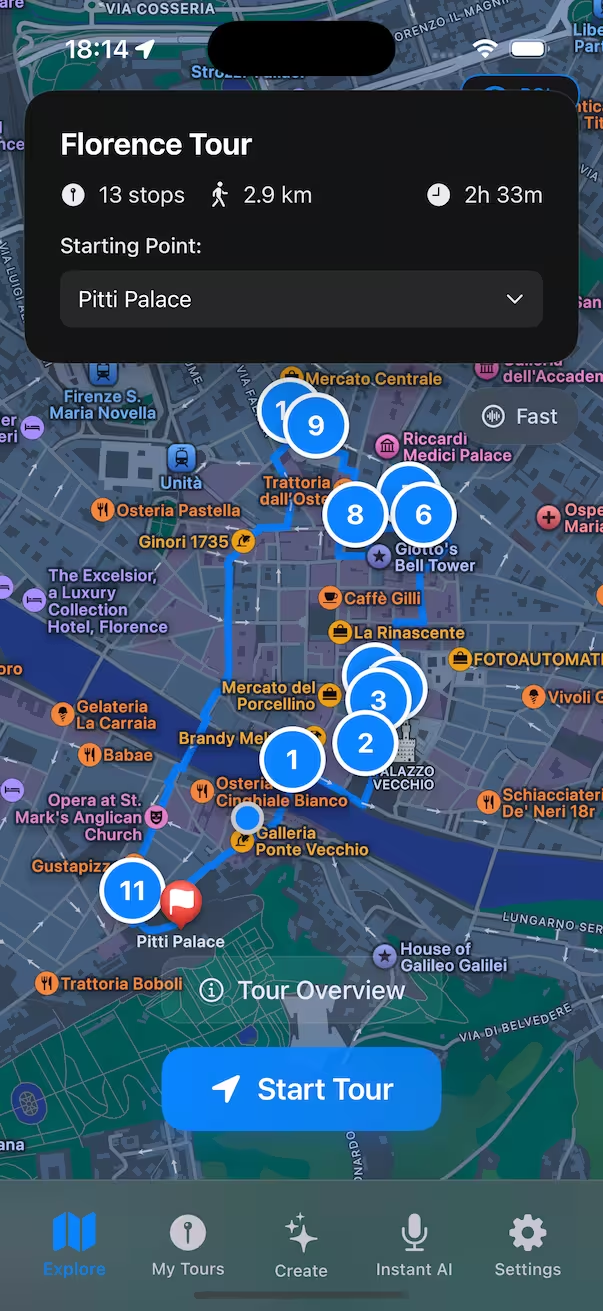
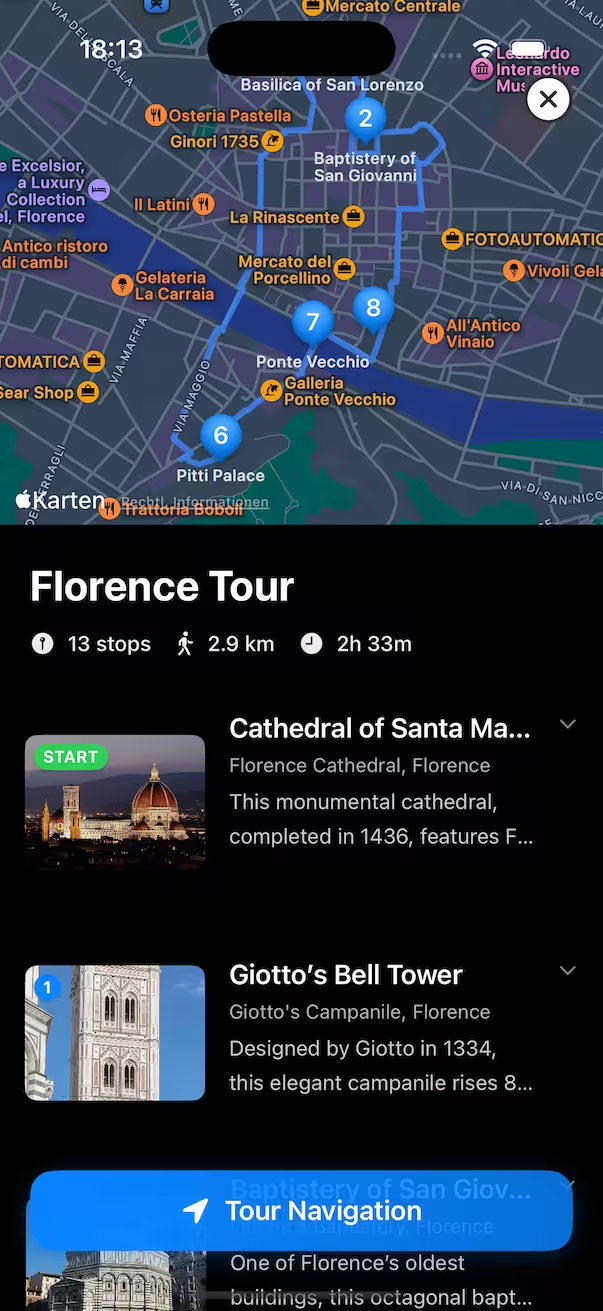
The classic Helsinki tour: 9 stops, 6.3 km, about 3 h on foot
Your live AI guide and the self-guided Helsinki route, together in your browser.