Best Time to Visit Krakow
Month-by-month weather, crowds and prices, plus a full calendar of festivals and events worth planning a trip around.
Best monthsMay, Sep
CheapestJan, Feb, Nov
AvoidJul, Aug
BusiestJul, Aug
When is the best time to visit Krakow?
Come in May or September: mild 18-20°C, the Old Town in full life, and prices 20-25% below the July peak. July and August bring heat, Polish school holidays and two-hour queues at Wawel and Wieliczka. January and February are dead cheap and dead quiet, the trade being grey skies and short days.
Start our tool and find your best time to visit Krakow
Your perfect month
Free · ~30 seconds
or tap a month directly
What matters to you?
And this?
Best overall: May, Sep. May and September are the real sweet spot: 18-20°C, the Planty ring green or turning gold, every sight open, and crowds you can still work around. Book Wawel and Wieliczka a couple of weeks ahead and you barely queue.
Best value: Jan, Feb, Nov. January, February and November bring the lowest hotel rates of the year, free Wawel tickets in November, free Mondays at Schindler's Factory, and an Old Town quiet enough to hear the hourly trumpet call from St. Mary's tower.
Avoid: Jul, Aug. July and August: peak Polish and international holidays, yearly-high prices, two-hour queues at Wawel and Wieliczka without pre-booking, and stag-party crowds taking over Kazimierz on weekends. The worst value of the year.
- January: Tough month, 3°C. This is the one month you walk into Schindler's Factory or under the Cloth Hall arcades with nobody at your shoulder. The trade is real: grey skies, cold cobbles, and on inversion days a smog haze that sends you indoors. For sheer value and calm, January is hard to beat if you pack a warm coat.
- February: Good time, 6°C. February is honest, unperformed Krakow: no show put on for tourists and no seasonal markup, just a real city in winter mode. Smog days are still a risk, but a paczek warm from the oven on Fat Thursday is the kind of local moment summer crowds never get.
- March: Good time, 10°C. March is the closing window on cheap, calm Krakow. The city stirs back to life, but you can still get a Kazimierz table on a Saturday without booking, and the Easter music festivals offer concerts in church spaces at prices well below Western Europe. Use it before April's crowds arrive.
- April: Good time, 14°C. April is lovely and no longer a secret. The Easter weekend in particular packs the Old Town and books out beds, while the wet-and-wild Śmigus-Dyngus water tradition on Easter Monday catches plenty of unsuspecting tourists. Come for the folk fairs, which are authentic and barely touristed, but go in clear-eyed about the holiday crush.
- May: Good time, 18°C. May genuinely delivers. The weather is the best of the year without the summer heat, the city is alive with students and festivals, and you can still book Wawel and Wieliczka just a couple of weeks out. There is a faint myth that May is some hidden secret; it is not, but it is still the smartest single month to come.
- June: Good time, 23°C. June is the tipping point, when Krakow shifts from busy-but-workable toward full summer. The early weeks are the prize, warm, festival-rich, still navigable, while the last week starts the stag-party-and-school-holiday surge. The long evenings on the Rynek and the riverbank festivals redeem almost everything.
- July: Tough month, 25°C. July is for people who genuinely don't mind heat, crowds and peak prices. Midday on the Wawel hill is exposed and punishing, and Kazimierz nights tip into stag-party territory on weekends. But early mornings on an empty Rynek and free open-air jazz on summer evenings are a different, better city, and that part is worth it.
- August: Tough month, 25°C. August is peak Krakow, for better and worse: every sight open and the evenings gloriously long, but yearly-high prices, full queues and a Kazimierz that belongs to the bachelor parties on weekends. Come for the Pierogi Festival and the buzz, not for breathing room, and book absolutely everything ahead.
- September: Good time, 20°C. September is what August wishes it were: the same long, warm days minus the crush, the prices and the stag parties. The light starts to turn golden on the riverbank and the cobbles, and you can finally walk into the big sights without a fight. For most travellers, this is the single best month to come.
- October: Great time, 15°C. October is the underrated month: crisp, golden and quiet, with the cultural calendar back in full swing and prices that finally relax. You trade summer's warmth and long evenings for sweater weather and 17:00 dusks, but the autumn colour on the green ring more than pays for it.
- November: Good time, 9°C. November is bleak weather but excellent value, and All Saints' Day alone justifies the dates for the right traveller. The candlelit cemetery after dark is one of the most moving sights in the city, little known to tourists, and the rest of the month gives you a near-empty Old Town at the year's softest prices outside January.
- December: Tough month, 4°C. December is festive and atmospheric, genuinely one of the prettiest Christmas markets anywhere, but the first Advent weekends are a real crush. The trick the locals know is to come midweek in mid-December for the same lights and stalls with a fraction of the crowd. Just pack for cold and short days.
Krakow weather by month
HighLowRainfall
Jan3°
Feb6°
Mar10°
Apr14°
May18°
Jun23°
Jul25°
Aug25°
Sep20°
Oct15°
Nov9°
Dec4°
| Month | Temp | Rain | Sun | Crowds | Prices | Highlight |
|---|---|---|---|---|---|---|
| Jan | 3° / -3° | 46mm · 12 rainy days | 3.8 h/day | ●○○○○ | ●○○○○ | |
| Feb | 6° / -2° | 54mm · 12 rainy days | 5.1 h/day | ●○○○○ | ●○○○○ | |
| Mar | 10° / 0° | 44mm · 11 rainy days | 7.5 h/day | ●●○○○ | ●●○○○ | Ludwig van Beethoven Easter Festival |
| Apr | 14° / 4° | 65mm · 13 rainy days | 9.2 h/day | ●●●○○ | ●●●○○ | Ludwig van Beethoven Easter Festival |
| May | 18° / 9° | 101mm · 15 rainy days | 10.3 h/day | ●●●○○ | ●●●○○ | Krakow Student Festival (Juwenalia) |
| Jun | 23° / 14° | 66mm · 11 rainy days | 11.9 h/day | ●●●●○ | ●●●●○ | Krakow Photomonth |
| Jul | 25° / 15° | 113mm · 16 rainy days | 11.8 h/day | ●●●●● | ●●●●● | Summer Jazz Festival |
| Aug | 25° / 15° | 109mm · 12 rainy days | 10.7 h/day | ●●●●● | ●●●●● | Summer Jazz Festival |
| Sep | 20° / 11° | 102mm · 12 rainy days | 8.5 h/day | ●●●○○ | ●●●○○ | |
| Oct | 15° / 6° | 70mm · 10 rainy days | 6.7 h/day | ●●○○○ | ●●○○○ | |
| Nov | 9° / 2° | 49mm · 11 rainy days | 4.5 h/day | ●●○○○ | ●●○○○ | All Saints' Day at Rakowicki Cemetery |
| Dec | 4° / -1° | 53mm · 13 rainy days | 3.3 h/day | ●●●○○ | ●●●○○ | Krakow Nativity Scene (Szopka) Competition |
How we score this: weather = long-run climate normals (Open-Meteo), crowds & prices = relative season read, events checked yearly against official dates.
Best time to visit Krakow: weather, prices & crowds
Best months for good weather
May, Jun, Sep
May, June and September give you Krakow's kindest weather: 18-23°C, long evenings to sit out on the Rynek Główny, and showers that pass in 30-60 minutes rather than settling in for the day.
Quietest months to avoid the crowds
Jan, Feb, Nov
January, February and November empty the Old Town right out. You can stand under the Cloth Hall arcades or walk into Schindler's Factory with barely a queue, the trade being grey skies and the odd winter smog day.
Cheapest time to visit Krakow
Jan, Feb, Nov
January is Krakow's cheapest month: mid-range hotels drop to roughly 120-180 PLN a night and flights from Western Europe hit their yearly floor. November adds the bonus of Wawel's free-entry tickets.
Best time for festivals and events
Dec, May
December turns the Rynek Główny into one of Central Europe's loveliest Christmas markets, around 80 wooden stalls running from late November to early January. May counters with Juwenalia, Museum Night and chestnut blossom on the Planty ring.
How many days do you need in Krakow?
Give Krakow three days and you will leave satisfied. Two days covers the medieval core and Kazimierz but forces you to skip either Wawel or the underground museums; three days makes room for both, plus a half-day trip to Wieliczka or Auschwitz.
One day
Royal Route to Wawel Hill
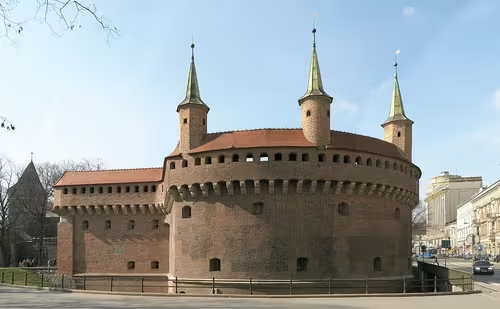
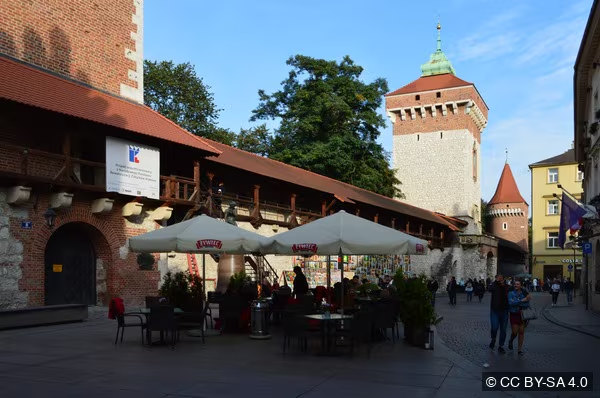
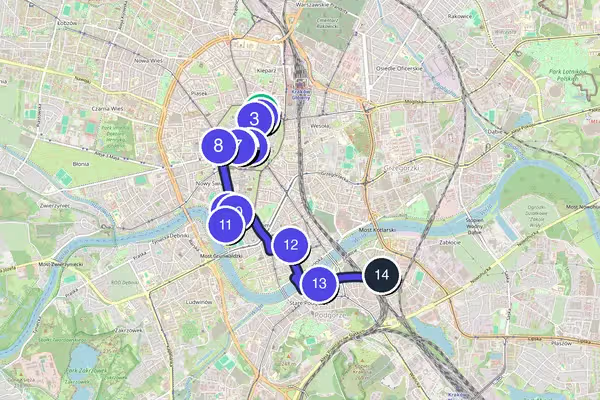
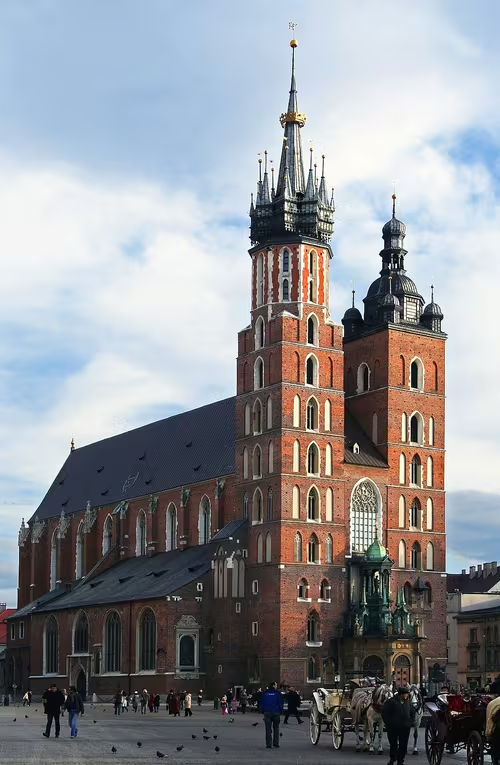
Start at the Barbican and walk south through St. Florian's Gate into the Old Town, taking in St. Mary's Basilica and the 108-metre Cloth Hall on the vast Main Market Square. The self-guided Krakow walking tour links 14 stops across 6 km in around 3.3 hours, from the Barbican all the way to Schindler's Factory in Podgórze. Finish the afternoon on Wawel Hill at the Castle and Cathedral before dinner in Kazimierz.
Two days
Kazimierz, Schindler and the Underground
Dedicate the morning to Kazimierz, the Jewish quarter, covering the Old Synagogue on Szeroka Street, the covered market at Plac Nowy and the quieter back lanes. After lunch, walk across the Vistula to Ghetto Heroes Square and Schindler's Factory on Lipowa Street, allowing two hours inside. End the day at the Rynek Underground museum, which opens until 20:00 and is far less crowded in the late afternoon.
Three daysRecommended
Day trip: Wieliczka or Auschwitz
A third day opens up the two big excursions outside the city. Wieliczka Salt Mine is 30 minutes by bus from the Old Town; book the standard 2.5-hour tour online at least two weeks ahead (82 PLN). Auschwitz-Birkenau requires 8 to 12 weeks advance booking from April to October, about 90 minutes each way by bus, with a guided tour running 70 to 110 PLN. Both need a full day; do not try to combine them.
Four days or more
Deeper into the city and surrounding region
With four or more days, you can spread the weight of the main sights, catch Museum Night or Juwenalia if the calendar lines up, and explore the Czartoryski Museum (home to Leonardo's Lady with an Ermine) without feeling rushed. Day trips north to Ojców National Park or east to Nowa Huta, Krakow's Stalinist-era district, round out a longer stay for curious visitors.
Best time to visit Krakow by traveller type
Same city, different trip. Here's the month that fits how you're travelling.
🧭
Best time to visit Krakow for the first time
MaySep
May or September is the safe best-overall answer: a comfortable 18-20°C, every sight from Wawel to Wieliczka open, prices 20-25% under the summer peak, and the shorter queues that make a first visit relaxed instead of frantic.
❤️
Best time to visit Krakow for couples
SepOctMay
September and October for golden light on Kazimierz and the Planty ring, candlelit wine cellars and far fewer stag parties than summer, or May for chestnut blossom and the year's longest evenings.
💶
Best time to visit Krakow on a budget
JanFebNov
January and February for the year's lowest hotel rates and rock-bottom flights, or November for Wawel's free tickets, free Mondays at Schindler's Factory and last-minute room availability.
🍝
Best time to visit Krakow for food and wine
AugMay
Mid-August for the free Pierogi Festival on the Mały Rynek (4-6 PLN a dumpling), or May for strawberry and asparagus season and Kazimierz terraces fully open at Stary Kleparz market prices.
Worst time to visit Krakow
July and August are the months to skip if your dates are flexible. Polish school holidays run the full stretch from late June to the end of August, pushing hotel rates to their yearly maximum: mid-range rooms hit 150 to 250 PLN, and some weekends double the off-season price. At Wawel Castle and Wieliczka Salt Mine, turning up without a pre-booked ticket means a queue of two hours or more. The Old Town's narrow lanes sit in the Vistula basin with no sea breeze, so afternoon heatwaves of 30 to 33°C make midday sightseeing uncomfortable. Kazimierz nights tip heavily into stag-party territory on summer weekends.
Still worth it for If your only option is July or August, the free open-air jazz sets on the Rynek and the Pierogi Festival in mid-August are genuine highlights worth the trade-offs. Just pre-book every ticketed attraction and plan to walk early morning or after 19:00, when the heat and the crowds ease.
Go instead in May, September, when Krakow is at its best.
Best time for a tour of Krakow
The 6-kilometre loop from the Barbican to Oskar Schindler's Factory covers fourteen stops across the Old Town, Wawel Hill, and Kazimierz, and the month you pick shapes every step of it. May and September are the sweet spot: temperatures sit between 14 and 20 °C, daylight runs long, and the Main Market Square still has breathing room. June edges warmer, reaching 23 °C, and is manageable, but by July and August the square and Cloth Hall become packed, with shoulder-to-shoulder crowds making a slow, meditative look at Wawel Castle almost impossible. October is arguably the finest single month: highs around 15 °C, only ten rainy days, the chestnuts turning gold on the way down to Ghetto Heroes Square, and thin crowds that let you linger without being jostled. Winter is a different matter. January highs barely reach 3 °C, lows drop to around minus 3 °C, and the route stretches across open cobblestones with little shelter before you reach the first indoor stop. December and March sit in the middle: tolerable if you layer up, but the Kazimierz section in particular feels exposed and grey before spring arrives.
With AI Tourguide running directly in your browser, no app required, the tour has no fixed departure time and no group pace to keep up with. That matters most in Krakow's extremes: on a hot August afternoon, you can start your Krakow tour at six in the morning while the Main Market Square is still near-empty and the light on St. Mary's Basilica is at its sharpest, finishing well before the midday heat and tour buses converge. In October you can set off at a leisurely ten o'clock, knowing the voice guide will hold a real conversation with you the whole way, asking what you already know about the Schindler story or the Wawel Dragon legend, and adjusting what it tells you next based on your answers. The climate sets the hour. You set everything else.

 +10
+10All 14 stops are already on the map.
You just press start.
You just press start.
 AI Tourguide
You just read the route.
Now walk it with a guide in your ear.
Press start wherever you are, even hundreds of kilometres from Krakow, and the guide begins telling its stories right away. In the city, pick any of the 14 stops to start from: it leads you there, then talks with you the whole route, asking, listening, remembering, and shaping the tour around your answers.
14stops6.0km3.3hours11languages
▶Start the tour freeFree to start · Runs in your browser · No app, no download
Krakow events and festivals calendar
Annual highlights worth timing a trip around, listed month by month.
March
🎵 MusicLudwig van Beethoven Easter Festival
Mar 22 – Apr 3 ~
Around ten days in the run-up to Easter, covering Passion Week. The exact dates move with Easter each year; expect late March to early April.
A ten-day classical-music festival reaching its 30th edition, bringing international virtuosos to the Krakow Philharmonic and to halls inside Wawel.
🎵 MusicMisteria Paschalia
Mar 29 – Apr 5 ~
Holy Week into Easter, roughly eight days. The dates shift with Easter each year; typically late March to early April.
Eight days of Renaissance and Baroque music in its 23rd edition, staged inside St.
April
⛪ ReligiousEmmaus Fair Odpust Emaus
Apr 6 ~
Easter Monday every year, at the Zwierzyniec monastery.
A centuries-old Easter folk fair at the Norbertine monastery in Zwierzyniec, selling folk art, Easter palms and gingerbread.
🎉 FestivalRękawka Festival Święto Rękawki
Apr 7 ~
The Tuesday after Easter, at Krakus Mound.
A Slavic spring festival at Krakus Mound with a knights' tournament, historical reenactments and a fire ceremony, running from around noon.
May
🎉 FestivalKrakow Student Festival (Juwenalia) Juwenalia Krakowskie
May 13–23
Around ten days in mid-to-late May, across Krakow's university campuses.
A ten-day student festival across Krakow's universities, in its 70th edition, with concerts, four stage zones and the costumed Korowód parade through the Rynek on 15 May at noon.
🎨 Art and cultureKrakow Photomonth Miesiąc Fotografii w Krakowie
May 14 – Jun 14
Mid-May to mid-June, citywide.
The 23rd edition of an international photography festival, with exhibitions and talks staged across the city.
🌙 Museum nightMuseum Night Noc Muzeów
May 15
One Friday evening in mid-May, from 18:00 to 01:00.
Dozens of museums open free (Wawel for a symbolic 5 PLN) from 18:00 to 01:00, including Wawel Underground, the Czartoryski and Schindler's Factory.
🎬 FilmKrakow Film Festival Krakowski Festiwal Filmowy
May 31 – Jun 7
Late May into early June for cinema screenings, followed by an online viewing window.
In its 66th edition, one of Europe's oldest documentary and short-film festivals, running across city cinemas and a VOD platform, with tickets around 3 to 10 euros per film.
June
🎉 FestivalGreat Dragon Parade Wielka Parada Smoków
Jun 6–7
An early-June weekend, typically the first or second weekend of the month.
In its 25th edition, a family festival with a Saturday 21:45 laser-and-pyrotechnic dragon show on the Vistula and a Sunday procession of giant dragons from Grodzka Street to the Rynek.
🌸 Seasonal natureWianki (Midsummer Festival) Wianki
Jun 20–21
The midsummer-solstice weekend on the Vistula, around 20 to 21 June.
A Slavic midsummer festival on the Vistula riverbank where flower wreaths (wianki) are floated on the water, alongside concerts and fireworks on the night of 21 June.
🎵 MusicSummer Jazz Festival Letni Festiwal Jazzowy w Krakowie
Jun 27 – Aug 31
Late June through the end of August, with the opening concert at ICE Kraków.
In its 31st edition, around 150 concerts across the summer, opening at ICE Kraków and running a Solo Piano Week at the Philharmonic, with many free open-air sets on the Rynek.
🎨 Art and cultureJewish Culture Festival Festiwal Kultury Żydowskiej
Jun 27 – Jul 5 ~
Late June into early July in Kazimierz, around nine days. Confirm exact dates on the official site each year.
An international festival in the Kazimierz district with concerts, workshops and readings, running since 1988.
August
🍷 Food and winePierogi Festival Festiwal Pierogów
Aug 13–16
Four days in mid-August on the Mały Rynek.
In its 24th edition on the Mały Rynek, a competition of the best pierogi recipes from across Poland and the world, with dumplings around 4 to 6 PLN each and evening concerts from 18:00.
November
🇮 HolidayAll Saints' Day at Rakowicki Cemetery Wszystkich Świętych - Cmentarz Rakowicki
Nov 1
1 November every year, with the atmosphere peaking after dark.
Thousands of candles light the 75,000 graves of Rakowicki Cemetery (founded 1803), with the most powerful atmosphere between dusk and 20:00.
🎄 Christmas marketKrakow Christmas Market Jarmark Bożonarodzeniowy na Rynku Głównym
Nov 28 – Jan 1
From the last Saturday of November to early January, daily 10:00 to 20:00.
Around 80 wooden stalls fill the Rynek Główny with crafts, grzaniec (mulled wine) and gingerbread, open daily 10:00 to 20:00.
December
🎨 Art and cultureKrakow Nativity Scene (Szopka) Competition Konkurs Szopek Krakowskich
Dec 3
First Thursday of December at 10:00, by the Mickiewicz Monument; the winning works are then exhibited at the Krzysztofory Palace into the following spring.
A UNESCO-listed tradition in which Krakow craftspeople present elaborate szopki (nativity cribs) at the Adam Mickiewicz Monument.
Insider tips for visiting Krakow
The rules buried in forums, in one place.
- Book the Wieliczka Salt Mine online at least two to three weeks ahead. In July and August, turning up without a ticket means a queue of two hours or more. The standard tour runs about 2.5 hours; the longer Miners' Route is the better one if you have the time.
- Wawel Castle opens at 9:00, and by 9:05 the State Rooms and Royal Apartments are at their emptiest. Tickets are capped per time slot, so in high summer book about three weeks out. The free-entry Sundays from December to March draw a queue before the doors even open.
- For Auschwitz-Birkenau, book 8 to 12 weeks ahead from April to October. A guided tour with transfer runs roughly 70-110 PLN; going independently by bus takes about 90 minutes each way. Arrive 30 minutes early for security, and aim for the 7:30 opening or late afternoon when the coach groups have left.
- Schindler's Factory is free on Mondays, but only until 15:00, so go early that day. Tuesday to Sunday it costs 32 PLN and you should book an online time slot, since the physical entrance is a bottleneck and walk-up space is limited.
- On the Rynek Główny the buskers start around 10:00, the pigeon-and-tour-group crush peaks at midday, and the golden light lands between 19:00 and 20:00. For photos without the crowds, come 7:00 to 8:30 in the morning or after 21:00 in summer.
- St. Mary's Basilica plays its hourly trumpet call (the hejnał mariacki) from the north tower every hour from 7:00 to 22:00, broadcast live on Polish radio. To go inside, entry for tourists is Tuesday to Saturday 11:30 to 18:00 and Sunday 14:00 to 18:00 for 17 PLN; avoid the windows just before evening Mass.
- Krakow had some of Europe's worst winter smog from coal heating, and January and February temperature inversions can still spike the air quality into the unhealthy range. On those days check the Airly app before a long walk and lean on indoor sights, Kazimierz cafés and the underground museums instead.
- At the Christmas market the first Advent weekend is the most crowded by far. Come midweek in mid-December (Tuesday to Thursday) for roughly 70% less crush with the exact same lights and stalls. The Szopka nativity-crib competition happens at the Mickiewicz Monument on the first Thursday of December at 10:00.
- Several museums shut on Mondays, including the Czartoryski and the Cloth Hall Gallery, while the Rynek Underground runs short hours (10:00 to 15:00) on Tuesdays. There is no general free-entry first Sunday in Krakow the way there is in Paris, so check each museum's own rules rather than assuming.
Public holidays in Krakow
On these dates many shops and offices close, transport thins out, and sights can be mobbed or shut. Plan around them.
| Date | Holiday | What closes |
|---|---|---|
| Jan 1 | New Year's Day | Almost everything is closed; restaurants and bars often open only in the evening. A quiet city the morning after, and the start of the year's cheapest stretch. |
| Jan 6 | Epiphany (Three Kings' Day) | Public holiday: shops and offices shut, with Three Kings processions through the Old Town. Most museums open on special hours. |
| Apr 5 | Easter Sunday | Heavy domestic travel weekend; hotels book out and many restaurants close, others serve by reservation only. Book accommodation well ahead. |
| Apr 6 | Easter Monday | Public holiday with the Emmaus folk fair at the Zwierzyniec monastery and the Śmigus-Dyngus water-splashing tradition. The Old Town is lively and, fair warning, often wet. |
| May 1 | Labour Day | Public holiday: shops closed, most museums open. It kicks off a run of long weekends, with the 1st and 3rd of May often bridged into one break. |
| May 3 | Constitution Day | Public holiday with a military parade on the Rynek Główny and national flags everywhere. Museums stay open. |
| Jun 4 | Corpus Christi | Public holiday with a large procession from Wawel through the Old Town. Streets are closed off and museums shut, but the spectacle itself is worth catching. |
| Aug 15 | Assumption Day | Public holiday and a major religious date in Poland: shops close. The Pierogi Festival runs in parallel and the Wieliczka mine is mobbed, so pre-book. |
| Nov 1 | All Saints' Day | Public holiday: cemeteries stay open all day and into the night, with heavy crowds at Rakowicki Cemetery from around 15:00 and overloaded public transport. The candlelit graves after dark are unforgettable. |
| Nov 11 | Independence Day | Public holiday with national flags across the city and commemorative events. Some museums close. |
| Dec 25 | Christmas Day | Everything closes and the city falls silent; the Christmas market pauses and there is no regular public transport. Plan a slow, indoor day. |
| Dec 26 | Second Day of Christmas | Public holiday: the Christmas market reopens and restaurants come back to life in the evening. |
Krakow month by month
January in Krakow
High3°C / 37°F
Low-3°C
Rain46mm / 12 rainy days
Sun3.8 h/day
Daylight9 h/day
Humidity81%
Crowds●○○○○Prices●○○○○
January is Krakow at its quietest and cheapest. Daytime sits near freezing at 2-3°C, the days are short with sunset around 16:00, and snow on Wawel and the Planty ring can be properly photogenic. Once Epiphany passes on 6 January the Christmas market clears and the Old Town settles into a slow winter rhythm. Museums and monuments are close to queue-free, and you hear far more Polish than English in the cafés.
The vibe This is the one month you walk into Schindler's Factory or under the Cloth Hall arcades with nobody at your shoulder. The trade is real: grey skies, cold cobbles, and on inversion days a smog haze that sends you indoors. For sheer value and calm, January is hard to beat if you pack a warm coat.
Don't miss The Czartoryski and the Rynek Underground feel almost private on a weekday morning. Snow on the castle and the green ring is a free, unticketed photo opportunity most visitors never see.
Crowd drivers No school holidays once Epiphany passes on 6 January; the lowest international visitor pressure of the whole year.
In season Cold-weather Polish comfort food is at its best: żurek sour-rye soup, bigos hunter's stew and a glass of grzaniec (mulled wine) in a Kazimierz cellar.
Heads up 1 and 6 January are public holidays: museums and shops shut and transport runs a reduced timetable. On smoggy inversion days, lean on indoor sights.
Cheapest month of the year; mid-range hotels around 120-180 PLN, flights at their yearly floor.
February in Krakow
High6°C / 42°F
Low-2°C
Rain54mm / 12 rainy days
Sun5.1 h/day
Daylight10 h/day
Humidity78%
Crowds●○○○○Prices●○○○○
February stays firmly off-season, milder than January at 5-6°C but damp and often grey. It is the quietest stretch of the year for sights, with major museums uncrowded and prices at their floor. The one flicker of life is Tłusty Czwartek (Fat Thursday), when Poles devour pączki doughnuts by the million and bakery queues snake down the street. Daylight stretches back toward 10 hours, so afternoons feel less truncated than in January.
The vibe February is honest, unperformed Krakow: no show put on for tourists and no seasonal markup, just a real city in winter mode. Smog days are still a risk, but a paczek warm from the oven on Fat Thursday is the kind of local moment summer crowds never get.
Don't miss Fat Thursday (the last Thursday before Lent) turns every bakery into a pączek pilgrimage. Otherwise this is the month to have Wawel, Wieliczka and the underground museums almost to yourself.
Crowd drivers Carnival's end and Fat Thursday pull in some domestic visitors for a day or two, but nothing close to peak season.
In season Pączki (rose-jam doughnuts) on Fat Thursday are the edible event of the month; the best bakeries sell out by mid-afternoon.
Heads up No public-holiday closures, but inversion-driven winter smog can still spike on cold, still days. Check the Airly app before long walks.
Still low season; hotel rates match January with no surcharges.
March in Krakow
High10°C / 49°F
Low0°C
Rain44mm / 11 rainy days
Sun7.5 h/day
Daylight12 h/day
Humidity71%
Crowds●●○○○Prices●●○○○
March is Krakow waking up: highs climbing toward 10°C, café terraces edging back out, and the first green on the Planty ring. Crowds stay moderate. The cultural calendar reopens with the Ludwig van Beethoven Easter Festival and Misteria Paschalia, which fill the Philharmonic and the gothic churches with classical and early music. It is the last genuinely quiet month before spring fills the Old Town, so the value-to-weather ratio is excellent.
The vibe March is the closing window on cheap, calm Krakow. The city stirs back to life, but you can still get a Kazimierz table on a Saturday without booking, and the Easter music festivals offer concerts in church spaces at prices well below Western Europe. Use it before April's crowds arrive.
Don't miss Hearing Renaissance and Baroque music inside St. Catherine's Church or the Wawel Cathedral during Misteria Paschalia is a sound you cannot get any other month. Capacities are tight, so buy early.
Crowd drivers The Beethoven and Misteria Paschalia festivals draw a culture crowd; a late-March Easter would lift things sharply, though in most years Easter lands in April.
In season The first spring produce returns to Stary Kleparz market, the year-round Tuesday-to-Saturday food market that locals actually shop at.
Rates climb roughly 15-20% above Jan/Feb; hostel beds still from 50-70 PLN.
Events this month
🎵 MusicLudwig van Beethoven Easter Festival
Mar 22 – Apr 3 ~
Around ten days in the run-up to Easter, covering Passion Week. The exact dates move with Easter each year; expect late March to early April.
A ten-day classical-music festival reaching its 30th edition, bringing international virtuosos to the Krakow Philharmonic and to halls inside Wawel. Programmes range across orchestral, chamber and solo recitals.
Top-tier classical at prices well below Western Europe, and an evening concert inside the Wawel complex is about as atmospheric as the genre gets.
🎵 MusicMisteria Paschalia
Mar 29 – Apr 5 ~
Holy Week into Easter, roughly eight days. The dates shift with Easter each year; typically late March to early April.
Eight days of Renaissance and Baroque music in its 23rd edition, staged inside St. Catherine's Church, the Franciscan Church and Wawel Cathedral. Early-music ensembles from across Europe perform in the gothic spaces the repertoire was written for.
Hearing early music in candlelit gothic churches is a sound no other month delivers; capacities are tight, so buy tickets early.
April in Krakow
High14°C / 57°F
Low4°C
Rain65mm / 13 rainy days
Sun9.2 h/day
Daylight14 h/day
Humidity69%
Crowds●●●○○Prices●●●○○
April brings a real spring, with highs near 14°C, chestnut buds on the Planty and up to 13 rainy days, mostly short showers. Easter dominates: it is Poland's big domestic travel weekend, so hotels fill and many restaurants close on Easter Sunday. The compensations are special, the centuries-old Emmaus fair at the Zwierzyniec monastery on Easter Monday and the Slavic Rękawka festival with its knights and reenactments at Krakus Mound the day after.
The vibe April is lovely and no longer a secret. The Easter weekend in particular packs the Old Town and books out beds, while the wet-and-wild Śmigus-Dyngus water tradition on Easter Monday catches plenty of unsuspecting tourists. Come for the folk fairs, which are authentic and barely touristed, but go in clear-eyed about the holiday crush.
Don't miss The Emmaus folk fair (Easter Monday) sells folk art, Easter palms and gingerbread by the Norbertine monastery, and Rękawka's afternoon knights' battle at 16:00 the next day is a genuine local spectacle the crowds miss.
Crowd drivers Easter Sunday and Monday (5-6 April) are a national travel weekend; the Emmaus fair, Rękawka festival and school excursions all stack on top.
In season Easter tables mean white żurek with sausage and egg, and the bakeries are full of mazurek and babka cakes through the holiday.
Heads up Easter Sunday closes many restaurants; Easter Monday is a public holiday with the Old Town lively and, thanks to Śmigus-Dyngus, frequently wet.
Easter weekend pushes hotels 40-60% above the surrounding days; book early.
Events this month
⛪ ReligiousEmmaus Fair Odpust Emaus
Apr 6 ~
Easter Monday every year, at the Zwierzyniec monastery.
A centuries-old Easter folk fair at the Norbertine monastery in Zwierzyniec, selling folk art, Easter palms and gingerbread. It is one of Krakow's oldest living traditions.
A genuinely local Easter experience the international crowds mostly miss; go before midday, since the crush builds from early afternoon.
🎉 FestivalRękawka Festival Święto Rękawki
Apr 7 ~
The Tuesday after Easter, at Krakus Mound.
A Slavic spring festival at Krakus Mound with a knights' tournament, historical reenactments and a fire ceremony, running from around noon. The afternoon mock battle is the centrepiece.
Authentic and barely touristed; time your visit for the big knights' battle around 16:00.
May in Krakow
High18°C / 65°F
Low9°C
Rain101mm / 15 rainy days
Sun10.3 h/day
Daylight15 h/day
Humidity73%
Crowds●●●○○Prices●●●○○
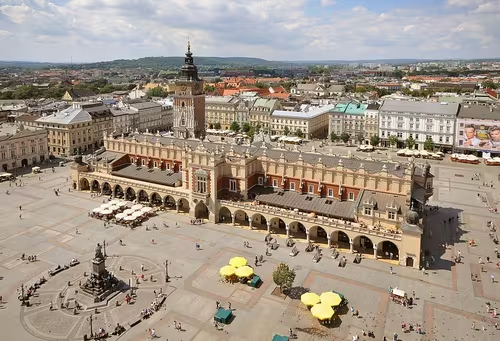
May is the month most people name as Krakow's sweet spot: mild 18°C days, the Planty ring in full chestnut blossom, and the longest evenings of the year so far. Crowds are present but not at summer pitch, and prices sit 20-25% below July. The student festival Juwenalia takes over for ten days, Photomonth opens across the city, and Museum Night throws open dozens of museums until 01:00, including Wawel at midnight for a symbolic 5 PLN.
The vibe May genuinely delivers. The weather is the best of the year without the summer heat, the city is alive with students and festivals, and you can still book Wawel and Wieliczka just a couple of weeks out. There is a faint myth that May is some hidden secret; it is not, but it is still the smartest single month to come.
Don't miss Museum Night (a Friday in mid-May) opens Wawel Underground, the Czartoryski and Schindler's Factory until 01:00. Going to Wawel near midnight gives the shortest queue and the most atmospheric visit of the year.
Crowd drivers Juwenalia (the 70th edition student festival), Museum Night and British and German school groups lift footfall, but it stays short of summer peak.
In season Strawberry and asparagus season hits the markets, and Kazimierz restaurant terraces are fully open for the first warm evenings.
Heads up 1 May (Labour Day) and 3 May (Constitution Day) are public holidays with shops shut; the two often bridge into one long weekend, so plan around what stays open.
Prices 20-25% below the summer peak; the best weather-to-value month of the year.
Events this month
🎉 FestivalKrakow Student Festival (Juwenalia) Juwenalia Krakowskie
May 13–23
Around ten days in mid-to-late May, across Krakow's university campuses.
A ten-day student festival across Krakow's universities, in its 70th edition, with concerts, four stage zones and the costumed Korowód parade through the Rynek on 15 May at noon.
The city is at its most alive and youthful, and the parade and many concerts are free, a lively, local-flavoured layer on top of an already great month.
🎨 Art and cultureKrakow Photomonth Miesiąc Fotografii w Krakowie
May 14 – Jun 14
Mid-May to mid-June, citywide.
The 23rd edition of an international photography festival, with exhibitions and talks staged across the city. Many of the shows are free to enter.
A serious, mostly free art layer for the visually minded, spread across venues you might not otherwise find.
🌙 Museum nightMuseum Night Noc Muzeów
May 15
One Friday evening in mid-May, from 18:00 to 01:00.
Dozens of museums open free (Wawel for a symbolic 5 PLN) from 18:00 to 01:00, including Wawel Underground, the Czartoryski and Schindler's Factory. A single night to roam the collections after dark.
Wandering Wawel near midnight is a once-a-year experience; it is a busy, late night, so not for early sleepers.
June in Krakow
High23°C / 74°F
Low14°C
Rain66mm / 11 rainy days
Sun11.9 h/day
Daylight16 h/day
Humidity71%
Crowds●●●●○Prices●●●●○
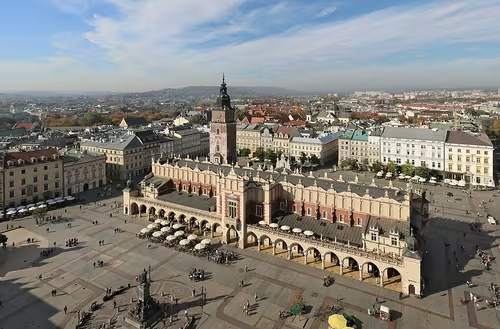
June opens the Krakow summer warm at 23°C and long on daylight, with the sun up past 16 hours and rain arriving as short, sharp thunderstorms rather than all-day soaks. The festival calendar is dense: the Krakow Film Festival, the Great Dragon Parade with its Saturday-night Vistula laser show, and Wianki, the Slavic midsummer festival on the riverbank with floating wreaths and late fireworks. Polish school holidays begin at the end of the month, tipping the city toward peak.
The vibe June is the tipping point, when Krakow shifts from busy-but-workable toward full summer. The early weeks are the prize, warm, festival-rich, still navigable, while the last week starts the stag-party-and-school-holiday surge. The long evenings on the Rynek and the riverbank festivals redeem almost everything.
Don't miss The Great Dragon Parade (06-07 June, free) is built for families, with a Saturday 21:45 laser-and-pyrotechnic show over the Vistula. Wianki's late-night fireworks (after 23:00) are best from the south bank of the river.
Crowd drivers Krakow Film Festival, the Great Dragon Parade, Wianki, the stag-party season peaking, and Polish school holidays starting from 27 June.
In season June is the wettest month for thunderstorms but peak season for outdoor dining; the Stary Kleparz market is heavy with early-summer fruit.
Hotels run 30-40% above off-season; July/August weekends already book out 8-12 weeks ahead.
Events this month
🎬 FilmKrakow Film Festival Krakowski Festiwal Filmowy
May 31 – Jun 7
Late May into early June for cinema screenings, followed by an online viewing window.
In its 66th edition, one of Europe's oldest documentary and short-film festivals, running across city cinemas and a VOD platform, with tickets around 3 to 10 euros per film.
A great source of short-film and documentary discoveries far from Hollywood; evening screenings sell out, so buy ahead.
🎉 FestivalGreat Dragon Parade Wielka Parada Smoków
Jun 6–7
An early-June weekend, typically the first or second weekend of the month.
In its 25th edition, a family festival with a Saturday 21:45 laser-and-pyrotechnic dragon show on the Vistula and a Sunday procession of giant dragons from Grodzka Street to the Rynek.
Tailor-made for families and completely free; riverside spots for the Saturday show fill from around 20:00, so arrive early.
🌸 Seasonal natureWianki (Midsummer Festival) Wianki
Jun 20–21
The midsummer-solstice weekend on the Vistula, around 20 to 21 June.
A Slavic midsummer festival on the Vistula riverbank where flower wreaths (wianki) are floated on the water, alongside concerts and fireworks on the night of 21 June.
The late fireworks (after 23:00) are best seen from the south bank; come midweek or arrive early on the day for a good spot.
🎵 MusicSummer Jazz Festival Letni Festiwal Jazzowy w Krakowie
Jun 27 – Aug 31
Late June through the end of August, with the opening concert at ICE Kraków.
In its 31st edition, around 150 concerts across the summer, opening at ICE Kraków and running a Solo Piano Week at the Philharmonic, with many free open-air sets on the Rynek.
High-quality jazz at moderate prices, and the free open-air sets on the main square are the best way to survive a hot summer evening.
July in Krakow
High25°C / 76°F
Low15°C
Rain113mm / 16 rainy days
Sun11.8 h/day
Daylight16 h/day
Humidity71%
Crowds●●●●●Prices●●●●●
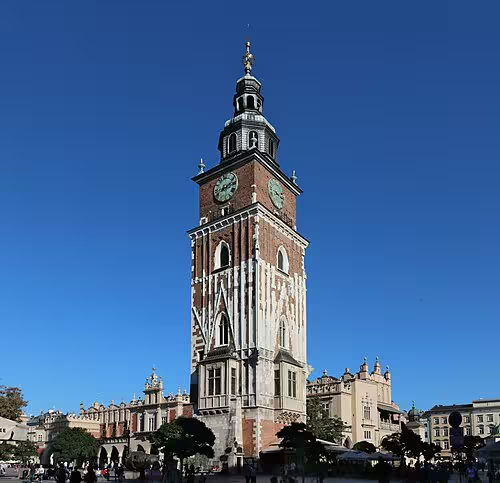
July is Krakow at full intensity. Highs sit around 25°C but heatwaves push afternoons to 30-33°C, and sitting inland in the Vistula basin with no sea breeze, the Old Town's narrow lanes bake. Polish school holidays run all month and the international peak lands on top, so Wawel and Wieliczka queues run past two hours without pre-booking. The Summer Jazz Festival fills venues and the Rynek with around 150 concerts, the open-air sets free.
The vibe July is for people who genuinely don't mind heat, crowds and peak prices. Midday on the Wawel hill is exposed and punishing, and Kazimierz nights tip into stag-party territory on weekends. But early mornings on an empty Rynek and free open-air jazz on summer evenings are a different, better city, and that part is worth it.
Don't miss The Summer Jazz Festival runs roughly 150 concerts through the summer, with free open-air sets on the Rynek and ticketed evenings at the Philharmonic and ICE Kraków. The Zakrzówek quarry lake on the city's southwest edge is the locals' free heat escape.
Crowd drivers Full Polish summer school holidays, the international high-season peak, and the densest flight schedule of the year all at once.
In season Survival food: zapiekanki (open-faced toasted baguettes, 2-6 PLN) from the round pavilion on Plac Nowy, and ice cream from a proper Kazimierz lodziarnia.
Year's highest prices; mid-range hotels 150-250 PLN, budget hostels often sold out, some weekends double the off-season rate.
Events this month
🎵 MusicSummer Jazz Festival Letni Festiwal Jazzowy w Krakowie
Jun 27 – Aug 31
Late June through the end of August, with the opening concert at ICE Kraków.
In its 31st edition, around 150 concerts across the summer, opening at ICE Kraków and running a Solo Piano Week at the Philharmonic, with many free open-air sets on the Rynek.
High-quality jazz at moderate prices, and the free open-air sets on the main square are the best way to survive a hot summer evening.
🎨 Art and cultureJewish Culture Festival Festiwal Kultury Żydowskiej
Jun 27 – Jul 5 ~
Late June into early July in Kazimierz, around nine days. Confirm exact dates on the official site each year.
An international festival in the Kazimierz district with concerts, workshops and readings, running since 1988. The closing concert on Szeroka Street is free and draws a huge crowd.
A deep dive into Jewish culture in the quarter where it lived for centuries; the free Szeroka Street finale is the highlight, so reserve workshops early.

August in Krakow
High25°C / 77°F
Low15°C
Rain109mm / 12 rainy days
Sun10.7 h/day
Daylight14 h/day
Humidity73%
Crowds●●●●●Prices●●●●●
August matches July for heat and crowds, with highs near 25°C and frequent 30°C-plus afternoons. Polish school holidays still run, and this is the heaviest stretch of international visitors all year. The standout is the free Pierogi Festival in mid-August on the Mały Rynek, a four-day competition of the best dumpling recipes from across Poland and beyond, with evening concerts. Assumption Day on the 15th adds a religious holiday and crowds the Wieliczka mine.
The vibe August is peak Krakow, for better and worse: every sight open and the evenings gloriously long, but yearly-high prices, full queues and a Kazimierz that belongs to the bachelor parties on weekends. Come for the Pierogi Festival and the buzz, not for breathing room, and book absolutely everything ahead.
Don't miss The Pierogi Festival (13-16 August, free entry, dumplings 4-6 PLN) is best sampled at midday when it is calmer; the evening concerts from 18:00 draw a crush. Zakrzówek lake remains the free heat refuge.
Crowd drivers Polish school holidays running through 31 August, the international peak, and Assumption Day (15 August) packing the Wieliczka mine.
In season All things pierogi at the festival, from classic ruskie to wild-mushroom and sweet fruit fillings, judged and sold across the Mały Rynek.
Heads up Assumption Day (15 August) is a public holiday with shops closed; the Wieliczka mine is at its busiest, so a pre-booked online ticket (around 82 PLN) is essential.
On par with July; the Pierogi Festival week packs the Mały Rynek to capacity.
Events this month
🍷 Food and winePierogi Festival Festiwal Pierogów
Aug 13–16
Four days in mid-August on the Mały Rynek.
In its 24th edition on the Mały Rynek, a competition of the best pierogi recipes from across Poland and the world, with dumplings around 4 to 6 PLN each and evening concerts from 18:00. Entry is free.
Free to enter and gloriously cheap to graze; come at midday for calmer tasting, since the evenings get packed.
September in Krakow
High20°C / 68°F
Low11°C
Rain102mm / 12 rainy days
Sun8.5 h/day
Daylight13 h/day
Humidity76%
Crowds●●●○○Prices●●●○○
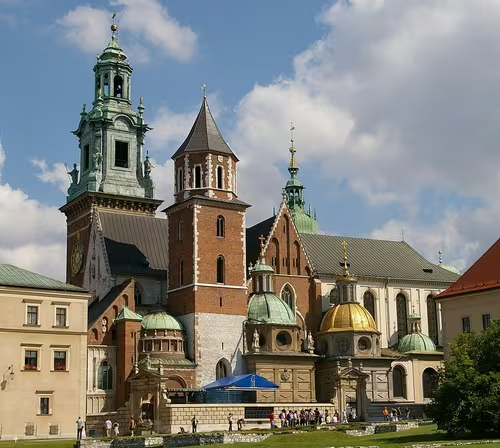
September is the second sweet spot, and arguably the smartest of all. The summer heat eases to a comfortable 18-22°C, the international crowds thin once the school year starts, and the first autumn colour appears in Kazimierz and on the Planty ring. Wieliczka loses its two-hour queue and Wawel breathes again. Prices fall 20-25% off the summer peak while the weather stays genuinely warm, which is a rare combination.
The vibe September is what August wishes it were: the same long, warm days minus the crush, the prices and the stag parties. The light starts to turn golden on the riverbank and the cobbles, and you can finally walk into the big sights without a fight. For most travellers, this is the single best month to come.
Don't miss Early-autumn light on Kazimierz and the Planty ring is the photographer's month. With queues down, the Wieliczka Salt Mine and Wawel are both far more pleasant than in summer.
Crowd drivers The school year resuming drops international families sharply; Auschwitz visitor numbers stay high year-round, so book those tours ahead.
In season Mushroom season arrives in the markets, and Kazimierz terraces are still open for warm-evening dining at off-peak prices.
Roughly 20-25% cheaper than July/August; the best combined weather, price and queue month.

October in Krakow
High15°C / 58°F
Low6°C
Rain70mm / 10 rainy days
Sun6.7 h/day
Daylight11 h/day
Humidity80%
Crowds●●○○○Prices●●○○○
October brings a clear drop in visitors and the city's prettiest autumn. Highs ease to 14-15°C, the Planty ring and Kazimierz turn gold, and the cultural season proper begins with theatre and opera reopening. Showers are short and infrequent at around 10 rainy days. City-break tourists tick up on weekends, but on the whole the Old Town is calm again, prices are soft, and the golden foliage makes it one of the most photogenic months of the year.
The vibe October is the underrated month: crisp, golden and quiet, with the cultural calendar back in full swing and prices that finally relax. You trade summer's warmth and long evenings for sweater weather and 17:00 dusks, but the autumn colour on the green ring more than pays for it.
Don't miss Autumn colour on the Planty ring and in Kazimierz at 14-20°C is the season's free highlight. The reopened theatre and opera calendar gives the evenings something beyond the bars.
Crowd drivers Weekend city-break visitors increase, but weekdays are calm; the school-excursion and stag-party waves have largely passed.
In season Game and mushroom dishes come into their own, and a glass of grzaniec returns to the Kazimierz cellars as the evenings cool.
Mid-range hotels from around 130-180 PLN with good last-minute availability.
November in Krakow
High9°C / 47°F
Low2°C
Rain49mm / 11 rainy days
Sun4.5 h/day
Daylight9 h/day
Humidity84%
Crowds●●○○○Prices●●○○○
November is deep off-season, grey and damp, with highs around 8-9°C, drizzle that lingers for days and the year's shortest run-up to the Christmas season. All Saints' Day on the 1st is the local high point, when thousands of candles light the 75,000 graves of Rakowicki Cemetery at dusk. Otherwise the Old Town is quiet and cheap, and Wawel runs its famous free-entry tickets, snapped up online within minutes of release.
The vibe November is bleak weather but excellent value, and All Saints' Day alone justifies the dates for the right traveller. The candlelit cemetery after dark is one of the most moving sights in the city, little known to tourists, and the rest of the month gives you a near-empty Old Town at the year's softest prices outside January.
Don't miss The candlelit graves of Rakowicki Cemetery on All Saints' evening (best after dark, tram to the Cmentarz Rakowicki terminus) are unforgettable. Wawel's free November tickets, released exactly 7 days ahead at midnight, are the budget traveller's prize if you can catch them.
Crowd drivers All Saints' Day (1 November) is a local peak; the rest of the month is the deep off-season lull.
Heads up All Saints' Day (1 November) is a public holiday; cemeteries stay open all day and evening, crowds peak from around 15:00, and public transport is overloaded.
Cheaper than October; Wawel's free November tickets sell out within minutes of release.
Events this month
🇮 HolidayAll Saints' Day at Rakowicki Cemetery Wszystkich Świętych - Cmentarz Rakowicki
Nov 1
1 November every year, with the atmosphere peaking after dark.
Thousands of candles light the 75,000 graves of Rakowicki Cemetery (founded 1803), with the most powerful atmosphere between dusk and 20:00. The tram runs to the Cmentarz Rakowicki terminus.
Little known to tourists but genuinely moving; the crowds build from midday, so the best atmosphere comes after dark.
December in Krakow
High4°C / 40°F
Low-1°C
Rain53mm / 13 rainy days
Sun3.3 h/day
Daylight8 h/day
Humidity83%
Crowds●●●○○Prices●●●○○
December turns the Rynek Główny into one of Central Europe's finest Christmas markets, around 80 wooden stalls of crafts, grzaniec and gingerbread open daily 10:00 to 20:00 from late November to early January. It is cold (highs around 4°C), grey and dark by 15:40, but the lights and the smell of mulled wine carry it. The first half of the month and its weekends draw heavy city-break crowds; the Szopka nativity-crib competition is a uniquely local highlight.
The vibe December is festive and atmospheric, genuinely one of the prettiest Christmas markets anywhere, but the first Advent weekends are a real crush. The trick the locals know is to come midweek in mid-December for the same lights and stalls with a fraction of the crowd. Just pack for cold and short days.
Don't miss The Szopka competition at the Mickiewicz Monument (first Thursday of December, 10:00) shows off Krakow's UNESCO-listed nativity-crib craft, with the winners exhibited at the Krzysztofory Palace into spring. Christmas-market grzaniec on a cold night is the simple pleasure of the month.
Crowd drivers The Christmas market (from late November) pulls heavy city-break footfall, peaking on the first December weekends; the Szopka competition adds a one-day surge on the first Thursday.
Heads up Christmas Day (25 December) closes everything and pauses the market, with no regular transport; the market reopens on Second Christmas Day (26 December).
Christmas-market weekends add a 50-70% surcharge; the first half of January crashes straight back to the yearly floor.
Events this month
🎄 Christmas marketKrakow Christmas Market Jarmark Bożonarodzeniowy na Rynku Głównym
Nov 28 – Jan 1
From the last Saturday of November to early January, daily 10:00 to 20:00.
Around 80 wooden stalls fill the Rynek Główny with crafts, grzaniec (mulled wine) and gingerbread, open daily 10:00 to 20:00. It is one of the prettiest Christmas markets in Central Europe.
The setting on Europe's largest medieval square is unbeatable; the first December weekends are the busiest, so come midweek for the same magic with far fewer people.
🎨 Art and cultureKrakow Nativity Scene (Szopka) Competition Konkurs Szopek Krakowskich
Dec 3
First Thursday of December at 10:00, by the Mickiewicz Monument; the winning works are then exhibited at the Krzysztofory Palace into the following spring.
A UNESCO-listed tradition in which Krakow craftspeople present elaborate szopki (nativity cribs) at the Adam Mickiewicz Monument. The winning works are exhibited at the Krzysztofory Palace into the following spring.
An iconic, uniquely Krakovian craft on display; take a spot by the monument from around 09:00 to see the entries arrive.
Frequently asked questions
What is the best time to visit Krakow?
May and September are the best months. You get mild 18-20°C days, the Old Town and Planty ring in full life, prices around 20-25% below the July peak, and short enough queues that Wawel and Wieliczka stay pleasant. May adds Juwenalia and Museum Night; September brings the first autumn colour and the calmest big-sight visits of the year.
What are the cheapest months to visit Krakow?
January and February are the cheapest months. Mid-range hotels drop to roughly 120-180 PLN a night and flights from Western Europe hit their yearly low. November is the runner-up, with soft rates plus Wawel's free-entry tickets. The trade is grey skies, short days, near-freezing temperatures and the odd winter smog day, though sights are close to queue-free.
When should I avoid visiting Krakow?
July and August are the months to avoid if you can flex. Polish school holidays run from late June to the end of August, hotel rates hit their yearly maximum, and Wawel and Wieliczka queues run past two hours without advance booking. Kazimierz nights tip into stag-party territory on summer weekends. Everything is open, but you pay the most for the least space.
What is Krakow like in December and at Christmas?
December turns the Rynek Główny into one of Central Europe's loveliest Christmas markets, around 80 stalls of grzaniec and gingerbread from late November to early January, open daily 10:00 to 20:00. It is cold (highs near 4°C) and dark by 15:40. The first Advent weekends are packed, so come midweek in mid-December for the same lights with far fewer people.
How far ahead should I book Wieliczka, Wawel and Auschwitz?
Book the Wieliczka Salt Mine two to three weeks ahead (82 PLN online), or face a two-hour queue in summer. Reserve Wawel Castle about three weeks out in peak season, and go at the 9:00 opening for the emptiest rooms. Auschwitz-Birkenau needs 8 to 12 weeks from April to October; arrive 30 minutes early for security.
How is the weather in Krakow in summer?
July and August average highs around 25°C, but heatwaves push afternoons to 30-33°C, and sitting inland in the Vistula basin with no sea breeze, the Old Town's lanes bake. July is also the wettest month (113mm), with rain arriving as short, sharp thunderstorms rather than all-day soaks. Walk early morning or late evening and keep midday for indoor sights.
Is Krakow worth visiting in winter?
Yes, for the right traveller. Winter is the cheapest, quietest time, with snow on Wawel and the Planty ring that photographs beautifully and big sights nearly queue-free. December adds the Christmas market. The catches are short days (sunset around 15:40), cold near-freezing highs, and occasional January or February smog days when you should lean on museums and Kazimierz cafés.
When is the best time to visit Krakow with kids?
Early June and September work best. June brings the free Great Dragon Parade (6-7 June) with its riverside laser show, and the heat is still gentle. September eases the temperature to 20-22°C and Wieliczka loses its two-hour queue, keeping the 2.5-hour underground tour fun. Try to avoid the late-June to end-of-August Polish school holidays, when crowds and prices peak.
Does it rain a lot in Krakow?
Krakow's wettest months are July (113mm, 16 days), August (109mm) and September (102mm), but summer rain usually comes as short 30-60 minute thunderstorms rather than all-day soaks. November and December are grey and drizzly over many days. The driest months are March (44mm) and January (46mm). A light rain layer covers you most of the year.

Any month, any day: your guide is already there
Whatever date you pick, a private human guide gets pricier and harder to book on weekends, holidays and in peak season. Our live AI guide, the one that walks with you and answers anything you ask out loud, works the opposite way.
One flat price, every day
No holiday, weekend, night or peak-season surcharge. A private guide in Krakow runs well over 100 euro for a half day, and more on holidays. Ours stays the same.
Available the moment you want it
Start at midnight or at dawn, on Christmas, in the snow, in the August heat. No sold-out high season, no booking weeks ahead.
Your pace, no meter running
Pause for a long lunch, restart after dark, repeat a stop. The tour simply waits for you.
Free to try, a fraction of the cost
Test it for free, then a transparent flat price that undercuts any private guide, in every season.
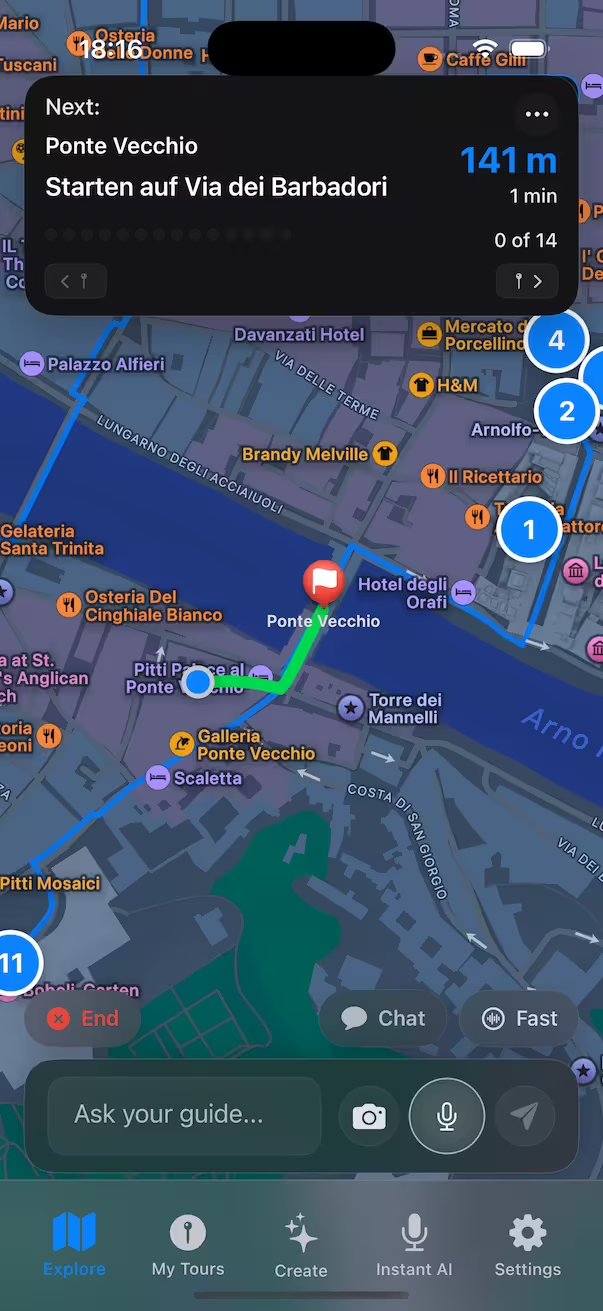
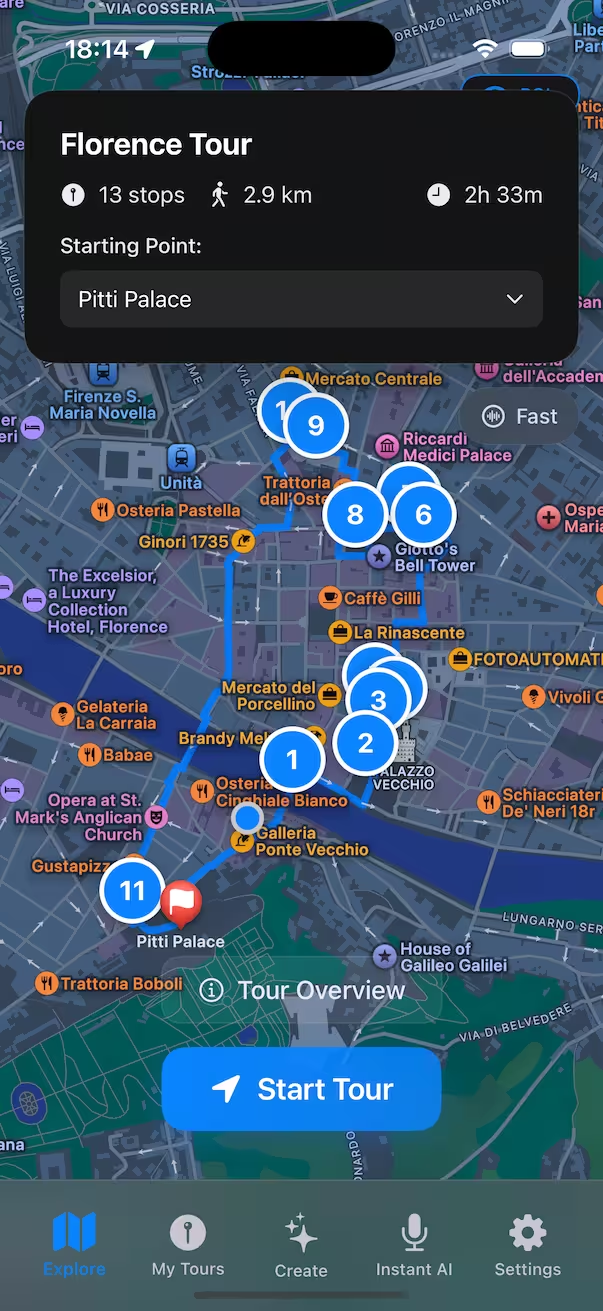
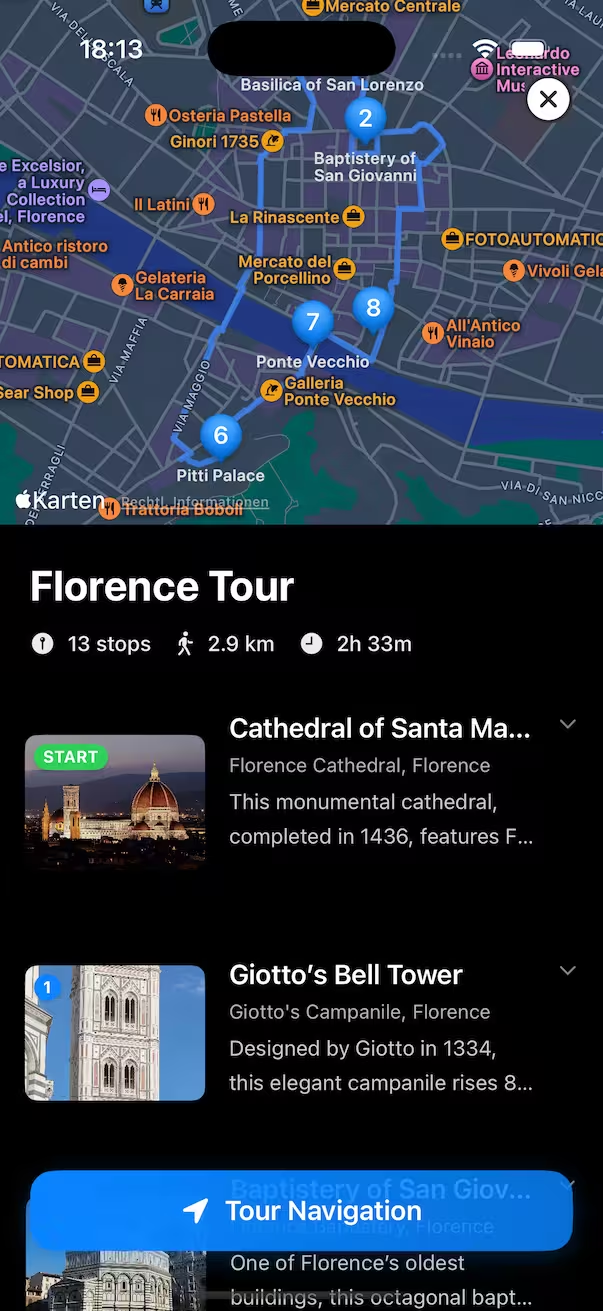
The classic Krakow tour: 14 stops, 6.0 km, about 3 h on foot
Your live AI guide and the self-guided Krakow route, together in your browser.