Best Time to Visit Budapest
Month-by-month weather, crowds and prices, plus a full calendar of festivals and events worth planning a trip around.
Best monthsMay, Sep
CheapestJan, Feb, Nov
AvoidJul, Aug
BusiestJul, Aug
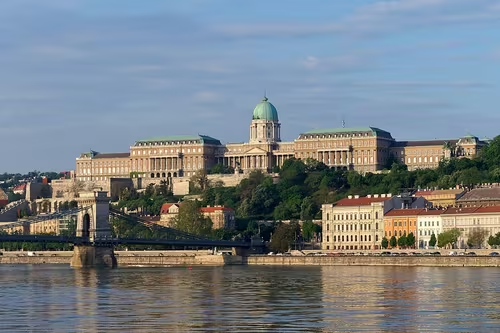
When is the best time to visit Budapest?
Come in May or September: 20-23°C, the Spring or Wine Festival in full swing, and crowds you can still walk around. July and August bring 33-36°C heatwaves plus the F1 weekend and Sziget, when hotel rates double. January and November are the cheapest and quietest, the price being grey, short days.
Start our tool and find your best time to visit Budapest
Your perfect month
Free · ~30 seconds
or tap a month directly
What matters to you?
And this?
Best overall: May, Sep. May and September are the real sweet spot: 20-23°C, the Spring Festival or Wine Festival running, cherry-blossom tail or first autumn colour, and prices 25-40% below the July-August peak. Book ahead either way, because everyone chasing the shoulder season has worked this out too.
Best value: Jan, Feb, Nov. January, February and November bring the year's lowest rates, 4-star hotels from $72-96, an almost-empty Széchenyi steaming in the cold, and the Great Market Hall at its cheapest. The trade is short, grey days and highs around 4-10°C.
Avoid: Jul, Aug. July and August: 33-36°C heat with no shade on Castle Hill, plus the F1 weekend and Sziget driving hotel prices to their yearly high. Worst value of the year unless those two events are the whole reason you came.
- January: Tough month, 4°C. This is the one month the thermal baths feel like a local secret rather than an Instagram queue. The steam rising off Széchenyi's 38°C outdoor pool into freezing air is the definitive Budapest winter image, and on a weekday you share it with maybe 20 people. Grey skies are the price, and it is a fair one.
- February: Good time, 8°C. February is honest, unperformed Budapest: no show put on for tourists, no seasonal markup, just a real Central European city in winter mode. The Mangalica Festival weekend is when you see locals genuinely out and about, eating their way through kolbász and paprika stalls while folk bands play.
- March: Great time, 12°C. March is the last genuinely quiet month before spring fills the city. Budapest wakes up with terrace tables and the first market crafts, yet you can still wander Castle Hill without the summer crush. That window closes fast, so use it.
- April: Great time, 17°C. April is gorgeous and no longer a secret. The cherry blossoms on Margaret Island and the Easter market are genuinely lovely, but the four-day Easter weekend packs the centre and shutters local shops on Good Friday. Come for the blossom, just go in clear-eyed about the holiday crowds and reduced services.
- May: Good time, 21°C. May is the month locals quietly call the best, and they are right: warm enough to live outdoors, cool enough to walk Castle Hill at midday, and the cultural calendar at its richest before the summer heat and festival circus take over. The catch is the rain, so pack a light layer and time your sights around the afternoon showers.
- June: Good time, 26°C. June is the tipping point, when Budapest shifts from busy-but-workable into full summer mode. The first half is still genuinely pleasant and a smart family window; by the last week the heat and crowds are building toward July. The long evenings are the redemption, with the riverbanks and ruin-bar terraces alive until late.
- July: Tough month, 28°C. July is for people who genuinely don't mind 35°C heat and paying summer-maximum prices for it. Midday on Castle Hill is a write-off. But the city has a real answer: the Danube embankments run 2-3°C cooler, the baths and air-conditioned museums save the afternoons, and the lit-up riverbanks after dark are a different, better Budapest.
- August: Tough month, 28°C. August is not romantic-empty Budapest, it is survival-mode Budapest. Sziget week turns the whole city into a festival, electric if you are part of it and overwhelming if you are not. The 20 August fireworks night is genuinely one of Europe's best displays, but the heat is draining and you pay top price for the privilege of the crowds.
- September: Great time, 22°C. September is the month seasoned travellers quietly prefer over May: same gorgeous weather, but the summer crush has cleared out and the light on the Danube turns golden. You get the Wine Festival in a hilltop castle, terrace bars still open, and full Parliament access without queuing weeks ahead. This is Budapest at its most rewarding.
- October: Great time, 17°C. October is the underrated autumn pick: foliage reflecting in the koi ponds of Margaret Island's Japanese Garden, far fewer tourists than September, and the baths feeling cosy again as the air turns crisp. The weather is a gamble, but the trade for low prices and an empty Castle Hill is a good one.
- November: Good time, 10°C. Early November is the quietest the city gets all year outside January, ideal if you want Budapest to yourself at rock-bottom prices. Then the Christmas markets flick on mid-month and the whole mood shifts: mulled wine, kürtőskalács and lights transform the squares, and the city eases into its festive second wind.
- December: Good time, 5°C. December Budapest is genuinely one of Europe's best Christmas-market cities, the Vörösmarty stalls and Basilica light show worth the cold alone. The trick is timing: weekends and Dec 22-24 are shoulder-to-shoulder, so go on a weekday afternoon. Mulled wine and the steaming thermal baths make the short, dark days feel cosy rather than bleak.
Budapest weather by month
HighLowRainfall
Jan4°
Feb8°
Mar12°
Apr17°
May21°
Jun26°
Jul28°
Aug28°
Sep22°
Oct17°
Nov10°
Dec5°
| Month | Temp | Rain | Sun | Crowds | Prices | Highlight |
|---|---|---|---|---|---|---|
| Jan | 4° / -2° | 42mm · 10 rainy days | 4.6 h/day | ●○○○○ | ●○○○○ | Budapest International Documentary Film Festival |
| Feb | 8° / 0° | 45mm · 9 rainy days | 6.1 h/day | ●○○○○ | ●○○○○ | Budapest International Documentary Film Festival |
| Mar | 12° / 2° | 38mm · 7 rainy days | 8.6 h/day | ●●○○○ | ●●○○○ | March 15 National Day |
| Apr | 17° / 6° | 44mm · 10 rainy days | 10.1 h/day | ●●●○○ | ●●○○○ | Vörösmarty Spring and Easter Fair |
| May | 21° / 11° | 81mm · 13 rainy days | 10.9 h/day | ●●●○○ | ●●●○○ | Budapest Spring Festival |
| Jun | 26° / 16° | 65mm · 10 rainy days | 12.7 h/day | ●●●●○ | ●●●○○ | Gourmet Festival |
| Jul | 28° / 18° | 73mm · 10 rainy days | 12.7 h/day | ●●●●● | ●●●●● | Balaton Sound |
| Aug | 28° / 18° | 65mm · 9 rainy days | 11.8 h/day | ●●●●● | ●●●●● | Sziget Festival |
| Sep | 22° / 13° | 72mm · 8 rainy days | 9.6 h/day | ●●●○○ | ●●●○○ | Wizz Air Budapest Half Marathon |
| Oct | 17° / 8° | 62mm · 8 rainy days | 7.0 h/day | ●●○○○ | ●●○○○ | Pálinka and Sausage Festival |
| Nov | 10° / 4° | 56mm · 10 rainy days | 4.9 h/day | ●○○○○ | ●○○○○ | Advent and Christmas Market |
| Dec | 5° / 0° | 54mm · 8 rainy days | 4.2 h/day | ●●○○○ | ●●○○○ | Advent and Christmas Market |
How we score this: weather = long-run climate normals (Open-Meteo), crowds & prices = relative season read, events checked yearly against official dates.
Best time to visit Budapest: weather, prices & crowds
Best months for good weather
May, Jun, Sep
May, June and September give Budapest its most comfortable walking weather: 20-26°C days, long light until past 8pm in summer, and the brutal July-August heat either side of them.
Quietest months to avoid the crowds
Jan, Feb, Nov
From November to February the international crowd vanishes. You can soak in Széchenyi's outdoor pools sharing them with 20 people on a weekday, and Parliament tours need no advance scramble.
Cheapest time to visit Budapest
Jan, Feb, Nov
January and November are Budapest's cheapest months: 4-star hotels from around $72-96 a night (up to 40% below summer), and budget rooms in November from $26.
Best time for festivals and events
Aug, Sep
State Foundation Day on 20 August closes with Europe's largest fireworks display, a 5km span over the Danube, while the September Wine Festival pours 1,000+ wines in the courtyards of Buda Castle at sunset.
How many days do you need in Budapest?
Give Budapest three days. The Hungarian capital straddles the Danube with two distinct halves, hilltop Buda and flat, grand Pest, plus thermal baths and a ruin-bar scene that each deserve their own time. A long weekend gets you the core; four or five days lets the city breathe.
One day
Castle Hill to Parliament in a day
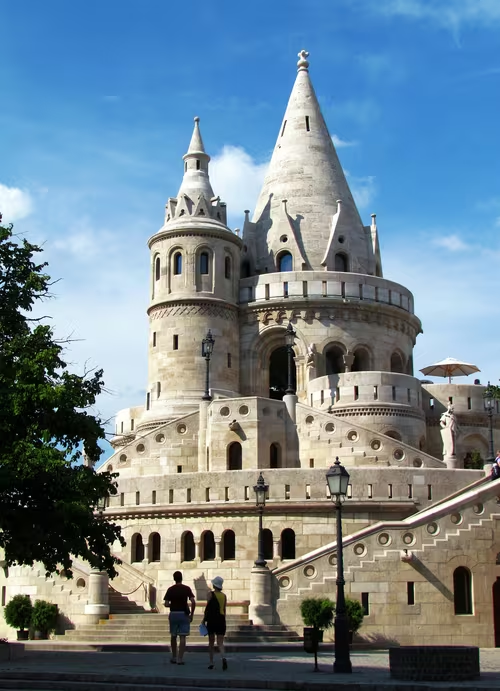
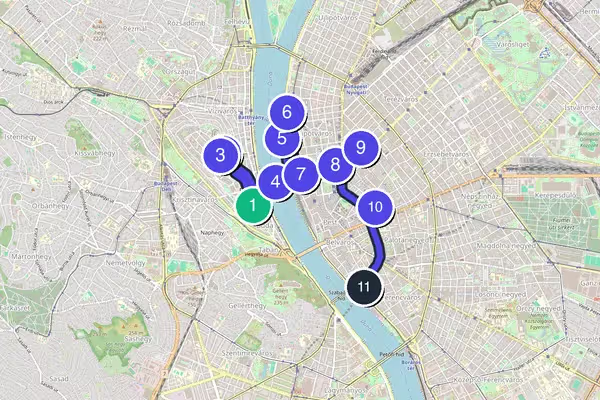
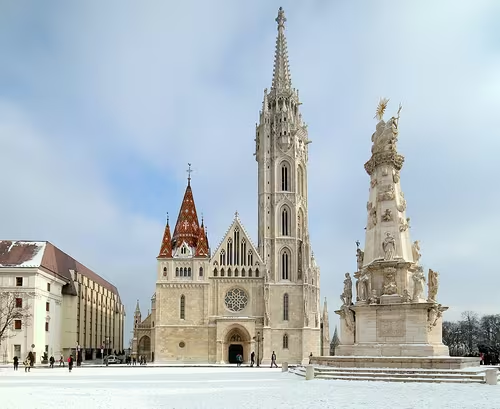
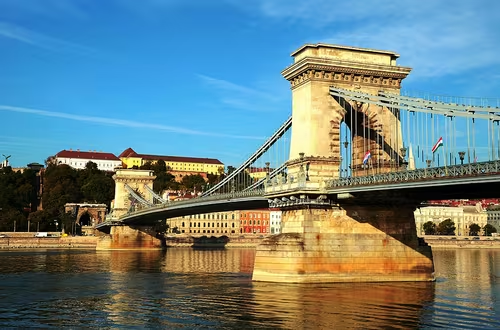
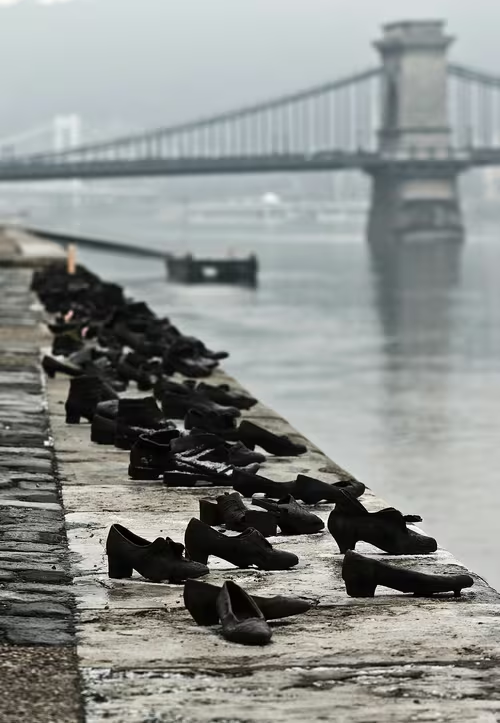
Climb to Buda Castle and walk north along the ramparts to the neo-Romanesque Fisherman's Bastion beside Matthias Church for a panoramic view of the Danube. Cross the Chain Bridge into Pest and follow the embankment north to the Shoes on the Danube Bank memorial and the riverfront Hungarian Parliament Building. A self-guided Budapest walking tour strings all 11 stops across 8.4 km in about 3.5 hours, so you can complete the route before the midday heat builds in summer.
Two days
Pest's grand boulevard and the Jewish Quarter
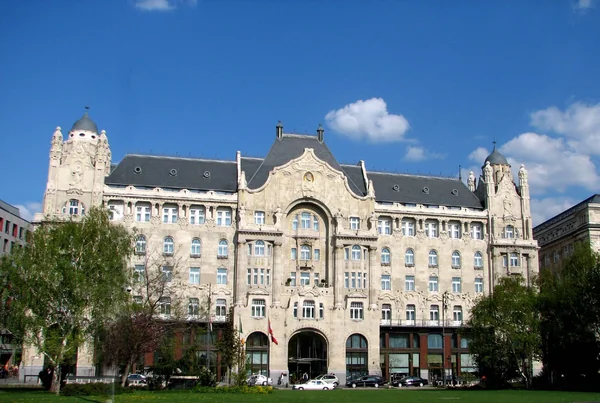
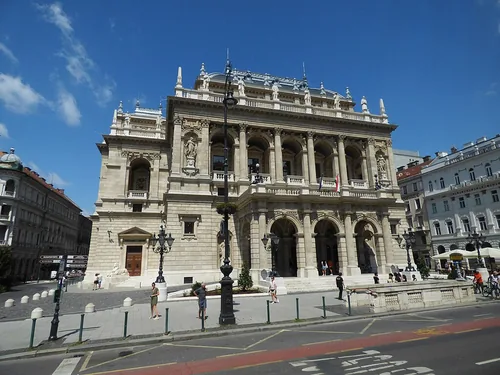
Spend day two on Pest's showpiece corridor: St. Stephen's Basilica and its 96-metre dome, the Hungarian State Opera House on Andrássy Avenue, and the Great Synagogue on Dohány Street, the largest in Europe. Pause at the Art Nouveau Gresham Palace on the Pest embankment, then end the evening with a walk through the ruin bars of the seventh district.
Three daysRecommended
Thermal baths, markets and City Park
Devote a morning to the Great Market Hall before 9am, when produce stalls outnumber tour groups and paprika prices are lowest. Spend the afternoon at Széchenyi Baths in City Park, where the 38°C outdoor pools are surrounded by ornate yellow pavilions. Take the M1 metro line, the oldest underground on the European continent, back into the centre for dinner.
Four days or more
Margaret Island, Gellért Hill and the Buda Hills
A fourth day opens up the quieter sides of the city. Rent a bike on car-free Margaret Island for its 5.3 km loop, with the Japanese Garden, rose garden and medieval monastery ruins. Climb Gellért Hill to the Citadel for the broadest Danube panorama, then descend to the art nouveau Gellért Baths for a soak. Five or more days reveal the quieter districts: a walk through the Erzsébetváros backstreets, a cog-railway ride to Normafa for autumn foliage, or a day trip to the Danube Bend towns of Szentendre and Visegrád.
Best time to visit Budapest by traveller type
Same city, different trip. Here's the month that fits how you're travelling.
🧭
Best time to visit Budapest for the first time
MaySep
May or September: cool 20-23°C walking weather, the Spring or Wine Festival on, full Parliament access without booking weeks ahead, and prices well below the summer peak. Skip July-August on a first visit, when heat and crowds overwhelm the city.
❤️
Best time to visit Budapest for couples
SepOct
Late September into mid-October: golden light on the Danube, warm thermal evenings at Rudas' rooftop pool, the Wine Festival in Buda Castle, and hotels 35-40% cheaper than August.
💶
Best time to visit Budapest on a budget
JanFebNov
January, February or November for the cheapest hotels of the year, the free Mangalica food festival in early February, and a near-empty thermal bath at the off-peak 4,800 HUF rate.
🍝
Best time to visit Budapest for food and wine
JunSep
June for the Gourmet Festival (Jun 4-7, 100 exhibitors at Millenáris) or September for the Wine Festival (Sep 9-12, 1,000+ wines in Buda Castle), the two best food and wine events of the year.
Worst time to visit Budapest
July and August are the months most worth skipping unless the F1 Grand Prix or Sziget is the whole reason for your trip. Afternoon temperatures regularly hit 33 to 36°C, with heatwaves pushing 38 to 40°C in most summers, and there is zero shade on Castle Hill or Heroes' Square. The F1 weekend in late July and Sziget week in mid-August push central hotel rates to the year's absolute peak, rooms doubling in price and selling out months ahead.
Still worth it for If you are coming specifically for Sziget or the 20 August fireworks over the Danube, the crowds and heat are part of the experience. The air-conditioned Hungarian National Gallery, Museum of Fine Arts and House of Terror offer genuine afternoon refuge, and the embankments run a couple of degrees cooler than the hilltops.
Go instead in May, September, when Budapest is at its best.
Best time for a tour of Budapest
Budapest is a city of bridges, riverbanks and steep castle climbs, and on foot the month makes or breaks it. The sweet spots are late April through early June and again September into mid October, when highs sit around 17 to 23 °C, the light lingers, and you can haul yourself up to Buda Castle and along the Fisherman's Bastion terraces without sweating through your shirt. July and August are the trap: highs near 28 °C, humid air off the Danube and almost no shade on the open Pest embankment as you walk past the Hungarian Parliament Building and the Shoes on the Danube Bank. Winter swings the other way. January barely scrapes 4 °C with lows below freezing and goes dark by mid afternoon, so a long stroll across the Chain Bridge turns into an exercise in numb fingers. May is the prettiest but also the wettest, with roughly 13 rainy days, so pack a layer even when the sky looks generous.
The good news is that the climate, not a clipboard, gets to set your hour. With AI Tourguide everything runs in your browser, no app, no download, no fixed departure time, and a voice-first guide leads the whole loop, tells the stories behind each spot, asks what you are curious about and adapts as you go. On a sticky August day you can start your Budapest tour at first light and reach Matthias Church before the heat and the crowds build, then pause for an iced coffee whenever you like. On a still November morning you simply set off when the embankment is quiet and walk at your own unhurried pace.
 +7
+7All 11 stops are already on the map.
You just press start.
You just press start.
 AI Tourguide
You just read the route.
Now walk it with a guide in your ear.
Press start wherever you are, even hundreds of kilometres from Budapest, and the guide begins telling its stories right away. In the city, pick any of the 11 stops to start from: it leads you there, then talks with you the whole route, asking, listening, remembering, and shaping the tour around your answers.
11stops8.4km3.5hours11languages
▶Start the tour freeFree to start · Runs in your browser · No app, no download
Budapest events and festivals calendar
Annual highlights worth timing a trip around, listed month by month.
January
🎬 FilmBudapest International Documentary Film Festival Budapest Nemzetközi Dokumentumfilm Fesztivál
Jan 24 – Feb 1 ~
Late January into early February, running about 9 days.
Now in its 12th edition, BIDF screens around 60 international documentaries across 250 screenings, including Oscar, Locarno and IDFA winners, with many directors and stars attending in person at central cinemas.
February
🍷 Food and wineMangalica Festival Budapest Mangalica Fesztivál
Feb 7–9
A weekend in early February at Szabadság tér.
A free three-day festival on Szabadság tér celebrating the mangalica, Hungary's curly-haired woolly pig: pork in every form, paprika, kolbász sausages, plus folk music and dance.
March
🇮 HolidayMarch 15 National Day Március 15. Nemzeti Ünnep
Mar 15
15 March every year, marking the 1848 Revolution.
Hungary marks the 1848 Revolution with a 7:30am flag-raising at Kossuth Square, a PM speech and concerts at 1pm, free Open Parliament entry 3-6pm, rival political marches and museum programs across the city.
🍷 Food and wineVörösmarty Spring and Easter Fair Vörösmarty Tavasz
Mar 28 – Apr 21 ~
Late March to late April, the exact dates moving with Easter each year.
Vörösmarty Square fills with folk artists, crafts, Easter decorations and ceramics, traditional food like goulash, chimney cake and sausages, plus daily folk performances and egg-painting workshops.
April
⛪ ReligiousEaster Weekend Húsvét
Apr 3–6 ~
Good Friday to Easter Monday, four public holidays. Dates move each year with Easter.
Four public holidays with both Good Friday and Easter Monday off, the Hungarian Easter sprinkling folk tradition, and open-air programs in City Park.
May
🎨 Art and cultureBudapest Spring Festival Budapesti Tavaszi Fesztivál
May 2–17 ~
Two weeks in early to mid May, typically starting around May 1.
In its 45th edition, Hungary's flagship cultural festival runs around 150 programs of classical music, opera, ballet, jazz and visual art at the Opera House, the Palace of Arts and the Great Hall.
June
🍷 Food and wineGourmet Festival MBH Bank Gourmet Fesztivál
Jun 4–7
Early June at Millenáris Park, running about 4 days.
Around 100 exhibitors, restaurants, wineries, pastry shops and bars gather at Millenáris Park, with star chefs, tastings and presentations focused on Hungarian regional gastronomy.
🌙 Museum nightMuseum Night Múzeumok Éjszakája
Jun 20 ~
The Saturday nearest the summer solstice, typically in late June.
More than 100 institutions stay open until dawn on a single pass, with special access to spaces not usually open at night.
🏳️🌈 PrideBudapest Pride March Budapest Pride Menet
Jun 27 ~
Late June, the march starting at 2pm.
The 31st Budapest Pride March, Hungary's largest LGBTQ+ event, runs through central Pest from 2pm, with a week of associated parties and events around it.
July
🎵 MusicBalaton Sound
Jul 8–12
Early to mid July at Lake Balaton, 100 km from Budapest, running about 5 days.
Europe's largest lakeside electronic music festival, held at Zamárdi on Lake Balaton, with headliners such as Martin Garrix, Armin van Buuren and Afrojack.
🏃 SportF1 Hungarian Grand Prix Formula-1 Magyar Nagydíj
Jul 24–26 ~
Late July at the Hungaroring, 20 km from Budapest, the last race before the summer break.
The Hungarian Grand Prix at the Hungaroring in Mogyoród draws around 300,000 attendees as the last race before F1's summer break.
August
🎵 MusicSziget Festival Sziget Fesztivál
Aug 11–15 ~
Mid-August on Óbuda Island, running about 5 days.
One of Europe's biggest music festivals, held on Óbuda Island with 500,000+ visitors from 100+ countries and a lineup of major international headliners.
🍷 Food and wineStreet of Hungarian Flavours Magyar Ízek Utcája
Aug 18–20
Around State Foundation Day in mid to late August, typically 18 to 20 August.
Traditional dishes from every Hungarian region, goulash, stuffed cabbage, chimney cakes, pálinka and wine, line the Pest embankment and Andrássy Avenue, timed to coincide with the 20 August celebrations.
🇮 HolidayState Foundation Day Államalapítás Ünnepe / Szent István-nap
Aug 20
20 August every year, Hungary's national day. Programs run Aug 15-21.
Hungary's birthday, with 200+ free programs across 20 venues Aug 15-21, an air show, the Holy Right procession, and at 9pm Europe's largest fireworks spanning 5km between Petőfi and Margaret bridges.
September
🏃 SportWizz Air Budapest Half Marathon Wizz Air Budapest Félmaraton
Sep 6 ~
Early September, on a Sunday morning.
Now in its 41st edition, Hungary's largest half marathon runs 21.1km from City Park along Andrássy, over the Chain Bridge, past Parliament and the Danube embankment.
🍷 Food and wineBudapest Wine Festival Budapesti Borfesztivál
Sep 9–12
Mid-September in the courtyards of Buda Castle, typically running 4 days.
In its 35th edition, the festival pours 1,000+ wines from Hungary and abroad in the courtyards of Buda Castle, 2pm to midnight daily, with live folk music, jazz and panoramic Danube sunset views.
October
🍷 Food and winePálinka and Sausage Festival Budapesti Pálinka és Kolbász Fesztivál
Oct 2–4
Early October at Buda Castle, running about 3 days.
At Buda Castle, 20+ distilleries pour 400+ pálinka distillates alongside kolbász sausage producers, with folk dance and music throughout.
🇮 Holiday1956 Revolution Memorial Day 1956-os Forradalom Emléknapja
Oct 23
23 October every year, marking the 1956 Revolution.
A public holiday with a 7:30am flag-raising at Kossuth Square, a 1pm state commemoration, a 3pm torchlit procession to the Bem Statue, and candle-lighting at the Wall of Heroes all day.
November
🎄 Christmas marketAdvent and Christmas Market Adventi és Karácsonyi Vásár
Nov 13 – Jan 1
Mid-November to 1 January on Vörösmarty Square and at St. Stephen's Basilica, opening around the 13th of November.
Budapest's largest Christmas market fills Vörösmarty Square with 150+ stalls, a free miniature railway, mulled wine, kürtőskalács and crafts, with a smaller market and a nightly light show at St.
Insider tips for visiting Budapest
The rules buried in forums, in one place.
- Most museums in Budapest are closed every Monday, including the Hungarian National Gallery, the Museum of Fine Arts, the House of Terror, the Budapest History Museum and the Hungarian National Museum. Plan museum days for Tuesday to Sunday. On a Monday, do the free, always-open Buda Castle grounds, Fisherman's Bastion terraces, the Chain Bridge, or a ruin-bar brunch instead.
- Parliament tours sell out one to three weeks ahead from May to September and require advance booking at jegymester.hu/parlament. The best slot is 8-10am on a Tuesday to Thursday: quietest crowds and best interior light. Bring photo ID, and know that tours can be cancelled at 30 minutes' notice when Parliament is sitting, most often during budget debates in spring and autumn.
- Fisherman's Bastion towers are free before 8am and after 10pm, when they otherwise cost 1,700 HUF. Arrive before 8am for a crowd-free panorama with dawn light on Parliament across the river, or come after 10pm for the lit-up view with almost no one else there. Avoid 11am to 4pm in summer, when it is shoulder to shoulder.
- Széchenyi Baths are cheapest and calmest on a weekday before 10am or after 4pm: the off-peak afternoon ticket is 4,800 HUF versus 7,200 HUF for a day pass. Weekend summer walk-in queues run 30-45 minutes, and the Kós Károly sétány side entrance is usually shorter than the main one. Pre-book online for summer weekends.
- For the cheapest paprika and the most local atmosphere, get to the Great Market Hall before 9am on a weekday. By 11am, especially Saturday and Sunday, it fills with tour groups. The ground floor is the real produce; the upper floor is souvenirs, where paprika still runs 30-50% cheaper than the airport. Sunday hours are only 10am to 4pm.
- The summer thermal-bath truth: Széchenyi's outdoor pools sit at 38°C year-round, so in July and August they are a social scene, not a way to cool off. The real magic is a winter weekday, when steam rises off the hot water into freezing air and you share the outdoor pool with about 20 people.
- On State Foundation Day (20 August), do not try to drive anywhere near the Danube in the evening. The embankment between Petőfi and Margaret bridges closes to traffic from around 6pm for the 9pm fireworks. Arrive on foot by 8pm for a viewing spot, and book any Danube fireworks cruise weeks ahead, as they sell out.
- Most ruin bars and garden terraces are seasonal, roughly May to October, and Szimpla Kert closes on Mondays. Szimpla is quietest on Sunday mornings, when it hosts a farmers' market from 10am to 2pm. The terrace bars only truly peak in August, when the queue forms from 10pm on Friday and Saturday nights.
Public holidays in Budapest
On these dates many shops and offices close, transport thins out, and sights can be mobbed or shut. Plan around them.
| Date | Holiday | What closes |
|---|---|---|
| Jan 1 | New Year's Day | Most shops, museums and banks closed; tourist-area restaurants stay open. Public transport runs a reduced holiday timetable. |
| Mar 15 | National Day (1848 Revolution) | Falls on a Sunday in 2026, so no extra weekday off. A flag-raising at Kossuth Square and a PM speech bring crowds and rival marches; the Parliament area closes to traffic 10am-2pm, with free Open Parliament entry 3-6pm. Shops keep limited hours. |
| Apr 3 | Good Friday | Public holiday; many restaurants and shops close and public transport is reduced, though most museums stay open. Part of a four-day Easter window that pulls short-break visitors from Austria, Germany and Czechia. |
| Apr 6 | Easter Monday | Public holiday; transport is thinned and many local shops stay shut, while tourist-area restaurants open. The Vörösmarty Easter Fair on the main square is at its busiest. |
| May 1 | Labour Day | Public holiday creating a four-day long weekend (Apr 30-May 3). Parks and the Danube embankment are busy with outdoor concerts; most sights stay open. Domestic travel spikes, so book hotels by March. |
| May 25 | Whit Monday | Public holiday following Pentecost, creating the second long weekend of May. Families head to the parks and the Danube; a domestic travel spike means booking ahead pays off. |
| Aug 20 | State Foundation Day (St. Stephen's Day) | Government offices, banks and most shops close; sights stay open. The Danube embankment shuts to traffic from around 6pm for Europe's largest fireworks at 9pm, so do not plan to drive near the river that evening. |
| Oct 23 | 1956 Revolution Memorial Day | Public holiday (a Friday in 2026, so a three-day weekend). The House of Terror Museum is closed; most others stay open. A morning flag-raising and a procession to the Bem Statue disrupt traffic around Kossuth Square. |
| Nov 1 | All Saints' Day | Falls on a Sunday in 2026, so no extra weekday off. Cemeteries such as Kerepesi are very busy with locals; the city otherwise stays quiet in its cheapest, deepest off-season. |
| Dec 25 | Christmas Day | Virtually everything closes; only major tourist restaurants open. Most restaurants also shut from Christmas Eve afternoon. The Vörösmarty Square Christmas market is the main thing still running. |
| Dec 26 | Boxing Day | Banks and shops closed; some museums reopen. The Christmas market keeps going, and the days between Christmas and New Year bring holiday-market crowds and weekend price spikes. |
Budapest month by month
January in Budapest
High4°C / 39°F
Low-2°C
Rain42mm / 10 rainy days
Sun4.6 h/day
Daylight9 h/day
Humidity82%
Crowds●○○○○Prices●○○○○
January is Budapest at its emptiest and cheapest. Highs sit around 4°C, lows dip below freezing, and the sky is often grey, so this is a city you experience indoors and underwater. Museums and monuments are close to queue-free, and the thermal baths come into their own. The BIDF documentary film festival (Jan 24-Feb 1) adds a small culture crowd, but otherwise the city runs at its slow winter pace.
The vibe This is the one month the thermal baths feel like a local secret rather than an Instagram queue. The steam rising off Széchenyi's 38°C outdoor pool into freezing air is the definitive Budapest winter image, and on a weekday you share it with maybe 20 people. Grey skies are the price, and it is a fair one.
Don't miss Széchenyi Baths on a winter weekday are the experience of the month: the steam-over-hot-water effect only works in cold air, and the off-peak ticket after 4pm is 4,800 HUF. BIDF (Jan 24-Feb 1) screens 60 international documentaries, Oscar and IDFA winners among them, often with directors present.
Crowd drivers No festivals beyond the niche BIDF film crowd, no school holidays, no cruise traffic. The lowest visitor pressure of the entire year.
In season Cold-weather Hungarian classics are at their best: a bowl of gulyás or bográcsos in a wood-panelled étterem, and forralt bor (mulled wine) still poured at the tail end of the Christmas markets in the first days of the month.
Heads up 1 January is a public holiday with most shops, museums and banks shut and transport on a reduced timetable. Remember most museums close every Monday year-round.
Year's cheapest month: 4-star hotels average around $72 a night, up to 40% below summer; hostel dorms from $22.
Events this month
🎬 FilmBudapest International Documentary Film Festival Budapest Nemzetközi Dokumentumfilm Fesztivál
Jan 24 – Feb 1 ~
Late January into early February, running about 9 days.
Now in its 12th edition, BIDF screens around 60 international documentaries across 250 screenings, including Oscar, Locarno and IDFA winners, with many directors and stars attending in person at central cinemas.
It is the city's serious winter culture fix, internationally significant yet still niche, and it falls in the quietest, cheapest travel window of the year.
February in Budapest
High8°C / 46°F
Low0°C
Rain45mm / 9 rainy days
Sun6.1 h/day
Daylight10 h/day
Humidity77%
Crowds●○○○○Prices●○○○○
February is barely busier than January, mild for the season at highs near 7°C but still raw, with about 9 days of cold drizzle rather than storms. It is dead season for tourism, which keeps prices at their lowest and the baths and museums uncrowded. The free Mangalica Festival (Feb 7-9) on Szabadság tér is the one weekend that pulls a domestic crowd into the city for woolly-pig pork in every form.
The vibe February is honest, unperformed Budapest: no show put on for tourists, no seasonal markup, just a real Central European city in winter mode. The Mangalica Festival weekend is when you see locals genuinely out and about, eating their way through kolbász and paprika stalls while folk bands play.
Don't miss The free Mangalica Festival (Feb 7-9) is a uniquely Hungarian winter food event: woolly-pig pork in every form, paprika, kolbász sausages and folk music on Szabadság tér. It is the best reason to be in Budapest in the cheapest travel window of the year.
Crowd drivers The Mangalica Festival (Feb 7-9) pulls a domestic weekend crowd, but nothing close to peak season. Otherwise the deep off-season holds.
In season Mangalica pork, the fatty, marbled meat of Hungary's woolly pig, is the star of the early-February festival and turns up across the city's menus, from sausages to cured lard on fresh bread.
Heads up No public holidays, but the Monday museum closures still apply. Many ruin-bar garden terraces remain shut until the May-October season.
Still rock-bottom: 4-star hotels average around $96 a night. January-February is the year's cheapest window.
Events this month
🍷 Food and wineMangalica Festival Budapest Mangalica Fesztivál
Feb 7–9
A weekend in early February at Szabadság tér.
A free three-day festival on Szabadság tér celebrating the mangalica, Hungary's curly-haired woolly pig: pork in every form, paprika, kolbász sausages, plus folk music and dance.
It is a uniquely Hungarian food event and the single best reason to be in Budapest during the cheapest travel window of the year.
March in Budapest
High12°C / 54°F
Low2°C
Rain38mm / 7 rainy days
Sun8.6 h/day
Daylight12 h/day
Humidity67%
Crowds●●○○○Prices●●○○○
March brings Budapest back to life: highs climb toward 12°C, it is the driest month of the year at just 38mm, and café terraces start to reopen. Crowds stay moderate, lifted mainly by the 15 March National Day, which in 2026 falls on a Sunday with no extra weekday off. The Vörösmarty Spring and Easter Fair opens on the main square in late March, marking the real start of the outdoor season.
The vibe March is the last genuinely quiet month before spring fills the city. Budapest wakes up with terrace tables and the first market crafts, yet you can still wander Castle Hill without the summer crush. That window closes fast, so use it.
Don't miss On 15 March, Parliament opens free to the public 3-6pm, a rare chance to walk in without a booked tour. From late March, the Vörösmarty Spring and Easter Fair fills the main square with folk artists, ceramics, goulash and chimney cake. Cherry blossoms begin on Margaret Island and at Normafa toward month's end.
Crowd drivers The 15 March National Day brings domestic day-trippers and political marches, with transport disruption near Parliament 10am-2pm. The Vörösmarty Easter Fair opening late in the month starts the spring uptick.
In season Easter-season baking appears in the bakeries: kalács (sweet braided bread) and the first chimney cakes (kürtőskalács) crisping on the Vörösmarty fair stalls.
Heads up 15 March is a public holiday (Sunday in 2026), with limited shop hours and the Parliament area closed to traffic 10am-2pm.
Hotel prices start rising from March, but rates stay well below summer; book ahead only if your trip touches Easter.
Events this month
🇮 HolidayMarch 15 National Day Március 15. Nemzeti Ünnep
Mar 15
15 March every year, marking the 1848 Revolution.
Hungary marks the 1848 Revolution with a 7:30am flag-raising at Kossuth Square, a PM speech and concerts at 1pm, free Open Parliament entry 3-6pm, rival political marches and museum programs across the city.
It is an authentic national day with a rare free walk into Parliament, though transport is disrupted near Kossuth Square between 10am and 2pm.
🍷 Food and wineVörösmarty Spring and Easter Fair Vörösmarty Tavasz
Mar 28 – Apr 21 ~
Late March to late April, the exact dates moving with Easter each year.
Vörösmarty Square fills with folk artists, crafts, Easter decorations and ceramics, traditional food like goulash, chimney cake and sausages, plus daily folk performances and egg-painting workshops.
It is the best spring street market in Budapest, and the Hungarian Easter egg tradition gives it a distinctive local character.
April in Budapest
High17°C / 62°F
Low6°C
Rain44mm / 10 rainy days
Sun10.1 h/day
Daylight14 h/day
Humidity63%
Crowds●●●○○Prices●●○○○
April is when Budapest blooms and the short-break crowds arrive. Highs reach a pleasant 17°C, cherry blossoms peak in the first two weeks on Margaret Island and in City Park, and the four-day Easter window (Apr 3-6) pulls weekend visitors from across Central Europe. Spring showers are light and passing, rarely a full-day wash, and the Vörösmarty Easter Fair runs through the month.
The vibe April is gorgeous and no longer a secret. The cherry blossoms on Margaret Island and the Easter market are genuinely lovely, but the four-day Easter weekend packs the centre and shutters local shops on Good Friday. Come for the blossom, just go in clear-eyed about the holiday crowds and reduced services.
Don't miss Cherry blossoms peak in the first two weeks of April: the Japanese Garden at the north end of Margaret Island, City Park and Normafa are the best spots, and the bloom lasts only 10-14 days. The Vörösmarty Easter Fair brings egg-painting workshops, folk performances and traditional food to the main square.
Crowd drivers The Good Friday to Easter Monday window (Apr 3-6) brings short-break traffic from Austria, Germany and Czechia, with Labour Day at the start of May already pulling bookings forward.
In season Easter brings ham, boiled eggs and kalács to Hungarian tables, and the fair stalls sell goulash, chimney cake and sausages through the holiday weekend.
Heads up Good Friday (Apr 3) and Easter Monday (Apr 6) are public holidays: many restaurants and shops close on Good Friday, and transport thins on both days.
Rates run 25-30% below summer, but the Good Friday to Easter Monday window (Apr 3-6) drives a short-break spike; book that week ahead.
Events this month
⛪ ReligiousEaster Weekend Húsvét
Apr 3–6 ~
Good Friday to Easter Monday, four public holidays. Dates move each year with Easter.
Four public holidays with both Good Friday and Easter Monday off, the Hungarian Easter sprinkling folk tradition, and open-air programs in City Park.
It is festive, but on Good Friday many restaurants and shops close and transport thins, so plan meals and movement around the holiday.
🍷 Food and wineVörösmarty Spring and Easter Fair Vörösmarty Tavasz
Mar 28 – Apr 21 ~
Late March to late April, the exact dates moving with Easter each year.
Vörösmarty Square fills with folk artists, crafts, Easter decorations and ceramics, traditional food like goulash, chimney cake and sausages, plus daily folk performances and egg-painting workshops.
It is the best spring street market in Budapest, and the Hungarian Easter egg tradition gives it a distinctive local character.
May in Budapest
High21°C / 69°F
Low11°C
Rain81mm / 13 rainy days
Sun10.9 h/day
Daylight15 h/day
Humidity68%
Crowds●●●○○Prices●●●○○
May is one of Budapest's two best months: highs around 21°C, the longest comfortable evenings before summer, and the Spring Festival (May 2-17) filling the opera houses and concert halls. It is the wettest month statistically (81mm, about 13 rainy days), but the rain comes as short showers, not all-day grey. Two long weekends, around Labour Day (May 1) and Whit Monday (May 25), create mini-peaks, and the river cruise season is fully open.
The vibe May is the month locals quietly call the best, and they are right: warm enough to live outdoors, cool enough to walk Castle Hill at midday, and the cultural calendar at its richest before the summer heat and festival circus take over. The catch is the rain, so pack a light layer and time your sights around the afternoon showers.
Don't miss The Budapest Spring Festival (May 2-17) is the city's flagship cultural event, around 150 programs of classical music, opera, ballet and jazz at the Opera House, Palace of Arts and Great Hall. It is the best time to catch opera or ballet without summer's tourist crowds. Margaret Island and City Park are in full green.
Crowd drivers The Budapest Spring Festival (May 2-17) draws cultural visitors, and two long weekends (Labour Day May 1 and Whit Monday May 25) each create a domestic mini-peak. River cruise groups are fully active.
In season Spring asparagus (spárga) and the first strawberries reach the Great Market Hall, and rooftop and riverside terrace season opens in earnest, perfect for a sunset spritz over the Danube.
Heads up Labour Day (May 1) and Whit Monday (May 25) are public holidays: most sights stay open but local shops keep reduced hours, and the long weekends are busy.
Mid-range hotels run $80-120 a night; two long weekends (May 1 and May 25) create mini price spikes.
Events this month
🎨 Art and cultureBudapest Spring Festival Budapesti Tavaszi Fesztivál
May 2–17 ~
Two weeks in early to mid May, typically starting around May 1.
In its 45th edition, Hungary's flagship cultural festival runs around 150 programs of classical music, opera, ballet, jazz and visual art at the Opera House, the Palace of Arts and the Great Hall.
It is the best time to catch opera or ballet in Budapest without the summer tourist crowds, with the spring weather at its most pleasant.

June in Budapest
High26°C / 79°F
Low16°C
Rain65mm / 10 rainy days
Sun12.7 h/day
Daylight16 h/day
Humidity65%
Crowds●●●●○Prices●●●○○
June opens the Budapest summer with highs around 26°C and the year's longest days, light past 9pm near the solstice. It is the wettest summer month at 73mm, though the rain comes as short, clearing thunderstorms. The festival season starts in force: the Gourmet Festival (Jun 4-7), Museum Night (Jun 20) and Pride (Jun 27). German and Austrian school holidays begin in mid-June, so the second half of the month gets noticeably busier than the first.
The vibe June is the tipping point, when Budapest shifts from busy-but-workable into full summer mode. The first half is still genuinely pleasant and a smart family window; by the last week the heat and crowds are building toward July. The long evenings are the redemption, with the riverbanks and ruin-bar terraces alive until late.
Don't miss Museum Night (Jun 20) opens 100+ institutions until dawn for a single low-cost pass, with access to spaces never otherwise open at night. The Gourmet Festival (Jun 4-7) at Millenáris gathers 100 of Hungary's best restaurants and wineries. Pride (Jun 27) is Hungary's largest LGBTQ+ event, defiant and vibrant through central Pest.
Crowd drivers German and Austrian school holidays begin mid-June, Pride week (Jun 27) fills central accommodation, and the Gourmet Festival and Museum Night each pull weekend crowds.
In season The Gourmet Festival (Jun 4-7) is the country's top food event, star chefs reinterpreting Hungarian regional cuisine. Cherries and apricots hit the markets, and elderflower (bodza) syrup flavours the season's spritzers.
Heads up No public holidays, but central streets close on the morning of Pride (Jun 27), and Museum Night (Jun 20) keeps the city buzzing late.
Rates climb toward peak; Pride week fills LGBT-friendly accommodation weeks ahead, and the Gourmet Festival weekend lifts central prices.
Events this month
🍷 Food and wineGourmet Festival MBH Bank Gourmet Fesztivál
Jun 4–7
Early June at Millenáris Park, running about 4 days.
Around 100 exhibitors, restaurants, wineries, pastry shops and bars gather at Millenáris Park, with star chefs, tastings and presentations focused on Hungarian regional gastronomy.
It is Budapest's premier food event, the best of Hungarian regional cuisine in one place, while shoulder-season prices are still reasonable.
🌙 Museum nightMuseum Night Múzeumok Éjszakája
Jun 20 ~
The Saturday nearest the summer solstice, typically in late June.
More than 100 institutions stay open until dawn on a single pass, with special access to spaces not usually open at night.
It is one of Europe's best museum nights and a unique chance to see the city's collections after dark, so buy the pass in advance.
🏳️🌈 PrideBudapest Pride March Budapest Pride Menet
Jun 27 ~
Late June, the march starting at 2pm.
The 31st Budapest Pride March, Hungary's largest LGBTQ+ event, runs through central Pest from 2pm, with a week of associated parties and events around it.
Given Hungary's political context, the atmosphere is defiant and vibrant; central streets close on the morning of the march.
July in Budapest
High28°C / 83°F
Low18°C
Rain73mm / 10 rainy days
Sun12.7 h/day
Daylight16 h/day
Humidity61%
Crowds●●●●●Prices●●●●●
Beat the heat the local way: walk before 10am or after 7pm, use the hottest hours (2 to 5pm) for the air-conditioned Hungarian National Gallery, Museum of Fine Arts or House of Terror, and rent a bike for Margaret Island's 5.3 km loop rather than walking it in full sun.
The vibe July is for people who genuinely don't mind 35°C heat and paying summer-maximum prices for it. Midday on Castle Hill is a write-off. But the city has a real answer: the Danube embankments run 2-3°C cooler, the baths and air-conditioned museums save the afternoons, and the lit-up riverbanks after dark are a different, better Budapest.
Don't miss Beat the heat the local way: walk before 10am or after 7pm, use the hottest hours (2-5pm) for the air-conditioned Hungarian National Gallery, Museum of Fine Arts or House of Terror, and rent a bike for Margaret Island's 5.3km loop rather than walking it. A private guide charges peak summer rates and books out; our live AI guide stays a flat €5 an hour on any day and lets you start before dawn to beat the crowds, telling the story of everything you pass and answering whatever you ask as you walk.
Crowd drivers Every major Western European school system is on summer break at once, and the F1 Grand Prix (Jul 24-26) brings 300,000 attendees to the Hungaroring 20km out, filling central hotels three months ahead.
In season Cold fruit soup (hideg gyümölcsleves), especially the sour-cherry meggyleves, is the Hungarian summer survival dish, and lángos and artisan gelato are everywhere along the riverfront.
Heads up No public holidays, but central hotels are effectively closed out for the F1 weekend (Jul 24-26) without months of lead time.
Hotel rates double versus winter; the F1 weekend (Jul 24-26) pushes central hotels from €337 a night, luxury from €1,270. Book F1 three months ahead.
Events this month
🎵 MusicBalaton Sound
Jul 8–12
Early to mid July at Lake Balaton, 100 km from Budapest, running about 5 days.
Europe's largest lakeside electronic music festival, held at Zamárdi on Lake Balaton, with headliners such as Martin Garrix, Armin van Buuren and Afrojack.
It is not in Budapest, but it pulls the domestic crowd out to the lake that week, slightly easing the city's accommodation pressure.
🏃 SportF1 Hungarian Grand Prix Formula-1 Magyar Nagydíj
Jul 24–26 ~
Late July at the Hungaroring, 20 km from Budapest, the last race before the summer break.
The Hungarian Grand Prix at the Hungaroring in Mogyoród draws around 300,000 attendees as the last race before F1's summer break.
Hotel prices spike dramatically Jul 24-26, so book three or more months ahead or stay outside central Budapest; if you are not attending, avoid the city that weekend.

August in Budapest
High28°C / 82°F
Low18°C
Rain65mm / 9 rainy days
Sun11.8 h/day
Daylight14 h/day
Humidity65%
Crowds●●●●●Prices●●●●●
August is the single busiest month of the year, just as hot as July at 28°C average highs with the same 33-36°C afternoons. Sziget Festival (Aug 11-15) brings 500,000+ visitors from 100+ countries and sells out the city, while State Foundation Day on 20 August closes with Europe's largest fireworks over the Danube. Prices are at their absolute yearly peak. Not the month for anyone who dislikes extreme heat or wants the city to themselves.
The vibe August is not romantic-empty Budapest, it is survival-mode Budapest. Sziget week turns the whole city into a festival, electric if you are part of it and overwhelming if you are not. The 20 August fireworks night is genuinely one of Europe's best displays, but the heat is draining and you pay top price for the privilege of the crowds.
Don't miss State Foundation Day (Aug 20) is the year's most spectacular single night: 200+ free programs Aug 15-21, an air show, and Europe's largest fireworks at 9pm spanning 5km between Petőfi and Margaret bridges. Arrive on the embankment by 8pm for a spot. The Street of Hungarian Flavours (Aug 18-20) lines the Pest embankment with regional dishes.
Crowd drivers Sziget Festival (Aug 11-15) and its 500,000+ visitors, peak Western European summer holidays, and the State Foundation Day celebrations (Aug 18-20) all stack together.
In season The free Street of Hungarian Flavours (Aug 18-20) is the year's best food event for breadth: goulash, stuffed cabbage, chimney cakes, pálinka and wine from every Hungarian region, timed to pair with the Aug 20 fireworks.
Heads up State Foundation Day (Aug 20) closes government offices, banks and most shops; the Danube embankment shuts to traffic from around 6pm for the fireworks.
Year's absolute peak prices. Sziget week (Aug 11-15) sells out Pest accommodation unless booked months ahead; the Aug 20 weekend spikes too.
Events this month
🎵 MusicSziget Festival Sziget Fesztivál
Aug 11–15 ~
Mid-August on Óbuda Island, running about 5 days.
One of Europe's biggest music festivals, held on Óbuda Island with 500,000+ visitors from 100+ countries and a lineup of major international headliners.
The whole city buzzes with festival energy, but Budapest sells out during Sziget, so book months ahead, and if you are not attending, the crowds can be overwhelming.
🍷 Food and wineStreet of Hungarian Flavours Magyar Ízek Utcája
Aug 18–20
Around State Foundation Day in mid to late August, typically 18 to 20 August.
Traditional dishes from every Hungarian region, goulash, stuffed cabbage, chimney cakes, pálinka and wine, line the Pest embankment and Andrássy Avenue, timed to coincide with the 20 August celebrations.
It is the best free food event of the year and pairs perfectly with the Aug 20 fireworks evening.
🇮 HolidayState Foundation Day Államalapítás Ünnepe / Szent István-nap
Aug 20
20 August every year, Hungary's national day. Programs run Aug 15-21.
Hungary's birthday, with 200+ free programs across 20 venues Aug 15-21, an air show, the Holy Right procession, and at 9pm Europe's largest fireworks spanning 5km between Petőfi and Margaret bridges.
It is the year's most spectacular single night, with fireworks surpassing most European displays; arrive on the Danube embankment by 8pm for a viewing spot.
September in Budapest
High22°C / 72°F
Low13°C
Rain72mm / 8 rainy days
Sun9.6 h/day
Daylight13 h/day
Humidity71%
Crowds●●●○○Prices●●●○○
September is Budapest's other best month, and arguably its smartest pick. Crowds drop sharply once Sziget and the Aug 20 weekend pass, highs settle to a comfortable 22°C, and hotel rates fall 30-40% from the summer peak. The Wine Festival (Sep 9-12) takes over the courtyards of Buda Castle, the Half Marathon (Sep 6) brings race-day energy, and the cultural calendar is fully alive while the weather is at its most forgiving.
The vibe September is the month seasoned travellers quietly prefer over May: same gorgeous weather, but the summer crush has cleared out and the light on the Danube turns golden. You get the Wine Festival in a hilltop castle, terrace bars still open, and full Parliament access without queuing weeks ahead. This is Budapest at its most rewarding.
Don't miss The Budapest Wine Festival (Sep 9-12) pours 1,000+ Hungarian and international wines in the courtyards of Buda Castle, 2pm to midnight, with panoramic Danube sunset views, the most scenic wine event in Central Europe. The Half Marathon (Sep 6) runs past Parliament and the Chain Bridge. Autumn colour begins on Margaret Island mid-month.
Crowd drivers Crowds drop sharply after Sziget and 20 August. River cruise groups stay active, and the Wine Festival weekend (Sep 9-12) lifts central demand.
In season Harvest season: just-bottled new wines at the festival, grapes and plums at the Great Market Hall, and the start of game and goose dishes on autumn menus.
Heads up No public holidays, but central streets close 7am-12pm on Half Marathon morning (Sep 6) around Andrássy Avenue and the Chain Bridge.
Rates fall 30-40% versus July-August; the best value-to-weather ratio of the year.
Events this month
🏃 SportWizz Air Budapest Half Marathon Wizz Air Budapest Félmaraton
Sep 6 ~
Early September, on a Sunday morning.
Now in its 41st edition, Hungary's largest half marathon runs 21.1km from City Park along Andrássy, over the Chain Bridge, past Parliament and the Danube embankment.
It brings real race-day energy to the centre, though non-runners should plan around the street closures around Andrássy and the Chain Bridge from 7am to noon.
🍷 Food and wineBudapest Wine Festival Budapesti Borfesztivál
Sep 9–12
Mid-September in the courtyards of Buda Castle, typically running 4 days.
In its 35th edition, the festival pours 1,000+ wines from Hungary and abroad in the courtyards of Buda Castle, 2pm to midnight daily, with live folk music, jazz and panoramic Danube sunset views.
It is the most scenic wine event in Central Europe, and the September timing brings shoulder prices, harvest wines and perfect weather; buy early for the best price.
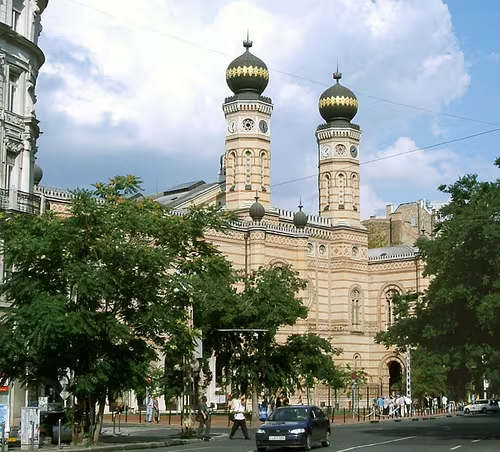
October in Budapest
High17°C / 62°F
Low8°C
Rain62mm / 8 rainy days
Sun7.0 h/day
Daylight11 h/day
Humidity78%
Crowds●●○○○Prices●●○○○
October winds tourism down into the shoulder season. Highs ease to 17°C, autumn foliage peaks on Margaret Island and in the Buda Hills around mid-month, and prices drop back toward winter levels. The Pálinka and Sausage Festival (Oct 2-4) brings 400+ fruit-brandy distillates to Buda Castle, and 23 October Memorial Day (a Friday in 2026) creates a domestic long weekend. The thermal baths come back into their own as the air cools.
The vibe October is the underrated autumn pick: foliage reflecting in the koi ponds of Margaret Island's Japanese Garden, far fewer tourists than September, and the baths feeling cosy again as the air turns crisp. The weather is a gamble, but the trade for low prices and an empty Castle Hill is a good one.
Don't miss Autumn foliage peaks mid-October: Margaret Island's plane trees turn yellow-orange and the Japanese Garden's red maples reflect in the koi ponds, with broader colour in the Buda Hills at Normafa and Jánoshegy. The Pálinka and Sausage Festival (Oct 2-4) at Buda Castle pours 400+ pálinka distillates from 20+ producers.
Crowd drivers Tourism winds down through the month. The 23 October Memorial Day (Friday in 2026) creates a long weekend with a domestic travel spike, but no international surge.
In season Pálinka, Hungary's potent fruit brandy, is the star of the early-October festival, paired with kolbász sausages; chestnuts and autumn game dishes appear across the city's menus.
Heads up 23 October is a public holiday: the House of Terror Museum closes, most others stay open, and the Kossuth Square procession disrupts traffic.
4-star hotels run $90-110 a night; the Oct 23 long weekend (Fri) brings only a domestic travel spike.
Events this month
🍷 Food and winePálinka and Sausage Festival Budapesti Pálinka és Kolbász Fesztivál
Oct 2–4
Early October at Buda Castle, running about 3 days.
At Buda Castle, 20+ distilleries pour 400+ pálinka distillates alongside kolbász sausage producers, with folk dance and music throughout.
It is a definitively Hungarian gastronomic experience with an excellent crowd-to-quality ratio compared with the summer events.
🇮 Holiday1956 Revolution Memorial Day 1956-os Forradalom Emléknapja
Oct 23
23 October every year, marking the 1956 Revolution.
A public holiday with a 7:30am flag-raising at Kossuth Square, a 1pm state commemoration, a 3pm torchlit procession to the Bem Statue, and candle-lighting at the Wall of Heroes all day.
It carries an authentic historical atmosphere; note the House of Terror Museum closes that day while most others stay open.
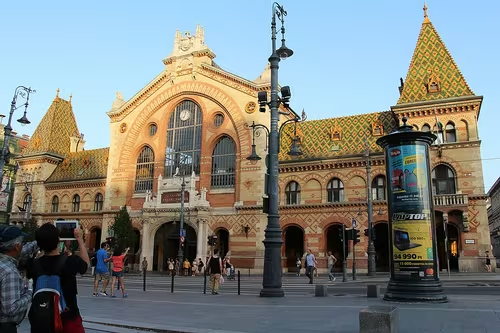
November in Budapest
High10°C / 50°F
Low4°C
Rain56mm / 10 rainy days
Sun4.9 h/day
Daylight9 h/day
Humidity85%
Crowds●○○○○Prices●○○○○
November is Budapest's deep shoulder, the second cheapest and quietest month of the year. Highs fall to 10°C, skies are grey, and a cold drizzle replaces summer storms. Tourism is very thin until the Christmas markets open around 13 November on Vörösmarty Square and at St. Stephen's Basilica, which begin to draw weekend visitors. Until then, the baths and museums are at their emptiest and cheapest.
The vibe Early November is the quietest the city gets all year outside January, ideal if you want Budapest to yourself at rock-bottom prices. Then the Christmas markets flick on mid-month and the whole mood shifts: mulled wine, kürtőskalács and lights transform the squares, and the city eases into its festive second wind.
Don't miss The Vörösmarty Square Christmas market, rated among Central Europe's best, opens around 13 November with 150+ stalls, a free miniature railway, mulled wine and kürtőskalács, alongside a smaller market at St. Stephen's Basilica. Winter thermal-bath season is at its atmospheric best, with steam rising into cold air for the off-peak price.
Crowd drivers Deep off-season until the Christmas markets open around 13 November, after which weekend visitors start arriving for the festive squares.
In season Roast goose and red cabbage for St. Martin's Day (Nov 11) is a Hungarian tradition, and the new season's mulled wine (forralt bor) and chimney cakes arrive with the markets.
Heads up All Saints' Day (Nov 1) falls on a Sunday in 2026, so no extra weekday off; cemeteries are busy with locals. Monday museum closures apply.
Second cheapest month: budget hotels from $26 a night. Tourism is very thin until the Christmas markets open mid-month.
Events this month
🎄 Christmas marketAdvent and Christmas Market Adventi és Karácsonyi Vásár
Nov 13 – Jan 1
Mid-November to 1 January on Vörösmarty Square and at St. Stephen's Basilica, opening around the 13th of November.
Budapest's largest Christmas market fills Vörösmarty Square with 150+ stalls, a free miniature railway, mulled wine, kürtőskalács and crafts, with a smaller market and a nightly light show at St. Stephen's Basilica.
Rated among Central Europe's top three Christmas markets, it is worth the cold; weekends are very crowded Dec 6-24, so go on a weekday afternoon.

December in Budapest
High5°C / 41°F
Low0°C
Rain54mm / 8 rainy days
Sun4.2 h/day
Daylight8 h/day
Humidity86%
Crowds●●○○○Prices●●○○○
December is festive and atmospheric, cold with highs around 5°C and lows near freezing, and the shortest days of the year with sunset before 4pm. The Vörösmarty Square and Basilica Christmas markets run through to 1 January, drawing holiday crowds that spike on weekends and in the run-up to the 24th. Christmas Day (Dec 25) and Boxing Day (Dec 26) close almost everything except the markets and tourist restaurants.
The vibe December Budapest is genuinely one of Europe's best Christmas-market cities, the Vörösmarty stalls and Basilica light show worth the cold alone. The trick is timing: weekends and Dec 22-24 are shoulder-to-shoulder, so go on a weekday afternoon. Mulled wine and the steaming thermal baths make the short, dark days feel cosy rather than bleak.
Don't miss The Vörösmarty Square Christmas market runs to 1 January with its free miniature railway, and the St. Stephen's Basilica market adds a nightly light projection on the church facade. Go Tuesday to Thursday, 3-6pm, to avoid the weekend crush. The thermal baths steaming in the December cold are the perfect counterpoint to the markets.
Crowd drivers Christmas-market tourism drives weekend spikes, busiest Dec 6-24, and the week between Christmas and New Year brings holiday-market crowds.
In season Mulled wine (forralt bor), chimney cake (kürtőskalács, 1,200-1,800 HUF) and roast-chestnut stalls define the markets; bejgli, the poppyseed and walnut rolled pastry, is the essential Hungarian Christmas bake.
Heads up Christmas Day (Dec 25) and Boxing Day (Dec 26) close almost everything; most restaurants also shut from Christmas Eve afternoon. Dec 12 (Sat) is a compensatory working day in Hungary 2026.
Christmas markets drive weekend price spikes, especially mid-December; weekdays stay reasonable.
Events this month
🎄 Christmas marketAdvent and Christmas Market Adventi és Karácsonyi Vásár
Nov 13 – Jan 1
Mid-November to 1 January on Vörösmarty Square and at St. Stephen's Basilica, opening around the 13th of November.
Budapest's largest Christmas market fills Vörösmarty Square with 150+ stalls, a free miniature railway, mulled wine, kürtőskalács and crafts, with a smaller market and a nightly light show at St. Stephen's Basilica.
Rated among Central Europe's top three Christmas markets, it is worth the cold; weekends are very crowded Dec 6-24, so go on a weekday afternoon.
Frequently asked questions
What is the best time to visit Budapest?
May and September are the best months to visit Budapest. Both bring comfortable 20-23°C days, the Spring Festival (May) or Wine Festival (September), and prices 25-40% below the July-August peak. Crowds are manageable, the thermal baths and Parliament are easy to access, and the light on the Danube is at its best.
What are the cheapest months to visit Budapest?
January, February and November are the cheapest months. In January, 4-star hotels average around $72 a night, up to 40% below summer, and budget rooms in November start from $26. The trade-off is short, grey days with highs of just 4-10°C, but the thermal baths and museums are at their emptiest and cheapest.
When should I avoid visiting Budapest?
Avoid July and August unless you are coming for the F1 Grand Prix or Sziget. Afternoons hit 33-36°C with regular 38-40°C heatwaves, and there is no shade on Castle Hill or Heroes' Square. The F1 weekend (Jul 24-26) and Sziget week (Aug 11-15) push central hotel prices to the year's maximum and sell rooms out months ahead.
Is Budapest worth visiting in winter?
Yes, winter is one of Budapest's best-kept secrets. December brings one of Europe's top Christmas markets on Vörösmarty Square, and January and February are the cheapest months of the year. The thermal baths are at their most magical in the cold, with steam rising off Széchenyi's 38°C outdoor pools into freezing air, and you share them with barely 20 people on a weekday.
What is Budapest like in December?
December Budapest is festive and cold, with highs around 5°C and sunset before 4pm. The Vörösmarty Square and Basilica Christmas markets run to 1 January, with mulled wine, chimney cake and a nightly light show on the Basilica facade. Weekends and Dec 22-24 are packed, so visit on a weekday afternoon. Christmas Day and Boxing Day close almost everything except the markets.
How many days do you need in Budapest?
Three days cover the essentials: Castle Hill with Fisherman's Bastion and the Matthias Church, Parliament and the Pest side, and an afternoon in the Széchenyi or Gellért thermal baths. Four to five days let you add Margaret Island, the Great Market Hall, a Danube cruise and the ruin bars without rushing. A week starts to reveal the city's quieter districts.
Does it rain a lot in Budapest?
Budapest has moderate rainfall spread through the year. May is the wettest month (81mm over about 13 days) and July is close behind (73mm), but summer rain usually comes as short 20-40 minute thunderstorms that clear quickly. March is the driest month at 38mm. Winter brings cold grey drizzle rather than heavy storms, with the lowest rainfall totals.
When can you see the cherry blossoms in Budapest?
Cherry blossoms peak in the first two weeks of April, lasting only 10-14 days depending on how the winter ends. The best spots are the Japanese Garden at the north end of Margaret Island, City Park, and Normafa in the Buda Hills. April also brings the Vörösmarty Easter Fair and pleasant 17°C days, making it a lovely if busier time to visit.

Any month, any day: your guide is already there
Whatever date you pick, a private human guide gets pricier and harder to book on weekends, holidays and in peak season. Our live AI guide, the one that walks with you and answers anything you ask out loud, works the opposite way.
One flat price, every day
No holiday, weekend, night or peak-season surcharge. A private guide in Budapest runs well over 100 euro for a half day, and more on holidays. Ours stays the same.
Available the moment you want it
Start at midnight or at dawn, on Christmas, in the snow, in the August heat. No sold-out high season, no booking weeks ahead.
Your pace, no meter running
Pause for a long lunch, restart after dark, repeat a stop. The tour simply waits for you.
Free to try, a fraction of the cost
Test it for free, then a transparent flat price that undercuts any private guide, in every season.
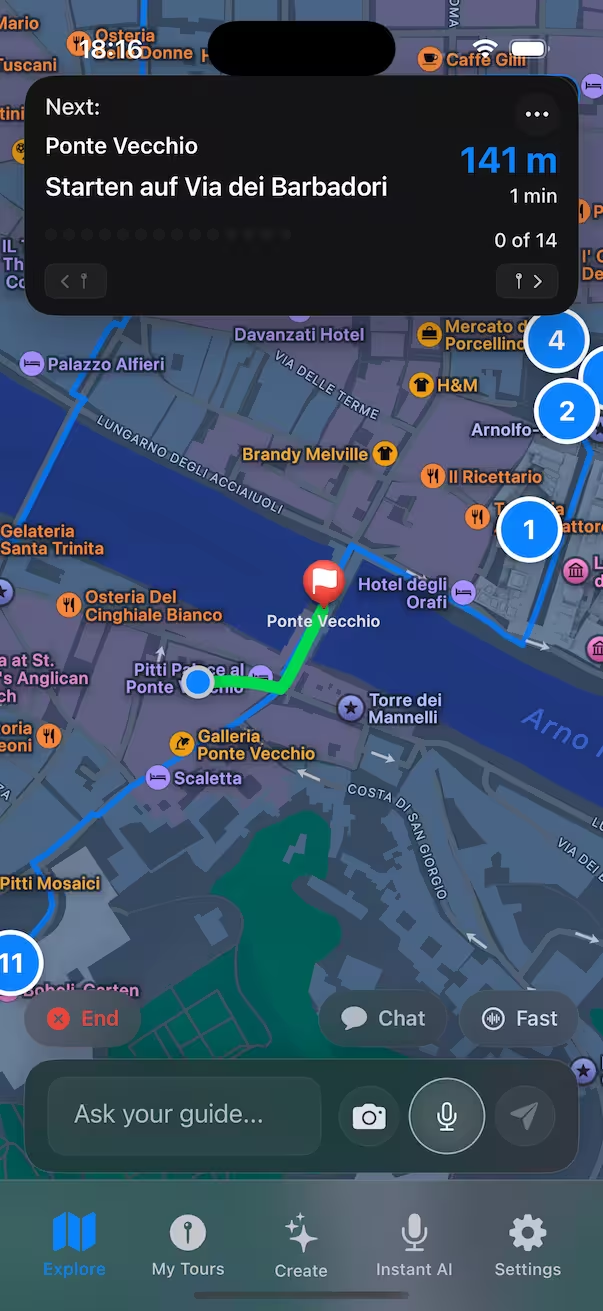
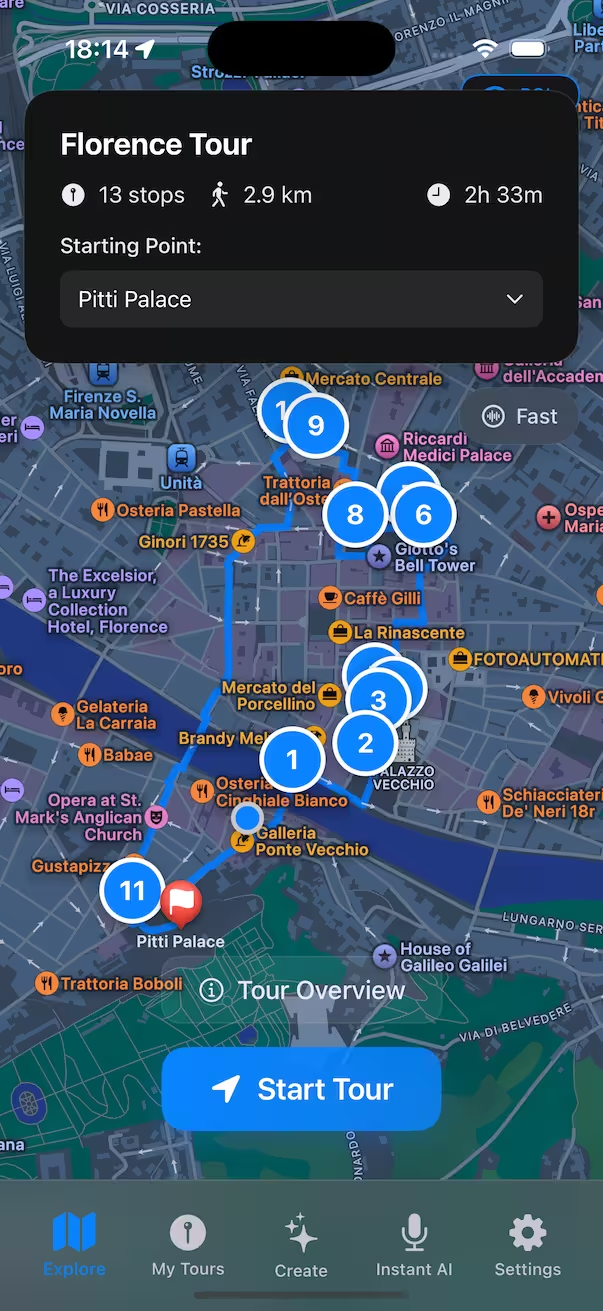
The classic Budapest tour: 11 stops, 8.4 km, about 3 h on foot
Your live AI guide and the self-guided Budapest route, together in your browser.