Best Time to Visit Stockholm
Month-by-month weather, crowds and prices, plus a full calendar of festivals and events worth planning a trip around.
Best monthsMay, Sep
CheapestJan, Feb, Nov
AvoidAug
BusiestJul, Aug
When is the best time to visit Stockholm?
Come in May or September. May gives you cherry blossom, green parks, archipelago ferries running again and daylight to 22:00, all 20-30% cheaper than summer. September keeps summer warmth with far fewer people. July and August are the hottest and most crowded. January is the cheapest and quietest.
Start our tool and find your best time to visit Stockholm
Your perfect month
Free · ~30 seconds
or tap a month directly
What matters to you?
And this?
Best overall: May, Sep. May and September are the real answer: summer-grade daylight and warmth, every attraction and archipelago ferry running, crowds you can work around, and prices 20-35% under the July-August peak. Just dodge the Stockholm Marathon weekend (30 May) when central hotels fill and roads close.
Best value: Jan, Feb, Nov. January, February and November bring hotels 40-50% below summer, three major museums free to enter, and the rare pleasure of the Vasa ship almost to yourself. The trade is short, dark days and the chance of an icy pavement.
Avoid: Aug. Early August: Pride and the Culture Festival stack onto peak summer holidays, so you pay the year's highest rates for full hotels and queues at everything. The worst value Stockholm offers.
- January: Tough month, 1°C. This is the one month you stand alone with the Vasa ship, no queue at all. Darkness shapes the day, but Stockholmers lean into it with candlelight and cosiness rather than gloom. If you want the city stripped of crowds and at its cheapest, and you do not mind short days, January rewards you.
- February: Tough month, 2°C. February is honest winter Stockholm, no show put on for visitors. The light is returning just enough to lift the mood, café terraces are still weeks away, and you feel like one of very few tourists in town. For quiet and value over warmth, it is hard to beat.
- March: Tough month, 5°C. March is the last genuinely cheap and quiet month before spring fills the city. You get longer days without spring crowds or prices, though the weather is a gamble between lingering winter and the first mild afternoons. Use the window while it is open.
- April: Good time, 10°C. April is the city exhaling after winter, and you feel the energy lift street by street. The cherry blossom is a real event, not a marketing line, though Cherry Blossom Day (28 April) packs Kungsträdgården shoulder to shoulder. Come for spring without the summer prices, just bring a jacket for the cold edges of the day.
- May: Great time, 15°C. May feels like the city throwing its doors open after a long winter, and it earns its reputation as Stockholm's sweet spot. Long evenings, blossoms fading into full green, the first warm afternoons on the water. It is genuinely lovely, and not yet a secret, so book ahead and avoid the Marathon weekend.
- June: Good time, 20°C. June is Stockholm at its most magical and its most paradoxical. The white nights are euphoric, light pouring through the curtains at 03:30, but the Midsummer weekend (19 to 21 June) drains the centre of locals while restaurants book out and shops shut early. Time your trip for early June before Midsummer, or plan the holiday weekend with real precision.
- July: Tough month, 22°C. July is high summer done the Nordic way: warm but rarely sweltering, bright until very late, and packed. It is not survival-mode heat like southern Europe, which makes the crowds easier to forgive. The trade-off is the year's top prices and queues at every headline sight, so book everything ahead and start your mornings early.
- August: Tough month, 21°C. Early August is Stockholm at full tilt, brilliant if you want the festival energy, exhausting if you do not. Pride and the Culture Festival are genuinely spectacular and free, but they land on top of peak holiday prices and sold-out hotels. The smart move is the second half of the month, when the warmth and the swimming stay but the crush lifts.
- September: Great time, 16°C. September is the locals' favourite, and it shows: the weather still feels like summer but the city breathes again. Cafés are unhurried, restaurants take your booking without a fight, and the light turns golden over Djurgården. If you want Stockholm at its best balance of warmth, calm and price, this is the month.
- October: Good time, 10°C. October is underrated Stockholm: the foliage is genuinely beautiful, the crowds are gone, and the prices are kind. It is not a long-evening, terrace-dining month, the light fades fast, but for autumn colour, quiet sights and candlelit dinners in Gamla Stan, it has a real charm few visitors bother to discover.
- November: Good time, 6°C. November is the hardest month to love on paper, dark, wet and bare, yet it has its own quiet appeal. The city is empty of tourists, prices are low, and the candle-lit cosiness Swedes call mys starts to take over. By the final weekend the Christmas markets flicker into life and lift everything.
- December: Tough month, 2°C. December trades daylight for atmosphere, and it is a fair swap. The markets, the lights reflecting off the dark water, the julbord feasts: this is Stockholm at its cosiest. The short days catch some visitors off guard, so plan sightseeing for the brief light and let the long evenings be about food, glögg and the glow of Gamla Stan.
Stockholm weather by month
HighLowRainfall
Jan1°
Feb2°
Mar5°
Apr10°
May15°
Jun20°
Jul22°
Aug21°
Sep16°
Oct10°
Nov6°
Dec2°
| Month | Temp | Rain | Sun | Crowds | Prices | Highlight |
|---|---|---|---|---|---|---|
| Jan | 1° / -3° | 50mm · 11 rainy days | 2.1 h/day | ●○○○○ | ●○○○○ | Formex Design Fair |
| Feb | 2° / -3° | 35mm · 9 rainy days | 4.3 h/day | ●○○○○ | ●○○○○ | |
| Mar | 5° / -2° | 43mm · 10 rainy days | 6.8 h/day | ●●○○○ | ●○○○○ | |
| Apr | 10° / 1° | 27mm · 7 rainy days | 10.5 h/day | ●●○○○ | ●●○○○ | Stockholm Culture Night |
| May | 15° / 6° | 55mm · 10 rainy days | 12.3 h/day | ●●●○○ | ●●●○○ | Stockholm Marathon |
| Jun | 20° / 11° | 61mm · 10 rainy days | 14.1 h/day | ●●●●○ | ●●●●○ | National Day |
| Jul | 22° / 14° | 61mm · 11 rainy days | 13.9 h/day | ●●●●● | ●●●●● | Vitabergsparken Park Concerts |
| Aug | 21° / 13° | 74mm · 12 rainy days | 11.5 h/day | ●●●●● | ●●●●● | Vitabergsparken Park Concerts |
| Sep | 16° / 10° | 49mm · 8 rainy days | 8.5 h/day | ●●●○○ | ●●●○○ | |
| Oct | 10° / 6° | 57mm · 10 rainy days | 5.1 h/day | ●●○○○ | ●●○○○ | |
| Nov | 6° / 2° | 52mm · 10 rainy days | 2.5 h/day | ●○○○○ | ●○○○○ | Skansen Christmas Market |
| Dec | 2° / -2° | 45mm · 11 rainy days | 1.8 h/day | ●●○○○ | ●●○○○ | Skansen Christmas Market |
How we score this: weather = long-run climate normals (Open-Meteo), crowds & prices = relative season read, events checked yearly against official dates.
Best time to visit Stockholm: weather, prices & crowds
Best months for good weather
Jun, Jul
June and July deliver Stockholm's warmest, brightest stretch: 20-22°C highs, sea temperatures climbing to 19°C, and the near-white nights of the solstice when it never gets properly dark.
Quietest months to avoid the crowds
Jan, Feb, Nov
January, February and November empty the city out. International tourism vanishes, hotel availability is wide open, and you walk into the Vasa Museum or Moderna Museet with no queue worth the name.
Cheapest time to visit Stockholm
Jan, Feb
January and February are Stockholm's cheapest months: hotels run 40-50% below summer, and the free state museums (Moderna Museet, Nationalmuseum, Armémuseum) make a culture-heavy trip genuinely affordable.
Best time for festivals and events
Jun
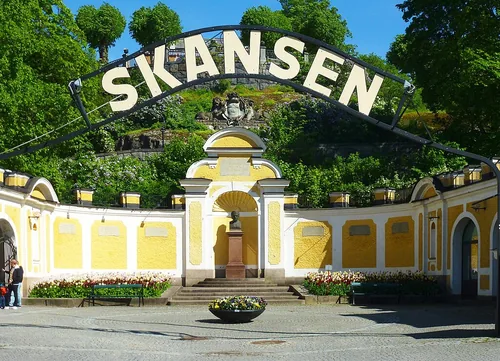
Midsummer (19 to 20 June) is the most Swedish thing you can witness: maypole dancing, flower crowns and folk music at Skansen, while the city itself empties as Stockholmers vanish to their summer cottages.
How many days do you need in Stockholm?
Stockholm needs three days to do it justice. Spread across fourteen islands, the city balances a medieval old town, the world's best-preserved 17th-century warship, and a museum island you could spend a full day exploring. One day only scratches the surface; three lets you take in the water and the archipelago without rushing.

One day
Gamla Stan, Royal Palace and the waterfront
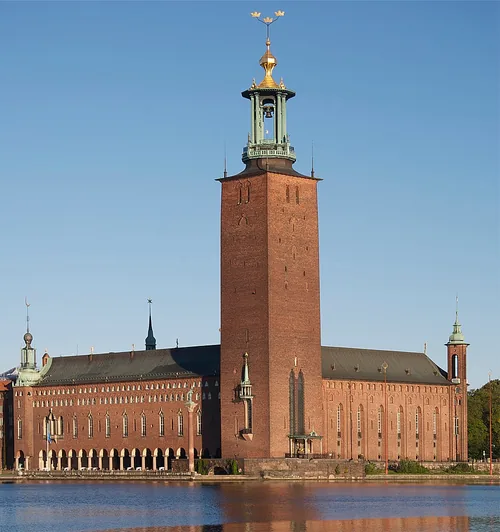
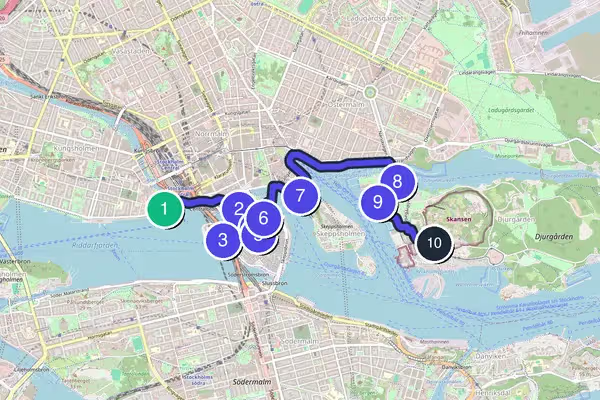
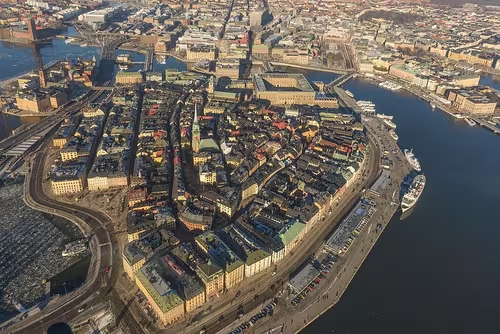
A single day belongs to the old town. Start at Stortorget for the Nobel Prize Museum, then work through the Royal Palace and the royal burial church at Riddarholmen, and finish at the Stockholm City Hall on the waterfront where the Nobel banquet is held. The self-guided Stockholm walking tour strings together 10 of these landmarks over 5.8 km in around 2.7 hours, a logical one-day spine for the city.
Two days
Add Djurgården and the Vasa Museum
Day two belongs to the museum island. Arrive at the Vasa Museum before 10:00 to beat the queues and spend the morning with the astonishing 69-metre warship that sank in 1628. Cross to Skansen for the afternoon, a 75-acre open-air museum with Nordic wildlife and 150 historic buildings, then wind down with a walk through Djurgården's parkland.
Three daysRecommended
Nationalmuseum, Södermalm and the archipelago
A third day rounds out the city. Visit the Nationalmuseum, reopened in 2018 with 16,000 paintings and free entry, then cross to Södermalm for its café culture along Hornsgatan. In May and September, when the Fjäderholmarna ferries run, use the afternoon for the 30-minute hop out to the nearest archipelago island and back.
Four days or more
Deeper islands, day trips and the Tunnelbana art trail
With four or more days, push further into the archipelago on a longer ferry to Vaxholm or Sandhamn, or head 20 km south to the Tyresta national park for proper old-growth forest. Back in the city, ride the Tunnelbana with a day pass: T-Centralen's blue vines, the Kungsträdgården grotto and Solna Centrum's apocalyptic mural form the world's longest art gallery and cost nothing beyond the fare.
Best time to visit Stockholm by traveller type
Same city, different trip. Here's the month that fits how you're travelling.
🧭
Best time to visit Stockholm for the first time
MaySep
May or September: every sight open, the Fjäderholmarna ferries running, long daylight, and crowds you can navigate. Skip the Marathon weekend (30 May) and the early-August festival crush, and you get Stockholm at its most rewarding for 20-35% less than peak.
❤️
Best time to visit Stockholm for couples
MaySepOct
September and October for golden autumn light over Djurgården and candlelit evenings in Gamla Stan, or May for cherry blossom romance in Kungsträdgården before the summer crush arrives.
💶
Best time to visit Stockholm on a budget
JanFebNov
January, February or November: hotels 40-50% below summer, plus Moderna Museet, the Nationalmuseum and Armémuseum all free to enter for a cultural trip on a tight budget.
🍝
Best time to visit Stockholm for food and wine
SepOctDec
September and October for mushroom and root-vegetable season and relaxed bookings, or December for the julbord Christmas buffets and Östermalms Saluhall food hall at its festive peak.
Worst time to visit Stockholm
The first half of August combines the year's highest prices with the city's two biggest crowd events. Stockholm Pride runs to 1 August with 500,000 spectators, and the free Culture Festival fills the centre from 12 to 16 August with around a million visitors, both falling squarely inside Scandinavian school holidays. Hotels sell out weeks ahead and rates hit their annual peak, with central accommodation 40-50% above the rest of the year. Every major sight has queues, and getting a last-minute restaurant table anywhere near Gamla Stan is close to impossible.
Still worth it for If you specifically want to experience Stockholm Pride or the Culture Festival, this is the window to book: both are genuinely spectacular and free to attend. The second half of August, once the festivals clear, remains warm with sea temperatures at their yearly high and crowds noticeably lighter.
Go instead in May, September, when Stockholm is at its best.
Best time for a tour of Stockholm
Stockholm rewards walkers most generously in May and September, when temperatures settle between 9 to 16 °C, the light is long and clear, and the summer crowds have not yet arrived or have already thinned. In those weeks you can cross from the Stockholm City Hall along the waterfront to Gamla Stan, reach Stortorget and the Nobel Prize Museum without squeezing through tour groups, and still have energy for the climb out to Skansen in the afternoon. June and July bring warmth up to 22 °C and genuinely long evenings, but July in particular is packed shoulder to shoulder in Gamla Stan and queues at the Vasa Museum can swallow an hour before you are even inside. August stays warm but rain days rise to 12 and the crowds are only marginally thinner. At the other end of the year, January and February are near-empty, which gives Riddarholmen Church and the Royal Palace a haunting quiet, but highs barely reach 1 to 2 °C, darkness falls by mid-afternoon, and 11 rain or snow days a month make a 5.8 km walk genuinely punishing unless you are well equipped. March and April are a reasonable compromise if you accept that lows are still around -1 to 1 °C and the waterfront stretches between Skansen and the National Museum can be windy.
The practical advantage of walking Stockholm with AI Tourguide is that none of this forces you to compromise. Because the guide runs entirely in your browser, with no booking and no fixed departure time, a cool May morning or a crisp September afternoon is yours to claim the instant the conditions look right. Set off early past Riddarholmen Church while the cobblestones of Gamla Stan are still quiet, and the voice-first guide will already be mid-story, asking you what caught your eye, listening, and weaving your answers into the rest of the route. You move at your own pace, take the bench by the waterfront whenever you need it, and the conversation keeps going. Start your Stockholm tour whenever the sky looks good and leave the schedule to no one.

 +6
+6All 10 stops are already on the map.
You just press start.
You just press start.
 AI Tourguide
You just read the route.
Now walk it with a guide in your ear.
Press start wherever you are, even hundreds of kilometres from Stockholm, and the guide begins telling its stories right away. In the city, pick any of the 10 stops to start from: it leads you there, then talks with you the whole route, asking, listening, remembering, and shaping the tour around your answers.
10stops5.8km2.7hours11languages
▶Start the tour freeFree to start · Runs in your browser · No app, no download
Stockholm events and festivals calendar
Annual highlights worth timing a trip around, listed month by month.
January
🎨 Art and cultureFormex Design Fair Formex
Jan 20–22
late January
Northern Europe's leading interior-design trade fair, held at the Stockholmsmässan exhibition centre in Älvsjö, showcasing the latest in Scandinavian design.
April
🌙 Museum nightStockholm Culture Night Kulturnatt Stockholm
Apr 18 ~
mid-to-late April
Over 100 museums, galleries and stages open free until midnight (18:00 to 23:00), including the Nationalmuseum, Moderna Museet and Nobel Prize Museum.
🌸 Seasonal natureCherry Blossom Day Körsbärsblomsterfest
Apr 28 ~
mid-April to early May
The 60-plus cherry trees in Kungsträdgården, a 1998 gift from Japan, reach full bloom, marked with Bunraku puppet theatre, geiko dance and Japanese food stalls.
May
🏃 SportStockholm Marathon adidas Stockholm Marathon
May 30 ~
late May / early June
A 42.195km course through all seven districts of the city, starting and finishing at the 1912 Olympic Stadium with waved starts from 12:00.
June
🇮 HolidayNational Day Nationaldagen
Jun 6
6 June
A ceremony at Skansen attended by the King and Queen, horse racing at Gärdet, and citizenship celebrations across the city.
🎵 MusicVitabergsparken Park Concerts Vitabergsparken Konserter
Jun 6 – Aug 30 ~
weekends, June to August
Free open-air concerts on weekends in the Vitabergsparken park on Södermalm through the summer.
🏃 SportBAUHAUS-Galan (Diamond League) BAUHAUS-Galan
Jun 7 ~
early June
The world athletics elite competes in the historic 1912 Olympic Stadium, the fifth stop on the Diamond League calendar.
🎉 FestivalMidsummer Midsommar
Jun 19–20 ~
the Friday and Saturday after 19 June
Maypole dancing, flower-crown making and Swedish folk music, with the best organised programme at Skansen (11:30 to 17:30).
July
🏳️🌈 PrideStockholm Pride
Jul 27 – Aug 1 ~
late July to the first of August
One of Europe's biggest Prides, with 50,000 participants and 500,000 spectators; the free parade starts at 13:00 on Norr Mälarstrand and runs via Slussen, Skeppsbron and Sergels Torg to Östermalm.
August
🎉 FestivalStockholm Culture Festival Kulturfestivalen
Aug 12–16 ~
mid-August
The city's biggest cultural festival, 600 free events over five days on stages at Gustav Adolfs Torg, Kungsträdgården, Skeppsbron and Sergels Torg, drawing around a million visitors.
🏃 SportMidnight Race Midnattsloppet
Aug 15 ~
mid-August, a Saturday evening
A 5, 10 or 21km night race through Södermalm with 30 sound-and-light installations, samba bands, DJs and fire shows along the route.
November
🎄 Christmas marketSkansen Christmas Market Julmarknad på Skansen
Nov 27 – Dec 20 ~
Fridays to Sundays, late November to late December
Running since 1903, around 70 stalls on Bollnästorget selling marzipan, Christmas bread, ceramics, wool and glögg in a historic open-air setting.
🎄 Christmas marketGamla Stan Christmas Market Julmarknad i Gamla Stan
Nov 28 – Dec 23 ~
late November to just before Christmas
Running since 1837 on Stortorget in the old town, 40-plus stalls with glögg, Swedish Christmas decorations and gingerbread.
December
🎨 Art and cultureNobel Prize Ceremony Nobelprisets utdelning
Dec 10
10 December
The award ceremony at Konserthuset, followed by a banquet for 1,300 guests in the Blue Hall of City Hall.
Insider tips for visiting Stockholm
The rules buried in forums, in one place.
- Monday is the museum trap. Moderna Museet, the Nationalmuseum, the Nobel Prize Museum and the Armémuseum all close on Mondays. The Vasa Museum is the one big exception and stays open, so build your Monday around it and save the rest for another day.
- Hit the Vasa Museum before 10:00. In high season (June to August) it opens at 08:30, and arriving before ten means you skip the crush. From noon to 15:00 it is at its worst, with 20 to 30 minute waits even though there are no priority tickets, so everyone queues in the same line.
- Moderna Museet is free on Friday evenings from 18:00 to 20:00, but only outside the summer window: the free evenings stop on 13 June and restart after 21 August. In peak summer you pay full price, so plan that visit for spring or autumn.
- On Midsummer's Eve (19 June) Stockholm empties as Swedes head to the countryside. Supermarkets and shops close by 13:00 to 15:00, so buy food in advance, and never go into town that evening without a dinner reservation. Skansen runs the best organised Midsummer programme (11:30 to 17:30), so book its ticket ahead.
- The Royal Guard changes daily outside Kungliga Slottet at about 12:09 (Monday to Saturday) and 13:09 on Sundays. In high season, claim your spot 15 to 20 minutes early. It is free and genuinely spectacular, so it belongs in any visit.
- The Fjäderholmarna ferries, the shortest archipelago hop at 30 minutes from Strandvägen, run only from 1 May to 13 September. Go midweek to dodge the crowds. Saturdays and Sundays in July and August are packed, so check the last return time before you sail.
- For cherry blossom without the mob, skip Kungsträdgården on Cherry Blossom Day (28 April), when thousands descend on its 60 trees. Head instead to Bysistorget on Hornsgatan in Södermalm, where the smaller blossom trees draw almost no tourists.
- Treat the metro as a free art gallery year-round and weatherproof. Stockholm's Tunnelbana is the longest art exhibition in the world, with T-Centralen's blue vines, Kungsträdgården's grotto and Solna Centrum's apocalyptic mural the standouts. A day or travel pass covers unlimited rides.
Public holidays in Stockholm
On these dates many shops and offices close, transport thins out, and sights can be mobbed or shut. Plan around them.
| Date | Holiday | What closes |
|---|---|---|
| Jan 1 | New Year's Day | Almost everything closes: shops, most restaurants and many museums. The city centre is quiet and public transport runs a reduced timetable. |
| Jan 6 | Epiphany (Trettondedag jul) | Public holiday: many shops shut, though museums are usually open. The Christmas season formally winds down. |
| Apr 3 | Good Friday | Public holiday with reduced museum hours; book restaurant tables ahead as many run a holiday schedule. |
| Apr 5 | Easter Sunday | The centre is livelier with European families in town; Skansen runs a special Easter programme of traditional customs. |
| Apr 6 | Easter Monday | Public holiday: many shops close, but most museums stay open. A good day for indoor sights. |
| May 1 | Labour Day (Första maj) | Public holiday with political demonstrations and parades; some central streets are briefly closed to traffic. |
| May 14 | Ascension Day (Kristi himmelsfärds dag) | Public holiday that triggers long-weekend tourism from Germany and the Netherlands; hotel rates tick up. |
| May 24 | Whit Sunday (Pingstdagen) | Public holiday drawing European short-break visitors; the city is busier than a normal late-May weekend. |
| Jun 6 | National Day (Nationaldagen) | Public holiday with a ceremony at Skansen attended by the King and Queen, plus citizenship celebrations. Free and very Swedish. |
| Jun 19 | Midsummer's Eve (Midsommarafton) | Not an official holiday but a de-facto shutdown: shops and supermarkets close by 13:00 to 15:00, restaurants are booked out, and the centre empties as locals leave town. Buy food early. |
| Jun 20 | Midsummer's Day (Midsommardagen) | Public holiday: almost everything except tourist attractions is closed. Skansen is the place to be for the festivities. |
| Oct 31 | All Saints' Day (Alla helgons dag) | Public holiday with a reflective mood; a quiet day in the city as Swedes light candles at cemeteries. |
| Dec 24 | Christmas Eve (Julafton) | Sweden's main Christmas day in practice: opening hours shrink from around 13:00 and the centre is largely deserted. |
| Dec 25 | Christmas Day (Juldagen) | Public holiday: nearly everything is closed, including most museums and shops. |
| Dec 26 | Boxing Day (Annandag jul) | Public holiday: most museums stay closed, and shopping resumes only from the afternoon. |
| Dec 31 | New Year's Eve (Nyårsafton) | Earlier closing times across the board; fireworks light up the harbour and the metro is packed late. |
Stockholm month by month
January in Stockholm
High1°C / 34°F
Low-3°C
Rain50mm / 11 rainy days
Sun2.1 h/day
Daylight7 h/day
Humidity86%
Crowds●○○○○Prices●○○○○
January is Stockholm at its quietest and darkest, with daytime highs around 1°C and barely seven hours of light. Snow can turn the islands postcard-pretty while making the pavements slick. There are almost no tourists once the Christmas-market hype has gone, so museums feel close to private. The cold is dry rather than biting, and a warm café or a museum hall is never far away.
The vibe This is the one month you stand alone with the Vasa ship, no queue at all. Darkness shapes the day, but Stockholmers lean into it with candlelight and cosiness rather than gloom. If you want the city stripped of crowds and at its cheapest, and you do not mind short days, January rewards you.
Don't miss The free state museums (Moderna Museet, Nationalmuseum, Armémuseum) make a culture-led winter trip cheap, and the Tunnelbana art stations are a weatherproof gallery you ride between sights. Snowfall over Gamla Stan's lanes is the postcard most visitors never get to see.
Crowd drivers Deep low season, with the Formex design fair (20 to 22 January) the only blip, briefly tightening hotels near the Älvsjö fairgrounds.
Heads up 1 and 6 January are public holidays with shops and many museums shut and transport on a reduced timetable. Watch for icy pavements after snow.
The year's cheapest month; hotels run 40-50% below summer peak.
Events this month
🎨 Art and cultureFormex Design Fair Formex
Jan 20–22
late January
Northern Europe's leading interior-design trade fair, held at the Stockholmsmässan exhibition centre in Älvsjö, showcasing the latest in Scandinavian design.
A trend showcase for design lovers and industry insiders, and the only thing that briefly tightens hotel availability in an otherwise dead-quiet January.
February in Stockholm
High2°C / 36°F
Low-3°C
Rain35mm / 9 rainy days
Sun4.3 h/day
Daylight9 h/day
Humidity84%
Crowds●○○○○Prices●○○○○
February is the second-quietest month, marginally brighter than January with highs near 2°C and over nine hours of daylight by month's end. Snow is still likely and the harbour can ice over in a cold spell. City-break tourism is minimal, so the big museums stay calm and prices sit at their annual floor. Pack proper layers and grippy soles and you have the city largely to yourself.
The vibe February is honest winter Stockholm, no show put on for visitors. The light is returning just enough to lift the mood, café terraces are still weeks away, and you feel like one of very few tourists in town. For quiet and value over warmth, it is hard to beat.
Don't miss Returning daylight makes the islands feel less stark, and the free state museums are still the smart move. A walk across a frozen Riddarfjärden inlet, when the ice is thick and official, is a genuinely local winter pleasure.
Crowd drivers Low season throughout; the occasional indoor sports event draws locals but few overseas visitors.
Still rock-bottom; hotel availability wide open at winter-low rates.
March in Stockholm
High5°C / 42°F
Low-2°C
Rain43mm / 10 rainy days
Sun6.8 h/day
Daylight12 h/day
Humidity77%
Crowds●●○○○Prices●○○○○
March is the slow turn toward spring, with highs reaching 5°C, daylight stretching to nearly twelve hours, and the snow beginning to give way. City breaks pick up a little but the place stays calm. It can still feel like winter on a grey day, yet the longer light changes the mood completely. Rates remain among the lowest of the year, so it is a strong value window before the season wakes.
The vibe March is the last genuinely cheap and quiet month before spring fills the city. You get longer days without spring crowds or prices, though the weather is a gamble between lingering winter and the first mild afternoons. Use the window while it is open.
Don't miss The lengthening light makes long island walks rewarding again, and indoor culture is still uncrowded. This is the calm before the cherry blossom and ferry season transform April and May.
Crowd drivers A gentle rise as city-break travel resumes, but nowhere near peak.
Prices barely start to move, still 30-40% below summer.
April in Stockholm
High10°C / 50°F
Low1°C
Rain27mm / 7 rainy days
Sun10.5 h/day
Daylight14 h/day
Humidity69%
Crowds●●○○○Prices●●○○○
April brings Stockholm properly back to life: highs near 10°C, fourteen-plus hours of daylight, and the cherry trees in Kungsträdgården opening from mid-month. Easter (3 to 6 April) pulls in European families, and Culture Night on 18 April throws open more than 100 museums and galleries free until midnight. It is the driest month on the calendar at just 27mm of rain, so spring sightseeing is comfortable, if still cool in the shade.
The vibe April is the city exhaling after winter, and you feel the energy lift street by street. The cherry blossom is a real event, not a marketing line, though Cherry Blossom Day (28 April) packs Kungsträdgården shoulder to shoulder. Come for spring without the summer prices, just bring a jacket for the cold edges of the day.
Don't miss The 60-plus cherry trees in Kungsträdgården bloom from mid-April, peaking around Cherry Blossom Day (28 April) with Japanese puppet theatre, dance and food stalls. Culture Night (18 to 23:00) on 18 April lets you tour the Nationalmuseum, Moderna Museet and Nobel Prize Museum in a single free evening.
Crowd drivers Easter (3 to 6 April) draws German and European families, and Culture Night (18 April) brings a wave of day-trippers into the centre.
Heads up Good Friday (3 April), Easter Sunday and Easter Monday (5 to 6 April) bring reduced museum hours and shop closures; book restaurants ahead.
Easter (3 to 6 April) lifts rates 15-20% above the January floor, still a bargain versus summer.
Events this month
🌙 Museum nightStockholm Culture Night Kulturnatt Stockholm
Apr 18 ~
mid-to-late April
Over 100 museums, galleries and stages open free until midnight (18:00 to 23:00), including the Nationalmuseum, Moderna Museet and Nobel Prize Museum.
A unique chance to experience the city's cultural institutions in a single free evening, the essence of Stockholm's cultural life.
🌸 Seasonal natureCherry Blossom Day Körsbärsblomsterfest
Apr 28 ~
mid-April to early May
The 60-plus cherry trees in Kungsträdgården, a 1998 gift from Japan, reach full bloom, marked with Bunraku puppet theatre, geiko dance and Japanese food stalls.
A spectacular pink canopy in the heart of the capital and the photo moment of the Stockholm spring, though the trees draw thousands on the day itself.

May in Stockholm
High15°C / 59°F
Low6°C
Rain55mm / 10 rainy days
Sun12.3 h/day
Daylight17 h/day
Humidity69%
Crowds●●●○○Prices●●●○○
May is one of the two best months to visit. Highs hit 15°C, daylight runs to seventeen hours, parks turn green, café terraces reopen and the Fjäderholmarna archipelago ferries restart on 1 May. Crowds are present but still manageable, and prices sit well below summer. The one catch is the Stockholm Marathon on 30 May, which closes central roads and books out Östermalm hotels, so plan around that last weekend.
The vibe May feels like the city throwing its doors open after a long winter, and it earns its reputation as Stockholm's sweet spot. Long evenings, blossoms fading into full green, the first warm afternoons on the water. It is genuinely lovely, and not yet a secret, so book ahead and avoid the Marathon weekend.
Don't miss Spring awakening is everywhere: parks green over, terraces reopen, and the Fjäderholmarna ferries start running on 1 May for the first archipelago trips of the year. The BAUHAUS-Galan Diamond League athletics meet (7 June) is just over the horizon, but late May is all about the city coming alive outdoors.
Crowd drivers The Stockholm Marathon (30 May) fills central hotels, plus the Ascension (14 May) and Whitsun (24 May) long weekends draw European short-break visitors.
Rising but still 20-30% under July; the Marathon weekend (30 May) spikes central hotels 25-30%.
Events this month
🏃 SportStockholm Marathon adidas Stockholm Marathon
May 30 ~
late May / early June
A 42.195km course through all seven districts of the city, starting and finishing at the 1912 Olympic Stadium with waved starts from 12:00.
Thrilling to watch, but the road closures and sold-out central hotels mean you should plan around it if you are not running.

June in Stockholm
High20°C / 69°F
Low11°C
Rain61mm / 10 rainy days
Sun14.1 h/day
Daylight18 h/day
Humidity68%
Crowds●●●●○Prices●●●●○
June is glorious and busy. Highs reach 20°C, the sea warms to a swimmable 14 to 16°C, and around the solstice (21 June) the city gets nearly nineteen hours of daylight and never goes truly dark. National Day (6 June) brings royal festivities to Skansen, and the BAUHAUS-Galan Diamond League fills the 1912 Olympic Stadium on 7 June. Then comes Midsummer (19 to 20 June), the absolute high point, when the city overflows for the celebrations even as locals flee to the countryside.
The vibe June is Stockholm at its most magical and its most paradoxical. The white nights are euphoric, light pouring through the curtains at 03:30, but the Midsummer weekend (19 to 21 June) drains the centre of locals while restaurants book out and shops shut early. Time your trip for early June before Midsummer, or plan the holiday weekend with real precision.
Don't miss Midsummer at Skansen (programme 11:30 to 17:30, ticket needed) is the most Swedish day of the year, with maypole dancing and folk music. The solstice white nights mean you can walk the islands past 22:30 in soft light, and free open-air concerts begin in Vitabergsparken on Södermalm.
Crowd drivers Swedish schools break up around 13 June, National Day (6 June) and the Diamond League meet draw crowds, and Midsummer (19 to 20 June) is the single biggest pull of the early summer.
Heads up Midsummer's Eve (19 June) is a de-facto shutdown with shops closing by 13:00 to 15:00; Midsummer's Day (20 June) closes nearly everything but the tourist attractions.
Climbing toward peak; the Midsummer weekend matches August prices.
Events this month
🇮 HolidayNational Day Nationaldagen
Jun 6
6 June
A ceremony at Skansen attended by the King and Queen, horse racing at Gärdet, and citizenship celebrations across the city.
A rare chance to see the royal couple in person at Skansen and soak up a uniquely Swedish, free national celebration.
🏃 SportBAUHAUS-Galan (Diamond League) BAUHAUS-Galan
Jun 7 ~
early June
The world athletics elite competes in the historic 1912 Olympic Stadium, the fifth stop on the Diamond League calendar.
World-record atmosphere in the most iconic stadium in Scandinavia, a treat for any sports fan timing a June trip.
🎉 FestivalMidsummer Midsommar
Jun 19–20 ~
the Friday and Saturday after 19 June
Maypole dancing, flower-crown making and Swedish folk music, with the best organised programme at Skansen (11:30 to 17:30).
The most Swedish festival of all, but the centre empties as locals flee to the countryside, so Skansen is the visitor's best bet.
🎵 MusicVitabergsparken Park Concerts Vitabergsparken Konserter
Jun 6 – Aug 30 ~
weekends, June to August
Free open-air concerts on weekends in the Vitabergsparken park on Södermalm through the summer.
A local secret with a relaxed atmosphere, well away from the tourist crush and completely free.

July in Stockholm
High22°C / 72°F
Low14°C
Rain61mm / 11 rainy days
Sun13.9 h/day
Daylight18 h/day
Humidity71%
Crowds●●●●●Prices●●●●●
July is the busiest month of the year, with Scandinavian and European visitors on summer holiday all at once. Highs sit at a comfortable 22°C rather than punishing, and the sea reaches a pleasant 17 to 19°C, so swimming at Långholmen and the archipelago is at its best. Free open-air concerts run through Vitabergsparken on Södermalm, and the long evenings make late dinners on the water the signature July experience. The Vasa Museum can see up to 20,000 visitors a day, so arrive before 10:00. This is peak season for prices and crowds, but the weather is the most reliable Stockholm offers.
The vibe July is high summer done the Nordic way: warm but rarely sweltering, bright until very late, and packed. It is not survival-mode heat like southern Europe, which makes the crowds easier to forgive. The trade-off is the year's top prices and queues at every headline sight, so book everything ahead and start your mornings early.
Don't miss This is the prime swimming window, with the sea at 17 to 19°C and warmest in the sheltered archipelago bays. Free open-air concerts continue in Vitabergsparken, and the long evenings make late dinners on the water the signature July experience. Where a pre-booked private guide charges summer-peak rates and sells out, our live AI guide stays a flat €5 per hour any day and lets you sightsee in the cool early hours on your own clock, telling the story of everything you pass and answering whatever you ask.
Crowd drivers Scandinavian and European summer holidays peak together, the archipelago is in full high season, and international flight schedules are at their densest.
Heads up Some mid-range restaurants close in July and August for the owners' own holiday, so reserve before you go.
The year's most expensive month; hotels 40-50% above January, no bargains.
Events this month
🎵 MusicVitabergsparken Park Concerts Vitabergsparken Konserter
Jun 6 – Aug 30 ~
weekends, June to August
Free open-air concerts on weekends in the Vitabergsparken park on Södermalm through the summer.
A local secret with a relaxed atmosphere, well away from the tourist crush and completely free.

August in Stockholm
High21°C / 70°F
Low13°C
Rain74mm / 12 rainy days
Sun11.5 h/day
Daylight16 h/day
Humidity77%
Crowds●●●●●Prices●●●●●
August is the fullest and most expensive month. Stockholm Pride runs to 1 August with a parade drawing 500,000 spectators, and the free Culture Festival fills the centre from 12 to 16 August with around a million visitors. Highs hold at 21°C and the sea is at its warmest, 18 to 20°C, for the best swimming of the year. It is also the wettest month at 74mm, mostly as showers. After mid-month, with the festivals over, crowds finally start to ease.
The vibe Early August is Stockholm at full tilt, brilliant if you want the festival energy, exhausting if you do not. Pride and the Culture Festival are genuinely spectacular and free, but they land on top of peak holiday prices and sold-out hotels. The smart move is the second half of the month, when the warmth and the swimming stay but the crush lifts.
Don't miss The Culture Festival (12 to 16 August) packs 600 events across Gustav Adolfs Torg, Kungsträdgården and Sergels Torg, all free. Midnattsloppet (15 August) turns Södermalm into a night-running street party with sound and light installations. The sea is at its warmest all year, so swimming at Långholmen and Smedsuddsbadet peaks now.
Crowd drivers Stockholm Pride (to 1 August) and the Culture Festival (12 to 16 August) stack onto the tail of German, Dutch and Belgian school holidays, which end around mid-month.
Year's joint-highest prices; Pride and the Culture Festival push rates to the annual peak.
Events this month
🏳️🌈 PrideStockholm Pride
Jul 27 – Aug 1 ~
late July to the first of August
One of Europe's biggest Prides, with 50,000 participants and 500,000 spectators; the free parade starts at 13:00 on Norr Mälarstrand and runs via Slussen, Skeppsbron and Sergels Torg to Östermalm.
A huge, joyful celebration worth timing a trip around, but hotels sell out and Pride-week rates jump 30-40%.
🎉 FestivalStockholm Culture Festival Kulturfestivalen
Aug 12–16 ~
mid-August
The city's biggest cultural festival, 600 free events over five days on stages at Gustav Adolfs Torg, Kungsträdgården, Skeppsbron and Sergels Torg, drawing around a million visitors.
Free and spectacular, but it crams the centre, so book accommodation months ahead if you want to be there.
🏃 SportMidnight Race Midnattsloppet
Aug 15 ~
mid-August, a Saturday evening
A 5, 10 or 21km night race through Södermalm with 30 sound-and-light installations, samba bands, DJs and fire shows along the route.
The most spectacular run in Scandinavia, with a street-party atmosphere that is a thrill even for spectators.
🎵 MusicVitabergsparken Park Concerts Vitabergsparken Konserter
Jun 6 – Aug 30 ~
weekends, June to August
Free open-air concerts on weekends in the Vitabergsparken park on Södermalm through the summer.
A local secret with a relaxed atmosphere, well away from the tourist crush and completely free.

September in Stockholm
High16°C / 62°F
Low10°C
Rain49mm / 8 rainy days
Sun8.5 h/day
Daylight13 h/day
Humidity81%
Crowds●●●○○Prices●●●○○
September is the other best month to visit, and the connoisseur's pick. Highs near 17°C keep a summer feel while international tourism drops away sharply as schools restart across Europe. Prices fall 25-35% from August, the archipelago season runs to 13 September, and the first autumn colour begins. Restaurants are relaxed and easy to book. For summer quality without the summer crush or cost, September is hard to beat.
The vibe September is the locals' favourite, and it shows: the weather still feels like summer but the city breathes again. Cafés are unhurried, restaurants take your booking without a fight, and the light turns golden over Djurgården. If you want Stockholm at its best balance of warmth, calm and price, this is the month.
Don't miss Catch the last archipelago ferries before the season closes on 13 September, and the first golden autumn light on Djurgården. Mushroom and root-vegetable season hits the city's restaurant menus, making this a quietly excellent month for eating well.
Crowd drivers Foreign tourism falls fast as German, Dutch and Swiss schools restart, while Stockholmers are still out and about. The archipelago season ends on 13 September.
In season Mushroom season and autumn root vegetables arrive on Stockholm menus, with relaxed bookings to enjoy them.
Prices fall 25-35% from August; the best mix of weather and value all year.
October in Stockholm
High10°C / 51°F
Low6°C
Rain57mm / 10 rainy days
Sun5.1 h/day
Daylight10 h/day
Humidity84%
Crowds●●○○○Prices●●○○○
October is calm and colourful, with highs around 10°C and autumn foliage lighting up Djurgården, Hagaparken and Skeppsholmen through to early November. Mass tourism has gone, so prices drop back 30-40% under summer and you have the attractions largely to yourself. Days shorten quickly to about ten hours and rain returns, so it is a month for crisp walks and warm museum afternoons rather than long evenings out.
The vibe October is underrated Stockholm: the foliage is genuinely beautiful, the crowds are gone, and the prices are kind. It is not a long-evening, terrace-dining month, the light fades fast, but for autumn colour, quiet sights and candlelit dinners in Gamla Stan, it has a real charm few visitors bother to discover.
Don't miss Autumn colour peaks mid-October to early November across Djurgården, Hagaparken and Skeppsholmen, with the Tyresta national park 20km south for deeper forest foliage. New autumn restaurant menus and easy reservations make it a fine month for eating well in peace.
Crowd drivers Autumn foliage draws some weekend visitors to the parks, but mass tourism has ended.
In season Autumn menus arrive with a calm reservation scene; a strong month for a relaxed food-led trip.
Low rates return, 30-40% below summer with little competition for attractions.
November in Stockholm
High6°C / 42°F
Low2°C
Rain52mm / 10 rainy days
Sun2.5 h/day
Daylight8 h/day
Humidity90%
Crowds●○○○○Prices●○○○○
November is deep low season, dark and damp with highs near 5°C and barely two and a half hours of sun a day. There are almost no tourists, hotel deals are the year's second-best, and the museums are calm. The mood lifts at the very end of the month as the Christmas markets open: Gamla Stan from around 28 November and Skansen from 27 November. Come for value and quiet, and bring layers for the grey, short days.
The vibe November is the hardest month to love on paper, dark, wet and bare, yet it has its own quiet appeal. The city is empty of tourists, prices are low, and the candle-lit cosiness Swedes call mys starts to take over. By the final weekend the Christmas markets flicker into life and lift everything.
Don't miss The Christmas markets open at the end of the month: Skansen's, the oldest open-air market in Sweden running since 1903, from 27 November, and the Gamla Stan market on Stortorget, going since 1837, from around 28 November. Both bring glögg, lights and a first taste of the season into the dark.
Crowd drivers Deep off-season throughout, with the first Christmas-market weekend at month's end the only uptick.
Second-cheapest month; strong deals on early-Advent breaks.
Events this month
🎄 Christmas marketSkansen Christmas Market Julmarknad på Skansen
Nov 27 – Dec 20 ~
Fridays to Sundays, late November to late December
Running since 1903, around 70 stalls on Bollnästorget selling marzipan, Christmas bread, ceramics, wool and glögg in a historic open-air setting.
Sweden's oldest open-air Christmas market, a sea of lights against a historic backdrop and the most atmospheric of the city's markets.
🎄 Christmas marketGamla Stan Christmas Market Julmarknad i Gamla Stan
Nov 28 – Dec 23 ~
late November to just before Christmas
Running since 1837 on Stortorget in the old town, 40-plus stalls with glögg, Swedish Christmas decorations and gingerbread.
Sweden's oldest and best-known Christmas market, set in the dreamlike square at the heart of the old town.

December in Stockholm
High2°C / 36°F
Low-2°C
Rain45mm / 11 rainy days
Sun1.8 h/day
Daylight6 h/day
Humidity89%
Crowds●●○○○Prices●●○○○
December is dark and festive in equal measure. The winter solstice brings barely six hours of light, with the sun up around 08:43 and down by 14:48, yet the Christmas markets at Gamla Stan and Skansen, the Nobel week and the julbord buffets give the month a warm glow. The Nobel ceremony falls on 10 December, drawing delegations and Nobel-themed events across the city. Prices are moderate outside the market weekends and Nobel days.
The vibe December trades daylight for atmosphere, and it is a fair swap. The markets, the lights reflecting off the dark water, the julbord feasts: this is Stockholm at its cosiest. The short days catch some visitors off guard, so plan sightseeing for the brief light and let the long evenings be about food, glögg and the glow of Gamla Stan.
Don't miss The Gamla Stan and Skansen Christmas markets run through the month, and Nobel week (around 10 December) fills the Nobel Prize Museum, Konserthuset and the Dramaten with special events; the City Hall, home of the Nobel banquet hall, is open by day. The julbord Christmas buffets appear in the classic restaurants, with Östermalms Saluhall at its festive peak.
Crowd drivers Nobel week (around 10 December) brings delegations and Nobel tourists that tighten business hotels, and Christmas-market weekends are popular.
In season Julbord Christmas buffets fill the classic restaurants, and Östermalms Saluhall food hall reaches its festive high point.
Heads up Christmas Eve (24 December) sees shops close from about 13:00; Christmas Day (25 December) closes almost everything, and Boxing Day (26 December) keeps most museums shut until afternoon.
Low rates overall, but Nobel week tightens business hotels and market weekends fill up.
Events this month
🎄 Christmas marketSkansen Christmas Market Julmarknad på Skansen
Nov 27 – Dec 20 ~
Fridays to Sundays, late November to late December
Running since 1903, around 70 stalls on Bollnästorget selling marzipan, Christmas bread, ceramics, wool and glögg in a historic open-air setting.
Sweden's oldest open-air Christmas market, a sea of lights against a historic backdrop and the most atmospheric of the city's markets.
🎄 Christmas marketGamla Stan Christmas Market Julmarknad i Gamla Stan
Nov 28 – Dec 23 ~
late November to just before Christmas
Running since 1837 on Stortorget in the old town, 40-plus stalls with glögg, Swedish Christmas decorations and gingerbread.
Sweden's oldest and best-known Christmas market, set in the dreamlike square at the heart of the old town.
🎨 Art and cultureNobel Prize Ceremony Nobelprisets utdelning
Dec 10
10 December
The award ceremony at Konserthuset, followed by a banquet for 1,300 guests in the Blue Hall of City Hall. The ceremony itself is invitation-only.
You cannot attend the ceremony, but Nobel week fills the Nobel Prize Museum, Konserthuset and the Dramaten with special events, and City Hall is open by day.
Frequently asked questions
What is the best time to visit Stockholm?
May and September are the two best months. May brings cherry blossom, green parks, the archipelago ferries restarting on 1 May, and daylight to 22:00, all 20-30% cheaper than summer. September keeps summer-grade warmth around 17°C while crowds drop sharply and prices fall 25-35% from August. Both avoid the July-August peak.
What is the cheapest month to visit Stockholm?
January is the cheapest, with hotels running 40-50% below the summer peak, followed closely by February and November. On top of the low rates, the state museums Moderna Museet, the Nationalmuseum and Armémuseum are free to enter, so a culture-led winter trip can be done on a genuinely tight budget. The trade-off is short, dark days.
What is the worst time to visit Stockholm?
The first half of August is the worst value. Stockholm Pride runs to 1 August and the Culture Festival fills the centre from 12 to 16 August with a million visitors, both during peak summer holidays, so hotels sell out and rates hit their annual high. The Midsummer weekend (19 to 21 June) is the other trap, when the centre empties and restaurants book out.
Is Stockholm worth visiting in winter?
Yes, if you want low prices, no crowds and a cosy, candle-lit city. January and February see hotels 40-50% below summer and the big museums close to empty, with the Vasa ship almost to yourself. Snow can turn Gamla Stan into a postcard. December adds the Christmas markets at Gamla Stan and Skansen plus julbord feasts. Just expect six to nine hours of daylight.
When can you swim in Stockholm?
July and August are the swimming months. The sea reaches 17 to 19°C in July and peaks at 18 to 20°C in August, warmest in sheltered archipelago bays. The best spots are Långholmen, a city-island beach, and Smedsuddsbadet on Kungsholmen. June is swimmable for the hardy at 14 to 16°C, and by September the water cools quickly back to 15 to 17°C.
When are the white nights and longest days in Stockholm?
Around the summer solstice on 21 June, Stockholm gets nearly nineteen hours of daylight, with the sun up at about 03:31 and down at 22:07, and the nights only lightly dim rather than dark. June and July are the white-night months. The reverse hits in December: the solstice brings barely six hours of light, with the sun up around 08:43 and down by 14:48.
When is the cherry blossom in Stockholm?
The 60-plus cherry trees in Kungsträdgården, a gift from Japan in 1998, bloom from mid-April into early May, peaking around Cherry Blossom Day (28 April) with Japanese puppet theatre, dance and food stalls. That day draws thousands, so for blossom without the crowds head to Bysistorget on Hornsgatan in Södermalm, where the trees see almost no tourists.
When is the best time to visit Stockholm with kids?
Early June before Midsummer (the 1st to the 18th) and the second half of August are best. Skansen and the Gröna Lund amusement park are open, evenings stretch past 22:00, and July highs of around 22°C are gentle on small children. Skip the Midsummer weekend (19 to 21 June), when shops shut early and restaurants book out, and the early-August festival crush.
What should I know about visiting Stockholm on a Monday?
Most big museums close on Mondays, including Moderna Museet, the Nationalmuseum, the Nobel Prize Museum and the Armémuseum. The Vasa Museum is the one major exception and stays open, so plan your Monday around the Vasa ship, the Royal Palace and the metro art stations, and save the closed museums for another day.

Any month, any day: your guide is already there
Whatever date you pick, a private human guide gets pricier and harder to book on weekends, holidays and in peak season. Our live AI guide, the one that walks with you and answers anything you ask out loud, works the opposite way.
One flat price, every day
No holiday, weekend, night or peak-season surcharge. A private guide in Stockholm runs well over 100 euro for a half day, and more on holidays. Ours stays the same.
Available the moment you want it
Start at midnight or at dawn, on Christmas, in the snow, in the August heat. No sold-out high season, no booking weeks ahead.
Your pace, no meter running
Pause for a long lunch, restart after dark, repeat a stop. The tour simply waits for you.
Free to try, a fraction of the cost
Test it for free, then a transparent flat price that undercuts any private guide, in every season.
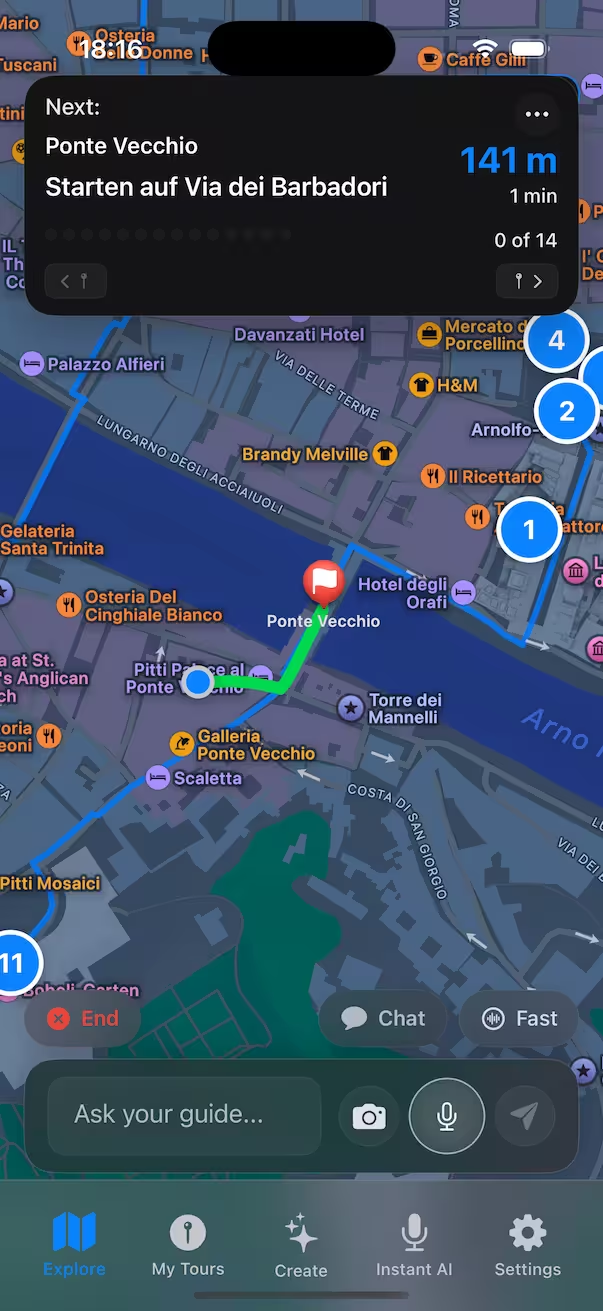
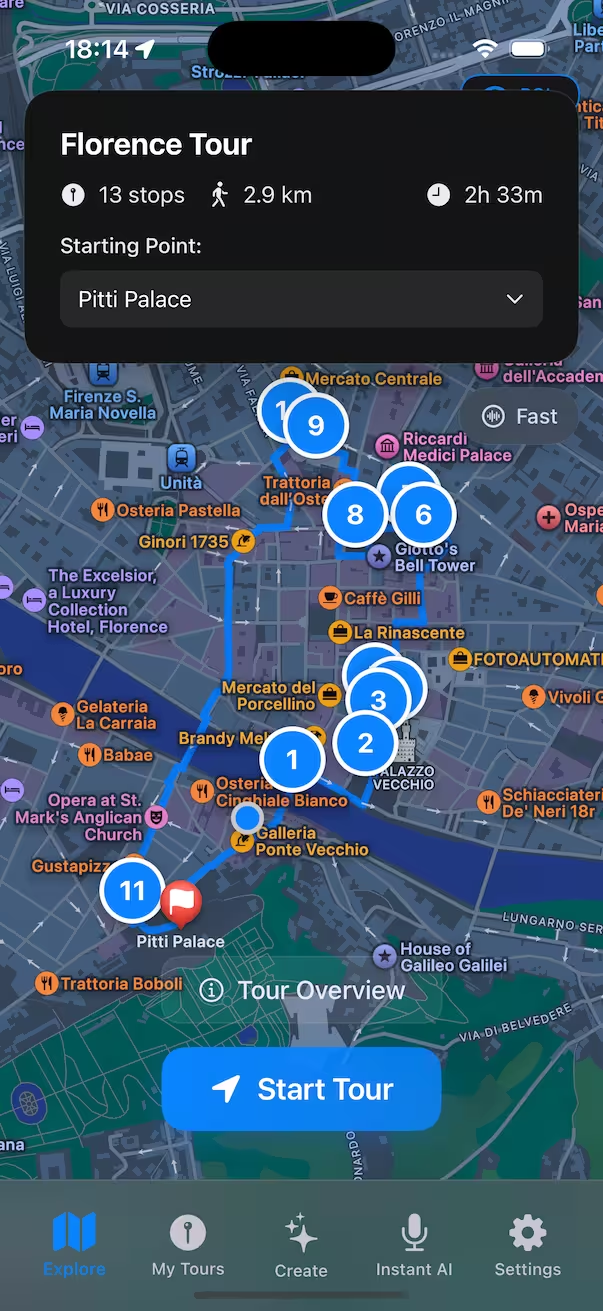
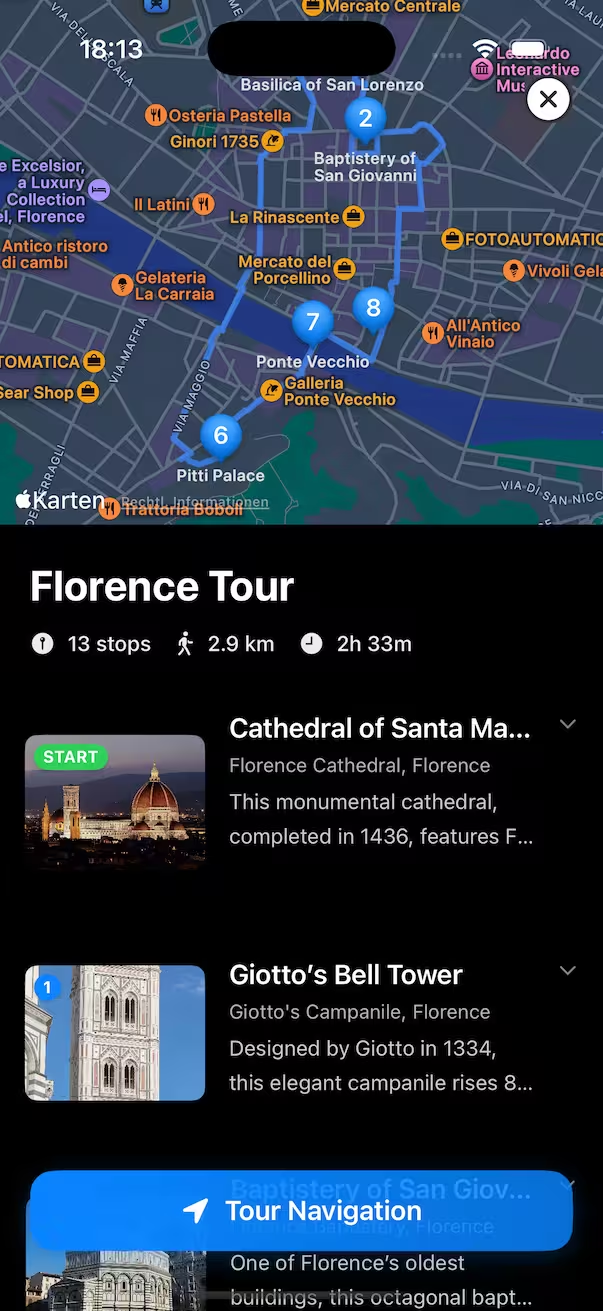
The classic Stockholm tour: 10 stops, 5.8 km, about 3 h on foot
Your live AI guide and the self-guided Stockholm route, together in your browser.