
Bologna to Venice Day Trip: The Honest Plan
The high-speed train is the easy winner here, about 1h 30min station to station, and it sets you down at Venezia Santa Lucia right on the Grand Canal. This is one of the most relaxed day trips in Emilia-Romagna, so here is the honest plan, the booking tricks that cut the fare, plus a free, self-guided walking tour for the hours on the ground.
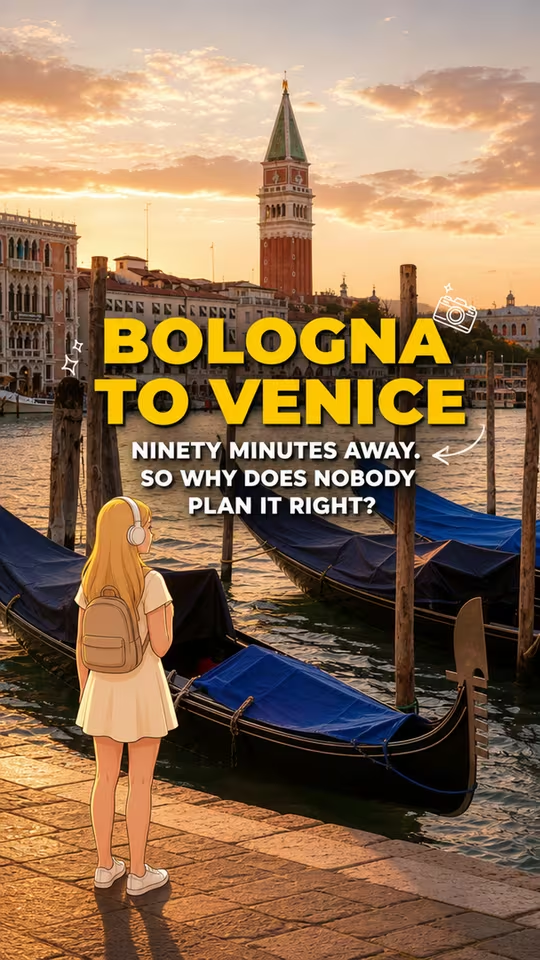
The Quick Answer: Bologna to Venice
Take the high-speed train, and do not overthink the rest. Bologna Centrale to Venezia Santa Lucia runs in about 1 hour 30 minutes direct on a Frecciarossa, a touch faster on Italo, and there is a fast train roughly every 30 minutes across the day between the high-speed and regional services. Fares start as low as €10 on high-speed if you book early, and the slower regionale trains are cheaper still with fixed prices. Two companies run the express line, Trenitalia (Frecciarossa) and the private Italo, and both drop you in the dead center of Venice, the station's front steps landing you straight on the Grand Canal. Is it worth it as a single day? Genuinely, yes. This is one of the shortest and easiest day trips in the whole Emilia-Romagna region: ninety minutes each way leaves you eight or nine usable hours in Venice, not the frantic five that a longer approach forces. It is the trip a Bologna local takes their visiting relatives on first.
| Question | Answer |
|---|---|
| Fastest journey time | ~1h 30min direct (Frecciarossa); ~1h 15 to 1h 34min (Italo); ~1h 57min (regionale) |
| Frequency | Roughly every 30 minutes across the day, all operators combined |
| Price from | ~€10 to 30 high-speed booked early; regionale cheaper with fixed prices |
| Operators / how | Trenitalia Frecciarossa, Italo (high-speed) and Trenitalia regionale. Bus and car are slower |
| First / last | First high-speed ~6 to 7 a.m.; last back from Venice ~8 to 9 p.m. |
| Worth it as a day trip? | Yes, and easily. One of the most relaxed day trips from Bologna. Overnight still beats it, barely |
Is the Bologna to Venice Day Trip Worth It?
Here is our honest verdict before the timetable, and on this route it is an easy one: a Bologna to Venice day trip is not just doable, it is one of the smartest single days you can build from the city. The math that sinks longer approaches simply is not a problem here. You are looking at roughly three hours of train across the whole round trip, which leaves eight or nine hours of daylight in Venice. That is a real day, not a rushed lap of San Marco.
The best of Venice, stop by stop


The case for going is the ease of it. The train is fast, comfortable, and central, and the arrival half sells the trip on its own. You step out of Santa Lucia station directly onto the Grand Canal, not into a mainland suburb, with the water and the boat traffic already in your face. The most thrilling stretch is the final approach, when the train runs out across the causeway over open lagoon and the city rises ahead of you.
Ninety minutes each way, eight-plus hours on the ground, and an arrival straight onto the Grand Canal.
It is the day trip a Bologna local takes their visitors on first, and the reason is time.
The only real case against is the one every honest guide makes about Venice: the city rewards slowness, and a day trip, even a generous one, still leaves at sunset. During the day Venice is at its most crowded, and the version everyone falls for, the quiet, orchestral, romantic city, arrives in the evening and early morning after the day-trippers drain away. So the caveat is not "you will not see enough," because from Bologna you will see plenty. The caveat is that you will taste the daytime city and miss the twilight one. If you can spare a single night, Venice at dusk is a different and better place.
Even a full day is only an introduction, and the magic hours come after the last train leaves.
Our call: from Bologna, go, and do not agonize about it. You can be on a train after breakfast and walking into Venice mid-morning with the whole day ahead of you, which is exactly the trip the longer origins cannot offer. Build it around the headline sights, wander the quiet lanes in the afternoon, and you get a genuinely full day. If you have a free night, stay over and catch the city after dark. But this is one day trip you should not skip waiting for a "proper" trip that may never come.
Good fit if you...
- Are based in Bologna and want a big day out with minimal train time
- Are happy with the highlights plus time to wander: Grand Canal, San Marco, Dorsoduro
- Want the fullest possible day, roughly eight or nine hours on the ground
- Will pre-book Doge's Palace and St Mark's to skip the queues
Skip it (stay overnight) if you...
- Want Venice at dusk, when the day-trippers thin out
- Want the outer islands too, like Burano or Murano, at a calm pace
- Would rather give the city two unhurried days than one full one
- Are chasing the quiet, romantic Venice that only appears after dark
How to Get from Bologna to Venice by Train
You can reach Venice from Bologna four realistic ways, and for a day trip one of them is the clear winner. The high-speed train takes it, and it is not close. The reason is geography as much as speed: the train is the only option that sets you down in the actual city, on the water, without an onward transfer to a boat.

| Mode | Time | Price | Verdict |
|---|---|---|---|
| High-speed train (Frecciarossa / Italo) | ~1h 30min direct | €10 to 30 early | WINNER. Central to central, straight onto the Grand Canal |
| Regional train (Trenitalia regionale) | ~1h 57min | Fixed, cheaper | Slower but no booking needed, drops you at Santa Lucia too |
| Bus (FlixBus) | ~2h+ | From ~€8.48 | Cheap but slower, and it stops at Tronchetto, not the center |
| Car | ~1h 35min, 154 km | fuel + toll + parking | Pointless. You cannot drive into Venice, you park on the mainland |
| BlaBlaCar rideshare | ~1h 40min | ~€10 to 16 | Cheapest but only a few rides a day, least flexible |
The regional train is the honest budget pick and quietly a good one: it takes about two hours instead of ninety minutes, but the fare is fixed and low, no advance booking is needed, and it still delivers you to Venezia Santa Lucia on the island. Just remember to validate a regionale ticket in the little green or white machine before you board. The bus looks cheapest on paper and quietly is not, because wheeled vehicles cannot enter Venice. FlixBus starts from around €8.48 but takes two hours or more and stops at Venezia Tronchetto, the island car park, where you still need a vaporetto or the People Mover into the center. Driving is worse for a day trip: it is about ninety-five minutes over 154 km, and at the end you cannot park in Venice at all, only at Tronchetto or on the mainland at Mestre before switching to a boat. A BlaBlaCar rideshare is the cheapest seat going, but there are only a handful of trips a day. The high-speed train drops you downtown, seated and validated, and hands you the lagoon crossing as a bonus. Take an early Frecciarossa and you can be standing on Santa Lucia's front steps well before ten.

The Train in Detail
Both high-speed operators run the same corridor and take almost exactly the same time. Trenitalia's Frecciarossa does the direct run in about 1h 30min, Italo in roughly 1h 15 to 1h 34min, and Trenitalia's regionale veloce covers it in about 1h 57min for less money. Between the operators there is a departure roughly every half hour across the day. All the high-speed services are direct, with only one or two intermediate stops (typically Padova and Venezia Mestre), and offer multiple service levels with free Wi-Fi, air conditioning, reclining seats, power outlets, and a cafe car. The route runs northeast across the flat Veneto plain through Ferrara and Padova before the famous causeway crossing onto the island. The best of the ride comes last: the final minutes out over the open lagoon are the stretch you will remember.
Two things you must get right at the stations. In Bologna, leave from Bologna Centrale, one of the busiest stations in Italy with around thirty platforms and English-language ticket machines, so give yourself a few minutes to find the right binario. In Venice, your stop is Venezia Santa Lucia, the station on the island, right on the Grand Canal. The stop just before it, Venezia Mestre, is on the mainland and is the single most common mistake travelers make. The train pauses at Mestre before crossing the causeway, so do not step off there. Pick Santa Lucia when you book and stay in your seat until the train has finished crossing the water.
Trenitalia or Italo, which to book?
There is no wrong answer, and our advice is to pick by price and schedule, not brand. The two run nearly identical times on nearly the same tracks. Trenitalia runs more departures across the day, so it usually wins on flexibility, while Italo is often a touch cheaper and, some travelers find, a slightly nicer ride, with drinks and snacks included in the higher classes. Check both for your exact window, then buy whichever has the right time at the right price.
| Compare | Trenitalia (Frecciarossa) | Italo |
|---|---|---|
| Time | ~1h 30min direct | ~1h 15 to 1h 34min direct |
| Daily services | More departures across the day | Fewer, often a little cheaper |
| Onboard | Multiple classes, cafe car | Multiple classes, snacks in upper tiers |
| Verdict | More flexibility on timing | Sometimes the better price and ride |
Booking Strategy
High-speed fares are dynamic, which means the single biggest lever on price is how early you buy. The €10 floor fare is real but limited, so do not plan around it. Realistically expect €13 to 30 on high-speed depending on how far ahead you book and which class you choose, and last-minute fares can climb well past that. If you would rather not gamble on price at all, the regionale train has a fixed, lower fare that never surges, at the cost of about half an hour extra each way. The rule for the fast trains is simple: buy as soon as your date is fixed, and check both companies a few days before if you have not yet booked.
Buy direct from Trenitalia or Italo, not a third-party reseller, partly to dodge commissions and partly because changes are far easier in the official apps. On a same-day return, look for round-trip offers, which can shave the second leg. And if you qualify, the named discount fares below cut the price further. They are most reliable on Base and Economy fares, are capped to a limited number of seats per train, and exact terms shift, so confirm on the official site when you book.
| Discount fare | Who qualifies | Roughly |
|---|---|---|
| Frecciarossa "FrecciaYOUNG" | Under 30 | Up to ~50% off Base, limited seats |
| Frecciarossa "FrecciaSENIOR" | 60 and over | Up to ~50% off Base, limited seats |
| Trenitalia "Bimbi Gratis" / Family | Groups of 2 to 5 with kids under 15 | Children travel free, adults at Base |
| Italo "Young" | Under 30 | Discounted seats, book early |
| Italo "Senior" | 60 and over | Discounted seats, book early |
| Italo Famiglia / Bimbi | Families with children | Reduced child fares |
Booking checklist
- Book as early as you can on the official Trenitalia or Italo site or app, choosing Bologna Centrale → Venezia Santa Lucia.
- Compare both operators for your exact departure window. Do not assume one is always cheaper.
- On a tight budget, price the fixed-fare regionale too. It is cheaper and needs no advance booking, just an extra thirty minutes each way.
- Apply any youth, senior, or family fare you qualify for, and check round-trip offers.
- On a high-speed train your e-ticket is already valid. On a regionale ticket you must validate it in the machine on the platform before boarding.
- Take an early departure out and book a fixed return for the evening, no later than roughly 8 p.m., so a delay does not strand you.
Venice in One Day
Here is the part most day-trip guides bury, and it is the whole point: you do not need to plan a route. The train sets you down at Venezia Santa Lucia, and the front steps land you straight on the Grand Canal, no suburb, no transfer, no taxi. You walk out of the station and the best view in the city is already in your face: water, light, and boat traffic, with no warm-up.
You open our free self-guided Venice tour right there, on your phone, and start it from wherever you are standing. The voice guide takes the planning off your hands and walks the city with you, stop by stop, so the moment you step off the train becomes the first beat of the day rather than a logistics problem. That on-the-water arrival is exactly why the train beats every other option, and because a Bologna day gives you eight or nine hours on the ground, having the route handled for you means you can spend the time seeing Venice rather than managing it.

The time math
Take an early train, around 8 a.m., and you are walking into Venice before ten with the whole day ahead. This is the luxury a short approach buys you. To be back in Bologna at a sane hour you want an evening return, and the last high-speed trains leave Venice around 8 to 9 p.m. Plan around a departure no later than roughly 8 p.m., not the very last train, so a delay does not strand you. That still leaves a generous eight or nine usable hours on the ground once you subtract the ride, lunch, and queues. That is enough to do the headline sights properly and still wander the quiet lanes in the afternoon, which is exactly what Venice deserves. And do not over-schedule it: the best hours here are the unplanned ones, spent getting lost.
What you'll see
This is what a day-tripper should not miss, with the practical reality attached. Hours and prices shift, so confirm the timed sights on their official sites before you go:
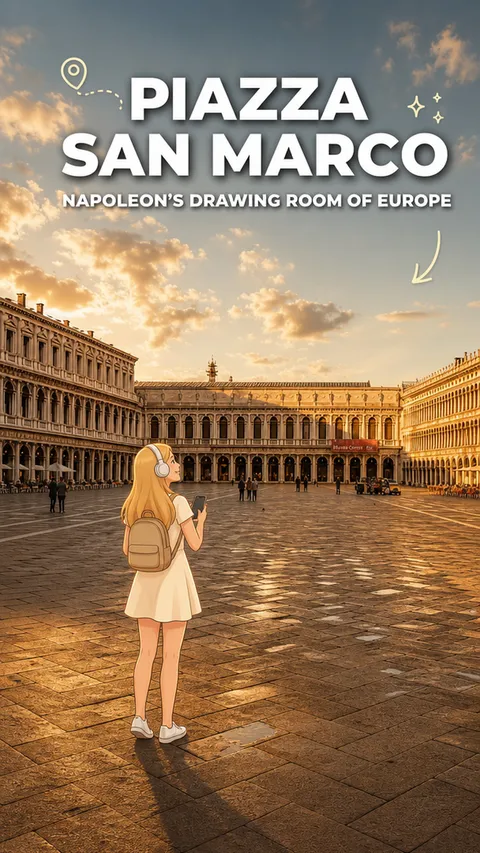
- Piazza San Marco (free, open 24/7): Napoleon's "drawing room of Europe," the social heart of the city. Go straight here off the Grand Canal, because it is jammed by midday.
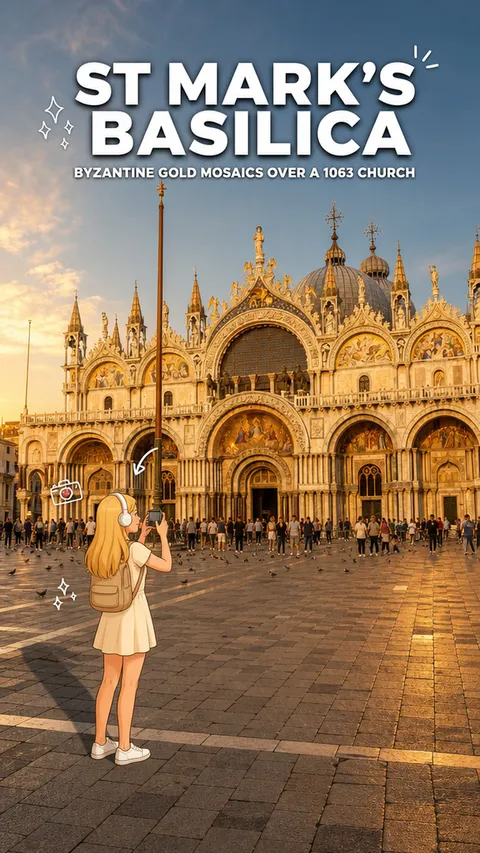
- St Mark's Basilica (basilica entry small fee; museum and terrace extra, ~€10 base to ~€30 all-in): Byzantine gold mosaics over a 1063 church, open Monday to Saturday roughly 9:30 a.m. to 5:15 p.m. and Sunday afternoons. In peak season the queue can run to hours, so pre-book a timed slot and make it one of the first things you do.
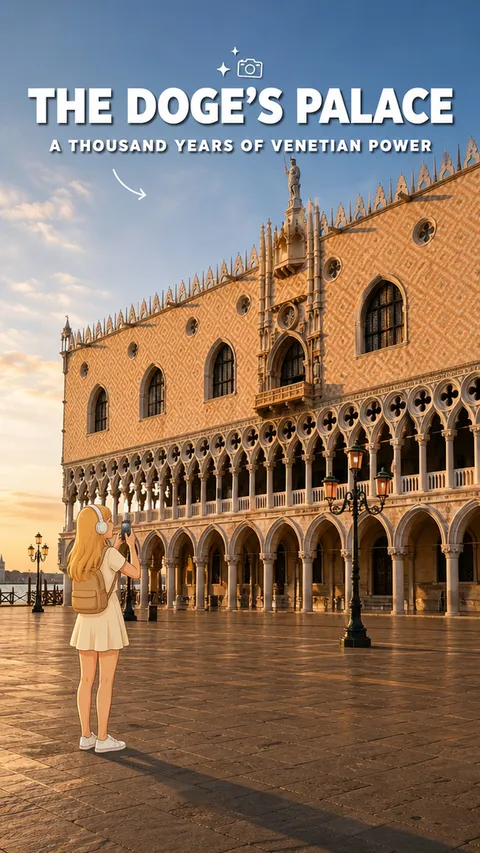
- Doge's Palace (Palazzo Ducale) (~€30 online, €35 onsite; combined St Mark's Square ticket): a thousand years of Venetian power, open ~9 a.m. to 7 p.m. The inside earns the two hours if you have them; if you do not, the Gothic facade is free and remarkable.
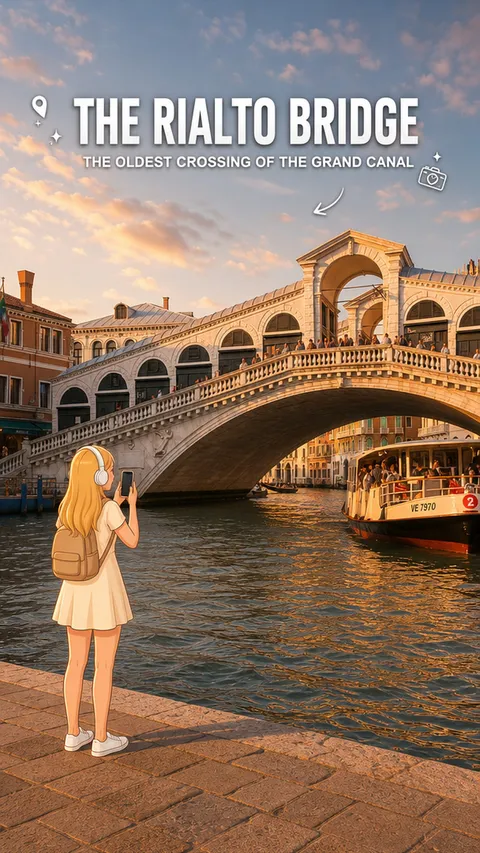
- Rialto Bridge (free): the oldest crossing of the Grand Canal, with the Rialto food market beside it (mornings, closed Sundays).
- Bridge of Sighs (free to view): best seen from the Ponte della Paglia, the small bridge on the waterfront.
- Dorsoduro (free to wander): the quiet, art-student district across the Accademia bridge, where the tourist crush drops away and the real Venice shows through. With a full day, this is where you spend your afternoon.
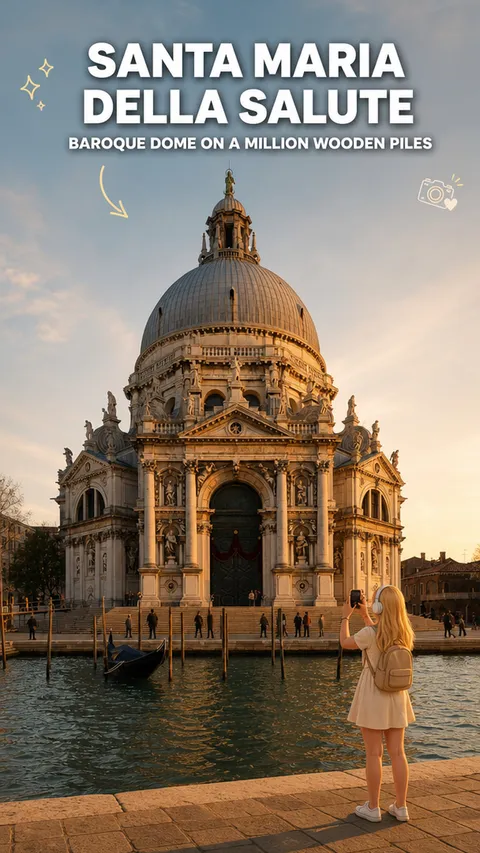
- Santa Maria della Salute (free to enter; ~€3 to 6 sacristy): Longhena's domed baroque church guarding the canal mouth, a short hop across from San Marco.
The route the tour walks with you
Instead of a generic "see San Marco, then the Rialto" list, you walk one efficient loop and the tour walks it with you. This is the real sixteen-stop order, starting in Piazza San Marco (where you arrive after the Grand Canal ride) and looping out through Dorsoduro and back across the Rialto, so you barely double back. Because you have a full day here, you can linger at every stop:
- 1Piazza San Marco Free · your start
Napoleon's "finest drawing room in Europe," a 176-meter square that is the beating heart of the city. Arrive before the late-morning crush and it is briefly yours.
- 2St Mark's Basilica Entry small fee
Byzantine architecture from 1063, holding the relics of Saint Mark beneath more than 500 columns of precious marble and a ceiling of gold mosaic.
- 3Doge's Palace ~€30 online
Seat of Venice's Doges for a thousand years, joined to the old prison by the Bridge of Sighs. The Gothic facade alone is worth the pause.
- 4Bridge of Sighs Free to view
Built in 1603, the covered bridge where prisoners glimpsed Venice for the last time. The name was a romantic invention of the 19th century.
- 5San Zaccaria Free · crypt ~€1.50 to 3.50
Burial place of eight Doges and home to Giovanni Bellini's luminous "Sacra Conversazione," founded back in the 9th century. The flooded crypt mirrors its own columns.
- 6Santa Maria della Salute Free · ~€3 sacristy
Longhena's baroque masterpiece on a million wooden piles, raised in thanks for the end of the 1631 plague, guarding the mouth of the Grand Canal.
- 7Gallerie dell'Accademia ~€15 · closed Mon
The world's largest collection of Venetian painting, with Titian and Tintoretto, in the former monastery school of the Carità.
- 8Ponte dell'Accademia Free
One of only four bridges over the Grand Canal, rebuilt in 1985, with a postcard view straight to the Salute.
- 9Dorsoduro Free
"Hard back," Venice's firmest ground, a student quarter of quiet canals and the city's calmest wandering. With a full day, take your time here.
- 10Ca' Rezzonico ~€10 to 14 · closed Tue
Robert Browning's last home, now the museum of 18th-century Venice, with frescoes by Giambattista Tiepolo.
- 11Campo Santa Margherita Free
A lively student square, the only one in Venice with trees, and the best spot for an unhurried spritz and a plate of cicchetti.
- 12Campo San Polo Free
Venice's second-largest square, once a venue for bullfights and masked balls, hushed now between the lanes.
- 13Mercato di Rialto Free · mornings, closed Sun
A thousand years of market tradition since 1097, loud with fresh fish and produce, the city waking up at work.
- 14San Giacomo di Rialto Free
Reputedly Venice's oldest church, its 24-hour clock once a warning to merchants against the fraud of night trading.
- 15Rialto Bridge Free
The only crossing of the Grand Canal until 1854, a single 28-meter stone span paid for by the shop rents along its back.
- 16Piazza San Marco Free · loop close
Back to the start, where Caffè Florian, open since 1720, claims the title of Europe's oldest coffee house.
It runs in your browser, no app and no download. A voice guide walks the loop with you and leads a real conversation as you go: it greets you, tells the story between stops, asks what you actually want to see, and adapts. It is not a recording and not an audioguide. The map and step-by-step navigation get you from each stop to the next.
That whole loop is our free, self-guided Venice walking tour, and because it can be launched from any of its stops, you do not backtrack to find an official start, you just begin where you are. You open it the moment you step off the train at Santa Lucia, ride vaporetto Line 1 down the Grand Canal, and enter the loop at San Marco. It runs in your browser, with no app and no download. A voice guide walks the route with you and leads a real conversation as you go: it greets you, tells the story between stops, asks what you actually want to see, and adapts to the eight or nine hours you have. It is not a recording and not an audioguide. The map and step-by-step navigation get you from San Marco across to Dorsoduro and back over the Rialto without squinting at Google Maps, which is a real mercy in a city where the maps famously dead-end at water. See the full route on the Venice walking tour page, and you get 100 free credits to try it.
Insider Tips for the Venice Day Trip
A day trip this generous still runs smoother with a few habits. Get an early train anyway, because arriving mid-morning gives you the squares before the worst of the crush and banks daylight for the afternoon wander. Buy a vaporetto day ticket rather than single rides if you plan more than a couple of boat trips, since single fares are steep. Skip the tourist restaurants ringing San Marco and eat where the locals do: find a bacaro, a traditional wine bar, order cicchetti and a glass of wine from the barrel, and you have lunch for a few euros. And do not blow the whole afternoon chasing the outer islands: Burano is a long vaporetto ride each way, and with a single day you are better off going deep into Dorsoduro and Cannaregio than skimming across the lagoon.
Do
- Take an early train and bank the daylight for an afternoon wander
- Get off at Venezia Santa Lucia, the island station
- Ride vaporetto Line 1 down the Grand Canal first
- Buy direct from Trenitalia or Italo, or take the fixed-fare regionale
- Eat cicchetti at a bacaro, not the restaurants by San Marco
- Spend the afternoon in Dorsoduro, away from the crush
Don't
- Don't get off at Venezia Mestre (still the mainland)
- Don't rely on Google Maps in the lanes, they dead-end at water
- Don't spend the day only on the San Marco to Rialto corridor
- Don't buy from third-party resellers
- Don't gamble on the very last train back to Bologna
- Don't try to add Burano and Murano and a gondola all in one day
Pickpockets work the crowds around Piazza San Marco and the Basilica, so keep bags zipped and in front. Venice also runs a day-tripper access fee (the Contributo di Accesso) on a set list of busy days, aimed at exactly the visitors who arrive and leave the same day. The fee is modest and the qualifying dates change each year, so check the official Venezia Unica site before your travel date and register if your day is on the list. Watch the weather too: on acqua alta days the lagoon backs up and St Mark's Square floods first.
More day trips from Bologna
Out in the morning, back in time for dinner. Every route here fits in one full day.
What the Bologna to Venice Journey Feels Like
This is the part no timetable captures. Ninety minutes barely feels like a journey. You settle in with a coffee, the flat Veneto plain slides past through Ferrara and Padova, and before the ride has really begun the train is slowing onto the causeway. Then comes the part that sets the tone for the whole day: the land drops away on both sides, and for a few minutes you are gliding across open lagoon toward a skyline of domes and campaniles with no road, no cars, nothing but water. The doors open at a waterfront terminus and the city meets you head-on. The first glimpse of Venice as you leave the station is the kind of thing that stops first-timers in their tracks, pausing on the steps to take it in.
Then Venice undoes your sense of direction, and that is the point. Something that looks like a through-street on the map turns out to be a footpath ending abruptly at a canal. Nothing runs straight, nothing behaves the way the map promises, and the ideal thing to do is stop fighting it and wander where the lanes take you. Because it is an island you cannot really get lost for long, so there is no point worrying about where you are. Fill up on cicchetti, cross a few dozen small bridges, and let the getting-lost be the day.
If there is one honest note to end on, it is the one nearly everyone reaches: a single day in Venice is only an introduction. From Bologna, though, that introduction is unusually generous, a full day of it, and it is why a local here takes their visitors to Venice first. Take the early train, let the route be handled for you, and treat the lagoon coming into view as the souvenir you actually paid for.
Bologna to Venice: Your Questions Answered
Can you do Bologna to Venice as a day trip?
Yes, and it is one of the easiest. The high-speed train is only about 1h 30min each way, so an early departure and an evening return give you a generous eight or nine hours in Venice. It is far more relaxed than day trips from further south, and it comfortably covers the Grand Canal, San Marco, the Rialto, and an afternoon wandering the quieter districts. Overnight is still slightly better because Venice at dusk is magical, but as day trips go, this one genuinely delivers.
How long is the train from Bologna to Venice?
About 1 hour 30 minutes direct on a Trenitalia Frecciarossa between Bologna Centrale and Venezia Santa Lucia. Italo runs it in roughly 1h 15 to 1h 34min, and the cheaper regionale veloce takes about 1h 57min. All of them are direct with only one or two stops. Avoid multi-change routes for a day trip.
How much does the Bologna to Venice train cost?
Fares on the high-speed trains are dynamic. They start as low as about €10 if you book well ahead, but realistically expect €13 to 30 depending on how early you buy and which class you choose, with last-minute fares climbing higher. The regionale train has a fixed, lower fare that never surges, at the cost of about half an hour extra. Youth, senior, and family discounts cut the high-speed price further.
Which is better, Trenitalia or Italo?
Neither is clearly better. They run almost identical times on the same corridor. Trenitalia (Frecciarossa) has more daily departures, so it usually wins on flexibility, while Italo is often a little cheaper and some travelers find it a slightly nicer ride. Check both for your exact time and pick by price and schedule, not brand.
What are the first and last trains?
The first practical high-speed departures from Bologna run in the 6 to 7 a.m. range, and the last high-speed trains back from Venice leave around 8 to 9 p.m. depending on the day and operator. For a day trip, take an early train out and plan to catch a train back by roughly 8 p.m. rather than gambling on the very last departure.
Which Venice station should I get off at?
Venezia Santa Lucia, which is on the island, right on the Grand Canal. Do not get off at Venezia Mestre, the previous stop, which is on the mainland. The train pauses at Mestre before crossing the causeway, so select Santa Lucia when you book and stay on board until the train has crossed the water.
Should I book in advance?
For the high-speed trains, yes. Prices rise as the date approaches, so book as early as you can and buy direct from the official Trenitalia or Italo site or app rather than a third-party reseller. If you would rather not track fares at all, the fixed-price regionale needs no advance booking, just remember to validate the ticket on the platform before boarding.
Is the bus or car a good alternative?
Not really for a day trip. FlixBus is cheap, from about €8.48, but takes two hours or more and stops at Tronchetto, the island car park, where you still need a boat or the People Mover into the center. A car cannot enter Venice at all, so you would drive about ninety-five minutes and then park on the mainland and switch to a vaporetto. The high-speed train drops you downtown, on the water, and is faster overall.
How do I get around Venice once I arrive?
On foot and by vaporetto, the water bus. Start with Line 1 down the Grand Canal from the station to San Marco, about 25 minutes and the best-value view in the city. Single rides are around €9.50, so if you will ride more than twice, a day pass (about €25) saves money. Beyond that, walk. Venice is small enough that you cannot get badly lost, and wandering is the whole point.
Plan Your Venice Day Trip
You have the train sorted, which is the easy part on a route this short. Now make the hours on the ground count, and here you have plenty of them. The sixteen-stop loop above is our free, self-guided Venice walking tour, and because it starts from any stop, you launch it the second you step off the train at Santa Lucia, ride Line 1 down the Grand Canal, and enter the loop at San Marco. Open it and start walking with 100 free credits.
