
Milan to Turin Day Trip: The Honest Plan
The high-speed train is the runaway winner here: about an hour from Milano Centrale to central Turin, as little as 36 minutes non-stop, and a departure every 15 to 30 minutes. Here is the honest day plan, the fare tricks that cut the price, plus a free, self-guided walking tour for the hours on the ground.
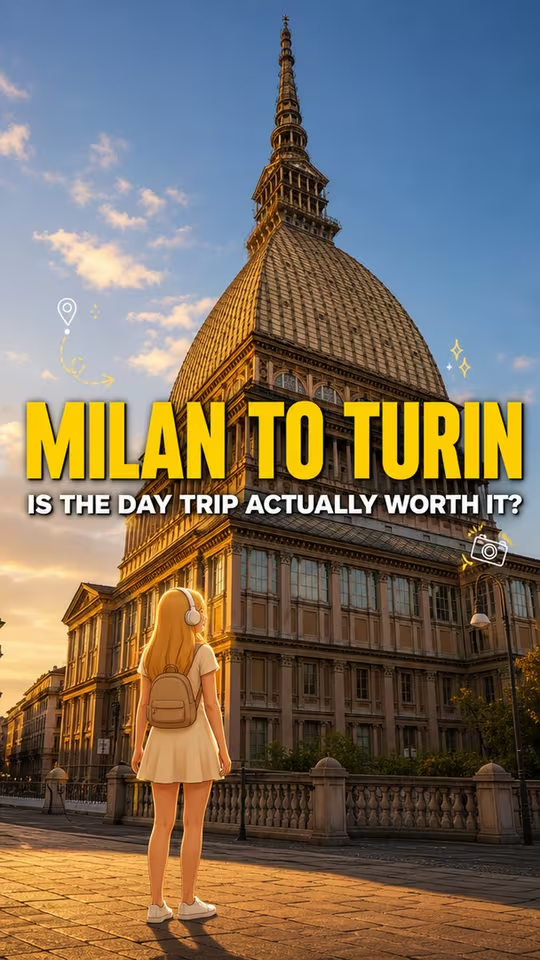
The Quick Answer: Milan to Turin
Take the train and do not overthink it. High-speed services from Milano Centrale reach central Turin in as little as 36 minutes on a non-stop Italo, and around 45 minutes to an hour on a standard Frecciarossa, with a departure roughly every 15 to 30 minutes all day on two operators. Book a few weeks out and fares start near €8.90 one way, with the usual window sitting around €15 to 30. Turin is Italy's first capital, a Savoy royal city of baroque squares, chocolate-and-coffee cafes and the second-best Egyptian collection on earth, and the station drops you a short, flat walk from the centre. Is it worth a single day out of Milan? Yes. It is one of the cheapest, fastest, highest-payoff trips you can do from the city, and thanks to 18 kilometres of continuous porticoes it works rain or shine.
| Question | Answer |
|---|---|
| Fastest journey time | ~36 min non-stop (Italo); ~45 min to 1h on a Frecciarossa |
| Frequency | A train every 15 to 30 min, all day, on Trenitalia and Italo |
| Price from | €8.90 advance one way; usually €15 to 30 by timing; regional from ~€9.90 but slow |
| Operators / how | Trenitalia (Frecciarossa) and Italo high-speed. Bus and car are slower |
| First / last | Out from ~7:00 to 8:00 a.m. Last sensible return around 8:00 to 9:00 p.m. |
| Worth it as a day trip? | Yes. Short ride, flat walkable grid, royal city with a world-class museum |
Is the Milan to Turin Day Trip Worth It?
Most people arrive in Turin expecting Fiat factories and grey industry, and spend the first hour recalibrating. What you actually get is a baroque capital laid out like a stage set: dead-straight axes, monumental porticoed squares, Savoy palaces lined up so one frames the next, and the Alps sitting on the horizon at the end of half the streets. It was the first capital of united Italy, and it still carries itself that way, without needing to prove it. After Milan's fashion-district hustle and its crowds, the change of gear is the whole reason to come.
The best of Turin, stop by stop


The ride is the clincher. You can be under Turin's porticoes within an hour of leaving Centrale, and because the historic core is a flat grid stitched together by covered walkways, you cover the headline sights on foot without ever getting your feet wet or your calves burning. The single biggest draw is the Museo Egizio, the oldest museum in the world devoted entirely to ancient Egypt and second only to Cairo by depth of collection. That one interior justifies the train fare on its own. Add the Royal Palace, the Mole Antonelliana's glass lift, a bicerin in a 250-year-old cafe, and a free Alpine panorama to close, and a day fills itself.
An hour from Centrale, and you swap Milan's noise for royal squares, the world's second-best Egyptian museum, and chocolate under the porticoes.
The honest counterpoint is not logistics, it is appetite. Turin is museum-heavy and its beauty is cumulative and quiet: no Colosseum, no Leaning Tower, no single postcard everyone already knows. If you want a bucket-list icon or you hate spending an afternoon indoors, this is the wrong day trip and the lakes or Verona will suit you better. The other honest note is that almost everyone who comes here for a day leaves wishing they had two. You can absolutely do the highlights in a day, but you will pick two or three big things, not all of them, and that is fine.
If you only have one day in Milan and have not seen the Duomo or the Last Supper yet, stay put. Save Turin for when you have time to spare.
Our call: for anyone with three or more days in Milan who wants a real, un-touristy Italian city with royal grandeur and serious food, Turin is close to the perfect pick. Go for the Egyptian Museum, the squares, one long lunch and the sunset viewpoint, treat the rest as a reason to come back, and the day pays off handsomely.
Good fit if you...
- Have three or more days in Milan and want a genuine change of scene
- Love museums, baroque architecture, and Roman-to-royal history layers
- Care about food and drink (chocolate, vermouth, bicerin, Piedmontese cooking)
- Want a short, cheap ride and a day that works rain or shine
Skip it (save Turin) if you...
- Only have one day in Milan and still have the Duomo or Last Supper to see
- Hate museums, since the city's main draws are museum-heavy
- Want a bucket-list icon rather than a quieter, elegant city
- Are travelling on a Monday or Tuesday when key museums close (see below)
How to Get from Milan to Turin by Train
There are three realistic ways to get from Milan to Turin, and for a day trip the train wins on every axis that matters. The only real decision is which high-speed operator, and whether to trade a few euros for the very fastest non-stop.

| Mode | Time | Price | Verdict |
|---|---|---|---|
| High-speed train (Italo / Frecciarossa) | ~36 min to 1h | €8.90 to 30 | WINNER. Centrale to central Turin, a train every 15 to 30 min, dead centre |
| Regional train (Trenitalia) | ~1h45 to 2h | from ~€9.90 | Barely cheaper than an advance high-speed fare, and an hour slower |
| Bus (Itabus / FlixBus) | ~1h45 to 2h10 | €3.99 to 15 | Cheapest headline fare, but you lose an hour and leave from Lampugnano |
| Car (A4 / A5) | ~1h30 to 1h45 | ~€21 to 30 fuel, tolls, parking | Pointless. ZTL fines, parking hassle, and no vermouth for the driver |
The bus is the only thing that undercuts the train on price, and it is a false economy on a day trip. Itabus advertises fares from €3.99, the absolute cheapest on this route, and FlixBus from around €7 to 15, but both take roughly two hours and, crucially, leave from Milano Autostazione Lampugnano out on the M1 metro, not from Centrale. Driving is worse. It is roughly 142 km on the A4 and A5, Milan's ring roads are heavy at both ends, and Turin's historic core is a limited-traffic zone (ZTL) with well-signposted cameras. Park outside the ZTL, in the garage under Piazza San Carlo or Piazza Emanuele Filiberto, or the fine follows you home. Between fuel, tolls and parking the car runs roughly €21 to 30 each way, and it lands you no closer to the centre than the train does. The train drops you a few minutes from the squares, lets you have a vermouth with lunch, and no source recommends car or bus over rail for a day trip.
The Train in Detail
Two high-speed operators share the corridor and run almost identical journeys. Trenitalia's Frecciarossa and the private Italo both leave from Milano Centrale and reach Turin in around an hour, with Italo's non-stop service the quickest at about 36 minutes and the Frecciarossa close behind at roughly 45 minutes. Between them there is a departure every 15 to 30 minutes across the day, so you rarely wait long and you can stay flexible. The trains are clean and quiet with free Wi-Fi, power sockets and air conditioning, and they fill with Milan-to-Turin commuters at the shoulders of the day, so a reserved seat is worth having on the morning out. Note that only folding bikes are allowed, not full-size ones.
The one thing to understand is the arrival station. Most high-speed services run to Torino Porta Susa, the main station, and many also call at Torino Porta Nuova, which sits right in the city centre at the foot of Via Roma. Both are a short walk into the centro, so neither is a problem, but check your ticket so you know which one you are aiming for. It is also worth comparing fares to each: the two stations sometimes price the same route differently, so one may be cheaper for your exact train.
Italo or Frecciarossa, which to book?
Carry no brand loyalty between the two. They run the same corridor in almost the same time, and the right choice is simply whichever is cheaper for your exact departure slot, with Italo often a few euros lower and holding the fastest non-stop run. Italo needs no check-in before boarding. Book by price and timetable, not by name.
| Option | Time | Price | Best for |
|---|---|---|---|
| Italo (non-stop) | ~36 min to 1h | from €8.90 booked ahead | The fastest ride, day-return deals, weekends |
| Frecciarossa (high-speed) | ~45 min to 1h | from ~€15 booked ahead | More departures, Trenitalia loyalty, flexible times |
The regional train is the honest budget alternative, from about €9.90 with no booking needed, but at 1h45 to 2h it is barely cheaper than an advance high-speed fare and costs you an hour each way, so it only makes sense if the fast trains for your slot have sold up to full price. If you do take a regional, remember to validate the paper ticket in the green or yellow platform machine before boarding, or you risk a fine. A high-speed e-ticket with a seat reservation needs no stamping.
Booking Strategy
High-speed fares are dynamic, so the single biggest lever on price is how early you buy. The €8.90 advance fare is real but limited, the standard window sits around €15 to 30, and a walk-up same-day ticket climbs from there. Book direct on the official Italo or Trenitalia site or app, both of which have English interfaces, rather than a third-party reseller, which keeps changes simple and dodges commissions. Around three weeks out tends to be the sweet spot for the cheapest seats.
A neat trick for a round trip in a day: Italo's Day Return offer can cut up to half off when you buy the outbound and return together, and it lets you change the date or time for free up to three days before departure. Price that against two singles before you commit. Book an early train out to bank the most hours on the ground, and keep the return flexible enough that a lingering aperitivo does not cost you a missed reservation. If you qualify, the named discount fares below cut the price further. Allocations are limited and terms shift, so confirm on the official site when you book.
| Discount fare | Who qualifies | Roughly |
|---|---|---|
| Italo "Day Return" | Anyone doing a same-day round trip | Up to ~50% off, free changes to 3 days out |
| Italo / Frecciarossa "Young" | Under 30 | Discounted seats, limited, book early |
| Italo / Frecciarossa "Senior" | 60 and over | Discounted seats, limited, book early |
| Trenitalia "Bimbi Gratis" / Family | Groups of 2 to 5 with kids under 15 | Children travel free, adults at Base |
Booking checklist
- Book as early as you can on the official Italo or Trenitalia site or app, choosing Milano Centrale → Torino Porta Susa (or Porta Nuova).
- Compare both operators for your exact departure window, since prices and the fastest non-stop shift between them.
- Check the Italo Day Return against two singles, and take an early train out with a flexible return.
- Apply any youth, senior or family fare you qualify for.
- Confirm which Turin station your train uses, Porta Susa or Porta Nuova, so you know the walk on arrival.
- On a high-speed ticket your e-ticket is already valid. On a regional paper ticket you must validate it in the platform machine before boarding.
Turin in One Day
Here is the part most day-trip guides bury, and it is the whole point: you do not need to plan a route. The train sets you down in the centre of Turin, you step out into the porticoes, and the historic core folds around you. From there you open our free, self-guided Turin tour on your phone and start it from wherever you are standing. Because it launches from any of its stops, you can begin right by the squares near your station, or stroll up to Porta Palazzo and take the full north-to-south arc across the city. The voice guide takes the planning off your hands and walks the city with you, stop by stop, so arriving becomes the first beat of the day rather than a logistics problem.

The time math
Take an early train, around 7:00 to 8:00 a.m. from Centrale, and you are on Turin cobbles by roughly 8:00 to 9:00. The last sensible high-speed trains back leave around 8:00 to 9:00 p.m., with a few running later still, so even a conservative day hands you ten to twelve usable hours on the ground, more than enough for two or three big sights, a proper lunch, an aperitivo and the sunset viewpoint. One firm rule shapes the day: museum closing days. The Egyptian Museum opens 9:00 to 18:30 most days but closes early at 2 p.m. on Mondays, the Mole is closed on Tuesdays, and the Royal Palace is closed on Wednesdays. For the fullest day, come Thursday to Sunday. Turin restaurants also keep strict Italian hours, lunch around noon to 2:30 and dinner from 7, with the kitchen shut in between, so eat on time.
What you'll see
The centre is a compact, flat grid and the sights cluster, so a full day covers a lot without rushing. Hours and prices shift, so confirm the ticketed sights on their official sites and book the big two online before you go:
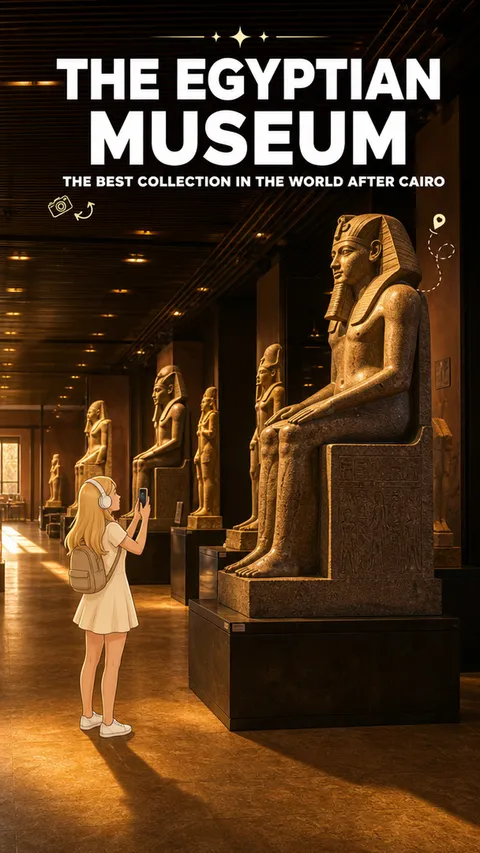
- Museo Egizio (Egyptian Museum) (€18, open ~9:00 to 18:30, Mondays 9:00 to 14:00): the world's second-most important Egyptian collection, over 40,000 artifacts, a hall of granite kings lit like a film set. Book a timed slot online, it sells out. Give it at least two hours.
- Royal Palace / Musei Reali (€15, ~9:00 to 19:00, closed Wednesday): the Savoy staterooms, Royal Armoury and Royal Library with a Leonardo self-portrait, part of the UNESCO Savoy listing. The single ticket now covers the whole Musei Reali complex.
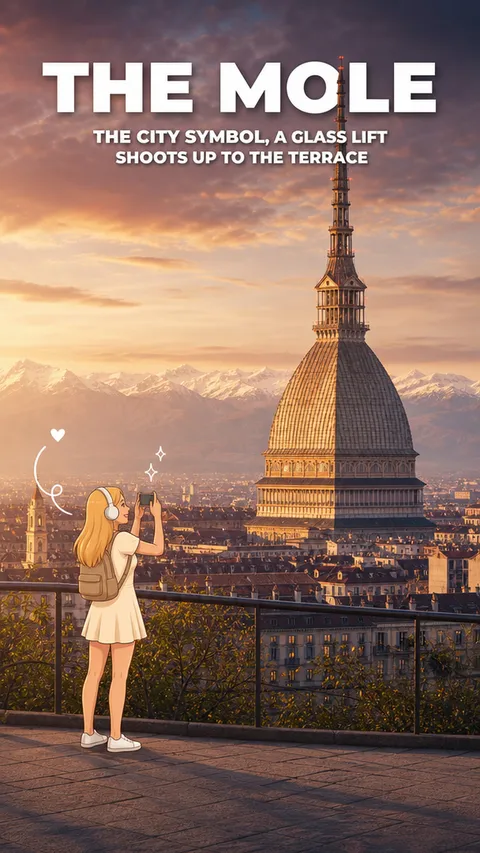
- Mole Antonelliana & National Cinema Museum (lift ~€9, museum-plus-lift ~€17, closed Tuesday): the city symbol, with a glass lift that shoots up the central hall to a panoramic terrace. Book the lift slot ahead, the queue is the slow part.
- Piazza San Carlo, Piazza Castello and the porticoes (free): the baroque drawing room and the porticoed heart of the city, best walked slowly with a counter coffee in hand.
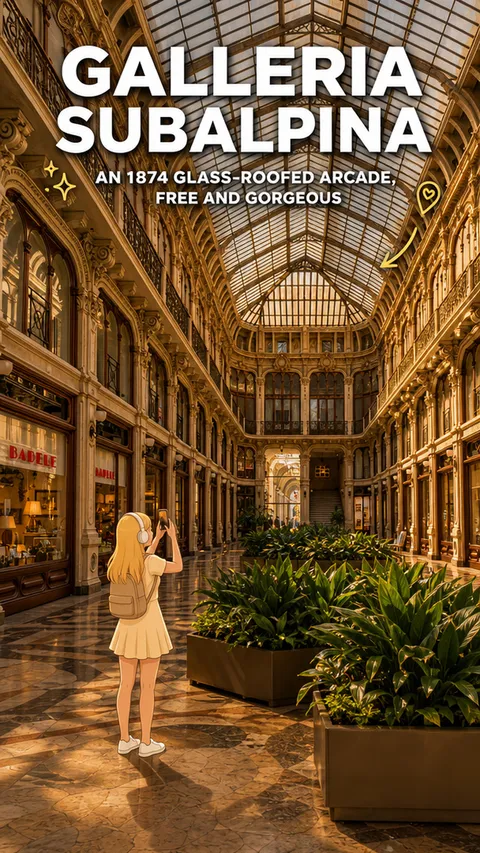
- Galleria Subalpina (free): an 1874 glass-and-iron shopping arcade with a marble floor and belle-epoque cafes, a two-minute detour off Piazza Castello.
- Monte dei Cappuccini viewpoint (free, ~7:00 to 19:00): the classic panorama over the Po, the grid and the Alps from the Capuchin church terrace, the perfect free finale.
The route the tour walks with you
Instead of a generic "see the Egyptian Museum, then the squares" list, you walk one efficient line and the tour walks it with you. Because it launches from any of its stops, you never backtrack to find an official start, you just begin where you are standing. This is the real eleven-stop order, running north to south through the royal core and then jumping the river to the viewpoint, so the day builds to its payoff:
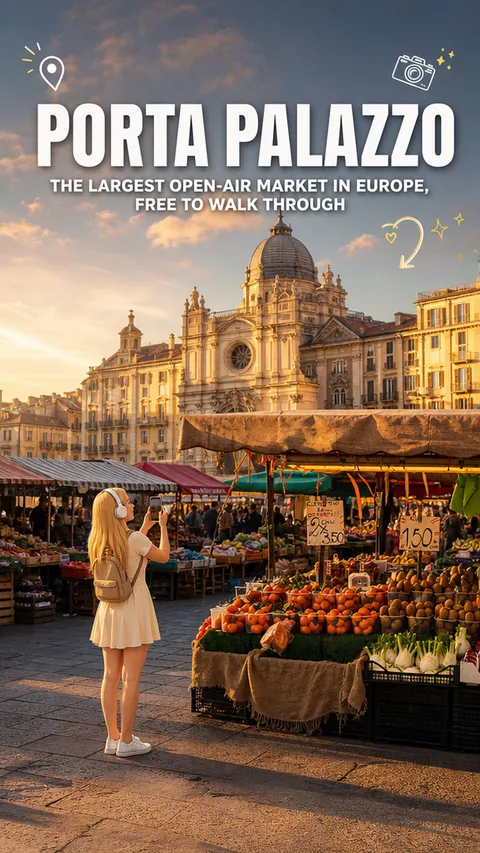
- 1Porta Palazzo Market Free · your start
The largest open-air market in Europe, loud with vendors and crates of produce. Buy a peach, eat it walking, and head south into the quieter royal quarter. Closed Sunday, best before 2 p.m.
- 2Royal Palace of Turin €15 · closed Wed
The Savoy court behind a plain facade: gilded staterooms, the Royal Armoury, a Leonardo in the library. If you pick one big interior, weigh this against the Egyptian Museum later.
- 3Palazzo Madama €10 · closed Tue
A building with two faces, a medieval brick castle at the back and Juvarra's white baroque facade at the front. The exterior and grand staircase are free from the square.
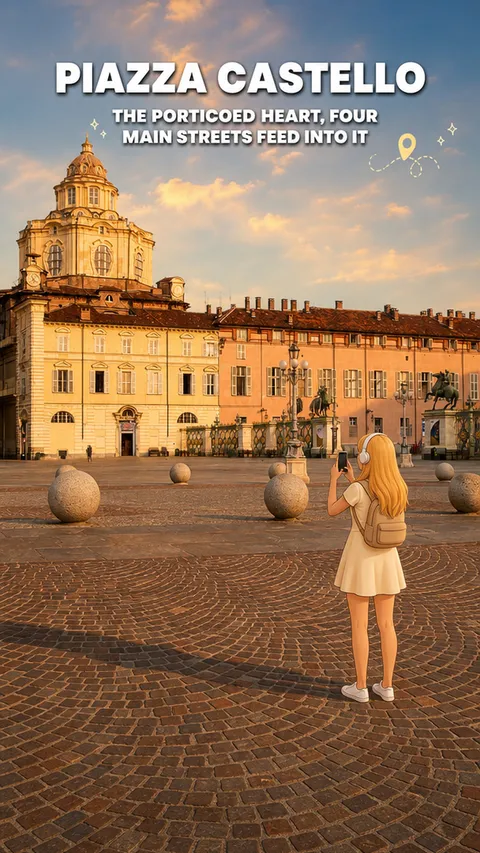
- 4Piazza Castello Free
The porticoed pivot of the city, four main streets feeding in. Grab a counter coffee under the arcades and read the whole city's logic in one turn of the head.
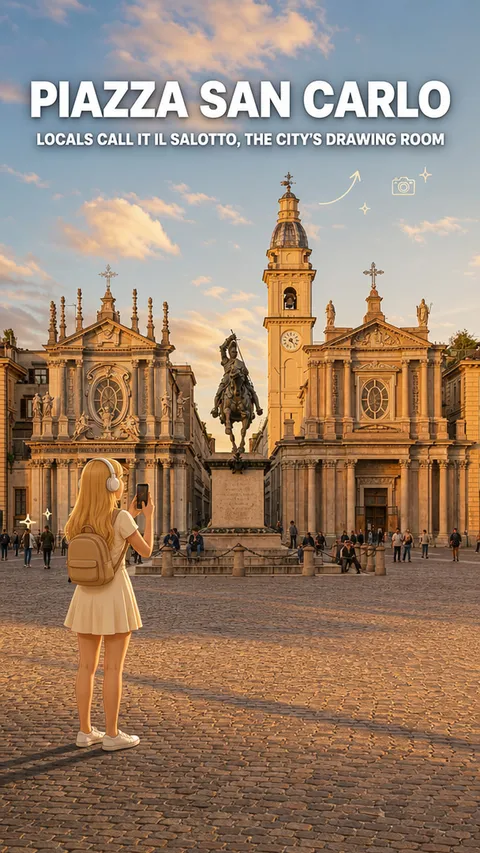
- 5Piazza San Carlo Free
Il salotto, the drawing room, twin baroque churches and historic cafes under the porticoes. Look for the bronze bull underfoot, said to bring luck if you step on it.
- 6Egyptian Museum €18
The reason many people come to Turin at all. Tomb chapels, a hall of granite kings, the intact contents of a real tomb. The one interior you should not rush, book ahead.
- 7Museum of the Risorgimento €10 · closed Mon
Inside Palazzo Carignano, the chamber where Italy's first parliament sat. History buffs go in; if the Egyptian Museum filled you up, admire the curved baroque facade for free.
- 8Galleria Subalpina Free
A small doorway opens into an 1874 glass-roofed arcade with marble floors and old cafes. A two-minute breather and a photo, then east down Via Po toward the spire.
- 9Mole Antonelliana Lift ~€9 · closed Tue
The symbol of Turin, with a glass lift up to a panoramic terrace and the Cinema Museum below. Its view overlaps your final viewpoint, so skip the lift if budget is tight.
- 10Gran Madre di Dio Church Free
Cross the Po and the domed, Pantheon-style church rises ahead, wrapped in Turin's Holy Grail legends. The view back over the bridge with the Mole is a classic postcard.
- 11Monte dei Cappuccini Free
A short climb to the Capuchin terrace and the whole reward of the walk: the Po, the grid, the Mole, and the Alps on a clear day. Time it for late afternoon and sit.

It runs in your browser, no app and no download. A voice guide walks the loop with you and leads a real conversation as you go: it greets you, tells the story between stops, asks what you actually want to see, and adapts. It is not a recording and not an audioguide. The map and step-by-step navigation get you from each stop to the next.
That whole line is our free, self-guided Turin walking tour, and because it can be launched from any of its stops, you do not backtrack to find an official start, you just begin where you are. You open it the moment you reach the centre and it leads the route with you from Porta Palazzo through Piazza Castello, the Egyptian Museum, the Mole and across the river to the viewpoint. It runs in your browser, with no app and no download. A voice guide walks the route and holds a real conversation as you go: it greets you, tells the story between stops, asks what you actually want to see, and shapes the rest of the walk around your day. It is not a recording and not an audioguide. The map and step-by-step navigation get you from square to square without squinting at Google Maps. See the full route on the Turin walking tour page, and you get 100 free credits to try it.
Insider Tips for the Turin Day Trip
A Turin day has its own rhythm, and a few habits make it smoother. Book the Egyptian Museum and the Mole lift online before you leave Milan, because both regularly sell out and the walk-up queue can swallow an hour. Aim your visit at Thursday to Sunday so no key museum is closed on you. And drink your coffee standing at the counter: a caffè al banco is about €1.20 on your feet, and double or more the moment you sit down under the porticoes.
Do
- Book the Egyptian Museum and Mole lift online before you travel
- Come Thursday to Sunday to dodge the museum closing days
- Try a bicerin (espresso, chocolate and cream, never stirred) in a historic cafe
- Walk the 18 km of porticoes, they keep you dry and shaded across the centre
- Do a short chocolate crawl near the Egyptian Museum (Gobino, Caffarel, Castagna)
- Save the Monte dei Cappuccini panorama for late-afternoon light
Don't
- Don't drive into the ZTL, the camera fines get mailed abroad
- Don't visit on a Monday or Tuesday and expect the big museums open
- Don't try to see everything, pick two or three and enjoy them
- Don't stir the bicerin, sip from the top and let the layers blend
- Don't plan Porta Palazzo for a Sunday, the market is shut
- Don't skip the chocolate, it is genuinely a reason people come
Two timing traps decide your day. First, museum closures: the Mole shuts on Tuesdays, the Royal Palace on Wednesdays, and the Egyptian Museum closes early at 2 p.m. on Mondays, so plan Thursday to Sunday for the fullest visit. Second, the Egyptian Museum sells timed slots that book out days ahead, especially at weekends, so reserve online before you get on the train rather than hoping to walk in.
More day trips from Milan
Out in the morning, back in time for dinner. Every route here fits in one full day.
What the Milan to Turin Journey Feels Like
This is the part no timetable captures. The ride out is genuinely easy, a fast quiet train slicing west across the plain toward the foot of the Alps, the kind of comfortable hour that vanishes. Then the station, the walk into the centre, and the moment the porticoes close over your head and the first monumental square opens up. People who make this trip remember the light more than anything: the low afternoon sun catching the palace facades on Piazza Castello, and the whole city, the Po, and the jagged line of the Alps laid out from the Monte dei Cappuccini terrace at the end of the day. The mountains are the thing Milan cannot offer, visible from half the shopping streets in the centre.
The other thing people remember is how un-touristy it feels. Turin does not perform for visitors the way Venice or Florence do. You get the real rhythm of an Italian working city: a bicerin sipped slowly and unmixed the way the waiter tells you to, a counter espresso for a euro-twenty, a plate of vitello tonnato or agnolotti al plin in a wood-panelled piola that feels like eating in someone's grandmother's kitchen. The chocolate is a genuine event here, not a gimmick. Gianduia, the chocolate-hazelnut paste that became Nutella, was invented in this city, and so was vermouth, a few streets from where you are standing.
Come for the Egyptian Museum if that is what pulled you here, there is no shame in it, but you stay for Turin itself, for the porticoes and the squares and the mountains at the end of the streets. The honest line to end on is that ten or twelve hours is plenty to fall for the city and just enough to leave you plotting a proper weekend. That is the only real catch: Turin makes you want to come back.
Milan to Turin: Your Questions Answered
Can you do Milan to Turin as a day trip?
Yes, and it is one of the easiest day trips from Milan. The high-speed train takes about an hour each way, and as little as 36 minutes non-stop, so an early departure and an evening return leave you ten to twelve hours on the ground. The historic centre is a compact, flat grid stitched together by porticoes, so a single day comfortably covers two or three major sights, a long lunch and the sunset viewpoint.
How long is the train from Milan to Turin?
As little as 36 minutes on a non-stop Italo, and around 45 minutes to an hour on a standard high-speed Frecciarossa, between Milano Centrale and central Turin. Regional trains take roughly 1h45 to 2h and cost only marginally less, so they rarely make sense for a day trip.
How much does the Milan to Turin train cost?
High-speed fares are dynamic and start around €8.90 booked in advance, with the typical window sitting around €15 to 30 and same-day walk-up fares higher. Regional trains start from about €9.90. Italo's Day Return offer and youth, senior and family fares can cut the price further.
Which Turin station should I get off at?
Most high-speed trains run to Torino Porta Susa, the main station, and many also call at Torino Porta Nuova, which sits right in the city centre at the foot of Via Roma. Both are a short walk into the centro. Check your ticket, and compare fares from both since they sometimes differ.
What are the first and last trains?
Sensible departures run from about 7:00 to 8:00 a.m. out of Centrale, getting you to Turin by roughly 8:00 to 9:00. The last sensible high-speed trains back leave around 8:00 to 9:00 p.m., with a few running later still. Plan around the second-to-last service rather than the very last one to keep a cushion.
What is the one thing I must not miss in Turin?
The Museo Egizio, the Egyptian Museum. It is the oldest museum in the world devoted to ancient Egypt and second only to Cairo by depth of collection, with over 40,000 artifacts. Book a timed entry online in advance, give it at least two hours, and do not try to power through every floor.
What day of the week is best for a Turin day trip?
Thursday to Sunday. The Mole Antonelliana is closed on Tuesdays, the Royal Palace on Wednesdays, and the Egyptian Museum closes early at 2 p.m. on Mondays. Come later in the week and every major sight is open for a full day.
Is the bus or car a good alternative to the train?
Not really. The bus is a little cheaper on the headline fare, from €3.99 on Itabus, but it takes about two hours and leaves from Milano Lampugnano rather than Centrale. A car means Milan traffic, roughly €21 to 30 in fuel, tolls and parking each way, ZTL fines in the historic core and a parking hunt. The train is faster, drops you in the centre, and lets you drink at lunch.
Plan Your Turin Day Trip
You have the train sorted, which is the part most people get wrong. Now make the hours on the ground count with our free, self-guided Turin walking tour: open it the second you reach the centre, and start the route wherever you are standing. A voice guide leads the walk with you from Porta Palazzo to the Egyptian Museum, the Mole and the riverside viewpoint, holding a real conversation as you go, all in your browser with no app and no download. You get 100 free credits, and the full route is on the Turin tour page.
