
Milan to Bologna Day Trip: Worth the Hour on the Train?
One hour of fast train buys you Italy's food capital for a full day. Milano Centrale to Bologna Centrale runs in about an hour on a Frecciarossa or Italo, more than eighty a day, and the medieval core is a short walk from the platform. Here is the honest day plan, the one fare trick that halves the price, and a free, self-guided walking tour for the hours on the ground.
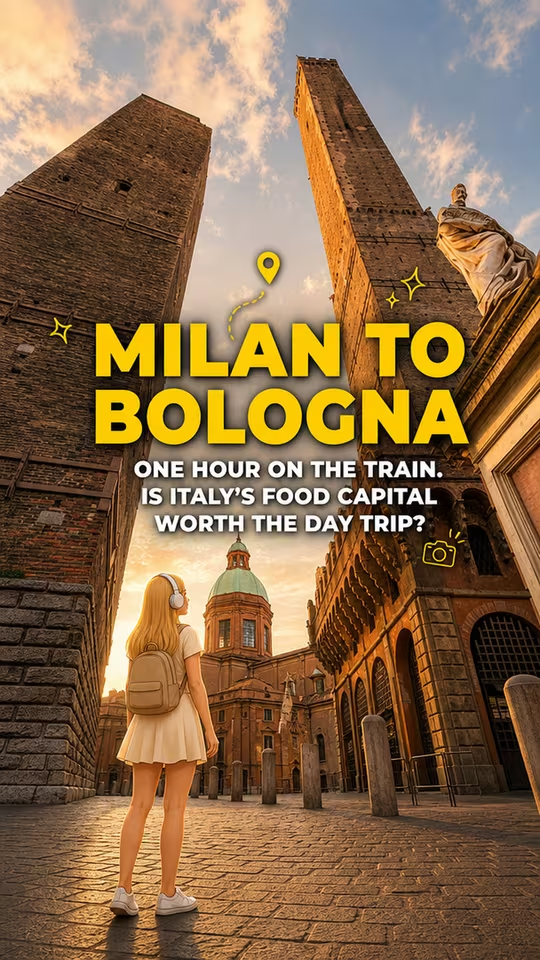
The Quick Answer: Milan to Bologna
Take the fast train, and do not overthink the rest. Milano Centrale to Bologna Centrale runs in about one hour to 1 hour 15 minutes on a high-speed Frecciarossa or Italo, and because this is the trunk line where half of Italy's rail traffic funnels together, you get an enormous number of departures. Trenitalia alone runs well over sixty fast trains a day here, Italo adds roughly twenty more, and in the morning they leave every 15 to 20 minutes, so you effectively turn up and go. Book a couple of weeks out and Italo advertises fares from about €12.90, with typical high-speed tickets landing somewhere in the €9 to €30 band. Leave it to the morning you travel and dynamic pricing punishes you, which is the single reason to book ahead. The arrival is the quiet luxury: Bologna Centrale sits on the northern edge of the old town, a short walk or a few city-bus stops down Via dell'Indipendenza to Piazza Maggiore, so you are on medieval cobbles almost the moment you step off. Is one hour of train worth a whole day? For the food alone, yes. This is the birthplace of tagliatelle al ragù, tortellini in brodo, and mortadella, all of it wrapped in kilometres of porticoes that keep you dry whatever the sky is doing.
| Question | Answer |
|---|---|
| Fastest journey time | ~1h to 1h15 nonstop (Frecciarossa ~1h06, Italo ~1h02) |
| Frequency | Every 15 to 20 min in the morning, 80+ fast trains a day between both operators |
| Price from | ~€12.90 Italo advance, typical high-speed €9 to 30, much higher same-day |
| Operators / how | Trenitalia (Frecciarossa) and Italo, both nonstop. Regional, bus, and car are all slower |
| First / last | Early fast trains from around 6:00 to 6:30 a.m., last ones back run late evening |
| Worth it as a day trip? | Yes. Short ride, painless arrival, the best eating in Italy |
Is the Milan to Bologna Day Trip Worth It?
Most Milan day trips make you weigh scenery against effort. Bologna barely asks the question. The ride is short, the arrival is easy, and the historic centre is so tightly packed that you could throw a stone from Piazza Maggiore and hit three of the sights on any sensible walk. This is a working university city, red-roofed and arcaded end to end, and it does not perform for tourists the way Verona or the lakes sometimes do. After Milan's polished, business-first pace, that change of texture is the whole reason to come. Bologna is not overrun the way Florence is, and it keeps the everyday feel of a real Italian city rather than a set dressed for visitors.
The best of Bologna, stop by stop


The case for going is really a case about food and rhythm. Bologna's nickname is La Grassa, the fat one, and it earns it: this is where ragù, tortellini, and mortadella were actually invented, and the Quadrilatero market lanes just off the main square are still lined with salumerie and fresh-pasta counters rather than souvenir stalls. Layer on the oldest university in the Western world, founded in 1088, an anatomical theatre carved entirely from spruce, the leaning medieval towers, and porticoes that earned UNESCO status in 2021, and a single day fills itself without strain.
One hour of fast train, a short walk in, and you are eating the real ragù where it was invented.
The honest counterpoint is not logistics, it is appetite and ambition. Bologna rewards eating and wandering more than ticking off blockbuster museums, so if you need a marquee art gallery like the Uffizi to feel a day was worth it, this is not that trip. And there is one live caveat worth knowing before you build your day around it. As of late 2025 the leaning Garisenda tower has been fenced off over lean and stability concerns, with restoration ongoing and a reopening not expected until 2028, and the taller Asinelli climb has been affected too. Treat the tower ascent as a maybe rather than a certainty and check the current status. None of that touches the food, the squares, or the porticoes, but it does mean the postcard rooftop climb might be closed the day you turn up.
Skip it if you need a blockbuster museum to justify the day. Bologna is for eating and wandering.
Our call: for anyone with three or more days in Milan who wants one genuinely delicious, unpretentious Italian city day, Bologna is close to the perfect pick. Go for the ragù, the porticoes, and the squares, treat the tower climb as a bonus if it happens to be open, and you will still have hours to spare.
Good fit if you...
- Have three or more days in Milan and want a real city day, not a photo stop
- Care about food more than museums (this is the best eating in Italy)
- Want a short ride and a day that works rain or shine under the porticoes
- Like flat, walkable, pedestrian centres where everything is close together
Skip it (save Bologna) if you...
- Need a marquee art museum to feel the day was worth it
- Are set on climbing the Asinelli tower (check it is open first)
- Have one flawless-weather day better spent on Como or Garda
- Only eat lightly and are indifferent to pasta, salumi, and wine
How to Get from Milan to Bologna by Train
There are four ways to cover the roughly 210 kilometres from Milan to Bologna, and for a day trip the high-speed train wins so clearly there is almost nothing to weigh. The only genuine decision is when to buy, because the fare swings far more than the timetable does.

| Mode | Time | Price | Verdict |
|---|---|---|---|
| High-speed train (Frecciarossa / Italo) | ~1h to 1h15 | ~€12.90 advance, higher same-day | WINNER. Centrale nonstop, 80+ a day, then a short walk into the centre |
| Regional / slow train | ~2h40 to 2h45 | Cheaper, but slow | Only every ~4 hours and far slower. No source recommends it for a day trip |
| Bus (FlixBus / ITA Bus) | ~2h35 to 2h45 | ~€4.99 to 11 | The cheapest option, but slow and only every ~4 hours from San Donato |
| Car (A1 motorway) | ~2h to 2h25 | ~€14 to 21 fuel and tolls, plus parking | Pointless. 213 km, a ZTL centre, and sober all day |
The slow train deserves one honest line: it exists and it is cheaper, but at two hours forty each way and a departure only every four hours or so, it eats the day for a saving that vanishes once the fast train sells an advance seat from around €12.90. The bus is genuinely the cheapest way at €4.99 to €11, but FlixBus leaves from Milano San Donato on metro line M3 rather than the central station, takes two and a half hours plus, and runs only every four hours, so it suits a tight budget rather than a day where hours on the ground matter. Driving is worse again for a day trip: it is roughly 213 kilometres down the A1, and Bologna's historic centre is a limited-traffic zone (ZTL) where an unregistered car earns a fine, with parking pushed out to places like Piazza VIII Agosto near the station. You would also spend a day in the food capital unable to drink the Lambrusco. The train drops you minutes from Piazza Maggiore, lets you eat and drink properly, and is quicker than everything else by an hour or more.
The train is the only mode that turns a hundred-mile trip into a coffee and a stroll into the square.
The Train in Detail
Two high-speed operators run this corridor and take almost exactly the same time. Trenitalia's Frecciarossa and the private Italo both leave Milano Centrale and reach Bologna Centrale nonstop in around 1h02 to 1h06 on the fastest services, up to about 1h15 on others. Because this is the trunk line where the Milan, Turin, Venice, Florence, Rome, and Naples routes all converge, the combined frequency is very high: better than eighty fast trains a day, leaving every fifteen to twenty minutes through the morning. Italo also serves Milano Rogoredo on the southern edge of the city, handy if you are staying that side. Centrale itself is a vast, busy station, so leave time to read the departures board and find your platform. One useful local habit: look for your train by its departure time and train number, not just the word Bologna, since your service may be listed under a final destination like Roma or Napoli that merely calls at Bologna on the way.
The arrival is easy in a way that makes the trip. Bologna Centrale sits at the northern edge of the old town, close to the ring road and served by several city buses, and from the front of the station it is a short, flat walk of roughly fifteen minutes straight down Via dell'Indipendenza to Piazza Maggiore, past shops and porticoes the whole way. If you would rather not walk, the city buses run the same axis into the centre in a few minutes. Both operators carry luggage at no extra charge, with overhead racks and space at the ends of the carriages, so travelling light for the day is simple.
Frecciarossa or Italo, which to book?
Carry no brand loyalty here. Frecciarossa and Italo run near-identical nonstop journeys on this route, both with air conditioning, power sockets, and Wi-Fi, so choose purely by price and departure time for your exact slot. Italo advertises the lowest floor fares on this corridor, from about €12.90, and Frecciarossa usually runs slightly more services across the day. The one thing that actually moves the needle is not the operator, it is how far ahead you book.
| Option | Time | Price | Best for |
|---|---|---|---|
| Frecciarossa (Trenitalia) | ~1h06 to 1h15 | Dynamic, cheapest booked early | Slightly more departures, widest schedule |
| Italo | ~1h02 to 1h15 | From ~€12.90 advance | Often the lowest floor fare, same journey |
Skip a same-day walk-up unless you have no choice. Because both operators use dynamic pricing, a seat bought on the morning you travel can cost several times an advance fare for the identical train. Buy direct on the official Trenitalia or Italo app rather than through a reseller, which keeps changes simple and avoids added commissions.
Booking Strategy
High-speed fares on this line are dynamic, so the biggest lever on price is how early you buy. The cheapest advance fares, the ones near €12.90 on Italo, are limited and sell first. Book late and the same seat can cost two or three times as much, which every source agrees is the classic mistake on this route. As soon as your date is fixed, book direct on Trenitalia or Italo. For the return, note that a cheap high-speed fare is tied to a specific train, so if you want a loose evening you either buy a slightly dearer flexible fare for the way home or simply accept a fixed return time and plan your day around it. Aim the return at a second-to-last departure rather than the very last one, so a long dinner never turns into a sprint.
Booking checklist
- Book as early as you can on the official Trenitalia or Italo site or app, choosing Milano Centrale to Bologna Centrale.
- Compare both operators for your exact departure window. The journeys are the same, so let price and timing decide.
- Take an early train out, around 6:30 to 8:00 a.m., to reach Bologna by around nine and bank a full day.
- Your high-speed e-ticket already carries a reserved seat and needs no validation. There is nothing to stamp on the platform.
- Expect a late track assignment at Centrale. The binario often shows only minutes before departure, which is normal for a station this size.
- If you end up on a cheap regional paper ticket instead, validate it in the platform machines before boarding, or risk a fine.
Bologna in One Day
Here is the part most day-trip guides bury, and it is the whole point: you do not need to plan a route. The train sets you down at Bologna Centrale, you walk the flat fifteen minutes down Via dell'Indipendenza, and Piazza Maggiore opens up in front of you. From there you open our free, self-guided Bologna tour on your phone and start it from wherever you are standing. The voice guide takes the planning off your hands and walks the city with you, stop by stop, so the moment you reach the square becomes the first beat of the day rather than a map problem. No route-wrangling, no "now where to next", just the city and a guide that talks you through it.

The time math
Take an early train, around 6:30 to 8:00 a.m. out of Centrale, and you are on Piazza Maggiore by roughly nine, which is exactly the target for having the city to yourself before the day fills up. The last fast trains back to Milan run late into the evening, but book the return around a second-to-last departure so you keep a cushion. Even a cautious plan leaves you ten or more usable hours on the ground, which is far more than the compact centre needs. The core walking loop is only 3.4 kilometres and about two hours of actual walking, so the surplus hours go where they should in Bologna: to the table, and to the towers, the churches, and the market lanes in between.
What you'll see
The historic centre is flat, tight, and porticoed, so a single day covers the lot without rushing. Hours and prices shift, so confirm the ticketed sights on their official channels before you go:
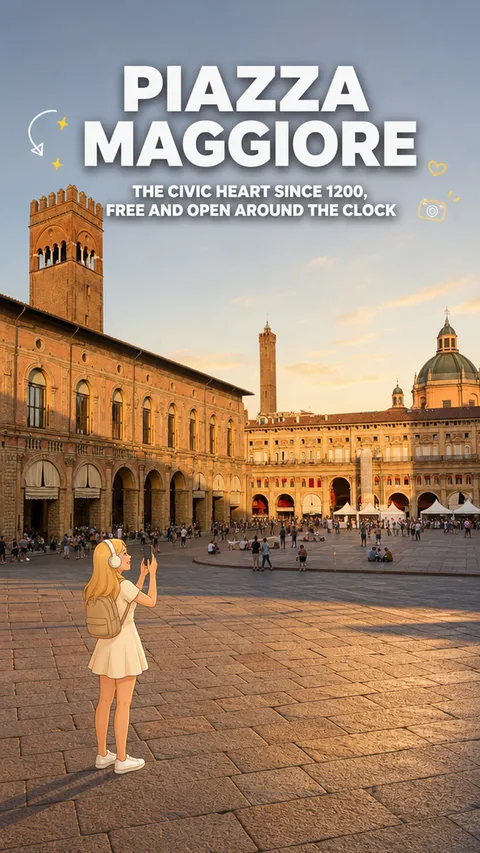
- Piazza Maggiore (free, open 24h): the civic heart since 1200, ringed by the Gothic and medieval palaces and the great basilica. In summer it becomes a giant open-air cinema. This is where you orient yourself.
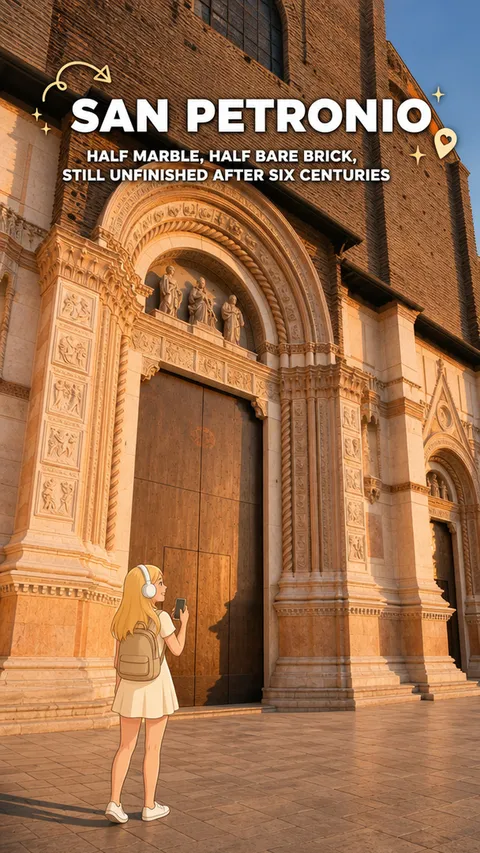
- Basilica di San Petronio (free entry, ~€2 to take photos, roughly €5 for the rooftop terrace): the enormous half-marble, half-brick church on the square, home to the roughly 67-metre Cassini Meridian, the longest indoor sundial in the world. Cover shoulders and knees or you may be turned away.
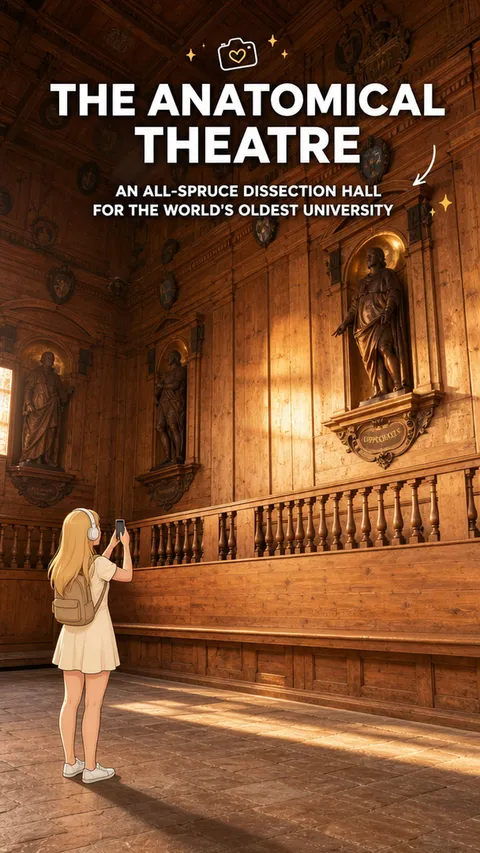
- Archiginnasio and its anatomical theatre (building free, theatre ~€3, weekend booking advised): the old university seat, whose all-spruce 17th-century dissection hall with its "skinned men" statues is one of the strangest rooms in Italy.
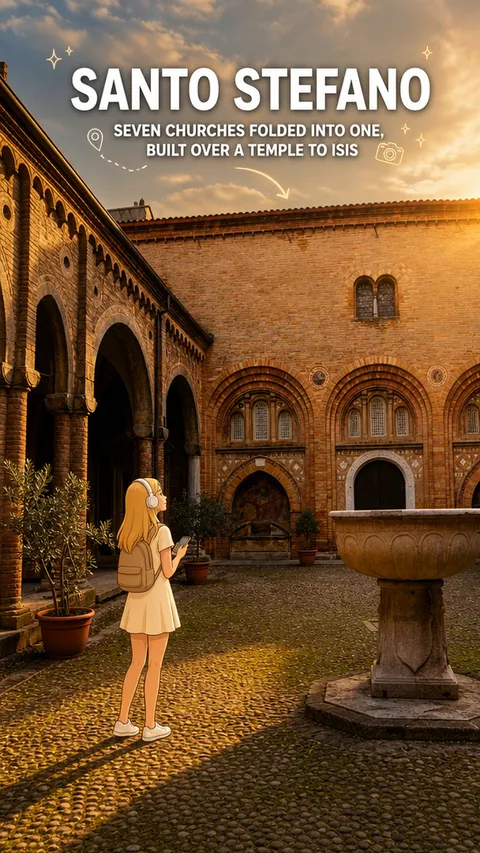
- Basilica di Santo Stefano (free, closes midday ~12:30 to 14:30): not one church but a complex of interconnected chapels, some 5th-century, built over a temple to Isis, wrapped around the quiet Courtyard of Pilate. Come after 2:30 p.m. to dodge the lunch closure. The triangular piazza outside is one of the loveliest in the city.
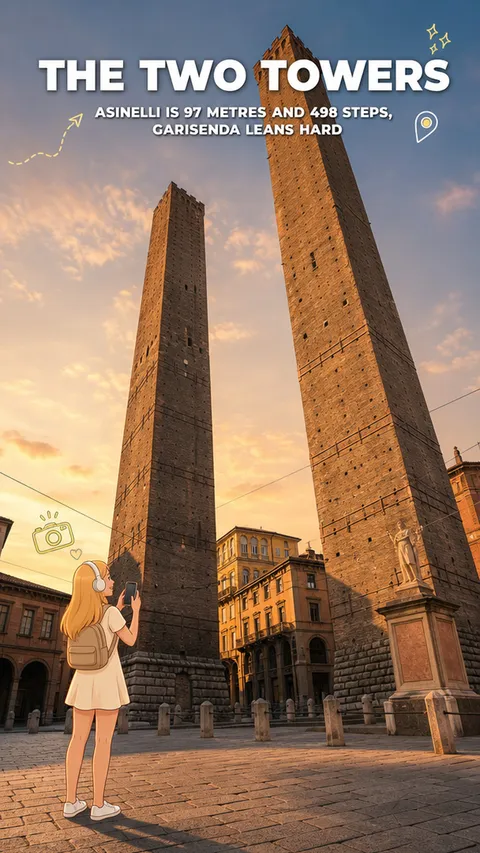
- Two Towers (Asinelli climb ~€5 when running, check it is open): the leaning medieval landmarks. The 498-step Asinelli climb gives the definitive red-rooftop panorama when it is running, though ongoing safety works may keep it closed.
- Quadrilatero market (free to browse): the medieval grid of food lanes east of Piazza Maggiore, still full of salumerie, cheese counters, and fresh-pasta shops like the famous Sfoglia Rina. A cheap mortadella sandwich here is the best lunch in the city.
- The porticoes (free): 62 kilometres of covered arcades city-wide, UNESCO-listed since 2021, with the 3.8-kilometre Portico di San Luca and its 666 arches climbing to the hilltop sanctuary if you want a longer add-on.
The route the tour walks with you
Instead of a generic "see the square, then the towers" list, you walk one efficient loop and the tour walks it with you. Because it launches from any of its stops, you never backtrack to find an official start, you just begin where you are standing. This is the real nine-stop order, looping south from Piazza Maggiore through the university quarter to Santo Stefano and back north past the towers and the hidden canal, so you barely double back:
- 1Piazza Maggiore Free · your start
The vast central square where you arrive from the station. Get your bearings under the palaces, then step across to the giant brick basilica on the south side.
- 2Basilica of San Petronio Free entry
The unfinished half-marble, half-brick giant, with the world's longest indoor meridian line running across the floor. Cover shoulders and knees to go in.
- 3Archiginnasio Building free
The old seat of the world's oldest university, hiding the spruce-wood anatomical theatre upstairs. Look for the holes where students once peeked into the packed dissection room.
- 4Basilica of San Domenico Free
A calmer church on a residential square, with three tiny marble figures carved by a young Michelangelo on the saint's tomb. Stand close, there is rarely a crowd.
- 5Basilica di Santo Stefano Free · closed 12:30 to 14:30
Seven churches folded into one compound over a former temple to Isis, wrapped around the Courtyard of Pilate. Give the interconnected rooms fifteen minutes, and mind the lunch closure.
- 6Two Towers Climb ~€5 if open
The leaning medieval towers, Asinelli tall and climbable when running, Garisenda fenced for restoration. The classic photo is 50 metres east down Strada Maggiore, looking back.
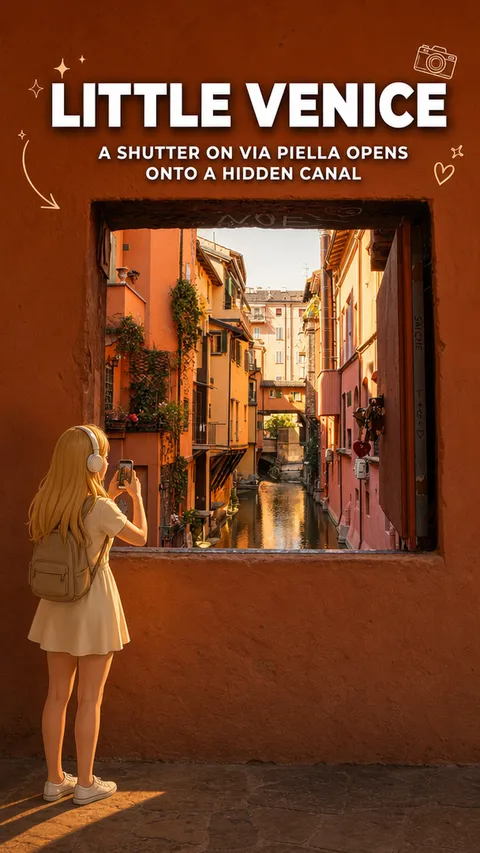
- 7Finestrella di via Piella Free
A small wooden shutter on an ordinary wall that opens onto a hidden canal, the reason locals call this corner Little Venice. Easy to miss, so watch for it.
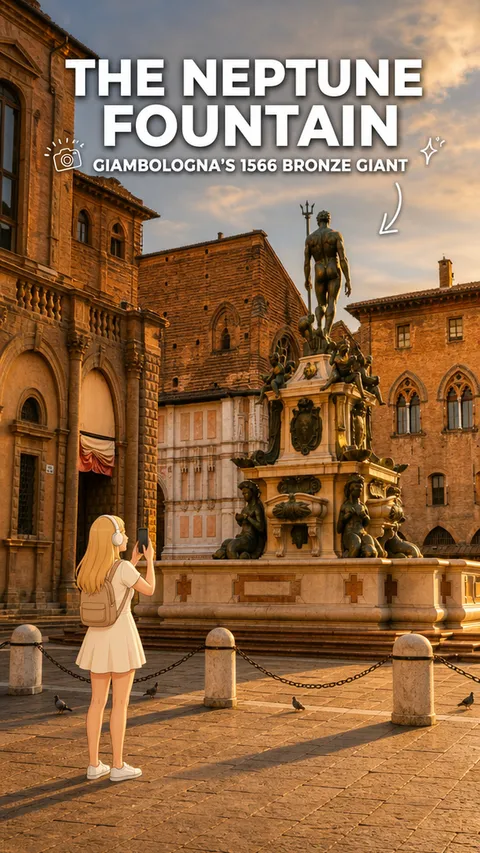
- 8Neptune Fountain Free
Giambologna's 16th-century bronze beside Piazza Maggiore, whose trident inspired the Maserati logo. Line it up from the library steps for the famous optical trick.
- 9Palazzo del Podestà Free
The oldest palace on the square, its portico hiding a whispering gallery. Stand in one corner and murmur into the stone, and a companion in the opposite corner hears every word.


It runs in your browser, no app and no download. A voice guide walks the loop with you and leads a real conversation as you go: it greets you, tells the story between stops, asks what you actually want to see, and adapts. It is not a recording and not an audioguide. The map and step-by-step navigation get you from each stop to the next.
That whole loop is our free, self-guided Bologna walking tour, and because it can be launched from any of its stops, you do not backtrack to find an official start, you just begin where you are. You open it the moment you reach Piazza Maggiore and it leads the loop with you from San Petronio through the Archiginnasio and Santo Stefano to the Two Towers and the hidden canal. It runs in your browser, with no app and no download. A voice guide walks the route and holds a real conversation as you go: it greets you, tells the story between stops, asks what you actually want to see, and shapes the walk around your day. It is not a recording and not an audioguide. The map and step-by-step navigation get you from portico to portico without squinting at Google Maps. See the full route on the Bologna walking tour page, and you get 100 free credits to try it.
Insider Tips for the Bologna Day Trip
A Bologna day has its own rhythm, and a few habits make it smoother. The city runs on food, so eat where the students and office workers eat, one or two streets off Piazza Maggiore, never at the tourist-priced tables on the square itself. Do not order "spaghetti bolognese", it is not a real dish here: the local plate is tagliatelle al ragù, flat egg noodles with a slow-simmered sauce that is barely tomato at all. Carry a little cash, because the best Quadrilatero market stalls and small salumerie do not always take cards. Use the porticoes as your all-weather insurance: kilometres of covered arcades mean you never need to check the forecast, and in July heat that reaches 35 degrees they are also your shade. And before you build the day around the rooftop panorama, confirm the Asinelli tower is actually open, since restoration work on the leaning towers has closed the climb for stretches.
Do
- Eat one street off the main square, where locals actually go
- Order tagliatelle al ragù, never "spaghetti bolognese", which is not a thing here
- Carry cash for the Quadrilatero market stalls and small delis
- Stay under the porticoes in rain or midday heat, they cover the whole route
- Try the whispering gallery under Palazzo del Podestà early, before the square fills
- Take an early train out to reach the city by nine with the day ahead of you
Don't
- Don't drive into the ZTL, the fines get mailed abroad
- Don't build the day around the Asinelli climb without checking it is open
- Don't hit Santo Stefano at lunch, it closes roughly 12:30 to 14:30
- Don't wear shorts or bare shoulders into San Petronio, you may be refused
- Don't buy a walk-up high-speed ticket if you can book days ahead
- Don't expect a blockbuster art museum, that is not what Bologna is for
The Garisenda tower has been fenced off over stability concerns and the taller Asinelli climb has been affected by the works, so the rooftop panorama may be closed when you visit, with a full reopening not expected until 2028. Check the current status before you plan around it. Separately, San Petronio and Santo Stefano both expect covered shoulders and knees, and Santo Stefano shuts for a midday break, so carry a light scarf and time your churches around lunch.
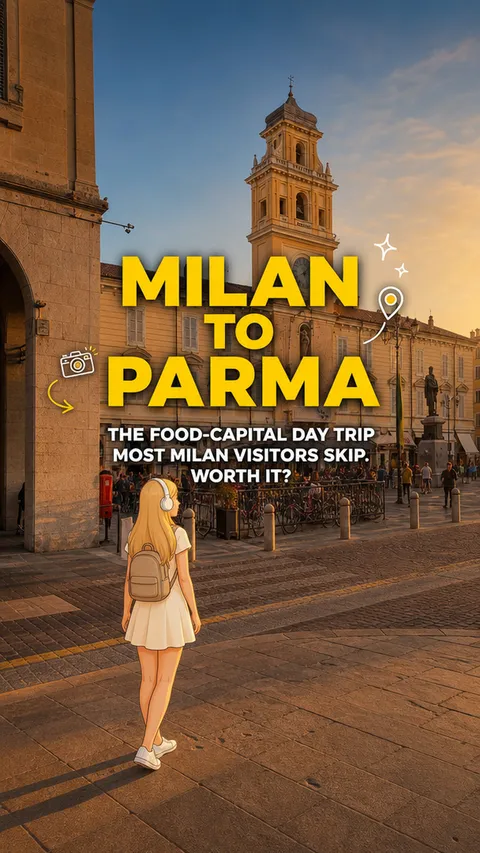
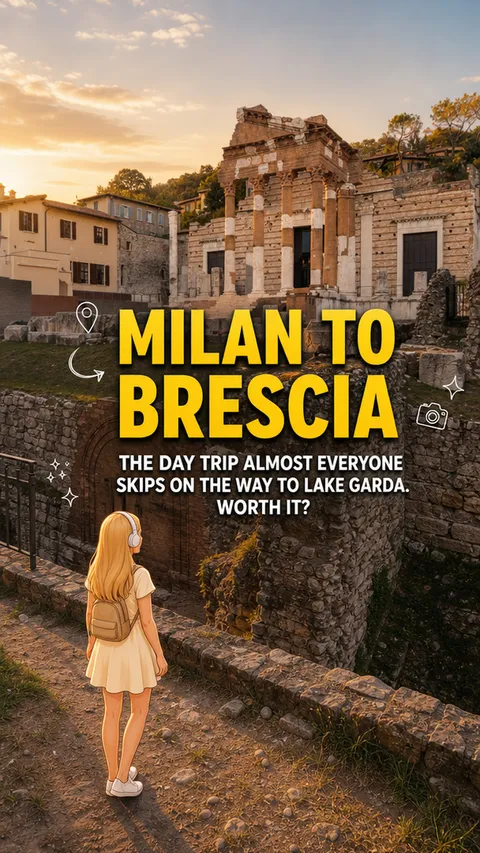
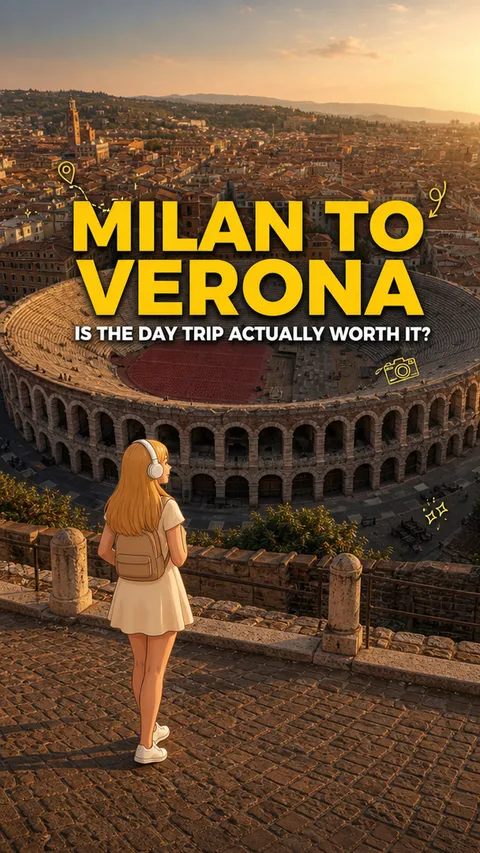
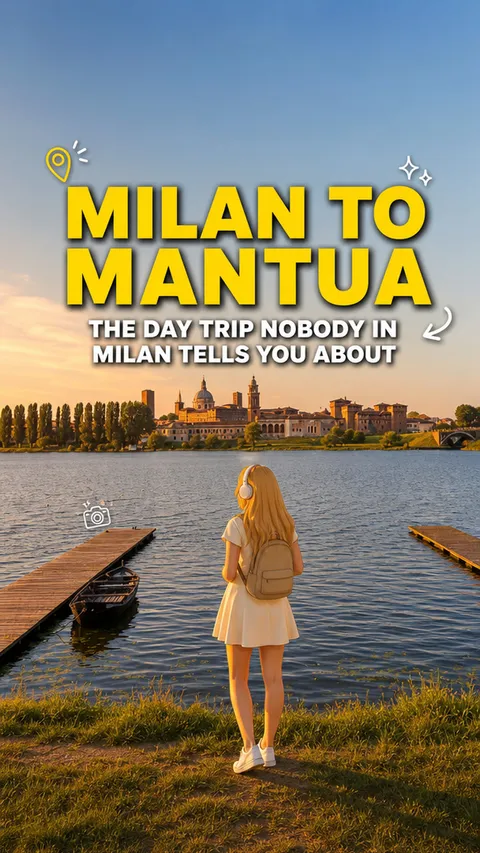
More day trips from Milan
Out in the morning, back in time for dinner. Every route here fits in one full day.
What the Milan to Bologna Journey Feels Like
This is the part no timetable captures. The ride out is genuinely easy, a clean fast train slicing south across the Po plain, business commuters with laptops, and the kind of comfortable that makes an hour vanish before you have finished a coffee. Then Bologna Centrale, the straight walk down Via dell'Indipendenza under continuous arcades, and the slow reveal of Piazza Maggiore at the end of it. Walk into that square and you feel the energy come off every surface: a street performer with a small crowd around them, people on the cathedral steps in the sun, the sense of a city that is always full and always in motion.
The other thing people remember is how unforced Bologna feels. This is a real, lived-in university town, red and warm and busy with students, "La Rossa" for its terracotta rooftops as much as its politics, not a place remade for visitors. You eat a plate of tagliatelle al ragù where the dish was actually invented, you stand an espresso at the bar, and you drink a glass of cool Lambrusco with lunch because you are in Emilia and that is simply what you do. Ask a local where to eat and you might be told, honestly, that everywhere is good. The porticoes turn every walk into a sheltered corridor, so even a sudden downpour becomes part of the pleasure rather than an interruption.
Come for the food if that is what pulled you here, there is no shame in it, but you stay for the whole texture of the place: the leaning towers, the whispered acoustic trick under the old palace, the shutter that opens onto a secret canal, the seven churches folded into one, the calm of Santo Stefano's courtyard that feels like stepping straight into the Middle Ages. The honest line to end on is that a single day is more than enough to fall for Bologna and understand why Italians rate its food above almost anywhere else, and the only thing you will regret is not booking a table for a longer dinner before the train home.
Milan to Bologna: Your Questions Answered
Can you do Milan to Bologna as a day trip?
Yes, and it is one of the easiest day trips from Milan. The high-speed train takes about an hour to 1h15 each way, and Bologna Centrale is a short walk from the historic centre, so an early departure and an evening return leave you ten or more hours on the ground. The compact core is easily covered in a day with plenty of time to eat.
How long is the train from Milan to Bologna?
About one hour to 1 hour 15 minutes nonstop on a Frecciarossa or Italo high-speed train between Milano Centrale and Bologna Centrale, with the fastest services around 1h02 to 1h06. A regional or slow train is much slower, roughly two hours forty, and runs only every four hours or so.
How much does the Milan to Bologna train cost?
High-speed fares are dynamic. Italo advertises advance tickets from about €12.90, and typical high-speed fares sit in the €9 to €30 range depending on how early you book. Buy on the day and the same seat can cost several times as much, so booking a couple of weeks ahead on Trenitalia or Italo is the single biggest saving.
How often do the trains run?
Very often. Trenitalia runs well over sixty fast trains a day on this line and Italo adds around twenty more, and in the morning they leave every fifteen to twenty minutes. You rarely need to plan around a specific departure on the way out.
Frecciarossa or Italo, which is better?
Neither is clearly better, because both run near-identical nonstop journeys of about an hour. Compare the two for your exact departure time and take whichever is cheaper. Italo tends to carry the lowest floor fares on this route, while Frecciarossa usually offers slightly more departures across the day.
Which Bologna station do I arrive at, and how do I reach the centre?
Bologna Centrale, the main station on the northern edge of the old town. From the front it is a flat walk of roughly fifteen minutes straight down Via dell'Indipendenza to Piazza Maggiore, or a few minutes on one of the several city buses that serve the station along the same axis.
Is the Asinelli tower open to climb?
Check before you go. Restoration and stability works on the leaning Two Towers have closed the Garisenda, with reopening not expected until 2028, and have affected the taller Asinelli climb, so the 498-step ascent and its rooftop panorama may not be available. The towers are still worth seeing from the street either way, and the rest of the walk does not depend on the climb.
What should I eat in Bologna on a day trip?
The essentials are tagliatelle al ragù, the original of what the world calls Bolognese, tortellini in brodo, and a mortadella sandwich from a Quadrilatero market stall, ideally with a glass of Lambrusco. Eat one or two streets off Piazza Maggiore rather than on it, where the same dishes cost noticeably more. Do not order "spaghetti bolognese", it does not exist here.
Is the bus or car a good alternative?
Not for a day trip. The FlixBus is the cheapest option at around €4.99 to €11 but takes over two and a half hours from Milano San Donato and runs only every four hours. Driving means 213 kilometres down the A1, a ZTL zone in the centre with fines, awkward parking, and a day unable to drink the local wine. The train is faster by an hour or more, drops you near the main square, and is barely more than the bus if you book early.
Plan Your Bologna Day Trip
You have the train sorted, which is the part most people get wrong. Now make the hours on the ground count with our free, self-guided Bologna walking tour: open it the second you reach Piazza Maggiore, and start the loop wherever you are standing. A voice guide leads the route with you from San Petronio to the Two Towers and the hidden canal, holding a real conversation as you go, all in your browser with no app and no download. You get 100 free credits, and the full route is on the Bologna tour page.
