Best Time to Visit Catania
Month-by-month weather, crowds and prices, plus a full calendar of festivals and events worth planning a trip around.
Best monthsApr, May, Sep, Oct
CheapestJan, Nov
AvoidAug
BusiestJul, Aug
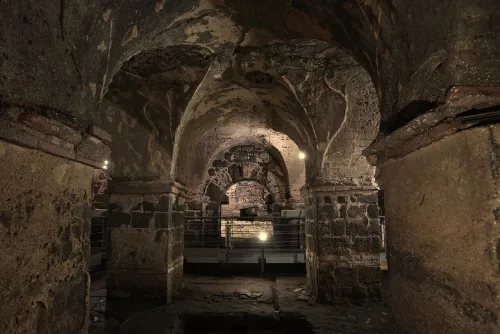
When is the best time to visit Catania?
Come in April, May, September or October: 20-25°C, a city you can actually walk at midday, and the sea still swimmable in early autumn. July and August bring 32-36°C heat and the year's biggest crowds. January is the cheapest and emptiest month, with hotels from €40 and zero queues.
Start our tool and find your best time to visit Catania
Your perfect month
Free · ~30 seconds
or tap a month directly
What matters to you?
And this?
Best overall: May, Sep. May and September are the real sweet spot: warm but walkable days, a swimmable sea, the full cultural calendar, and prices well below the summer ceiling. April and October deliver too, just bring a layer for the cooler evenings.
Best value: Jan, Nov. January and November bring hotel rates around €40-70, practically zero queues anywhere, and blood-orange season in full swing at the Fera o' Luni market. Just steer clear of the Sant'Agata week (3-5 February), when prices triple.
Avoid: Aug. August: 32-36°C afternoons, Ferragosto shutters across neighbourhood restaurants, €150-250 hotels, and a beach you have to reserve on an app and still find packed. The worst value of the year.
- January: Great time, 15°C. This is Catania off its guard, no cruise crowds, no heat, no markup. The students give it energy the rest of the off-season lacks, so it never feels dead. The trade is grey spells and a sea too cold to swim, but for €25 opera and empty streets it is a fair one.
- February: Great time, 16°C. Sant'Agata is the one time Catania goes fully, openly emotional. The salita di Via Sangiuliano on the night of 5 February brings locals to tears, and the whole city moves as one. Time your visit for it or deliberately around it, because the festival week is a completely different city, and price, from a quiet February Tuesday.
- March: Great time, 17°C. March is the last truly uncrowded month before spring fills the calendar. You can walk into the best tables, queue for nothing, and still catch warm, sunny afternoons. The off-season opera is the steal of the year here: a weekday-morning Castello Ursino and an evening at the Bellini for less than a peak-season lunch.
- April: Great time, 20°C. April is gorgeous and no longer a secret, but Catania never gets the crush that Easter brings to Rome or Florence. You get the spring weather, the full cultural calendar, and prices well short of the summer ceiling. Book the Easter weekend ahead, then enjoy a city that feels alive rather than overrun.
- May: Great time, 24°C. May is the month to come if you want warmth without the summer penalty. The light is generous, the evenings are long, and you can still get dinner reservations and walk Via Etnea at noon without melting. It earns its sweet-spot reputation honestly, unlike high summer, which charges triple for worse conditions.
- June: Good time, 29°C. June is the tipping point, busy and warm by day but redeemed by its long, soft evenings. The Catania Summer Fest fills the Villa Bellini gardens with concerts once the sun drops, and that is when the city is at its best. Come for June and you save against July without losing the swimmable sea.
- July: Tough month, 32°C. July is for people who genuinely do not mind 35°C and peak prices to get a swimmable sea and long beach days. Midday is a write-off, no question. But an evening concert at Villa Bellini, or a dawn cable car up Etna before the heat builds, is a completely different and genuinely rewarding Catania.
- August: Tough month, 32°C. August is the one month to genuinely think twice about. You pay the year's top prices for punishing heat, a beach you have to reserve and still find packed, and a city whose authentic neighbourhood fabric thins out as Catanians flee to the coast. The Ferragosto period can feel oddly quiet and shuttered despite the tourist crush.
- September: Good time, 29°C. September is the connoisseur's month. You keep the warm sea and the summer energy but shed the worst of the crowds and roughly 40% of the price. The harvest light on the black-and-white Baroque streets is the best of the year, and dinner tables open up again. This is when Catania feels both alive and yours.
- October: Great time, 24°C. October is Catania returned to itself. The light is golden, the Baroque facades photograph beautifully, the beaches are near-empty, and you can book any table you like. The thunderstorms are dramatic but brief, and the trade for them is a city that feels uncrowded and unhurried at half the summer price.
- November: Great time, 20°C. November is Catania with nothing performed for anyone. No crowds, no markup, just a real Sicilian city in its low season. You trade some grey, rainy spells for the run of the place: empty museums, cheap opera, and a Pescheria that is all locals and no cameras. For a quiet, cheap city break it is hard to beat.
- December: Great time, 16°C. December is Catania at its most domestic and unhurried. There is no tourist show, just presepi in the churches, students back in the bars, and the snow-capped volcano hanging over the city. The short days, dark by 16:30, are the trade, but the festive churches and cheap opera make it a genuinely warm, low-key visit.
Catania weather by month
HighLowRainfall
Jan15°
Feb16°
Mar17°
Apr20°
May24°
Jun29°
Jul32°
Aug32°
Sep29°
Oct24°
Nov20°
Dec16°
| Month | Temp | Rain | Sun | Crowds | Prices | Highlight |
|---|---|---|---|---|---|---|
| Jan | 15° / 8° | 45mm · 7 rainy days | 8.3 h/day | ●○○○○ | ●○○○○ | Feast of Sant'Agata |
| Feb | 16° / 8° | 69mm · 7 rainy days | 8.9 h/day | ●●●○○ | ●●○○○ | Feast of Sant'Agata |
| Mar | 17° / 9° | 67mm · 9 rainy days | 9.9 h/day | ●●○○○ | ●●○○○ | Teatro Bellini Opera Season |
| Apr | 20° / 12° | 31mm · 6 rainy days | 10.8 h/day | ●●●○○ | ●●●○○ | Teatro Bellini Opera Season |
| May | 24° / 16° | 37mm · 5 rainy days | 12.3 h/day | ●●●○○ | ●●●○○ | Teatro Bellini Opera Season |
| Jun | 29° / 20° | 24mm · 3 rainy days | 13.3 h/day | ●●●●○ | ●●●●○ | Teatro Bellini Opera Season |
| Jul | 32° / 23° | 7mm · 1 rainy days | 13.9 h/day | ●●●●● | ●●●●● | Catania Summer Fest |
| Aug | 32° / 24° | 12mm · 2 rainy days | 12.6 h/day | ●●●●● | ●●●●● | Catania Summer Fest |
| Sep | 29° / 21° | 40mm · 8 rainy days | 10.8 h/day | ●●●●○ | ●●●●○ | ViniMilo Wine Festival |
| Oct | 24° / 17° | 100mm · 8 rainy days | 9.4 h/day | ●●○○○ | ●●○○○ | Teatro Bellini Opera Season |
| Nov | 20° / 14° | 91mm · 9 rainy days | 8.0 h/day | ●○○○○ | ●○○○○ | Teatro Bellini Opera Season |
| Dec | 16° / 10° | 39mm · 6 rainy days | 7.8 h/day | ●○○○○ | ●●○○○ | Teatro Bellini Opera Season |
How we score this: weather = long-run climate normals (Open-Meteo), crowds & prices = relative season read, events checked yearly against official dates.
Best time to visit Catania: weather, prices & crowds
Best months for good weather
May, Sep, Oct
May, September and early October give you Catania's best balance: 24-29°C, low rain, and a sea that stays at 23-25°C for swimming without the brutal July heat.
Quietest months to avoid the crowds
Jan, Nov
January and November empty the city out: Castello Ursino is queue-free, La Pescheria is all locals, and you can stand alone under the Cathedral facade on Piazza del Duomo.
Cheapest time to visit Catania
Jan, Nov
January and November are Catania's cheapest months, with mid-range hotels at €40-70, roughly 60% below the August peak, as long as you avoid the Sant'Agata festival week in early February.
Best time for festivals and events
Feb
The Festa di Sant'Agata (3-5 February) is one of the three most-attended religious festivals on earth: 11 gilded candelore carried shoulder-high and white-robed devoti filling Via Etnea through the night.
How many days do you need in Catania?
Catania rewards three full days. The Baroque city centre, La Pescheria and Castello Ursino fill the first two without rushing, and a third day opens up Etna, either by cable car to the high craters or a hike on the lower lava fields. Day trips to Taormina or Siracusa are easy from Catania by train, so a fourth or fifth day extends the reach considerably without changing base.
One day
Lava stone and fish market
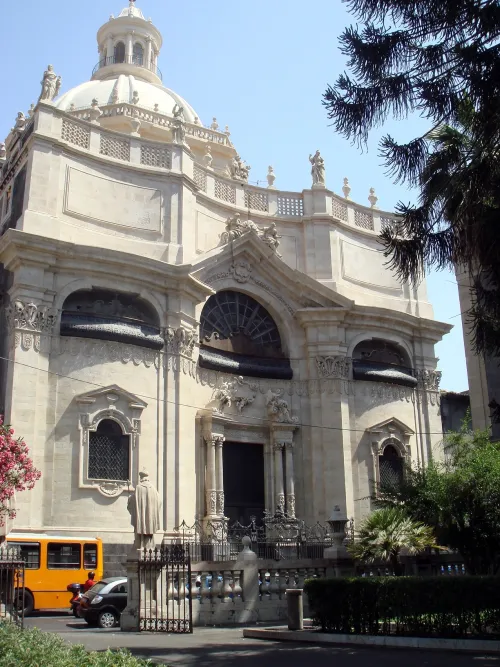
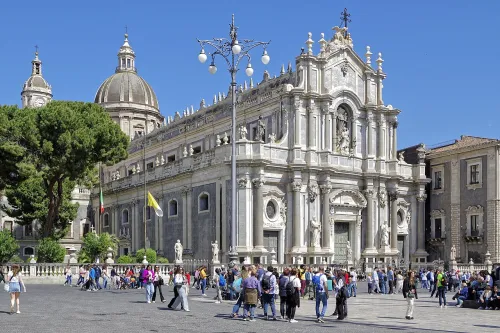
Start at Piazza del Duomo before 9 am, when the Elephant Fountain stands clear of the crowds. Walk the self-guided Catania walking tour, 11 stops across 5 km in around 2.6 hours, taking in the Cathedral of Saint Agatha, Castello Ursino and La Pescheria fish market. Hit La Pescheria before 9 am for the best swordfish and tuna, then climb the Badia di Sant'Agata dome terrace for a roof-level view over the Baroque rooftops.
Two days
Volcano day and opera night
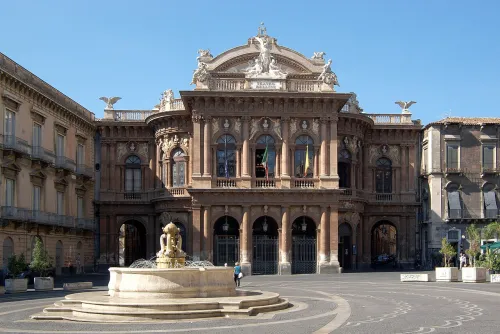
Take the Funivia dell'Etna cable car early, ideally leaving Catania by 7:30 am to beat the queues and the midday heat. The cable car (around €30 return) reaches 2,500 m, with guided crater walks available from there. In the evening, check the Teatro Massimo Bellini program: €25 seats are common outside peak season and the acoustics are exceptional. The streets around Via Teatro Massimo are the best stretch for a pre-show aperitivo.
Three daysRecommended
Baroque coast and Etna wine
Day three works best as a coastal loop north: Acireale for its Baroque churches and seafront caffè, then Aci Trezza for the Faraglioni di Ciclopi sea stacks visible from the promenade, and lunch at one of the harbour fish restaurants. In September and October, the ViniMilo festival in Milo on Etna's eastern slopes is a 30-minute drive and pours exceptional Nerello Mascalese wines alongside street food.
Four days or more
Siracusa, Taormina and deep Sicily
Siracusa is 60 km south by train (around 1 hour 20 minutes) and deserves a full day for Ortigia island and the Greek theatre at the Parco Archeologico della Neapolis. Taormina is an hour north and best on a weekday morning before the tour groups arrive. Beyond these, Ragusa Ibla and the Agrigento Valley of the Temples each justify an overnight stay rather than a rushed day trip.
Best time to visit Catania by traveller type
Same city, different trip. Here's the month that fits how you're travelling.
🧭
Best time to visit Catania for the first time
AprOct
April or October: 20-24°C, no heat stress, queue-free access to the Cathedral, Castello Ursino and La Pescheria, and an easy half-day on Etna. Prices run 35-40% below the summer peak, and October still gives you a 23°C sea.
❤️
Best time to visit Catania for couples
SepOct
Late September or October: golden light on the lava-stone Baroque facades, near-empty beaches, easy dinner reservations, and the ViniMilo wine harvest a 30-minute drive up Etna.
💶
Best time to visit Catania on a budget
JanNov
January or November: mid-range hotels at €40-70, zero queues, cheap Teatro Bellini opera seats from €15, and free blood-orange tastings at the Fera o' Luni market.
🍝
Best time to visit Catania for food and wine
Sep
Late September pulls it all together: the ViniMilo wine festival, the Etna Nerello Mascalese harvest, the last good swordfish at La Pescheria, and the first blood oranges arriving at the stalls.
Worst time to visit Catania
August is the month most worth avoiding in Catania. Afternoon temperatures sit at 32 to 36°C, and African sirocco events can push past 40°C, while Via Etnea's black basalt paving radiates stored heat from late morning with almost no shade north of Piazza del Duomo. Around Ferragosto on 15 August, many neighbourhood trattorias close for one to two weeks, bus frequency is halved, and La Playa beach overflows by 10:30 am despite a mandatory app reservation. Hotel prices run €150 to 250 per night for the privilege, roughly three times the winter rate.
Still worth it for August works if your priority is beach and nightlife rather than sightseeing: the sea is a warm 27°C, the Summer Fest brings concerts to Villa Bellini every evening, and the atmosphere on the waterfront after 20:00 is genuinely alive. Just plan to rest between 11:00 and 17:00 and accept the costs.
Go instead in April, May, September, October, when Catania is at its best.
Best time for a tour of Catania
Catania is a black-lava city best read on foot, and the month you pick decides whether the walk feels like a pleasure or a punishment. April through early June is the sweet spot: highs of roughly 20 to 24 °C, only five or six rainy days, and light that lingers, so you can linger too in Piazza del Duomo by the Elephant Fountain and stroll the long shop-lined run of Via Etnea without wilting. July and August are brutal for walking, with highs near 32 °C and almost no rain to break the glare; the open expanse around Castello Ursino and the unshaded market lanes of La Pescheria turn into a heat trap by mid-morning, and the crowds peak too. Winter swings the other way but stays kind for southern Italy: January and February sit around 15 °C with seven wet days each, cool enough that a brisk loop past the Cathedral of Saint Agatha and into the shade of the Benedictine Monastery feels invigorating rather than cold. October hands you 24 °C and emptied-out streets, a quiet, underrated time to walk.
The real advantage is that with AI Tourguide the clock is yours. On a scorching August day you can start your Catania tour at first light, walk the five kilometres while the lava stone is still cool and La Pescheria is just waking, then duck into a cafe before the sun bites. There is no fixed departure, no guide herding twenty people; a voice-first guide leads the whole way, tells you the stories behind Sant'Agata and the Baroque rebuilt from the 1693 earthquake, asks what you want more of, and adapts. You keep control of pace and breaks, the climate sets your hour.

 +7
+7All 11 stops are already on the map.
You just press start.
You just press start.
 AI Tourguide
You just read the route.
Now walk it with a guide in your ear.
Press start wherever you are, even hundreds of kilometres from Catania, and the guide begins telling its stories right away. In the city, pick any of the 11 stops to start from: it leads you there, then talks with you the whole route, asking, listening, remembering, and shaping the tour around your answers.
11stops5.0km2.6hours11languages
▶Start the tour freeFree to start · Runs in your browser · No app, no download
Catania events and festivals calendar
Annual highlights worth timing a trip around, listed month by month.
January
🎨 Art and cultureTeatro Bellini Opera Season Stagione Lirica Teatro Massimo Bellini
Jan 20 – Dec 31
January to June and October to December
A full opera and ballet season at the Teatro Massimo Bellini, a hall Beniamino Gigli called the finest-sounding in the world.
⛪ ReligiousFeast of Sant'Agata Festa di Sant'Agata
Jan 30 – Feb 12
main days 3-5 February, always fixed
One of the three most-attended religious celebrations on earth.
🎭 CarnivalCarnival of Acireale Carnevale di Acireale
Jan 31 – Feb 17 ~
pre-Lent, late January into February
Billed as Sicily's most beautiful Carnival, held 10 km north of Catania in baroque Acireale.
March
⛪ ReligiousHoly Week Processions Settimana Santa
Mar 29 – Apr 5 ~
the week before Easter, dates move each year with the Easter calendar
Good Friday (3 April) brings solemn religious processions through Catania and the surrounding towns.
April
🎨 Art and cultureCatania Book Festival
Apr 24–26
late April
An international book and culture fair at the Palazzo della Cultura, with more than 300 guests, workshops and panels filling a spring weekend in the city centre.
🎨 Art and cultureFIC Festival (Catania Contemporanea) FIC Festival / Catania Contemporanea
Apr 29 – May 10
late April into early May
An annual contemporary dance, theatre and music festival that takes over piazzas, parks and churches across the city for around ten days in late April and early May.
May
🎨 Art and cultureEtna Comics
May 30 – Jun 2
the last weekend of May into early June
Southern Italy's biggest pop-culture, comics and cosplay festival, drawing more than 80,000 visitors to the Le Ciminiere exhibition centre.
June
🎵 MusicCatania Summer Fest Estate Catania / Summer Fest
Jun 1 – Aug 31
across June, July and August
The municipal summer program, with concerts at the Villa Bellini gardens including big Italian names through the season, plus opera and theatre nights as the evenings finally cool down.
August
🍷 Food and wineViniMilo Wine Festival ViniMilo
Aug 29 – Sep 14
late August to mid-September
A wine-harvest festival in the village of Milo on Etna's eastern slopes, 30 minutes from Catania, pouring 100 labels from volcanic regions worldwide alongside guided tastings, winery visits, street food and music.
September
🍷 Food and wineEtna Grape Harvest Vendemmia Etna
Sep 1–30 ~
mid to late September, shifting with the vintage
The Etna DOC harvest across the volcano's slopes, when wineries such as Benanti, Cornelissen and Passopisciaro open their doors to visitors.
November
🇮 HolidayAll Saints' Day Ognissanti
Nov 1
1 November, fixed
A national holiday when Sicilians visit cemeteries and every pasticceria sells the traditional ossa dei morti biscuits.
December
🇮 HolidayImmaculate Conception Immacolata Concezione
Dec 8
8 December, fixed
A national holiday that marks the start of the Christmas season, when presepi nativity scenes appear in the churches and the festive mood sets in.
Insider tips for visiting Catania
The rules buried in forums, in one place.
- Hit La Pescheria fish market at 7 am, not 10. By 9:30 the best swordfish, tuna and sea urchins are gone and it turns into a tourist photo-walk. The market closes by 13:00-14:00 and is shut all day Sunday, so plan a weekday morning.
- Castello Ursino is free on the first Sunday of the month, but the queue starts forming by 8:30 am for the 9:00 opening, meaning a 45-minute wait in summer. Pay the €8 ticket on a weekday Tuesday morning instead and walk straight in. The museum is closed Mondays.
- On Sant'Agata night (4 February), position matters. For the pre-dawn Candelora departure, claim the corner of Via Etnea and Piazza Stesicoro by 3:30 am. The salita di Via Sangiuliano, the steep candle-lit ascent on the night of 5 February, is the emotional peak, the moment locals openly weep.
- La Playa beach now requires a free digital slot booked up to 48 hours ahead through the Catania Mobility app for its three main free sections. No reservation means you get turned away at peak July and August weekends. Go midweek and skip the booking lottery entirely.
- Avoid Via Etnea between 11:00 and 16:00 in July and August. The basalt paving radiates stored heat and there is almost no shade north of Piazza del Duomo. Do as locals do at the historic kioschi: a seltz con limone e sale, salted sparkling lemon water, for under a euro.
- Teatro Massimo Bellini guided tours run Tuesday to Saturday mornings only, 9:30-13:00, closed Monday and Sunday. Turn up without booking on a Monday and you have wasted the trip. Evening performances follow a separate calendar, so check before you go.
- Do Etna before Catania wakes up. The Funivia dell'Etna cable car (around €30 round trip) at 8:00-9:00 am means cooler air and no queue. In July and August the afternoon wait stretches to 45 minutes, and the last cable car down leaves around 16:45.
- Catanians eat dinner late, 20:30-21:00 is normal. Show up at 19:00 and you get tourist-trap seating and a different menu. The best tables at Osteria Antica Marina by the fish market fill by 20:15, so book ahead or join the queue from 20:00.
Public holidays in Catania
On these dates many shops and offices close, transport thins out, and sights can be mobbed or shut. Plan around them.
| Date | Holiday | What closes |
|---|---|---|
| Jan 1 | New Year's Day | Everything closed: shops, museums, most restaurants. The city is quiet and many places reopen only in the evening. |
| Jan 6 | Epiphany (La Befana) | National holiday: most shops closed and a children's day. Bakeries sell carbone dolce, the sweet sugar coal, and the Christmas season closes out. |
| Feb 4 | Feast of Sant'Agata | Local festival peak (3-5 February): non-tourist commerce effectively shuts, over 600,000 people fill the streets, and roads along Via Etnea, Via Garibaldi and Piazza Stesicoro close for the procession route. Book months ahead or avoid the week entirely. |
| Apr 5 | Easter Sunday | Most shops and restaurants closed, churches busy from 6 am. Processions run across Catania and nearby towns through Holy Week, and hotel prices spike over the Easter weekend. |
| Apr 6 | Easter Monday (Pasquetta) | National holiday: Sicilians picnic outdoors and it is a hugely popular day for Etna day trips. Shops mostly closed, the volcano busy. |
| Apr 25 | Liberation Day | National holiday: shops mostly closed and some museums run reduced hours. Often forms a long weekend (ponte) with the surrounding days. |
| May 1 | Labour Day | National holiday: nearly everything closed, with gatherings around Piazza del Duomo. Plan the day around what stays open. |
| Jun 2 | Republic Day | National holiday: shops closed, military bands and flag-flying in the centre. A quiet day for commerce but a lively one in the squares. |
| Aug 15 | Ferragosto | The peak of the summer exodus: many neighbourhood restaurants and shops close for one to two weeks, bus frequency is halved and Trenitalia runs a reduced timetable. La Playa is at its absolute maximum and the city can feel quieter than expected as locals head to the coast. |
| Nov 1 | All Saints' Day (Ognissanti) | National holiday: shops closed and Sicilians visit cemeteries. Pasticcerie sell ossa dei morti biscuits, and the city is quiet and local. |
| Dec 8 | Immaculate Conception | National holiday marking the start of the Christmas season: shops closed, churches open all day, and presepi nativity scenes appear. A mini long weekend if it falls midweek. |
| Dec 25 | Christmas Day | Everything closed, a family-only day. Tourist-facing restaurants are the rare exception, so book any Christmas meal well ahead. |
| Dec 26 | St. Stephen's Day | National holiday: most shops closed, though some reopen. University students are back in town and the city stays lively in a low-key, local way. |
Catania month by month
January in Catania
High15°C / 59°F
Low8°C
Rain45mm / 7 rainy days
Sun8.3 h/day
Daylight10 h/day
Humidity73%
Crowds●○○○○Prices●○○○○
January is the cheapest, quietest month of Catania's year. Daytime highs sit near 15°C with bright sun, and the 60,000-strong student university keeps the cafes and bars lively even in the post-holiday lull. Rain comes in occasional spells rather than all day. Museums and the Cathedral are close to queue-free, and the Teatro Bellini opera season is in full swing, with Aida premiering on 20 January.
The vibe This is Catania off its guard, no cruise crowds, no heat, no markup. The students give it energy the rest of the off-season lacks, so it never feels dead. The trade is grey spells and a sea too cold to swim, but for €25 opera and empty streets it is a fair one.
Don't miss Blood oranges, the Arancia di Sicilia IGP from the Etna foothills, are at their peak, piled high at the Fera o' Luni market for free tastings. With snow on Etna's summit visible from December to March, the volcano makes a stunning white backdrop for city photos.
Crowd drivers No cruise ships and no school holidays once Epiphany passes on 6 January. The lowest visitor pressure of the year.
In season Peak blood-orange season: the Etna-foothill arance rosse are at their sweetest from January into February and turn up in everything from granita to salads.
Heads up 1 and 6 January are national holidays, with shops and museums shut and a quiet city. La Pescheria is closed Sundays year-round and shuts by 13:00-14:00 on weekdays.
The year's lowest prices, mid-range hotels around €40-70.
Events this month
⛪ ReligiousFeast of Sant'Agata Festa di Sant'Agata
Jan 30 – Feb 12
main days 3-5 February, always fixed
One of the three most-attended religious celebrations on earth. Eleven gilded candelore are carried shoulder-high, the reliquary of the patron saint processes through Piazza del Duomo and Via Etnea, and fireworks light the cathedral square. The night ascent to Piazza Cavour on 5 February is the emotional climax.
A non-negotiable Catania experience: the whole city shuts down and the streets fill with white-robed devoti, but you must book the 3-5 February nights months in advance or avoid the week entirely.
🎭 CarnivalCarnival of Acireale Carnevale di Acireale
Jan 31 – Feb 17 ~
pre-Lent, late January into February
Billed as Sicily's most beautiful Carnival, held 10 km north of Catania in baroque Acireale. Seven parades roll papier-mache allegorical floats covered in fresh flowers through the old town streets.
An easy day trip from Catania and a flower-float tradition you will not see anywhere else in Italy. Take the train, since parking in Acireale on parade nights is impossible.
🎨 Art and cultureTeatro Bellini Opera Season Stagione Lirica Teatro Massimo Bellini
Jan 20 – Dec 31
January to June and October to December
A full opera and ballet season at the Teatro Massimo Bellini, a hall Beniamino Gigli called the finest-sounding in the world. The season typically runs Aida, bel canto classics such as I Puritani and operettas including The Merry Widow, with chamber operas at the Teatro Sangiorgi.
Off-peak opera is the best cultural deal in town: a €25 seat in winter beats anything, and the streets outside are empty.
February in Catania
High16°C / 60°F
Low8°C
Rain69mm / 7 rainy days
Sun8.9 h/day
Daylight11 h/day
Humidity72%
Crowds●●●○○Prices●●○○○
February is split in two. Most of the month stays low and mild, around 16°C, but the Festa di Sant'Agata from the 3rd to the 5th pulls hundreds of thousands of pilgrims and books out rooms weeks in advance. Acireale's flower-float Carnevale runs alongside it, drawing day-trippers. Outside that festival window the city is still cheap and uncrowded, with the sea far too cold for swimming at 15-16°C.
The vibe Sant'Agata is the one time Catania goes fully, openly emotional. The salita di Via Sangiuliano on the night of 5 February brings locals to tears, and the whole city moves as one. Time your visit for it or deliberately around it, because the festival week is a completely different city, and price, from a quiet February Tuesday.
Don't miss The candelore procession and the night ascent to Piazza Cavour are unmissable if you come for the festival. Almond trees blossom near Agrigento, a 90-minute drive, through late January and February.
Crowd drivers The Festa di Sant'Agata (3-5 February) fills the centre with over 600,000 people, while Acireale's Carnevale adds day-trip traffic. Outside that week, crowds drop back to winter levels.
In season Blood oranges hold their peak into February, and bakeries sell the saint's-day olivette di Sant'Agata, little marzipan sweets shaped like olives.
Heads up During the festival (3-5 February) non-tourist commerce effectively shuts and roads along Via Etnea, Via Garibaldi and Piazza Stesicoro close for the procession route.
Low overall, but festival week (3-5 February) jumps hotels 40-60% above the January baseline.
Events this month
⛪ ReligiousFeast of Sant'Agata Festa di Sant'Agata
Jan 30 – Feb 12
main days 3-5 February, always fixed
One of the three most-attended religious celebrations on earth. Eleven gilded candelore are carried shoulder-high, the reliquary of the patron saint processes through Piazza del Duomo and Via Etnea, and fireworks light the cathedral square. The night ascent to Piazza Cavour on 5 February is the emotional climax.
A non-negotiable Catania experience: the whole city shuts down and the streets fill with white-robed devoti, but you must book the 3-5 February nights months in advance or avoid the week entirely.
🎭 CarnivalCarnival of Acireale Carnevale di Acireale
Jan 31 – Feb 17 ~
pre-Lent, late January into February
Billed as Sicily's most beautiful Carnival, held 10 km north of Catania in baroque Acireale. Seven parades roll papier-mache allegorical floats covered in fresh flowers through the old town streets.
An easy day trip from Catania and a flower-float tradition you will not see anywhere else in Italy. Take the train, since parking in Acireale on parade nights is impossible.
🎨 Art and cultureTeatro Bellini Opera Season Stagione Lirica Teatro Massimo Bellini
Jan 20 – Dec 31
January to June and October to December
A full opera and ballet season at the Teatro Massimo Bellini, a hall Beniamino Gigli called the finest-sounding in the world. The season typically runs Aida, bel canto classics such as I Puritani and operettas including The Merry Widow, with chamber operas at the Teatro Sangiorgi.
Off-peak opera is the best cultural deal in town: a €25 seat in winter beats anything, and the streets outside are empty.
March in Catania
High17°C / 63°F
Low9°C
Rain67mm / 9 rainy days
Sun9.9 h/day
Daylight12 h/day
Humidity70%
Crowds●●○○○Prices●●○○○
March is a genuinely quiet shoulder month. Highs climb toward 17°C, the light softens, and spring wildflowers begin to appear on Etna's lower slopes. Crowds stay low, with Holy Week preparations starting late in the month for an early-April Easter. Rain is still possible across nine or so days, and the Ionian sea remains unswimmable, but the city is at its most relaxed and walkable.
The vibe March is the last truly uncrowded month before spring fills the calendar. You can walk into the best tables, queue for nothing, and still catch warm, sunny afternoons. The off-season opera is the steal of the year here: a weekday-morning Castello Ursino and an evening at the Bellini for less than a peak-season lunch.
Don't miss Spring wildflowers cover Etna's slopes from March through May, ideal for a half-day on the volcano. The Teatro Bellini season continues, and a €25 seat for a March performance beats any peak-season ticket.
Crowd drivers Low season throughout. Only the very end of the month begins to feel any Easter-related uptick when the holiday falls in early April.
In season Late-season blood oranges linger on the stalls, and the first spring vegetables start reaching La Pescheria's surrounding market.
Among the cheapest months for advance bookers, €50-85, though late-March Easter prep nudges prices up.
Events this month
⛪ ReligiousHoly Week Processions Settimana Santa
Mar 29 – Apr 5 ~
the week before Easter, dates move each year with the Easter calendar
Good Friday (3 April) brings solemn religious processions through Catania and the surrounding towns. Nearby Enna stages a procession of 2,000 hooded friars, while Acireale and Biancavilla are also worth the short trip.
Deeply atmospheric Sicilian ritual, though hotel prices spike sharply over the Easter weekend, so book six to eight weeks ahead.
🎨 Art and cultureTeatro Bellini Opera Season Stagione Lirica Teatro Massimo Bellini
Jan 20 – Dec 31
January to June and October to December
A full opera and ballet season at the Teatro Massimo Bellini, a hall Beniamino Gigli called the finest-sounding in the world. The season typically runs Aida, bel canto classics such as I Puritani and operettas including The Merry Widow, with chamber operas at the Teatro Sangiorgi.
Off-peak opera is the best cultural deal in town: a €25 seat in winter beats anything, and the streets outside are empty.
April in Catania
High20°C / 68°F
Low12°C
Rain31mm / 6 rainy days
Sun10.8 h/day
Daylight13 h/day
Humidity69%
Crowds●●●○○Prices●●●○○
April is one of the best months to visit Catania: highs around 20°C, very little rain, and a city you can walk at any hour. Easter brings Italian domestic visitors plus German and French school holidays, and the Catania Book Festival and FIC Festival add cultural weekends. The sea is not yet swimmable, but for sightseeing this is close to ideal.
The vibe April is gorgeous and no longer a secret, but Catania never gets the crush that Easter brings to Rome or Florence. You get the spring weather, the full cultural calendar, and prices well short of the summer ceiling. Book the Easter weekend ahead, then enjoy a city that feels alive rather than overrun.
Don't miss The Catania Book Festival (24-26 April) buzzes through the centre with low crowds, and the FIC Festival turns piazzas into performance spaces from 29 April. Wildflowers still cover Etna's slopes for a comfortable half-day on the volcano.
Crowd drivers Easter and Holy Week, German and French school holidays, plus the Liberation Day long weekend on 25 April all stack into the month.
In season Spring artichokes and early greens fill the market, and the swordfish at La Pescheria is building toward its summer peak.
€60-100 generally, but the Easter weekend spikes 30-40%, so book six to eight weeks ahead.
Events this month
⛪ ReligiousHoly Week Processions Settimana Santa
Mar 29 – Apr 5 ~
the week before Easter, dates move each year with the Easter calendar
Good Friday (3 April) brings solemn religious processions through Catania and the surrounding towns. Nearby Enna stages a procession of 2,000 hooded friars, while Acireale and Biancavilla are also worth the short trip.
Deeply atmospheric Sicilian ritual, though hotel prices spike sharply over the Easter weekend, so book six to eight weeks ahead.
🎨 Art and cultureCatania Book Festival
Apr 24–26
late April
An international book and culture fair at the Palazzo della Cultura, with more than 300 guests, workshops and panels filling a spring weekend in the city centre.
A lively cultural weekend with low crowds, perfect shoulder-season timing when the city is at its most walkable.
🎨 Art and cultureFIC Festival (Catania Contemporanea) FIC Festival / Catania Contemporanea
Apr 29 – May 10
late April into early May
An annual contemporary dance, theatre and music festival that takes over piazzas, parks and churches across the city for around ten days in late April and early May.
The squares become open-air performance spaces, an ideal reason to time a spring cultural visit.
🎨 Art and cultureTeatro Bellini Opera Season Stagione Lirica Teatro Massimo Bellini
Jan 20 – Dec 31
January to June and October to December
A full opera and ballet season at the Teatro Massimo Bellini, a hall Beniamino Gigli called the finest-sounding in the world. The season typically runs Aida, bel canto classics such as I Puritani and operettas including The Merry Widow, with chamber operas at the Teatro Sangiorgi.
Off-peak opera is the best cultural deal in town: a €25 seat in winter beats anything, and the streets outside are empty.
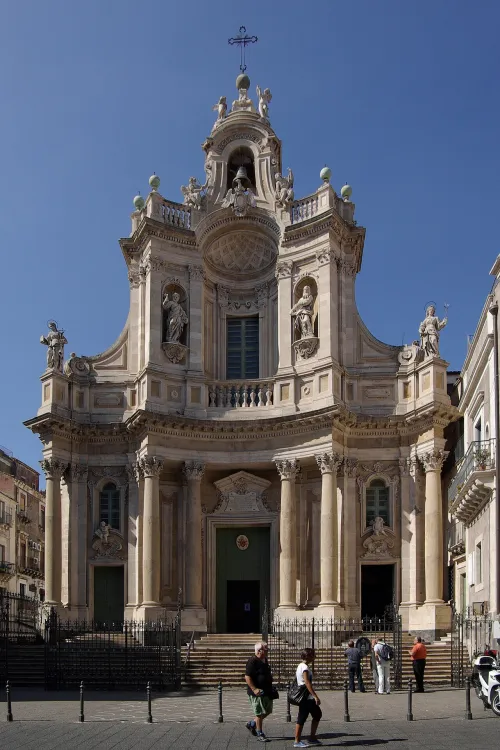
May in Catania
High24°C / 75°F
Low16°C
Rain37mm / 5 rainy days
Sun12.3 h/day
Daylight14 h/day
Humidity65%
Crowds●●●○○Prices●●●○○
May is one of the year's sweet spots: highs near 24°C, low rain, and over 12 hours of sun. Spring warmth wakes the beach day-trippers and the first northern European visitors arrive, but the city stays comfortable to walk through midday. The sea reaches around 20°C, marginal but doable for the hardy. Italian school trips and the Etna Comics festival on the last weekend add some pressure at the edges.
The vibe May is the month to come if you want warmth without the summer penalty. The light is generous, the evenings are long, and you can still get dinner reservations and walk Via Etnea at noon without melting. It earns its sweet-spot reputation honestly, unlike high summer, which charges triple for worse conditions.
Don't miss The Catania Summer Fest concerts at Villa Bellini begin warming up, and Etna Comics on the last weekend is a family magnet. The volcano is comfortable to explore before the high-summer heat sets in.
Crowd drivers Italian school excursions are at their busiest, northern European visitors start arriving, and Etna Comics (30 May to 2 June) at Le Ciminiere causes a short hotel crunch.
In season Granita season opens in earnest: a brioche col tuppo with almond or mulberry granita is the classic Catanian breakfast once the warmth arrives.
€70-110, with a short crunch over the Etna Comics weekend at the very end of the month.
Events this month
🎨 Art and cultureEtna Comics
May 30 – Jun 2
the last weekend of May into early June
Southern Italy's biggest pop-culture, comics and cosplay festival, drawing more than 80,000 visitors to the Le Ciminiere exhibition centre.
Great fun for families and fans, but it triggers a hotel shortage that weekend, so book early or stay out in Aci Castello.
🎨 Art and cultureFIC Festival (Catania Contemporanea) FIC Festival / Catania Contemporanea
Apr 29 – May 10
late April into early May
An annual contemporary dance, theatre and music festival that takes over piazzas, parks and churches across the city for around ten days in late April and early May.
The squares become open-air performance spaces, an ideal reason to time a spring cultural visit.
🎵 MusicCatania Summer Fest Estate Catania / Summer Fest
Jun 1 – Aug 31
across June, July and August
The municipal summer program, with concerts at the Villa Bellini gardens including big Italian names through the season, plus opera and theatre nights as the evenings finally cool down.
The city's main summer entertainment, and the reason high-summer evenings are far better than the punishing afternoons.
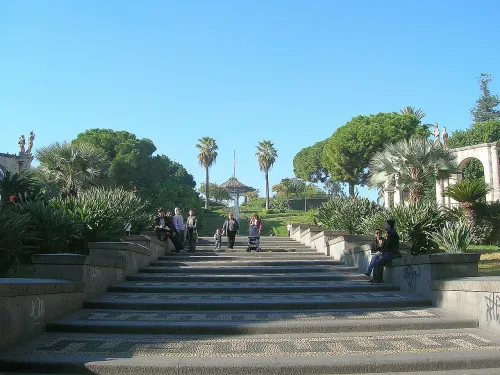
June in Catania
High29°C / 84°F
Low20°C
Rain24mm / 3 rainy days
Sun13.3 h/day
Daylight15 h/day
Humidity59%
Crowds●●●●○Prices●●●●○
June tips Catania into summer. Highs hit 29°C, rain all but vanishes at three days a month, and the sea warms to around 22°C, so swimming truly begins. German, Scandinavian and Dutch holidays start, cruise ships are at their peak, and La Playa now requires an app reservation. Midday heat is real but not yet brutal, and the long evenings, with sunset past 20:00, are when the city comes alive.
The vibe June is the tipping point, busy and warm by day but redeemed by its long, soft evenings. The Catania Summer Fest fills the Villa Bellini gardens with concerts once the sun drops, and that is when the city is at its best. Come for June and you save against July without losing the swimmable sea.
Don't miss Swimming season opens with a 22°C sea, and the Catania Summer Fest brings big-name concerts to Villa Bellini through the evenings. A dawn-start Etna cable-car run is the smart way to beat both heat and queues.
Crowd drivers German, Scandinavian and Dutch summer holidays begin, cruise-ship season peaks, and Etna Comics spills into the first days of the month.
In season Swordfish is at its peak at La Pescheria, and granita at one of the historic kioschi is fast becoming a daily survival ritual.
€90-140 as summer demand builds and cruise traffic peaks.
Events this month
🎨 Art and cultureEtna Comics
May 30 – Jun 2
the last weekend of May into early June
Southern Italy's biggest pop-culture, comics and cosplay festival, drawing more than 80,000 visitors to the Le Ciminiere exhibition centre.
Great fun for families and fans, but it triggers a hotel shortage that weekend, so book early or stay out in Aci Castello.
🎵 MusicCatania Summer Fest Estate Catania / Summer Fest
Jun 1 – Aug 31
across June, July and August
The municipal summer program, with concerts at the Villa Bellini gardens including big Italian names through the season, plus opera and theatre nights as the evenings finally cool down.
The city's main summer entertainment, and the reason high-summer evenings are far better than the punishing afternoons.
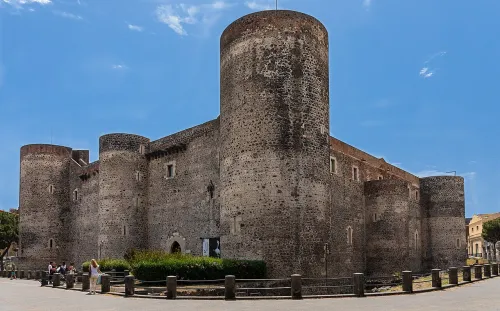
July in Catania
High32°C / 90°F
Low23°C
Rain7mm / 1 rainy days
Sun13.9 h/day
Daylight14 h/day
Humidity55%
Crowds●●●●●Prices●●●●●
July is Catania at full intensity: 32-36°C afternoons, relentless sun, and tourist numbers near their peak. Italian, German and Scandinavian beach holidays converge with every major cruise line, and La Playa overflows by 10:30 am. Via Etnea's basalt paving radiates heat with no relief from 11:00 to 16:00, so the only sane sightseeing hours are 7:00-10:30 am and after 18:30. The sea is a warm 25°C-plus and the evenings, with the Summer Fest in full swing, are where July becomes bearable.
The vibe July is for people who genuinely do not mind 35°C and peak prices to get a swimmable sea and long beach days. Midday is a write-off, no question. But an evening concert at Villa Bellini, or a dawn cable car up Etna before the heat builds, is a completely different and genuinely rewarding Catania.
Don't miss The Catania Summer Fest packs Villa Bellini with evening concerts, and the sea is at its warmest for late swims. Do Etna at 8:00-9:00 am by cable car for cooler air and no queue, since the afternoon wait stretches to 45 minutes.
Crowd drivers Every major European school system on summer break at once, all the major cruise lines calling, and inland Sicilians arriving for the coast.
In season Granita is survival, not indulgence: seek out the historic kioschi for a seltz con limone e sale, the locals' salted-lemon heat cure for under a euro.
Heads up Some neighbourhood trattorias begin their summer wind-down toward month's end, and La Playa's free sections require an app booking up to 48 hours ahead.
Mid-range €100-180, luxury €150-250; book the best hotels three to four months ahead.
Events this month
🎵 MusicCatania Summer Fest Estate Catania / Summer Fest
Jun 1 – Aug 31
across June, July and August
The municipal summer program, with concerts at the Villa Bellini gardens including big Italian names through the season, plus opera and theatre nights as the evenings finally cool down.
The city's main summer entertainment, and the reason high-summer evenings are far better than the punishing afternoons.
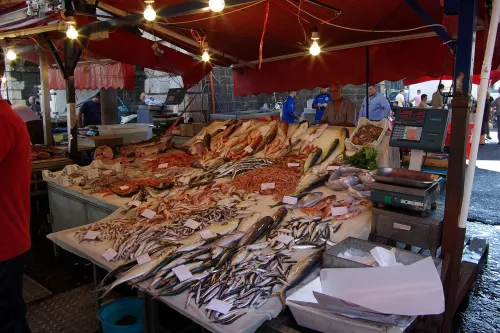
August in Catania
High32°C / 90°F
Low24°C
Rain12mm / 2 rainy days
Sun12.6 h/day
Daylight14 h/day
Humidity58%
Crowds●●●●●Prices●●●●●
August is the absolute peak, the worst month to visit Catania. Afternoons hold at 32-36°C and African heatwaves can push past 40°C, while Ferragosto on the 15th freezes the city as Italians arrive en masse and locals leave. June through August together account for 55% of the year's visitors. The sea hits a bath-warm 27°C, but many family trattorias close for up to two weeks, bus service is halved, and La Playa is at its absolute maximum.
The vibe August is the one month to genuinely think twice about. You pay the year's top prices for punishing heat, a beach you have to reserve and still find packed, and a city whose authentic neighbourhood fabric thins out as Catanians flee to the coast. The Ferragosto period can feel oddly quiet and shuttered despite the tourist crush.
Don't miss The sea peaks at 27°C for late-evening swims, and the ViniMilo wine festival opens up on Etna's slopes from 29 August. The Summer Fest concerts at Villa Bellini are the best way to spend the cooler nights.
Crowd drivers Ferragosto (15 August) and the Italian city exodus, peak cruise season, and the densest beach-holiday demand of the year.
In season ViniMilo (from 29 August) pours Etna DOC wines 30 minutes up the volcano, the start of the best foodie window of the year.
Heads up Around Ferragosto many neighbourhood restaurants and shops close for one to two weeks, bus frequency is halved, and Trenitalia runs a reduced timetable.
The year's most expensive month, like July, with the Ferragosto bridge pushing rates to their ceiling.
Events this month
🎵 MusicCatania Summer Fest Estate Catania / Summer Fest
Jun 1 – Aug 31
across June, July and August
The municipal summer program, with concerts at the Villa Bellini gardens including big Italian names through the season, plus opera and theatre nights as the evenings finally cool down.
The city's main summer entertainment, and the reason high-summer evenings are far better than the punishing afternoons.
🍷 Food and wineViniMilo Wine Festival ViniMilo
Aug 29 – Sep 14
late August to mid-September
A wine-harvest festival in the village of Milo on Etna's eastern slopes, 30 minutes from Catania, pouring 100 labels from volcanic regions worldwide alongside guided tastings, winery visits, street food and music.
The spine of any foodie trip and the best reason to time a September visit, with exceptional Etna DOC wines from Nerello Mascalese grapes.
September in Catania
High29°C / 83°F
Low21°C
Rain40mm / 8 rainy days
Sun10.8 h/day
Daylight12 h/day
Humidity67%
Crowds●●●●○Prices●●●●○
September is one of the finest times to visit Catania: highs near 29°C, a 25°C sea still perfect for swimming, and crowds easing as German and Scandinavian schools go back. The ViniMilo wine festival runs into mid-month and the Etna grape harvest gets going. The light turns golden on the lava-stone Baroque facades, the heat loosens its grip, and you can do Etna without the heatstroke risk of high summer.
The vibe September is the connoisseur's month. You keep the warm sea and the summer energy but shed the worst of the crowds and roughly 40% of the price. The harvest light on the black-and-white Baroque streets is the best of the year, and dinner tables open up again. This is when Catania feels both alive and yours.
Don't miss ViniMilo (to 14 September) and the Etna grape harvest open wineries on the volcano's slopes, and a 25°C sea makes for the year's best value beach days. Catania Summer Fest concerts continue into the month.
Crowd drivers German and Scandinavian schools return, easing the family crush, while Italian late-summer beachgoers and ViniMilo visitors keep the city busy.
In season The foodie peak: Etna Nerello Mascalese harvest, the last good swordfish and tuna at La Pescheria, and the first blood oranges appearing at the stalls late in the month.
€80-130, around 40% below the August peak, the best value for a beach-and-culture combo.
Events this month
🍷 Food and wineViniMilo Wine Festival ViniMilo
Aug 29 – Sep 14
late August to mid-September
A wine-harvest festival in the village of Milo on Etna's eastern slopes, 30 minutes from Catania, pouring 100 labels from volcanic regions worldwide alongside guided tastings, winery visits, street food and music.
The spine of any foodie trip and the best reason to time a September visit, with exceptional Etna DOC wines from Nerello Mascalese grapes.
🍷 Food and wineEtna Grape Harvest Vendemmia Etna
Sep 1–30 ~
mid to late September, shifting with the vintage
The Etna DOC harvest across the volcano's slopes, when wineries such as Benanti, Cornelissen and Passopisciaro open their doors to visitors.
High season for Etna wine tourism, set against the volcano's most spectacular autumn-toned landscape.
🎵 MusicCatania Summer Fest Estate Catania / Summer Fest
Jun 1 – Aug 31
across June, July and August
The municipal summer program, with concerts at the Villa Bellini gardens including big Italian names through the season, plus opera and theatre nights as the evenings finally cool down.
The city's main summer entertainment, and the reason high-summer evenings are far better than the punishing afternoons.
October in Catania
High24°C / 76°F
Low17°C
Rain100mm / 8 rainy days
Sun9.4 h/day
Daylight11 h/day
Humidity73%
Crowds●●○○○Prices●●○○○
October is the quieter half of the autumn sweet spot. Highs sit near 24°C and the sea holds at 23°C, the last genuinely good month to swim. Cruise season winds down and crowds thin right out, so Castello Ursino is queue-free and La Pescheria is at its best. The catch is rain: October is the wettest month at around 100mm, arriving as short, intense thunderstorms that can be Etna-exacerbated, so pack a rain layer.
The vibe October is Catania returned to itself. The light is golden, the Baroque facades photograph beautifully, the beaches are near-empty, and you can book any table you like. The thunderstorms are dramatic but brief, and the trade for them is a city that feels uncrowded and unhurried at half the summer price.
Don't miss The last swimmable sea of the year at 23°C, golden harvest light on the Baroque facades, and a queue-free Castello Ursino. The Pescheria is at its best now, with swordfish still on the slabs.
Crowd drivers Cruise-ship calls wind down and Italian half-term holidays vary, keeping crowds low through most of the month.
In season Swordfish is winding down but still available, and autumn brings the first porcini and chestnuts down from the Etna foothills.
Heads up Heavy autumn thunderstorms can briefly flood lower-lying streets, as in the November 2024 deluge, so keep an eye on the forecast.
€60-100, roughly 55% below the summer peak, and queue-free at every major sight.
Events this month
🎨 Art and cultureTeatro Bellini Opera Season Stagione Lirica Teatro Massimo Bellini
Jan 20 – Dec 31
January to June and October to December
A full opera and ballet season at the Teatro Massimo Bellini, a hall Beniamino Gigli called the finest-sounding in the world. The season typically runs Aida, bel canto classics such as I Puritani and operettas including The Merry Widow, with chamber operas at the Teatro Sangiorgi.
Off-peak opera is the best cultural deal in town: a €25 seat in winter beats anything, and the streets outside are empty.
November in Catania
High20°C / 68°F
Low14°C
Rain91mm / 9 rainy days
Sun8.0 h/day
Daylight10 h/day
Humidity76%
Crowds●○○○○Prices●○○○○
November is the quietest month of Catania's year. Highs ease to around 20°C and the streets are practically queue-free, with the sea cooling to a bracing 19 to 20°C that only the hardy attempt. Scirocco weather and Etna-driven rain are the real risk, and heavy downpours are possible in a month that averages 91 mm over around nine rain days. The All Saints holiday on the 1st brings a quiet, local atmosphere, and the Teatro Bellini autumn season is in full swing.
The vibe November is Catania with nothing performed for anyone. No crowds, no markup, just a real Sicilian city in its low season. You trade some grey, rainy spells for the run of the place: empty museums, cheap opera, and a Pescheria that is all locals and no cameras. For a quiet, cheap city break it is hard to beat.
Don't miss Practically zero queues anywhere, the Teatro Bellini autumn opera season at its best, and the first snow returning to Etna's summit for striking city backdrops. The All Saints biscuits, ossa dei morti, fill every pasticceria.
Crowd drivers The quietest month, with no cruise season and no school holidays. Visitor pressure is at its lowest of the year.
In season Ossa dei morti biscuits appear for All Saints, and the new season's olives and citrus start reaching the market stalls.
Heads up All Saints (1 November) closes most shops for a quiet, local day, and heavy scirocco-driven storms can disrupt low-lying streets.
Among the cheapest months, €40-70, with prices 60-65% below the summer peak.
Events this month
🇮 HolidayAll Saints' Day Ognissanti
Nov 1
1 November, fixed
A national holiday when Sicilians visit cemeteries and every pasticceria sells the traditional ossa dei morti biscuits. Most businesses close.
A quiet, deeply local day, the kind of atmosphere you only get well outside peak season.
🎨 Art and cultureTeatro Bellini Opera Season Stagione Lirica Teatro Massimo Bellini
Jan 20 – Dec 31
January to June and October to December
A full opera and ballet season at the Teatro Massimo Bellini, a hall Beniamino Gigli called the finest-sounding in the world. The season typically runs Aida, bel canto classics such as I Puritani and operettas including The Merry Widow, with chamber operas at the Teatro Sangiorgi.
Off-peak opera is the best cultural deal in town: a €25 seat in winter beats anything, and the streets outside are empty.
December in Catania
High16°C / 62°F
Low10°C
Rain39mm / 6 rainy days
Sun7.8 h/day
Daylight10 h/day
Humidity74%
Crowds●○○○○Prices●●○○○
December is quiet and local, dominated by Catanian families and the returning university students. Highs hover near 16°C and the sea is unswimmable at 15-16°C, but bright winter days are common and Etna's snowcap makes a dramatic backdrop. Minor Christmas markets appear, the Teatro Bellini Christmas season runs, and the Immaculate Conception holiday on the 8th opens the festive period. Prices stay low except over Christmas week itself.
The vibe December is Catania at its most domestic and unhurried. There is no tourist show, just presepi in the churches, students back in the bars, and the snow-capped volcano hanging over the city. The short days, dark by 16:30, are the trade, but the festive churches and cheap opera make it a genuinely warm, low-key visit.
Don't miss The Teatro Bellini Christmas season and notable presepi nativity scenes in the churches define the month, and the snow-capped Etna is at its most photogenic against the winter sky.
Crowd drivers Catanian families and returning students dominate, with a brief spike over Christmas week (24-26 December).
In season Blood-orange season begins again, and Sicilian Christmas sweets, buccellati and torrone, fill the pasticcerie.
Heads up Immaculate Conception (8 December), Christmas (25th) and St. Stephen's (26th) close most shops, with Christmas Day shutting nearly everything.
€45-80 most of the month, with a holiday spike over Christmas week (24-26 December).
Events this month
🇮 HolidayImmaculate Conception Immacolata Concezione
Dec 8
8 December, fixed
A national holiday that marks the start of the Christmas season, when presepi nativity scenes appear in the churches and the festive mood sets in.
Catania's churches display notable nativities, and a midweek date can hand you a mini long weekend.
🎨 Art and cultureTeatro Bellini Opera Season Stagione Lirica Teatro Massimo Bellini
Jan 20 – Dec 31
January to June and October to December
A full opera and ballet season at the Teatro Massimo Bellini, a hall Beniamino Gigli called the finest-sounding in the world. The season typically runs Aida, bel canto classics such as I Puritani and operettas including The Merry Widow, with chamber operas at the Teatro Sangiorgi.
Off-peak opera is the best cultural deal in town: a €25 seat in winter beats anything, and the streets outside are empty.
Frequently asked questions
What is the best time to visit Catania?
April, May, September and October are the best months. Spring (April-May) gives you 20-25°C, no heat stress and the full cultural calendar, with prices 35-40% below peak. Early autumn (September-October) keeps a swimmable 23-25°C sea, the ViniMilo wine harvest, and golden light on the Baroque facades for around 40% less than August.
What is the cheapest month to visit Catania?
January is the cheapest, with mid-range hotels at €40-70 and zero queues anywhere. November is just as cheap at €40-70, roughly 60% below summer, with some rain risk. The one trap is the Sant'Agata festival week (3-5 February), when hotels jump 40-60% even though the surrounding weeks stay low.
What is the worst time to visit Catania?
August. Afternoons hold at 32-36°C and can spike past 40°C, hotels run €150-250 a night, and around Ferragosto (15 August) many neighbourhood trattorias close for one to two weeks. La Playa beach needs an app reservation and still overflows by 10:30 am, and Via Etnea is genuinely punishing at midday.
When can you swim in the sea in Catania?
Comfortable swimming runs June to November, when the Ionian sea is 20°C or warmer. The best window is July to October, peaking at 27°C in August. October still holds 23°C and is rarely crowded, the year's best-value beach month. From December to March the sea sits at 15-16°C and is not swimmable.
When is the Festa di Sant'Agata in Catania?
The main days are always 3-5 February, with the wider program running roughly 30 January to 12 February. It is one of the three most-attended religious festivals on earth, filling Via Etnea with white-robed devoti and gilded candelore. Book accommodation months ahead for those nights, because rooms sell out and prices jump 40-60%.
Is Catania a good base for visiting Mount Etna?
Yes, Etna is an easy half-day trip year-round. The Funivia dell'Etna cable car costs around €30 round trip and is best done at 8:00-9:00 am for cooler air and no queue. April-May offers wildflowers, September the grape harvest, and December-March a dramatic snowcap. In July and August the afternoon wait stretches to 45 minutes.
What is the weather like in Catania in October?
October highs sit near 24°C with a 23°C sea, the last genuinely good swimming month, and crowds thin right out. The catch is rain: at around 100mm it is the wettest month, arriving as short, intense thunderstorms that can be Etna-exacerbated. Pack a rain layer, and you get queue-free sights at roughly 55% below the summer peak.
When is the best time to visit Catania with kids?
Late May or September on weekdays. You get 25-29°C air, a 20-25°C sea, and Etna reachable without heatstroke. In late May, Etna Comics at Le Ciminiere is a hit with children. Avoid July and August: the 32-36°C afternoons are hard on small kids and La Playa's free beach sections fill up by 10:30 am.
How many days do you need in Catania?
Two to three days covers the city well: a day for Piazza del Duomo, La Pescheria, Castello Ursino and Via Etnea, plus a full day for Etna. Add a day for the beach in summer, or a day trip to Acireale or Taormina. Visit in spring or autumn and you can walk it all at any hour without heat stress.

Any month, any day: your guide is already there
Whatever date you pick, a private human guide gets pricier and harder to book on weekends, holidays and in peak season. Our live AI guide, the one that walks with you and answers anything you ask out loud, works the opposite way.
One flat price, every day
No holiday, weekend, night or peak-season surcharge. A private guide in Catania runs well over 100 euro for a half day, and more on holidays. Ours stays the same.
Available the moment you want it
Start at midnight or at dawn, on Christmas, in the snow, in the August heat. No sold-out high season, no booking weeks ahead.
Your pace, no meter running
Pause for a long lunch, restart after dark, repeat a stop. The tour simply waits for you.
Free to try, a fraction of the cost
Test it for free, then a transparent flat price that undercuts any private guide, in every season.
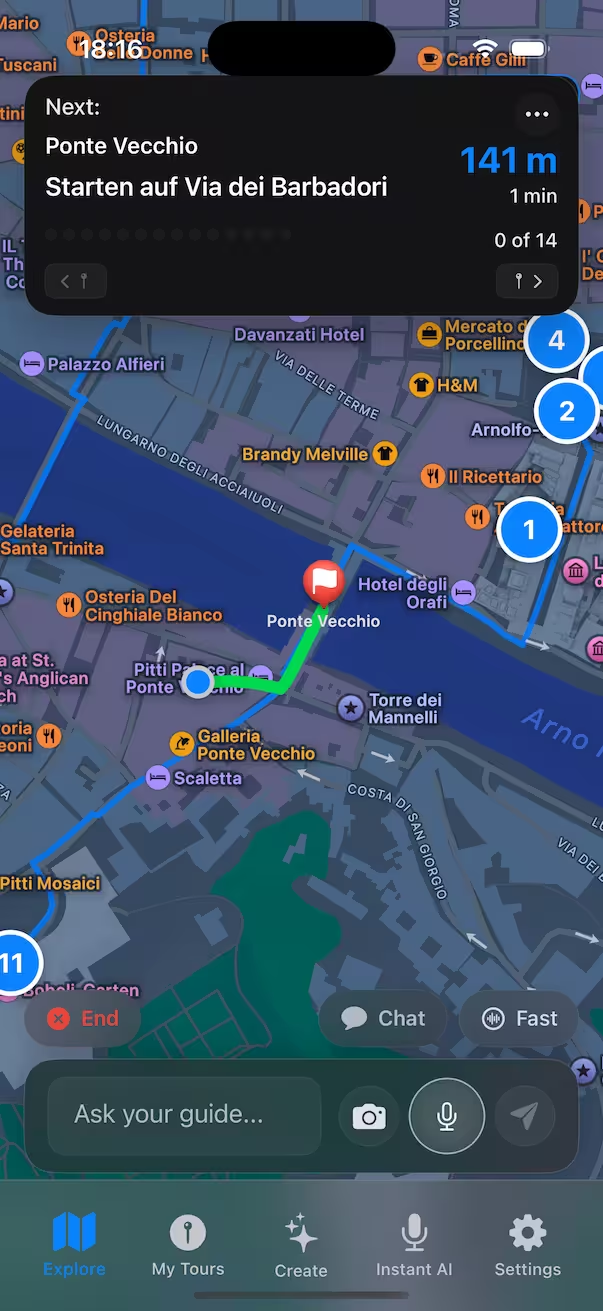
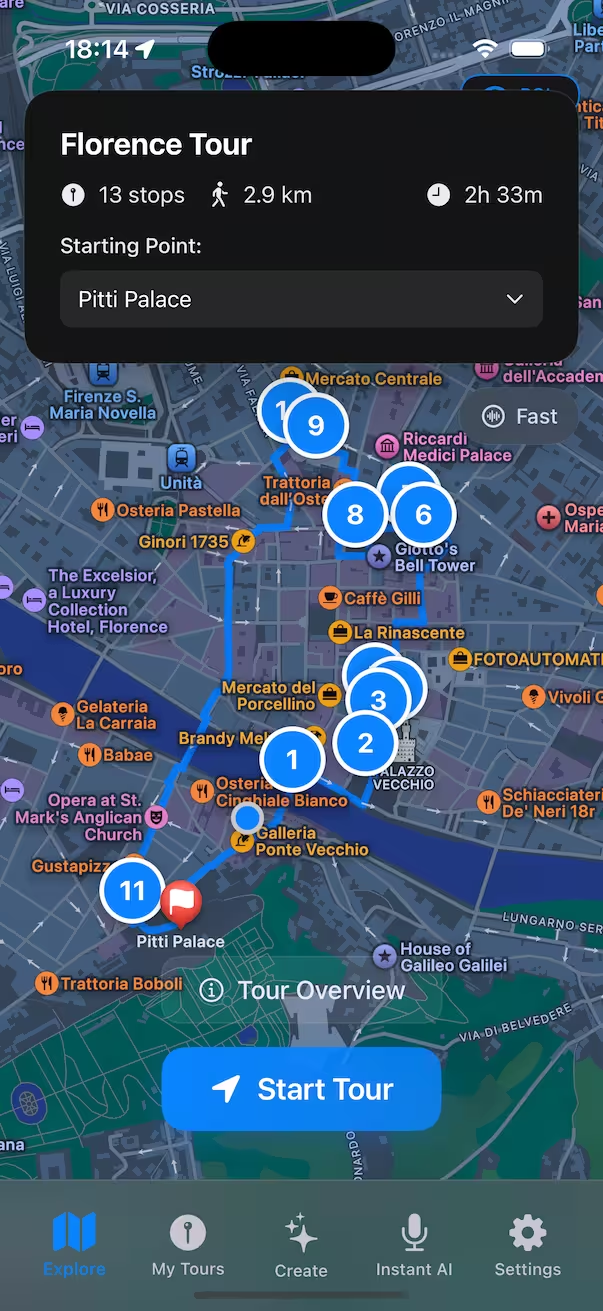
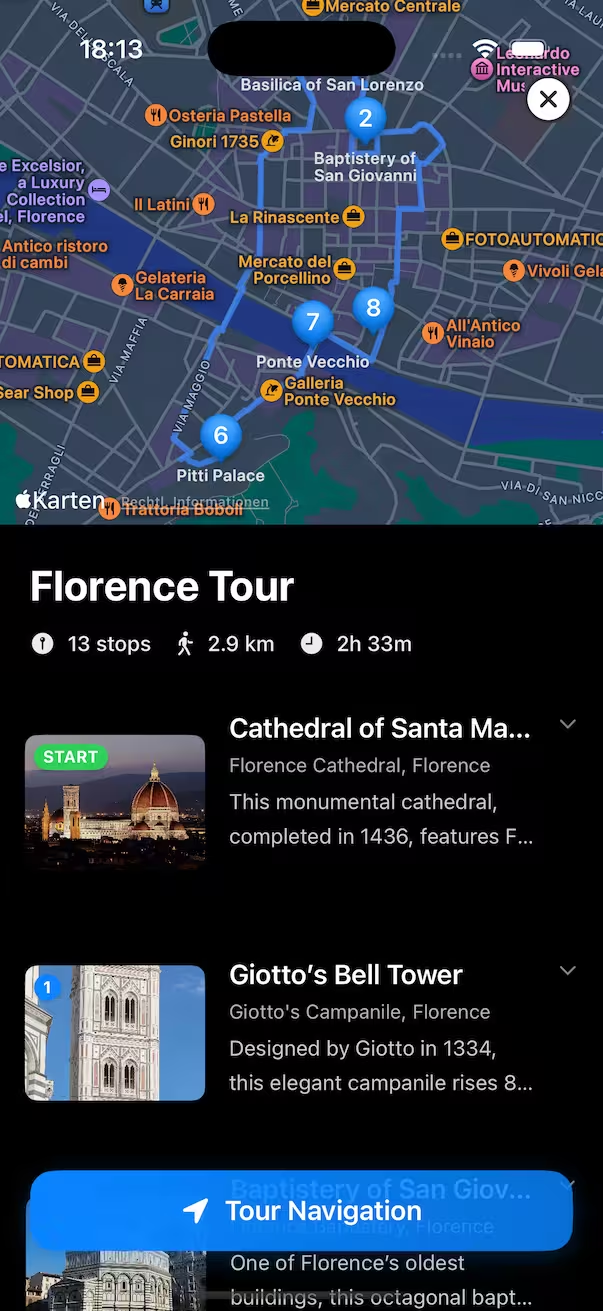
The classic Catania tour: 11 stops, 5.0 km, about 3 h on foot
Your live AI guide and the self-guided Catania route, together in your browser.