Best Time to Visit Istanbul
Month-by-month weather, crowds and prices, plus a full calendar of festivals and events worth planning a trip around.
Best monthsApr, Sep, Oct
CheapestJan, Feb, Dec
AvoidJul, Aug
BusiestJul, Aug
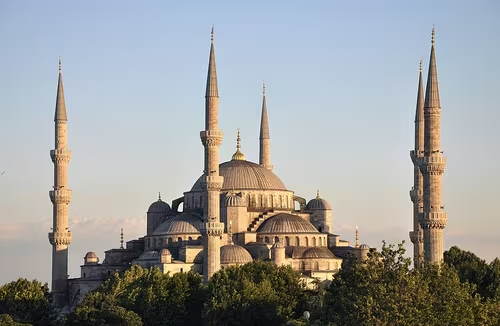
When is the best time to visit Istanbul?
Come in April, September or October: 16 to 25°C, the tulip bloom or golden Bosphorus light, and crowds you can still work around. July and August bring 32 to 37°C heat with humidity, peak prices and up to 15,000 cruise passengers a day. January is the cheapest and emptiest, the trade being grey skies and 13 rainy days.
Start our tool and find your best time to visit Istanbul
Your perfect month
Free · ~30 seconds
or tap a month directly
What matters to you?
And this?
Best overall: Apr, Sep. April and September are the real thing: 16 to 25°C for walking the historic peninsula, the tulip bloom in spring or warm-but-fading crowds in autumn, and the Bosphorus still swimmable at 23°C in September. October delivers too, just book around Republic Day on 29 October.
Best value: Jan, Feb. January and February bring hotel rates near $50 a night, around a third of August, no queue anywhere, and from roughly 19 February the deeply local atmosphere of Ramadan, when the city is at its most authentic and free to experience.
Avoid: Jul, Aug. July and August: 32 to 37°C with humidity, the year's highest prices, Topkapi queues of 40 to 120 minutes, and cruise ships funnelling up to 15,000 people a day through the bazaars. The least comfortable value of the year.
- January: Good time, 9°C. This is the one month the bazaars feel like a working city rather than a tourist machine. No cruise ships, no coach groups, no waiting. The trade is short days and damp grey light, and it is a fair one for prices this low.
- February: Good time, 10°C. Ramadan in February is the immersion most visitors never plan for and remember most. Sundown brings the whole city to the iftar table at once, and the energy on the streets after the fast breaks is electric. Free, real, and yours to walk straight into.
- March: Good time, 12°C. March is the last genuinely calm month before the spring crowds arrive. The Eid weekend is the one spike, festive on the streets but with the bazaars shuttered. Time your visit around it and you get spring weather with winter prices and winter quiet.
- April: Great time, 16°C. April genuinely lives up to the postcards: tulips spilling across Emirgan, mild blue-sky walking weather, and the city not yet at summer pitch. It is no longer a secret, so book ahead, but the payoff is the best version of Istanbul above ground.
- May: Good time, 21°C. May is the weather everyone hopes for, warm but not yet heavy, with long golden evenings on the water. Just plan around the Kurban Bayramı weekend, or you arrive to find the bazaars locked and the city full of domestic holidaymakers.
- June: Good time, 25°C. June is the tipping point, comfortably warm by day and luminous in the long evenings, but the cruise ships and the first wave of school holidays are already filling the bazaar corridors. Catch it early in the month for summer light without full summer pressure.
- July: Tough month, 28°C. July is for people who do not mind queuing in 35°C heat at peak prices to do it. Midday is a write-off. But a jazz set under the open sky, a late ferry across a cooling Bosphorus, or a swim off Kilyos are a different Istanbul, and worth chasing in the early and late hours. A private human guide here costs a premium and books out; our live AI guide stays a flat €5 an hour any day, so you can start before the heat and ask it anything as you walk.
- August: Tough month, 29°C. August is survival-mode Istanbul, not romantic-empty Istanbul. The heat is physically tiring rather than photogenic, the crowds are international and relentless, and the bazaar corridors clog whenever cruise ships dock. If you must come, do the big sights before 09:00 and treat the air-conditioned bazaars and ferries as your midday escape.
- September: Great time, 25°C. September is the version of summer Istanbul should have been: still warm, still swimmable, but with the August crush draining away week by week. The light softens, the bazaars breathe again, and the city feels like itself rather than a queue.
- October: Great time, 20°C. October is the quietly perfect month: warm enough to be outside all day, the light at its most flattering on the water, and the summer machine finally switched off. The one busy beat is Republic Day, when the whole city turns out for fireworks over the bridge.
- November: Great time, 16°C. November is moody, atmospheric Istanbul, the Bosphorus wrapped in fog and the bazaars all but empty. If you want Sultanahmet without the crowds and do not mind grey skies and the odd cancelled ferry, the prices reward you handsomely.
- December: Good time, 11°C. December is winter Istanbul at a bargain, foggy and atmospheric, with the dervishes turning and the bazaars calm. New Year's Eve is the one loud night, when Taksim and the bridge areas pack out and hotel prices jump for that single week.
Istanbul weather by month
HighLowRainfall
Jan9°
Feb10°
Mar12°
Apr16°
May21°
Jun25°
Jul28°
Aug29°
Sep25°
Oct20°
Nov16°
Dec11°
| Month | Temp | Rain | Sun | Crowds | Prices | Highlight |
|---|---|---|---|---|---|---|
| Jan | 9° / 4° | 103mm · 13 rainy days | 5.6 h/day | ●○○○○ | ●○○○○ | |
| Feb | 10° / 5° | 75mm · 11 rainy days | 6.9 h/day | ●○○○○ | ●○○○○ | Ramadan |
| Mar | 12° / 6° | 80mm · 11 rainy days | 7.8 h/day | ●●○○○ | ●●○○○ | Ramadan |
| Apr | 16° / 8° | 52mm · 9 rainy days | 10.3 h/day | ●●●○○ | ●●●○○ | Istanbul Tulip Festival |
| May | 21° / 14° | 53mm · 8 rainy days | 11.8 h/day | ●●●●○ | ●●●●○ | Eid al-Adha (Sacrifice Feast) |
| Jun | 25° / 18° | 56mm · 9 rainy days | 12.8 h/day | ●●●●○ | ●●●●○ | Istanbul Music Festival |
| Jul | 28° / 21° | 31mm · 5 rainy days | 13.5 h/day | ●●●●● | ●●●●● | Istanbul Jazz Festival |
| Aug | 29° / 22° | 21mm · 4 rainy days | 12.6 h/day | ●●●●● | ●●●●● | Istanbul Percussion Days |
| Sep | 25° / 18° | 49mm · 7 rainy days | 10.9 h/day | ●●●○○ | ●●●○○ | |
| Oct | 20° / 14° | 62mm · 8 rainy days | 8.2 h/day | ●●●○○ | ●●●○○ | Filmekimi |
| Nov | 16° / 10° | 82mm · 9 rainy days | 7.0 h/day | ●●○○○ | ●●○○○ | |
| Dec | 11° / 6° | 87mm · 13 rainy days | 5.5 h/day | ●○○○○ | ●●○○○ | Şeb-i Arus (Mevlana Anniversary) |
How we score this: weather = long-run climate normals (Open-Meteo), crowds & prices = relative season read, events checked yearly against official dates.
Best time to visit Istanbul: weather, prices & crowds
Best months for good weather
Apr, May, Sep
April, May and September give Istanbul its most comfortable walking weather: 16 to 25°C, low rainfall, and long enough evenings to sit on a Karaköy rooftop until the call to prayer drifts across the water.
Quietest months to avoid the crowds
Jan, Feb, Nov
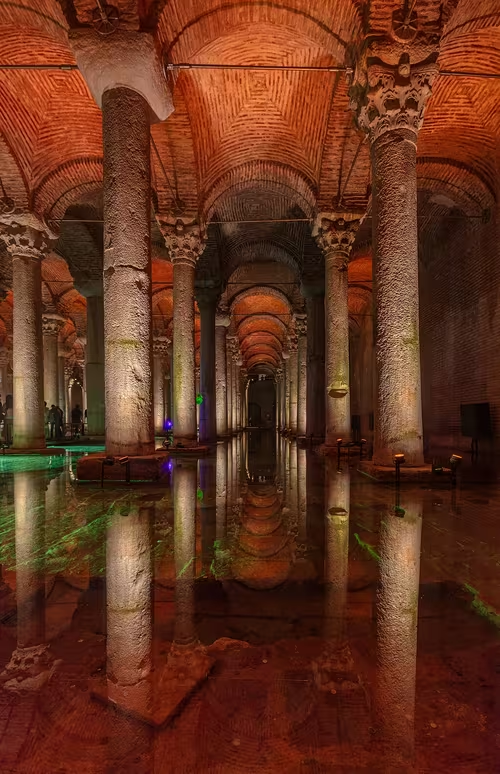
From November to February the international crowd thins right out. Topkapi and Hagia Sophia have no queue, and you can stand in the Basilica Cistern almost alone, the opposite of the August crush.
Cheapest time to visit Istanbul
Jan, Feb
January and February are Istanbul's cheapest months, with hotel averages near $50 a night, roughly a third of the August rate, and zero waiting at any sight.
Best time for festivals and events
Apr
April is the Tulip Festival: over 30 million tulips across 700 parks, with Emirgan Park on the Bosphorus the 47-hectare centrepiece and 120-plus Ottoman varieties found nowhere else.
How many days do you need in Istanbul?
Give Istanbul at least three days, and four if you can spare them. This is a city straddling two continents with Roman, Byzantine and Ottoman history stacked in layers, and a single day only scratches the surface of Sultanahmet alone. Four days let you cross the Golden Horn, reach the Asian shore and breathe beyond the sights.
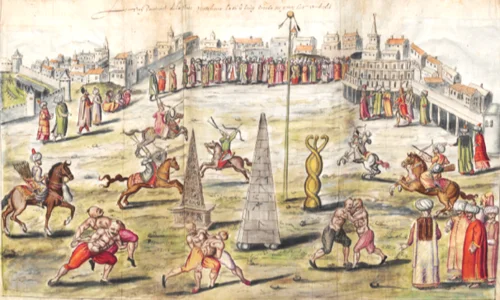
One day
Sultanahmet and the underground city
One day forces you to choose the essentials: the Blue Mosque, Hagia Sophia and the Hippodrome of Constantinople all sit within steps of each other in Sultanahmet. Drop underground into the Basilica Cistern in the afternoon, then lose an hour inside the Grand Bazaar before it closes at 19:00. It is a full day on foot but a logical, walkable circuit.
Two days
Imperial mosques, the Spice Bazaar and the Galata side
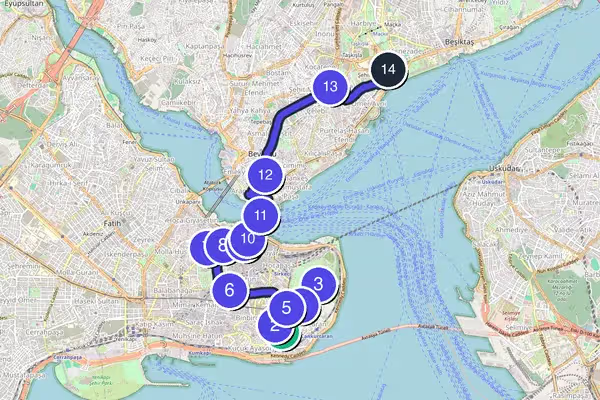
A self-guided Istanbul walking tour ties together 14 stops across 9.7 km in about 4.2 hours, linking the Blue Mosque, Topkapi Palace and Hagia Sophia all the way to the Galata Tower and Taksim Square. On day two, linger in Topkapi Palace properly (close every Tuesday, so plan around it), climb through the Süleymaniye Mosque complex and finish at the Spice Bazaar and Galata Bridge for fish sandwiches at sunset. These two days cover all the headline sights.
Three daysRecommended
Ferry life and the Asian shore
A third day is where Istanbul stops feeling like a checklist. Take the Bosphorus ferry the length of the strait in the morning, stopping at Kadıköy on the Asian side for the Tuesday, Friday or Saturday market. The Princes' Islands are 90 minutes from Eminönü and a complete change of pace. Come back via Üsküdar for rooftop views of the old city across the water.
Four days or more
Beyoğlu, Belgrad Forest and the neighbourhoods beyond the sights
With four days you reach the parts of Istanbul that feel genuinely local. Explore Karaköy and Beyoğlu on foot, the Galata Mevlevi sema ceremony runs Sundays at 17:00 year-round, and the morning market at Kadıköy is one of the best food markets in the city. A week opens up Belgrad Forest in autumn foliage or a day trip to the Black Sea coast at Kilyos.
Best time to visit Istanbul by traveller type
Same city, different trip. Here's the month that fits how you're travelling.
🧭
Best time to visit Istanbul for the first time
AprSepOct
April or September and October: ideal 16 to 22°C walking weather, every sight open, and crowds you can work around. April adds the tulip festival and Film Festival; October brings golden light and Republic Day fireworks over the Bosphorus on 29 October.
❤️
Best time to visit Istanbul for couples
AprOct
Late April once the tulip weekend crush eases, or mid-October for golden Bosphorus light and rooftop sunset bars in Beyoğlu without the summer heat. Skip July and August, when sweaty hillside climbs drain the romance fast.
💶
Best time to visit Istanbul on a budget
JanFeb
January and February: hotel averages near $50 a night, zero queues, and the rich, free atmosphere of Ramadan from around 19 February.
🍝
Best time to visit Istanbul for food and wine
FebSepOct
February for the iftar feast culture of late Ramadan, or September and October for fresh figs and pomegranates at the Spice Bazaar and the fishermen's season opening 1 September, when meyhanes start serving fresh hamsi and bluefish.
Worst time to visit Istanbul
July and August are the months most worth avoiding for comfort. Afternoon highs sit at 32 to 37°C with heavy Bosphorus humidity, and the stone climbs of Sultanahmet between Topkapi and the Blue Mosque turn punishing by 13:00. Hotels run at peak prices, Topkapi queues stretch 40 to 120 minutes without a skip-the-line ticket, and cruise ships push up to 15,000 passengers through the Grand Bazaar corridors on a single day. The Kurban Bayramı long weekend in late May is also worth checking dates for: the Grand Bazaar and Spice Bazaar close for all four days and domestic travel pushes hotel prices sharply higher.
Still worth it for Summer still works if you build your days around the heat: outdoor sightseeing before 11:00 or after 17:00, the air-conditioned bazaars as a midday refuge, and the Jazz Festival in July or the Bosphorus Cross-Continental Swim in August as genuine highlights. Budget travellers who can tolerate the conditions will find the city alive and the festival calendar full.
Go instead in April, September, October, when Istanbul is at its best.
Best time for a tour of Istanbul
Istanbul rewards walkers most in April, May, and September, when temperatures sit in the 16 to 25 °C range, rain stays manageable at 7 to 9 days a month, and the light on the Blue Mosque's domes is genuinely extraordinary in the long afternoon hours. Those three months let you cover the full 9.7-kilometre route through Sultanahmet and on up to Galata Tower without the walk becoming a trial. July and August are a different proposition: highs push to 28 to 29 °C, the cobbled courtyard of Topkapi Palace holds heat with no shade relief, and the site is heaving shoulder to shoulder with visitors from open until close. January and December bring the other extreme: barely 9 to 11 °C, 13 wet days each, and darkness arriving before 5 pm, which makes the stretch across Galata Bridge after the Grand Bazaar genuinely uncomfortable. March is a workable shoulder: a little cool and unpredictable, but the crowds are thin and the Hagia Sophia interior feels almost contemplative. October is the underrated pick: 19 to 20 °C, modest rain, and visitor numbers well below the summer peak, giving you room to actually linger inside the Basilica Cistern.
The practical advantage of walking Istanbul with AI Tourguide is that no operator's departure time binds you to the worst hour of the worst month. On a scorching August day you can start your Istanbul tour at 7 am, reach Topkapi Palace before the first tour buses arrive, take a long midday break in the cool of the Basilica Cistern, and pick up again in the late-afternoon shade. On a crisp October morning you can set off at your own pace, let the guide's stories lengthen when you want them to, and stand on Galata Bridge in quiet, golden light with no one hurrying you along. The AI guide runs entirely in your browser, speaks in 13 languages, and holds a real spoken conversation the whole way, asking what catches your eye and remembering what you say, adapting as you go.

 +10
+10All 14 stops are already on the map.
You just press start.
You just press start.
 AI Tourguide
You just read the route.
Now walk it with a guide in your ear.
Press start wherever you are, even hundreds of kilometres from Istanbul, and the guide begins telling its stories right away. In the city, pick any of the 14 stops to start from: it leads you there, then talks with you the whole route, asking, listening, remembering, and shaping the tour around your answers.
14stops9.7km4.2hours11languages
▶Start the tour freeFree to start · Runs in your browser · No app, no download
Istanbul events and festivals calendar
Annual highlights worth timing a trip around, listed month by month.
February
⛪ ReligiousRamadan Ramazan
Feb 19 – Mar 18 ~
A lunar month that shifts about 11 days earlier each year; confirm the exact start date for your travel year.
A month-long daytime fast across the Muslim population, with iftar dinners at sunset and intense mosque atmosphere for night prayers.
March
🇮 HolidayEid al-Fitr (Sugar Feast) Ramazan Bayramı
Mar 19–22 ~
Three-day holiday at the end of Ramadan (half-day eve before). Lunar, so dates shift each year by about 11 days; check the current year's dates before booking.
A three-day national holiday closing Ramadan.
April
🌸 Seasonal natureIstanbul Tulip Festival İstanbul Lale Festivali
Apr 1–30
All of April, peak bloom roughly 10 to 20 April. Fixed to the month, bloom timing weather-dependent.
Over 30 million tulips are planted across 700 parks, with Emirgan Park (47 hectares on the Bosphorus) the centrepiece and more than 120 varieties unique to Turkey.
🎬 FilmIstanbul Film Festival İstanbul Film Festivali
Apr 9–19 ~
Around 11 days in early-to-mid April each year. Exact dates shift slightly; check the IKSV website for the current edition.
Turkey's leading film festival, run by IKSV, screening 127 features and 13 shorts across cinemas in Beyoğlu and Kadıköy, plus the Meetings on the Bridge co-production event.
🇮 HolidayNational Sovereignty and Children's Day Ulusal Egemenlik ve Çocuk Bayramı
Apr 23
23 April every year, dedicated to children and the founding of the national assembly.
A public holiday with parades and school performances in Sultanahmet and Taksim.
May
🇮 HolidayEid al-Adha (Sacrifice Feast) Kurban Bayramı
May 26–30 ~
Four-and-a-half-day holiday (half-day eve before). Lunar, shifts yearly by about 11 days; confirm dates for your travel year.
A four-and-a-half-day national holiday and the biggest domestic-travel period of the year.
June
🎵 MusicIstanbul Music Festival İstanbul Müzik Festivali
Jun 11–25 ~
Roughly two weeks in mid-June each year. Exact dates shift slightly; check the IKSV website for the current edition.
An IKSV classical-music festival of 22 concerts across 14 venues including the Grand Bazaar, Yıldız Park and the Atatürk Cultural Centre, with orchestras such as the Wiener Symphoniker and world premieres.
🎵 MusicIstanbul Guitar Days İstanbul Gitar Günleri
Jun 12–14 ~
A long weekend in mid-June each year. Exact dates vary; check the Istanbul municipality website for the current edition.
A free municipal outdoor concert series staged across various city districts, part of the city's free summer festival calendar.
🎵 MusicIstanbul Jazz Festival İstanbul Caz Festivali
Jun 30 – Jul 13 ~
Roughly two weeks spanning late June into mid-July each year. Exact dates shift slightly; check the IKSV website for the current edition.
An IKSV festival of around 30 concerts and 200 artists in indoor and open-air venues, with headliners that have included Robert Plant and Marcus Miller.
July
🎵 MusicInternational Istanbul Vocal Days Uluslararası İstanbul Vokal Günleri
Jul 24–26 ~
A weekend in late July. A newer festival; check the Istanbul municipality website for current dates and whether the event is running.
An inaugural free municipal vocal and choral festival, part of the city's free summer calendar.
August
🎵 MusicIstanbul Percussion Days İstanbul Perküsyon Günleri
Aug 14–16 ~
A weekend in mid-August each year. Exact dates vary; check the Istanbul municipality website for the current edition.
A free municipal percussion festival, part of the city's free summer festival programme.
🏃 SportBosphorus Cross-Continental Swim Boğaziçi Kıtalararası Yüzme Yarışı
Aug 23 ~
A single day in late August each year. The exact date varies; check bogaziciyuzme.org for the current year's date.
Around 2,500 swimmers cross 6.5 km from Asia to Europe across the Bosphorus, which closes to shipping for about two hours during the race.
October
🎬 FilmFilmekimi
Oct 9–18 ~
Around 10 days in mid-October each year. Exact dates shift slightly; check the IKSV website for the current edition.
Istanbul's autumn film festival, run by IKSV, screening Cannes, Berlin and Venice selections across the city's cinemas.
🇮 HolidayRepublic Day Cumhuriyet Bayramı
Oct 29
29 October every year, marking the 1923 founding of the Republic.
Turkey's largest national celebration.
December
⛪ ReligiousŞeb-i Arus (Mevlana Anniversary) Şeb-i Arus
Dec 17
17 December every year, the anniversary of Rumi's death.
The anniversary of Rumi's death, marked by whirling-dervish sema ceremonies across the city.
Insider tips for visiting Istanbul
The rules buried in forums, in one place.
- Topkapi Palace closes every Tuesday, year-round, so pair Hagia Sophia and the Basilica Cistern on Tuesdays instead. From May to September a skip-the-line ticket is essential: the standard queue runs 40 to 120 minutes at peak. Arrive before 09:15 for first entry, or after 15:00 once the coach groups leave.
- Hagia Sophia closes to non-worshippers five times a day for prayer, each lasting 30 to 45 minutes. In summer the Asr closure around 16:30 to 17:15 is the most disruptive. Check the daily prayer schedule the morning of your visit, since the timings shift each day, and bring a scarf for the modest-dress requirement.
- The Grand Bazaar is closed every Sunday, year-round, and open Monday to Saturday 08:30 to 19:00. Plenty of visitors turn up on a Sunday and miss it entirely. Go on a weekday morning between 08:30 and 11:00 when it is least crowded.
- During Ramadan (around 19 February to 18 March 2026), a 60-minute window near sunset, roughly 18:30 to 19:30, makes taxis nearly impossible to find and gridlocks traffic. Book a table at popular iftar spots like Hamdi or Karaköy Güllüoğlu at least three days ahead.
- Galataport can process up to 15,000 cruise passengers a day. When three large ships dock, the Grand Bazaar and Spice Bazaar corridors are barely passable from 10:00 to 15:00, typically Tuesday to Thursday in summer. Visit before 09:00 or after 16:30 on cruise-heavy days, and check cruisetimetables.com for the live schedule.
- On Republic Day (29 October) and some Bayram days, public transport is free, which sounds great but massively crowds the ferries and metro. If you want a Bosphorus ferry on a free-transport day, take it before 10:00.
- Emirgan Park during the April Tulip Festival draws enormous local crowds on weekends. Arrive by 09:00 when the park opens, or go on a Tuesday or Wednesday. The Yellow, White and Pink Ottoman pavilions inside have a café, and the bloom peaks roughly 10 to 20 April.
- Since its renovation the Basilica Cistern needs a timed ticket booked online at yerebatan.com. Walk-up slots are often sold out by 11:00 in peak season, so book 24 to 48 hours ahead.
Public holidays in Istanbul
On these dates many shops and offices close, transport thins out, and sights can be mobbed or shut. Plan around them.
| Date | Holiday | What closes |
|---|---|---|
| Jan 1 | New Year's Day | Banks and offices closed and the Grand Bazaar shut for the day. Major sights open from 09:00. The city stays festive after New Year's Eve, when Taksim and the Bosphorus bridge areas are crowded and hotels fully booked. |
| Mar 18 | Eid al-Fitr Eve (Arife) | Half-day before the Sugar Feast. Businesses close from midday and the Grand Bazaar shuts early, the start of the three-day Ramazan Bayramı holiday. |
| Mar 19 | Eid al-Fitr (Ramazan Bayramı) | Three-day national holiday (19 to 22 March). The Grand Bazaar and Spice Bazaar close all three days and many restaurants shut or serve family menus only. Topkapi and Hagia Sophia stay open, and local Istanbul empties as residents travel, easing queues at the major sights. |
| Apr 23 | National Sovereignty and Children's Day | Public holiday. Government offices closed, parades and school performances in Sultanahmet and Taksim, but sights stay open with minimal impact. |
| May 1 | Labour Day | Public holiday with large union marches historically on Taksim Square. Metro and tram access to Taksim may be restricted until around noon, but most sights stay open. |
| May 19 | Commemoration of Atatürk, Youth and Sports Day | Public holiday with youth sports events. Government buildings closed; low impact on tourism, with museums and sights open. |
| May 26 | Eid al-Adha (Kurban Bayramı) | Four-and-a-half-day national holiday (26 to 30 May, half-day 25 May). The Grand Bazaar and Spice Bazaar close all four days and the biggest domestic travel surge of the year sends Istanbul hotel prices spiking. Topkapi and the museums stay open on a holiday schedule, and public transport runs free. |
| Jul 15 | Democracy and National Unity Day | Public holiday with national ceremonies. The Bosphorus bridges are illuminated in the evening and crowds gather near them; sights stay open. |
| Aug 30 | Victory Day | Public holiday with military parades. Government offices closed; low tourist impact, with sights open. |
| Oct 29 | Republic Day | Turkey's largest national holiday. Public transport runs free all day, fireworks light up the Bosphorus Bridge in the evening (best seen from Ortaköy, Beşiktaş or Üsküdar), and sights stay open while government offices close. Waterfront hotels in the Bosphorus districts sell out, so book early. |
| Dec 31 | New Year's Eve | Not a public holiday but the city turns festive. Major hotels fully book out and the Taksim and Bosphorus bridge areas grow very crowded into the night. |
Istanbul month by month
January in Istanbul
High9°C / 48°F
Low4°C
Rain103mm / 13 rainy days
Sun5.6 h/day
Daylight10 h/day
Humidity80%
Crowds●○○○○Prices●○○○○
January is Istanbul at its most local and its coldest, with daytime highs around 9°C, 13 rainy days and grey skies off the Bosphorus. Showers are usually short and moderate rather than all-day, but morning fog can cancel ferries to Kadıköy and the Princes' Islands. You walk into Topkapi and Hagia Sophia without a queue, and the Galata Tower observation deck is empty. Pack a warm waterproof layer and treat it as the bargain month it is.
The vibe This is the one month the bazaars feel like a working city rather than a tourist machine. No cruise ships, no coach groups, no waiting. The trade is short days and damp grey light, and it is a fair one for prices this low.
Don't miss The Museum Pass Istanbul (€105, five days) pays off fastest now, when you can move between its 13 sites at pace without queuing. The Galata Tower at the 08:30 opening gives you the Bosphorus-over-city view with no one else on the deck.
Crowd drivers No cruise ships and no school holidays. The lowest international visitor pressure of the whole year.
In season Peak season for boza, the thick fermented millet drink served with cinnamon and roasted chickpeas, and for salep, the hot orchid-root drink that warms you between mosques.
Heads up The Grand Bazaar is closed on 1 January and every Sunday. Fog on the Bosphorus can suspend ferries to Kadıköy and the Princes' Islands on short notice.
The cheapest month of the year; hotel averages near $50 a night and no queues anywhere.
February in Istanbul
High10°C / 51°F
Low5°C
Rain75mm / 11 rainy days
Sun6.9 h/day
Daylight11 h/day
Humidity79%
Crowds●○○○○Prices●○○○○
February is Istanbul at its most authentic. Highs reach about 10°C with 11 rainy days, and the city runs on its own rhythm with barely a tourist in sight. Ramadan begins around 19 February, and the atmosphere shifts: daytime bazaars go quiet, mosques fill for night prayers, and Sultanahmet is illuminated after dark. Tourist restaurants stay open all day, so you eat normally while experiencing one of the most distinctive cultural windows of the year.
The vibe Ramadan in February is the immersion most visitors never plan for and remember most. Sundown brings the whole city to the iftar table at once, and the energy on the streets after the fast breaks is electric. Free, real, and yours to walk straight into.
Don't miss Late Ramadan is iftar-feast culture: try güllaç, the rosewater-and-pomegranate Ramadan dessert, and ramazan pidesi, the flat sesame bread baked only this month, fresh from local bakeries around 14:00.
Crowd drivers Off-season with no cruise calls. Ramadan from around the 19th actually reduces daytime domestic crowds and quietens the bazaars.
In season Ramazan pidesi appears only during Ramadan; queue at a neighbourhood bakery in the afternoon before iftar, and try mercimek çorbası, the lentil soup that opens almost every fast.
Heads up The Grand Bazaar is closed every Sunday. During Ramadan, taxis vanish and traffic gridlocks for about an hour around sunset, roughly 18:30 to 19:30.
Still the low season, with hotel averages near $51 a night; Ramadan from around the 19th nudges prices down further.
Events this month
⛪ ReligiousRamadan Ramazan
Feb 19 – Mar 18 ~
A lunar month that shifts about 11 days earlier each year; confirm the exact start date for your travel year.
A month-long daytime fast across the Muslim population, with iftar dinners at sunset and intense mosque atmosphere for night prayers. Sultanahmet is illuminated after dark, and the daytime bazaars run quieter than usual while tourist restaurants stay open all day.
A unique cultural immersion you can walk straight into for free, with the whole city sitting down to break the fast at once. Just avoid the iftar-rush taxi window around 18:30 to 19:30.
March in Istanbul
High12°C / 54°F
Low6°C
Rain80mm / 11 rainy days
Sun7.8 h/day
Daylight12 h/day
Humidity78%
Crowds●●○○○Prices●●○○○
March brings Istanbul back to life as highs climb toward 12°C and the days lengthen past 12 hours. Ramadan ends around 18 March and the three-day Eid al-Fitr holiday (19 to 22 March) follows, a domestic travel surge that sells hotels out and closes the Grand Bazaar and Spice Bazaar for the duration. Outside that weekend, March stays quiet and inexpensive, with spring showers that pass quickly and rarely ruin a day.
The vibe March is the last genuinely calm month before the spring crowds arrive. The Eid weekend is the one spike, festive on the streets but with the bazaars shuttered. Time your visit around it and you get spring weather with winter prices and winter quiet.
Don't miss The first warm-enough days for a Bosphorus ferry the length of the strait, and early spring blossom along the Princes' Islands before the summer ferry crush. The Galata Mevlevi sema ceremony runs on Sundays at 17:00 year-round.
Crowd drivers The Eid al-Fitr long weekend (19 to 22 March) drives a sharp domestic travel surge; the rest of the month sees little international pressure and no cruise season yet.
In season Tail end of the winter citrus season at the Kadıköy market (Tuesday, Friday and Saturday), with Finike oranges and bergamot at their cheapest.
Heads up The Grand Bazaar and Spice Bazaar close all three days of Eid al-Fitr (19 to 21 March); businesses shut from midday on the half-day eve, 18 March. The Grand Bazaar is also closed every Sunday.
Still affordable, but the Eid al-Fitr weekend (19 to 22 March) sells hotels out with a 30 to 50% surcharge.
Events this month
⛪ ReligiousRamadan Ramazan
Feb 19 – Mar 18 ~
A lunar month that shifts about 11 days earlier each year; confirm the exact start date for your travel year.
A month-long daytime fast across the Muslim population, with iftar dinners at sunset and intense mosque atmosphere for night prayers. Sultanahmet is illuminated after dark, and the daytime bazaars run quieter than usual while tourist restaurants stay open all day.
A unique cultural immersion you can walk straight into for free, with the whole city sitting down to break the fast at once. Just avoid the iftar-rush taxi window around 18:30 to 19:30.
🇮 HolidayEid al-Fitr (Sugar Feast) Ramazan Bayramı
Mar 19–22 ~
Three-day holiday at the end of Ramadan (half-day eve before). Lunar, so dates shift each year by about 11 days; check the current year's dates before booking.
A three-day national holiday closing Ramadan. The Grand Bazaar and Spice Bazaar shut for all three days and many restaurants serve family menus only or close, while domestic travel peaks and Istanbul's residents leave to visit family.
Festive on the streets but tricky if you need the bazaars, which are closed; the upside is that local Istanbul empties out, easing queues at Topkapi and Hagia Sophia.
April in Istanbul
High16°C / 62°F
Low8°C
Rain52mm / 9 rainy days
Sun10.3 h/day
Daylight13 h/day
Humidity76%
Crowds●●●○○Prices●●●○○
April is Istanbul's most beautiful month and the one most first-timers should aim for. Highs settle at a comfortable 16°C with the lightest rainfall of spring, ideal for walking the historic peninsula without heat. The Tulip Festival runs all month, planting over 30 million tulips across 700 parks, while the 45th Film Festival (9 to 19 April) fills the Beyoğlu and Kadıköy cinemas. Emirgan Park gets crowded on weekends, so go on a weekday morning.
The vibe April genuinely lives up to the postcards: tulips spilling across Emirgan, mild blue-sky walking weather, and the city not yet at summer pitch. It is no longer a secret, so book ahead, but the payoff is the best version of Istanbul above ground.
Don't miss Tulip bloom peaks roughly 10 to 20 April, with 120-plus Ottoman varieties at Emirgan Park (47 hectares on the Bosphorus). The Film Festival screens 127 features plus 13 shorts at €8 to €15 a ticket across Beyoğlu and Kadıköy.
Crowd drivers The Tulip Festival pulls European visitors, the Film Festival adds a cultural crowd, and spring break overlaps. Emirgan Park is packed on weekends though free to enter.
In season Green almonds (çağla) appear at street carts, eaten raw with salt, a fleeting spring snack found only for a few weeks.
Rates climb to around $130 a night as the tulip festival and film festival draw European visitors.
Events this month
🌸 Seasonal natureIstanbul Tulip Festival İstanbul Lale Festivali
Apr 1–30
All of April, peak bloom roughly 10 to 20 April. Fixed to the month, bloom timing weather-dependent.
Over 30 million tulips are planted across 700 parks, with Emirgan Park (47 hectares on the Bosphorus) the centrepiece and more than 120 varieties unique to Turkey. The tulip is native to this region and central to Ottoman history.
April's defining spectacle and completely free to walk through. Go to Emirgan on a weekday morning to beat the weekend crush, with bloom at its best from around 10 to 20 April.
🎬 FilmIstanbul Film Festival İstanbul Film Festivali
Apr 9–19 ~
Around 11 days in early-to-mid April each year. Exact dates shift slightly; check the IKSV website for the current edition.
Turkey's leading film festival, run by IKSV, screening 127 features and 13 shorts across cinemas in Beyoğlu and Kadıköy, plus the Meetings on the Bridge co-production event. Tickets run roughly €8 to €15 a film.
A strong international programme that overlaps with the tulip festival, making early-to-mid April a brilliant combined-culture week.
May in Istanbul
High21°C / 70°F
Low14°C
Rain53mm / 8 rainy days
Sun11.8 h/day
Daylight14 h/day
Humidity76%
Crowds●●●●○Prices●●●●○
May is warm and bright, with highs around 21°C, only eight rainy days and nearly 12 hours of sun, excellent walking weather and the start of cruise season. The catch is Kurban Bayramı (26 to 30 May 2026), the biggest domestic travel surge of the year, when the Grand Bazaar and Spice Bazaar close for all four days and hotels spike. Outside that long weekend, non-holiday May is one of the best shoulder windows Istanbul offers.
The vibe May is the weather everyone hopes for, warm but not yet heavy, with long golden evenings on the water. Just plan around the Kurban Bayramı weekend, or you arrive to find the bazaars locked and the city full of domestic holidaymakers.
Don't miss The Princes' Islands are at their best, reachable by a 90-minute ferry from Eminönü or Kabataş before the July and August weekend crush. Carriage rides on Büyükada run about €25 for 30 minutes, so agree the price before boarding.
Crowd drivers Kurban Bayramı (26 to 30 May) is the year's biggest domestic-travel surge; cruise season also begins, adding daytime pressure to the bazaars.
In season Green plums (can erik) and fresh almonds peak at market stalls, while the first strawberries arrive at the Kadıköy market.
Heads up The Grand Bazaar and Spice Bazaar close all four days of Kurban Bayramı (26 to 30 May); businesses shut from midday on the half-day eve, 25 May. The Grand Bazaar is also closed every Sunday.
Strong shoulder rates outside the Kurban Bayramı holiday (26 to 30 May), when city and coastal hotels sell out.
Events this month
🇮 HolidayEid al-Adha (Sacrifice Feast) Kurban Bayramı
May 26–30 ~
Four-and-a-half-day holiday (half-day eve before). Lunar, shifts yearly by about 11 days; confirm dates for your travel year.
A four-and-a-half-day national holiday and the biggest domestic-travel period of the year. The Grand Bazaar and Spice Bazaar close all four days, hotel prices in the city and on the coast spike, and public transport runs free. Most tourist sights stay open on a holiday schedule.
Worth knowing about so you can avoid it if the bazaars matter, or plan ahead and book early if you want to be there for the holiday atmosphere.
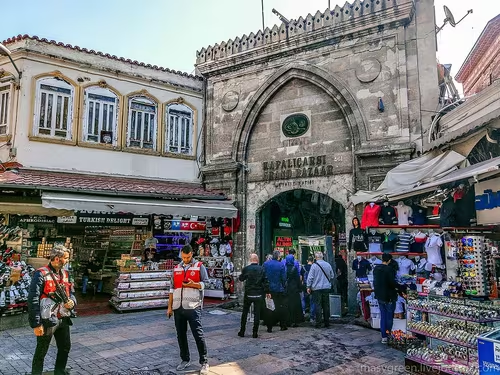
June in Istanbul
High25°C / 78°F
Low18°C
Rain56mm / 9 rainy days
Sun12.8 h/day
Daylight15 h/day
Humidity77%
Crowds●●●●○Prices●●●●○
June opens the summer warm at 25°C, mostly dry, with the year's longest days at over 15 hours of light, golden until past 20:30. It is the best pre-peak window before July's heat lands. Cruise season peaks, and the 54th Music Festival (11 to 25 June) stages 22 concerts in venues including the Grand Bazaar and Yıldız Park. The Bosphorus turns swimmable at around 20°C, and the city stretches its evenings outdoors.
The vibe June is the tipping point, comfortably warm by day and luminous in the long evenings, but the cruise ships and the first wave of school holidays are already filling the bazaar corridors. Catch it early in the month for summer light without full summer pressure.
Don't miss A classical concert inside the Grand Bazaar during the Music Festival is unmissable, with tickets €20 to €80. The free municipal Istanbul Guitar Days (12 to 14 June) bring open-air evening concerts to city squares.
Crowd drivers Cruise season peaks, the Music Festival adds a culture crowd, and European school holidays begin in the last week of June.
In season Cherry and apricot season hits the markets, and the first balık-ekmek (grilled fish sandwich) boats at Galata Bridge get busy in the warm evenings.
Hotel averages near $145 a night as cruise season peaks and European school holidays start late in the month.
Events this month
🎵 MusicIstanbul Music Festival İstanbul Müzik Festivali
Jun 11–25 ~
Roughly two weeks in mid-June each year. Exact dates shift slightly; check the IKSV website for the current edition.
An IKSV classical-music festival of 22 concerts across 14 venues including the Grand Bazaar, Yıldız Park and the Atatürk Cultural Centre, with orchestras such as the Wiener Symphoniker and world premieres. Tickets run €20 to €80.
World-class classical music in unique Ottoman settings; the concert held inside the Grand Bazaar is the unmissable one.
🎵 MusicIstanbul Guitar Days İstanbul Gitar Günleri
Jun 12–14 ~
A long weekend in mid-June each year. Exact dates vary; check the Istanbul municipality website for the current edition.
A free municipal outdoor concert series staged across various city districts, part of the city's free summer festival calendar.
Free, accessible and a good evening's entertainment without a ticket, scattered across neighbourhood stages.
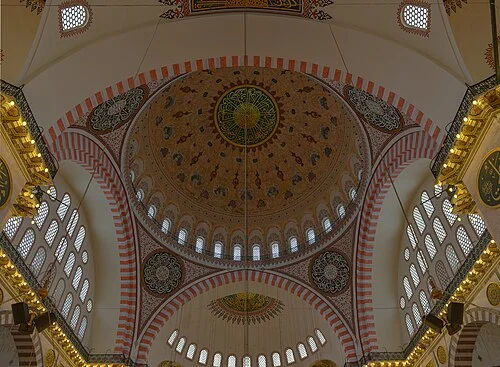
July in Istanbul
High28°C / 83°F
Low21°C
Rain31mm / 5 rainy days
Sun13.5 h/day
Daylight15 h/day
Humidity71%
Crowds●●●●●Prices●●●●●
July is the busiest month, with EU and US summer holidays flooding the city and cruise ships at peak, up to 15,000 passengers a day through Galataport. Afternoon highs hit 32 to 37°C with Bosphorus humidity, and the stone climbs of Sultanahmet between Topkapi and the Blue Mosque are genuinely punishing by 13:00. Do your outdoor sightseeing before 11:00 or after 17:00, and use the air-conditioned bazaars as midday refuges. The Jazz Festival runs in early-to-mid July.
The vibe July is for people who do not mind queuing in 35°C heat at peak prices to do it. Midday is a write-off. But a jazz set under the open sky, a late ferry across a cooling Bosphorus, or a swim off Kilyos are a different Istanbul, and worth chasing in the early and late hours. A private human guide here costs a premium and books out; our live AI guide stays a flat €5 an hour any day, so you can start before the heat and ask it anything as you walk.
Don't miss The Jazz Festival (1 to 13 July, tickets €30 to €120, around 200 artists) plays indoor and open-air venues. The Bosphorus and Sea of Marmara are warm enough to swim, and Kilyos beach on the Black Sea side is 45 minutes from the centre.
Crowd drivers Every major European school system is on summer break at once, cruise season is at its peak via Galataport, and the international flight schedule is at its densest.
In season Watermelon (karpuz) sold whole from carts everywhere, and dondurma, the stretchy mastic ice cream, is less a treat than a survival strategy in the heat.
Heads up Topkapi Palace closes every Tuesday and the Grand Bazaar every Sunday. Hagia Sophia shuts to tourists five times daily for prayer; the Asr closure around 16:30 to 17:15 is the most disruptive in summer.
Peak prices, with hotel averages near $160 a night and Topkapi queues of 40 to 120 minutes without skip-the-line.
Events this month
🎵 MusicIstanbul Jazz Festival İstanbul Caz Festivali
Jun 30 – Jul 13 ~
Roughly two weeks spanning late June into mid-July each year. Exact dates shift slightly; check the IKSV website for the current edition.
An IKSV festival of around 30 concerts and 200 artists in indoor and open-air venues, with headliners that have included Robert Plant and Marcus Miller. Tickets run €30 to €120.
One of Europe's top jazz festivals, though it overlaps peak tourist season, so plan and book weeks ahead.
🎵 MusicInternational Istanbul Vocal Days Uluslararası İstanbul Vokal Günleri
Jul 24–26 ~
A weekend in late July. A newer festival; check the Istanbul municipality website for current dates and whether the event is running.
An inaugural free municipal vocal and choral festival, part of the city's free summer calendar.
A new, free, family-friendly event that adds an evening option during the busy peak season.
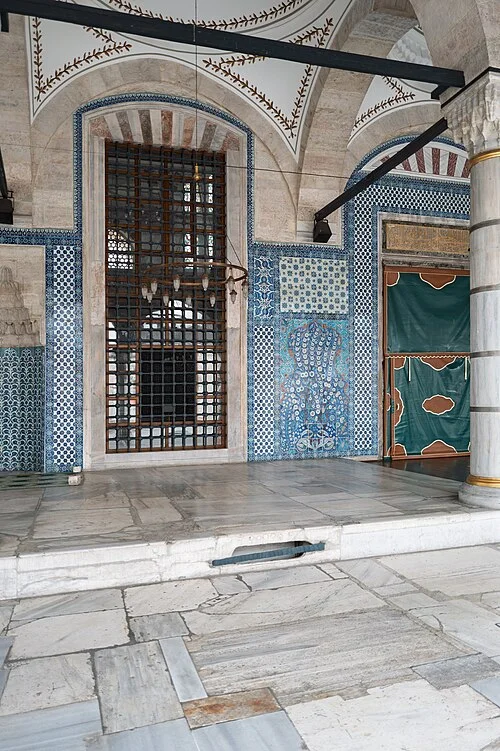
August in Istanbul
High29°C / 84°F
Low22°C
Rain21mm / 4 rainy days
Sun12.6 h/day
Daylight14 h/day
Humidity72%
Crowds●●●●●Prices●●●●●
August is the peak of the school-holiday season and the hottest month, with highs around 29°C on the normals but afternoons routinely hitting 32 to 37°C with high humidity. It is the driest month (just four rainy days), but the heat off the water is draining and the sea is at its warmest, around 25°C. The Bosphorus Cross-Continental Swim on 23 August sends roughly 2,500 swimmers from Asia to Europe and suspends ferries for about two hours. Plan sights early, retreat to the bazaars by midday.
The vibe August is survival-mode Istanbul, not romantic-empty Istanbul. The heat is physically tiring rather than photogenic, the crowds are international and relentless, and the bazaar corridors clog whenever cruise ships dock. If you must come, do the big sights before 09:00 and treat the air-conditioned bazaars and ferries as your midday escape.
Don't miss Watch the Bosphorus Cross-Continental Swim on 23 August from the European shore, a 6.5 km race that shuts shipping for about two hours. The free municipal Istanbul Percussion Days (14 to 16 August) bring open-air shows to the city.
Crowd drivers The school-holiday peak continues across Europe, cruise calls stay heavy, and the heat pushes everyone toward the same shaded sights at the same hours.
In season Figs and the first melons are at their peak and cheapest; cool ayran, the salted yoghurt drink, is the standard summer thirst-quencher.
Heads up Topkapi closes every Tuesday and the Grand Bazaar every Sunday. Bosphorus ferries are suspended for about two hours during the Cross-Continental Swim on 23 August.
The busiest month: some midrange hotels run €180-plus a night; book three or more months ahead.
Events this month
🏃 SportBosphorus Cross-Continental Swim Boğaziçi Kıtalararası Yüzme Yarışı
Aug 23 ~
A single day in late August each year. The exact date varies; check bogaziciyuzme.org for the current year's date.
Around 2,500 swimmers cross 6.5 km from Asia to Europe across the Bosphorus, which closes to shipping for about two hours during the race. The best spectator spots are on the European shore.
A unique only-in-Istanbul spectacle, swimming between two continents. Note that Bosphorus ferries are suspended during the race window.
🎵 MusicIstanbul Percussion Days İstanbul Perküsyon Günleri
Aug 14–16 ~
A weekend in mid-August each year. Exact dates vary; check the Istanbul municipality website for the current edition.
A free municipal percussion festival, part of the city's free summer festival programme.
Free summer entertainment and a welcome cool-evening distraction in the city's hottest month.
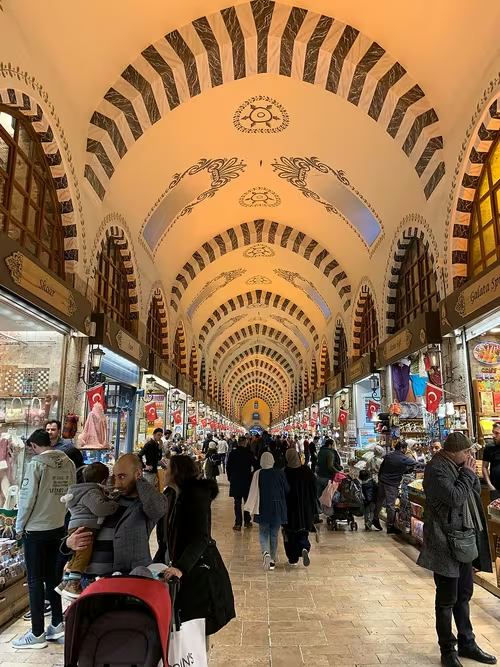
September in Istanbul
High25°C / 77°F
Low18°C
Rain49mm / 7 rainy days
Sun10.9 h/day
Daylight12 h/day
Humidity72%
Crowds●●●○○Prices●●●○○
September is the autumn sweet spot. European schools restart and crowds fall by around 30% from mid-month, while highs stay a warm 25°C and the Bosphorus is still swimmable at about 23°C. Rain is light at seven days, and the historic peninsula is comfortable to walk all day again. Topkapi queues become manageable and prices ease, making this one of the two best windows of the year alongside April.
The vibe September is the version of summer Istanbul should have been: still warm, still swimmable, but with the August crush draining away week by week. The light softens, the bazaars breathe again, and the city feels like itself rather than a queue.
Don't miss The fishermen's season opens on 1 September, so meyhanes start serving fresh hamsi and bluefish, and the balık-ekmek boats at Galata Bridge are at their best. The Bosphorus stays warm enough for a final swim of the year.
Crowd drivers European school restart slashes crowds by around 30% from mid-September; cruise ships still call but in declining numbers.
In season Fresh figs, the first pomegranates and new-season Anatolian hazelnuts fill the Spice Bazaar; bluefish (lüfer) returns to the meyhane menus.
Prices drop 20 to 30% from August once European schools restart; book four to six weeks out.
October in Istanbul
High20°C / 68°F
Low14°C
Rain62mm / 8 rainy days
Sun8.2 h/day
Daylight11 h/day
Humidity78%
Crowds●●●○○Prices●●●○○
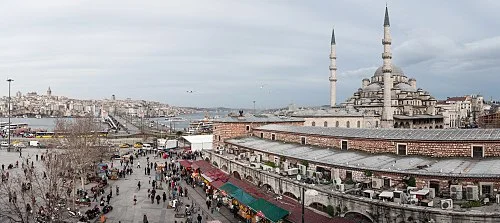
October keeps the autumn run going, with highs around 20°C, golden light for photos and the foliage turning in Belgrad Forest and Yıldız Park from mid-month. Rain steps up a little to eight days but stays manageable. Filmekimi (9 to 18 October) brings Cannes, Berlin and Venice selections to the cinemas with smaller crowds than spring. Republic Day on 29 October is the year's biggest national celebration, with the best Bosphorus fireworks of the year.
The vibe October is the quietly perfect month: warm enough to be outside all day, the light at its most flattering on the water, and the summer machine finally switched off. The one busy beat is Republic Day, when the whole city turns out for fireworks over the bridge.
Don't miss Watch the Republic Day fireworks over the Bosphorus Bridge from Ortaköy, Beşiktaş or Üsküdar (public transport runs free that day). Autumn foliage turns Belgrad Forest and Yıldız Park gold from mid-October.
Crowd drivers Republic Day (29 October) draws a domestic surge and sells out waterfront hotels; the European half-term at the end of October adds families.
In season The Kadıköy morning market is at its autumn-harvest peak, and roasted chestnut (kestane) carts return to the streets as the air cools.
Heads up Topkapi closes every Tuesday and the Grand Bazaar every Sunday. On Republic Day (29 October) public transport is free, which crowds ferries and metro heavily, so travel before 10:00.
Mostly easy, but Republic Day weekend (29 October) sells out Bosphorus-district hotels; rates run £187 to £287 a night by area.
Events this month
🎬 FilmFilmekimi
Oct 9–18 ~
Around 10 days in mid-October each year. Exact dates shift slightly; check the IKSV website for the current edition.
Istanbul's autumn film festival, run by IKSV, screening Cannes, Berlin and Venice selections across the city's cinemas. Tickets run roughly €8 to €12.
An excellent October event with far lower crowds than the spring Film Festival, a quiet cultural highlight of the autumn shoulder season.
🇮 HolidayRepublic Day Cumhuriyet Bayramı
Oct 29
29 October every year, marking the 1923 founding of the Republic.
Turkey's largest national celebration. Fireworks light up the Bosphorus Bridge in the evening, best seen from Ortaköy, Beşiktaş or Üsküdar, and public transport runs free all day. Sights stay open while government offices close.
The best fireworks of the year over the Bosphorus from any waterfront vantage point; book a waterside spot early, as Bosphorus-district hotels sell out.
November in Istanbul
High16°C / 61°F
Low10°C
Rain82mm / 9 rainy days
Sun7.0 h/day
Daylight10 h/day
Humidity79%
Crowds●●○○○Prices●●○○○
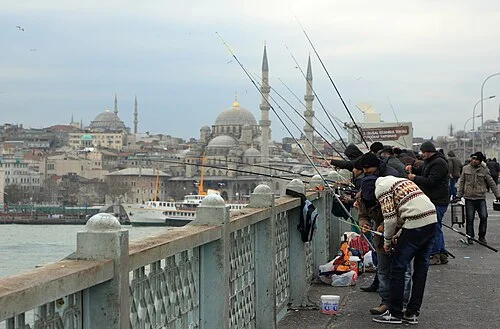
November is low season and the wettest month, with around 82 to 100 mm of rain and highs near 16°C. Fog can cancel Bosphorus ferries to Kadıköy and the Princes' Islands on some mornings, so keep plans flexible. Domestic tourists are minimal and prices drop sharply, making it the last quiet window before the festive season. Showers tend to be moderate rather than all-day, so a waterproof and a flexible plan see you through.
The vibe November is moody, atmospheric Istanbul, the Bosphorus wrapped in fog and the bazaars all but empty. If you want Sultanahmet without the crowds and do not mind grey skies and the odd cancelled ferry, the prices reward you handsomely.
Don't miss The last of the autumn foliage lingers in Belgrad Forest into early November, and photogenic Bosphorus fog rolls in on cool mornings, dramatic if you can work around the ferry disruptions.
Crowd drivers Off-season with minimal domestic tourism and cruise calls largely over. The lowest visitor pressure outside deep winter.
In season Quince and the first kumquats reach the markets, and hot salep returns to street vendors as the temperature drops.
Heads up The Grand Bazaar is closed every Sunday. Morning fog can suspend Bosphorus ferries to Kadıköy and the Princes' Islands on short notice.
Low-season deals run 30 to 40% below summer; the last chance for a quiet Sultanahmet.
December in Istanbul
High11°C / 53°F
Low6°C
Rain87mm / 13 rainy days
Sun5.5 h/day
Daylight9 h/day
Humidity80%
Crowds●○○○○Prices●●○○○
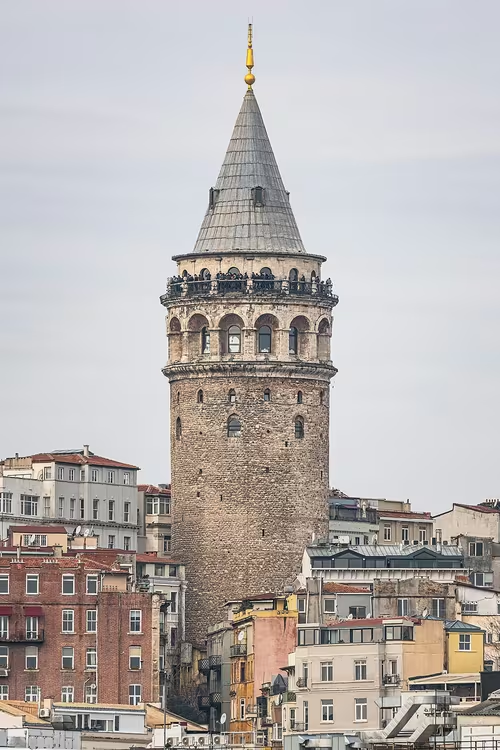
December is quiet, cool and damp, with highs near 11°C, 13 rainy days and the year's heaviest rainfall at around 87 to 103 mm. A Christmas-market vibe takes over the expat and tourist zones, and Şeb-i Arus on 17 December marks the anniversary of Rumi's death with whirling-dervish ceremonies. Galata Tower has no queue. The exception is New Year's week, when the city turns festive and hotels fill, so book those dates ahead.
The vibe December is winter Istanbul at a bargain, foggy and atmospheric, with the dervishes turning and the bazaars calm. New Year's Eve is the one loud night, when Taksim and the bridge areas pack out and hotel prices jump for that single week.
Don't miss Şeb-i Arus on 17 December brings the authentic whirling-dervish sema to the Galata Mevlevi Museum; the regular Sunday 17:00 ceremony runs year-round, and Hodjapasha stages daily shows at 19:00.
Crowd drivers Quiet all month except the Şeb-i Arus week around 17 December and the New Year's Eve spike, when hotels in Taksim and the Bosphorus districts book out.
In season Peak season for warming kestane şekeri (candied chestnuts) and hot boza with cinnamon, sold from the city's winter street carts.
Heads up The Grand Bazaar is closed every Sunday and on 1 January. Winter fog can suspend Bosphorus ferries on some mornings.
Quiet and cheap except New Year's week, with budget hotels from around $40 a night.
Events this month
⛪ ReligiousŞeb-i Arus (Mevlana Anniversary) Şeb-i Arus
Dec 17
17 December every year, the anniversary of Rumi's death.
The anniversary of Rumi's death, marked by whirling-dervish sema ceremonies across the city. The Galata Mevlevi Museum stages a special ceremony on 17 December; the regular sema runs Sundays at 17:00 year-round, and Hodjapasha has daily shows at 19:00.
A deeply spiritual experience; the Galata Mevlevi tekke is the authentic venue, with formal sema requiring a ticket.
Frequently asked questions
What is the best time to visit Istanbul?
April, September and October are the best months. April brings the Tulip Festival, the Film Festival and ideal 16°C walking weather. September and October deliver warm 20 to 25°C days, golden light, a Bosphorus still swimmable at 23°C in September, and prices that drop 20 to 30% from the August peak as the summer crowds clear out.
What are the cheapest months to visit Istanbul?
January and February are the cheapest months, with hotel averages near $50 a night, roughly a third of the August rate, and no queues at Topkapi, Hagia Sophia or the Galata Tower. The trade-off is cool 9 to 10°C highs, grey skies and 11 to 13 rainy days, plus the occasional fog that cancels Bosphorus ferries.
When should I avoid visiting Istanbul?
Avoid July and August for comfort: 32 to 37°C afternoons with humidity, peak prices near $160 to $180 a night, Topkapi queues of 40 to 120 minutes, and up to 15,000 cruise passengers a day clogging the bazaars. Also dodge the Kurban Bayramı long weekend (26 to 30 May 2026), when the Grand Bazaar and Spice Bazaar close for four days.
Is Istanbul hot in summer?
Yes. While the climate normals show August highs around 29°C, afternoons routinely hit 32 to 37°C with heavy Bosphorus humidity, and the stone climbs of Sultanahmet amplify the heat. Walking between Topkapi and the Blue Mosque at 13:00 in August is punishing. Do outdoor sightseeing before 11:00 or after 17:00, and use the partly air-conditioned bazaars as midday refuges.
Can you swim in Istanbul, and when?
Yes, from June to September. The Bosphorus and Sea of Marmara reach 20 to 25°C in summer, peaking around 25°C in August, while September still holds about 23°C. Kilyos beach on the Black Sea side (45 minutes from the centre) opens in June, as does Şile on the Asian side. From October to May the water drops below 20°C and is too cold for most swimmers.
What is Istanbul like during Ramadan?
Ramadan (around 19 February to 18 March 2026) is one of the city's most atmospheric and authentic windows. Daytime bazaars go quiet, mosques fill for night prayers, and Sultanahmet is illuminated after dark for iftar. Tourist restaurants stay open all day, so you eat normally. Just avoid the sunset taxi blackout around 18:30 to 19:30, when finding a cab is nearly impossible.
Which days are the Grand Bazaar and Topkapi closed?
The Grand Bazaar is closed every Sunday and open Monday to Saturday 08:30 to 19:00. Topkapi Palace is closed every Tuesday, so pair it with Hagia Sophia and the Basilica Cistern on Tuesdays instead. Both bazaars also close for all of Eid al-Fitr (19 to 22 March) and Eid al-Adha (26 to 30 May 2026). Dolmabahçe Palace is closed every Monday.
How many days do I need in Istanbul?
Three days cover the essentials: Hagia Sophia, the Blue Mosque, Topkapi and the Basilica Cistern in Sultanahmet, the Grand and Spice Bazaars, and a Bosphorus ferry. Four to five days let you add Dolmabahçe Palace, the Galata and Beyoğlu side, and the Asian shore at Kadıköy and Üsküdar. A week opens up a Princes' Islands day trip and the neighbourhood life beyond the sights.
What is Istanbul like in December?
December is quiet, cool and damp, with highs near 11°C, 13 rainy days and the heaviest rainfall of the year. A Christmas-market vibe takes over the tourist and expat zones, and Şeb-i Arus on 17 December brings whirling-dervish ceremonies. Galata Tower has no queue and budget hotels start around $40 a night, except during New Year's week, when the city fills and prices jump.

Any month, any day: your guide is already there
Whatever date you pick, a private human guide gets pricier and harder to book on weekends, holidays and in peak season. Our live AI guide, the one that walks with you and answers anything you ask out loud, works the opposite way.
One flat price, every day
No holiday, weekend, night or peak-season surcharge. A private guide in Istanbul runs well over 100 euro for a half day, and more on holidays. Ours stays the same.
Available the moment you want it
Start at midnight or at dawn, on Christmas, in the snow, in the August heat. No sold-out high season, no booking weeks ahead.
Your pace, no meter running
Pause for a long lunch, restart after dark, repeat a stop. The tour simply waits for you.
Free to try, a fraction of the cost
Test it for free, then a transparent flat price that undercuts any private guide, in every season.
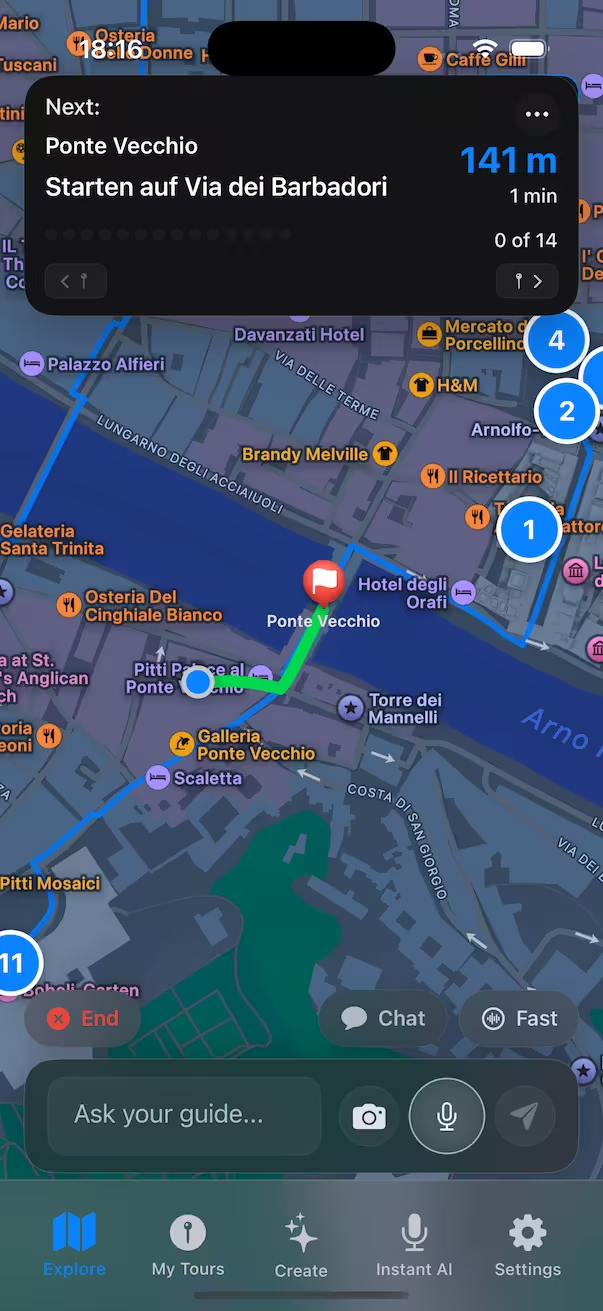
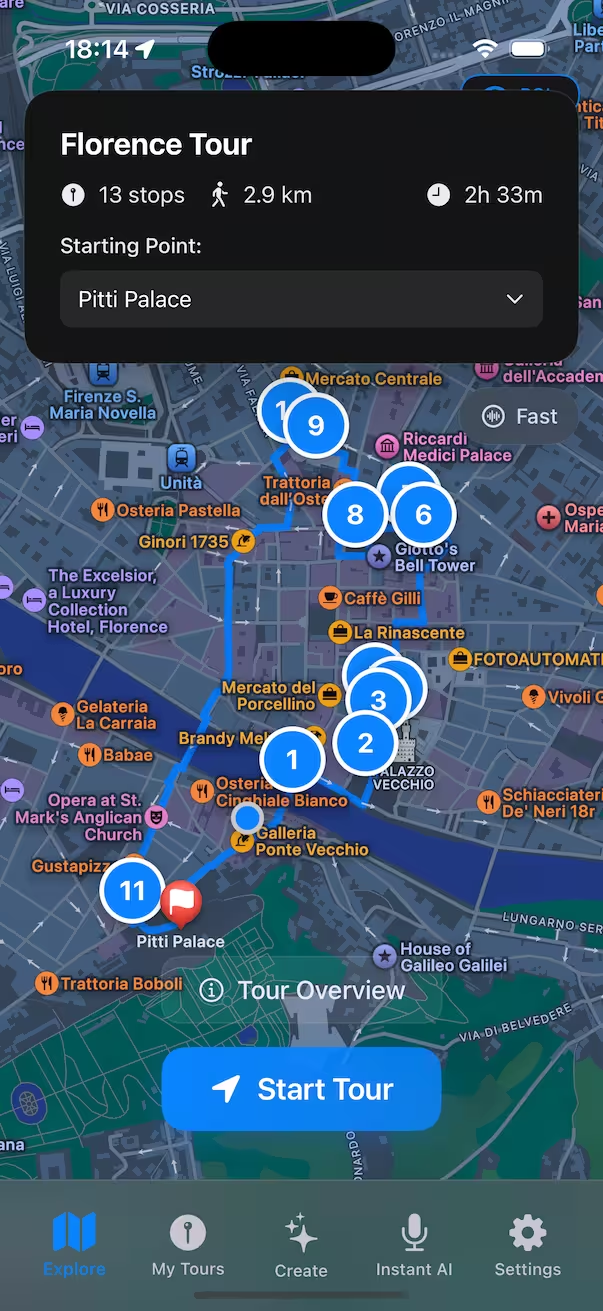
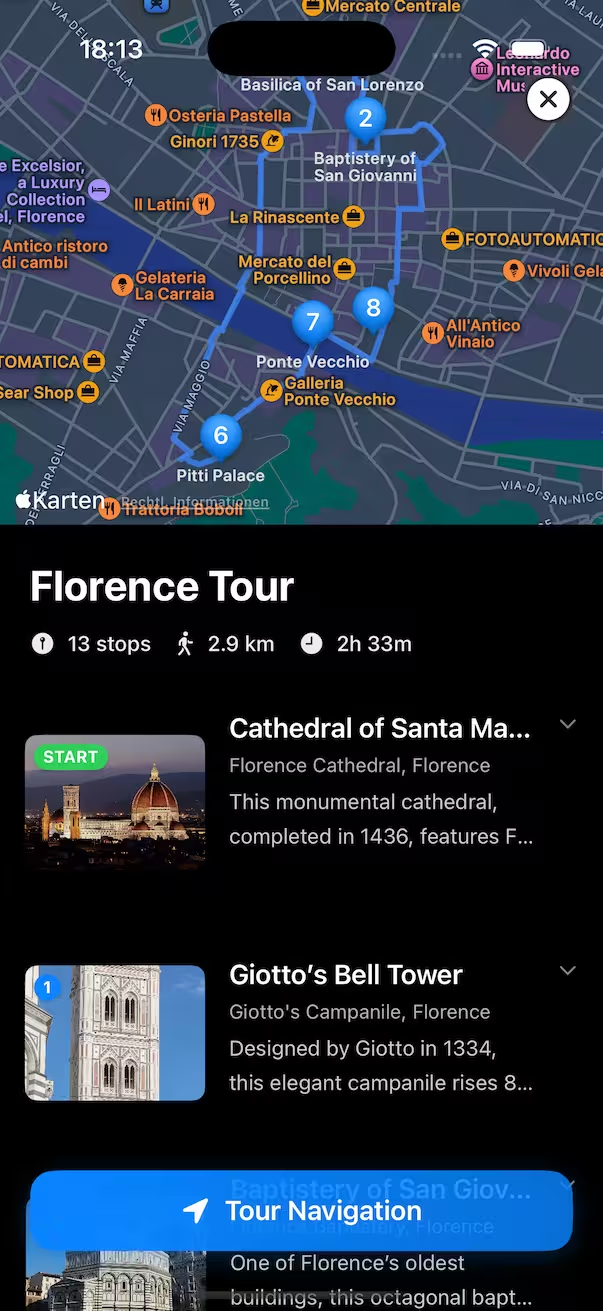
The classic Istanbul tour: 14 stops, 9.7 km, about 4 h on foot
Your live AI guide and the self-guided Istanbul route, together in your browser.