
Florence to Assisi Day Trip: Train Times, Costs & Honest Plan
The regional train is the right call from Firenze SMN, but Assisi station sits in the valley below the old town, so the last mile is a 15-minute bus or taxi up the hill. Here is the honest day plan, the time math, and a free, self-guided walking tour that takes the planning off your hands once you reach the walls.
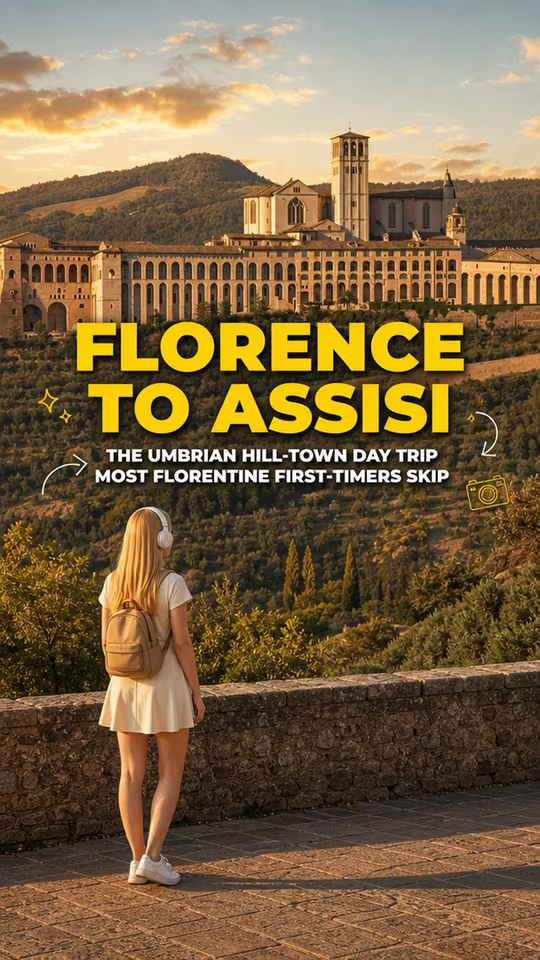
The Quick Answer: Florence to Assisi
The smart way from Florence to Assisi is the regional train, and there is no real debate about it. Trenitalia runs roughly five direct services a day from Firenze Santa Maria Novella (SMN) to Assisi station, in about 1 hour 45 minutes on the faster Intercity or 2 hours 35 minutes on the standard regional, for €15 to €20 one way. There is no high-speed option, no reservation required on regionals, and the fare is fixed by the government, so booking weeks ahead saves you nothing on price. The catch is geography, and it is the one thing every other guide hand-waves: Assisi station (Santa Maria degli Angeli) sits in the valley, 5 km below the old town, so the last mile is a 15 to 20-minute local bus or a €15 taxi up the hill. Build that into the time math, or the day goes sideways.
The car is fast on paper, around 1 hour 50 minutes on the A1, but parking outside the medieval walls is a chore and the train lets you actually look at the Umbrian countryside. FlixBus is cheaper from €13 but slower and departs from Villa Costanza on the edge of Florence, not SMN. As a day trip, Assisi is doable but long, and it eats a full day for a small hill town, so read the worth-it section before you commit.
| Question | Answer |
|---|---|
| Fastest journey time | ~1h45 on the Intercity (twice daily). Standard regional ~2h35. Avoid the 3+ hour services with two changes |
| Frequency | ~5 trains Mon-Sat, 6 on Sunday. First around 6:30-7:00 AM, last comfortable return around 19:00-20:00 |
| Price from | €7.90 if booked far in advance; typical regional €15-€20, Intercity €20-€30. Round trip €30-€40 |
| Operators / how | Trenitalia only. Depart Firenze SMN, arrive Assisi (Santa Maria degli Angeli). Then bus C or taxi up to the old town |
| First / last | First departure around 6:30 AM. Last return from Assisi around 21:00 absolute, but the last comfortable connection is closer to 19:00-20:00 |
| Worth it as a day trip? | Yes for the right traveller: Catholics, art lovers, anyone craving contrast to Florence. No if you only have 2-3 days in Florence itself |
Is the Florence to Assisi Day Trip Worth It?
Here is our honest verdict up front: Assisi is one of the most rewarding day trips you can take from Florence, and also one of the easiest to regret. Both things are true, and which side you land on depends almost entirely on how many days you have in Florence and how interested you are in churches.
The best of Assisi, stop by stop


The case for going is strong. Assisi is a UNESCO-listed medieval ridge town on the side of Monte Subasio, golden-stone and quiet, with two world-class basilicas bookending a single walkable street, a Roman temple on the main square, and a fortress above it all. The contrast with Florence is the whole point: where Florence is dense, urban and bustling, Assisi is small, vertical, calm and unmistakably religious. The Basilica di San Francesco holds Giotto's 28-fresco cycle of the life of St Francis, and that cycle is genuinely one of the founding works of Western art. The main sights are free. The food is the hearty, truffle-heavy Umbrian kind that tastes nothing like Tuscan cuisine. For the right traveller, this is the day they remember.
The case against is just as honest. Assisi eats a full day for a small town, and the transit each way is genuinely long, around 2 to 3 hours door to door including the station-to-hill bus. If you only have two or three days in Florence, Florence deserves that day, full stop. The basilicas are the main draw, so if religious art and Franciscan history leave you cold, the payoff drops sharply. And 2026 is a special year: the 800th anniversary of St Francis's death (1226), a Jubilee Year, and the recent April 2025 canonization of Carlo Acutis, whose tomb at the Sanctuary of the Renunciation is now a major pilgrimage draw. Crowds will be heavier than usual.
For Catholics, art lovers and anyone craving contrast to Florence: go. A UNESCO medieval ridge town with Giotto's founding fresco cycle and free entry at the big sights.
If you only have two or three days in Florence, give Florence the day. And if churches leave you cold, the payoff here is lower than the transit costs.
Our call: with five or more days in Florence, an early start, and any interest at all in art, architecture or the Franciscan story, Assisi is one of the best day trips you can make. With three days in Florence, or with no interest in religious sites, skip it and go to Siena or Lucca instead.
Good fit if you...
- Have at least 5 days in Florence and can spare a full day
- Are Catholic, spiritually curious, or moved by religious art and architecture
- Want contrast: a quiet, vertical, medieval hill town after Florence's flat-out bustle
- Are happy on a train for ~2 hours each way with a bus at the end
Skip it (save Assisi) if you...
- Only have 2-3 days in Florence, full stop
- Are not interested in churches, frescoes or Franciscan history
- Hate long travel days for a small destination
- Were hoping to bolt Perugia or Spoleto onto the same day, because you cannot do either well alongside Assisi
How to Get from Florence to Assisi by Train
You can reach Assisi from Florence four realistic ways across the roughly 175 km between them, and the surprise is that there is no high-speed rail shortcut. The train is the clear winner for day-tripping, the bus is cheaper but slower and awkwardly placed, the car is fast but fights you for parking, and the FlixBus departs from the wrong station.

| Mode | Time | Price | Verdict |
|---|---|---|---|
| Regional / Intercity train (Trenitalia) | ~1h45 IC to ~2h35 regional | €15-€20 regional, €20-€30 IC | WINNER. Frequent enough, fixed fare, no reservation needed, drops you in the valley for an easy bus up |
| FlixBus | ~2h25+ | from €13 | Cheaper but slower, and departs from Villa Costanza (edge of Florence, metro T2), not SMN. Thin schedule |
| Car (A1/E35) | ~1h50 | fuel + ~€10 tolls + parking | Fastest on paper, worst in practice. Must park outside the walls, lots fill on busy days |
| Combined train + bus (Foligno change) | 2h55-3h30 | €15-€20 | Only when direct trains don't align. Avoid unless you have no choice |
| Taxi / private transfer | ~1h50 | €200-€700 | A genuine trap. Several sources warn against paying hundreds for what is a €30 train ride |
The train wins for one geographic reason nothing else can match: it is the only mode that lets you actually see the Umbrian countryside roll past, and you arrive relaxed. The catch, and it is a real one, is that Assisi station is not in Assisi. The station is in the valley town of Santa Maria degli Angeli, 5 km below the old hill town, and you need a local bus (line C, ~15-20 minutes, around €1.50-€2) or a taxi (~€15) to get up to the walls. This is the part most travellers get wrong, so build it into the time math from the start.
The car is the most tempting alternative and the worst idea in practice. It is faster on the motorway, but only residents may drive into the old town, so you leave the car in a paid lot outside the walls and walk up the same steep lanes anyway. On a Jubilee Year weekend those lots fill by mid-morning.
The Train in Detail
There is no high-speed rail on this route and you do not need it. Trenitalia runs the line from Firenze Santa Maria Novella (SMN) to Assisi (official station name: Assisi, in the frazione of Santa Maria degli Angeli). The fastest services are the Intercity (IC) trains, around 1 hour 45 minutes, running roughly twice daily. The standard Regionale services take 2 hours 35 minutes, with around five trains a day Monday to Saturday and six on Sunday. Some connections require a change at Foligno, pushing the journey past three hours; filter those out unless they are the only option.
A few things about these trains surprise first-timers. Regionale tickets have no reserved seats and no dynamic pricing: the fare is fixed by the government at roughly €15-€20 one way, so booking weeks ahead saves you nothing. You can buy at the station up to five minutes before departure, on the Trenitalia app, or at the ticket machines. Validation matters: paper regional tickets must be stamped in the green and yellow platform machines before boarding, while mobile tickets are validated in the app. Intercity services do have reserved seats and a small premium, around €20-€30, and they are worth the few extra euros when the timing lines up.
Intercity or Regionale, which to book?
Book the Intercity when the timing works. It is 45 to 50 minutes faster each way, the seat is reserved, and the small premium is genuinely worth it on a day when you are trying to bank sightseeing hours. The Regionale is the right call when the IC schedule does not fit your plan, because the fare saving is real and the slower train still runs the same scenic route.
| Compare | Intercity (IC) | Regionale |
|---|---|---|
| Time | ~1h45 | ~2h35 |
| Reservation | Reserved seat | No reservation, first come first served |
| Price | ~€20-€30 | ~€15-€20 |
| Frequency | ~2 per day | ~5 per day Mon-Sat, 6 Sun |
| Best for | Banking sightseeing hours | Schedule flexibility, saving €5-€10 |
Booking Strategy
This is an easy booking section because the regional fare is fixed and there is no dynamic pricing to game. A few moves still save hassle.
Buy a return in Florence. A round trip lands around €30-€40 depending on whether you mix IC and Regionale, and buying both legs at SMN or on the Trenitalia app saves you queueing at Assisi on the way back.
Use the Trenitalia app. Mobile tickets and live train tracking spare you the station queue and the platform validation machine, and they handle service disruptions cleanly on a route where the timetable is thinner than the Florence-Rome mainline.
Skip third-party resellers. There is no discount to chase on a fixed regional fare, so book direct with Trenitalia.
Filter for direct services. Some journeys route via a change at Foligno and add 30-60 minutes; unless that is the only option, pick a direct train.
Check the timetable the night before. Service is thinner than on the Florence-Rome axis, and the last comfortable return is closer to 19:00-20:00 than to midnight.
Booking checklist
- Buy a round-trip ticket at Firenze SMN or on the Trenitalia app, mixing IC and Regionale as the schedule allows.
- Confirm it is a direct ~1h45 IC or ~2h35 Regionale, not a Foligno change.
- Validate a paper Regionale ticket in the green and yellow platform machine before boarding (mobile tickets self-validate in the app).
- Check the last sensible return the evening before, since weekend and holiday service thins out after 19:00.
- Aim for the second-to-last train home, not the absolute last, so a missed connection does not strand you.
Assisi in One Day
Here is the part most day-trip guides bury, and it is the whole point: you do not need to plan a route. The local bus from the station drops you at the western end of the old town, near Porta San Pietro. You step off, walk five minutes up into the walls, and you are standing at the top of the medieval ridge with the Basilica of San Francesco in front of you. Open our free self-guided Assisi tour the moment you arrive, start it from wherever you are standing, and the voice guide walks the ridge with you, stop by stop, all the way down to Santa Chiara at the far end. No parking hunt, no shuttle, no printed map, no decisions about what to see first. The walk in from the bus stop becomes the first beat of the day rather than a logistics problem.

The time math
Take an early train, around 6:30-7:00 AM from SMN, and you are stepping off at Assisi station by about 9:00-9:45 AM. Add 20 minutes for the bus up to the old town and you are on the ridge by 10:00-10:15 AM. Catch the second-to-last sensible train back, roughly 19:00 from Assisi station (so leave the old town by 18:00 to bus down), and you get around seven usable hours inside the walls, enough for both basilicas, the temple, the fortress, lunch on Piazza del Comune and a slow gelato. The single biggest mistake is treating Assisi like a quick stop: it is a full day, and the climb to the Rocca is steep enough that rushing punishes you. Lock in the early train, accept the long transit, and plan a real day, not a half-day.
What you'll see
Here is what a day-tripper should not miss, with the practical reality attached:
- Basilica of San Francesco (free; daily, Upper Church 8:30 AM-7:00 PM summer / 8:30 AM-5:00 PM winter, Lower Church from 6:00 AM): the UNESCO anchor, two stacked churches over St Francis's tomb, with Giotto's 28-fresco cycle in the Upper Church and Cimabue and Simone Martini below. No photos inside, knees and shoulders covered. The single most important thing in town, full stop.
- Temple of Minerva and Piazza del Comune (free; daily 8:00 AM-8:00 PM inside the church): six Augustan Corinthian columns on the main square, one of the best-preserved Roman temples anywhere, with a Baroque church hollowed out behind the ancient façade. The natural mid-walk pause.
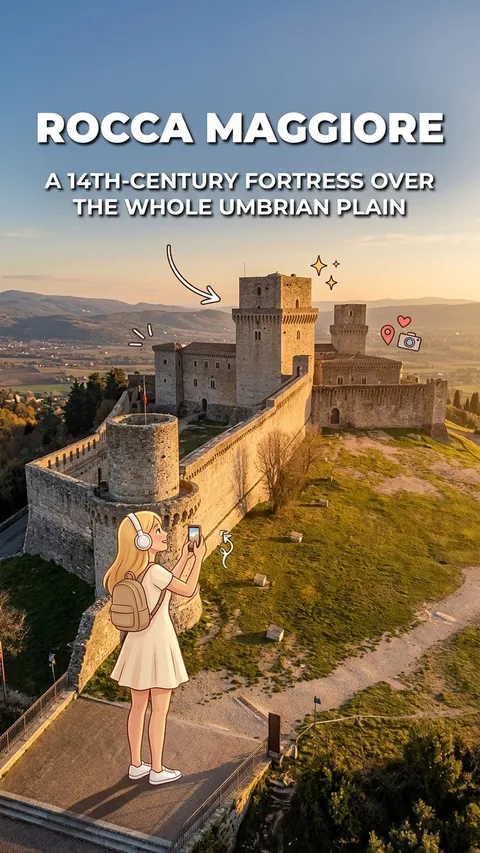
- Rocca Maggiore (€6, or €10 combo with Roman Forum; daily 10:00 AM-7:15 PM): the 14th-century hilltop fortress above town, with the best panorama of Assisi and the Umbrian valley. The walls are bare inside, so if you are tired, the free view from the open ground outside the gate is nearly as good.
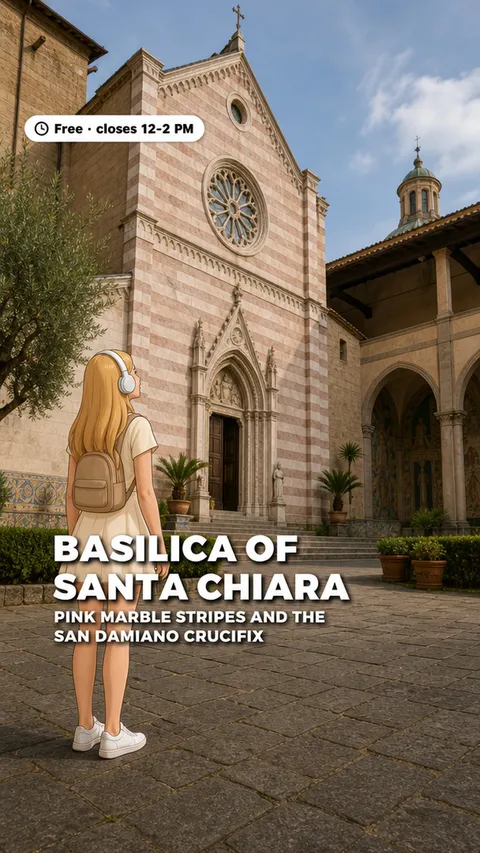
- Basilica of Santa Chiara (free; daily 6:30 AM-12:00 PM and 2:00-6:00 PM): pink-and-white striped marble, flying buttresses, the tomb of St Clare and the original painted San Damiano crucifix. Closes at lunch, so plan around it.
- Cattedrale di San Rufino (free; daily 7:00 AM-7:30 PM): the Romanesque cathedral whose font baptised both Francis and Clare. Ten or fifteen minutes covers it unless you pay for the diocesan museum and Roman crypt below.
The route the tour walks with you
Instead of a generic "see the basilica, then the square" list, you walk one efficient ridge route and the tour walks it with you. This is the six-stop order, a roughly 1.6 km line from the Basilica di San Francesco at the western end up over the Rocca and down to Santa Chiara at the east, starting where the bus drops you:
- 1Basilica di San Francesco Free · your start
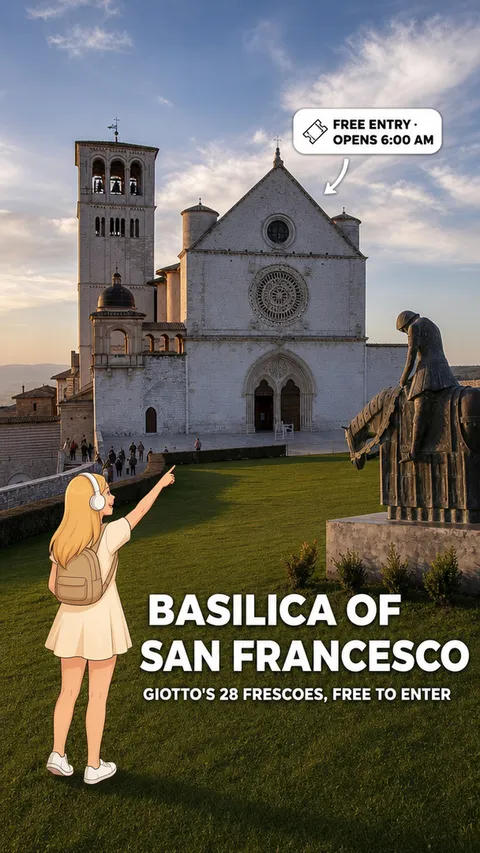
The anchor of the whole town, two churches stacked over St Francis's tomb since 1228. Go down to the Lower Church first for the dim Cimabue and Lorenzetti frescoes, then up to the bright Upper Church for Giotto's 28-scene cycle of Francis's life. Free entry, opens daily 6:00 AM to 7:00 PM, give it a full hour. No photos, knees and shoulders covered, and arrive early before the tour buses unload mid-morning.
- 2Temple of Minerva Free
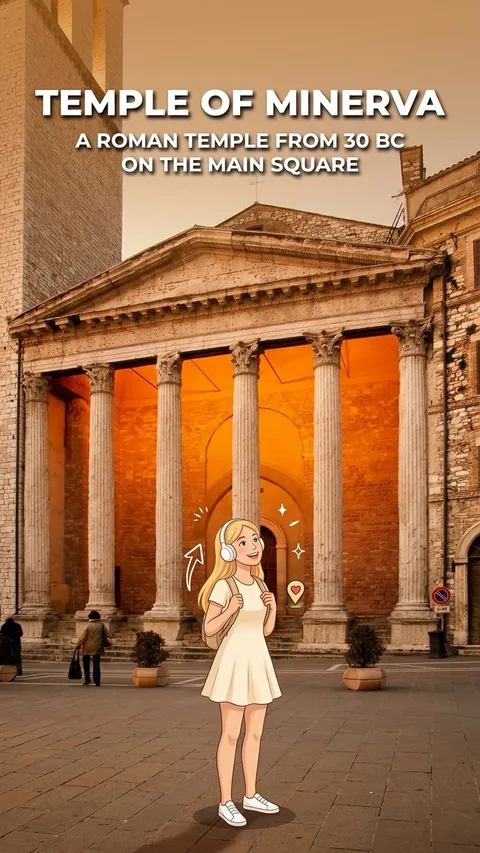
Walk up Via San Francesco, the town's medieval spine, into Piazza del Comune. The six Corinthian columns on tall plinths are Augustan, around 30 BC, and one of the best-preserved Roman temples anywhere. The inscription actually points to Hercules, not Minerva, but the old name stuck. Step inside the church of Santa Maria sopra Minerva for a Baroque interior behind an ancient façade, free, daily 8:00 AM to 8:00 PM. The square is the natural place to pause before the climb resumes.
- 3Casa Natale di San Francesco Free
A minute east of the square, tucked in a narrow lane, is the spot tradition marks as Francis's birthplace around 1181. The Chiesa Nuova was built over the family home in 1615, and beside it is the cramped stone cell said to be the stable where his mother gave birth. Free, daily 8:00 AM to 6:00 PM, ten minutes is enough. After the overwhelming scale of the great basilica, this cupboard-sized birthplace makes the human size of the story clear.
- 4Cattedrale di San Rufino Free
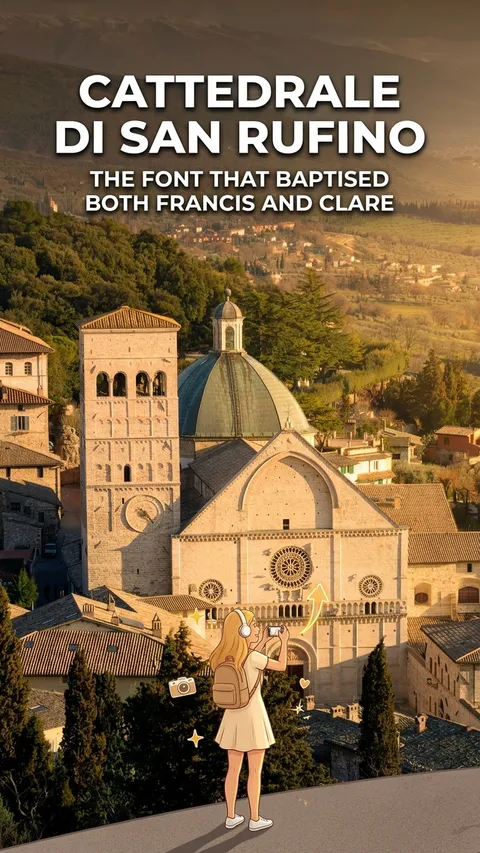
Climb the lane east and the ground opens onto a wide stone terrace with the Romanesque façade of San Rufino facing you, three rose windows and carved beasts above the doors. This is the town cathedral, and the font inside baptised both Francis and Clare, so the whole Franciscan story effectively starts in this building. Free, daily 7:00 AM to 7:30 PM, ten to fifteen minutes covers it. The lane rising sharply from the right corner is your route up to the fortress.
- 5Rocca Maggiore €6 · the climb
The climb up from San Rufino is short but genuinely steep, switchbacking on cobbles until the 14th-century fortress fills the sky above you. Entry costs €6, daily 10:00 AM to 7:15 PM, and the reason to make the effort is the panorama: the whole town spread below, the basilica at one end, the Umbrian plain running flat to the horizon. The walls are bare inside, so if you are tired the free view from the open ground outside the gate is nearly as good. Either way, this is the high point of the walk, in both senses, and it is all downhill from here.
- 6Basilica di Santa Chiara Free · the finish
Come down off the fortress and walk to the eastern end of town, where Santa Chiara closes the route. You will recognise it by the pink-and-white striped stone and the huge flying buttresses bracing the left flank. Inside are the tomb of St Clare and, in a side chapel, the original painted San Damiano crucifix that by tradition spoke to Francis. Free, daily 6:30 AM to noon and 2:00 to 6:00 PM, so do not arrive at lunchtime to find the doors shut. The terrace out front is the best viewpoint in town over the valley. After Francis at one end and Clare at the other, you have walked the full arc.
It runs in your browser, no app and no download. A voice guide walks the loop with you and leads a real conversation as you go: it greets you, tells the story between stops, asks what you actually want to see, and adapts. It is not a recording and not an audioguide. The map and step-by-step navigation get you from each stop to the next.
That whole ridge route is our free, self-guided Assisi walking tour, and because it can be launched from any of its six stops, you do not backtrack to find an official start, you just begin where the bus drops you. Open it the moment you arrive at Porta San Pietro and enter the route at the Basilica of San Francesco. It runs in your browser, with no app and no download. A voice guide walks the ridge with you and leads a real conversation as you go: it greets you, tells the Franciscan story between stops, asks what you actually want to see, and adapts to your answers. It is not a recording and not an audioguide. The map and step-by-step navigation get you from the basilica to the temple to the fortress and down to Santa Chiara without squinting at Google Maps. See the full route on the Assisi walking tour page, and you get 100 free credits to try it.
Insider Tips for the Assisi Day Trip
The mistakes on this route are small and entirely avoidable. The big ones are about the bus up from the station, the dress code, and the calendar.
Do
- Take the first sensible train from SMN, around 6:30-7:00 AM, to bank daylight and beat the buses
- Buy the €10 combo ticket for Rocca Maggiore + Roman Forum if you plan to do both
- Pack a sandwich from La Bottega Dei Sapori near Piazza del Comune for a picnic
- Wear grip-soled shoes: Assisi is steep, cobbled and slick in the rain
- Cover shoulders and knees for the basilicas, or you will be turned away at the door
- Bring water, especially in summer, for the Rocca climb
- Try the focaccia con porchetta at La Bottega Dei Sapori, and an espresso at the bar for ~€1.50
- Download the Trenitalia app before you travel for on-the-fly ticketing and live updates
Don't
- Don't forget the station is 5 km below the old town: budget bus or taxi time, every time
- Don't try to combine Assisi with Perugia, Spoleto or Cortona on the same day trip from Florence
- Don't wear shorts or sleeveless tops to the churches: enforced dress code
- Don't overpay for a private transfer at €200-€700 when the train is €15-€30
- Don't arrive at Santa Chiara between noon and 2:00 PM, when the doors shut
- Don't skip the Basilica di San Francesco in favour of the fortress, no matter how good the view
- Don't plan a Monday, when some sites and shops close
One small warning that catches people out: the last comfortable train back from Assisi to Florence is earlier than you think, closer to 19:00-20:00 than to midnight, especially on Sundays and holidays. Miss it and you are looking at a Foligno change well into the evening.
2026 is a Jubilee Year and the 800th anniversary of St Francis's death (1226), and the April 2025 canonization of Carlo Acutis has made the Sanctuary of the Renunciation a major pilgrimage stop. Expect noticeably bigger crowds than usual at the basilicas and on weekends, and book accommodation early if you decide to stay overnight instead. The town is not unwalkable, but mid-morning queues at the Basilica di San Francesco are likely to be longer than in a normal year.
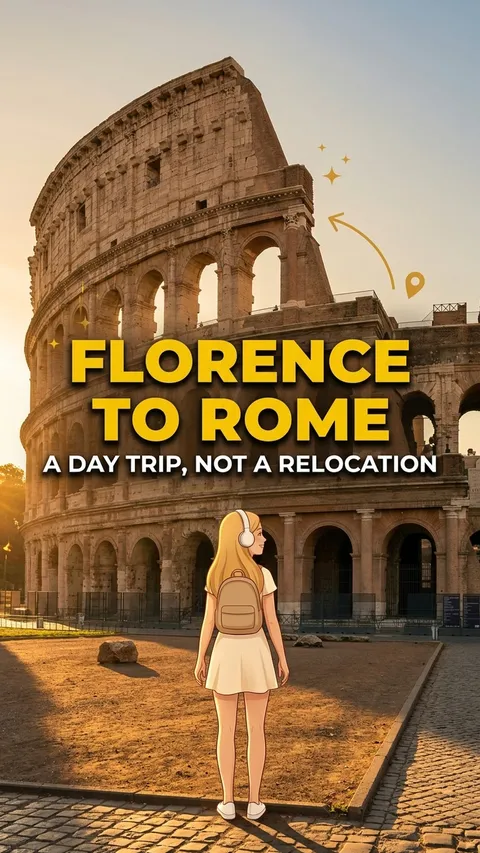
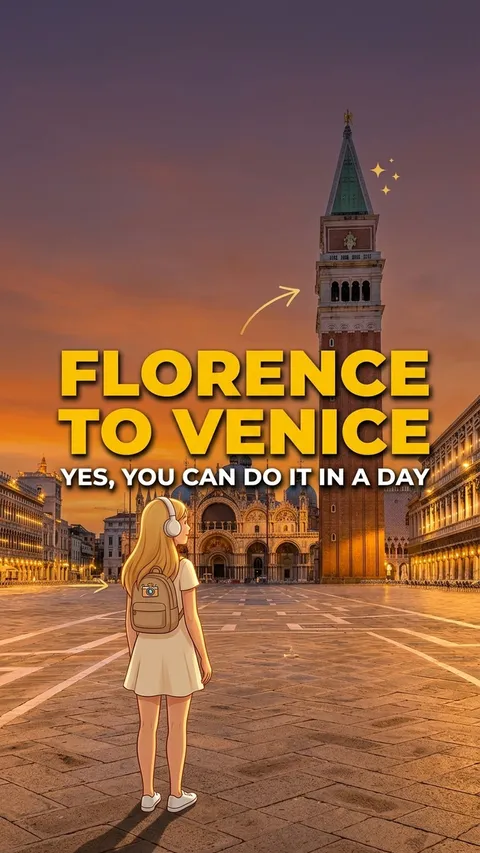
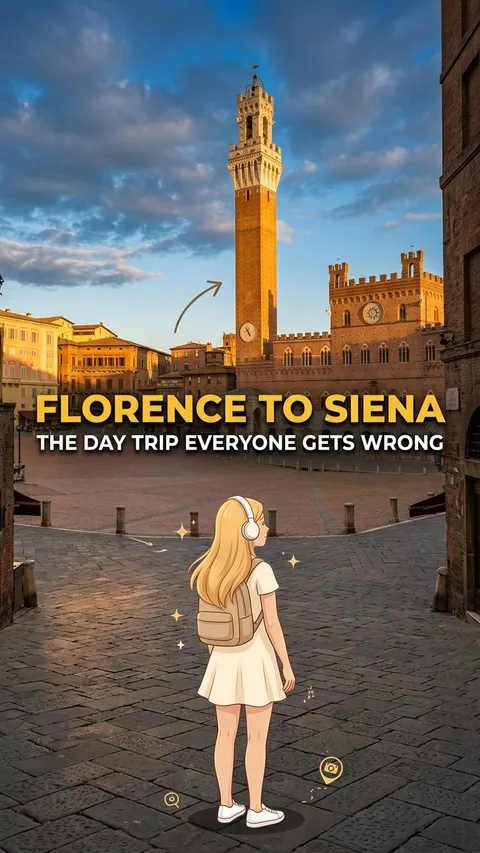
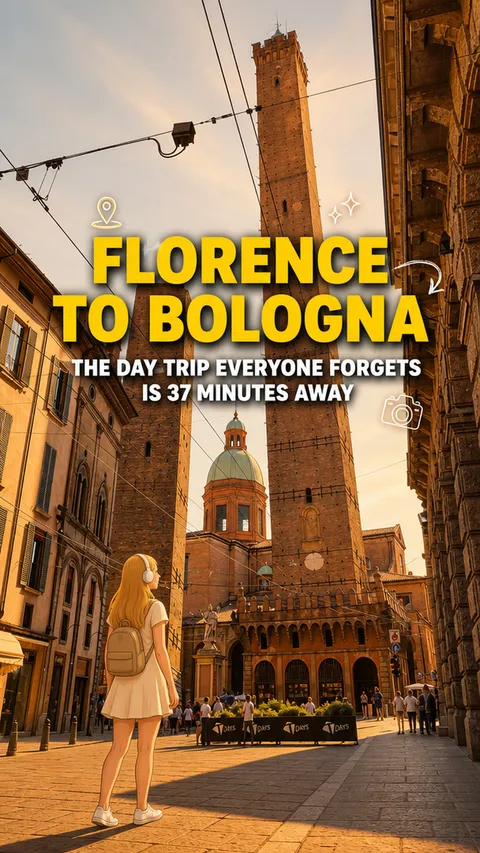
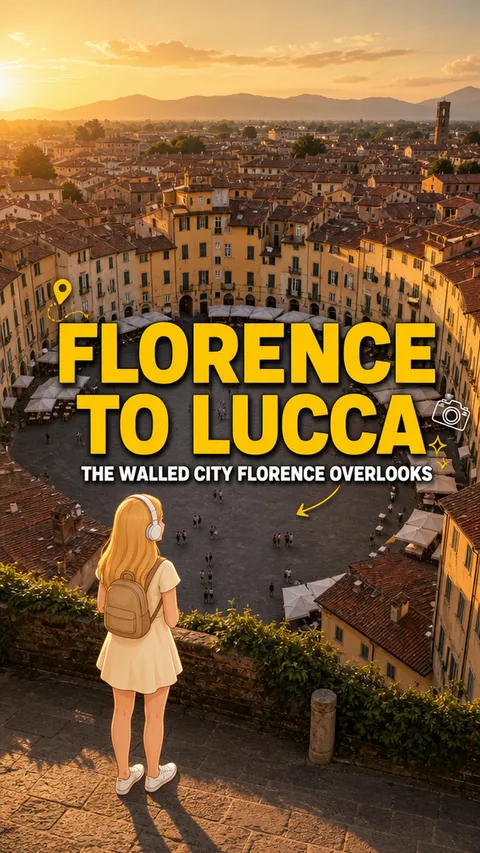
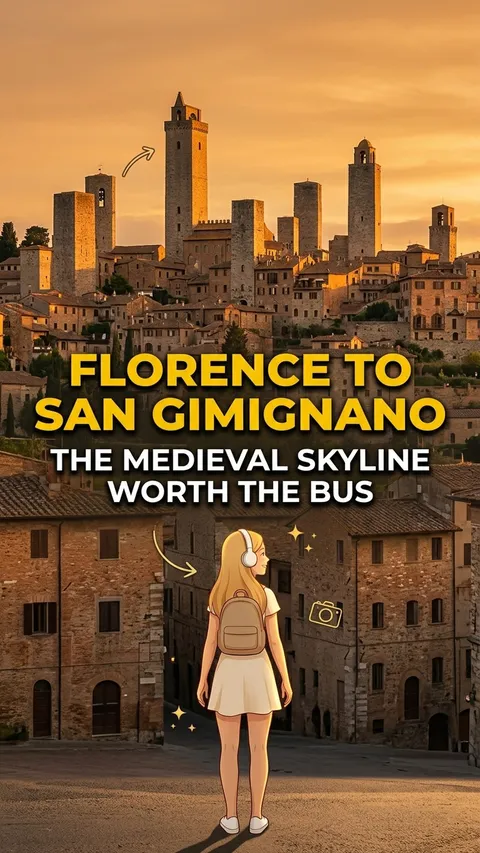
More day trips from Florence
Out in the morning, back in time for dinner. Every route here fits in one full day.


What the Florence to Assisi Journey Feels Like
This is the part no timetable captures. The train ride is half the appeal. Once you leave the Florence sprawl, the line drops into the kind of central Italian countryside you came to Italy to find: rolling wheat fields, low hills, the occasional stone farmhouse, and not a highway in sight. About two hours in, the train coasts to a stop at the small station of Santa Maria degli Angeli, and in the distance you spot the glittering pink walls of Assisi perched on the hillside above the plain, presiding over the wheat. That first glimpse is the moment most travellers decide the long transit was worth it.
The town itself is vertical, golden-stone, and unmistakably spiritual. Tiny streets wind along the hillside, passing houses with windowsill flower boxes bursting with reds and pinks, and at almost any hour you can hear church bells rather than traffic. Pedestrians share the narrow lanes with the occasional car and the ubiquitous delivery Piaggio Ape, so you learn quickly to flatten yourself against a wall when one comes through. Even with crowds of visitors, the peaceful atmosphere is palpable, and it is the rare Italian town where you can stand in the main square at midday and not feel overwhelmed.
What people remember most is the contrast. Florence is a huge, dense, lovely city with a lot going on, and Assisi is a small hilltop town with some wonderful churches, sweeping valley views, and arguably the best food in the region. The focaccia con porchetta at a tiny shop near Piazza del Comune, the truffle tastings at La Bottega del Tartufo, a glass of Umbrian Sagrantino in the afternoon sun, the Giotto frescoes in the morning light and the Rocca panorama at sunset: that is a full, unhurried day, and the kind that leaves more than a few visitors wishing they had stayed the night.
Florence to Assisi: Your Questions Answered
Can you do Florence to Assisi as a day trip?
Yes, but it is a long one. The train takes roughly 1 hour 45 minutes on the Intercity or 2 hours 35 minutes on the regional, plus a 15 to 20-minute bus from Assisi station up to the old town. With an early start you get around seven usable hours inside the walls, which is enough for both basilicas, the temple, the fortress and a real lunch. It is not a half-day trip.
How long does the train take, and how often does it run?
The fastest Intercity services take about 1 hour 45 minutes and run roughly twice daily. The standard Regionale takes about 2 hours 35 minutes and runs about five times a day Monday to Saturday, six on Sunday. Some connections require a change at Foligno and push the journey past three hours; filter those out unless there is no alternative. First departure is around 6:30 AM.
How much does it cost?
A one-way regional ticket is about €15 to €20, an Intercity seat around €20 to €30, and a round trip lands around €30 to €40. The regional fare is fixed by the government with no dynamic pricing, so booking weeks ahead saves you nothing on price. Buy at Firenze SMN, at the ticket machines, or on the Trenitalia app.
How do I get from Assisi station up to the old town?
Assisi station is in the valley at Santa Maria degli Angeli, 5 km below the old town. Take local bus line C (around 15-20 minutes, roughly €1.50-€2) or a taxi (around €15). Walking up is technically possible but it is a steep 5 km climb on a busy road, so do not. Build the bus into your time math from the start.
Should I drive instead?
Generally no. The car is faster on the motorway at around 1 hour 50 minutes, but only residents may drive into the old town, so you park in a paid lot outside the walls and walk up the same steep lanes anyway. On busy Jubilee Year weekends those lots fill by mid-morning. The train is the better call almost every time.
Do I need to book the train in advance?
No. Regional trains have no reserved seats and the fare is fixed, so you can buy at the station up to five minutes before departure. Intercity services do have reserved seats and a small premium, and it is worth booking those a day or two ahead for the timing you want, especially in a Jubilee Year.
Do I need to validate the ticket?
Yes, if it is a paper Regionale ticket. Stamp it in the green and yellow platform machine before boarding, or inspectors will fine you. Mobile tickets self-validate in the Trenitalia app. Intercity tickets come with a reservation and do not need validation.
Should I combine Assisi with Perugia or Spoleto on the same day?
No. Each is a full day-trip in its own right, and trying to bolt two Umbrian hill towns onto a single day from Florence means you shortchange both. Pick one. If you want a contrast, pair Assisi with a Florence day, not with another long transit.
What is the one thing I shouldn't miss?
The Basilica di San Francesco, specifically the Upper Church with Giotto's 28-fresco cycle of the life of St Francis. Arrive at the 8:30 AM opening, before the tour buses, and give it a full hour. Everything else in town is a bonus.
When should I avoid going?
Avoid Mondays, when some sites and shops close. Avoid peak afternoon hours at the basilica, when tour groups dominate, and avoid arriving at Santa Chiara between noon and 2:00 PM, when the doors shut. In 2026 specifically, expect larger Jubilee Year crowds throughout.
Plan Your Assisi Day Trip
You have the train sorted, and that is the part most people get wrong. Now make the seven hours on the ridge count. The six-stop route above is our free, self-guided Assisi walking tour, and it starts from any stop, so you launch it the moment you step off the bus at Porta San Pietro. Open it and start walking with 100 free credits.
Planning the wider trip:
- More day trips from Florence: Siena, Lucca, Pisa and the Tuscan and Umbrian circuit all pair naturally with a Florence base.
- Other Florence day trips: the same tours overview covers the closer, easier options when you do not have a full day to spare.
