
Florence to Rome Day Trip: Train, Fares & Plan
About 1h25 nonstop, a high-speed train every 10 to 20 minutes, fares from €14.90. Here is the honest plan for doing Rome in a day, plus a free, self-guided walking tour for the hours on the ground.
The Quick Answer: Florence to Rome
The fast train from Florence to Rome takes about 1 hour 25 minutes nonstop, leaves every 10 to 20 minutes through the day, and starts around €14.90 if you book ahead. Two operators run it head to head, Trenitalia (Frecciarossa) and Italo, which keeps the fares honest, so book whichever is cheaper or better timed on your date. You board in the center of Florence at Firenze Santa Maria Novella (SMN) and step off in the center of Rome at Roma Termini, no airport, no transfer. As a day trip it works, but understand the trade: Rome is enormous, so one day buys you the highlights, not the city.
| Question | Answer |
|---|---|
| Fastest journey time | 1h25 nonstop (Italo); about 1h35 (Trenitalia Frecciarossa). Regional trains take 3h45+ |
| Frequency | Every 10 to 20 minutes at peak. About 32 Italo trains a day plus Trenitalia every 15 to 30 min |
| Price from | €14.90 (Italo advance) / ~€28 (Trenitalia Super Economy). Realistic same-week fares land €30 to €80 |
| Operators / how | Trenitalia (Frecciarossa) and Italo. Firenze SMN to Roma Termini, both dead center |
| First / last train | First Trenitalia Freccia leaves Florence ~5:45 a.m.; last leaves Florence ~11:13 p.m. |
| Worth it as a day trip? | Yes for the highlights. Termini sits on Metro lines A and B, so the whole center is reachable |
Is the Florence to Rome Day Trip Worth It?
The honest verdict first: yes, you can do Rome as a day trip from Florence, the fast train makes it genuinely easy, and no, one day does not do Rome justice. Both are true, and you should book with your eyes open. On the transport question there is no real debate, the high-speed train is the only sane way to make this trip. The only thing worth arguing about is how much you can realistically fit into the hours on the ground.
The best of Rome, stop by stop


Here is what makes a Florence-to-Rome day trip work. The train is only about 90 minutes, it runs constantly so you are never locked into a single departure, and both stations are downtown. You leave Firenze Santa Maria Novella, a five-minute walk from the cathedral, and you arrive at Roma Termini, which sits directly on Metro lines A and B with buses and trams outside the door. There is no park-and-ride, no airport shuttle, no wasted hour at either end. Arrive bright and early, step off at Termini, and the famous center is fast to reach.
Short on time? The fast train and a central arrival make a single day in Rome genuinely doable.
Here is the catch, and it is a real one. Rome is not Florence. You cannot cross it on foot in 30 minutes, and the headline sights are spread across the city: the Vatican sits on the far western bank, the Colosseum anchors the southeast, and the baroque center fills the middle. A single self-guided walking arc from the Vatican to the Colosseum runs about 10 km and four hours of pure walking, and that is before you set foot inside anything. Add the Vatican Museums, St. Peter's, and the Colosseum, and you are looking at a realistic 8-to-9-hour day. It is doable. It is also a sprint, and Rome rewards the people who give it longer.
One day is not enough to do Rome justice. If you can spare three or four, give it its own trip.
Our call: a day trip is the right move for the right traveler and a frustrating compromise for the wrong one. If your Florence trip is short, if it is your first time in Italy and you just want to stand in the Colosseum once, or if you simply love the idea of a fast, easy ride to the capital, go. If you already have several days to spare, give Rome its own trip and spend your Florence day on Siena, Pisa, or a Tuscan hill town instead. Nobody should leave Italy never having stood in Rome, waiting for a "proper" trip that may not come.
Good fit if you...
- Have limited time and won't be back in Italy soon
- Want the marquee highlights: Colosseum, Vatican, Trevi, Pantheon
- Are happy with a fast, full, slightly rushed day
- Can leave Florence on an early train and return late
Skip it (give Rome its own trip) if you...
- Already have three or more days you could give Rome properly
- Want to actually savor the museums and the neighborhoods
- Hate rushing and resent skipping things
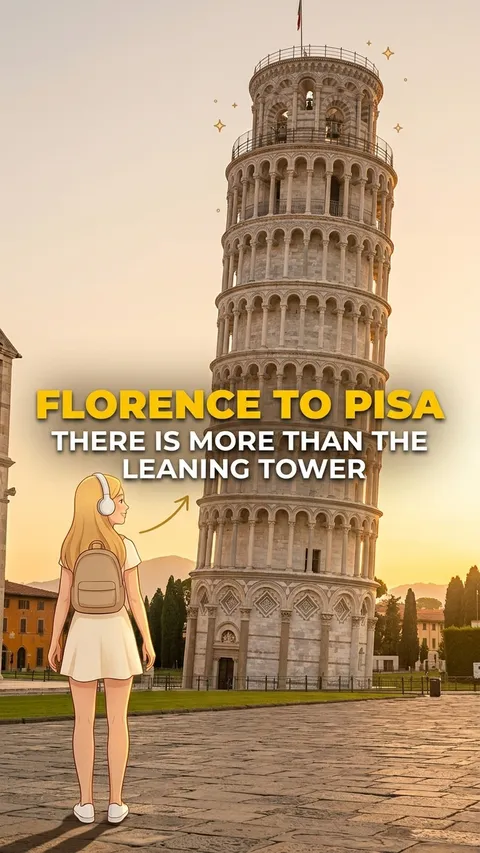
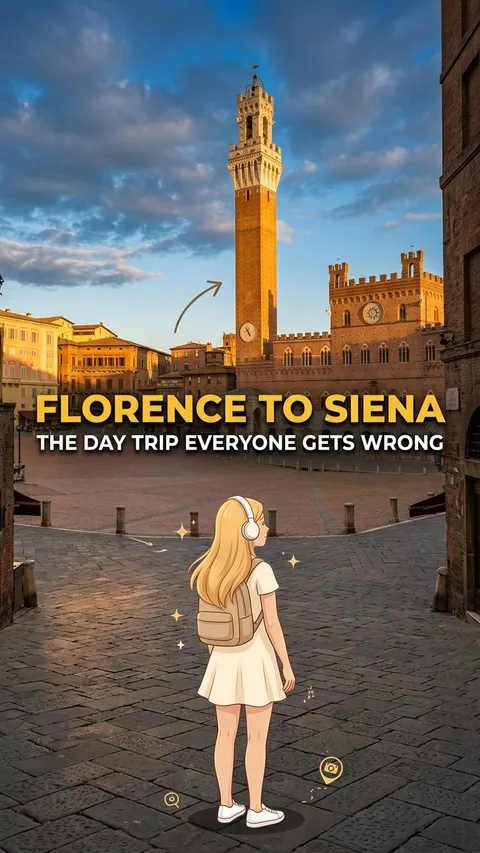
- Would rather day-trip somewhere closer (Siena, Pisa, Lucca)
How to Get from Florence to Rome by Train
You can get from Florence to Rome at least seven ways, and for a day trip six of them are the wrong answer. The high-speed train wins so clearly that the rest of this page is mostly about getting that one right.

| Mode | Time | Price | Verdict |
|---|---|---|---|
| High-speed train (Frecciarossa / Italo) | 1h25 to 1h36 | from €14.90; realistic €30 to €80 | WINNER. Downtown to downtown, both stations central |
| Regional train (Regionale) | ~3h45 | ~€23 | Only to hop off at Arezzo, Orvieto or Perugia. Eats your whole day |
| Bus (FlixBus, Itabus, BlaBlaCar Bus) | 3h10 to 3h45 | €7 to €17 | Cheapest, but arrives at Tiburtina and triples your travel time |
| Night train (Nightjet / Intercity Notte) | 3h15 to 4h30 | seat €23 to €27; sleeper €85+ | A way to skip a hotel night, not a day-trip tool |
| BlaBlaCar rideshare | ~3h36 | ~€14 | Cheap and social, but unpredictable timing |
| Driving (A1 Autostrada) | ~3h | tolls + fuel + parking + ZTL risk | Pointless for a day trip. Florence and Rome punish drivers |
| Flying | 2h50+ door to door | €66 to €650 | Absurd on a 230 km corridor. The flight is 53 minutes, the day is not |
The reason the train wins is geography, not just clock time. It is downtown to downtown. You board in the middle of Florence and you step off in the middle of Rome, no transfer at either end, with departures so frequent you can practically show up and go. The bus undercuts it on price, but it lands you at Autostazione Tiburtina on the edge of the center and takes well over three hours, so it trades away the very thing a day trip cannot spare: daylight in Rome.
Driving is the option people overestimate. The A1 itself is easy, but both ends are misery. Florence and Rome both wrap their centers in restricted traffic zones (ZTL) that fine you automatically, traffic is heavy, and parking is scarce and expensive. The right move on a road trip is to drop the car and ride the Metro and buses inside Rome. For a day trip, do not bring a car at all.
The Train in Detail
Two operators run the high-speed service and both are good. Trenitalia, the state railway, runs the Frecce family (the Frecciarossa is the fastest). Italo is the private challenger and runs bullet trains only. Both leave from Firenze Santa Maria Novella (SMN), the main station five minutes from the cathedral, and both arrive at Roma Termini, Rome's central hub on Metro lines A and B. Some Italo services use Roma Tiburtina instead, which is nine minutes from Termini on Metro Line B and tends to be calmer.
Journey time runs from about 1h25 nonstop on Italo to roughly 1h35 on a Frecciarossa, depending on the exact service. Italo runs about 32 trains a day on the route; Trenitalia adds departures every 15 to 30 minutes on top, which is why the practical frequency is a train every 10 to 20 minutes. Both have air conditioning, power outlets at every seat, and Wi-Fi that drops in tunnels and at stations, so do not count on a video call.
Each operator sells a ladder of classes. On Trenitalia Frecciarossa: Standard, Premium, Business, and Executive, with a café car and a food cart on every train. On Italo: Smart, Comfort, Prima, and Club Executive. The onboard café is convenient but pricey, so provision before you board. Firenze Santa Maria Novella has a Sapori & Dintorni store inside the station with a ready-meals counter, salads, roast chicken and grilled vegetables among them, which beats the cart on both price and quality.
Now the prices, honestly. The headline "from €14.90" is an Italo floor fare you only see on advance, limited-inventory bookings. Trenitalia's cheapest Super Economy sits around €28. Real pricing is dynamic and climbs as the train fills and the date approaches, so booked the same week, expect roughly €30 to €80 depending on time of day and class, with Executive topping out around €130. The single most repeated piece of advice is to book early, because the cheapest fares are the first to sell out.
Italo or Trenitalia, which to book?
Stop agonizing. Both are high-speed, both make the run in roughly the same time, and both are clean and reliable. Italo tends to surface a cheaper advance fare a little more often. Trenitalia's Frecciarossa carriages feel slightly more spacious, with a touch more legroom. Neither difference is big enough to plan around, which is exactly why frequent travelers split evenly between the two.
The actual decision is price and departure time on your date. Open both apps, compare the exact trains, and book whichever is cheaper or leaves when you want.
| Compare | Trenitalia Frecciarossa | Italo |
|---|---|---|
| Departs | Firenze SMN | Firenze SMN |
| Arrives | Roma Termini | Roma Termini (sometimes Tiburtina) |
| Fastest run | ~1h35 | 1h25 |
| Trains per day | every 15 to 30 min | ~32 |
| Floor fare | ~€28 (Super Economy) | €14.90 (advance) |
| Classes | Standard, Premium, Business, Executive | Smart, Comfort, Prima, Club Executive |
| Feel | The workhorse, more departures | Newer, sleeker, bullet trains only |
One budget footnote: regional trains also cover the route in about 3h45 for roughly €23 second class, sometimes stopping at Arezzo, Perugia, or Orvieto. They are barely cheaper than a well-booked Freccia and they devour your day. Skip them unless you actually want to break the journey at one of those towns. The price gap with the fast train is too small to justify the lost hours.
Booking Strategy
This is where we can actually help, because live fares change daily and any page quoting you a single price is out of date by tomorrow. We win on strategy, not on a number.
Book well ahead. This is the one rule everyone agrees on. The route is busy and the cheap fare buckets sell out, so the earlier you book, the more you save. Discounted advance tickets are non-refundable and generally non-changeable, so only buy ahead once your plans are firm.
Use the day-return discount. Both operators sell same-day round-trip fares (A/R in giornata) at up to 50 percent off, which is exactly the structure a day-tripper wants. If you go and come back the same day, look for this first.
Stack an age or family discount if you qualify. Trenitalia runs FrecciaYOUNG (up to -70% for ages 14 to 29), FrecciaSENIOR (discounted for 60+), and FrecciaFAMILY (children under 14 travel free with paying adults). Italo carries Italo Friends (up to -60% for groups) and eXtra Magic advance fares up to -70% on limited inventory. Children under 4 ride free without a seat on both railways.
| Fare / offer | Operator | Discount | Who it's for |
|---|---|---|---|
| Day return (A/R in giornata) | Both | up to -50% | Anyone returning the same day |
| FrecciaYOUNG | Trenitalia | up to -70% | Ages 14 to 29 |
| FrecciaSENIOR | Trenitalia | discounted | Ages 60+ |
| FrecciaFAMILY | Trenitalia | kids under 14 free | Families |
| Italo Friends | Italo | up to -60% | Groups |
| Italo eXtra Magic | Italo | up to -70% | Advance, limited seats |
Book in the right place. Use the official apps and websites to avoid markups: Trenitalia and Italo Treno each sell their own tickets, and Trainline or Omio show both at once for comparison, usually for a small fee but with better English-language support. If you buy at the station, note that the ticket machines are different for each company.
Know the ticket reality. High-speed tickets are e-tickets with a QR code tied to a specific train, and seats are assigned. There is no green-machine validation to stamp (that ritual is only for paper regional tickets). Because a train leaves every 10 to 20 minutes, the route rarely sells out outright: if you want full flexibility you can buy on the spot minutes before departure. You just pay the walk-up fare instead of the cheap advance one.
Booking checklist
- Pick your date and a rough departure window first.
- Open both the Trenitalia and Italo apps (or Trainline) and compare the exact trains.
- Filter for the day-return fare, then add any youth, senior, or family discount.
- Book as early as you reasonably can. Weeks out, not days.
- Save the QR-code e-ticket to your phone and screenshot it in case you lose signal at the gate.
Rome in One Day
Here is the part most day-trip guides bury, and it is the whole point: you do not need to plan a route. You step off the train at Roma Termini, ride one Metro stop out to the Vatican, open our free self-guided Rome tour, and start it from wherever you are standing. The voice guide takes the planning off your hands and walks the city with you, stop by stop, so the only logistics you handle are tapping in and out of the Metro. Rome is too big to wing on foot, and this is exactly how you make a single day in it feel deliberate rather than frantic. The arc ends back at the Colosseum, two Metro stops from Termini, so you finish next to your train home.

The time math
Be realistic. Catch an early train (the first Freccia leaves Florence around 5:45 a.m., and plenty run before 7) and you can be standing in Rome by mid-morning. With the last train back not leaving Florence's direction until late evening, you can stay until the early evening and still get home. Take the second-to-last train back as a buffer rather than cutting the very last one fine. That gives you a long day, but the arithmetic is unforgiving: the core Vatican-to-Colosseum walk is about 10.1 km and roughly four hours of pure walking, and that is before you queue for or step inside anything. Realistically you get the highlights of one continuous arc, not all of Rome. Do not try to bolt the Vatican onto the Colosseum onto Trastevere onto the Borghese Gallery in a single day. Pick the arc, walk it well, and let the rest wait for a longer trip.
What you'll see
This is what a first-time day-tripper should not miss, with the practical reality attached:
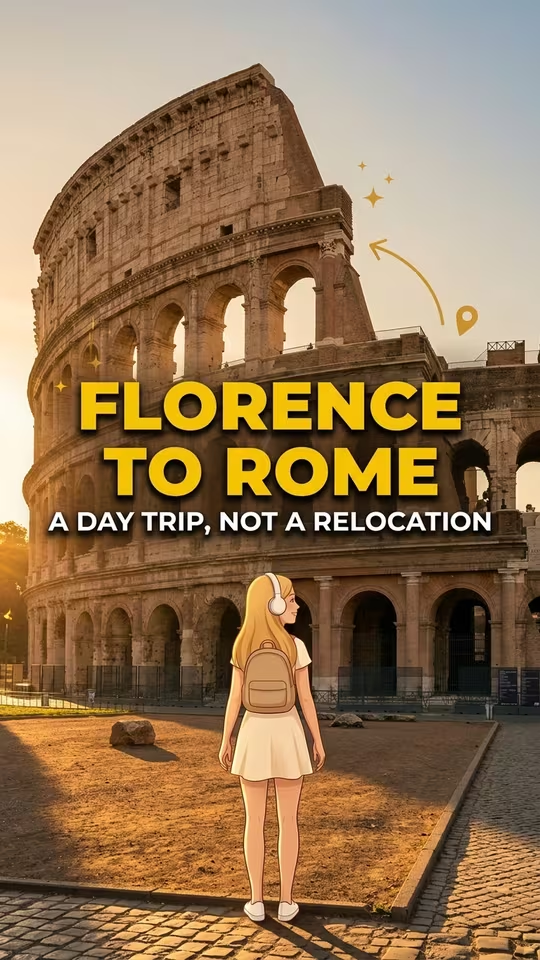
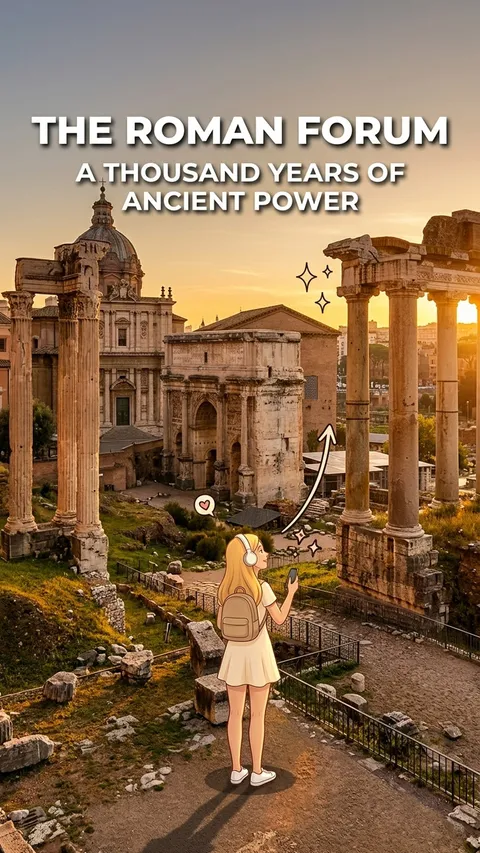
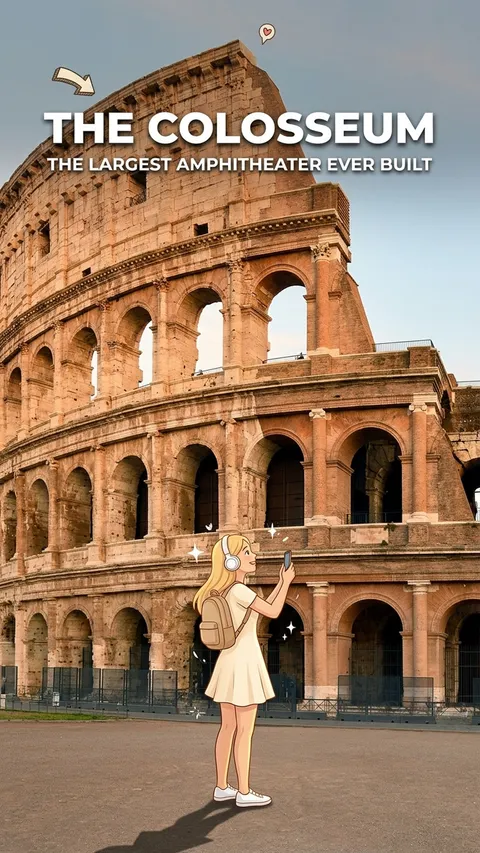
- Colosseum + Roman Forum + Palatine (combo €18, timed entry, daily ~8:30 a.m. to 4:30 p.m.): the largest amphitheater ever built, 48 meters of arches, paired with the thousand-year political heart of the ancient world next door. Book the timed combo ahead.
- Vatican Museums (~€20, Mon to Sat 8:00 a.m. to 8:00 p.m., closed Sun): 54 galleries over 7 km of corridors ending at the Sistine Chapel. The morning queue runs hundreds of meters, so a pre-booked slot is non-negotiable.
- St. Peter's Basilica (free, daily ~7:00 a.m. to 7:10 p.m.): free to enter, but the security line is the real cost. Shoulders and knees must be covered.
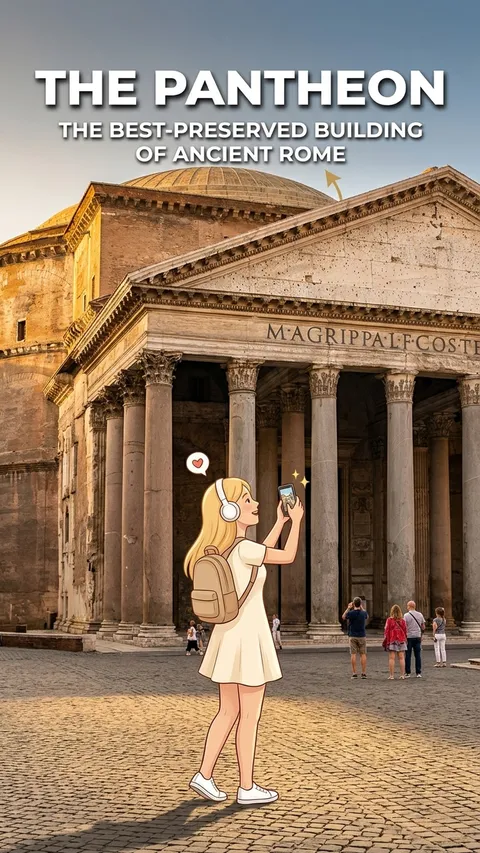
- Pantheon (€5, daily 9:00 a.m. to 7:00 p.m.): Hadrian's temple with its 9-meter open oculus, the best-preserved building of ancient Rome.
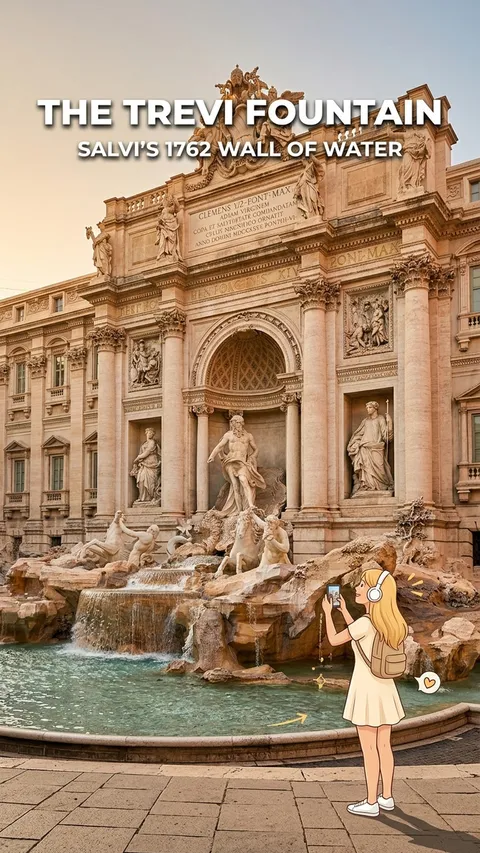
- Trevi Fountain (free to view; €2 timed-entry for the inner ring): Nicola Salvi's 1762 baroque wall of water. Best very early or late to beat the crowd.
The route the tour walks with you
Instead of a scattered "see the Colosseum, then somehow the Vatican" scramble, you walk one logical arc and the tour walks it with you. Our self-guided Rome walking tour is 11 stops, 10.1 km, about four hours of pure walking, running as a clean west-to-east line from the Vatican to the Colosseum. Ride Metro A from Termini out to the Vatican to begin, then let the arc carry you east through the baroque center to the ancient zone. This is the order that minimizes backtracking and leaves you on Metro Line B back to your train:
- 1Vatican Museums ~€20 · timed ticket
Start early behind the travertine walls on Viale Vaticano. 54 galleries and 7 km of corridors funnel toward the Sistine Chapel. Pre-book or lose an hour in line.
- 2St. Peter's Basilica Free
Walk south into Bernini's colonnade, 284 columns curving around the Egyptian obelisk, then into the largest church in the world. Cover shoulders and knees.
- 3Castel Sant'Angelo €13 · closed Mon
Cross toward the Tiber on Via della Conciliazione to Hadrian's cylindrical tomb-turned-fortress, linked to the Vatican by an elevated passage.
- 4Spanish Steps Free
Cross the river and thread east to Piazza di Spagna, where 135 travertine steps climb to the Trinità dei Monti church.
- 5Trevi Fountain Free to view
You hear the water before you see it, filling the back wall of Palazzo Poli at the end of a tight alley. Toss the coin.
- 6Pantheon €5
The natural mid-route break point, 16 granite columns and a 2,000-year-old concrete dome open to the sky. Get your coffee two blocks off the square, not on it.
- 7Piazza Navona Free
The preserved oval of Domitian's stadium, with Bernini's Fountain of the Four Rivers at its center.
- 8Campo de' Fiori Free
The square that still feels like Roman daily life, with a morning market every day except Sunday and the hooded statue of Giordano Bruno.
- 9Piazza Venezia Free
The chaotic traffic hub under the 70-meter white marble Altare della Patria.
- 10Roman Forum €18 combo
Descend Via dei Fori Imperiali with the ruins of the ancient city's center spread below you to the right.
- 11Colosseum €18 combo
End at the 48-meter amphitheater Vespasian started in 70 AD. When you are done, Metro Line B at Colosseo takes you straight back to Termini for the train home.
It runs in your browser, no app and no download. A voice guide walks the loop with you and leads a real conversation as you go: it greets you, tells the story between stops, asks what you actually want to see, and adapts. It is not a recording and not an audioguide. The map and step-by-step navigation get you from each stop to the next.
That entire arc is our free, self-guided Rome walking tour, and because it can launch from any of its stops, you never backtrack to find an official start. You open it the moment you reach the Vatican and walk the line east at your own pace, ending right back at the Colosseum two Metro stops from your train. It runs in your browser, with no app and no download. A voice guide walks the arc with you and leads a real conversation as you go: it greets you, tells the story between stops, asks what you most want to see, and adapts the rest of the walk around your answer. It is not a recording and not an audioguide. The map and step-by-step navigation get you from each stop to the next, so you never stand on a corner squinting at Google Maps. See everything on the Rome walking tour page, and you get 100 free credits to try it.
Insider Tips for the Rome Day Trip
The most expensive rookie error on this route is timing the platform wrong. Italian high-speed trains leave exactly on time, and the platform number often is not posted until the last minute. The working rule is to arrive about 15 minutes early, then watch the boards. At Florence SMN, southbound trains to Rome usually leave from the higher-numbered platforms. One trap catches even careful travelers: two trains can leave for the same destination minutes apart, so match the exact train number and operator, not just the word "Roma," before you step aboard. After that, the mistakes are about tickets and pickpockets.
Do
- Match the train number and operator, not just the destination, before boarding
- Arrive ~15 minutes early, then watch the boards for your platform
- Pre-book Vatican, Colosseum, and timed-entry tickets weeks out
- Buy food at SMN (Sapori & Dintorni) before boarding
- Take the second-to-last train back for a buffer
- Keep valuables on you in the crush around machines and boards
Don't
- Don't board the wrong company's train. The wrong ticket is not valid
- Don't arrive an hour early expecting a posted platform. It comes late
- Don't go on a Monday; many sites and the Vatican Museums shift hours or close
- Don't rely on the pricey onboard café for a real meal
- Don't cut the last train close, and avoid the stations late at night
- Don't doze off next to an unwatched bag on a regional train
Luggage
Full-size cases are fine on these trains. Use the overhead racks above the seats and the larger storage at the ends of each car, which nobody polices for size. The end racks are unsupervised, so keep your laptop and valuables on you rather than buried in a bag at the door. If you want to wander Florence before boarding, SMN has a left-luggage deposit near McDonald's past platform 16, from about €6 for the first hours.
Buffer
Build slack into the return. Sites run on Italian time, the Vatican security line is unpredictable, and a missed advance-fare train means buying a fresh walk-up ticket. The second-to-last departure is your safety net, and it keeps you off the very late trains when the areas around both stations get quieter.
Pre-book the Vatican Museums and the Colosseum combo before you leave Florence. Both sell timed slots that get tight in peak season, and turning up on the day can cost you an hour in line or a wasted Metro ride. Watch for Monday closures across many Roman sites, and dress for churches (shoulders and knees covered) or you will be turned away at St. Peter's.
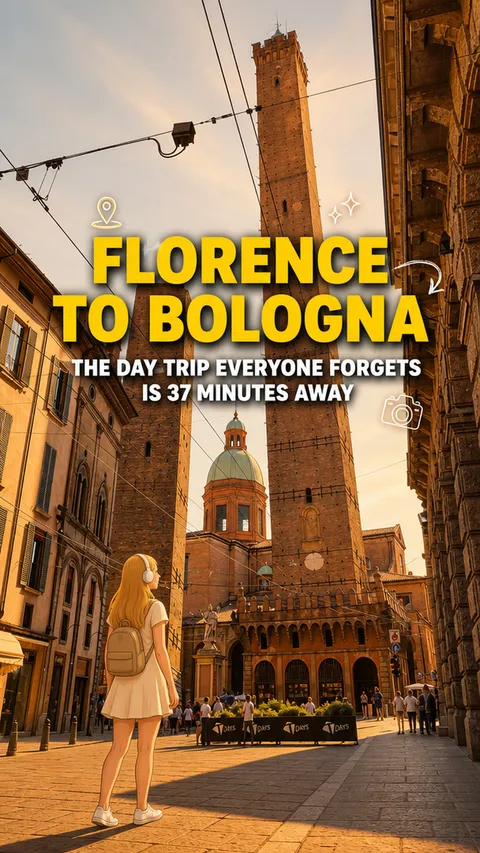
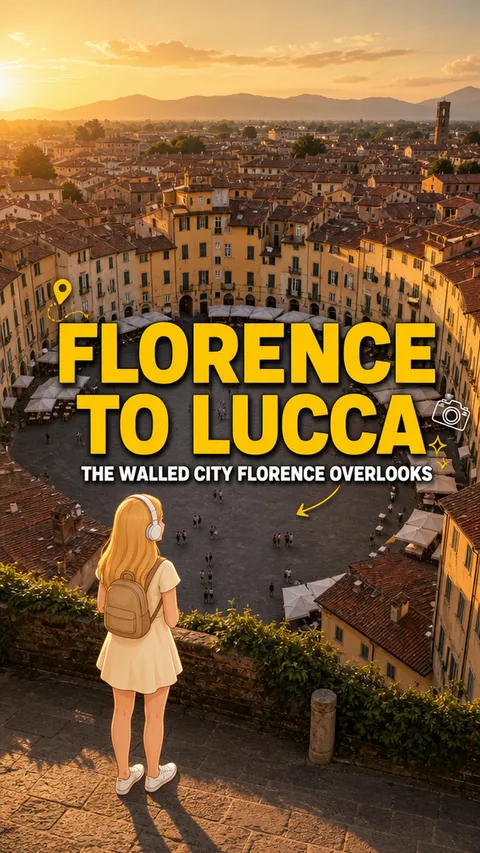
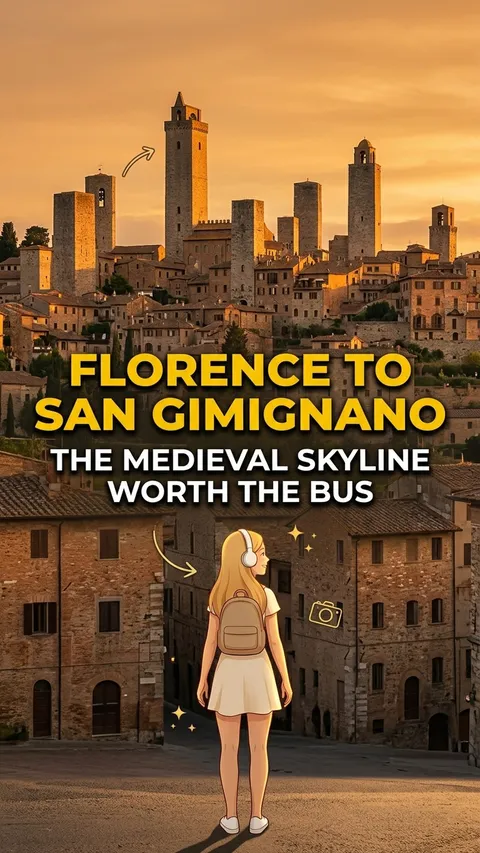
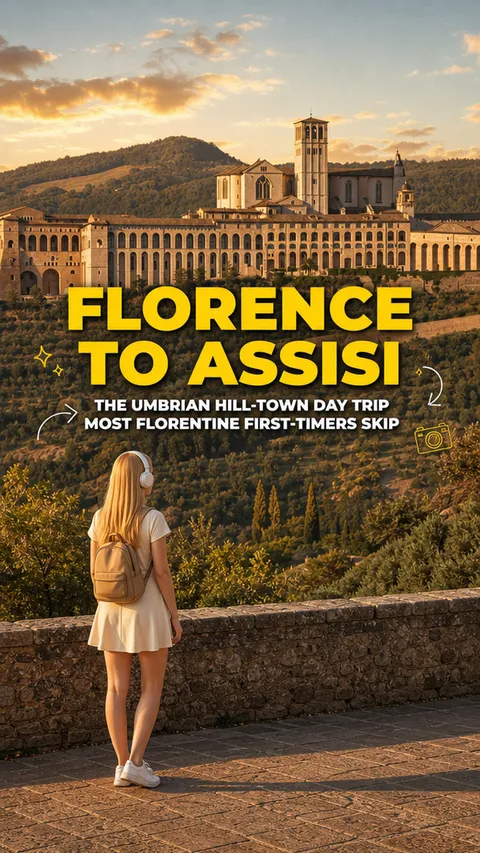
More day trips from Florence
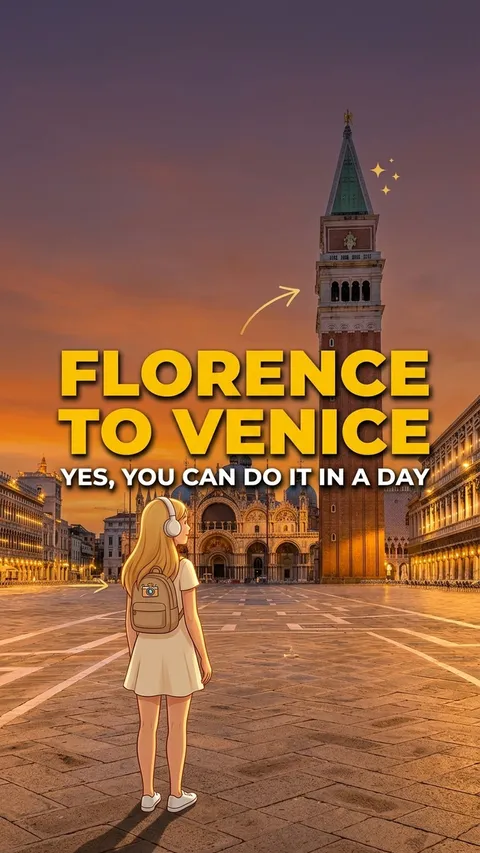
Out in the morning, back in time for dinner. Every route here fits in one full day.
What the Florence to Rome Journey Feels Like
This is the part no fare table can give you. The ride itself is the easy, pleasant part of the day. Both operators are comfortable and run constantly, so the friction is human, not mechanical. Walk up to the machines, see an express leaving in a few minutes, and you can often buy on the spot and be moving before you have finished your coffee. The cabin is quiet and smooth, the Tuscan and Lazio countryside slides past, and 90 minutes later you are in the capital.
The arrival at Termini has its own small comedy. On a busy day the train can berth near the far end of a very long platform, leaving you a hike of a few hundred meters past the buffers to the concourse and the Metro. Build a couple of minutes into your mental clock for it, and do not be the person sprinting because you assumed the door opened next to the exit.
The other thing the speed costs you is the corridor itself. At up to 250 km/h you blow straight past country that is worth slowing down for: a regional train lets you break the journey at Arezzo or Orvieto, hill towns that each make a fine day trip from Florence in their own right. On a single day to Rome you skip all of it, and that is the right call. Save the slow line for the day you have time to spend on the in-between.
Florence to Rome: Your Questions Answered
Can you do Rome as a day trip from Florence?
Yes. The high-speed train is about 90 minutes each way, runs every 10 to 20 minutes, and both stations are central. You will see the highlights, not all of Rome, which is a big city. Manage expectations and it is a great day. Arrive early and get off at Termini so the center is fast to reach.
How long is the train from Florence to Rome?
The fastest nonstop run is about 1h25 on Italo, and Trenitalia's Frecciarossa is around 1h35. Regional trains take roughly 3h45 with many stops. "About 90 minutes" is the honest rule of thumb for the fast train.
How much does the train cost?
Floor fares start at €14.90 (Italo advance) and around €28 for Trenitalia Super Economy, but those are early-booking prices. Same-week fares realistically land in the €30 to €80 range depending on time and class, up to about €130 for Executive. Book early to pay the least.
Italo or Trenitalia, which is better?
Both are fine. Italo runs bullet trains only and is sometimes cheaper; Trenitalia runs more departures and serves more stations. Travelers who tried both split evenly. Compare the exact trains on your date and book whichever is cheaper or better timed.
What time is the first and last train?
The first Trenitalia Freccia leaves Florence around 5:45 a.m., and the last leaves Florence around 11:13 p.m. For a day trip, take an early departure out and the second-to-last train back as a safety buffer.
Do I need to book in advance?
Strongly recommended. The route is popular, the cheap fare buckets sell out first, and last-minute fares are higher. You can buy at the station because trains are frequent, but you will pay the walk-up price. Book weeks ahead, not days, and only commit to a non-refundable advance fare once your plans are firm.
Is the bus or a cheaper option worth it?
Only if money matters far more than time. The bus is €7 to €17 but takes 3h10 to 3h45 and arrives at Tiburtina on the edge of the center. For a day trip, the hours you lose are worth more than the euros you save. Regional trains (~€23, ~3h45) only make sense if you want to stop at a hill town like Arezzo or Orvieto.
Should I drive instead?
No, not for a day trip. The A1 motorway itself is easy, but Florence and Rome both have restricted traffic zones (ZTL), heavy traffic, and almost no parking. The local advice is to drop the car and use public transport in Rome. Save driving for a multi-day Tuscany or Umbria road trip.
Are big suitcases okay on the train?
Yes. Full-size cases fit using the overhead shelves and the larger racks at the ends of each car, and no one checks the size. The end racks are unsupervised, so keep valuables on you. SMN also has a left-luggage deposit near McDonald's past platform 16 from about €6 if you want to explore Florence before boarding.
Plan Your Rome Day Trip
You have the train sorted, and that is the part most people get wrong. Now make the hours on the ground count. The 11-stop arc above is our free, self-guided Rome walking tour: open it the moment you reach the Vatican, walk the line east at your own pace, and finish back at the Colosseum two Metro stops from your train home. See everything on the Rome walking tour page, with 100 free credits to start.
