
Rome to Milan Day Trip: The High-Speed Plan
Under three hours nonstop on the Frecciarossa or Italo, Roma Termini to Milano Centrale, both bang in the center. It is a long day but an honest, easy one, and here is the plan, plus a free, self-guided walking tour for the hours on the ground.
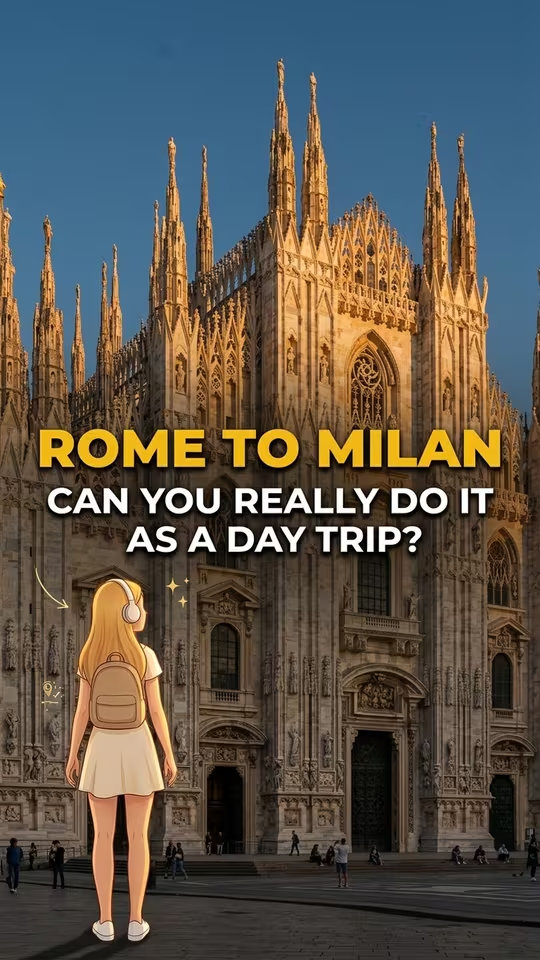
The Quick Answer: Rome to Milan
Yes, you can do Rome to Milan as a day trip, and the high-speed train is the only sane way to do it. The Frecciarossa (Trenitalia) and Italo (NTV) both run the 567 km nonstop from Roma Termini to Milano Centrale in under three hours, the fastest schedules clocking 2h52 to 2h59. Between the two operators there are around 45 direct trains a day, with departures roughly every 10 to 20 minutes through the morning and evening, so you are never tied to one train. Book a few weeks ahead and a one-way Economy fare starts at €19.90 to €29.90. Both stations sit in the city center, and Milano Centrale is a 10-minute hop on the yellow M3 metro from the Duomo. The honest catch: with roughly six hours of train in the round trip, this is a long day, and the one thing you cannot do on impulse is Leonardo's Last Supper, which you need to book ahead.
| Question | Answer |
|---|---|
| Fastest journey time | 2h52 to 2h59 nonstop on Frecciarossa or Italo. Trains with one stop run ~3h10 to 3h30 |
| Frequency | ~45 direct trains a day across both operators, departures every 10 to 20 min in peak hours |
| Price from | €19.90 to €29.90 one way booked in advance. Walk-up Base fares run ~€70 to €110 |
| Operators / how | Frecciarossa (Trenitalia) and Italo (NTV), both Roma Termini to Milano Centrale, both nonstop |
| First / last | First fast trains leave Rome ~6:00 to 7:00 a.m.; last useful returns from Milan ~8:00 to 9:00 p.m. |
| Worth it as a day trip? | Doable and easy, but long. Better with an overnight. Pre-book the Last Supper or skip it |
Is the Rome to Milan Day Trip Worth It?
Here is the honest verdict: Rome to Milan in a day is genuinely doable, the train makes it painless, and it is a long day that most people would enjoy more spread over two. All three are true at once. Nobody who has done it argues with the train being the right call. The only real question is whether one day is the right amount of time, and the answer depends entirely on why you are going.
The best of Milan, stop by stop


The case for going is simple. The connection is fast, frequent and downtown to downtown, so almost none of your day is wasted on airport transfers or uphill slogs. Milan's core sights cluster tightly around the Duomo, which means a focused day actually delivers the city's greatest hits.
The two early nonstop trains do the run in 2h59 and put you in the center before 10 a.m.
The Duomo, Galleria, La Scala and Sforza Castle sit within one tight walk, so a single day covers them well.
The case for slowing down is not against Milan. It is against the math of a roughly six-hour round trip for a handful of hours on the ground.
That is a lot of time sitting on a train if you only want to tick off one famous attraction.
If you just want any cheap day out of Rome, there are far closer places that arguably give you more.
Our call: if Milan is the city you specifically want, and you take the first fast train out and the last fast train back, go, because the Duomo, the Galleria, La Scala and Sforza Castle sit within a 25-minute walk of each other and a single day covers them well. If you are simply hunting for a day out of Rome on a budget, Florence, Naples or Orvieto are closer and cheaper. And if your heart is set on the Last Supper, book it ahead, because same-day tickets are rare.
Good fit if you...
- Specifically want Milan: the Duomo, fashion, design, Serie A
- Can take the first train out and a late one back
- Booked an advance fare and, if you want it, the Last Supper
- Like fast, flat, downtown-to-downtown sightseeing
Skip it (or stay overnight) if you...
- Just want any cheap day trip from Rome (try Orvieto or Naples)
- Want to linger over Brera, the Ambrosiana and aperitivo
- Refuse to commit to a fixed return train
- Did not pre-book and the Last Supper is your whole reason to go
How to Get from Rome to Milan by Train
You have four realistic ways to cross Italy from Rome to Milan, and only one of them makes sense for a single day. The high-speed train wins outright, and it is not close.

| Mode | Time | Price | Verdict |
|---|---|---|---|
| Frecciarossa / Italo high-speed train | 2h52 to 2h59 nonstop | €19.90 to €29.90 advance, ~€70 to €110 walk-up | WINNER. Downtown to downtown, a train every 10 to 20 min |
| Flight (FCO to LIN or MXP) | ~1h10 in the air | €40 to €130 | Once you add two airport transfers and security, it is 4h+ door to door. No real saving |
| Drive (A1 Autostrada del Sole) | ~5h45 to 6h each way | fuel + ~€45 tolls + ZTL and parking | 12 hours of driving for a day trip. Pointless, and Milan's center is a ZTL |
| Bus (FlixBus / Itabus) | ~8 to 9h | from €15 | Cheap, but it eats the entire day in each direction |
The reason the train wins is not just the speed, though 2h52 nonstop is faster than flying once you count the airports. It is that both ends drop you in the center. You leave Roma Termini, the main station, and arrive at Milano Centrale, the monumental 1931 terminus that is itself worth a look up, then ride the yellow M3 metro two stops to Duomo in about 10 minutes (a single ATM ticket is €2.20 and valid 90 minutes). A flight strands you at Linate or Malpensa with a 15-to-50-minute transfer at each end, which is how a "one-hour flight" becomes a four-hour ordeal. The single most important move is the one most people get wrong: book the train in advance, because the cheap fares are gone by the final days before travel.

The Train in Detail
Two operators run this corridor head to head, and for a day-tripper they are close to interchangeable. Frecciarossa, Trenitalia's flagship "red arrow," runs the 567 km at up to 300 km/h, with the newest Frecciarossa 1000 trainsets. Italo, the privately run NTV service, covers the same route at the same speed and usually wins on price and comfort. Both depart Roma Termini and arrive Milano Centrale, both run nonstop services as well as ones that pause at Florence or Bologna, and both are reliable on this core line.
A few practical notes. All seats are reserved on both, so your ticket is tied to a specific train and time unless you buy a flexible fare. The nonstop departures are the ones you want for a day trip, so when you book, filter for the 2h52 to 2h59 schedules rather than the 3h15-plus services that stop along the way. Both have free Wi-Fi, power sockets, luggage racks and multiple comfort classes. On punctuality, Italo edges ahead in 2026 monitoring (roughly 20 percent of trains delayed versus about 26 percent of Frecciarossa), though the gap is modest and both run dozens of trains a day, so a hiccup rarely leaves you stranded.
Frecciarossa or Italo, which to book?
Book whichever is cheapest on your date and leaves at the time you want, because on this route they are genuinely comparable. As a tiebreaker, Italo tends to be a euro or two cheaper and slightly more punctual, while Frecciarossa runs more departures and is the one most rail passes and through-tickets default to. Check both before you buy.
| Compare | Frecciarossa (Trenitalia) | Italo (NTV) |
|---|---|---|
| Route | Roma Termini to Milano Centrale | Roma Termini to Milano Centrale |
| Fastest nonstop | ~2h59 | ~2h52 |
| Departures per day | The larger share of the ~45 daily | Frequent, often the cheaper fare |
| Price from | ~€29.90 advance | ~€19.90 to €29.90 advance |
| Verdict | More departures, pass-friendly | Often cheaper, slightly more punctual |
Booking Strategy
This is the part that decides whether your day trip costs €40 return or €200, so it is worth ten minutes of planning.
Book in advance, the earlier the better. Both operators use airline-style dynamic pricing. Fares open roughly 90 to 120 days out, and the cheap Economy and Super-Economy buckets sell first. A seat booked weeks ahead can be €19.90 to €29.90, while the same train bought on the morning of travel is the full Base fare, often €70 to €110.
Pick a flexible fare only if your plans are loose. The cheapest fares are non-refundable and non-changeable. If your day is locked in, that is fine. If it might shift, Italo's Economy or Flex and Trenitalia's higher tiers let you change for a fee or a partial refund. For a fixed day trip, the cheap fare is usually the right gamble.
You can still buy on the day. Because both operators run so many trains with hundreds of seats each, walk-up seats are almost always available, even minutes before departure. You will just pay the Base fare. Treat this as your safety net, not your plan.
Mind the return. Decide your return train before you go and build the day around it. The last useful fast service leaves Milan around 8:00 to 9:00 p.m. and gets you into Rome near midnight. Do not gamble on the very last departure.
Booking checklist
- Book 3 to 12 weeks ahead on Trenitalia, Italo, or an aggregator like Trainline or Omio.
- Filter for nonstop departures (2h52 to 2h59), not the slower one-stop trains.
- Take an early outbound (~6:00 to 7:00 a.m.) and a defined late return (~8:00 p.m.).
- If the Last Supper matters, book it at cenacolovinciano.org the same week you book the train.
- Save the QR ticket to your phone; no printout or check-in needed, just board.
Milan in One Day
Here is the move that turns a logistics-heavy day into an easy one: do not plan a route. You step off at Milano Centrale, ride the yellow M3 two stops to Duomo, and walk up the stairs straight into Piazza del Duomo with the cathedral filling the sky in front of you. From that exact spot you open our free, self-guided Milan walking tour and start it where you stand. The voice guide takes the planning off your hands and walks the city with you, stop by stop, so your few hours on the ground go entirely to Milan and not to working out what is next. No itinerary, no second-guessing, no backtracking.

The time math
Catch a fast train out of Rome around 6:00 to 7:00 a.m. and you are standing under the Duomo by 9:50 to 10:00 a.m. Aim for a return around 8:00 p.m. and you are back in Rome near midnight. Subtract the metro hop, lunch and any ticket queues, and you have a solid six to seven hours in the center. That is genuinely enough for the Duomo, the Galleria, La Scala and Sforza Castle at a good pace. The trick is to lock the timed things first thing: if you pre-booked the Last Supper or the Duomo rooftop, those slots anchor your day, and everything else flexes around them.
What you'll see
These are the sights a day-tripper should not miss, with the practical reality attached:
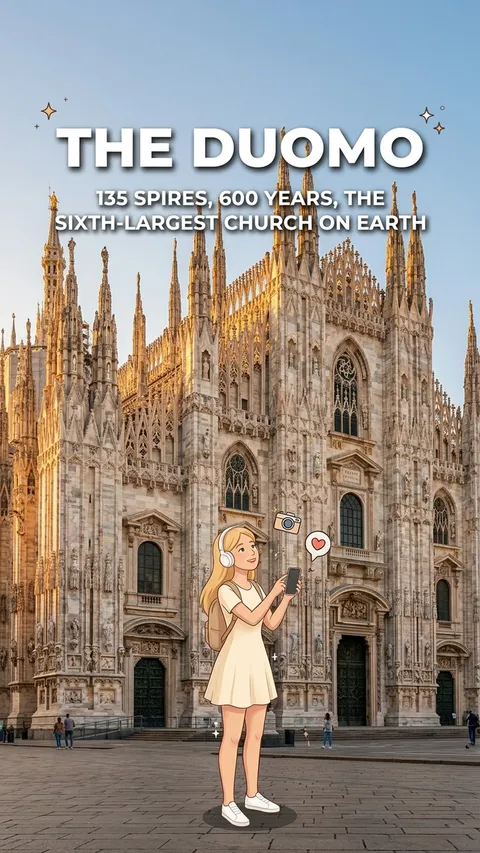
- Milan Cathedral (Duomo) (church free; rooftop terraces €19, open 9:00 a.m. to 7:00 p.m.): the white-and-pink marble Gothic giant, 135 spires, the sixth-largest church on earth. Book the rooftop stairs option online: cheaper than the lift, less crowded, and the climb is half the fun.
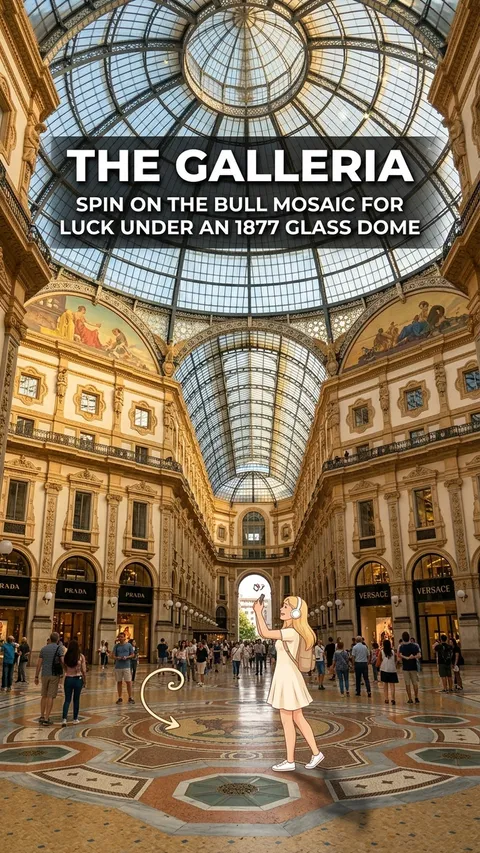
- Galleria Vittorio Emanuele II (free, open 24/7): the 1877 iron-and-glass arcade beside the Duomo. Spin three times on the mosaic bull for luck, then have an espresso under the dome.
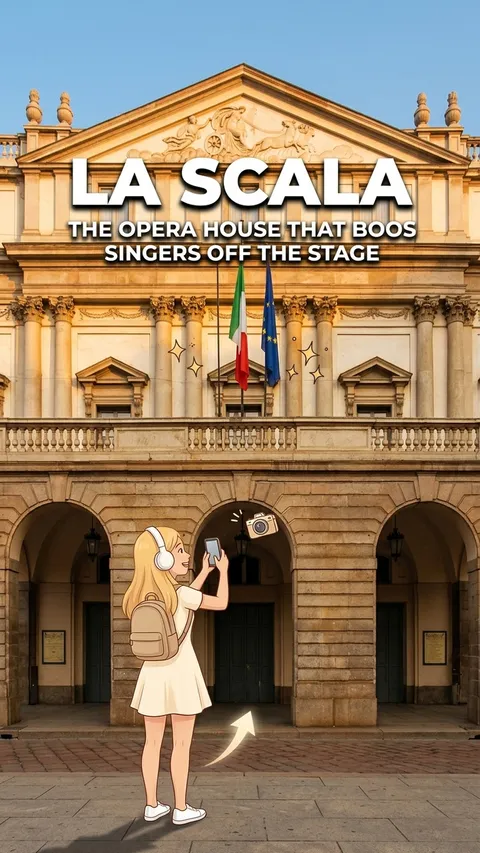
- La Scala Theatre (museum €15, 9:00 a.m. to 5:30 p.m.): the opera house with the famously merciless acoustics. The museum gets you a peek into the auditorium from a box even without a performance.
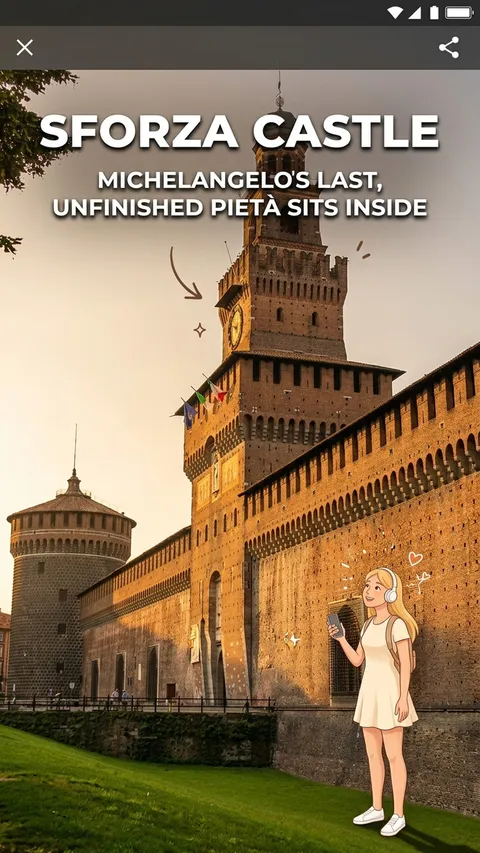
- Sforza Castle (courtyards free; museums €5, free Tue after 2:00 p.m.): the 15th-century fortress holding Michelangelo's unfinished Pietà Rondanini and Leonardo's painted Sala delle Asse.
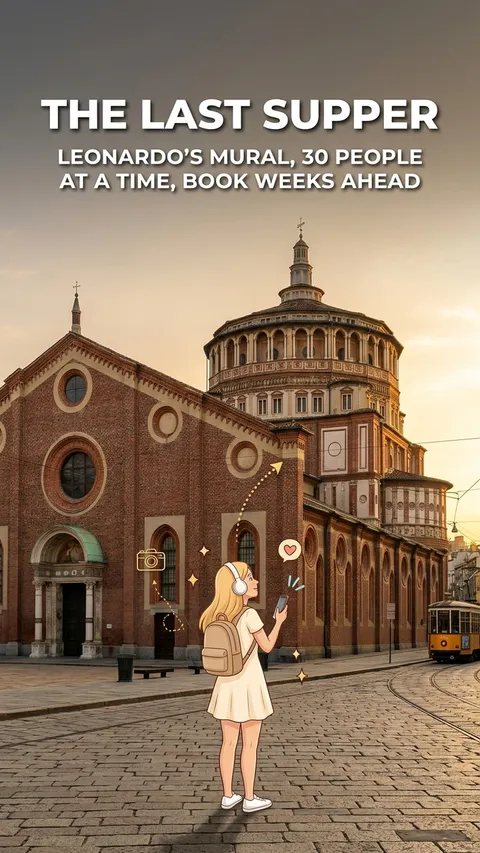
- Santa Maria delle Grazie, the Last Supper (€15, book ahead at cenacolovinciano.org): small groups, 15-minute slots, so peak dates go fast and same-day is rare. Book ahead, try a guided-tour ticket if the official slots are gone, or admire the church exterior for free.
The route the tour walks with you
Rather than a generic "see the Duomo, then the Galleria" list, you walk one efficient 7.1 km loop and the tour walks it with you, starting from wherever you arrive and never making you backtrack to an official start. This is the ten-stop order, beginning at the Duomo and looping out to the castle and the Last Supper before threading back through Milan's oldest squares:
- 1Milan Cathedral Free · rooftop €19 · your start
You come up from the Duomo metro stop and the cathedral fills the square, 135 marble spires and 3,400 statues, the largest church in Italy. Walk the exterior for the scale, then climb the rooftop terraces to stand level with the spires, the Alps on the horizon on a clear day.
- 2Galleria Vittorio Emanuele II Free
Step through the triumphal arch on the north side of the square into Milan's glass-vaulted living room, the 1877 arcade linking the Duomo to La Scala. Find the Turin bull in the mosaic floor and spin three times on it for luck.
- 3La Scala Theatre Museum €15
The 1778 opera house with acoustics so unforgiving that singers are made or booed here. Madama Butterfly flopped so badly on its 1904 premiere that Puccini pulled it after one night. The museum lets you see the steep tiers from a box.
- 4Pinacoteca di Brera €15
Napoleon's public gallery in a 17th-century palace, hung with the altarpieces he seized from churches across the north. Mantegna's foreshortened "Dead Christ" still stops people mid-step.
- 5Sforza Castle Courtyards free · museums €5
Francesco Sforza's 15th-century fortress, its 31-meter walls now holding Michelangelo's last, unfinished sculpture, the Pietà Rondanini. The courtyards are free to wander on the way to the park behind.
- 6Arch of Peace Free
The 25-meter neoclassical arch at the far end of Parco Sempione, begun for Napoleon in 1807 and finished as a monument to peace. Cross to the park side for the best view and far fewer people.
- 7Santa Maria delle Grazie €15 · book ahead
The 15th-century church whose refectory holds Leonardo's Last Supper, painted onto dry plaster between 1494 and 1498 and saved when the wall survived a 1943 bomb. Only 30 visitors enter at a time, so this slot must be pre-booked.
- 8Basilica di Sant'Ambrogio Free
One of Milan's oldest churches, consecrated in 379 AD by the city's patron saint, with a 9th-century golden altar set with 120 kg of gold. Look for the Devil's Column outside, its two holes said to be the devil's horn marks.
- 9Pinacoteca Ambrosiana €17
The 1618 gallery that was the first art museum open to the public, holding Caravaggio's "Basket of Fruit," Raphael's "School of Athens" cartoon and Leonardo's "Portrait of a Musician," with far smaller crowds than Brera.
- 10Piazza dei Mercanti Free
A pocket of 13th-century Milan one block from the Duomo, built around the 1233 Palazzo della Ragione. Whisper at the right column under the loggia and someone at the far corner can hear you, an old merchants' trick. A quiet last beat before the square and your metro back to Centrale.
It runs in your browser, no app and no download. A voice guide walks the loop with you and leads a real conversation as you go: it greets you, tells the story between stops, asks what you actually want to see, and adapts. It is not a recording and not an audioguide. The map and step-by-step navigation get you from each stop to the next.
That whole loop is our free, self-guided Milan walking tour, and because it can be launched from any of its stops, you do not hunt for an official start, you just begin where you arrive. You open it the moment you reach Piazza del Duomo and step into the loop at the cathedral. It runs in your browser, with no app and nothing to download. A voice guide walks the route with you and leads a real conversation as you go: it greets you, tells the story between stops, asks what you actually want to see, and adapts to your answers. It is not a recording and not an audioguide. The map and step-by-step navigation get you from the Duomo to the castle to the Last Supper without squinting at Google Maps. See the full route on the Milan walking tour page, and you get 100 free credits to try it.
Insider Tips for the Milan Day Trip
The single biggest mistake on this route is treating it like a flight and "saving time" through Linate, then losing all of it at the airports. The train is the move, and from there the day is about booking ahead and starting early.
Do
- Book a nonstop advance fare weeks out (€19.90 to €29.90)
- Take the first fast train and a defined late return
- Buy the Last Supper ticket the same week, or skip it
- Ride the yellow M3 two stops from Centrale to Duomo (€2.20)
- Book the Duomo rooftop stairs online to skip the queue
- Stay for an early aperitivo in Brera before the train back
Don't
- Don't fly to "save time"; airports turn 1h into 4h door to door
- Don't buy walk-up at the full Base fare if you can plan ahead
- Don't expect same-day Last Supper tickets, April to October
- Don't gamble on the very last train back to Rome
- Don't drive: Milan's center is a camera-enforced ZTL
- Don't try to "do everything"; one day is for the core
Two things sell out and ruin days when ignored: the Last Supper (book weeks ahead at cenacolovinciano.org, 30 people per 15-minute slot) and the cheap train fares (gone in the final weeks before travel). Lock both early. Everything else in Milan you can buy on the day.
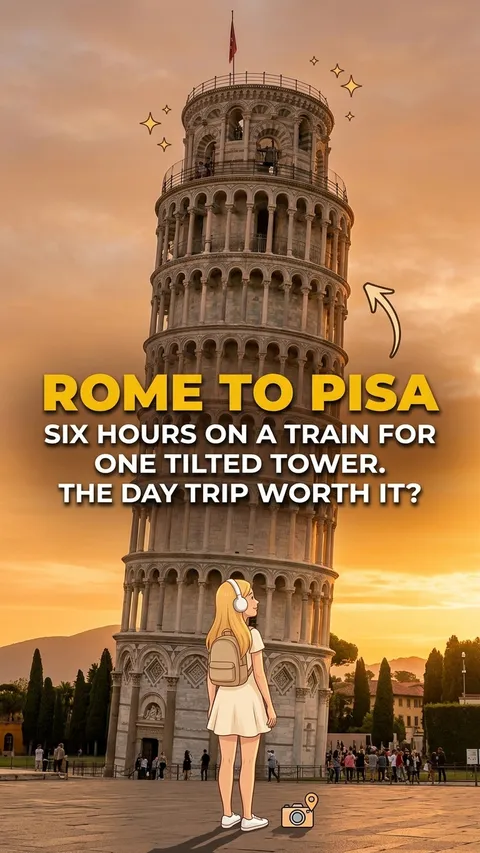
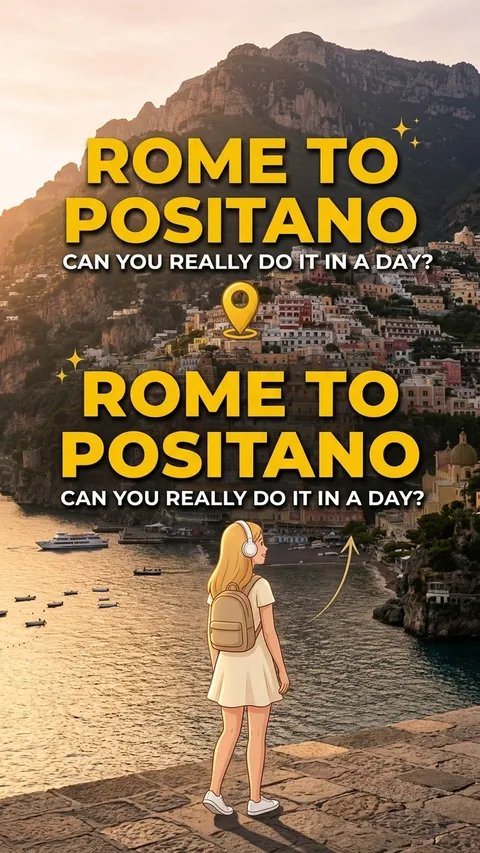
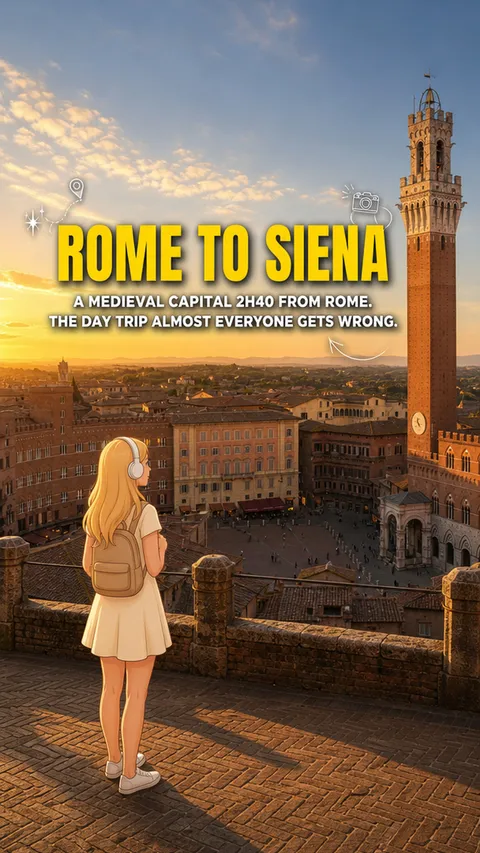
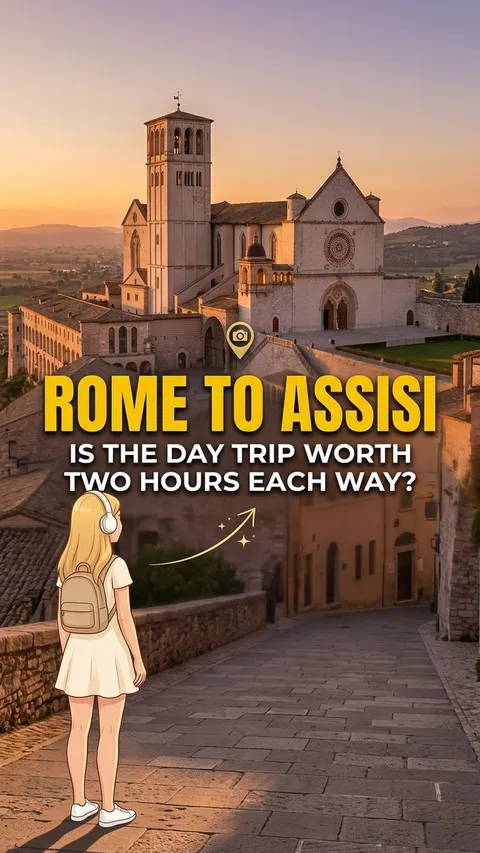
More day trips from Rome
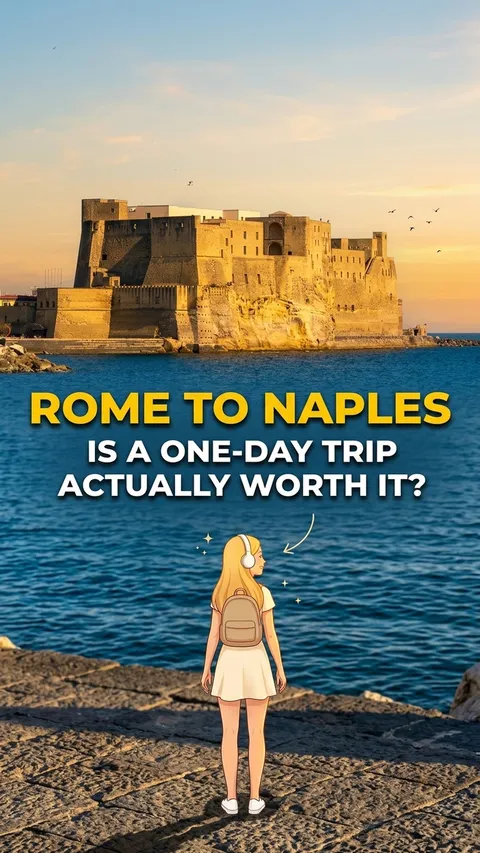
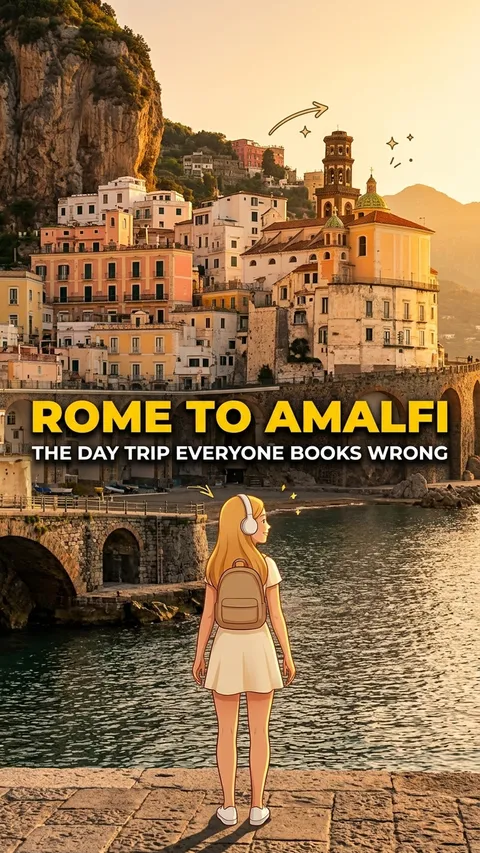
Out in the morning, back in time for dinner. Every route here fits in one full day.
What the Rome to Milan Journey Feels Like
This is the part no timetable captures. The Frecciarossa and Italo glide out of Rome and the Lazio countryside blurs past at 300 km/h, the Apennines rising and falling, Florence and Bologna sliding by if your train pauses there. The ride itself is the easy part: a reserved seat, a power socket, Wi-Fi, and under three hours of watching Italy go by. Then you walk out of Milano Centrale's vast stone hall and the city is immediately, obviously different from Rome: flatter, sharper, more buttoned-up.
Then the Duomo does its work. You come up the metro steps into the square and the marble mountain of spires is simply there, and the scale resets your sense of the day. The honest texture of a Rome-to-Milan day trip is exactly that contrast: a long, comfortable ride bookending a few intense hours in a city that rewards a focused visit and quietly asks you to come back for longer. Yes, it is a lot of train for one day. Spend those hours well and it still earns its place.
Rome to Milan: Your Questions Answered
Can you do Milan as a day trip from Rome?
Yes. The Frecciarossa and Italo run nonstop from Roma Termini to Milano Centrale in under three hours, with around 45 direct trains a day. Take the first fast train out and a late one back and you get six to seven hours in the center, enough for the Duomo, the Galleria, La Scala and Sforza Castle. It is a long day, and many travelers prefer to stay overnight, but it is genuinely doable.
How long is the train from Rome to Milan?
The fastest nonstop Frecciarossa and Italo services take 2h52 to 2h59 over the 567 km. Trains that stop at Florence or Bologna run about 3h10 to 3h30, so filter for the nonstop departures when you book.
How much does the train cost?
Booked in advance, an Economy or Super-Economy one-way fare starts at €19.90 to €29.90. Bought on the day, you pay the flexible Base fare, often €70 to €110. The earlier you book, the cheaper it is, since both operators use airline-style dynamic pricing.
Is the train or a flight better from Rome to Milan?
The train, clearly. A flight is about 70 minutes in the air, but Linate and Malpensa add transfers and security at both ends, so door to door it runs four hours or more. The train is downtown to downtown in under three hours, with far more departures. Only consider flying if you are connecting onward from an airport anyway.
Which is better, Frecciarossa or Italo?
They are very close on this route, both nonstop Termini to Centrale at up to 300 km/h. Italo is often a euro or two cheaper and slightly more punctual in 2026 monitoring; Frecciarossa runs more departures and is the default for rail passes. Book whichever is cheapest at the time you want.
Where do the trains arrive in Milan, and how do I get to the center?
Both arrive at Milano Centrale, in the city center. From there, take the yellow M3 metro two stops to Duomo, about 10 minutes, on a €2.20 ATM ticket valid 90 minutes. It is also a 25-minute walk if you prefer.
Can I see the Last Supper on a day trip?
Only if you plan ahead. Leonardo's mural at Santa Maria delle Grazie admits small groups in 15-minute slots, so peak dates go fast and same-day walk-ups are rare. Reserve early at cenacolovinciano.org, or look at a guided-tour ticket that bundles entry if the official slots are gone. If neither works out, build a Last-Supper-free day around the Duomo, the Galleria, La Scala and the castle.
What is the best time to start and end the day?
Take a fast train out of Rome around 6:00 to 7:00 a.m. to be under the Duomo by 10:00, and aim for a return around 8:00 p.m., which gets you into Rome near midnight. Decide your return train before you travel and do not rely on the very last departure.
Do I need to book the train in advance?
For the cheap fare, yes. Advance Economy seats are €19.90 to €29.90 and sell out in the final weeks, while walk-up Base fares are far higher. You can always buy on the day as a backup, because so many trains run that seats are almost always available, you will just pay more.
Plan Your Milan Day Trip
You have the train sorted, and that is the part most people overthink: book a nonstop advance fare, go early, come back late. The hours in Milan take care of themselves. The ten-stop loop above is our free, self-guided Milan walking tour, and because it starts from any stop, you open it the moment you reach the Duomo and start walking, with 100 free credits to try it.
