
Rome to Amalfi Day Trip: The Definitive Guide
Three hours south by train, then 35 minutes across the water. The Rome to Amalfi day trip works if you take the Salerno gateway and the ferry, and skip the road. Here is the exact route, with the times, fares, and a free walking tour of Amalfi that starts the moment you step off the boat.
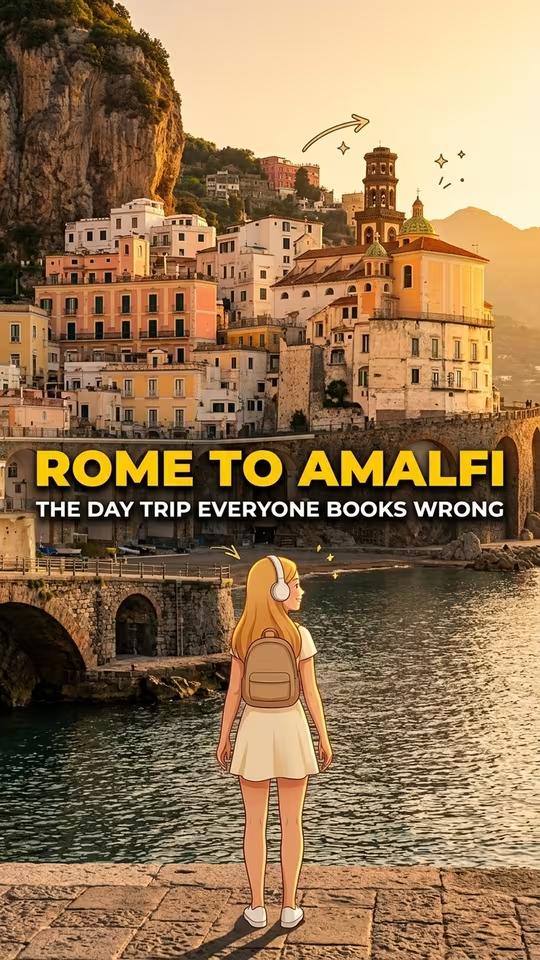
The Quick Answer: Rome to Amalfi
The Rome to Amalfi day trip is a long day but a doable one, and the route that actually works is simple: high-speed train from Roma Termini to Salerno (~2 hours), then the ferry from Salerno to Amalfi (35 minutes). Door to dock in roughly three hours, with the last stretch across open water replacing the gridlocked coast road. Five to seven usable hours in town if you start early, which is enough for the cathedral, the cloister, a paper-mill demonstration, a long lunch, and a granita on the square. Not enough for Positano and Ravello too. Don't try.
Two things make or break the day: book the train early, because last-minute Frecciarossa and Italo fares double or triple; and confirm the ferry season, because Travelmar only runs the full Amalfi schedule from April to October. Outside that window this becomes a different, slower, bus-on-a-cliff-edge trip and we would not recommend it.
| Question | Answer |
|---|---|
| Can you do Rome to Amalfi in one day? | Yes. Train + ferry gets you ~6 hours on the coast. |
| How long is the journey each way? | About 3 hours door to dock, with the train change at Salerno. |
| What does it cost? | Roughly €50 to €80 per person round trip, public transport. |
| Do you need a tour? | No. Amalfi town is small and linear, and our self-guided voice tour covers the walk. |
| Best months? | Late April to June, and September to early October. July and August work but are crowded. |
| Train or bus from Rome? | Train, every time. The direct bus takes five hours and runs only in summer. |
Worth it if you accept that this is a scenic travel day, not a beach holiday.
Is the Rome to Amalfi Day Trip Worth It?
Yes, with one caveat that matters: this is a travel day, not a beach day. You will spend five to seven hours in transit and five to seven on the coast, and the coast hours are magical in a way the train hours are not. The water approach alone, with Amalfi stacked into the cliff above the harbour, is worth most of the ticket price. The cathedral, the medieval arsenal and the paper mill are a genuine concentration of history that few Italian towns of this size can match, and you can walk all of it in an afternoon without a car, a bus, or a plan.
The best of Amalfi, stop by stop


Where it stops being worth it: if you try to add Positano, Ravello, Pompeii and a limoncello tasting in the same day. You will spend the afternoon watching clocks and queueing for ferries. If you want multiple towns, sleep on the coast. If you want a relaxed swim and a sun-lounger afternoon, this is the wrong trip from Rome. The beaches in Amalfi are small and pebbly, and the harbour square is busy by 11.
Worth it for the cathedral, the arsenal, the paper mill, and the ferry approach alone. [no] Skip it if you want a slow beach day, or if you are travelling November to March when ferries do not run.
Good fit if you...
- Are fine with a 12-to-14-hour day and an early start.
- Want a concentrated hit of Arab-Norman architecture and maritime history in one walkable town.
- Are happy to see one town well rather than three towns badly.
- Are comfortable booking trains in advance and reading a ferry timetable.
Skip it (save Amalfi) if you...
- Want a beach day. The Amalfi pebble beach is small, the sun is fierce, and the square is loud.
- Are travelling with small children who cannot handle two three-hour transfers.
- Are going between November and March, when the ferries stop and the coast road is your only option.
- Were hoping to tick off Positano, Ravello, Capri and Pompeii in the same day. That needs a week, not a Wednesday.
How to Get from Rome to Amalfi by Ferry or Train
The route that works is the Salerno gateway, then ferry. There is no direct train to the Amalfi Coast and there is no sane reason to drive the SS163 in season. The list below is every realistic option, ranked by how we would actually do it.
| Mode | Time each way | Realistic cost | Verdict |
|---|---|---|---|
| High-speed train to Salerno + ferry | ~3 hrs | €50-80 RT | WINNER. Fastest, scenic, avoids the coast road entirely. |
| High-speed train to Salerno + SITA bus | ~3.5 hrs | €40-60 RT | Fine backup when the sea is rough. Shares the same congested road you came to avoid. |
| Train via Naples + Circumvesuviana to Sorrento + bus | ~4.5 hrs | €40-70 RT | Slow, gritty, two extra changes. Only makes sense if you are already sleeping in Sorrento. |
| Direct bus Roma Tiburtina to Amalfi (Marozzi) | ~5 hrs | €26 one-way | Cheap but slow, summer only, one departure a day. |
| Drive yourself | 3-4 hrs each way | €250-400+ RT | Don't. Parking is a nightmare and the cliffs are real. |
| Private driver | ~3 hrs each way | €310-500+ | The luxury move, and reasonable if split four ways. |
The winner stays the winner because it replaces the worst part of the journey, the SS163 coast road, with the best part, the sea approach. The ferry from Salerno pulls into Amalfi at water level with the town stacked above you, and that single view is what people are paying tours three hundred euros to see.

Train to Salerno, ferry to Amalfi. Three hours, two legs, no car park nightmares.
The Ferry in Detail
The train leg: Roma Termini to Salerno
Both operators run direct, high-speed, downtown-to-downtown. Frecciarossa (Trenitalia) runs roughly hourly; Italo runs two direct services a day each way. There is no change required, which is the whole point.
- Duration: 1h 35min to 2h 12min depending on service.
- Cost: From about €15-35 booked weeks ahead, rising to €30-50 close to departure. Super Economy fares are non-refundable and tied to a single departure, which is fine for a day trip with a fixed plan.
- Earliest useful trains: Italo 6:02 AM, arrives Salerno 8:02 AM, in time for the first ferry of the day around 8:40. Frecciarossa 7:30 AM, arrives Salerno 9:05 AM, in time for the 9:40 ferry.
- Latest useful returns: Frecciarossa 6:54 PM direct, arrives Roma Termini 8:25 PM. Italo 9:28 PM, arrives 11:30 PM.
- Booking: trenitalia.com and italotreno.com. Use the Italian city names (`Roma`, `Salerno`) on the Trenitalia site or it will not find the route.
- Avoid: Intercity (~3 hours) and regional (~4 hours, change in Naples) services. They cost less and are not worth the lost morning on a day trip.
The 6:02 Italo is the move. It is painful, but it buys you roughly an hour and a half of empty cathedral square before the day-boats unload.
The ferry leg: Salerno to Amalfi
Travelmar is the main operator, running from Molo Concordia at Piazza della Concordia in Salerno. The pier is a flat 500-metre walk from Salerno Centrale station, about seven minutes with a day bag.
- Duration: 35 minutes Salerno to Amalfi.
- Cost: €10-20 one-way depending on season and service. The Trenitalia Costiera Link combined rail-and-ferry ticket quotes Amalfi from €12 one-way from Salerno, which is a useful honest floor.
- Frequency: Several crossings a day in season (April-October), thinning to a minimal year-round service in winter.
- Operator: Travelmar (travelmar.it). Buy online in high season to skip the ticket-office queue.
- Season: Full schedule April to October. November to March the service drops to a few boats a day and bad weather cancels them.
- Last ferry back from Amalfi: Around 8-9 PM in July and August, around 5-6 PM in April-June and September-October. Confirm on travelmar.it the week you travel.
- Sit on the right side going Salerno to Amalfi, left side coming back. That is where the cliffs are.
To catch the 6:54 PM Frecciarossa home you need the 5:45 PM ferry off Amalfi, which puts you into Salerno at 6:20 PM with 30 minutes of buffer. That buffer matters. Miss the last fast ferry and you are looking at a SITA bus around the cliff road, a taxi north of €100, or a very late Italo.
The ferry is cancelled in rough seas. In the shoulder season check the Travelmar board the evening before and the morning of. If the sea is up, the SITA bus from Salerno to Amalfi (~1h 10min) is the fallback, and the day still works, just slower and less scenic.
{Destination} in One Day
You step off the ferry at the Porto di Amalfi and the town is already stacked above you, white and ochre houses jammed into the ravine with the cathedral dome poking out halfway up. You do not need a plan. The walk is one street going up and the same street coming back down, and our self-guided voice tour starts the moment you land and walks you through it, holding a real conversation, telling you which interiors cost money and which corner has the cleanest photo. Open it in your browser, no download, and start from any stop.

The time math
Leave Roma Termini on the 6:02 Italo and you are at the Amalfi dock by 8:40. The last useful ferry home in peak season is around 5:45 PM, which lands you back at Salerno in time for the 6:54 Frecciarossa and dinner in Rome. That gives you roughly eight and a half hours of ground time, which is generous. Take the 7:30 Frecciarossa instead and you arrive on the coast around 10:15, with about seven and a half usable hours. Both versions end with you back in Rome after 9 PM. It is a long day.
What you'll see
Six stops, 1.7 km of walking, all uphill on the way out and all downhill on the way back. Three of the interiors are ticketed (Arsenal €5, Cloister of Paradise €4, Paper Museum €7, so €16 for all three) and the cathedral basic entry is free.
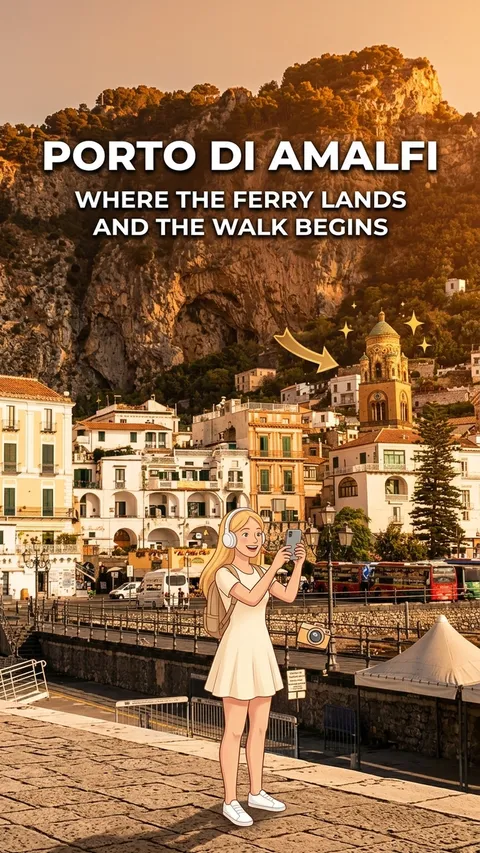
- Porto di Amalfi (free, always open): The working harbour where the ferry lands. Walk the breakwater for the postcard shot back at the town before the square fills.
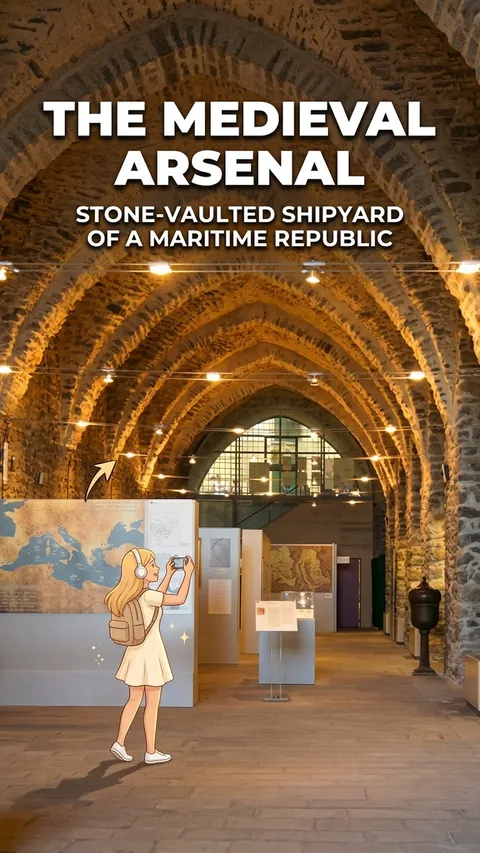
- Arsenale della Repubblica di Amalfi (€5, daily 10:00-19:00): The medieval shipyard, two stone-vaulted naves on squat pillars, the only one of its kind left on this coast. Twenty minutes, cool and quiet, do not miss it.
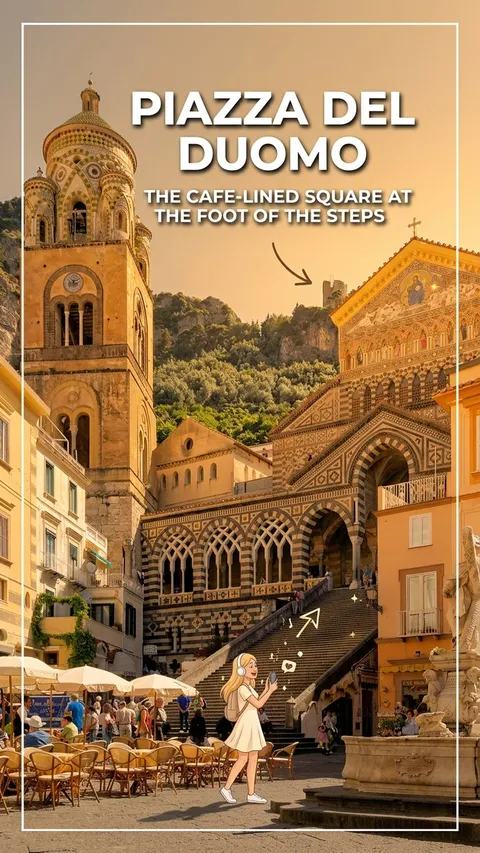
- Piazza del Duomo (free, always open): The cafe-lined pivot of the town at the foot of the cathedral staircase, with the Fontana di Sant'Andrea in one corner. Buy a coffee at the bar inside, not seated on the square.
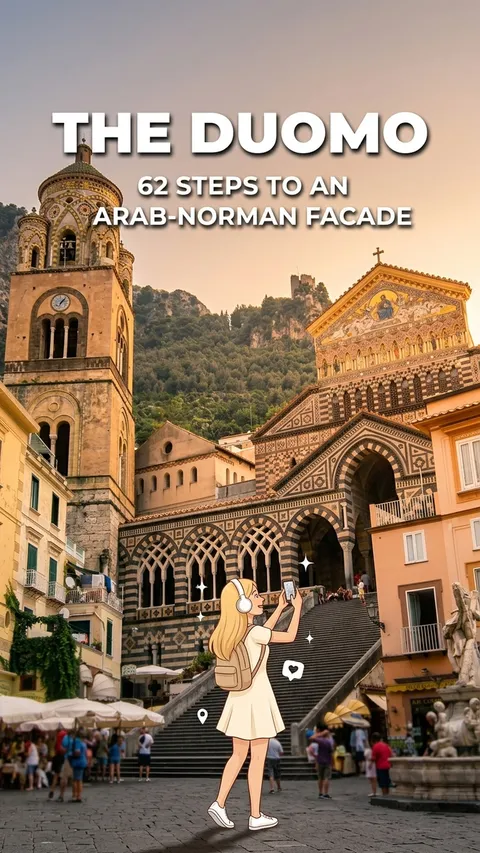
- Duomo di Sant'Andrea (basic entry free, full complex ticketed, daily 9:00-18:30): Sixty-two steps up to an Arab-Norman facade, the relics of Saint Andrew in the crypt below, and bronze doors cast in Constantinople in the 11th century.
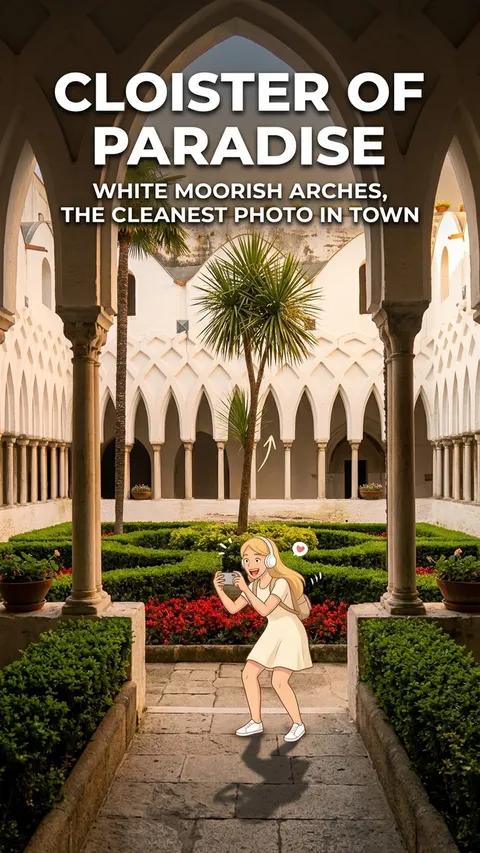
- Cloister of Paradise (€4, daily 9:00-18:30): A small open courtyard of white interlaced Moorish arches, built in 1268 as a burial ground for Amalfi's noble families. Fifteen minutes, the cleanest photo in town.
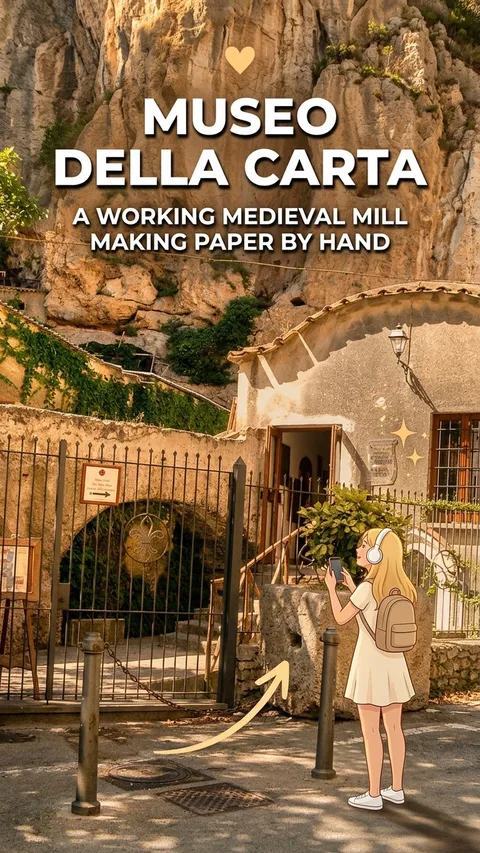
- Museo della Carta (€7, daily 10:00-19:00): A working 13th-century paper mill up the Valle dei Mulini, where a worker presses an actual sheet of bambagina paper in front of you. The most hands-on thing in Amalfi.
The route the tour walks with you
The walk starts at the harbour, climbs gently through the arsenal and the cathedral square, then continues up Via Lorenzo d'Amalfi to the Paper Museum at the top of the valley, before turning around and coming back down. You can start from any stop, in any order, and the tour guide adapts. No backtrack required.
- 1Porto di Amalfi Your entry point · Free
Step off the ferry and turn around. The town climbs the ravine behind you, white and ochre houses jammed into the cliff, the cathedral dome poking out halfway up. This was the working heart of a maritime republic that once rivalled Venice and Genoa. Walk the breakwater for the postcard shot, then cross the coast road carefully towards Piazza Flavio Gioia.
- 2Arsenale della Repubblica di Amalfi €5 · 20 min
Sixty metres off the main square, mostly missed, and one of the best things in town. Two long naves of stone vaults on squat pillars, the medieval shipyard where Amalfi built the galleys that ran the Mediterranean. Inside you also get the Museo Civico, holding the Tabula Amalfitana, the medieval maritime code that once set navigation law for the whole region.
- 3Piazza del Duomo Free · always open
The photo everyone has seen: cafe tables, the long flight of steps, the striped facade rising above. The Fontana di Sant'Andrea bubbles in one corner, and locals fill bottles from it. Honest tip: the cafes around the steps charge for the address. A coffee at the bar inside costs a fraction of a seated table.
- 4Duomo di Sant'Andrea Free entry · ticketed complex
Sixty-two steps up, and the climb is the point. At the top the Arab-Norman facade hits you, bands of stone, pointed arches, gold mosaic glittering on the gable. The cathedral holds the relics of Saint Andrew, brought here in 1208. Go down into the crypt under the altar, and look at the bronze doors at the entrance, cast in Constantinople in the 11th century.
- 5Cloister of Paradise €4 · 15 min
After the dim weight of the cathedral, this is the surprise: a small open courtyard of white interlaced arches, slender and pointed in a clearly Moorish style, framing a garden of palms. Built in the 13th century as a burial ground for noble families, which is why fragments of old sarcophagi and frescoes line the walls. The cleanest photo on the whole route.
- 6Museo della Carta €7 · 30-40 min
The walk up Via Lorenzo d'Amalfi thins out past the square, the shops give way to the old Valle dei Mulini, and the air gets cooler near the stream. The Paper Museum sits in a 13th-century mill, where Amalfi made its famous hand-pressed bambagina paper for centuries. The original water-driven machinery still works, and the guided visit ends with a worker pressing an actual sheet in front of you. Buy a real bambagina notebook at the desk, the honest local souvenir.

It runs in your browser, no app and no download. A voice guide walks the loop with you and leads a real conversation as you go: it greets you, tells the story between stops, asks what you actually want to see, and adapts. It is not a recording and not an audioguide. The map and step-by-step navigation get you from each stop to the next.
Insider Tips for the Amalfi Day Trip
Do
- Book trains two to four weeks out. Super Economy fares on Frecciarossa and Italo are the single biggest saving on this trip. They are non-refundable and tied to a specific departure, which is fine when the day is fixed.
- Take the 6:02 Italo. Painful, but it buys you an empty cathedral square before the day-boats land.
- Buy ferry tickets online. Saves the queue at Molo Concordia on weekends in July and August.
- Sit on the right side of the ferry going out, left side coming back.
- Carry coins for the harbour toilets and buy a coffee at any bar to use theirs before the uphill walk to the Paper Museum.
- Eat at the top, not the bottom. The cafes along upper Via Lorenzo d'Amalfi, past the square, are cheaper and calmer than anything on the piazza.
Don't
- Don't drive yourself. The SS163 is narrow, the locals drive fast, and parking in Amalfi is nearly nonexistent in season.
- Don't try to add Positano, Ravello and Pompeii. Two towns in one day from Rome is already too many. One town, done well, beats three done badly.
- Don't go November to March without a fallback. The ferries drop to skeletal, the sea cancels them, and you are stuck with the bus on the cliff road.
- Don't miss the last ferry. A taxi from Amalfi to Salerno after a missed ferry runs well into three figures.
- Don't book a tour that combines Pompeii and the Amalfi Coast unless you accept very rushed time at each. The DIY version of either is better than a forced combo of both.
Luggage
Travel light. The ferry has no luggage hold worth speaking of, the streets are stepped, and the cathedral staircase is 62 steps of stone. A small daypack is the right answer. If you are landing in Rome and heading straight down, ship the bags to your hotel or store them at Termini.
Buffer
Build 30 minutes of buffer at Salerno on the way back. The ferry lands at Molo Concordia, the train leaves from Salerno Centrale 500 metres up the road, and you do not want to be running that transfer at 6:45 PM with a missed train costing you two hours.
The ferry is the spine of this day. If the sea is rough and Travelmar cancels, the SITA bus from Salerno to Amalfi (about 1h 10min, every 30-60 minutes) is the fallback. The day still works, it just becomes a slower and less scenic day, and you will understand very quickly why we told you to take the boat.
More day trips from Rome
Out in the morning, back in time for dinner. Every route here fits in one full day.
What the Rome to Amalfi Journey Feels Like
Rome at dawn is quiet in a way it never is at noon, the espresso bars on Via Giovanni Giolitti opening as you walk to Termini, the 6:02 Italo already at the platform. Two hours south the countryside changes, the olive lines and the scrubby hills of Lazio giving way to the denser green of Campania, and then the sea opens up to your right as the train drops into Salerno.
The walk down to Molo Concordia takes seven minutes. The ferry is a small, open-deck boat in season, and the 35 minutes to Amalfi is the part of the day people remember. The cliffs come out of the water almost vertically, the road is a line scratched along the face of them, and the towns appear one by one, Vietri, Cetara, Maiori, Minori, each a clump of pastel stuck into a fold in the rock. You look up at them, which is the point. From the road you look down or across. From the water you look up, and the perspective is the one nobody forgets.
Amalfi appears as a notch in the cliff, the harbour tight against the town, the cathedral facade just visible above the roofline. You step off into the noise of the dock, the lemon stalls and the gulls, and within five minutes you are in the square looking up at 62 stone steps. The walk through town takes the rest of the morning. The cathedral is cool inside, the cloister is small and white and unlike anything else on the coast, the arsenal smells of damp stone, and the paper mill at the top of the valley runs a water-wheel that has been turning since the 13th century.
Lunch is a sandwich on the run or a long lunch on a side street, depending on your appetite. The afternoon is the part people underestimate. By three the square is in full sun and full day-trippers, and the cool of the cathedral crypt and the arsenal vaults is the right answer. By five the boats start to thin and the light goes amber off the water. The ferry back is the same 35 minutes in reverse, Salerno at dusk, and the Frecciarossa north with the lights of the coast dropping behind you. Rome by nine, dinner by ten, feet sore, and the kind of tired that comes from a day done properly.
Rome to Amalfi: Your Questions Answered
Is a Rome to Amalfi day trip really possible?
Yes. Train to Salerno (~2 hours), ferry to Amalfi (35 minutes), roughly six hours on the coast, and the same in reverse. It is a 12-to-14-hour day, which is long, and the early train makes it work. The late train does not.
How do I get from Rome to Amalfi by train?
There is no direct train to Amalfi. Take a high-speed Frecciarossa or Italo from Roma Termini to Salerno (1h 35min to 2h 12min), then the Travelmar ferry from Molo Concordia, a 500-metre walk from the station. Do not go via Naples and Sorrento, it adds an hour and a half and a hot commuter train for no benefit.
How much does the Rome to Amalfi day trip cost?
Roughly €50-80 per person round trip on public transport: €30-70 for the train return (depending on how early you book) plus €20-40 for the ferry return. Add €16 if you do all three ticketed interiors in Amalfi, plus lunch. A private driver or organised tour starts around €280-325 per person.
What is the cheapest way from Rome to Amalfi?
The Marozzi direct bus from Roma Tiburtina to Amalfi (€26 one-way, summer only, one morning departure) is the absolute floor. The train-and-ferry route is more expensive but roughly twice as fast and far more pleasant.
Is it better to take the ferry or the bus from Salerno to Amalfi?
The ferry. It is faster (35 minutes against 1h 10min), avoids the congested SS163 coast road, and gives you the sea approach that is the single best view of the trip. The bus is the fallback when the sea is rough.
Should I visit Positano and Amalfi in the same day from Rome?
Not on a day trip. Each ferry hop eats 25-40 minutes each way and the last boat back to Salerno is unforgiving. Pick one town, see it well. From Rome, Amalfi is the easier single hit because the ferry lands you in the centre and the walk is concentrated.
When should I not do this day trip?
November to March, when the ferry schedule is skeletal. Any day the sea is rough enough for Travelmar to cancel. Any day you cannot get an early train out of Rome. And any day you are hoping to tick four towns off a list.
Is the Amalfi Coast safe?
Very. Amalfi is small, low-crime, and busy in season. The one real risk is the coast-road traffic at the harbour, where cars and buses squeeze past on a narrow bend. Cross with care, watch your bag in the packed square, and ignore anyone at the dock pushing an overpriced boat tour.
What if it rains?
The town works in the rain because the best paid sights are indoors. The cathedral, the crypt, the covered Cloister of Paradise, the stone-vaulted arsenal and the paper mill are all under cover, and the main street has awnings for most of its length.
Plan Your Amalfi Day Trip
Open the Amalfi voice tour before you board the ferry in Salerno. It runs in your browser, no app, no download, and it starts the moment you step off the boat at Porto di Amalfi. A voice guide walks you up the ravine to the cathedral, the cloister and the paper mill, telling the story at each stop and asking what you want to see next. It adapts as you go, a real conversation, not a recording. You get 100 free credits, you can start from any stop, and you do not need a plan.
- Start the Amalfi tour: ai-tourguide.net/guide/?tour=f3924219-4f7a-4277-a3df-e8493b1444dc
- See the full walking route: Amalfi Historic Walk
- More Rome day trips: All tours from Rome
- When to actually visit the Amalfi Coast: Best time to go
